Studies on the environmental impact of leisure craft are based on a 20-year cycle. This result obtained at the request of Fountaine Pajot is based on 200 usage scenarios. In reality, it is more like 40 years that should be considered: this is the real-life expectancy of a cruising boat... but true enough, a unit launched in 1982 won’t necessarily make you dream, unless you undertake a serious refit. Let’s also recognize that the period from 20 to 40 years might often be punctuated by long periods of immobilization - even abandonment. In other words, the multihulls concerned are less active than more recent units. However, (re)using a catamaran or a trimaran that left the shipyard 4 or 5 years ago is not really an ecological approach... In this selection, we’re going to take a look (without being exclusive) at models launched 20 years ago or a little more. Given the length of time some multihulls have been on the market, the latest vintages may be a little “younger”. Logically, we have selected only sailing multihulls, which are much less polluting than power multihulls - the market for electric multihulls is too recent to have developed a real second-hand market. One last requirement: the 12 multihulls presented here have a sail/displacement ratio of more than 10 m²/t, meaning there’s a guarantee of it being worthwhile to hoist sail as soon as you feel the first gusts of wind.
Dragonfly 920
A safe bet among cruising trimarans
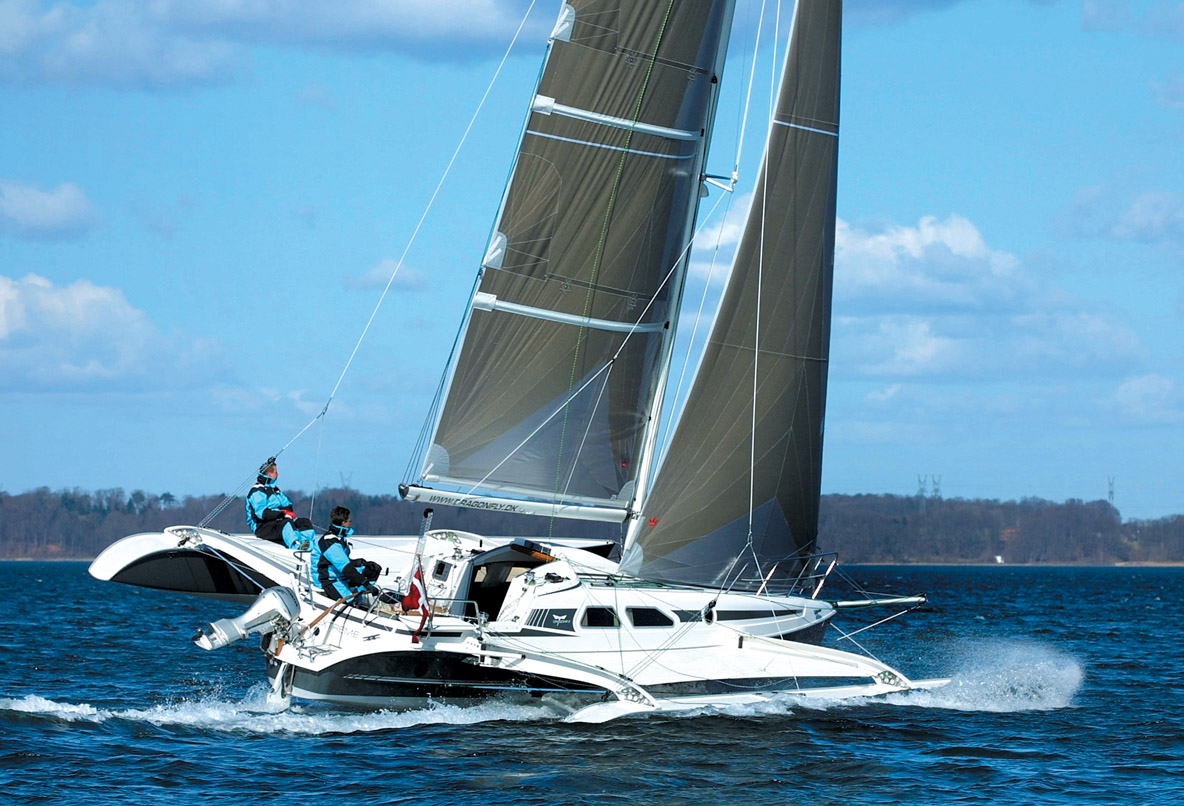
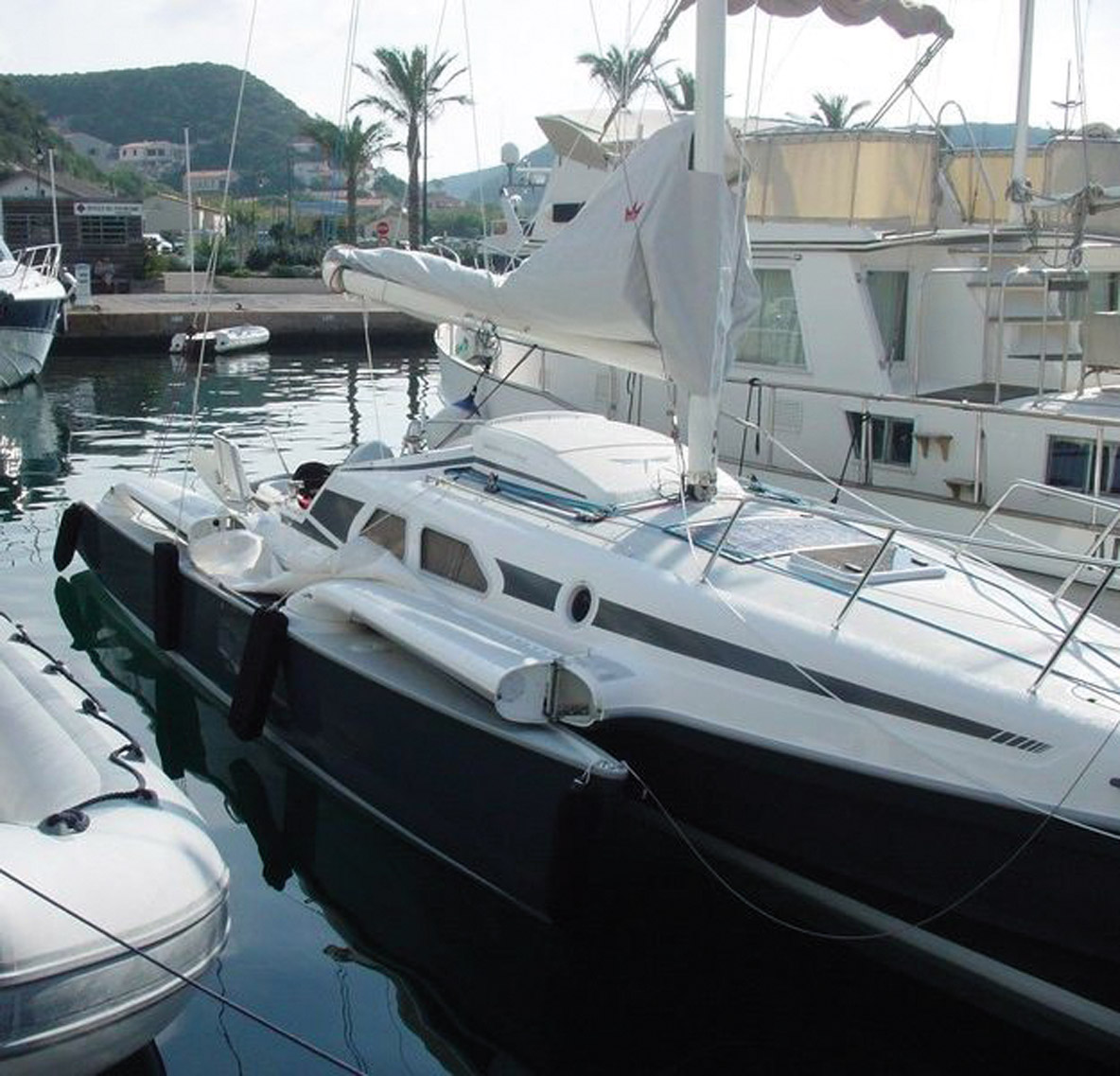
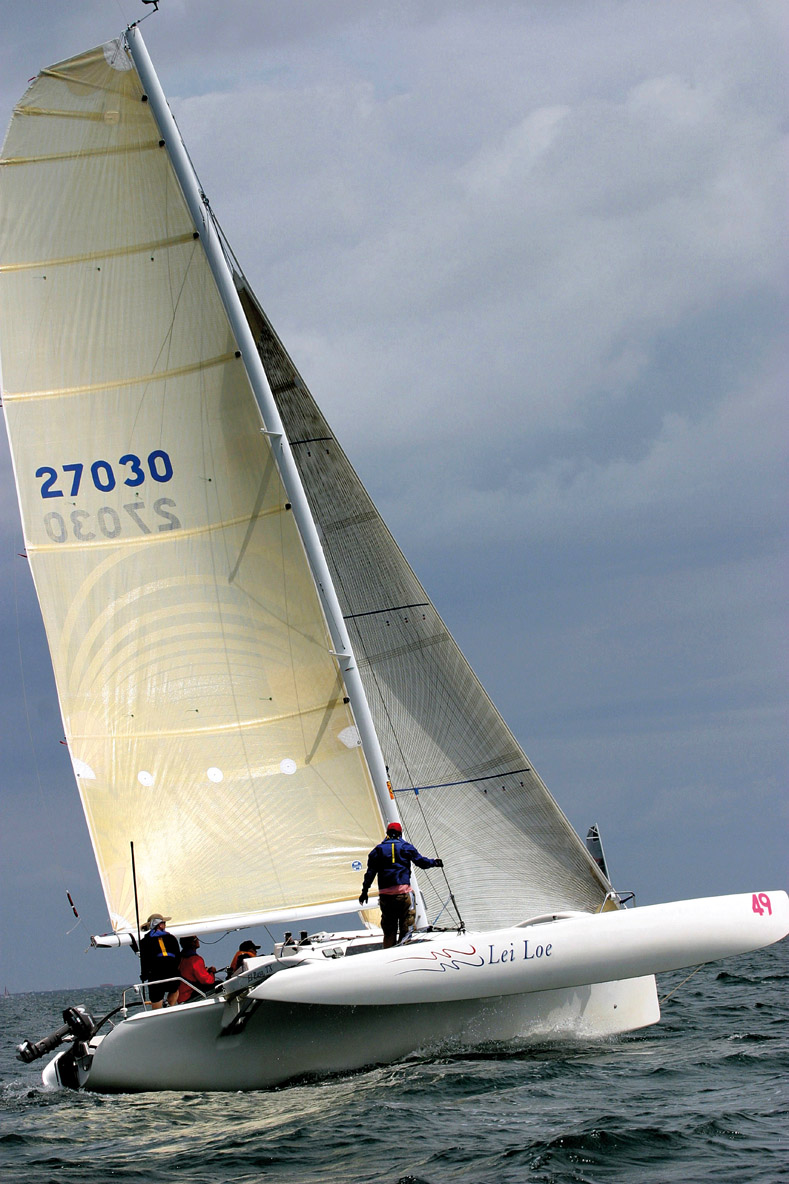
The number of cruising trimaran builders can be counted on the fingers of one hand, but their creations are worth a look... The Dragonfly 920 is one of those cruising boats that manages to check all the (right) boxes. And to top it off, it costs more in the marina than a monohull of the same length…
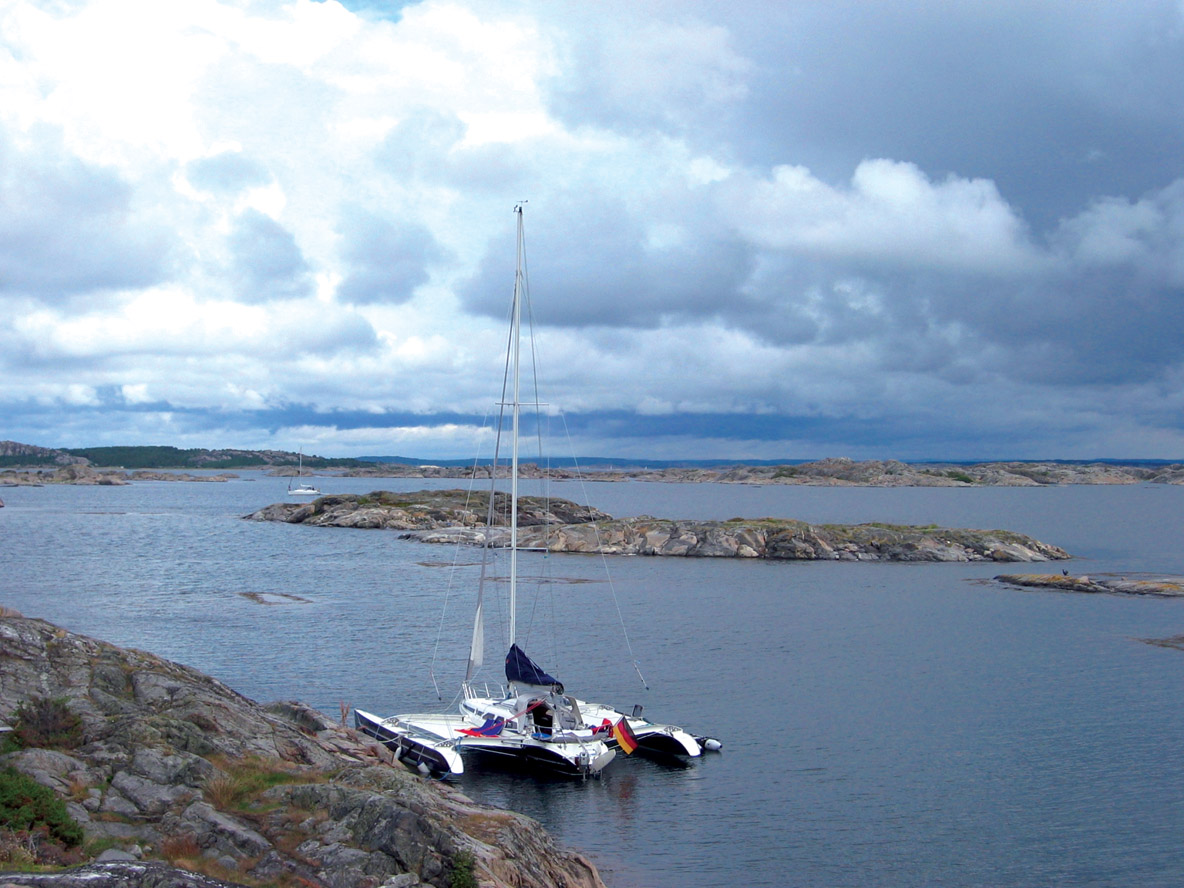
To solve the problem of port space, Danish builder Quorning Boats has been folding the arms of its trimarans since 1989. The Dragonfly 920, designed by Børge and Jens Quorning and launched in 1996, was available in three versions and underwent certain developments throughout its career. The first were built in a glass/squared foam/polyester sandwich, but the series developed by then using vinylester. The ‘Touring’ version of the early years featured an excellent standard of finish. It was notably one of the first boats to introduce, a year after its launch, a rolled filament carbon mast as standard. The fittings were also selected from the best products available at the time, from Frederiksen and Andersen for the winches. In 1998, the ‘Racing’ version was attired with a carbon boom that was 18” (50 cm) longer, and a heavily-roached mainsail, boosting performance. But in 2003, the ‘Extreme’ version arrived on the scene with floats 39” (1 m) longer and above all more voluminous, raised arms 18” (50 cm) longer, increasing the beam by the same as the floats, and a mast 5’ (1.5 m) taller, rigged with a more generous square-headed mainsail. In ten knots of wind, you can sail at 7 – 8 knots to windward, and more off the wind. The Touring version already sets the GPS alight: with between 15 and 20 knots of wind, you will systematically do over 10 knots, and with over 20 knots, you can count on a constant 15 knots. So, imagine the feel at the helm that you would get from a Dragonfly 920 Extreme – you’ll hardly ever need the motor!
An interior that's compact but complete
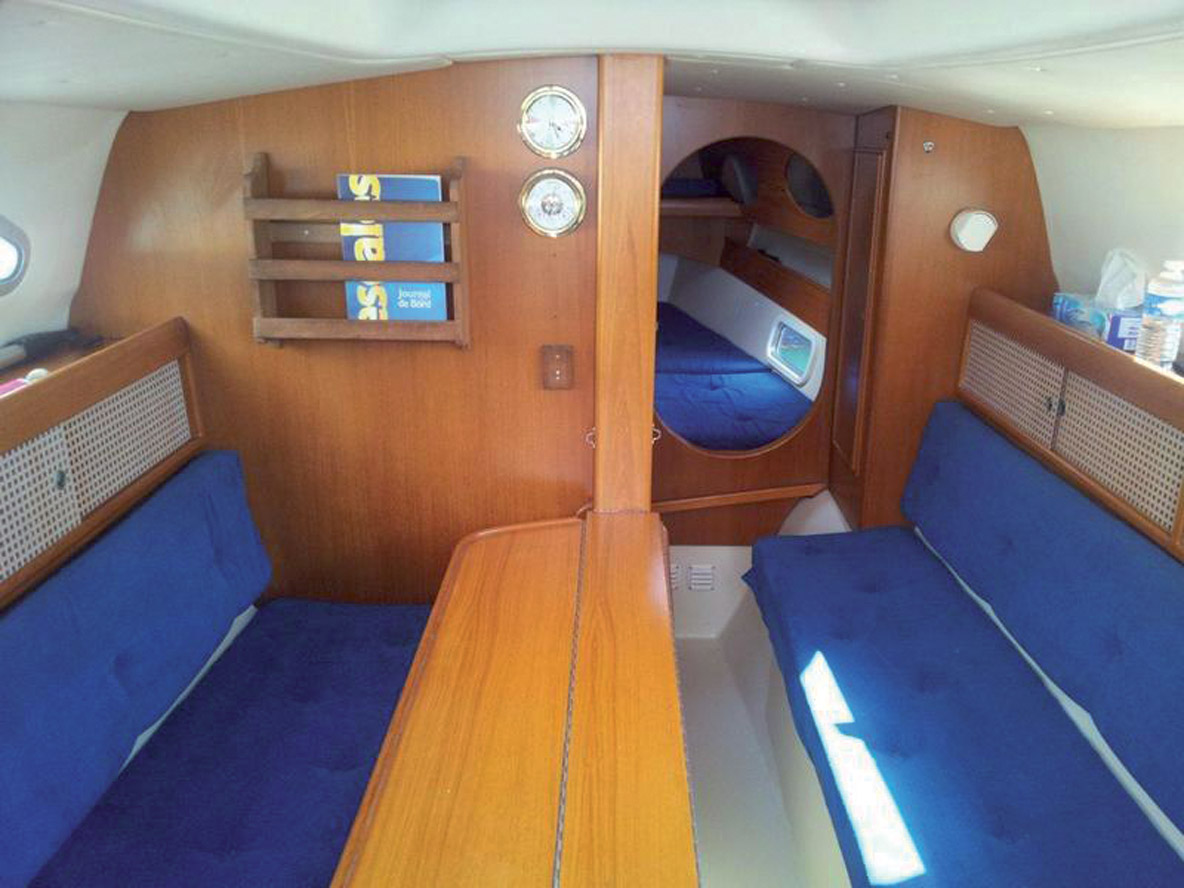
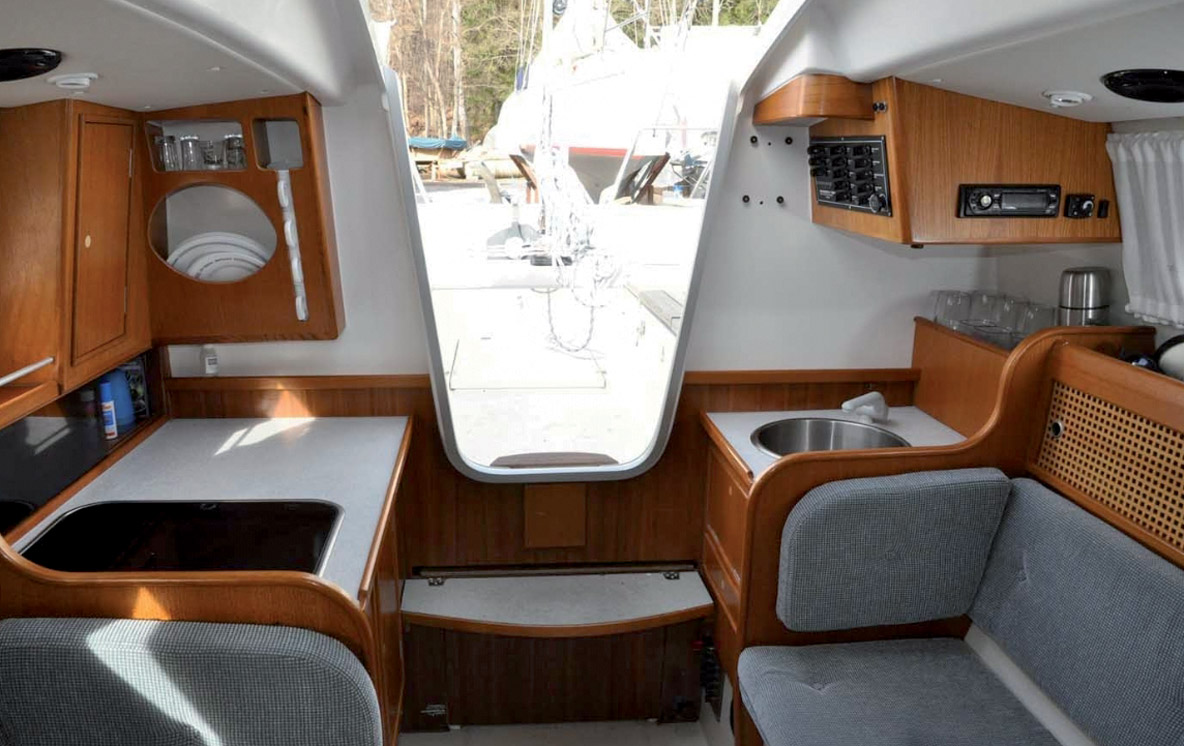
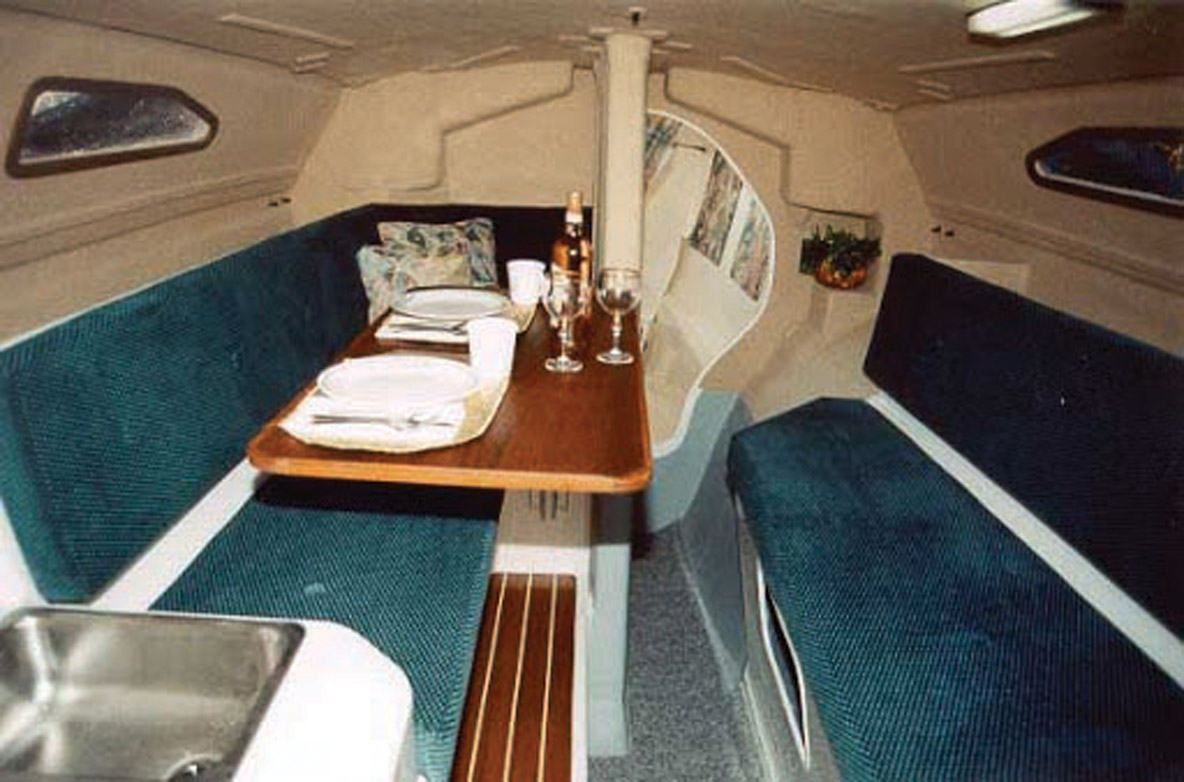
Aboard the 920, to starboard, you find the galley with a sink and two burners, to port, depending on the version, a foul weather gear locker or mini chart table. The saloon settees can be turned into 28” (70 cm) wide berths either side of the centerboard case, which supports the table. Further forward, a closed heads faces a hanging locker, and the forward cabin has a quite wide V-berth for a trimaran of this size, as the forward hull sections are quite voluminous. The headroom of 5’10” (1.78 m) at the entrance, but just 5’1” (1.54 m) further forward may however seem not enough nowadays. But the good ergonomics and the warm, reassuring atmosphere of the teak, and the velvet of the seating, faithful to the image we have of the most prestigious builders of the Baltic. Everything inspires confidence, with sufficient independence to envisage some nice family cruises.
 |
 |
THE PLUSES:
+ Performance under sail
+ Quality of construction and finish
+ Wide range of uses
THE MINUSES:
- Asking price sometimes high
- Transport and stowing ashore can be tricky
TECHNICAL SPECIFICATIONS
Builder: Quorning Boats
Hull length: 30’2” (9.20 m)
Waterline length: 28’8” (8.75 m)
Folded length: 34’5” (10.50 m) Touring / 36’5” (11.10 m) Extreme
Beam: 22’2”/25’7” (6.75/7.80 m)
Folded beam: 10’2”/10’8” (3.1/3.25 m)
Draft: 18”/5’1” (0.45/1.55 m)
Light displacement: 3,970/4,080 lbs (1.80/1.85 t)
Upwind sail: 592/743 sq ft (55/69 m²)
Spinnaker: 786/969 sq ft (73/90 m²)
Gennaker: 430/484 sq ft (40/45 m²)
Air draft: 47’11”/52’10” (14.60/16.10 m)
Berths: 4 Water: 15.8 US gal (60 l)
Production: 168 units from 1996 to 2008
Price: from € 55,000 ex-tax
 |
 |
Corsair F-31
A multihull that almost doesn’t need a motor!
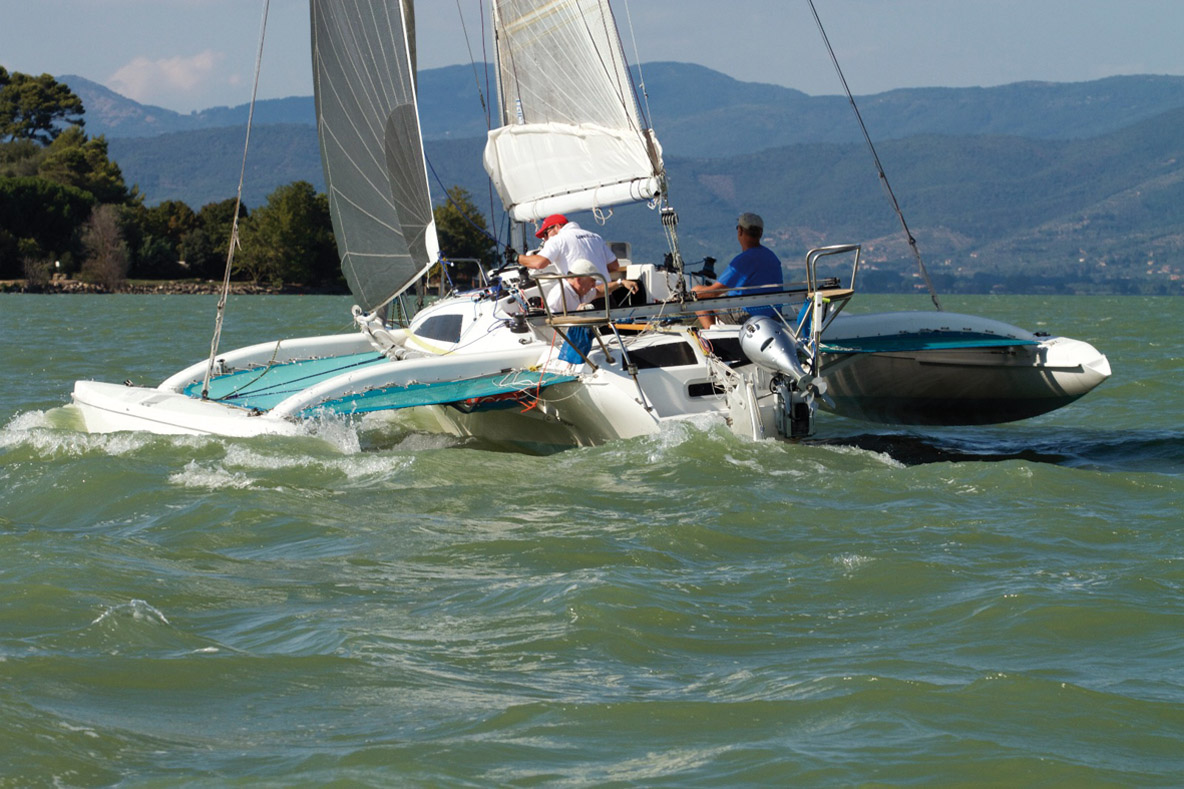
With 300 examples built over more than 20 years, the F-31 is undoubtedly one of the most remarkable 30-foot (9 m) trimarans on the market. Thanks to her incredible potential under sail, this multihull’s outboard motor truly is an auxiliary in the way that sailboat motors used to be.
For a long time seen as overpriced, this foldable and transportable little rocket is now much more accessible. The design of the F-31 is still in tune with the times, with an elegant coachroof and fine, racy hulls. This trimaran is an adaptation of the F-9, intended for amateur construction. Like many models that have enjoyed a long career, the F-31 is available in a variety of versions. The best known are the C for Cruising, and the R for Racing. Between the two, a difference in sail area provides extra horsepower in light airs. When Ian Farrier and Corsair went their separate ways, this model continued her career under the name of the Corsair 31. The C model became the CR and the R version adopted the name RS. A carbon rig was offered, then later there was a onedesign series (1D or One Design). Corsair also developed a central cockpit with an aft cabin: the CC model. As soon as the sails are hoisted and trimmed, it’ll only take you a moment to figure out the character of the F-31: this is indeed an excellent boat, above all built for performance. For the appendages, there is a deep daggerboard for upwind sailing and a long (liftable) rudder with a high aspect ratio for optimum course-keeping. Average speeds are often between 12 and 16 knots, and the most sportily sailed units can even exceed 25 knots. The appeal of the 31 is down to this ability to go fast. An extended mast and a square-topped mainsail would allow you to sail even quicker... but an ordinary sail configuration already has extraordinary possibilities.
Limited volume
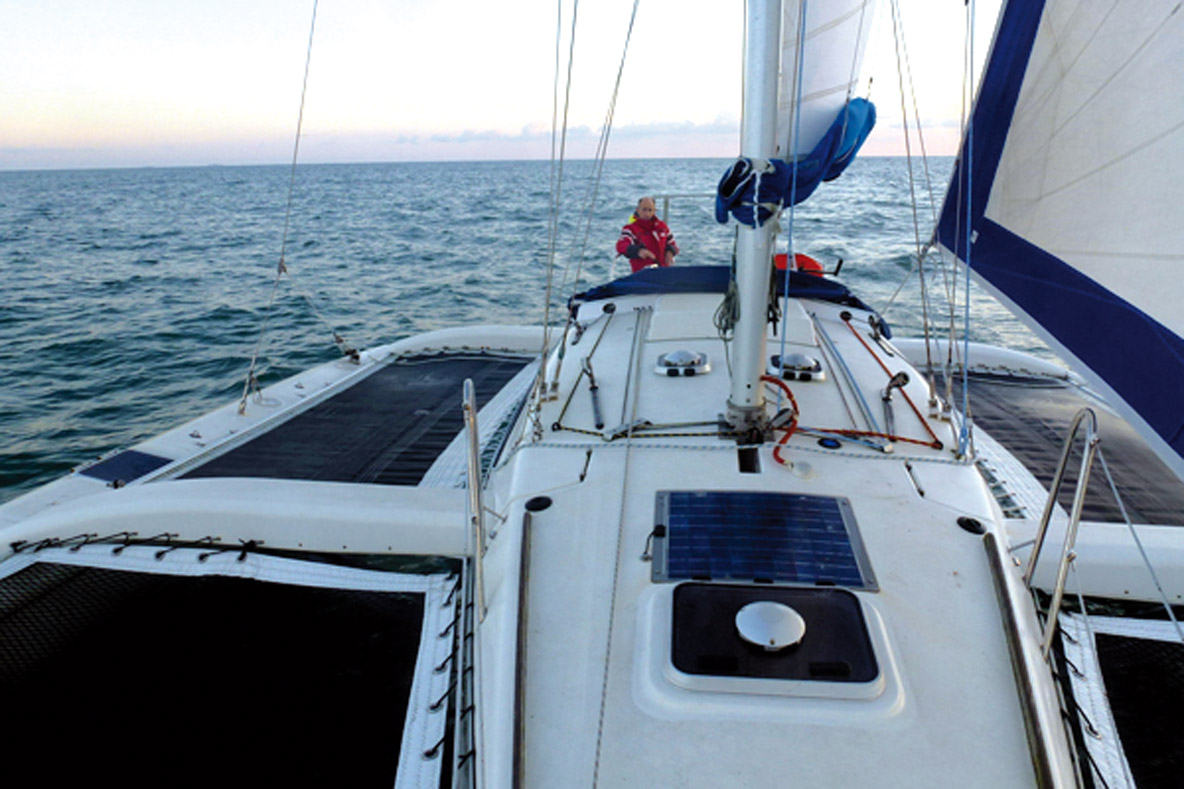
The limited size of this trimaran would generally lend it to coastal use but many crews have ventured into ocean crossings. The only limiting factor being the load capacity, which is very limited here. Though there were some variations to the layout over the years (heads in the bow, next to the daggerboard well, or near the companionway) one constant remains: on board the 31, the volume is limited, as is the width of the berths! The CC version still brings a bit of extra comfort - and above all a bit more privacy. For the rest, the saloon is fitted with a removable table to clear the way and the manhole to access the forepeak requires a certain amount of flexibility: the finish here is rustic, contrasting with the quality of the gelcoat on the outside.
 |
 |
THE PLUSES:
+ Exceptional performance
+ Beam limited to 8’2” (2.50 m) when folded
+ Aft cabin version
THE MINUSES:
- Limited comfort
- Low load capacity
- Narrow cockpit cut in half by the traveler
TECHNICAL SPECIFICATIONS
Builder: Corsair Marine
Architect: Ian Farrier
Hull length: 30’10” (9.40 m)
Waterline length: 27’ (8.23 m)
Beam: 22’5”/8’2” (6.84/2.50 m)
Draft: 16”/5’6” (0.40/1.68 m)
Displacement: 3,750 lbs (1.7 t)
Upwind sail area: 643 sq ft (59.7 m²)
Genoa: 215 sq ft (20 m²)
Mainsail: 427 sq ft (39.7 m²)
Gennaker: 990 sq ft (92 m²)
Production: Around 310 units from 1992 to 2013
Price: from $ 70,000 ex-tax
Escale 39
Great offshore, but also on inland waterways!
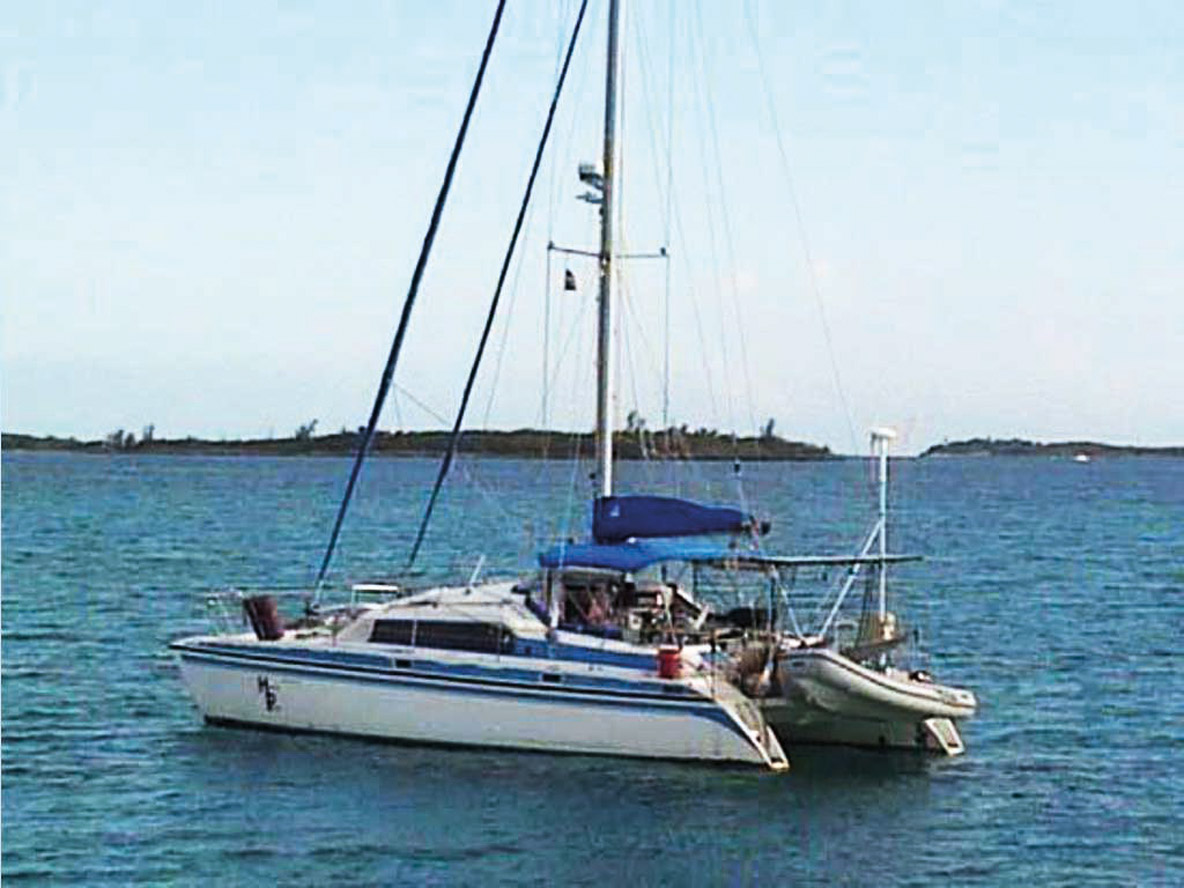
A platform that’s simple to use and above all, very accessible. What you get with the Escale 39 is a multihull robust enough to take you on a trip of several year’s duration. This catamaran has low energy requirements, notably fossil fuel consumption.
At the beginning of the ‘90s, multihulls were still a British specialty. There, priority was given to comfort with very large decks and imposing superstructures. As for the rig, the mast was set very far back, and the genoa was almost twice the size of the mainsail. Concerning this architectural aspect, we can note that the Escale 39 was a step ahead: the one-before of the latest generation Lagoons, initiated with the 39 in 2013, is the best illustration of this... Another characteristic, a moderate beam to limit shipping costs and above all to allow you to discover canals and inland waterways. A concept that is still being defended today by the American Gemini catamarans. Launched in 1991, the Escale 39 was already significantly out of step with the French and Australian productions, which were significantly more efficient. This didn’t prevent it from seeing around a hundred examples built.
A sailplan that's easy to handle
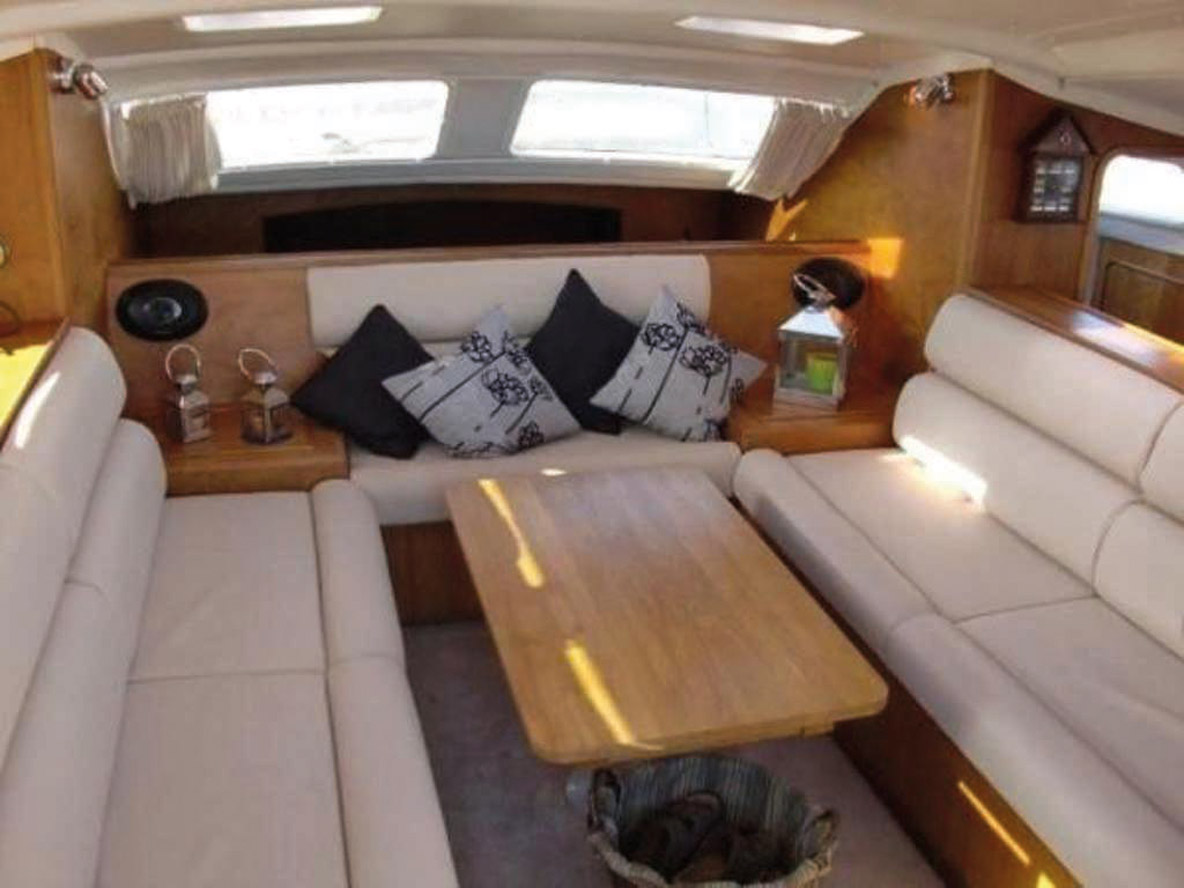
The Escale 39 is in fact an evolution of the 37. The nacelle, protected by an embryonic third hull, gained a little height. The aft cabins house two large bunks fitted athwartships, housed in the chine, and the shipyard incorporated sugarscoops. Three versions of accommodation were available. The charter version even has ten berths... This model is not, as you can see, the fastest multihull in the 38-40 foot category. It is heavy, the weight is not ideally centered, there is significant windage and the very shallow skegs (that allow you to take the ground) obviously limit upwind performance. That said, the big genoa is so easy to set, that you’d unfurl it even for a ten-minute tack or in a fleeting breeze. The Escale suits a crew concerned about comfort at anchor - the circulation between the interior and the cockpit is excellent - but not necessarily in a hurry to arrive at the other side of the ocean.
THE PLUSES:
+ Excellent basis for refitting
+ Possibility to sail on canals
+ Ease of handling
THE MINUSES:
- Quite dated design
- Limited performance
- Deck plan that is not very ergonomic
TECHNICAL SPECIFICATIONS
Builder: Prout Catamarans
Architects: David Feltham & Rob Underwood
Material: balsa/polyester sandwich
Hull length: 35’8” (10.86 m)
Waterline length: 34’ (10.37 m)
Beam: 18’3” (5.56 m)
Draft: 3’ (0.95 m)
Displacement: 14,110 lbs (6.40 t)
Upwind sail area: 840 sq ft (78 m²)
Production: 100 units built from 1991 to 1995
Price: from € 50,000 ex-tax
Leopard 38/39
Another life after coming out of charter
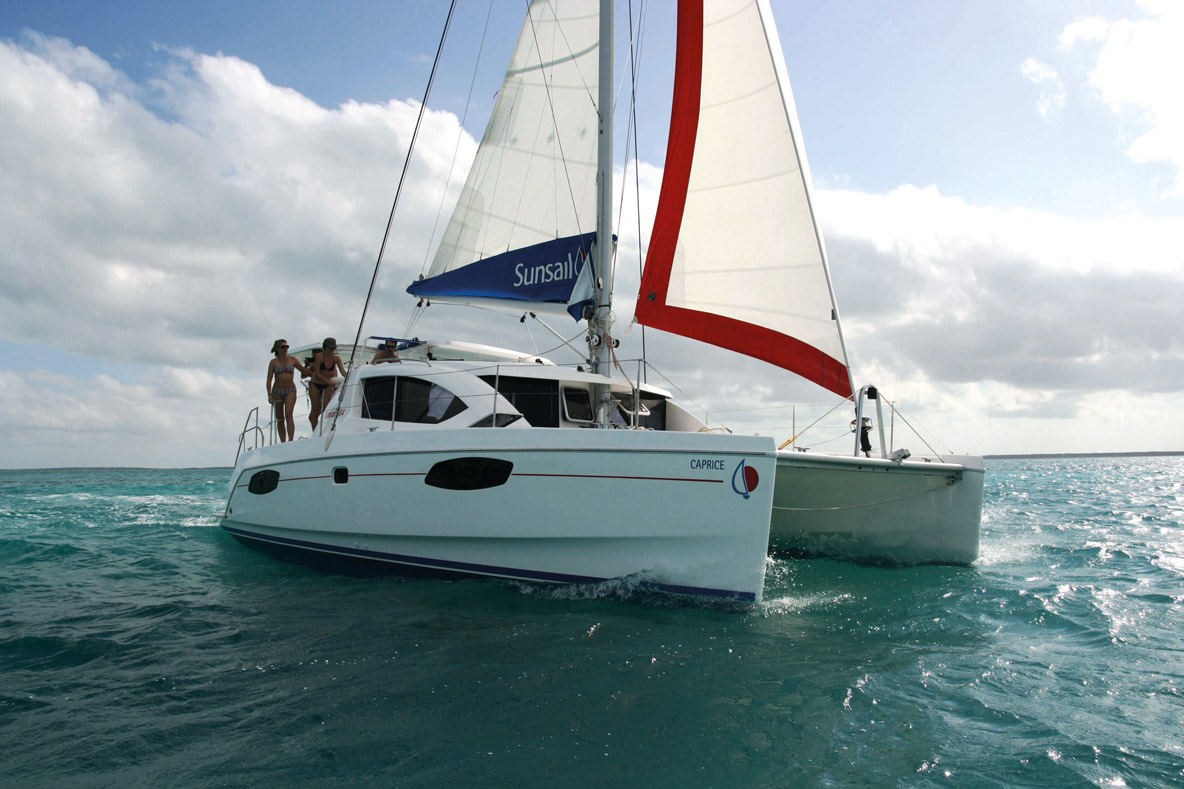
This is by far the most recent of the models presented in our selection: as for its sail/weight ratio, with a value of 10.10 m²/t, it just barely fits our criteria... Let’s get straight to the point: if we have chosen this model, it’s because it is a good example of a multihull for going blue water cruising with the family after a career in charter.
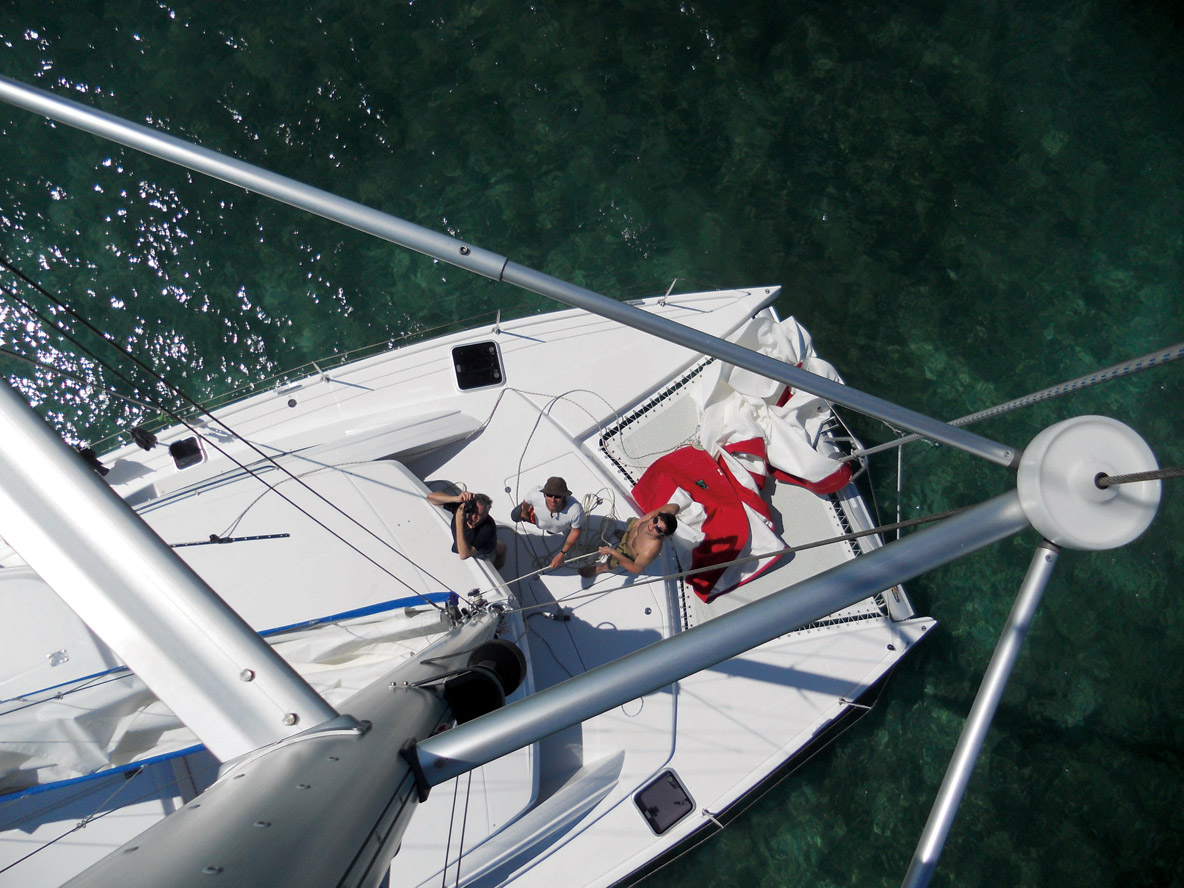
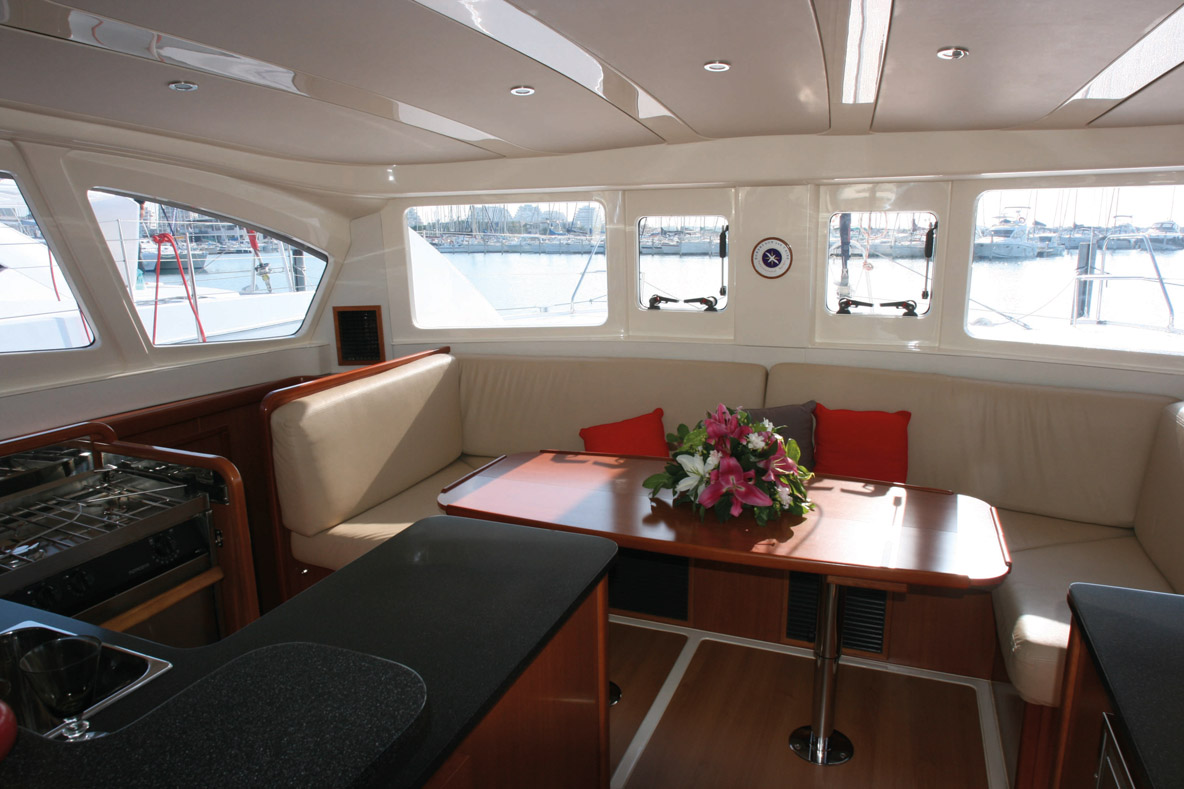
Leopard 38, Sunsail 384, Leopard 39, Moorings 3900... Four names for an almost identical catamaran: the last two - 126 examples built - are equipped with a polyester bimini as an extension of the coachroof, and a rigid cap over the helm station. On the 38 and 384 (produced in 2009 and 2010 in 69 examples), the bimini is slightly raised and the helmsman contends with a canvas protection. Another special feature: the Leopard, with its three cabins, is dedicated to owners, while the other two charter models are equipped with four cabins. Designed to withstand the harsh treatment of chartering - that is, 150 to 200 days of sailing per year - the Leopard 39 has benefited from an “industrial process” right from its design, with regard to plumbing, electrics, the motors... The peripherals are therefore resistant, just like the structure and the rig, which are built to be up to the job. Despite its (demanding) specifications imposed by Sunsail / The Moorings, the smallest of the Leopards manages to integrate a saloon, galley, (mini) chart table and three or four cabins - in less than 40 feet/12 meters of hull length. The only downside is the reduced floor space in the saloon.
Nearly 18 knots during our test!
A pleasant surprise on the water: despite its 100% cruising orientation, the Leopard 39 performs honorably on all points of sail. Some figures? Our tester Philippe Echelle was tempted by a trip out in a good breeze: a 31-knot gust and a big wave propelled the catamaran to 17.6 knots! If the silhouette is heavy from the front and in profile, the rig is slender and the architects managed, thanks to the marked chines, to preserve a moderate waterline beam - a guarantee of good average speeds. From the helm station, which can accommodate two people, maneuvers are within easy reach. A solo sailor or a family crew will not feel overwhelmed by this machine. A good cruising catamaran, strong and well thought out.
 |
 |
THE PLUSES:
+ Quality/price ratio
+ Overall robustness
+ Availability on the market
THE MINUSES:
- Limited floor area in the nacelle
- Tight nav station
TECHNICAL SPECIFICATIONS
Builder: Robertson & Caine
Architects: Morelli & Melvin
Hull length: 37’6” (11.43 m)
Waterline length: 36’1” (11.00 m)
Beam: 19’10” (6.04 m)
Draft: 3’5” (1.05 m)
Displacement: 20,075 lbs (9.10 t)
Mainsail: 615 sq ft (57 m²)
Genoa: 375 sq ft (35 m²)
Gennaker: 1,010 sq ft (94 m²)
Production: 195 units built from 2009 to 2014
Price: from € 155,000 ex-tax
Nautitech 40
A rigid bimini perfect for solar panels
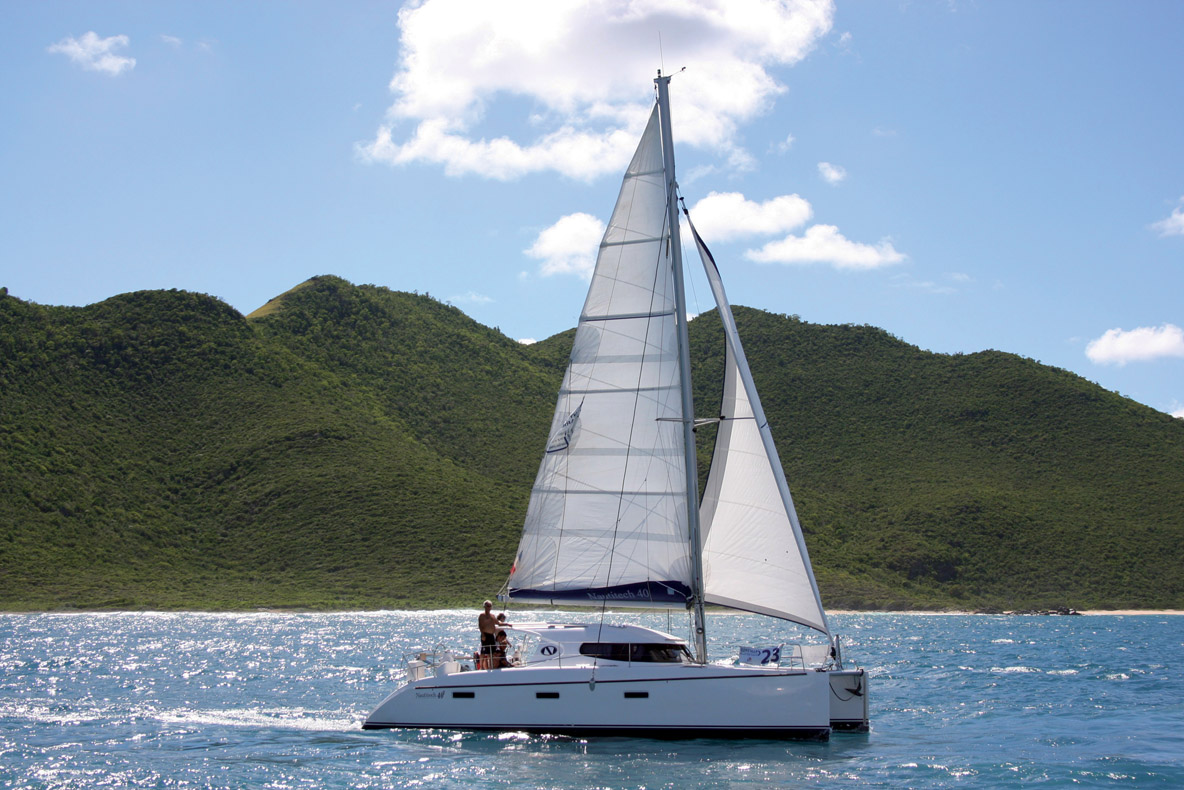
A compact catamaran that gives a lot for a tight price. And its performance under sail, without being that of a racer, comes as a pleasant surprise. At the price of circulation that lacks a little fluidity, this great classic wants nothing or almost nothing. You’ll be able to spend many months on the water.
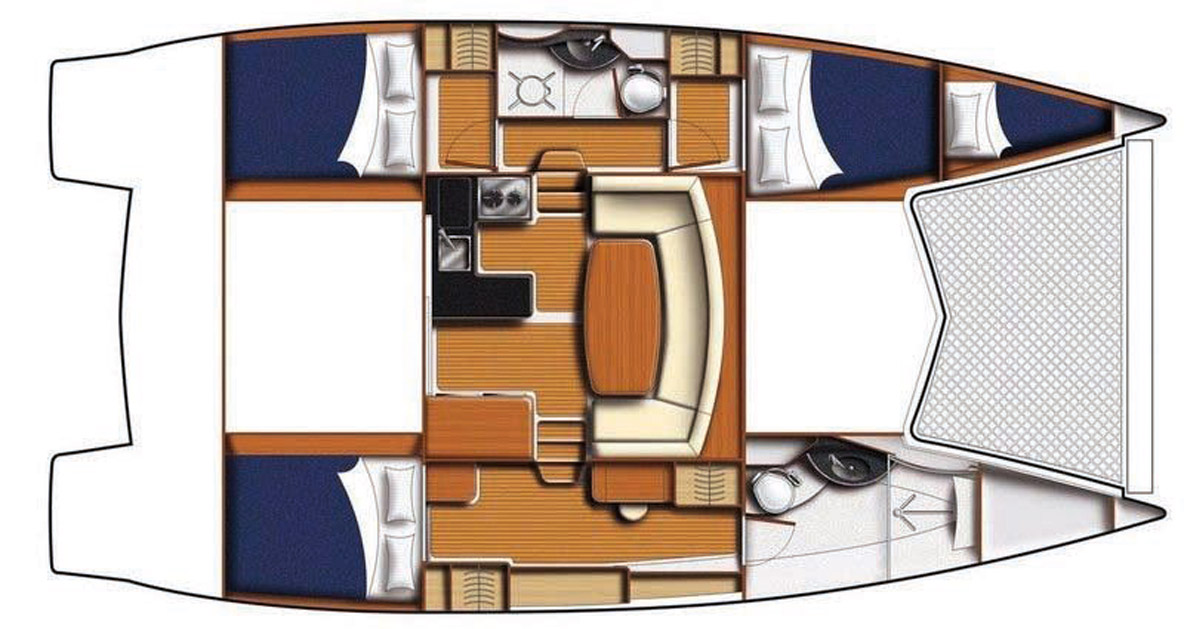
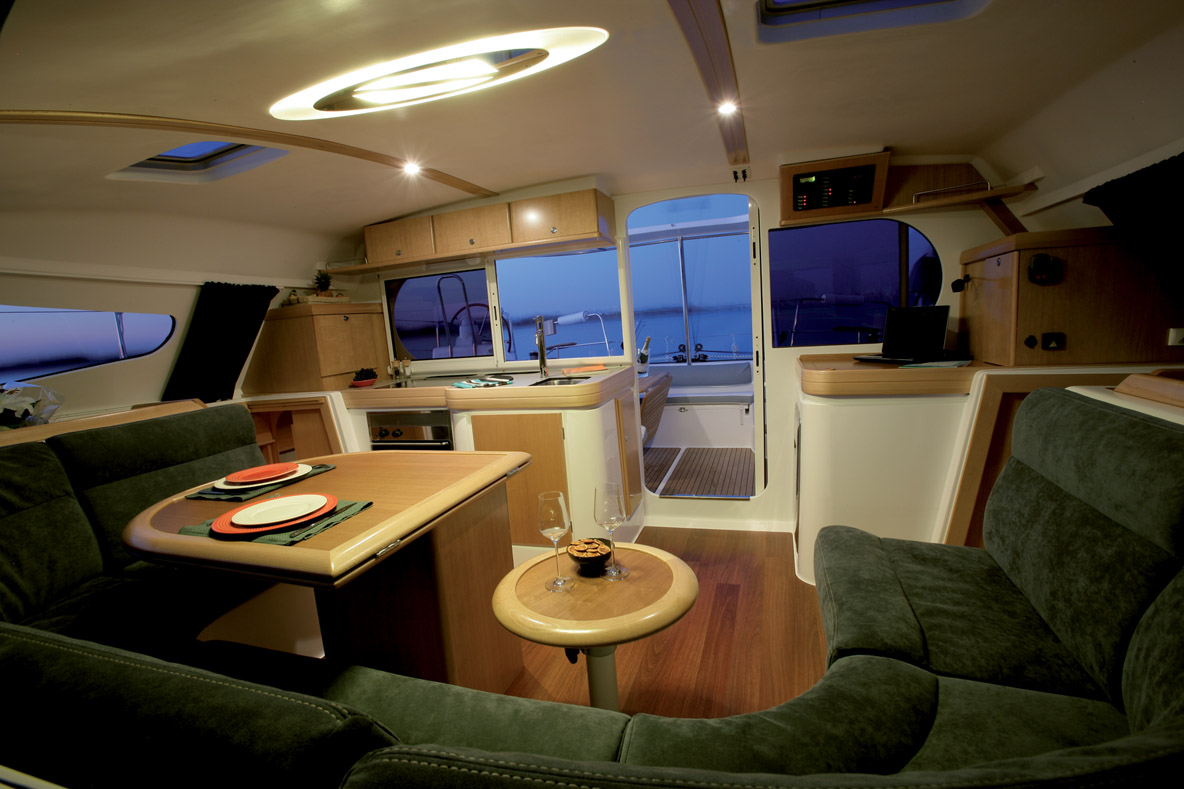
The Nautitech we’re looking at inherited, in 2003, the slightly longer hulls and the layout of the 395 but benefited from a new deck mold. The coachroof was more modern - with windows well protected from the sun’s vertical rays - and above all, it continued with the famous rigid bimini which ensures very effective protection against rain, spray and... the sun. To our knowledge, this was the first multihull in Europe equipped with a “hard top”. Today, such biminis are in evidence on almost all cruising catamarans... and this allows the installation of solar panels.
Rigid bimini and flush-decked access
The Nautitech 40 was immediately appreciated by charterers for its marine qualities and its sleeping capacity, as well as the flush-decked access between the cockpit and the saloon. The layout is simple and easy to understand - you can easily handle this boat even when sailing alone. This is the real plus of this catamaran, accessible to families without being boring under sail - its sail area ratio is 11.76 m²/t. Though the deck layout is irreproachable - fluid circulation, comfortable trampolines - some points are less convincing. In terms of weight centering, the 40 could do better: the anchor remains on the bow of the port hull. The helm stations are pushed back on each hull, with a satisfactory view of the sail plan and the side you are on. But beware of the blind spot with the coachroof: you have to get used to watchkeeping through the windows. Finally, that famous bimini – it’s pretty low, and will inevitably meet the skulls of distracted crew members leaving the cockpit a little quickly…
The yard took this issue on board: The 40.2 version, launched in 2005, offered some useful steps to leave the cockpit while the bimini was trimmed down to facilitate access. Nautitech took advantage of its refit to launch an Owner’s version - only 10 of these are available, so it is logically much sought after. Other noteworthy modifications on board the 40.2: a slightly larger galley integrates the trash can, and the tilting helm seats become fixed on the engine covers, and finally, clever structural modifications allow the berths to be lowered by 7”/18 cm. More comfort and more visual space are always good. In 2008, the shipyard modified its woodwork and opted for lighter-colored woods.
THE PLUSES:
+ Strong and rather well finished catamaran
+ Large sleeping capacity
+ Easy maintenance
THE MINUSES:
- Weight centering could be perfected
- Bimini too low
TECHNICAL SPECIFICATIONS
Builder: Nautitech Catamarans
Architects: Mortain/Mavrikios
Hull length: 39’4” (11.98 m)
Waterline length: 37’9” (11.50 m)
Beam: 21’ (6.40 m)
Draft: 4’ (1.20 m)
Displacement: 16,315 lbs (7.40 t)
Mainsail: 540 sq ft (50 m²)
Genoa: 398 sq ft (37 m²)
Production: 90 units built from 2003 to 2011
Price: from € 150,000
Seawind 1200
Simple and quick with low consumption
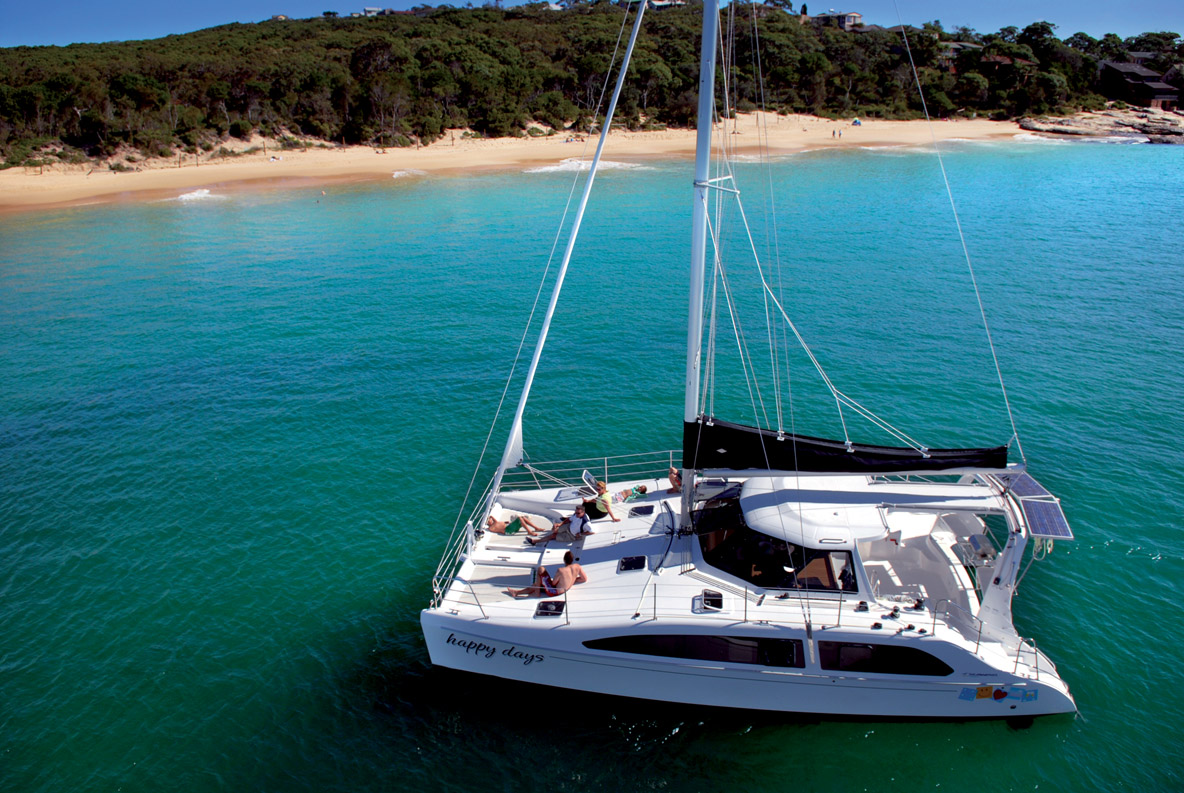
They’re fast, those Seawinds! And good performance is best guarantee of limiting engine use. The 1200 is a proven model with an excellent reputation in terms of strength and longevity. All you need to do is find one – not as easy as all that if you’re based in Europe.
So where can a 1200 be found? In Australia of course, its country of origin! Although the builder is today based in Vietnam and does good business in the United States, it hasn’t yet made the break into Europe. But Seawinds are great travelers… If you are familiar with its successor, the 1160, you will not be surprised by the 1200: the 1160 provided a basis which was hardly altered. The same slender hulls, heightened by imposing lateral windows, and again, a compact nacelle. On the other hand, there is no three-section door which folds up under the rigid bimini. And this is the real difference between the two models: the 1200 adopts a classic passage from the cockpit to the bridgedeck, with a rear coachroof structure still in place, while the 1160 becomes an Open catamaran.
Speedy and fun in a good breeze
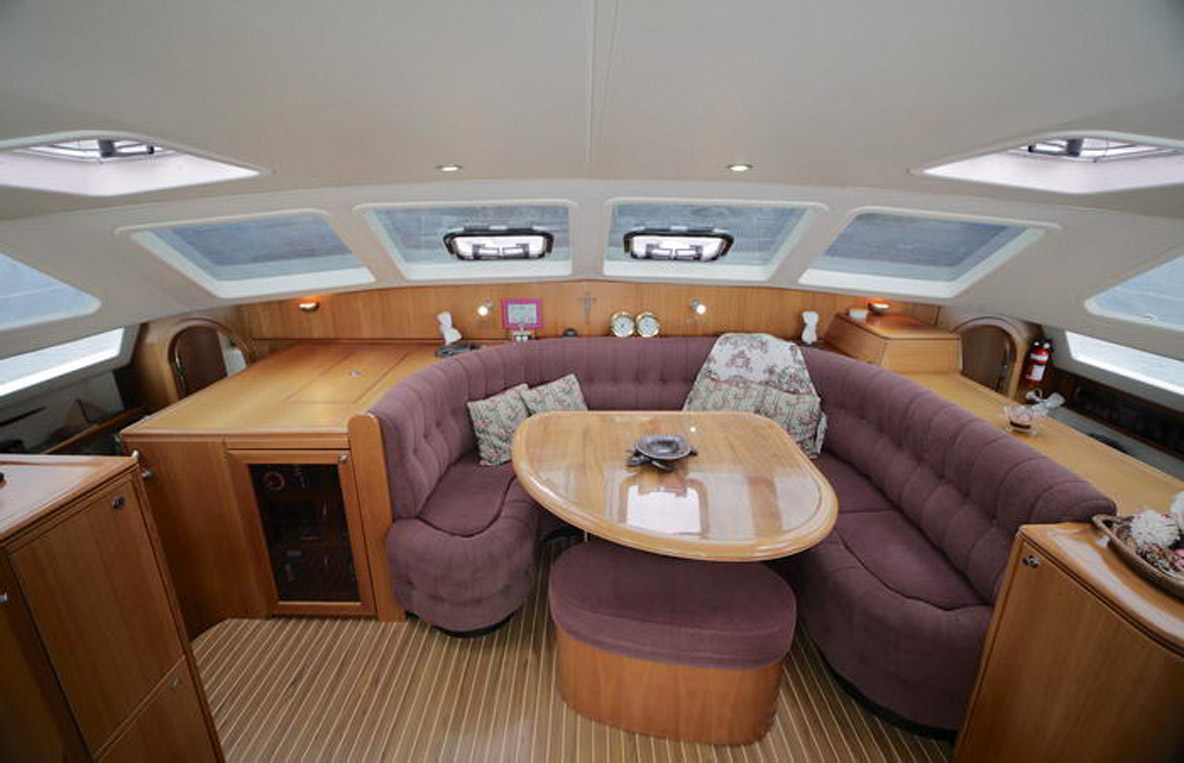
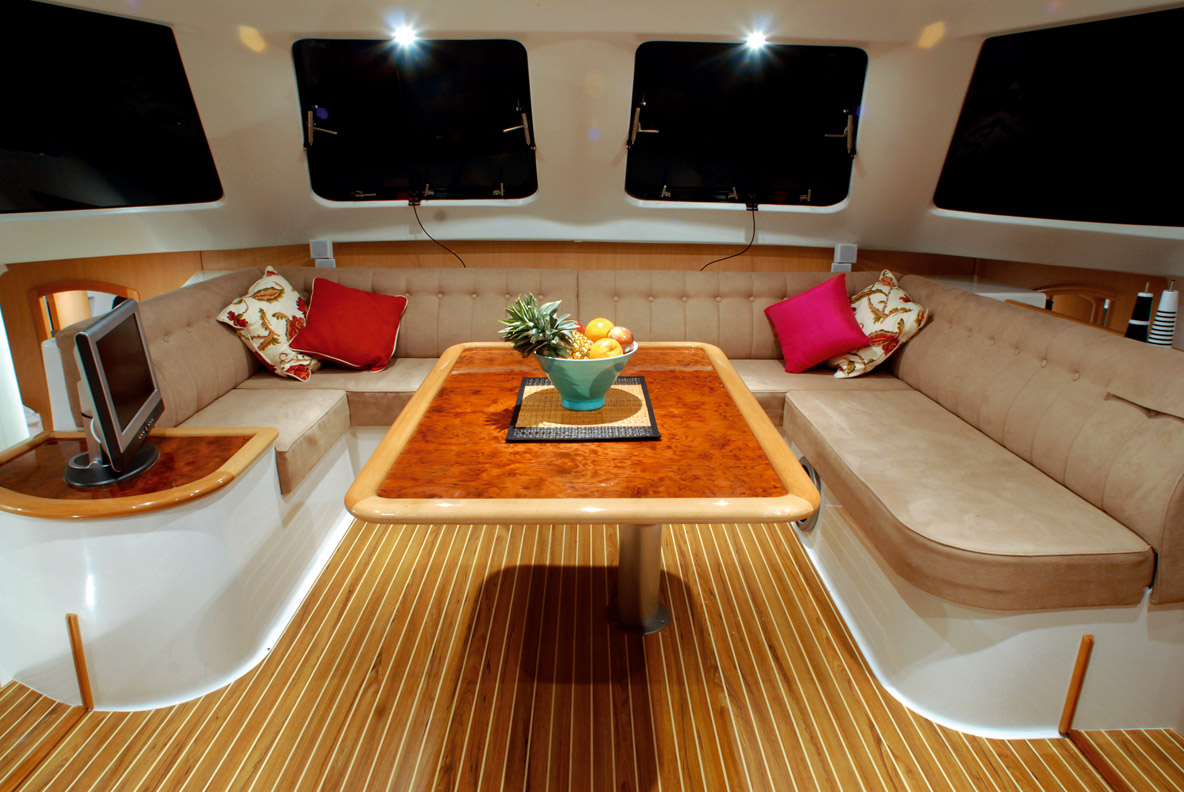
Under sail, helped by its slim rig and moderate displacement, the 1200 proves to be fast and even particularly pleasant in a good breeze. Here is a cruising cat that you’ll enjoy helming, and that can be hard to find. And you won’t need to worry about high engine hours. As for all the lines, the builder took great pains to present a fluid deck plan, and above all, control lines which all return to the helm position; handling a 1200 singlehanded or as a couple is therefore easy. Inside, the nacelle is occupied by a large saloon – it can accommodate 10 people. The whole is wellhandled, with 6’6” (2m) of headroom and a 360-degree view of the horizon. The galley is fitted in the starboard hull, without being isolated, as the nacelle continues partly over the hulls. The builder offered three or four cabins, each with wide double berths and a full bathroom.
 |
 |
THE PLUSES:
+ Fast, light catamaran
+ Fluid deck plan
+ Nacelle 100% dedicated to the saloon
THE MINUSES:
- Datedull design
- A little low to the water in heavy seas
TECHNICAL SPECIFICATIONS
Builder: Seawind Catamarans
Material: vinylester/foam sandwich
Hull length: 39’8” (12.10 m)
Waterline length: 37’5” (11.40 m)
Beam: 21’4” (6.50 m)
Draft: 3’7” (1.10 m)
Unladen displacement: 15,450 lbs (7.00 t)
Sail area: 850 sq ft (79 m²)
Mainsail: 613 sq ft (57 m²)
Genoa: 237 sq ft (22 m²)
Water: 211 US gal (800 l)
Production: 50 units from 1996 to 2006
Price: from € 170,000 ex tax
Lagoon 410
Still just as modern… and even lighter!
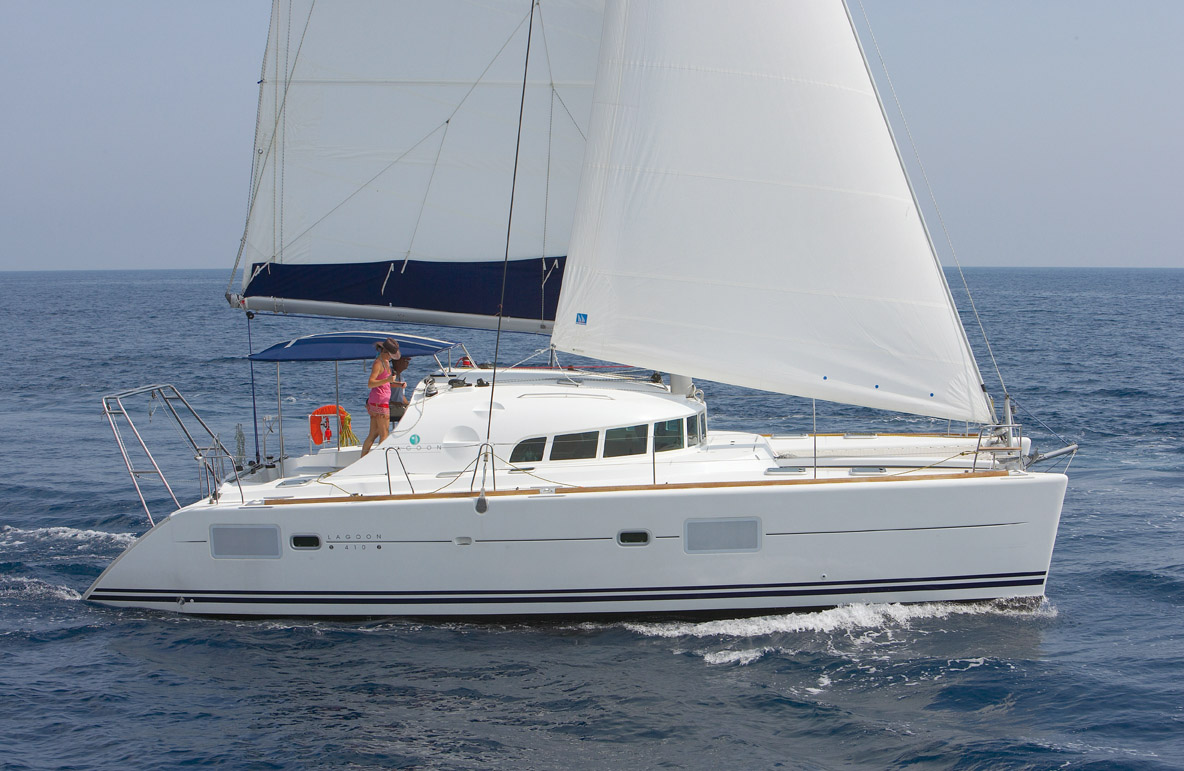
Innovative with its imposing coachroof flanked by a battery of vertical rotunda-style windows, the Lagoon 410 remains a benchmark among blue water cruising catamarans after winning over the charter industry.
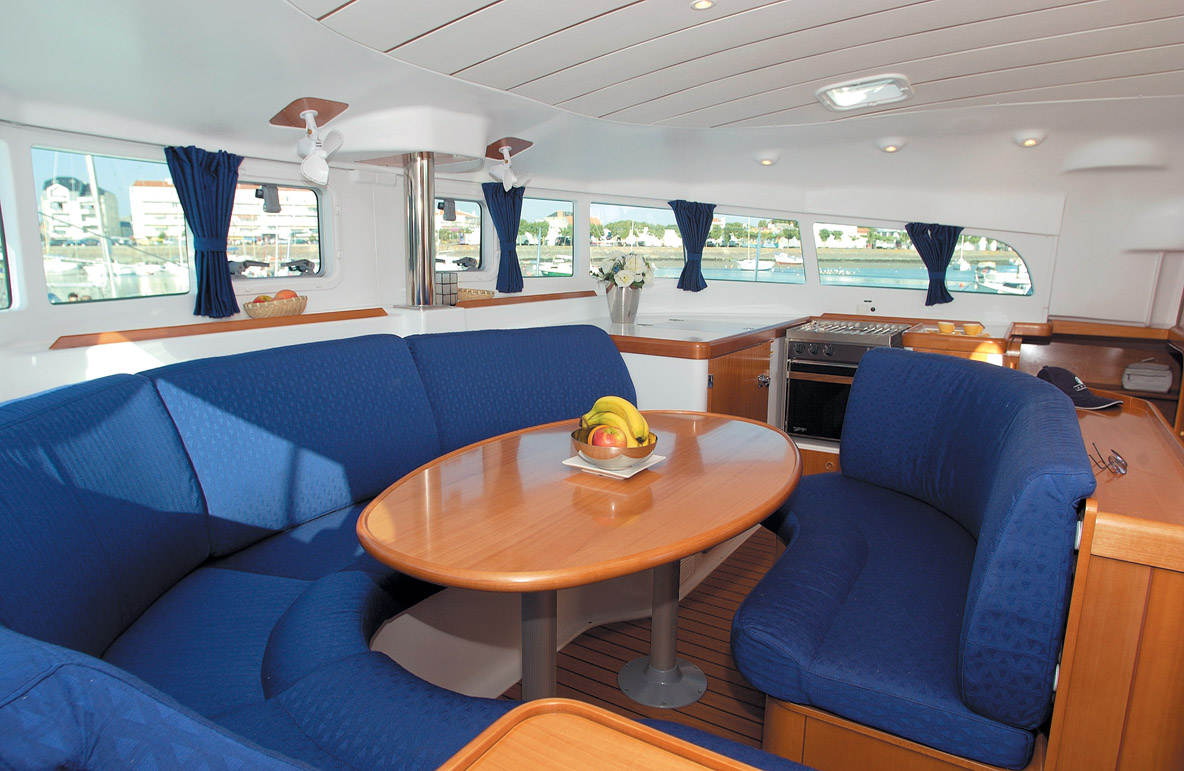
Launched in 1997 - two years before the release of the famous 380 - the 410 prefigures the current Lagoon generation with clear priority given to comfort, obtained thanks to a large nacelle and above all the vertical glazing. This was the first model launched after the takeover of Jeanneau - and therefore of Lagoon - by Bénéteau in 1995. It was the Lagoon 410 that sealed the rise of the manufacturer who has gone on to become the world’s leading catamaran builder. In September 2002, the assembly line counter sat at 120 units when the shipyard decided to revise the deck plan. Under the name Lagoon 410 S2, the halyards and reefing lines were brought back to the helm station - itself redesigned for easier access - with an electric winch as a bonus. Production, far from weakening like most of the models launched more than five years earlier, continued to accelerate. Note: the later catamarans benefited from larger windows in the hulls.
A real mile-eater
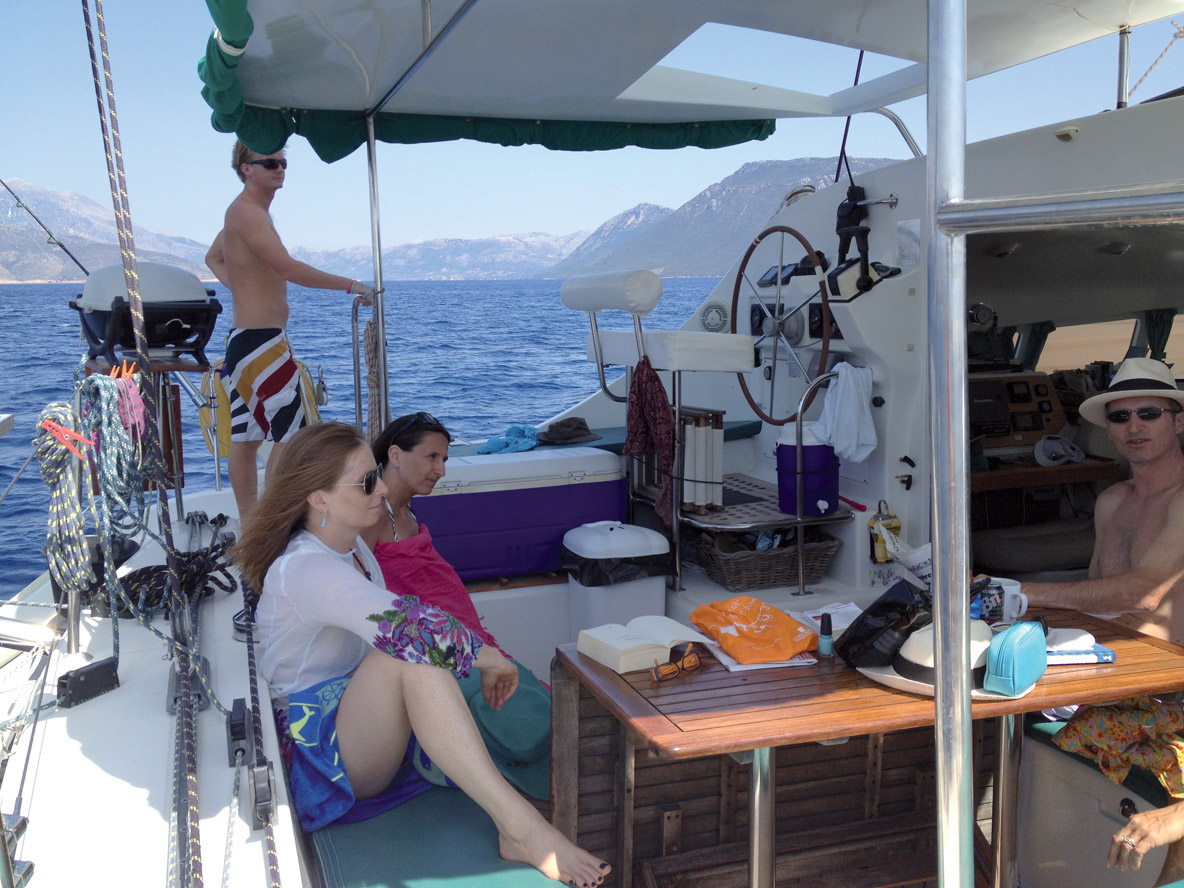
Aboard the Lagoon 410, you can cut the engines and sail. From 8 to 10 knots of wind, the Lagoon proves to be fast and capable of holding good average speeds: a real mile-eater! Of course, the feel at the helm is not that of a Tornado... but the reasonably fine hulls go smoothly through the chop. At seven tons lightship, the 410 looks like a high-tech machine compared to the 400, at 10.35 t, or the 40 at 10.89 t. Obviously, folding propellers and gennaker configuration will further boost the performance of this catamaran, which is just waiting to be used. The only drawback is when close-hauled, where the very short skegs mean the boat won’t sail too close to the wind. With its thin hulls, the 410 is logically sensitive to being overloaded, especially forward: be careful not to give in to too much equipment. This Lagoon likes to remain a simple multihull, without a generator, without air conditioning, and is easy to maintain and equipped with very economical engines. With good solar panels, this catamaran is ideal for a family heading off blue water cruising, and looking to do so with near self-sufficiency.
 |
 |
THE PLUSES:
+ Excellent compromise between speed and comfort
+ Robust structure
+ Well suited to sailing in tropical waters
THE MINUSES:
- Perfectible deck plan aft and in the cockpit
- Narrow forward berths
- Engines under the rear berths
TECHNICAL SPECIFICATIONS
Builder: Lagoon
Architects: VPLP
Hull length: 40’7” (12.37 m)
Waterline length: 38’3” (11.67 m)
Beam: 23’3” (7.09 m)
Draft: 4’ (1.20 m)
Displacement: 15,875 lbs (7.2 t)
Mainsail: 570 sq ft (53 m²)
Genoa: 388 sq ft (36 m²)
Production: 283 units built from 1997 to 2006
Price: from € 110,000
Punch 12.50
A more environmentally friendly material
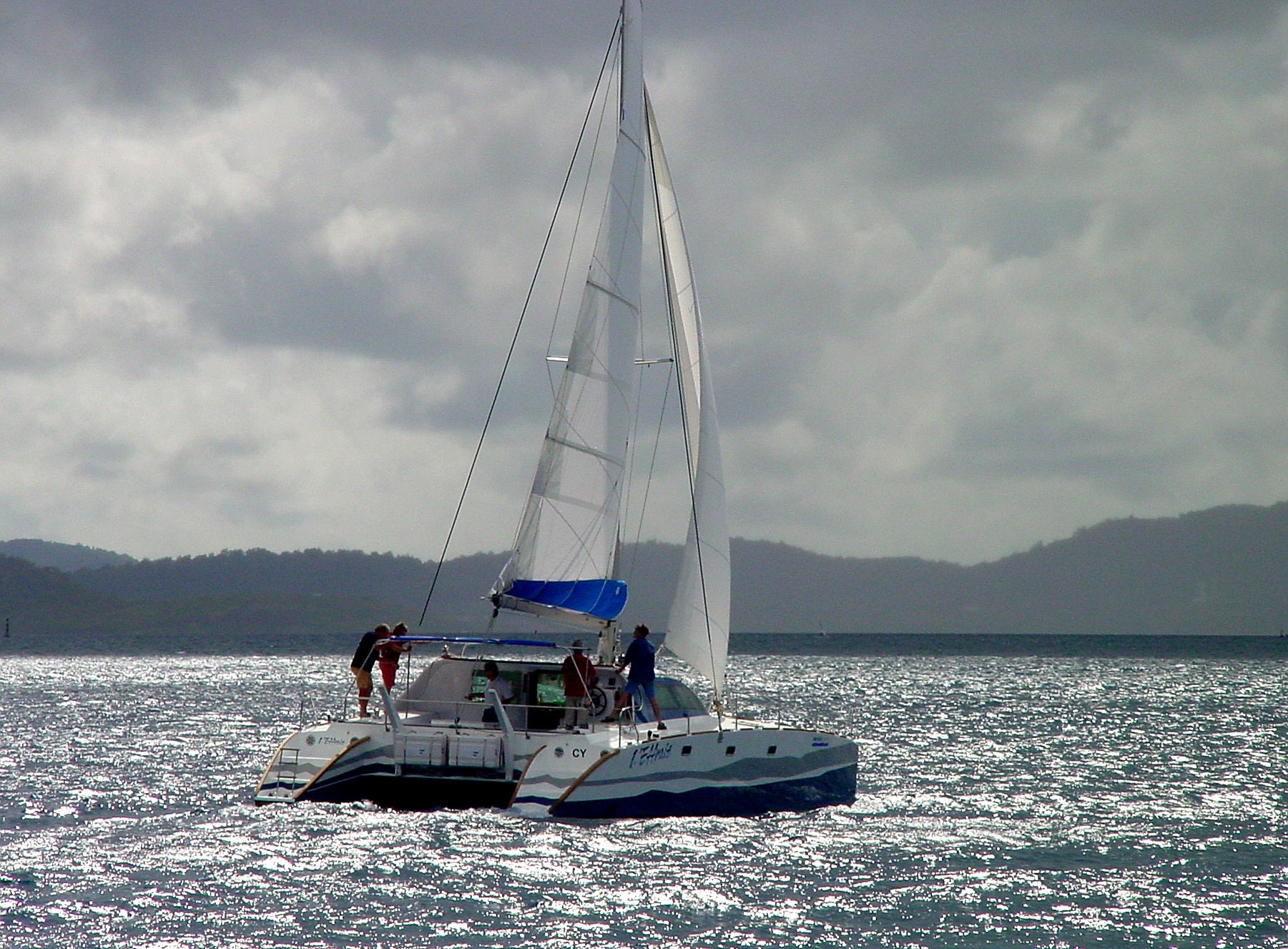
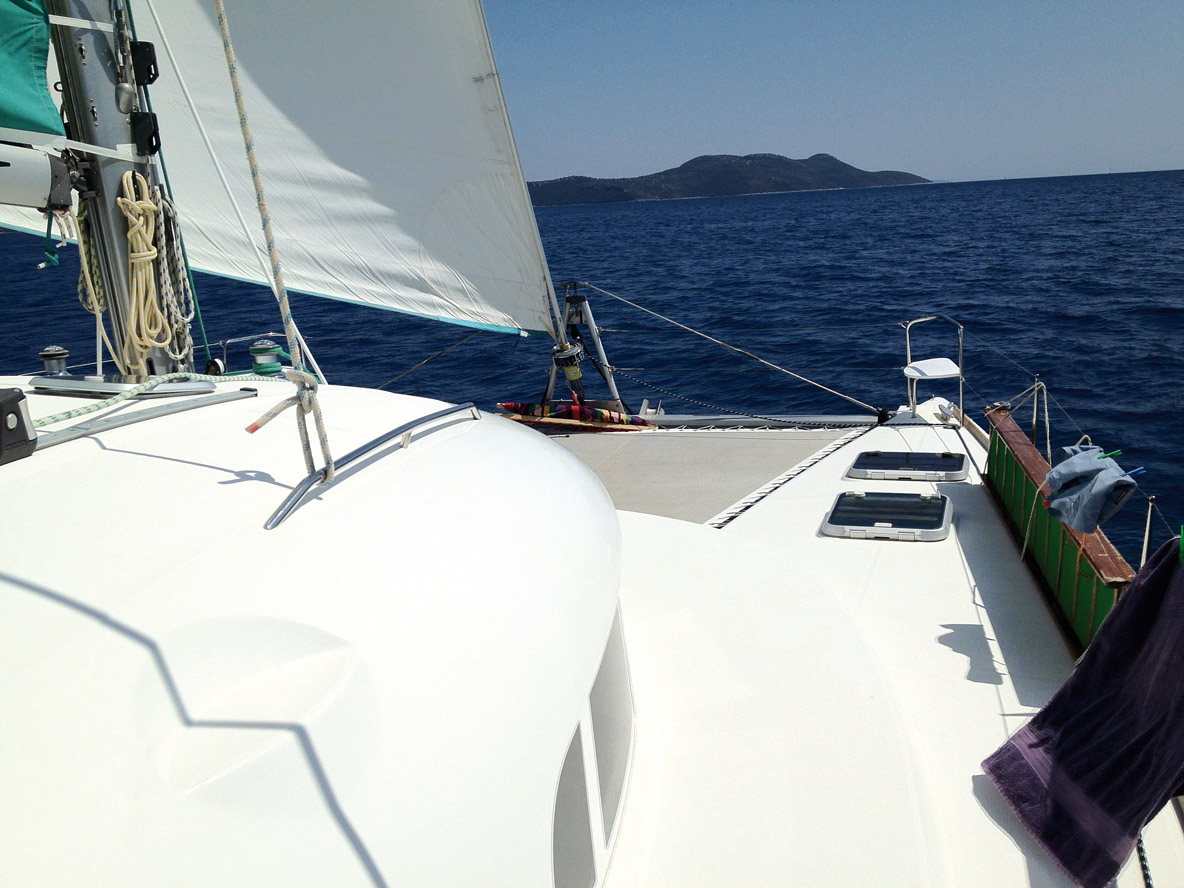
Constructing in wood/epoxy and its great simplicity of use are the two strong points of this catamaran which has been very popular both in the Caribbean and in Europe. A real favorite on the second-hand market.
This catamaran is undoubtedly the most emblematic model ever produced at the Multicap Caraïbes shipyard - see our complete article in this issue. Rigid, robust and uncluttered, the Punch 12.50 remains light and easy to sail either short- or single-handed. Its original rig with a sensible, moderate mainsail leech, can easily be boosted by a square-topped sail, and this would be an easy way to gain some horsepower for light airs work. This catamaran is particularly at ease in in windier conditions and copes rather well with heavy seas - its pitching remains moderate. Many crews have completed ambitious long-distance cruising projects aboard this model all for a limited operating budget.
The charm and the pitfalls of wood...
Inside, the charm of the wood is apparent – you might would almost forget that the nacelle offers a limited volume and that the windows must be closed to ensure a protection against the greenhouse effect when the sun is high in the sky. Thanks to the absence of a headlining, the interiors age well and maintenance is easy. Ventilation is very well handled. All in all, a ply/epoxy construction like this can stay in perfect condition for decades... provided it is perfectly maintained (or restored). A catamaran that has been tossed around a bit and then put in the dry for two or three years with any of the boards left opening up can turn into a rot trap. The fact remains that boats of wood construction are obviously so much more eco-friendly than the polyester resin versions that are made in molds...
THE PLUSES:
+ Potential performance catamaran
+ Ease of handling
+ Pleasantness of wood as a material
THE MINUSES:
- Sensitive to lack of maintenance
- Bunks are quite narrow
TECHNICAL SPECIFICATIONS
Builder: Multicap Caraïbes
Architects: Mortain/Mavrikios
Material: plywood/epoxy
Hull length: 41’ (12.50 m)
Waterline length: 41’4”/42’2” (12.60/12.85 m)
Beam: 21’ (6.40 m)
Draft: 3’11” (1.20 m)
Displacement: 14,330 lbs (6.5 t)
Mainsail: 570 sq ft (53 m²)
Genoa: 355 sq ft (33 m²)
Spinnaker: 1,184 sq ft (110 m²)
Production: 20 units from 1995 to 2010
Price: from € 60,000 ex-tax
Privilège 435/445
A four-star second-hand choice
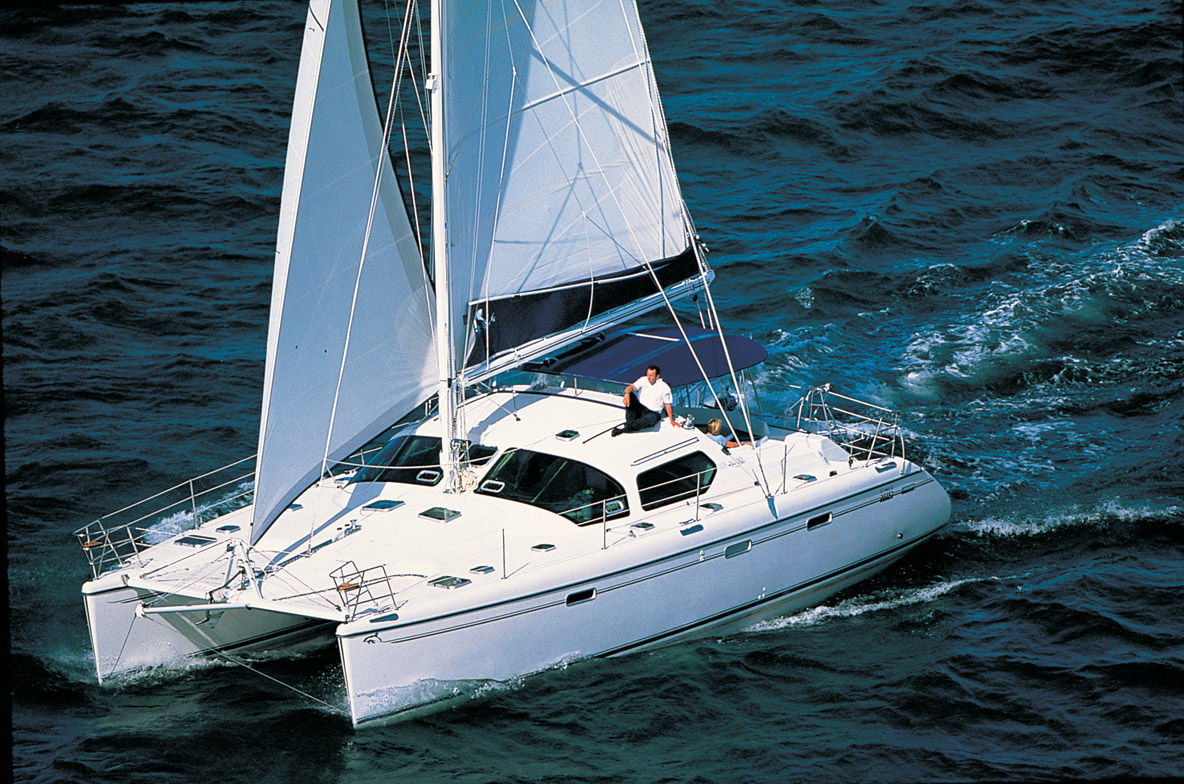
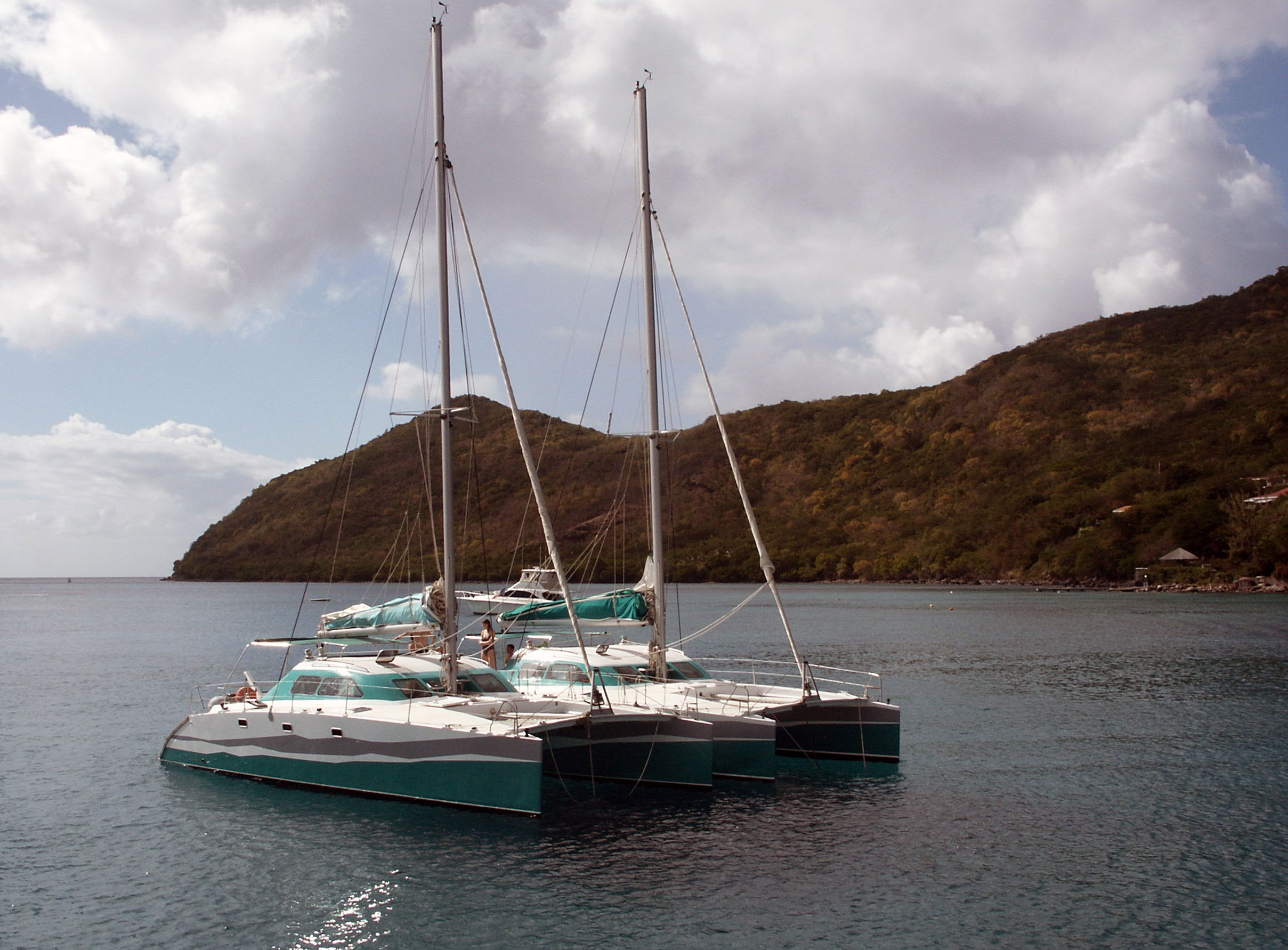
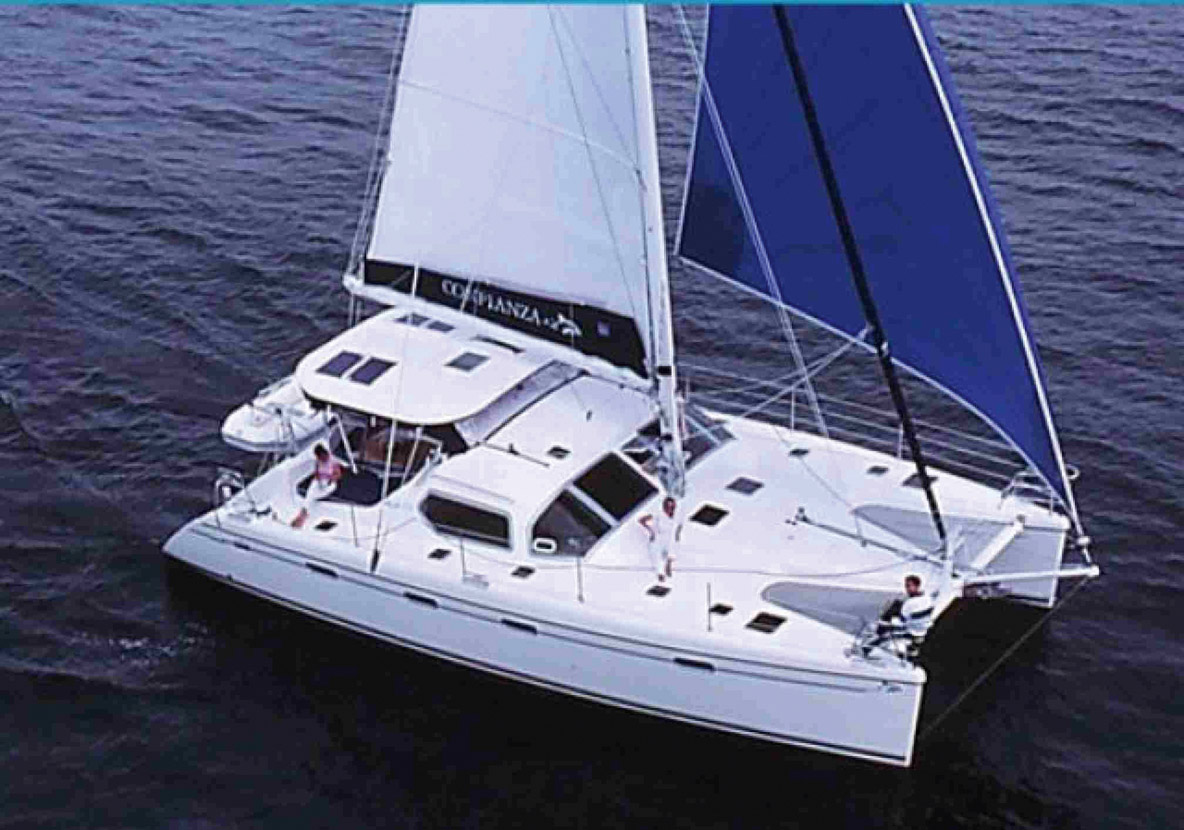
The hulls of this Privilège are fairly narrow. A good point for performance; and between the two bows sits the rostrum, a false central hull that offers a large volume for creating the most comfortable cabin on board.
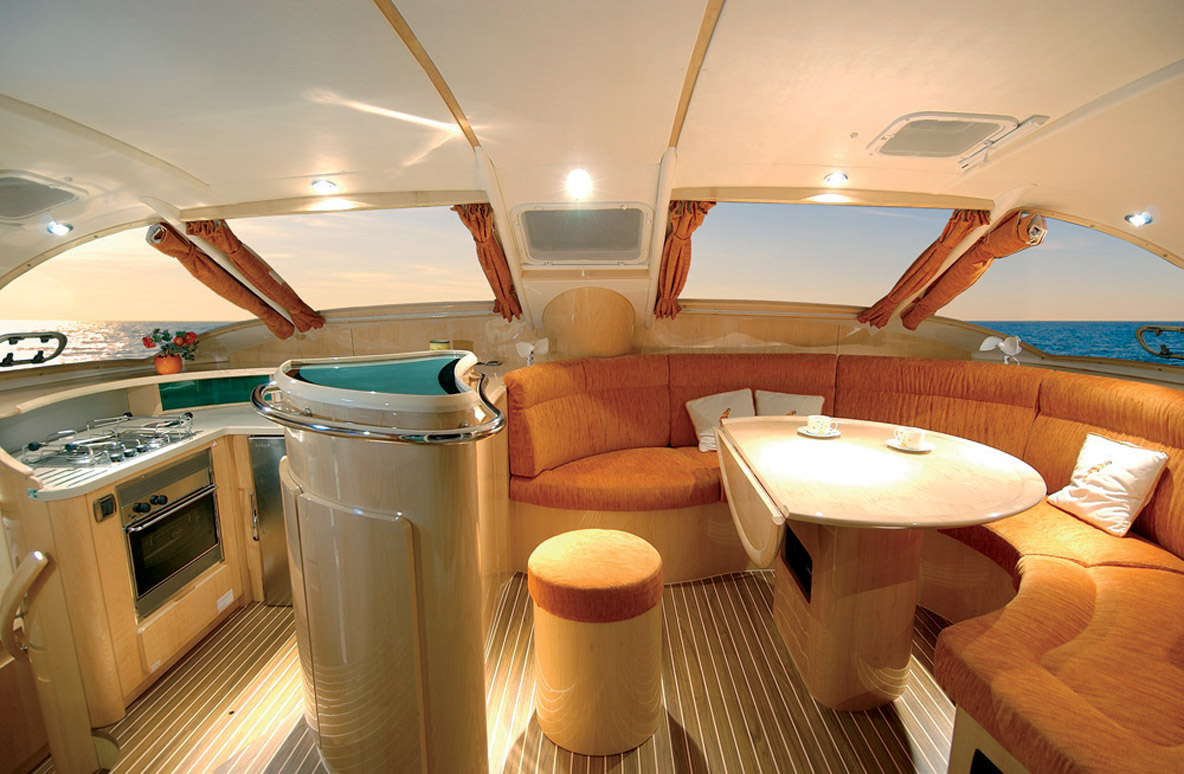
The 435, launched in 1999 replaced the 42. The Privilège touch? The famous central rostrum, a kind of third hull which doesn’t touch the water. A clever device which allows one or two cabins to be fitted, with much more convincing comfort than on the classic cats. At the dawning of the 2000s, the Les Sables d’Olonne-based builder was still working closely with the charter companies but was taking great pains to provide comfort and a level of finishing noticeably superior to that being offered by its competitors. The private owner’s version is worth the visit! The 445, direct descendant of the 435, got longer sugar scoops as standard – they were already available, but only as an option. Although this model became the smallest in the range, it’s a four-star option on the second-hand market as it is nevertheless big enough for some nice cruising in the Tropics. The accommodation ages rather well and most of the models are very well equipped, which justifies a relatively high price.
The right size for tradewind passage-making
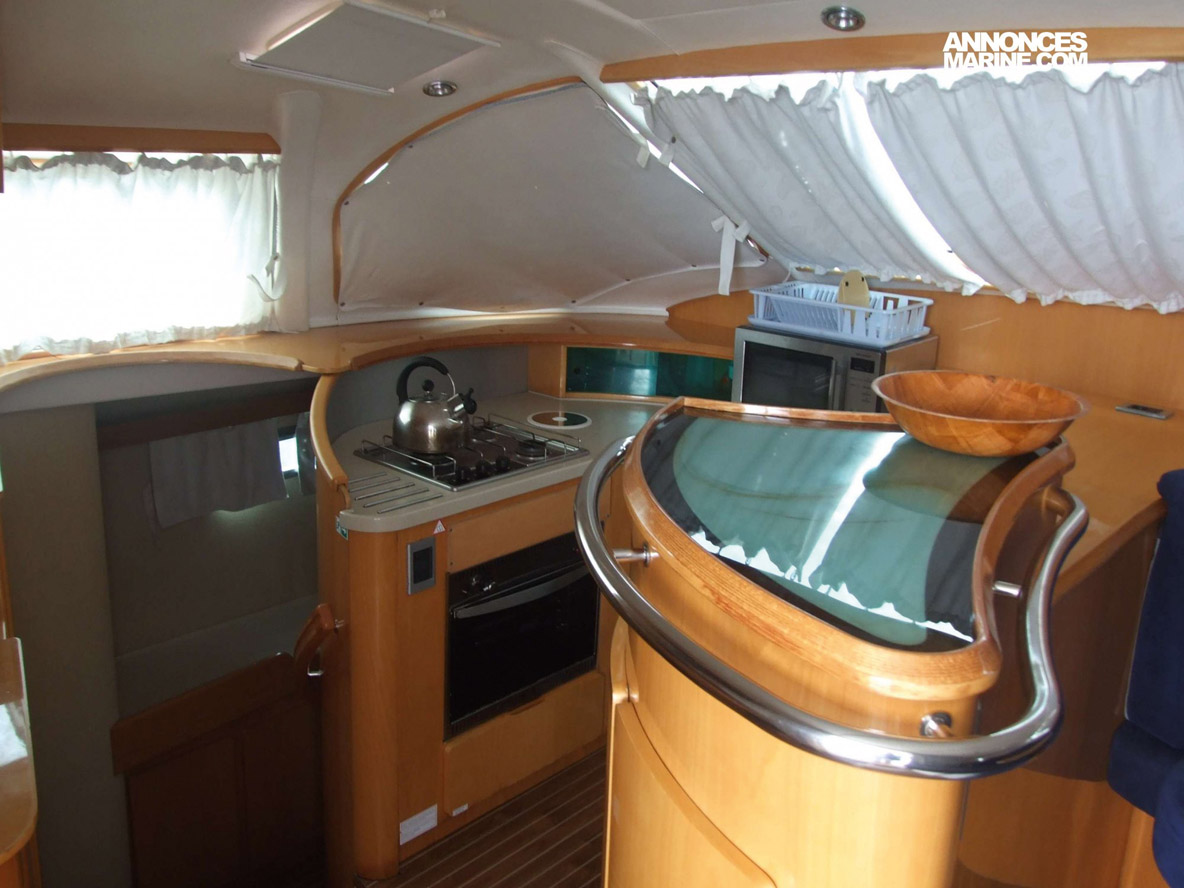
On the water, the 435/445 puts up with a fairly heavy displacement…but it is boosted by a generous sail area. It’s only in very light airs that it has difficulty getting going. The speed polars don’t predict miracles to windward: 6.5 knots in 15 knots of wind, and 7.5 with 5 more knots of wind. But with a force 5 wind on the beam, the 435/445 speeds along at 12 knots – more than enough to make you forget those few hours you had to motor. Though the exterior design is very traditional, with an aerodynamic coachroof whose forward hatches will have to be protected from the sun, it has a remarkably comfortable cockpit. The huge settees allow the whole crew to be comfortably seated, however the table is small. The cockpit is protected by a fabric or rigid bimini. The interior is original, with a rounded saloon, adjacent to a galley in the same shape. A cat for demanding owners.
 |
 |
THE PLUSES:
+ One of the fastest Privilèges
+ Excellent finish
+ Good overall ageing
+ Attractive owner’s hull
THE MINUSES:
- Requires a bit of patience in light airs
- Higher price for more recent models
- Coachroof windows need covering up in the Tropics
TECHNICAL SPECIFICATIONS
Builder: Alliaura Marine
Architect: Marc Lombard
Material: glass/polyester sandwich
Hull length: 43’1”/44’2” (13.13/13.45 m)
Waterline length: 41’4”/42’2” (12.60/12.85 m)
Beam: 23’2” (7.07 m)
Draft: 4’5” or 3’11”/8’2” (1.35 or 1.20/2.50 m)
Displacement: 18,300/19,620 lbs (8.30/8.90 t)
Sail area: 1,195/1,227 sq ft (111/114 m²)
Engines: 2 x 27/40 HP
Production: 40 units from 1999 to 2006
Price: from € 150,000 ex-tax
Outremer 45
Total self-sufficiency is within reach!
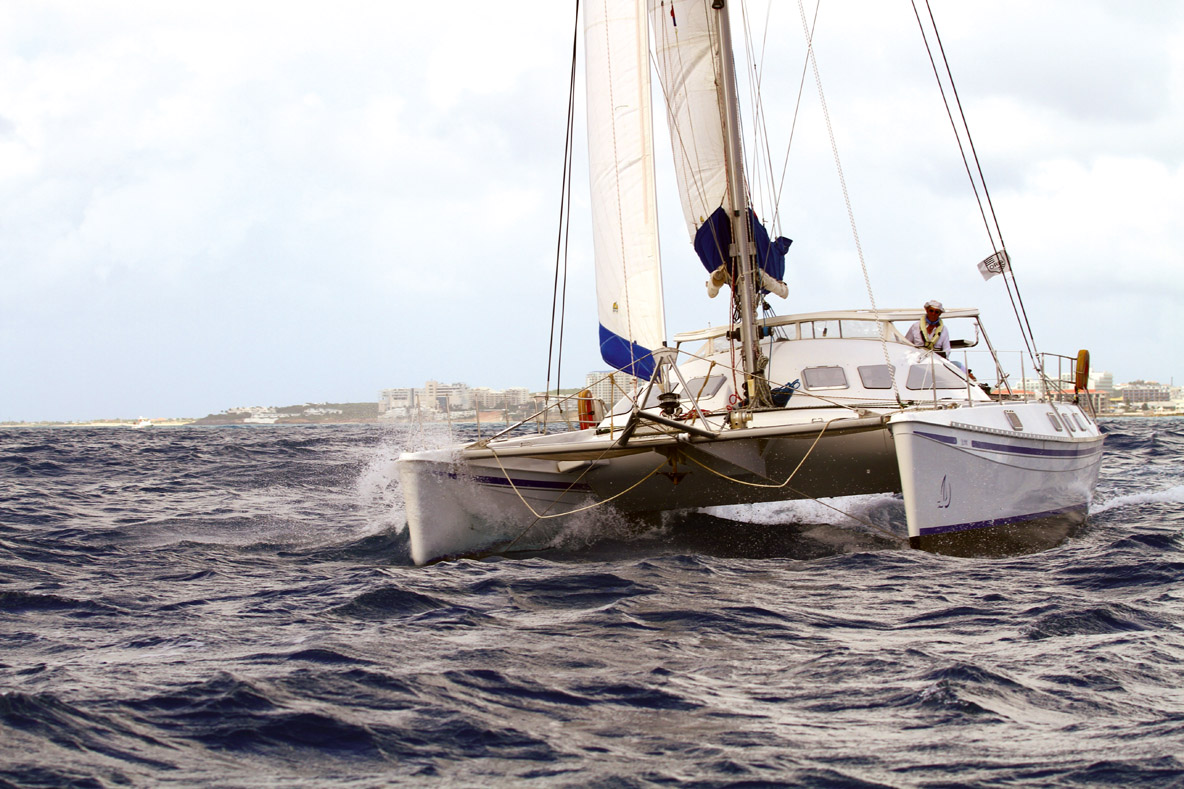
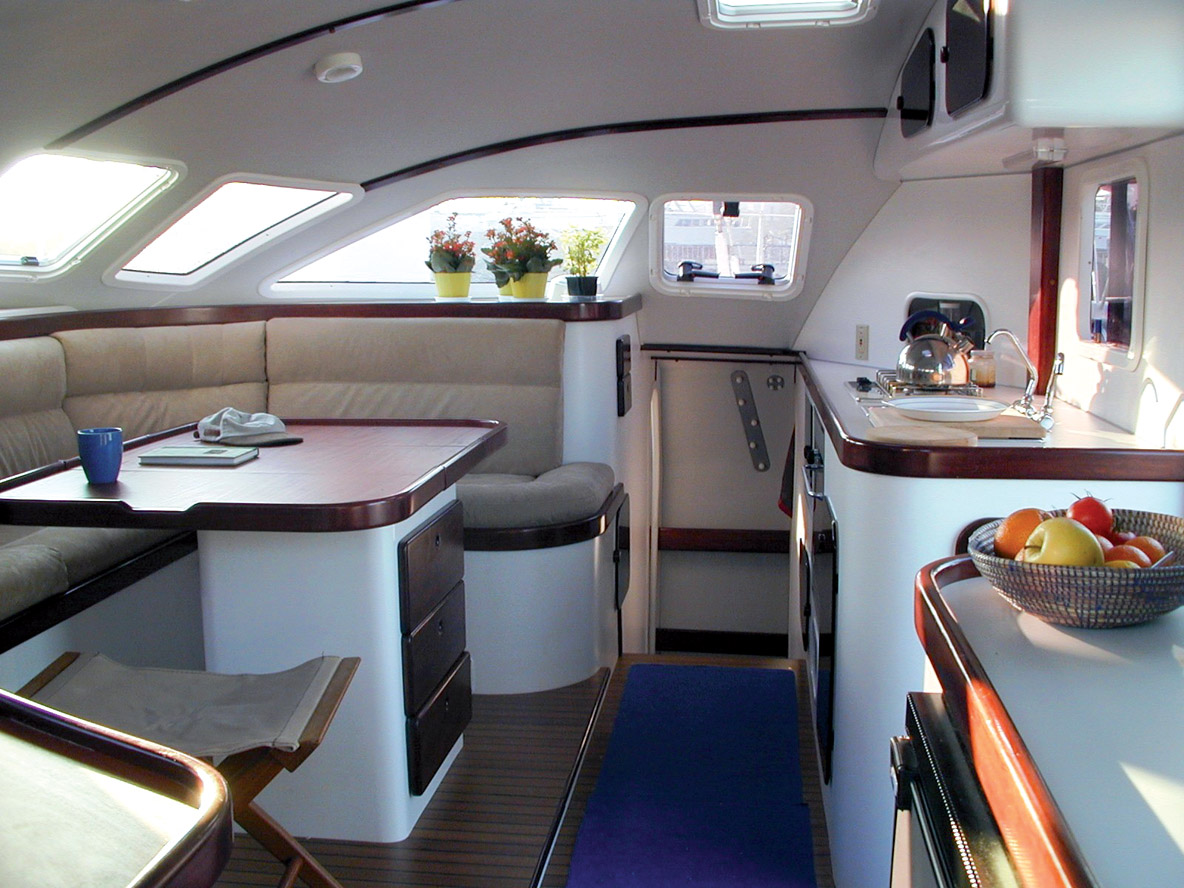
This 45, a bit like a giant sports cat, is definitely a multihull that’s particularly fast. If well-equipped, this is a model where the use of the engines can be limited to port and anchoring maneuvers.
The ‘historic’ 45 is certainly the catamaran which best sums up the La Grande Mottebased builder’s philosophy, as its founding architect, the late Gérard Danson, saw it. Some examples are sometimes a bit jaded after thousands and thousands of miles – but they remain very recoverable with a careful refit. What’s more, as long as they are equipped with means to produce electricity other than by alternators, and a watermaker, this light and fast model can claim total self-sufficiency. Or almost.
Less volume but more performance
The famous drilled aluminum rubbing strake, definitely dated in design terms, but very effective in protecting the boat, sets the tone - aboard there are no ‘airs and graces’, no costly materials or washing machines: speed and seakeeping qualities take priority over all the rest, and this maxim remains more or less the order of the day, even though the latest 45s have inherited slightly more headroom. The result is a cat with daggerboards, whose aerodynamic nacelle doesn’t offer as much volume as its competitors. But the boat really is fast. The mast, over 65 feet (20m) high, supports a heavily-roached mainsail, and a jib which is quickly replaced with a 1,185 sq ft (110m²) gennaker flown from a bowsprit, or a powerful 1,615 sq ft (150 m²) asymmetric spinnaker. On the water, the 45 sails at 9 knots closehauled and can hit top speeds of 20 knots downwind. Few cruising multihulls – and even fewer monohulls – of an equivalent size can compare, with the exception of the specialized boats (ORC being one example). The cockpit and the deck plan are functional: priority is given to the maneuvers. Inside, the compact nacelle houses the saloon, the galley (very close to the cockpit) and the chart table. In the hulls, the builder offers sleeping accommodation for 6 to 10 people.
THE PLUSES:
+ Very fast blue-water cruising catamaran
+ The possibility to be energy self-sufficient
+ Cockpit well-suited to young children
THE MINUSES:
- Little feel at the helm
- Limited load-carrying capacity
- Some examples have been thrashed a bit
TECHNICAL SPECIFICATIONS
Builder: Outremer Yachting
Architect: Gérard Danson
Hull length: 44’11” (13.70 m)
Waterline length: 44’7” (13.60 m)
Beam: 23’7” (7.20 m)
Draft: 2’/7’5” (0.6/2.25 m)
Light displacement: 13,450 lbs (6.1 t)
Mainsail: 785 sq ft (73 m²)
Genoa: 355 sq ft (33 m²)
Gennaker: 1,185 sq ft (110 m²)
Asymmetric spinnaker: 1,615 sq ft (150 m²)
Production: 40 units from 2000 to 2009
Price: from € 160,000 ex-tax
Bahia 46
Sail far, in absolute simplicity…
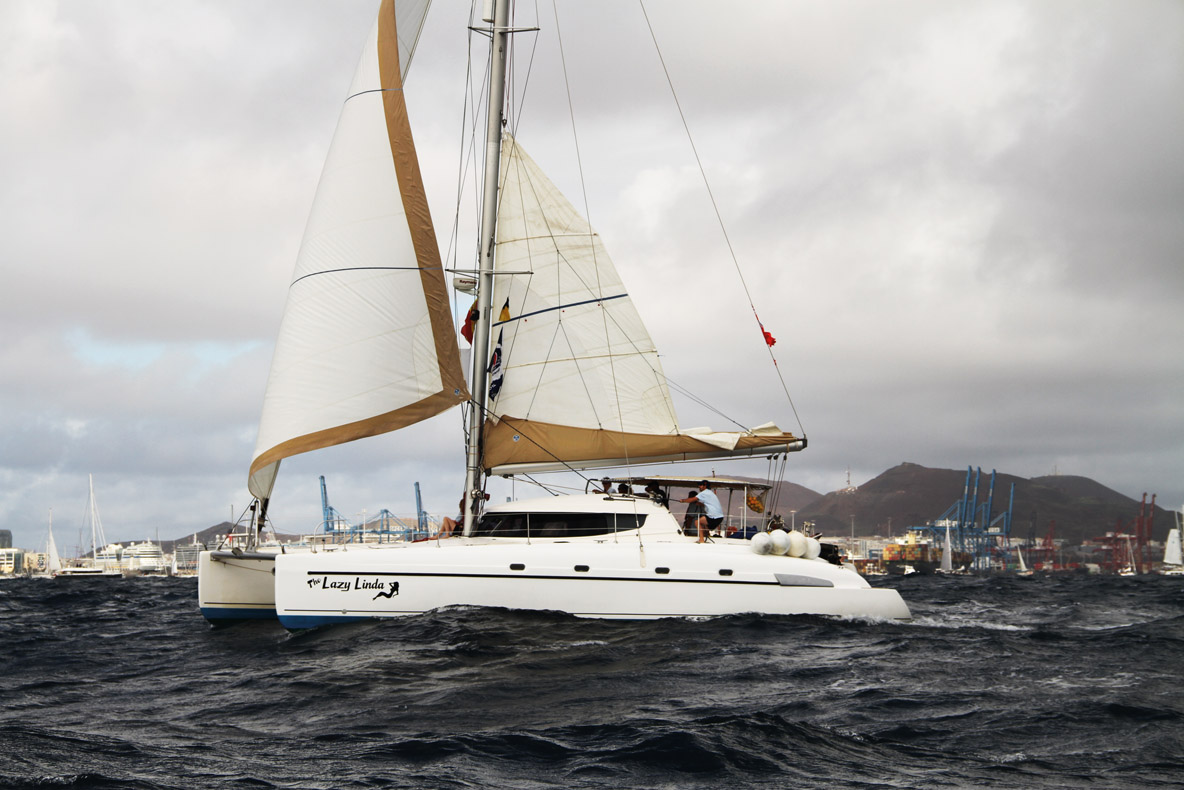
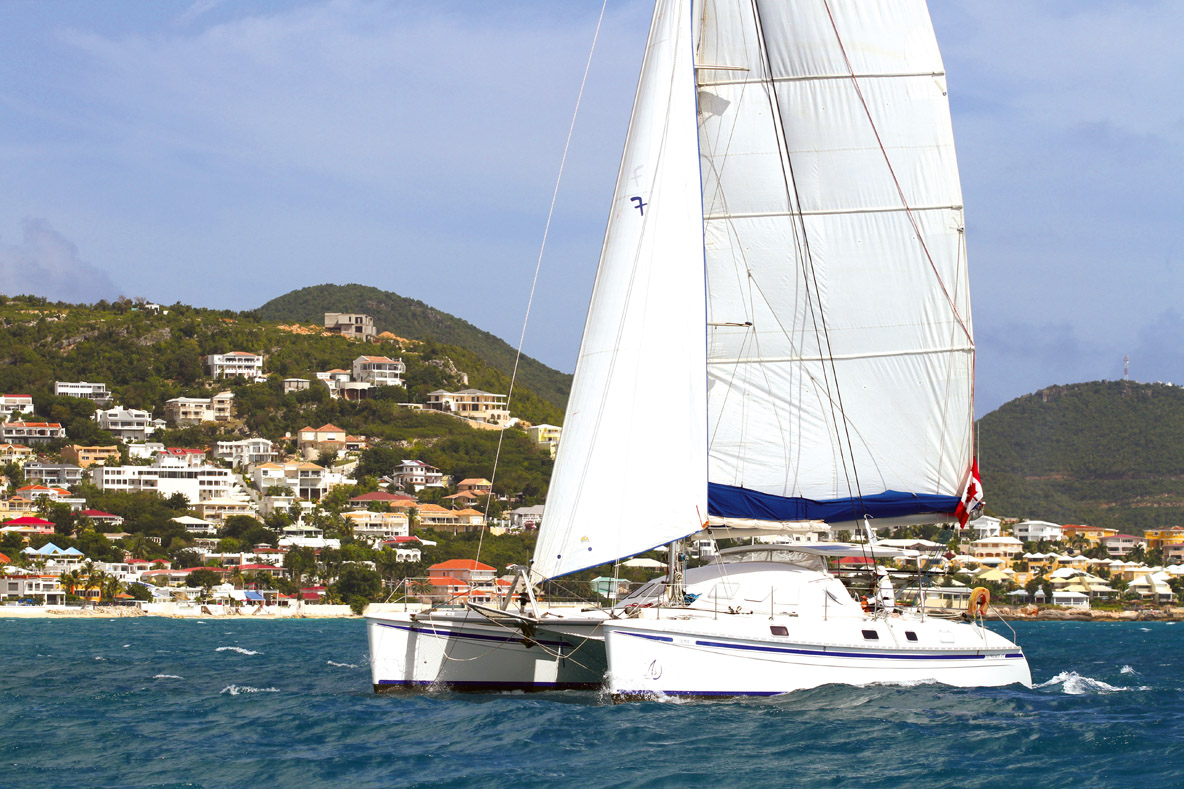
It has unanimous appeal for skippers, delivery crew and sailors of every nationality. Faithful to the fashions of its time, the Bahia 46 features rounded lines. And for blue water cruising, it’s does all you need under sail!
Although it retained the coachroof and its extension, and the ‘pugnosed’ bows, characteristic of 1990s Fountaine-Pajots, don’t expect miracles in terms of performance from these curvaceous hulls – their wetted surface is reasonably significant. Yet the 46 remains a catamaran of moderate displacement and is generously canvassed: from 10/12 knots of wind, the Bahia 46 will surprise you with its acceleration, and above all the ease with which it returns two-figure averages. In this context, the motors serve little purpose.
U-shaped galley much appreciated at sea
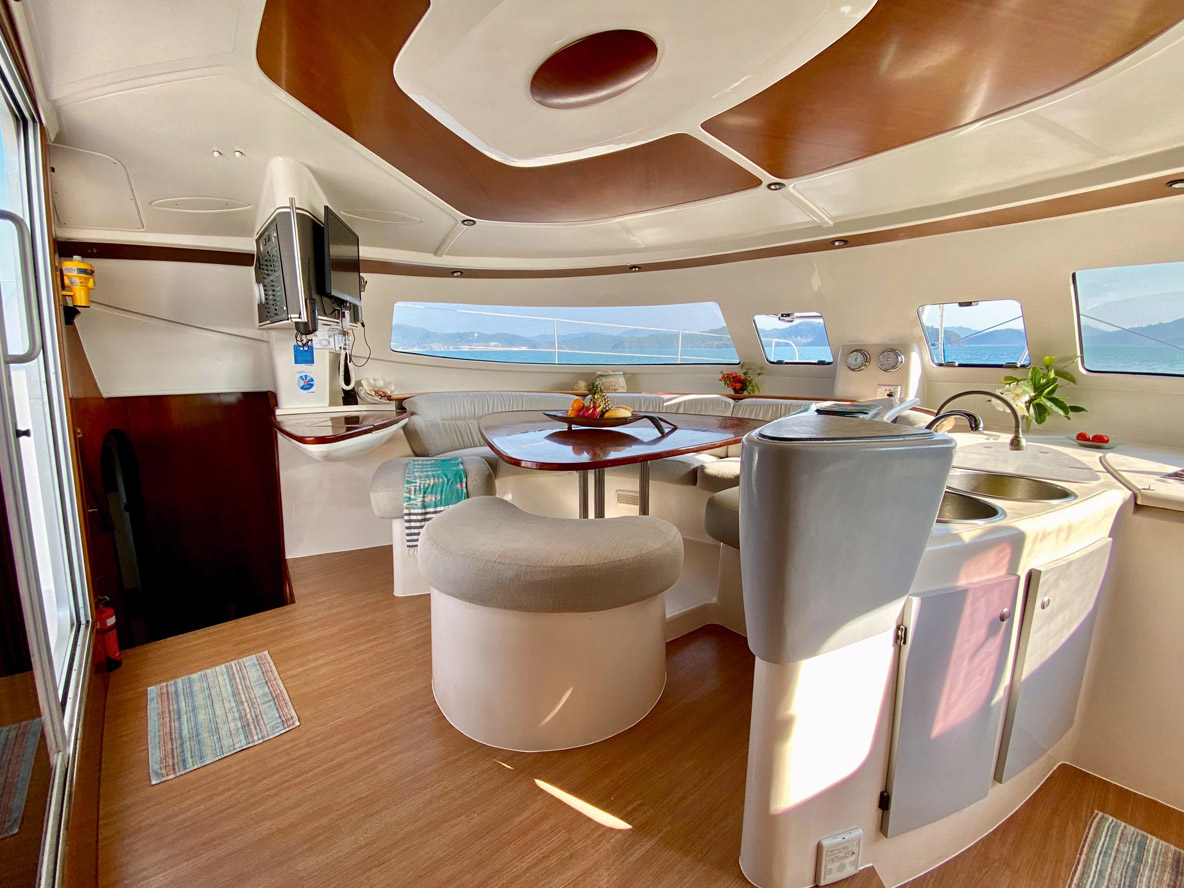
Compared to the deck plan of the more recent boats, the Bahia can be distinguished by its relatively short cockpit and a limited coachroof footprint. Here there is no aft gangway, but nevertheless there is comfortable seating around a round table with folding leaves. The slightly raised steering position adjoins the aft side of the coachroof. You will without a doubt be surprised by the narrowness of the coachroof door, which is well below current standards...and by the moderate volume of the nacelle. But the yard did manage to fit the essentials, with a semi-circular saloon, and a U-shaped galley which is very practical at sea. On the other hand, the floor area is limited, and the aft-facing chart table is clearly sacrificed. However, the hulls have an unheard-of amount of volume for the time. As a result, there are four double cabins in the charter version, which are more often than not supported by two singles in the passageway and two more in the forepeaks. The Bahia 46 was the first of Fountaine-Pajot’s models to offer a Private Owner’s version, which dedicates a whole hull to the owner – a formula which has since been a huge success. It is of course this version which attracts the attention of long-term cruisers, and they are right!
THE PLUSES:
+ General robustness
+ Good quality of the accommodation
+ Load-carrying capacity
THE MINUSES:
- Sluggish in less than 10 knots of wind
- Control lines not returned to the helm station on early models
- Aft-facing chart table
TECHNICAL SPECIFICATIONS
Builder: Fountaine-Pajot
Architects: Joubert/Nivelt
Design: Olivier Flahault
Hull length: 45’11” (14.00 m)
Waterline length: 44’10” (13.66 m)
Beam: 24’3” (7.40 m)
Draft: 4’3” (1.30 m)
Displacement: 23,150 lbs (10.5 t)
Mainsail: 775 sq ft (72 m2)
Genoa: 549 sq ft (51 m2)
Production: 176 units from 1996 to 2007
Price: from € 165,000 ex-tax
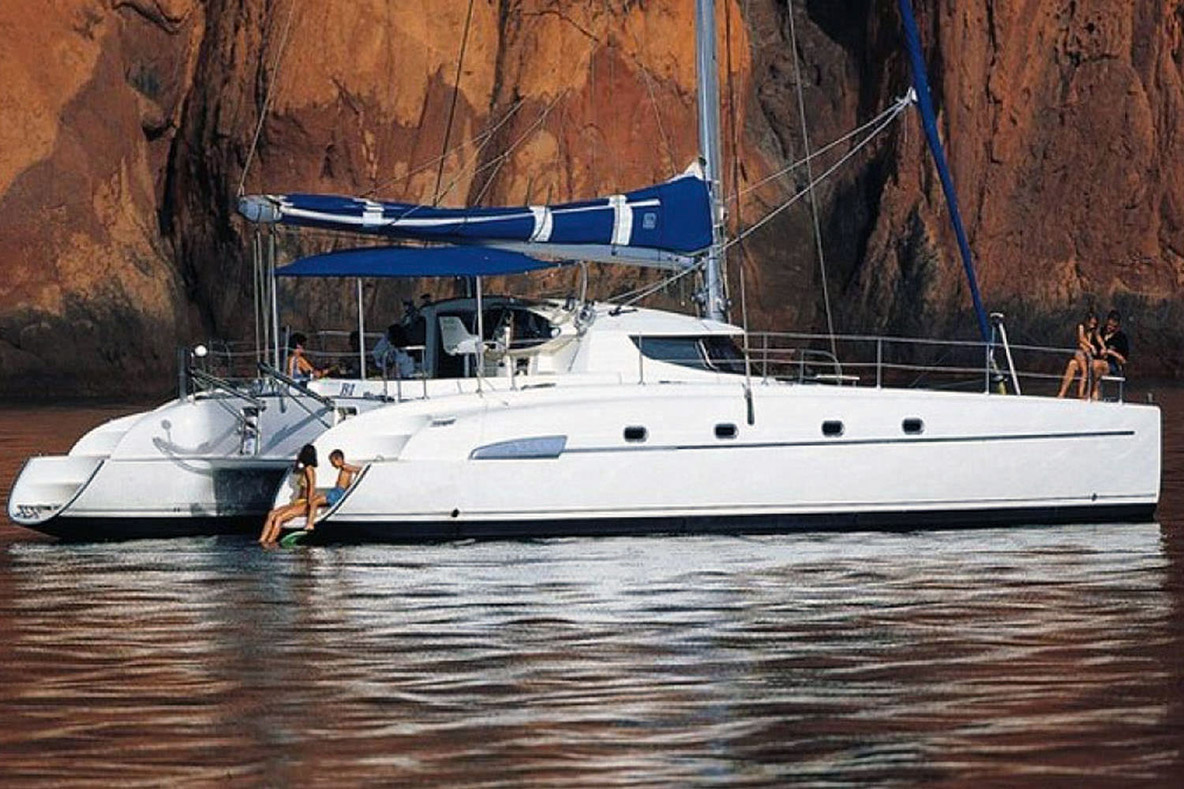
Catana 471
An economic cat for adventure
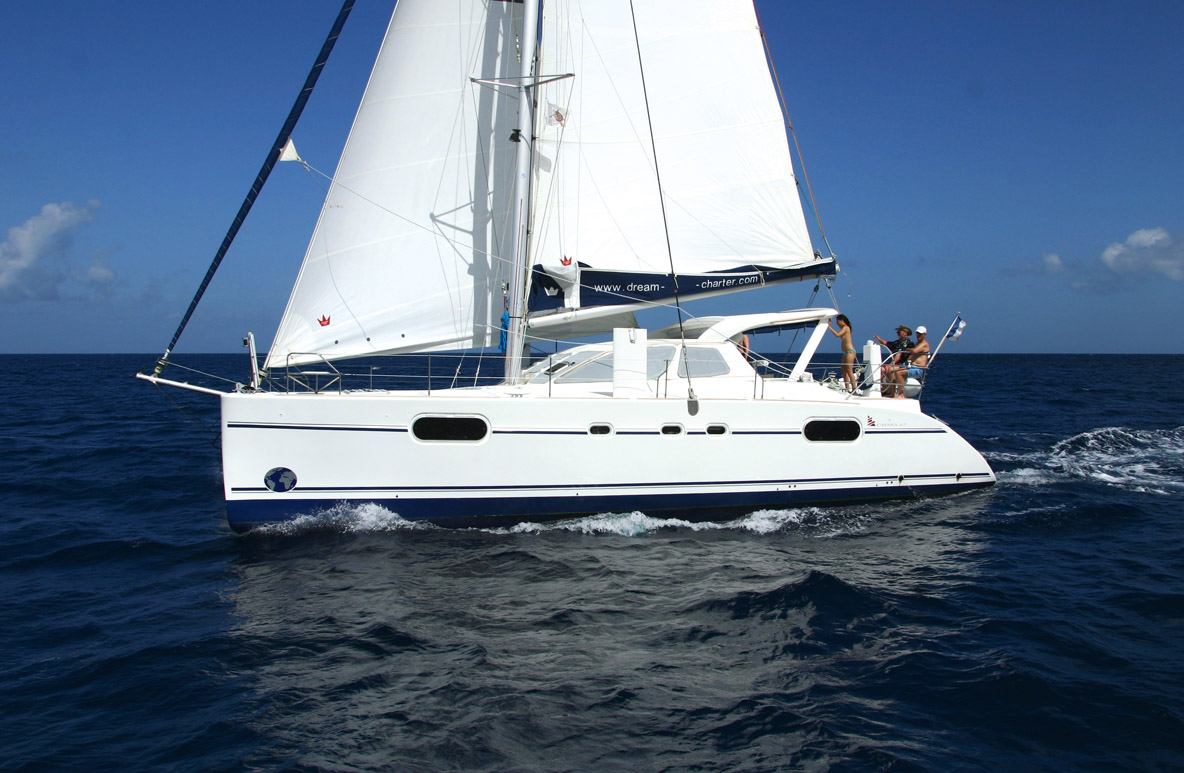
As demonstrated by numerous circumnavigations, the 471 has proven herself offshore. The best known of all the Catanas, this is an excellent sailboat, aboard which you can pretty much forget about your motors as soon as you’ve cast off.
This model is Catana’s bestseller, not counting the Bali range, of course. Why? Because the 471 is without doubt the catamaran closest to Catana’s original philosophy – to offer a robust, fast and very seaworthy catamaran. The displacement is kept under control, thanks to the use of high-tech composites and carbon, and the two daggerboards allow for good upwind sailing. The 471 was also seen in a “super luxury” version, with numerous interior comfort features, as well as height-adjustable helm seats and a gennaker flown from a carbon bowsprit: this is the 472. A last variation of the 471 is the 47 OC (Ocean Cruiser), not to be confused with the 47, which replaced it.
Efficient and fat on all points of sail
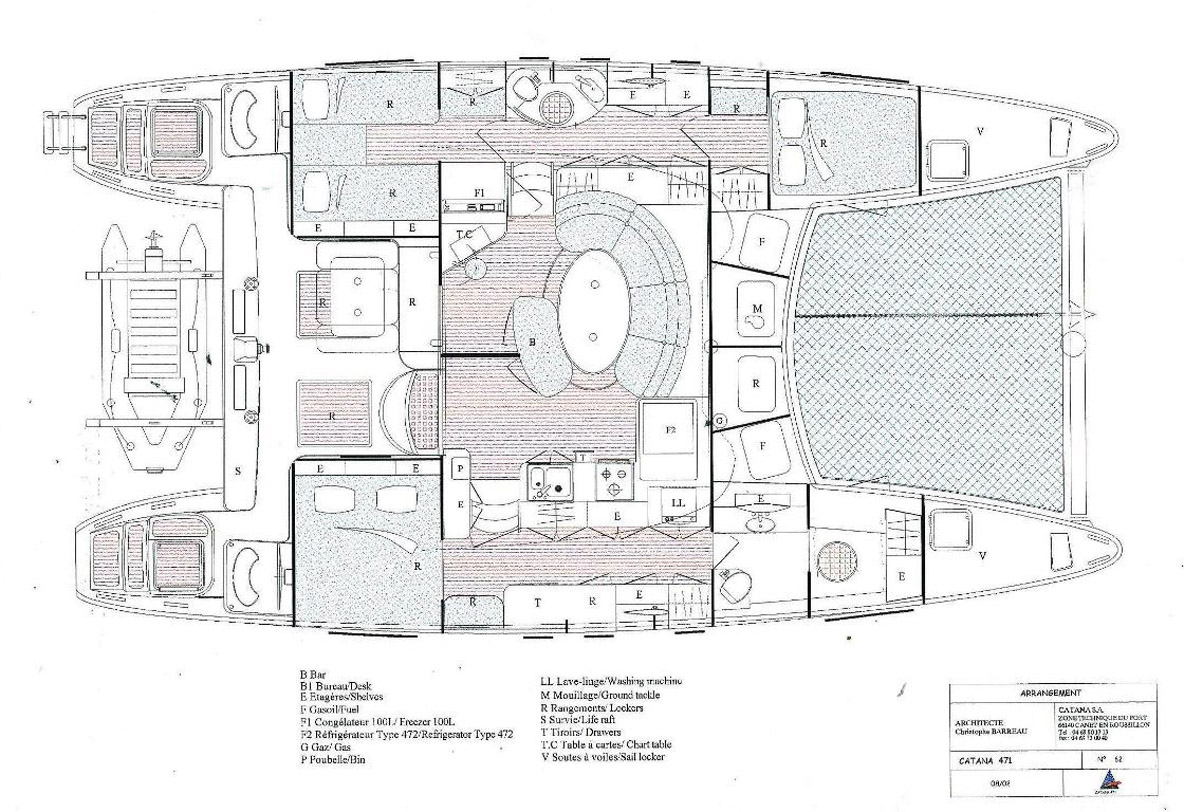
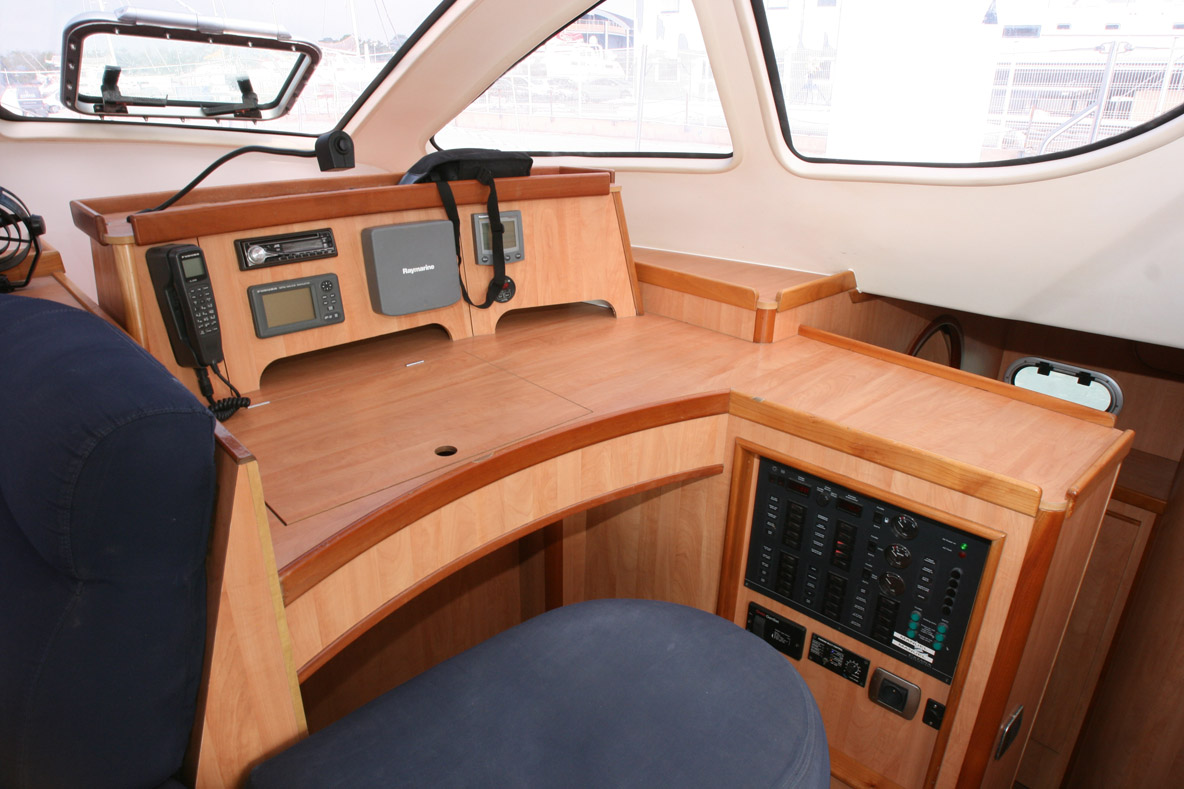
On the water, this Catana is very pleasant at all speeds and can reach nearly 20 knots, which is quite a program. The deck layout is very functional, both in terms of maneuvering, the helm station against the coachroof, and the areas dedicated to relaxation. Only one regret: the cockpit is slightly higher than the floor of the nacelle. It is sheltered by a rigid bimini - better suited for the installation of solar panels – or a canvas one, depending on the model. Inside, priority is given to a beautiful galley and a chart table worthy of an office ashore, rather than a saloon for 12 people... that’s what an owner’s version sailboat is all about!
THE PLUSES:
+ Fast model
+ Good upwind course-keeping thanks to deep daggerboards
+ Robust structure
THE MINUSES:
- Saloon a bit cozy
- Woodwork sensitive to moisture
TECHNICAL SPECIFICATIONS
Builder: Catana
Architect: Christophe Barreau
Overall length: 51’6” (15.70 m)
Hull length: 46’11” (14.30 m)
Waterline length: 45’3” (13.80 m)
Beam: 25’3” (7.70 m)
Draft: 3’11”/8’2” (1.20/2.50 m)
Light displacement: 26,500 lbs (12 t)
Upwind sail area: 1,140/1,540 sq ft (106/143 m²)
Mainsail: 840/980 sq ft (78/91m²)
Genoa: 300/560 sq ft (28/52 m²)
Gennaker: 880 sq ft (82 m²)
Engines: 2 x 50/55 HP
Production: 86 units from 1997 to 2006
Price: from € 200,000 ex-tax