

It all began in 1987: Christian, then a merchant navy officer, had been sailing professionally for more than 20 years on a wide variety of ships and over a good part of the globe. He lived with his family on the steel sailboat that he had built himself. From 1985, his travels led him to limit his sailing to the Caribbean and he temporarily “settled“ in Martinique. It was there that the idea of building a catamaran emerged. It was at this moment that he met the architect Philippe Harlé. The two immediately established a rapport. They appreciated each other and shared their design and shipbuilding experiences. They then conceived the idea of creating a shipyard to produce wood epoxy catamarans. Philippe became involved in the creation of the shipyard by ordering the first boat built at Multicap Caraïbes: a Punch 8.50.
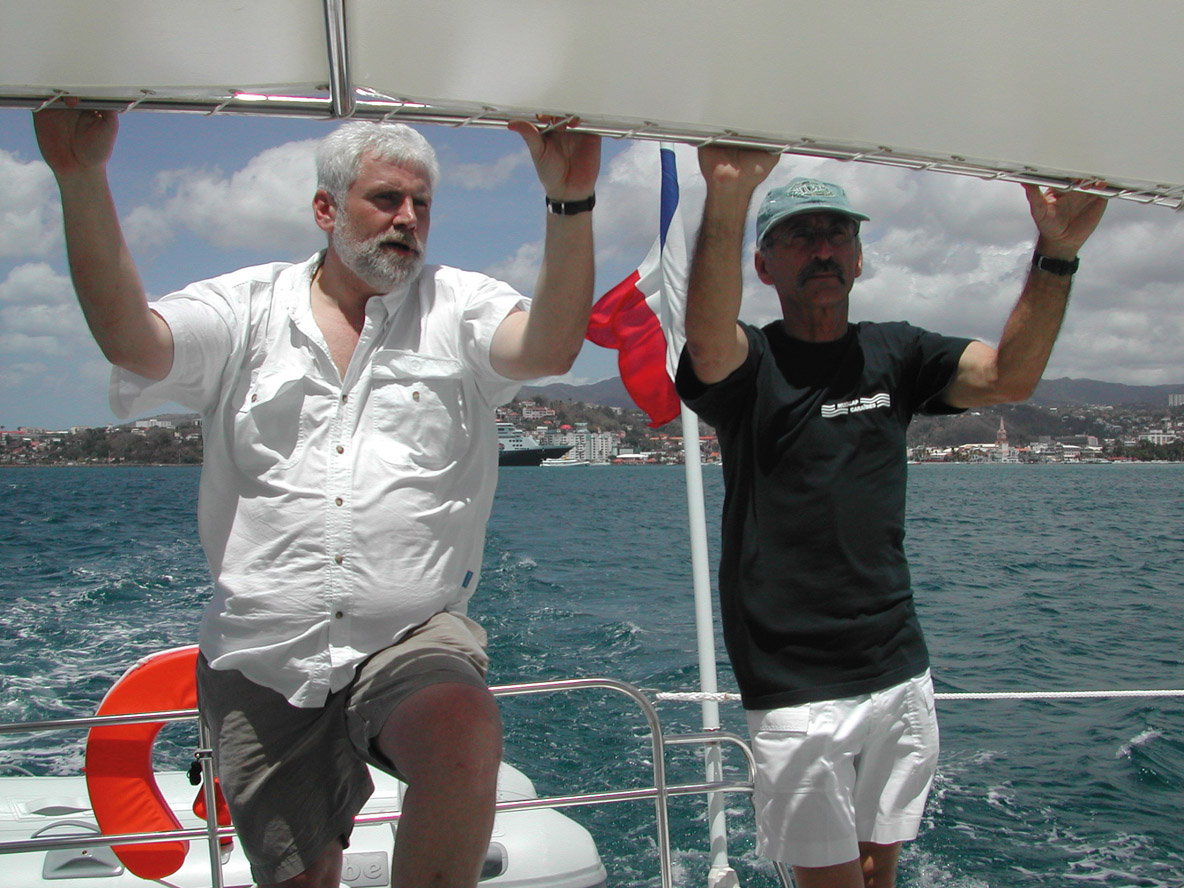
Christian Hernandez (right) and Alain Mortain have decided to relaunch the construction of the Punch under the new identity Multicat Algarve.
From monohulls to multihulls…
Philippe Harlé had his own naval architecture firm in La Rochelle with his associate Alain Mortain, who, coming from an interior architecture background, was in charge of design and interior layouts. Philippe, who had no particular interest in catamarans at the beginning, was quickly convinced by the first test, and then devoted himself to them with passion and creativity.
When Alain joined Philippe’s office in 1982, he was already passionate about multihulls, because the performance and new spaces that they offered allowed for a particular creativity, and opened up very broad perspectives for future developments. He drew his inspiration from various productions such as those of Dick Newick, Walter Greene, Malcom Tenant and Lock Crowther. The plan to develop the Punch range was particularly appealing to him. He became totally involved in the project and would continue his efforts over the next forty years.
When Philippe Harlé died in 1991, Yiannis Mavrikios - whom Philippe had chosen to succeed him - took over his position. Yiannis graduated from the University of Michigan with a degree in naval architecture. He obtained a double Master of Science in Naval Architecture and Ocean Systems Management from the Massachusetts Institute of Technology. He was always looking to innovate. When he started working on the Multicap Caraïbes projects, he had just left the post of heading up the design office and the prototype section at Jeanneau SA
Yiannis and Alain are still active, under the signature Mortain & Mavrikios. The two partners have retained the same philosophy. They are the ones who will be in charge of forthcoming Punch designs, notably the 12.50, 1500, 1700 and 2100.
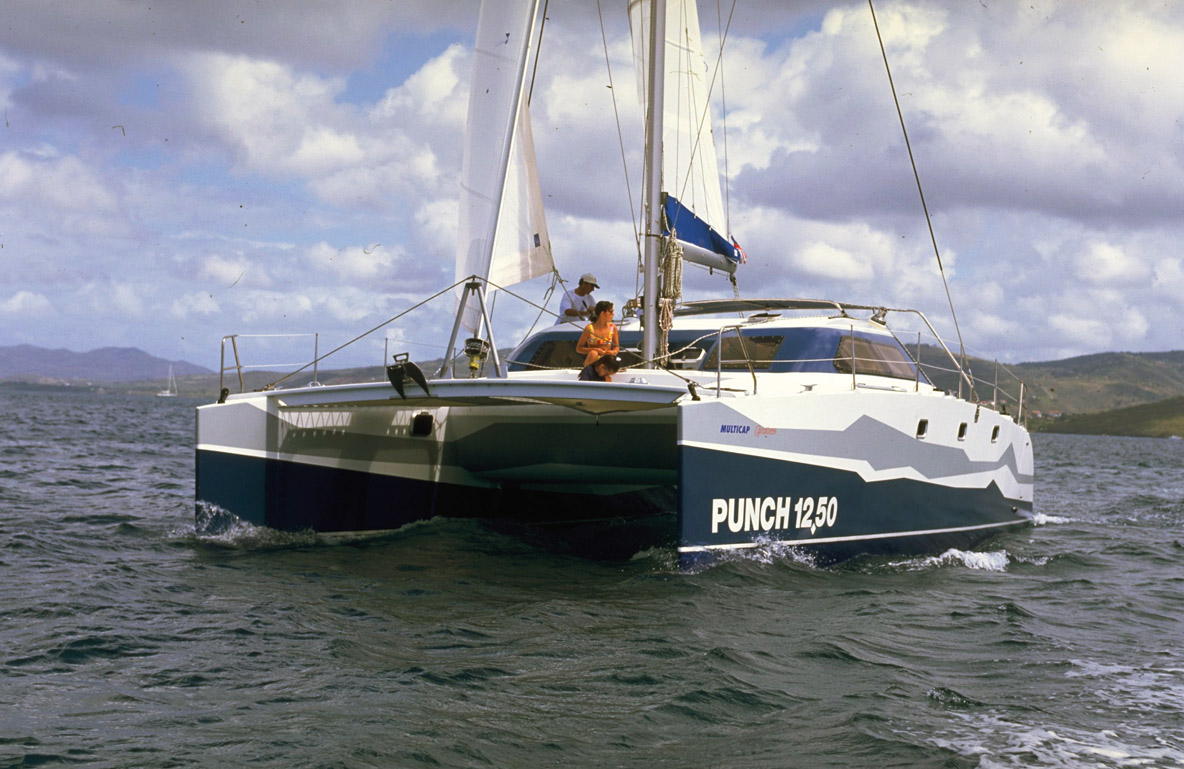
The Punch 12.5 is undoubtedly the most iconic of all the boats built by Multicap Caraïbes.
Getting started in Martinique at Fort-de-France
 |
 |
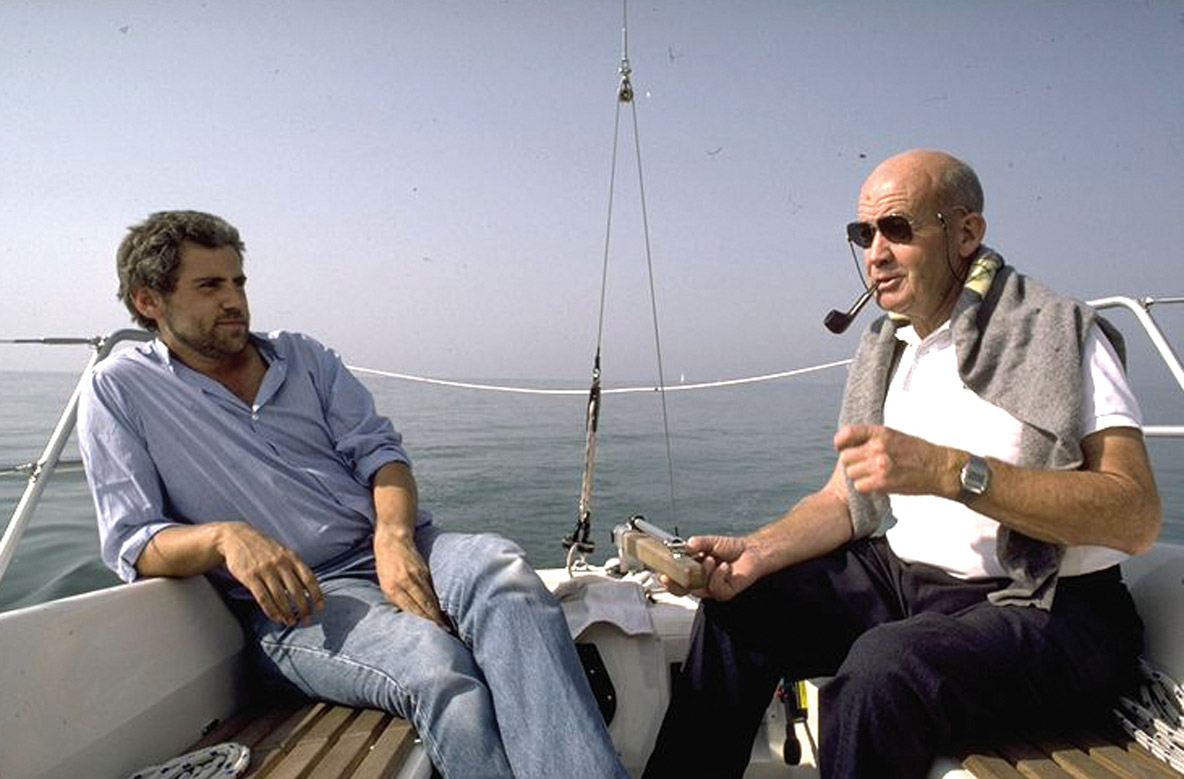
Two architects, one era: Philippe Harlé is at the helm, opposite Alain Mortain.
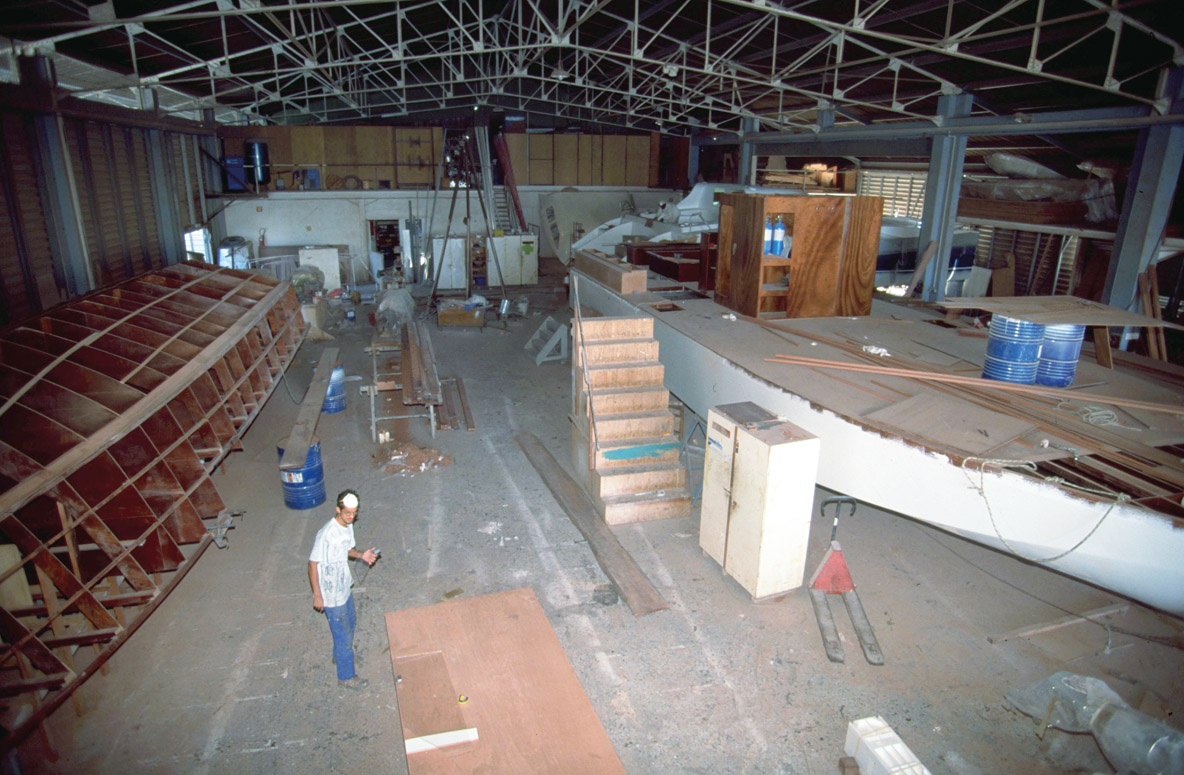
The Multicap Caraïbes shipyard was created at the end of the 1980s in Fort-de-France, Martinique.
Orders started to roll in at Multicap Caraïbes after the first Punch 8.50 was built in the West Indies. The next two catamarans were much larger. They were Punch 1600s intended for charter. The client was a Martinique local, and he became Christian’s partner for a while. The team became even bigger with the collaboration of Roselyne, Christian’s girlfriend. She took care of all the administrative, accounting and communication aspects of the shipyard. Multicap Caraïbes settled in a disused hangar in Fort-de-France. Having discovered the company’s construction method, the local staff worked enthusiastically on the project. The hulls were made of epoxy plywood, while the bottoms were crafted out of vacuum-molded laminated wood. Epoxy plywood sailboats were in their golden era at that time. The process was less complicated, the investments accessible and the prices reasonable for a high level of technical quality. The opinion of Philippe Harlé, a champion of this technology, was important: it is estimated that at this time, one sailboat out of five bore Harle’s signature.
Christian was in charge of the technical side: electrics, fittings, engines and mechanics. He was not only the manager, but also the yard manager. The plywood used was made especially for Multicap Caraïbes: a custom-made all-sapele, with a type 4 gluing and a maximum number of plies. Resin specialist Sicomin also participated in the technical research: in the tropics, resins do not react in the same way to temperature and hygrometry. Sicomin worked on a slow hardener that reacts well in heat and humidity. The tests were promising, and the manufacturer showed that it could adapt the system to particular conditions. The resin developed in this way, even bore the name of the shipyard for its first few years.
 |
 |
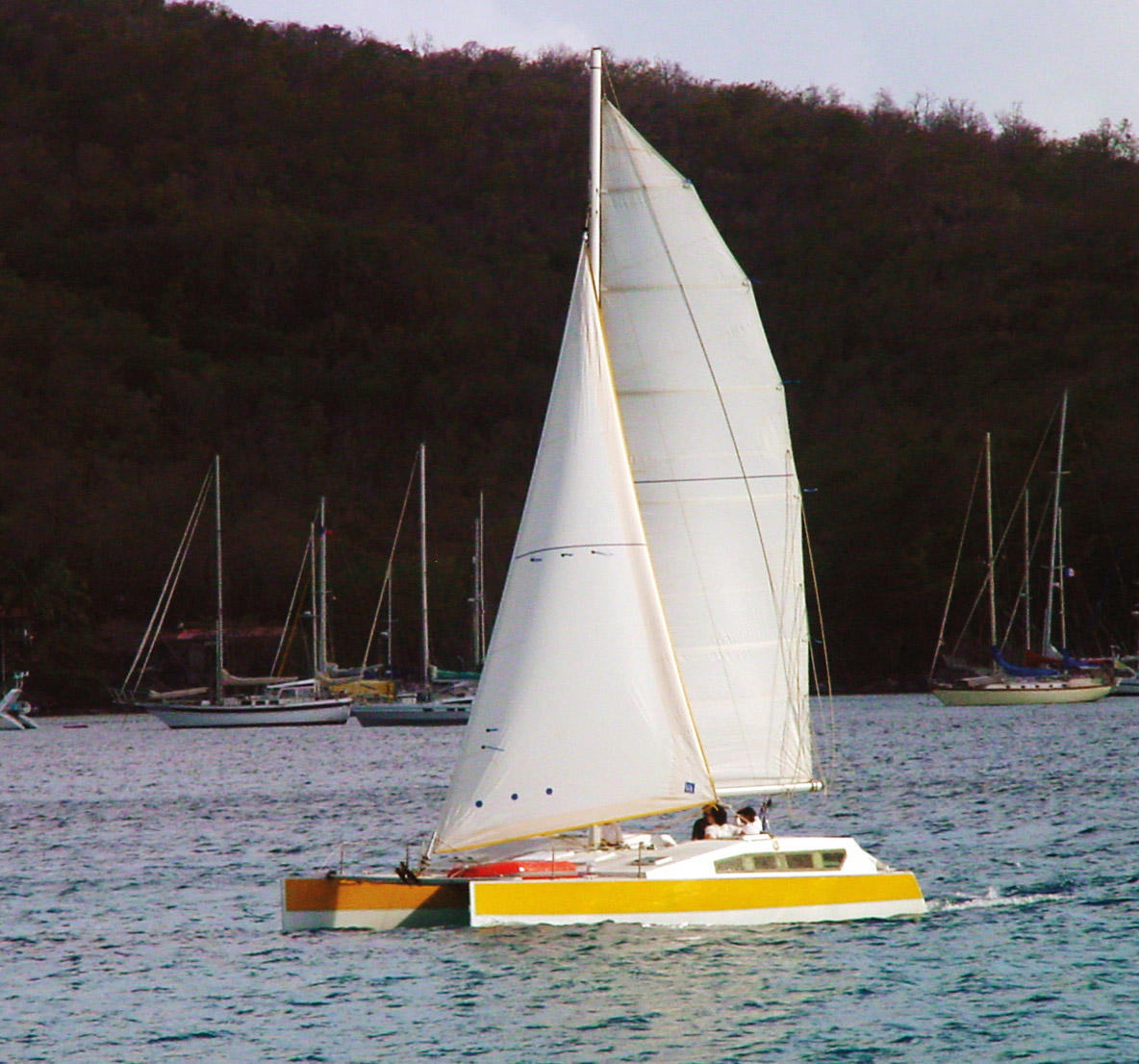
The Punch 8.50 was the first catamaran built by Christian Hernandez, and the first one to be commissioned by Philippe Harlé himself.
Philippe Harlé’s legacy
 |
 |
As Multicap’s boatbuilding progressed - and until his passing - Philippe Harlé was more and more involved. He was interested in Christian’s maritime experience. For him, it was a chance to test his catamarans and to have first-hand feedback. Christian had skippered sailboats, but he has also been a fisherman, and an officer and then commander in the merchant navy. He had managed all kinds of boats, both sailing and motor. A shipyard manager with such field experience was invaluable to Philippe. He also never missed an opportunity to come and test the multihulls himself. “Philippe would arrive at the airport, change his clothes, fill his pipe and go straight to the yard. He wasn’t afraid of getting stuck in!” says Christian. “He was an incredible man, a font of knowledge. He wasn’t just an engineer who sat in front of his drawing board making calculations. He knew the tools, the materials and the sea. It is important to remember that we are indebted to him for Le Cours des Glénans (French sailboat theory courses).”
Together, Christian and Philippe began to develop other boats based on the same technique; monohull launches, motor catamarans, essentially oriented towards professionals and intended for fishing, transport, diving and tourism. At the beginning, Philippe was a bit reserved about the idea of building passenger boats; he finally took to the game and spent a lot of time between the West Indies and France, enjoying life, his Punch 8.50 and following the boats in build at Multicap Caraïbes. The round trips by air between his office in La Rochelle, France, and Fort-de-France, Martinique, were still not sufficient, but at the time, the Internet did not exist. The two teams communicated by telephone, telex, then by fax.
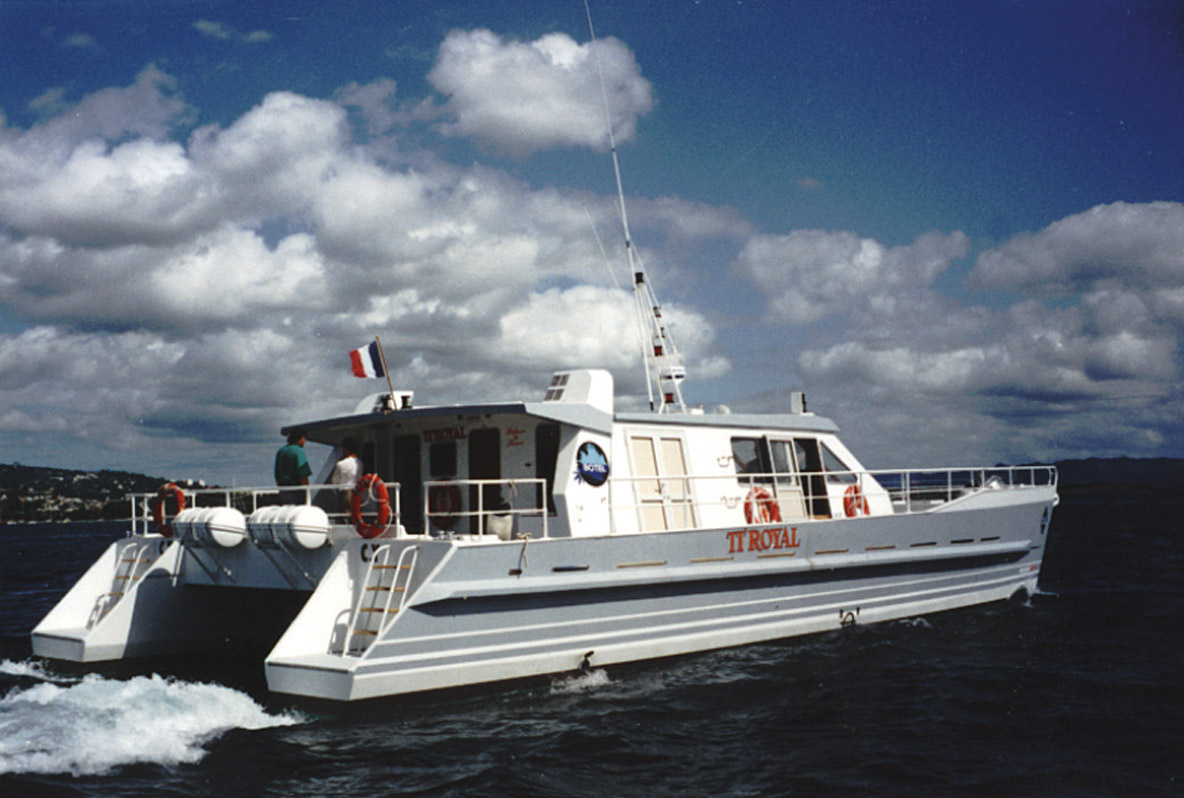
In 1989, Multicap Caraïbes launched its first passenger catamaran: the Multicap 43. It was a powercat designed for freediving with Club Med. A second one followed. Then orders for private individuals: a Guadeloupean architect ordered a Punch 8.5, a French couple a Punch 10.10. That was that. The project had taken off.
 |
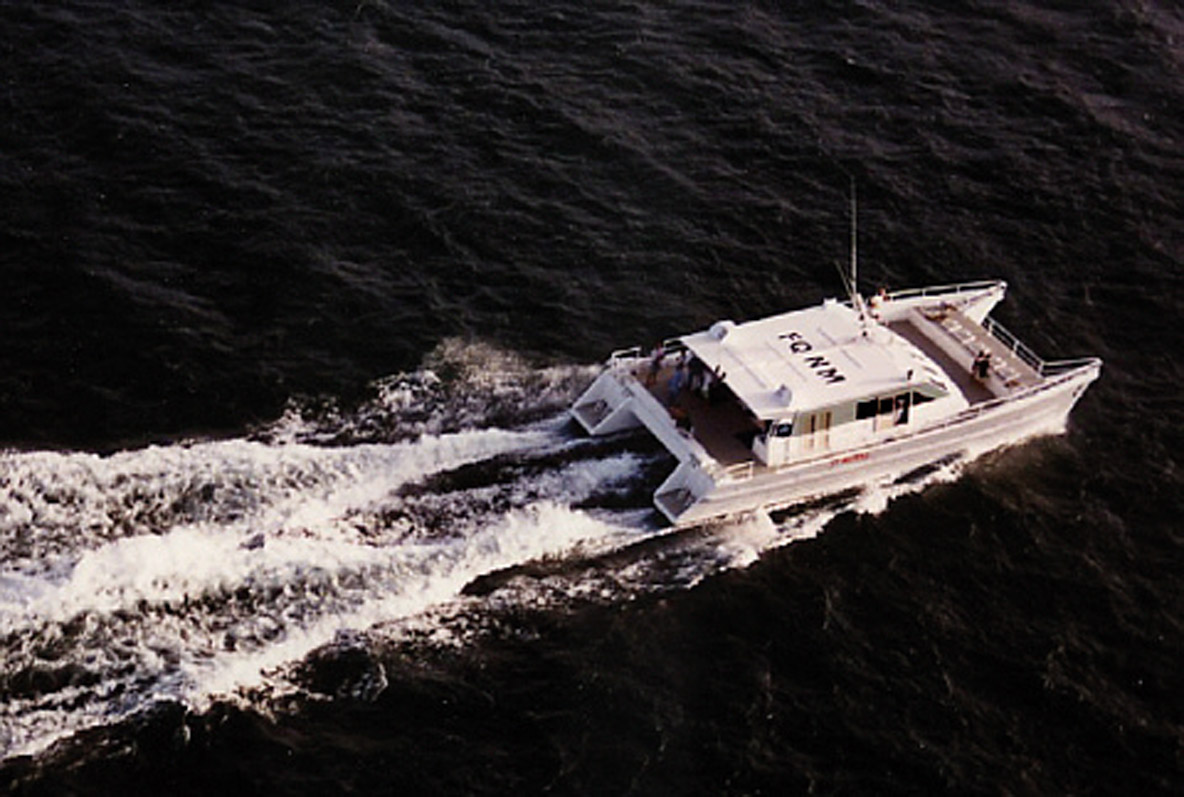 |
The wood/epoxy builder has produced mainly cruising catamarans, but also day-charter boats, powercats - and even some monohulls.
A fishing catamaran under sail
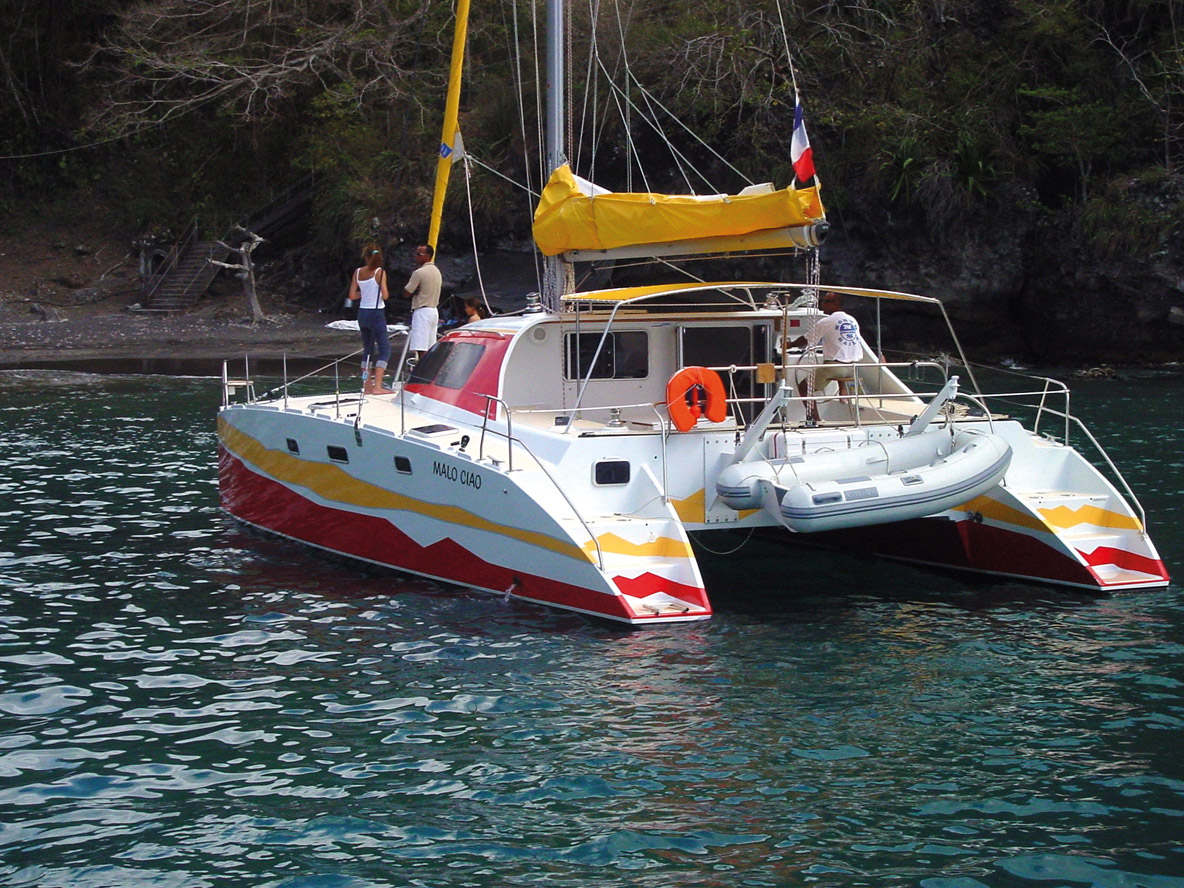
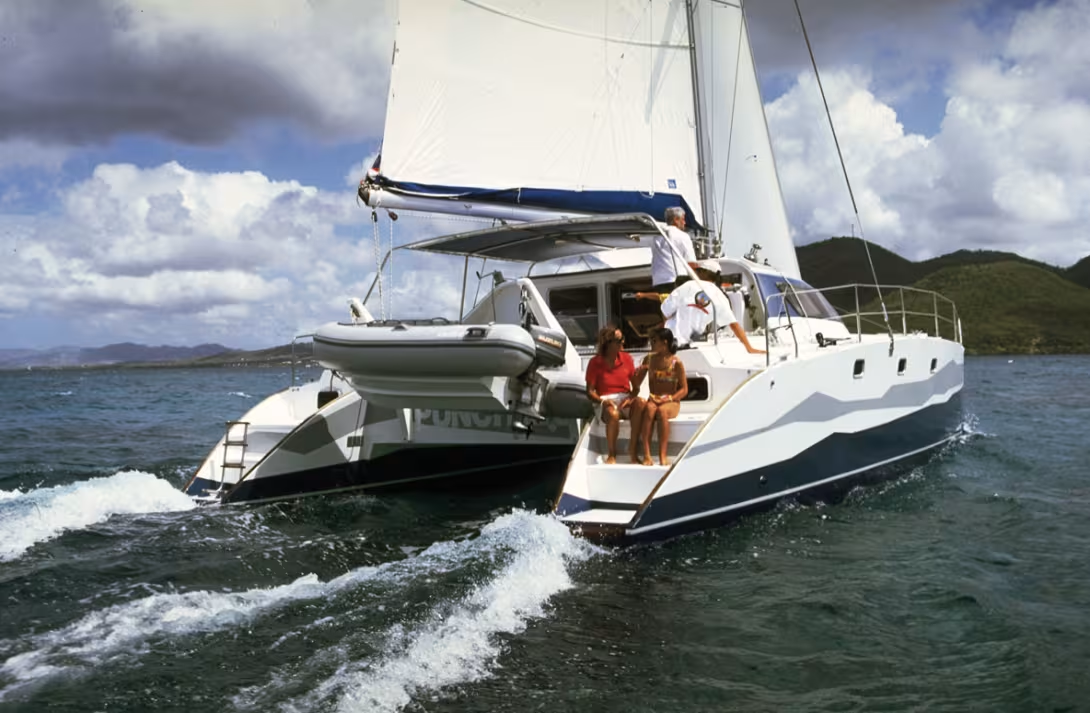
Bright hull colors and broken lines: the Punch’s unmistakable visual signature!
Christian Hernandez was lucky enough to be able to exploit his multitude of talents with an original project: that of a sailing fishing catamaran. This multihull had a deck and adapted facilities with insulated fish holds where the catch could be put on ice. A Guadeloupean team fished with it and used it as a training platform.
The shipyard also built some monohulls, such as Luc Coquelin’s Top 50, which was launched in 1997. The skipper was very proud to be able to represent Guadeloupe with a locally built boat, in the West Indies. For the occasion, the shipyard experimented with new materials: the 50-foot ketch was built in epoxy sandwich with a DuraKore core and two cross-ply molded wood on the outside. Multicap also worked on some aluminum monohulls with Philippe Subrero. Construction was subcontracted in mainland France.
 |
 |
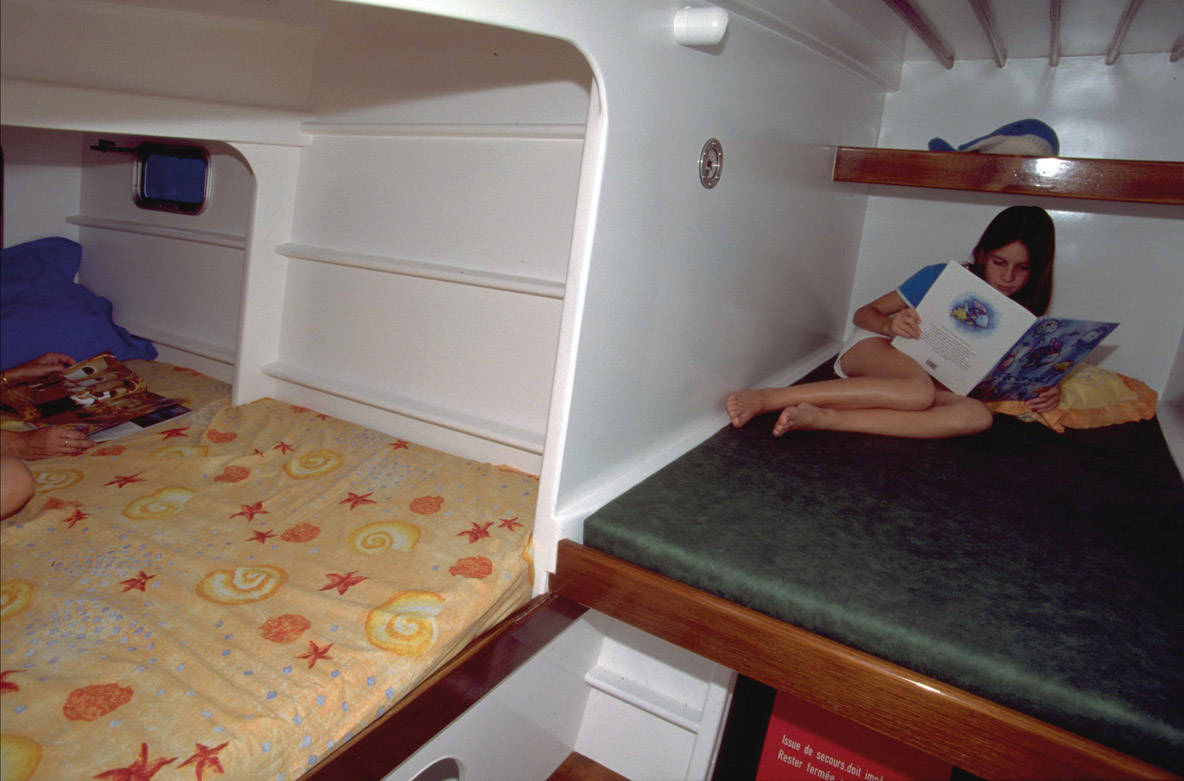 |
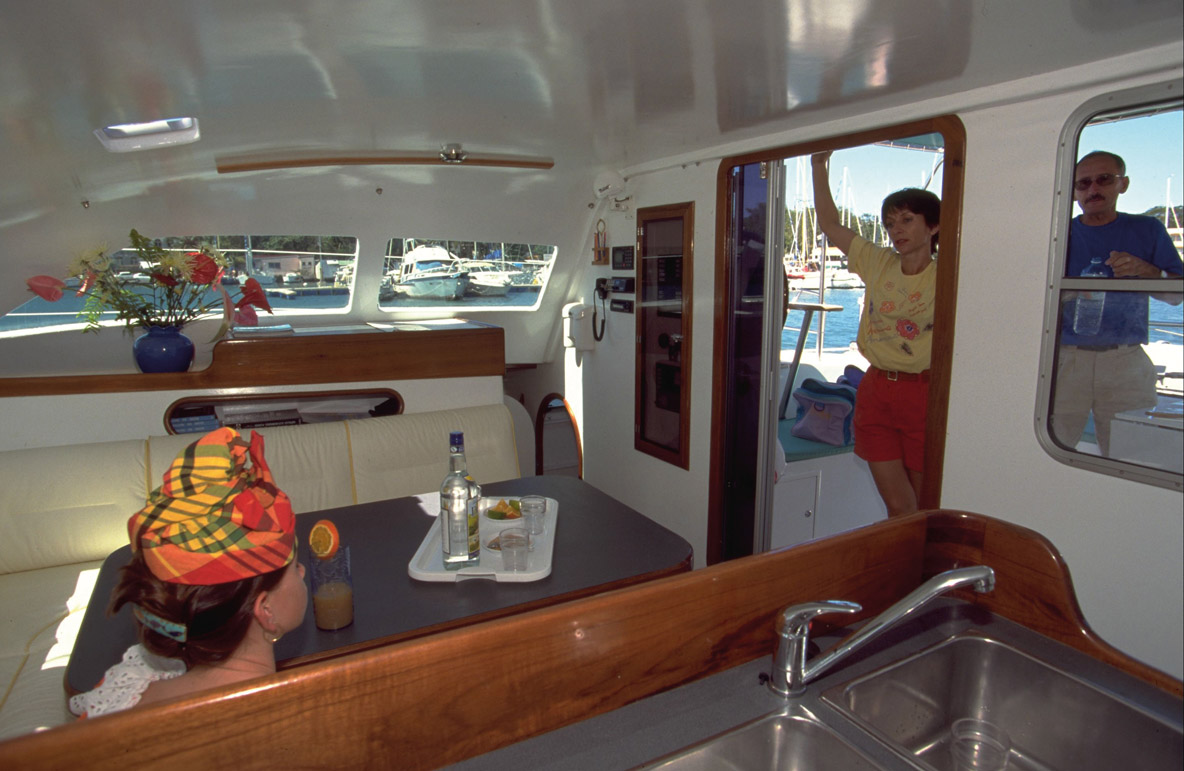
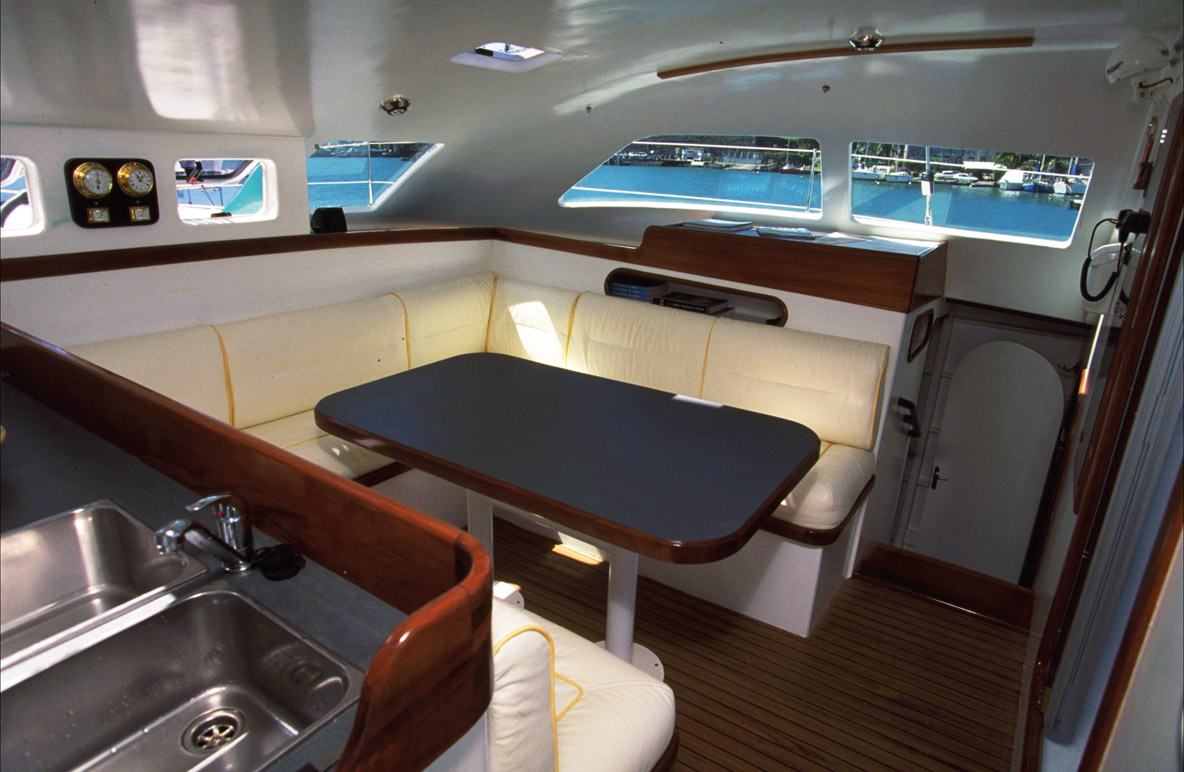
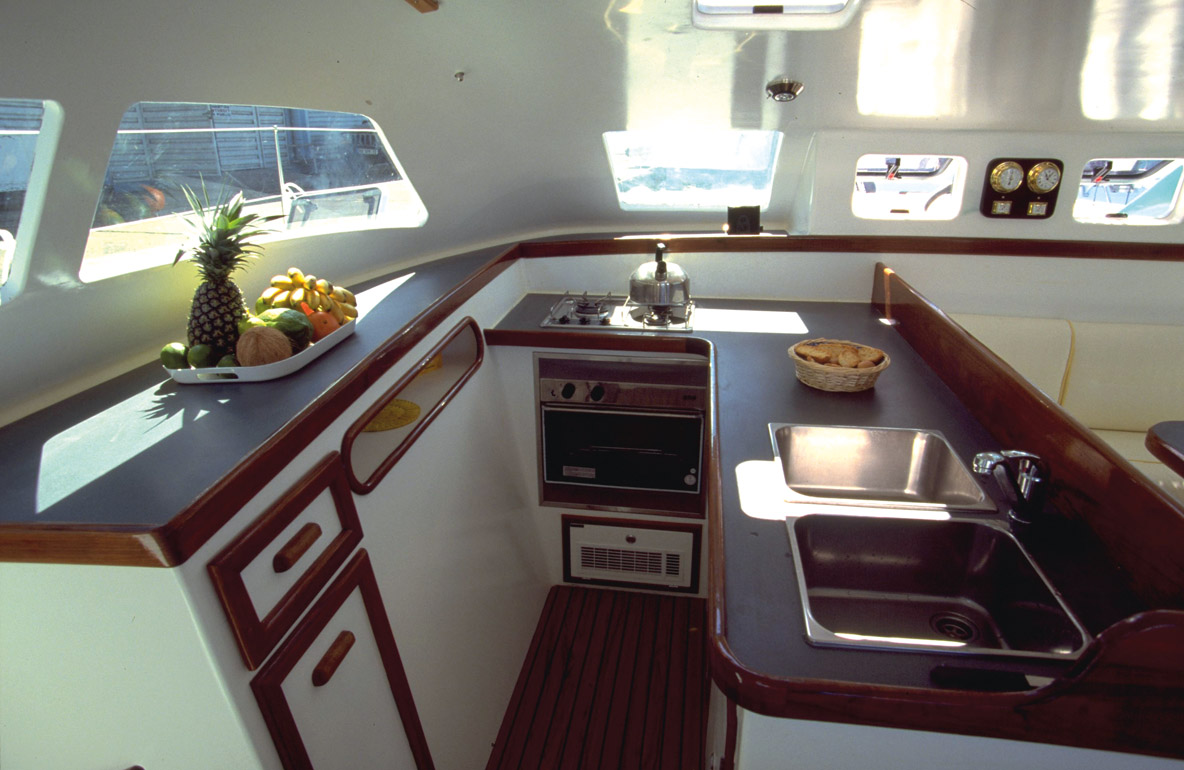
Inside, all the charm of a wood design…
Tax exemption and charter
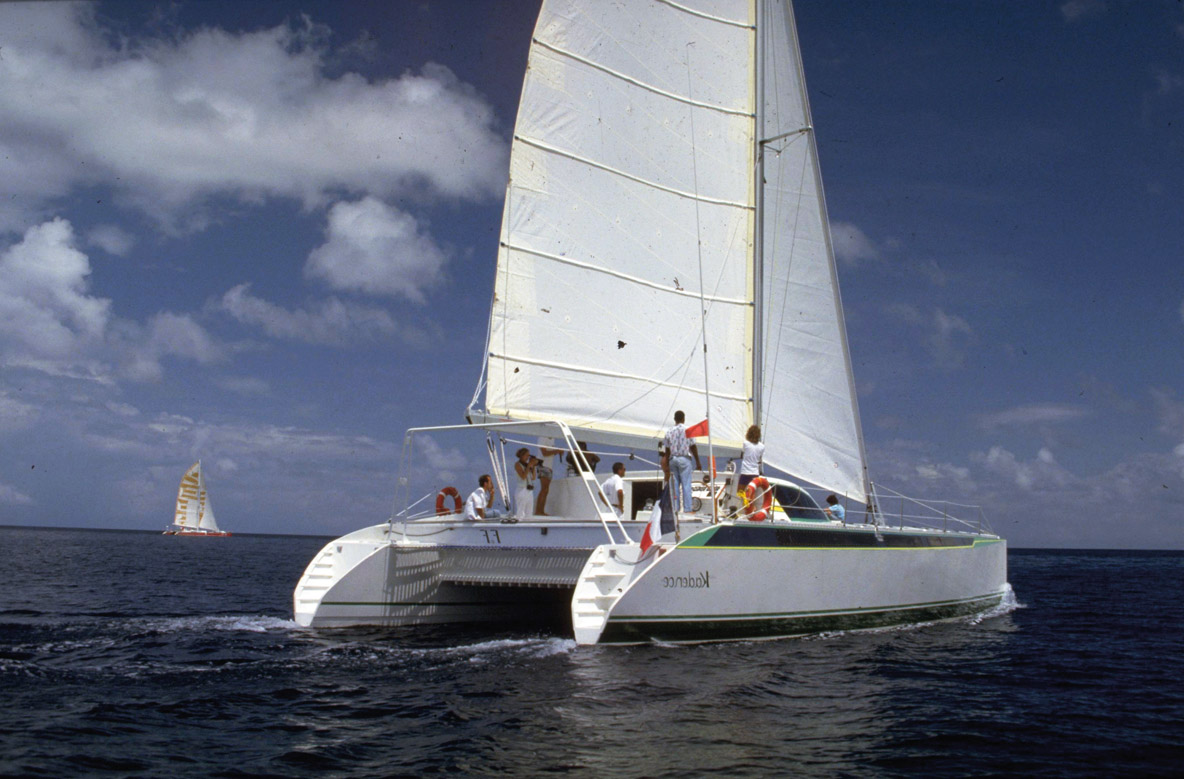
Testing the Punch 1600 under sail off Curaçao.
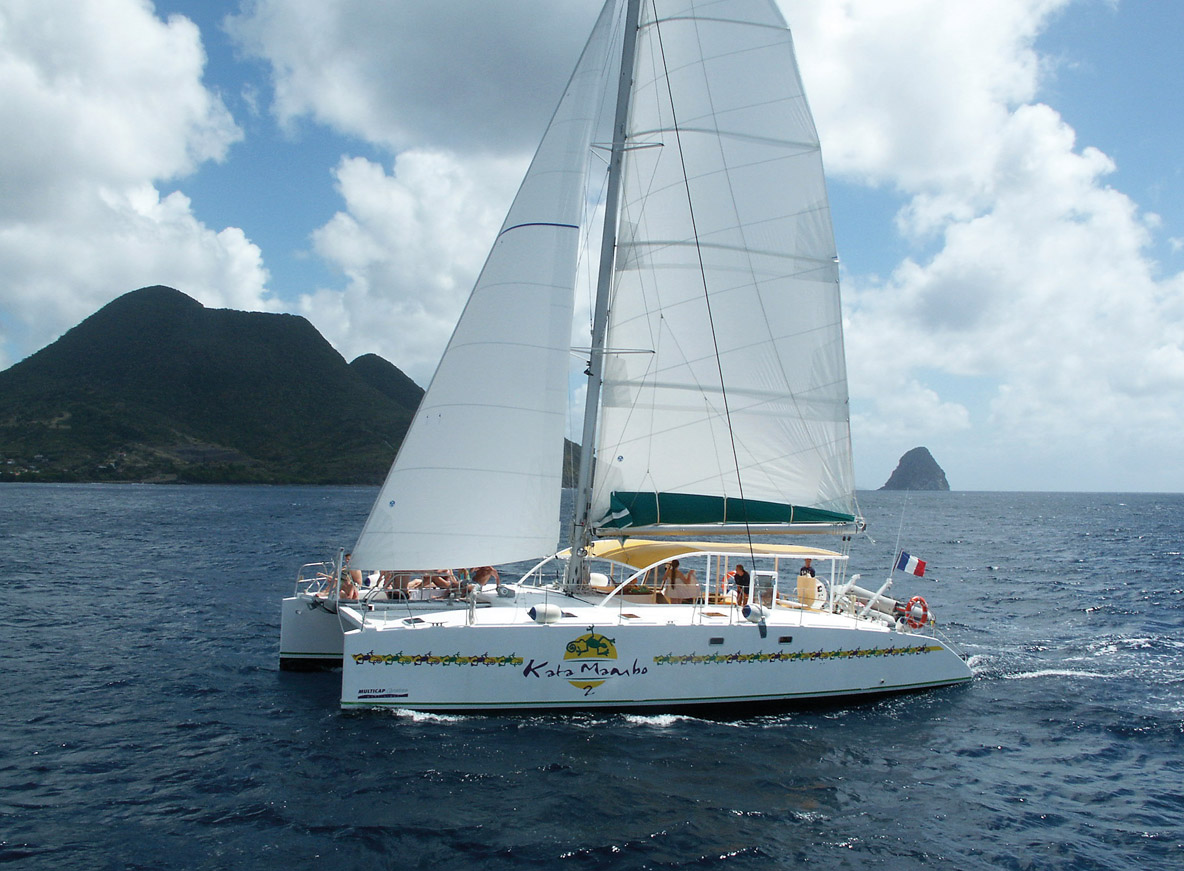
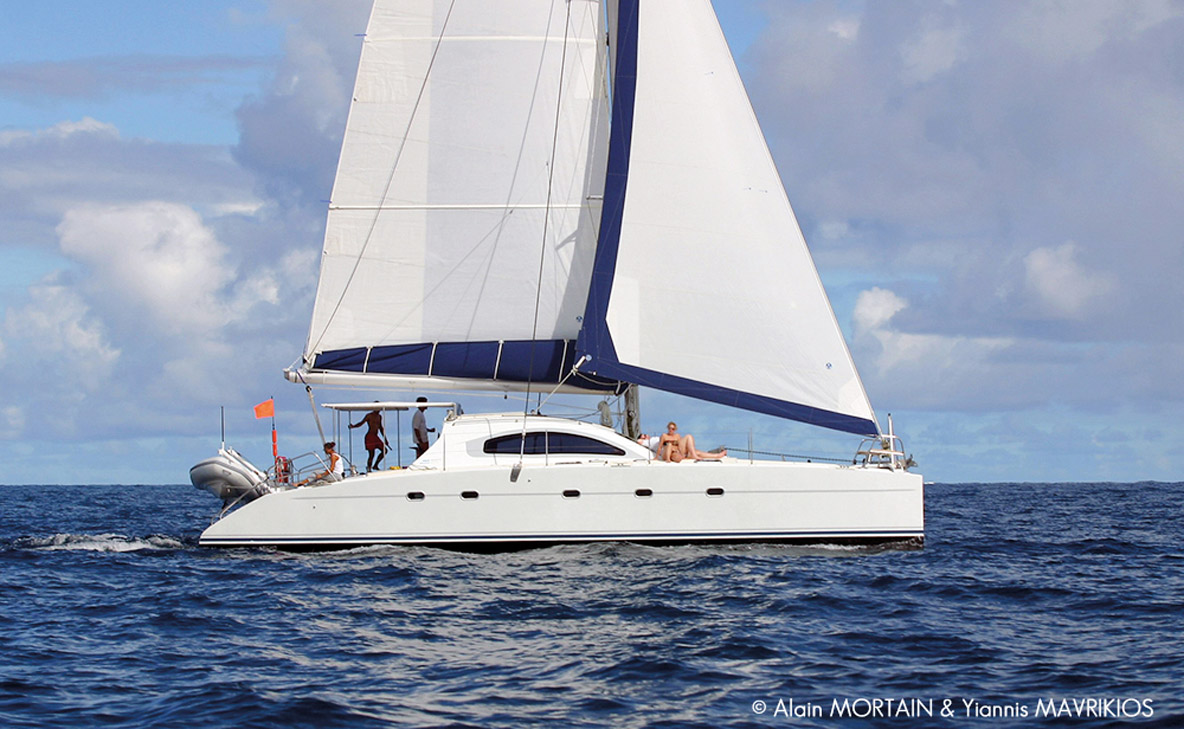
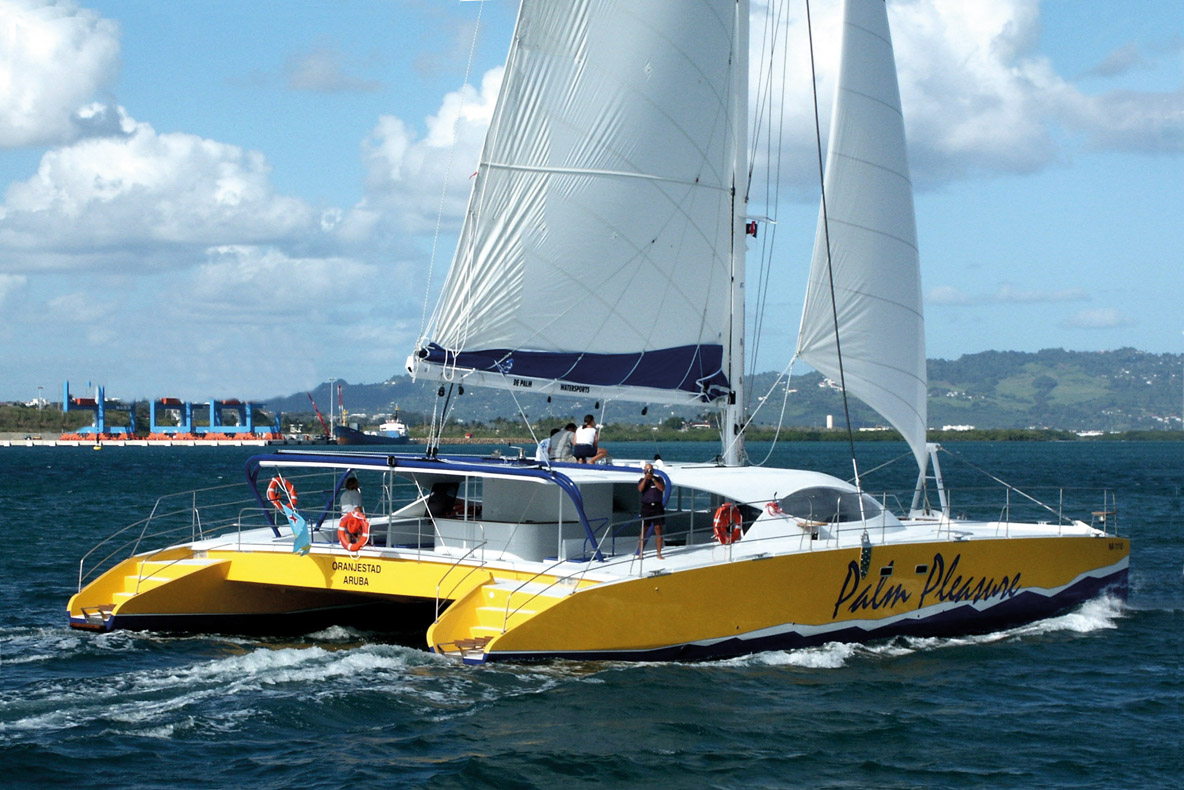
In the 2000s, the shipyard took a new turn. At that time, a new law supported overseas activities. The construction of a charter catamaran could be tax exempted provided that the boat worked for a minimum of five years in the French West Indies. Multicap Caraïbes therefore set up a charter division: Punch Croisière. In two years, six new Punch 12.50s left the hangar in Fort-de-France, which in the meantime had been entirely rebuilt to the shipyard’s specifications. “We used to build them in batches of three, and the buildings were always full,“ explains Christian, “The yard grew to the point where at one point there were 50 of us working on site.“ A new shipyard opened in 2002 in Guadeloupe, managed by Damien, Christian’s son. There, a team of ten people worked on the construction of the Punch 12.5. The yard also offered a repair service. The UCPA (National Union of Open Air Sports), which offers stays in Guadeloupe, ordered two catamarans. Ti Jon and Ti Rouge left the shipyard, followed by their sistership which was intended for a director of the group, promoting outdoor sports activities. Alain Mortain chose bright colors and an original decorative motif made up of flat areas of gray and a large colored stripe: “We are far from Europe and it’s a small shipyard, we have to make the boats unique, so that they have a strong visual identity”. This was Punch’s new trademark. At the shipyard, Alain worked on the design himself. The aesthetic had to remain the same between different boats. The technique worked: everyone recognized a Punch. More boats were built including the Punch 2100, a 21-meter (69-foot) catamaran, that was built in Martinique. This boat was designed to accommodate about 100 passengers. Multicap’s activity was then in full swing.
 |
 |
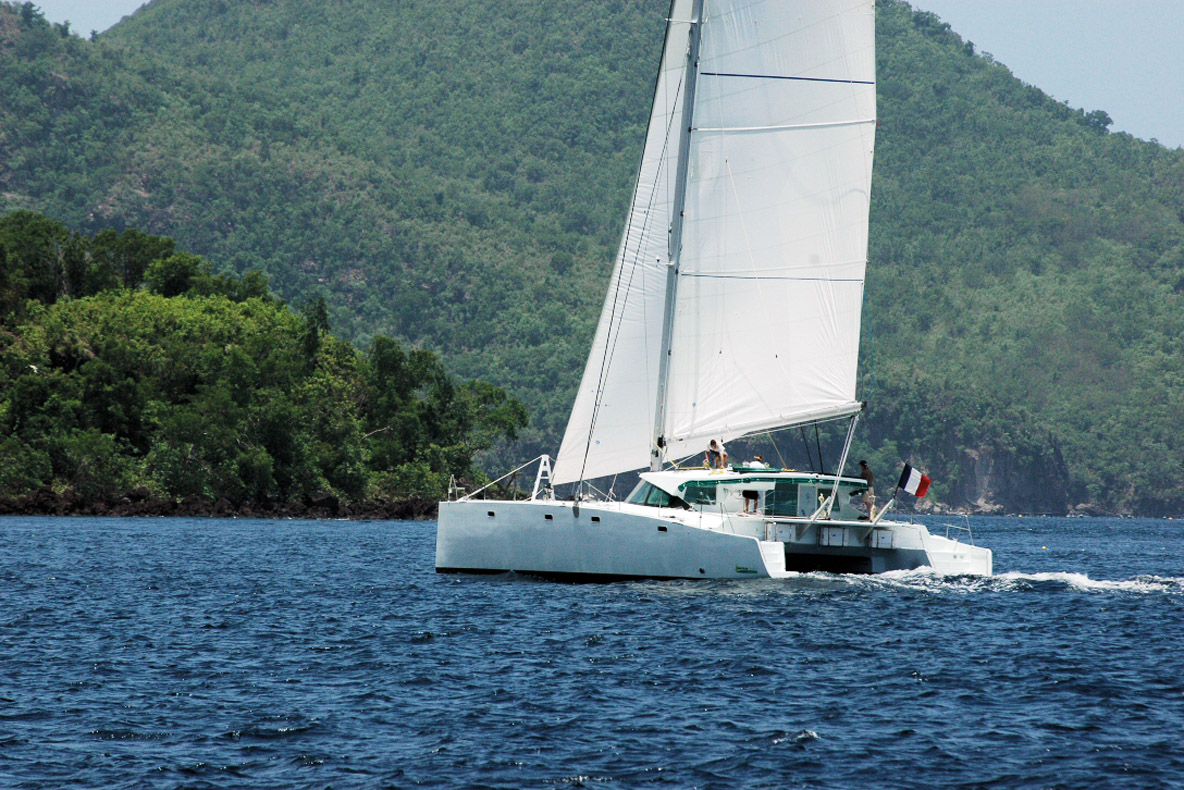 |
Les Punch 1500 et 2100 (jaune) ont beau être construits en bois, ils ne peuvent renier leur parenté avec les premiers Nautitech – et même les suivants avec le 1700 (gris).
“Today, our supplier is working on resins that are partly biosourced. We’re also going to use foams with 45 percent of the raw material coming from recycled plastics.“
12 years without Punch...
Everything went wrong in 2008, during the economic crisis. In 2009, there was a succession of strikes in the French West Indies, making it difficult for work to progress. Between power outages and blocked roads, construction slowed down. Then it was the banks’ turn to stop financing the yard’s clients. Two years of orders collapsed. These were tough years for Multicap Caraïbes. At the beginning of 2010, thirty-three orders were awaiting financing and just as many other boatbuilding projects evaporated in the economic and social turmoil of the times. The last two catamarans were not paid by the banks, which had nevertheless ratified the loan agreements. The shipyard closed its doors in June 2010.
For twelve years, no new boat was built at Multicap Caraïbes, but the old ones continued to sail the oceans, gaining a good reputation. The customers of the 21-meter boat were looking for a twin. Little by little, the Hernandez family and architects Mortain & Mavrikios got the message: people were looking for a new Punch!
The project to launch a new line of boats was born. “I haven’t lost the desire to sail and build boats,“ says Christian. As for Alain Mortain and Yiannis Mavrikios, with a long career behind them, they are dedicated to projects that they are passionate about, such as the renewal of the Ovni range and the introduction of a catamaran, the Ovnicat 48, at Alubat, the emblematic shipyard building blue water sailboats - and, of course, the long-awaited return of the Punch.
More ecological materials
 |
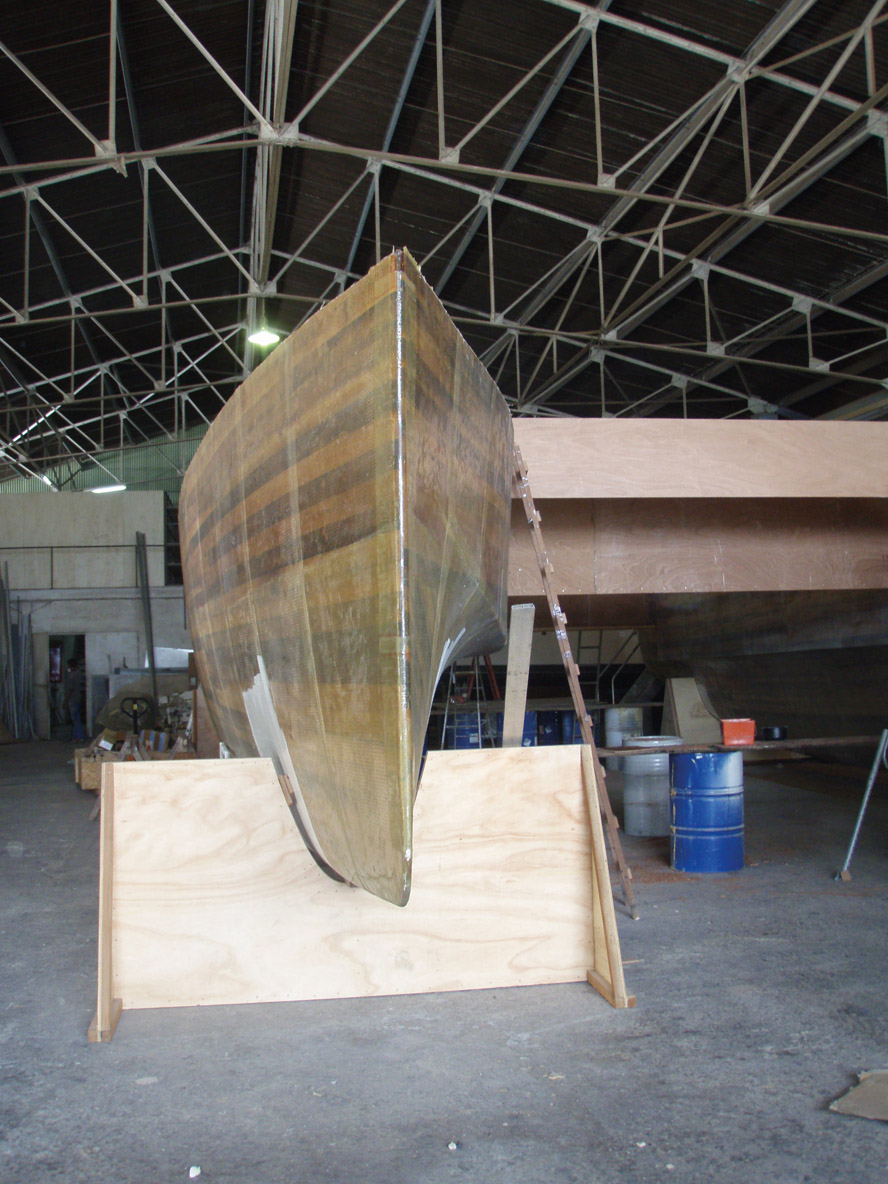 |
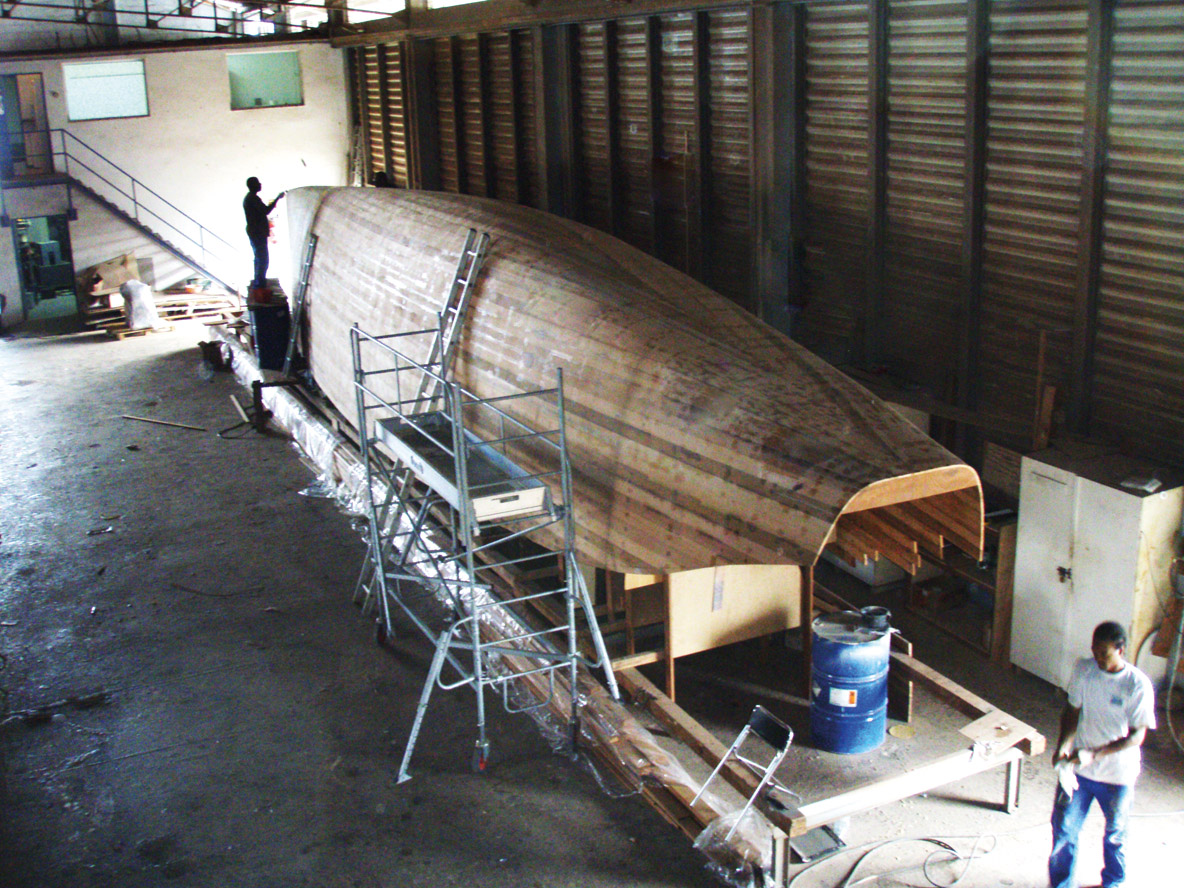
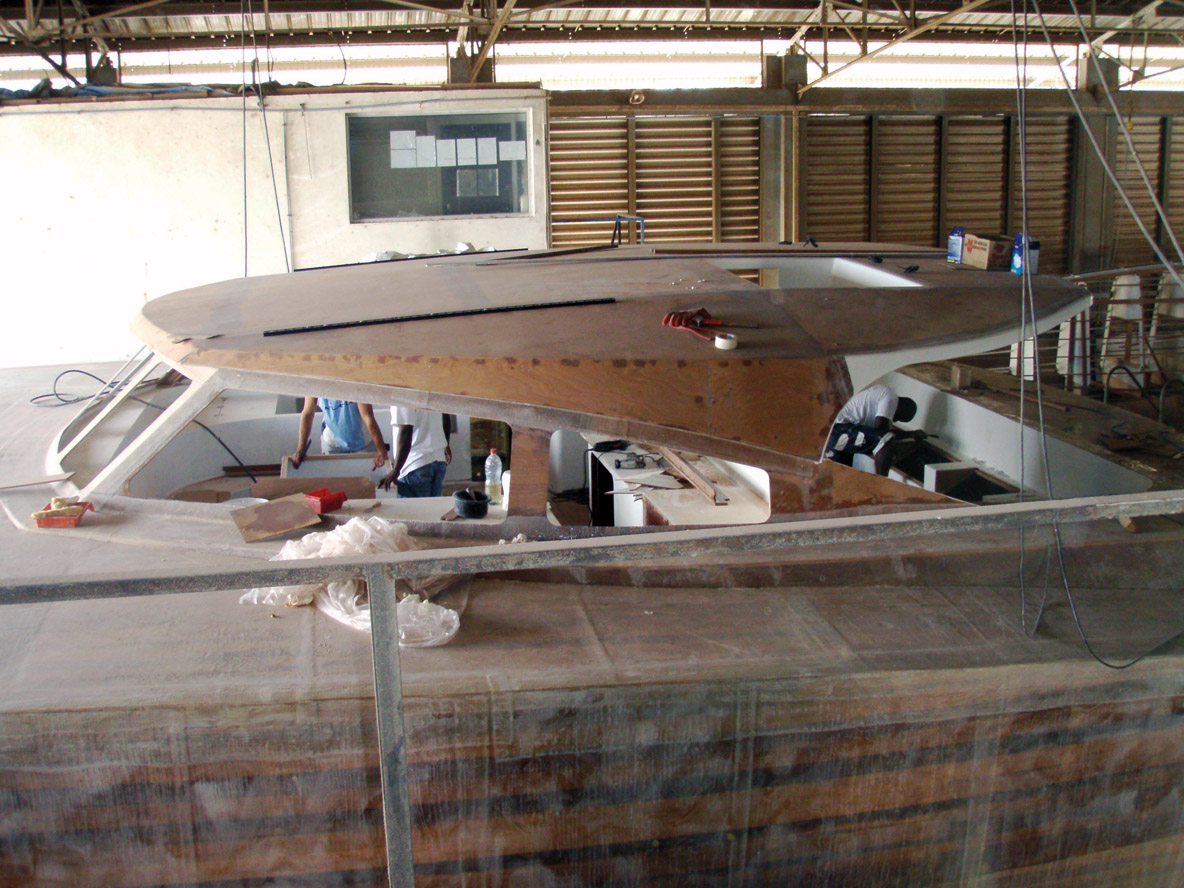
Building the Punch 2100 using strip planking.
One of the last projects of the shipyard in Martinique was a 17-meter (55-footer) made in strip planking from red cedar. It was a unique model: thin, light, with excellent sailing performance. The new models are partly based on this example and its sailing experience.
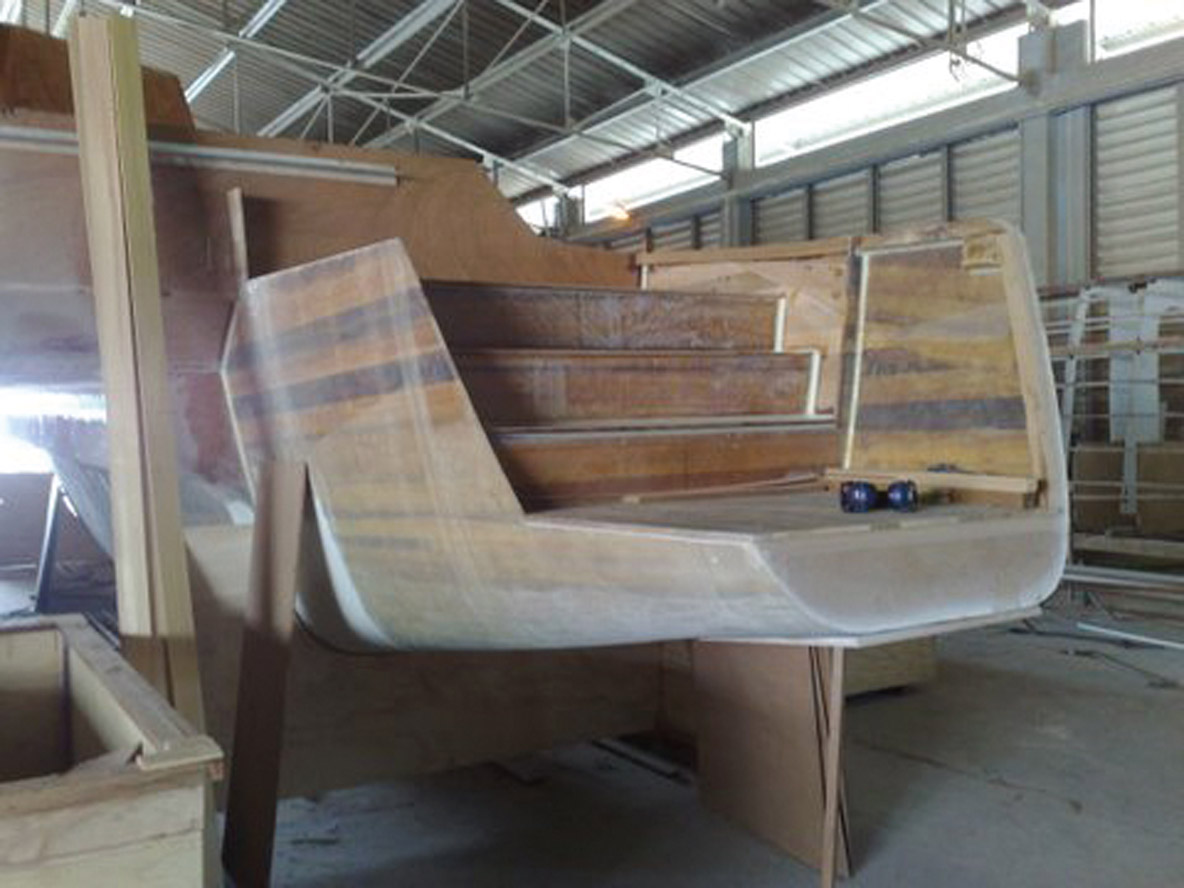
Since then, in a relatively short time, materials and technologies have evolved, and new challenges - particularly ecological - have appeared. The Hernandez family and the architects want to take an interest in these important and interesting new issues: “Today, Sicomin is working on resins that are partly biosourced. We’re also going to use foams with 45 percent of the raw material coming from recycled plastics.“ Composite materials are taking their place for decking and superstructures, but wood retains its place in the whole. “It is the most resistant of all materials, because it retains its elasticity under stress.” So the bottoms will be shaped, strip planking, and the topsides will be constructed in infusion-molded flat sandwich plates. “The shape improves drag in light air. It’s not any more difficult to do and it’s more efficient. It modernizes the Punch.“ Despite more volume, the weight will remain reasonable.
“The idea is to keep the Punch’s DNA: a simple catamaran, without oversized interior spaces, but still comfortable and functional,” explains Alain. “Overall, we’re looking to have a slightly larger and brighter living space compared to the old models. The coachroof will be largely glazed, as on the 17-meter. The mast will be larger, the fore triangles will be a little more generous and the large square-topped mainsails will improve the performance in light to medium airs. We’re keeping a similar space for the saloon and the galley, but rearranged in detail to further optimize the operation. On the 12.70, there is now a convenient navigating and interior watchkeeping area thanks to the improved view to the outside. There will also be a full walk-through to the cockpit. This is an innovation we made 25 years ago on the Nautitech 475, which was finally taken up very late by the whole market, but which we didn’t have time to adapt to the Punch.“ The passage between the cockpit and the sugarscoops will also be flush, unlike the previous models, on which you had to step over part of the deck. The new Punch boats remain fundamentally in the spirit of the shipyard: catamarans that are reasonable in weight and frills, quite streamlined, and efficient under sail. “This is the basis of an ecological boat, after all, we have always worked like that, even when the environmental issue was not yet on people’s minds,“ note Christian and Roselyne Hernandez.
 |
 |
A new model: the Punch 13.70
 |
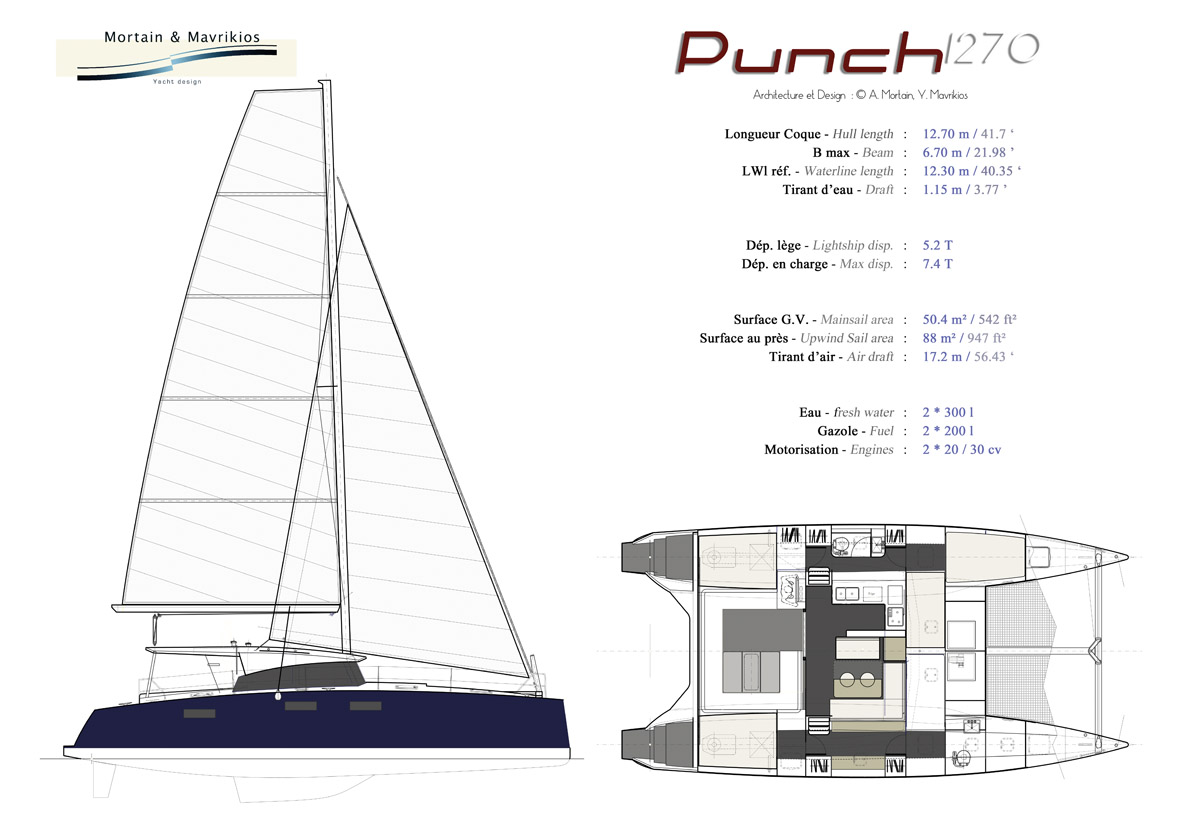 |
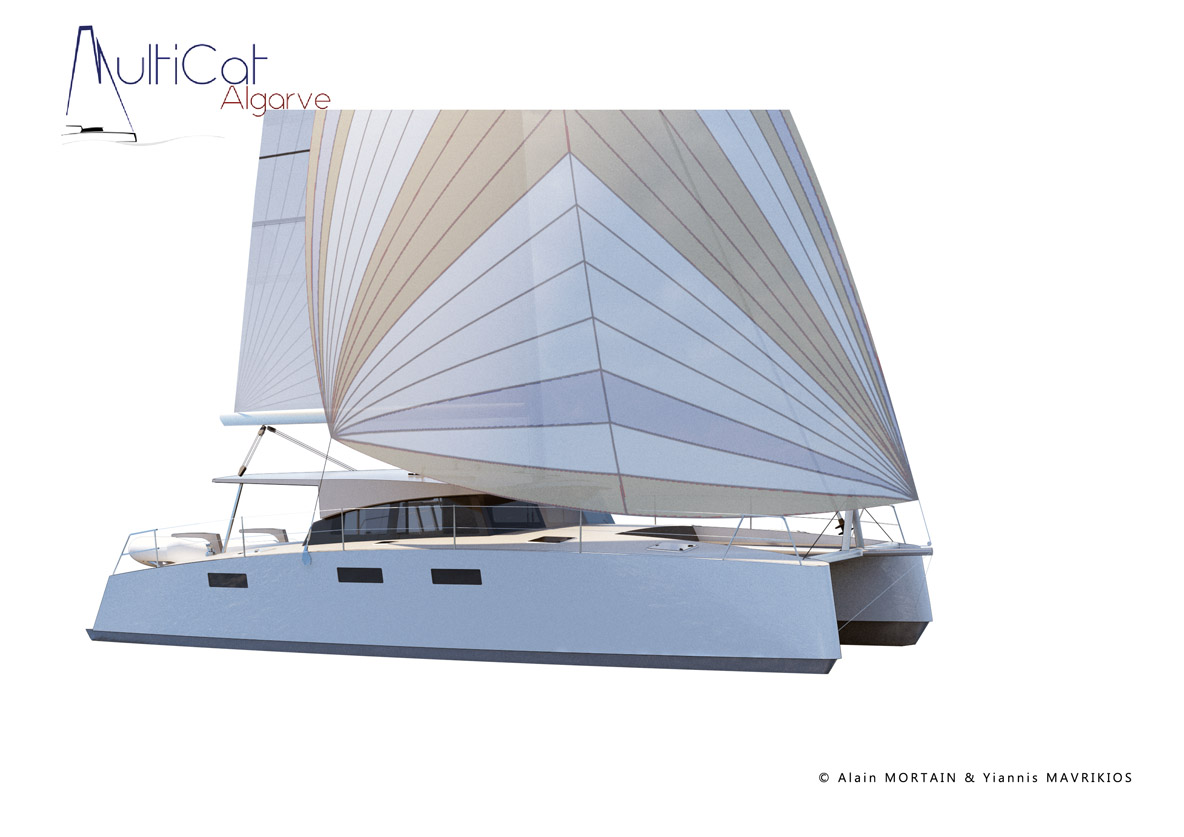
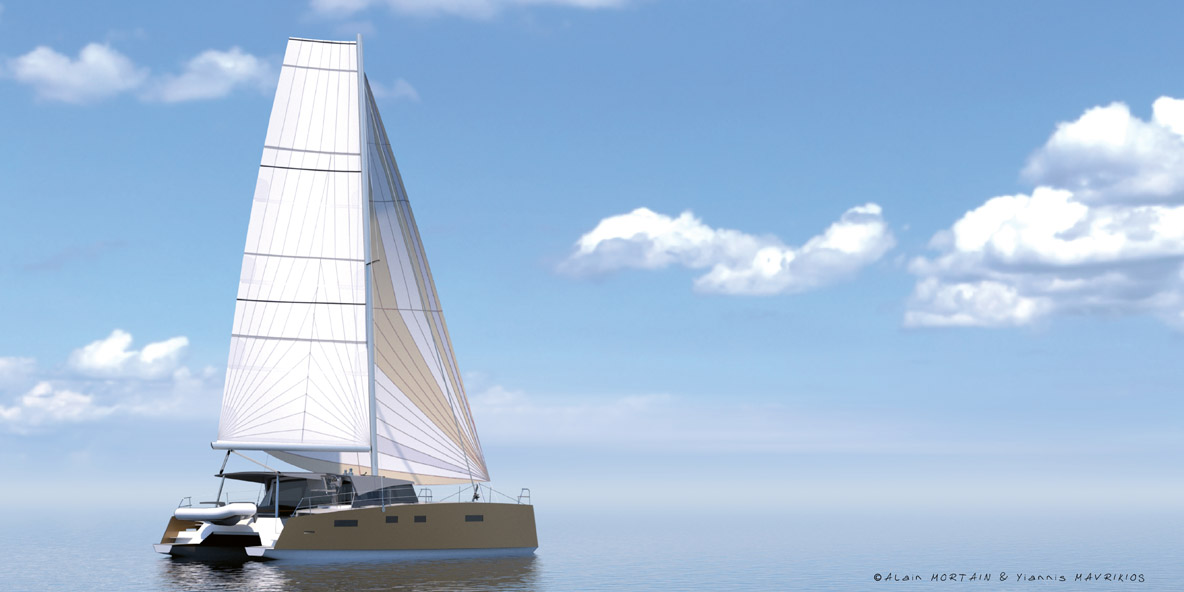
The next Punch 12.70 will be the worthy successor to the 12.50…
Alain Mortain presents the first drawings of the range, which is currently composed of four models - the Punch 12.70, 13.70, 15.10 and finally the 17.10. This range respects the initial staggering, which has proved to be relevant. The only thing missing was an intermediate between the 12.50 and the 15.00. That “hole“ is now filled with the creation of the 13.70, the missing link of the big family.
Different variations are possible, between cruising, day charter or long charter versions. The construction of the first catamaran began in May 2022: it is a Punch 12.70. The catamarans will be built on a semi-custom basis: there will be a common architectural core, which allows part of the construction to be rationalized, but adaptations are possible according to the owners’ desires. It is also the trademark of the shipyard to remain available and accessible. The team wants to keep this way of working: “Human exchange is possible on this scale. When we don’t do mass production, the meeting with the future owner is more convivial. They can be in direct contact with the architect and the yard manager: this is rare in boatbuilding,“ concludes Christian.
The new Punch boats will be built at the mouth of the Guadiana River. In the small Portuguese town of Vila Real de Santo António, the canneries have closed, and several sheds are ready to house the catamarans. In collaboration with a local shipyard, the Hernandezes have set up the new company and already have their foreman. This is the gateway between the Mediterranean, the Atlantic, Europe and Africa. The river offers a natural shelter for sailing boats, which can choose between Spanish or Portuguese ports. The Guadiana is also a few days away from Madeira, the Azores, the Canary Islands, and a few weeks from the Caribbean. The new Multicat Algarve Punch are ready to sail all around the Iberian Peninsula... and further if you desire.
 |
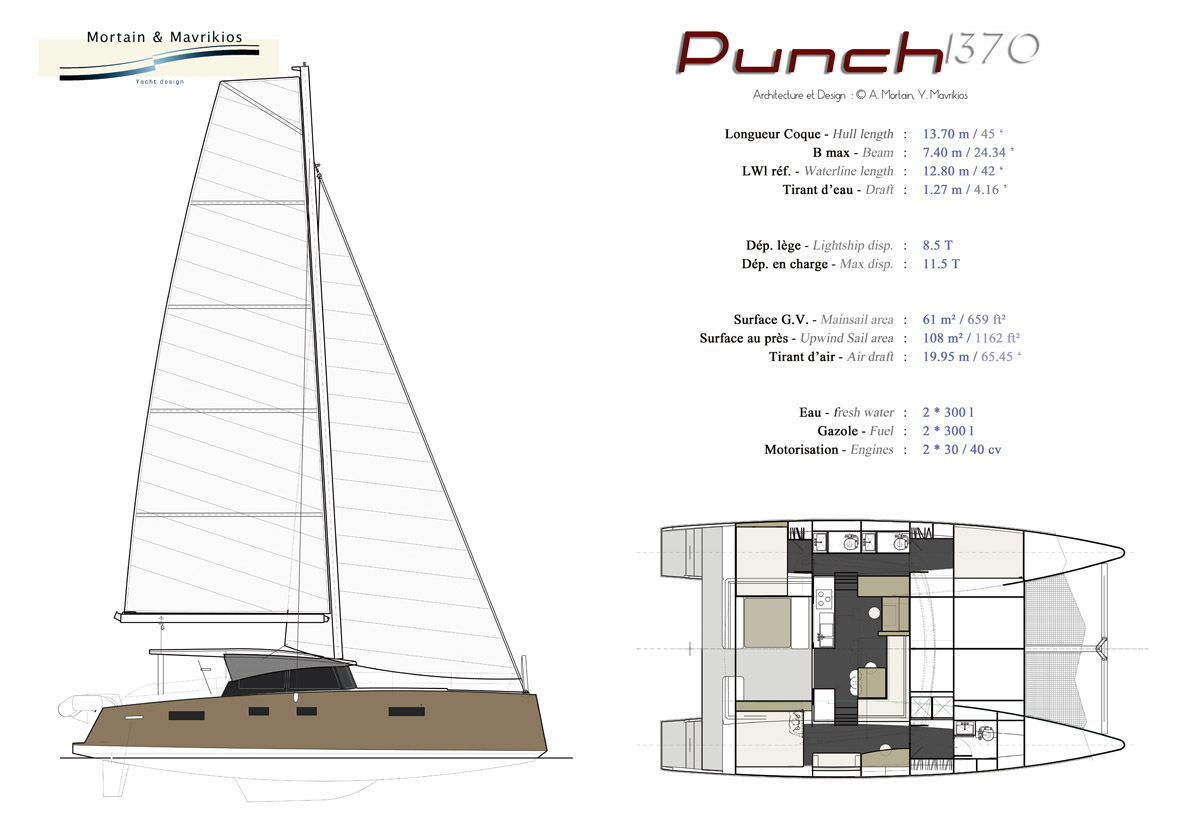 |
However, the forthcoming Punch 13.70 will be a completely new catamaran.
PUNCH CATAMARANS ON TEST IN MULTIHULLS WORLD