
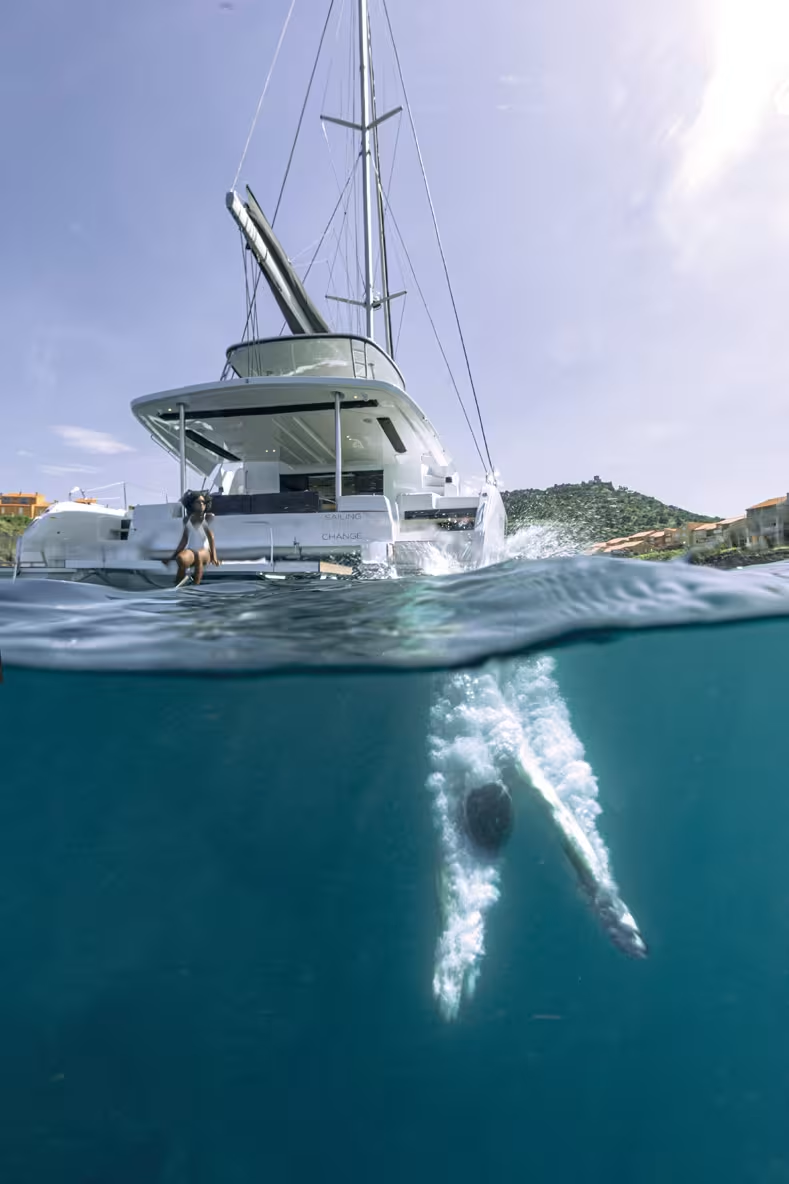
After two seasons off, forced on us by the health crisis, marinas and anchorages are saturated during the tourist periods. The most beautiful areas of the coast are threatened by pollution and uses that destroy the environment. Energy demands and overconsumption of fresh water are increasing exponentially on isolated islands that sometimes already struggle to supply their inhabitants.
Today, except for blind militancy, the idea of counting on a collective and immediate environmental awareness is utopian. Change occurring in stages is one of the keys to ecological transition.
Aware of the major stakes and the influence they can exert, many marine industry professionals and shipyards are now building their forever green strategy well beyond the simple commercial aspect - it is a matter of being part of a sustainable and virtuous approach thanks to new materials and equipment.
For boaters, adopting responsible behavior on board, new alternative consumption methods and clean products and technologies allows them to reduce their footprint on the marine environment. Without ever forgetting the pleasure of sailing and the dreaming part of any voyage, of course!
Antifouling: The impossible equation…
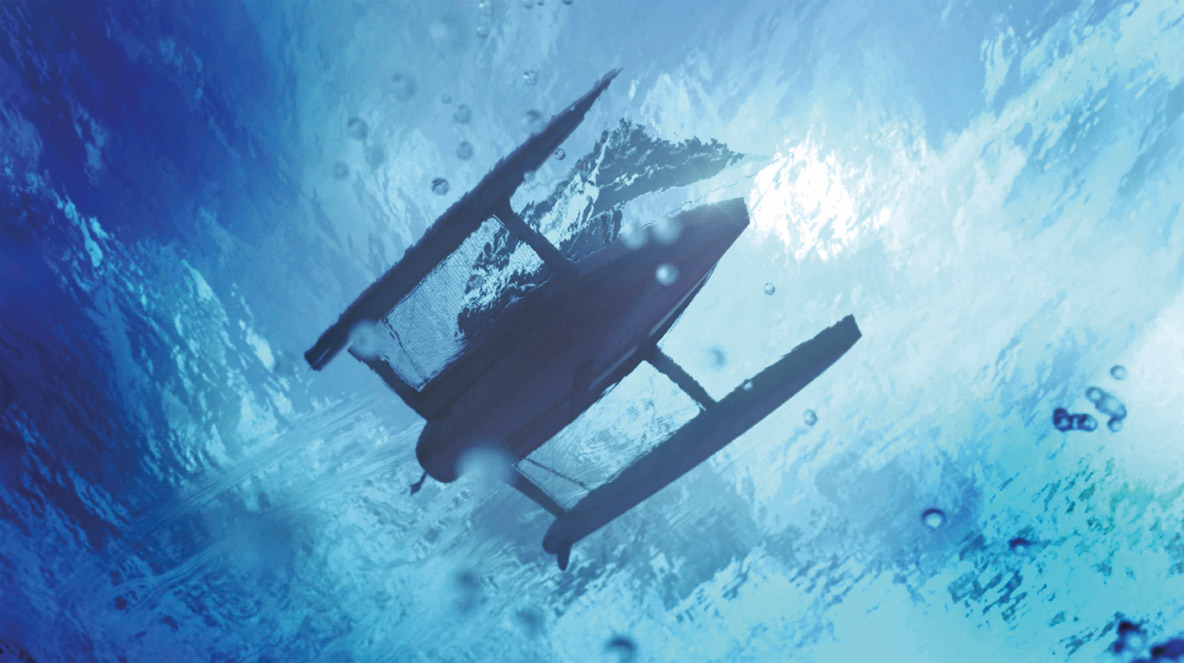
There’s no mystery: the only really effective bottom paints are the most polluting. Today, many countries have enacted standards for antifouling paint intended for leisure craft, though large ships are not concerned... The result is that many paints have become more eco-friendly - but also less effective. As a result, we may be tempted to try new methods to protect our hull. Here is a summary of the solutions to keep your boat gliding smoothly though the water without (too) much damage to the marine environment.
Hard matrix antifouling
This is the solution validated by most boat builders and long-distance sailors. This paint is relatively effective with limited pollution. It can be scrubbed under water without releasing too many biocides.
Ablative (self-polishing) antifouling
The principle is to release the biocides gradually: the surface film becomes partially soluble as soon as it is put in the water. The thickness of the paint decreases over the course of the year, until it disappears. It is efficient when for a multihull that covers a lot of distance, but very polluting…
Ultrasonic system
The results are very variable and we don’t know the real impact on the surrounding flora and fauna. The system also requires a permanent power source.
Copper-based antifouling
Bottom paints such as Coppercoat containing copper oxide are less harmful to the environment than conventional antifouling paints. It might be pricier… although it is guaranteed for up to 10 years. But copper oxide is still toxic for micro-organisms such as fish larvae, and it pollutes the water. They’re certainly not cheap though.
Adhesive strips
Finsulate produces adhesive strips with micro-bristles that are affixed to your hulls. This system delays the appearance of fouling, especially in colder waters, but lends itself well to regular scrubbing of the hull. The principle is therefore to slow down the appearance of any growth and to guarantee non-toxic cleaning for the environment. This is an excellent avenue of research, even if you lose a little gliding ability and the application is inevitably much more expensive than applying antifouling paint yourself.
Silicone film
MacGlide offers an adhesive silicone film for the underwater hull that seems as effective as organic: installation of the product is managed by a professional: sanding off the old antifouling, applying 2 coats of specific epoxy primer, applying the film itself and a technical visit for the guarantee is provided during the first season. Prices (€3,602 to €11,376) are related to the wetted surface and the complexity of installation (e.g. chines).
Covers
Sailmakers but also specialists like K-ren offers custom-made covers that protect the underwater hull from UV. A simple system which can be adapted to catamarans, even ones that are equipped with keels. Only two downsides: it is not very elegant and relatively time-consuming to fit.
And why not do nothing?
The uneven effectiveness and high prices of the greenest formulas may tempt the boater to leave their gelcoat bare... which is not necessarily a good idea, because hard scrubbing on a hull can damage it and disperse organisms (following a long passage, for example) which have no business being on the other side of the ocean to where they came from.
Hull maintenance
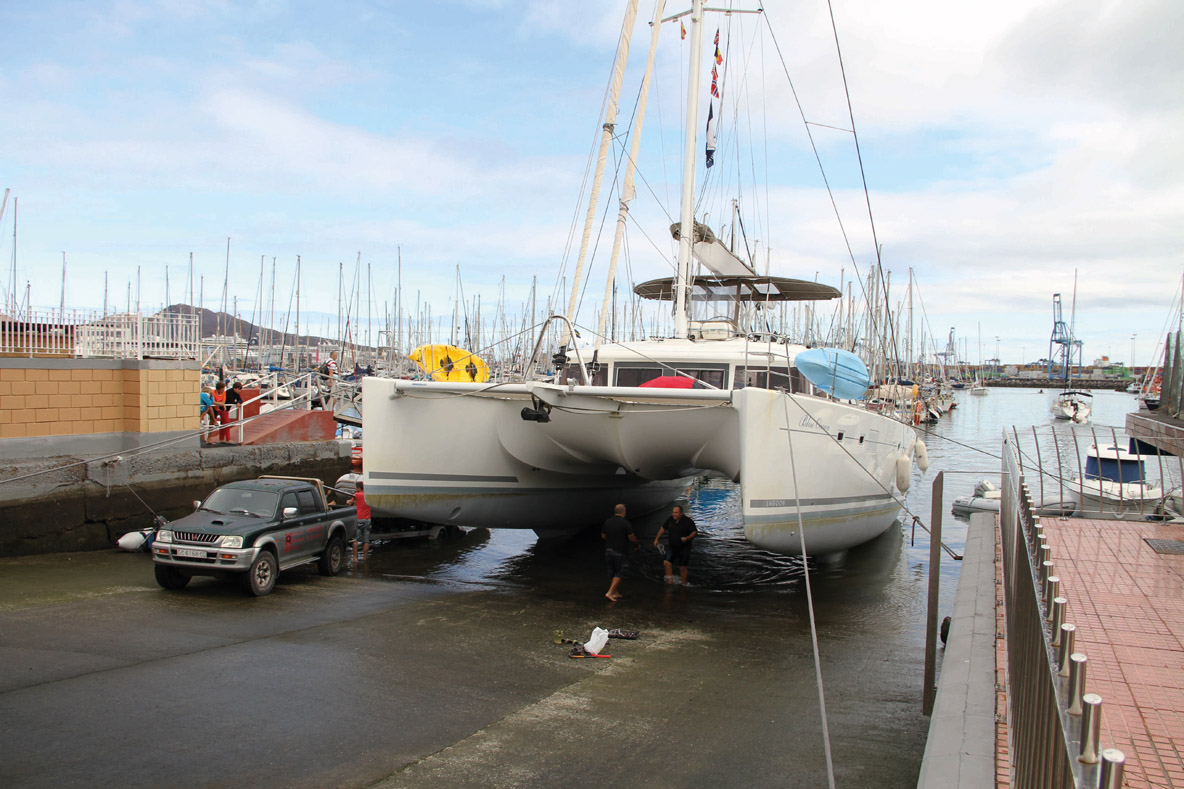
• Haul out to your hull treatment in proper technical areas fitted out for the recovery and treatment of run-off water.
• Dispose of any toxic waste (sanding residues, brushes, empty pots, rags, etc.) in areas set up to deal with these items.
Prepare well for green cruising
 |
 |
Sailing green means choosing ports of call where it is easy to respect the environment.
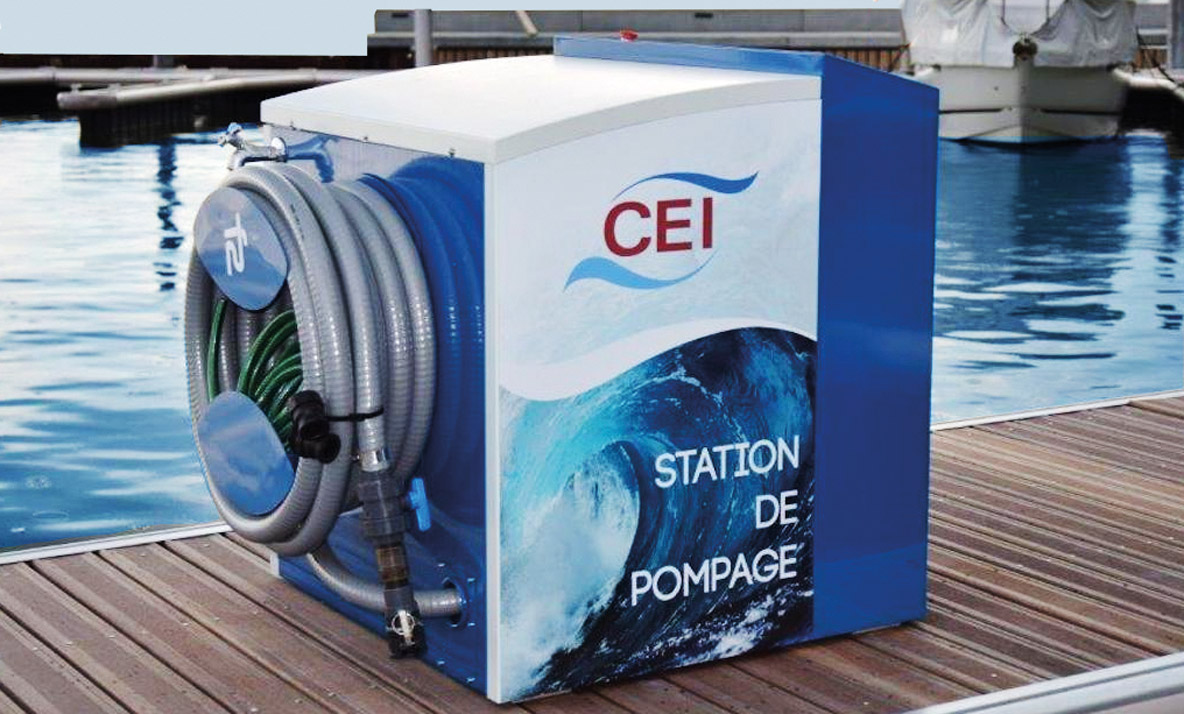
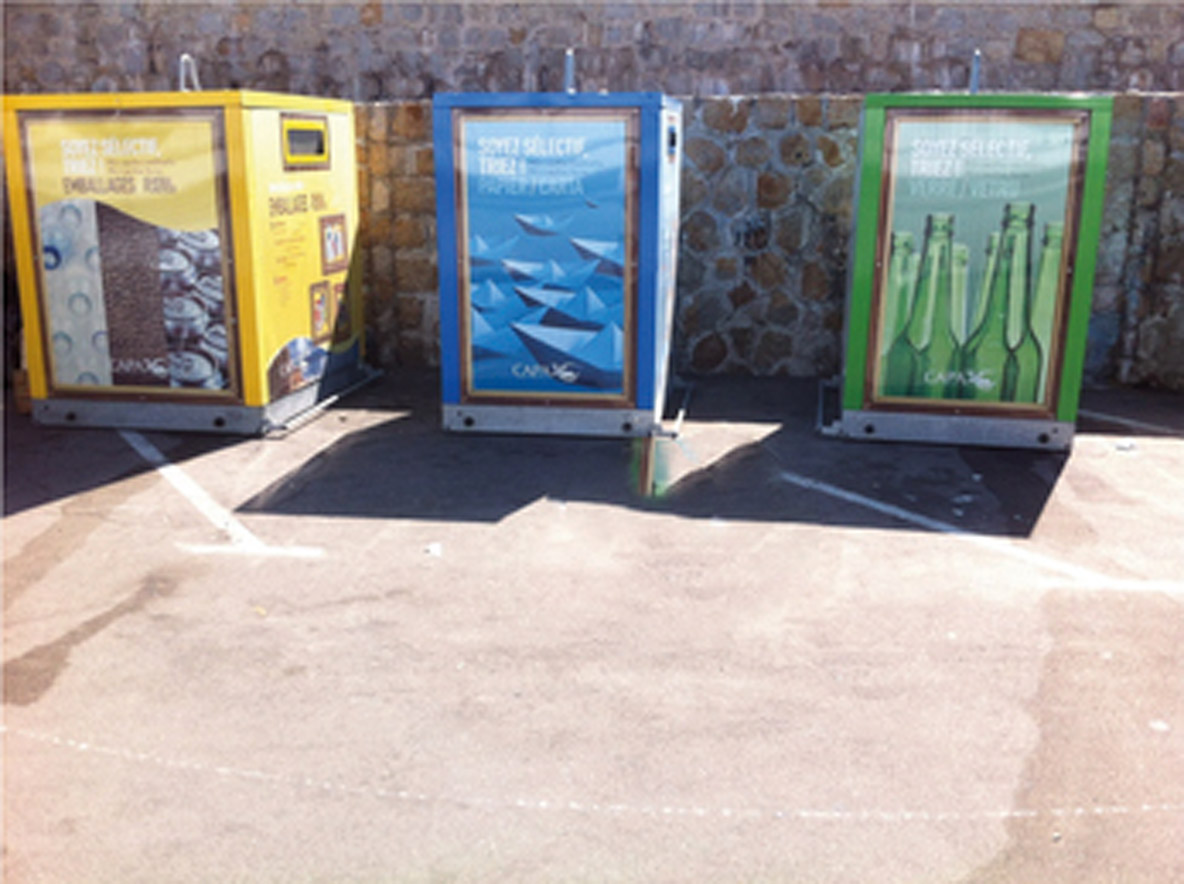
CLEAN PORTS: Choose to stop over in “clean ports” (CE-marked in Europe) or ports that are active in terms of biodiversity allows you to avoid creating pollution and better manage energy. The infrastructure at such ports has common sanitary facilities, pumping stations for black and grey water, laundry facilities, connected water and electricity terminals, trash sorting and recycling areas, etc...
MOORING FIELDS OR ANCHORAGES: Favoring mooring fields organized by the local maritime authorities using deadman moorings, or anchoring on sandy bottoms, is a guarantee of preserving the seabed from any aggressive interference.
REGULATIONS: Sailing and marine leisure activities are sometimes subject to restrictions (speed, type of propulsion, regulation of anchoring at night, type of WC authorized). These rules are sometimes difficult to accept for sailors who aspire to total freedom... but the stakes of maintaining our environment deserve some sacrifices.

Responsible provisioning
 |
 |
 |
When planning your provisioning, food waste is to be avoided and galley space optimized. This will help reduce the overuse of food plastics and other packaging.
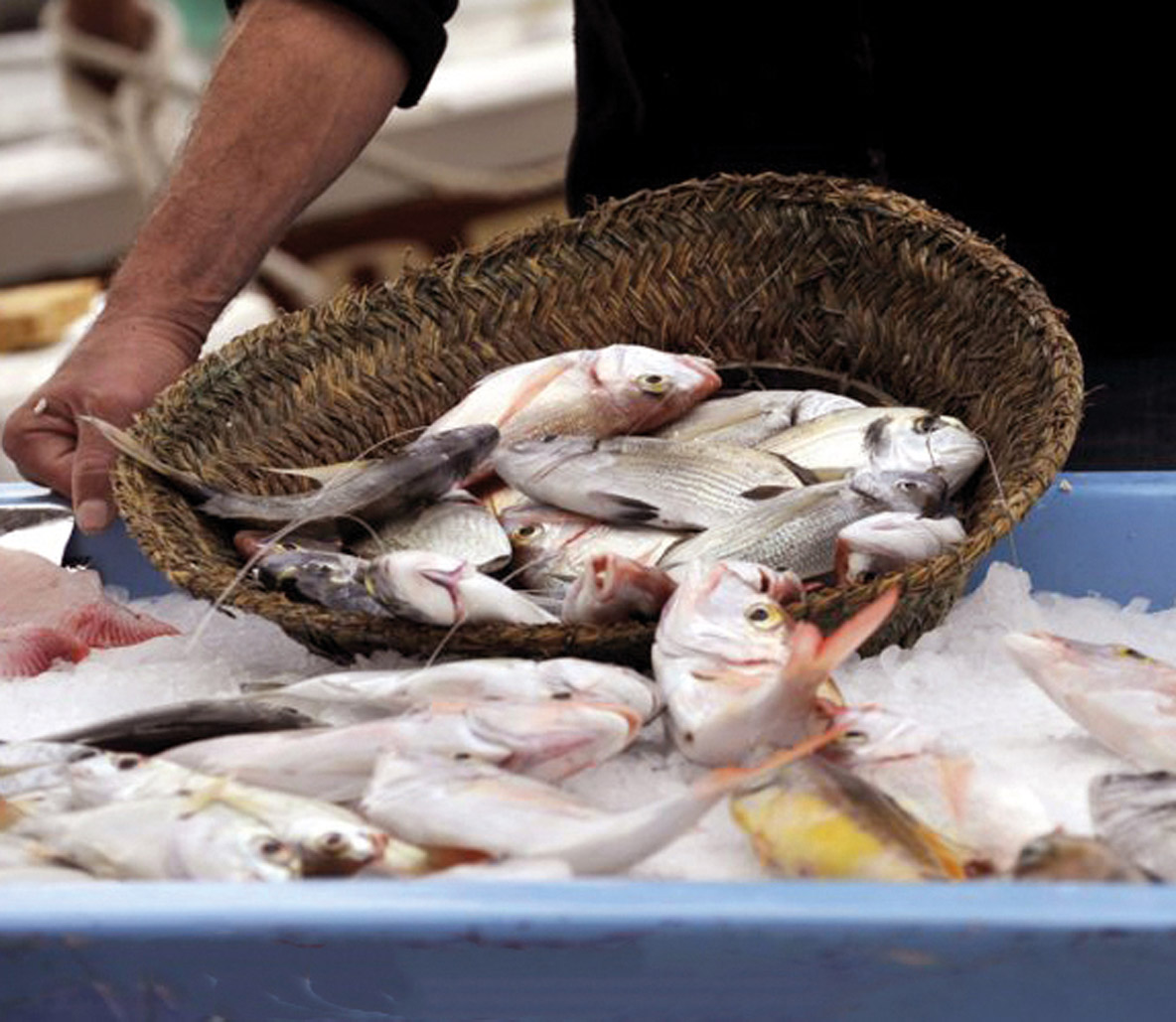
LOCAL PRODUCTS: Favoring local products and short journeys is a good way to promote the local economy and avoid long, polluting and energy-intensive transportation of goods.
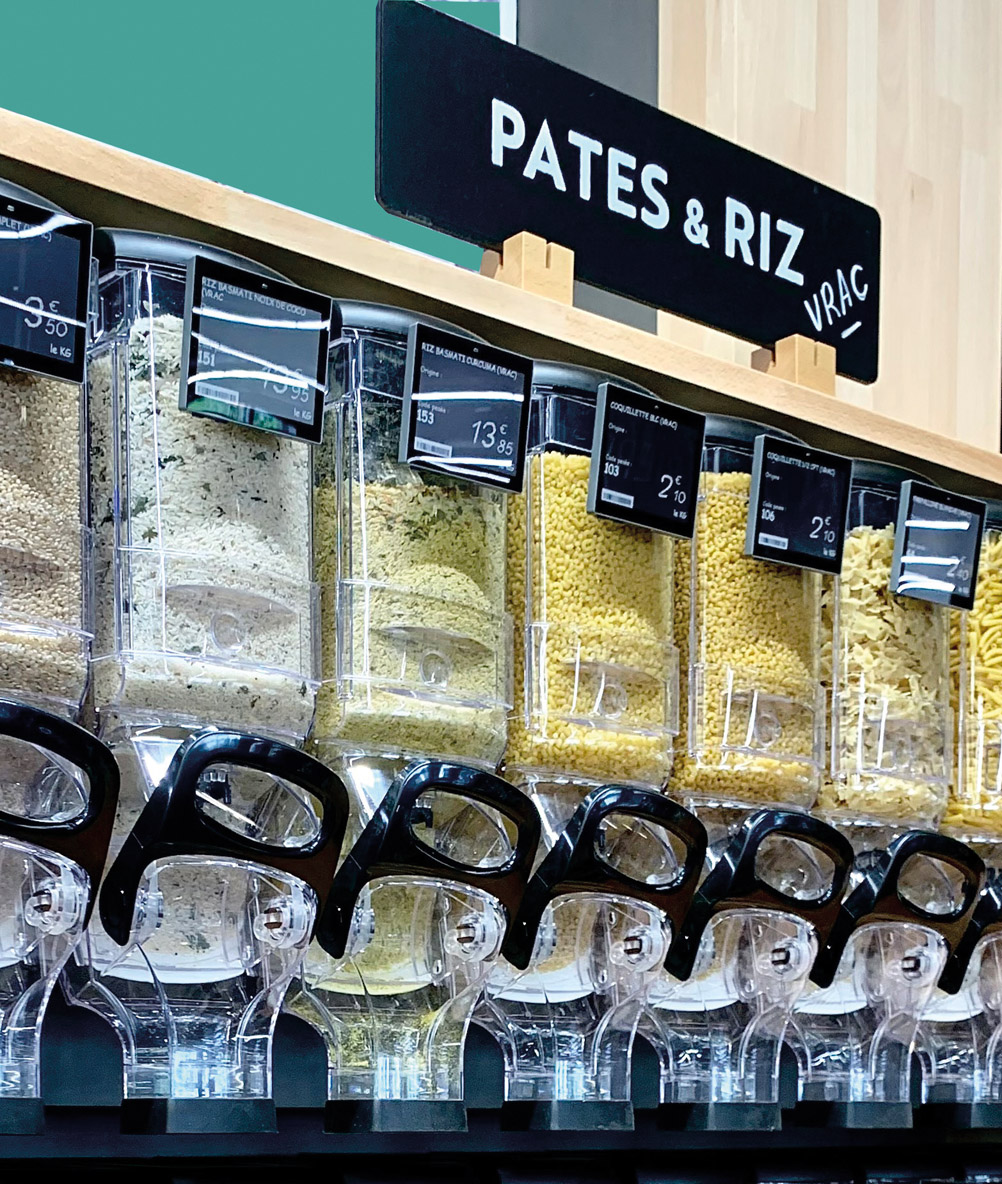
TRY TO BUY IN BULK: Vegetables, fruits, cereals, cold cuts, breads, cheeses and even seafood are available in most markets and now in supermarkets. None of these foods require plastic packaging.
RECYCLE YOUR PACKAGING: Before casting off, dispose of single-use plastics and other recyclable waste in the appropriate garbage facilities provided in the port.
CARRY SOLID CONTAINERS: Glass jars and Tupperware (biodegradable) are perfect for replacing plastic containers for food such as pasta, rice or flour.
Cleaner... cleaning products!
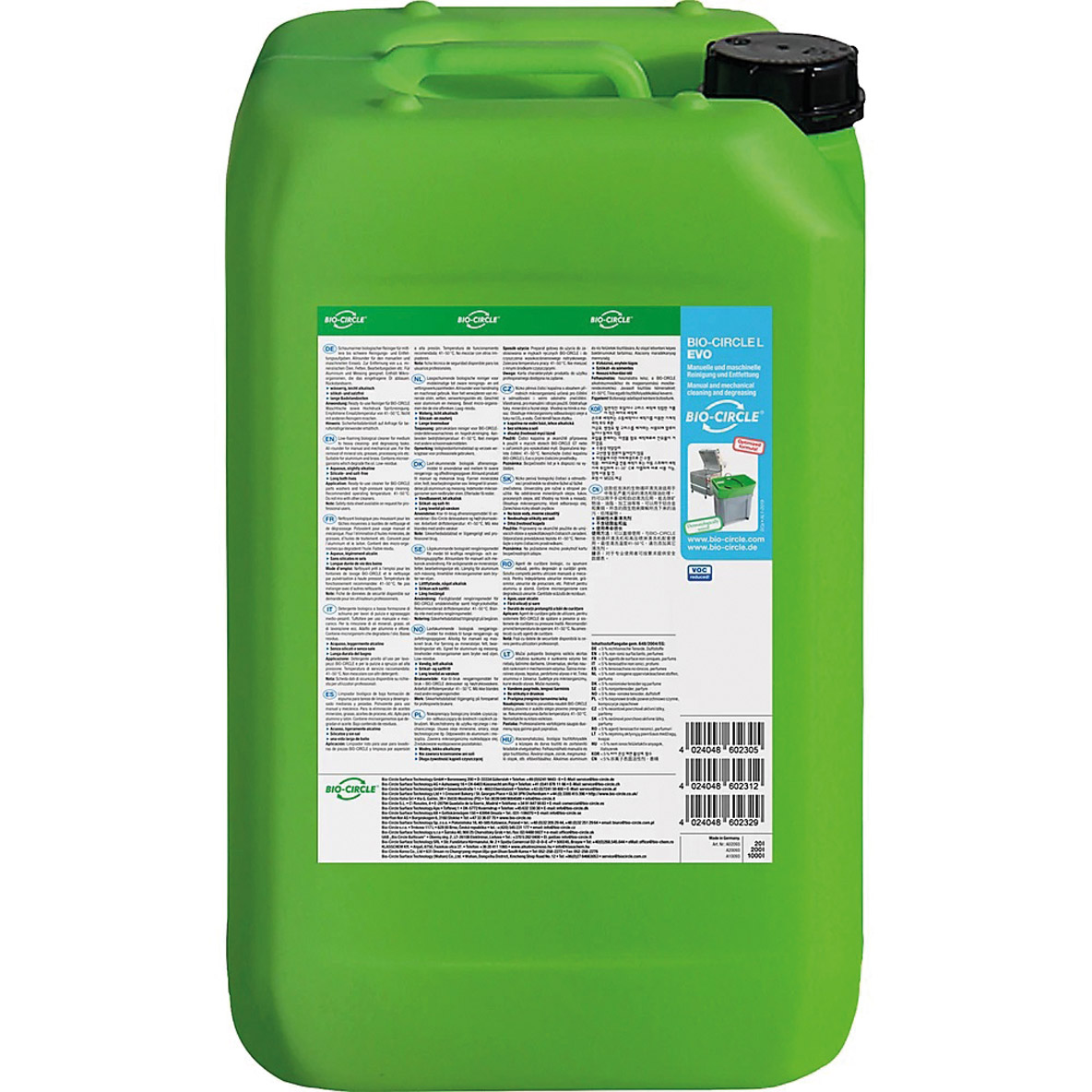
Products of natural or vegetable origin containing biodegradable surfactants and natural active ingredients are far less harmful to the environment: let’s use these in preference!
CERTIFIED ORGANIC HOUSEHOLD PRODUCTS: Refillable products for upkeep of your multihull (without biocides), cleaning the galley, the dishes and everything domestic. These days, they are available everywhere.
ORGANIC CERTIFIED HYGIENE PRODUCTS: Especially preferred for sunscreens and suntan oils, after-sun, moisturizing milks and creams, shampoo, soaps or shower gels.
Black, grey and oily water: discharge the absolute minimum into the sea
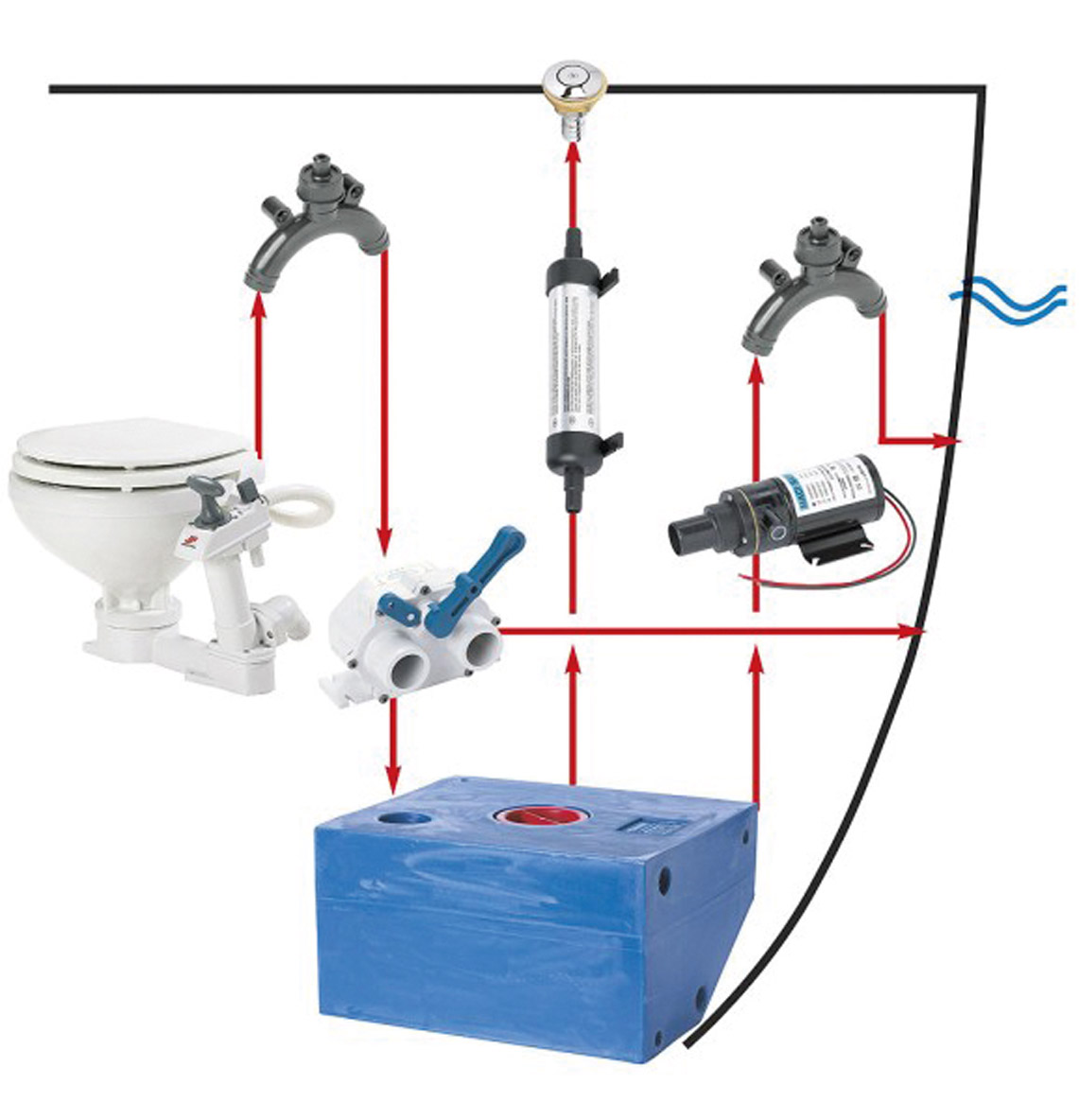
Every day, wastewater is produced on board and discharged directly into the marine environment. Bacteriological or chemical pollution, these discharges are toxic and cause great damage to the flora and fauna, not to mention their impact on water quality.
BLACK WATER: No more discharging toilets directly into the sea! A holding tank - the black water tank - allows for discharge at the pumping stations in ports that are properly equipped. Otherwise, and only when authorized, you may be forced to open the seacocks offshore. Make sure that winds and currents are not going to carry any discharge towards the nearest beach... When on the dock, use the harbor facilities. Finally, never dispose of solvents, detergents, hydrocarbon-based products or other pollutants in the toilet.
GREY WATER: This comes from showers, sinks and washbasins. When in port, use the facilities provided. Use products of vegetable origin, and limit their consumption by following the minimum recommended doses.
OILY WATER: Also known as “bilge water”. This has different origins - seawater, fresh water, engine oil, fuel, coolant. These sources of oily water contain dispersed and dissolved hydrocarbons, suspended in the water. When cleaning, do not discharge such fluids into the sea.

Accidental pollution
 |
 |
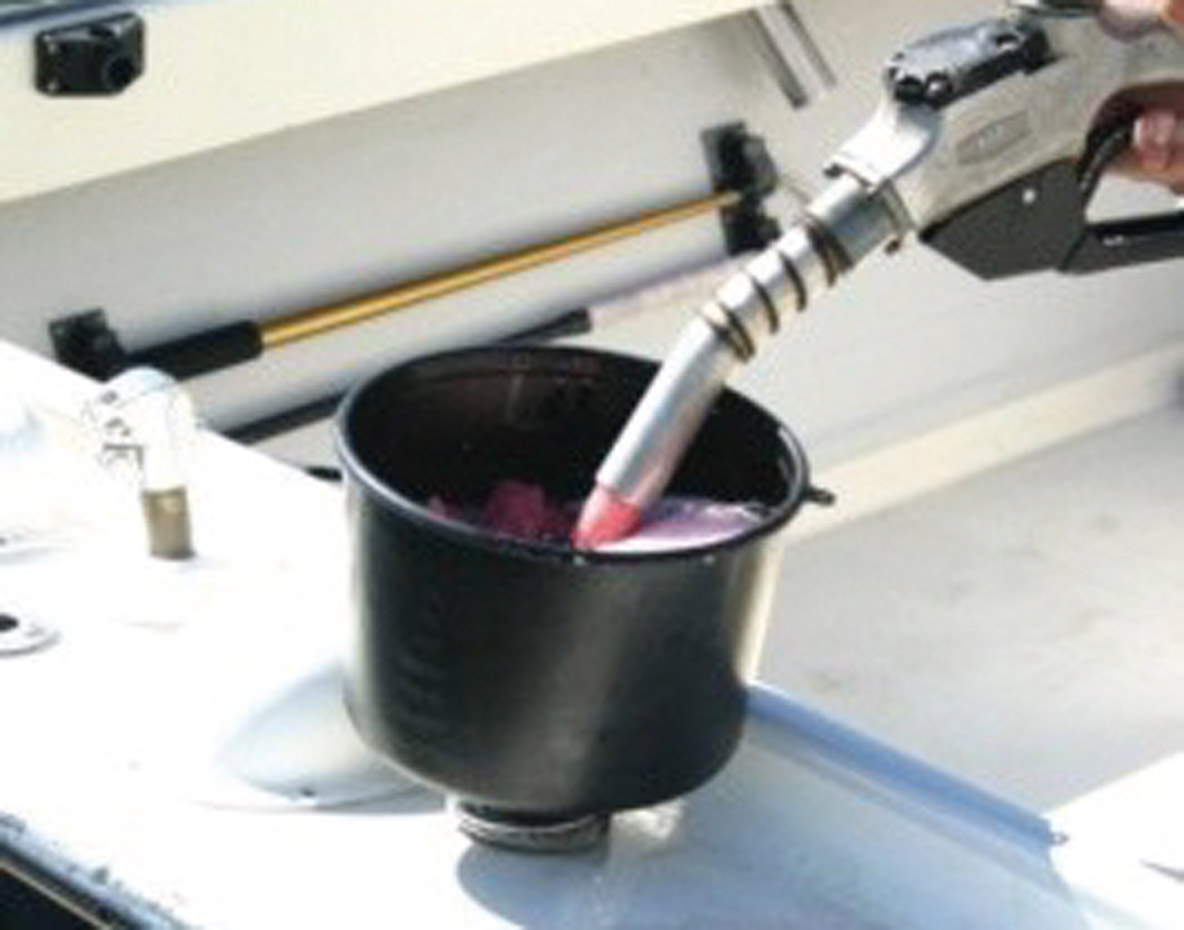 |
This is in no way a trivial matter! In the vast majority of cases, these accidents occur in port. Hydrocarbons and bilge water are the main culprits. This kind of pollution is visible in the form of a sheen on the surface.
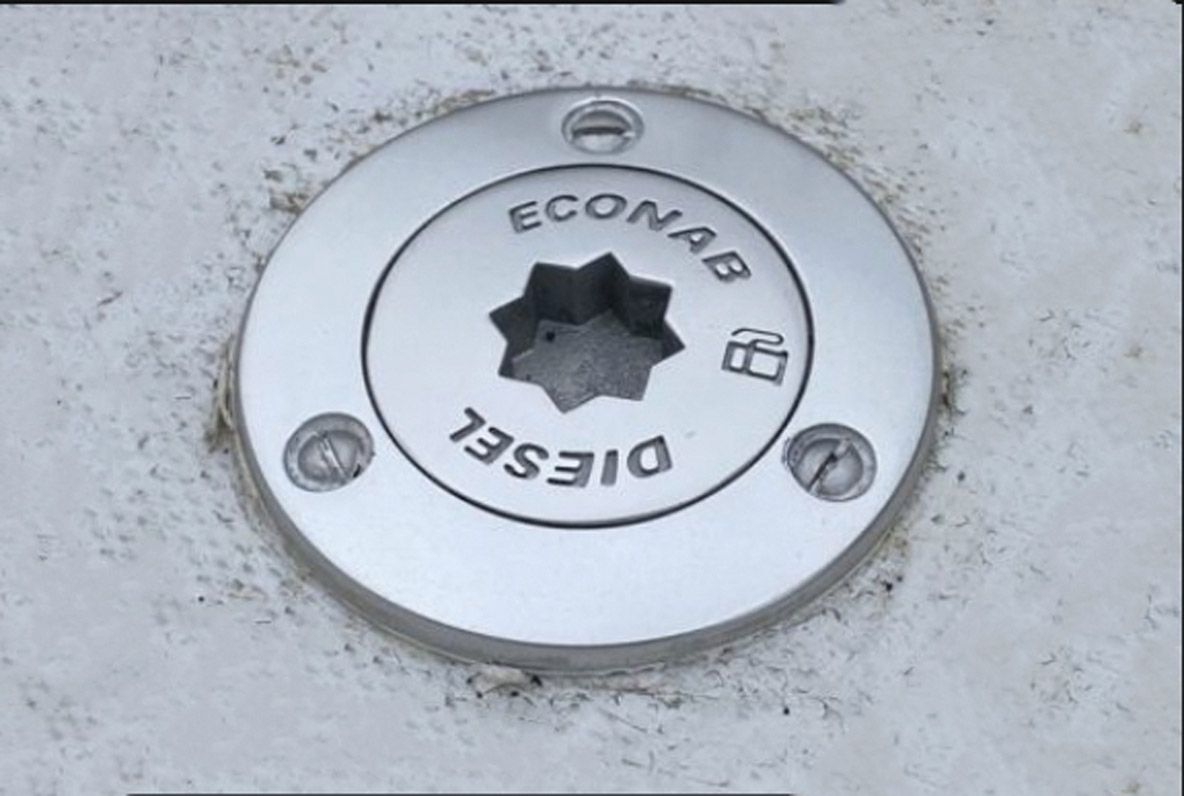
ANTI-SPILLAGE FILLER NECK: This prevents spills when filling up at the fuel dock, but also odors and mess on the deck. If you don’t have one and you see a sheen on the water, please inform the harbor master’s office.
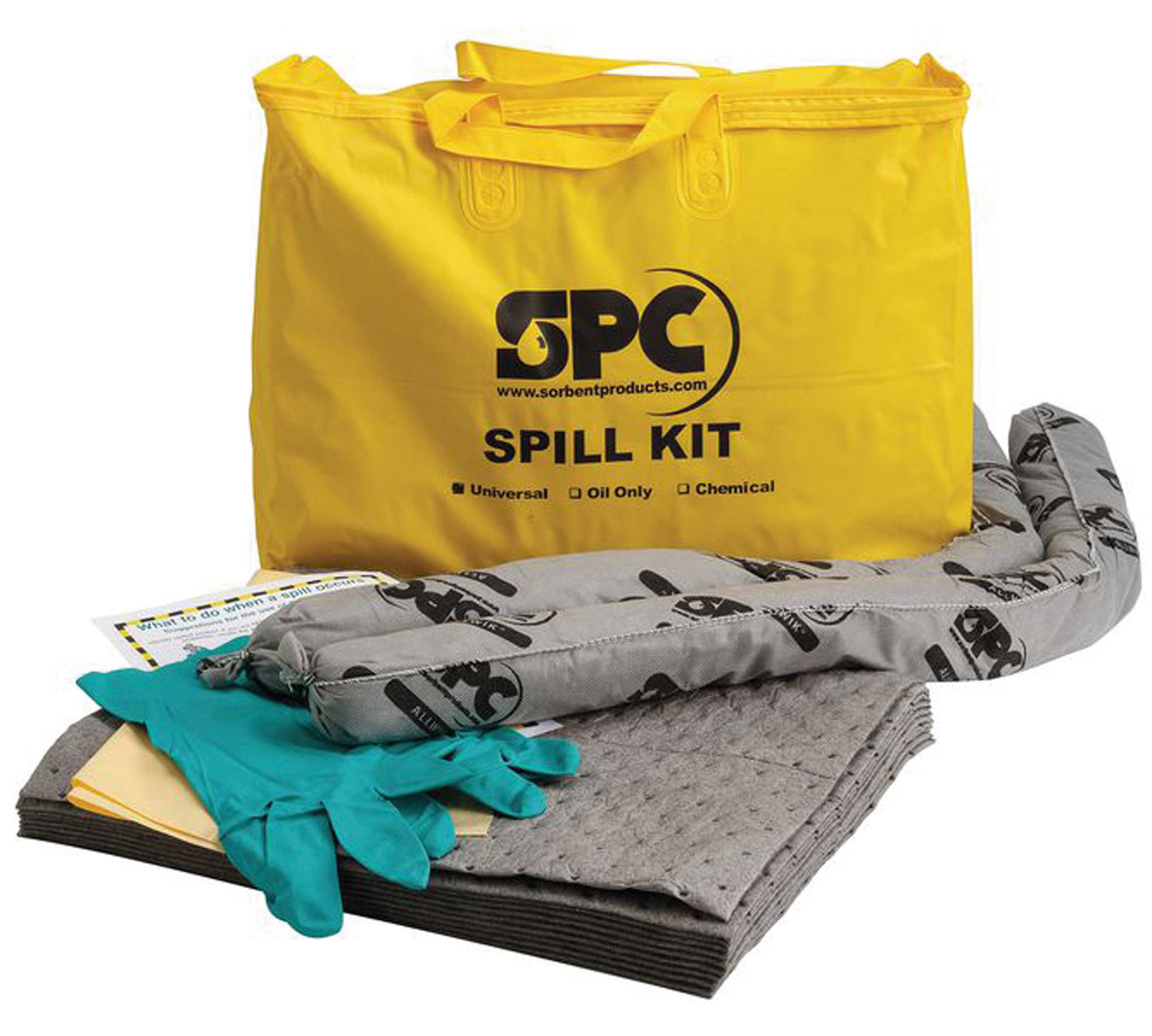
JERRICANS OR JUGS: Fluids are transported and transferred using cans, funnels, manual or electric pumps, but ensure you have an anti-pollution absorbent kit on board (absorbent wipes and pads, plastic bags and garbage bags for waste and gloves).
RESPONSIBLE ENGINE FLUIDS: It is possible to use ecological, vegetable and biodegradable lubricants. All used fluids such as engine oils, coolants and bilge water must be returned to the port in the areas dedicated to toxic waste. In the event of a leak or any loss during repairs, make sure that these polluting liquids are not discharged into the sea.
Ecosailing
 |
 |
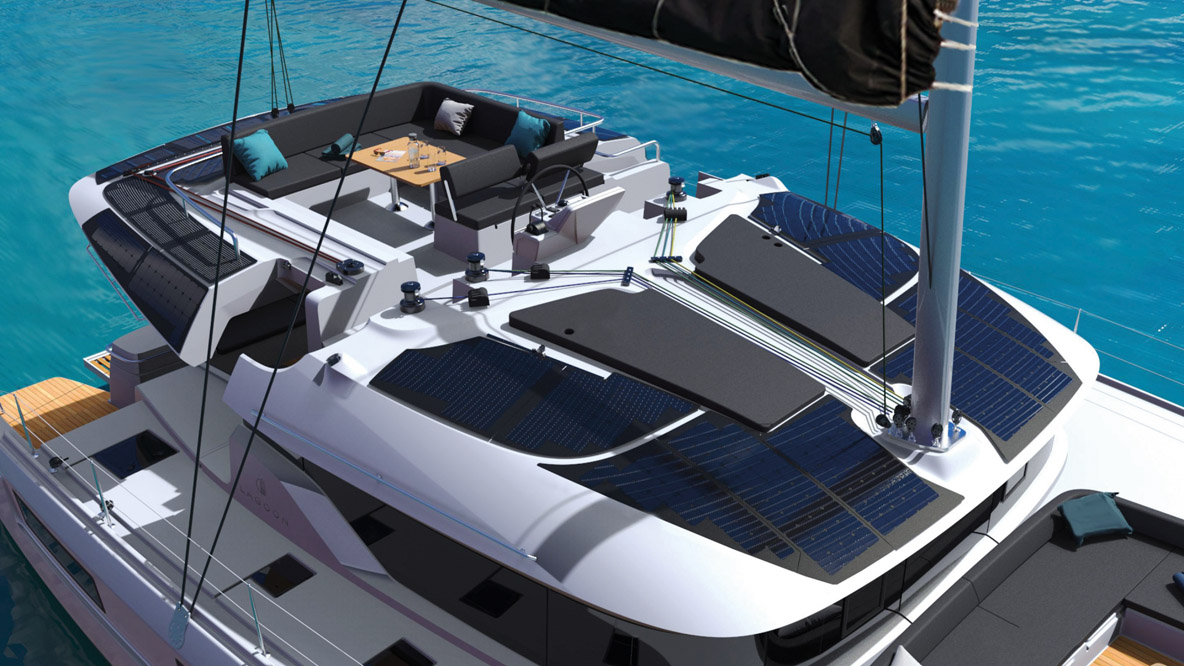
Until proven otherwise, a multihull equipped with a rig can sail. Engines are only used when they are really necessary - for maneuvering in port, in zero wind or to provide assistance on certain points of sail!
SLOW CRUISE: To begin with, give preference to sailing. When you need to motor, start only one: you can practically halve the fuel consumption as long as you accept that you have to lose 1.5 knots. Another advantage is that servicing and so buying service items – oils and filters, etc - will be delayed by the same factor.
OPTIMIZE CONSUMPTION: Careful examination of engine efficiency and fuel consumption curves allows you to choose the best compromise - and increase your range.
MANAGE ENERGY: Producing energy using solar panels, a hydro-generator and a wind generator avoids systematically using the engines or the generator to recharge the batteries. At the same time, using less energy thanks to LED bulbs and better management of the big power consumers on board will give excellent results.
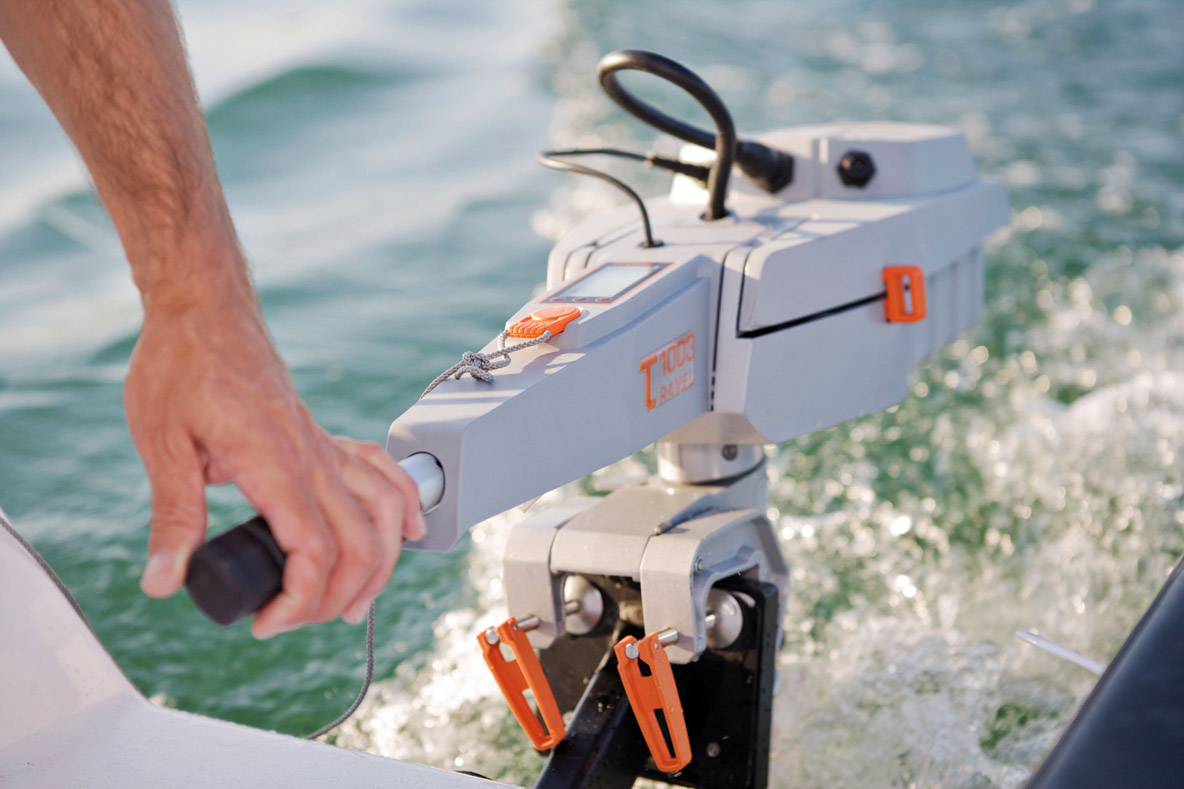
DINGHY PROPULSION: Why not go electric? The technologies are now sufficiently powerful to be tempting. Otherwise, opt for a fourstroke engine, which is much less polluting than the old two-stroke technology.
Biodiversity
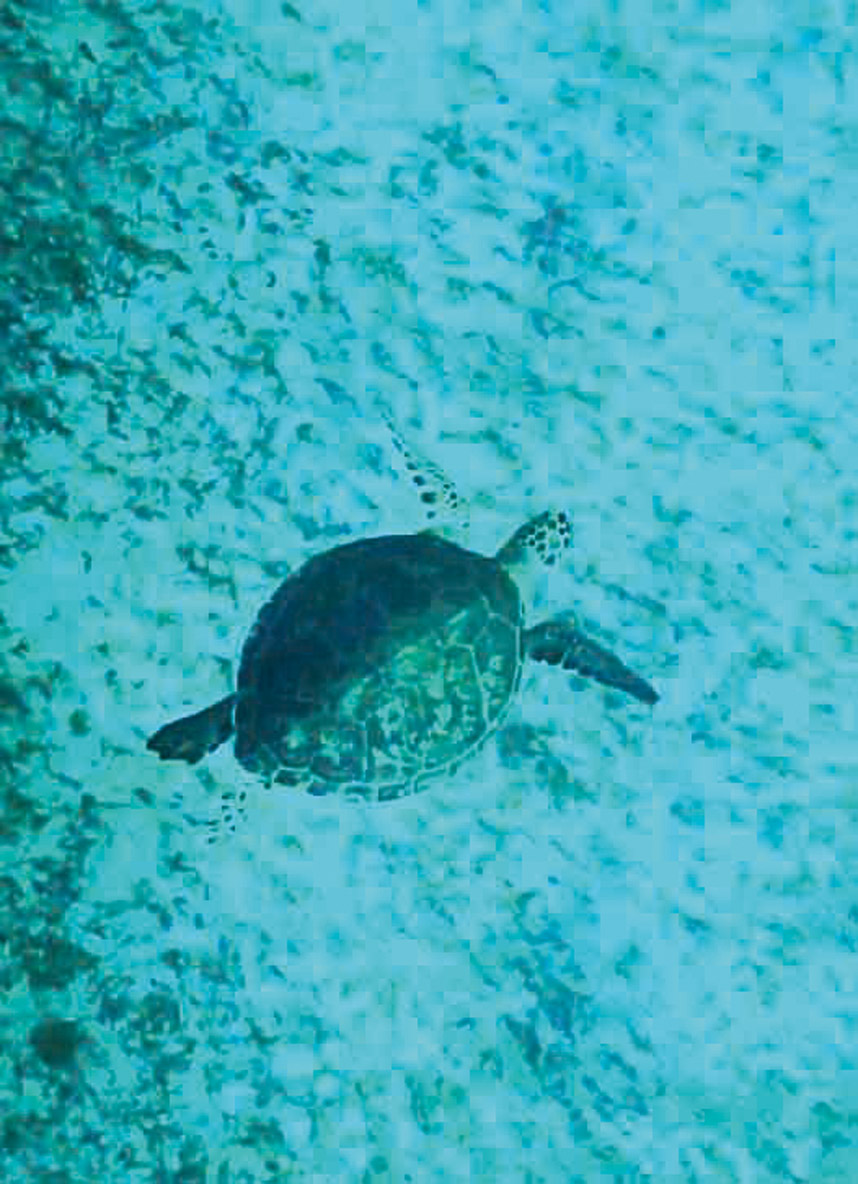
Preserving marine life while observing the animals is possible! All you have to do is put in place some common-sense rules: for starters, don’t touch them and don’t feed them. During migration and spawning periods, do not disturb!
KEEP YOUR DISTANCE: Do not approach an animal that is either resting or leaping and breaching. The ideal is to keep at least 1,000 feet (300 meters) distance and to maintain a speed of less than 5 knots. This is the time to test your binoculars!
NEUTRAL: Do not leave your engines in gear if animals approach your multihull.
KEEP CALM!: Hold off observation of any individual showing signs of nervousness.
NO SOUVENIRS: Do not collect anything from the seabed when anchored or scuba diving.
Ecomooring
Waste management
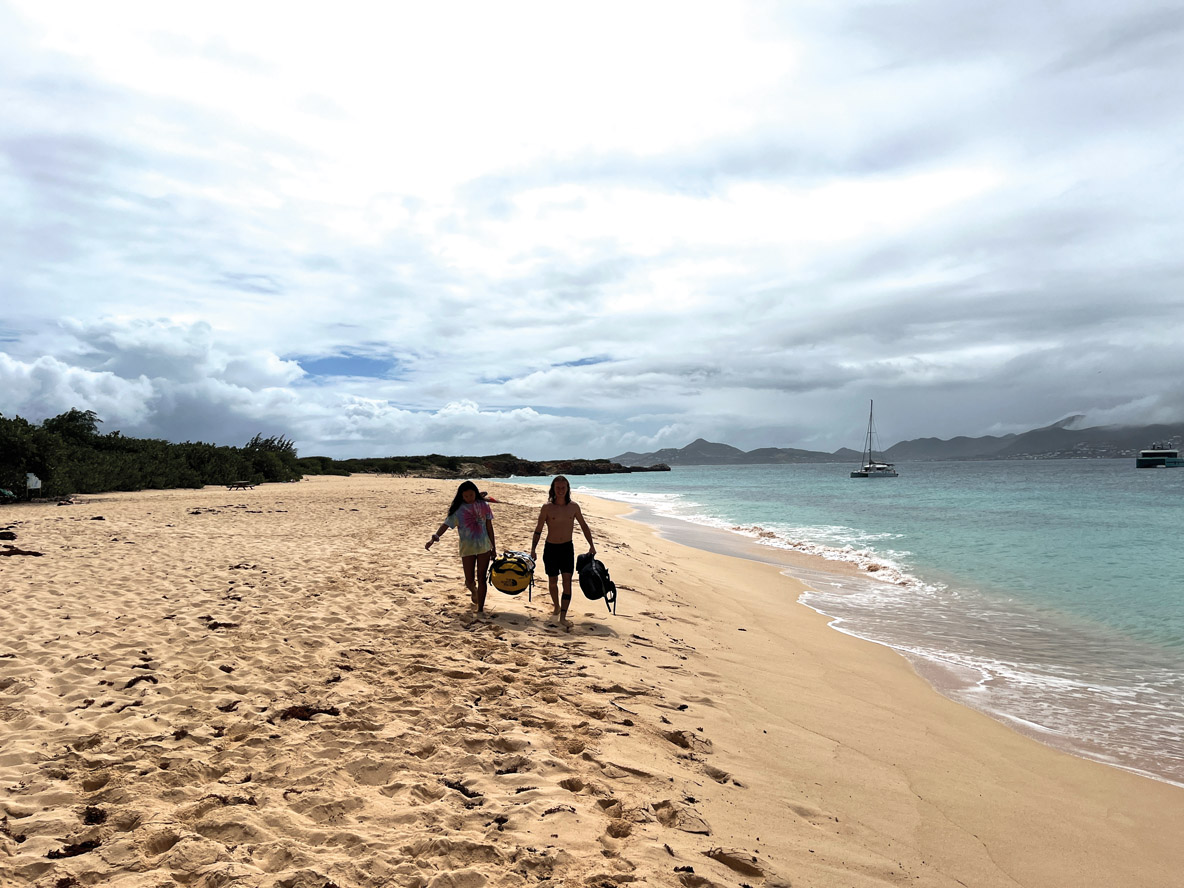
Aboard a multihull, waste management is essential in order not to be overrun. The principle applied is that what comes from the sea goes back to the sea, and everything else goes ashore.
WASTE SORTING: Your multihull’s nacelle is big enough to organize a few suitable receptacles!
BEWARE OF THE WIND: The lightest packaging will fly away easily, especially if there’s a breeze blowing. A minimum of attention and clear explanations to the youngest crew members will prevent this from happening.
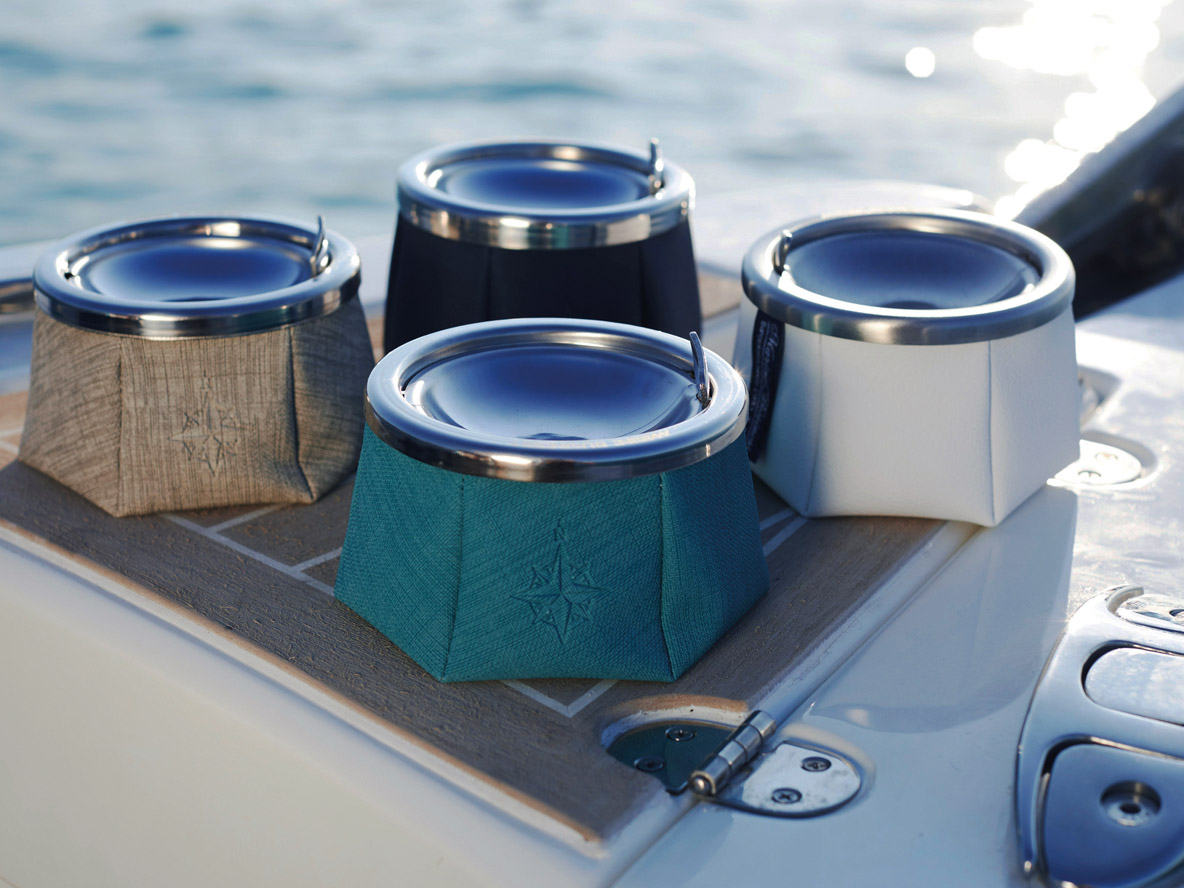
TOBACCO: For smokers, use a proper ashtray, or a pocket version if you go off in dinghy and/or go ashore.
TAKE TRASH ASHORE: It’s easy to keep a locker dedicated to waste and to regularly go ashore to dispose of it - in the appropriate places, of course!
DID YOU KNOW?
Average consumption of a crew of 6 people on a catamaran during a one-week cruise
WASTE:
• 4.5 lbs (2 kg) of toilet paper
• 8 US gal (30 l) of grey and black water
• 110 lbs (50 kg) of various organic and domestic waste
•195 g de CO2 discharged per nautical mile covered
CONSUMPTION
• 26 US gal (100 l) of diesel
• 166 US gal (630 l) of fresh water for cooking, hygiene, washing down the boat
POLLUTION:
• 50,000 US gallons (2,000 m²) polluted for 1 quart (1 liter) of fuel accidentally discharged
• 130 US gal (500 l) of sea water contaminated by a single cigarette butt thrown overboard
Bibliography and sources:
Ecogestes Méditerranée, Tara, Agence de l’eau, Bioaddict, Actu Marine, USHIP, Ports Propres, Chantiers Lagoon, Windelo, Excess Catamarans.
