

A very recent history
Fact: the 10,000 hours of operation of a diesel engine (one could argue double that for a catamaran) is the main source of pollution in the life cycle of a multihull. Switching from internal combustion to electric power is therefore the most virtuous and effective way to check the green box.
Diesel/electric technology is not new – loads of railroad locomotives as well as ships have been equipped with it for decades. There was even a submarine propelled in this way, as far back as... 1860!
New lithium/ion batteries, that are much more efficient and lighter than lead batteries, have made it possible to offer a buffer energy reserve that allows the generator to be left switched off for a while, or even to do without it. But for now, this available energy is only equivalent to a quart or half a gallon (1 to 2 liters) of gasoline for small removable batteries, and 2½ to 10 US gal (10 to 40 liters) of diesel for larger battery banks built into cruising multihulls.
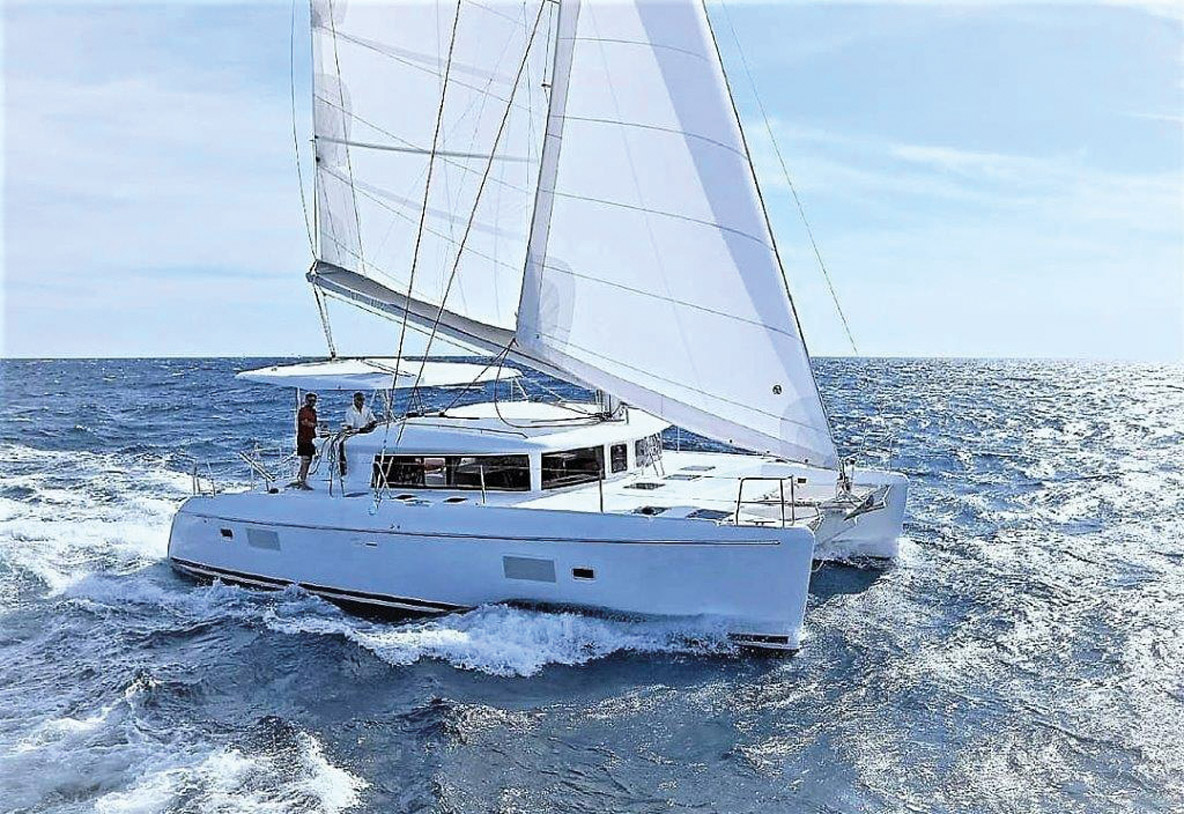
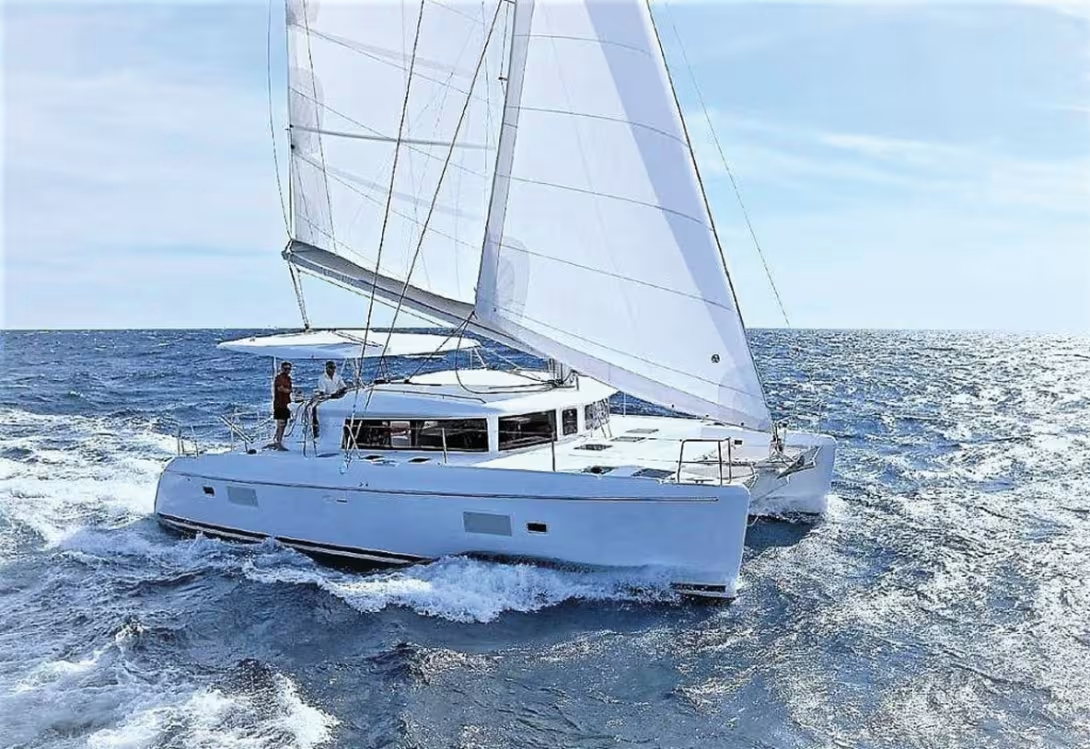
Launched in 2006, the Lagoon 420 was the first attempt to commercialize a massproduced sailboat that featured hybrid propulsion.
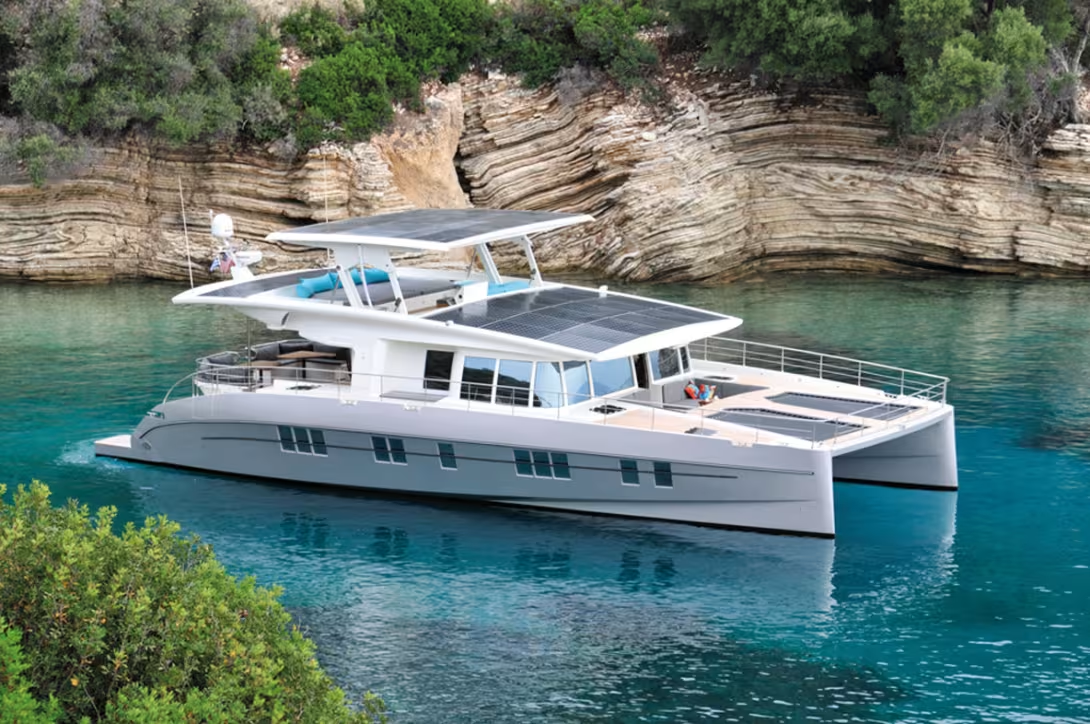
For the past twenty years, boats powered by electric motors have flourished on numerous inland waters and rivers. Small outboards have also proven to be perfect for fishing lakes. But from there, to equip an ocean-going multihull... Well, there have been a few isolated attempts by individuals to electrify their model, notably the launch of the diesel-electric hybrid Lagoon 420 in 2006. The builder produced about a hundred examples - at the same price as the internal combustion equivalent - before offering its customers traditional diesel blocks. Technologically speaking, it was too soon. The focus back then was on comfort, with beamy hulls and big displacement, and the significant windage limited motor cruising speeds to 6 knots. By 2017, Michael Köhler was undoubtedly the most knowledgeable man in electric propulsion: after 6 years of testing, he launched the Solarwave 64. The reception of this catamaran that was entirely covered with solar panels and devoid of a rig was mixed. In hybrid mode, it only offers 24 hours of autonomy at a cruising speed of less than 8 knots, making a range of less than 190 nautical miles. In solar/electric mode, the Solarwave 64 is still capable of motoring non-stop at 4 knots - the catamaran even managed to cross the Atlantic, a first. In 2017, Boyd Taylor launched his new sustainable brand, Serenity Yachts. The Serenity 64 was followed by the 74 and soon the impressive 84. Michael Köhler, meanwhile, set about launching a 55-foot electriccat and then creating his new Silent Yachts brand in 2019 – we’ll come back to that a little later. At the same time, electric motor manufacturers Oceanvolt and Torqeedo were starting to equip cruising boats such as the ITA 14.99 for the former and a Gunboat for the latter. Fountaine Pajot launched a Lucia 40 hybrid prototype. Finally, it was last year’s Cannes Yachting Festival that allowed us to take stock of the fact that the process of electrification of engine rooms is well under way. In the show catalog, no less than sixteen boats in the Vieux Port, eight sailboats in Port Canto and at least thirty booths were stamped “green”. It was at Cannes that we discovered the electric Excess 15. Clearly, 24 units out of the 450 presented at the show makes barely more than 5%, though this means a good margin of possible progression. But the movement is well under way: burning less diesel, or even none at all, is no longer a utopian dream. With our fifteen or so tests undertaken on boats of all sizes, both power craft and sailboats, we have got some experience we can share with you.
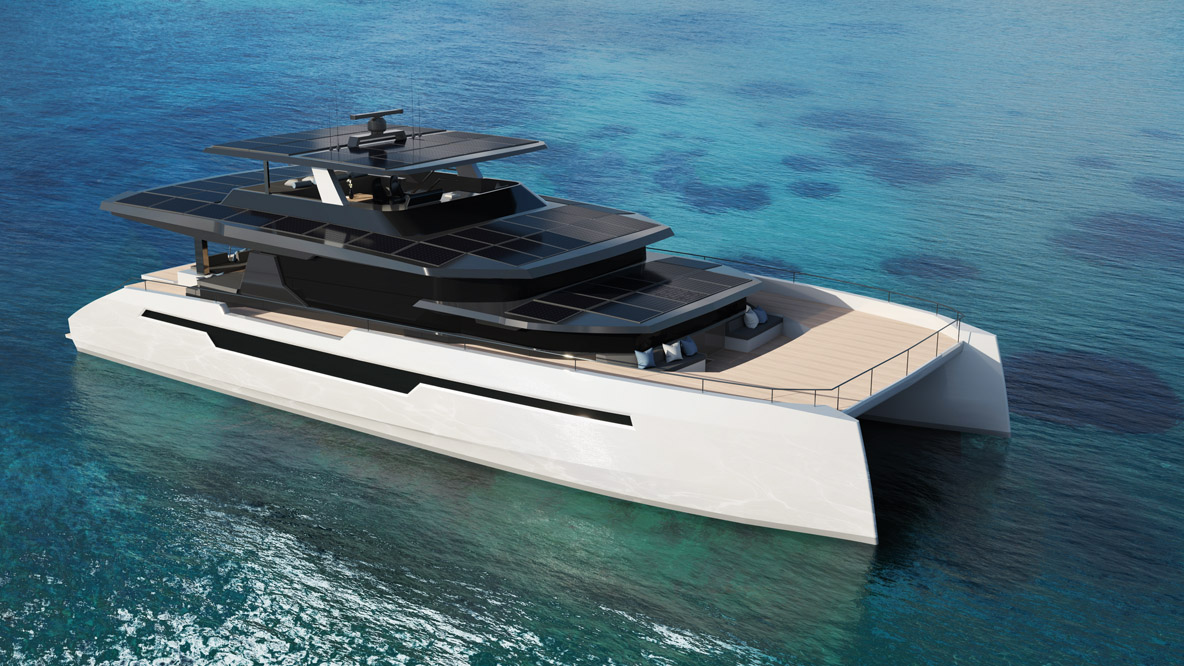
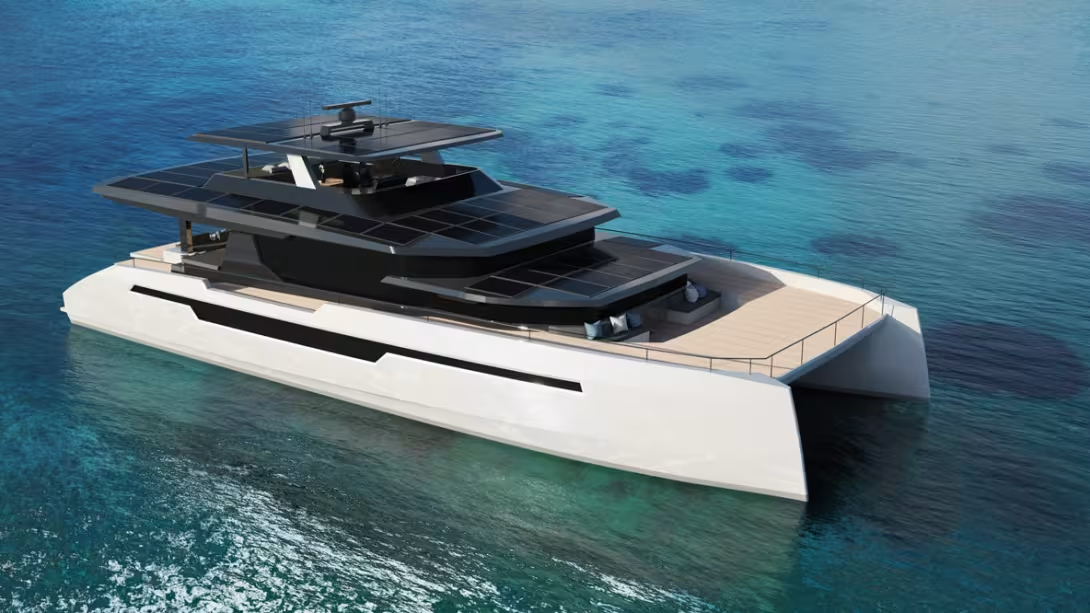
The Serenity 84 will be the new flagship in the manufacturer’s electriccat range.
With or without sails: two different challenges
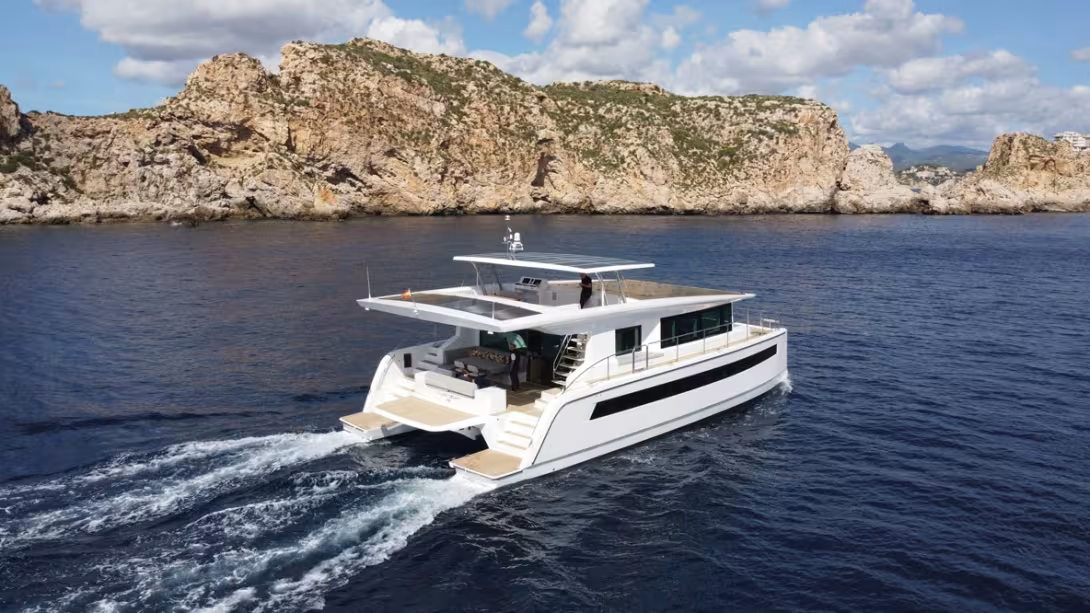
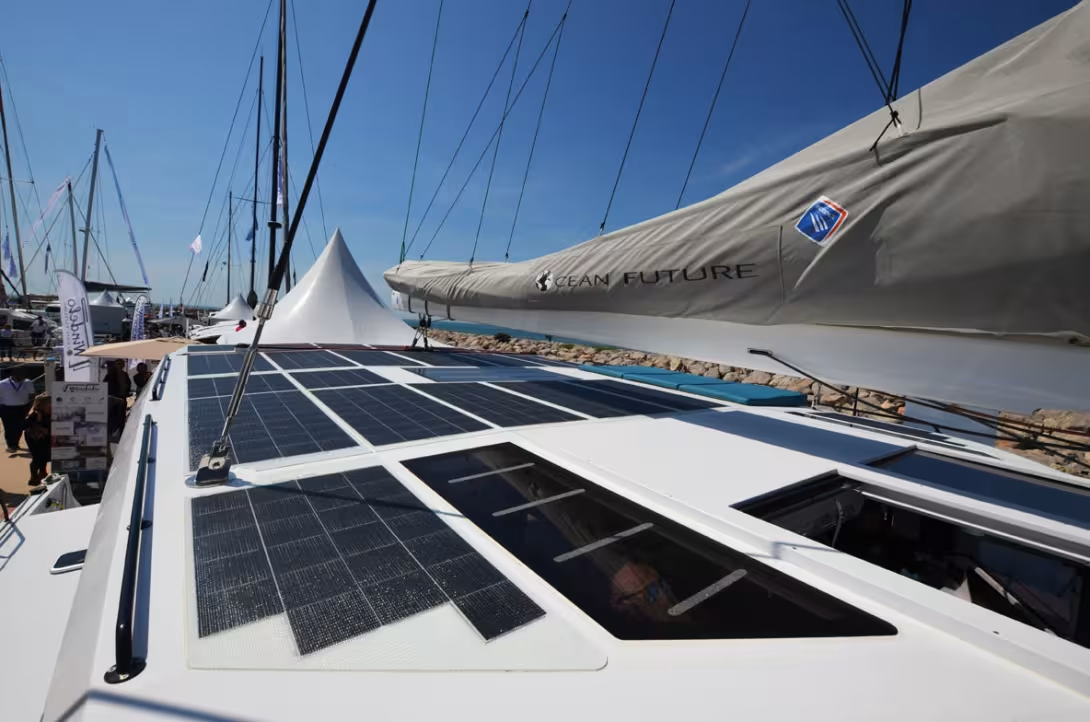
We have to distinguish now between the sailing multihull equipped with electric motors and the electriccat. The former can take advantage of hydrogeneration when going along under sail - the propellers produce electricity, which is not the case for the latter... on the other hand, the absence of rigging allows for much better use of the superstructure for installing a maximum surface area of solar panels. There are 10 kWp of panels on the Silent 55 against 3 on the Lagoon 51, though that is a bit smaller. In both cases, the multihull platform is obviously a plus compared to the monohull that’s not only narrow, but also pointy at the bow. The Silent 55 is without doubt the first electric multihull to have won over its public - and to have received numerous orders. The 430 square feet (40 m²) of solar panels can recharge between 70 and 100 kWh on a summer’s day. While the Solarwave 64 was equipped with 2 x 60 kW motors, the first version of the Silent 55 has twin 135 kW motors, giving it a little extra power - both with full solar power and with the auxiliary power unit. The latest version with 2 x 250 kW still offers five knots of speed in solar autonomy with a displacement figure of 23 tons lightship. This powerful version, equipped with a 100-kW generator mounted on a Volvo D4 block, allows for boat speeds of nine knots with the range determined by the fuel tank, that is to say 1,600 nautical miles in this case. However, as the generator has to run 24/7 for this (meaning it is not green at all!), it’s preferable to reduce speed. Because, while the consumption of the motors at five knots is only 8 kWh, at 9 knots, the figure climbs to 100 kWh, which is just about the peak power that the enormous generator can provide at any given time. And if you push it to 13 or 14 knots, you will only be able to hold it for about 20 minutes because the consumption peaks at almost 300 kWh, three times more than the recharging potential. On the other hand, at a speed of 6 knots, you can limit the operation of the generator to eight hours in 24. The CO2 emissions remain, but this does demonstrate that by adopting a boating mode somewhat closer to sailboat style than to motorboating, you can seriously limit your emissions, or even eliminatet them - but only if you take on a certain sobriety on the water. The development of kites - some of them are now automated - allows for gaining up to 5 knots during long, downwind ocean passages.
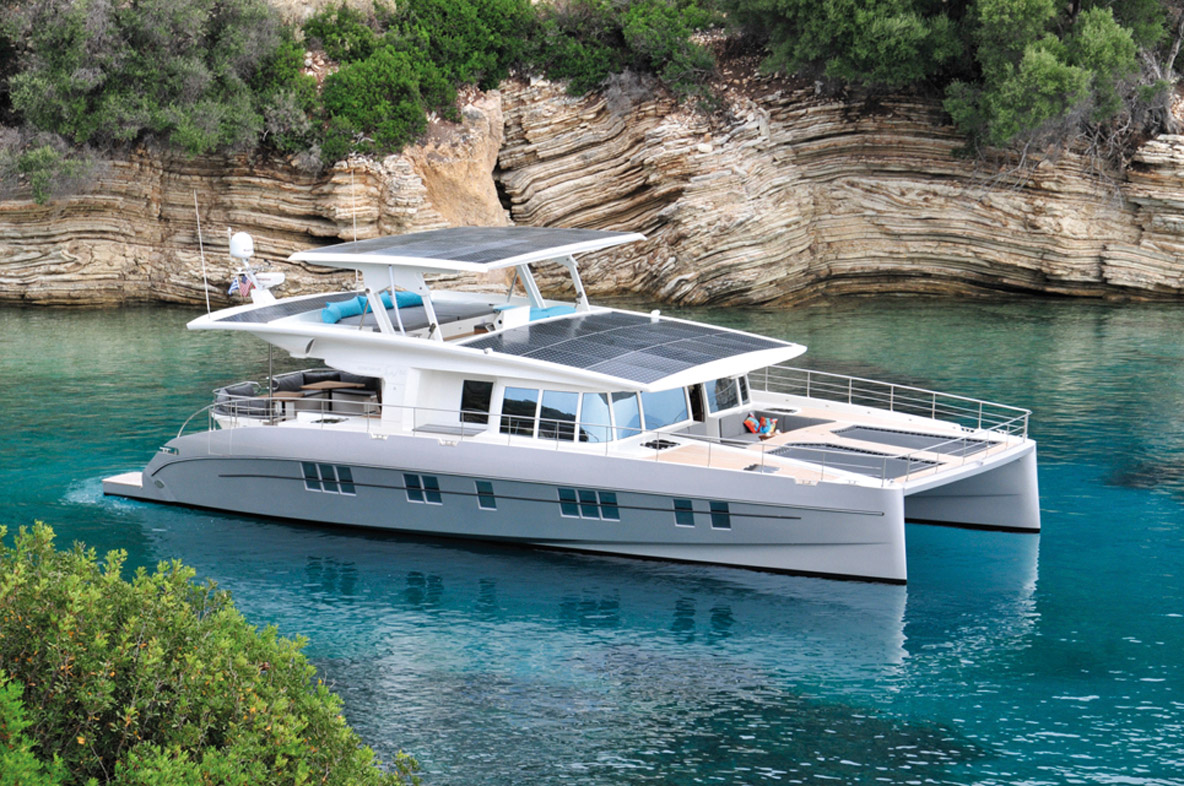
The Solarwave 64, launched in 2017, proved itself by making an Atlantic crossing in solar/electric mode.
It’s clear that the concept is attractive: Silent Yachts has already sold about 20 units of its new 60. The sweet ecological utopia has become an industrial challenge... Obviously, this success has been emulated by no less than ten brands such as Alva Yachts and Soel Yachts, which are now very much part of the diesel-electric hybrid sector.
The unavoidable generator…
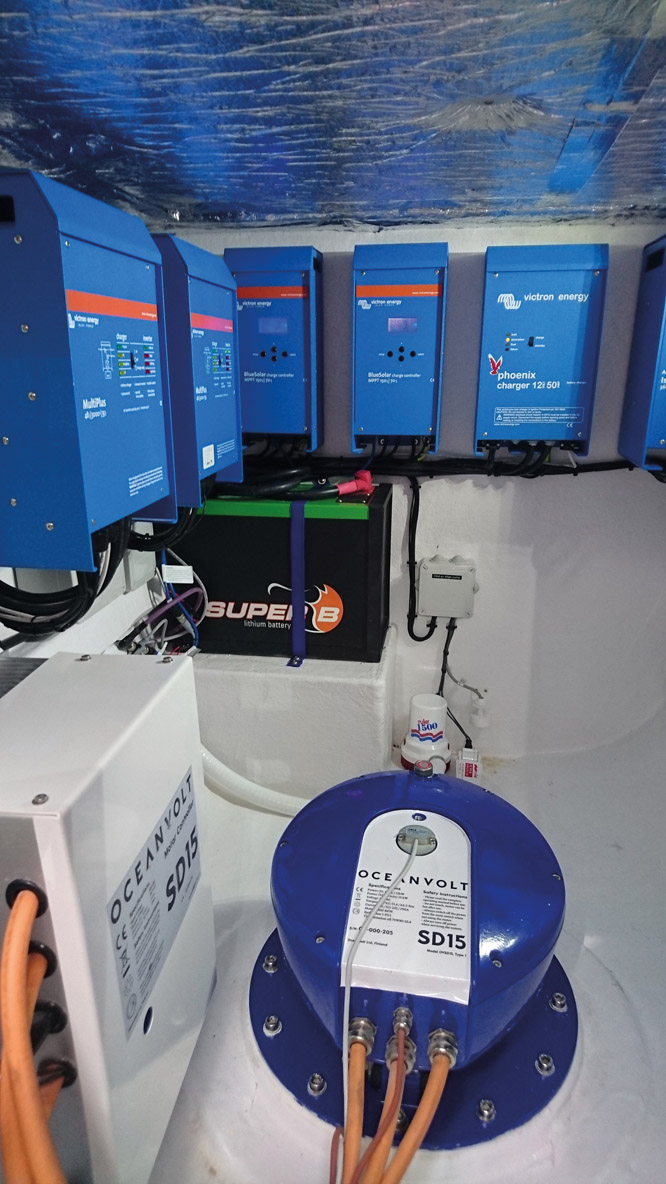
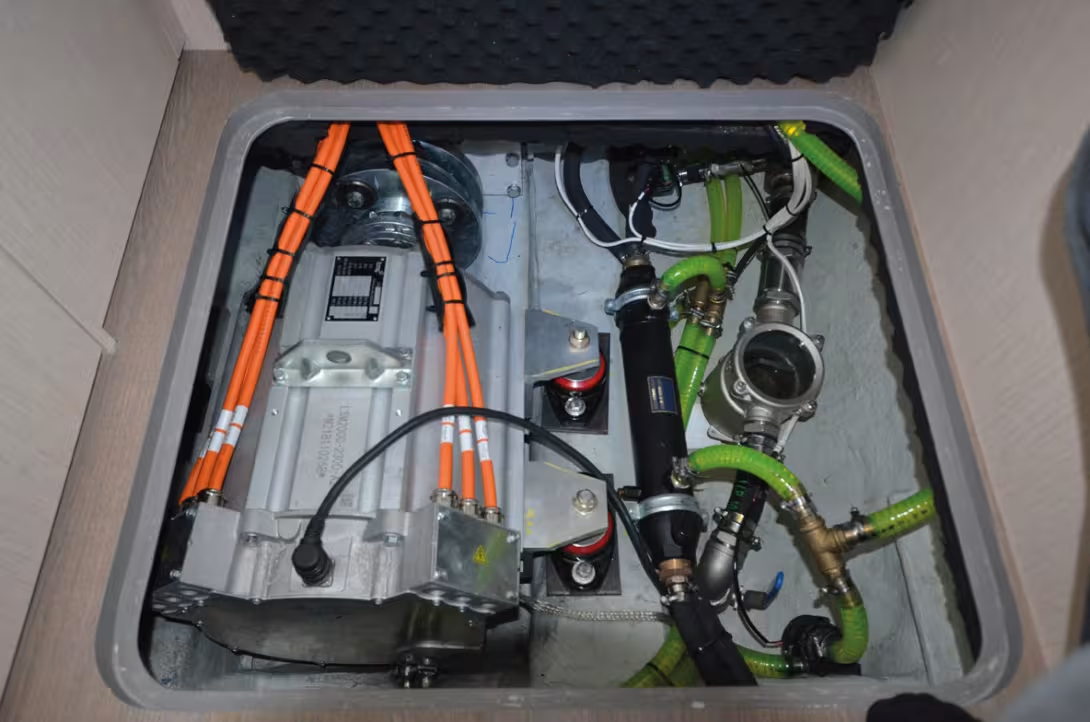
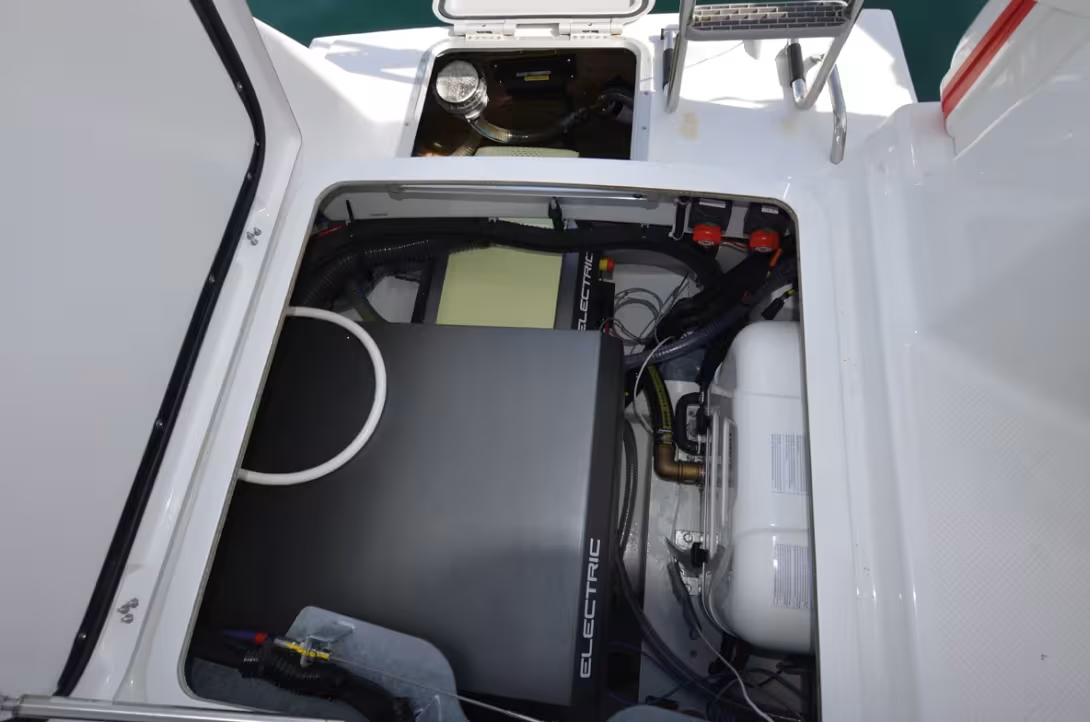
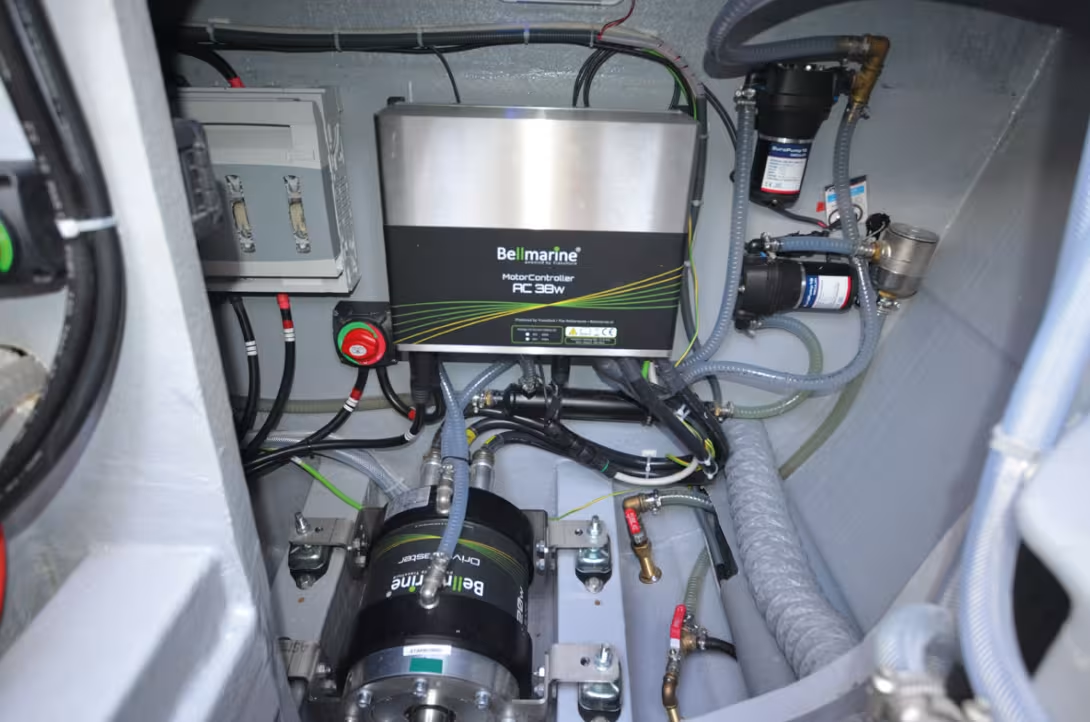
The space taken up by electric motors is minimal, leaving plenty of room to organize the engine compartment. Here, a Slyder 47 equipped with an Oceanvolt SD15.
While you might find the slow pace of life in cruising mode quite acceptable within the framework of a coastal or semi- offshore program in sunny climes, the prospect of lengthy passage-making in regions with strong tides and/or that are often cloudy seems unthinkable given the current state of our capacity for recharging and storage of green energy, but we’ll revisit this later on. There are other parameters to take into consideration, however, such as drag in the water, light displacement and finally the windage (see insert). Since we cannot, for the moment, do without diesel, we can optimize the vessel so that it consumes less. This is the premise of Dan Levy, the founder of the O’ Yachts brand, who advocates the smart hybrid in a different way. For him, an electric-only circumnavigation is not yet a reality. His Class 6, featuring very narrow hulls developed in collaboration with the late Laurent Bourgnon, weighs no more than 13 tons lightship. There is only one 15 kW electric motor and on the other side a 3.8-liter Nanni diesel engine. The big 140 HP block consumes no more than a quart (one liter) of diesel per mile at nine knots, recharges the battery pack via a 9 kW “Integrel” alternator, and undoubtedly gives the skipper greater security with regard to maintenance. The two motors can of course be used at the same time - especially for docking maneuvers. In this same mixed mode, LEEN Trimarans equip the central hull of its 56-footer with an imposing 305 HP Cummins engine, while the two floats have one electric motor each, at 15 kW. These two electric motors facilitate port maneuvers and also allow access to the protected waterways. Autonomy in all-electric mode is one hour at 5 knots.
 |
 |
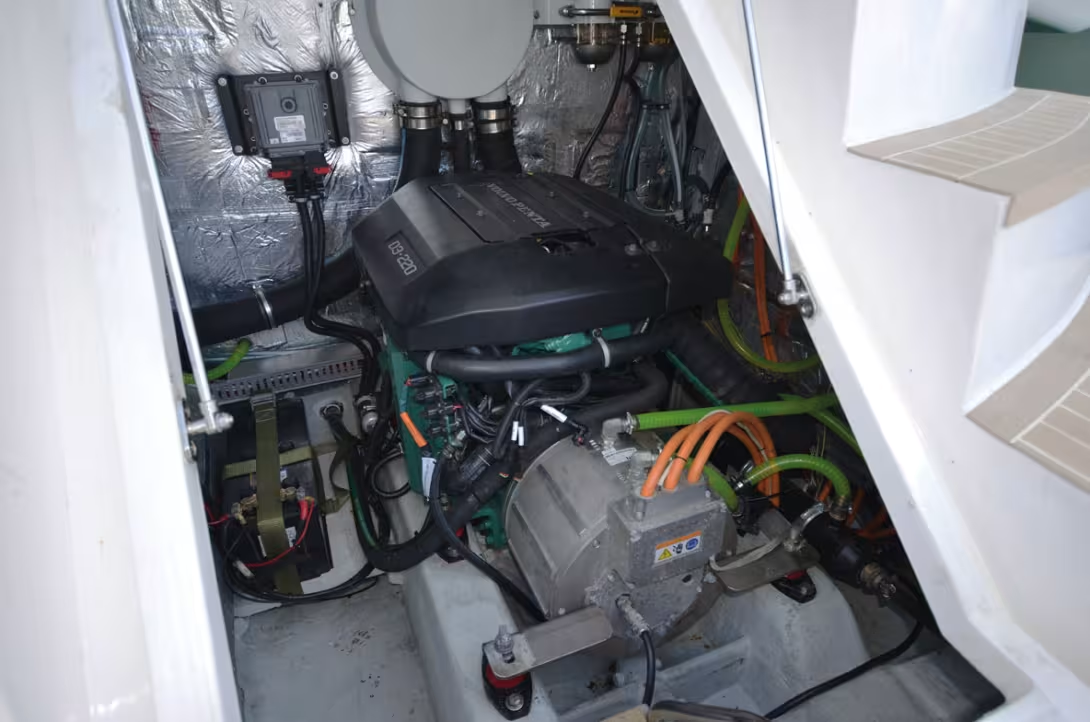
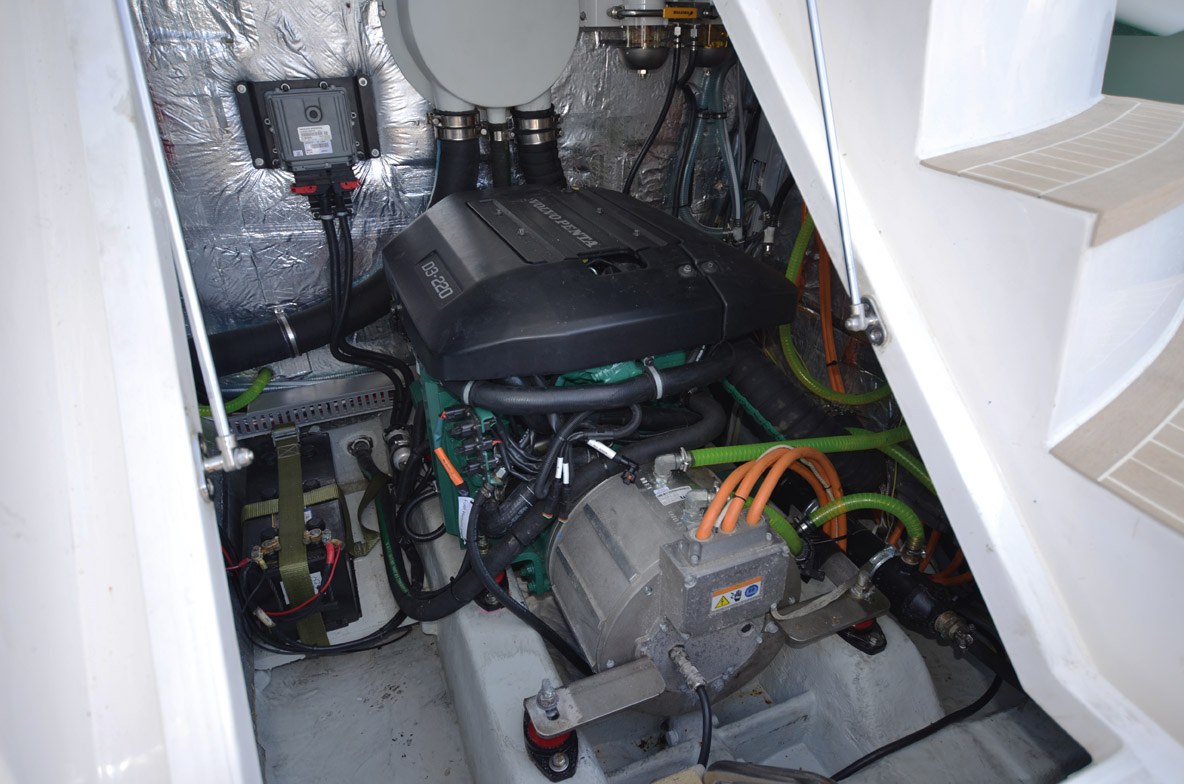
No, there’s no propeller shaft coming out the back of this Volvo Penta D4 engine, but a generator feeding an XXL-sized battery bank and electric motors.
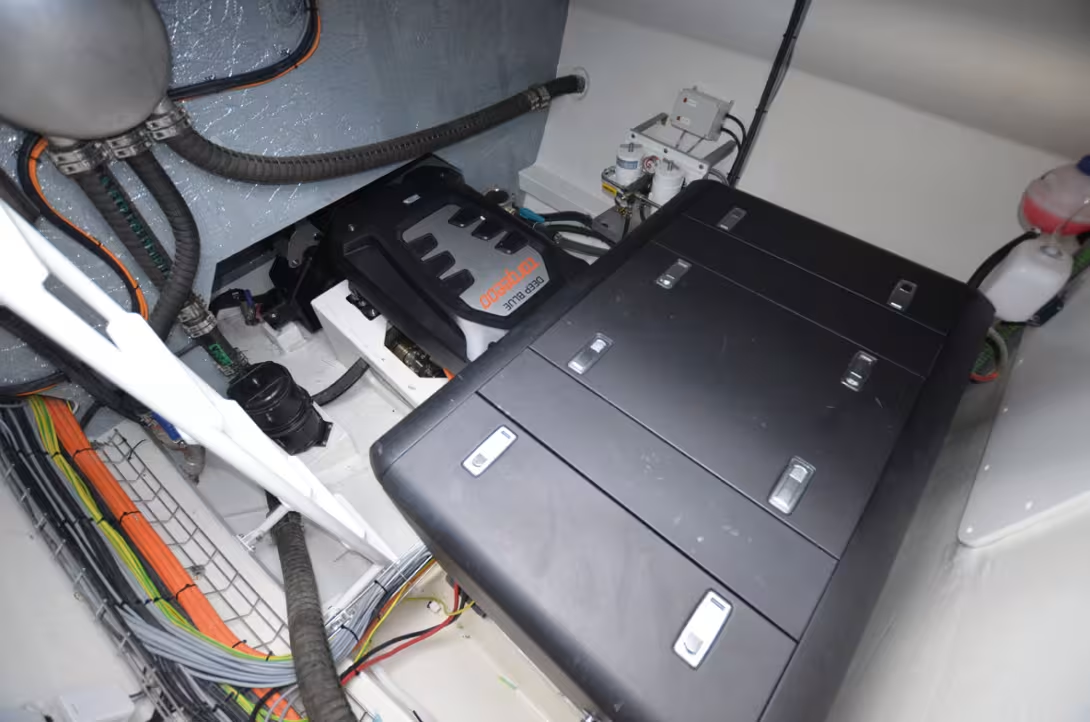
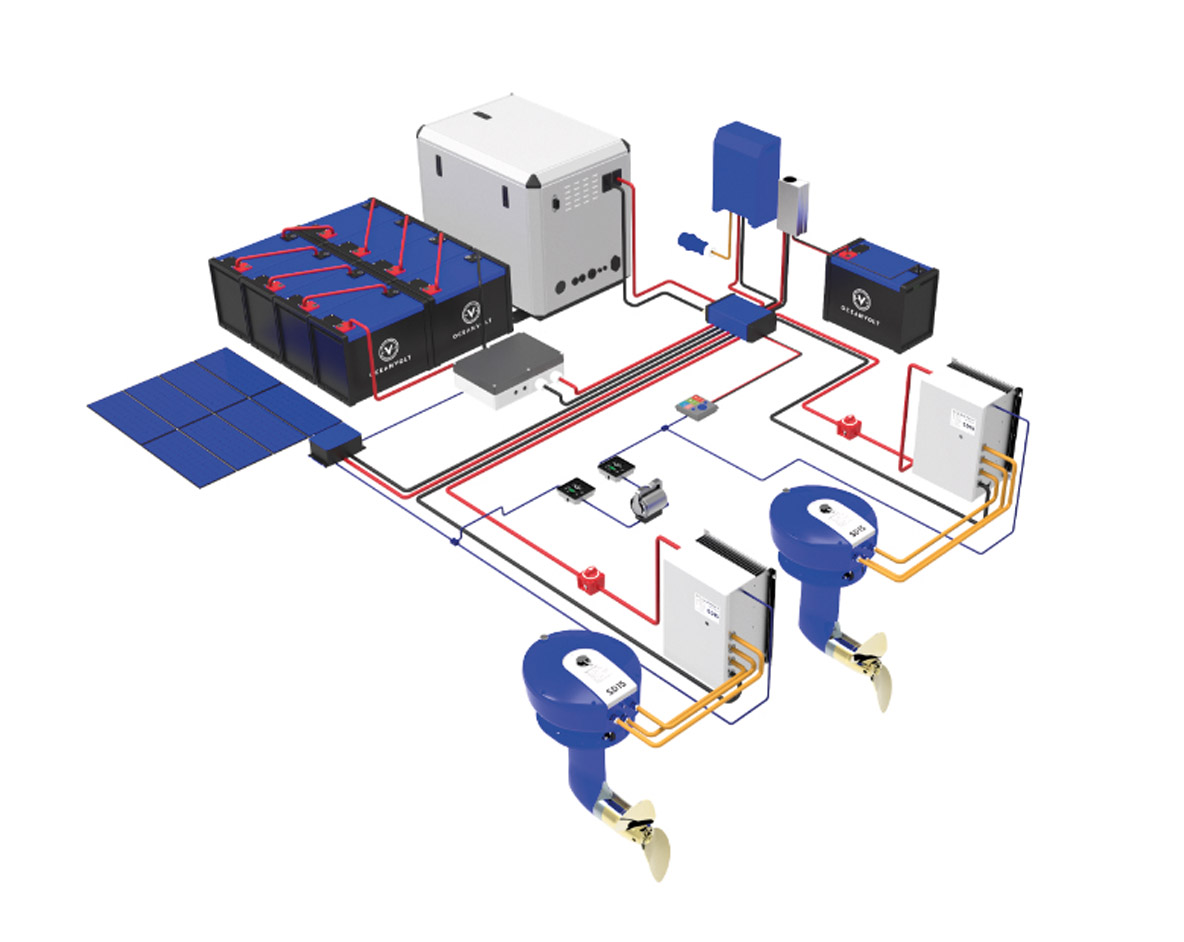
Technical diagrams from the two main electric drivetrain manufacturers show that each element of the hybrid system is independent, which is helpful for weight distribution.
The energy mix of sailing multihulls
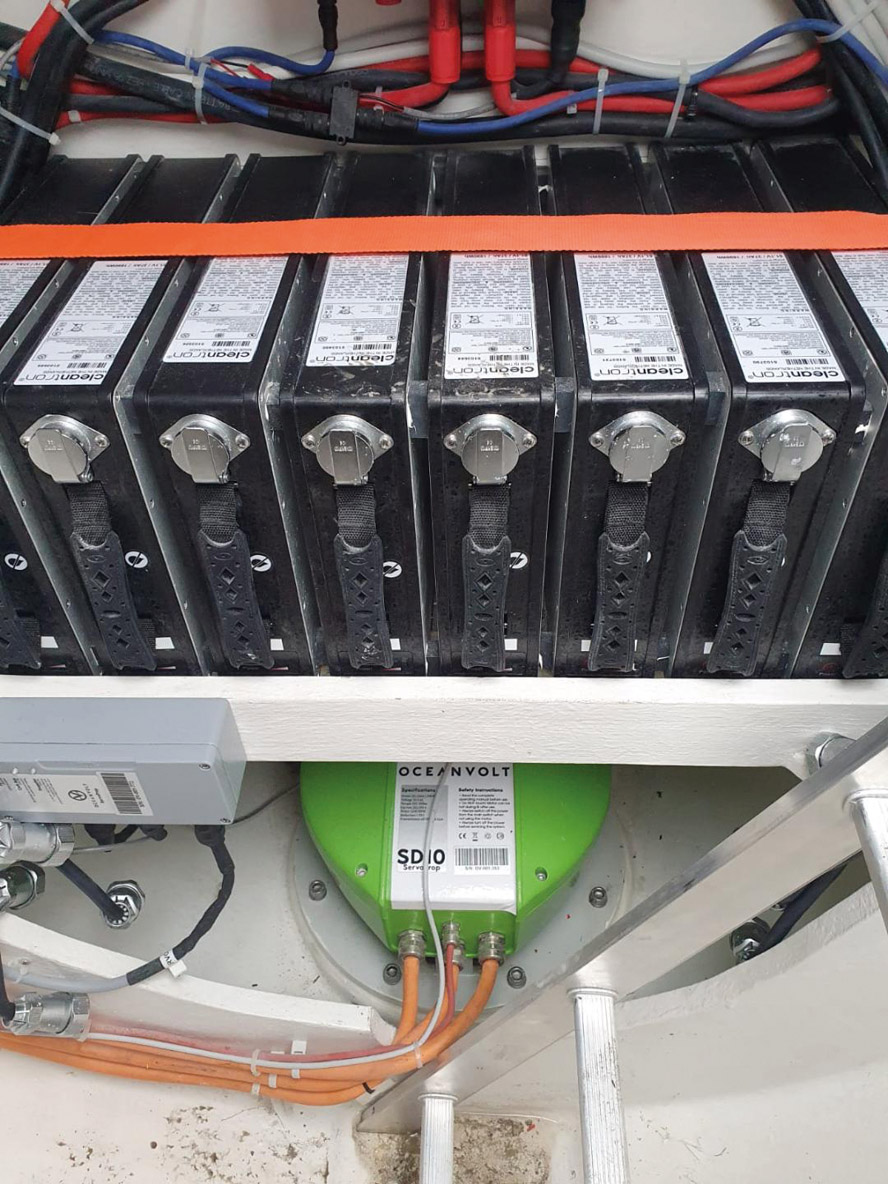
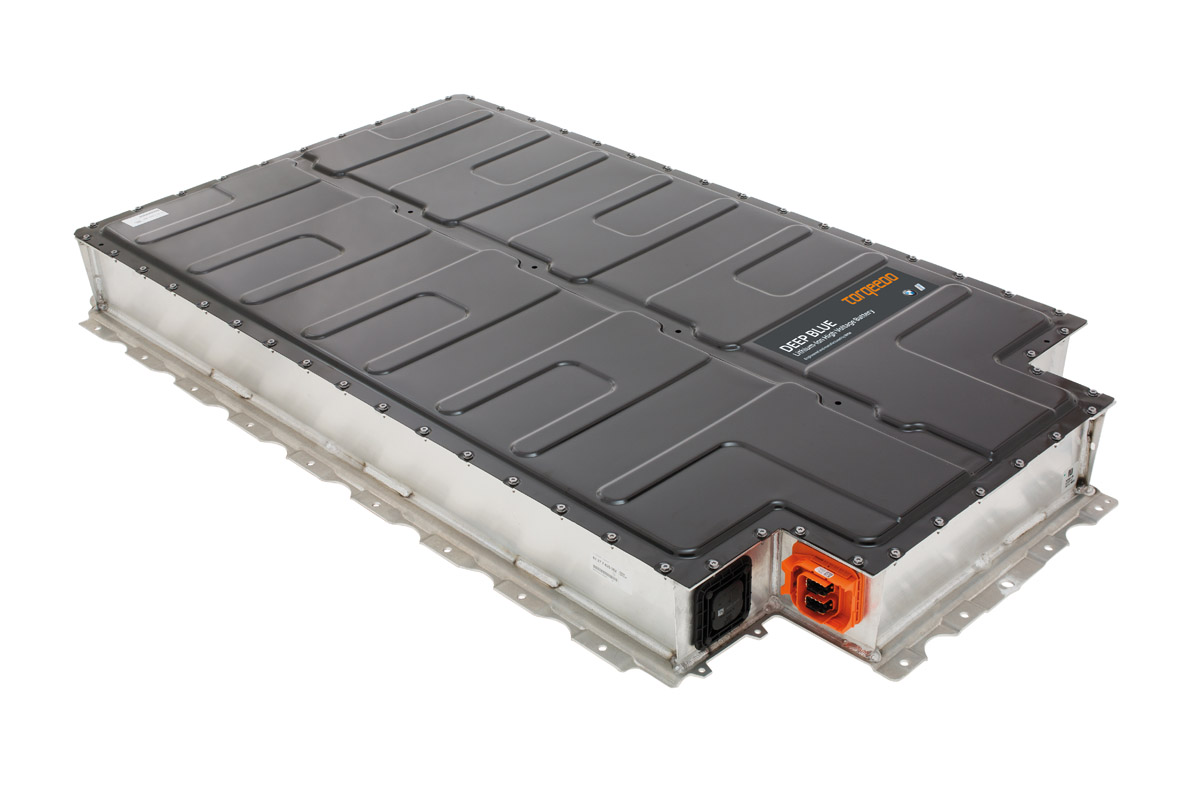
The O’ Yachts Class 4, concerned about the weight on board, has opted for NMC (Nickel, Manganese, Cobalt) batteries that are half the weight of “traditional” lithium/ion batteries with the same power.
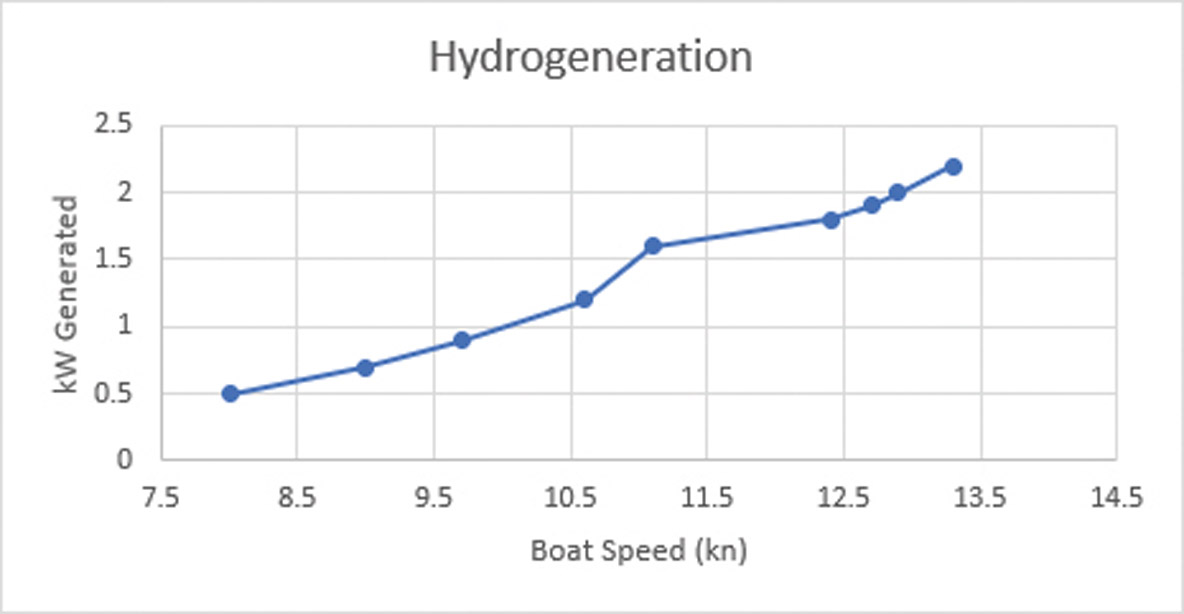
While ocean-going electriccats have shown their limitations in terms of total emancipation from fossil fuels, sailing multihulls are better equipped - the growing number of electric drivetrains to be found attests to this. At Torqeedo and Oceanvolt, most of the installations on cruising boats are on 40 to 70 footers. The primary energy used on a sailing multihull is the wind. When properly exploited, it will provide both speed and renewable energy with hydrogeneration created by the propellers. The second source of energy is the sun. A multihull that can accommodate a significant area of solar panels will be able to provide the energy for the domestic battery bank requirements when at anchor. The two qualities combined (i.e. a high-performance sailboat with enough flat surface – as on a multihull) will undoubtedly be able to provide enough energy to maintain on-board living and sometimes even to go along under motor. The attempt by the famous sailor Jimmy Cornell with his Outremer 4.Zero demonstrated the difficulty of “managing” a round the world trip with no CO2 emissions in full electric mode and therefore without generator. Having reached the Canary Islands from the south of Spain with only 13% battery capacity, the crew was unable to maintain a sustainable balance between consumption and regeneration – despite an hourly production average of 336 Wh. In fact, the production of current really starts to be useful at boats speeds upwards of seven knots (see the curve) and requires things to be regular. These are conditions that don’t happen so often when cruising, where breaks in rhythm are frequent - not to mention inevitable squalls. With an Atlantic swell on your quarter, you can be producing 6 kW as you surf down the wave, and then 0.2 just moments later when you’re in the trough. “The more the speed of the multihull is constant, the better the hydrogeneration will be, without counting the difference between the leeward hull which generates better than the windward hull”, explains Romain Guiraudou from Outremer Yachting.
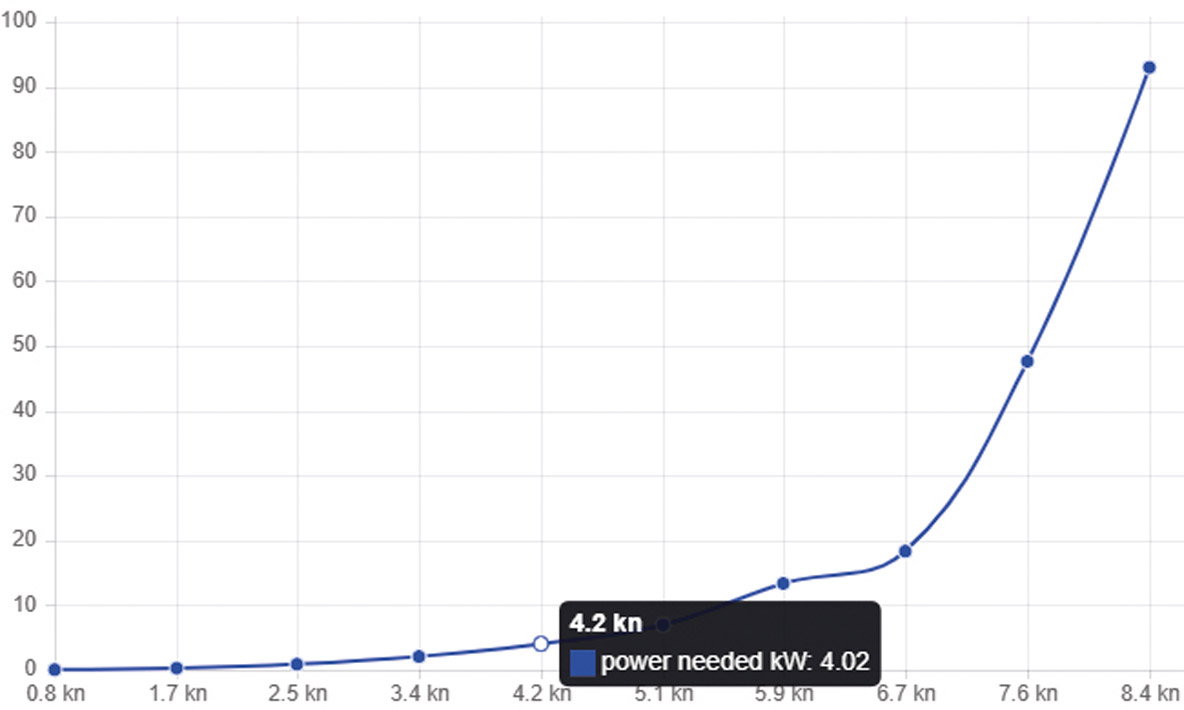
Following health problems, Jimmy was forced to throw in the towel. It is safe to say that a generator is still a must unless you have more solar panels, a wind generator or two for cloudy days, and/or an additional Watt&Sea type hydrogenerator that produces properly between five and seven knots. In short, an energy mix. When it comes to renewable energy production, you have to capitalize on every opportunity. It’s the sum of all these production moments that can tip the balance into the positive.
Sunreef has understood this perfectly by covering its latest 80 ECO completely with photovoltaic cells capable of capturing the rays at almost any time of the day and theoretically feeding 200 kW into the batteries every day. That’s a lot, but there’s still a generator on board…
 |
 |
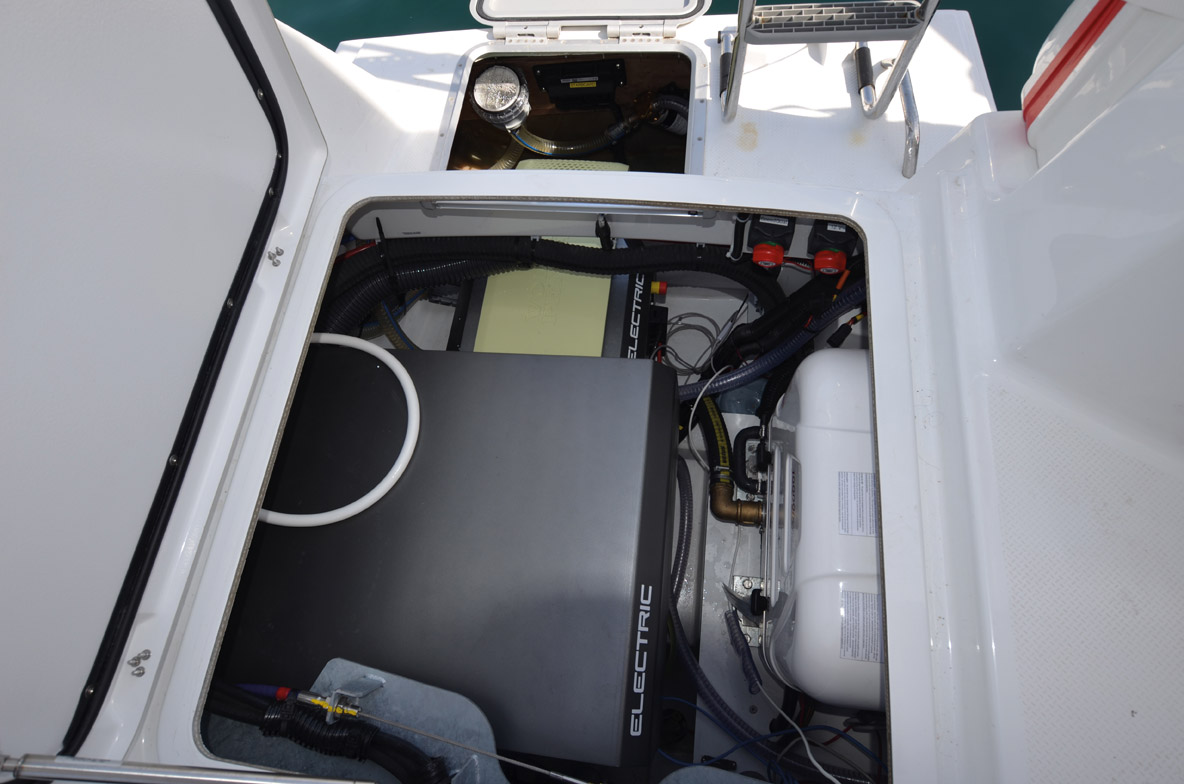 |
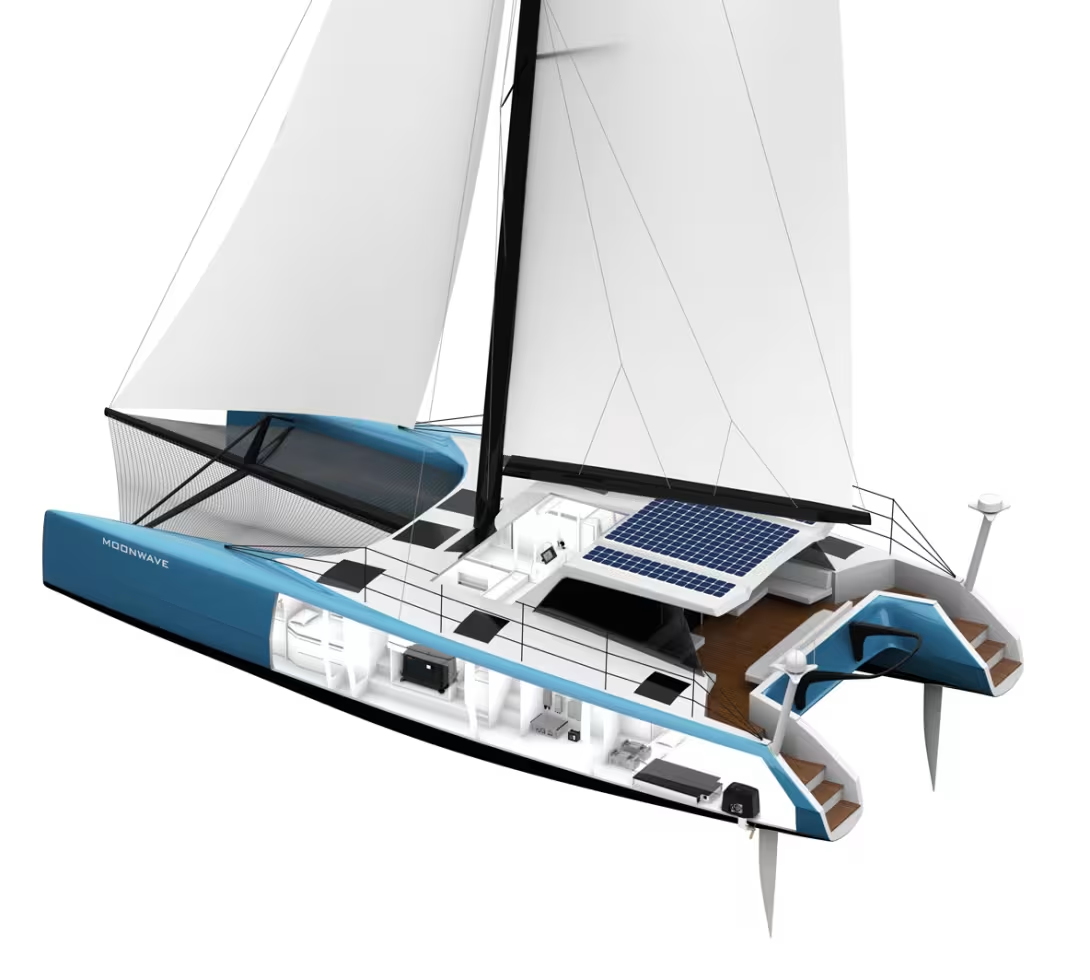
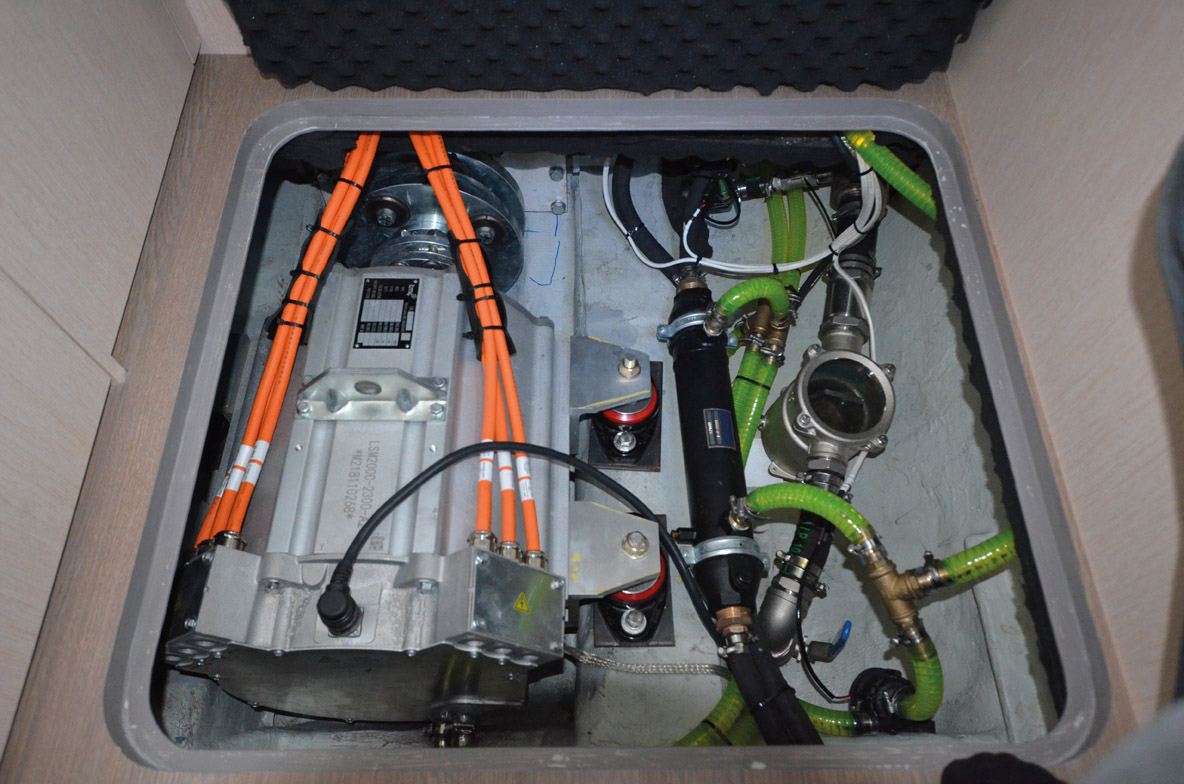
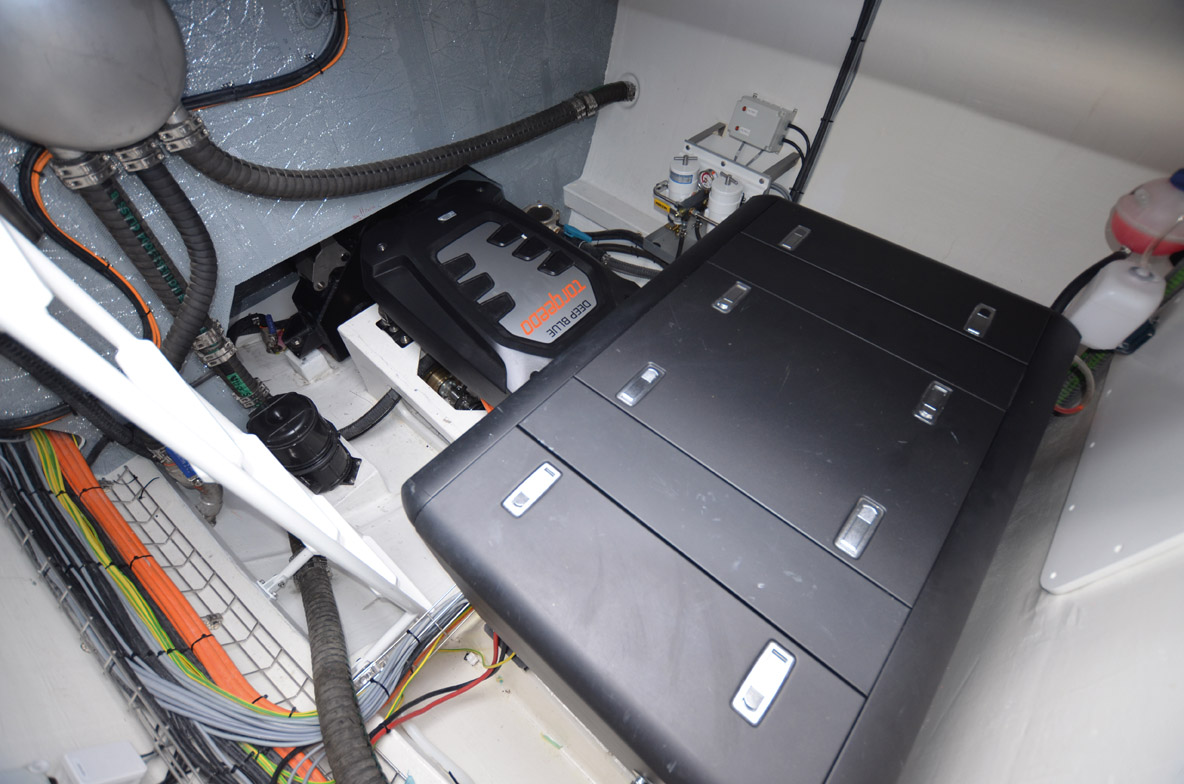
The technical layout can be very different according to whether the model has the motors under the cabin floor or in the engine compartment with the generator for series mounting…
… In the case of a parallel installation, everything is grouped together in the engine room.
Electrical consumption under tight surveillance
 |
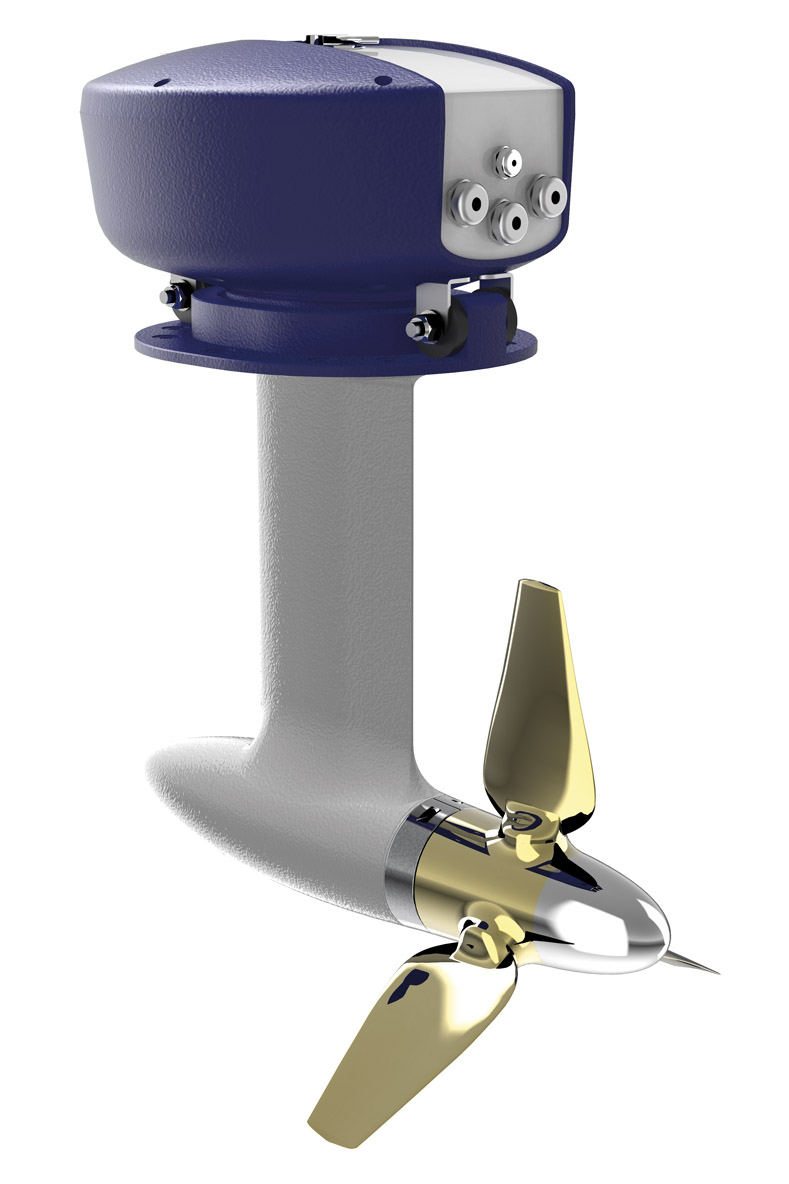 |
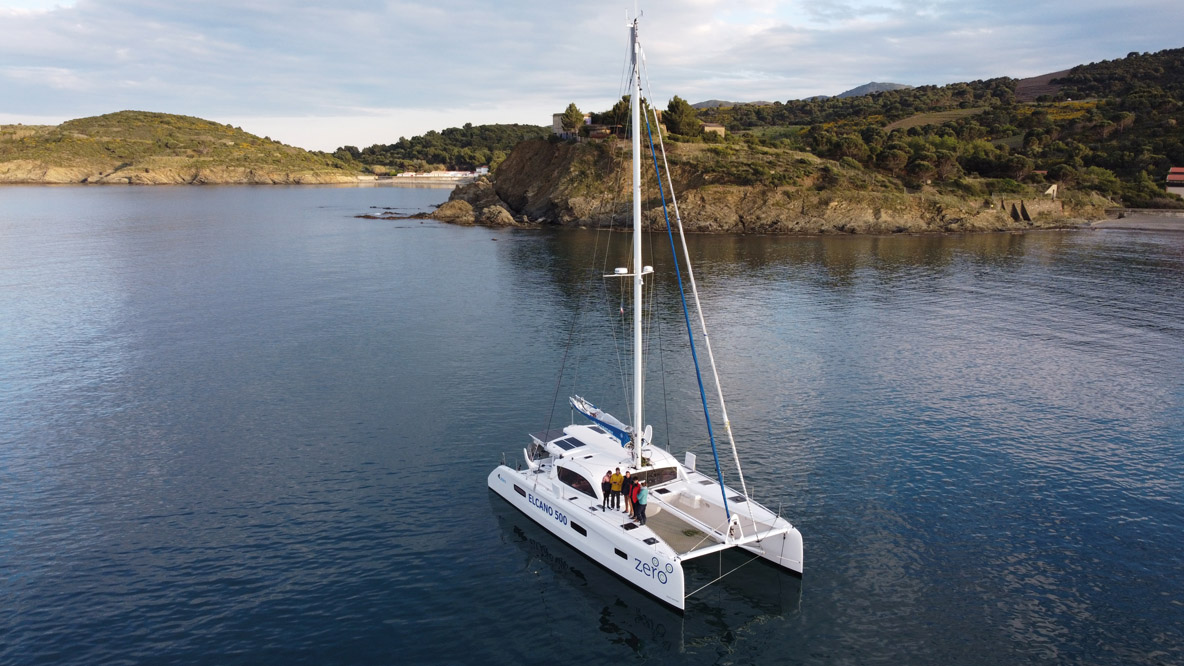
Jimmy Cornell’s Outremer 4.Zero was equipped with the ServoProp 15, which guarantees a very favorable hydrogeneration curve thanks to its variable pitch blades.
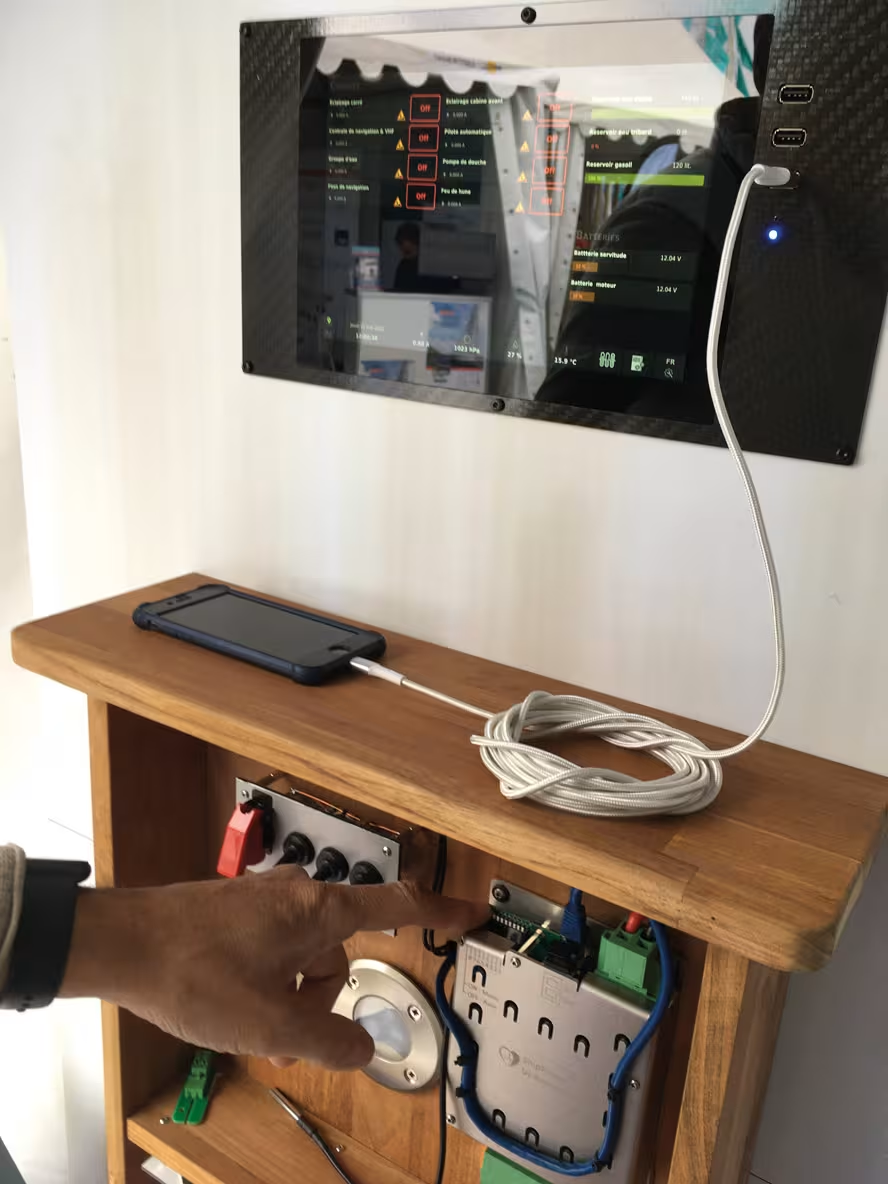
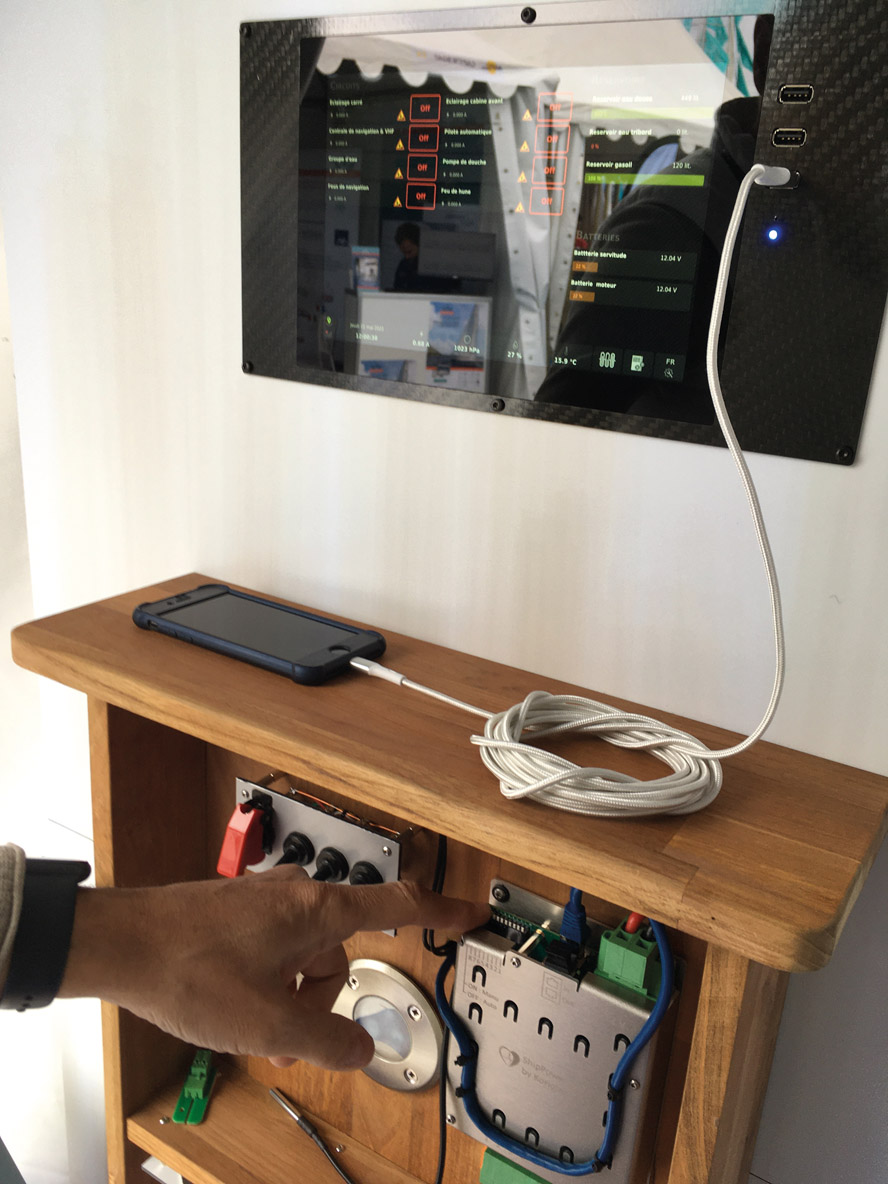
During the Outremer 4.Zero tests, on-board consumption (in frugal mode!) was drastically controlled. If you are very careful, with five people, each meal will consume between 1 and 2 kWh, a shower the same, the watermaker another 2 kWh, not to mention the many other small consumers (LEDs, instruments, nav lights, etc.). Even though the Outremer team managed to spend only a little more than 2 kWh during their monastic day, daily consumption of 10 kWh is not luxury. The bill can quickly rise if you use the winches or the electric windlass or run the dishwasher. Four years ago, we were talking about a daily consumption of about 5 kWh for a 45-foot catamaran, but today, that figure can sometimes multiplied by four or five. This is the observation made by the Excess Lab, which equipped an Excess 15 with the Deep Blue hybrid system with two 50 kW motors mounted in sail drives, two 50 kWh lithium batteries and two 20 kW generators. The test crew completed a Mediterranean tour without any apprehension about the energy expenditure, as they had 100 kWh of energy available that could be recharged in two and a half hours with the generators. The average daily consumption, being a little careful (regular shutdown of the water heater, for example) was 18 kWh. For Hervé Piveteau, product manager at Excess, the electric drivetrain is an excellent provider of comfort because of the battery capacity, but on condition that the hydrogeneration works at full speed, which is not obvious. During the two weeks of sailing of the Excess 15, the energy management system recorded that 1,100 kWh was needed for propulsion and 255 kWh for domestic use, making a total expenditure of 1,355 kWh. The diesel generators recharged 1,155 kWh or 85%, the shore power 160 kWh or 12%, and the hydro generated just 40 kWh or 3% over the period. It is clear that between the theoretical yields and the real situation, large margins must be taken into consideration. Subsequent tests were carried out to optimize the work of the propeller, “With the aim of eventually offsetting the daily service consumption,” according to Jeremy Benichou, Torqeedo’s Key Account Manager. The only thing left is the consumption of the motors: at 8 knots, the 40-kWh required can be recharged instantly by the two generators. And if they are running, it is because there is no regeneration possible. Energy management therefore becomes a crucial parameter. To make things clearer, each manufacturer has its own integrated energy management system. One company, Koriolan, has developed a system called ShipHeart, which allows the consumption of each onboard device to be monitored and managed in real time.
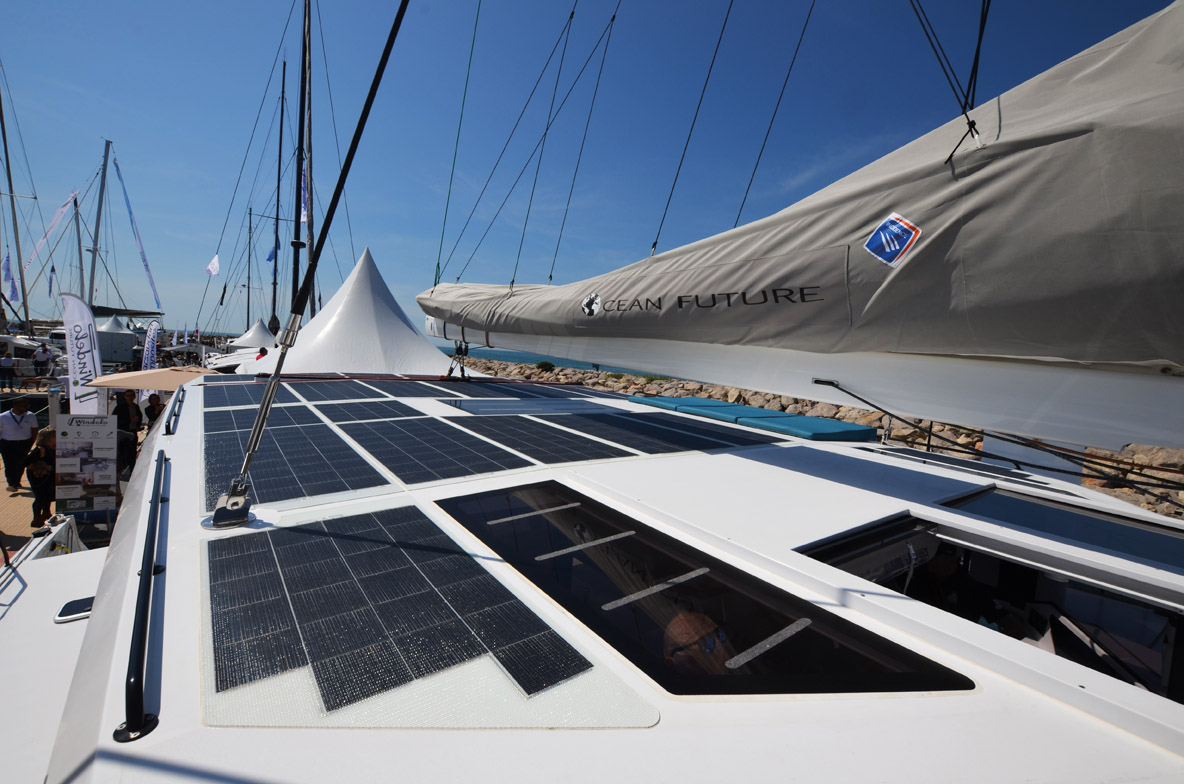
The Windelo 54 is part of a new generation of multihulls designed to optimize the electric drive system right from the start. Shaft-mounted motors, battery centering, high performance and a large surface area of solar panels are the primordial factors for this type of propulsion.
Architecture: More or less green characteristics
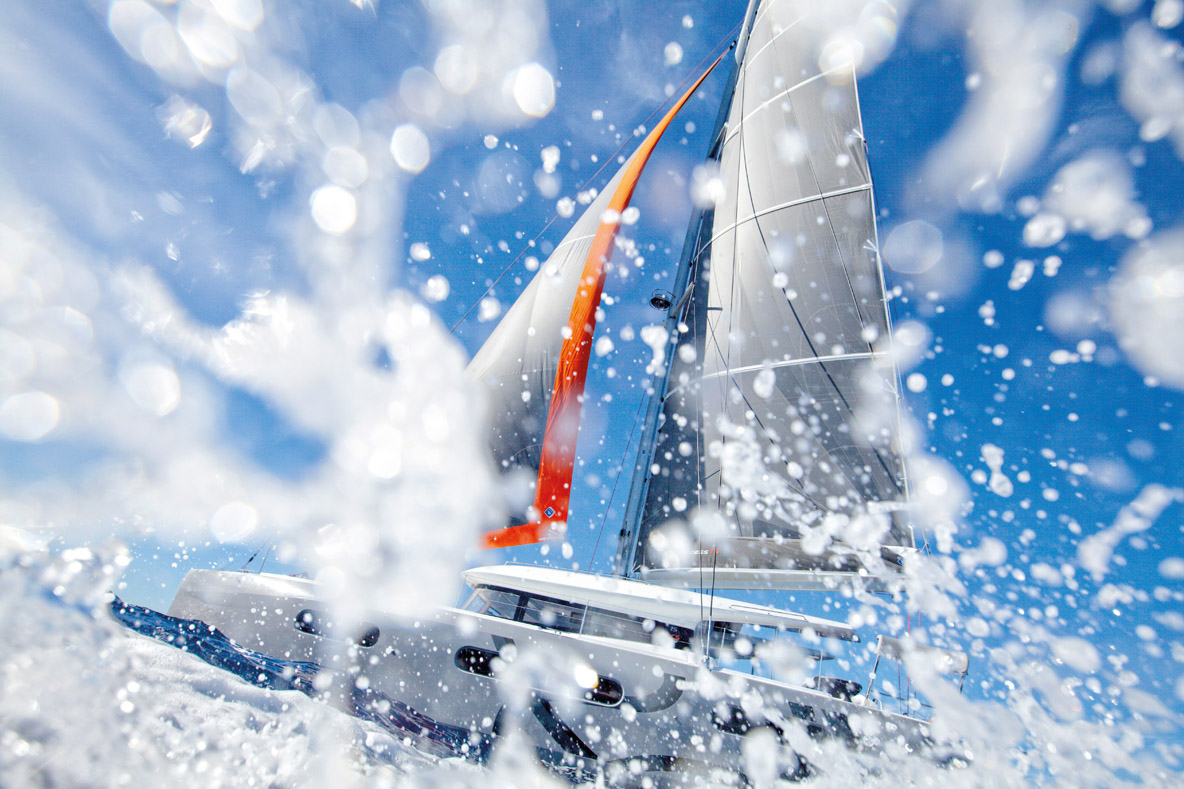
The lightness and narrowness of the hulls, as well as the aerodynamics of the superstructures, all drive performance, and they are at the heart of the issue of whether or not to favor the use of natural and clean energy. They serve the drivetrain efficiently with the cleanest possible energy management. A sailboat that can get going in light airs and show high averages as soon as the wind starts to build more, will provide the energy for life on board while under way. The electric drivetrain is more sensitive to weight and windage than its internal combustion counterpart. Variations in consumption depending on weight/length/finesse data can therefore be significant - this is also true for aerodynamics. When we took our speed readings with and against the wind, we found very large differences. In just a light 3-4 knot breeze, the power consumption at 7 knots on the Excess 15 E-Lab went from 15 kWh with the wind on the beam to over 20 kWh into the wind. This difference in data becomes exponential as the wind increases. Heading upwind in 15 knots of breeze will discharge the battery bank four times faster. The shape of the coachroof, the hulls and the lightness of the construction materials (which obviously shouldn’t have a negative impact on comfort or habitability) represent the greatest challenge to come. To make the ecological switch a viable one, designers and boatbuilders will have to test their imagination - for the better!
Will hydrogen be our salvation?
 |
 |
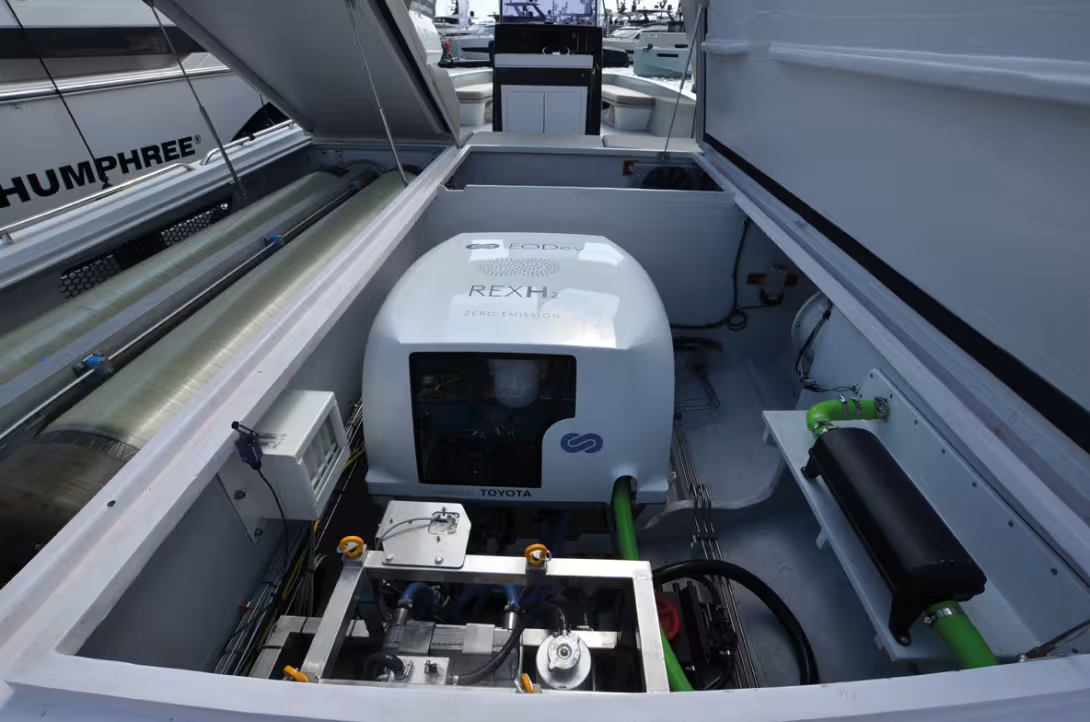
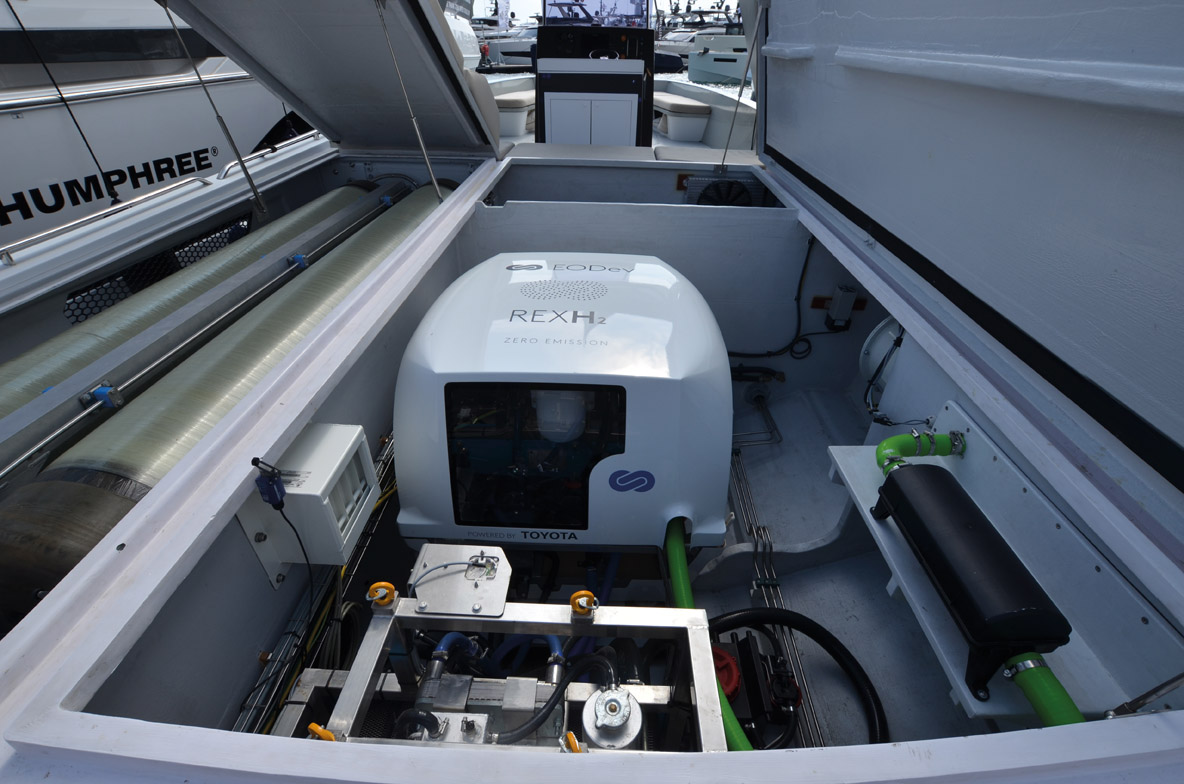
The Hynova 40’s fuel cell transforms the contents of the hydrogen tanks into electricity and provides as much energy as a 60-kW generator.
The consumption/hydrogenation ratio of high-performance craft with an optimized energy mix, such as the Windelo 50 and 54, is 30 to 40% more efficient than that of more conventional or mass-produced units. The evolution of energy storage with new battery technologies that are half the weight - such as the new NMCs fitted on the O’ Yachts Class 4 - allows for a greater energy reserve. But despite these significant advances, the use of a complementary energy producer that respects the environment, such as fuel cells, seems unavoidable in order to be able to boast of sailing a little greener. Let’s welcome the first initiatives: EODev presented the recreational version of its REXH2 fuel cell, developed by Toyota and installed on the exploration catamaran Energy Observer in 2020. The first tests conducted by Hynova Yachts with four 110-liter cylinders of hydrogen pressurized at 350 bars (5,075 psi) feeding the famous REXH2 fuel cell have produced 60 kWh in silence and with the only emissions being water. The test boat has a range of 500 miles at eight knots and its hydrogen capacity weighs only about 30 kilos (less than 70 lbs). Who can beat that? Requiring one cubic meter (35 cu ft) of space and having a weight of 400 kg (880 lbs), the REXH2 fuel cell is currently the most compact on the market. It could be suitable for our multihulls, being as they’re not lacking in space to install it and store hydrogen. The first major manufacturer to look into the hydrogen question is Fountaine-Pajot, which has announced the launch of the first Samana 59 equipped with this hybrid hydrogen-electric drivetrain in 2023.
 |
 |
After-sales service is provided remotely by the manufacturers’ technicians. The main risk of malfunction is in the electronics, as the motors themselves are very reliable and maintenance-free.
Just like the EODev fuel cell from Toyota, the BMW i3 batteries remind us that the technological evolution coming from the automobile industry remains a great springboard for the boating sector. We just need to know how to exploit it!
But what does it cost to sail greener?
 |
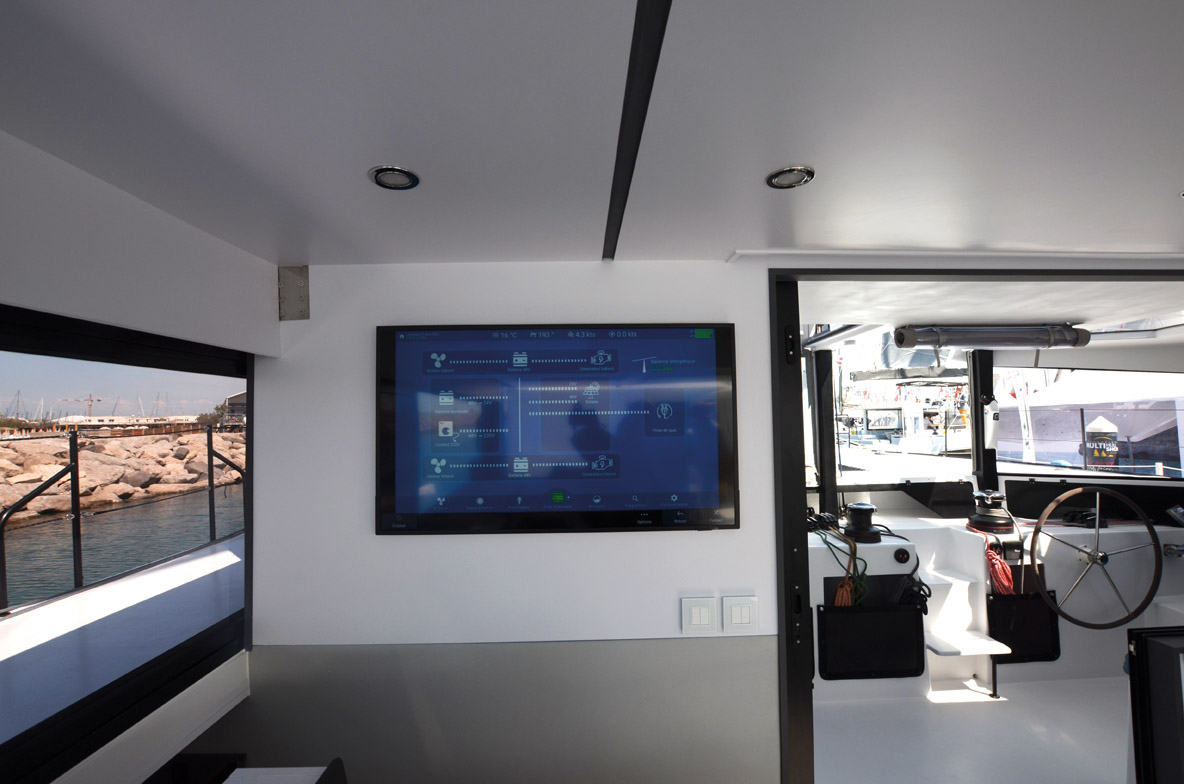 |
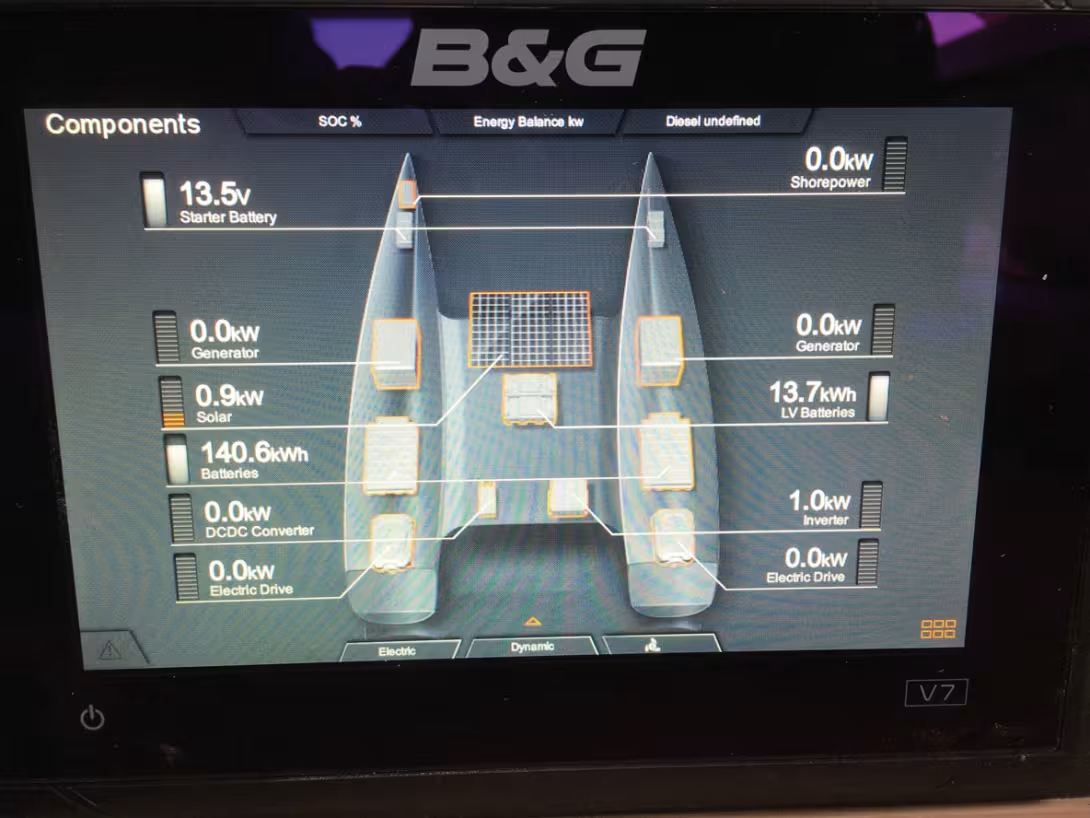
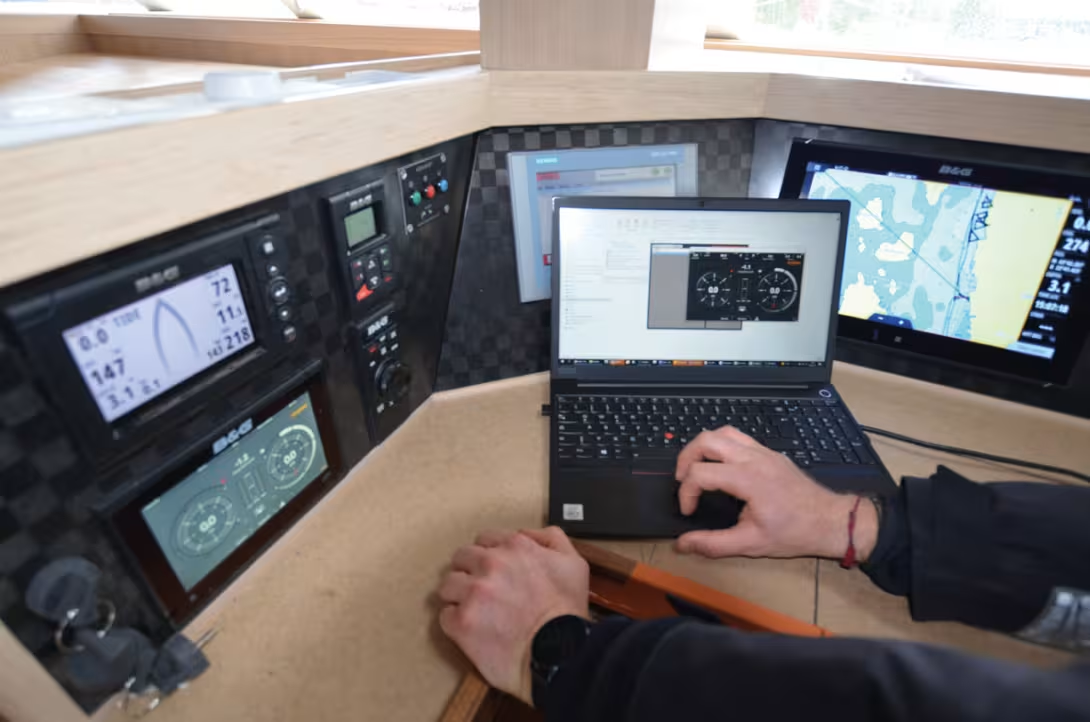
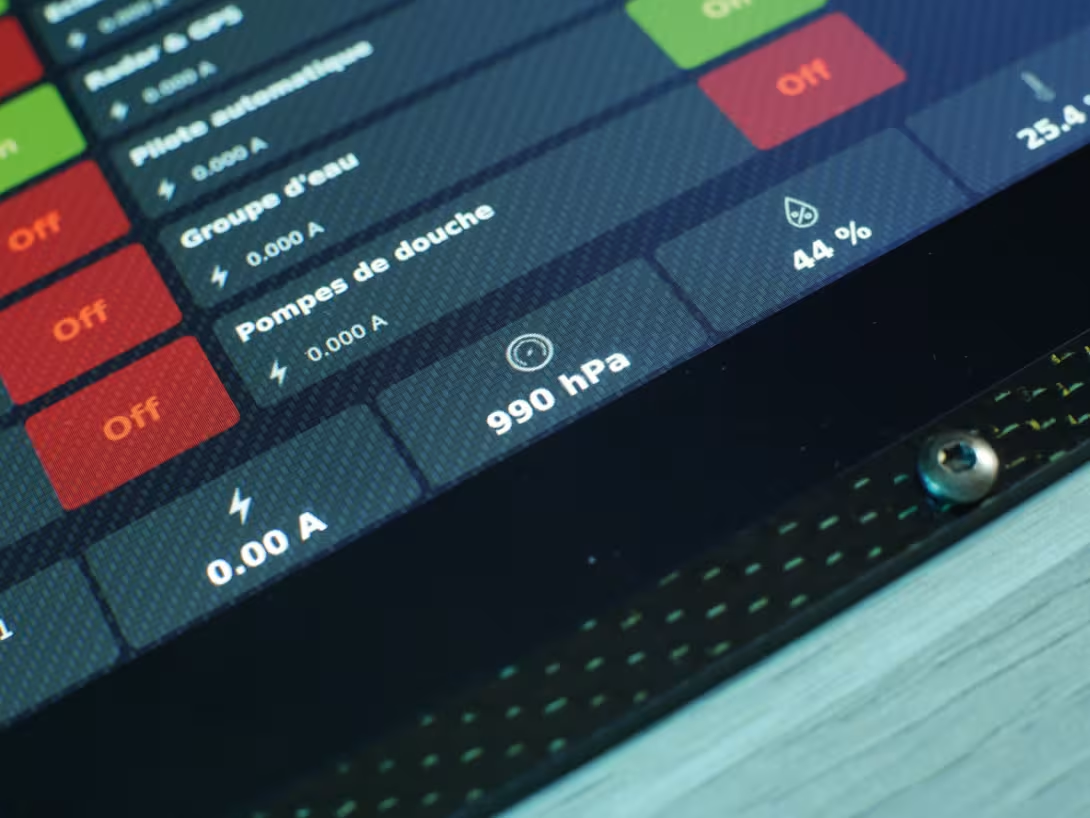
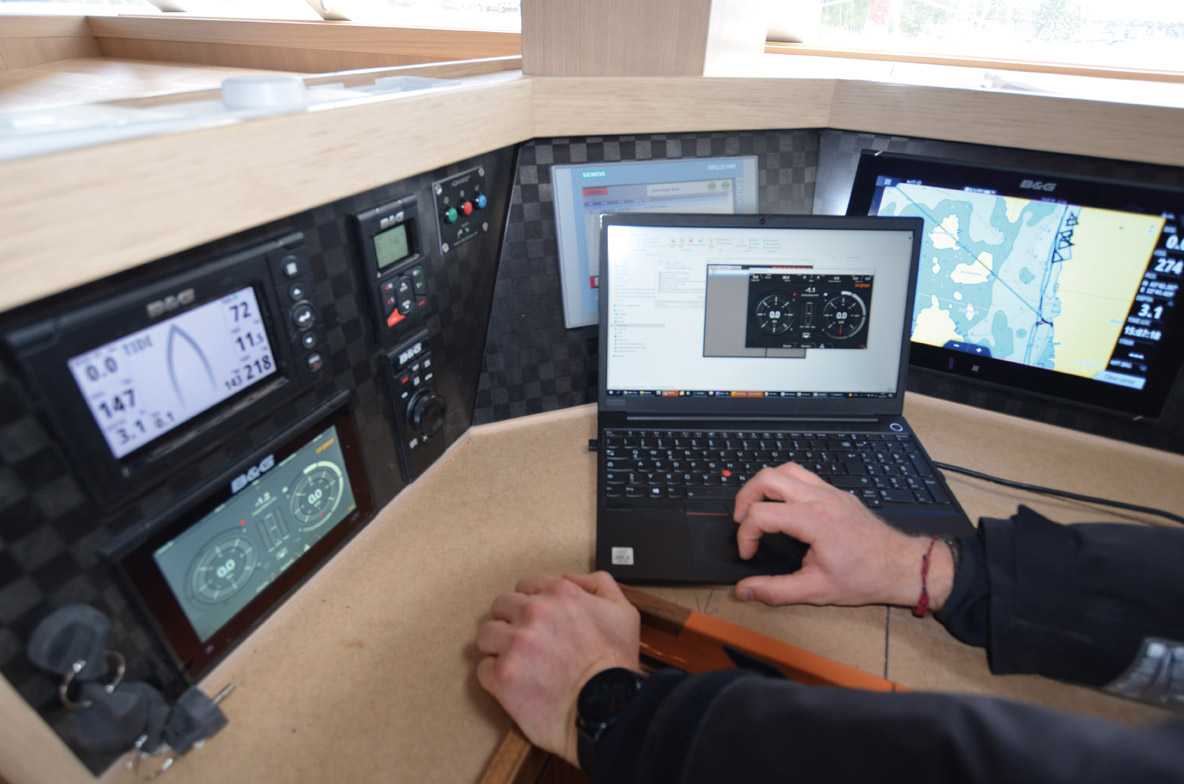
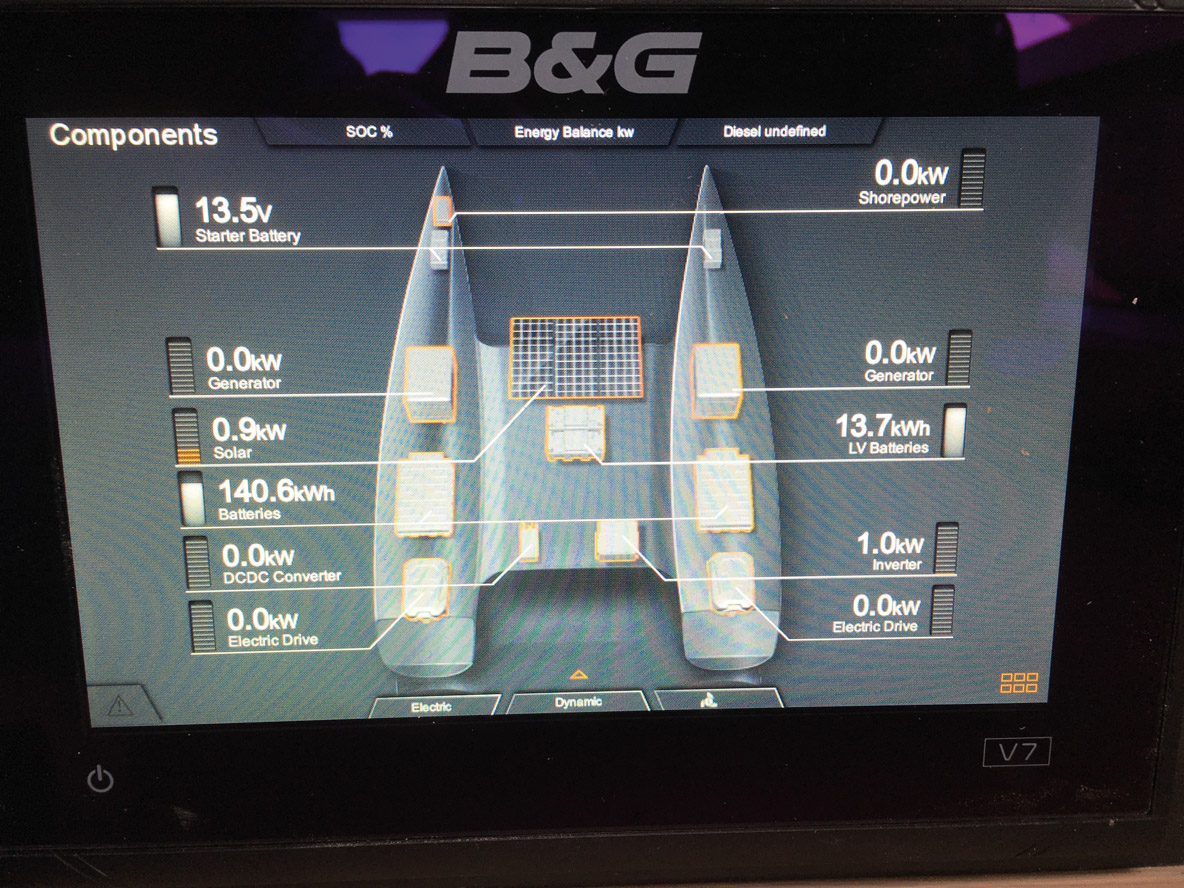
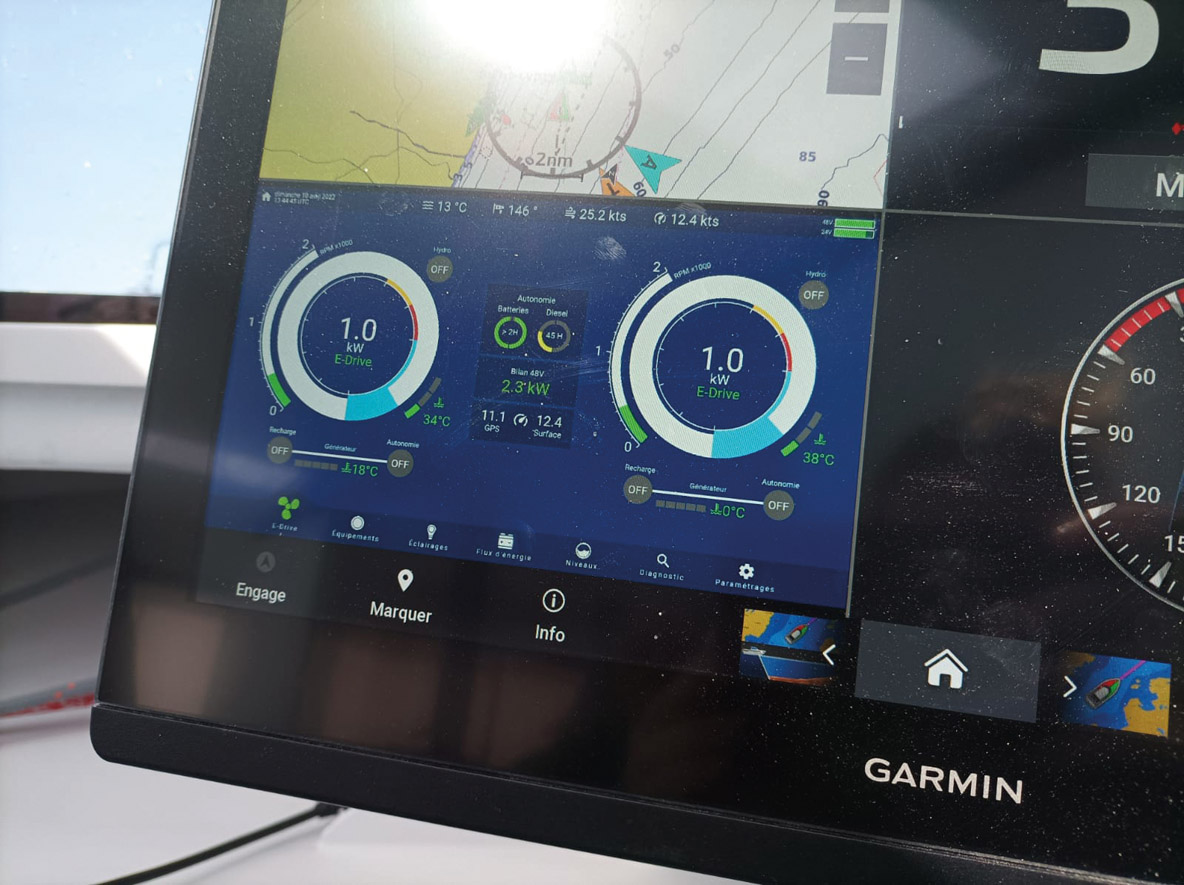
Energy management systems are the nerve center of hybrid systems. They can be operated from any repeater, inside or outside. On the Windelo, it is even shown in the saloon on the big screen. This is an effective way of making the entire crew aware of this new mode of operation.
Ultimately, the only obstacles to the more widespread development of these technologies concern reliability, maintenance and cost. Olivier Kauffmann, founder and director of Windelo, assures us that electric motors do not break down and they require almost no maintenance. The risks lie rather in the electronic management system. But on this point, we can be reassured: the technicians, as we have seen on board the Ocean Explorer 72 equipped with a 100 kW Torqeedo, can take control of the system remotely via an internet connection. The overall cost of such installations is still significant, however. Repowering with a Torqeedo Deep Blue system on an Aquila 44 required an investment of €175,000. But this was a prototype installation after the fact. Dan Levy estimates the extra cost of a complete installation – a larger generator, complete propulsion/hydrogeneration system and solar panels – as opposed to the traditional internal combustion setup to €90,000 excluding tax for a 40-foot catamaran and €200,000 ex-tax for a 60-footer. We are of course impatiently waiting for the new prices from Fountaine Pajot, who will be offering three models in either ICE or electric power at this year’s Cannes Yachting Festival…
 |
 |
Hydrogeneration is still pretty feeble at 7 knots under sail. It only becomes truly efficient at boatspeeds above 10 knots. The difference between the theoretical curve and reality can be quite significant depending on the sea state.
Thanks to its sensors, this small ShipHeart unit developed by Koriolan makes it possible to know the consumption of each device on board and to be able to control them in order to manage its energy bank.
