
With multihull order books now often being full for several years in advance, this is undoubtedly the moment to question the impact of the entire yachting sector on our environment. This is doubly critical, both as citizens, modest temporary inhabitants of planet earth, and as sailors, whose natural playground, the sea, covers 70% of the surface of the globe. The oceans are, moreover, an important thermometer - in every sense of the word - of the evolution of our climate and of the impact of human activity on it: temperature, pollution, biodiversity, weather phenomena, and much more besides.
LCA, for life cycle assessment
Despite the current absence of a common authority, the figures seem to converge: the carbon footprint of a multihull is 80% related to its use and 20% to its construction. With this in mind, builders might be tempted to pay little heed. But the prospect of the pertinent electric drivetrain could well reverse this ratio in the very near future. Between the launch of new products and the need to secure their supply chains, the subject of green is being brought to the table at boat-builders large and small. The subject of green because, the more we delve into the theme, the more that new areas of concern appear, sometimes with endless depths of analysis. The first acronym encountered when approaching the ecological balance of the construction of an object in general and a multihull in particular is LCA, for life cycle assessment. To address the problem mentioned above, it is often given an S, for simplified LCA. This standardized method was developed in the 1990s to measure the quantifiable effects of products (or services) on the environment. The LCA of a multihull identifies and quantifies, throughout its life, the physical flows of material and energy associated with it. Beginning right from its design all the way to its destruction, through its construction and use, without forgetting the intermediate phases of transport. It is based in particular on what are called the incoming flows (raw or processed materials, energy, water, etc.) and outgoing flows (waste produced, emissions released, etc.). Precise identification of these flows is a long-term task, as the phenomena involved, and their interactions can be particularly complex.
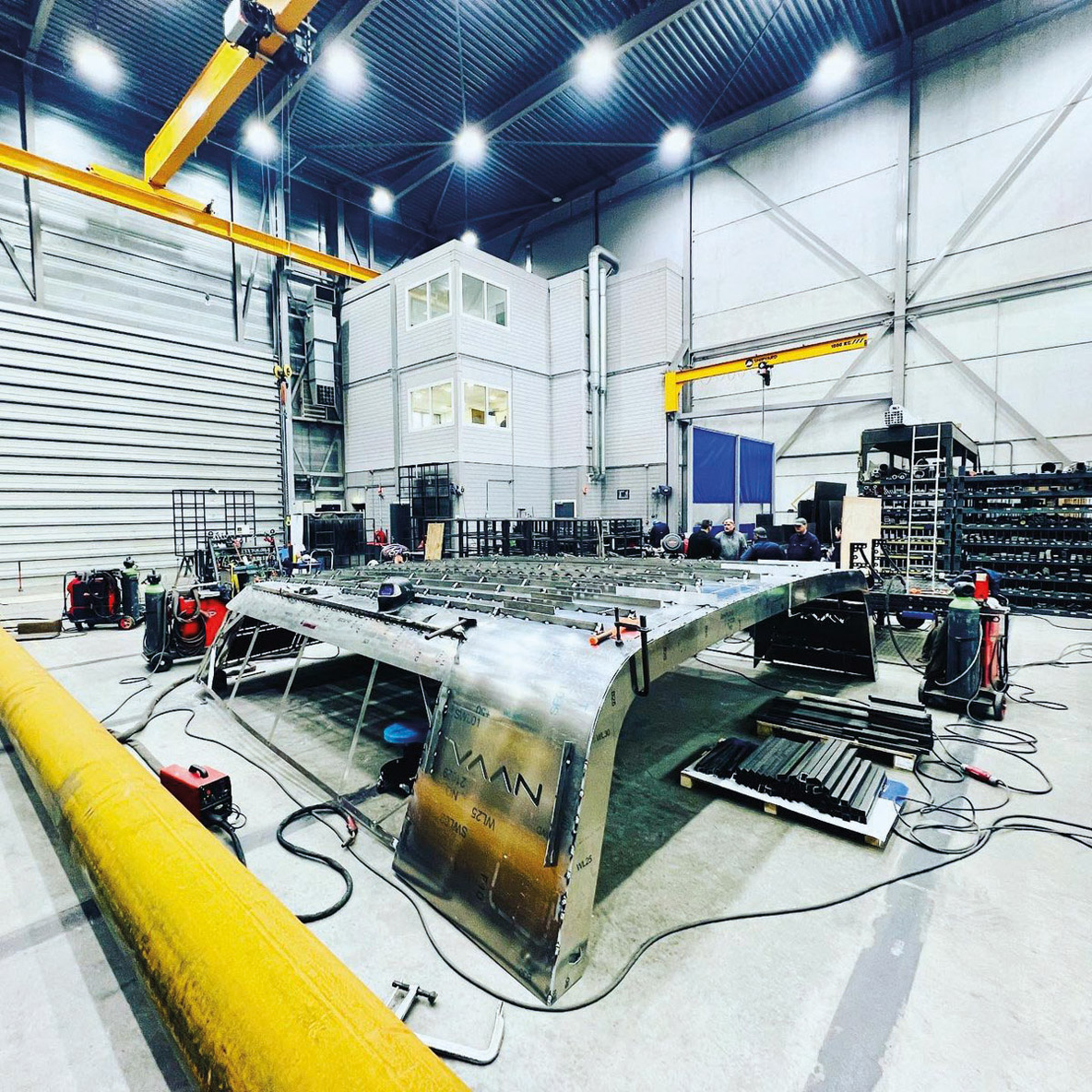
Vaan Yachts uses 60% recycled aluminum and features materials such as cork as the deck covering.
Reducing energy outlay
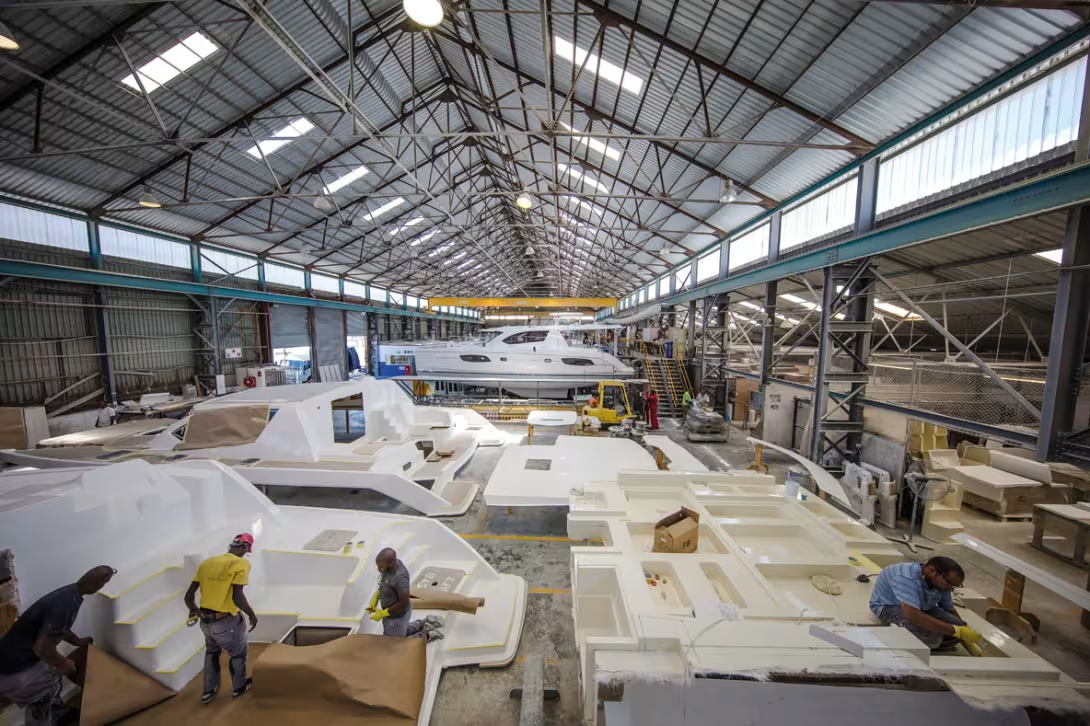
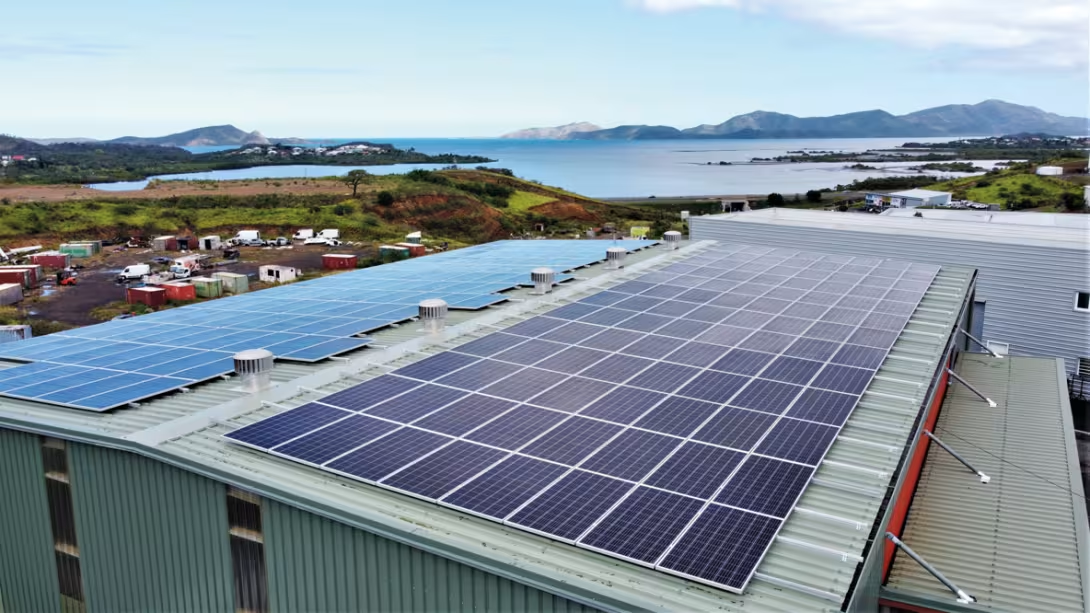
Let’s start with the easiest topics: the first among them is energy. For designers (naval architects, designers and engineering firms, to mention but a few), who use a lot of data, servers and energy-intensive supercomputers, this is a key area to reduce emissions. Opting for a supplier that offers 100% renewable electricity is an immediate, easy and cost-effective way to significantly reduce environmental impact. Electricity is also a very important factor for shipyards. According to figures shared by the 11th Hour team, the entire industry could reduce its direct carbon footprint by nearly a third (32%) simply by switching to the same type of supplier. Within the Bénéteau Group, Lagoon has done its carbon assessment and certified its factories ISO 14001 (environment) and ISO 50001 (energy performance). At Fountaine Pajot, the company’s plan for ecological transition has taken the name Odyssea 24: the yard on France’s Atlantic coast is firmly committed to playing its part in ecological matters. It aims to be carbon neutral by 2030, partly through offsets, and to be truly carbon neutral by 2040. Fountaine Pajot would thereby be following the recommendations of the Paris Agreement initiated by the 2015 COP21. At Novaluxe Manufacturing, in Cape Town, South Africa, this step has already been taken: electricity is produced using solar panels.
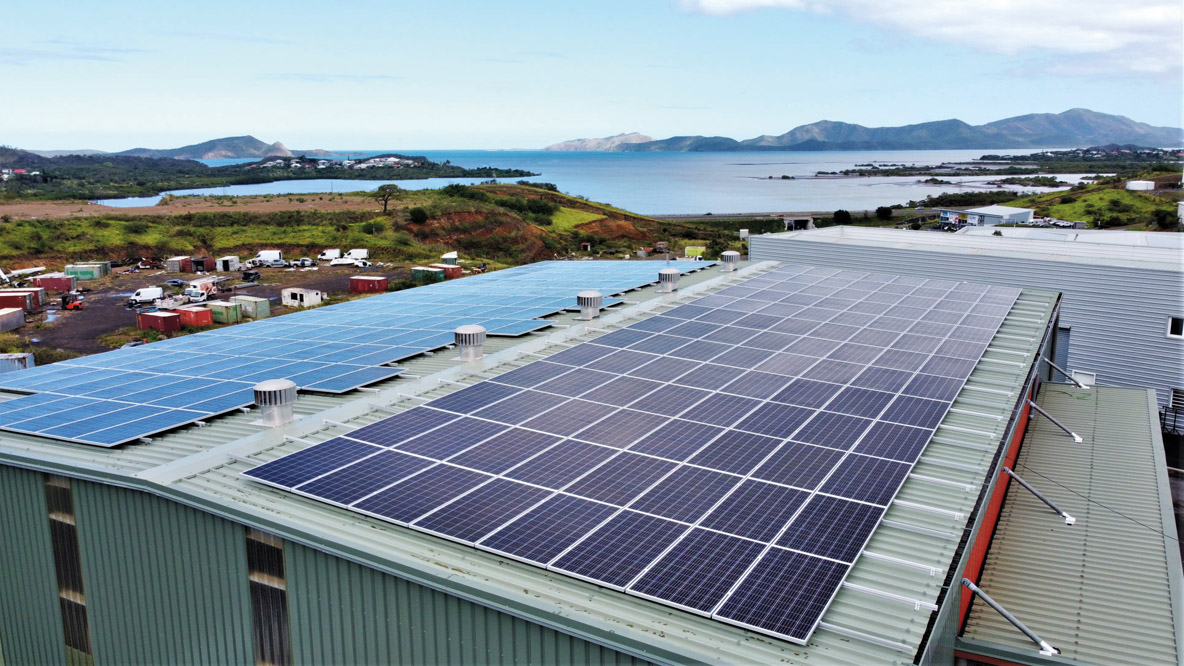
Solar panels mean a shipyard can generate its own electricity.
Can we manage without molds?
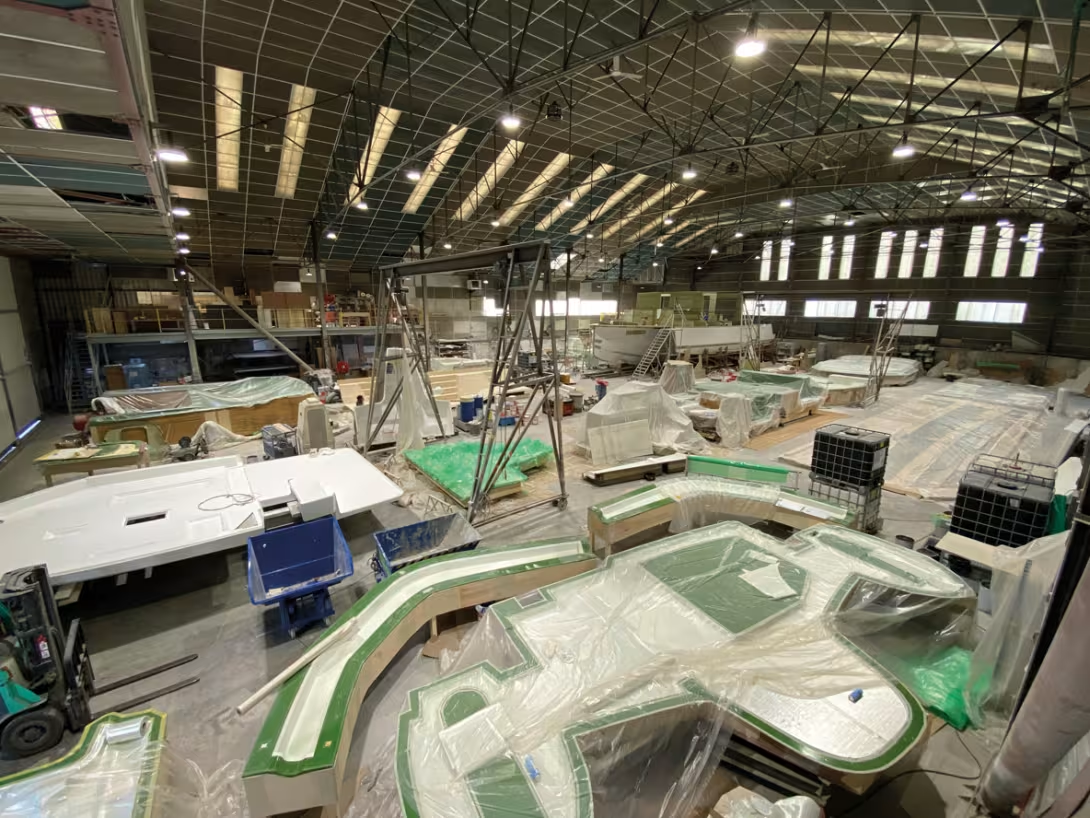
After energy, the second obvious topic that all manufacturers are addressing is input materials. The most affordable approach in the first instance would be to use as many recycled products as possible, especially polyester. The most skeptical might start with the molds, which, being as they don’t go in the water, have very low structural constraints to worry about. These mother parts are obviously a concern. What’s more, these are elements destined for a single use: the subject of reusing materials is essential right at the very beginning of the process. In passing, note that at LEEN Trimarans, the strong ecological impact of the mother parts and molds was resolved in collaboration with naval architect Bernard Nivelt who designed trimarans with developable shapes. The hulls are built from flat panels, built on marble, and shaped directly on the structure, just like an aluminum boat. This technique is also used for plywood multihulls, and the revival of the Punch by Multicap Algarve (see our article) makes even more sense here. The economic impact of a mold being more than consequent between investment, downtime and storage, you can start to see how ecology and finance will sometimes fit nicely together.
Recycled carbon, recycled aluminum and PET foam
But let’s get back to materials, because other, more noble ones can also be recycled. Recycled carbon fiber produces 5 to 20 times less greenhouse gases than new fiber. However, in order not to burden the final balance sheet with the impact of transport, being close to major aircraft manufacturers or shipyards specializing in ocean racing is an important advantage, notes 11th Hour.
Aluminum can also be recycled: Dutch builder Vaan Yachts has opted for an alloy for its new catamarans, 60% of which is made from waste materials (window frames, road signs or even license plates).
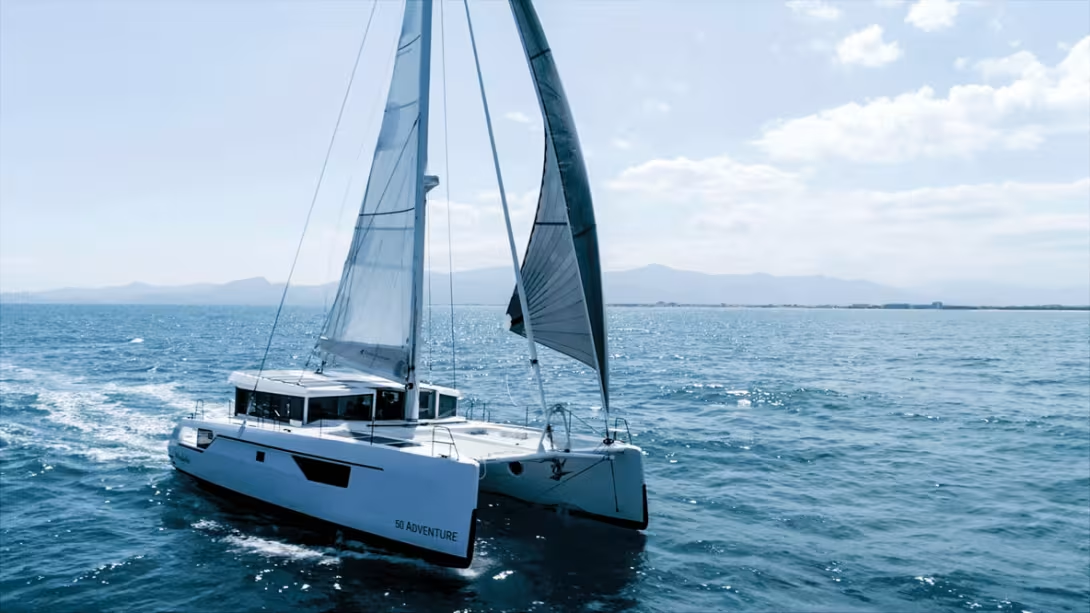
The most innovative shipyards are interested in PET - or polyethylene terephthalate for the particularly scientific among you. A 220 kg (485 lb) drum of PET resin contains the equivalent of 1,800 recycled plastic bottles. We’re all familiar with these bottles – they’re for mineral water and sodas. I’m sure we’ve all promised ourselves to replace them with a nice water bottle, both to preserve our environment and to keep our figure. At Windelo, one of the youngest shipyards in the multihull industry, ecology has been at the heart of its DNA since its creation. It is in the form of foam that they use PET, literally halving the carbon footprint of this item compared to 100% PVC foam. However, in order to compensate for slightly reduced mechanical properties and to avoid increasing weight, which would be counterproductive in environmental terms, the French shipyard uses a mix of 56% PET and 44% PVC in the structure of its catamarans.
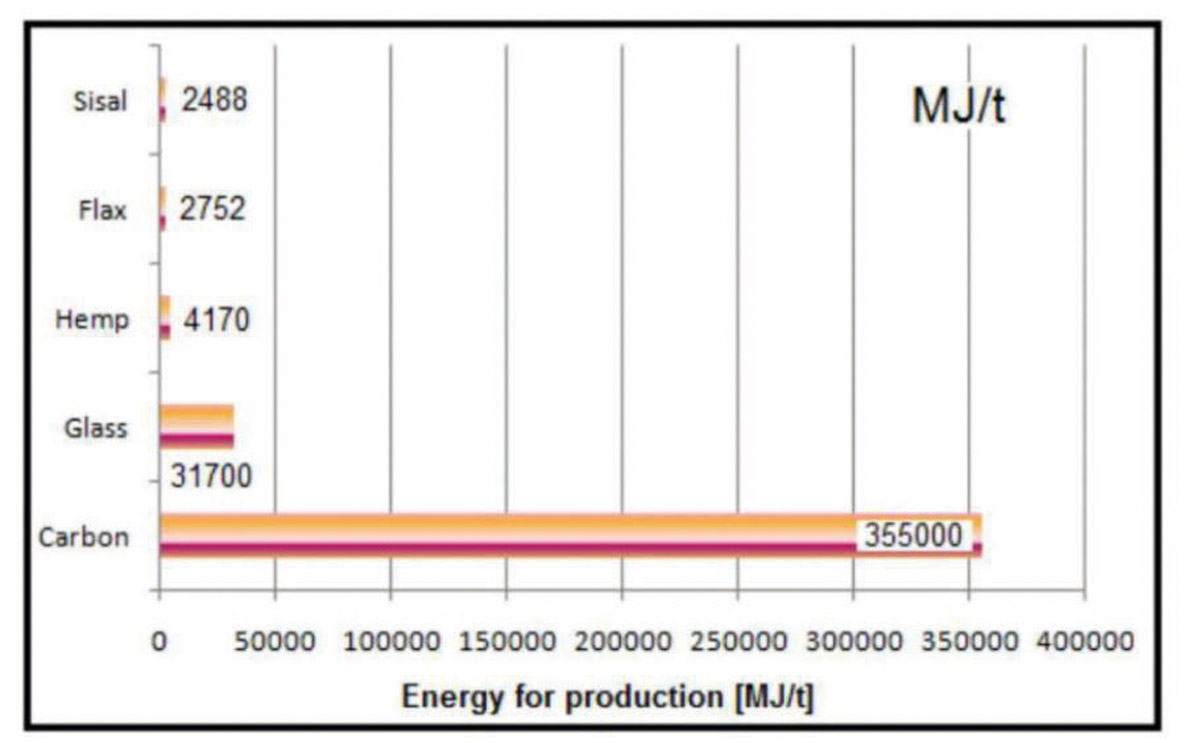
Energy required to produce different fibers. Source: Kairos Report on Alternative Materials (SachsenLeinen; Daimler 1999; BAFA; NOVA; AVB; REO).

Greenhouse gas impacts of different sandwich cores – source 11th Hour.
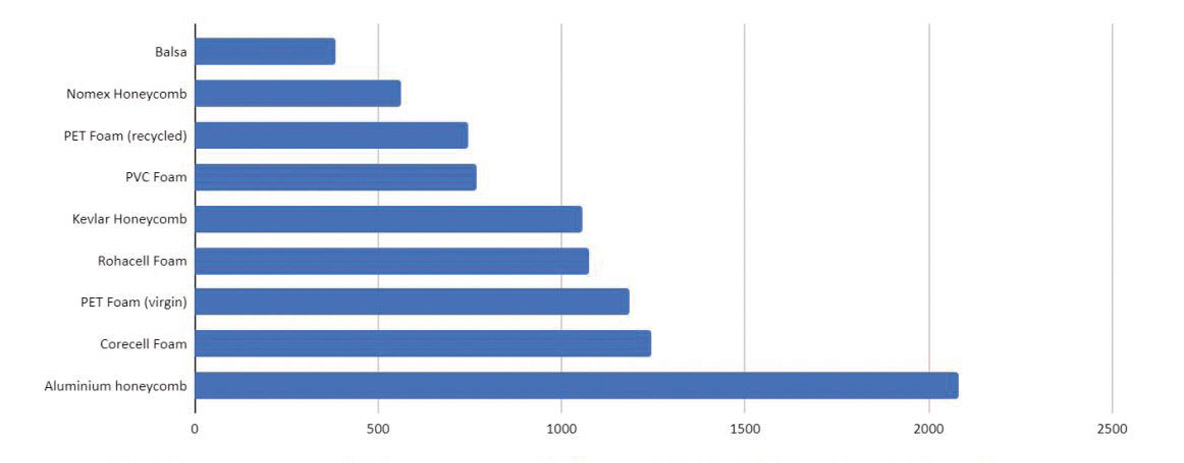
Greenhouse gas impacts of different fibers – source 11th Hour.
Biosourced or recyclable resins
But foam is not the only element of the composite sandwich, there are two others, the resin and the cloth. Biosourced resins seem to have more difficulty convincing production managers, even though Lagoon says it uses 40% of them in its drums. These resins have the advantage of being doubly less impactful - both from an environmental point of view, but also for the health of operators. The largest suppliers are of course working on the subject, but are still using mixed products, whether Sicomin with Greenpoxy (35% biobased) or Gurit, whose AMPRO is 40-60% biobased. The carbon footprint of a biosourced resin is however about 50% lower than existing resins. In addition, its production requires half as many scarce raw materials, and uses 50% less energy and water. And this is essential if, ultimately, we want to recover the investment made in other materials at the point of deconstruction.
Another option - while waiting for something better - is to use a recyclable resin: Elium resin developed by Arkema in collaboration with Lalou Multi is thermoplastic and therefore derived from petroleum, but it can be recycled without losing its mechanical characteristics. Major boat builders like Lagoon are taking a keen interest in these new resins.
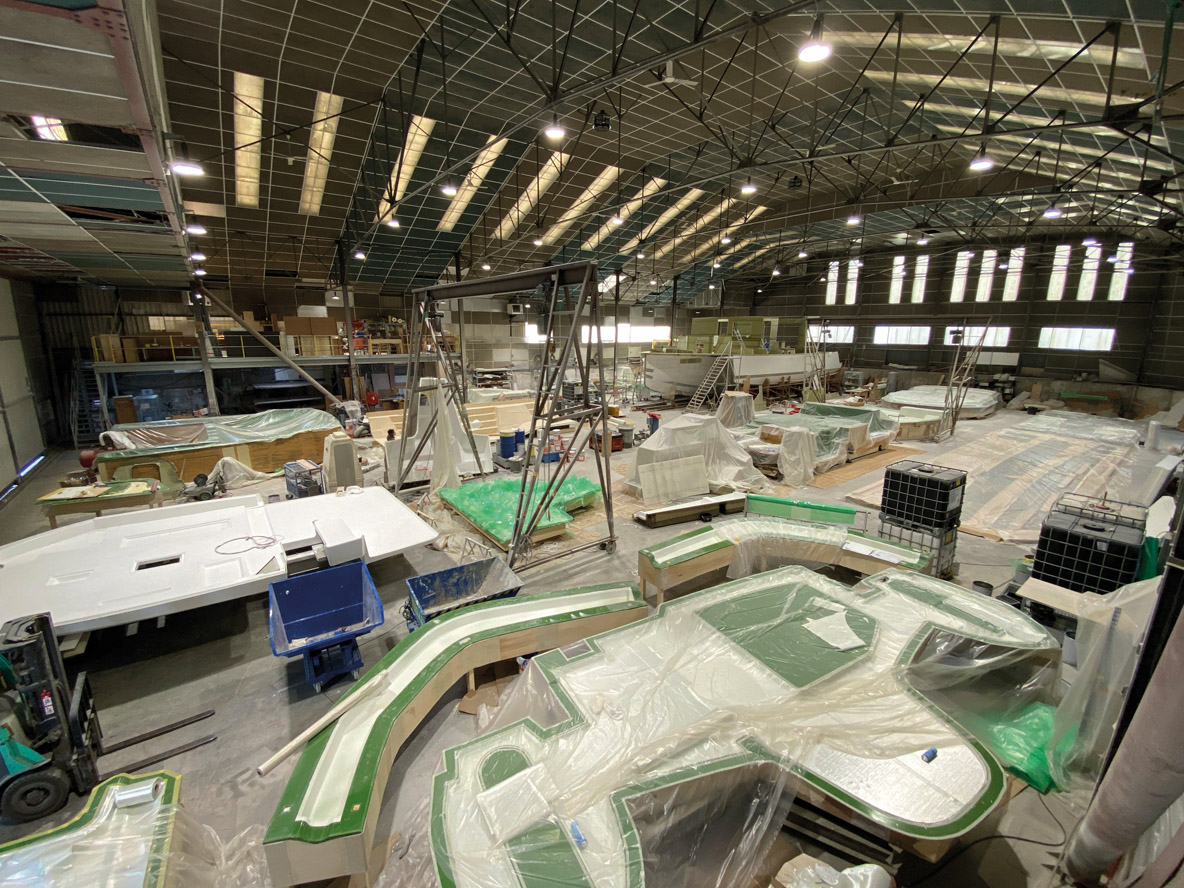
From the outset, Windelo has been committed to eco-construction. This Windelo 50 uses a foam sandwich comprising 56% PET/44% PVC and basalt fiber.
Flax or basalt fiber?
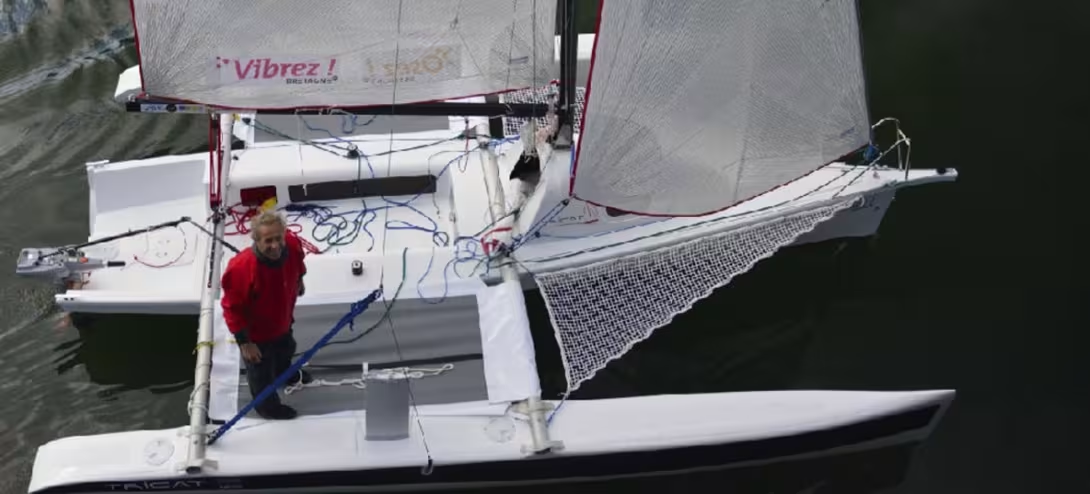
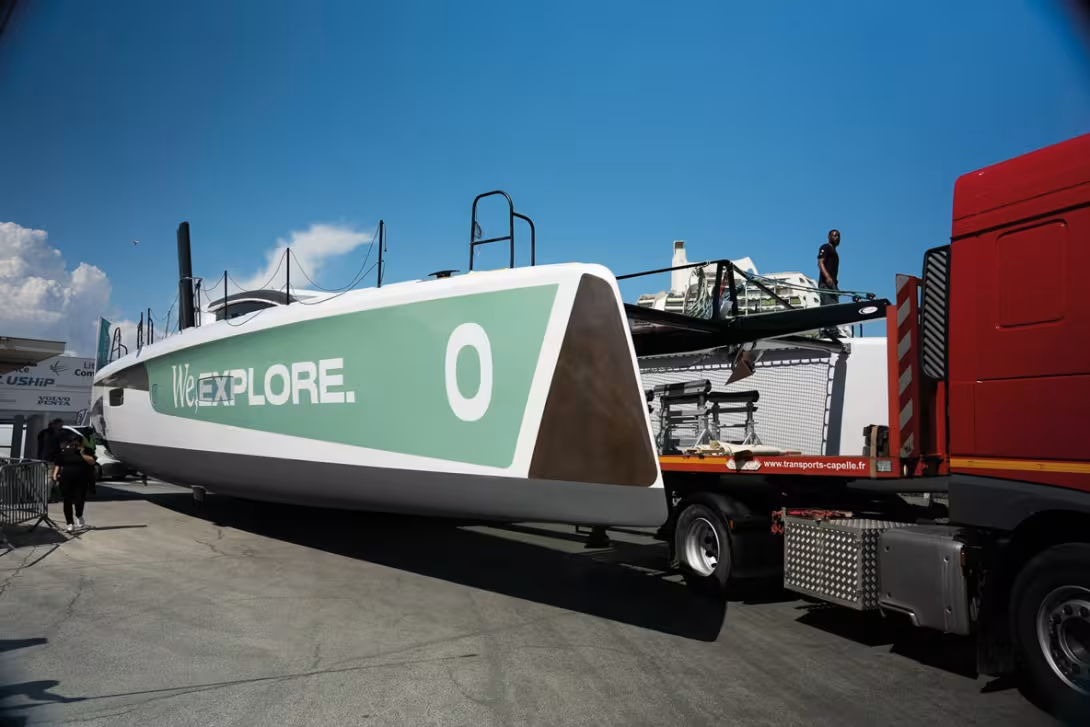
Fiber is the third element of the sandwich, and here, we seem to be making faster progress. Windelo has not hesitated to integrate basalt fiber. But it is flax fiber which seems to be nearing the winning line you might say, for a material similar to the hemp of the cordage on traditional boats. The properties of this material, 85% of which is produced in Europe and the majority of which is exported to China (spot the mistake), offer many interesting properties for composites: low density, high rigidity, and high resistance to breakage, whether in tension or in compression. At Outremer, the eco-design of their boats was placed at the heart of their strategy in 2020. The aim is to reduce the impact of catamarans on natural ecosystems as much as possible, at every stage of their life. Naturally, when two-time Route du Rhum winner Roland Jourdain, guided by his friends at VPLP, went along to the shipyard, he was well received: the skipper and responsible entrepreneur wanted to set up an ambitious project for the next “Rhum”. Bilou, as he is nicknamed, features in this edition’s Who’s Who. He isn’t new to the subject - he was working on it 10 years ago. Back then, he designed a 25-foot trimaran, Gwalaz, which is still sailing. From memory, Antoine Houdet, her builder, remembers that she was only 7% overweight compared to his usual production, which is barely the equivalent of an adult crew member on a trimaran weighing barely 1,300 lbs (600 kilos) lightship. Based on the 59-foot Outremer 5X, the challenge this time was much more ambitious, including the deck, which, as far as the skipper knows, is the largest composite piece ever made of flax fiber. The catamaran WeExplore is now in the water, and the stressful phase of infusion finally took place as usual, only the temperature and hygrometry were more precisely monitored, as linen is more sensitive to their variations than glass fiber.
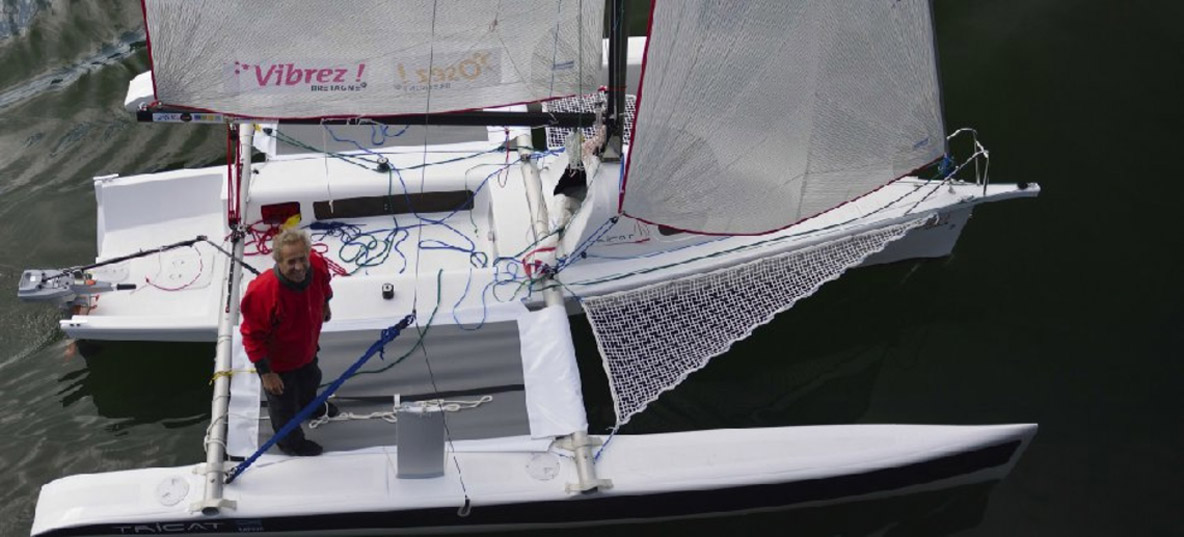
The Tricat 25 Gwalaz was built 10 years ago with flax fiber – and she’s still sailing today!
New materials that are still technically unknown
That particular multihull, however, will be approved as a prototype and not as a production boat due to the lack of sufficient technical characterization of the flax fiber used. This situation was also encountered by Eric Bruneel on the NEEL 43: the percentage of flax fiber used in the construction is simply not taken into account. At the Institut Certification et Normalisation pour Nautisme (ICNN), one of the official notified bodies for the CE marking approval, director Alexandre Cocheril is surprised that builders are using materials that have not yet been characterized - and even more surprised that manufacturers are supplying them. He is not worried about the intrinsic qualities of flax, and even seems amused by this return to “natural” (indeed, the history of hemp rope and cotton sails is being brought back to life...). But these new/old materials must be scientifically characterized. It is otherwise difficult, in the position of a certifying body, to validate a composite construction in which one of the elements is technically unknown. Less technical, FSC-labeled wood - from sustainable forests - and upholstery textiles such as Sunbrella’s Heritage fabric use eco-sourced fibers - these materials pose fewer problems. They are already widely used and represent a real advance, if we make sure that they have not been transported by aircraft or almost all the way round the world by cargo ship before arriving on our multihulls.
The biggest obstacle to date seems to be the lack of technical knowledge about materials and processes. Once this hurdle is overcome, shipyards and certification bodies will have better visibility. In any case, the regulations should encourage them to take an interest in this subject very quickly. If they have not already done so.
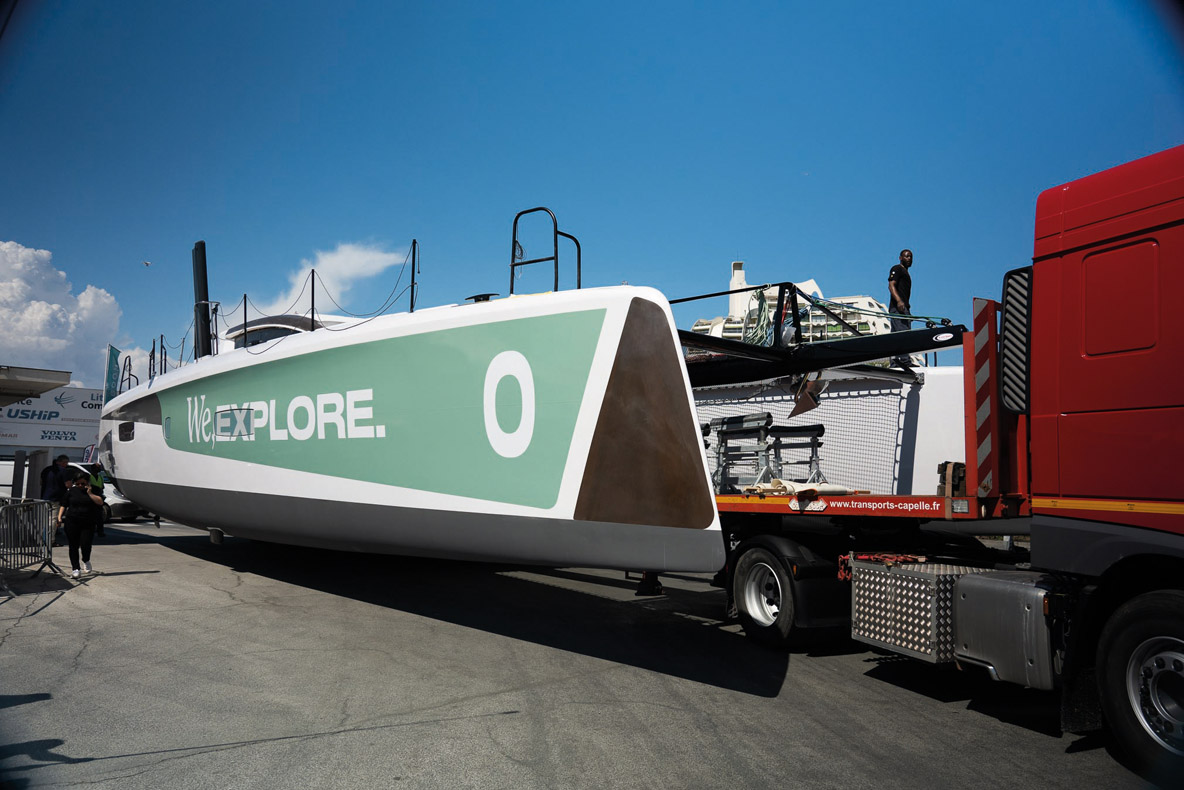
10 years after Gwalaz first splashed, Roland Jourdain is launching another multihull made of flax fiber: WeExplore, an Outremer 5X prototype that will race in the next Route du Rhum.
The role of ocean racing
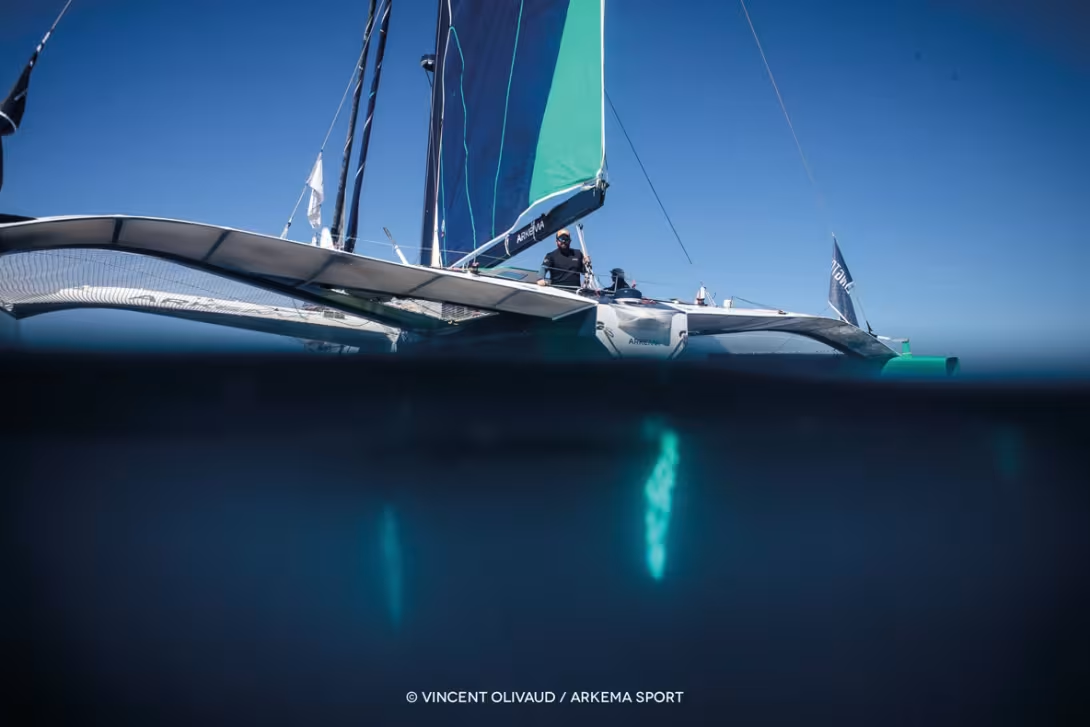
And what’s valid for the multihull that you or I might own, should be even more so for those in competition. IMOCA monohulls have an evolving program in this sense, and the Ultim and Ocean Fifty trimarans could limit the use of certain materials. Starting with the high-modulus carbon fibers, which throughout the production process can emit up to twice as much greenhouse gas as the standard version. Of course, it is difficult for a high-flying ocean racer not to perceive weight as the only key factor of performance, but if the rules are the same for everyone, mentalities can change. A minimum weight of materials (now 200 g/m² in the IMOCAs for example) could be established. Parts made of green materials could also be given a bonus, or removed from the minimum weight calculations. In any case, this is also the ambition of World Sailing, the international sailing federation, which is defining its technical standards to significantly reduce the environmental impact of sailing by 2030, particularly by focusing on the end-of-life stage of composites.
The final factor to be taken into account for production is the process itself, excluding the energy aspect already mentioned. While the switch from manual lamination to infusion has many advantages (styrene emissions, sandwich quality, limited and controlled quantity of resin, among others), the volume of consumables (mainly films and hoses) has increased significantly. The growth of the carbon footprint, measured by 11th Hour, is up 15% from one method to the other. Nevertheless, the reduction of waste, with reusable films and/ or biosourced, that are therefore biodegradable, is a real subject and one to be urgently addressed. But there are many related issues that can also be addressed. These range from finding local partners and suppliers to limit transportation, to the systematization of reusable packaging or supports. At Fast Forward Composites, in Bristol, Rhode Island, United States, the garbage collectors only pass by twice a month, so deeply rooted is the recycling logic at this young yard, founded in 2015. CDK, builder and assembler for the Ultim trimarans among others, has saved more than € 4,000 in waste management, as well as one ton of CO2 by storing cardboard packaging from one particular supplier, then sending it back to them in a single load.
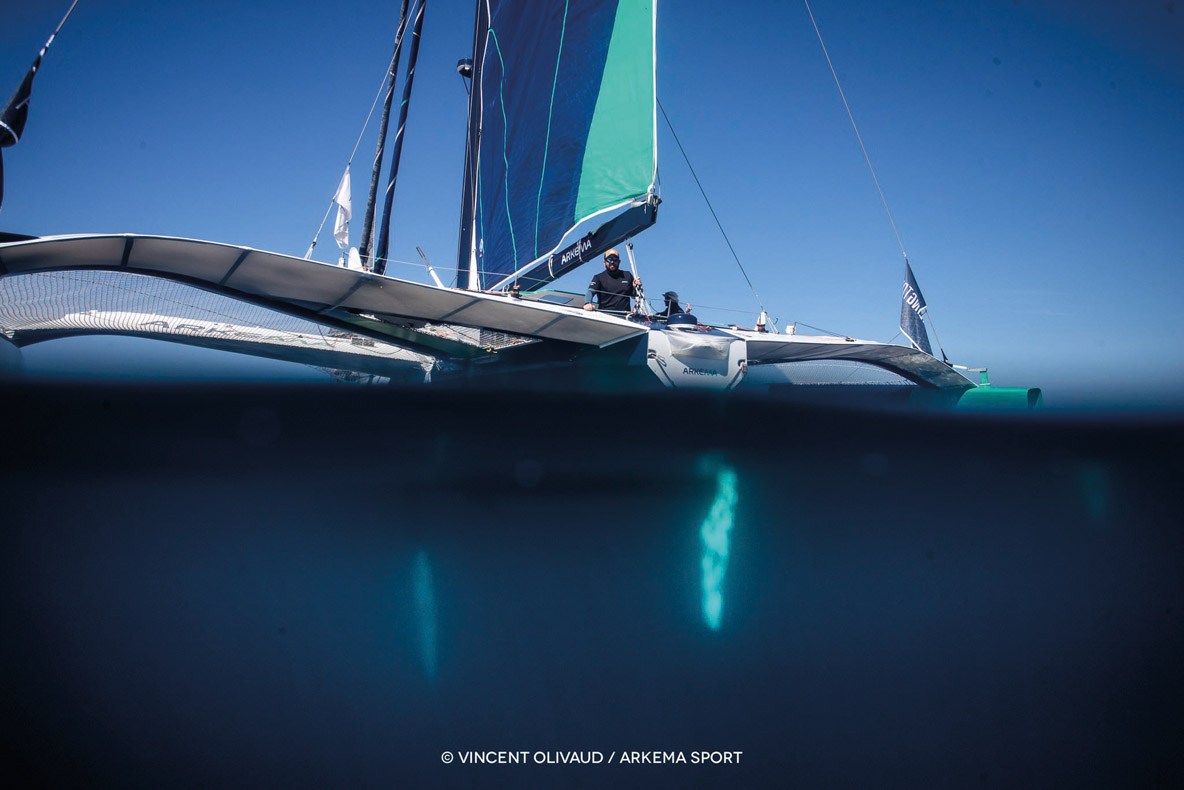
If the rules that govern racing multihulls evolve in a direction that favors eco-building, these craft could become the standard bearers of the modern boating industry…
The challenge of deconstruction
Finally, at the end of a multihull’s life cycle, there is deconstruction. But isn’t it a bit contradictory to talk about deconstruction in an article about construction? No, because without intelligent construction, there can be no virtuous deconstruction. What’s more, since 2019 in Europe, leisure craft manufacturers are subject to extended producer responsibility (EPR). This means they are responsible for the entire life cycle of the boats they produce right through to the end-of-life stage. There are an estimated 2.6 million liveaboard yachts in circulation worldwide. In France, APER, the yacht dismantling body, is promoting the key principles of the circular economy to the maritime industry. These initiatives are supported by the ADEME (French Environment and Energy Management Agency) and the FIN (French Nautical Industries Federation), proof that the subject is being taken seriously by political leaders. The not very poetic term “deconstruction” obliges shipyards to foresee the end of life of materials right from the start. The industry in general has to create both a demand and a supply of recycled materials, and only as a last resort use energy recovery from final waste, knowing that any landfill is a failure. At 3795 present, the powdered fiber/polyester composite can be reused in the manufacture of tires and roads. The reuse of hulls as habitats, swimming pools or t anks is also among the possible options.
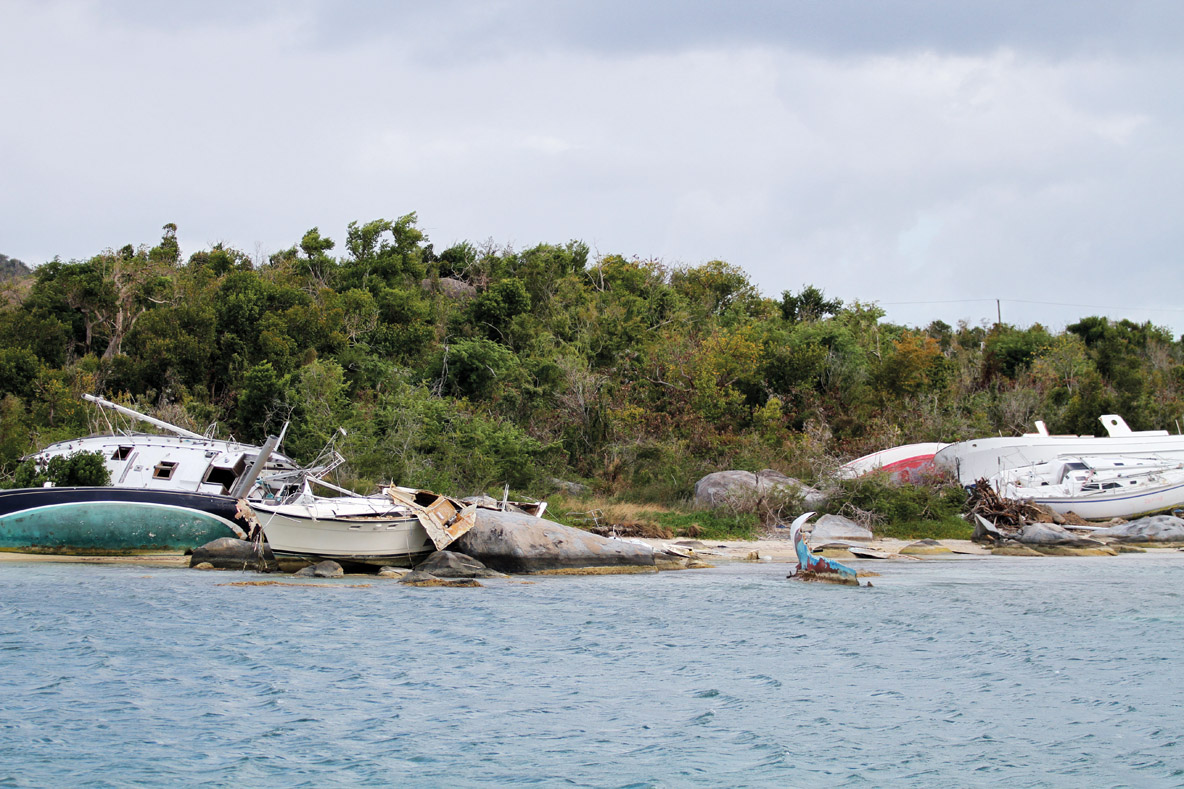
Beef Island in the BVI, 18 months after Hurricane Irma. Deconstruction today means trying to avoid landfill.
Conclusion
While some had an early ecological awareness, others have made ecology like prose. Without knowing it, very quickly, nobody will have to (or be able to) ignore the subject. From this survey, we have the impression of being on the first day of year zero of a long road towards eco-responsible multihulls. This is both bad news and good news, because the margins for progress are enormous and everything remains to be invented. Today, the new multihull that is truly 100% eco-responsible does not yet exist, but the industry seems to want to take its share of the collective responsibility and has in any case started out on the right course. The task is both daunting in scale and exciting…
 |
 |
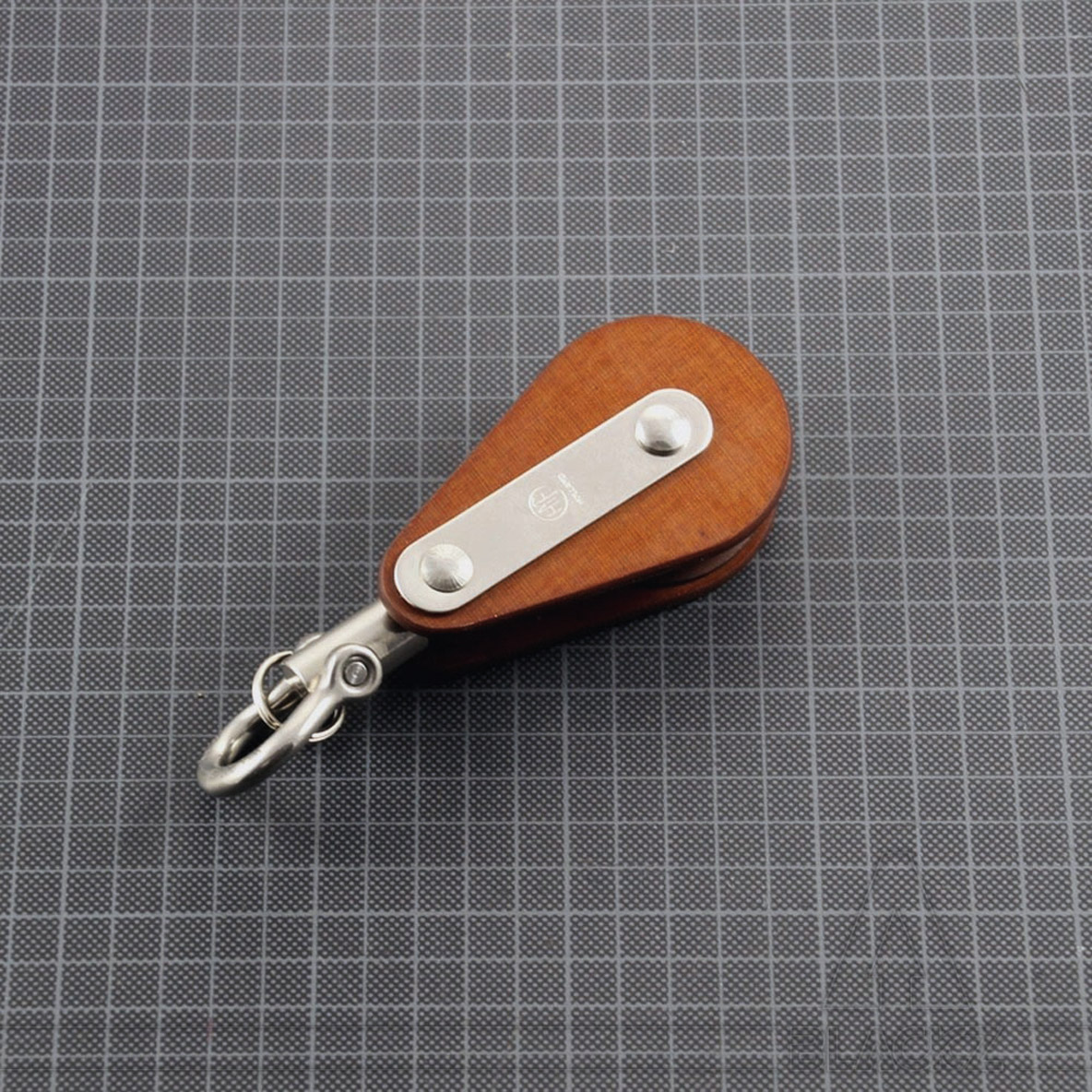
Sailboats of yesteryear were built of wood, their sails were made of cotton and the ropes were made of hemp... Closer to our time, these famous Tufnol blocks used cotton fiber. Are we heading back to the future?
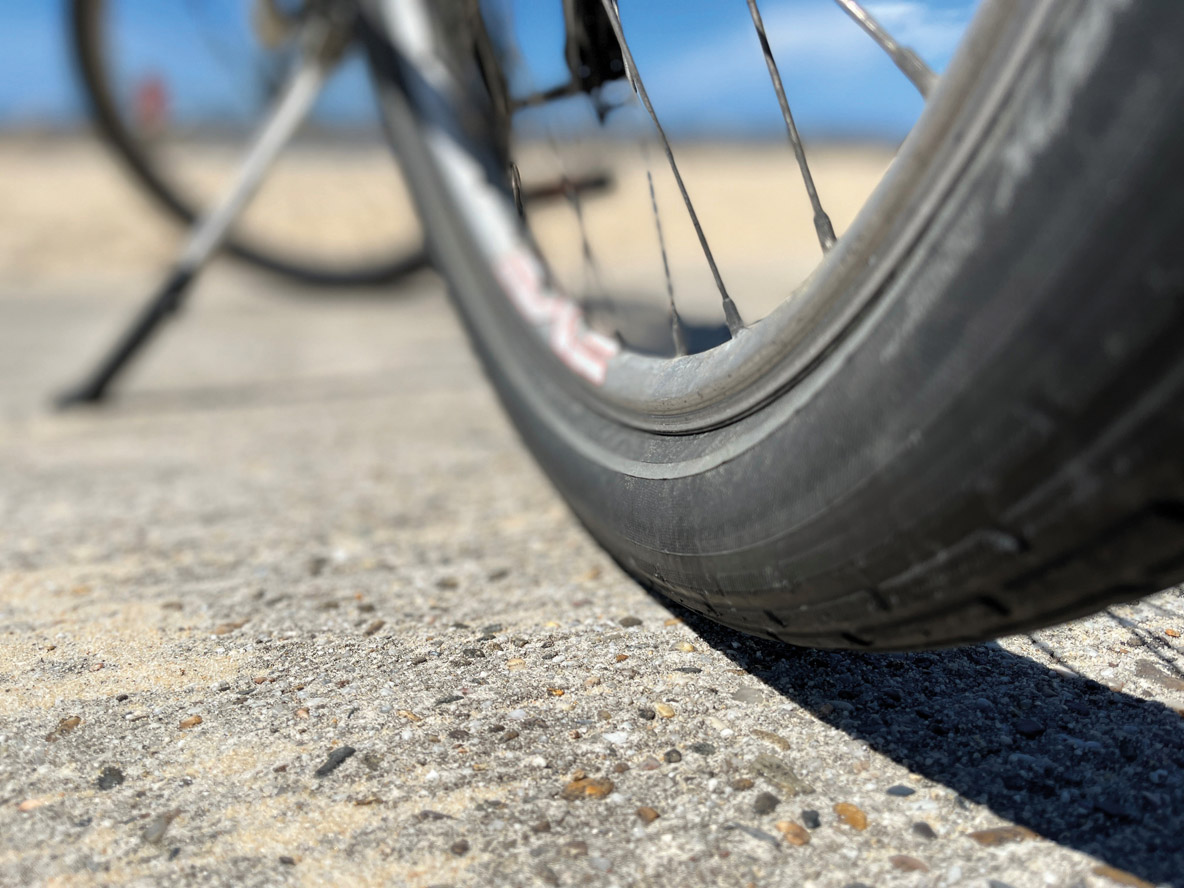
Reduced to a powder, fiber/polyester composite can be reused in the manufacture of tires and road surfaces.
