

About Piment Rouge
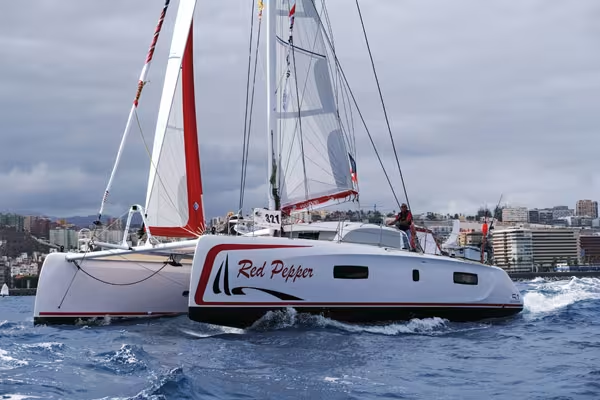
Our catamaran is an Outremer 51. She reached the Canary Islands from La Grande Motte in the South of France - some 1,577 nautical miles - in a week, with peak speeds exceeding 20 knots. Piment Rouge is 51’4” (15.65 m) in length by 24’10” (7.57) in beam and weighs 25,265 lbs (11.46 t). Her draft with the daggerboards up is just over 3 feet (0.95 m), and her air draft, just shy of 76 feet (23.10 m). She has a 980 sq ft (91 m²) mainsail, a 409 sq ft (38 m²) solent and several downwind sails (from the smallest to the largest: an 882 sq ft (82 m²) Code 0, a 1,324 sq ft (123 m²) gennaker and a 1,722 sq ft (160 m²) asymmetric spinnaker. The lines required for all these sails and the other maneuvers add up to almost a kilometer (0.62 mi) total length.
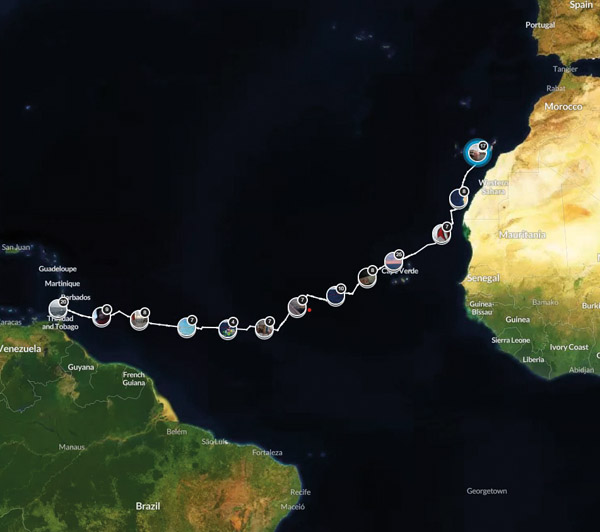
The ARC+ route involves an east-west Atlantic crossing with a stopover in Cape Verde.
Las Palmas, November 1st - Safety check
We had to present the safety equipment for inspection by the organizers.
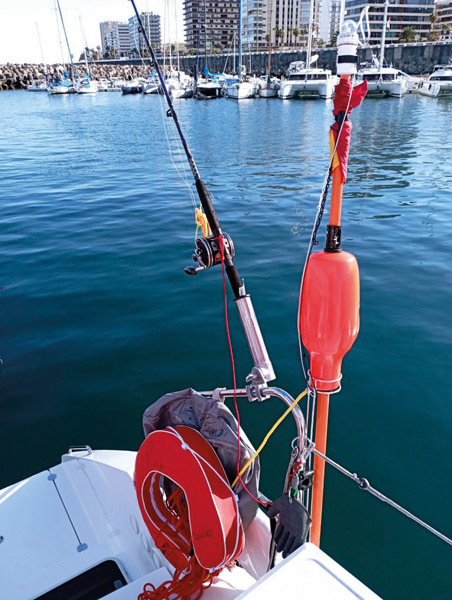
- An antenna for transmitting our position and receiving the position of the other boats (AIS) and the radio (VHF).
- The IOR dan buoy attached to the horseshoe lifering that can be thrown to someone overboard. Its height and light complement a lifejacket.
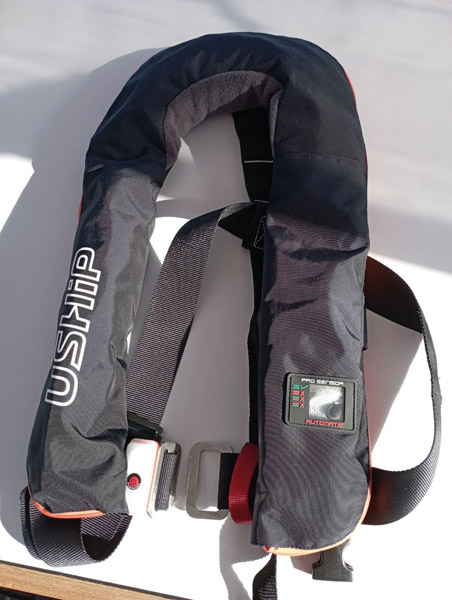
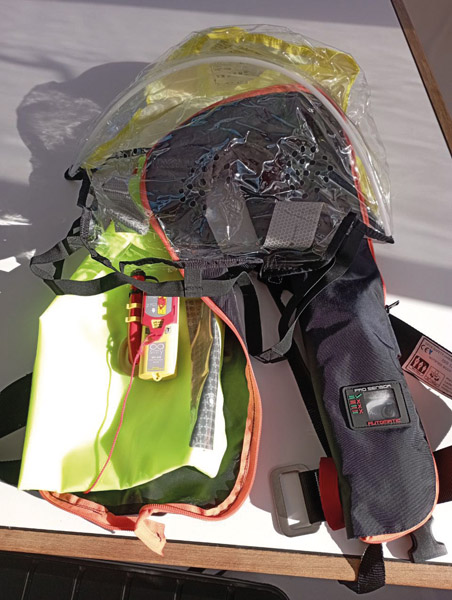
- The lifejacket inflation and light that automatically triggers when it comes into contact with water. The zipper bursts, releasing a protective hood and triggering a personal AIS beacon whose GPS coordinates will be detected aboard our multihull and any nearby boats. In the event of heavy weather, the harness lines allow you to clip on to the jackstays when moving around.
- Flares allow you to signal your presence in case of need, especially at night.
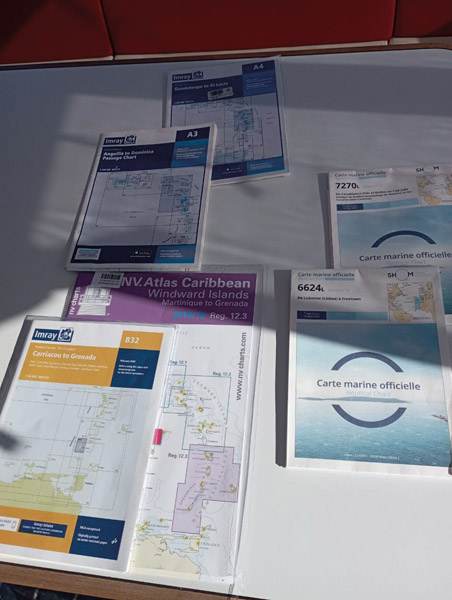
- Finally, if everything breaks down, paper charts allow you to navigate your way back to shore.
 |
 |
 |
 |
Las Palmas, November 6th Final preparations
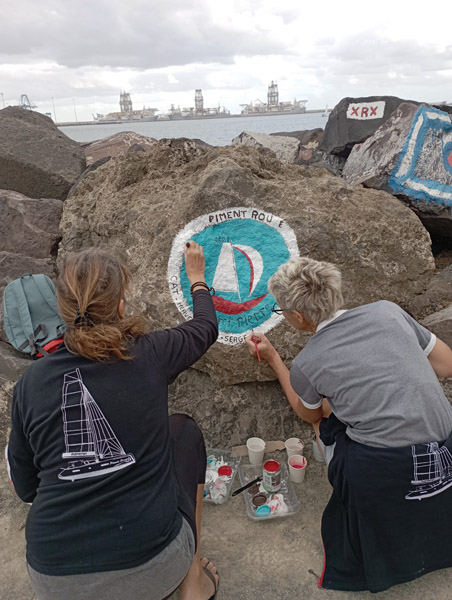
Tomorrow is the big day! Departure is scheduled for 12.45 local time. We painted our logo on one of the boulders forming the breakwater – this has become a ritual in Las Palmas.
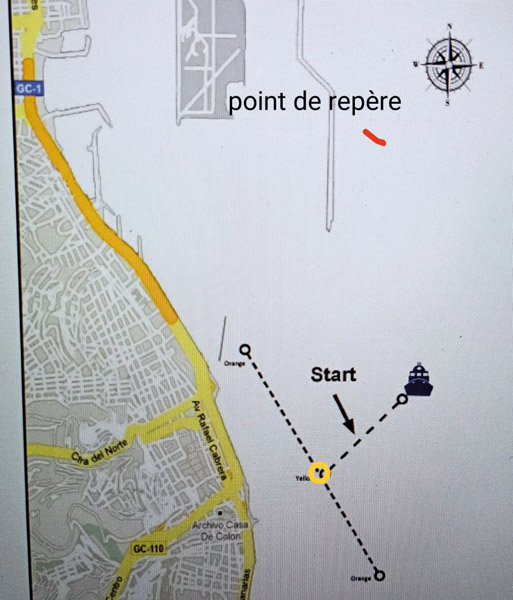
The start line is located between a yellow buoy and the committee boat, whose crew keep watch to ensure nobody is over the line before the start. The start isn’t static (at a standstill), but under way. All sails up! Given the weather, the start will be downwind. Optimizing the start consists of finding a reference point (GPS position or a transit/range marker or a buoy...), and timing how long is required between this point and the start line so as to cross the line at full speed just after the gun is fired (a blank of course) from a Spanish navy ship.
 |
 |
November 7th - “Full speed ahead” strategy!
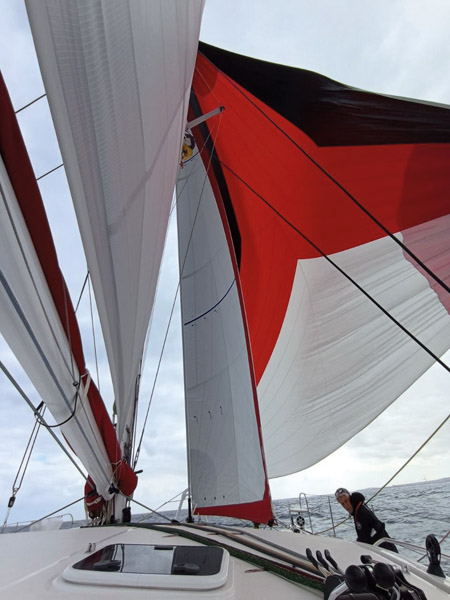
A good start under full main and solent, soon supported by the gennaker. The downwind conditions allow us to surf the waves. The wind pushes us on average at 10 knots and some of the waves add another 10 knots, for the time of the surf. Such conditions allowed us to set the record for Piment Rouge at 24.4 knots. First gybe at the first sunset. For the moment, we’re managing to stick to the steps and the timing of our initial routing.
November 8th - Three-hour watches
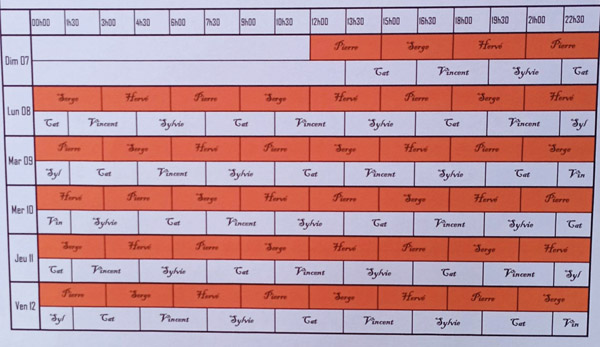
The watches allow us to divide the tasks aboard the catamaran at precise and planned times. These watches last 3 hours in overlapping pairs, giving 6 hours off watch. During the day, we don’t adhere to them strictly, but at night, they are followed rigorously.
November 9th - Leading the fleet
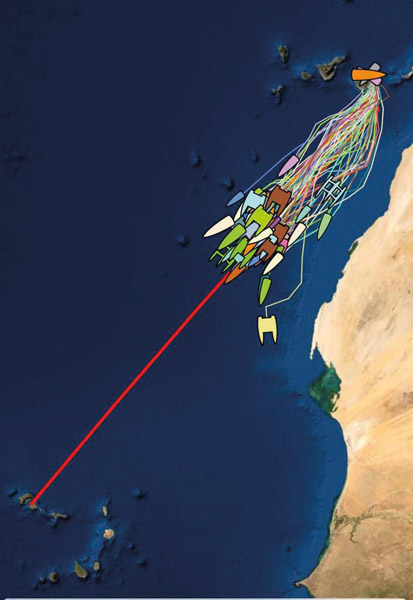
We continue to make good progress at an average of 10 knots - having kept the gennaker up all night - and are still at the head of the fleet. The next boat is 20 miles back, thanks to their different routing strategy (a more downwind course). We’re in suspense! Especially with the handicapping system, since with the rankings, it’s not easy to work out. Several analysis tables are being calculated using the position data received from our competitors.
November 10th - Life on board
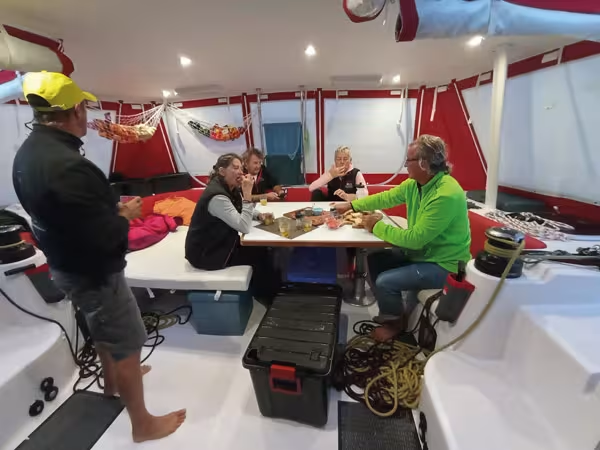
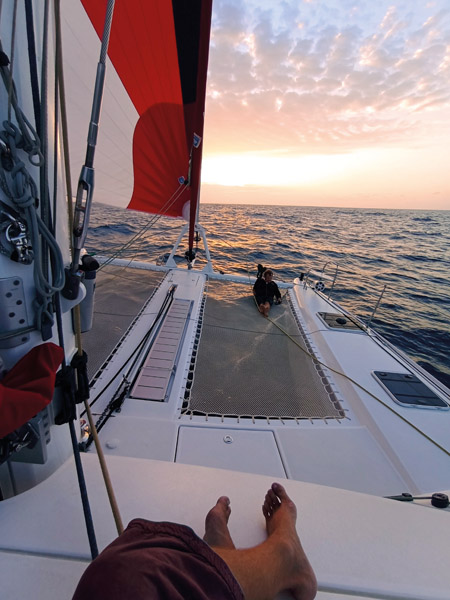
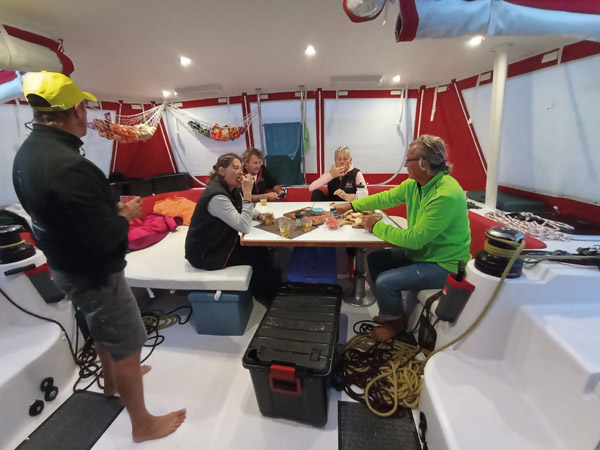
The forecast isn’t keeping all its promises. While the wind is blowing with the announced strength, its sector (direction) is not as predicted, and we make slow progress... This gives the opportunity to undertake other activities like dolphin watching, cooking, setting up the speakers, exercise or simply lazing around at sunset. Is our very easterly course still the right option?
 |
 |
November 11th - Final day of the first leg
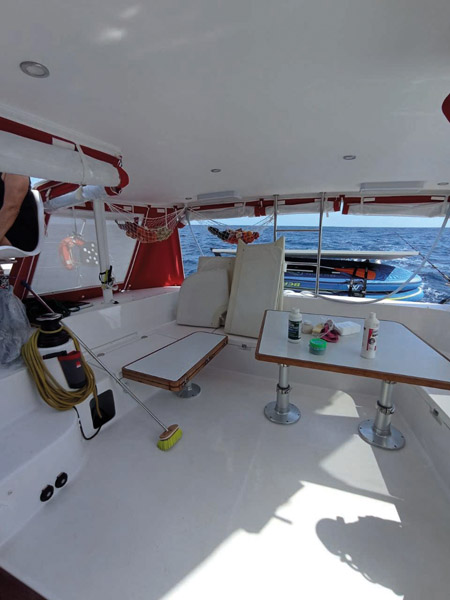
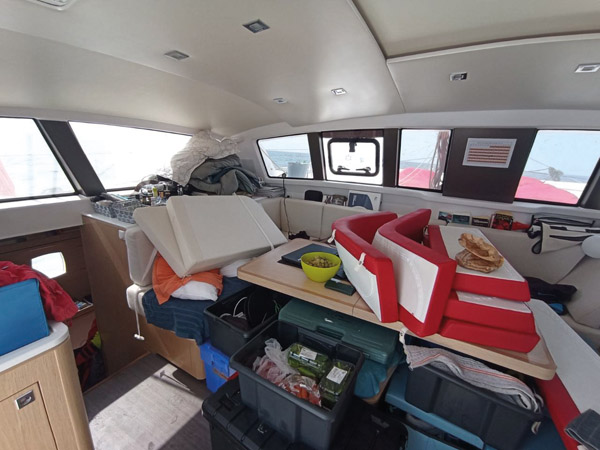
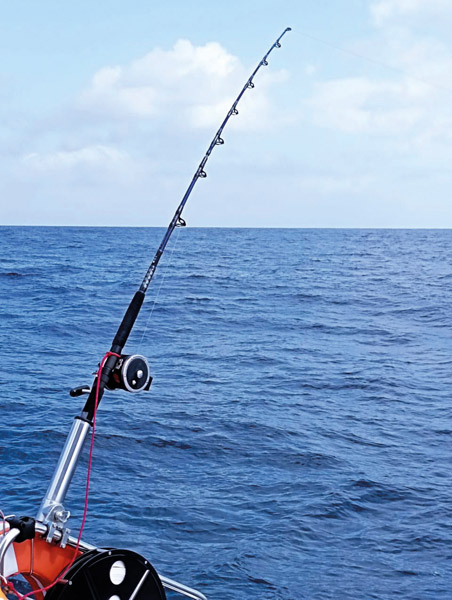
Our first decent sunrise and, if all goes well, the last one on this leg. Sailboats don’t move forward according to the true wind but to the apparent wind. For example, if you are sailing close-hauled, almost into the wind, you have more feeling than if you are sailing downwind. On this point of sail, the more the catamaran moves forward pushed by the wind, the less the wind inflates the sails until the multihull slows down enough to be pushed on again. Hence our routing to be always off the angle of the forecasted north-north-east wind. Unfortunately (and despite the most up-to-date weather reports), the wind is coming from astern. We don’t advance much, and the sails flog. The use of mechanical propulsion is permitted in the race (but incurs a penalty), so we decide to start the engines for a few hours, until the wind returns to the predicted sector. This is the opportunity to produce fresh water thanks to the watermaker and to use it for a big clean up! With our speed down to 6 knots, this was also the opportunity to put the fishing lines in the water - otherwise our speed is too high to have any hope of catching something.
 |
 |
 |
November 12th - Landfall in the dark!
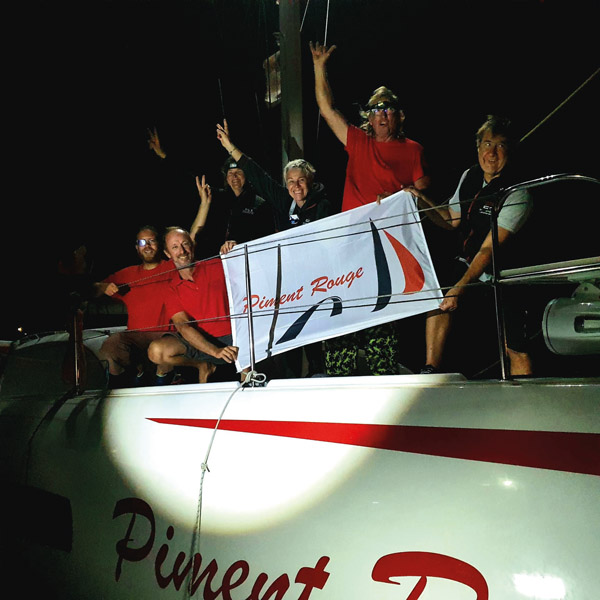
At 2.31 am local time, we are the first to cross the line off the port of Mindelo after 993 nautical miles covered in 110 hours of sailing. We are waiting for the other multihulls to know the ranking. Ideally, we would like to have at least an 11-hour lead.
We have hoisted the Cape Verde courtesy flag. While waiting for the administrative formalities in this period of the pandemic, we’ve also hoisted the yellow quarantine flag (basically, it means: “we aren’t yet cleared to come in, we are aware of this, we are doing our best and, in the meantime, we are not going ashore”).
 |
 |
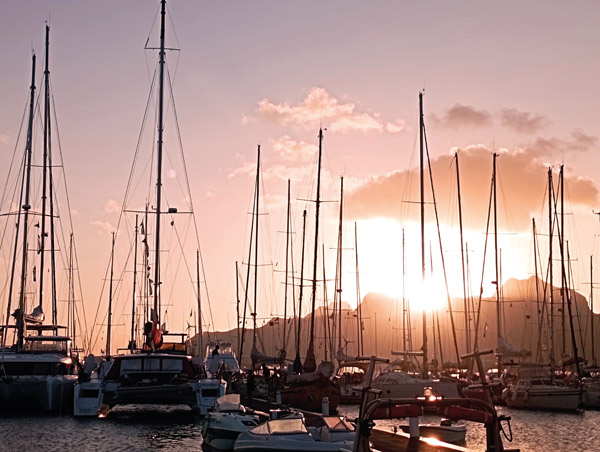 |
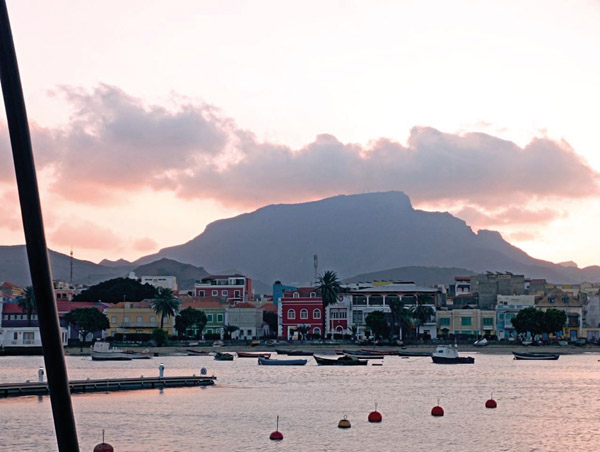
First pictures in the early morning: the port of Mindelo sits in an ancient crater. Piment Rouge and her crew are resting.
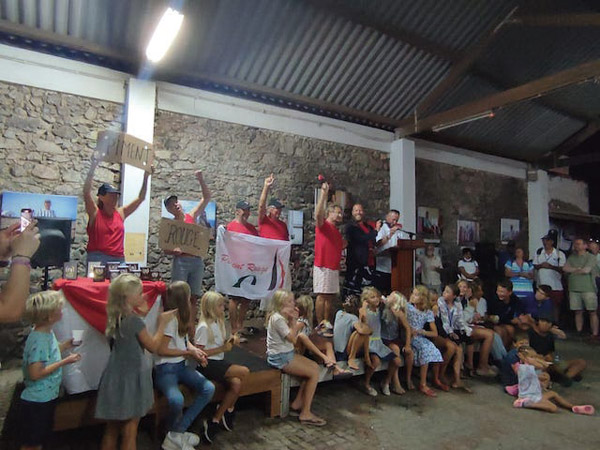
November 15th - Prize-giving ceremony for the first leg
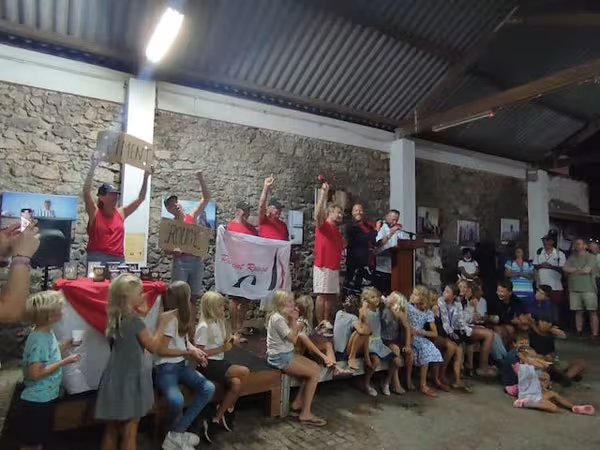
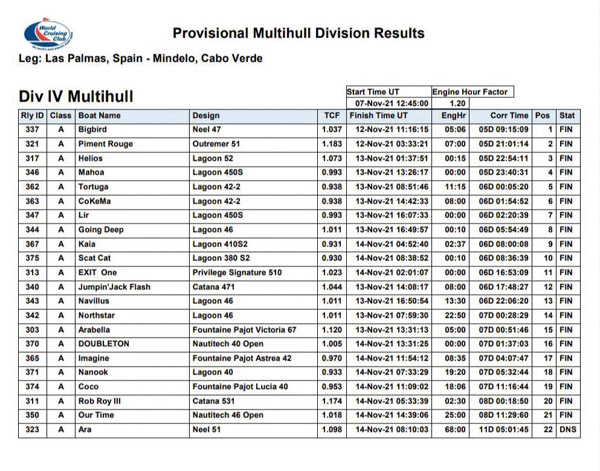
We win the prize for the first boat to cross the line (all divisions combined) and second place in the first leg on corrected time (multihull division) behind the NEEL 47.
 |
 |
November 18th and 19th Preparing for the Transat
After enjoying some nice walks in the archipelago, we’re back aboard our catamaran. Departure scheduled for Friday at 11 am local time. We’re going to give it all we’ve got - in fact we’ve already started:
- Renegotiation of our handicap (we’ve gained 1%, which is a start!).
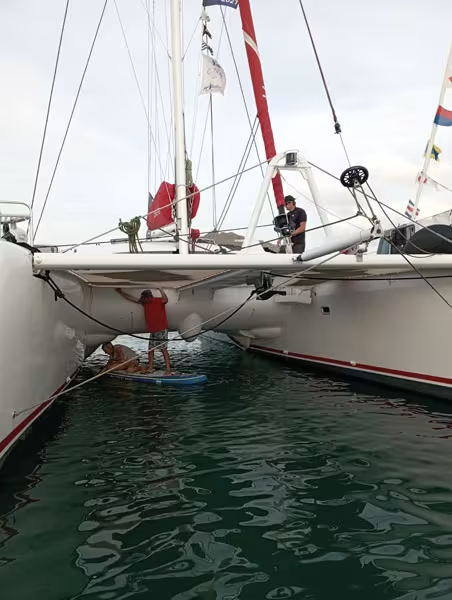
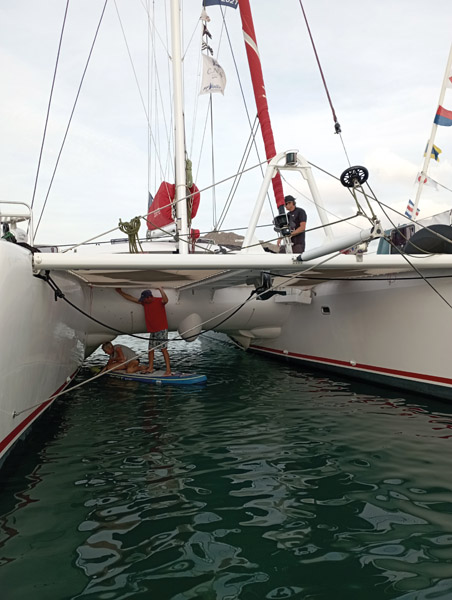
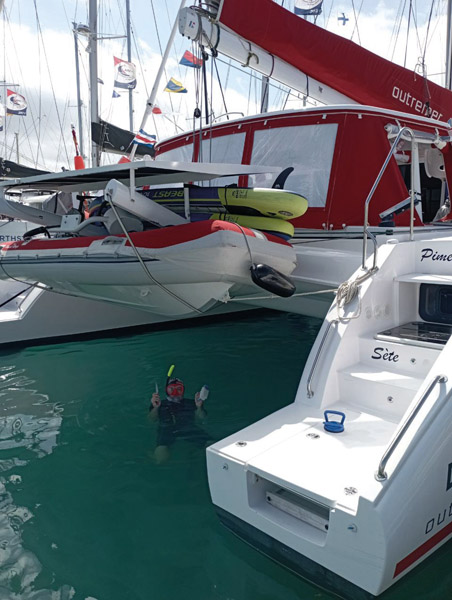
- Cleaning of the hulls to get rid of all the growth that’s hanging from the hulls since we’ve been in port (everyone on the dock is really impressed!)
- General cleaning (for us).
- Top off the fresh water.
- Stock-take of the refrigerator and dry goods before revictualing tomorrow.
- Check of the electronics for following the other competitors.
- Route planning. With the current state of the weather predictions, we expect light airs that will probably see us diving south at the start.
To be continued…
 |
 |
 |
