




Transporting yachts by cargo ship is something that’s grown considerably over the last ten years. The desire to deliver brand new multihulls to their owners all over the world has encouraged builders to transport their boats by ship. Charter companies are also finding a way to quickly move an entire fleet from one base to another using these transport vessels. At a time when trips to a destination can suddenly grind to a halt due to Covid-19, this looks like a formula for safe and quick movement of a multihull that could be useful. We were keen to find out a bit more about this form of yacht delivery. Transporting yachts by cargo ship is something that’s grown considerably over the last ten years. The desire to deliver brand new multihulls to their owners all over the world has encouraged builders to transport their boats by ship. Charter companies are also finding a way to quickly move an entire fleet from one base to another using these transport vessels. At a time when trips to a destination can suddenly grind to a halt due to Covid-19, this looks like a formula for safe and quick movement of a multihull that could be useful. We were keen to find out a bit more about this form of yacht delivery.
 |
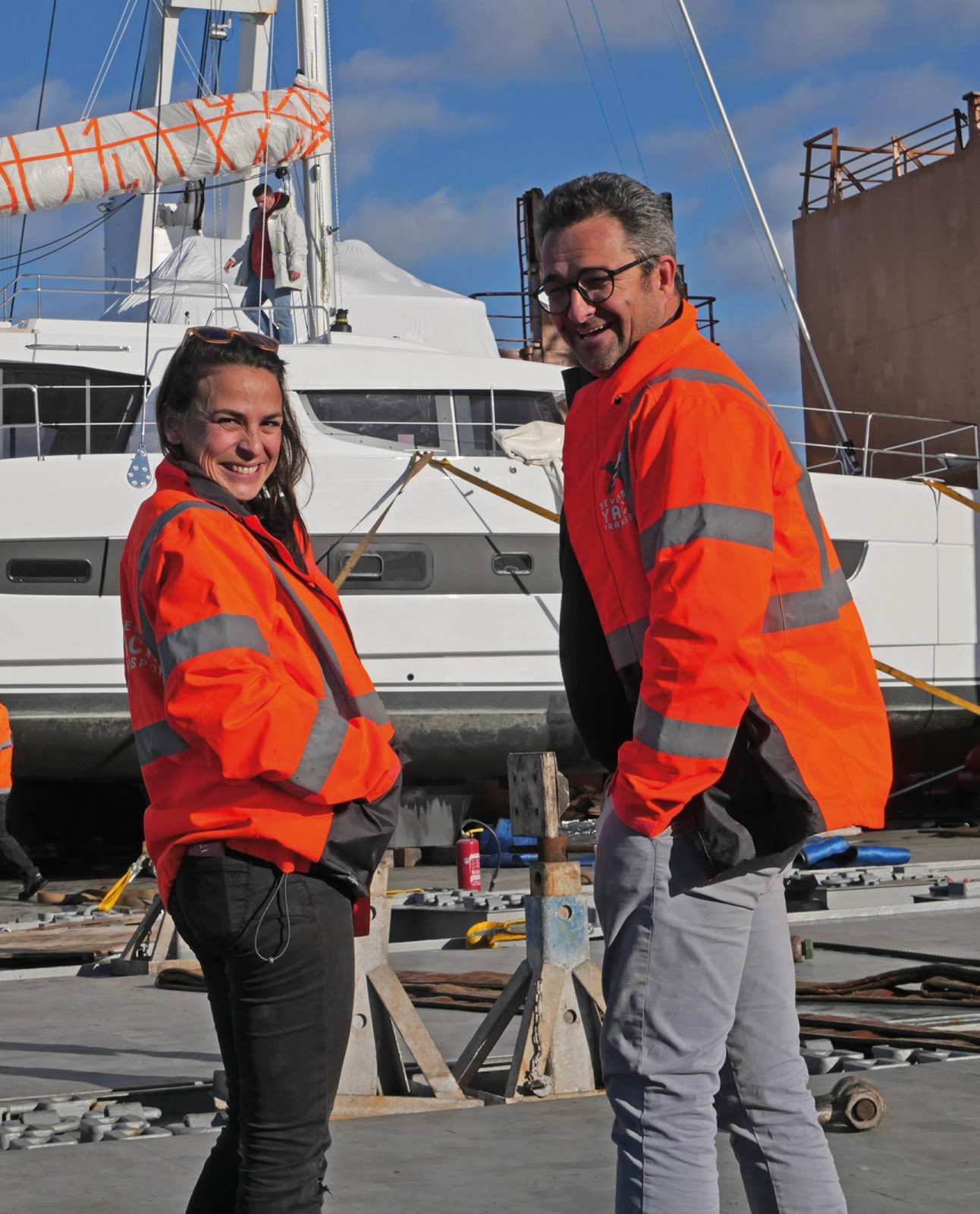 |
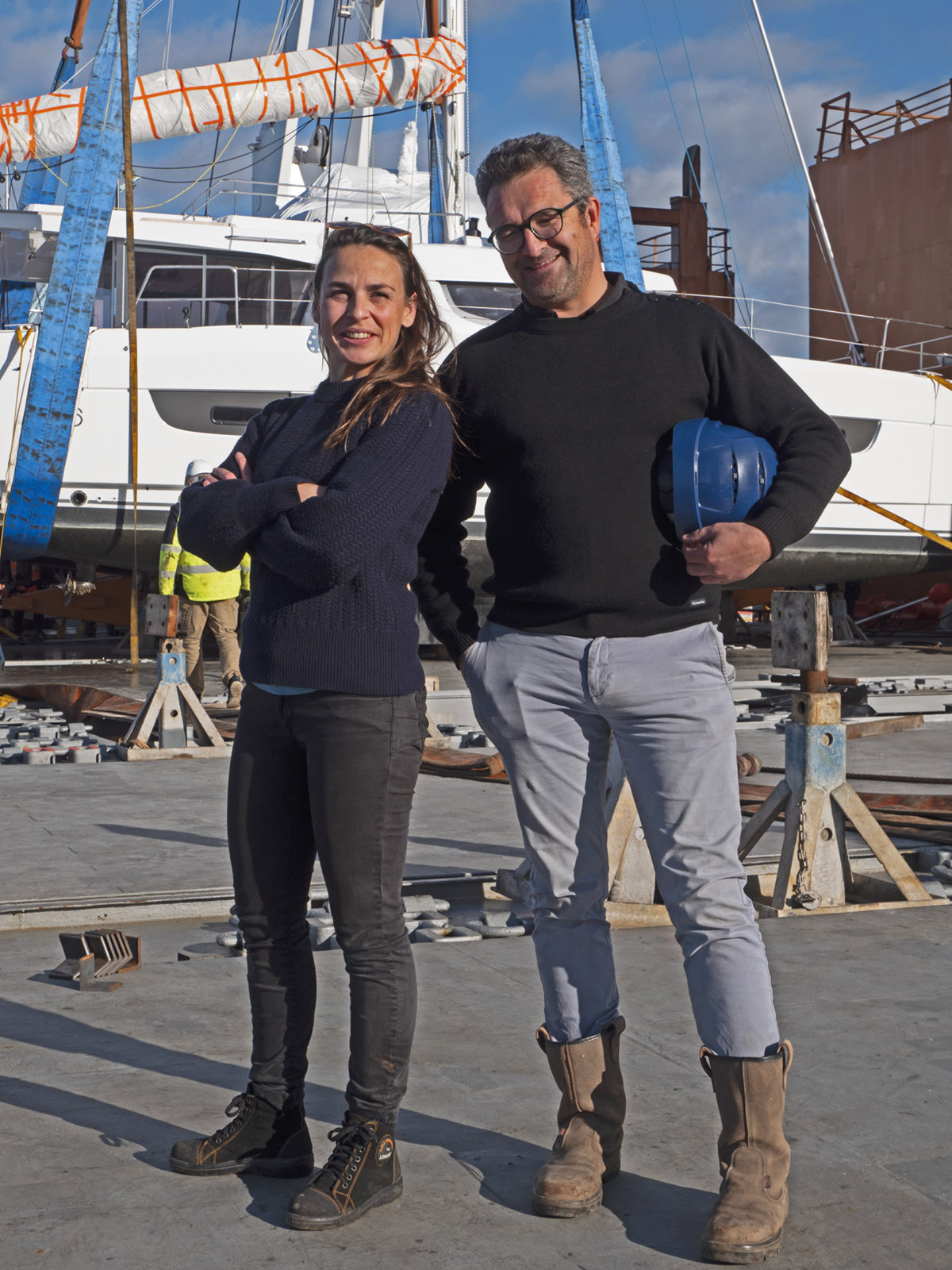
Matthieu Le Bihan and Elodie Le Blevenec, managers of the Sevenstar Yacht Transport agency in La Rochelle, France.
Multihulls World: Who are the owners of all these catamarans? When did the owners start using your services?
Elodie Le Blevenec and Matthieu Le Bihan (SYT): We mainly transport boats for shipyards and yachting professionals, though some private individuals do also use our services. Today, for example, we’re loading two owners’ yachts out of the fifteen or so units going on the ship. We mainly work with companies, but we’ll also look at any requests from individuals concerning the transport of their boat. From our La Rochelle hub to the West Indies, we estimate that 80% of the boats we transport come from dealers or brokers specialized in the market. The individuals who contact us are more interested in returning their yachts to Europe from distant destinations. For example, they have done a semi-circumnavigation of the world, stop in Polynesia, and want their yachts to return to their respective home ports in Europe. For Atlantic crossings, private individuals don’t generally tend to use our services.
MW: Are your skills in yacht transport called upon for use in other sectors?
SYT: Yes, absolutely. We are even sometimes solicited by countries. Last year, for example, we transported military patrol craft on behalf of the French government on an outward journey to the West Indies. We also work with ocean racing teams - we regularly bring back sailboats from transatlantic races. During the last Vendée Globe, one of our company’s subsidiaries took charge of the IMOCA Arkéa-Paperec from South Africa for a return trip to France. The same goes for the Japanese Kojiro’s 60-foot boat after its arrival in Les Sables-d’Olonne for a return to Japan. We have a long-standing contract with a large majority of the Transquadra yachts. For multihulls, we are used to working with the Ocean Fifty class. We have transported iconic units such as François Gabart’s M1 Macif on a Route du Rhum return leg, or Happy, Loïc Peyron’s Dick Newick designed trimaran. Another division of our group (Racing Yacht Logistic, under the management of Matthieu Le Bihan – Ed.) is in charge of these exceptional boats. There was also the very widely reported transport of the foiler of the Italian challenger Luna Rossa during the last America’s Cup.
MW: Do you offer regular and/or seasonal routes?
SYT: We’ve set up regular monthly routes, depending on the market and demand. We have a liner service that goes around Europe from Scandinavia to Turkey, stopping at specific ports. From La Rochelle, we have a line to Italy and Turkey. We also offer transatlantic shipping: from September through December, we’ve got one ship a month coming out of Europe. We are necessarily blocked from late August to October, because that’s hurricane season for the Caribbean/ southern United States. On the other hand, once or twice a year, we have an outbound trip from Europe to Oceania, with a return option in March/April. To Asia, the rotations take place every 2 to 3 months to satisfy demand from European shipyards, which now export more and more to Asia - this is the current trend. For Mexico and Costa Rica, it’s two or three times a year, and the same for French Polynesia.
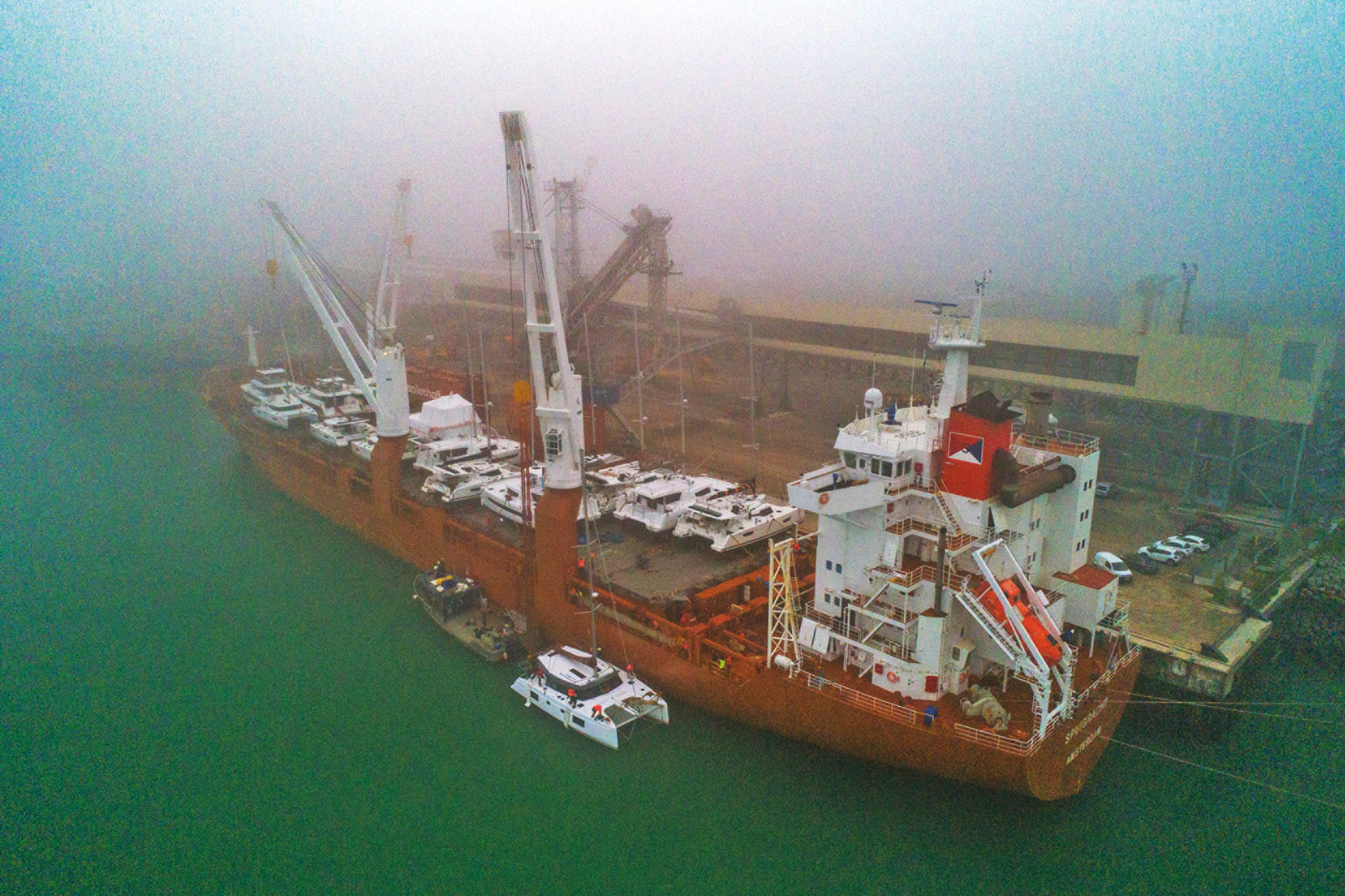
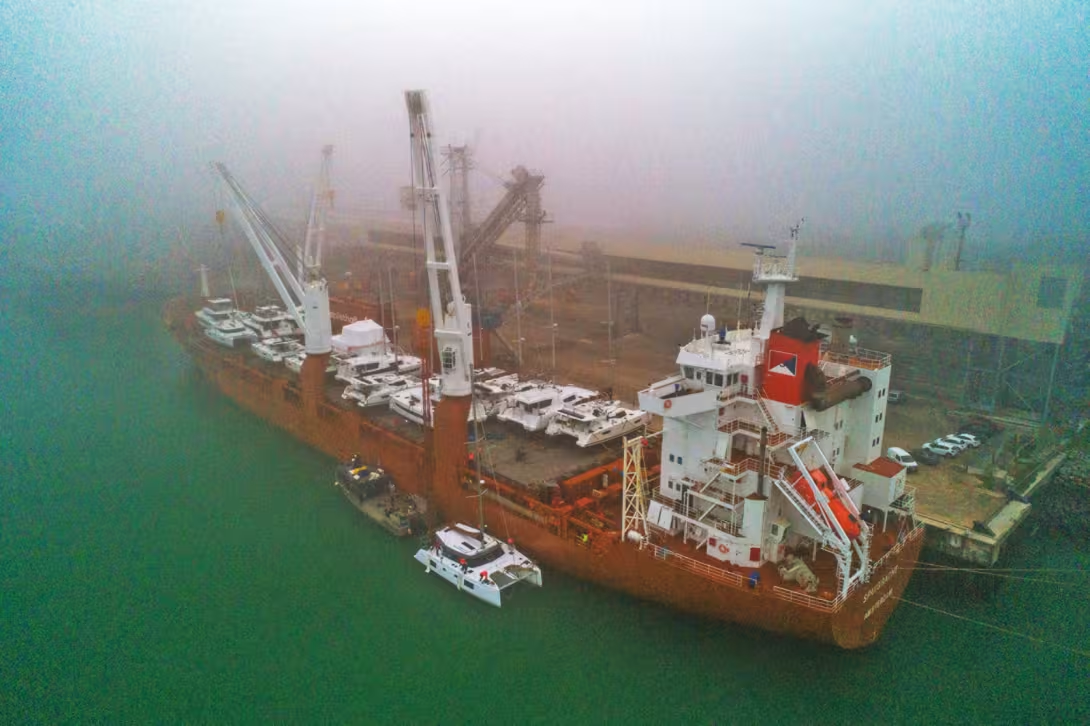
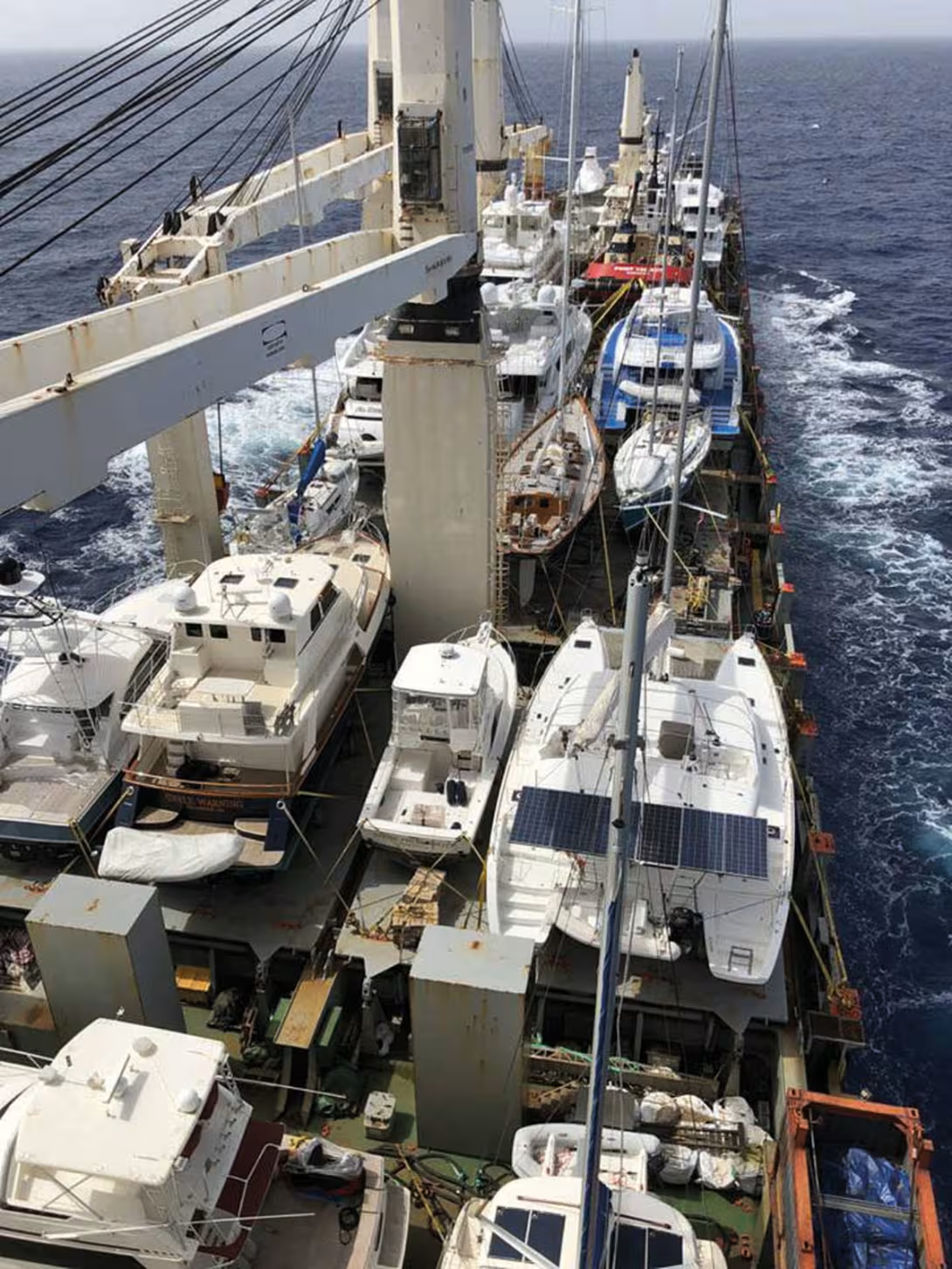
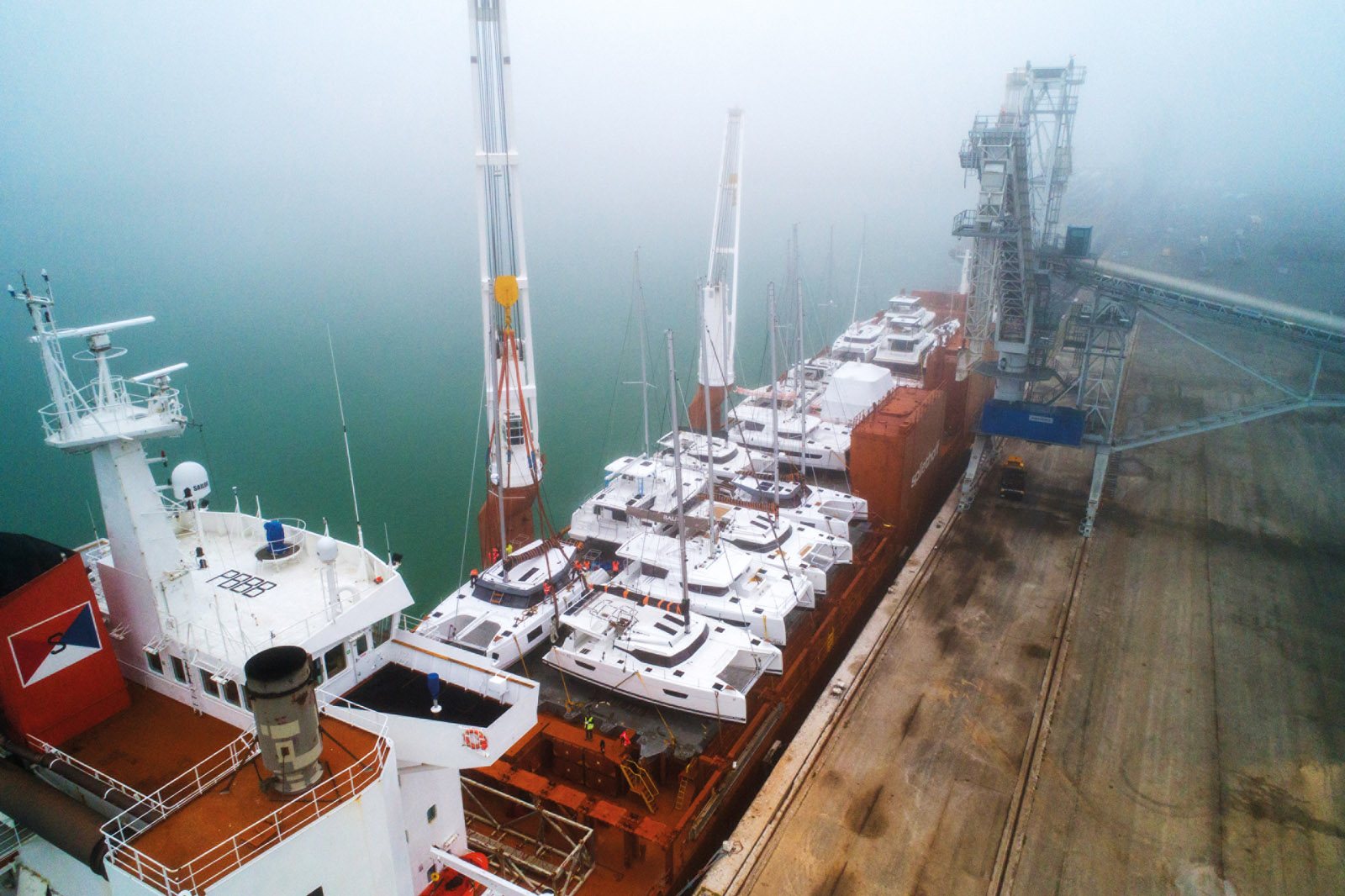
Aboard the MV Spuigracht, it will take 12 days for these boats - practically all multihulls - to reach Florida from France.
MW: What role does the port of La Rochelle play in your business?
SYT: The ecosystem of La Rochelle is very practical for shipping. All the yards are within reach, and the port of La Pallice, where we are based, occupies a central position on France’s Atlantic coast. It is the only deep-water port continuously available for big cargo ships. The shipyards bring their boats from Les Sables-d’Olonne and the Vendée region in general, from La Rochelle and Rochefort, but also from as far as Bordeaux.
MW: How much of your shipping is the Atlantic?
SYT: Transatlantic is one of our top five... In fact, the top five for shipping are the USA, Asia, the Mediterranean, Oceania, and lastly the Caribbean, which is actually in sharp decline.
MW: What is the proportion of motor yachts compared to sailboats? And multihulls compared to monohulls?
SYT: We transport mostly sailboats, up to 70%. And of that 70%, multihulls represent 80% of the units we ship. A trend is emerging for shipping motorboats, mainly to the Mediterranean.
MW: Who are your competitors in this sector?
SYT: We are the leaders in the shipping sector on a global scale, with really only one competitor (Peters & May – Ed.), but it’s healthy competition, so no problem. We offer a complete A to Z transport solution and few competitors are able to offer similar services.
Sevenstar Yacht Transport - The world’s leading yacht shipping company
Sevenstar Yacht Transport was founded in 1985, the same year as Multihulls World. The company is based in Amsterdam, in the Netherlands, and is part of the Spliethoff Group, which is recognized as the world leader in yacht transport. All types or sizes of boats (up to 100 meters/330 feet) can be transported on board the hundred or so vessels the group has at its disposal, whether in the hold or as deck cargo. Sevenstar Yacht Transport is historically known as a lift-on, lift-off specialist, but the subsidiary DYT Yacht Transport operates semi-submersible vessels for yacht transport in “Float-on, Float-off” mode to meet specific requirements in terms of draft, very high displacement or any factors that might prohibit lifting by crane.
MW: What size of vessels do you deal with?
SYT: The minimum size we ship is 10 meters (33 feet). As for the maximum size, the largest we have transported was a 100-meter (330-foot) motor yacht. This is currently our limit.
MW: What sort of price difference is there between the transport a boat using your services and those of a traditional yacht delivery company, for example, an Atlantic crossing undertaken by a delivery skipper/crew?
SYT: It depends on the size and type of boat, but I w ould estimate between € 5,000 and € 6,000, transatlantic, with a delivery crew, and double that (just for the transport) with us.
MW: For a medium-sized multi - hull, say 42 feet, what kind of pr ice range should you expect, everything included?
SYT: At Sevenstar Yacht Transport, for a transatlantic trip from France to the Caribbean, you should count on a budget of between € 25,000 and € 30,000. For the Pacific, it would be between € 60,000 and € 70,000. These services include full handling of the yacht to be transported - storage, craning, lashing/chocking, and so on.
 |
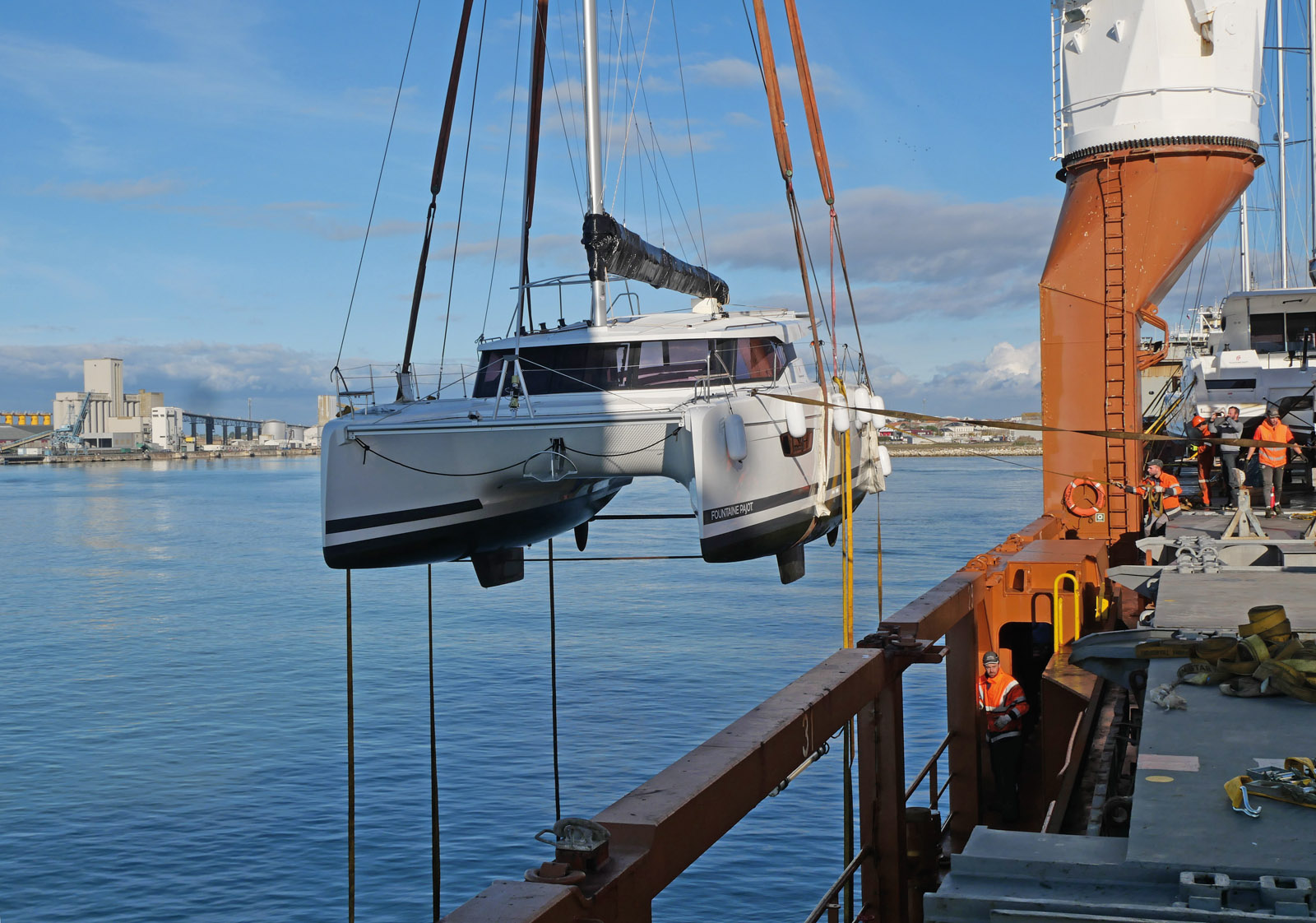 |
MW: How long does it take from the French Atlantic coast to the West Indies?
SYT: Between 12 and 15 days on average for a transatlantic passage.
MW: Do you offer specialized insurance to individuals or companies using your services?
SYT: With our services, we offer a basic package including transport insurance. This insurance starts as soon as the first mooring line is tensioned and ends when the last mooring line is released. Three levels of risks are covered by the insurance: handling risks on departure and arrival, the risk of being lost overboard and the risk of general damage. There are also other options with insurance such as damage waivers for new boats, third party damage and pre/post shipping coverage.
MW: Do you carry passengers on the ship, or even the owners of the boats you are transporting?
SYT: No.
MW: Have you had anyone famous call on your services?
SYT: We already mentioned Loïc Peyron, but there’s also been Alex Thomson and Damien Seguin...
 |
 |
 |
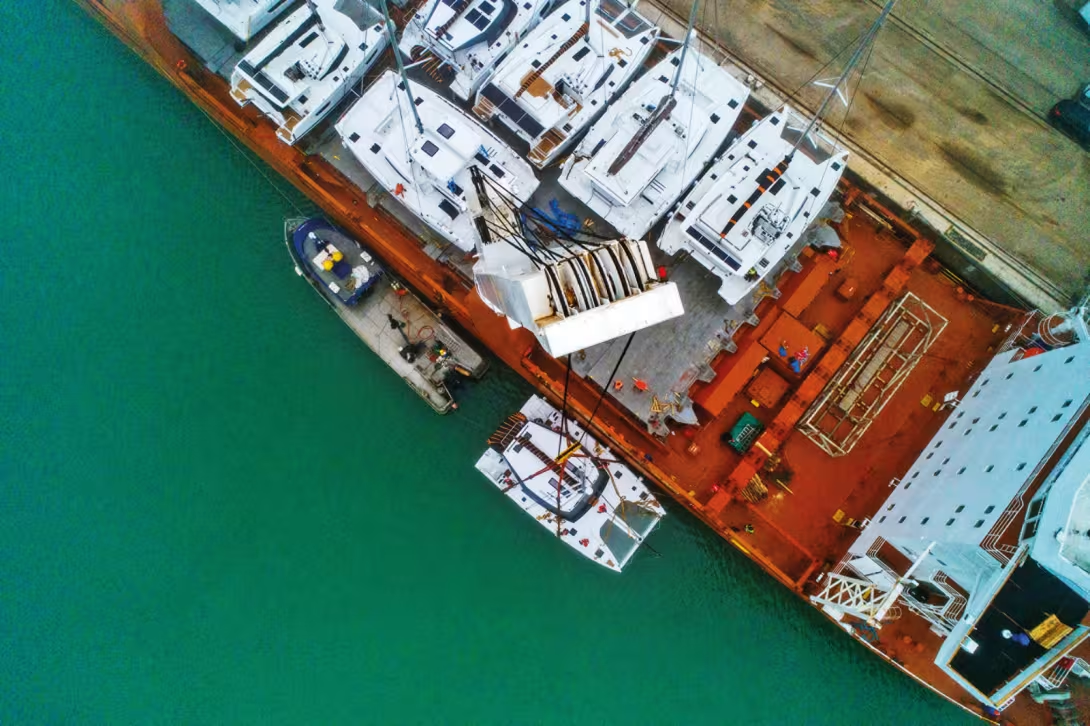
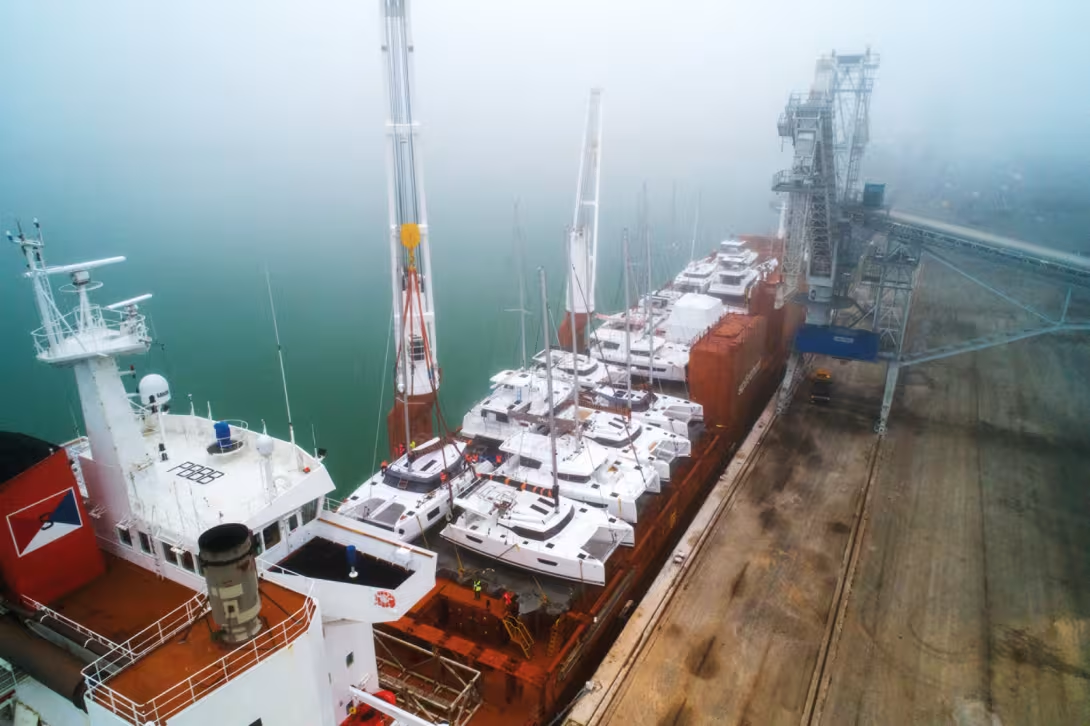
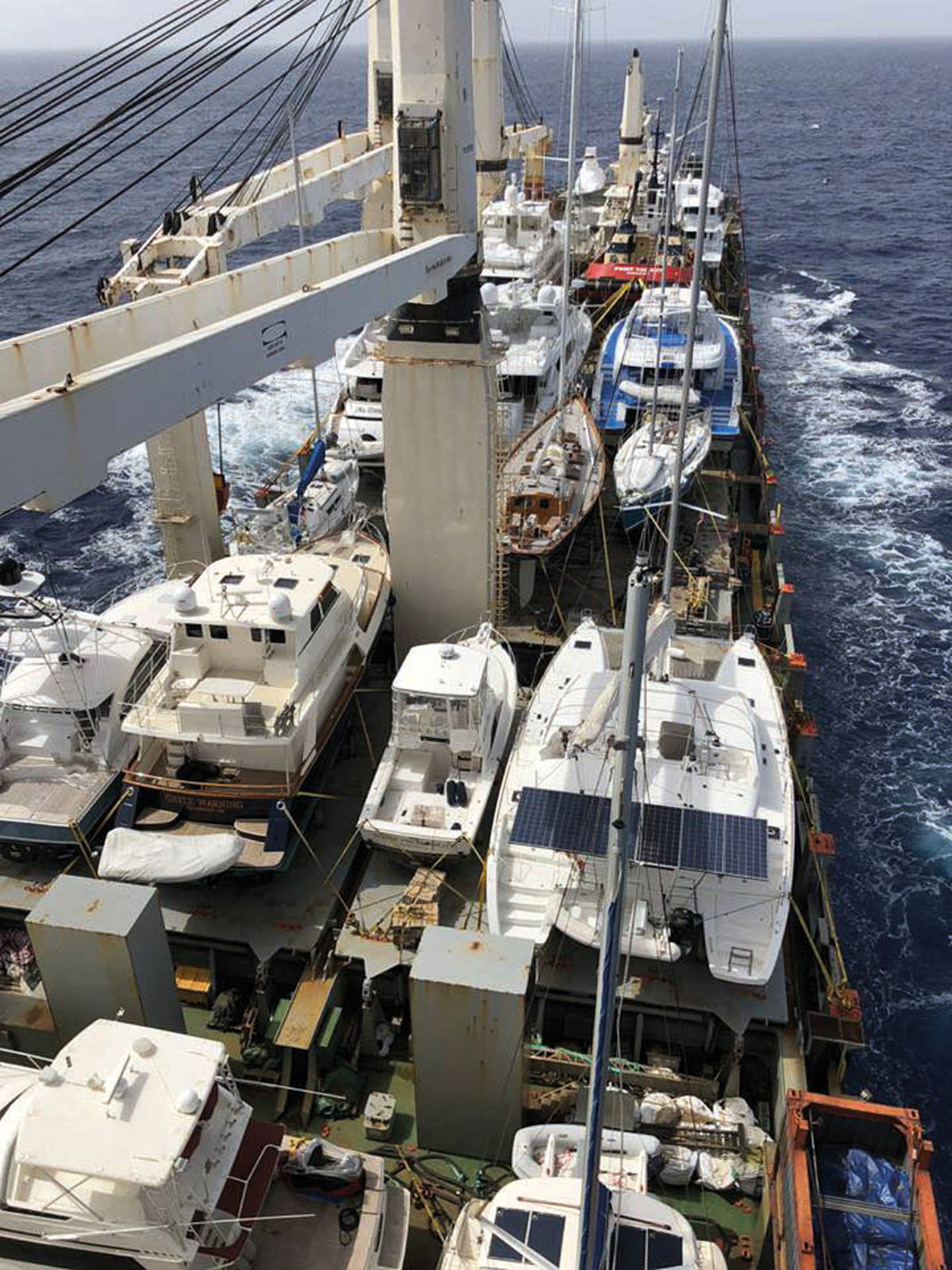
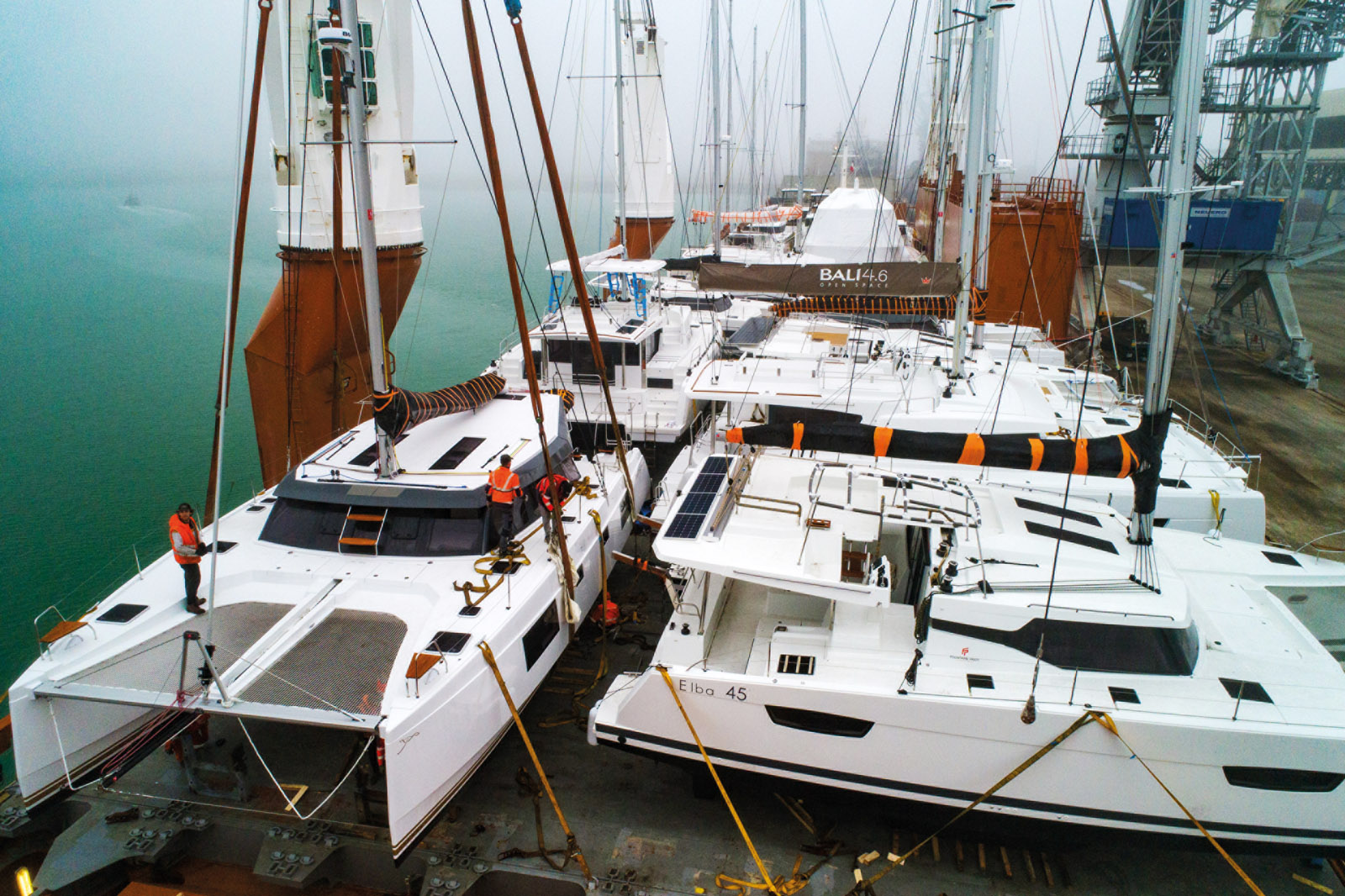
Deck space is optimized for stowing a maximum number of units.
MW: Do you take into account the environmental impact of maritime transport? Are you working on any areas of development or reflection to improve this aspect of your business?
SYT: All the vessels in the Sevenstar Yacht Transport f leet have been built to European standards and requirements. We have new ships in construction to meet the exponential demand from the industry. The environmental impact is taken into account within Sevenstar Yacht Transport, notably with the construction of new, more efficient cargo ships with innovative designs that meet stricter environmental standards. The propulsion systems have been reviewed, and these new vessels also feature many innovations. This is the case of the lat est addition to our fleet, the Yacht Servante, our new Flagship. This is a semi-submersible ship, and we already have three vessels of this type in our fleet. One of the subsidiaries of the group, DYT, manages the semisubmersibles.
MW: What developments are in stores for your activity (new bases, new vessels, new lines)?
SYT: For us, it’s a question of following the shipyard trends in line with the mar ket. We are able to consider the new destinations sought by our clients thanks to the renewal of our fleet as well as the arrival of new units. Soon, we will be able to meet more and more requests. We’re also going to develop the Atlantic side, offering more and more routes.
 |
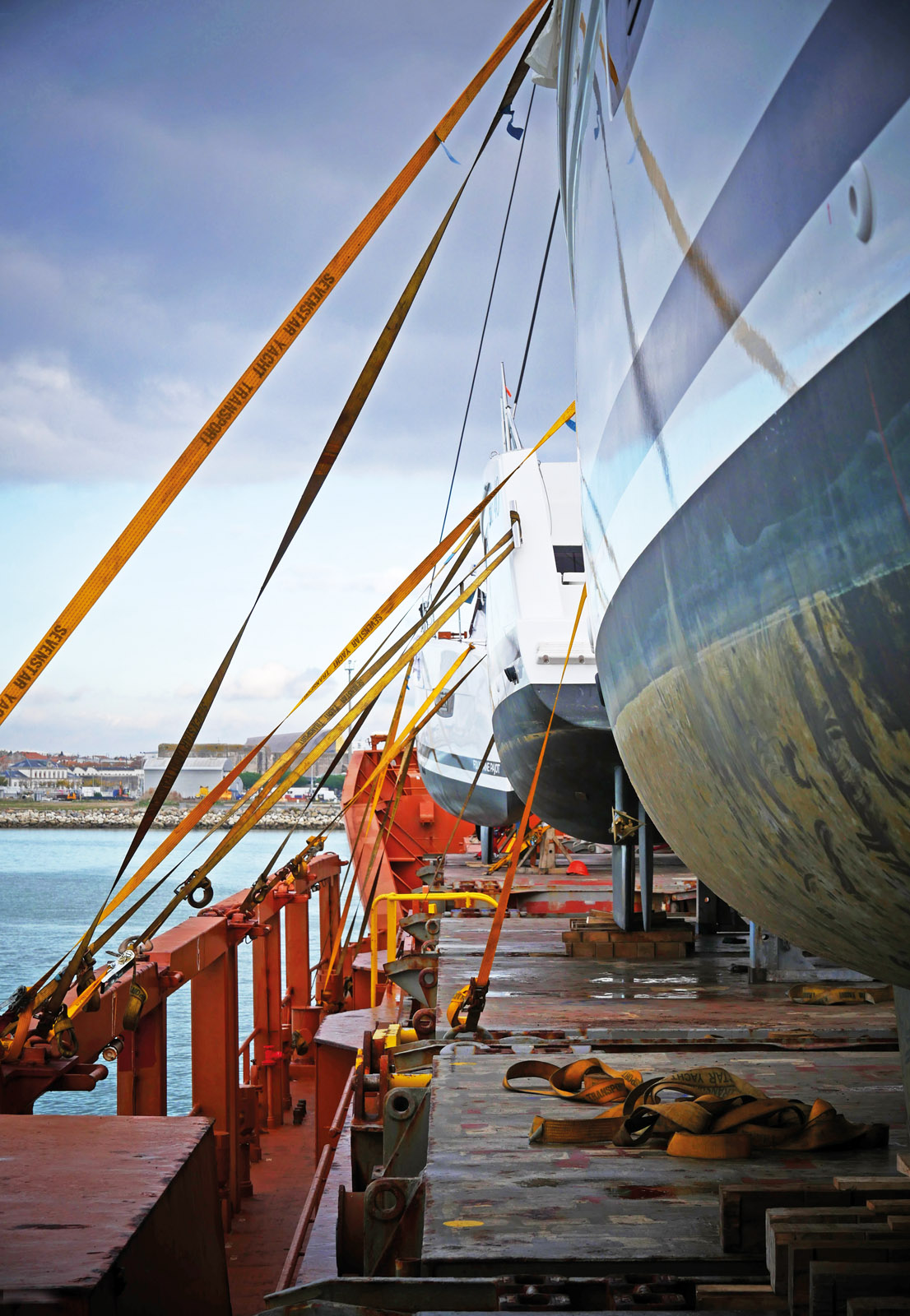 |
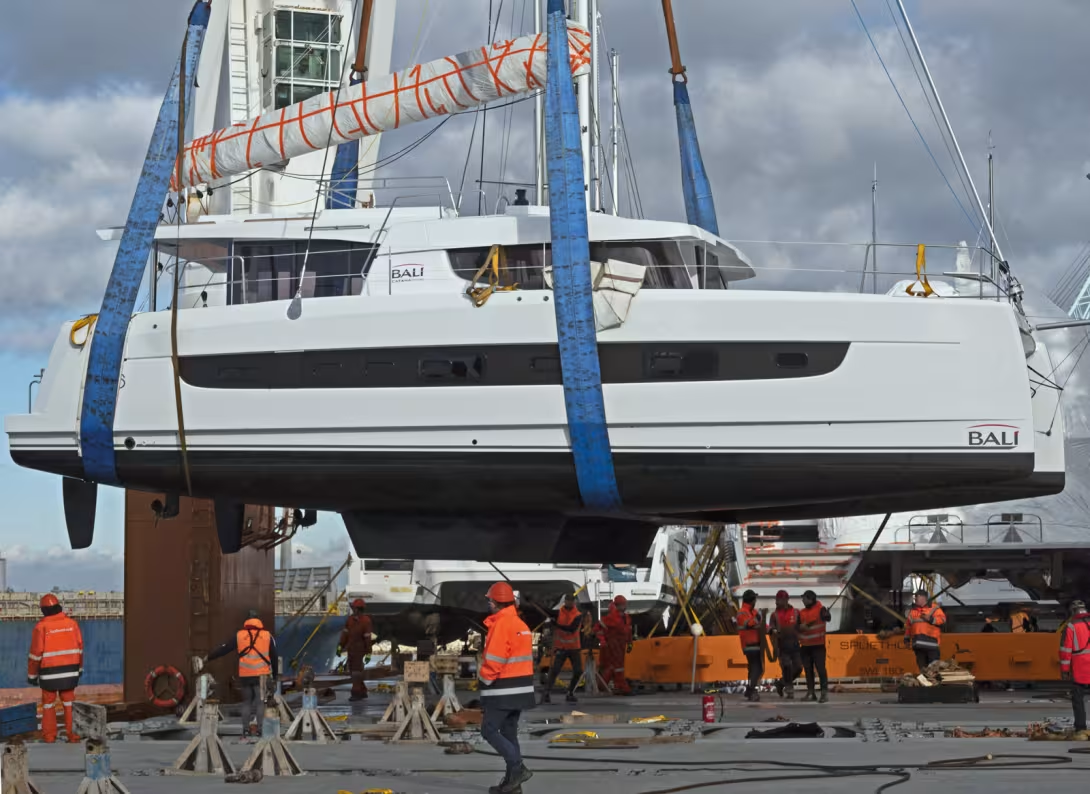
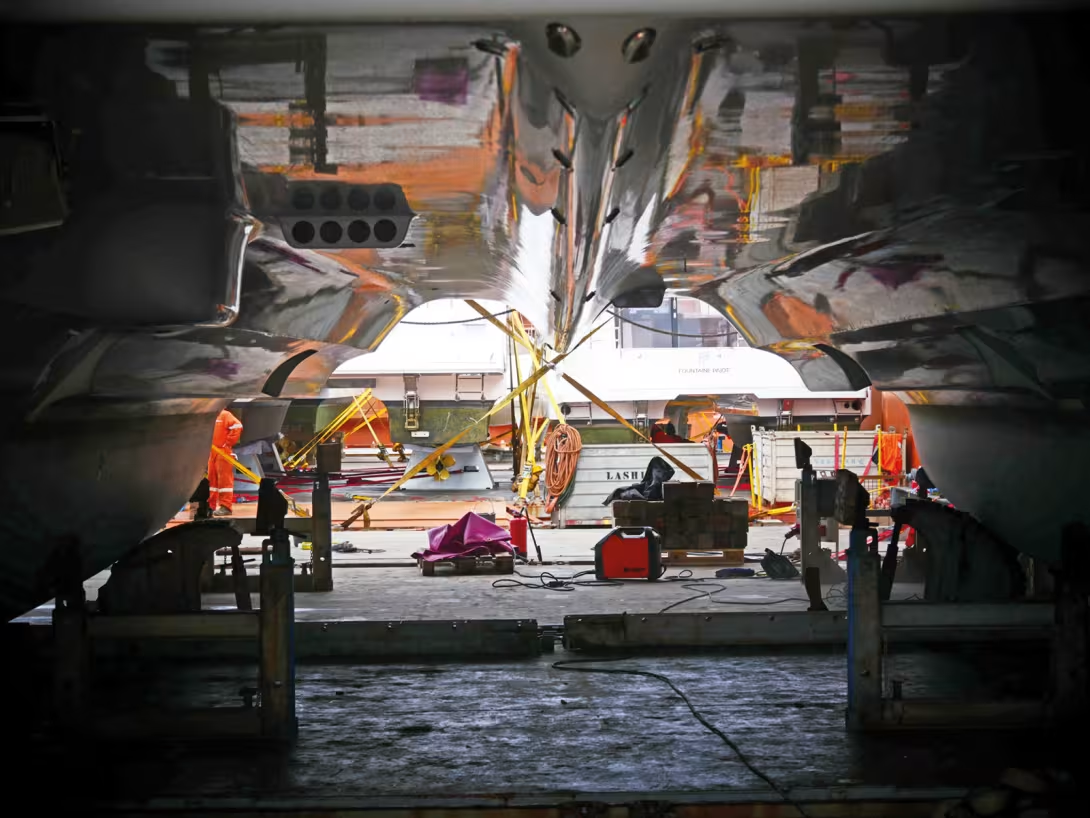
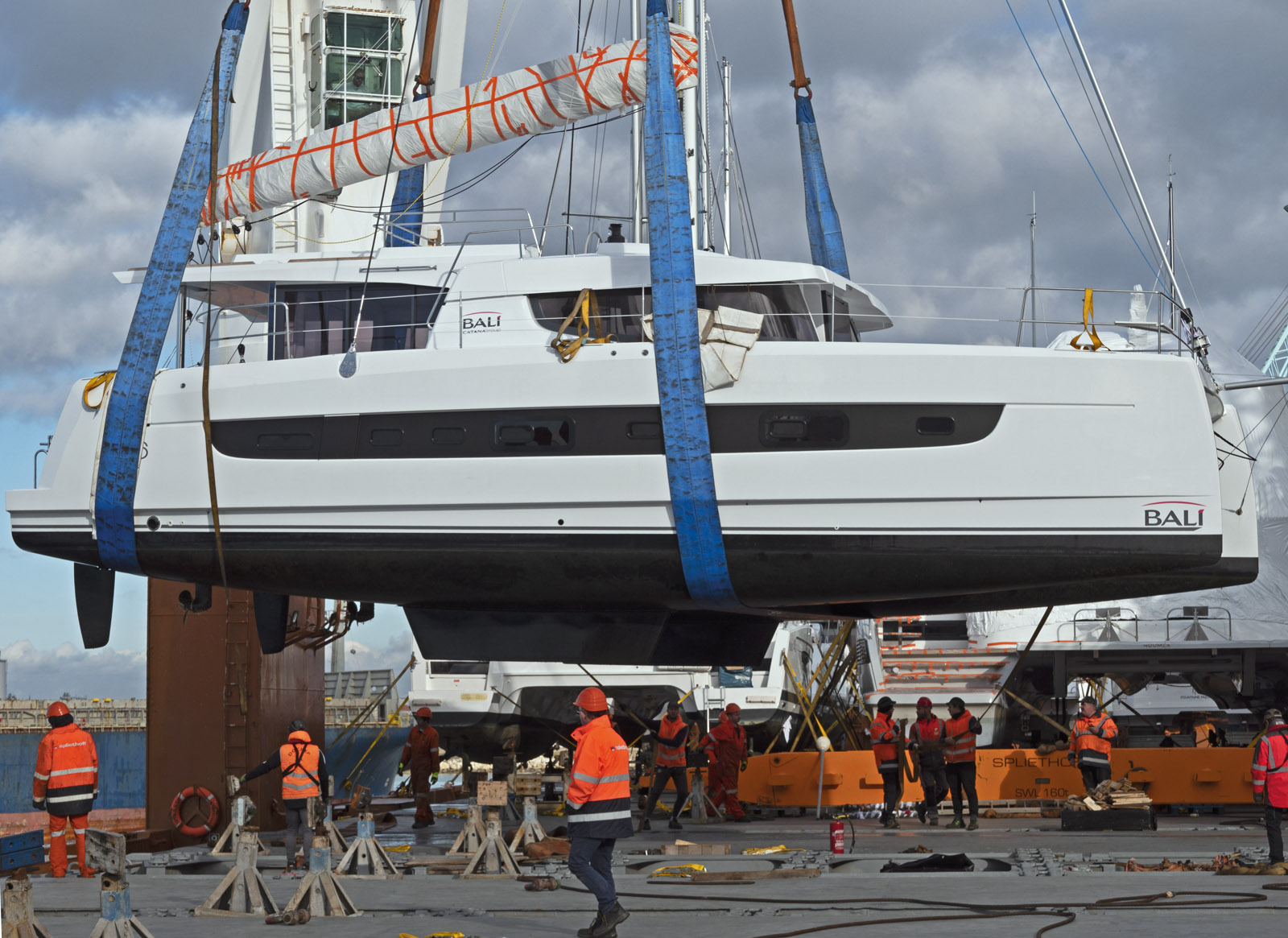
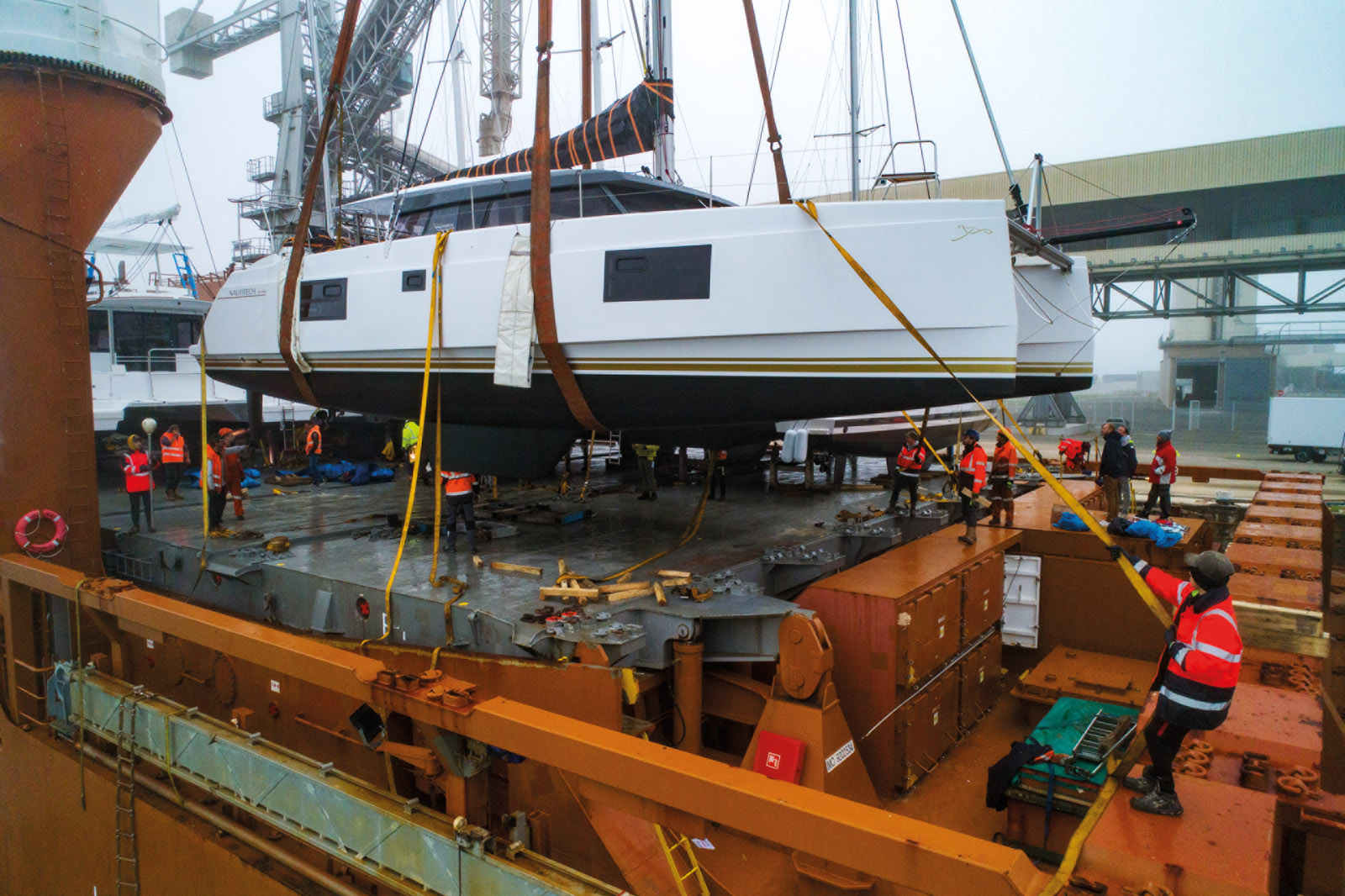
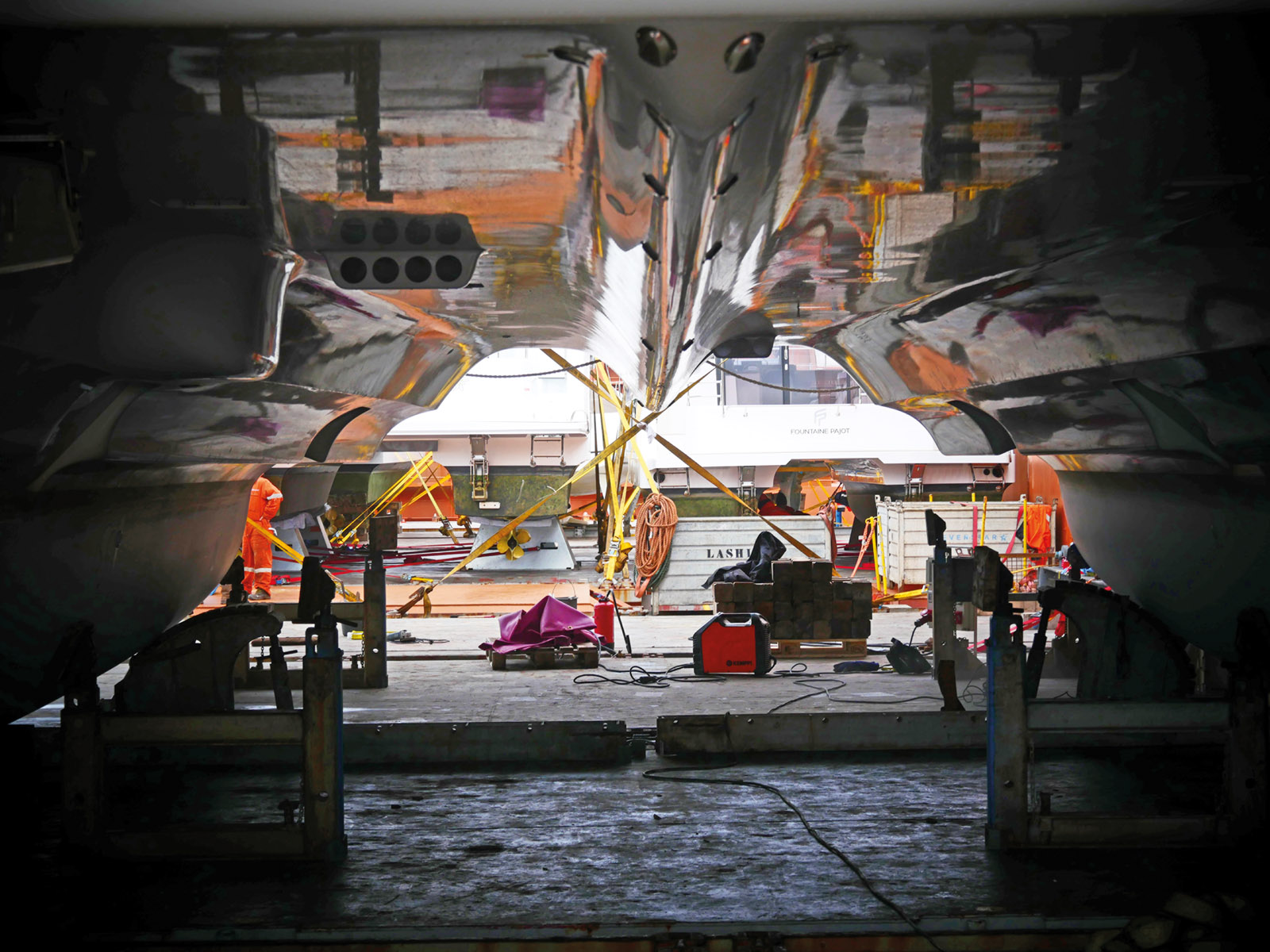
Once placed and perfectly secured on their cradles, the multihulls are securely lashed down - an Atlantic crossing, even aboard a cargo ship, can be rough…
