
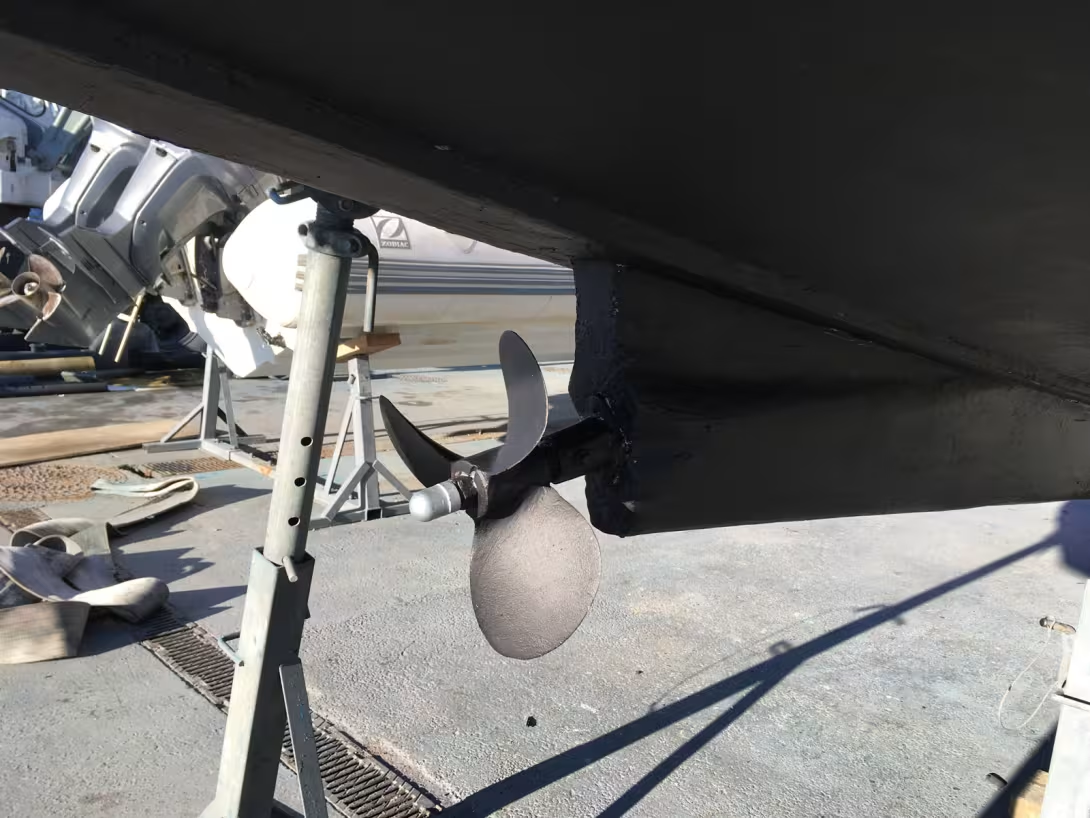



For the fixed propeller - By Clément Dael

Clément took over the management of the French franchise of Navigare Yachting in 2020. He entered the yachting industry in 2008 at Sunsail, then Moorings in 2017 and finally Dream Yacht Charter. During his career, he’s sold several hundred boats including many catamarans that have gone into charter-management.
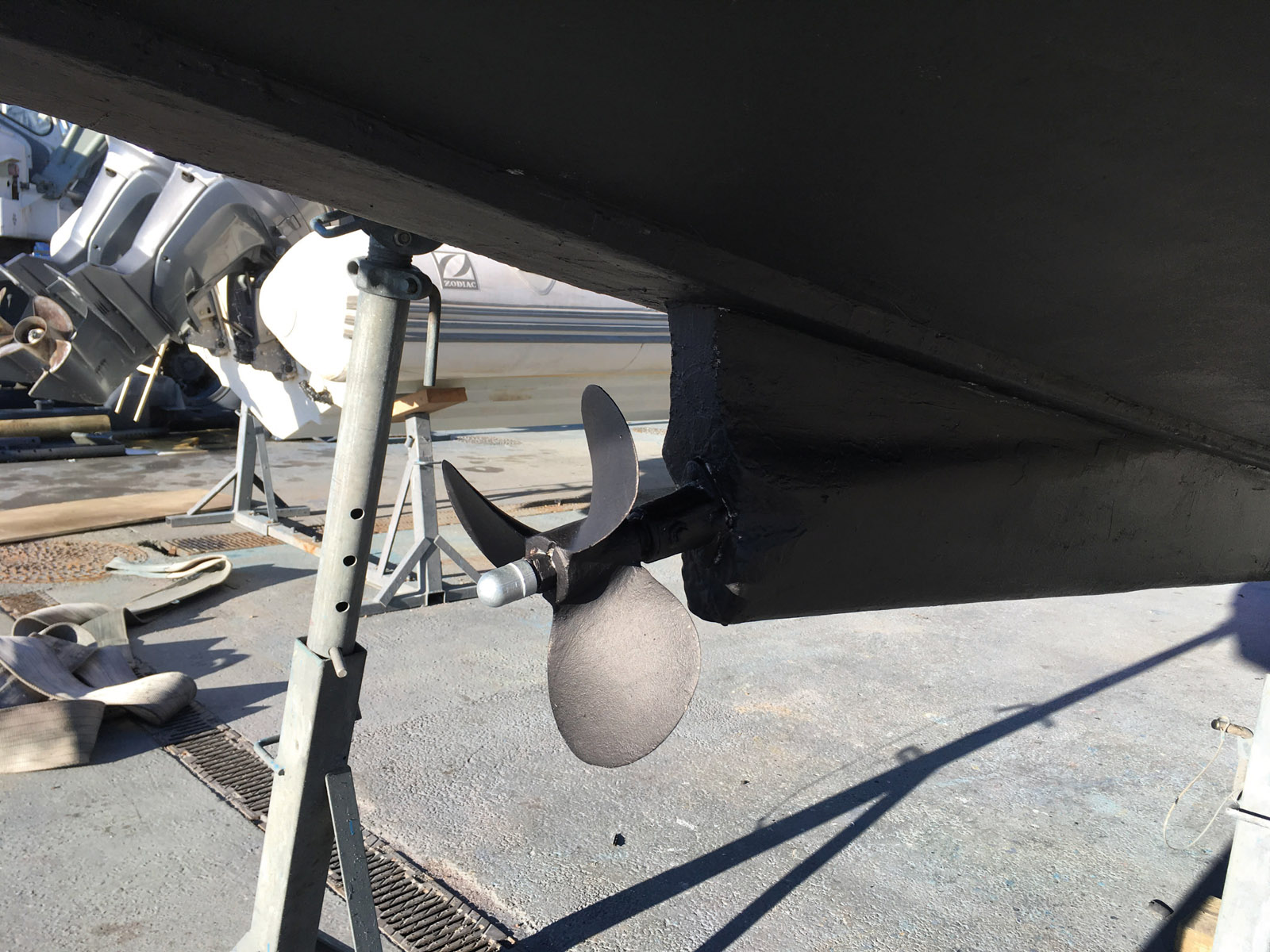
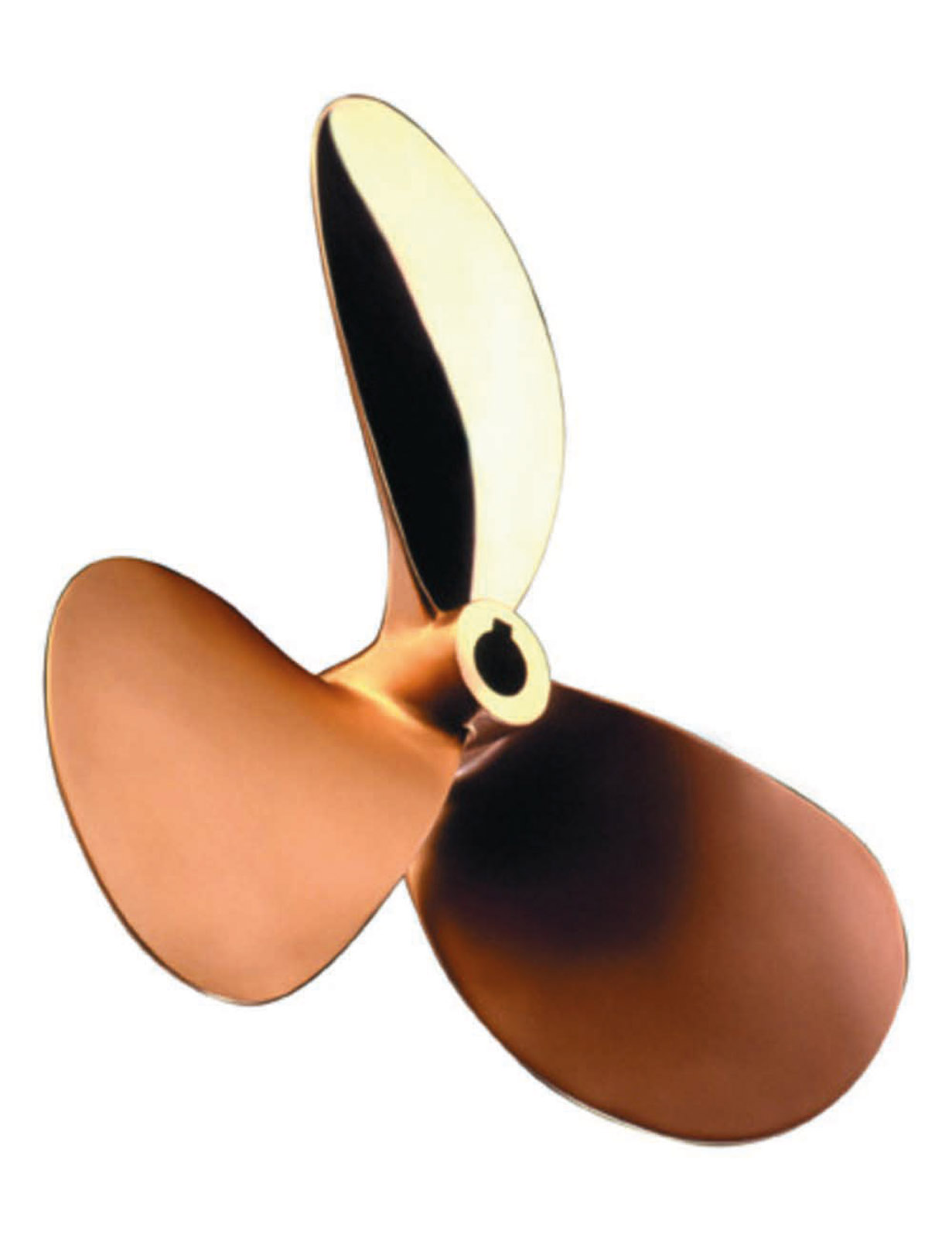
Very involved in the management of the Navigare Yachting fleet, Clément prefers fixed propellers. Simplicity, robustness, ease of use and maintenance, and economy are his keywords. “With a fleet of nearly 300 boats to manage, there’s no question. Efficient after-sales service requires simple products, both for us and for the users, who are generally fairly new to sailing. A one-piece, fixed propeller means fewer spare parts needing to be kept in stock. Let’s not forget that the boats are chartered out on average fifteen to twenty weeks a year, and everything must be ready on day one at the beginning of the customer’s vacation. Maintenance linked to articulated parts is more demanding and our multihulls, which are very well equipped with comfort features, already require a fair amount of attention without adding tasks whose added value is not essential. A boat that breaks down or is late isn’t going to satisfy clients that wants to optimize their time in order to enjoy their vacations. The criterion of performance is not necessarily top of the list for holidaymakers who wish above all to only cruise over short distances. Reliability is what’s sought after, everything must work to get from point A to point B without any problem, no matter if you take fifteen minutes less or if the average speed is over seven and a half knots. Very easy to handle, we use a majority of three-blade, fixed propellers that don’t require any habitual skills to use when going astern. Finally, there is also the economic aspect. In charter management, the additional cost of an option must be weighed carefully because profitability is ever relevant. The basic fixed propeller formula as they come out of the yard has been ideal for us for many years and we do not want to change it. In fact, we have a few customers who order the option of a pair of folding propellers, but the two fixed ones are usually kept in the bottom of a locker just in case.”
 |
 |
For the folding propeller - By David Sheppard

David is the director of Bruntons Propellers. This is a company specializing in the design of sophisticated propellers and equipment used for the transmission, such as shaft brakes and anti-vibration couplings. They also produce custom propellers for fast motorboats, workboats and even superyachts.
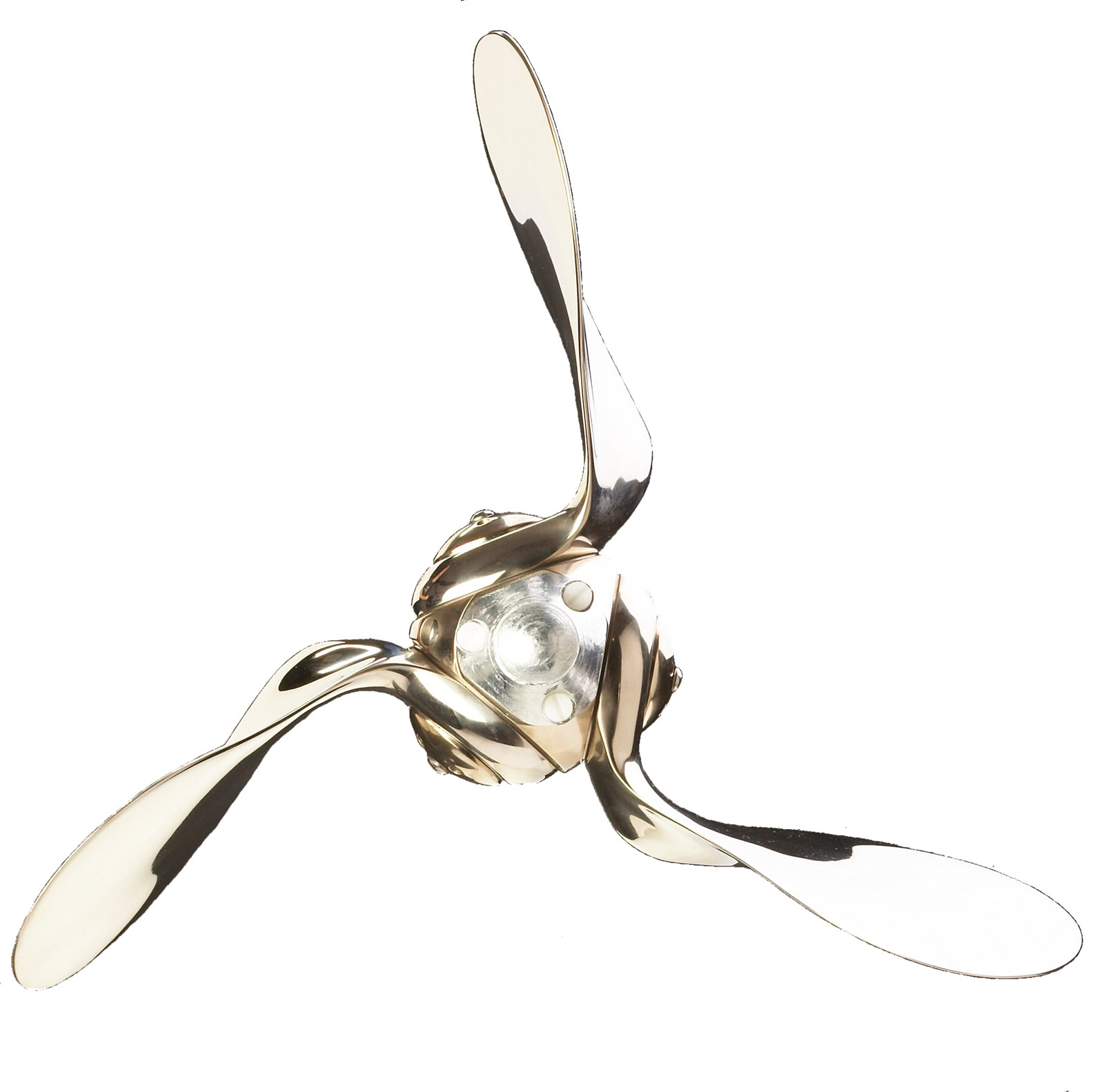
David has been involved in the development of feathering and variable pitch propellers for over twenty-five years. The company’s two flagship products are the Varifold variable pitch propeller and the Autoprop self-adjusting variable pitch propeller. He acknowledges that the folding propellers of the 1970s/1980s were only used to gain speed and their reliability was perhaps questionable. “In three decades, things have changed,” he says, “The old-style folding propellers that gave speed under sail weren’t suitable for motoring, mainly because they had flat blades. Today we have feathering and variable pitch propellers that are very efficient in every respect and made by well established companies - these propellers have been tested and used for many years. Long range under power, fuel economy, speed (low drag) and reliability are the fundamental aspirations of any cruising sailor. With these propellers that have moving blades, ½ to ¾ of a knot can be gained, and that can mean a saving of two days on a transatlantic passage. There will be lower fuel consumption, less noise and vibration. Furthermore, they’re now equally as reliable as fixed ones. Unlike fixed-pitch propellers, which are designed for maximum power and speed, pitch adjustment is the only way to achieve maximum rated speed to optimize the performance of modern diesel engines and minimize their emissions. The Autoprop adjusts its pitch automatically according to engine speed. Torque is available at all engine speeds, even at low speeds. This is ideal, even when reversing. With a reduction of the pitch towards the extremities, you’re navigating more quietly and comfortably, especially since you can achieve the same boat speed at 500 rpm less. Thus, over its lifetime, the extra cost of the propeller is quickly recouped by lower fuel consumption.”
 |
 |