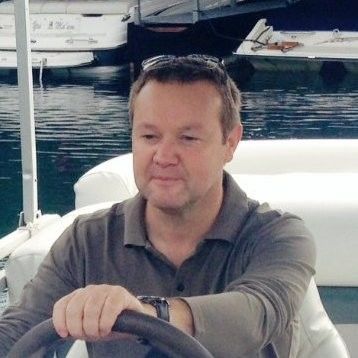
Peter Weil is no newcomer to the world of boating. An accomplished sailor and regatta competitor, he has been wearing out his foul weather gear on sailing boats since he was young. As he got older, he decided to turn to cruising and being already a multihull fan, he set his sights on a catamaran. However, he chose a powercat which corresponded more to his way of life at the time. Seduced by the look and layout, he bought an Aquila 44, one of the brand’s best-sellers. A thoughtful and committed purchase which nevertheless did not completely satisfy Peter who dreamt of a power multihull which would go like a sailboat, that is to say in silence and relatively slowly to take advantage of its surroundings. To go through with the process, he decided to remove the diesel engines from the hulls and to replace everything by an entirely electric propulsion system. This was quite a challenge, because, even though the Aquila’s design is remarkable, the shipyard hadn’t designed the boat for this type of drivetrain, nor offered it as an option. But this wasn’t going to our man, who was as reasoned as he was determined, and so he decided to embark on this project on his o wn initiative. Peter began his research and soon chose Torqeedo engines. It was also at this time that he met Marc Hawxhurst, the creator of Nova Luxe, who had more or less the same idea, except that he wanted to turn this transformation into a real business by working, if possible, directly with the shipyards. For this purpose, Marc already had an agreement for the implementation of Torqeedo motors in multihulls.
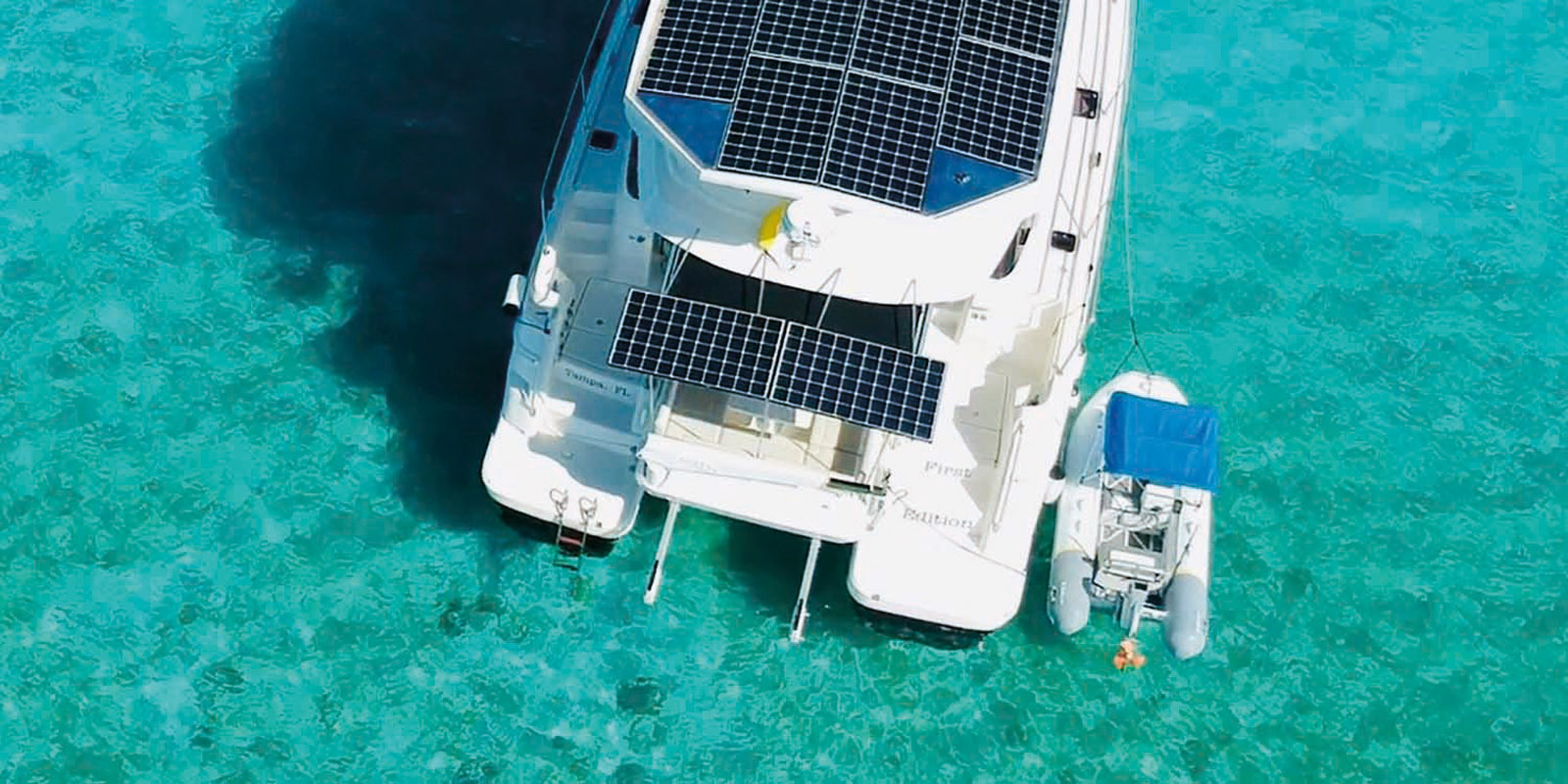
In the second phase in the yard, Peter lengthened his 44-footer… to a 50!
5,600 Wp of solar panels
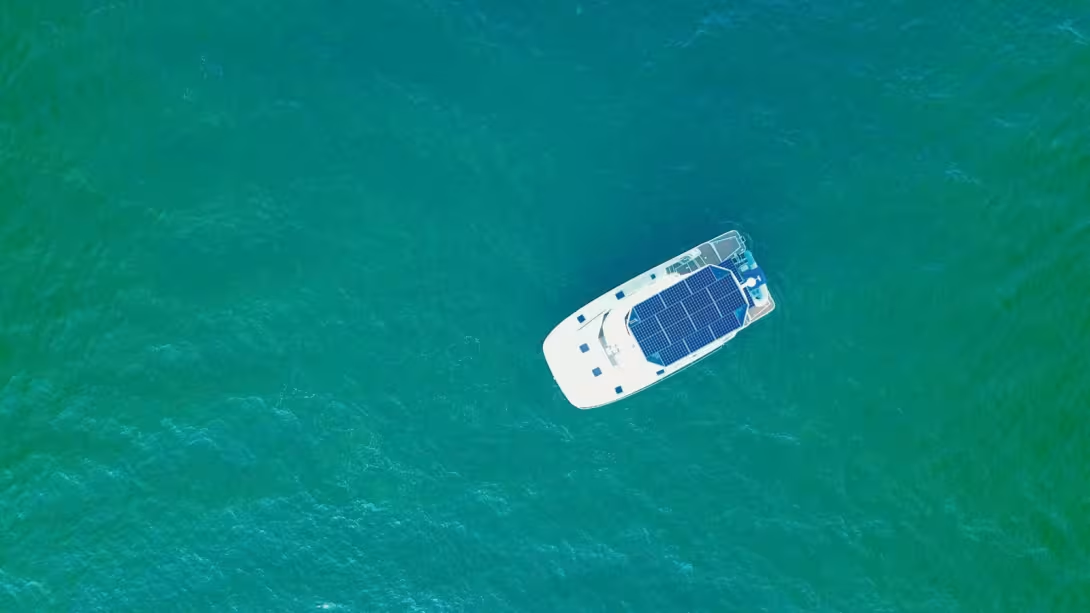
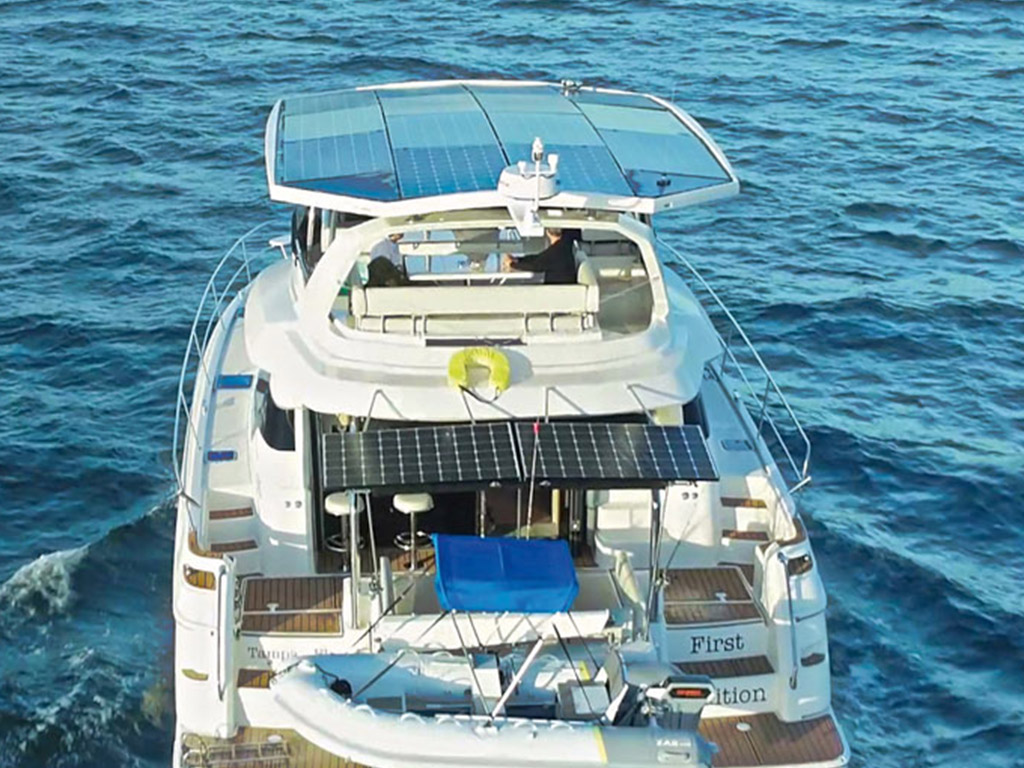
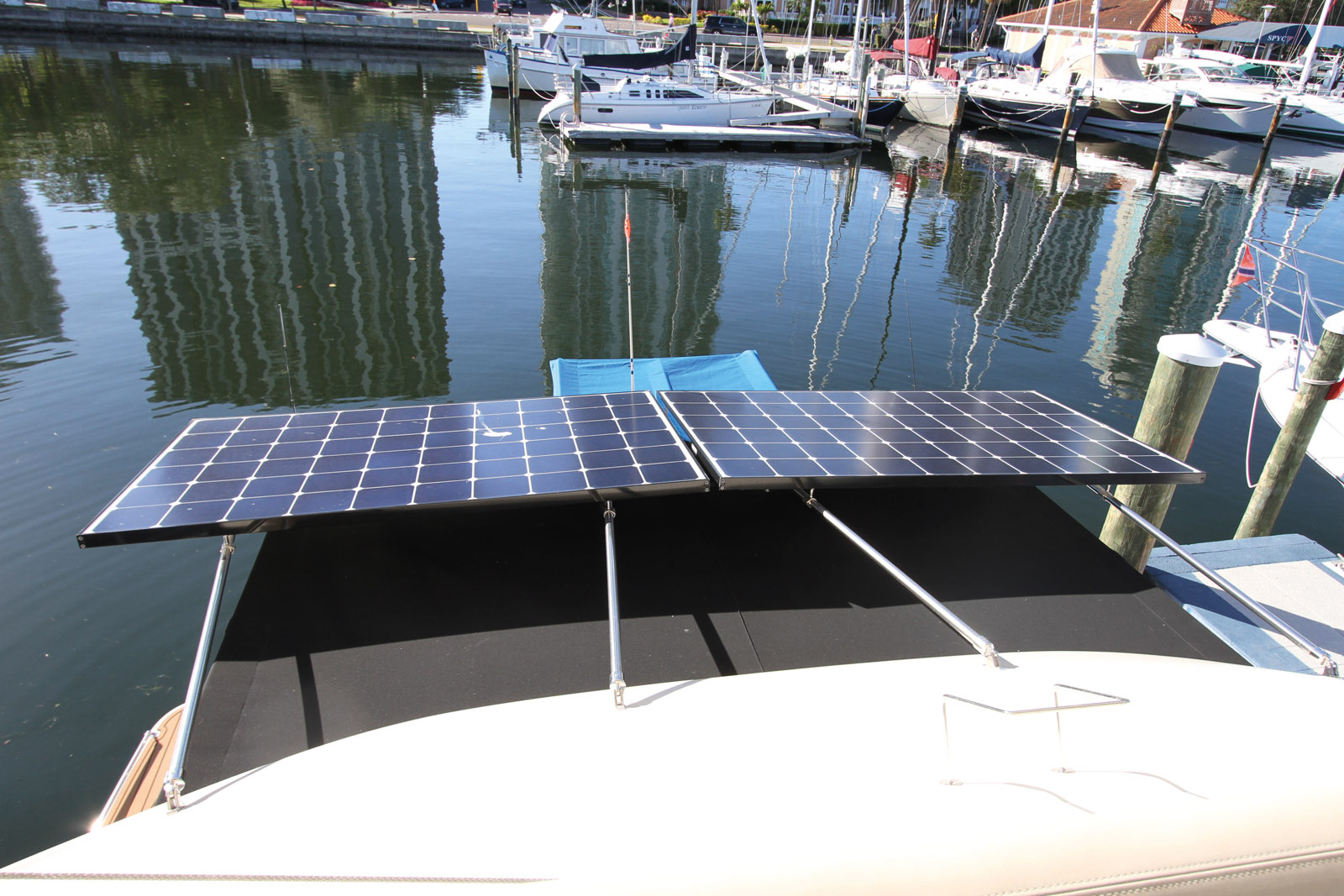
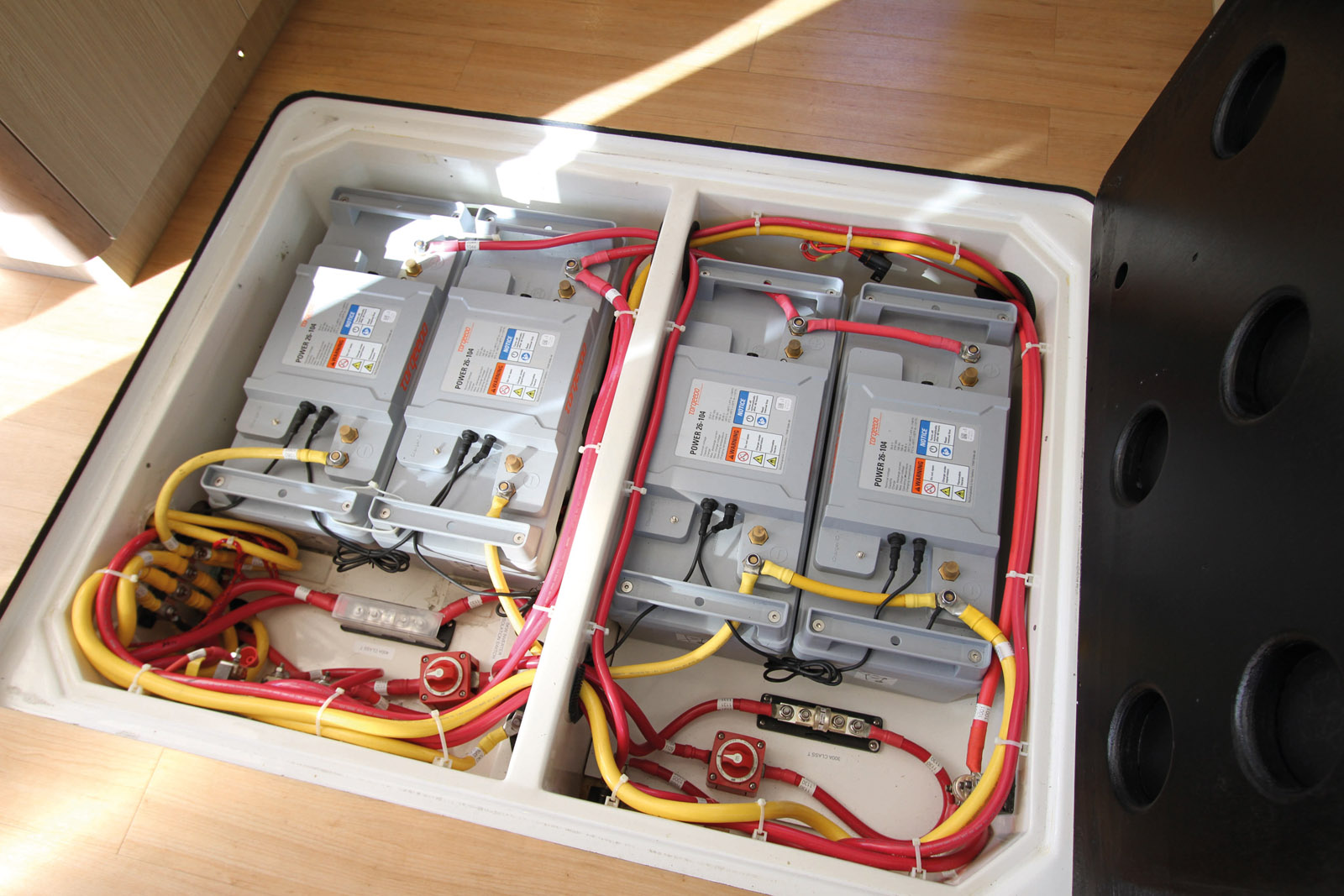
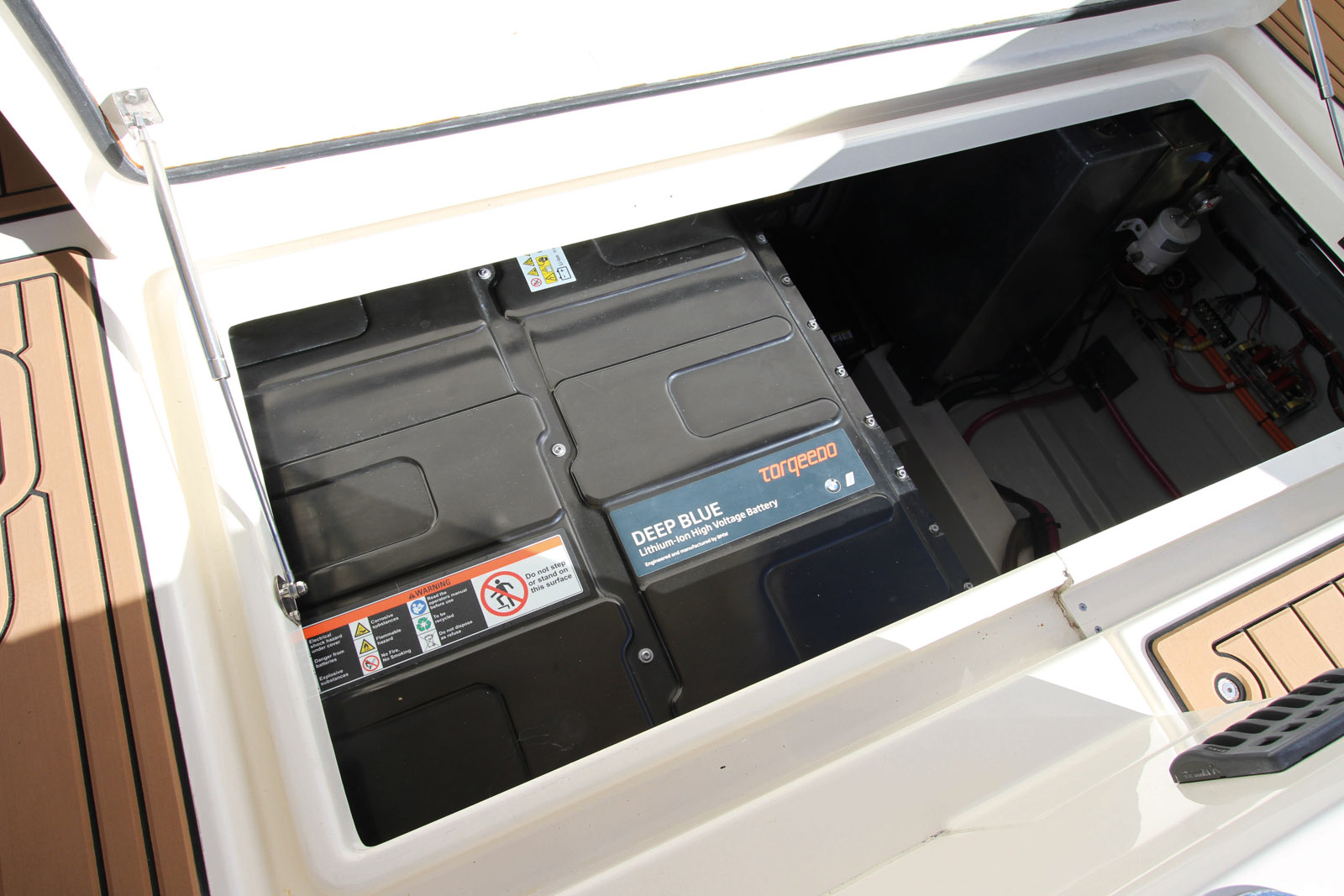
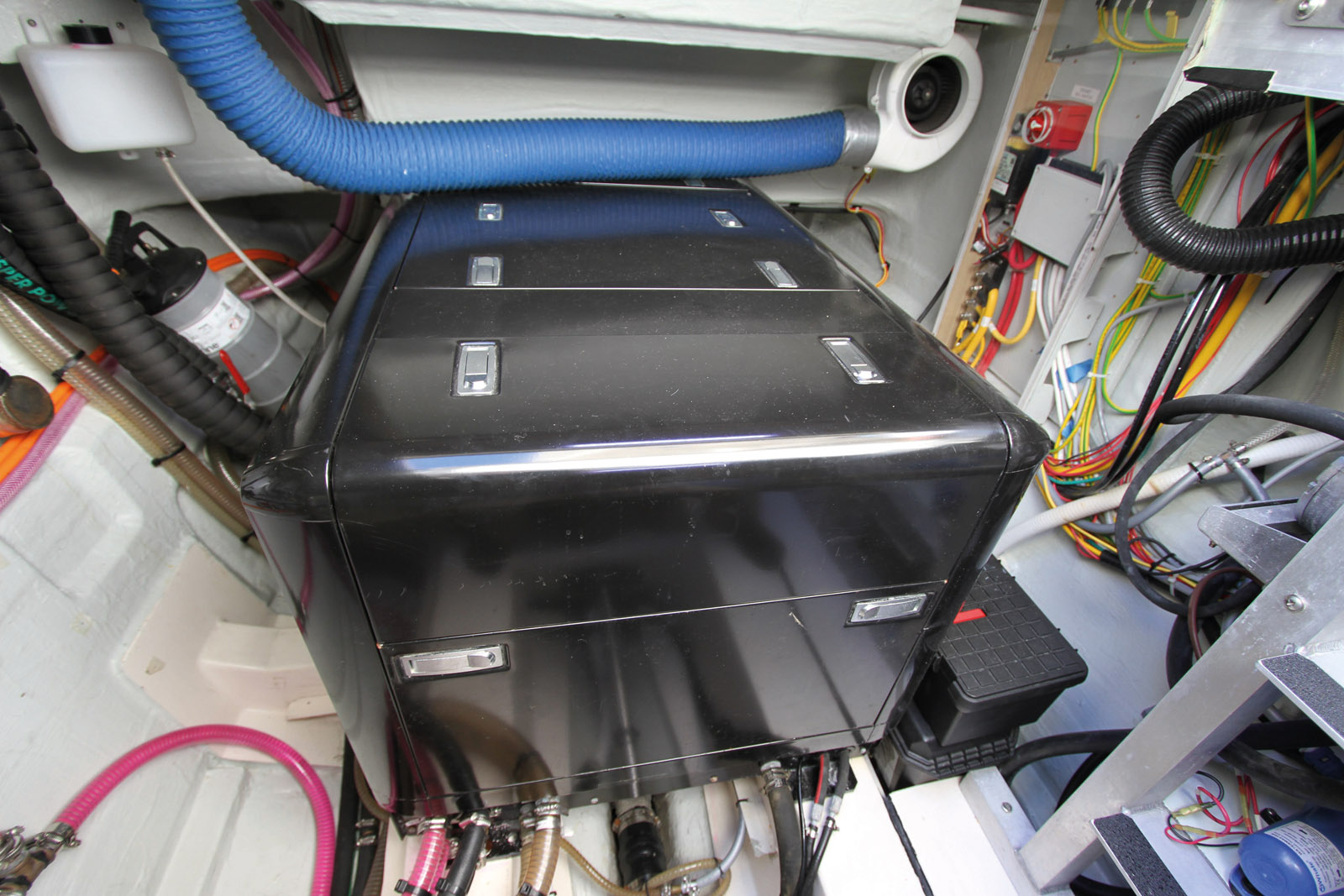
So, Peter decided to purchase a Torqeedo electric system from Marc and the work began with a simple mission statement: to sail silently at about 6 knots and to have a large range. The diesel engines were removed and replaced by two Torqeedo Deep Blue engines equivalent to an 80 hp combustion engine. To power these electric motors, Peter installed two BMW I3 batteries (2 x 40 kWh), which were installed in a storage compartment, protected from the water. In addition, in order to have a decent range, the catamaran has a Whisper Power diesel generator combined with a 265-US gallon (1,000-liter) tank to recharge the batteries if necessary or to operate some of the equipment on board, notably the air conditioning. Consuming less than 2 US gallons (7 liters) per hour, the generator has a capacity to run up to 142 hours... Finally, sixteen solar panels of 350 Wp were also installed, giving a total of 5,600 Wp. To accommodate all these panels, the T-Top of the flybridge had to be enlarged to a surface of nearly 333 sq ft (31m²). The most impressive thing is that the work has been so well done that the new hard-top fits perfectly into the line of the boat. Finally, the rest of the solar panels their take place on a support at the back of the boat. These solar receivers alone generate about 25 kW per day, which allows them to run all the equipment on board. Rechargeable with the solar panels or the generator, the batteries can also be recharged in a more conventional way, with two 10 kW/h chargers connected to the shore power outlet, which allows a complete recharge in only four hours. The achievement of this project has required long research and four months of actual work to implement the solutions envisaged by Peter. Two months were then spent testing in the Bahamas. At the end of this period, the decision was made to lengthen the rear of the floats to increase buoyancy and support the 40,000 pounds (18 t) the boat displaces. Once again, the work was done in a very professional manner, as it’s difficult to see the difference between the original hull and the extension. Each sugarscoop has gained more than six feet (2 meters) in length, which has allowed the installation of storage space on the port side and a Jacuzzi on the starboard side, which is quite neat. But most importantly, the main goal has been achieved. Not only has the buoyancy been improved with a lower draft, but the boat’s trim is also better. Once the modifications were made, the catamaran kept all its promises, both in terms of comfort and per formance.
 |
 |
 |
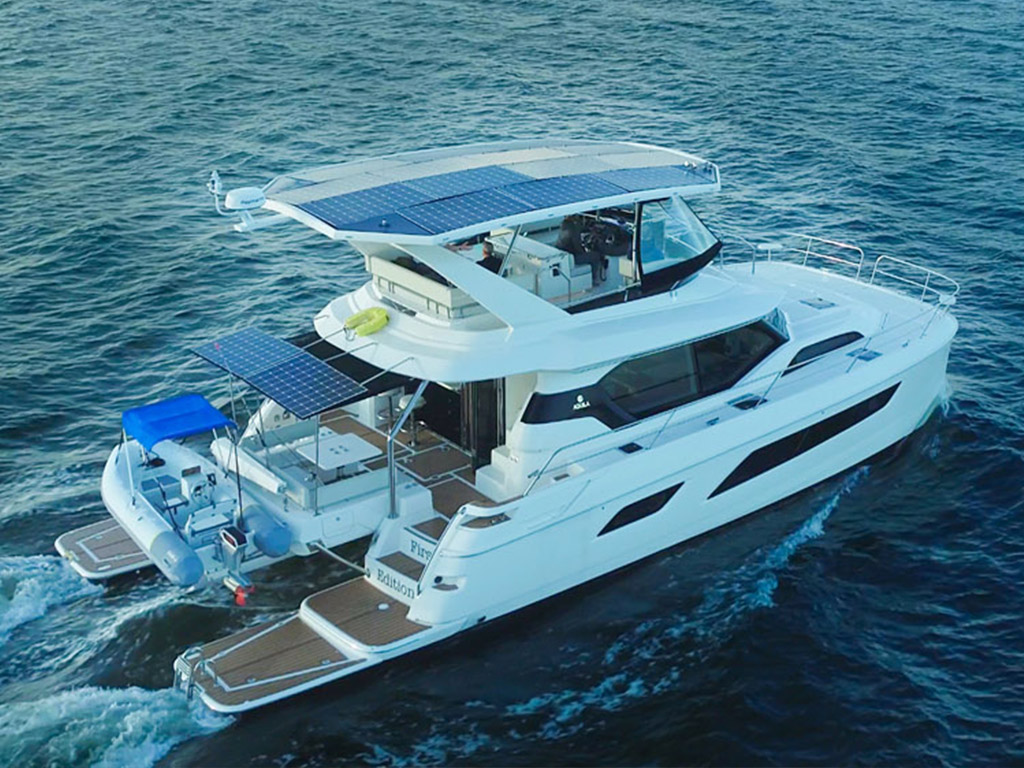 |
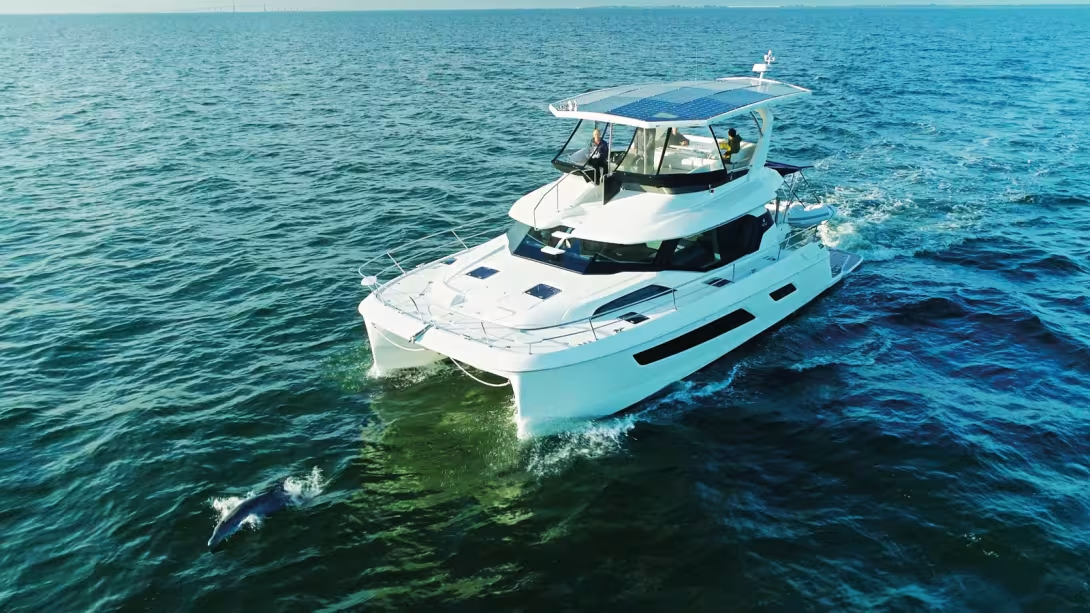
The flybridge T-top has been increased in size, helping to accommodate, along with the aft support, a total of 16 solar panels, giving 5,600 Wp.
A range up to 1,000 nautical miles
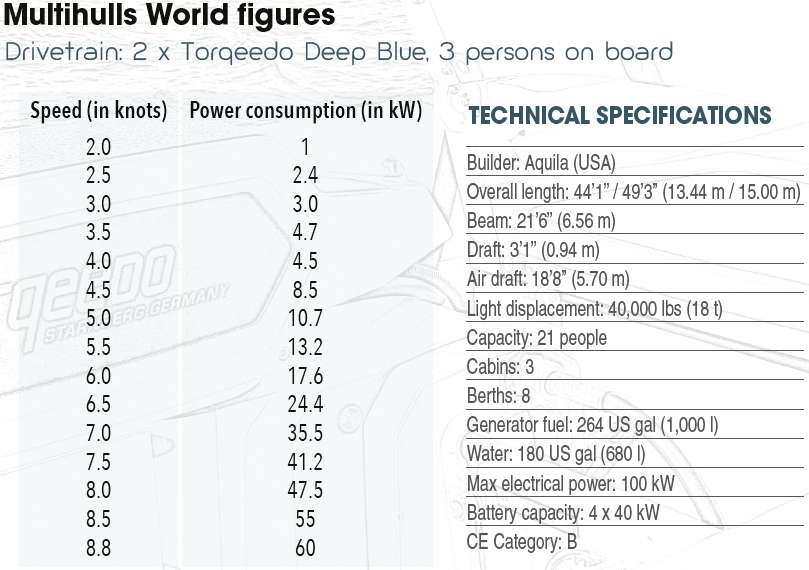
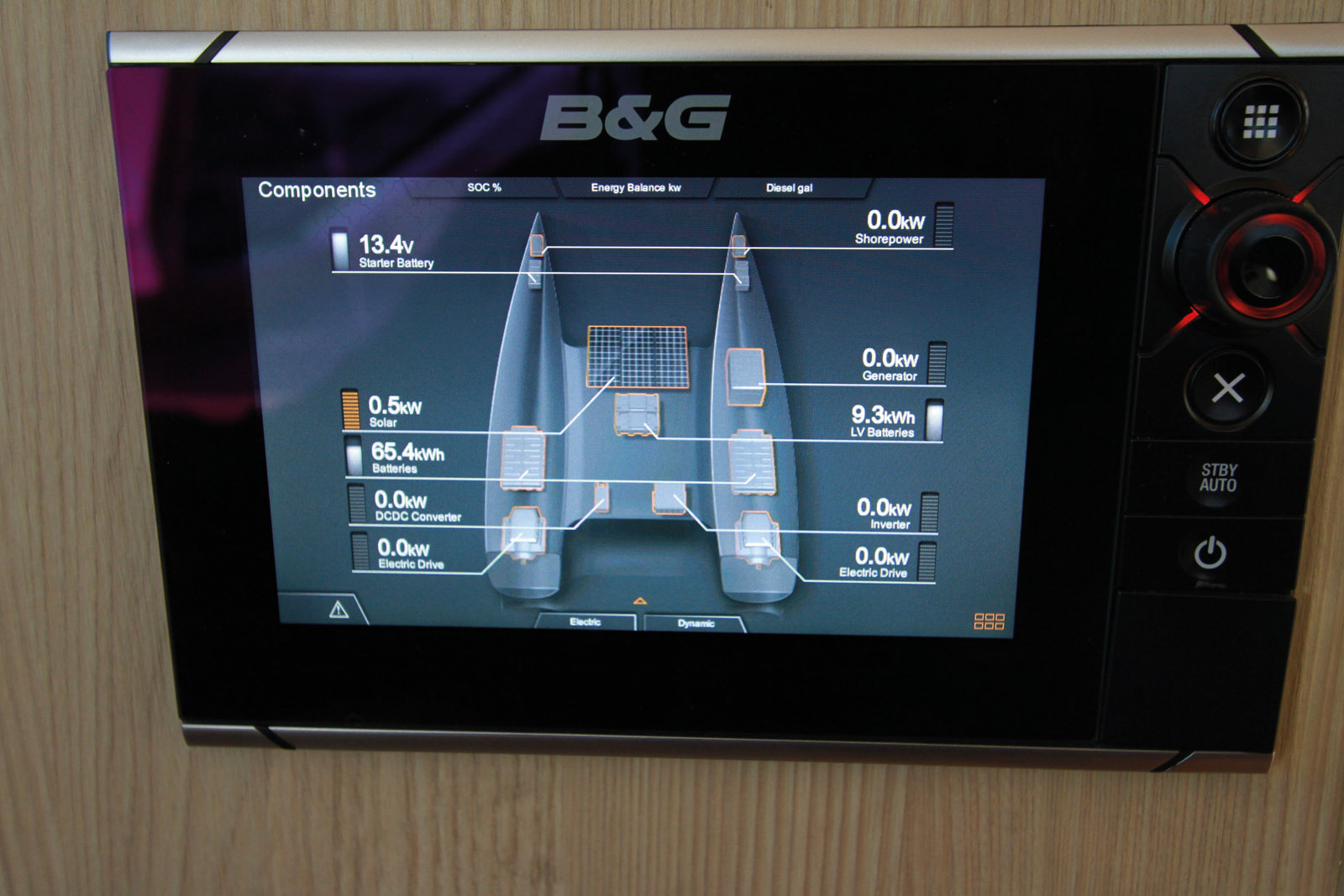
During our test, we reached a top speed of nearly 9 knots while the cruising speed was between 6 and 6.5 knots, which is exactly what Peter was looking for. At the helm, the result is even more surprising. Taking advantage, like any electric motor, of an immediate torque, the 44-foot boat accelerates very quickly and then stabilizes. The cruising speed proves to be very comfortable, because we went along in almost complete silence, except for the water lapping against the hull, which was also one of the elements P eter was looking for. There remains the question of range. To optimize the installation, an electronic control system permanently tracks not only the consumption of electricity, but also its production, either through solar panels or the generator. In the end, in fully electric mode, the catamaran has a range of about 4 hours at 6 knots and almost 60 nautical miles at 4 knots. Now, if we combine the batteries and the generator, we reach a range of almost 1,000 nautical miles, which means that the catamaran can really consider long dis tance cruising. Since the first launch with the new electric drivetrain, the catamaran has covered nearly 3,500 nautical miles, far more than many boaters do in their entire lives. While the first few hundred miles were used to fine-tune the boat, the navigation undertaken since has proved to be a real pleasure. Since our report, Peter has been back to the Bahamas and, except for a few overheating issues with the generator, there’s little to report. The system works perfectly, and the boat has never had an electrical breakdown. An impressive transformation, but one that obviously has a cost. In addition to the purchase of the catamaran, Peter spent about 200,000 dollars on the electrical system (motors, batteries, generator). On top of that, the price of the new T-Top was about 50,000 dollars. The cost has been mitigated by the resale of the diesel engines, but it’s still a substantial project for those who are starting out on their own. In addition, the manufacturer’s warranty is still valid on the boat except for the electrical system and the engines – Torqeedo warranties all their equipment (motors and batteries). A price to pay that Peter does not regret, because he was finally able to design the boat that suits him per fectly.
 |
 |
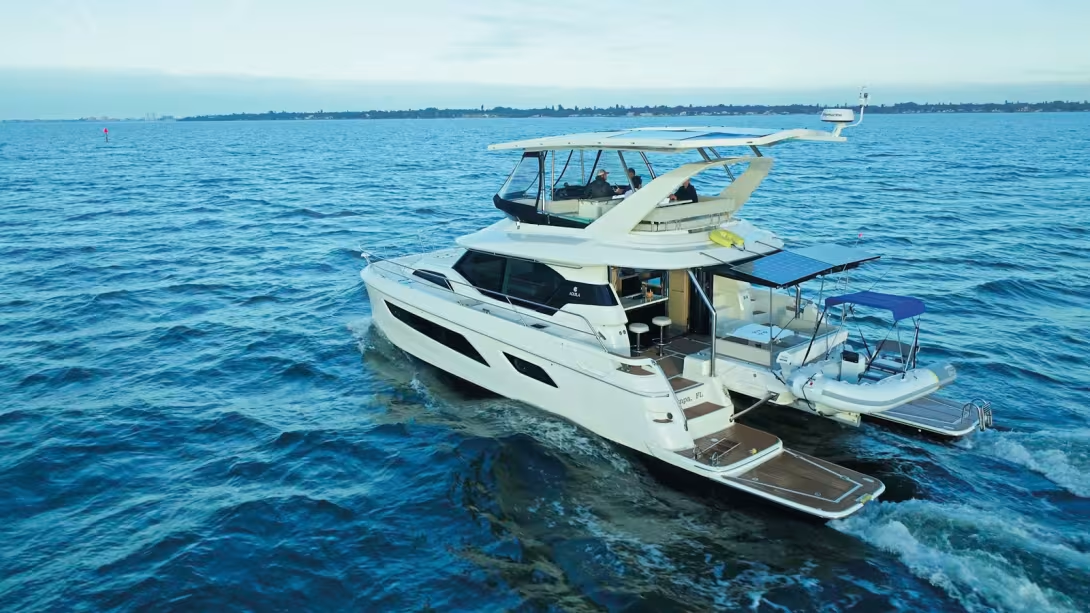
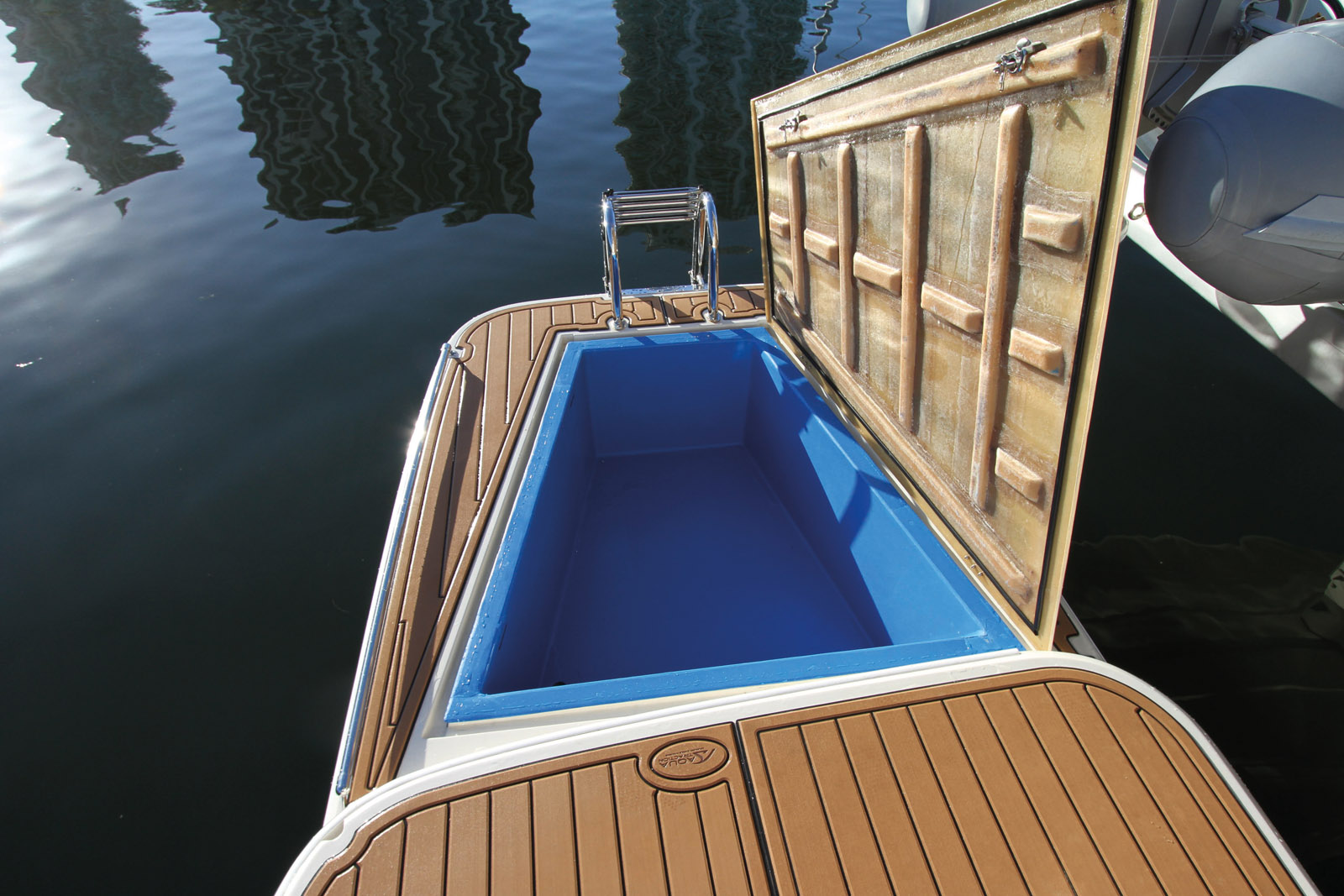
The sugarscoops have each gained six feet in length, allowing for more storage to port and a mini-jacuzzi to starboard.
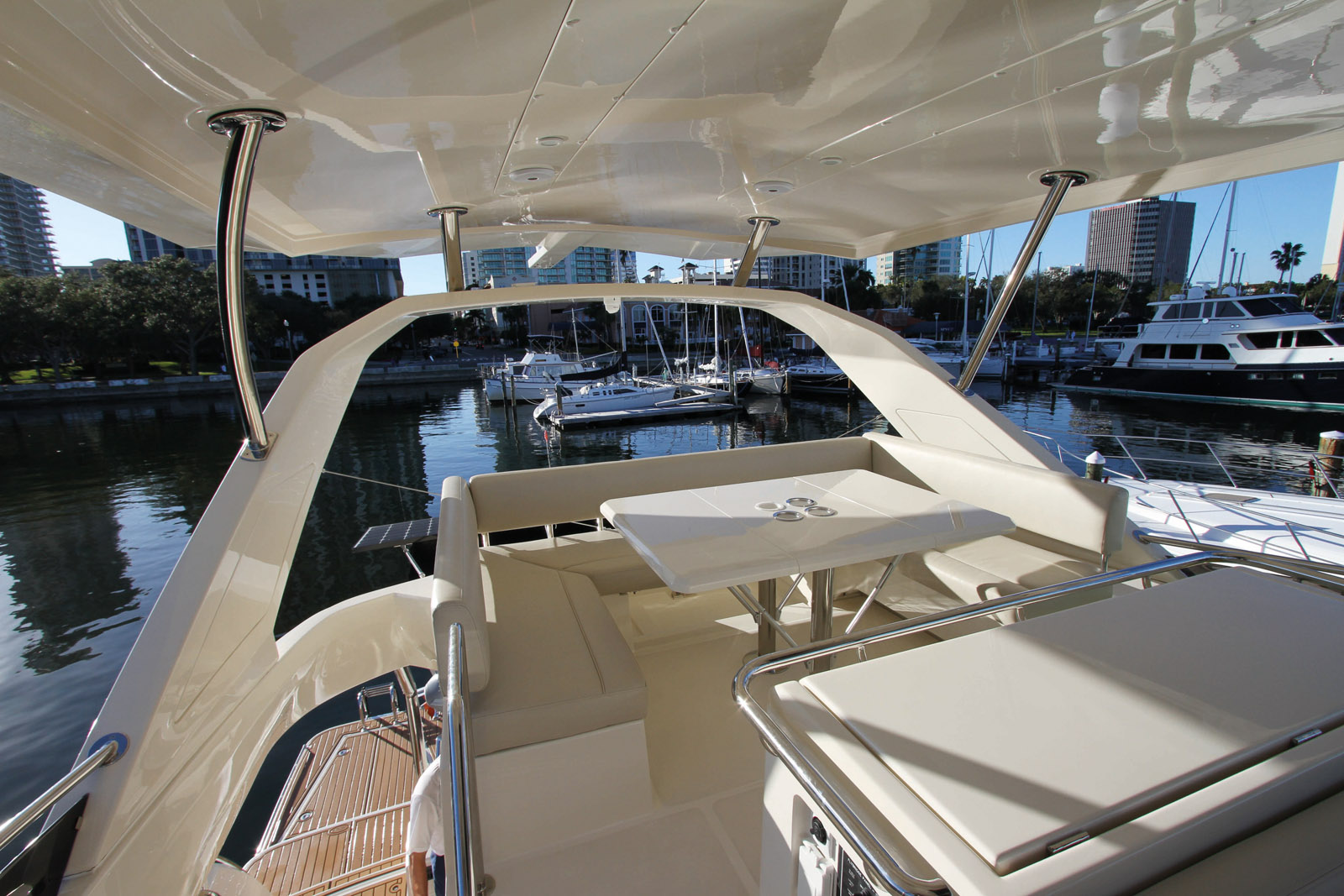
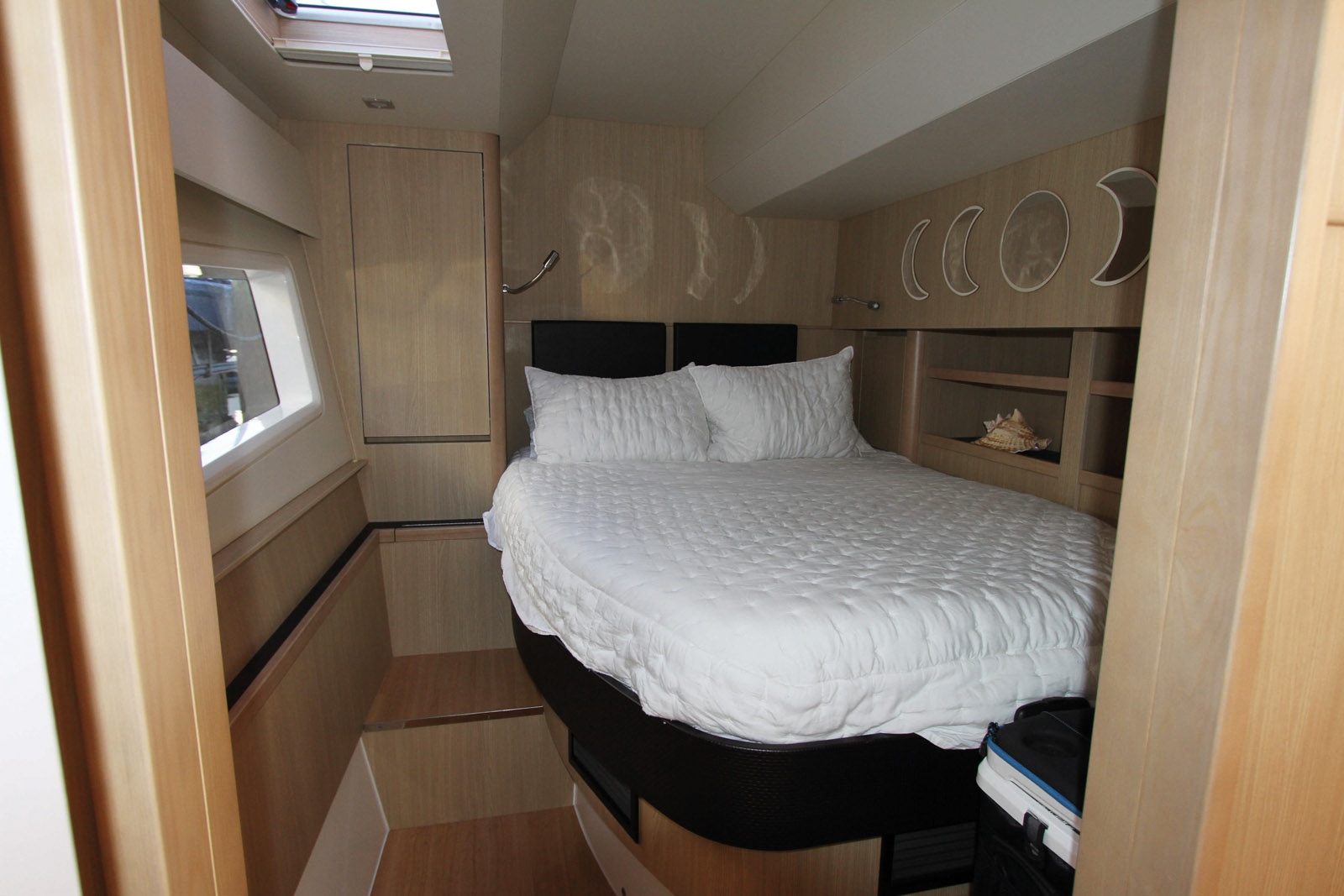
As for the interior, there have been no changes, so this is identical to a standard Aquila 44.
Conclusion
In this era of energy transition, this project proves at least that an electric drivetrain is no longer a utopia. If it is well thought out and if you determine exactly where you want to go, it can be quite satisfactory. The fact remains that this solution is not free, and that while waiting for boat builders to offer it as standard, it represents a significant cost that will take a long time t o be paid off.
 |
 |
 |
 |
From a technical viewpoint, the installation is impeccable. Validated over a distance of 3,500 nm, everything works perfectly, save for a slight overheating issue with the generator.
Nova Luxe Yachts - The company that electrifies multihulls!
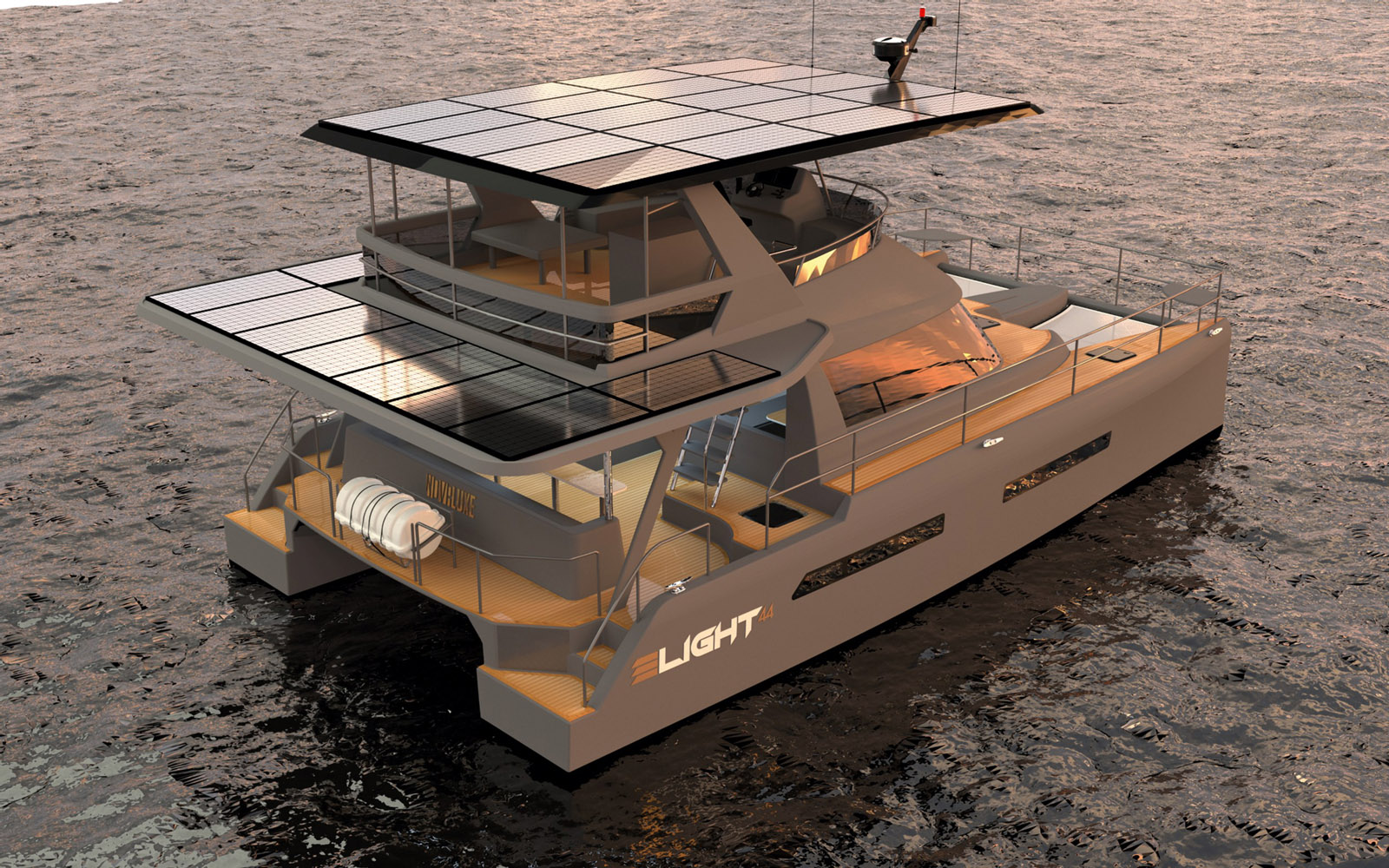
Nova Luxe is a young company specialized in the repowering of powercats to an electric version. The company works directly with some shipyards that deliver boats without engines, but it can also work from your own multihull and perform the transformation in their workshops. Nova Luxe also offers its own range of catamarans, the Elight series, which currently ranges from 44 to 70 feet. Nova Luxe is also a specialist in the installation of Torqeedo solutions for the repowering of multihulls. It was from this manufacturer that Peter purchased the equipment for his entire electrical installation.