
In theory, if you’re doing a transatlantic passage in the trade winds, a good old symmetrical spinnaker that allows you to go far downwind to limit gybes would fit the bill. Likewise, if you’re only going coastal cruising, a gennaker allowing you to enjoy some good reaching and also do some upwind work if necessary (yes, it does happen sometimes that the wind refuses to cooperate as you close the coast) would be ideal. But in practice, things are more balanced. Starting with the budget: once you’ve purchased your multihull, and added all the options and equipment on your list, is there enough left in the kitty for a second or third sail? Once all your gear is stowed in the lockers, do you still have room to store this extra sail? Are you alone on board to handle the sails or are you accompanied by a cheerful and dynamic crew ready to trim every sheet? Do you sail in moderate winds, or do you only go out when the breeze picks up? Or both, by orce of circumstance? Is your multihull a bit of a plodder or a machine that creates its own wind? So many parameters to get to grips with before choosing one sail over another.
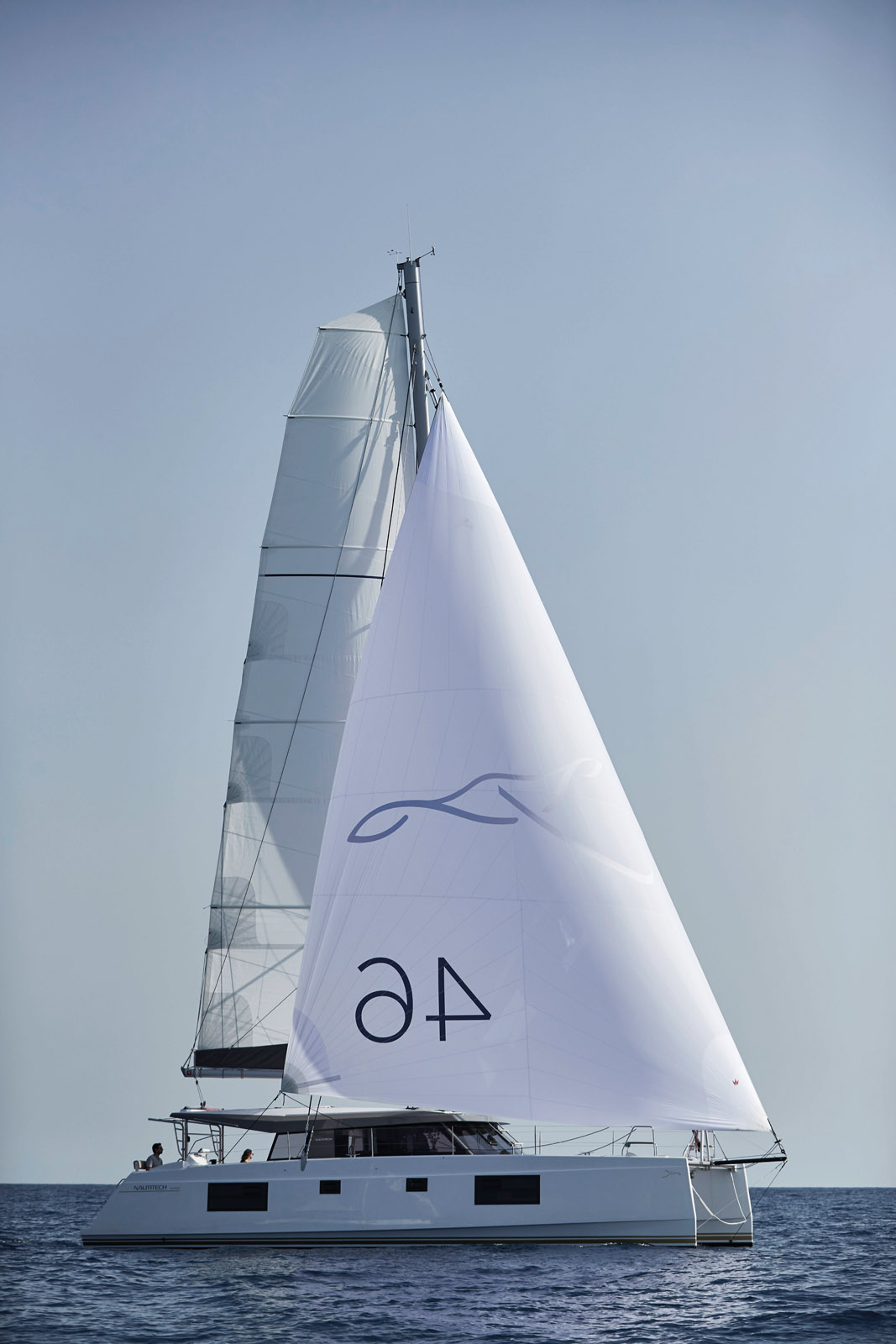
Downwind sails are like a turbo on our cruising multihulls. They promise increased speed as soon as the wind picks up, meaning you avoid having to start the engines too early.
Gennakers code and sails
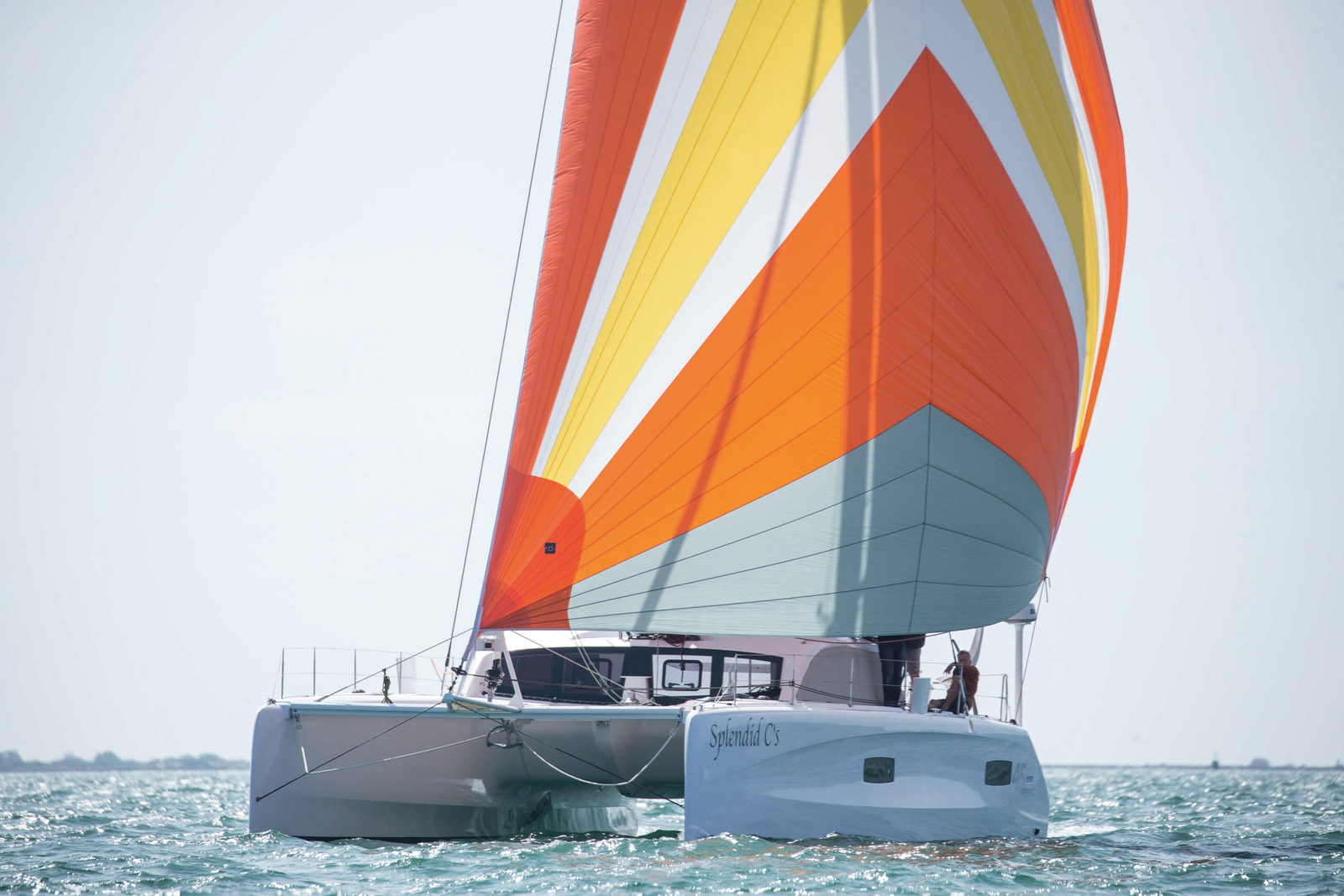
Known as reachers back in the 1970’s, gennakers and code sails (code 0, smart code or code D depending on the subtleties of the cut, the weight and... the fashion) are sails whose optimum range of use goes from 45° to 120° off the wind. Higher points of sail will be tenable in lighter airs - 4 to 8 knots - then, as the wind picks up, you’ll need to bear away to stay within the range, limited to between 15 and 18 knots, depending on the strength of the sailcloth. Their triangular shape is similar to that of a very large lightweight genoa with an overlap that can go from 130 to 180% depending on whether you want to really shift in light airs or lengthen your stride in medium conditions. Code sails have a visual aspect closer to a flat asymmetrical spinnaker and because they are initially designed with more volume toward the leading edge with the aim of replacing a spinnaker in a racing wardrobe if required to respect class or measurement constraints. Officially, they are spinnakers, while the gennaker is to be classified as a XXL-sized lightweight genoa. The gennaker is tacked down on a line and is set on an anti-twist luff tape which is hoisted on a furler (in all-or-nothing mode) which makes them particularly easy to unfurl, to trim, to furl and to stow, even short-handed. As long as the foot has a UV strip, the gennaker can even be left bent on, like a genoa. The code D or C is a cruising sail, at a point between gennaker and asymmetric spinnaker.
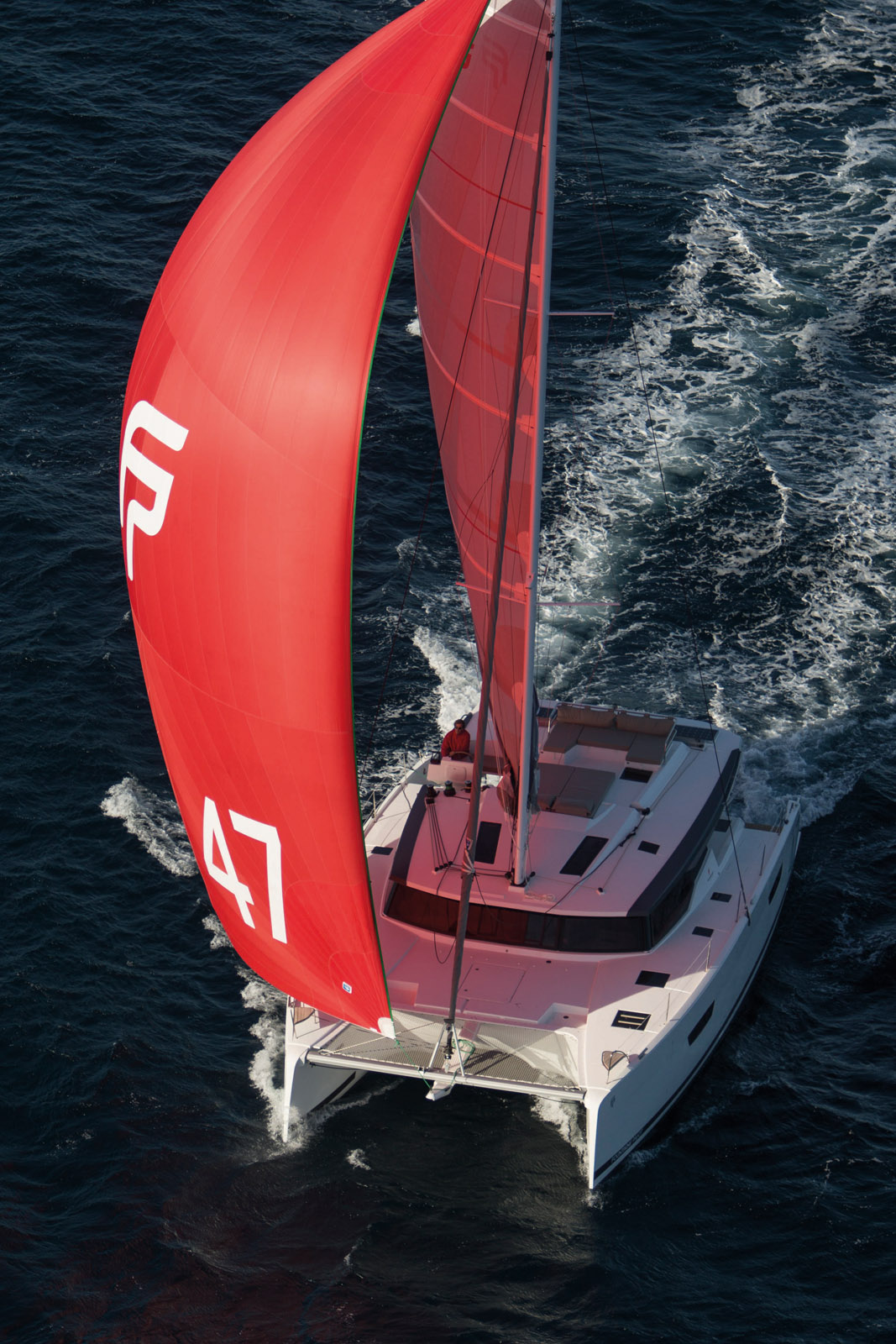
A large asymmetric spinnaker is an excellent sail for broad and beam reaching. Though hoisting it up and getting it down, even with a sock, requires physical commitment and experience, particularly if the wind is building.
Symmetrical and asymmetric spinnakers
Around since the late 19th century, theseballoon-shaped sails (early examples were known as “balloon jibs”) were designed for racing and brightened up regattas with their voluminous and often multicolored shape. Triangular in shape, the luff and leech are the same length for the symmetrical version, and the leech is shorter for the asymmetrical. The former is efficient from 100° to dead downwind, while the latter, designed for faster craft that are happy to tack at any moment, is very efficient from 80° to 140°. In both cases, it will be possible to point higher than these values. 50° to 60° from the wind is possible in light airs to get moving, but in practice, such a course is difficult to hold for the symmetrical boat, unless it is rigged on a spinnaker pole (rarely the case on a multihull). The weight of the cloth is much more modest than that of the gennaker, allowing the wind to strengthen only on very downwind points of sail. They can be used on a bowsprit or flown from both bows (ideal for symmetrical sails) but their setting and trim is more complex and constraining than gennakers. Even with a spinnaker sock, setting and trimming requires experience and a certain physical commitment. Getting them down can be tricky if the wind has suddenly increased and there aren’t many hands aboard.
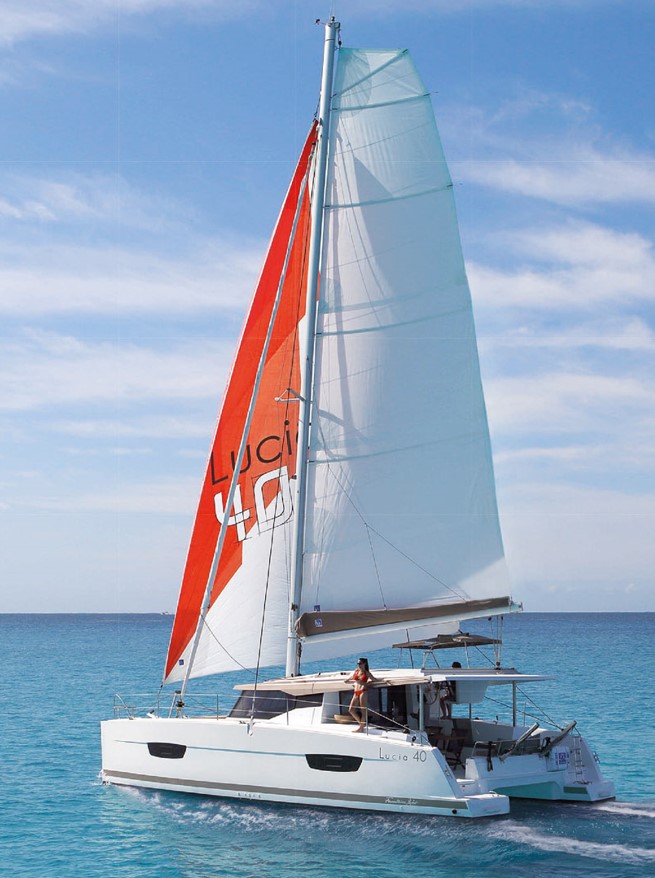
On long downwind passages, it may be wise to leave the mainsail down and goosewing with the gennaker and genoa - this configuration allows sail to be shortened quickly, without changing course and without effort.
Our opinion
For us, there’s no comparison. The ease of use of a gennaker or a code D, which furl with an endless line and can be left in place until the conditions become favorable again, is without question the sail of choice for cruising short-handed or with an inexperienced crew. Admittedly, it might not be the most efficient sail for downwind work, but do you feel like dropping a spinnaker when the breeze has kicked up to 25 knots-plus in the dark? Even for blue water passagemaking, downwind conditions don’t last forever, and being able to climb back up in light airs can be a great help - and not only in the lee of the islands or in the Pacific. Finally, the ability to goosewing the gennaker with a genoa or solent allows for improved average speeds in medium airs, and to go practically dead downwind - as long as you’ve lowered the main.
 |
 |
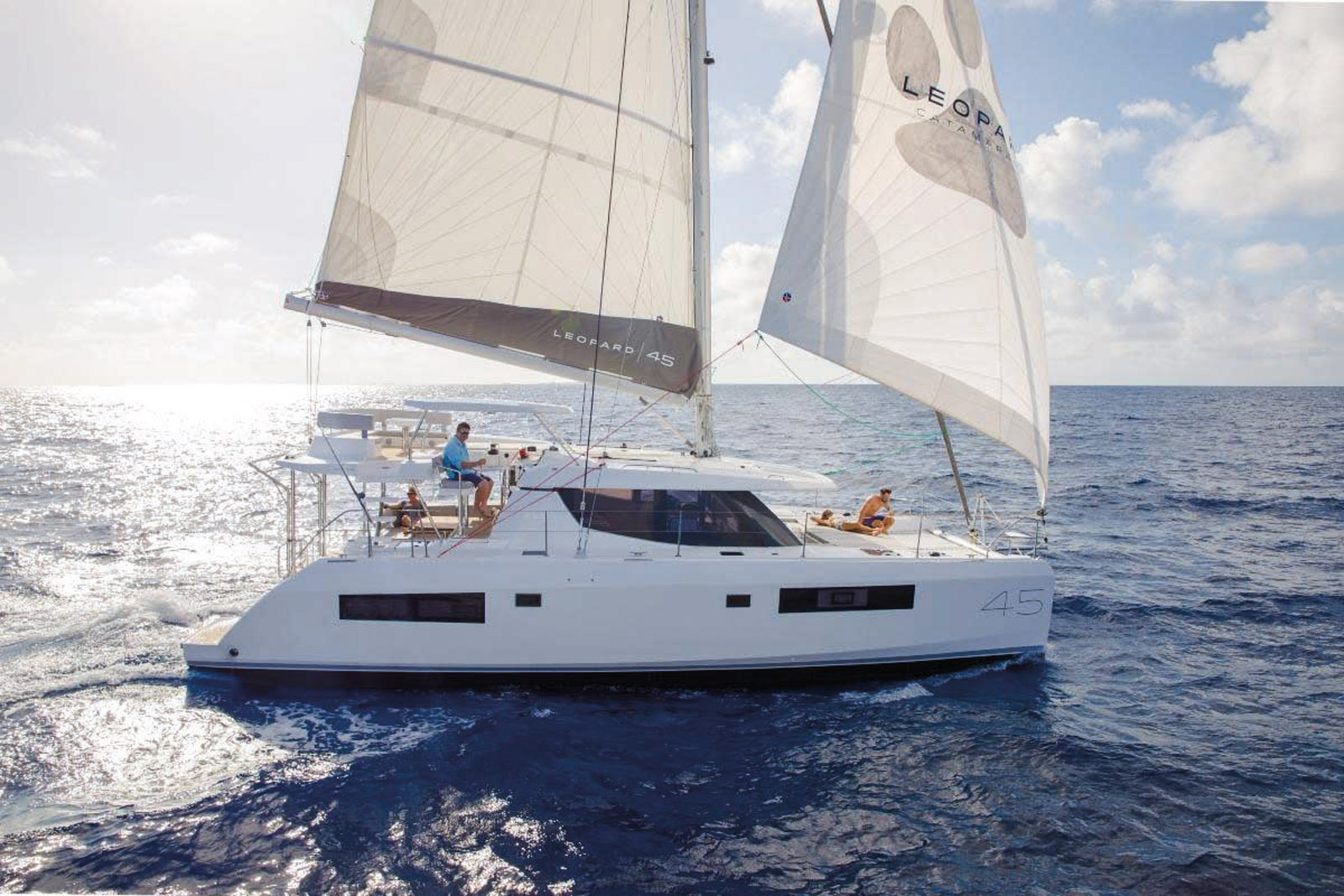 |
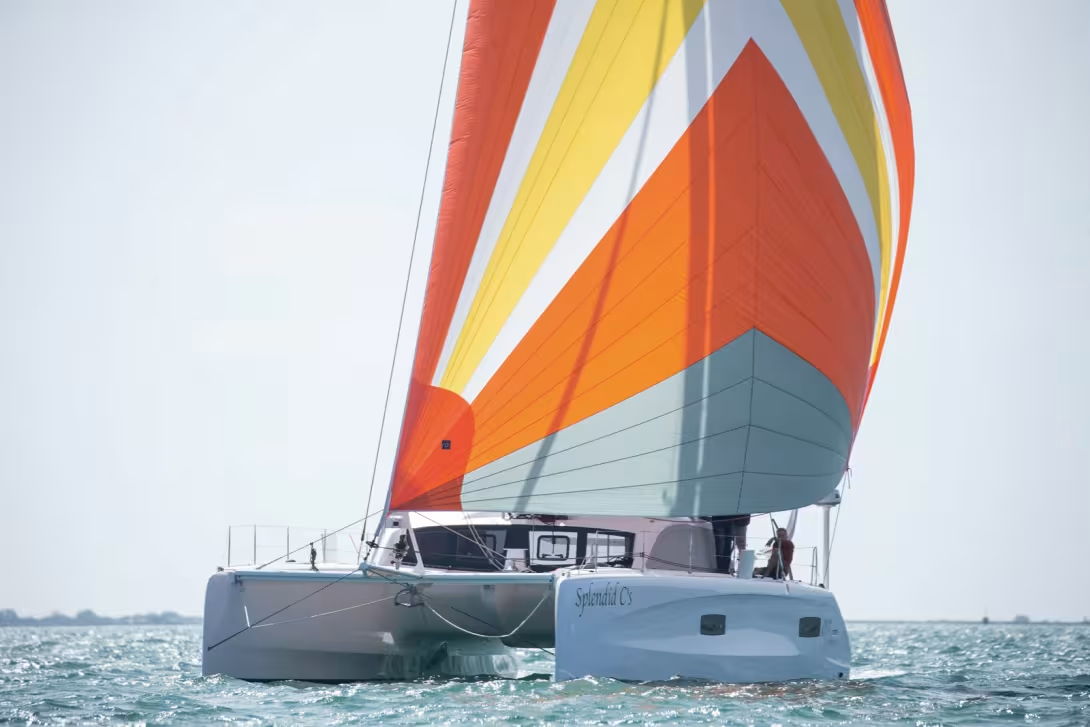
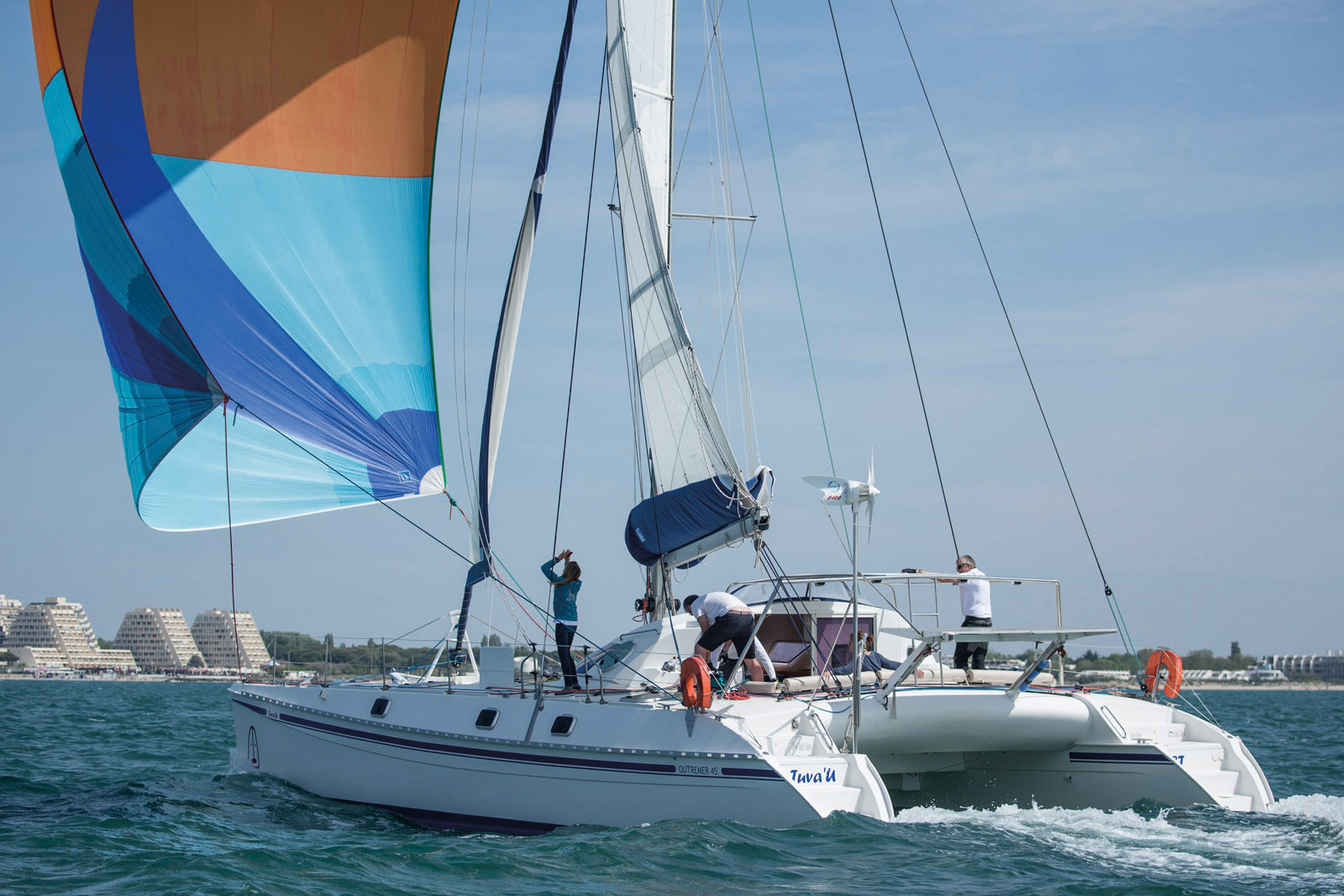
The code D is midway between a gennaker and an asymmetric spinnaker. Its flat cut allows it to sail well upwind. The big advantage is that it furls like a gennaker.
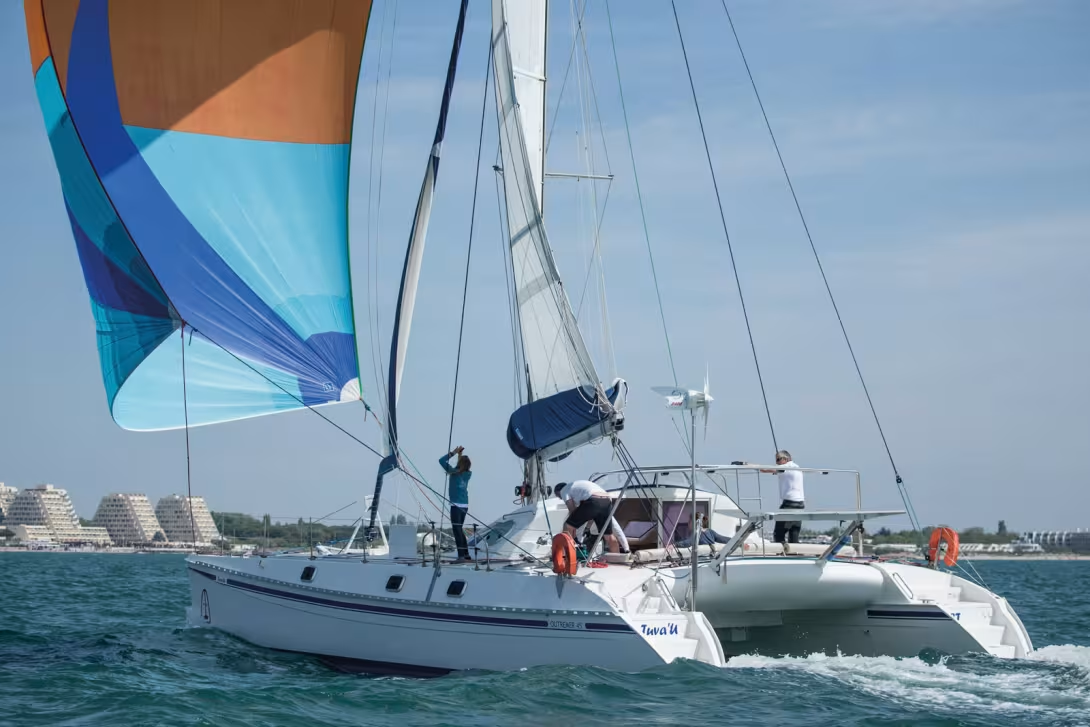
Ah the good old symmetrical spinnaker! Downwind, it can handle a decent breeze and give the bows a bit of lift. In lighter airs, it can be flown up to 50° off the wind. Its complex handling, its trim and its lowering make it the preserve of a substantial crew, in number and experience.
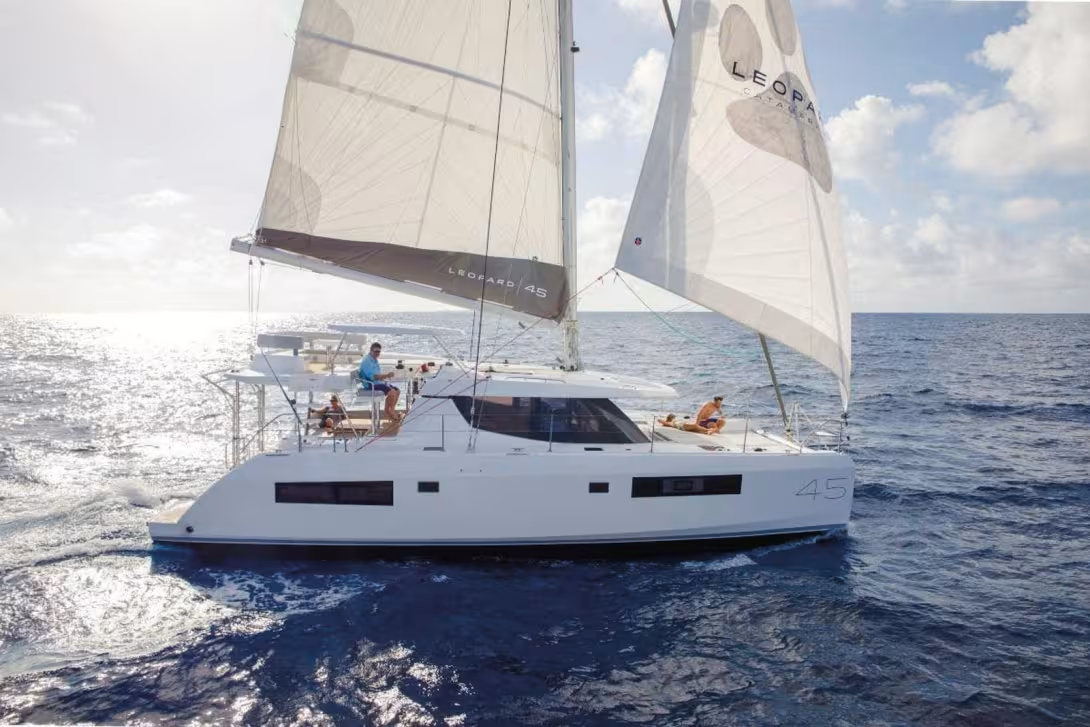
For us, the best choice for a single downwind sail is the gennaker. Its versatility and ease of handling make it indispensable on board for cruising. Be careful to opt for a very high tack, or to have a clear panel sewn in, so that watchkeeper’s view is not obscured.