
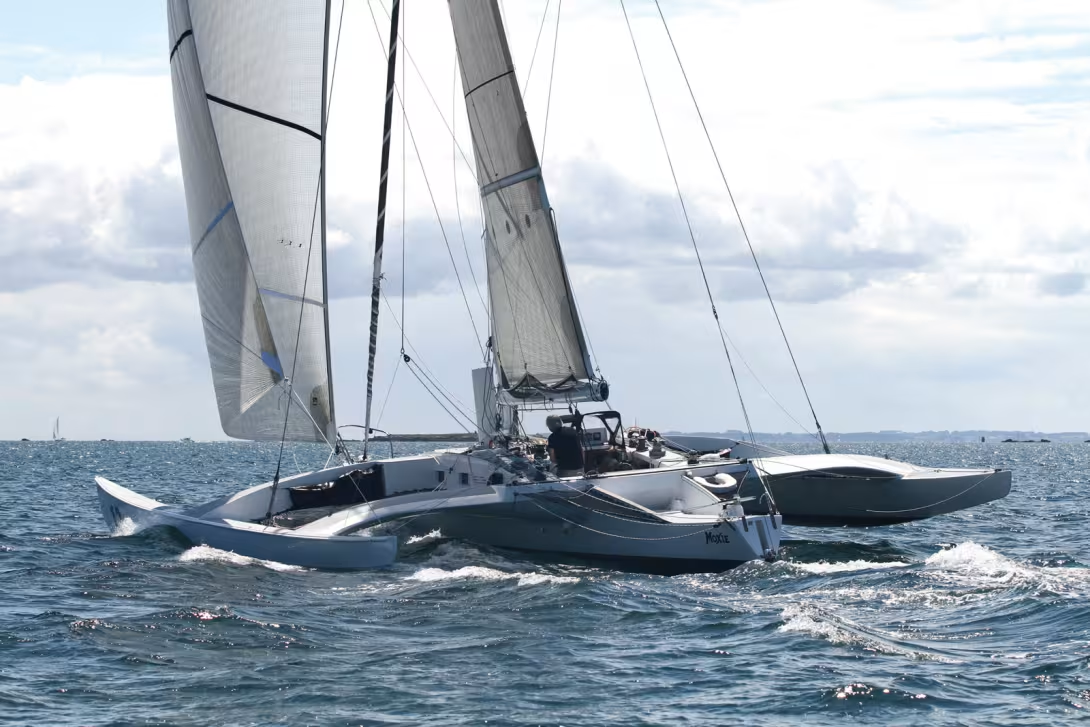
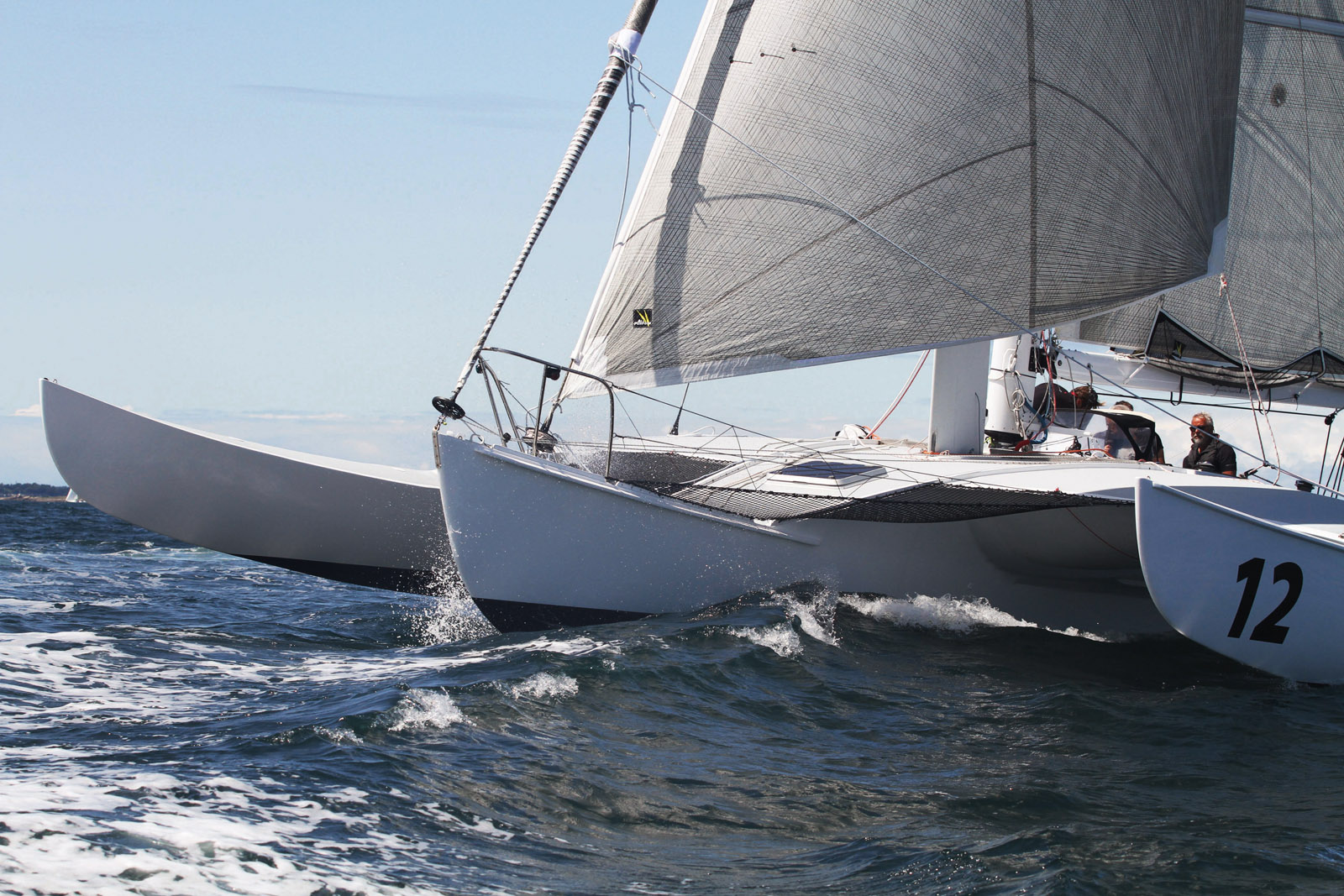
Equipped with a rotating mast some six feet taller, Moxie is much more powerful than she was... 42 years ago!
Eternal youth
Phil Weld was originally from Boston, studied at Harvard, and was told by his first boss at the Chicago Daily News: “You’ll like journalism, it means you can stick your nose in other people’s business!” From editor-in-chief of the European edition of the New York Herald Tribune, to managing editor, to owning a group of newspapers, Phil was a spontaneous, down-to-earth and energetic man. He developed qualities of empathy and indignation that made him an advocate for lost causes: “A good editorial writer has to find a reason to be mad once a day,” he used to say. From Newport to Gloucester, the monohull reigns supreme – this was how Phil appeared as a non-conformist with his first sport catamarans. In the early 1970s, the sailor was revealing his intentions in competition: “Do you know of any sporting discipline other than sailing where a man of my age (he was 55) could appear on the sports pages?” Phil participated in the 1972 Ostar aboard Trumpeter, a Derek Kelsall design. The skipper then asked Dick Newick to design a multihull capable of winning the 1976 edition; this was to be the 60-foot Gulfstreamer. Phil gained considerable experience in the space of a few years, but capsized during his delivery trip to England.
Moxie my love!
Philippe Echelle reflects
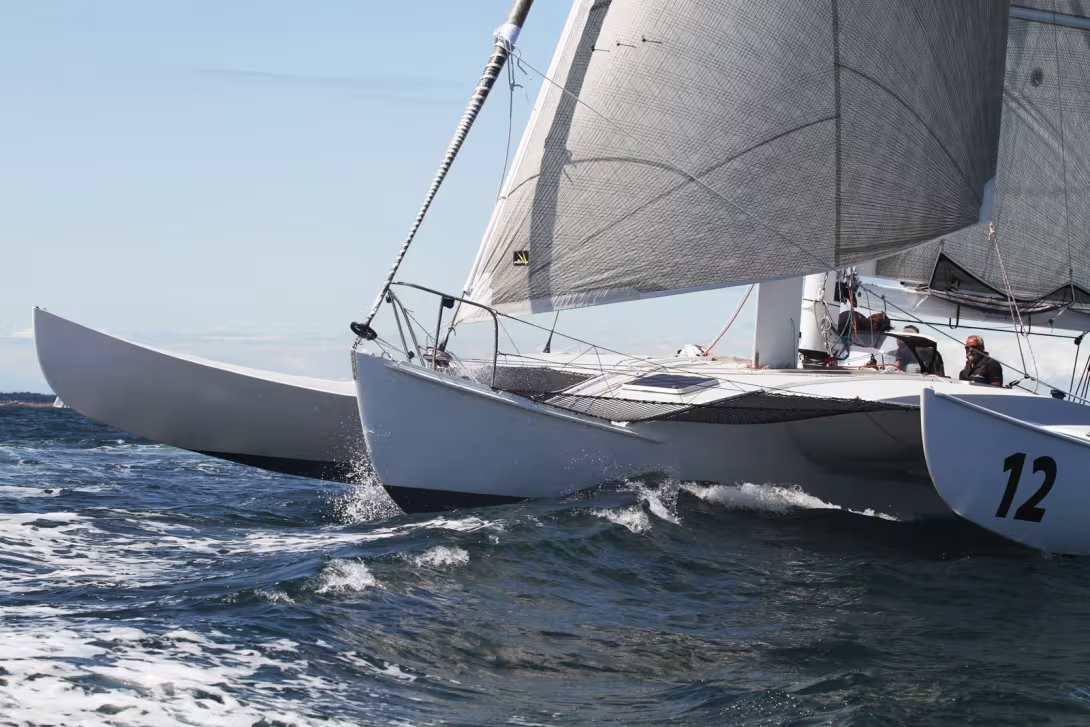
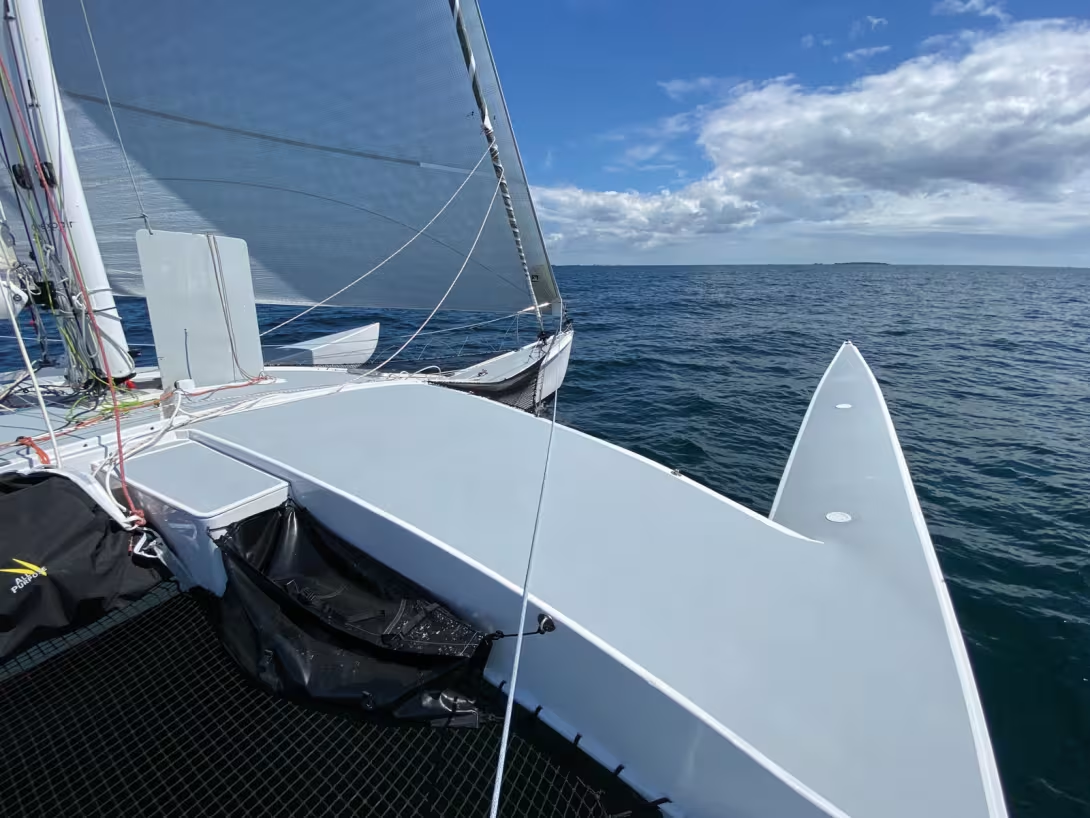
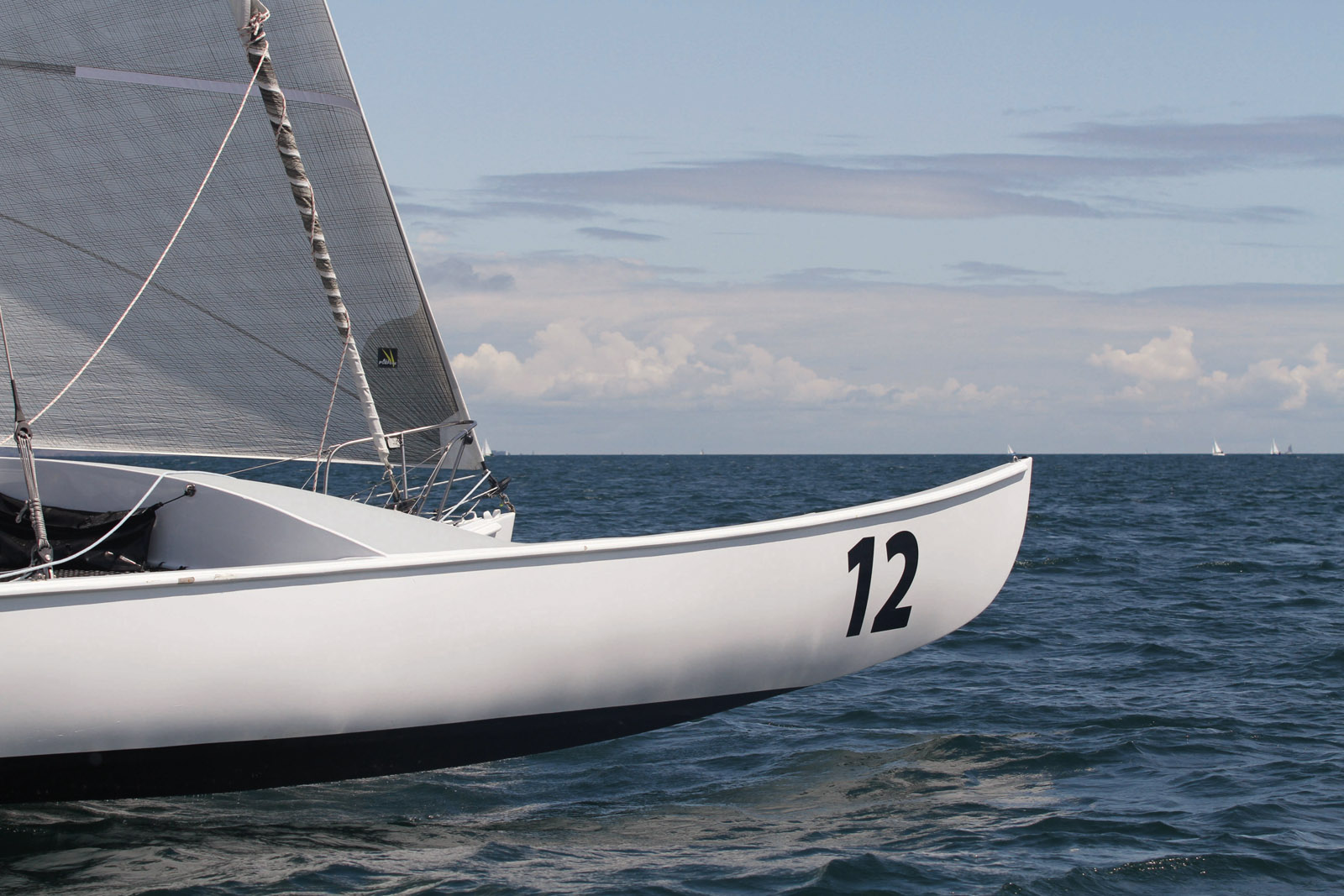
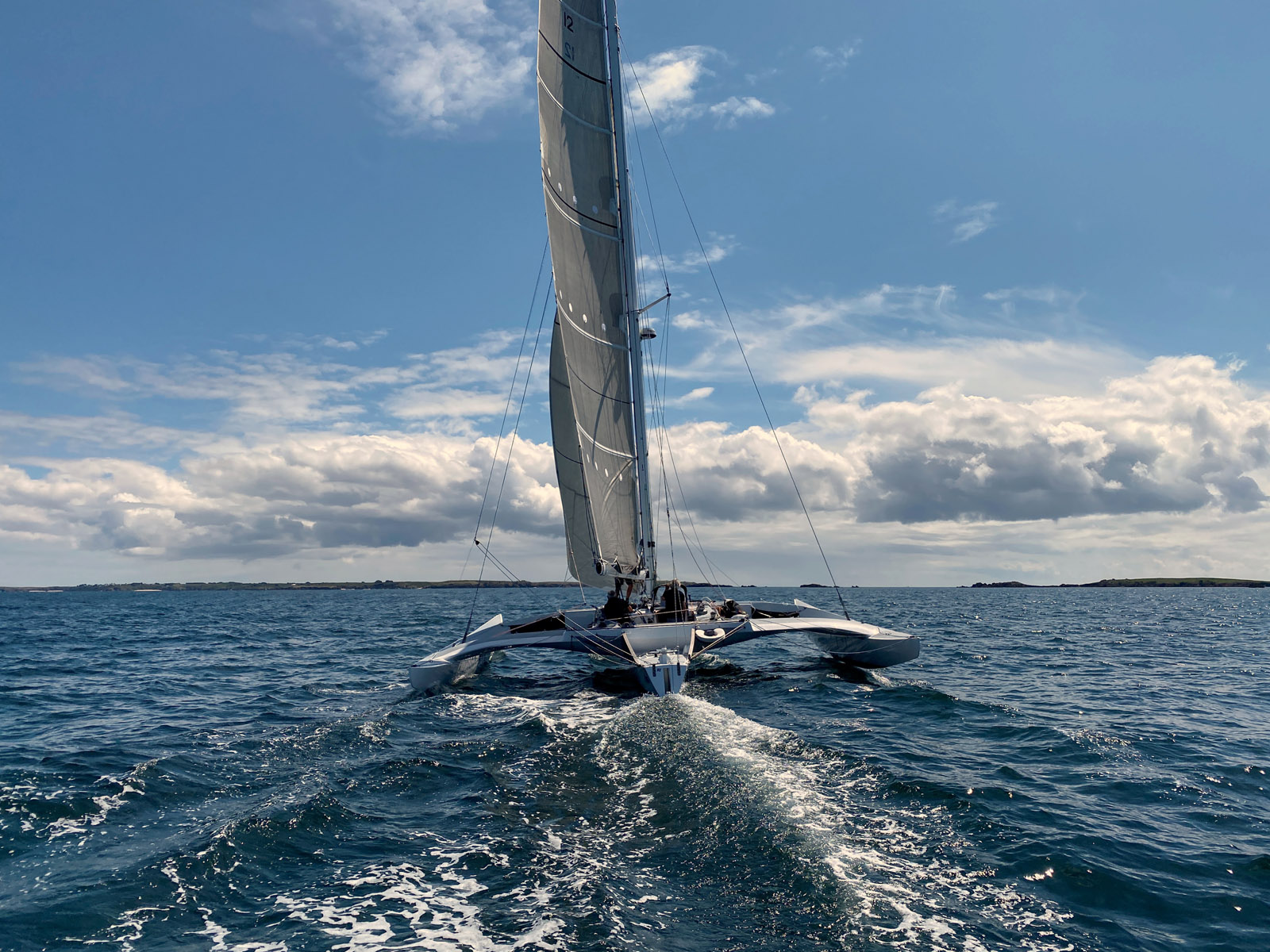
A phone call from Multihulls World in the spring of 2003 went something like: “Philippe, we’ve committed to Moxie and VSD in the Ruta de la Sal race and we thought it would be good for the journalist who’s so enthusiastic about these old glories to come aboard...”. So, some twelve hundred and fifty miles in the car later, overwhelmed, I found a trimaran like new, just as Phil Weld had left her. The legendary silhouette grabbed me, purer than Rogue Wave’s, her proportions were miraculous. The grace of the half-wing front arm reveals a complex fuselage-architecture, as strong as it is light. The aft arm conceals its powerful musculature by crossing the central hull, with great finesse. The ultra-tight lines of the under water hull, a legacy of the architect’s kayaking past, are expressed by rounded V-shaped sections. This design guarantees an exceptionally smooth passage through the sea and explains Moxie’s dexterity upwind (among other points of sail!). On the starting line of the Denia-Ibiza race, Phil Weld’s wheel was in my hands, the crew was grinding the original winches, everything was in its rightful place aboard this Ostar-winning trimaran. From the very first boatlengths, something instantaneous was exchanged between these 50 feet of molded wood and me. With nearly 300 boats of all shapes and sizes in front of us, under mainsail and genoa, the trimaran started off immediately in just a few knots of breeze. By nightfall, Moxie was in the lead! I was later to have several opportuni- ties to sail on Moxie - Craig even entrusted me with his trimaran for the 2006 Golden Oldies event: the greatest gift of my life!
 |
 |
 |
The magic of Dick Newick’s designs remains intact...
Moxie, Phil Weld’s third Newick trimaran
“Thirst for speed”: this chapter title from the book Moxie, The American Challenge sums up the sailor/author’s immoderate passion for speed on the water. Phil once again asked Dick for an even more powerful and modern multihull. Jan and Meade Gougeon constructed Rogue Wave, a “monumental” boat made of 60,000 pieces of wood comprising six different species. Weld came in third in the 1978 Route du Rhum with the best boat in the fleet (stupid damage to his mainsail sliders prevented him from placing higher). But next time round, the Brits set the maximum length for the Ostar at 56 feet - Rogue Wave would never win this race! Phil then ordered his third trimaran from Dick Newick. Walter and Joan Greene built the 51-foot Moxie in wood/epoxy in 1979, at the same time as Eric Loizeau’s Gauloises IV and the future Chausettes Olympia, aboard which Walter finished fifth in the 1980 Ostar, behind Nick Keig, Phil Stegall and the great Mike Birch. Phil completed an efficient and intelligent race with his trimaran equipped with a furling Hood mast - following trouble with the original rig that Phil found too tall, Moxie was mellowed a little and equipped with sails “all furling”. At 66 years of age, the skipper was leading the way ahead of the “furious French” (as he described them in his book), although he had planned to ease off in the lows. At the prize-giving ceremony in Newport, we heard “Weld for President!”
Philip Weld passed away some five years later of a heart attack. The magic trimaran was handed over to the Naval Academy for training young people. The institution quickly realized that this little rocket ship, however mellow she had been made, was not suited to this purpose. Dick Newick looked for a buyer - first Jim Rubinstein, then Joseph Oster, accompanied by a small group of co-owners. Winter main- tenance was entrusted to Walter Greene.
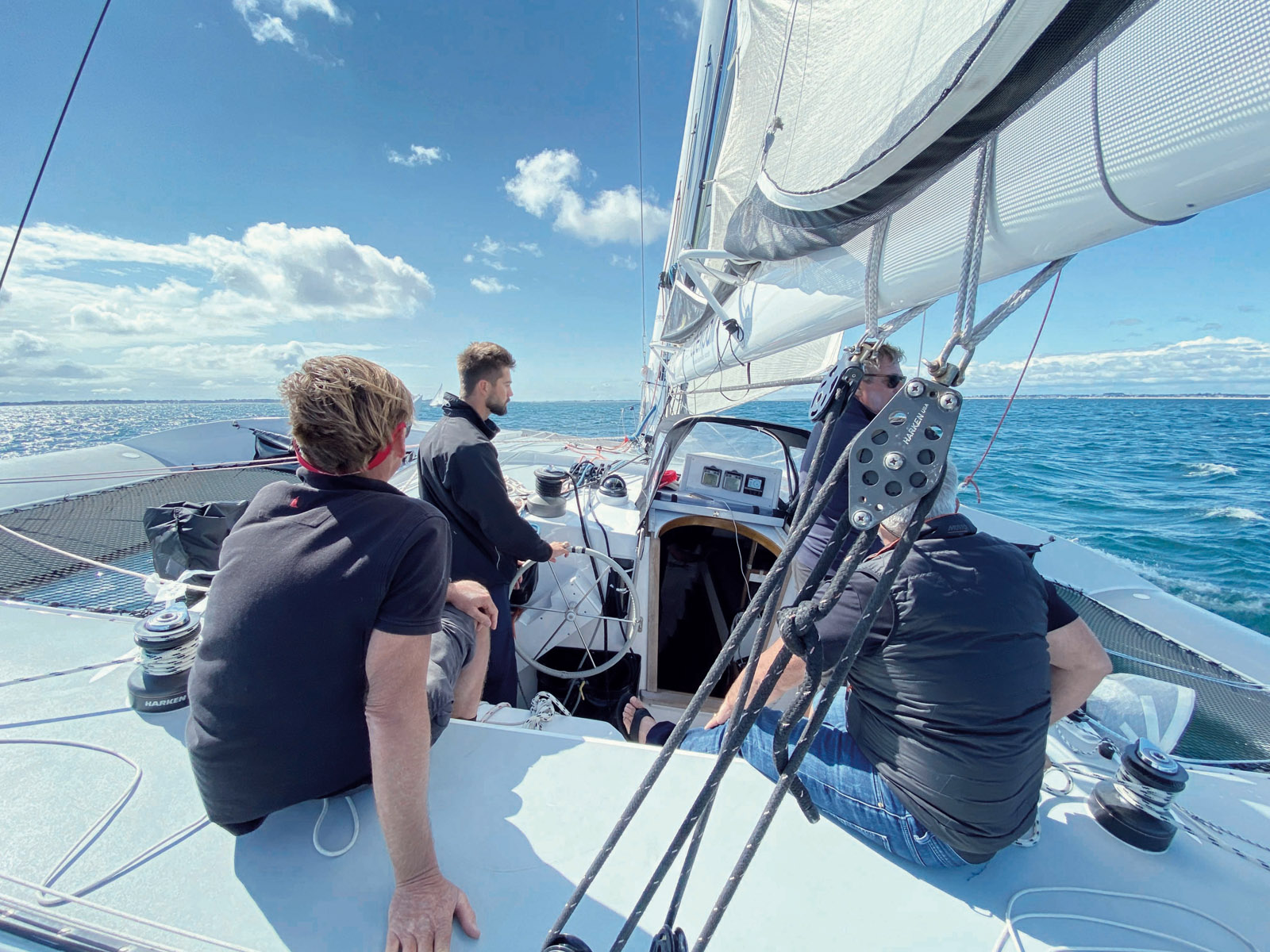
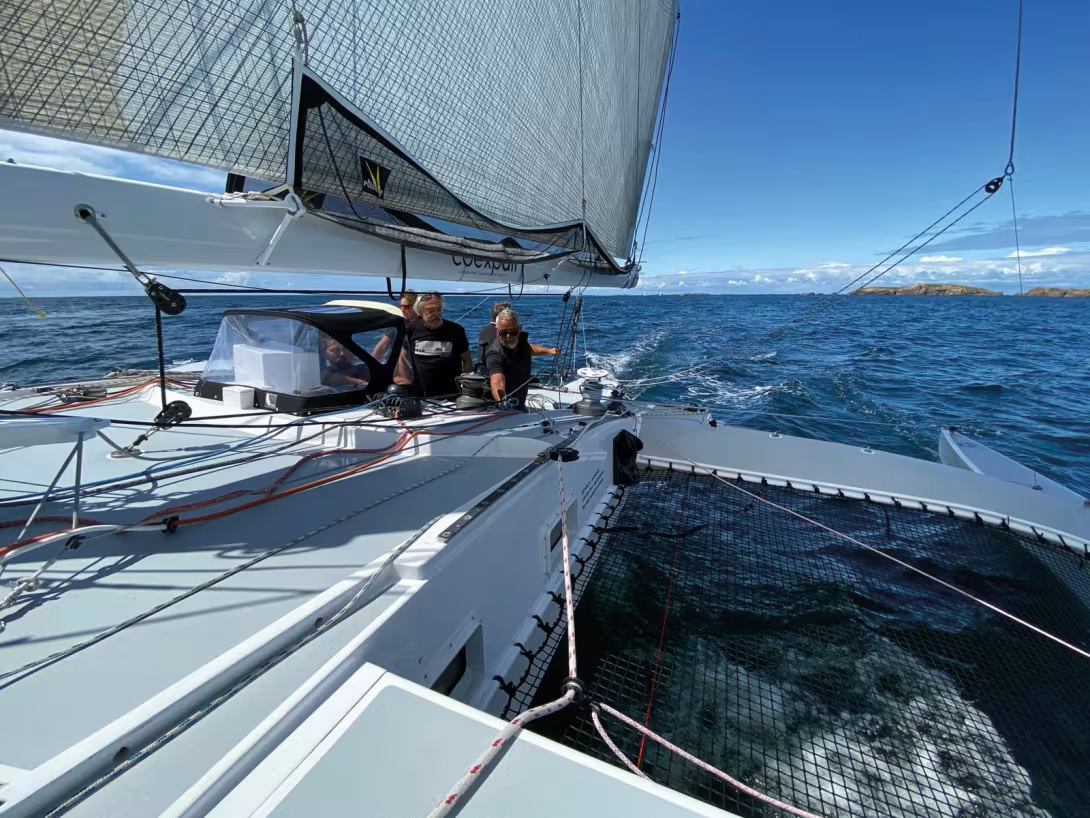
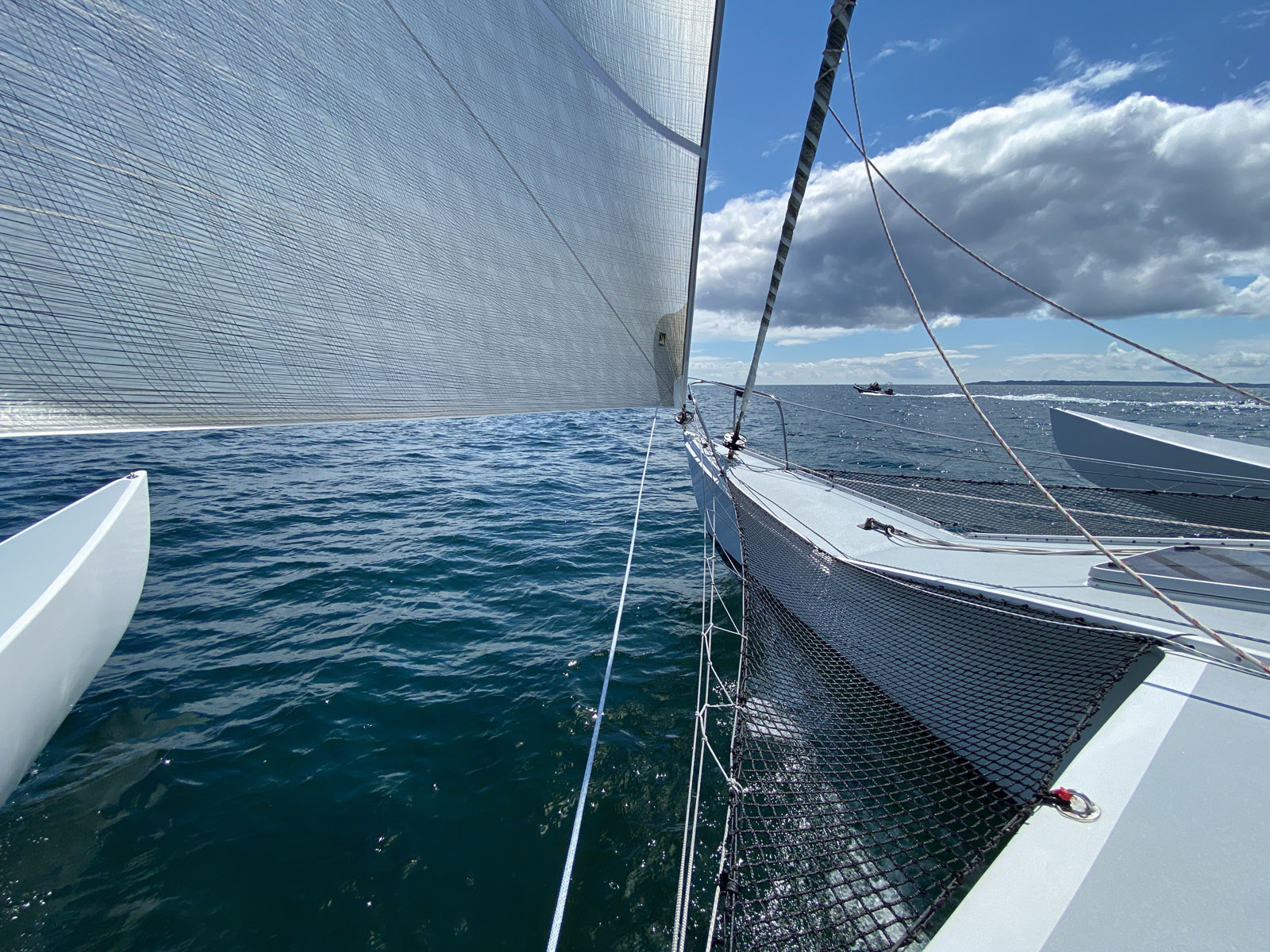
Sail trimming is concentrated into a cramped cockpit - better suited to single handing than with a crew!
Moxie and me
by Craig Alexander, Moxie's owner from 2001 to 2009
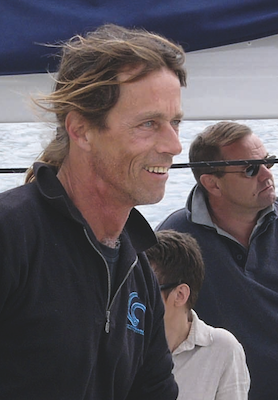
“Oh, the Moxie!” I’ll never forget these words from Marc Guillemot, a great sailor who at the time was leading the race, having stopped over in the Azores and being interviewed on his trampoline by journalists, he began his interview turning toward my trimaran. Moxie is without doubt a boat that changed the world of multihulls. I could not be happier to see her today in the hands of Hervé and Thomas Lurton who have given her the refit of her life. I look forward to following her new program 42 years after Walter Greene built her. I will always remember Walter asking a question about why I wanted this trimaran “Do you have the moxie to own Moxie?” Dick Newick would be proud of where she is today.
Moxie in Europe, flagship of the Golden Oldies...
Walter and Dick agreed that skipper Craig Alexander would buy Moxie. Craig un- dertook a major refit before he crossed the Atlantic and based his trimaran in the Mediterranean.
He then suggested, with Stuart Rogerson, VSD’s restorer, the idea of creating a movement to promote, share and emulate these legends of ocean racing – and thus was born the Golden Oldies Multihulls association. In 2008, Craig had to throw in the towel because of the cost of maintaining such a boat. He passed Moxie on to Stéphane François, who was to continue the philosophy of sharing the multihull. But ten years on, he encountered the same difficulties as Craig. Moxie sat for almost two years in Toulon in the South of France, where fortunately, she was well protected.
 |
 |
 |
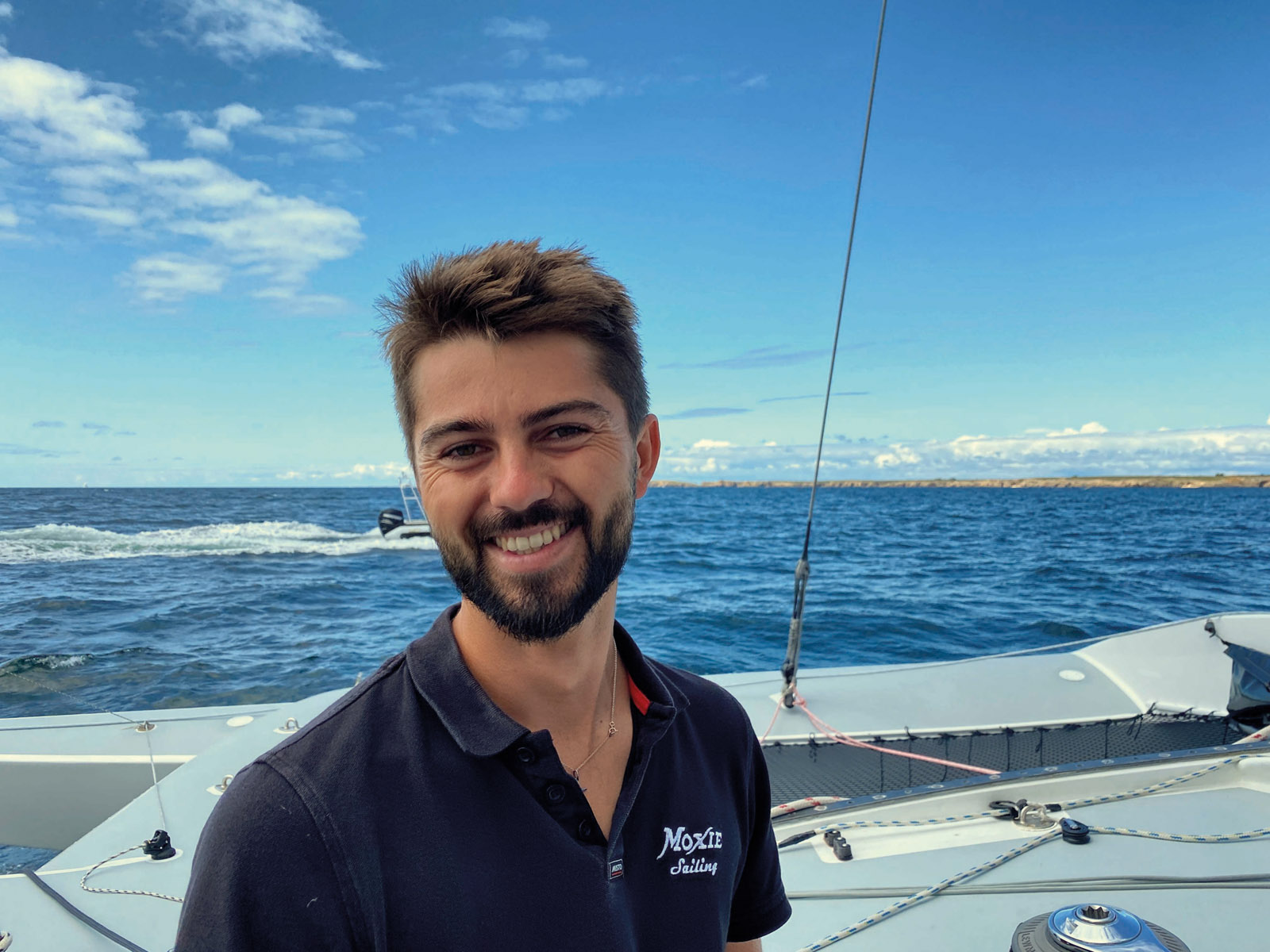
Thomas Lurton was born on July 1st, 1997 - he could well be the youngest skipper entered in the 2022 Route du Rhum.
A father and son get bitten by the bug
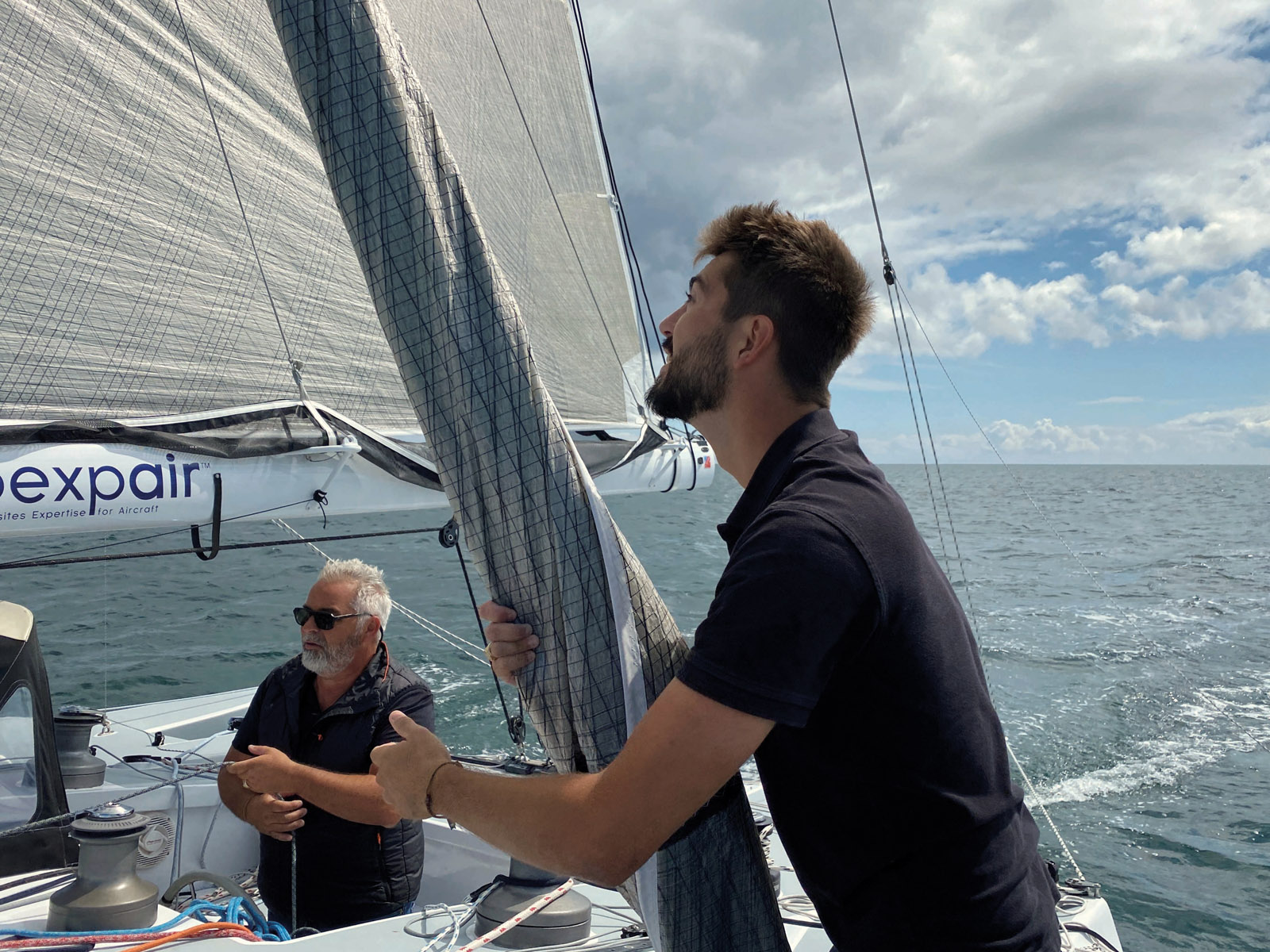
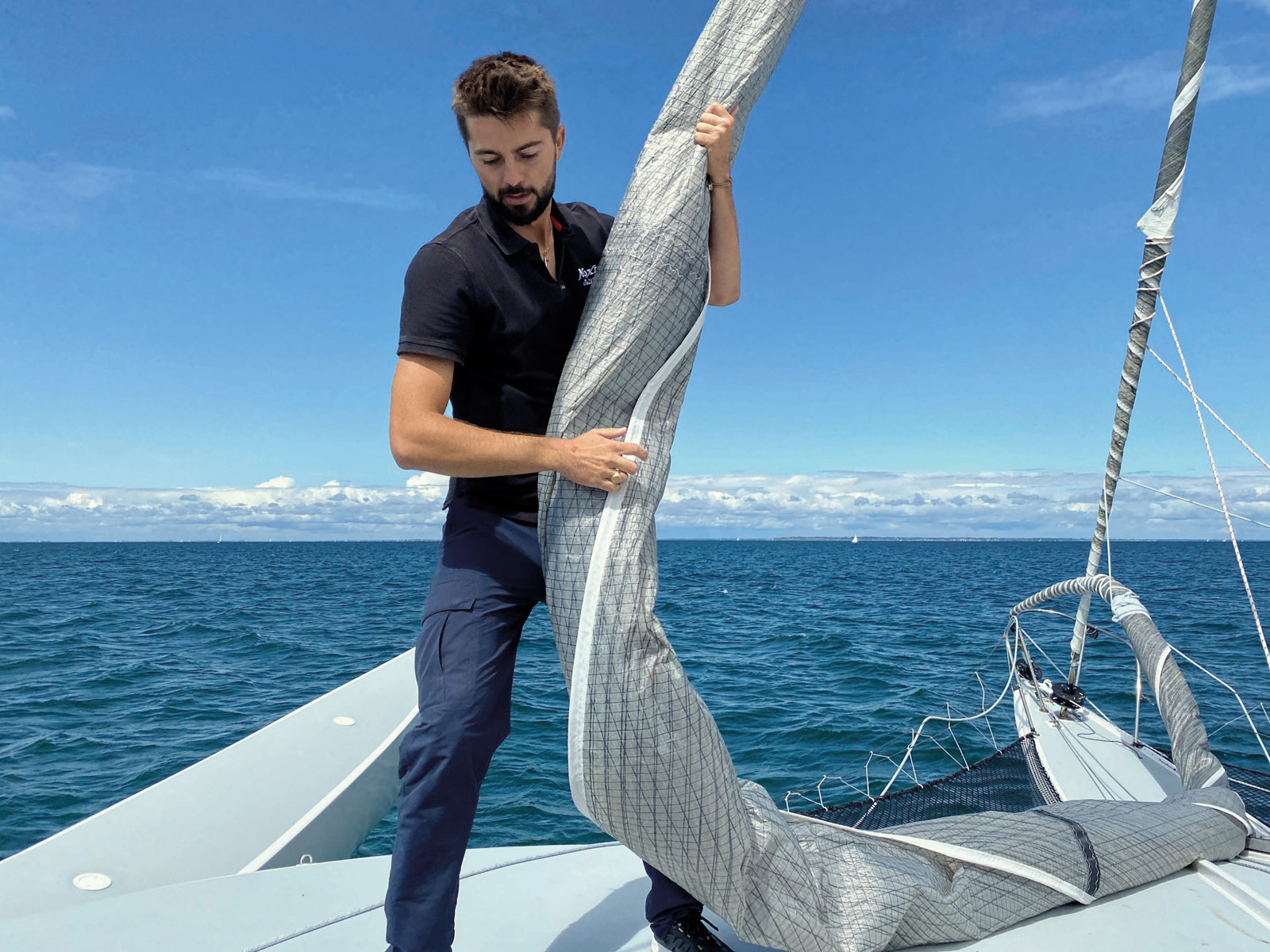
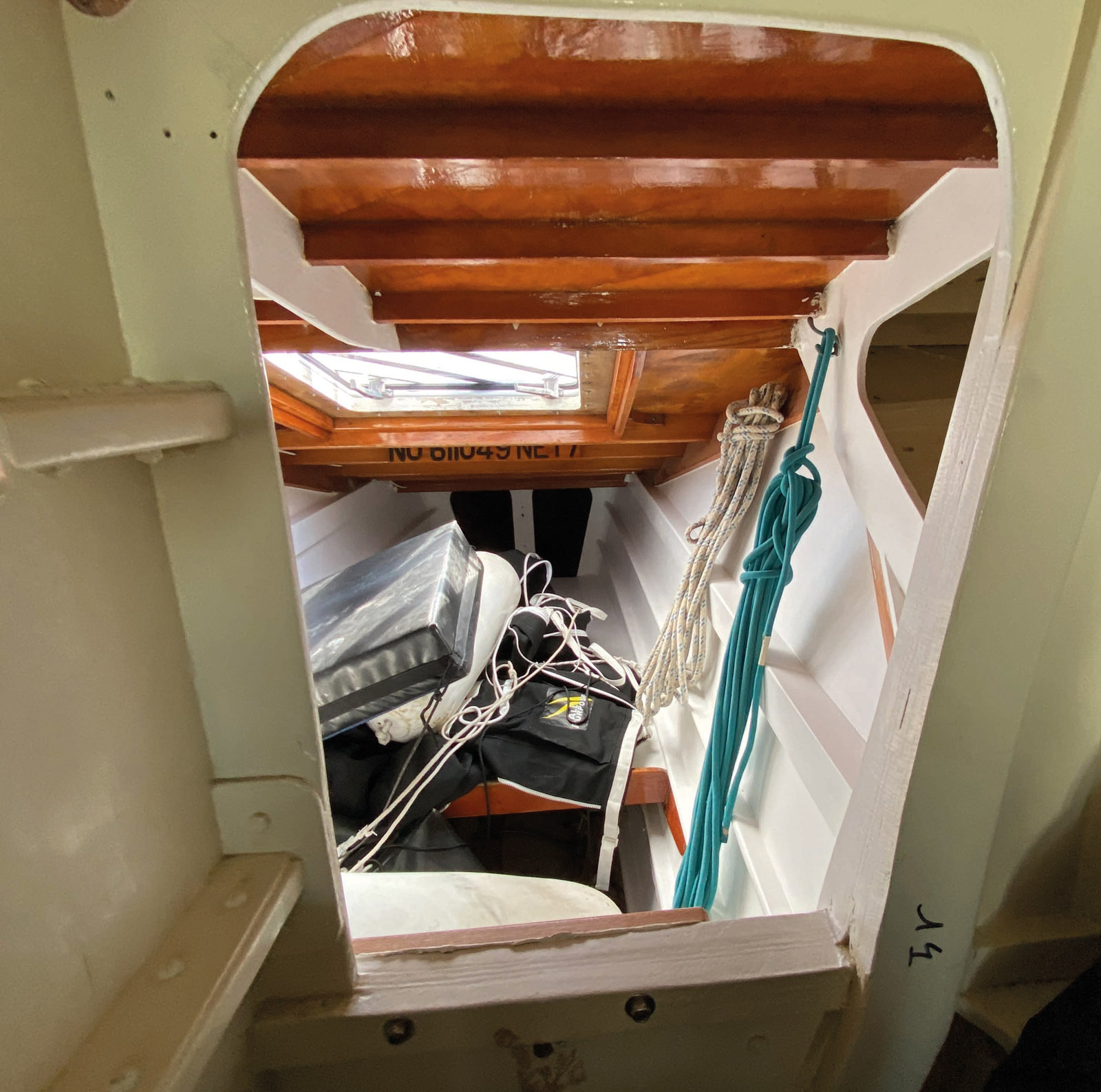
It was then that Moxie’s destiny crossed paths with that of Hervé Lurton. Based in Saint-Pierre-Quiberon, in Brittany, Hervé’s nautical CV reads well - sport-studies in La Rochelle, Olympic preparations, and record campaigns with Bruno Peyron and Francis Joyon. His eldest son Thomas, with a master’s degree in international relations and political strategy, was determined to change course and find a job related to the sea. One visit to the trimaran, a sensible asking price, and the deal was done: the Lurton family, helped along by Christophe, a sailing friend and benefactor, became the new owners of Moxie! There followed an epic delivery trip around Spain in order to bring the trimaran back to Brittany. Just before the Strait of Gibraltar, the stern gland gave out and the engine compartment was almost flooded. Hervé and Thomas managed to pump out, control the ingress and even save their motor. A little later, a slight unease set in on board: everyone heard voices but didn’t dare to confide in each other! When the subject was finally discussed, the origin of these sounds was quickly located, it was the chain-driven autopilot! Heavy weather off the coast of Portugal and the ancient sails forced the crew to head far to the west; it was then that Moxie’s old EPIRB went off... giving a position somewhere inland in Eastern Europe. In short, it was time to arrive. A long and meticulous overhaul of the trimaran followed: a new mast - now rotating - and a complete new sail wardrobe, but also countless modifications such as the daggerboard, borrowed from an old trimaran: “This daggerboard has already crossed the Atlantic and even won the Route du Rhum!” laughs Thomas. The young skipper made sure to recover as much material as possible, not only to save money but more so because of his ecological convictions.
 |
 |
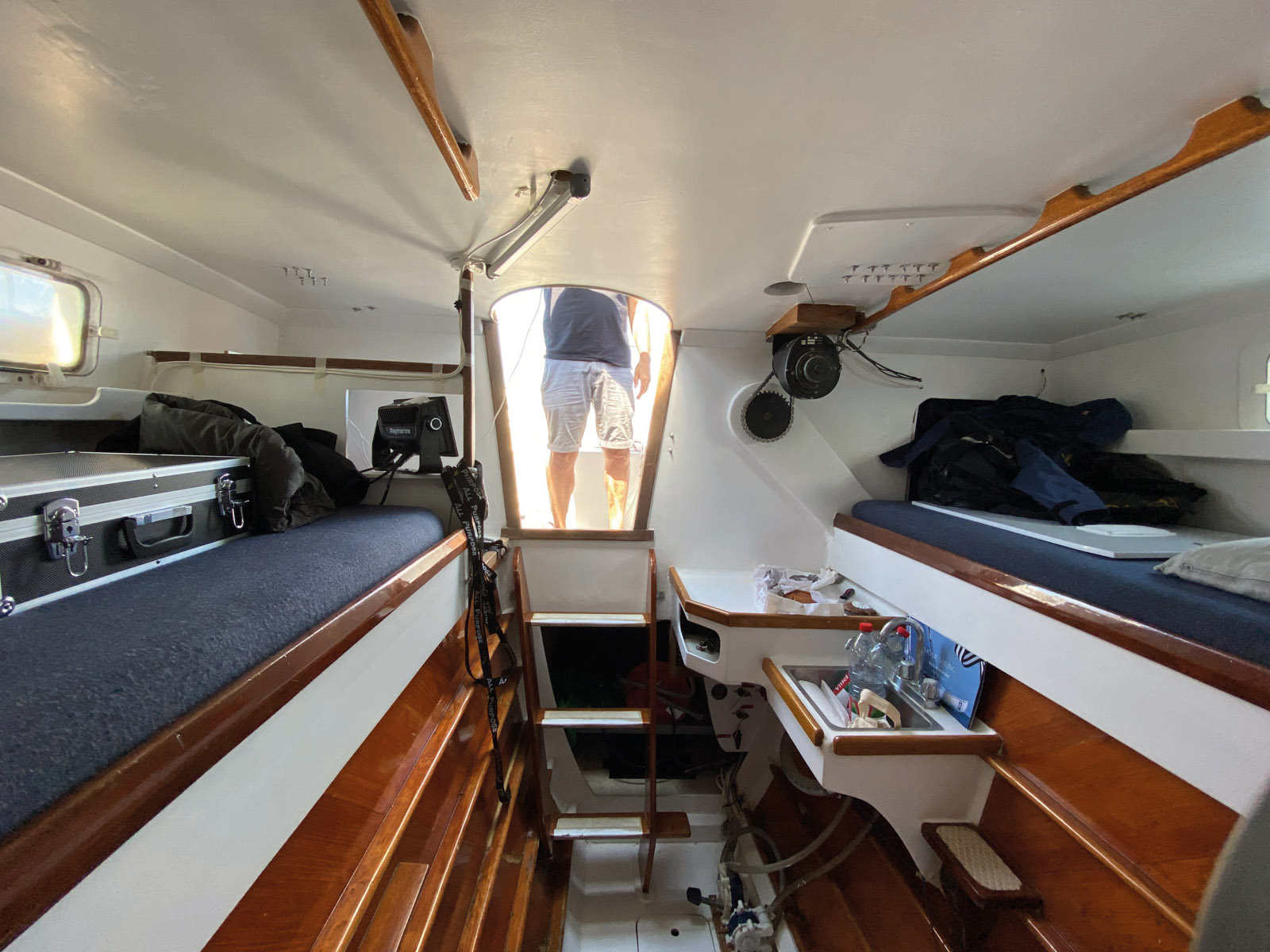 |
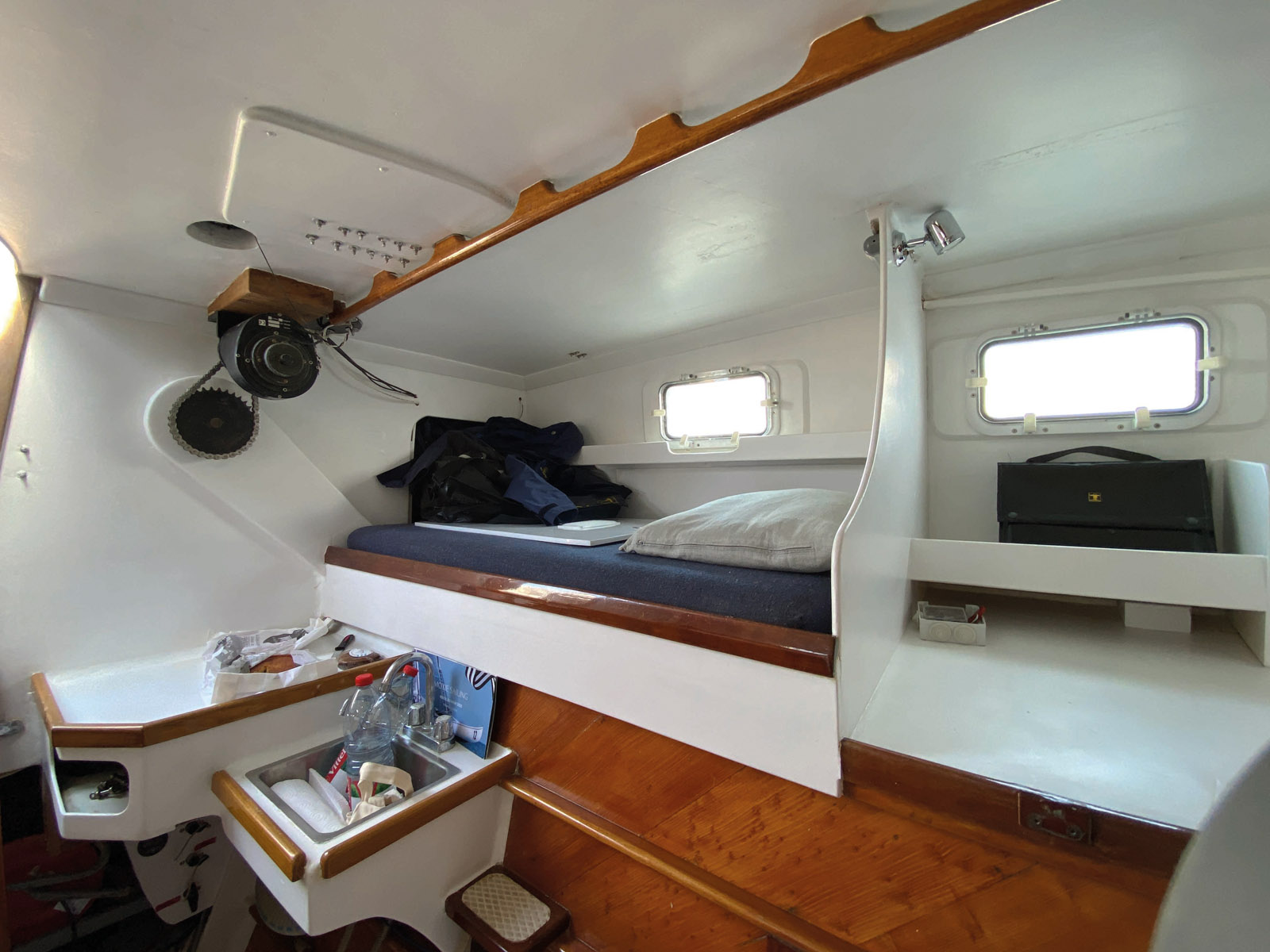
Down below on Moxie, all the charm of wood construction.
The magic of gliding across the water
The trimaran that we discovered in Port Haliguen, on the Quiberon peninsula, is already perfectly operational. 15 knots of wind are enough for her to exceed 17, under gennaker. The banana-shaped lines of the floats and the linking arms/wings are clearly those of Dick Newick - that is to say sublime. With full sails, the leeward float buries a little, but Moxie continues to glide smoothly across the water. Spray sometimes comes over, but the trimaran never slams. On board, sailing maneuvers follow on, one from ano- ther. Thomas is supported by his father, but also Christophe Desfossés and Ronan de Kersauson, nephew of famous French navigator Olivier de Kersauson. The young skipper is being trained by a sports coach, including on a mental level. He trains single-handed on a Mini, reads up a lot on every subject related to weather, fluid mechanics, engineering... In short, Thomas expects to be ready on November 6th, the start date of the 2022 Route du Rhum. Multihulls World will be there to share the adventure with you!
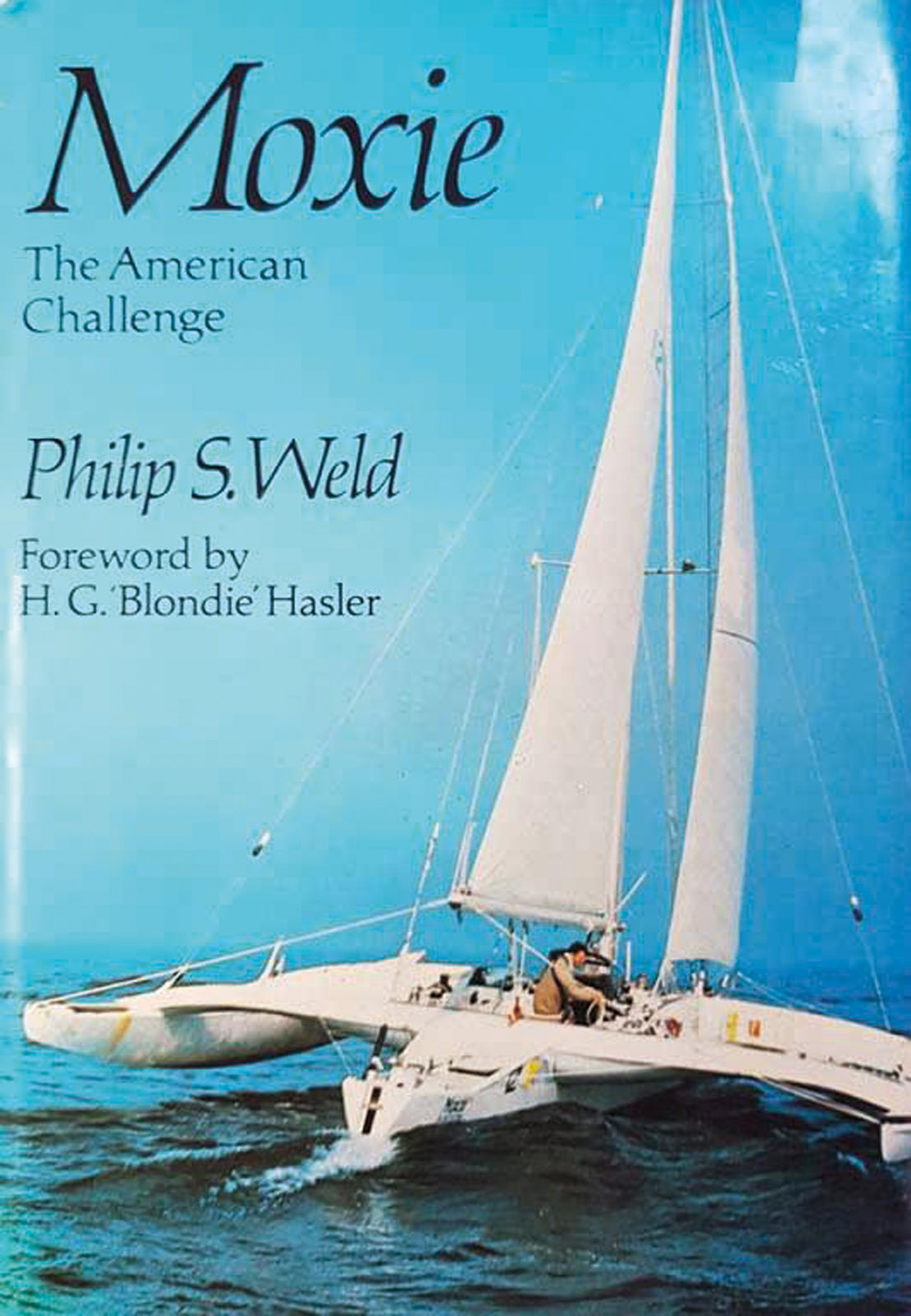
Moxie, The American Challenge, written by Phil Weld after his victory in the 1980 Ostar.
Drink Moxie !
 |
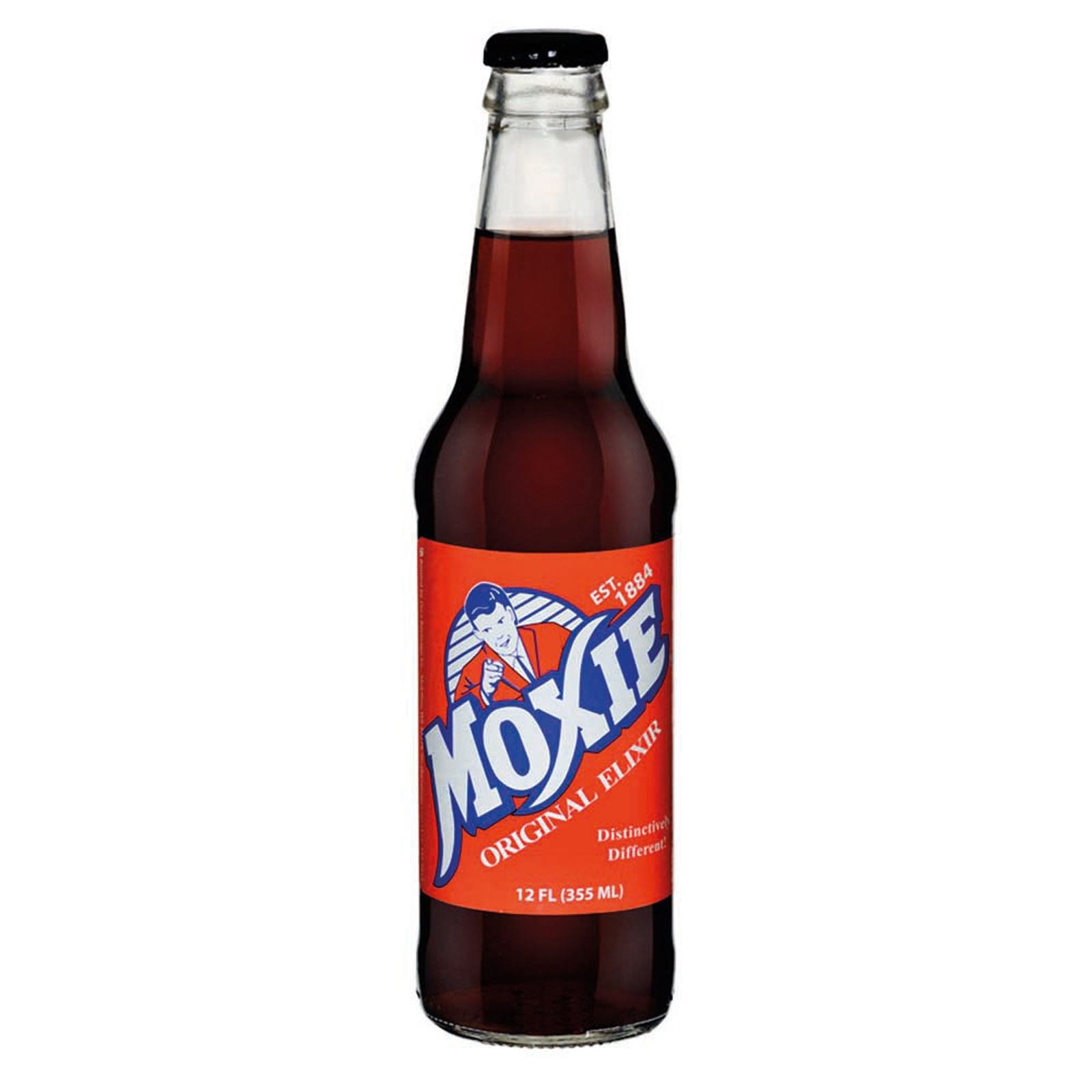 |
Phil Weld’s trimaran might well have been sponsored by the drinks brand Moxie. This was indeed the name that the skipper had chosen for his trimaran. The carbonated beverage, born in 1884, is one of the very first non-alcoholic drinks commercialized in the United States. Rich in Gentian root extract, Moxie Nerve Food was known for its energizing properties, somewhat like Red Bull is today - but with a much more bitter taste! Moxie was still a small company in 1980, but its product was designated the official soft drink of Maine in 2005, and in 2018, the brand was bought by Coca Cola. Maybe it’s time for Moxie to give it a shot? Contact was made in with this in mind a few months ago but watch this space as Moxie (the trimaran) is still on the lookout for sponsors.
TECHNICAL SPECIFICATIONS
Builder: Walter and Joan Greene
Architect: Richard (Dick) Newick (plan #48)
Light displacement: 9,920 lbs / 4.5 t (12,125 lbs / 5.5 t today)
Length: 50’ (15.23 m)
Beam: 32’4” (9.85 m)
Maximum beam of the central hull at the waterline: 3’6” (1.06 m) Length of the floats: 39’7” (12.06 m)
Sail area upwind: 1,140 sq ft (106 m2) in the original version. The mast was 54’ (16.45 m) with a big- roached mainsail. The furling spar by Hood used in the 1980 Ostar was 50’ (15.25 m). From 1990 to 2021, the rig increased to 55’ (16.80 m). Moxie is now equipped with a 61’ (18.50 m) wing mast.
Reacher: 1,022 sq ft (95 m2)
Original motor: 30 HP outboard on a bracket – today, a 30 HP shaft-driven inboard and folding propeller.
