

YouTube content reveals a whole world, from the most extravagant to the simplest... The content is instructive or amusing; you can find absolutely everything on it - including subjects about sailing, the nautical world and multihulls in particular, which is what inte- rests us here! Because YouTube channels of blue water multihull cruisers are now popping up everywhere. Today, it is certainly easy to create content and share it. In absolute terms, the quality, the time spent editing, or the time spent filming doesn’t really matter. There are no rules, YouTube is first and foremost an entertainment platform, where people learn, dream, laugh, and of course share on social networks. Some may use it to simply share their adventure with friends and family, but for others, YouTube has become a full-time job. Here is a topic that is creating a lot of discussion: welcome to the world of the YouTuber sailor!
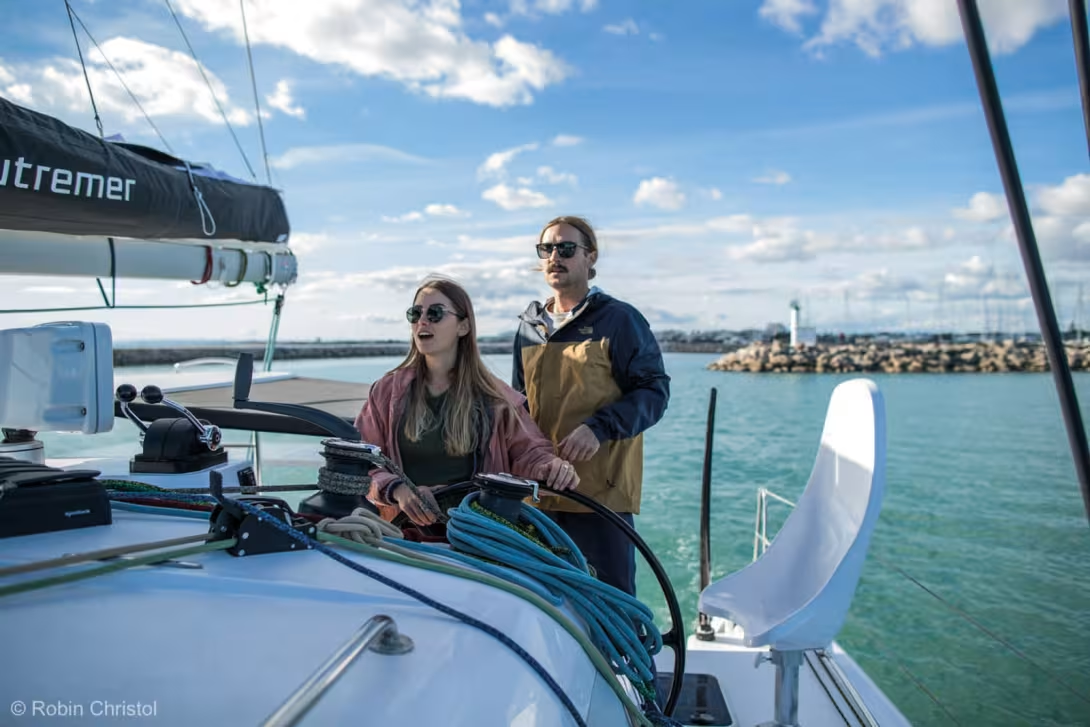
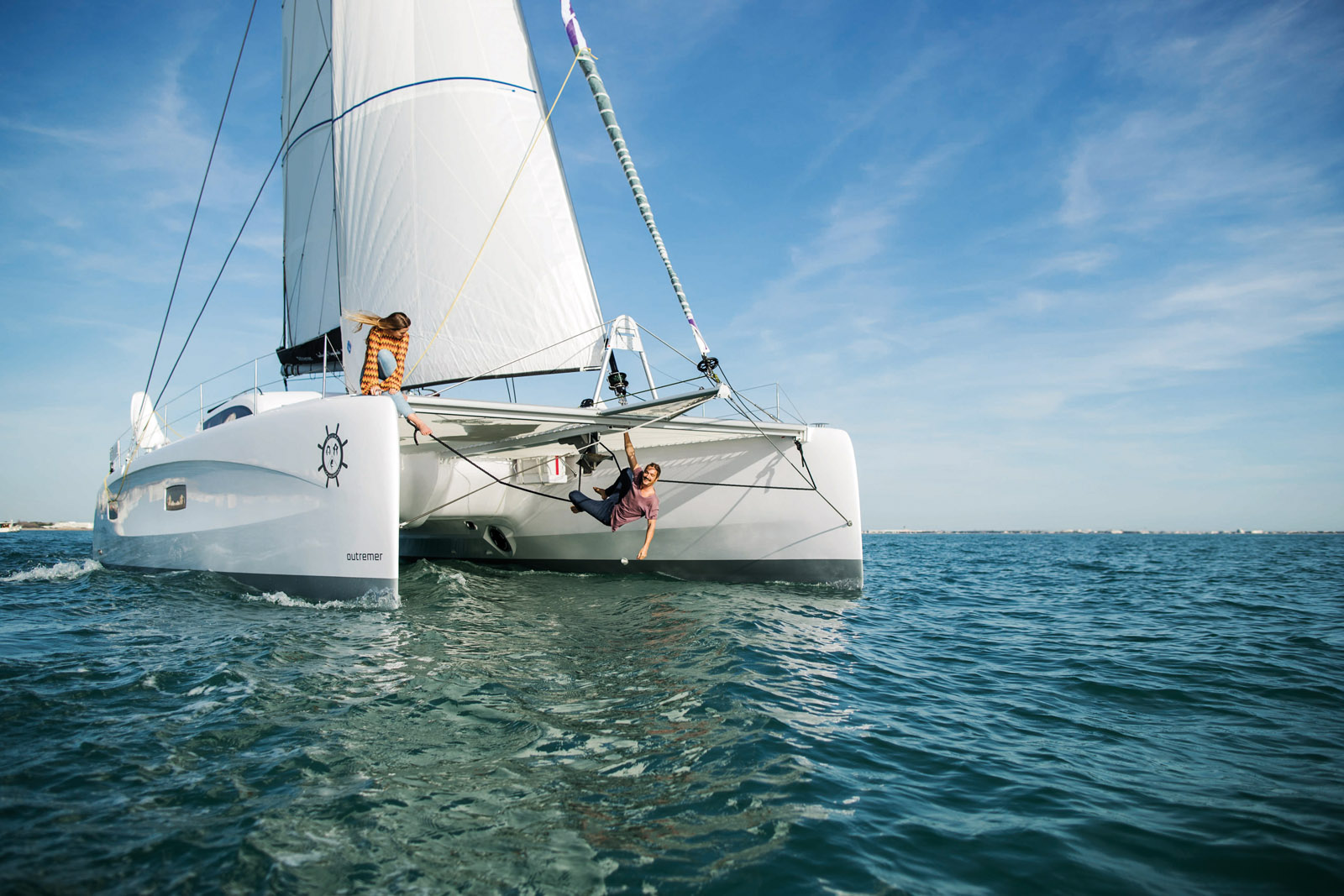 Riley and Elayna, from Sailing La Vagabonde, are role models: their YouTube channel is by far the most followed in the field of multihull sailing.
Sailing La Vagabonde, the one to follow
There are still a lot of questions about YouTube, especially “How is it possible to make a living from it?” There’s nothing to hide in this business (yes, it’s a real business). You become a videographer, editor, actor and many other things besides. As with any job, it’s your skill set that will determine how you are able to differentiate yourself from your competing channels. Sharing sailing videos, mainly in the travel vlog niche, really started about 7 years ago. It was still the early days of YouTube, when videos of any kind rarely exceeded one million views. Among the very first were Riley Whitelum and Elayna Carausu. The young couple started a long journey aboard a monohull, La Vagabonde, and shared their videos every week (or so) on the YouTube channel Sailing La Vagabonde. Riley and Elayna are beautiful, their content is educational. The images are stunning, and the editing is neat... in short, the channel exploded, and the couple graduated to catamarans when they settled aboard an Outremer 45, logically named La Vagabonde 2. The birth of their son Lenny did not harm the success of the channel. It was quite the contrary in fact! And Riley and Elayna have recently had a second child, who they’ve named Darwin, and are soon to buy a Rapido 60, La Vagabonde 3. Such a success obviously creates vocations: But is it really possible, by cruising and making small videos, to afford a new 45-foot catamaran - or at least to repay a loan?

The Youtuber equipment
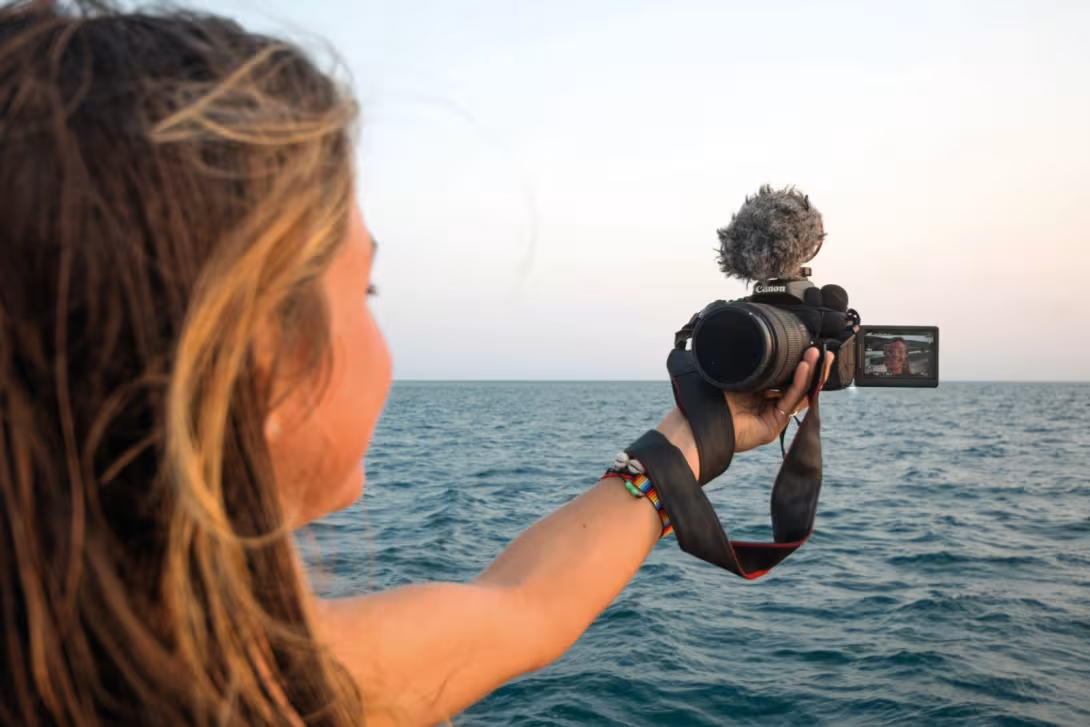
Today, a good smartphone, editing software and an internet connection are sufficient tools to generate video content on YouTube. A remote microphone protected by a windscreen considerably improves the sound quality. For the more demanding YouTubers,the "big" cameras have given way to versatile, much more compact-bodied units that can film with different focal lengths. The improbable waterproof cases have also disappeared: the GoPro has become the all-purpose waterproof camera - many high-end phones are waterproof, too. The most modern drones, incredibly light and powerful, offer amazing images in HD... All that remains is to know how to tell a story, capture the right moments and edit it all, once a week - that’s where talent and experience come in!

The secrets of monetization
At the risk of debunking the myth of influencers retreating to Dubai to quietly enjoy their amassed dollars, sailing YouTubers have inevitably begun to publish videos on the platform without ever seeing a penny... So, how does monetization on YouTube allow dozens of YouTubers to make a living out of their passion for travel, sharing and videography, and all the while living out their dreams? The short answer is that to start getting monetized, you need to accumulate 1,000 subscribers, 4,000 hours of views and no violations of YouTube’s code of conduct for a year. Once these goals are met, the channel qualifies: YouTube conducts home checks by mailing a letter with a code to ensure no bots are involved. Then, once everything is in order, creators can (finally) monetize their content.
You’ve probably already experienced the ads, which are present on most of the YouTube videos you watch. Usually, they only last a few seconds, and the famous «Skip Ads» allows you to avoid them for a while. These are the ads that allow the creators to earn some money. Sometimes they appear when the creators have not (yet) asked for anything. They decide whether to place them at the beginning, in the middle and/or at the end of the video. The more intrusive the advertising, the better the videos are paid... but the more they risk becoming indigestible! This is the first big decision to make. The amount paid to the YouTubers also depends on where the viewers are, how long they have been watching the ad, the time of the year and finally the subject of the video. Marketing, business or content creation videos earn more money than the videos we are interested in here...
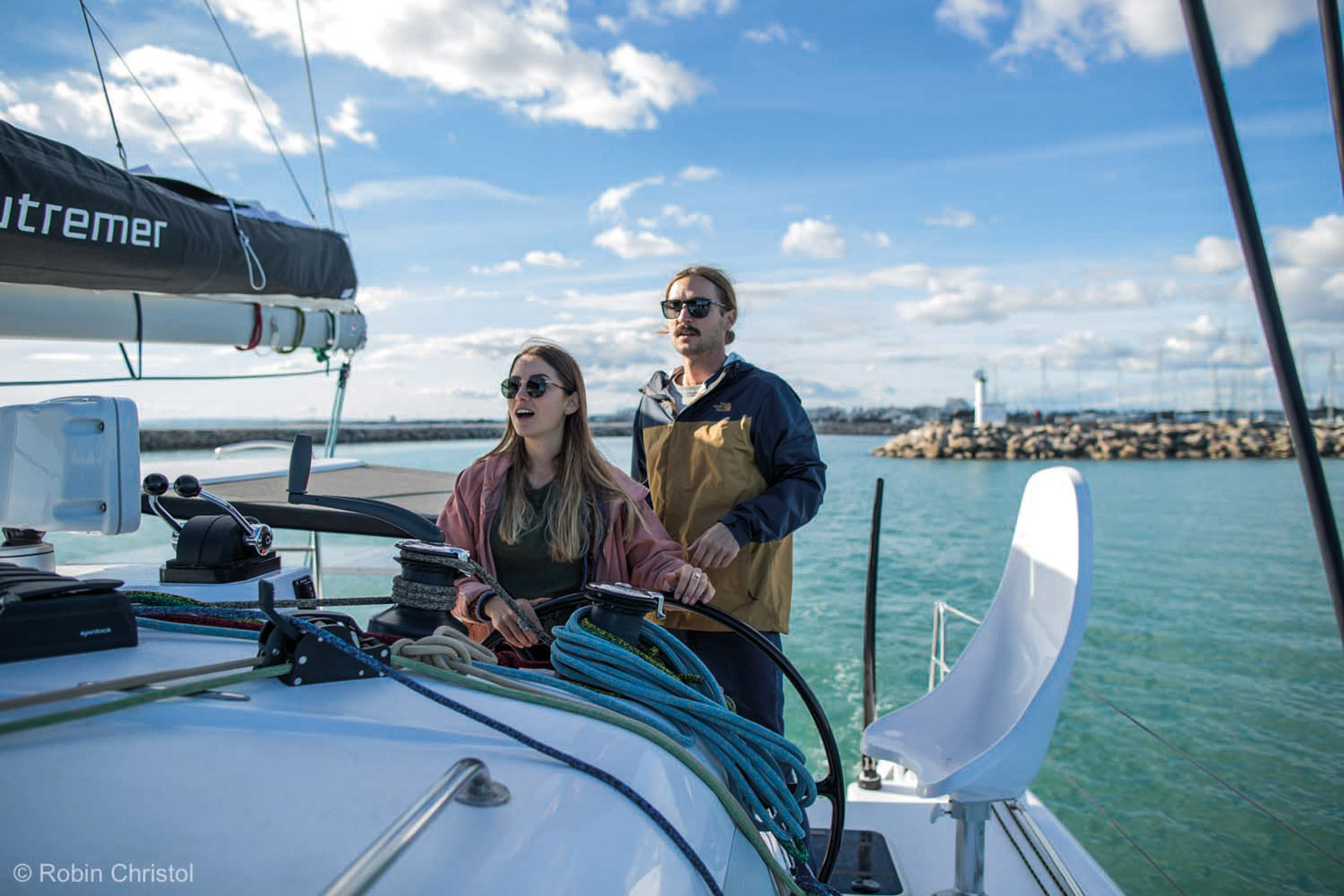
For a manufacturer, supporting YouTuber sailors can often be an excellent marketing and communication tool - Outremer Yachting has definitely understood this!
Rules to respect...
Watch out though: for a video to be monetized, it must meet certain criteria.
Non-rights-free music does not allow mo- netization: the video will be blocked, or not monetized, or the profits from monetization will go 100% to the creator of the music used. The language will be non-vulgar, nonviolent and should not shock. Obviously, there should be no content related to firearms, child exploitation and so on. Before each monetization authorization, YouTube reviews the video. Moreover, when uploading, thanks to its artificial intelligence system and algorithm, YouTube knows exactly what the video is about without the need for titles, descriptions, or hash tags. If your videos go against these criteria several times, your channel can be suspended.
CPM – Cost Per Thousand
In the world of YouTube the CPM - Cost Per Thousand, is the cost (to the advertiser) per 1,000 views. This is surprisingly variable, since its ratio is almost 1 to 300! In Belgium, the CPM is about $3.40, $3.90 in Switzerland and $4.50 in France. The United States is well placed with a CPM of $13. Just above that, Canada is at $13.60, barely surpassed by the UK at $13.75. The highest CPM is Norway at $44, while the lowest is Angola - only $0.15.
These figures are somewhat misleading: they could be compared with a turnover before taxes, with YouTube taking 45% of the CPM in platform costs. The income of the creator minus this 45% is therefore equivalent to the RPM (Revenue per Thousand [views]). Obviously, the longer a viewer watches the advertisement offered to him before watching the last video of his favorite sailors, the more he financially encourages them to continue producing their beautiful videos. Revenues also change, as we saw above, depending on the time of year. As with most commercial activities, we see a lot more money being invested in advertising in the run-up to the holidays. Creators’ CPMs increase during the month of December and then drop in the following months.
 |
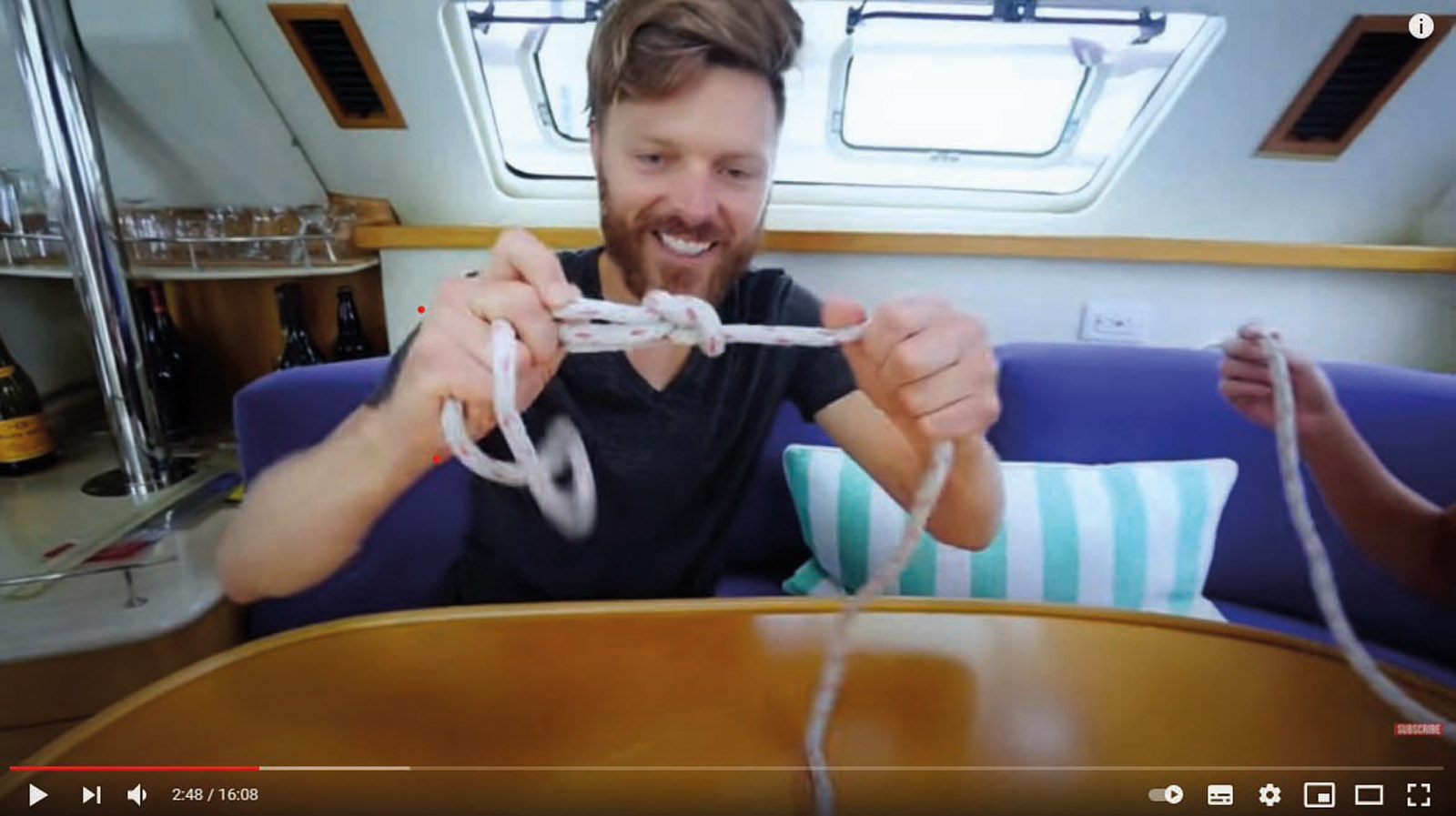 |
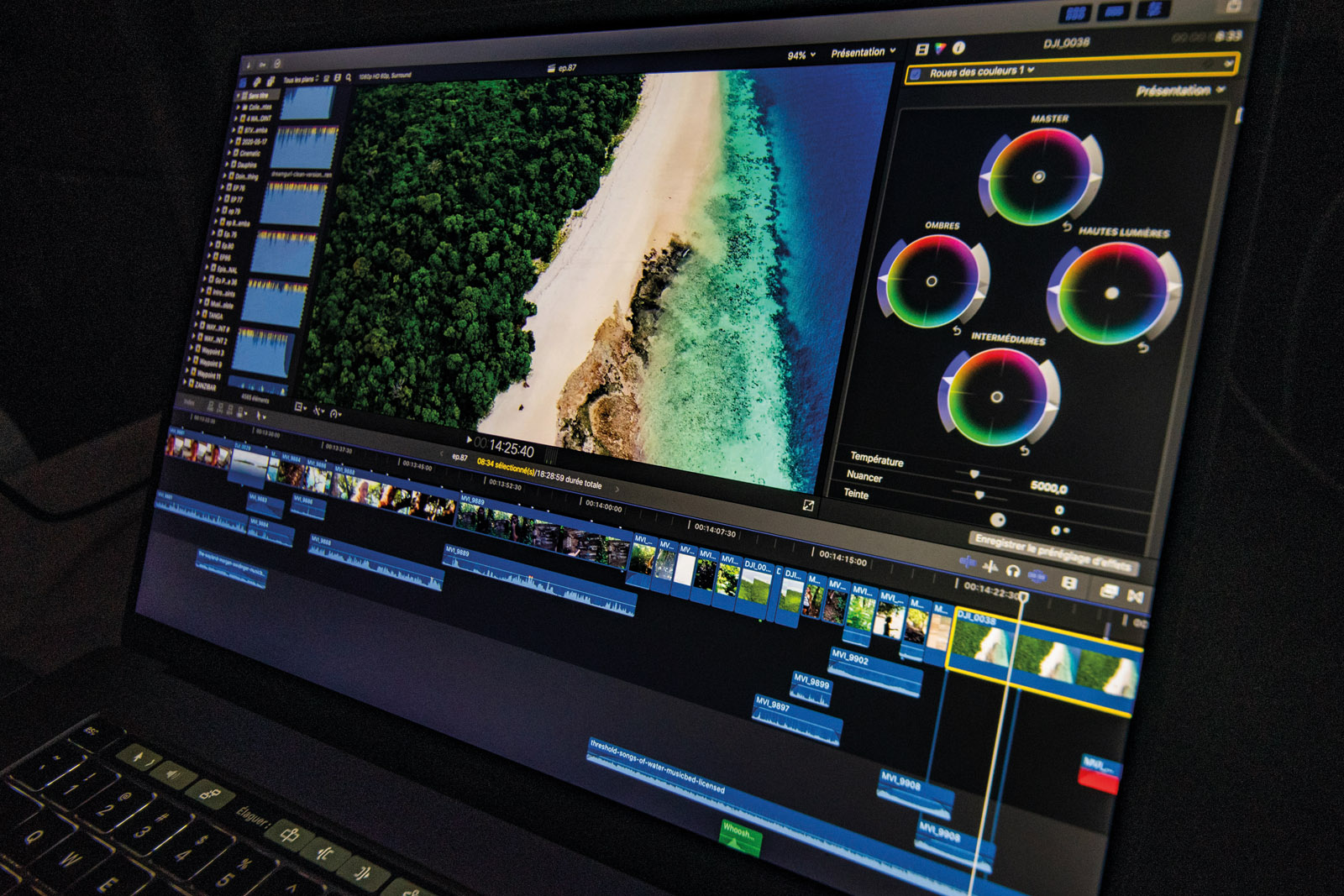
Creating a video is relatively intuitive. However, the necessary editing software requires a (very) powerful computer.
The content of the Gone with the Wynns channel, hosted by Jason and Nikki Wynn, aims to be instructive by covering many technical aspects.
Unpredictable Incomes
To give you an idea, some YouTube channels that deal with long distance multihull sailing can generate between $300 and $800 per month. If we take the example of the Gone with the Wynns channel (470k subscribers) whose crew is currently sailing aboard their Leopard in New Zealand. Their channel totaled about 2.25 million views last August. With an average RPM between $1 and $3, YouTube generates between $2,250 and $6,750 in revenue per month.
For Sailing La Vagabonde (1.61M subscribers) and their 3M views in August 2021, the income is between $3,000 and $9,000 per month for an RPM between $1 and $3. As you can see, the incomes of these favorite multihull content crea- tors are very changeable. They depend on the algorithm that pushes their videos up or not. Some weeks they may create more popular videos that will bring them a little more money, and other weeks, less viewed videos. This is due to the subject matter, the time of year, the thumbnail (the image that illustrates the video), the title etc. For those who want to make a living out of their passion and want to offer their fans content that is similar to their own, the dependence on YouTube’s algorithms is difficult to bear. This is where the Patreon platform comes in.
Youtube Superstar...
Who hasn’t heard of YouTube today? Come on, a little reminder: this video hosting website created in 2005 by three former PayPal employees was bought by Google a year and a half later for 1.65 billion dollars, which sums up the dazzling success of this service... YouTube is therefore the video sharing platform that has managed to impose itself worldwide - even if the Chinese app TikTok is now gaining ground among the younger audience.
Thank you Patreon!
On many sailing channels, you will often come across the term Patreon - usually being thanked by the creators. There was a time when artists had to get noticed by sponsors, producers or agencies in order to be launched into a career and start earning a decent living. Today, other means exist thanks to platforms like Patreon, a participatory funding site for content creators. San Francisco-based Patreon Inc. was founded by musician Jack Conte and developer Sam Yam in 2013. The platform, perfectly complementary to YouTube is a quick and easy way for fans, contributors or friends to financially support a creator, helping them to continue their business. Usually, a Patreon subscriber is charged per creation, i.e. per published video. They choose the amount to donate - either per video or per month. A sailing channel can offer a lot of exclusive content only available to Patreons, such as bonus videos, zoom calls or advance content; anything is possible of course.
So Patreon complements YouTube’s salary. Generally speaking, it is of- ten the main source of revenue. And unlike YouTube, it is a fixed income, which does not depend on an algorithm. According to statistics, 0.2 to 0.8% of the subscribers of a YouTube channel become a Patreon.
For a channel dedicated to blue water cruising by multihull, the average ticket offered by a Patreon subscriber per creation is $4. With a 20-minute video per week - the standard length and frequency of sailing YouTubers - we can therefore count on $16 x the number of Patreons per month. From this figure you need to deduct the platform’s fees and taxes, which amount to 10% or even 15% of the support paid by Patreons.
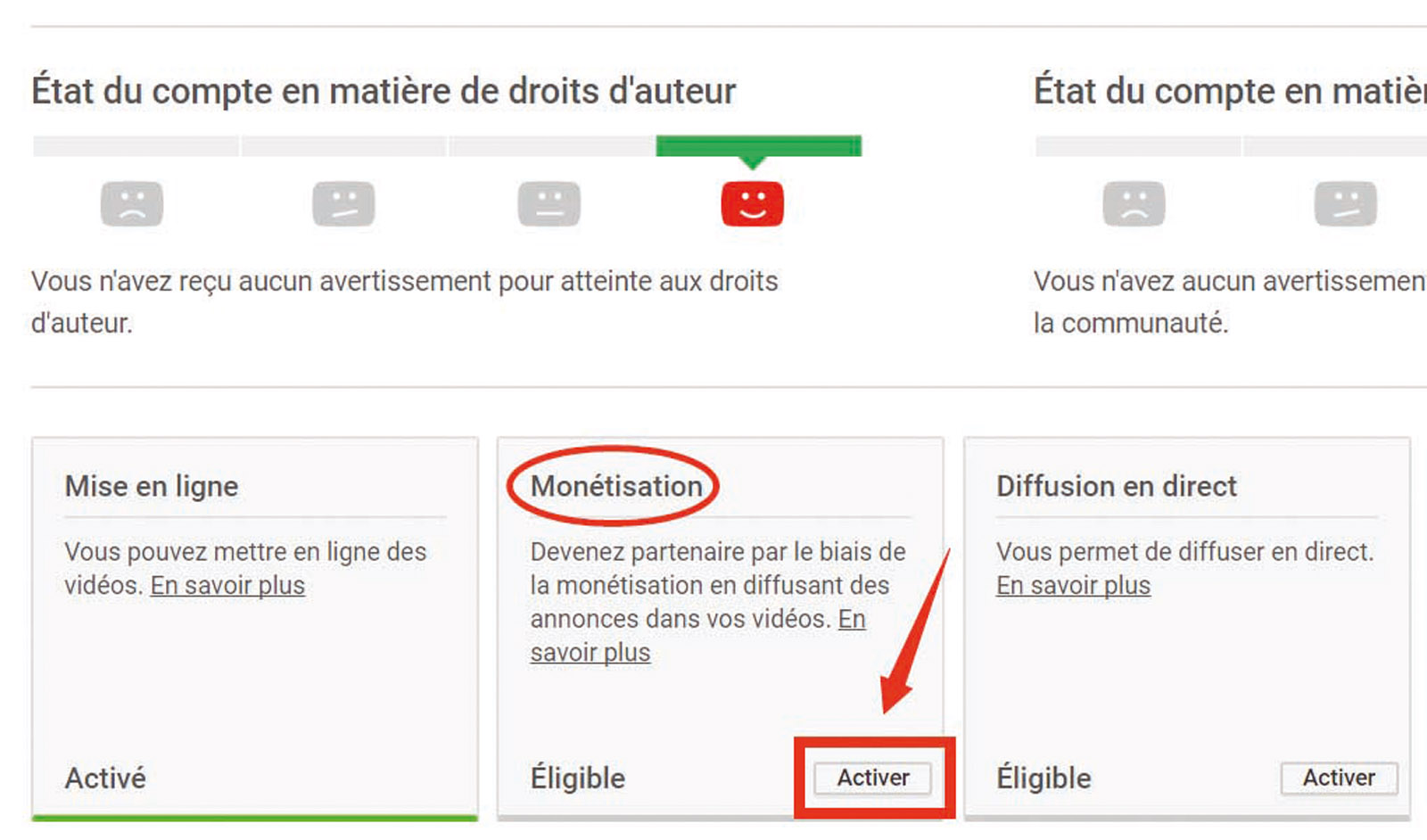
The first step for the YouTuber is to access the monetization of their content.
YouTuber : passion or Job?
At the beginning, filming and editing can be a simple hobby, a passion, a creation that you want to share with your entourage or the world at large. And suddenly you realize that you can make a living out of it, that the work you do is very appealing. You start to get caught up in the game, you spend more time, you put your heart and energy into it to always create better videos, varied content, new ideas, and end up creating your own style. But you have to set limits on privacy and make sure that there are plenty of «off» moments...
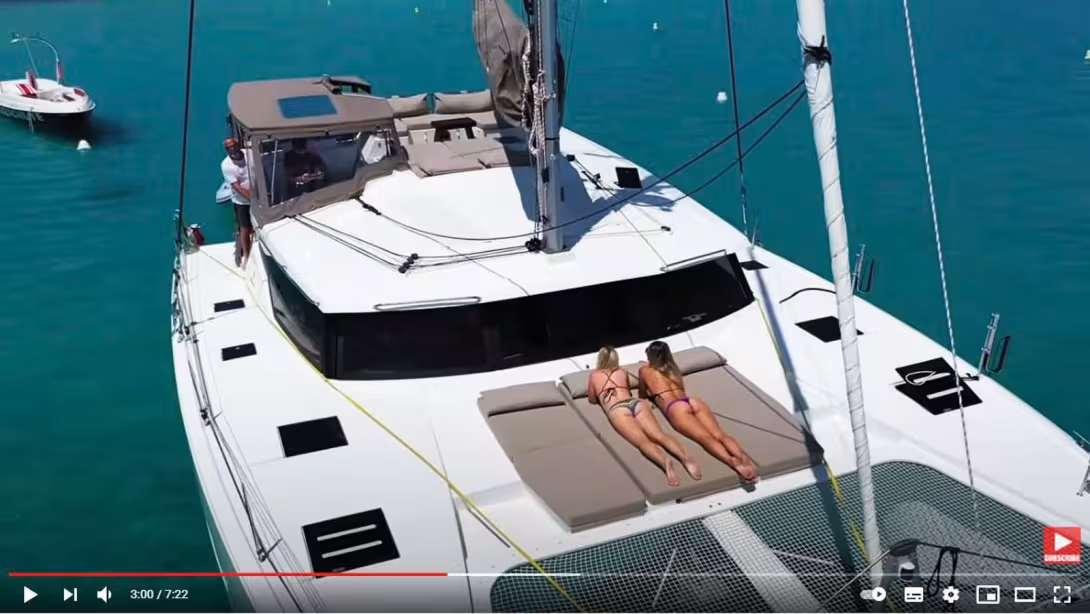
One of the traps of YouTube, in which unfortunately many people fall, is to believe that one will necessarily earn a good living. Some YouTubers launch their channel just to make money. This approach, most of the time, is felt in the videos; the channel does not grow, and it does not create a good community of committed subscribers. Another classic in a rather masculine environment (even if, compared to the world of monohulls, women are certainly much more numerous on board our multihulls) is the exploitation, sometimes to the point of grotesqueness, of the advantageous and naked plasticity of one or several women on board a boat being rocked by the trade winds. But we are not here to point a finger at the channels that could be qualified as sexist - there is something for every taste... You might not realize the work that goes into a 20-minute video, but it’s huge! For my partner Claire and I, on our channel Sagar Rani’s Odyssey, it’s 40 hours - including editing, translating, posting and responding to comments. Not to mention the time spent filming, but it’s still a passion and a pleasure. In our case, we would do it the same way even if we weren’t paid.

The life of a sailing YouTuber may be a dream... but not having an office in a tower and relying on public transportation doesn’t mean that you can’t work.
The Top 10 Multihull-Friendly - By number of subscribers
Sailing La Vagabonde (1,61 M)
Gone With the Wynns (470 k)
Sailing Doodles (420 k)
Sailing Zatara (389 k)
Sailing Parley Revival (183 k)
MJ Sailing (catamaran en construction) (163 k)
Tulas Endless Summer (152 k)
Sailing Ruby Rose (catamaran en construction) (144 k)
The Sailing Family (64 k)
Wildlings Sailing (52 k)