
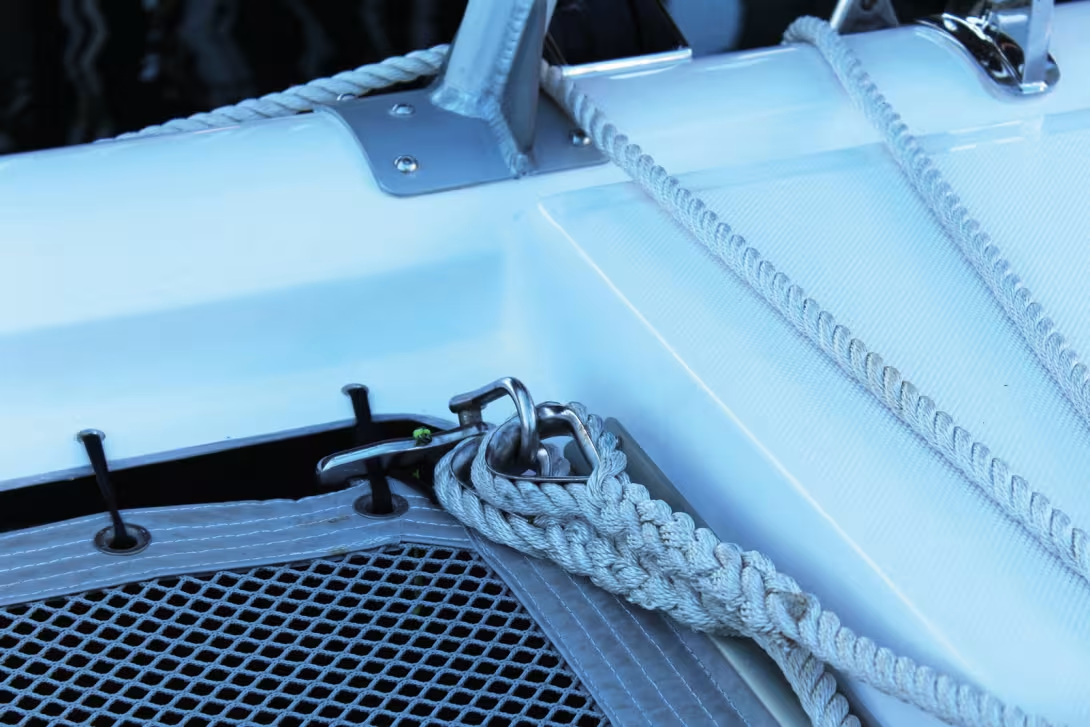

Multihulls, catamarans in particular, have been using bridles for decades. The major reasons to use a bridle were to reduce veering and to take the load off the windlass. Sadly, most multihull bridles miss one of the major advantages of introducing rope between chain and yacht because the common multihull bridle lacks elasticity. Multihull bridles tend to be too short and too large in diameter and if you want any snubbing effect, you need elasticity. Elasticity is simply best achieved with thin, long, commonly, nylon rope.
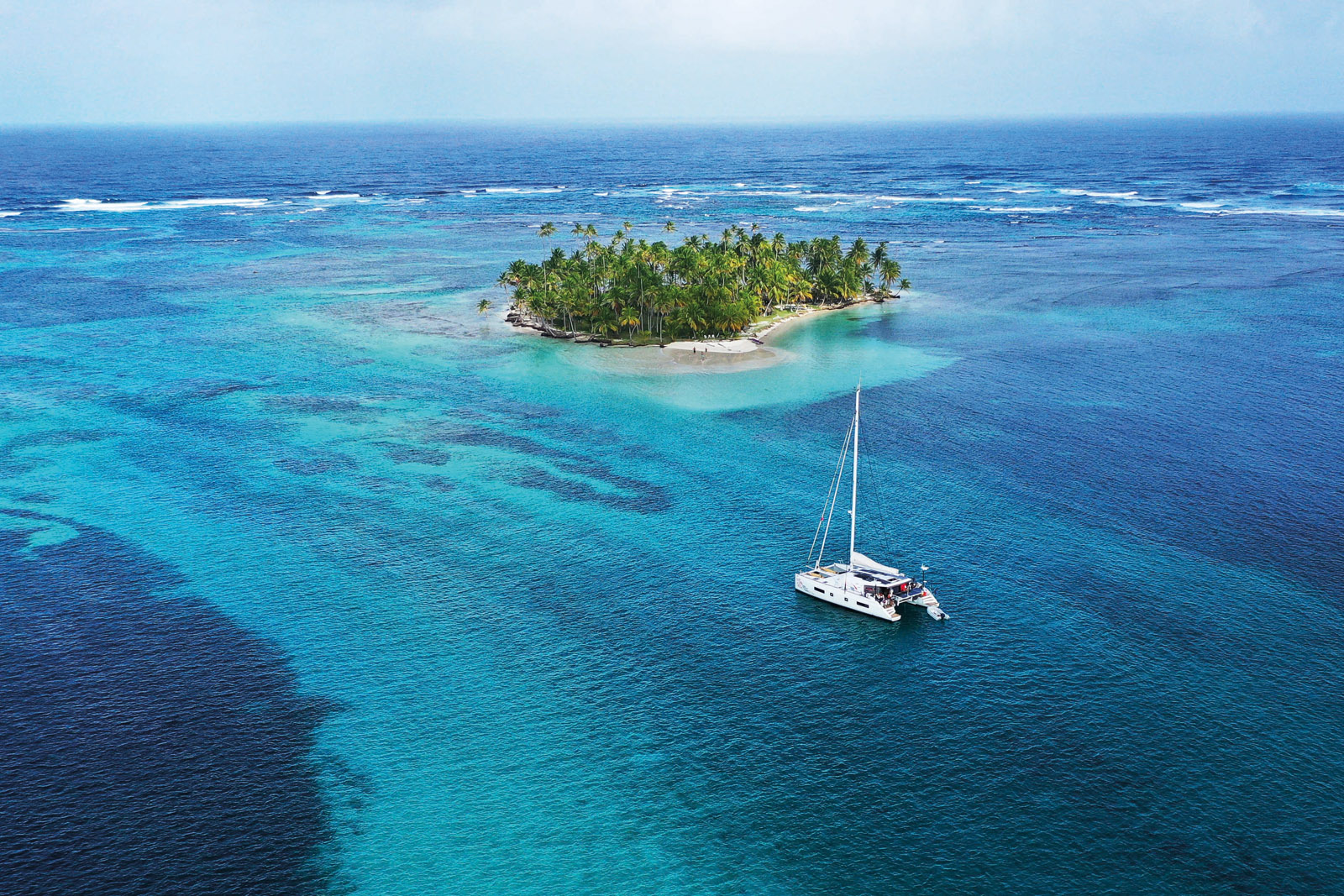
When blue water cruising, multihulls spend up to 90% of their time at anchor – reason enough to pay close attention to all the elements that make up the ground tackle.
ENSURE YOU HAVE SWINGING ROOM!
Multihulls at anchor are subject to three primary effects, the windage of the vessel, yawing or veering (movement of side to side of the vessel caused by vessel characteristics or a wind that gusts from different directions) and horsing, up down see-sawing motion caused by waves, swell or chop. The common perception is that the windage of a vessel, in particular a catamaran, is a major concern. Indirectly this is true but directly the tension caused by the windage in a steady wind is well within the holding capacity of a correctly sized rode and anchor, properly set in a good holding seabed. It’s the movement of the multihull (or any other vessel) or bad luck that might cause an anchor to drag - not a steady tension caused by windage. Most modern 35 lb/15kg anchors will hold a steady pull of a couple of tons - a tension unlikely to be developed by a catamaran in any imaginable wind sized for such an anchor! It is snatch loads resulting from movement and lateral loads that are the killer - not ‘in line’ windage.
 |
 |
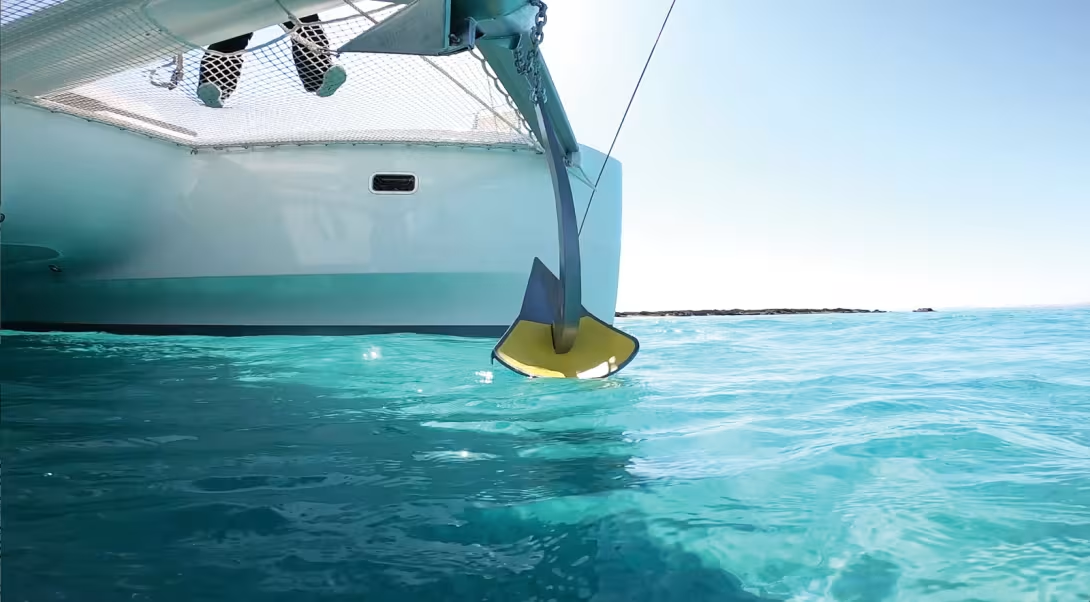
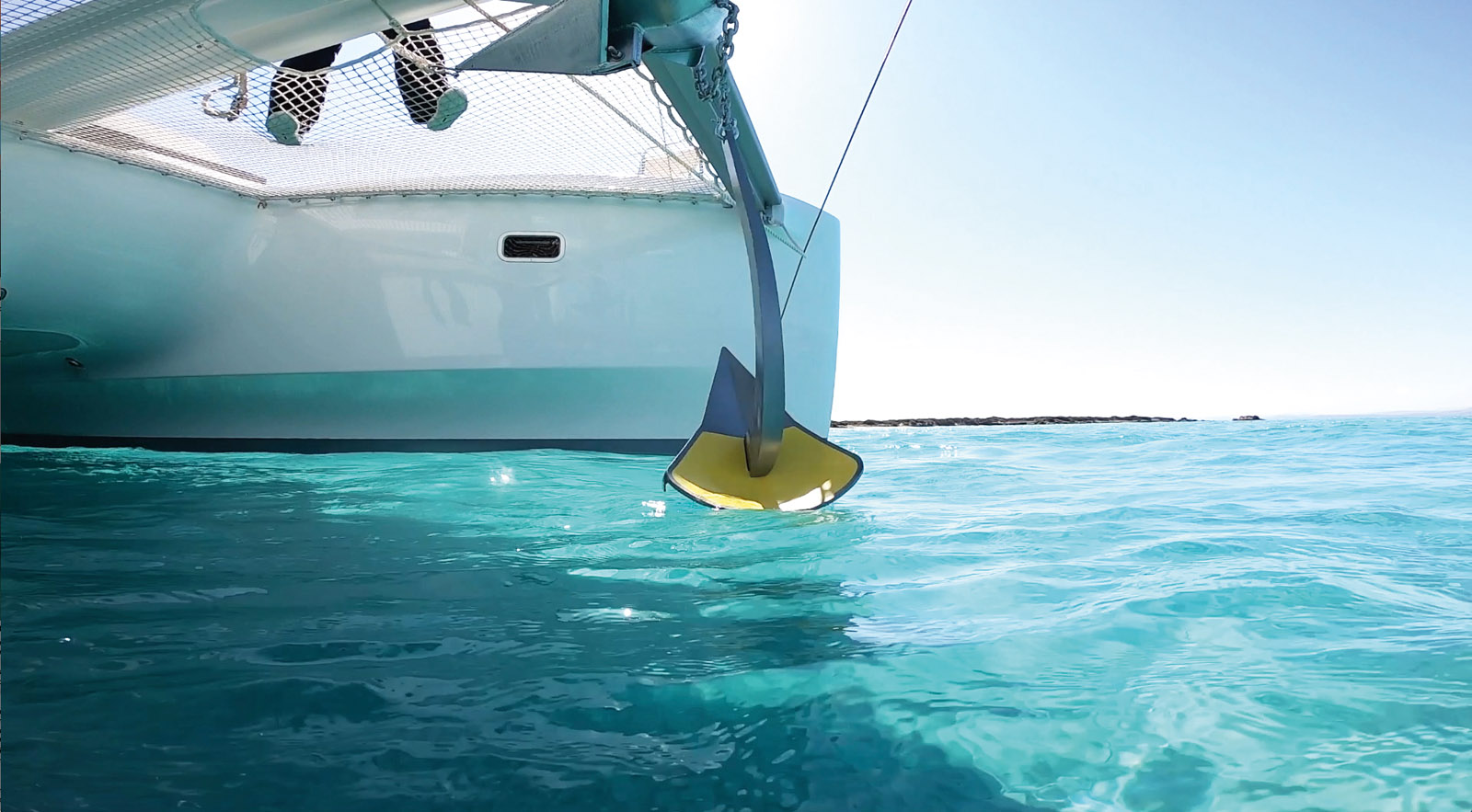
We often assume the quality of the ground tackle based on the anchor – seen here, a Spade. But the chain and the bridle are just as important!
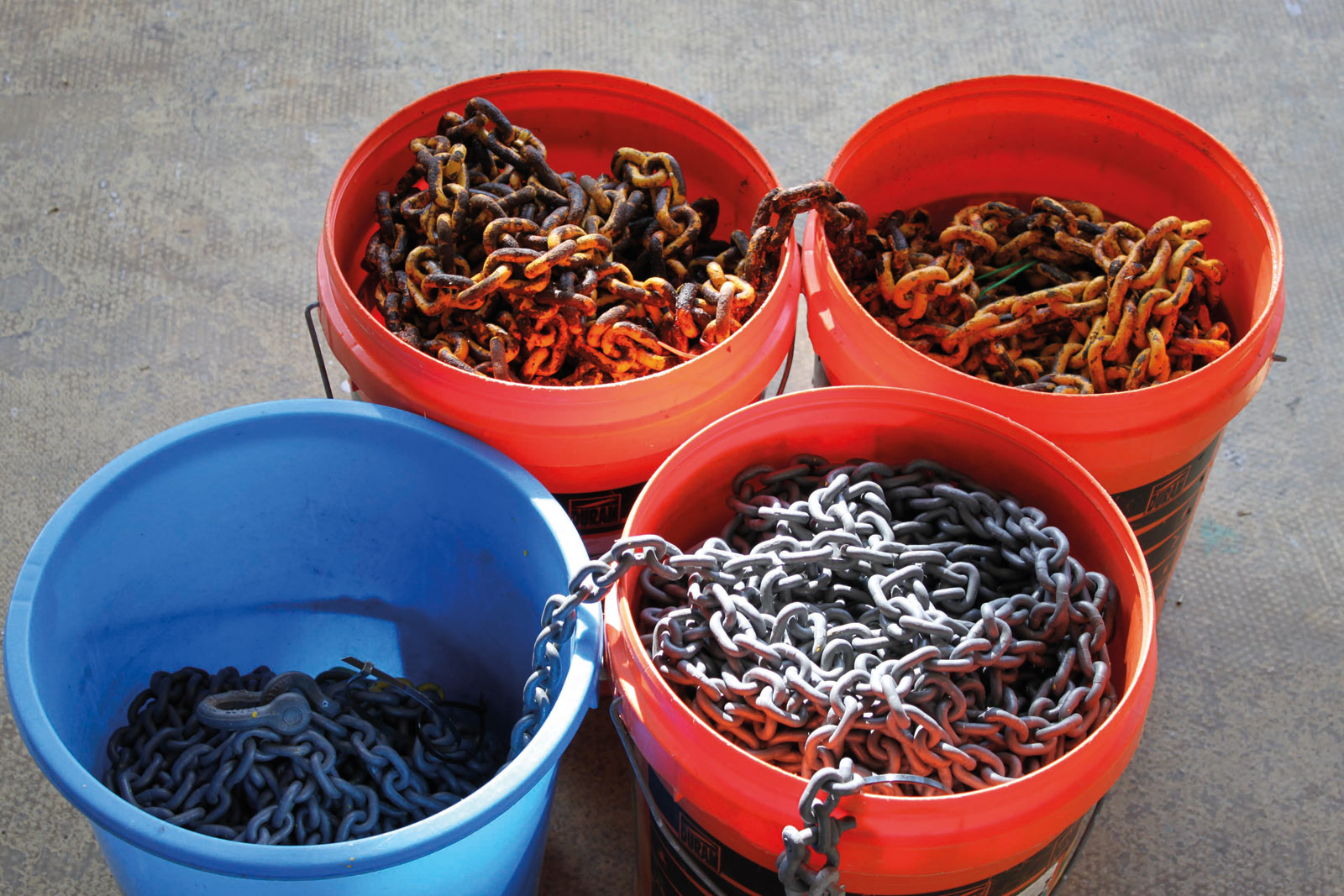
Our 75m (250’) of 6mm chain, in the near 2 pails, replaced the original 50m (160’) of 8mm chain, in the rear 2 orange pails, saving both space and weight - but sacrificing catenary.
ANCHOR CHAIN CATENARY
The reason that veering can be the most catastrophic is simply that the multihull can ‘sail’ at anchor and any speed it develops can produce tensions in the rode well beyond windage. During testing at short scope, we have measure snatch loads of ‘only’ 650kg (1,450 lbs) - they are frightening, but the anchor has held. These tensions developed by veering can be increased with additional tensions from chop and swell, caused by the wind or a passing motor boat. The anchor rode has similarities to the bungee cord. A common chain develops a catenary when deployed, that ‘sag’ in the chain, and as the wind develops that sag is removed (in part) and the straightening of the sag is the chain absorbing some kinetic energy. If the wind eases that sag returns as the yacht is pulled forward. Unfortunately, catenary has a finite limit and at the point when the chain looks straight (it looks straight but will always have some sag) all of the useful catenary has been used and further demands of energy absorption, if the vessel is yawing, will result in snatch loads. If you had an elastic bridle the bridle could absorb those snatch loads. You can of course deploy more chain (or use bigger chain) to extend the usefulness of catenary, but we all carry a finite length of chain (and cannot change the chain, link, size without visiting a chandler and spending a lot of money). Often, we simply cannot deploy more chain as we might not have any more chain in the locker, or the anchorage is too small or too busy. Having an elastic bridle gives us an ability (and a cheap ability) to extend the usefulness of our chain rode.
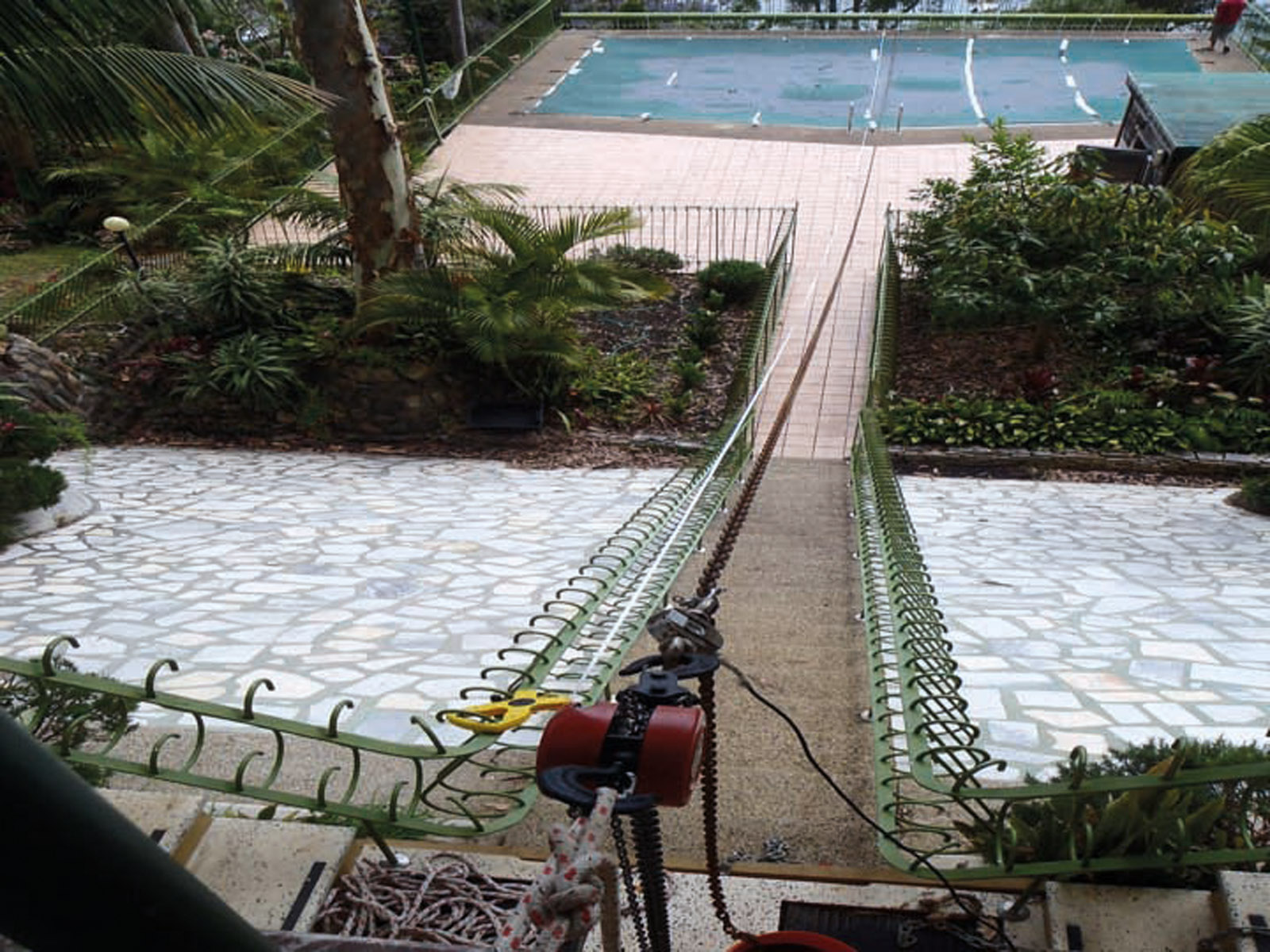
We have stretched 30m of 8mm chain with a scope of 5:1. The tension applied to lift the last further link is the same tension developed by a 38-foot catamaran in a 17-knot wind – around 200 kg (450 lbs).
CHAIN LIFTING OFF AT 17 KNOTS
To put this into context - for a conventional G30 chain sized for the vessel at about a 5:1 scope with a distance from seabed to bow roller of 6m (20’) and 30m (100’) of chain deployed then the last link of chain at the anchor will have lifted off the seabed with a wind of around 17 knots. Under the same rode at 30 knots the chain will appear to be straight. Below 17 knots some of the chain will be on the seabed and catamaran movement will be dampened by friction of the chain on the seabed. Beyond 30 knots if the catamaran naturally veers or because the wind is unstable and variable in direction then at the end of a yaw you will start to experience snatch loads. At this point if winds are forecast to increase then you need to move to somewhere with more shelter, deploy more chain - or be grateful you have a decent bridle!
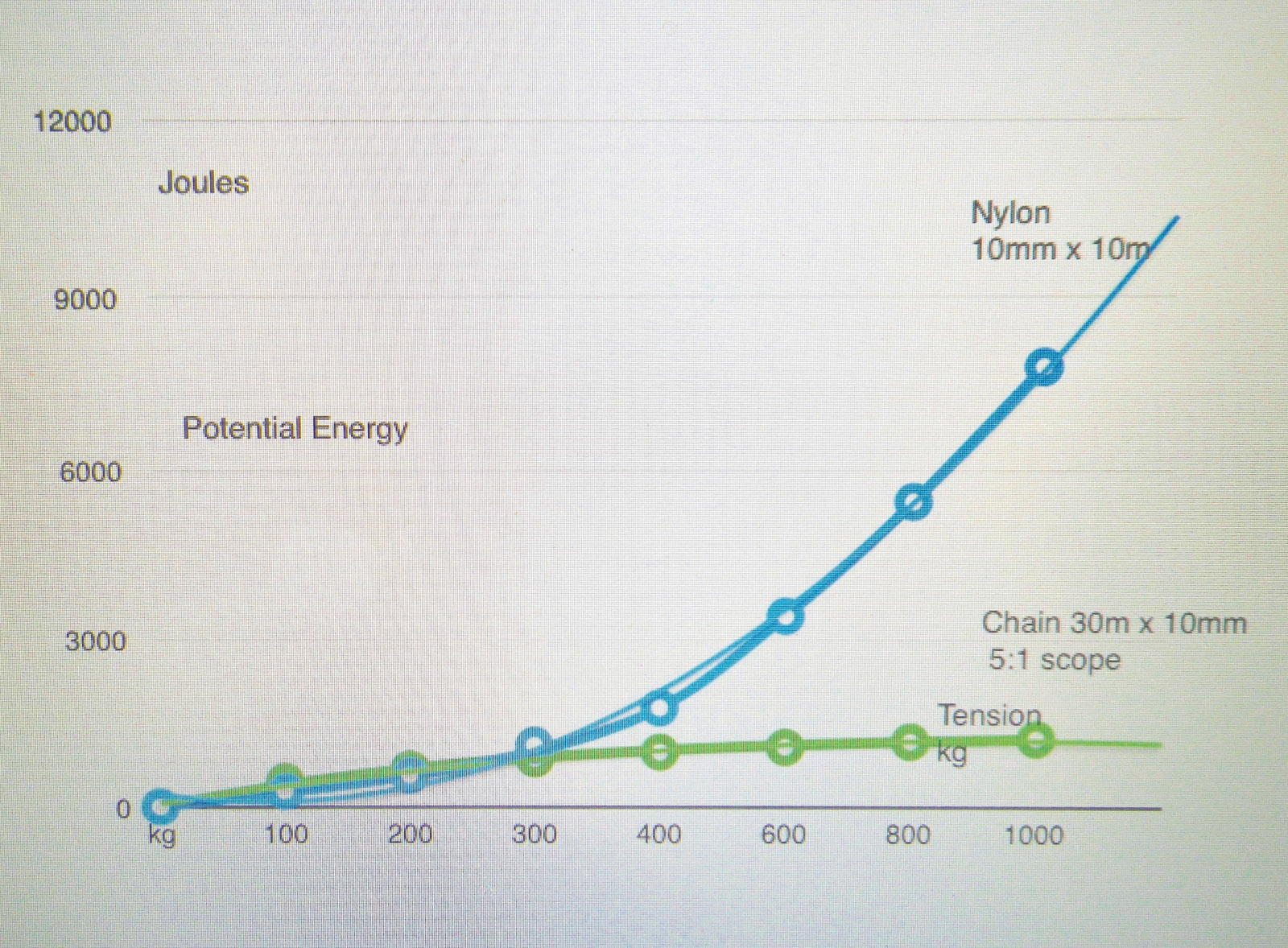
Up to about 300kg (660 lbs) of tension in a rode comprising 30m (100’) of 8mm chain at a 5:1 scope and 10m (33’) of 10mm 3-strand nylon have a similar ability to absorb the energy of a moving catamaran. 300kg corresponds to the tension in an all chain rode on our catamaran at 25/30 knots of wind. Beyond 30 knots the chain has a deceasing ability to absorb any more energy - the chain looks straight but the nylon continues to absorb and store that energy, almost linearly.
KERNMANTLE ROPE OR PARACHUTE CORD
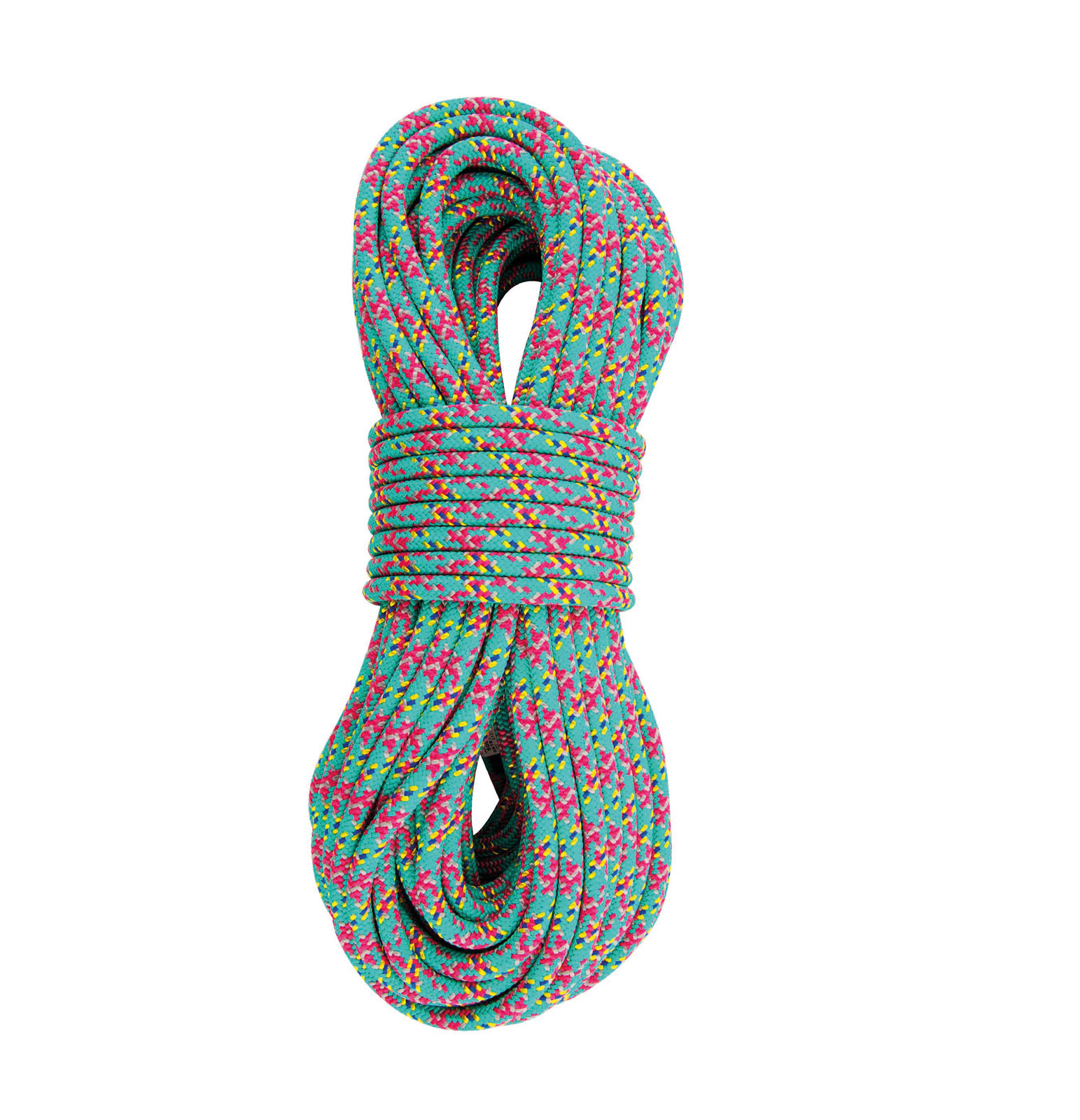
Most bridles supplied on multihulls are sufficiently strong you could probably lift the whole vessel suspended by its bridle with a crane… but what we’re really looking for is a snubber! Currently the most elastic cordage that can be used as a snubber is made to a kernmantle construction, the type of material used for parachute cord. It’s still made from nylon, but with a core and a sheath. This “dynamic rope” technology is commonly used in climbing, caving and height safety, and is made, approximately, in 8mm, 10mm and 12mm diameters and these sizes meet the needs of multihulls up to about 45 feet. Beyond this size of boat, you need to be looking at specially made diameters. Dynamic kernmantle ropes larger than 12mm are not unusual but aren’t supplied to ‘retail/leisure’ buyers. The market of which we are aware for these larger kernmantle ropes is military - so the product is available you just need to ask your rope supplier. On our Lightwave 38 (11.5m) we originally used a conventionally short bridle and we increased elasticity with all sorts of rubber devices. Rubber devices are not very effective, have a limited wind range, are heavy and expensive. We then used 15m (50’) of 12mm dynamic kernmantle, then 30m (100’) of 12mm, and have recently downsized to 30m (100’) of 10mm dynamic kernmantle for each side. Our chain rode is made in Australia and is a specially galvanized G70 x 6mm (approx. ¼”) rode with a set of compatible (they fit and are the same strength) components. Being 6mm, we have saved weight, space and windlass power demands, in comparison with a more conventionally sized rode of 8mm (app. 5/16”) chain but have sacrificed catenary. The 30m (100’) of 10mm dynamic kernmantle offers the energy absorbing component we require and unlike catenary (which reaches its limit of usefulness at about 30 knots of wind) the bridle operates to match the increased wind capacity. Nylon stretches approximately linearly and will stretch by about 40% at maximum and then fails. The trick is to ensure that the maximum expected stretch of a bridle/ snubber does not exceed about 25% of maximum stretch, so only stretches 10% and only exceptionally might it stretch a bit more.
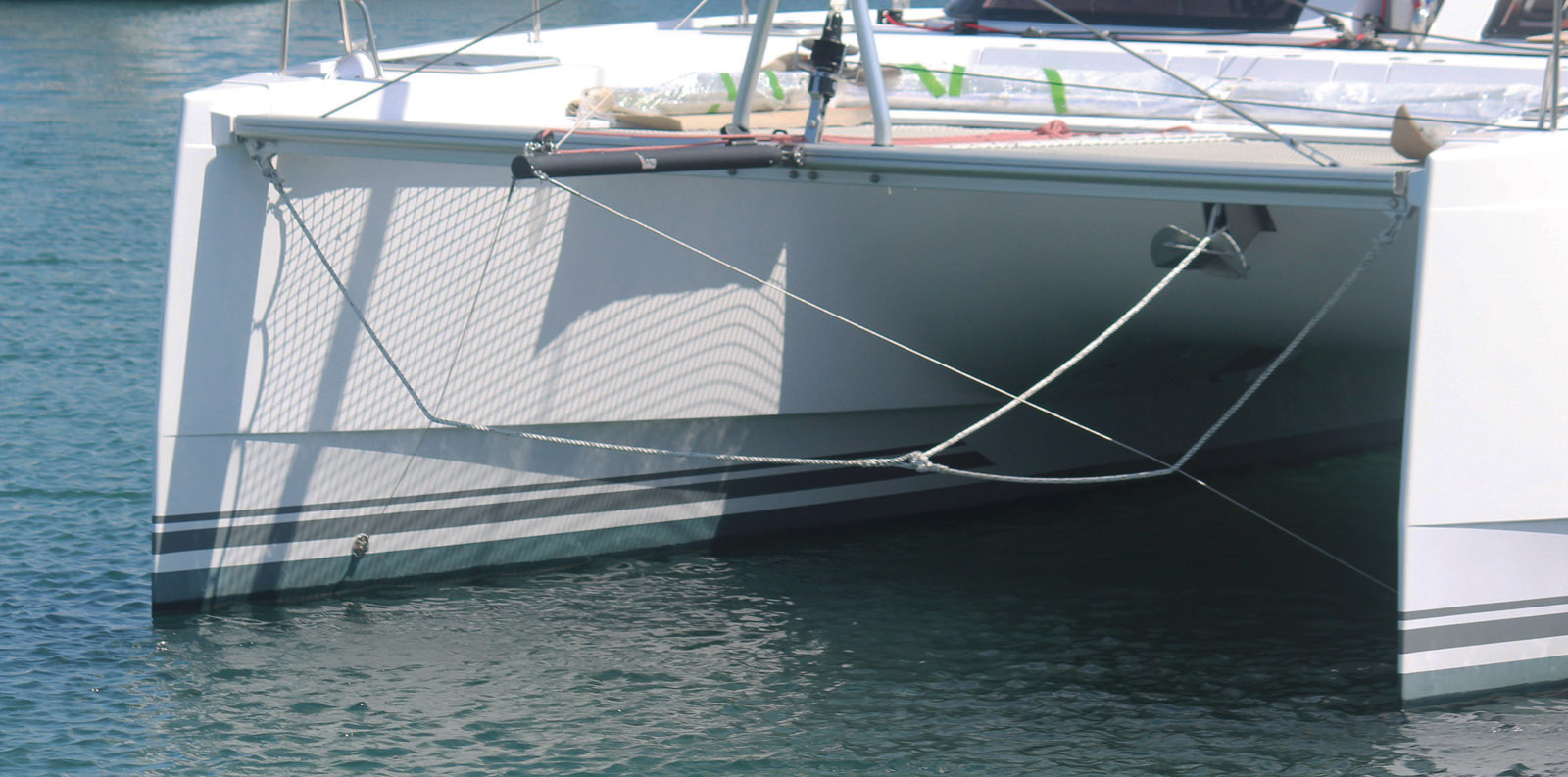
Most catamarans use bridles that are simply too beefy, too thick and too short, lacking elasticity. Their only advantage is that they reduce veering.
CHAIN AND ROPE JOIN FORCES
In most cases, the necessity for both chain and a well-chosen snubber/bridle simply does not exist. But forecasts are, simply, forecasts - they offer no guarantee and there is comfort in knowing your equipment will meet all demands. Furthermore, a decent bridle costs peanuts, so it’s hardly expensive insurance. A bridle that offers snubbing ability does not replace the positive benefits of catenary. Both elasticity and catenary ‘manage’ energy and the chain and the cordage ‘work’ together. In the same way comfort in your car is provided by tires, springs, shock absorbers and good upholstery our rode combines the benefits of catenary and elasticity. Our 30m (100’) of cordage, each side, effectively gives us a mixed rode - but it’s a mixed rode with a difference. We can deploy as little or as much chain as we need, we carry 75m (250’) of the 6mm chain. We can similarly deploy (or use) as much cordage as we need - though with our usage we always use a minimum of 15m (50’) of cordage. One disadvantage of a mixed rode is that commonly the textile portion of the rode is the ‘weak’ link, and the textile portion becomes weaker with time (as it suffers from abrasion, UV and general wear and tear). The system we have developed continues to use the chain rode as the ultimate fall back. We can deploy 50m (160’) of chain from the bow roller, deploy 30m (100’) of snubber and if the snubber fails - the chain will still secure the catamaran. Moreover because of how we arrange application of the bridle though we might deploy 30m (100’) only a maximum of 10m (33’) is beyond the bow (so saving 20m (66’) of swinging room in tight anchorages). Snubbers (or bridles that have snubbing ability) do fail and just as you would replace a halyard or sheet - you need to replace an elastic bridle. Because the bridle might fail you do need to ensure that were a failure to occur that the full tension is not applied to the windlass (windlass clutches can also fail). We use a simple chain lock, a claw secured to a strong-point with a Dyneema strop.
THREE TIME THE LENGTH OF THE DECK
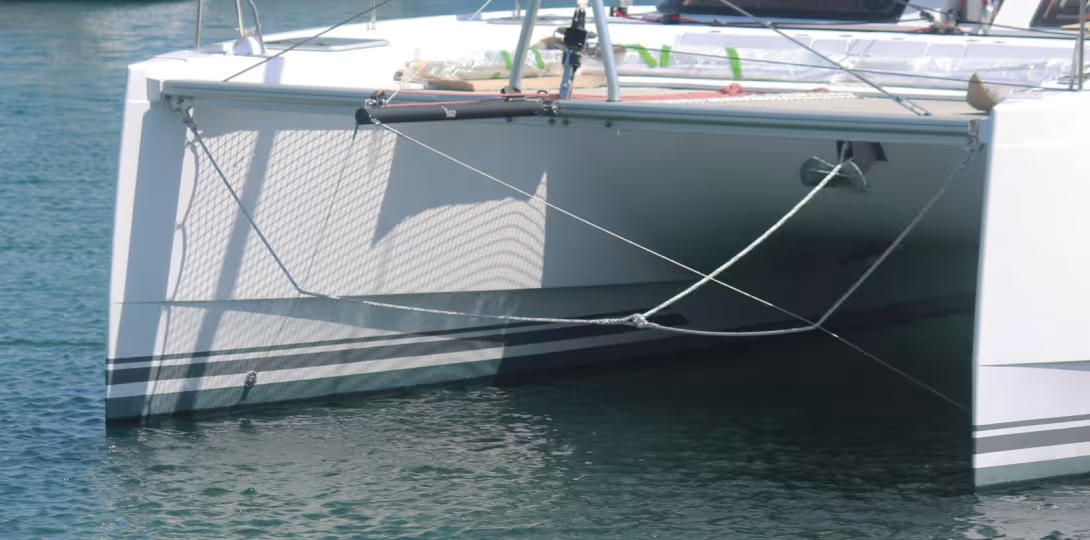
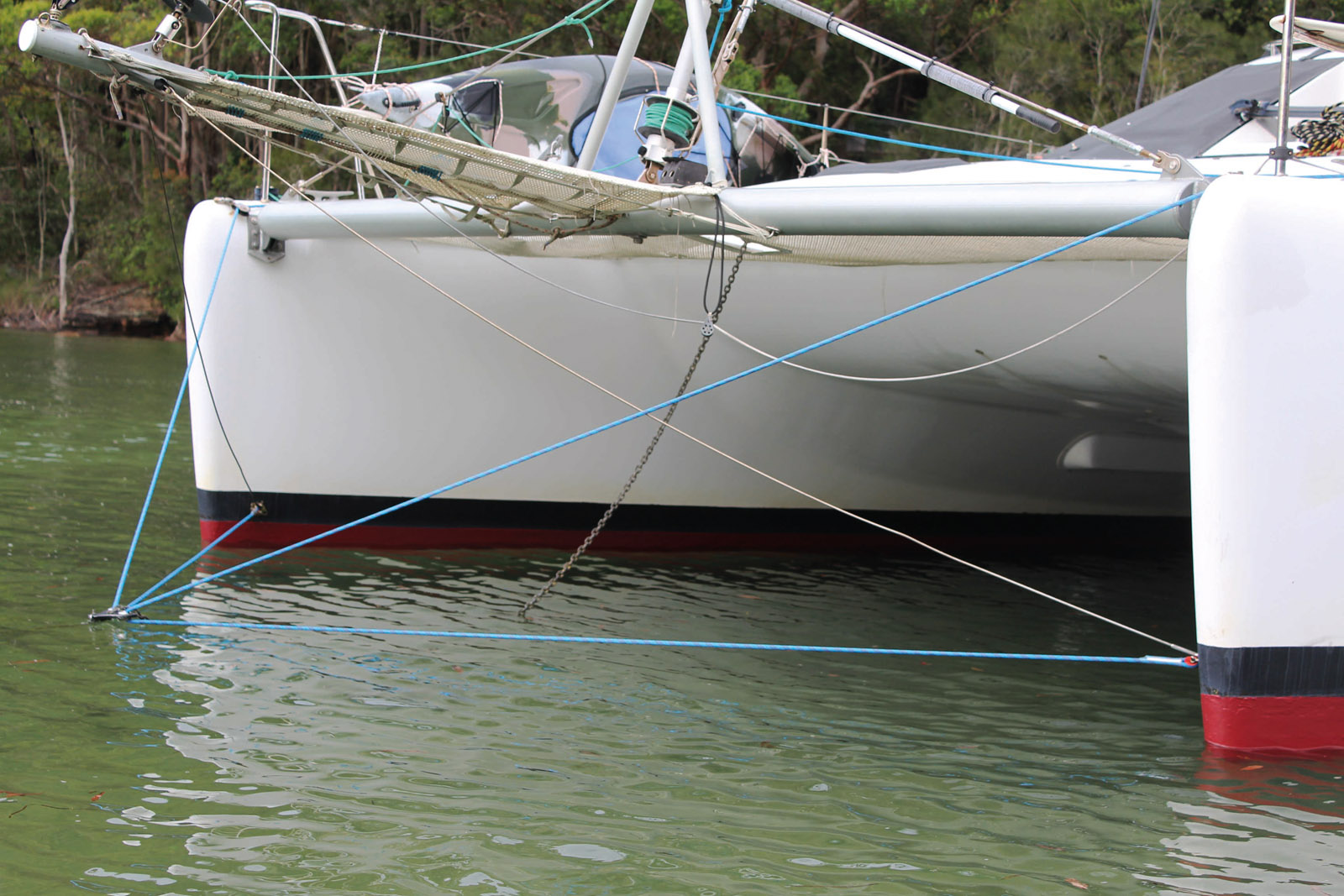
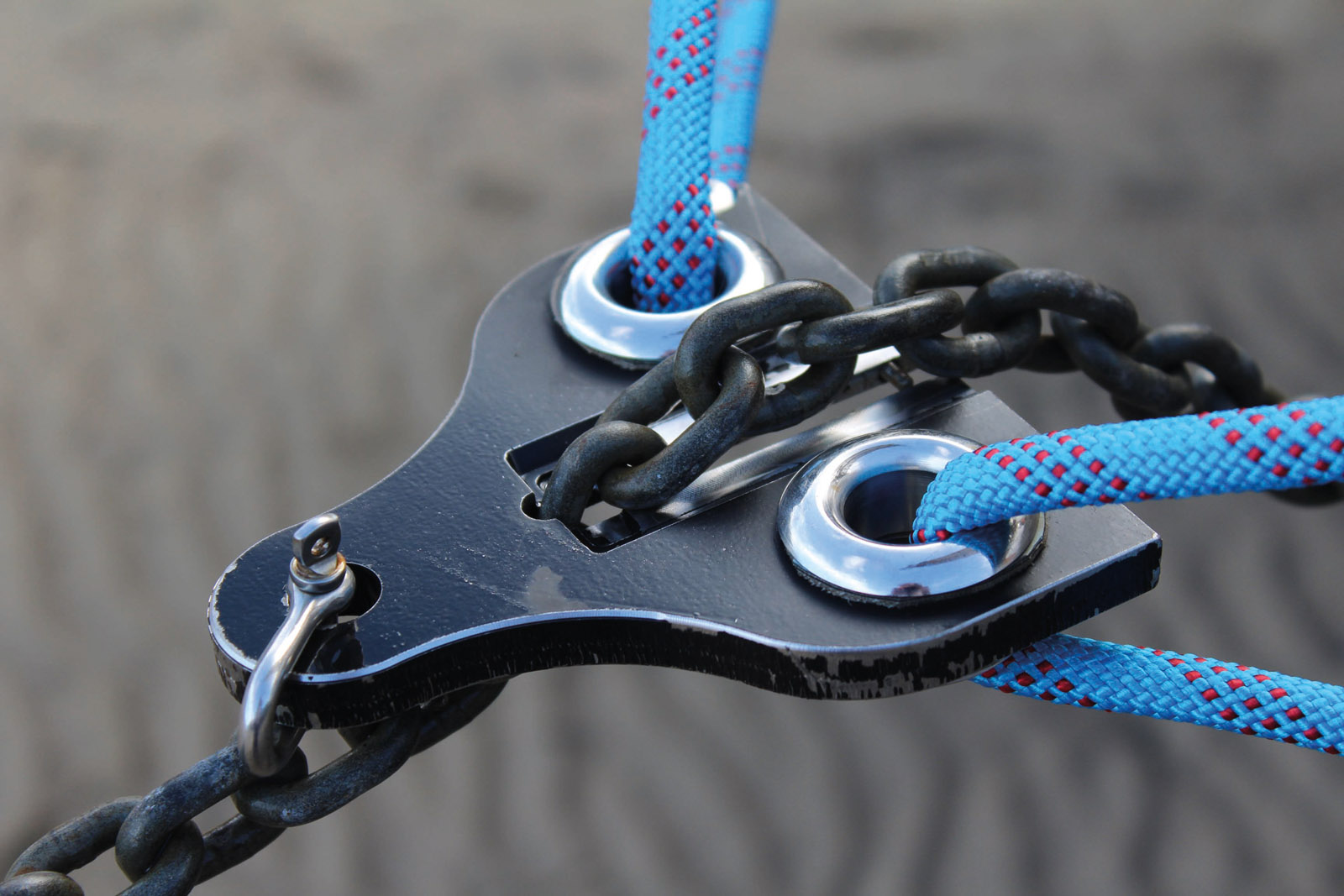
As a crude rule of thumb, we have found that an appropriate bridle length is about ‘3 x deck length’, so 30m/100’ (and 10mm rope) for a catamaran of 10-12m (33-40’) and 40m/130’ (and 14/16mm rope) for a catamaran of 12-15m (40’50’). Attachment of a bridle to chain can be by soft shackle, chain hook or, as we do, with a specially designed bridle plate. One reason we don’t use a soft shackle is that it is very difficult to thread one through a 6mm chain link (and almost impossible to do so in the dark in the rain!) We actually terminate our bridle at the pad eyes to which the prodder bobstay wires are secured at the waterline. The cordage then passes through the bridle plate using specially designed and custom-made Low Friction Rings, returns to turning blocks on each bow, runs down the side decks to clutches on the transom, to larger turning blocks on the transom and the spare ends of the bridle are either stored in bags (as one stores sheets) or run to a sheet winch. On our catamaran this arrangement uses about 15m (50’) of cordage leaving 15m ‘spare’, 9m (30’) down the side decks and 6m (20’), for each bridle arm, from bow to center point (the bridle plate). If the wind gets up, we can simply deploy more bridle by using the sheet winches. And if needs be, we can shorten the bridle, again using the sheet winches. As our bridle is permanently available, we run the bridle down the side decks through slots at the stanchion bases. If we deploy the full 30m (100’) we have 10m (33’) down each side deck, 10m (33’) from water line pad eye to bridle plate and 10m (33’) from bridle plate back to the turning block on the bow. The specially designed Low Friction Rings are custom made and allow some cordage slippage. If we want to deploy more bridle, we simple release the clutch at the transom and the bridle slips through the LFR. But the friction is such that the tension of the section of cordage between the bow pad eye and bridle plate is higher than the rest of the tension and this ‘pulls’ the bridle plate ‘down’ reducing the rode angle to the seabed. We thus artificially improve the scope ratio, on our Lightwave by about 1.5m/5 feet (as our bow roller is slightly approximately 1.5m above the water line).
 |
 |
 |
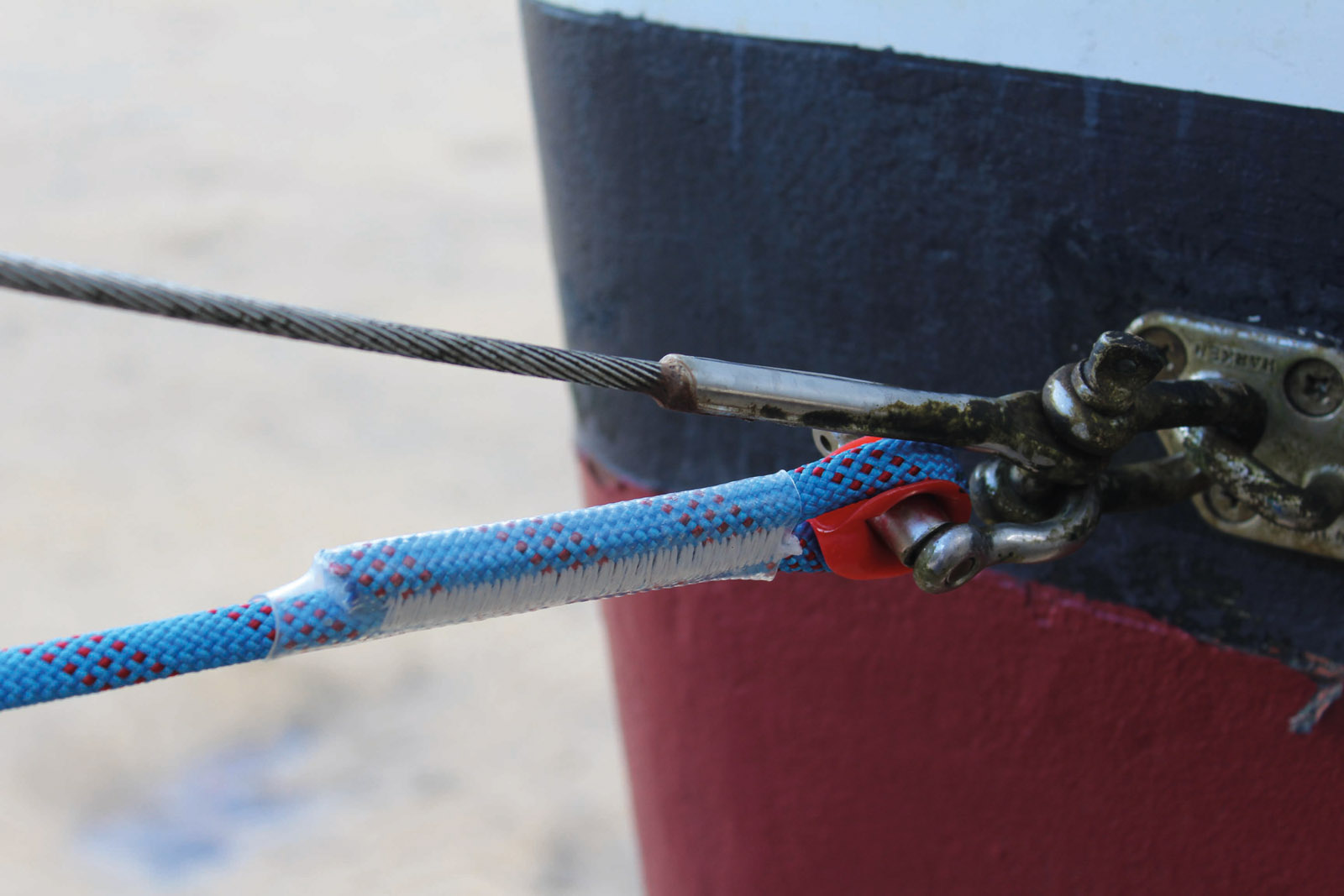
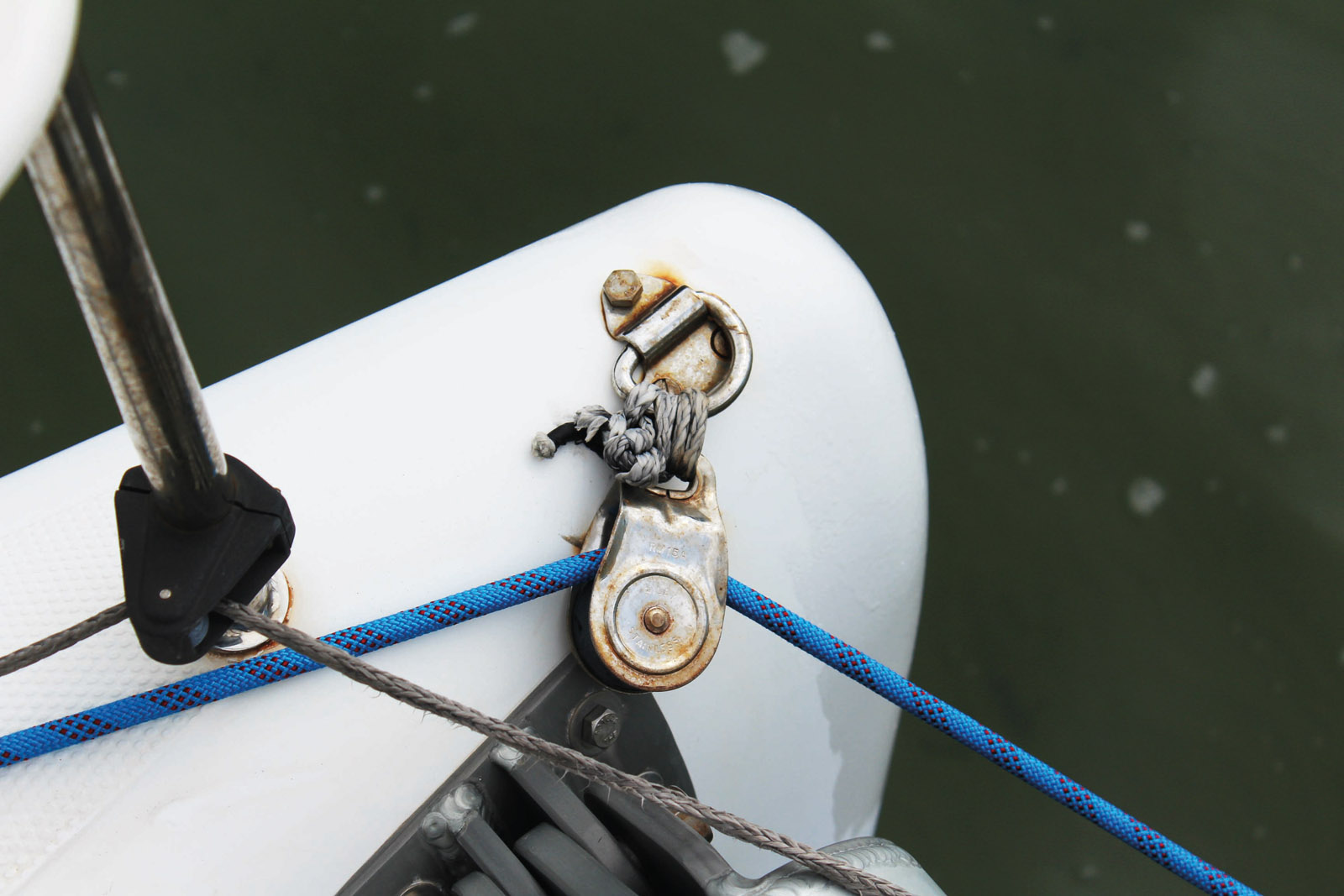
1- We run the arms of our bridle from the bowsprit/prodder pad eyes to the bridle plate. Kernmantle is impossible to splice, and sewing has been found to be the neatest way to produce an eye (though a halyard knot also works).
2- The bridle passes from the bridle plate to a turning block on each bow.
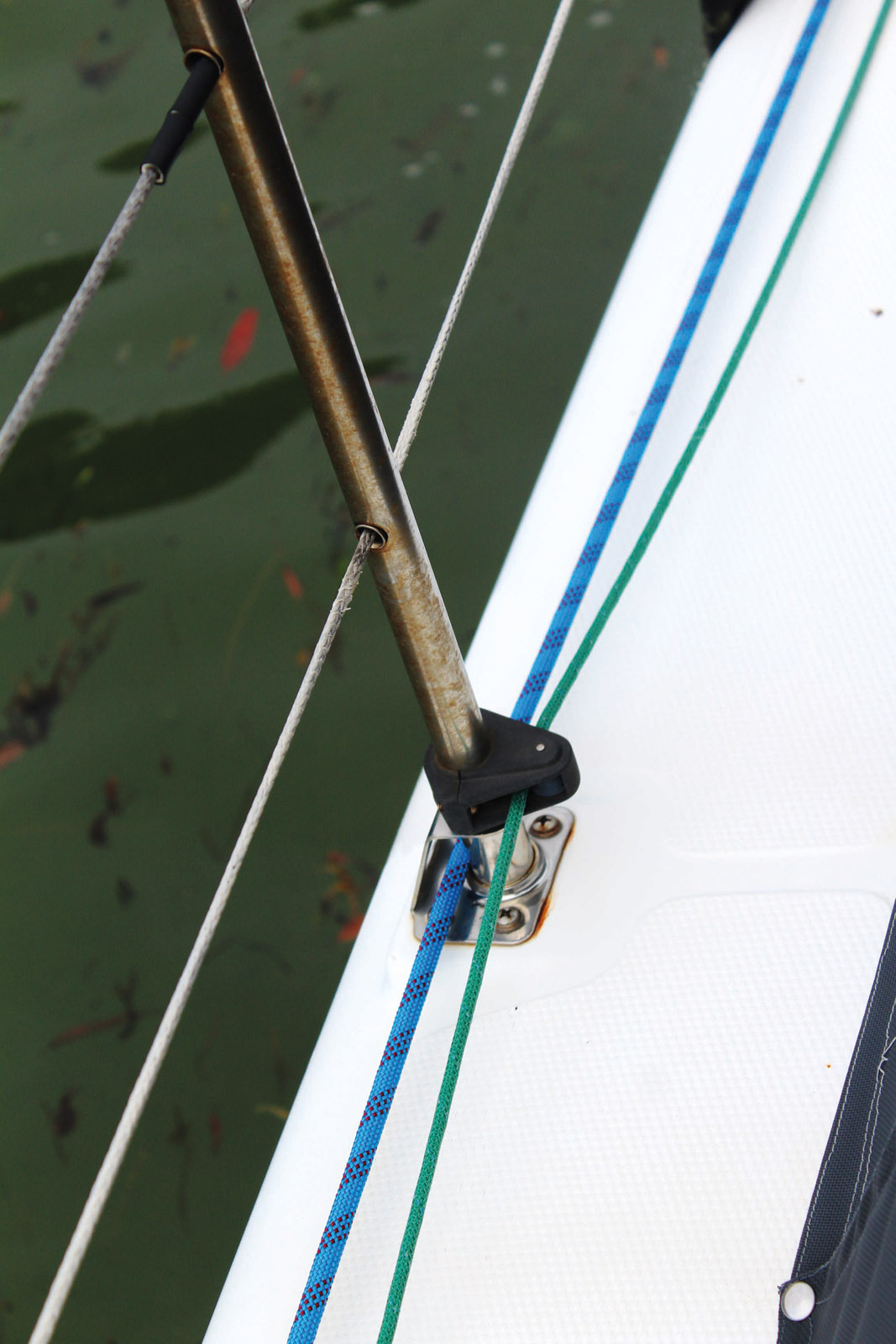
3- From the bow turning block the bridle passes through the stanchion bases (to keep the bridles neat and out of the way of foot traffic) to the transom.
A BRIDLE WITH A DOUBLE « V »
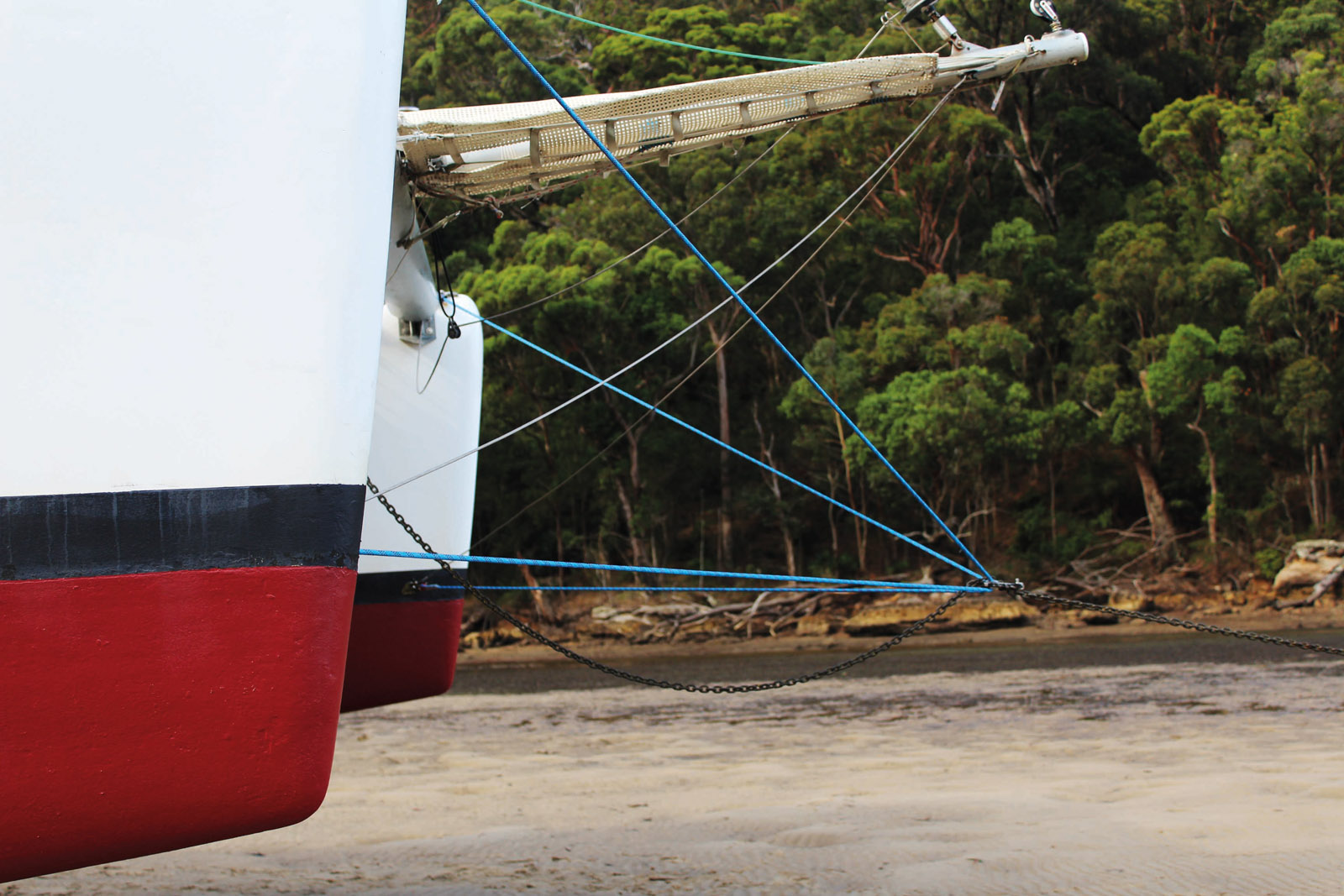
Our arrangement provides a normal bridle horizontal ‘V’, which helps to manage veering. Because we also have a vertical ‘V’ (from pad eye to bridle plate to turning block on the bow) we also manage horsing (that see-saw movement due to chop). The combination of the horizontal and vertical ‘V’s and the elasticity allows our Lightwave to sit much more comfortably at anchor under adverse conditions. The fact that we find the motion more comfortable also means our anchor is similarly less stressed. There is no suggestion that our 10mm bridle is adequate for all conditions and we carry a spare, because snubbers do fail, but also because we can very easily deploy a second bridle - if say winds are going to increase beyond 50 knots. Most bridles are a finite length and inconveniently secured under a cross beam. If you want to make any changes, because of adverse conditions, you either need to cut off and abandon the bridle or retrieve the rode. Neither option is very attractive. We can retrieve our bridle using the sheet winches, simply add a second bridle and deploy both - with time on the bow limited to the time needed to attach a second bridle
 |
 |
 |
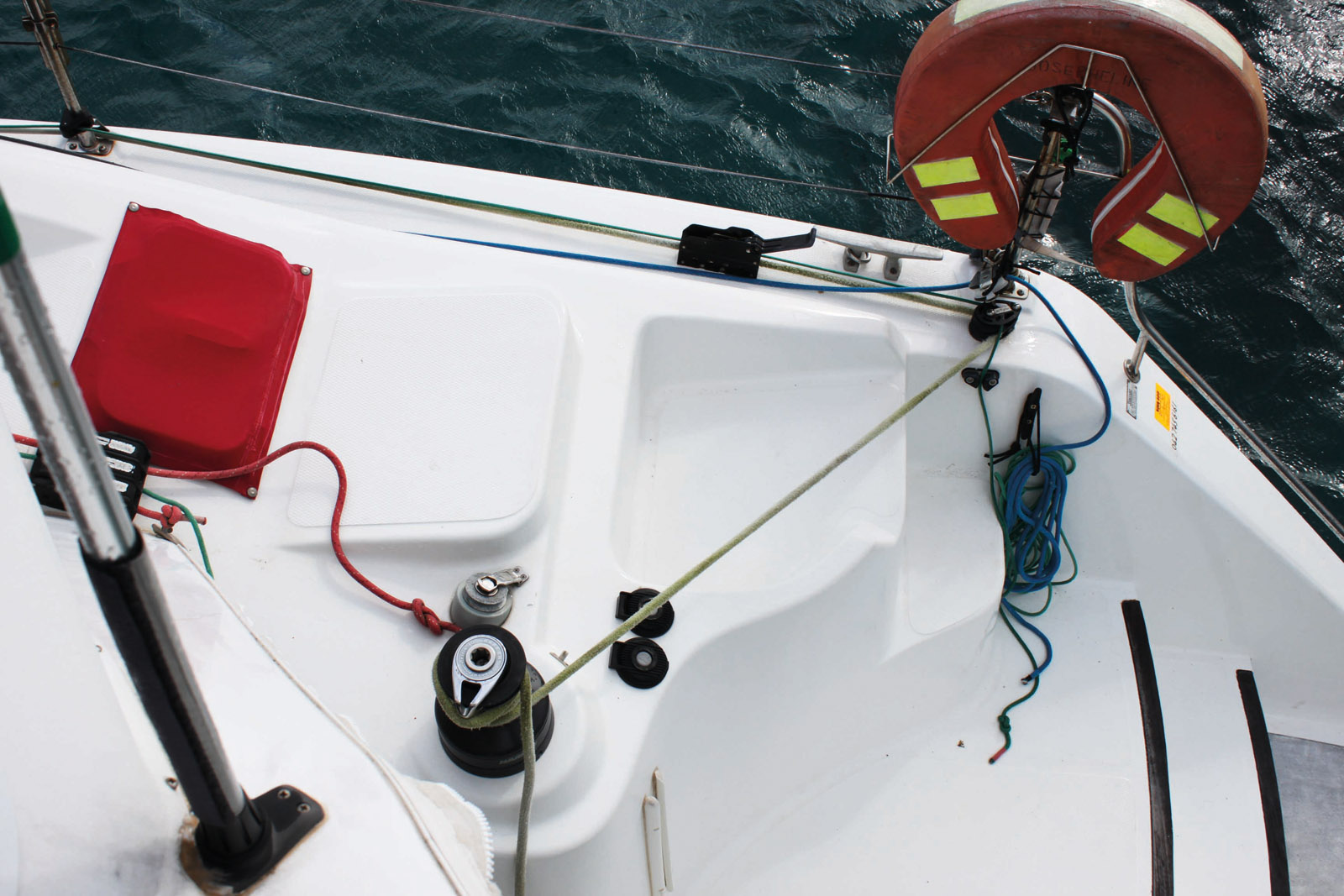
1- At the transom the bridle is secured using a clutch and can be routed through another turning block (the same as used for a head sail) to a winch - the image illustrates our original kernmantle bridle rope.
2-3 In use the assembly forum a 2 horizontal ‘V’s, from bow to bridle plate, which control veering and 2 second ‘V’s from bow at deck level and bow at waterline which controls horsing. The bridle plate because it sits at water surface level improves rode scope.
The gear
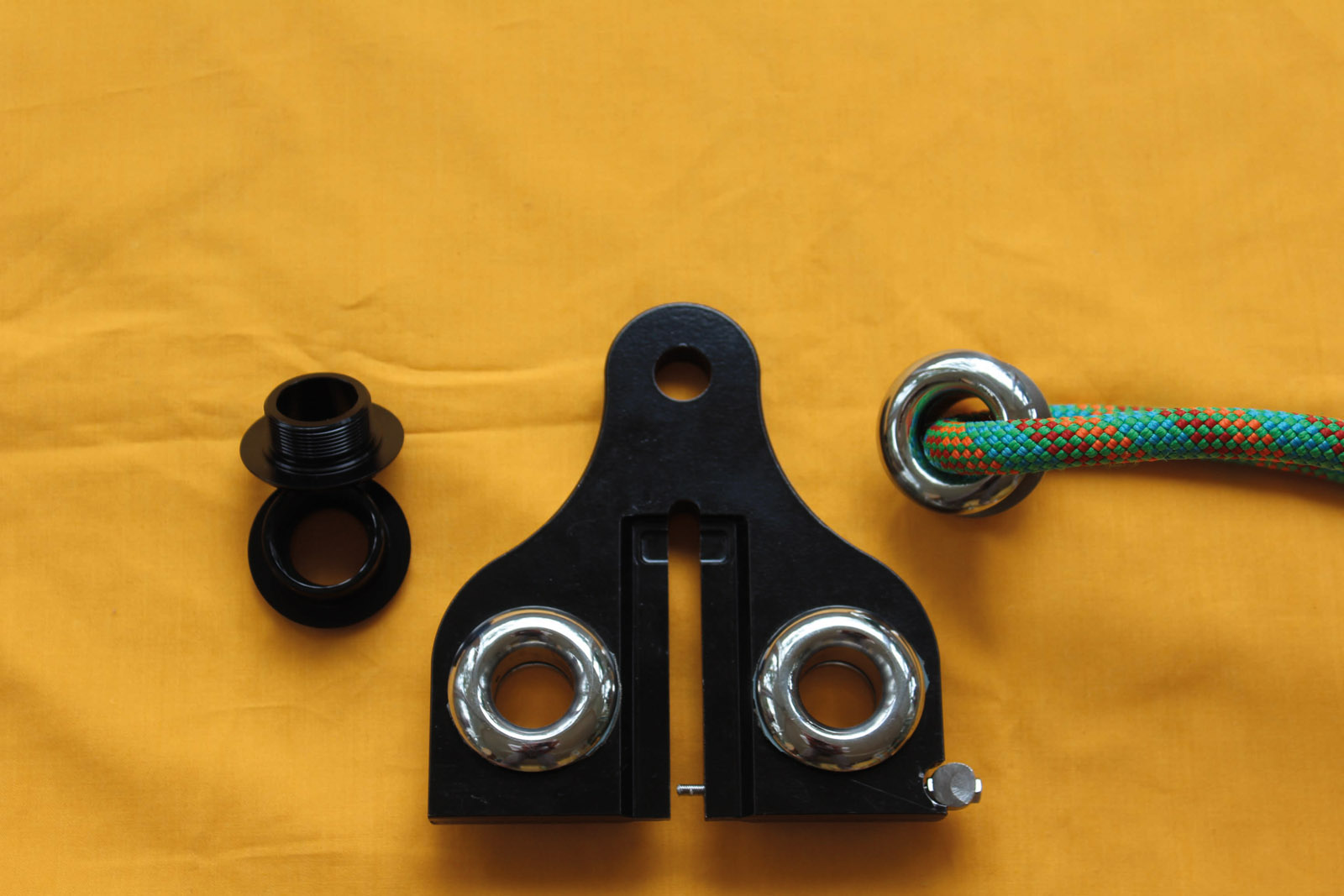
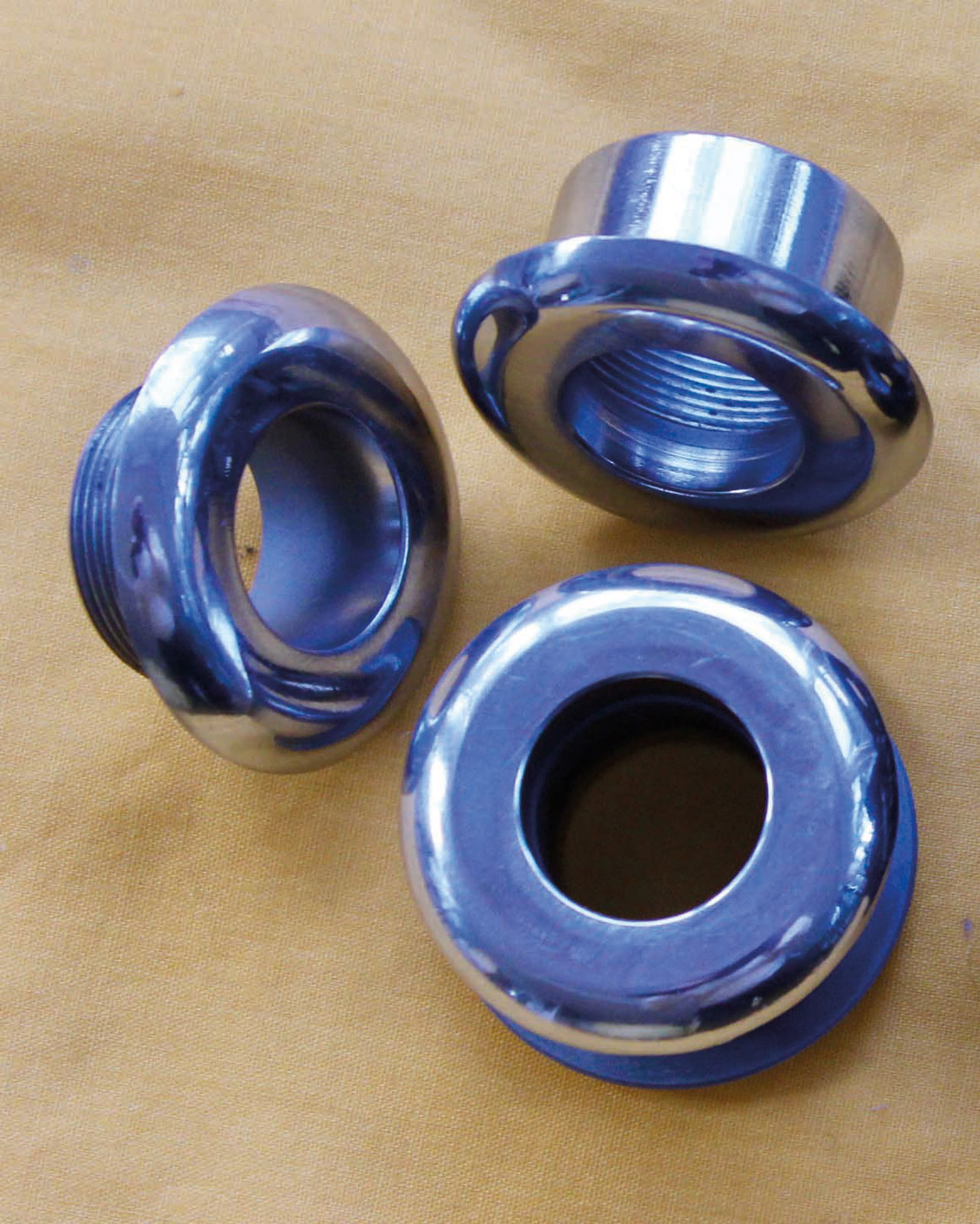
Dynamic kernmantle rope is freely available, commonly with sewn loops, from any climbing/mountaineering shop. Threaded, 2 part, LFRs are available from a number of manufacturers, Allen, Antal, Ronstan and sold through chandlers. A bridle plate, made from stainless steel, machined to accept the rings and a chain is a simple exercise and well within the capabilities of most DIY owners or a local machine shop. Alternatively, Viking Anchors, are making the bridle plates, with matching stainless LFRs, for 6mm, 8mm and 10mm chain available to order online.
 |
 |
 |
 |
The bridle plate simply holds two stainless low friction rings through which each bridle arm passes and contains a slot for the chain. The low friction rings are thread to allow insertion in the plate.
