Buying a new multihull for the big trip and/or living on board all or part of the year? Now that’s a good idea! Among the 300 plus models and all the different versions in the manufacturers’ catalogs, it would be difficult not to find the catamaran or trimaran of your dreams, because practically everything exists. Three or five, or even six cabins, a flybridge or a simple bimini, all enclosed or open, more sporty or more comfortable - or somewhere in between, galley up or galley down, a bathroom for each cabin or shared, etc. The shipyards offer a multitude of possibilities. And as if that weren’t enough, each one has its own list of options... which are endless! Of course, the right choice should be made according to your program. But you will still need to define it as precisely as possible... That way you will get a clearer idea of the choices, equipment and trends that your long journey will necessitate. That’s why we decided to consult the shipyards.
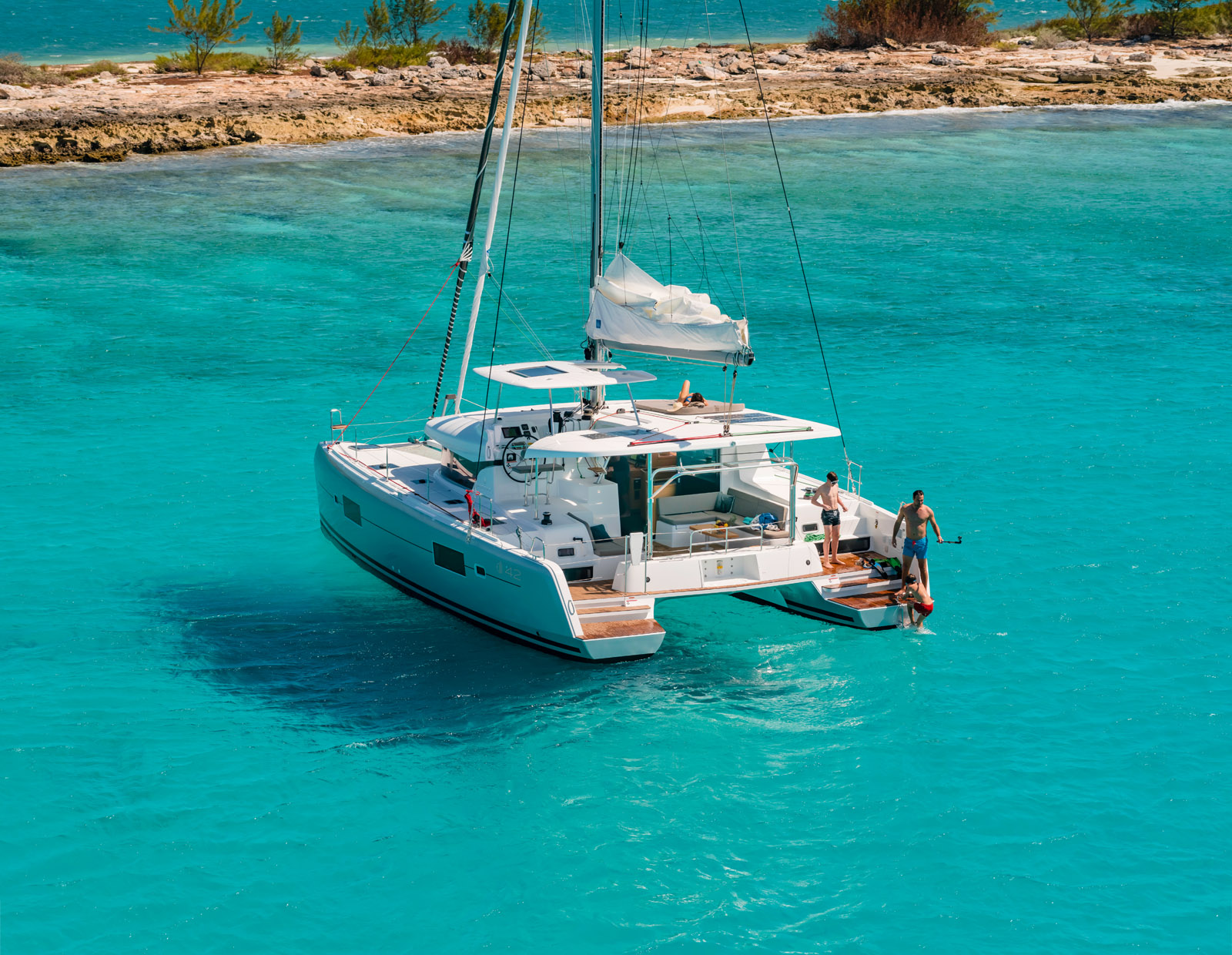
The range of cruising multihulls is mainly made up of boats between 40 and 55 feet. From 40 feet, like this Lagoon 42 here, the performance is well calibrated for a couple with children who are sailing all over the world - here in the Bimini Islands, Bahamas.
The production multihull, a strong candidate for blue water cruising
Space, almost no heeling, a panoramic view, privacy: the multi-hulled sailing platform has convinced many sailors. The increase in sales and the range of boats offered by shipyards since 1990 is spectacular. Thirty years ago, there were 250 liveaboard multihulls built per year by fifteen or so shipyards. Today, there are approximately 1,400 multihulls leaving the yards of about seventy builders, which means more than 150 models capable of taking you far, far away... Since 1980, it is estimated that 20 to 25,000 liveaboard multihulls have been launched. 75% of this fleet is made up of boats between 35 and 60 feet. The big names in the sector account for about 16,000 of these production boats, while the rest, semi-custom and one-offs, come from small artisanal manufacturers. At the end of the 1980s, barely twenty models - spread over five or six brands - represented the global offer, 80% of which was French. The Gallic leadership of the sector has hardly changed 40 years on, but the range of models offered today has completely opened up. At the time, there were two categories: racing and cruising multihulls. Today, the offer is split into a multitude of products. Some brands are resolutely focused on cruising only, such as Privilège Marine, Outremer Yachting, Catana and more recently NEEL Trimarans, Marsaudon Composites and Windelo - not to mention many smaller shipyards. The «big all-rounders» such as Lagoon, Fountaine Pajot, Leopard, Bali, Excess or Seawind have a more diverse clientele. At Fountaine Pajot, sales manager Stéven Guedeu tells us that the shipyard’s customers are divided into three groups: one third is summer coastal sailors, one third is charter/management and another third is made up of blue water cruisers. At Roberston & Caine, Franck Bauguil, vice-president of Moorings Sunsail Leopard, explains the use of his brand’s models: «All our catamarans are designed for long crossings and life on board. From delivery in Cape Town, 15% are private Leopards for long distance cruising, mostly 45’s and 50’s; 40% are private Leopards for offshore and semi-offshore cruising and full or part-time life on board. So 55% are multihulls for blue water and life on board. It’s only the distances that change, between owners who sail in the Bahamas/Caribbean, the Mediterranean, and others who have more extensive programs. Delivery in Cape Town, then a South Atlantic crossing to Brazil and the Caribbean, or sailing to the Mediterranean or Indian Ocean. There are many transatlantic voyages, USA-Mediterranean or Mediterranean/ Caribbean. And also a lot of South Pacific crossings, via Panama. Some private Leopards are delivered to Australia - they usually sail to the Whitsundays, south of the Great Barrier Reef. 45% of Leopards are for charter. Most of these catamarans are delivered by ship, for logistical and timing reasons, directly to the BVI in Tortola for the Caribbean/Belize area, Fort Lauderdale for the Bahamas, and Sète for the Mediterranean fleets. Charter catamarans for the Seychelles and South Pacific are delivered by sea, by professional crews. » But make no mistake: charter does not exclude long voyages... Thomas Gailly, Lagoon’s director, explains why: «Charter catamarans have owners who, at the end of the charter/management program, recover their boats to go cruising or sell them to clients, 90% of whom have the same desire. » So we can assume that among specialists, 95% of the boats travel and among generalists it is almost the same proportion. This explains why we see more and more multihulls in all of the world’s most beautiful anchorages...
 |
 |
 |
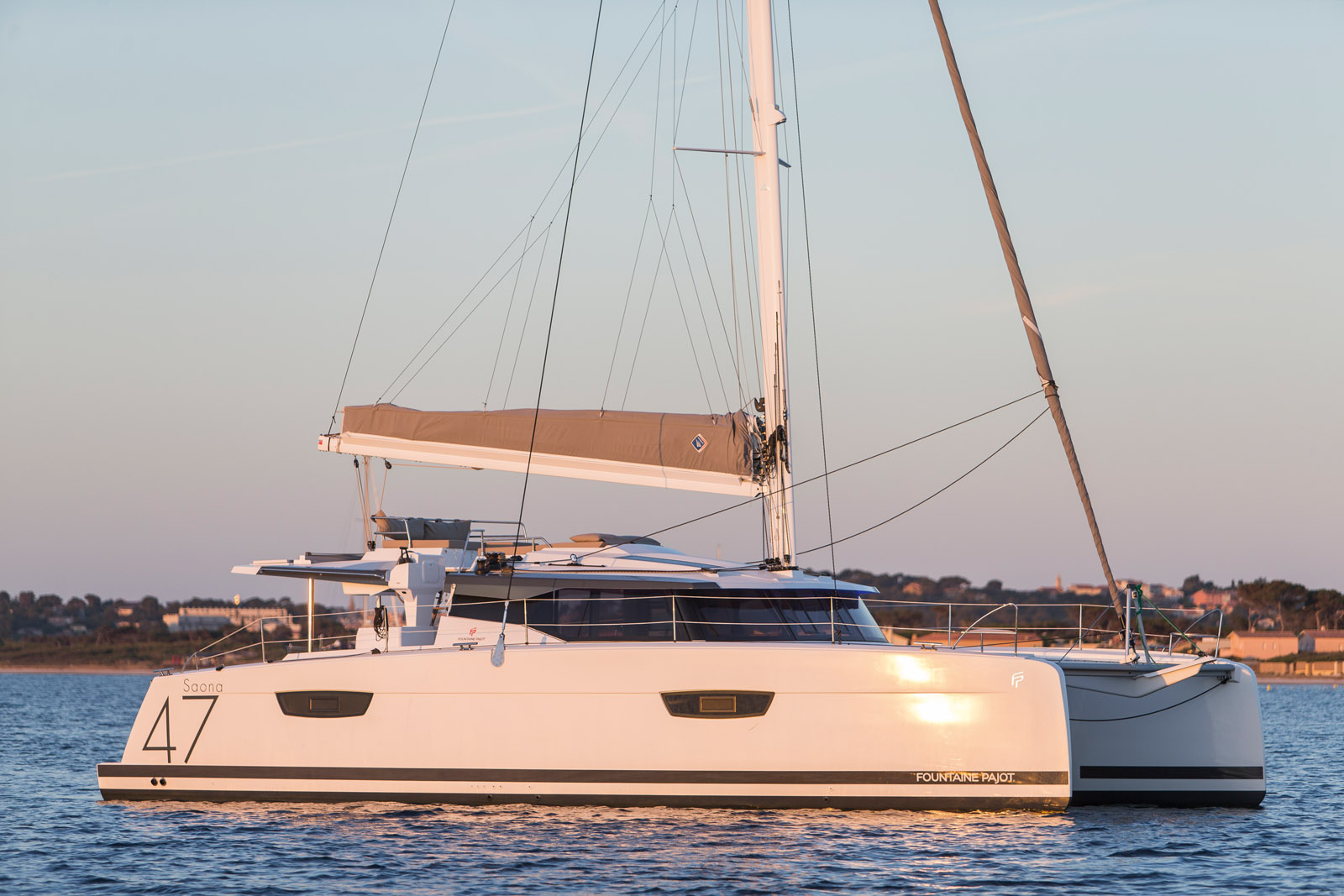
1/ The most popular size for circumnavigators today is between 45 and 50 feet. In this category, the Saona 47 represents a good compromise between space, ease of maneuvering with a short-handed crew and a managed budget.
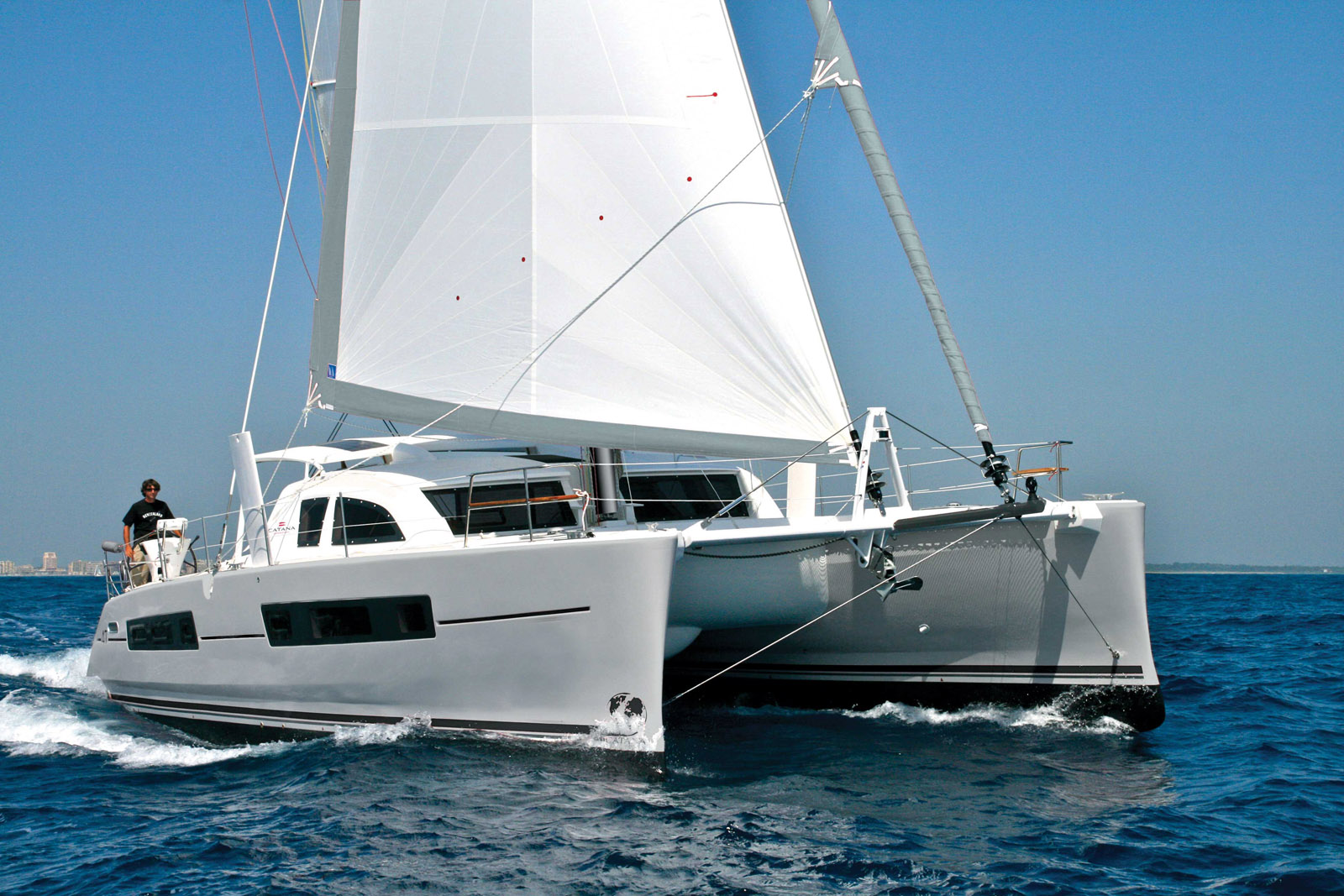
2/ Successor to the legendary 471, the Catana 47 has also sold several dozen units. Proof that a brand dedicated 100% to blue water cruising can seduce many demanding ocean cruisers. With its next Ocean Class, Catana is hoping to reconnect with this clientele.
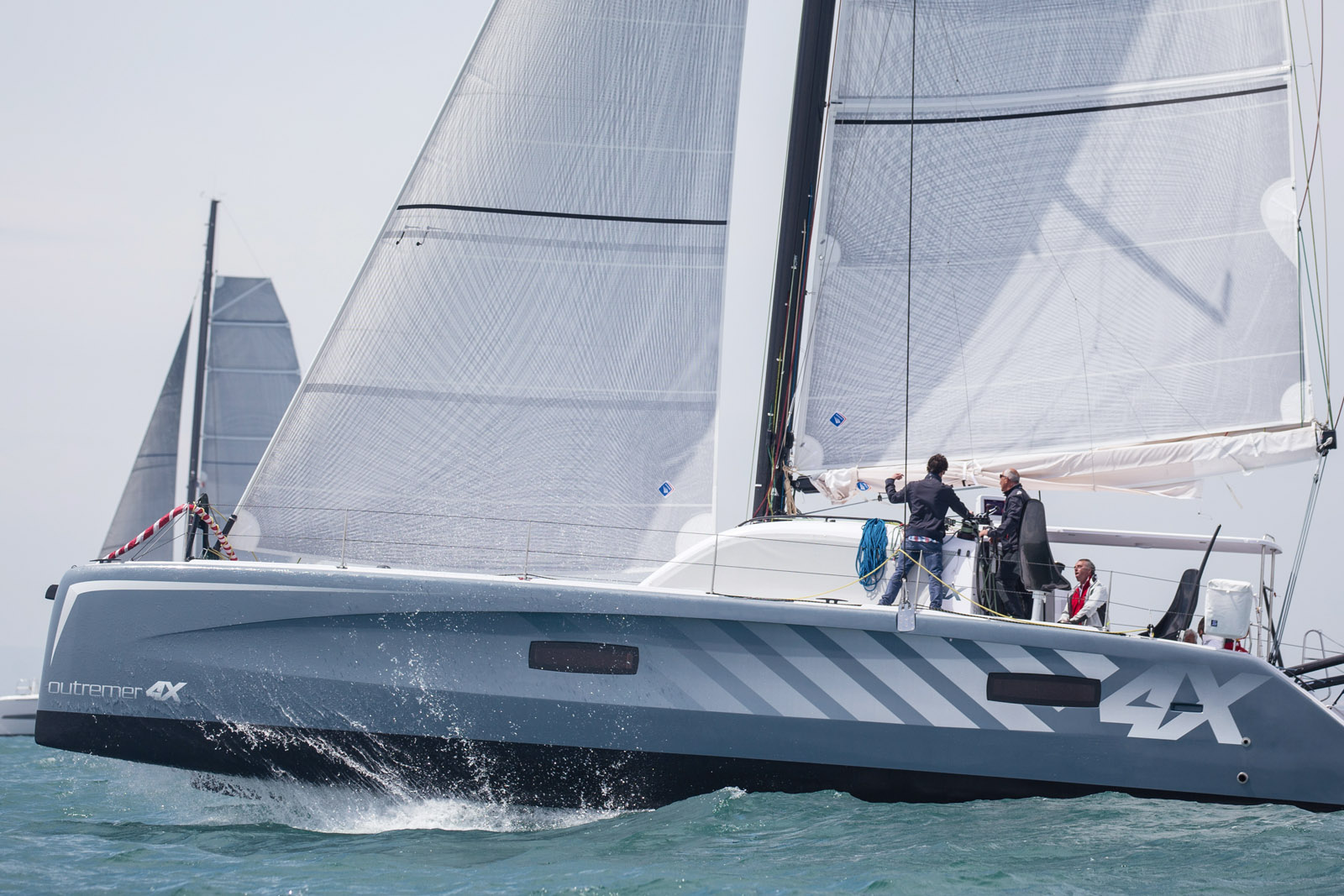
3/ Outremer is another brand dedicated to blue water cruising, offers an excellent compromise between comfort and performance. The smooth sea passage, further improved by the latest developments in naval architecture, is one of the essential features here.
Surprising news despite the pandemic
This trend is continuing despite Covid-19. In 2020 and again this year, however, charter boat orders have inevitably fallen due to the pandemic. While the yachting industry feared the worst at the onset of the health crisis in March 2020, the challenges of repetitive confinement, social distancing compliance and a bleak outlook for the future have proven to be catalysts for projects. «Many clients and prospects who had a sailing project that had been buried or postponed for various reasons have taken the plunge and ordered a boat to enjoy their vacations, while respecting health regulations and staying with their families,» explains Thomas Gailly. We don’t have the exact figures yet, but the shipyards are unanimous on the very marked increase in private demand. Finally, the sea is reinforcing its status as the last remaining wild frontier. Moreover, as Stéven Guedeu points out, «More and more firsttime buyers are taking the plunge, like the Australian couple who took delivery of a Saona 47 in Europe. They will spend two years in Europe and the Mediterranean getting to know their boat before crossing the Indian Ocean». The same goes for a 35-yearold German who will sail his Lagoon 46 for a year in the Mediterranean before crossing the Atlantic.
 |
 |
 |
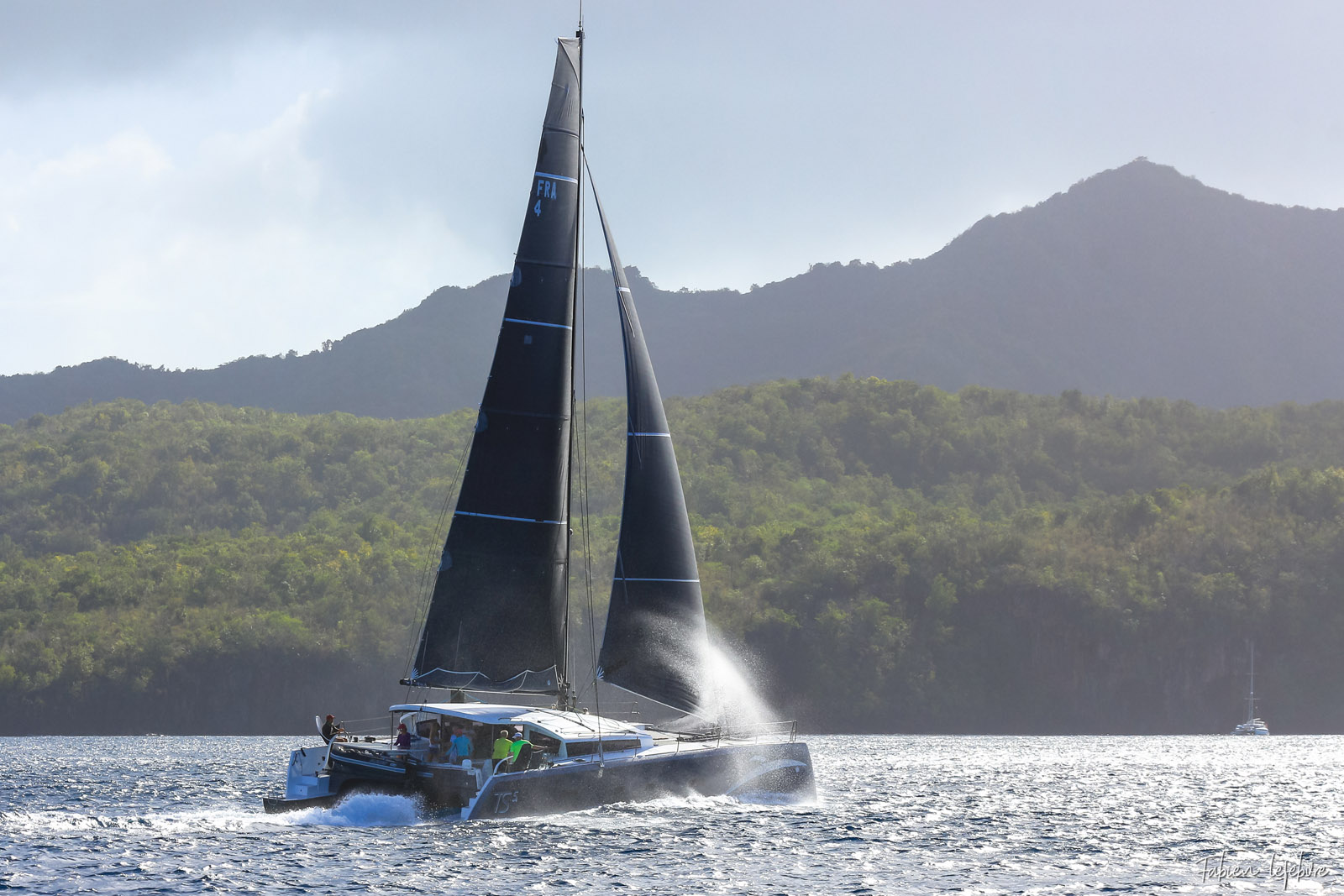
4/ Marsaudon Composite, with its ORC 42, 50 and soon 57 offers catamarans dedicated to ultra-fast cruising. They are well suited to a clientele of sporty aesthetes! But they’ll have to leave a lot of their stuff on the pontoon...
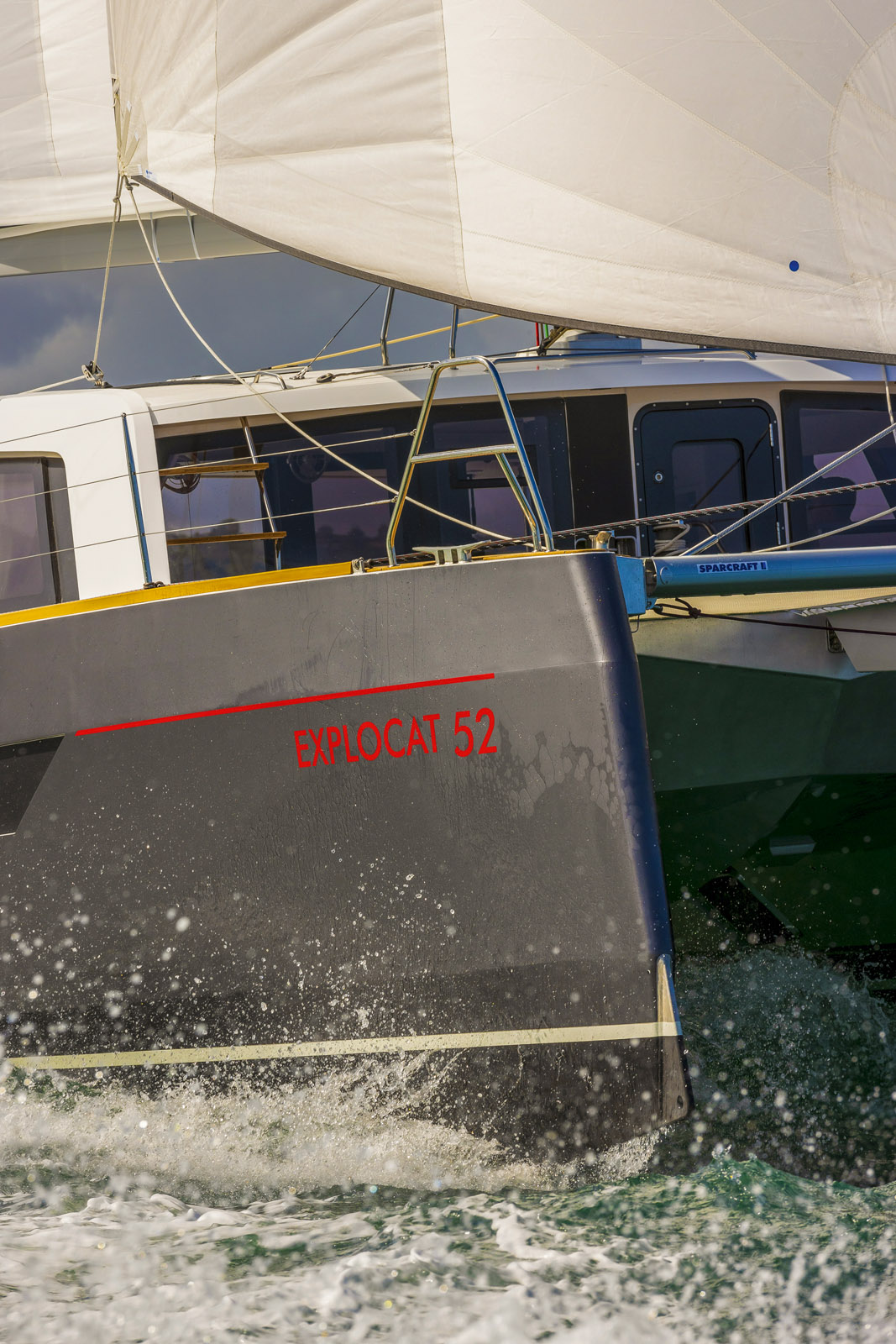
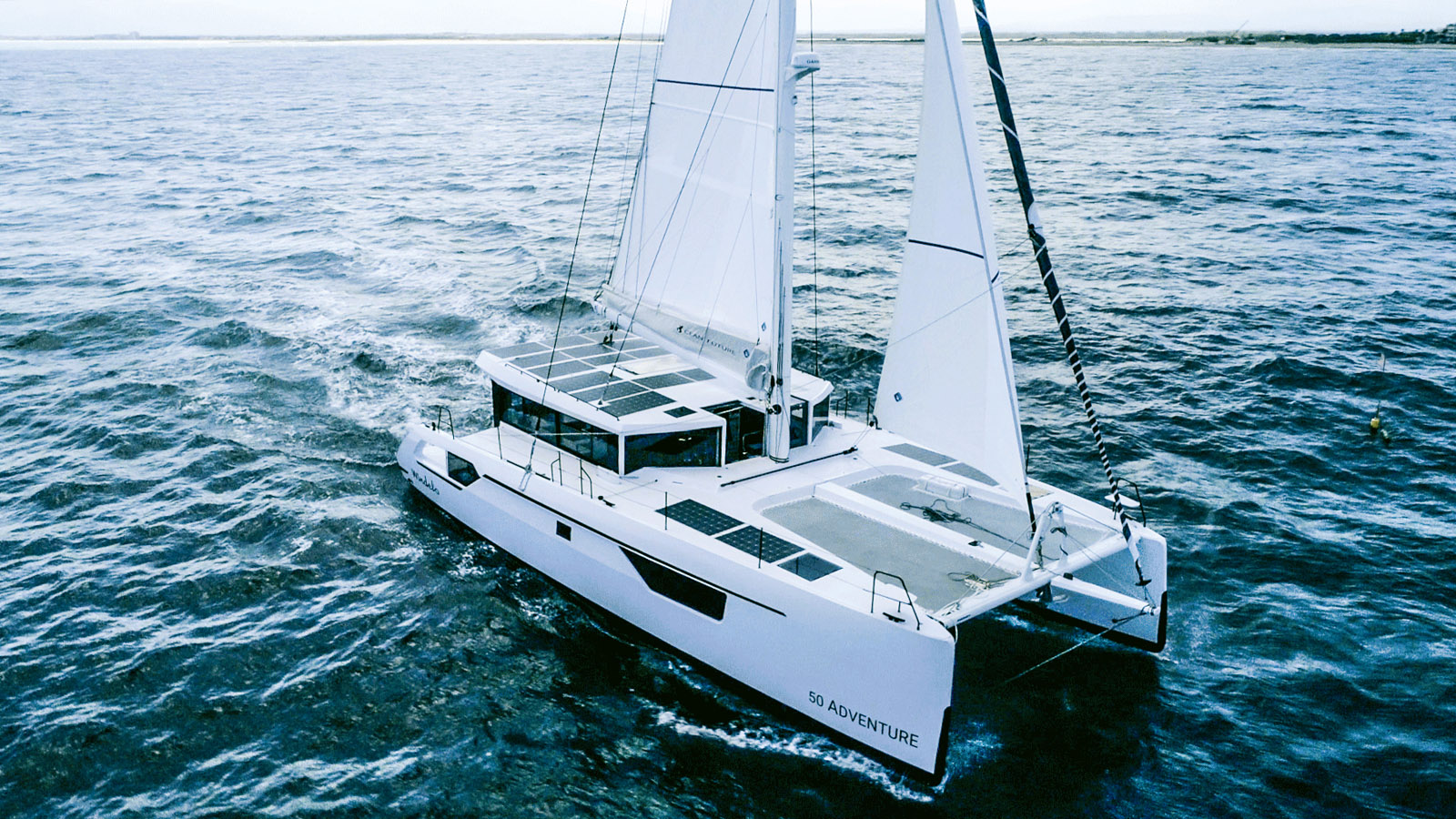
5 & 6/ From Garcia Yachts with its Explocat 52 and aluminum hulls to Windelo with the brand new 50 with a forward wheelhouse governed by conceptual eco-responsibility, the diversity on the new boat market is striking. 70 brands offer a total of more than 150 different models to choose from for your voyage.
The advantages of a new boat
Setting off blue water cruising is a real life-project that you have to prepare for... over a long period. So why not, since we have the time, order the multihull that will exactly meet our expectations? Choosing the version that suits you and equipping it with the latest options is already a bit of a departure. You are going to fashion your boat while anticipating all of the wonderful ports of call that you will visit. Take advantage of the latest developments: the designers can testify that progress on hulls and architecture is constant. Higher freeboard and nacelle, better ergonomics, ease of maneuvering: the latest models are a concentration of technologies acquired over the long term. Of course, and especially for the most novice sailors, the manufacturers’ guarantee is a very important point, especially since today most of the component brands used on multihulls are represented worldwide - a nice technical insurance to have when you want to go far away.
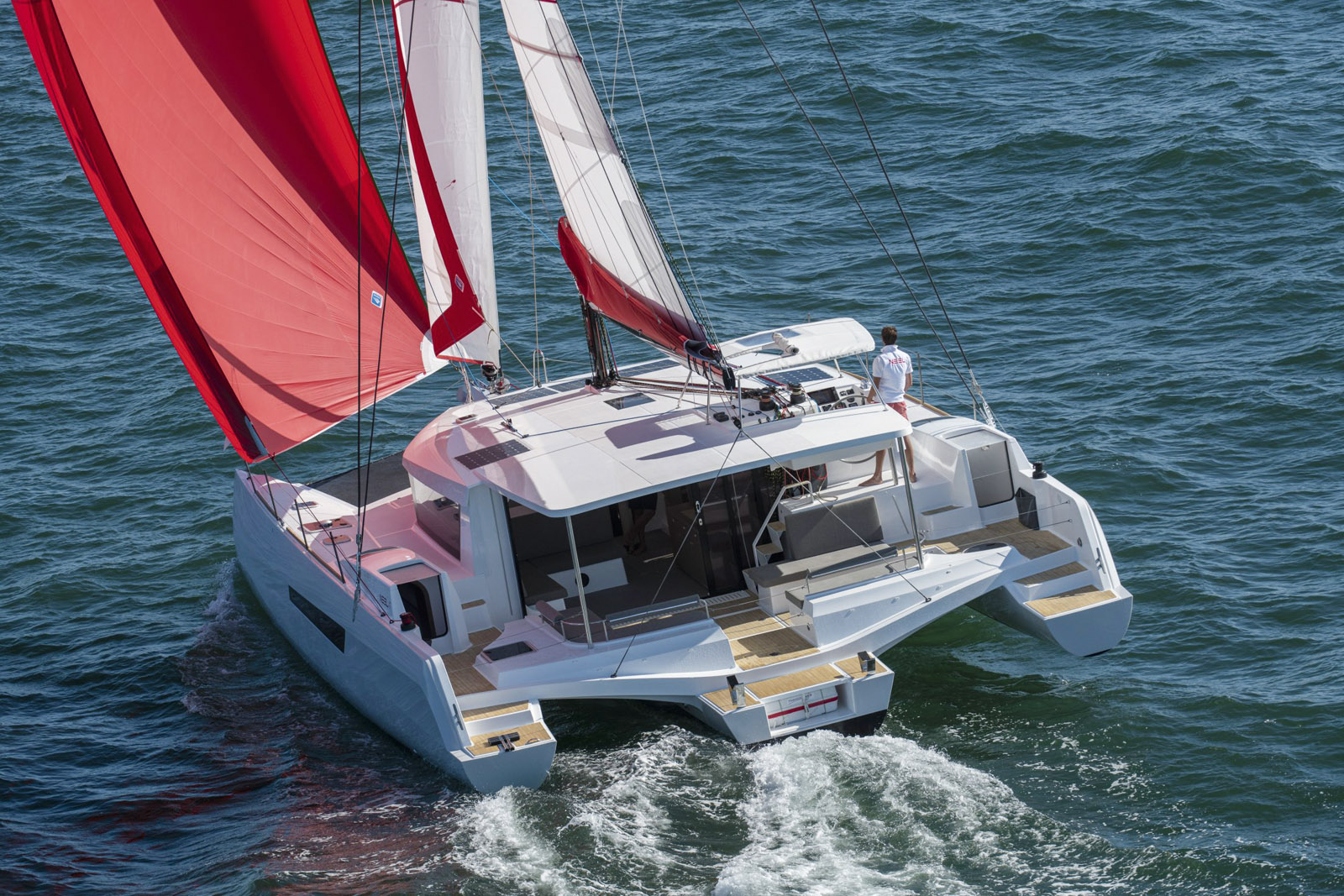
The Neel 47 is an interesting boat for a couple that sails together most of the time and occasionally receives family and/or friends. The layout of the hulls with an independent entrance maintains everyone’s privacy without upsetting the habits of the owners who have their cabin on the same level.
The profile of the ideal multihull to set out on
So which ones are the favorites? If it is true that the stats favor the 40 to 55 footers, (with a special mention for the 45 footers and above for those «big» round the world trips), it is clear that it is very often the budget that determines the choice. Some will travel with a crew aboard a 65-footer, others will board a much more modest but nevertheless seaworthy multihull. The success of the Aventura 34 and now of the 37, the Excess 11’s good start or the dynamism of Seawind with its 11.90 are testament to this. Most blue water cruisers leave as a couple, so in terms of accommodation, more than 70% of the models are ordered in a threecabin version with a large owner’s cabin in one hull. In the same spirit, those who are going to have a large number of guests on board or who are going to receive friends prefer multiple spaces with flybridge and/ or forward cockpit versions. The exception sometimes confirms the rule: for example, a couple with four children aged 2 to 13, who are leaving for three years, have set their sights on a Nautitech 46 Open with four cabins and four bathrooms! The explanation is simple: no flybridge, to always have an eye on the little ones, a sufficient number of cabins and shower rooms to accommodate accompanying sailors for the crossings and to keep a good chance of profitability for charter or sale at the end of the three-year sabbatical. The dilemma is the same when it comes to space for onboard living and storage. «Most future travelers, driven by the fact that stability evokes earthly comfort, tend to want to bring their house on board,» notes Matthieu RougevinBaville, sales director of Outremer Yachting. This is a trend that the builder is obviously trying to counter, as they are keen to deliver catamarans that are always light... and therefore fast and safe. Gilles Wagner, head of Privilège Marine, obviously does not have the same approach. His customers will not sacrifice on the wine cellar, electric bikes and all the modern comfort. The volume of the hulls has been studied with the aim of being able to accommodate a very large payload (5 tons on the 510). For the brand’s customers, nothing should be missing on board. Here’s a funny anecdote: «During one edition of the ARC, an Outremer came to the anchorage to ask the stunned owner of a Privilège for ice cubes», Gilles Wagner tells us. There has been a new player for the last ten years in the space/comfort/ performance balance. NEEL, with its trimarans topped by a large nacelle, has earned a good reputation in the cruising sector. «Our models have large storage capacities, ideal for longdistance sailing. The central locker is voluminous, and the weights remain well centered, which does not alter the behavior of the multihull when sailing,» notes Barbara Bruneel, the shipyard’s communications director. The leading brands account for the vast majority of sales (almost 1,000 Lagoon 450s are currently sailing all over the world), with a clear preference for comfortable offshore cruising. But for those who are looking for speed and action, the ORCs (formerly TS) from Marsaudon Composite will satisfy their needs, as long as they take almost nothing with them. Aficionados of biotechnology and ergonomics will be delighted with the new Windelo and its helm station forward of the saloon. In the new Explocat 52 from Garcia Yachts the most ambitious sailors will find an ideal vessel for taking on the arctic regions. For the most demanding customers, some 40 manufacturers are able to produce custom one-offs...
 |
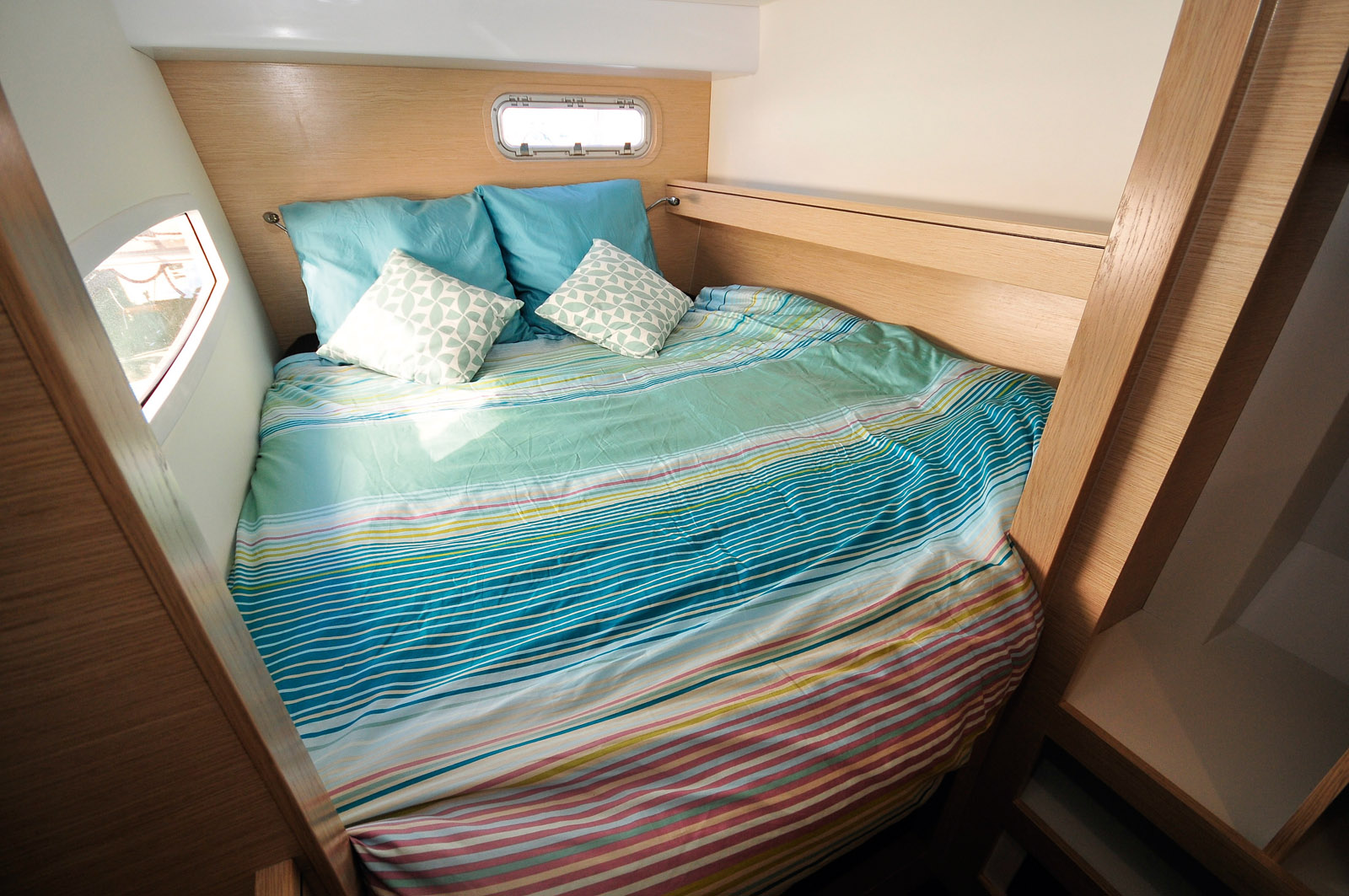 |
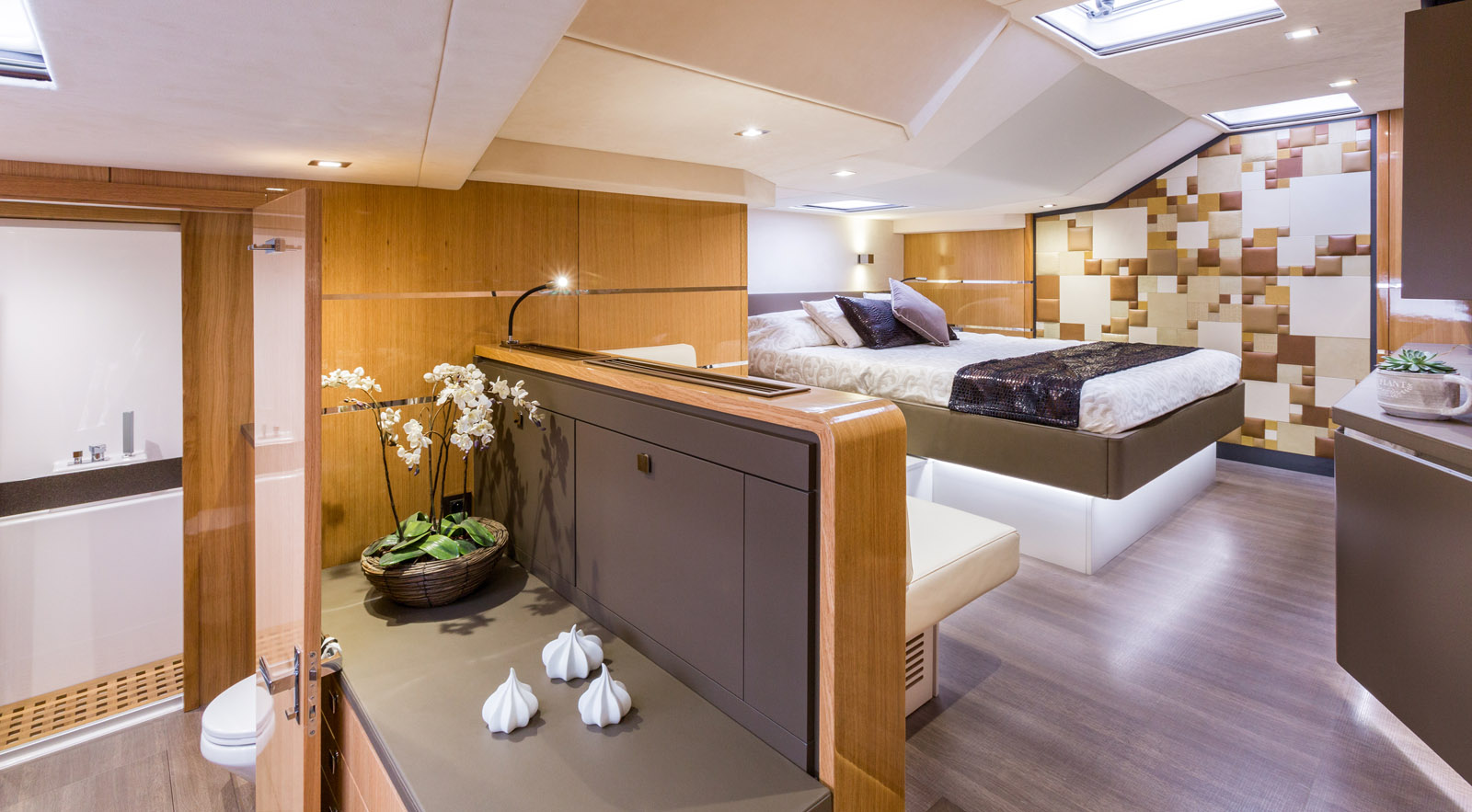
Between the XXL Owner’s cabin of a Privilege Series 640 and that of an Outremer 45, the facilities are very different...
The philosophy of cruising is specific to each owner. It’s up to you to decide which side you’re on!
Comfort... it’s all relative!
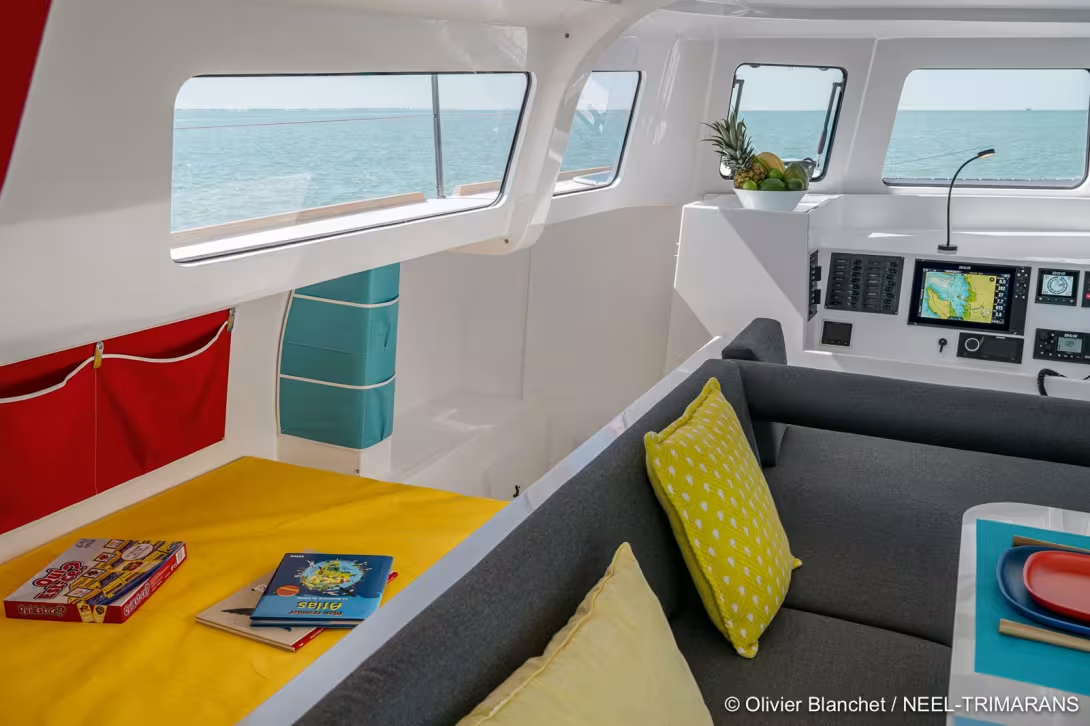
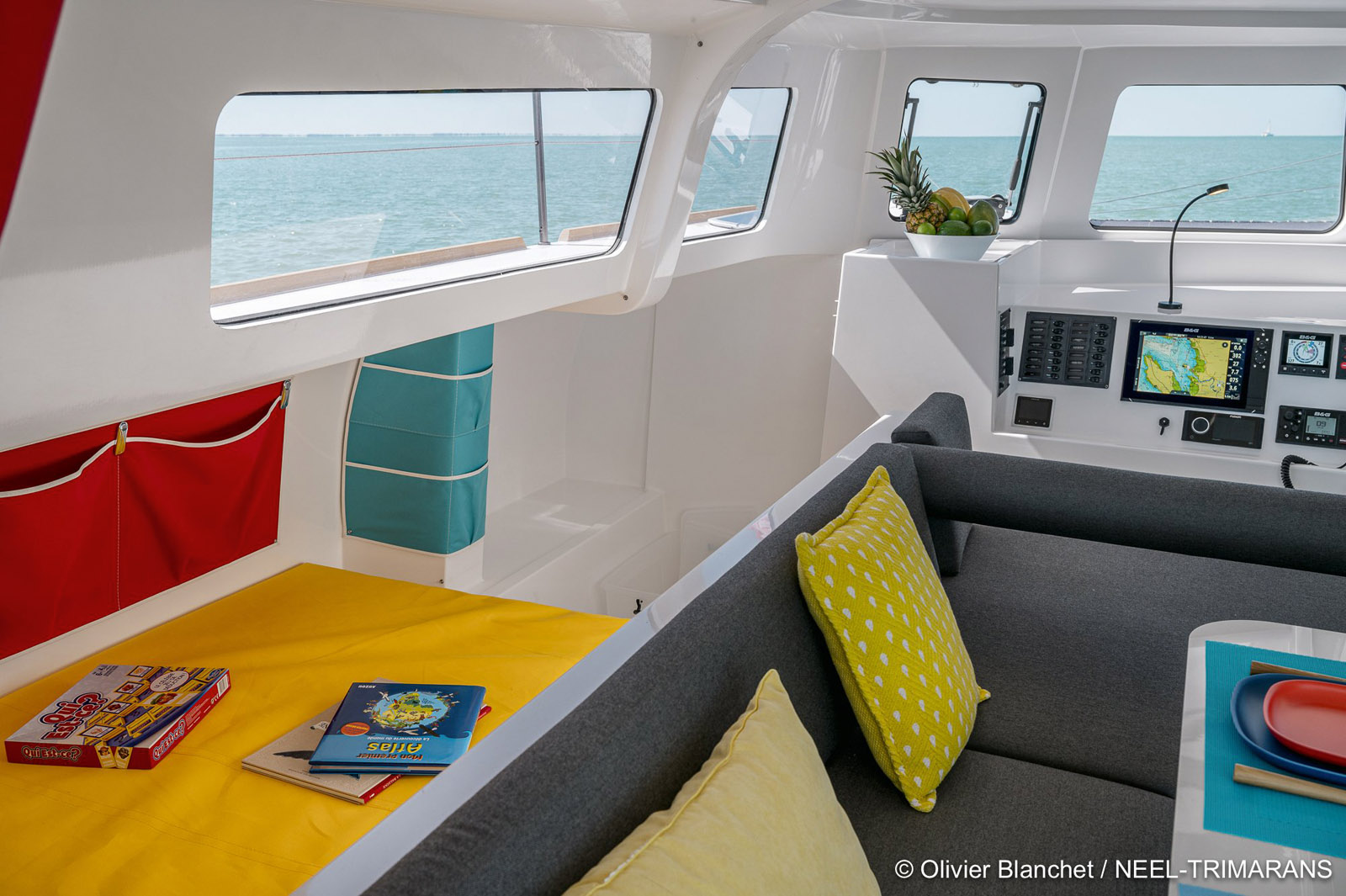
There are huge differences too when it comes to the budget. Between a luxurious Lagoon Seventy 7 and a Tropical 36 built in Thailand, there is a twenty-fold difference in price... This is the perhaps the moment to remind you of the famous adage: «The right boat is the one on which you set out». The notion of comfort is itself quite relative. Thus, on board a Neel 43, the bunk next to the saloon is ideal as a playpen for the youngest children while sailing. This is a comfort element for those particular parents. Matthieu Rougevin-Baville talks enthusiastically on the subject: «By not having a dishwasher or a washing machine, there is a greater chance of meeting other humans on your travels». He readily admits that there are no island beds on an Outremer, instead he wants to talk about the sensations when sailing, especially for those who want to maintain a good speed. High bridgedeck clearance that doesn’t slam and proper bunks where you can settle down and fall asleep faster, will be much more of a comfort factor and just as important - for the brand’s clients - as a large column refrigerator will be for those on a Bali. In fact, there are those who will want to break with their everyday habits: a simple multihull, with a good balance between speed and comfort, will guarantee their well-being. Others will want to make themselves at home, with a multihull that is probably less fast or fun to sail, but there will be ice cream in the freezer for the children - and ice cubes, even for those ARC winners!
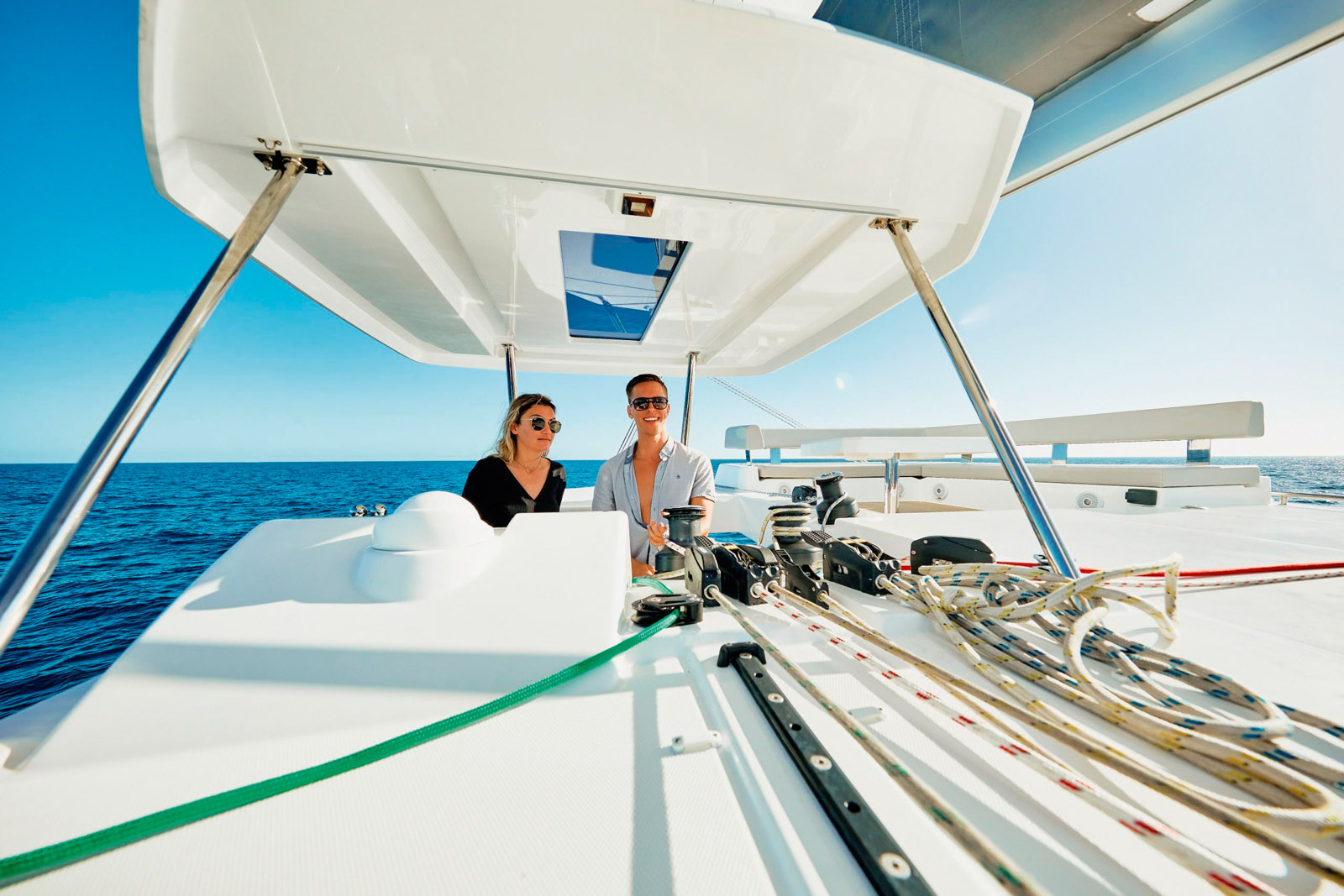
The mid-height helm station, shown here on the new Leopard 42, is a popular layout. Maneuvers are centralized and this layout allows for «one eye on top, one eye underneath». On smaller units, a tilting helm is ideal, but the budget is four times that of a standard system.
Shipyard options, the stars of cruising
Long distance cruising means spending time at sea. The autonomy required as a result makes certain equipment unavoidable. Of course, the larger the multihull, the larger the budget allocated to equipment. Sails made of reinforced fabric such as Hydranet equip more than 50% of the rigs and additional downwind sails are favored by demanding sailors. Energy management is the subject of much attention. An oversized Lithium/Ion or at least AGM battery pack, solar panels and inverter are now part of the basics. Hydro-generators are popular with small and/or fast boats, while larger multihulls often rely on generators. Fresh water management is also an important concern. Few multihulls leave these days without a watermaker (see our Diagnosis in this issue). Up to 90% of the time is spent at anchor. A longer chain and a good bridle (see our article in this issue) are the minimum requirements. On large vessels, this setup can be duplicated, as it can be for the autopilot or the electronics. The dinghy, which should not be too small to carry the crew in a single rotation, but not too big or too heavy to be easily pulled up above the high-water mark, will often be made out of Hypalon. An outboard engine is still the most popular. A high-performance multi-layer antifouling is also often requested, and even a Coppercoat treatment to space out the time between antifouling jobs. Electric winches to hoist the sails are a consistent request. Reversible heating or air conditioning is installed on more than 60% of the multihulls slated for ocean cruising. Complete electronics with radar and a distress system are pretty much part of the basic offer now. The various means of communication and audio systems have become an obligation. Other comfort options that are often requested: electric cooking plates, a safe or a satellite antenna for the TV.
Delivery and preparation services
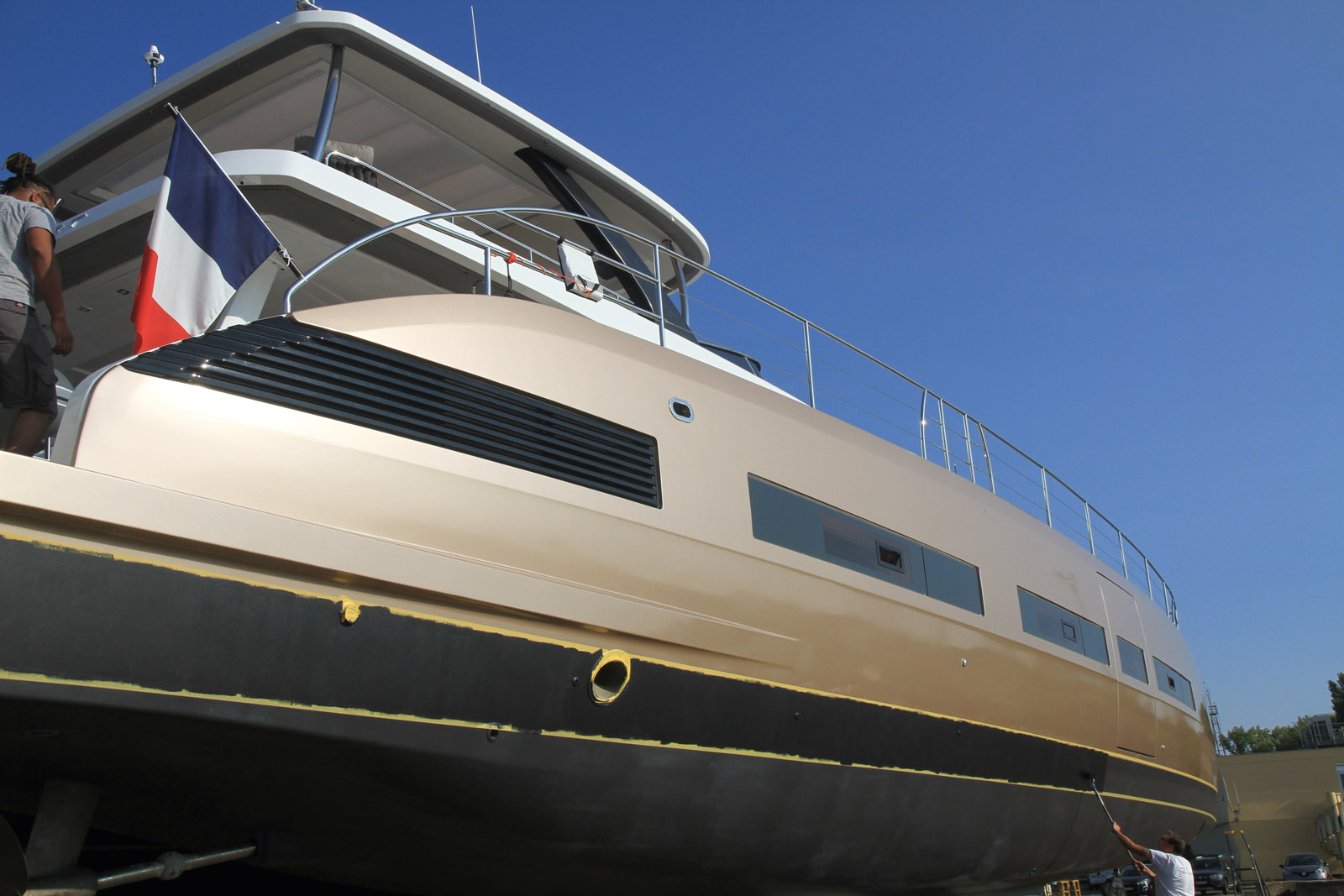
As opposed to a second-hand boat that has sailed a lot and is ready to go, a new multihull requires a lot of preparation before leaving the shipyard to be ready to travel. With builders who offer small ranges with partial custom finishes, this preparation is carried out directly at the yard. It is an important step that allows the boat to be reliable when it takes to the water. With the major brands, this step is carried out by their agents when it comes to small boats. They are also responsible for coordinating the after-sales service around the world. For Lagoon, for example, there are no less than two hundred centers around the world. But from 50 feet upwards, the list and complexity of the equipment and the smaller number of units involved have prompted the Bénéteau Group (Lagoon and Excess) to create a «Premium» service for delivery and preparation. All the details are reviewed, such as matching the size of a lateral shelf with a particular type of printer, adjusting the fittings and installing anti-chafe protection etc. These services take care of the thousand and one details from bedding, to crockery and survival equipment in a bid to assist the client as much as possible before their big launch.
 |
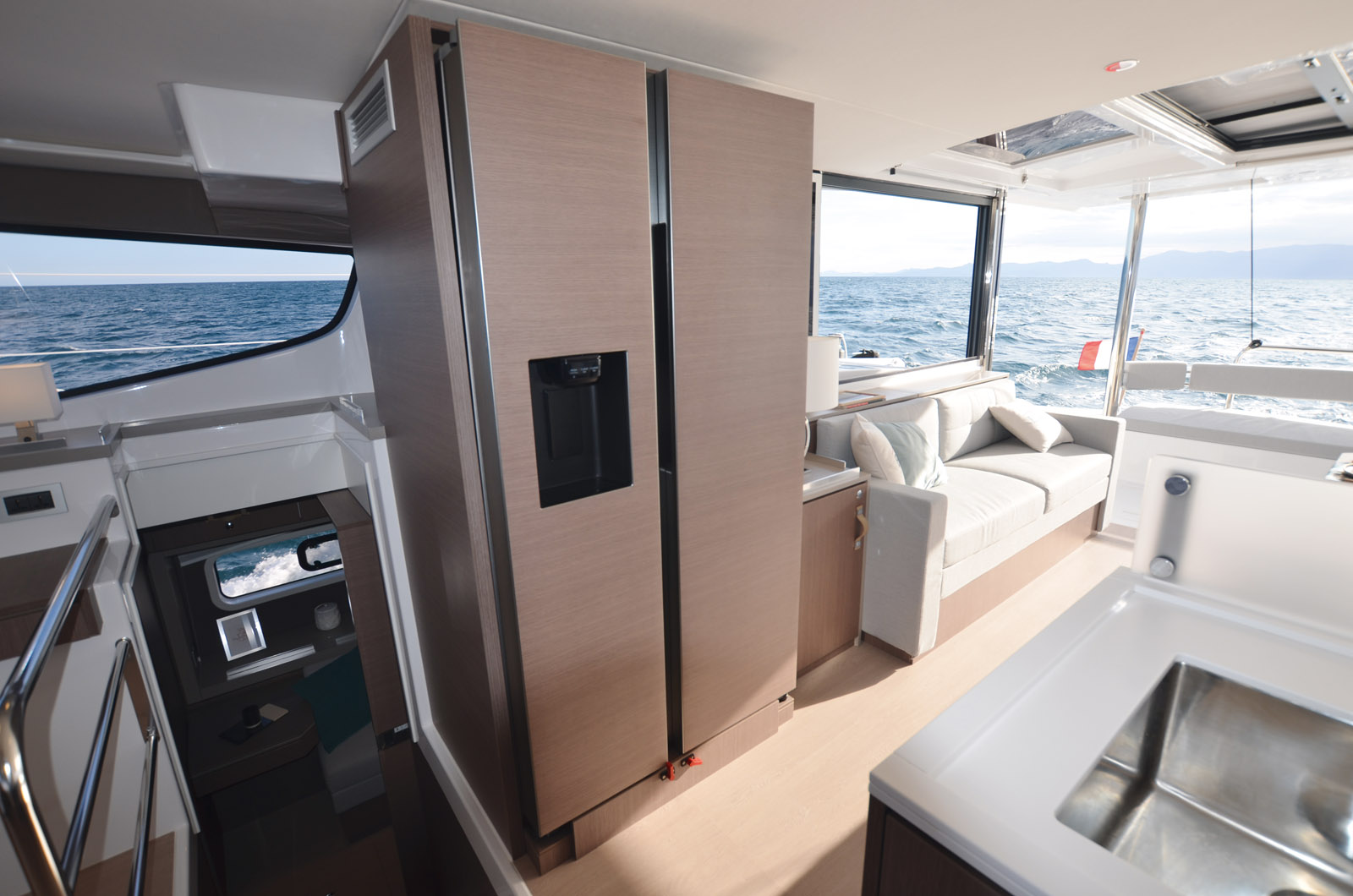 |
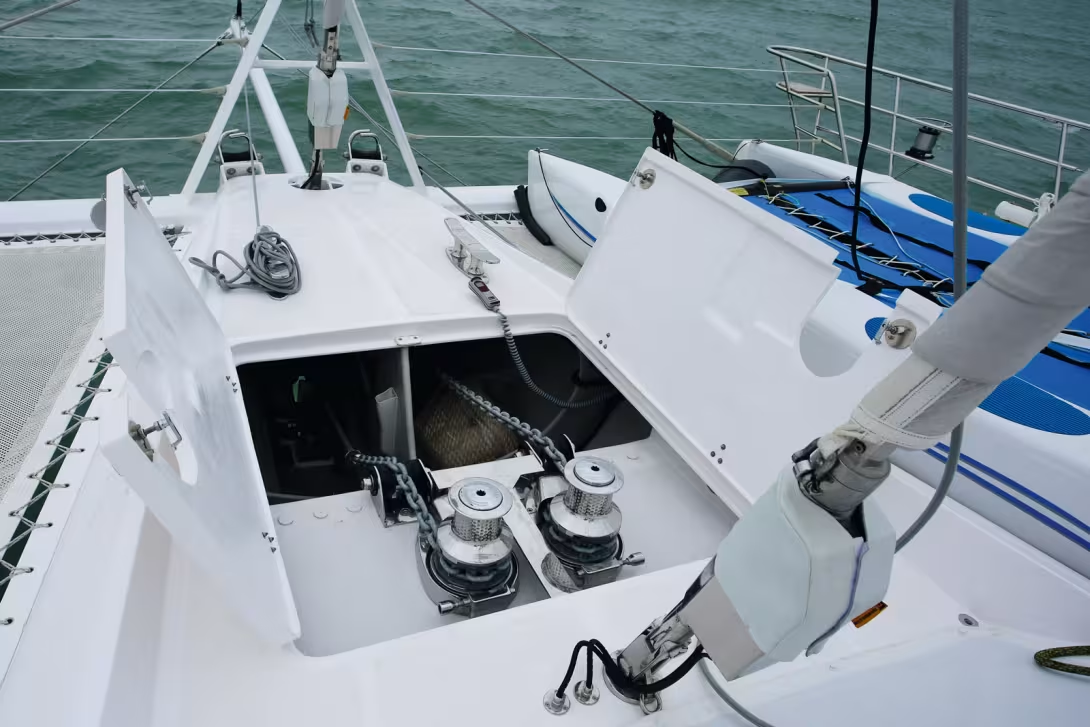
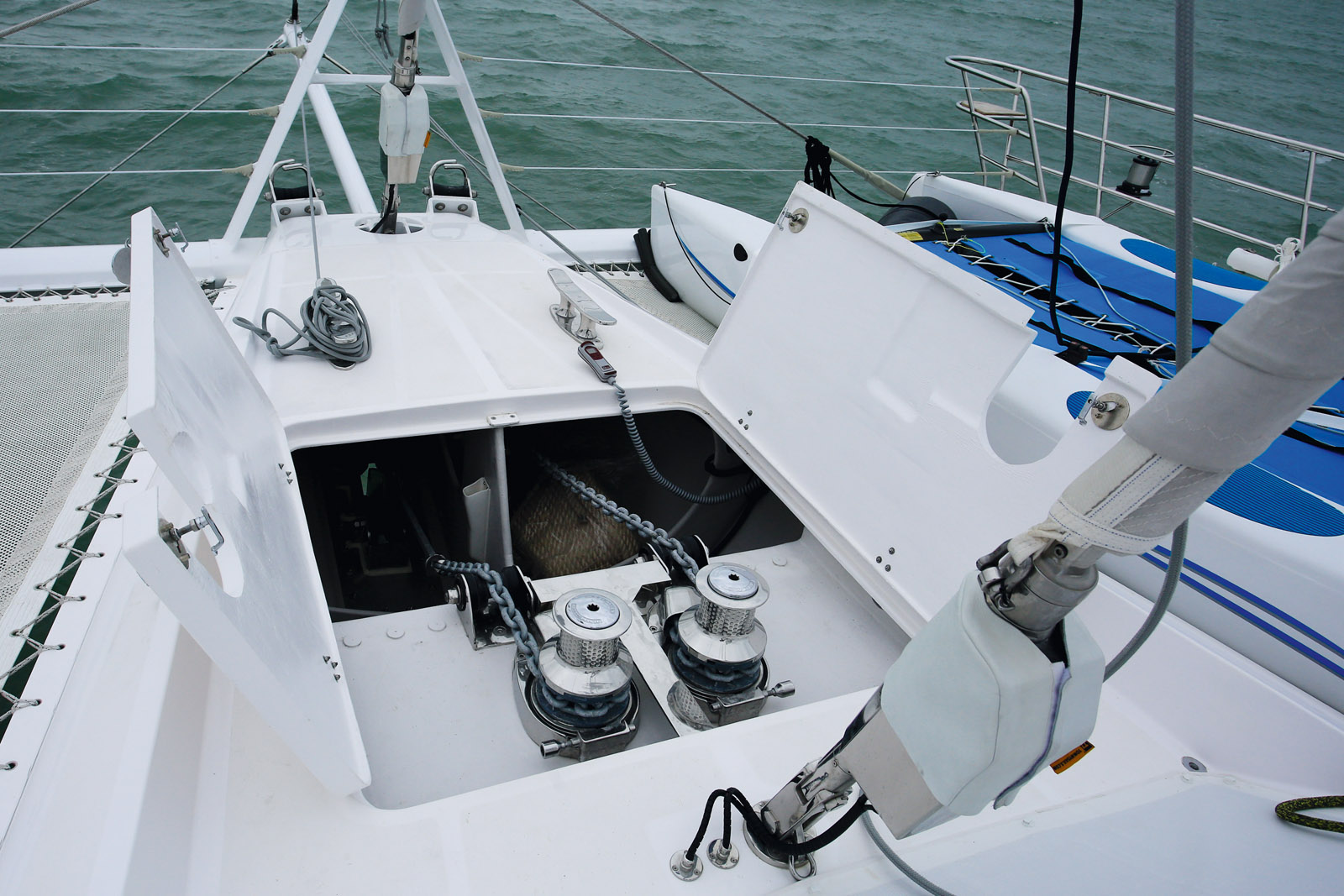
Some people prefer not to miss out on anything, both for safety and comfort reasons. Two examples with the double ground tackle of a Privilege and the double door fridge of a Bali 4.6. The battery pack and the energy management will need to be adapted accordingly.
 |
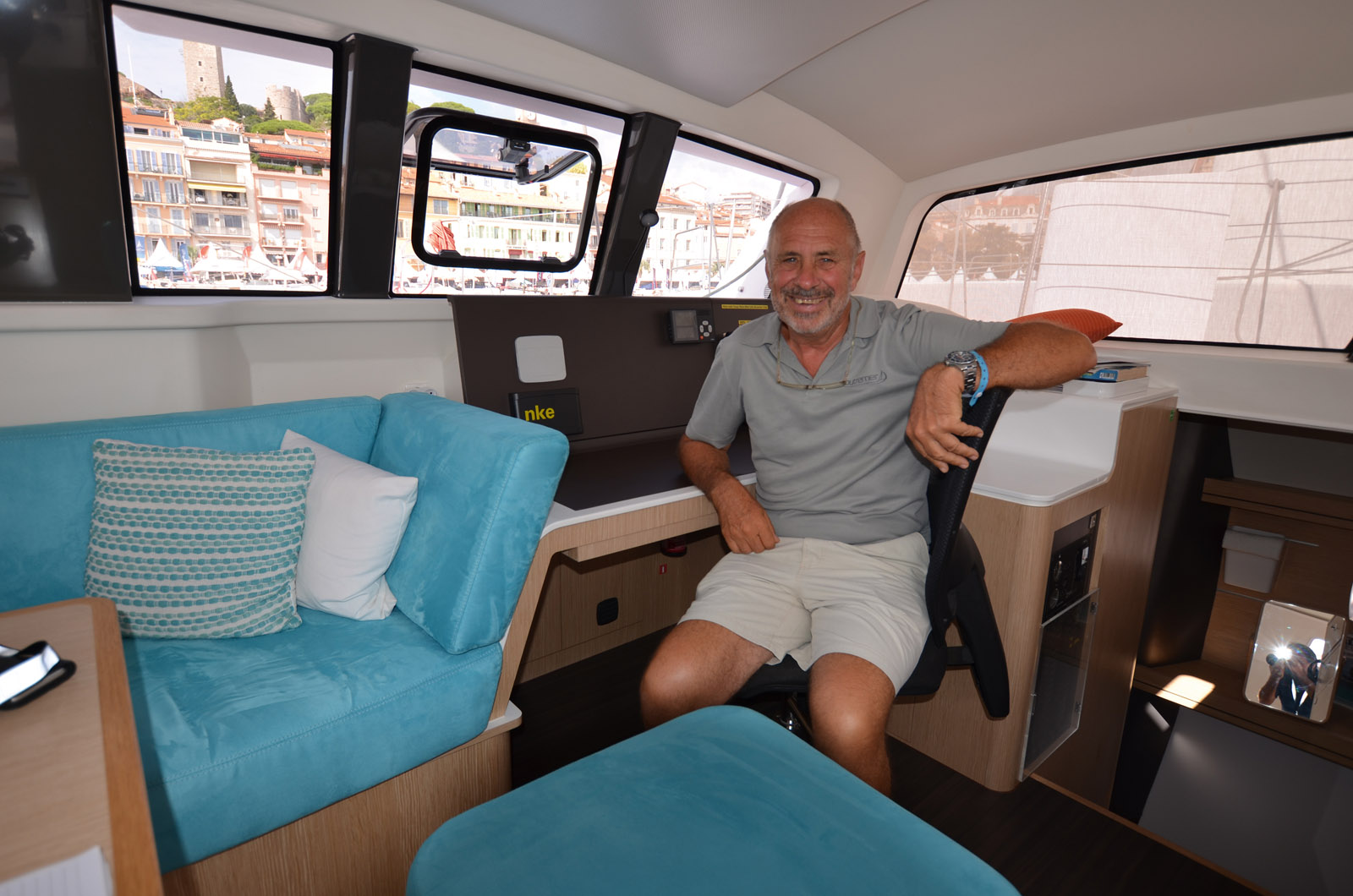 |
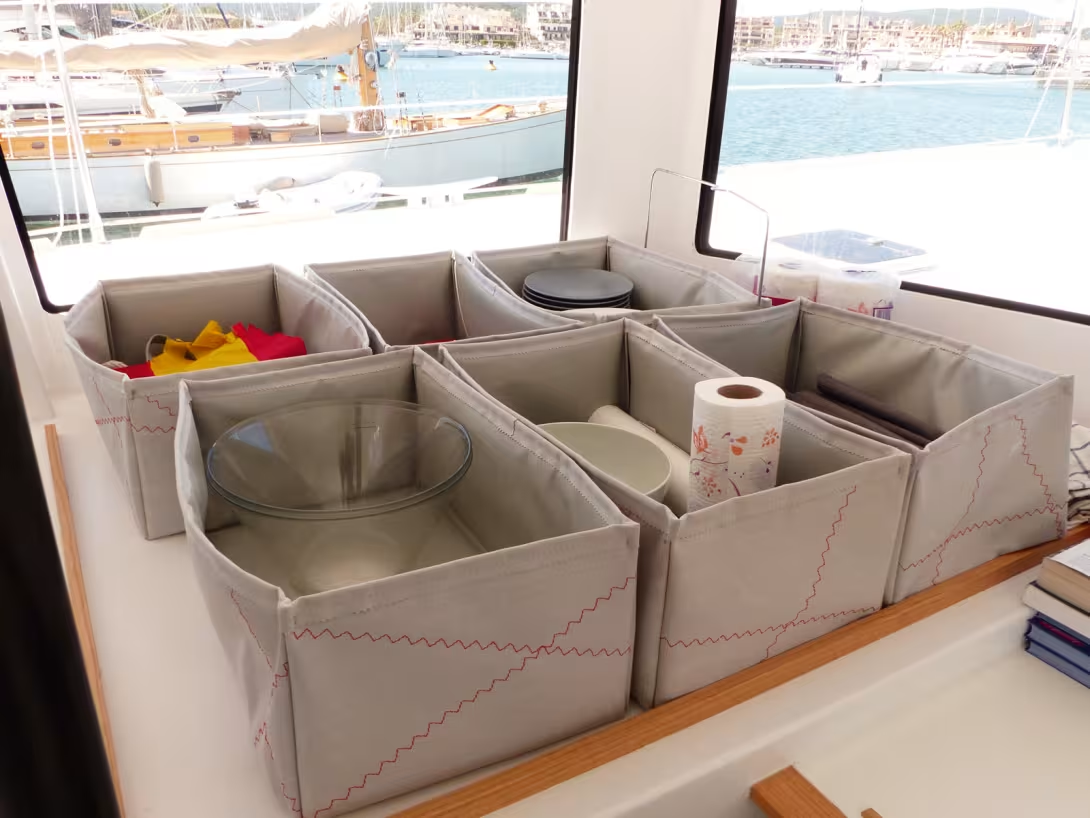
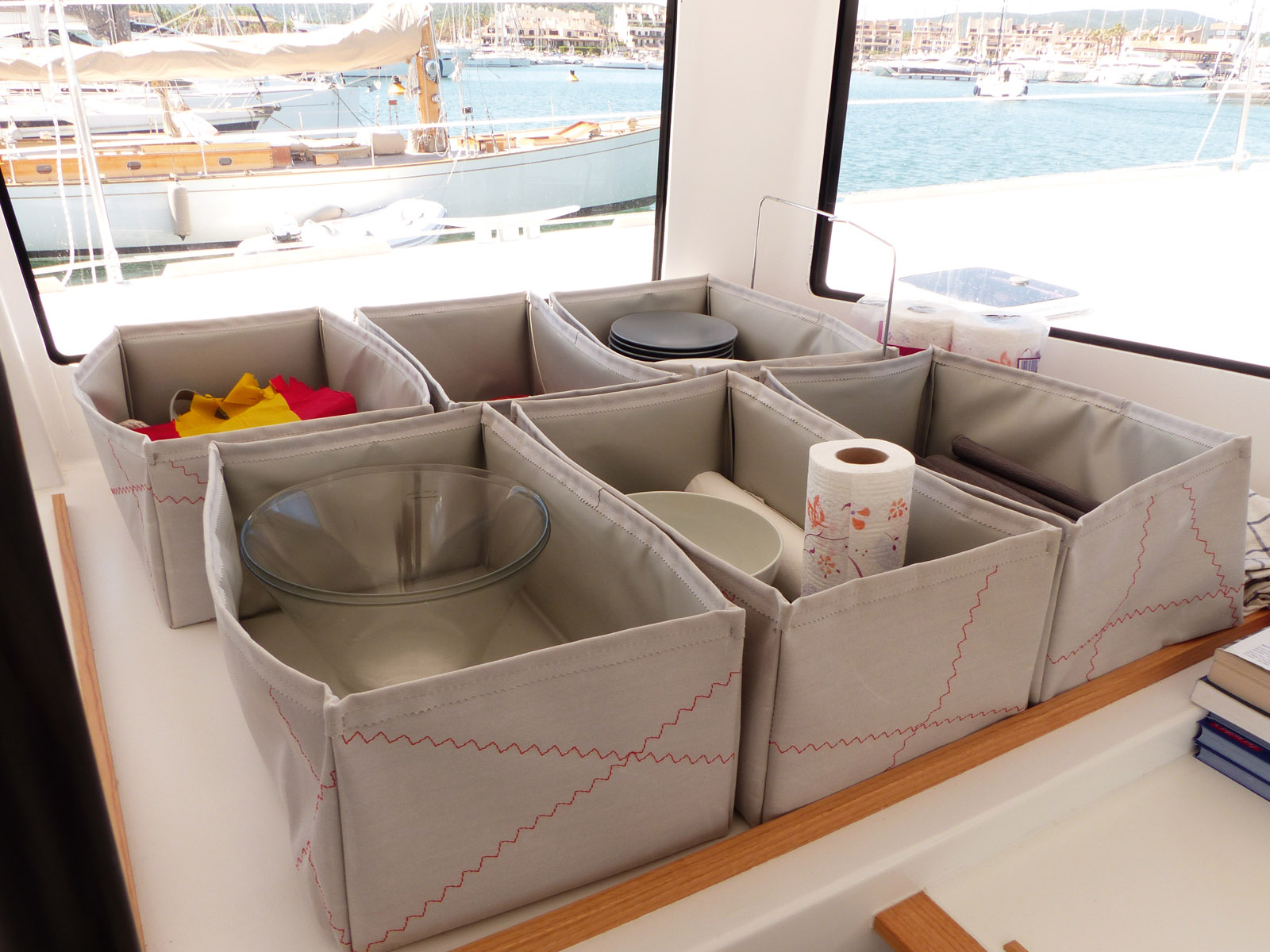
Others play the simplicitylightness card, like this flexible storage on the Eos 54 or the 100% synthetic fiber wardrobe on this owner’s Outremer 45. He’s smiling because he knows he’ll be the first to arrive on the other side of the ocean...
 |
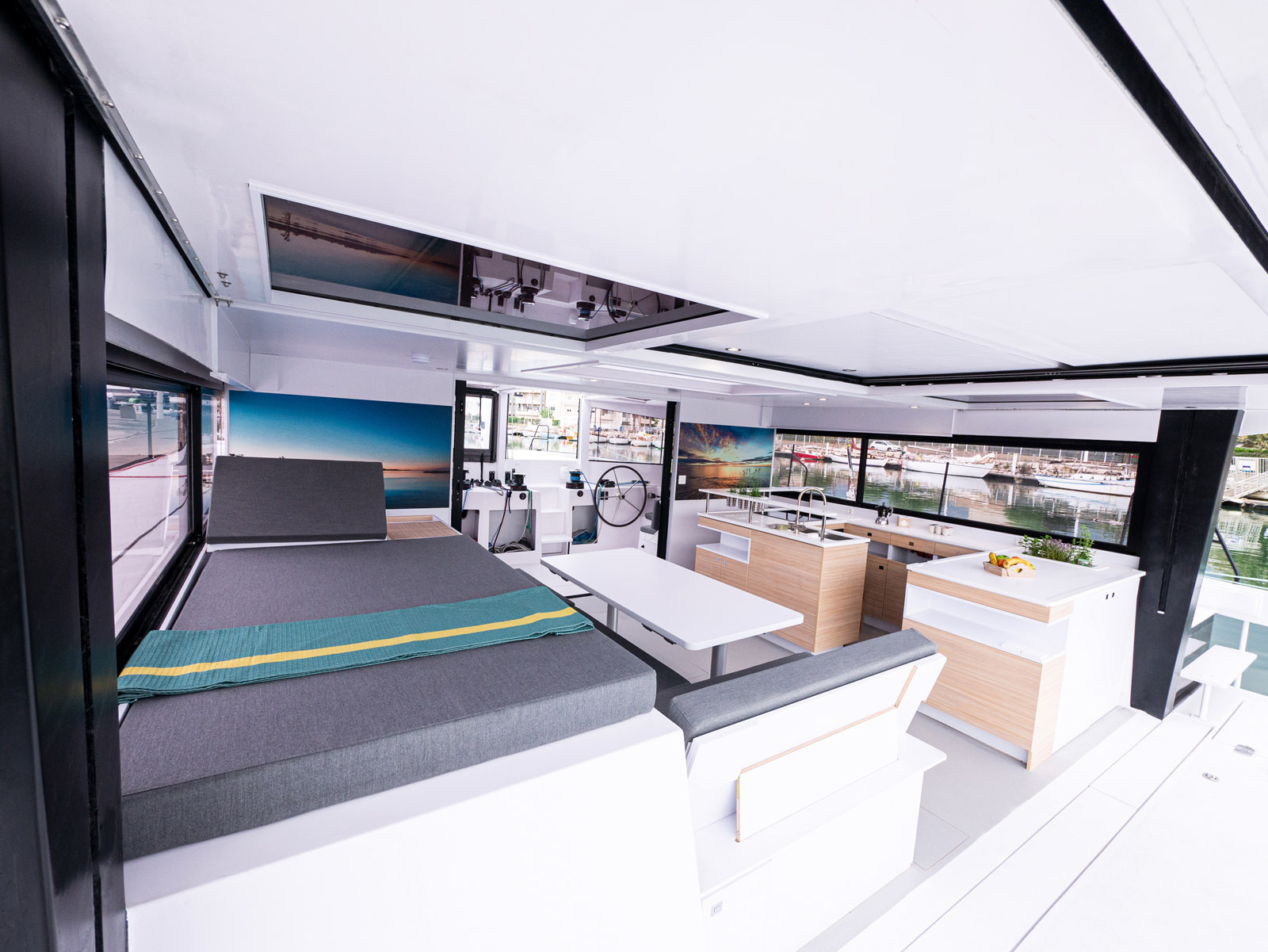 |
Stress-free sailing is an important element of comfort in offshore cruising. This child’s berth on the NEEL 43 or this panoramic view bench seat on the Windelo 50 are both interesting architectural touches.
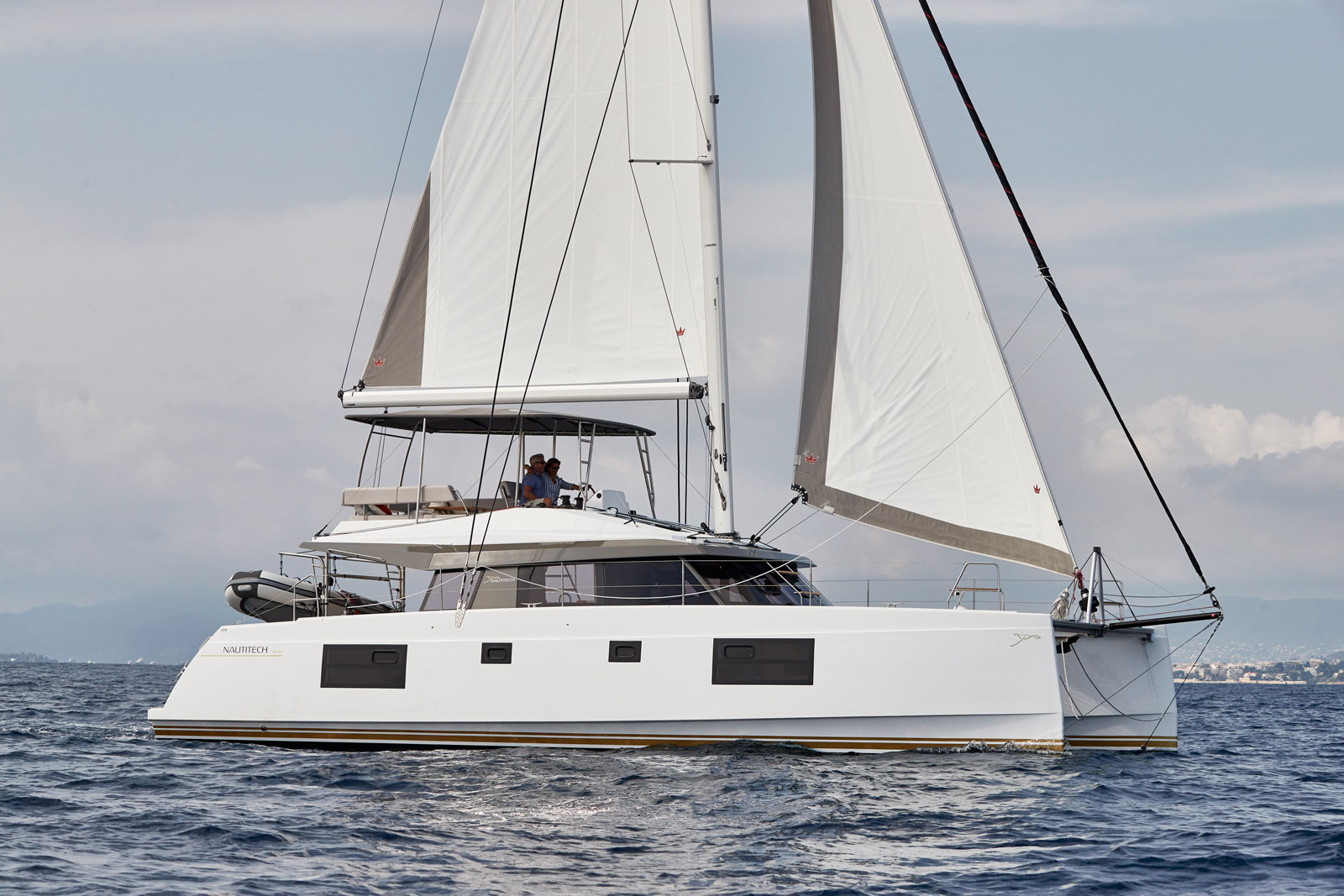
Common options include an upgraded battery bank and cockpit enclosures. On board this Nautitech 46, the furling mast is a rarer option: it was ordered by a couple with the aim of sailing in the Mediterranean, where the weather can change very quickly