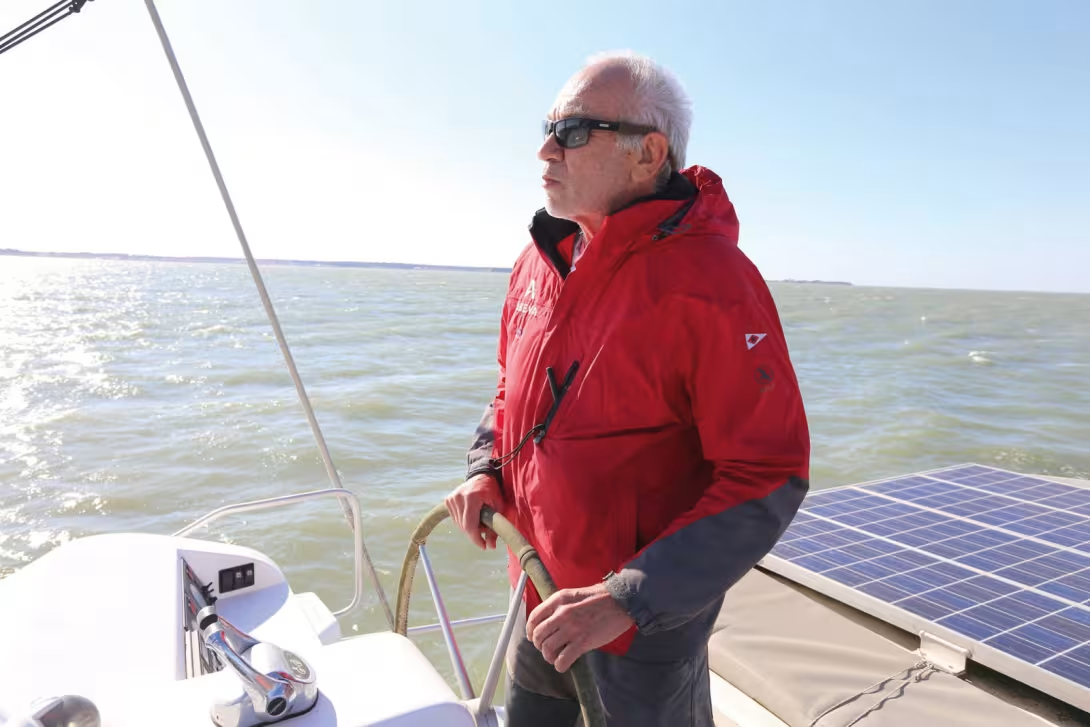
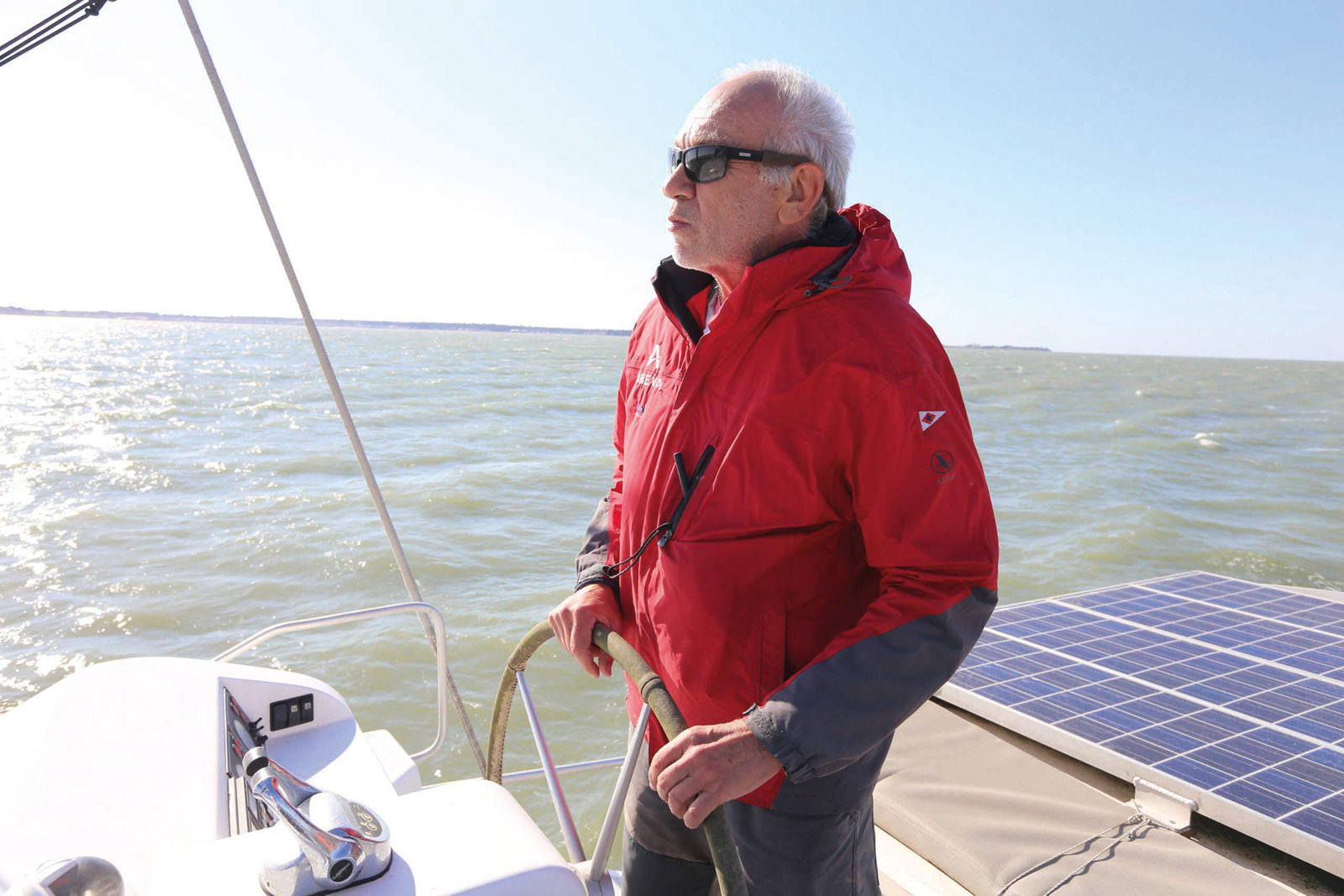
When his father decided to build a GRP catamaran in the family’s living room in Courbevoie, near Paris, Bernard Nivelt was still in elementary school. Alerted by the smell of styrene that the young boy gave off, the school’s management summoned his parents... An anecdote that did not prevent Bernard from taking to the water for his first sail aboard that Exocet, which had been “home-designed and built”. His studies? A bit «chaotic»: although kicked out of the INSA Lyon engineering school, «which is still an achievement», Bernard completed a DEA (now known as a master’s degree) on methods of drawing shapes with computers. Partnering with Michel Joubert in 1974, Bernard (or rather the famous Joubert/Nivelt tandem) achieved a prestigious victory in the Admiral’s Cup with Diva in 1983. Despite all the international recognition, Bernard was really just interested in multihull sailing, which was taking off in France. Among the group of friends with whom he raced, there was a certain Jean-François Fountaine. They decided to build «a big 20-meter Hobie Cat» to compete in the major ocean races of the time: this would be CharentesMaritimes. Fascinated by the average speeds achieved, the comfort at sea and the ability to be proactive in relation to the weather, they launched the Louisiana. This was the beginning of a long collaboration with the Fountaine Pajot shipyard, even though the charter market was to deviate the initial concept somewhat
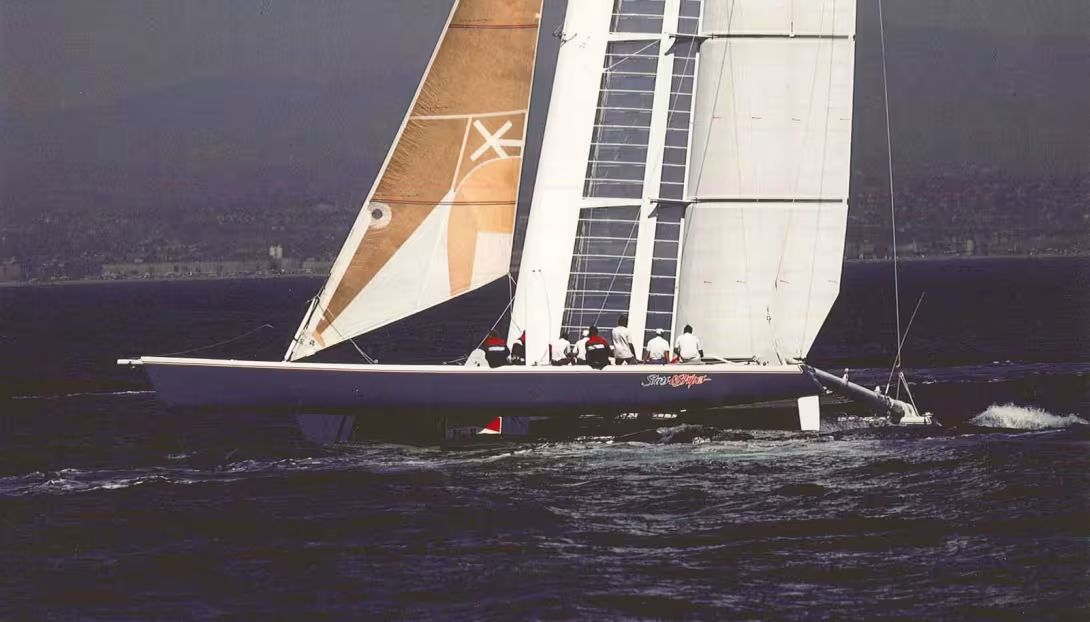
In the meantime, Bernard moved to the United States with his family, without imagining that in 1986 John Marshall, Dennis Conner’s right-hand man, would co-opt him to join the Stars & Stripes US-1 design team! It was a six-month, top-secret commando mission, with the objective of designing a 60-foot Tornado! Two rigs were studied: one classic, the other a revolutionary rigid wing, designed by the craziest engineers on the planet. Apart from this extreme rig, the project, which won against the giant New Zealand monohull in 1988, reflects the architect’s «multihull philosophy»: finesse, lightness and sobriety. This guiding idea is perfectly illustrated by the JNP 60 that Marc Pinta, a boatbuilding magician from La Rochelle, would construct. This unit would go on to inspire many boat builders in the day-charter market.
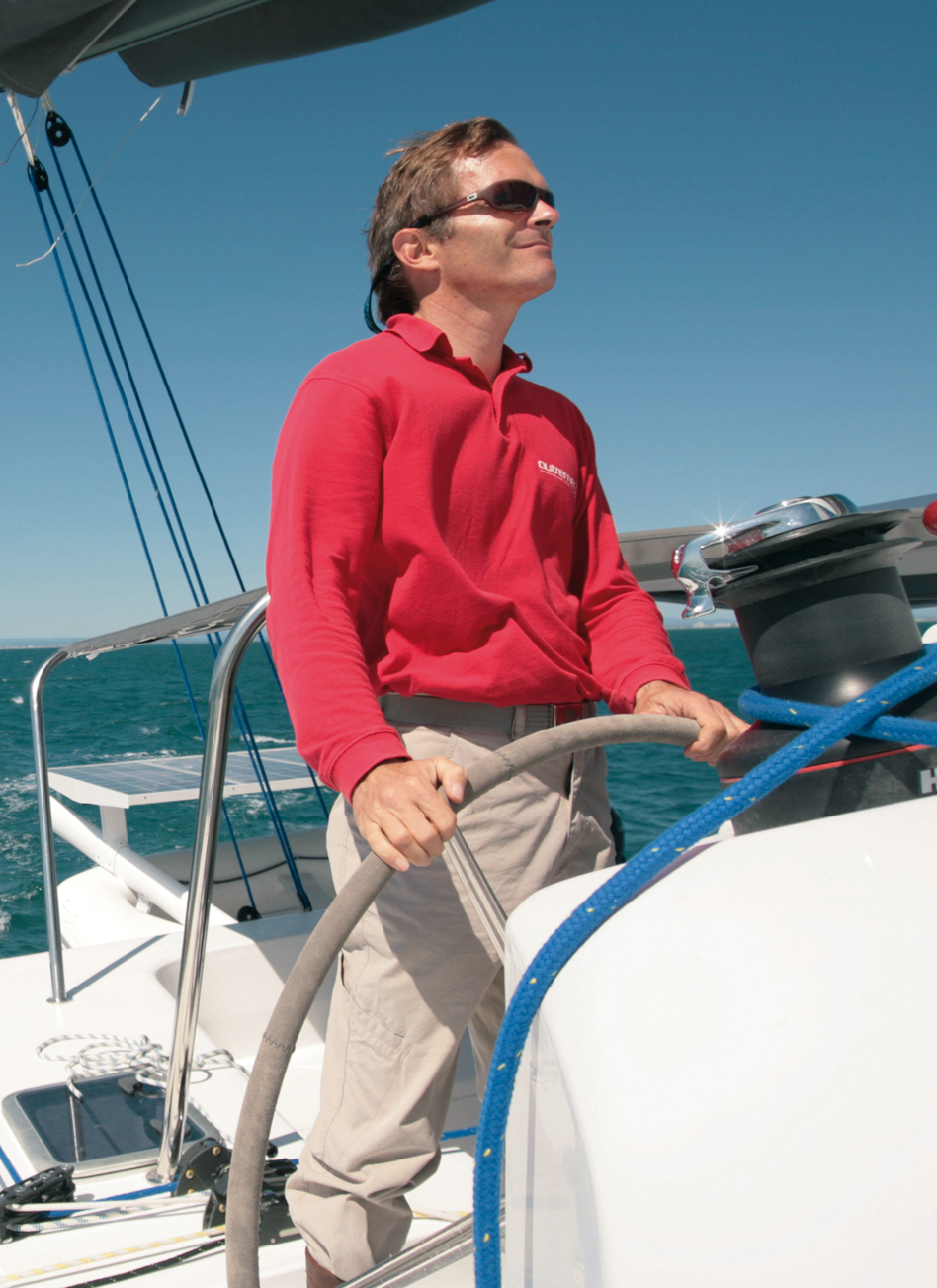
Bernard’s open mind also led to him designing a motor catamaran that really made its mark. Not very fond of long passages, his client wanted a sailing multihull because he thought it would be cheaper in the long run. The architect’s response: «But I can design you a motor catamaran that consumes very little fuel, and what you save on the mast, the sails, the deck hardware, the structure... is equivalent to three round-the-world voyages!» The highly innovative Santorini, «a boat with a 15-meter boat layout, but a 20-meter hull length,» was launched in 1998. This multihull made a big impression on the editorial staff here at the magazine (see the article in MW060). «A boat that I would like to have for my retirement,» said Bernard at the time. Fifteen years later, he bought it at auction, without having seen it! However, for him the ideal solution remains the trimaran «if we want to go even further in optimization», he told the already very convinced Eric Bruneel. And so, the LEEN range was born. Cautiousness drove the shipyard to produce the 56 first, but he admitted to having a weakness for the big LEEN 72.
With the wisdom and humility of someone who has sailed a lot, he is nevertheless concerned about the increasing size of large production catamarans and sometimes the inexperience of those who handle them. One more argument for his motor multihull concept, he concludes with a laugh...
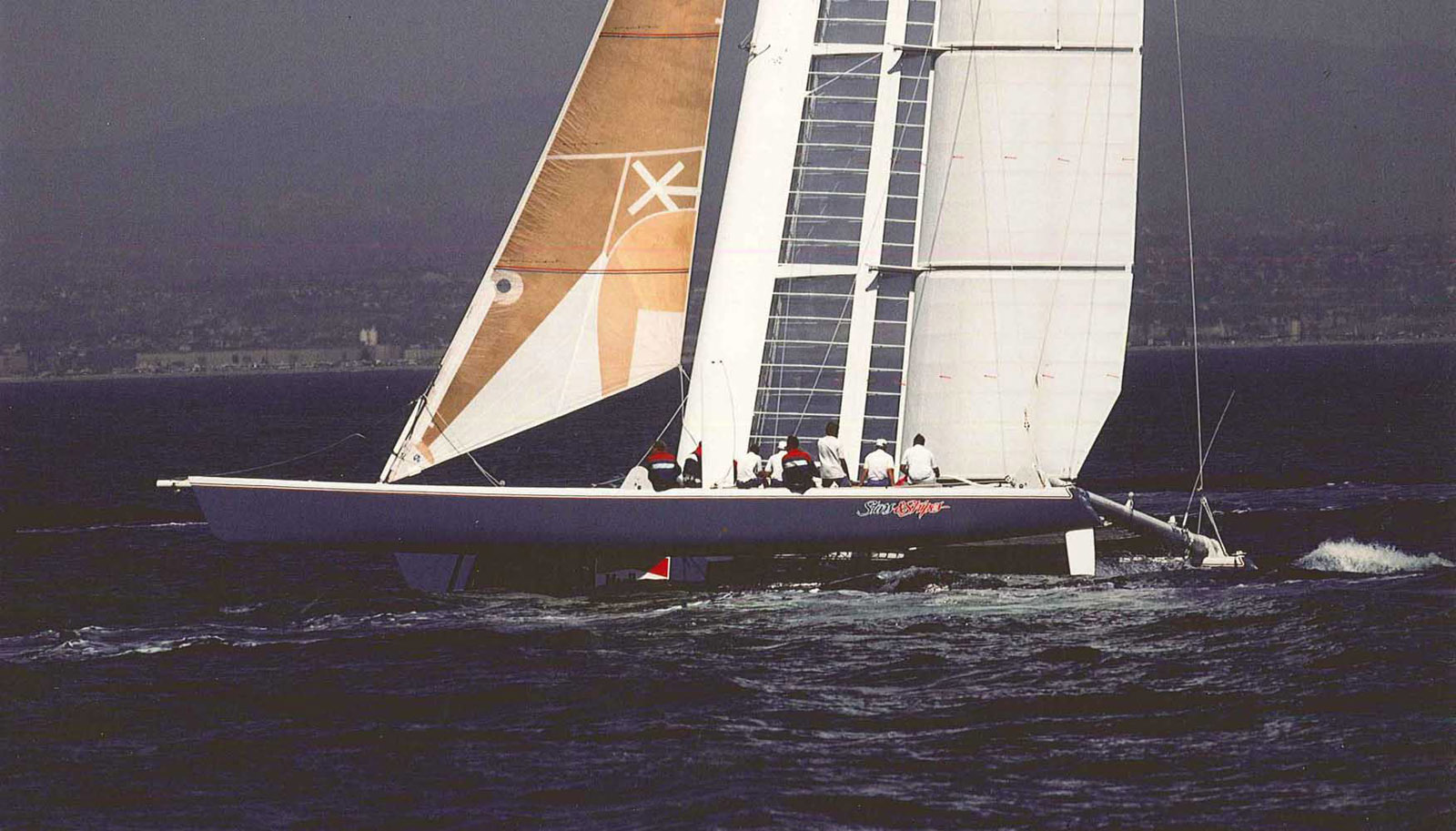
Stars & Stripes US-1 the winner of an America’s Cup against…a monohull!