
Some of you may have had the chance to witness a phase of the construction of your catamaran or trimaran during a visit to the shipyard. A multihull under construction is impressive because of its generally imposing size, and seeing all the operations performed is quite a spectacle. If you are satisfied just taking delivery of your multihull that’s 50 feet long and 22 or 25 feet wide, that’s fine... but you should know that during the few months since you signed your purchase order, each stage of the industrial development, from the prototype to the production boat, has been the subject of particular attention to detail in order to achieve perfect production control. This maturity of process guarantees several important elements for both the builders and their customers: the most attractive price/performance ratio possible, the satisfaction of a reliable, safe and high-performance unit, as well as the essential profitability for the shipyard. There is no point in having designed a marvel with extremely exacting specifications if the final product turns out to be full of defects or approximations, or if its mass production turns out to be a financial fiasco for the company.
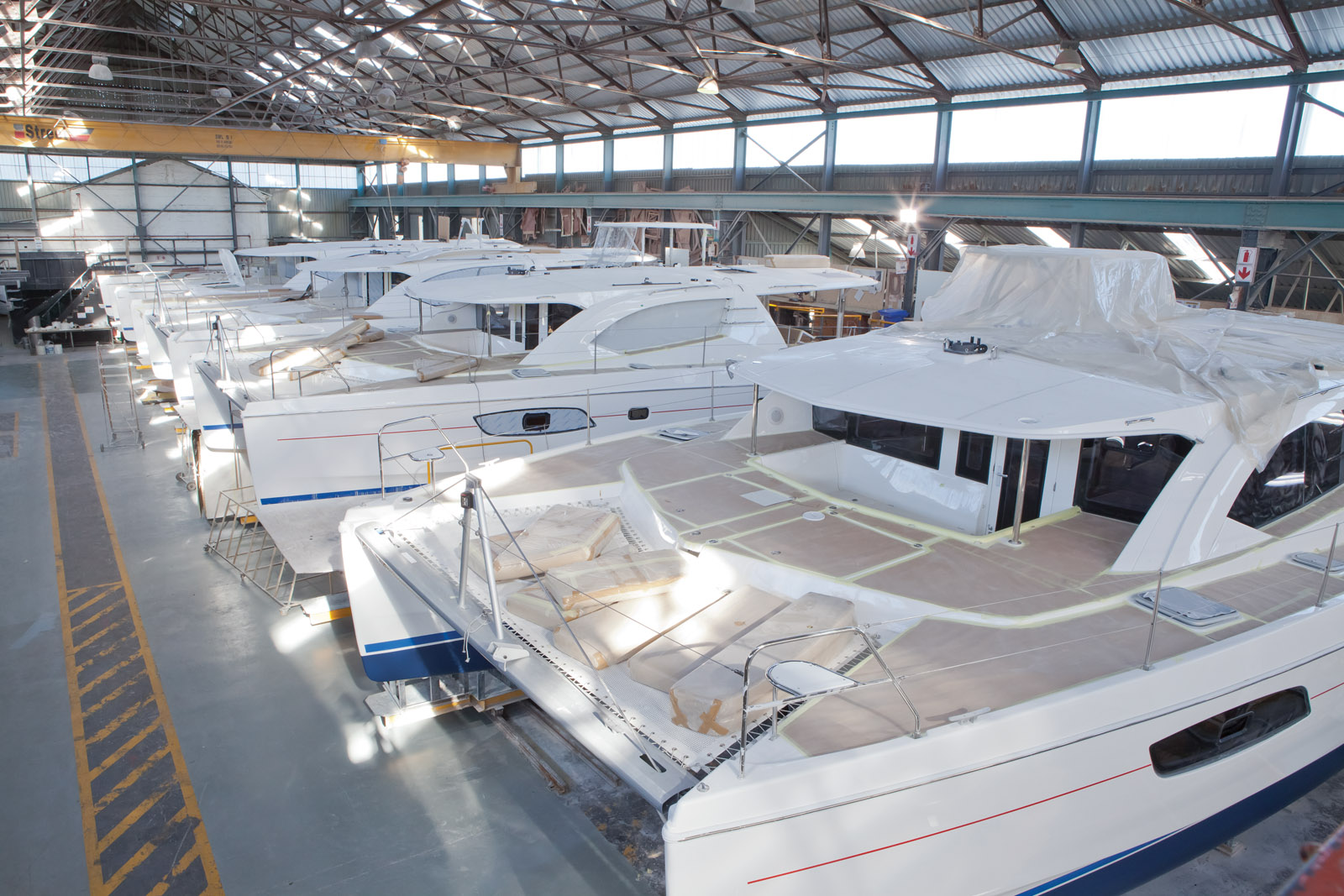
Series production of multihulls, as here at Leopard, is not an easy task...
A lot of implementation and flawless methodology are required to transform a beautiful concept into an industrial and commercial success.
High financial stakes
For a manufacturer, finding the right balance is not easy. The history of the marine industry is unfortunately peppered with bankruptcies, transfers or disappearances that attest to this. Research, development, manufacturing of molds and tools for production all represent significant investments and are not without risks. The situation is certainly different depending on whether it is a model destined to exceed a hundred units per year or a small series of, say, twenty. If in the case of a one-off, profitability must obviously be immediate, but for an industrial process of series production, the calculations must be carefully undertaken according to the number of potentially saleable examples - the more one seeks quantity, the more of the budget for design and development can be depreciated. Of course, this quantity will be a direct consequence of a hyper-competitive selling price, with an optimized margin. But will include an inevitably sensitive index of profitability. All the more reason to have a rationalized production in order to ensure an output capable of meeting the objectives, not only in terms of speed and quality, but also budget. To achieve this, the higher the stakes, the earlier the manufacturing method is determined. Right at the development stage in fact. At the Beneteau Group, for example, “There are several departments working together: product marketing, that defines the customer’s expectations; the design team, who develop the product under the guidance of a project manager; then the design, composite and systems departments, who define the design rules; and finally the methods department, which determines the manufacturing method and schedule,” explains Bruno Belmont, Director of Sailboat Projects for the Beneteau Group. This last department includes different specialties. Specifically, it is made up of “method teams”. Under the leadership of a project manager, these teams also work with external service providers. Firstly, the naval architect, who defines the entire exterior of the multihull and determines the initial weight calculations. They create the shapes while respecting machining and demolding constraints, and drew the sail plan, appendages, hulls, deck plan and exterior style. They also collaborate with the composites trade to define the structure. The interior designer/architect defines the layout of the layout versions and the interior style with the carpentry team. And the technical teams work with numerous suppliers, subcontractors or technical partners such as sailmakers, engine manufacturers, rigging manufacturers, upholstery manufacturers, equipment manufacturers, and many more…
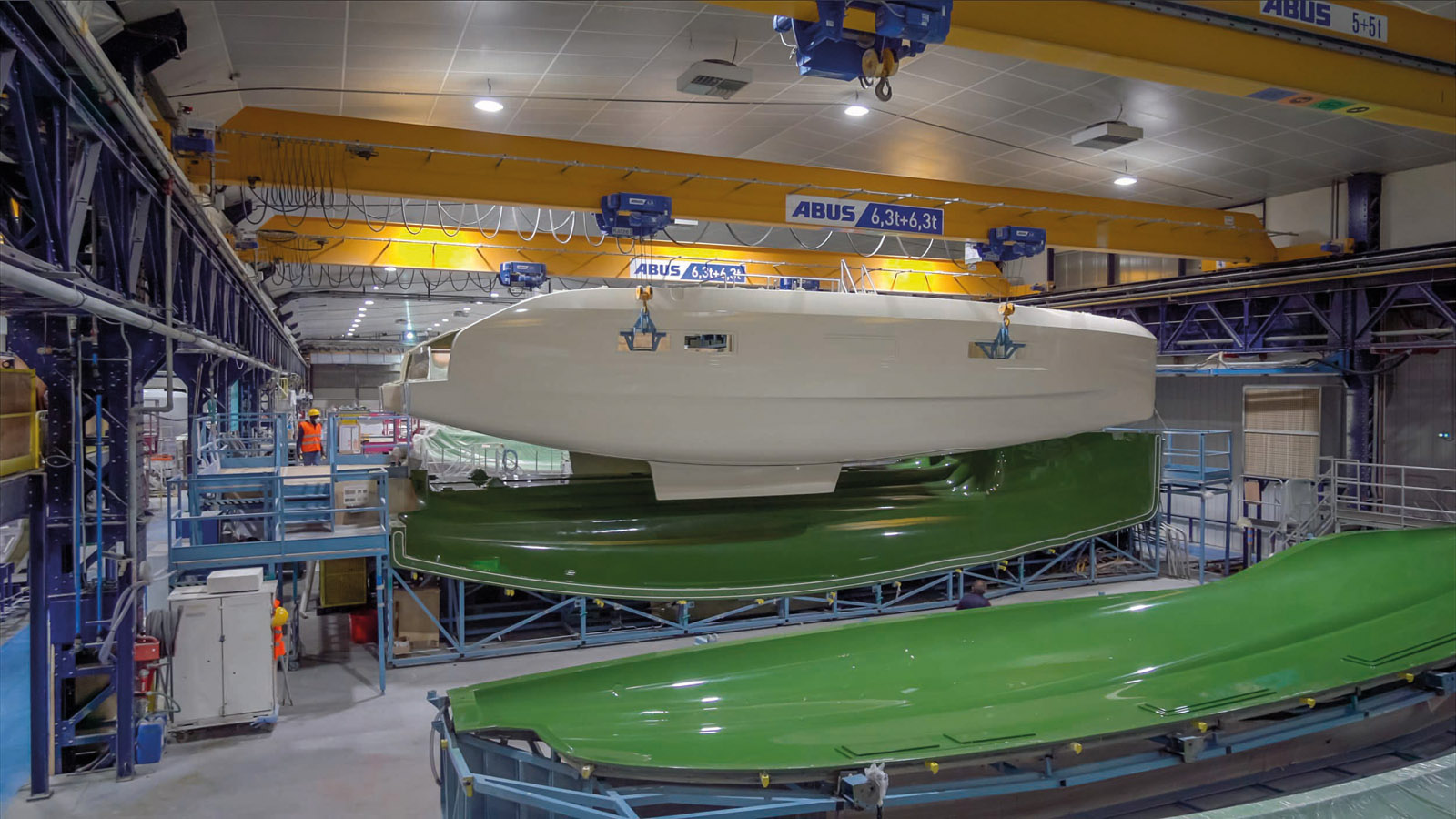
The de-molding of one or more hulls - here a Lagoon 55 - is an impressive operation punctuated by a characteristic popping sound.
Note that the female mold in green is in three parts. The raised sides require the outer mold to be separated.
Conceptual engineering
As soon as the brand has found the concept that will make the yachtsman’s heart skip a beat (like the wellknown French expression, “finding the five-legged sheep” according to Vincent Lauriot-Prévost), a preliminary project is validated. The project manager will rely on a team specialized in the design of the industrial process, comprising specialists in wood, composites and systems (mechanical, electrics, electronics, steering systems, plumbing, deck hardware, etc.). All the data established is integrated by an assembler who will produce the multihull’s nomenclature, i.e. the parts list of everything that will be used to assemble the prototype. In parallel with this design group and in total symbiosis with the overall creation, the “method” teams will focus on two objectives: optimizing the manufacturing time of each stage of the construction process, and transmitting clear information files to the prototype builders to enable them to manufacture the multihull in accordance with the initial specifications. These teams will establish the “range design” of the catamaran or trimaran, i.e. the number of hours required to build the multihull and the distribution of these hours by workstation. These two teams work together continuously to arbitrate not only the “make or buy” decisions, but also to discuss the least time-consuming and most optimized design choices in terms of quality, as well as the selection of materials for manufacturing
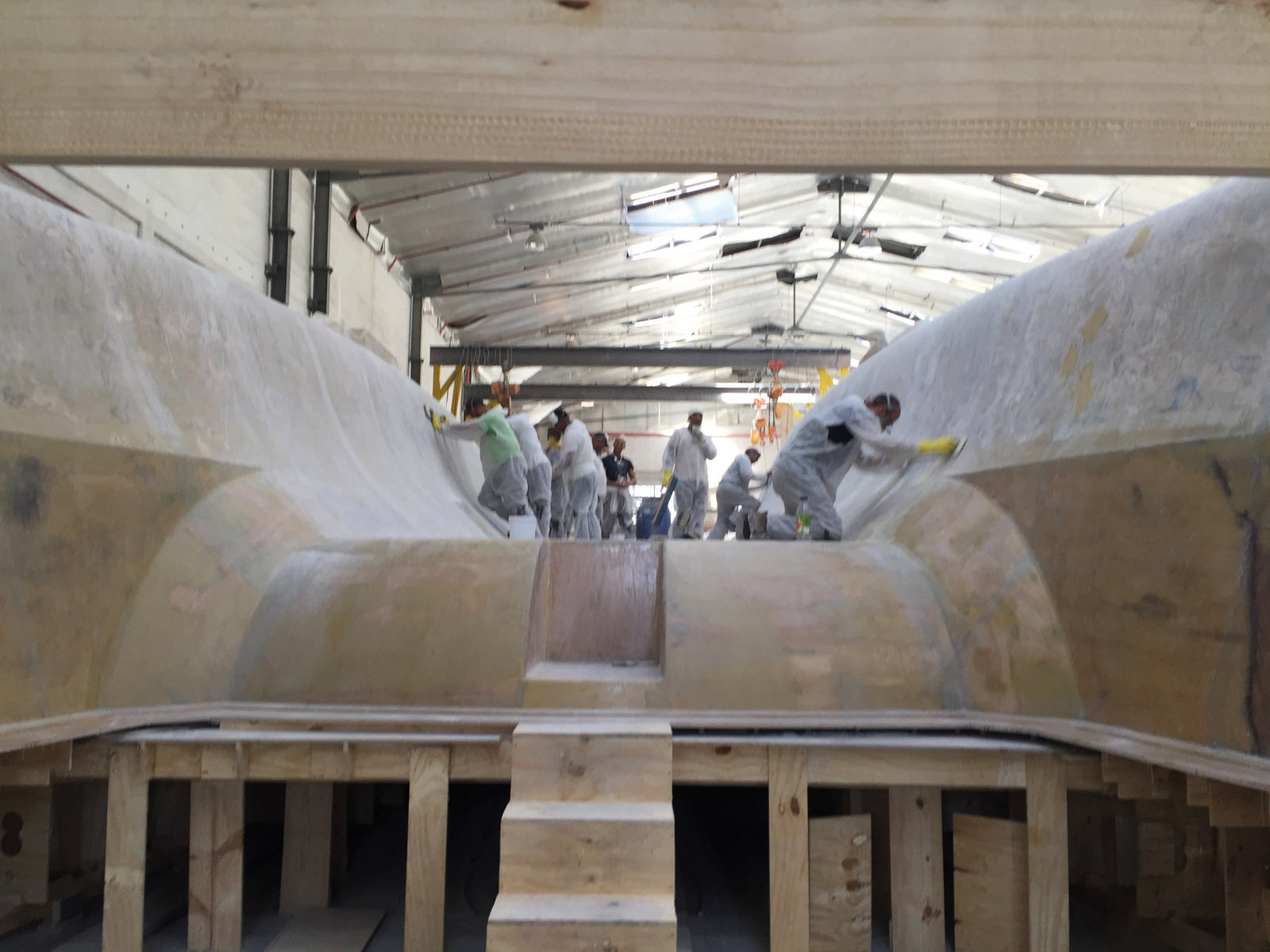
The templates or male molds are used to make the female molds that will create the final hulls.
Made in wood or polystyrene, this high-precision work, which gives the multihull its shape, is carried out by experienced workers.
Cautious progress…
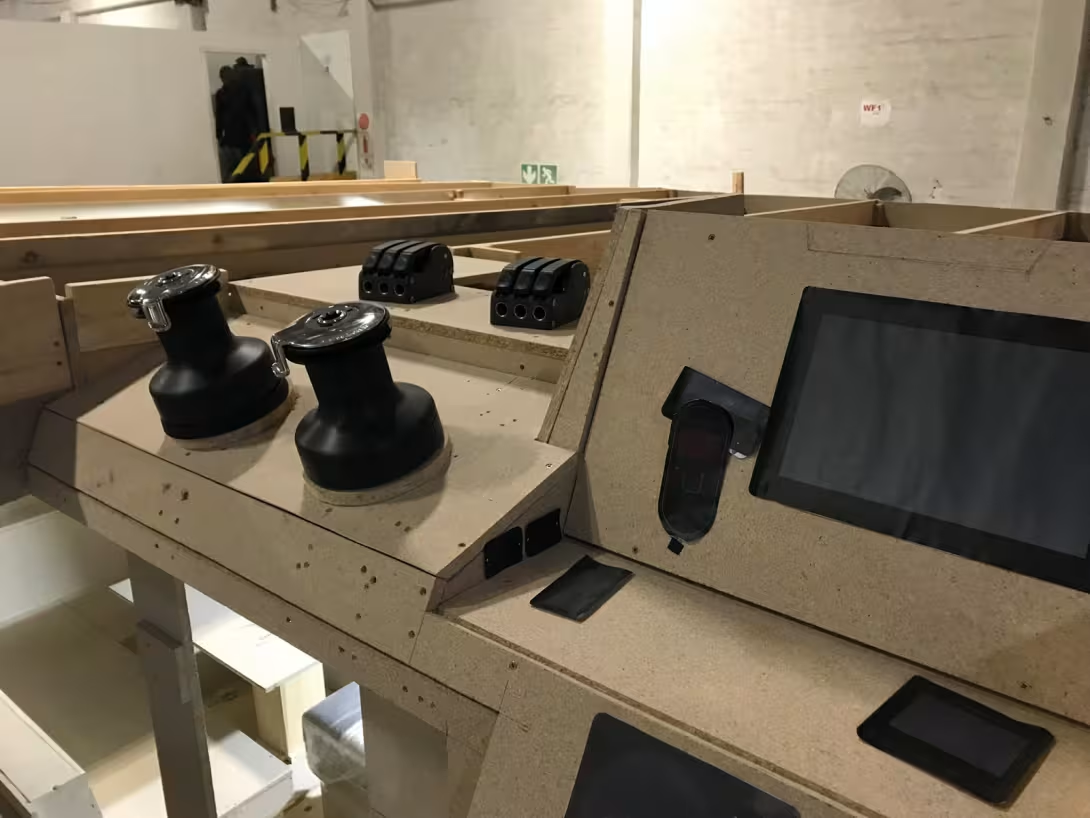
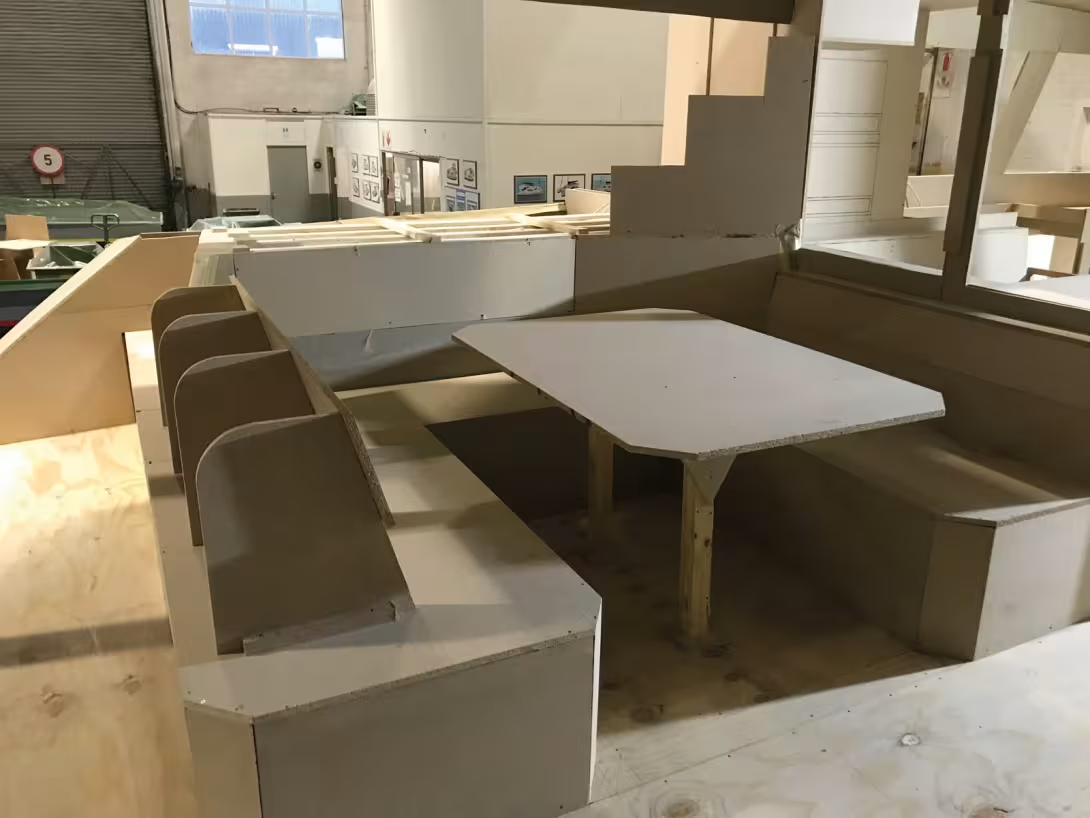
From this point on, the shipyard can envisage the production of the first multihulls either in the form of a complete prototype, or a full-scale model of the boat. And it is this last hypothesis which is most often applied nowadays. Because to make a composite multihull, you first have to make molds. Male molds first, which will serve as a dummy to build the female molds that will be used to build the boat itself. The better the female molds are designed, the more multihulls will be molded in these manufacturing tools. Hull molds, nacelle molds, deck molds, coachroof molds and flybridge molds are all imposing bits of kit. The investment is so large that it is more than unproductive to detect a design error once the prototype is removed from the mold. Minor modifications such as through-hulls or a cutout for accommodating a piece of equipment can still be solved after the fact, but not for more structural elements such as a companionway or a hatch opening. From manufacturers we spoke to, if memory serves, the last deck mold that was unsuitable for production was thrown away in 1993, so caution is definitely advised. To be sure of the final rendering, we create a one-to-one scale model, as Franck Bauguil, from Leopard Catamarans, explains. The living and working areas are tested for hours and by several people. The placement of the winches, the exterior seating, the visibility at the helm or inside when sat down, the ergonomics of the coachroof or the side decks, the ease of use of the bathrooms, the protection from the elements – be that rainwater or breaking waves -, the design of the furniture... everything is scrutinized! And sometimes there are big 4 5 6 Prototypes are built by highly specialized teams. They are involved in eliminating any sensitive points that could slow down production. Any stoppage to resolve a problem once assembly line production begins only results in additional costs. 63 surprises, like on the new Leopard 42, where the steps leading to the flybridge were obstructing visibility – these were advantageously replaced by a stainless-steel staircase. The better the model, the more likely the resulting prototype will be final, and so the better the cost will be controlled. Calling on a subcontractor can change the situation compared to in-house manufacturing. This “mock-up” stage can also allow you to select certain materials, for necessary reinforcements or aesthetic considerations. At least four or five days of focus on the precious model are required, sometimes more, and then we go back to it again a bit later. A real decision-making process then begins; at some point, it is time to make the decision, passing the point of no return. And it’s here that the experience of the teams is crucial. Customer feedback on technical or ergonomic elements is always taken into account. Sometimes, some customers are even invited to come and test these models. Depending on the size of the shipyard and the number of multihulls to be produced, these teams are smaller, and these steps are simplified, but the kinematics remain the same.
 |
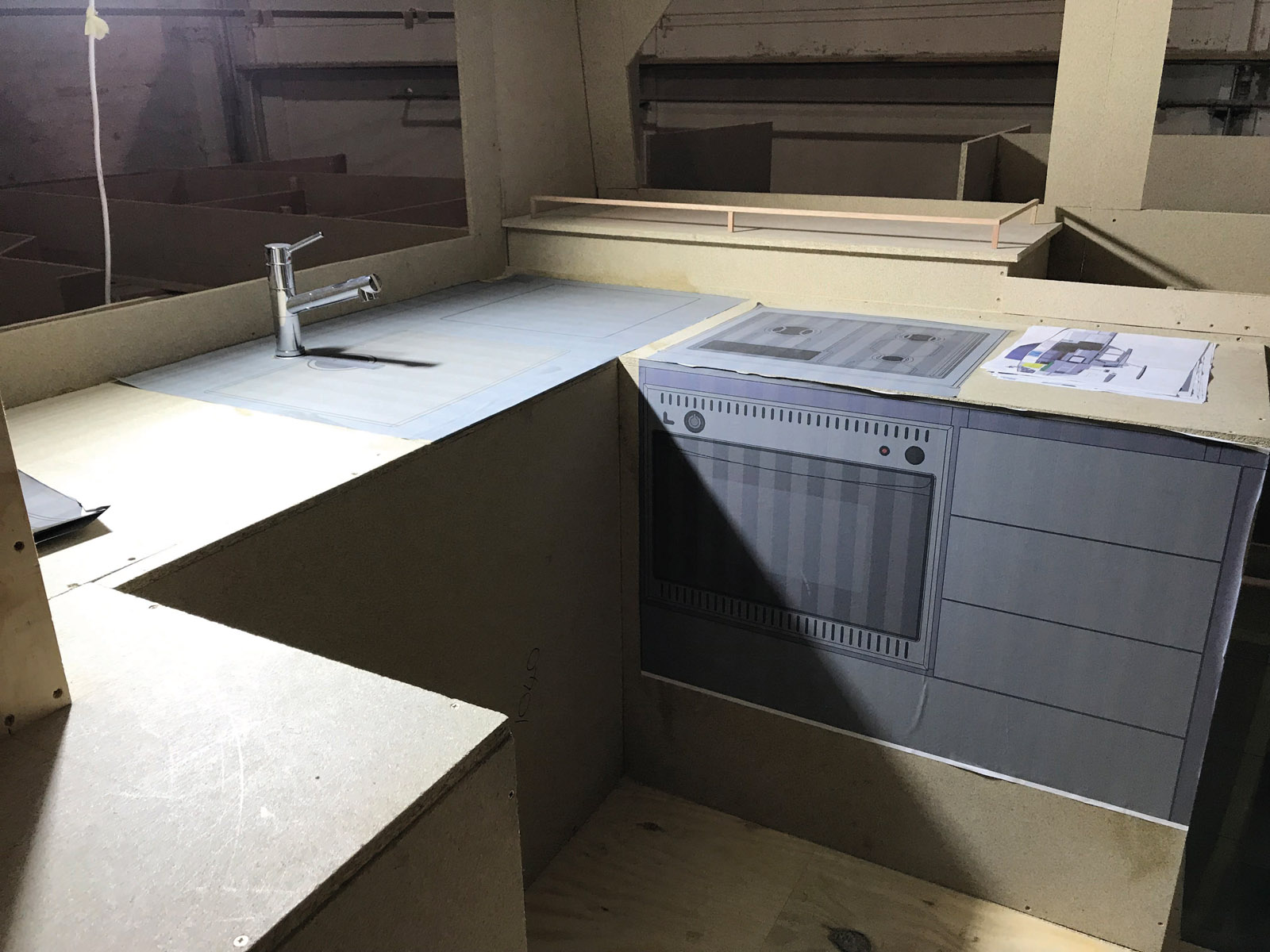 |
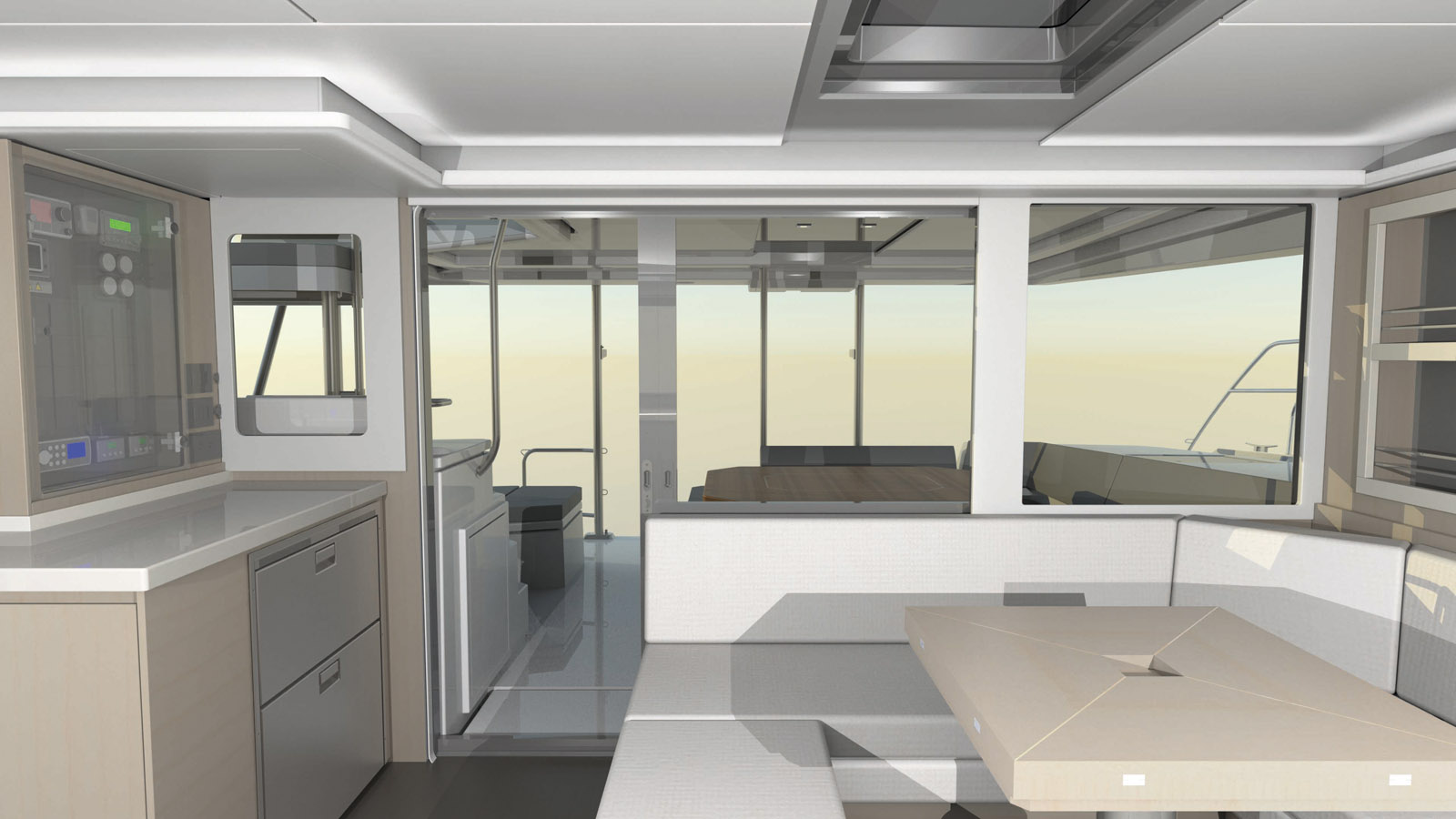
Although 3D imaging is very accurate, a full-scale mock-up is the best way to verify ergonomics, like this “fake” galley
Today’s very different molds
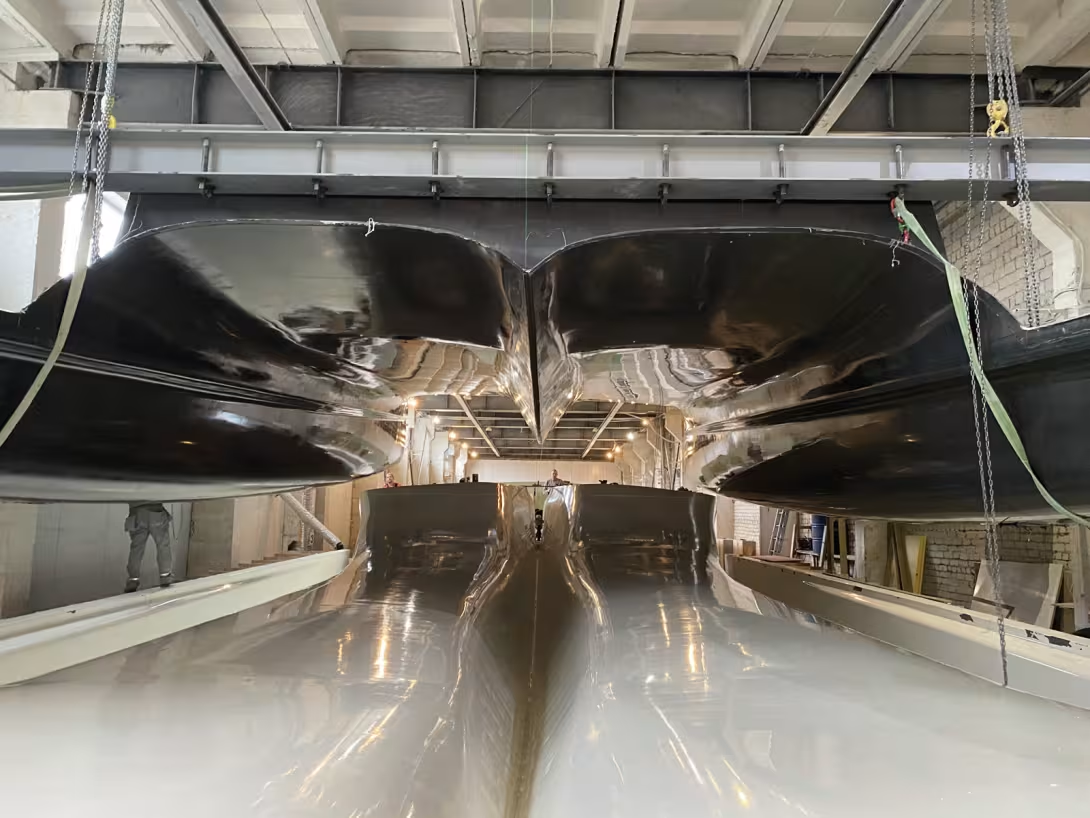
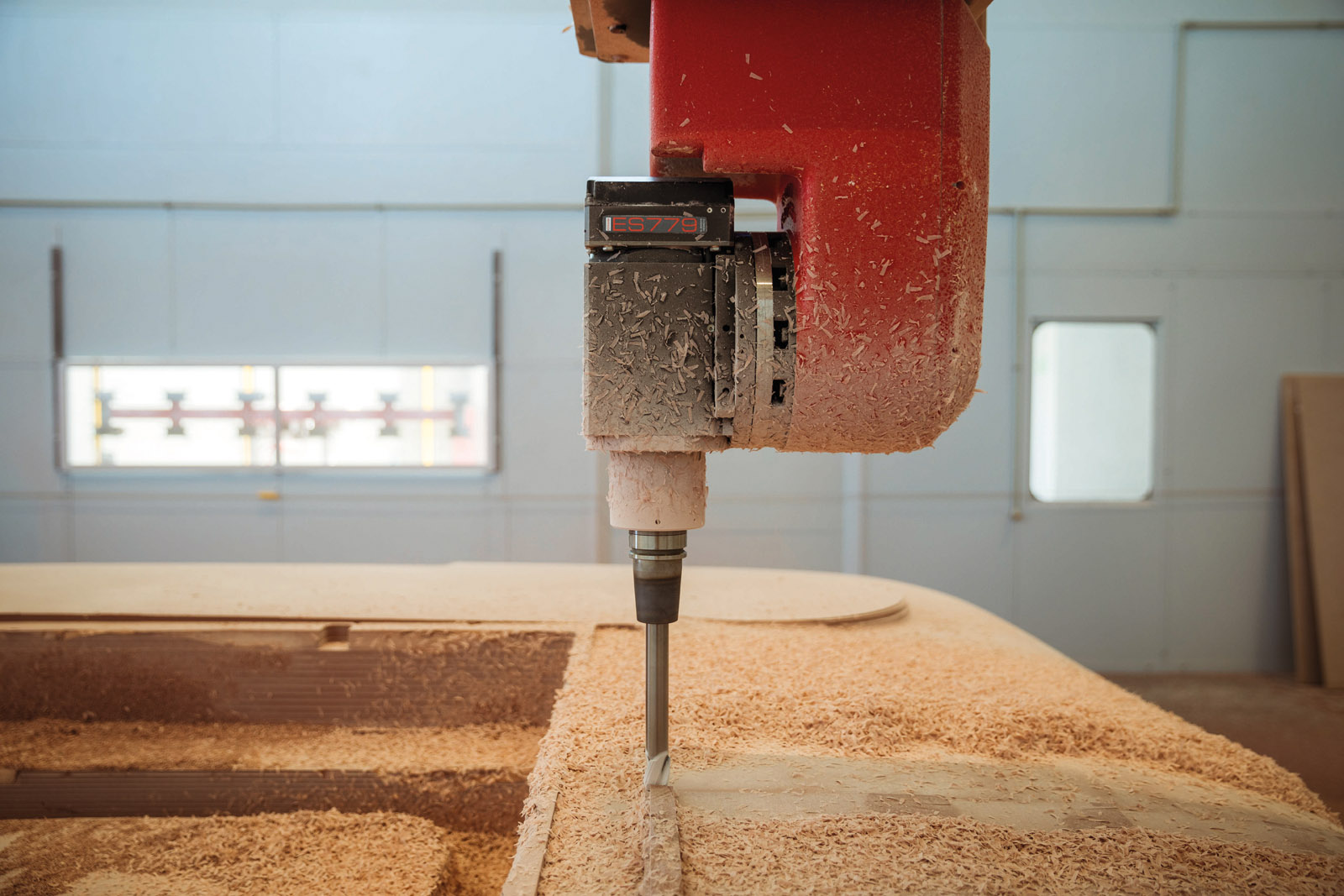
With the manufacture of the molds, we get to the heart of the matter. This is a bit like the nerve center of each yard. The male molds or templates are made by highly qualified teams from polystyrene or in wood. This is very manual and artisanal work, but ultra-modern equipment, such as digital milling machines, have now “industrialized” this process. It remains an art form, however, because it is here that the shapes that have been drawn by the designers are created. The female molds are then produced from these shapes. Different brands have their own ways of doing this: for a long time, for catamarans, the technique consisted in producing two hulls with their side of the nacelle, the connection then being made down the middle of the boat. Nowadays, with the shape of the topsides including protrusions for the chines or reveals for housing windows, the trend is towards producing a central mold that integrates the inboard half-hulls up to the keel and two molds for the outboard sides that allow for creating more shapes to the topsides because the de-molding process cannot be done with a slope of more than 3 or 4%. Using this technique, lot of production time can be saved. The central mold of the O Yachts Class 6 goes up to the outboard chine. This allows the installation of the technical elements (engine, plumbing, tanks, electrics) all in the lower part of the hull to begin before the sides are added. The number of hours spent on the production line is one of the main components of the production cost, hence the interest in reducing it or at least controlling it.
 |
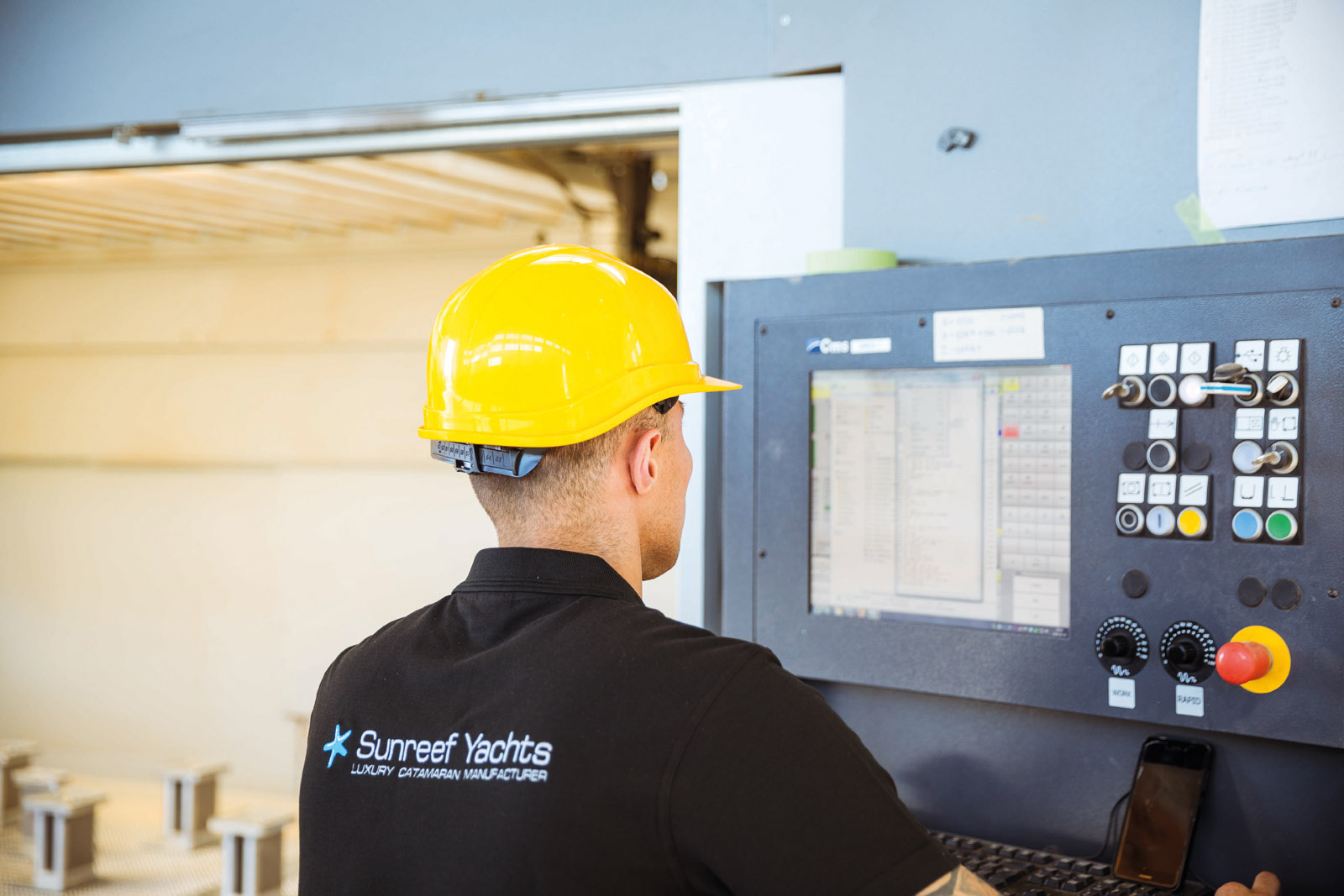 |
CNC tools such as this milling machine are a great help in making the construction templates, here at Sunreef Yachts.
A prototype under high surveillance
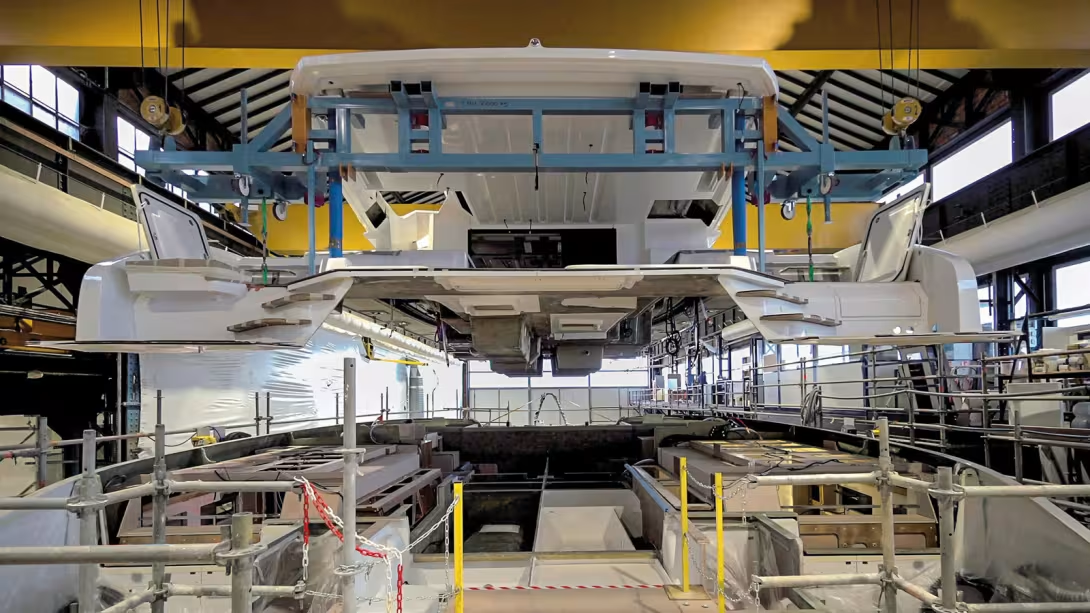
Once the molds have been prepared (the hull and nacelle molds are built first, since assembly can begin before the deck, coachroof and flybridge molds are installed), the prototype is built as if it were a one-off by a team of experienced workers. These men and women make sure that the documentation and the manufacturing process established beforehand are adhered to, but also they’ll detect any little issues that could cause assembly to be interrupted later on the production line. Collaboration with suppliers and subcontractors is always important since some adjustments may be necessary. While a 40 to 45-foot catamaran takes, say, two months to build, it will take more than twice that to produce the prototype. In general, the prototype is equipped with all the options in order to be able to test them in real life and to evaluate their impact on the multihull’s weight and balance, and of course discovering any difficulties that their assembly may represent. Additional notes can then be edited for the operators on the production line. Depending on the age of the factories (and therefore, often, of their operators), the need for “method” documentation can vary quite considerably. When the prototype is launched, it remains faithful to the 3D drawings and models. This is the objective: the slightest anomaly will generate additional costs. The baptism of fire for the prototype starts… in the pool. The verification and validation of the waterlines and the trim of the multihull is essential because good evacuation of water depends on it. Things like drainage channels on hatch covers can be altered... at a push, but no more. The design is now very sophisticated; only small details need to be fine-tuned, such as the location of lighting under the coachroof, the alignment of certain fittings or the passage of technical ducting to be redirected to avoid a structural reinforcement that had to be widened. This very complete first model then passes into the hands of merciless testers to verify the proper functioning of every component, and those in all sea and weather conditions. Safety comes first. The reliability of the electrics and the structure of the fittings are part of these first tests. The multihull is then presented to the public and the press. Other lessons may be learnt, and these will allow the production to be adjusted for future models. There are probably only three or four manufacturers in the world that can launch several prototypes simultaneously.
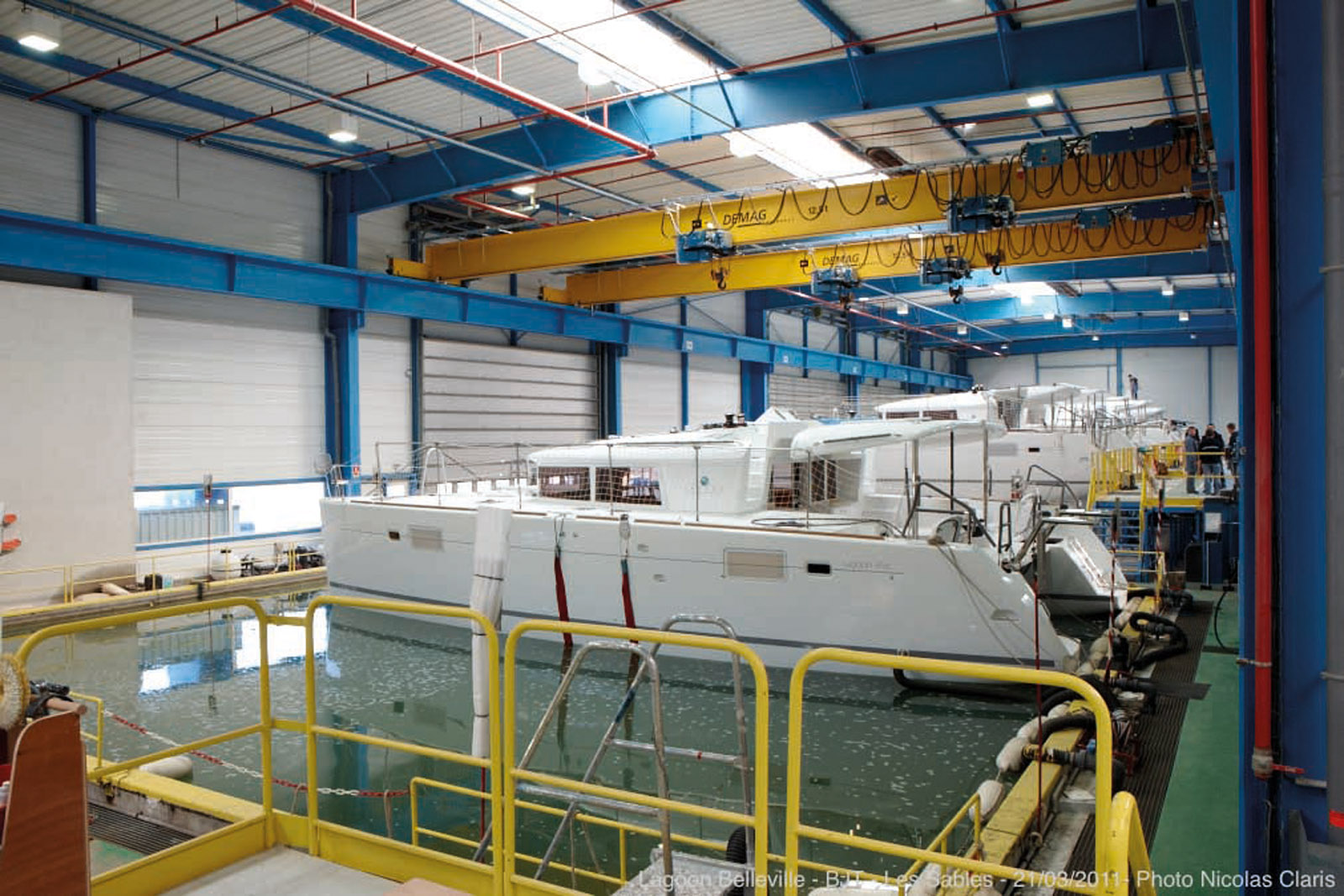
The Lagoon 450 in the pool! It’s like a baptism for the prototype. Conformity of the waterline will be a very closely examined factor.
No more bad boats!
A little more substantial sampling to support a helm seat, a bow roller to be offset by an inch or so, etc. Many small details are taken care of as early as boat number two, so that the operators on the assembly line are not forced to improvise when faced with a planned methodology and/or an additional supply of component parts that would slow down or even halt production. The multihulls are released in their final version as soon as they are at number two or three. Assuming they are of the required standard and quality, five or six more examples need to be built before the production line runs smoothly and achieves the set objectives of speed and profitability. For models produced at more than 150 units per year, productivity increases gradually. Production time can be reduced to less than a month for a 45-foot catamaran. During the life of a model and with feedback from the end user, some things can change. Following Hurricane Irma, some yards have changed the shape of the sugarscoops to resist violent impacts. In order to minimize the impact of a grounding, keels are made separate from the hull and glued in place to avoid structural damage to the hull. Today, the development of multihulls is such that their safety aspects and reliability are almost irreproachable. It is common these days to see crews embarking on long passages with a multihull fresh off the assembly line. Contrary to Henri Wauquiez who in the seventies didn’t hesitate to stop the production of his Chance 32 that he considered dangerous, there are no more bad boats coming out of the yards nowadays…
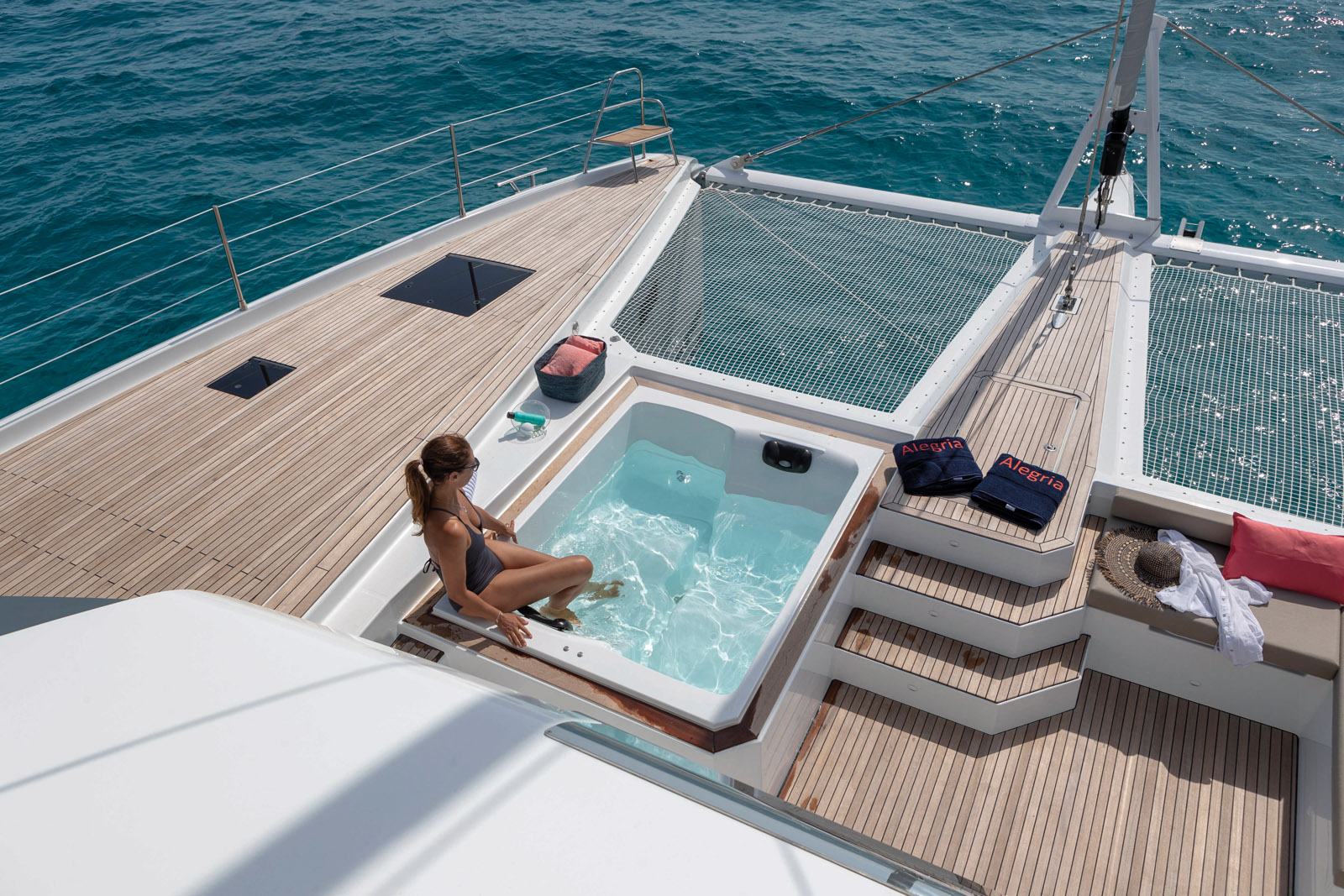
The sample calculations take into account all the options that are in the catalog, for instance this Jacuzzi on the Alegria 67.