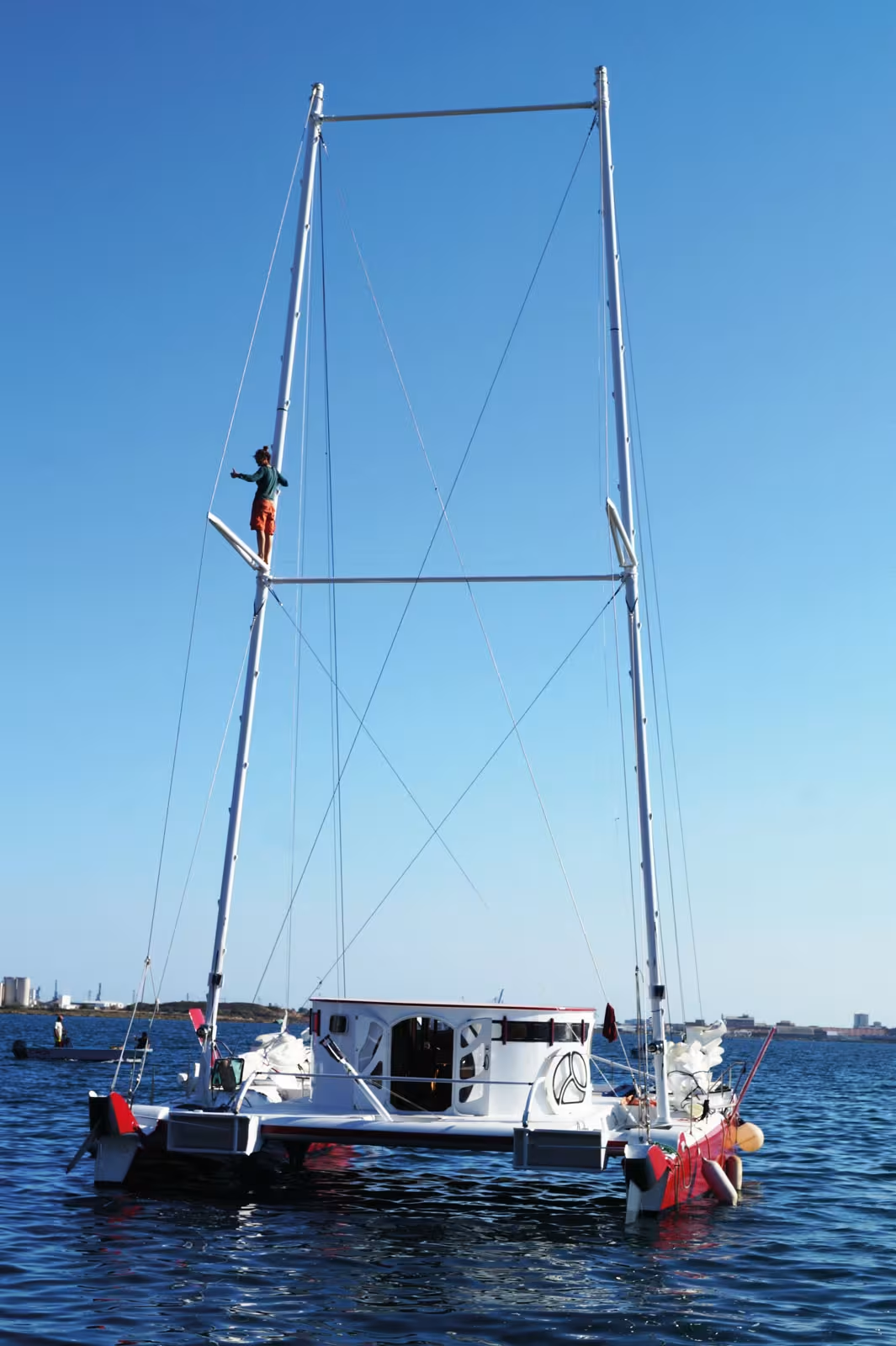
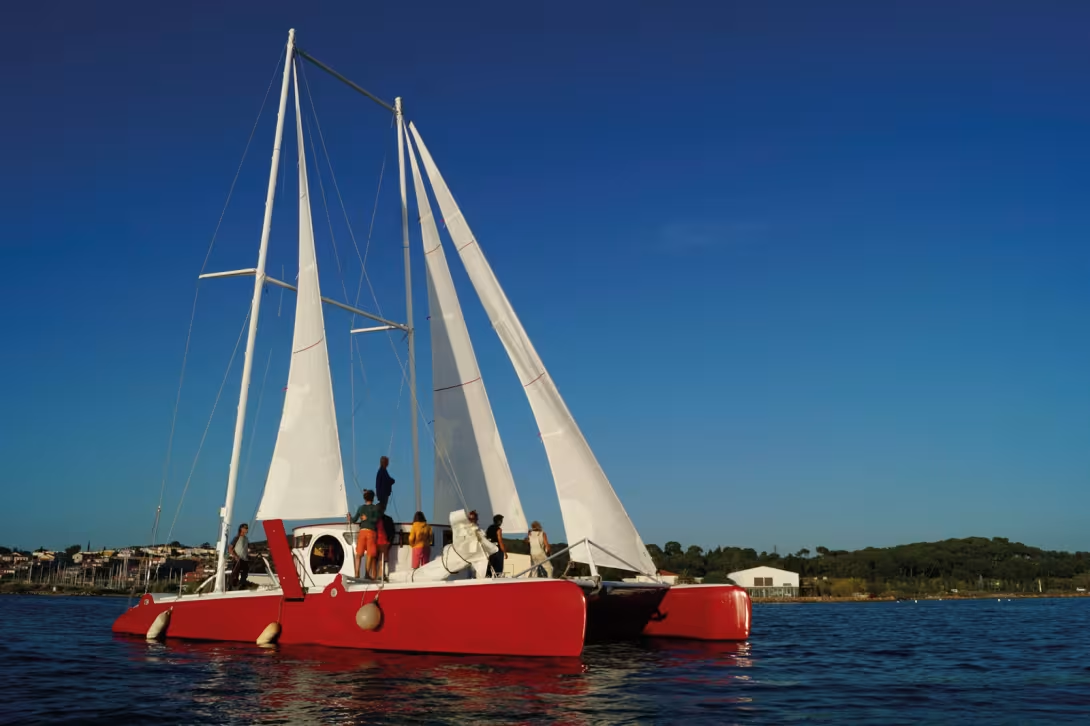
MangeNuage is an atypical catamaran that immediately catches the eye. If it gets noticed, it is not just because of its vibrant red color. It’s also the double rig and its circular stage which make it a unique multihull. Originally, the Formula 40 had no deck or living area. Designed exclusively for racing, it was as streamlined as possible: two hulls, linking arms, a mast and shrouds - the rest was just textile. This new version of the catamaran was created to serve as a floating stage and swinging trapeze structure. However, there is no question of MangeNuage staying in port and having the local oysters grow under its hulls. This is an itinerant project, and does not only use the sailboat as a set and artistic support. The multihull is also a home and a means of transport for the artists who use it during their tours. All of this is the culmination of a long journey that has been undertaken by Anne. In 2015, she was looking for a catamaran that could be used as a prop and a stage. She was in contact with the naval architect Denis Kergomard (Alibi Architecture) who helped her in her search. After having explored several multihulls, they chose two Formula 40 hulls that had been abandoned in a shipyard in the Thau lagoon. This catamaran was Totem, formerly Data General. It was a racing catamaran that had been built in 1987 by Jeanneau Techniques Avancées using the plans of the architect Nigel Irens and skippered by Pierre Le Maout. With its foils, the boat was very successful and was bought by Yves Parlier. It was then sold and used for day trips with guaranteed thrills in Palavas in the Gulf of Lion. After being struck by lightning, the catamaran was taken out of service and dismantled in 2010. So there it was, awaiting a new destiny, at the back of the Navibois yard, in Sète.
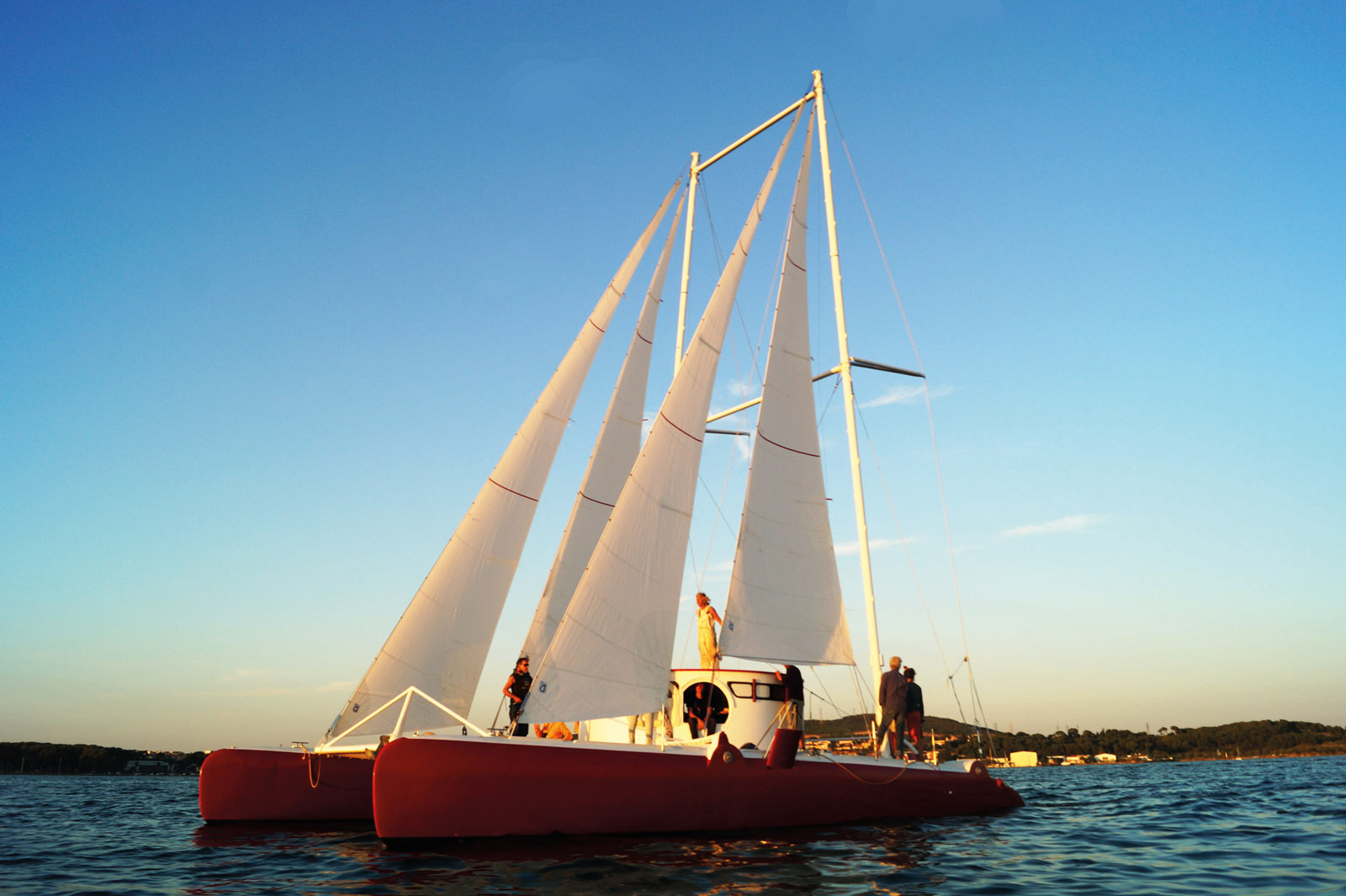
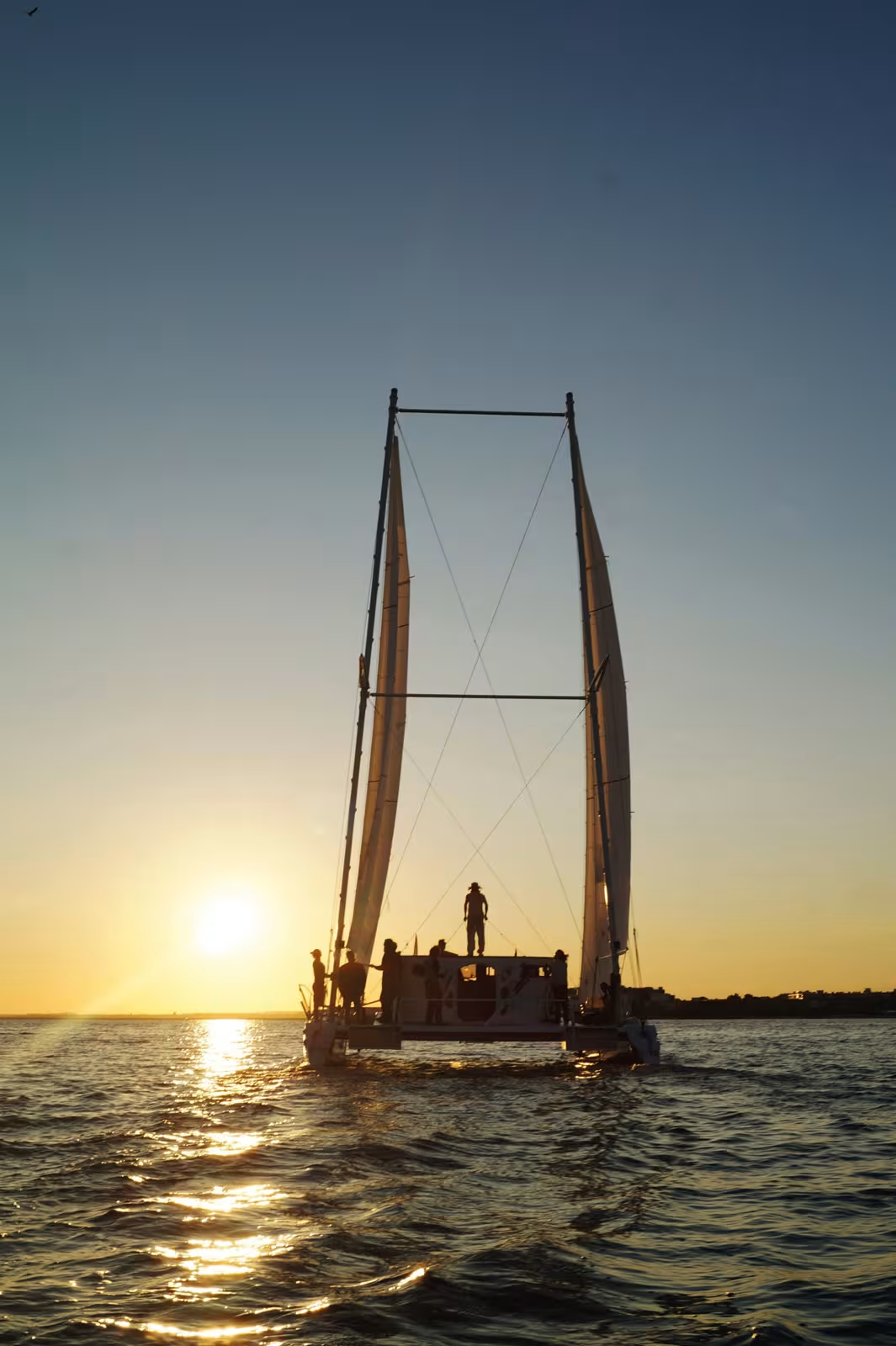
The parallel biplane rig only supports headsails - four very sleek jibs mounted on self-tacking tracks.
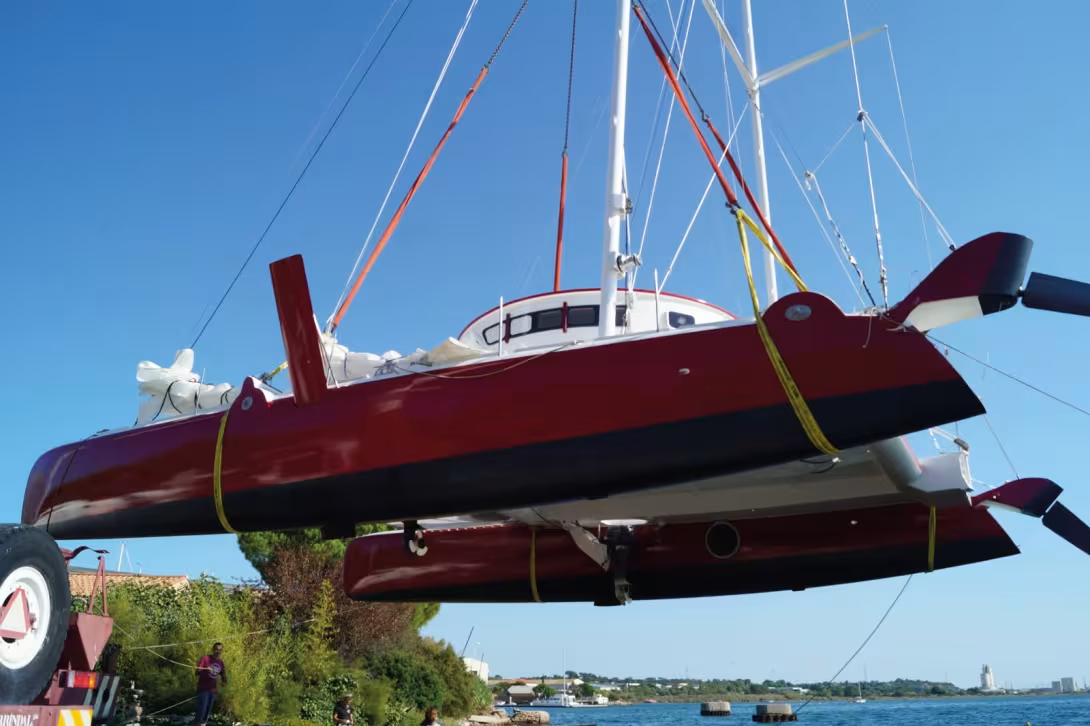
A FORMER RACING KIT BOAT
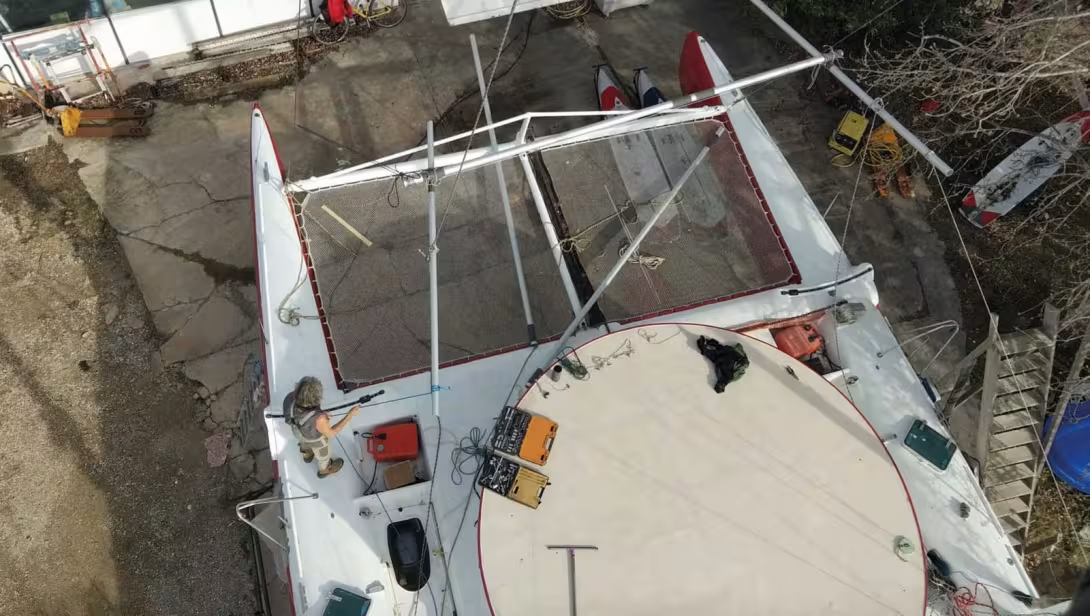
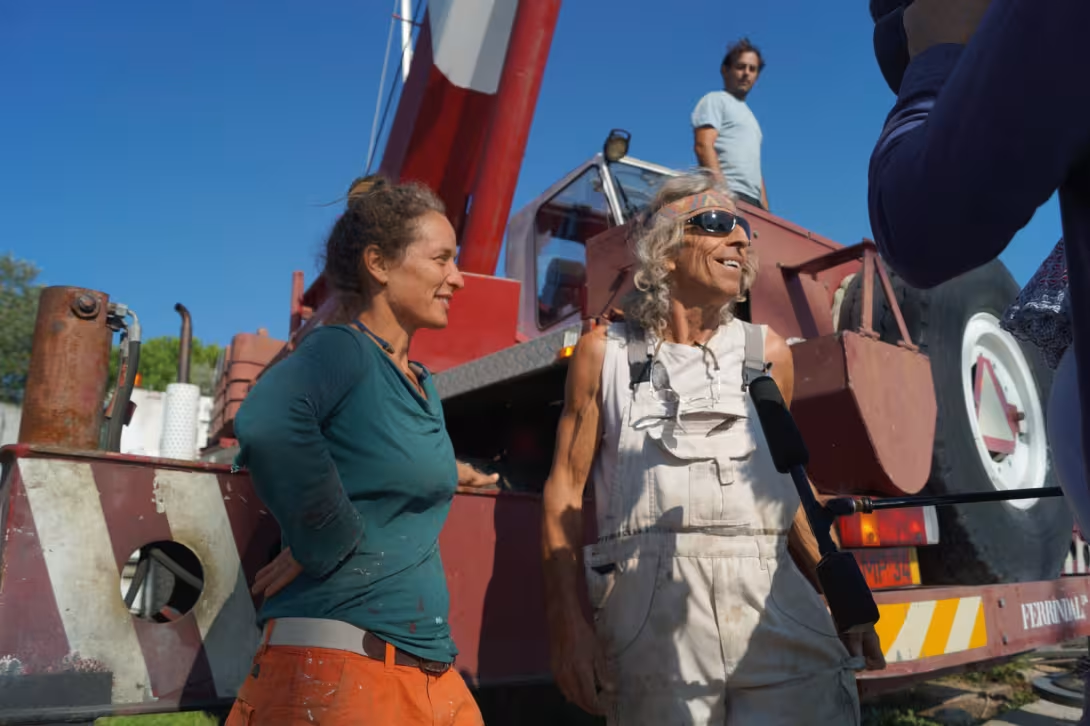
With its two hulls and a mast (that Anne would later sell), this kit sailboat enabled the trapeze artist to have access to a boat base for a small budget... but there was a lot of work to do in terms of the construction. Initially, the project took shape in the architect’s head: from these hulls, the objective was to create a platform from scratch, as well as a very light yurt nacelle (which would act as a cabin), a stage, but also an adapted sail plan. Denis was also interested in inventing a rig that could be used for both sailing and performing. This was not his first challenge and he always enjoyed unusual assignments. He had already participated, for example, in the Pianocéan project, whose piano schooner also served as a stage and studio, with its removable piano between the deck and the aft cabin. Anne wanted to learn and felt her dream taking shape when she saw Denis’ drawings. He studied the feasibility of the project, calculated, invented, drew, hesitated and advised. He gave her access to an incredible space which was his former workshop in Balaruc. And Anne? She did the rest: the laminating, cutting, fairing, sanding, welding, mechanics, gluing, assembling, resanding, painting, electrics... etc. At the beginning of the project, the circus artist launched a campaign on the internet to raise funds. She managed to collect € 7,869, which of course would not be enough to finance the whole project, but which would represent a precious springboard for the young woman. The amount of work involved was enormous. Thanks to the advice and the help, Anne learned on the job, and built her catamaran herself. The downside? Neither Denis nor she had thought it would take so long. Five years of construction - as sailor/builders know - requires a solid character to fall back on. Fortunately, the trapeze artist is a fighter.
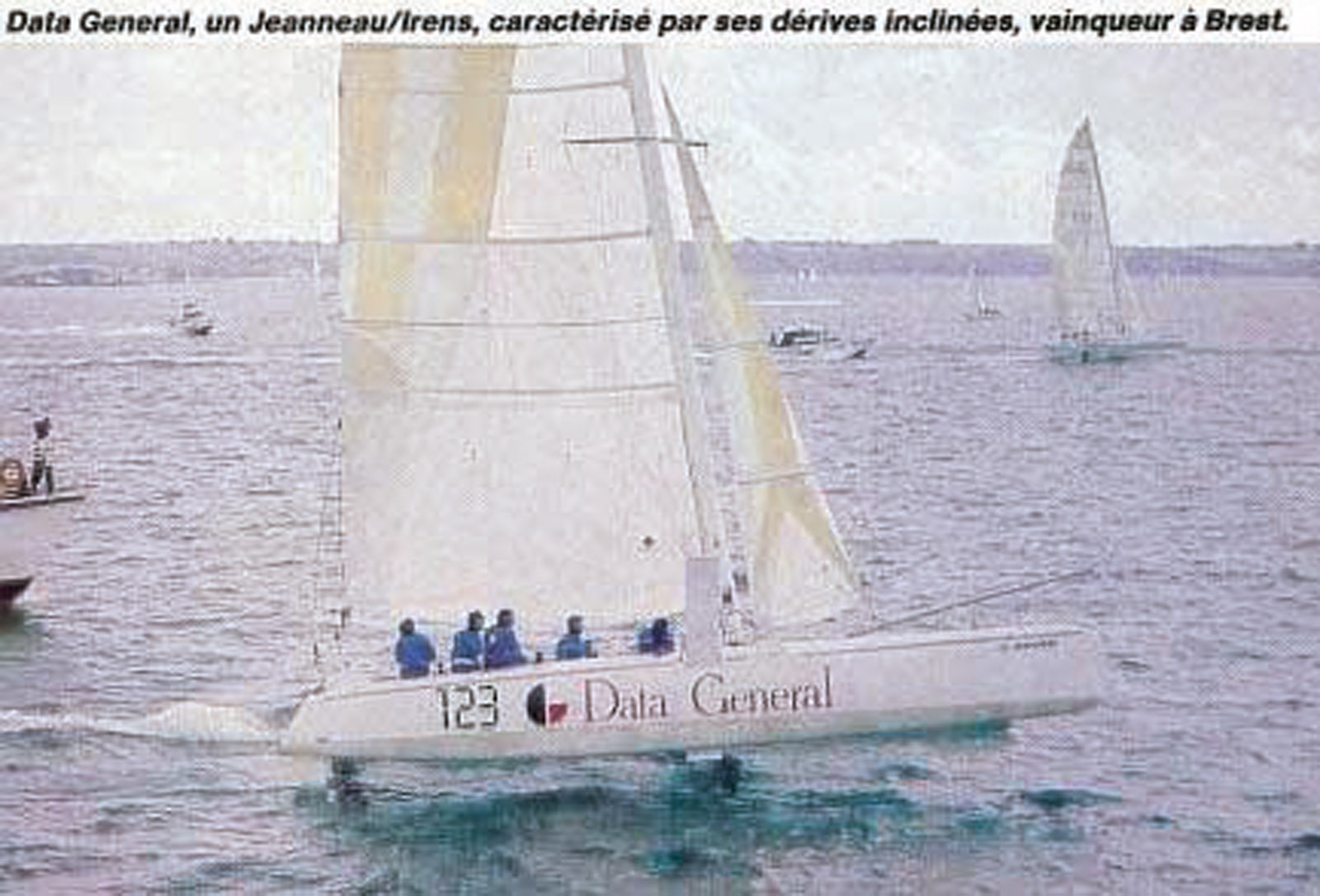
MangeNuage sits on the hulls of the former Formula 40 Data General, built in 1987.
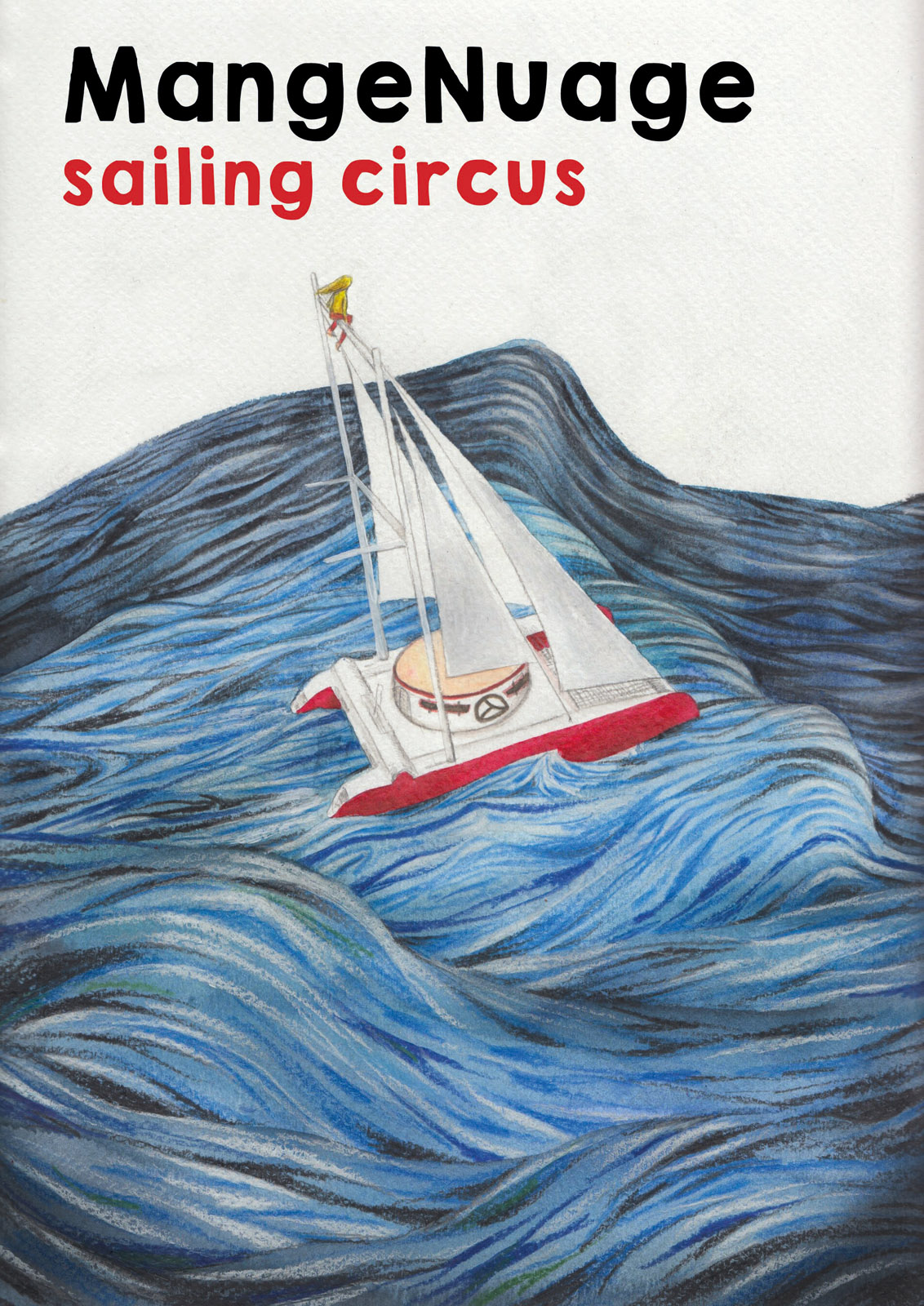
GPARALLEL BIPLANE RIG On September 30, 2020, the Circus catamaran was finally launched. It was time to test this very special parallel biplane rig. She needed to see the boat’s line on the water, to test the fittings and the various innovations. The outboards were in place and the sails were hoisted for the first time. A crowd had gathered to celebrate this very special day. We could feel the emotion in the air. This was it, we had done it! The sails were installed at the front, and everyone was keen to know how the catamaran would sail. It was the first time that Denis had put this type of sailplan on a catamaran. He had invented it for specially for Anne’s project. The propulsion is assured using just headsails - four narrow jibs. When sailing upwind, this configuration ensures the boat’s equilibrium thanks to the double parallel rig. The jibs are sheeted on self-tacking tracks so as not to ask too much of the helmsman during maneuvers. The helmsman can even stand at the top of the stage platform to steer the multihull. The architect has therefore thought of a system that avoids having two mainsails - and therefore two booms that would have had to be dismantled for each performance, then reassem bled before sailing again. Indeed, the booms would have hidden the stage and prevented the proper functioning of the trapeze platform. The biplane rig, associated with this original sail plan, also makes it possible to sail short-handed. This ties in with the original idea for MangeNuage, which was to be able to accommodate a maximum of four people. There’s a nod to Yves Parlier here: the sailor had installed the same type of rig on his catamaran Hydraplaneur, as did Pete Goss on Team Philips. But these two racers both had two mainsails
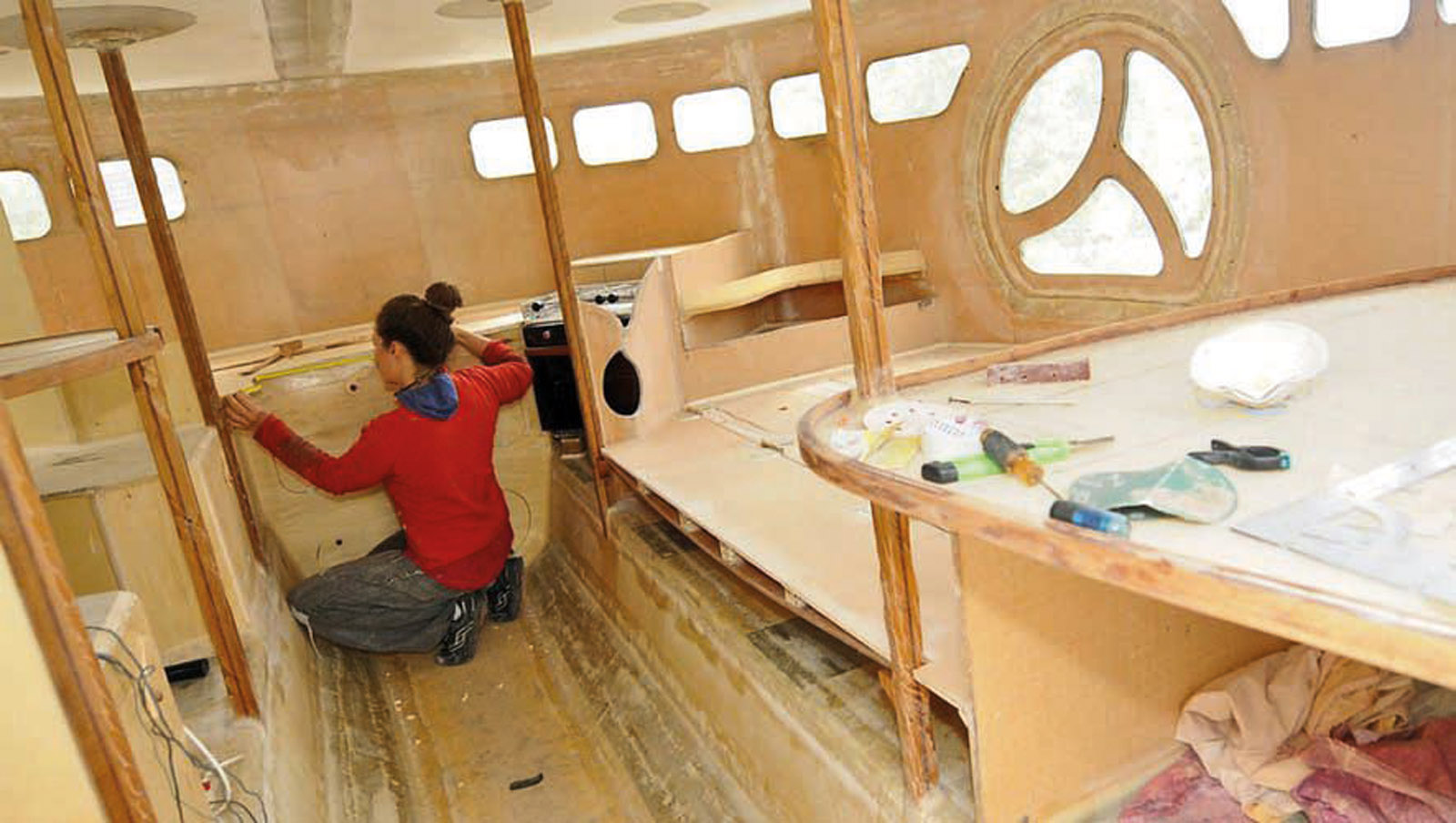
It has taken Anne five years to get her Circus-catamaran performance-ready.
A 13-FOOT DIAMETER STAGE
In the accommodation - whose roof serves as a stage - there is a comfortable double bed, which can be folded away and used as seating. The dining area can also be adapted as sleeping quarters. One of the two hulls has a single bunk, while the other is used as a storage space for sails and ropes, but also circus equipment. A small galley, a very simple (but smart) toilet and a chart table are also located in the central space. The former Formula 40 is 41 feet (12.50 meters) long and 25 feet (7.70 meters) wide. When the two daggerboards are raised, the catamaran can get as close as possible to the beach, with the idea of performing for an audience on the shore. And since it’s always better to be in the front row, Denis even invented a system of articulated sterns that allows the rudders to be raised when approaching the beach in order to have the shallowest possible draft. The multihull’s construction is based on fiberglass, Kevlar, carbon, epoxy and foam, all vacuum-infused and adapted by Anne. MangeNuage weighed a ton during its racing life. It weighs three times that today, which is still light for a 40-foot catamaran. The nacelle is shaped like a yurt and measures 13 feet (4 meters) in diameter. The masts are made of carbon and measure 46 feet (14 meters); they can support 860 sq ft (80 m²) of sail area. On board, there are no gadgets or superfluous items. Everything has been designed to be as light, simple and efficient as possible. Denis is an inexhaustible source of brilliant ideas, and even if this racing machine has been converted into a circus top, the architect couldn’t help but think about its performance. MangeNuage no longer has an excuse to be late for a performance!
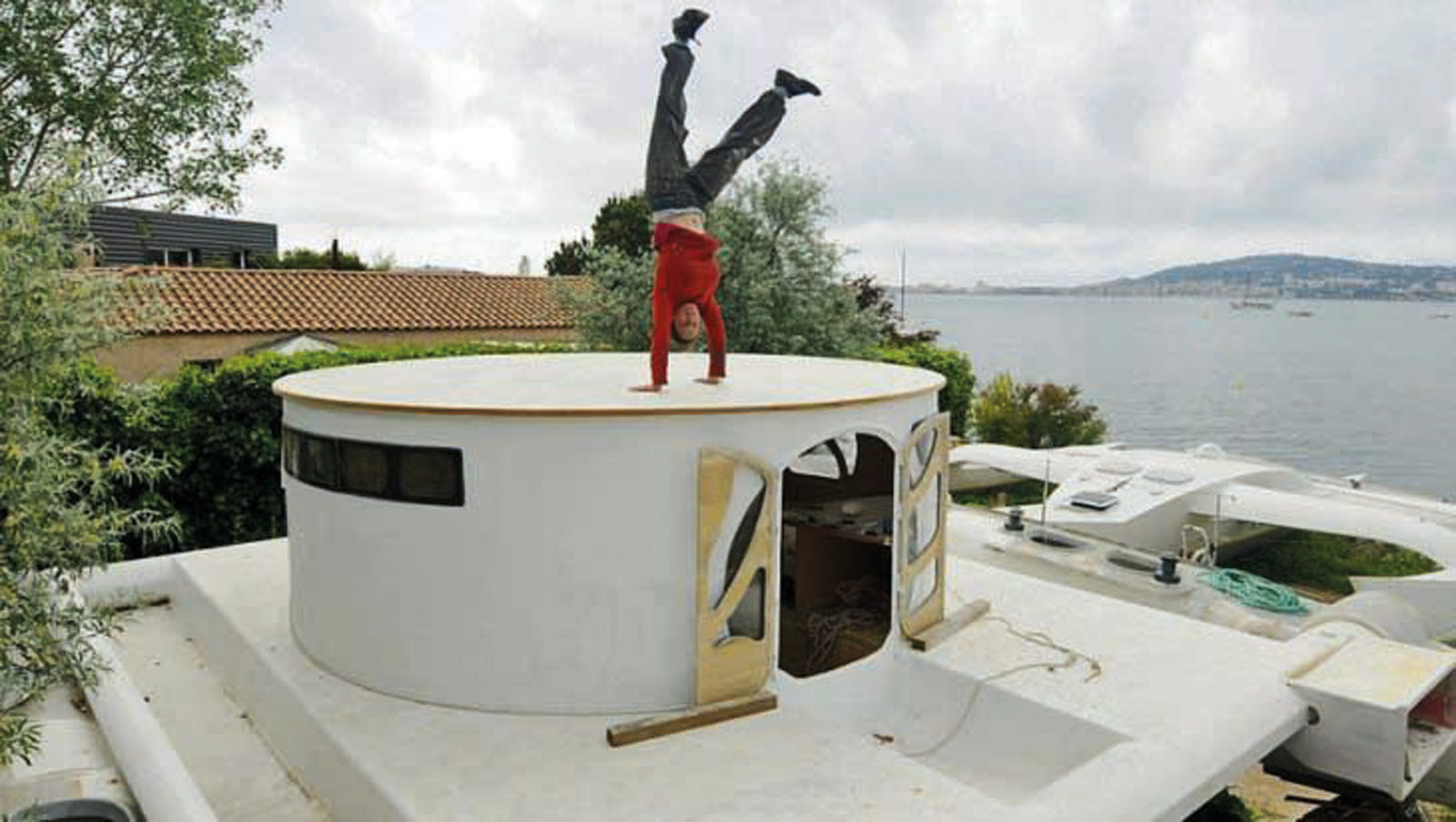
HOME PERFORMANCES TO START WITH
Keeping to a schedule when running a sailing project can be quite a challenge... MangeNuage won’t have that problem this year. Indeed, Anne has chosen to stay «at home» to start. The first tour will start - if the Coronavirus allows it - this summer on the lagoons of the Étang de Thau. The company’s network is starting to spread out across the local Hérault county and it makes sense to first address the local public before heading out to conquer the oceans. It is in this spirit of humility that the catamaran has initially been preparing a short-distance program, fluctuating between short trips on the local lagoon and performances and meetings with the locals. The first shows will take place in the spot where the multihull was renovated and is supported the local authorities in the town of Sète. Creative residencies, research work on heritage and the local environment... the artistic part is still being developed, but promises to be rich. The 2021-2022 version of the show will be steeped in the history of the coastline and adapted for in-situ performances. As an example of a transversal and ecologically coherent project, MangeNuage is taking its first steps in the Occitanie region of southern France as an ambassador of tomorrow’s transportation in an artistic context. The itinerary will widen from year to year, from the Gulf of Lion across the Mediterranean, and finally to other more tropical latitudes, the Atlantic or why not the Pacific? But that’s another story. One that we hope to tell you all about at a later date.
MangeNuage in figures
Hull architect: Nigel Irens
Design architect: Denis Kergomard
Material: foam/kevlar/carbon/ epoxy sandwich
Length: 41’ (12.50 m)
Beam: 25’3” (7.70 m)
Minimum draft: 3’3’’ (1 m)
Air draft: 45’11” (14 m)
Sail area: 860 sq ft (80 m²)
Displacement: 3 t
Stage diameter: 13’ (4 m)
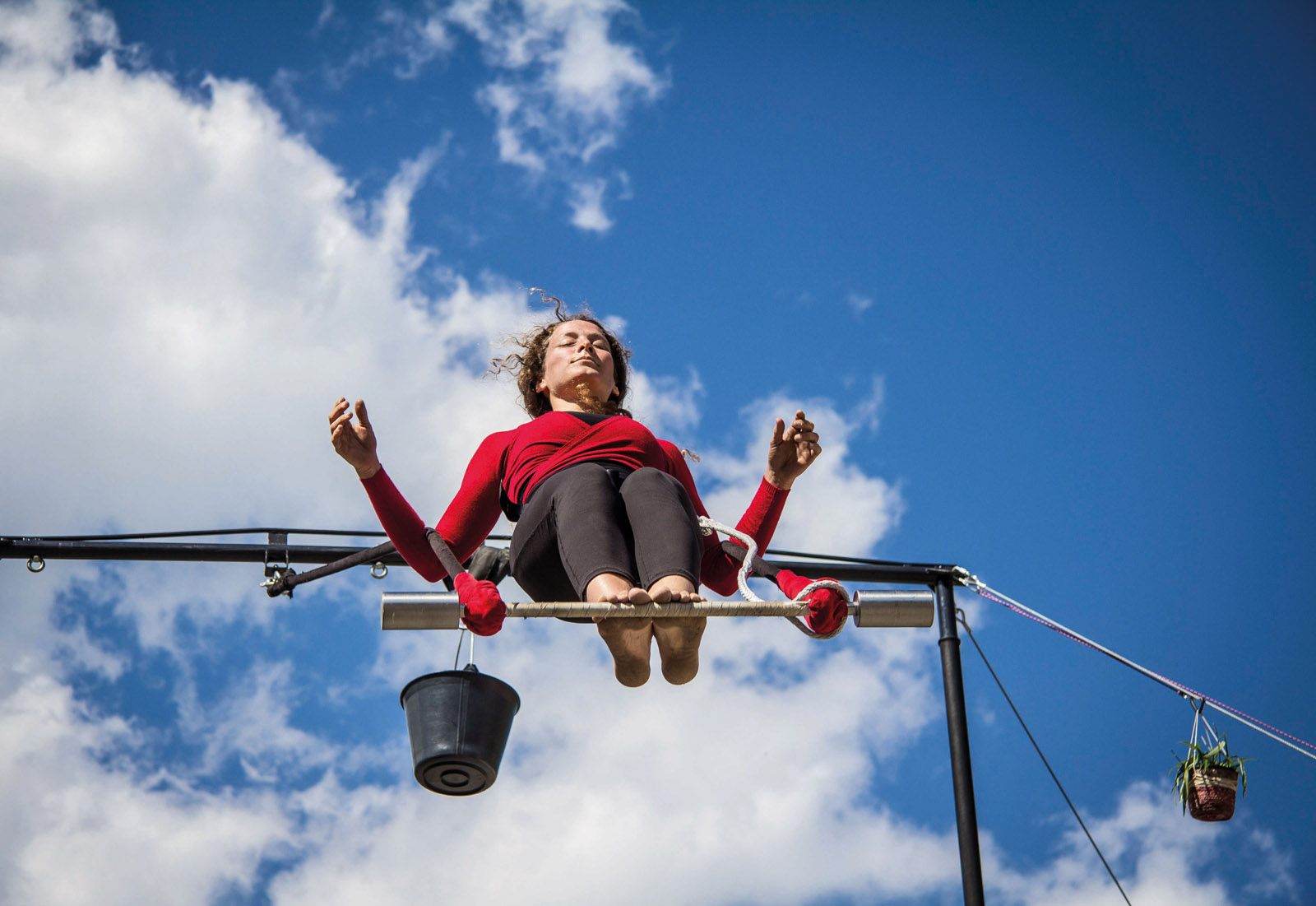
Artistic disciplines: swinging trapeze, aerial (fabric, pendulum pole, corde lisse)
Crew: 4 people
Anne Pribat - An entertainer on two hulls
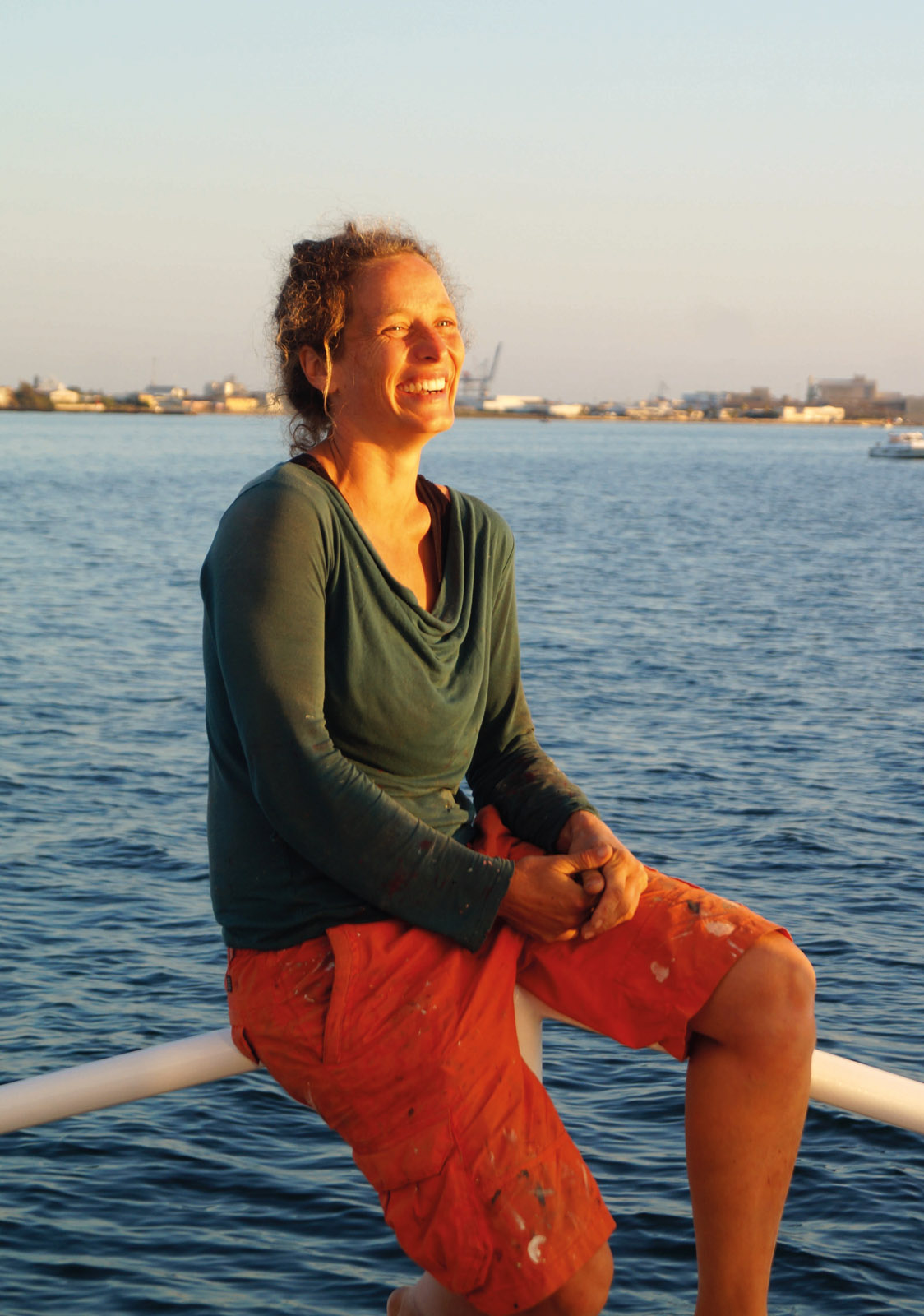
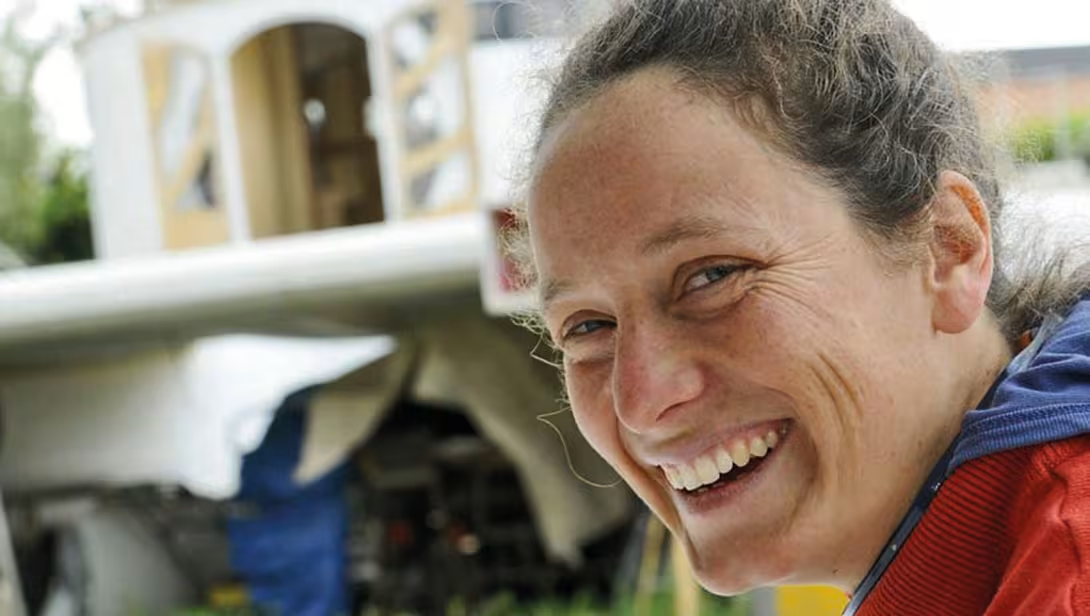
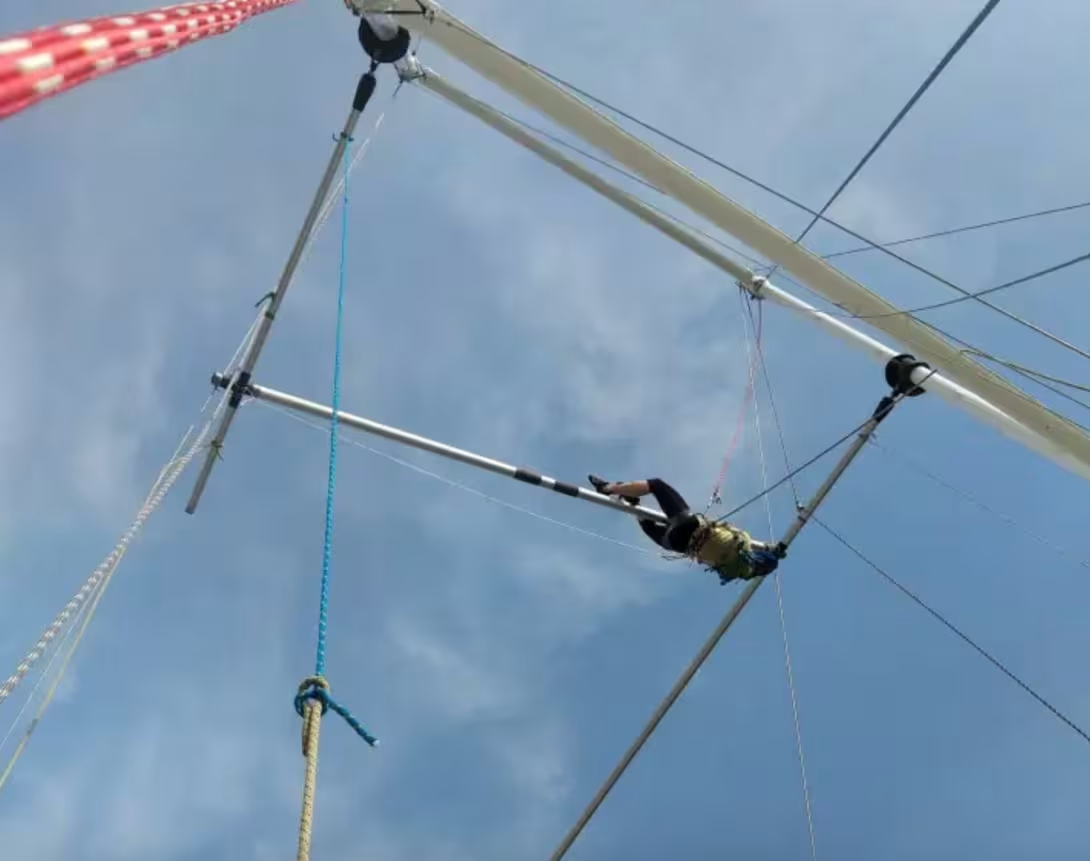
Anne grew up between Guadeloupe and Guyana. These island and tropical roots no doubt have something to do with her dreams of travelling and a life at sea. She created the company MangeNuage in 2011 without having a boat yet, while performing in a duo and as a solo artist in aerial shows. She bought her first sailboat in 2011. A ketch that lent itself to the show, naturally. After crossing the Atlantic and getting some good shipyard experience under her belt, she decided to buy her own multihull and set up her own project. She went the whole hog by embarking upon the construction of this custom-built catamaran/ performance space. Anne also works as a trapeze artist with the company Transe Express and the company Gratte-ciel. A specialist in aerial work, she finds interesting parallels between the circus and sailing. Indeed, there are knots, ropes, powerful emotions and the wind blowing through her hair. «At seven or eight years old, inspired by an older girl on a trapeze hung in front of her house, I discovered the mermaids, frogs, baskets and other basic figures that are taught to children in circus schools,» she explained to us back in MW153, “As a teenager, in the West Indies, my brother called me «sistabaleine» (whale sister), as I was always the first to spot their powerful water spouts from our boat. I was always disappointed that they were not closer, and would have loved to have swum with them! But there was no more time for daydreaming. There comes a time when you have to choose a path, a profession, a world in which you want to live. I chose the circus to continue to try and live my dream. It was a wonderful mix of everything I loved: the stage, sports, art, music. Everything perhaps except a closer relationship with nature. There were entrance exams for circus schools, with one year in Châtellerault, then two years in Rosny-sous-Bois, before entering the CNAC (National Center for Circus Arts) in Châlonsen-Champagne for three years. I finally graduated as a professional trapeze artist. During all these years of study in the northern half of France, I missed the wilderness of my adolescence, as well as the sea and travelling under different skies. I was completely living my circus dream, but I was a long way from my whale dreams! Little by little, the idea of a show sailboat started to take shape: A vehicle for autonomous travel around the world, which would allow me to share the circus with people from all continents. After lots of ups and downs, I met up with Denis Kergomard who helped me in the choice of the boat and guided me throughout its renovation. Thus, since September 2015, I have been sanding, gluing, building, cutting... Little by little I have gradually created MangeNuage, the tangible culmination of my dreams as an entertainer!» Anne doesn’t just practice the swinging trapeze: she has also built herself a carbon structure that is fixed in the catamaran’s masts. The first tests of this invention are taking place as you read these words along with other circus artists who came especially for the occasion. They will return for the shows that will take place over the course of the season. Are you curious? If so, come and meet them for the 30th anniversary of the Étang de Thau museum, on September 12th, on the beach in the village Bouzigues in the South of France!