


We have selected for you 10 multihulls from $ 100,000 to $ 200,000. These ten models range from 38 to 44 feet, and are well represented all over the world, but travel restrictions can make it difficult to visit if they are far from home. More’s the pity, because the more remote units are often priced lower - an on-site agent can be particularly useful in this case
$ 100,000 - Athena 38 - A curvaceous design / Test in MW29
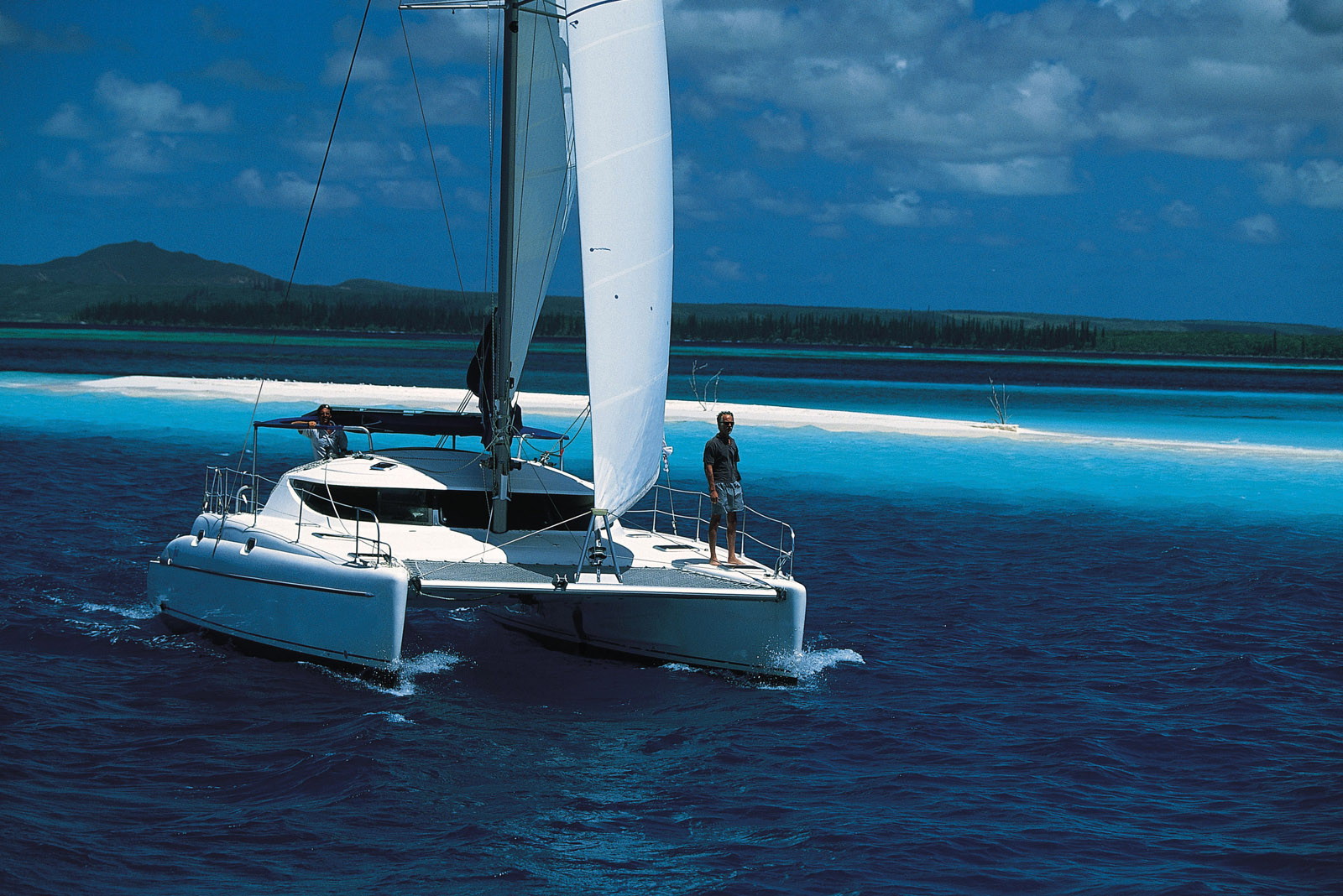
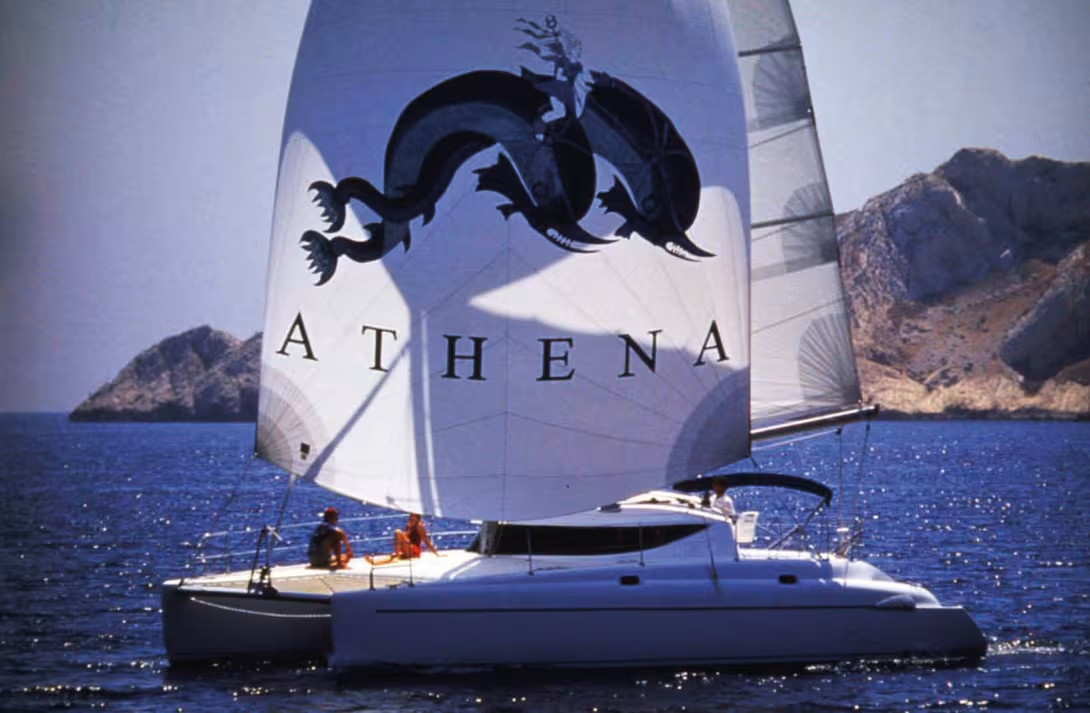
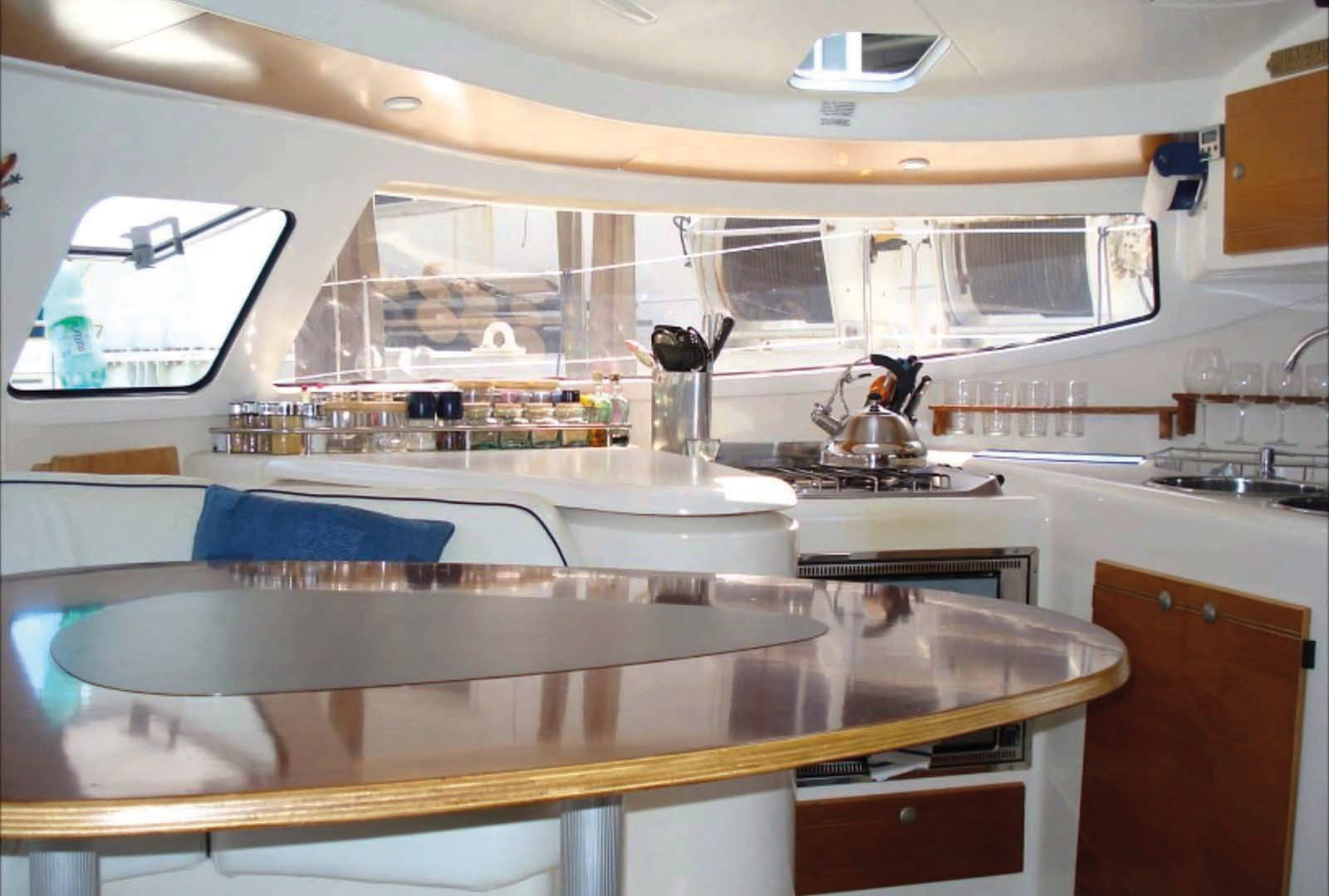
Appearing in 1994, the Athena 38 slotted in between the Tobago 35 and the Venezia 42, two units whose designs (rounded lines, stubby bows and coachroof with cap) it picked up on. The lines may be a little dated today, but the overall design of this unit is still convincing. Slightly heavier than the very early Fountaine Pajot models, it is a little slower; the 38’s hulls are significantly beamier, and the freeboard is greater. In fact, the Athena is perfectly suited for passagemaking in the West Indies or the Mediterranean, for a couple or the whole family. On the other hand, for long crossings, it probably lacks a little length to pass through the sea smoothly. Nevertheless, the load capacity is appreciable for a catamaran under 40 feet. Pleasant under sail, easy to handle, this model quickly became a great commercial success – both with charter companies and private individuals - to the point that it remained in the manufacturer’s catalog for almost 10 years. In 1998, the Athena was improved: a better view forward was achieved thanks to a new helm station, directly inspired by the one on the Bahia 46. There was also a solid gangway fitted aft of the mainsheet track. The strong points of this model: great comfort despite its modest size, fluid circulation on the deck as well as inside and a particularly successful rounded saloon. The finish on this model is clearly better than previous generations; we just noticed some headlining glued up here and there.
Builder: Fountaine Pajot
Material: polyester sandwich
Architects: Joubert/Nivelt
Hull length: 38’ (11.60 m)
Waterline length: 37’ (11.30 m)
Beam: 20’8” (6.30 m)
Draft: 3’3” (1.00 m)
Displacement: 13,225 lbs (6 t)
Upwind sail area: 947 sq ft (88 m²)
Mainsail: 538 sq ft (50 m²)
Genoa: 409 sq ft (38 m²)
Engine: 2 x 18 HP inboards
Secondhand price: $ 100,000 to 130,000 ex-tax
Production: 222 units from 1994 to 2003
Quality/price ratio: ***
Availability on the market: : ****
The plus : a very practical catamaran for its size, good performance, and a very pleasant nacelle to live in.
The minus: not very comfortable upwind in big seas, tiny hull portholes, small nav station
POINTS TO CHECK: Most Athena 38s are still in good general condition, but the level of equipment varies greatly from one unit to another. To watch out for: sails, engines, electrical circuit, standing and running rigging. For those setting out a long trip, check the following points: forestay and gooseneck attachment and steering cables.
$ 110,000 - Corsair 36/37 - Foldable and transportable / Test in MW105
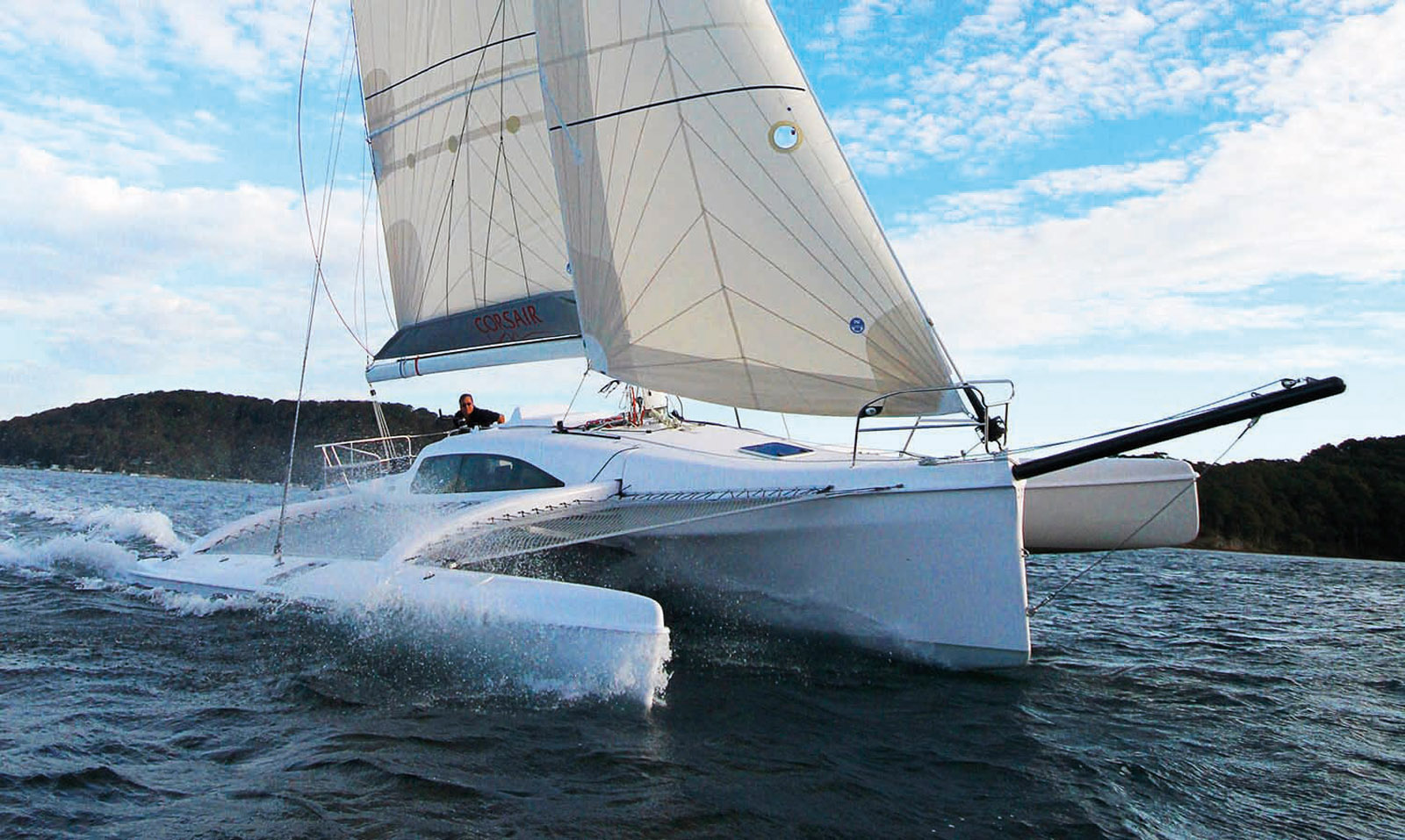
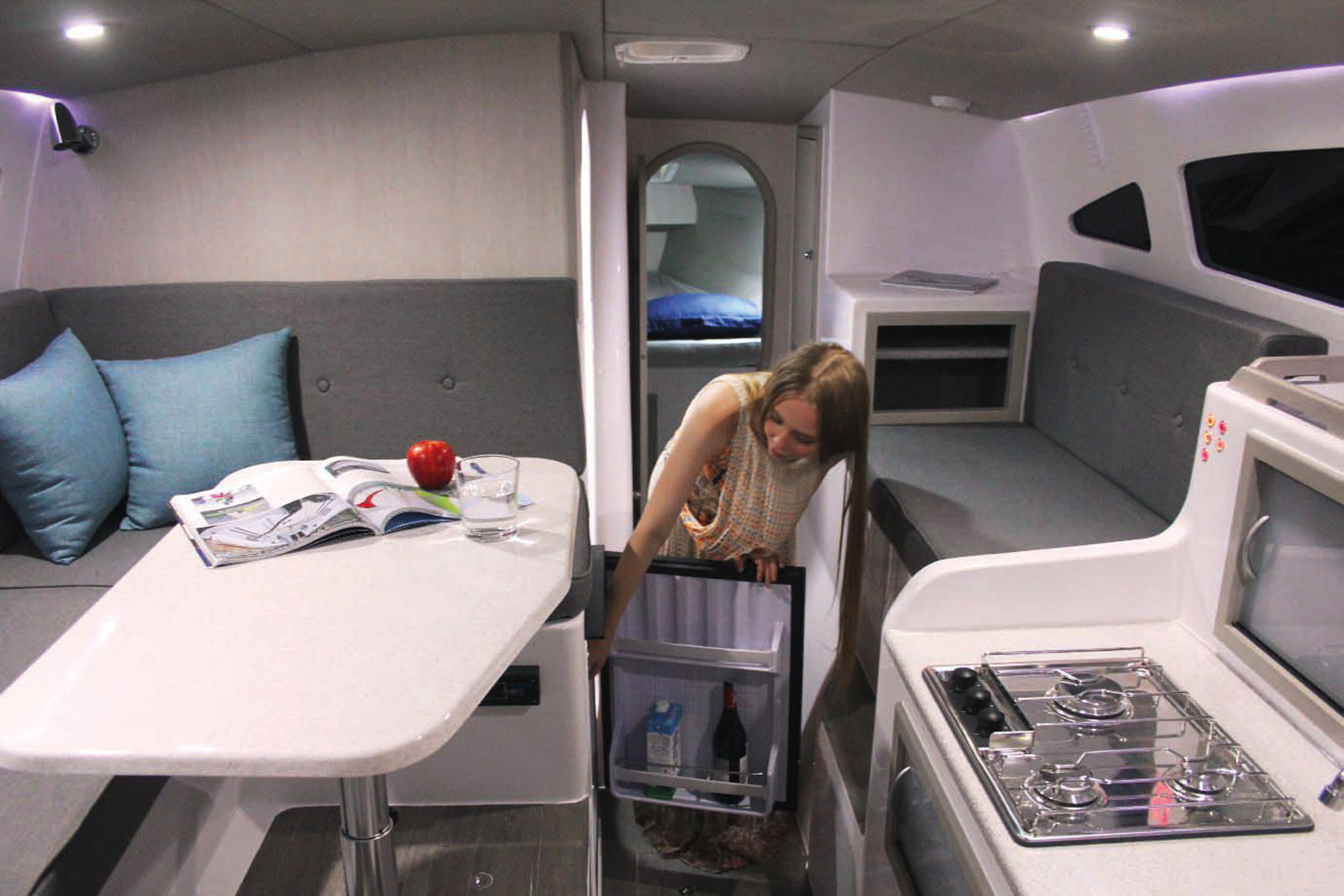
In 2004, Corsair Marine launched the largest transportable trimaran on the market, the Corsair 36. The shipyard’s long experience with folding link arms made it possible to apply the mechanism - previously used on smaller multihulls - to a 36-foot platform. This model offers a great compromise between comfort and performance and, above all, extraordinary helming pleasure. Fast and safe, it is capable of spectacular acceleration up to 20 knots. All the deck hardware is set back in the cockpit so that this multihull can be easily sailed short- or single-handed. The still modest size of the 36 makes it suitable for semi-offshore cruising rather than long passages - the living space offers two double cabins and cozy comfort, but nothing comparable with the facilities of a catamaran of the same length. The hinged appendages limit the draft, which encourages all your fantasies in terms of anchorages. Auxiliary power is provided by a 15 to 20 HP outboard motor. The builder’s largest model became the Corsair 37 at the end of 2008, without any notable changes. This trimaran has been regularly optimized and improved: to this day, it is still in the catalog. A CR (carbon) version offers increased stiffness and lower displacement. But the asking price is not comparable with the earlier vintages.
Builder: Corsair Marine
Material: polyester sandwich
Hull length: 36’ (10.97 m)
Beam: 9’10”/25’7” (3/7.8 m)
Draft: 20”/7’7” (0.51/2.3 m)
Displacement: 6,725 lbs (3.05 t)
Upwind sail area: 817 sq ft (75.87 m²)
Mainsail: 532 sq ft (49.42 m²)
Genoa: 285 sq ft (26.45 m²)
Engine: 15 to 20 HP outboard
Secondhand price: from $ 110,000 ex-tax
Production: about 50 units built since 2004
Quality/price ratio: ****
Availability on the market: ***
The plus: a fast multihull that’s fun to helm, with a reduced beam of 10’ (3 m) in port.
The minus: limited volume of the central hull
POINTS TO CHECK: These models are still very recent, so they are usually in good condition. Only the wearing parts - engine, sails, running rigging - may have suffered and not been replaced.
$ 120,000 - Escale 39 - For the open sea... and inland waterways! / Test in MW16
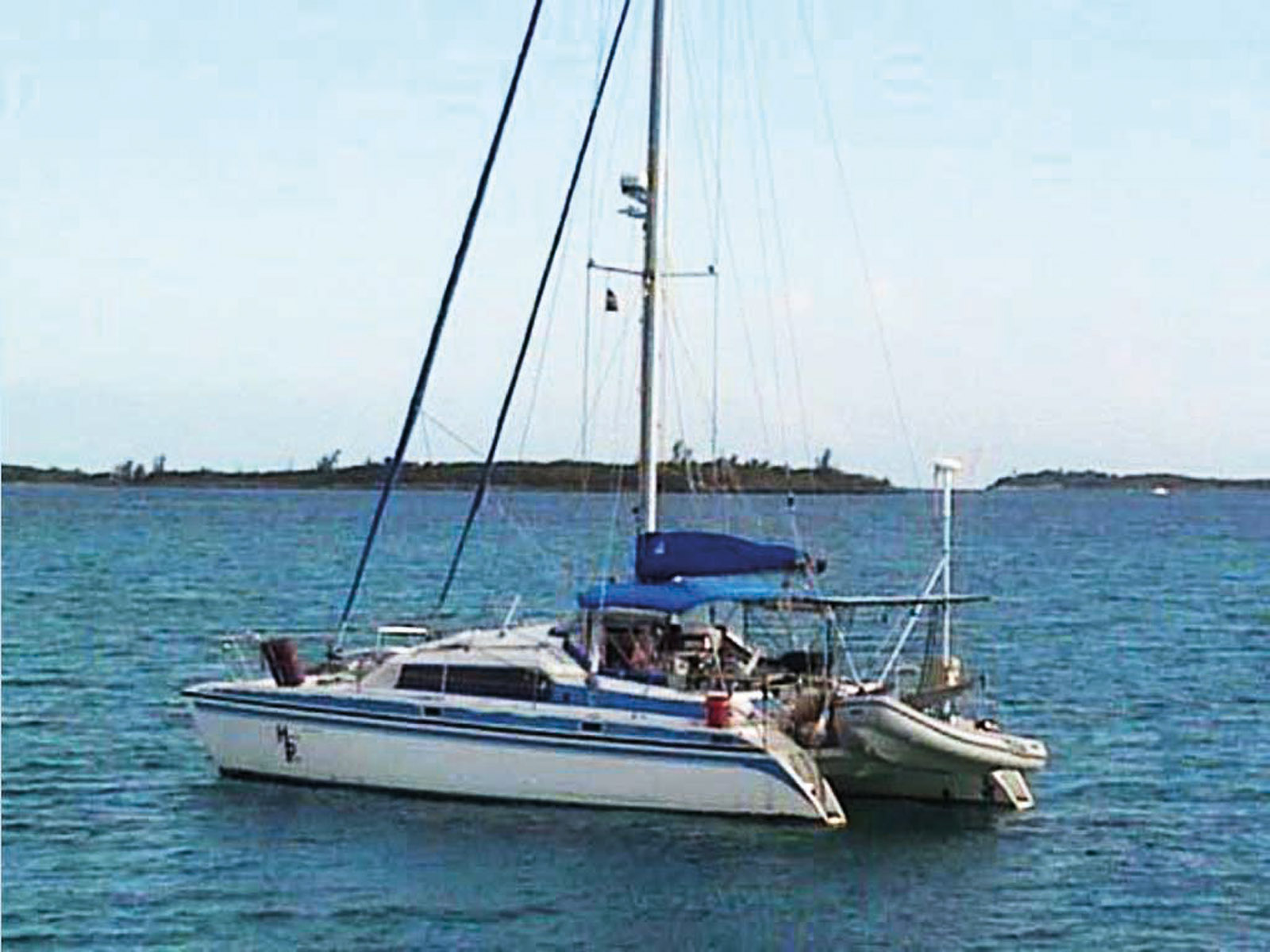
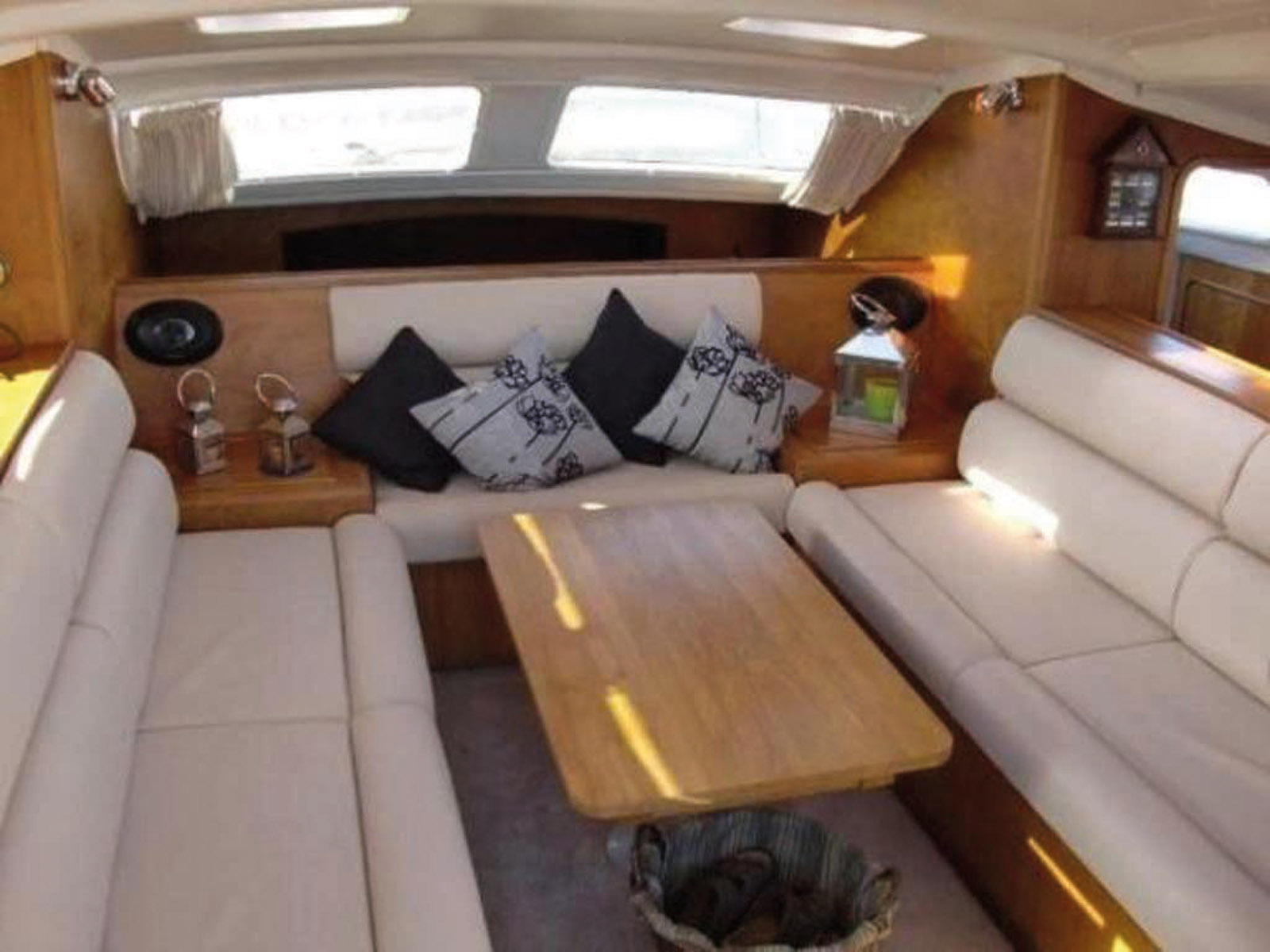
At the beginning of the ‘90s, multihulls were still a British specialty. There, priority was given to comfort with very large decks and imposing superstructures. As for the rig, the mast was set very far back, and the genoa was almost twice the size of the mainsail. Concerning this architectural aspect, we can note that the Escale 39 was a step ahead: the latest generation Lagoon, initiated with the 39 in 2013, is the best illustration of this... Another characteristic, a moderate beam to limit shipping costs and above all to allow you to discover canals and inland waterways. A concept that is still being defended today by the American Gemini catamarans. Launched in 1991, the Escale 39 was already significantly out of step with the French and Australian productions, which were significantly more efficient. This didn’t prevent it from seeing around a hundred examples built. The Escale 39 is in fact an evolution of the 37. The nacelle, protected by an embryonic third hull, gained a little height. The aft cabins house two large bunks fitted athwartships, housed in the chine, and the shipyard incorporated sugarscoops. Three versions of accommodation were available. The charter version even has ten berths... This model is not, as you can see, the fastest multihull in the 38-40 foot category. It is heavy, the weight is not ideally centered, there is significant windage and the very shallow skegs obviously limit upwind performance. The Escale suits a crew concerned about comfort at anchor - the circulation between the interior and the cockpit is excellent - but not in a hurry to arrive at the other side of the ocean.
Builder: Prout Catamarans
Architects: David Feltham and Rob Underwood
Material: balsa/polyester sandwich
Hull length: 35’8” (10.86 m)
Waterline length: 34’ (10.37 m)
Beam: 18’3” (5.56 m) Draft: 3’ (0.95 m)
Displacement: 14,110 lbs (6.40 t)
Upwind sail area: 840 sq ft (78 m²)
Engine: 2 x 20 HP diesel inboards
Secondhand price: $ 120,000 to 150,000 ex-tax
Production: 100 units built from 1991 to 1995
Quality/price ratio: ***
Availability on the market: **
The plus: possibility to sail on canals
The minus: limited performance and a deck plan that is not very ergonomic
POINTS TO CHECK: The compact and robust structure of the Escale 39 ages well. Most models on the market are also well maintained and equipped. Keep an eye on the engine hours.
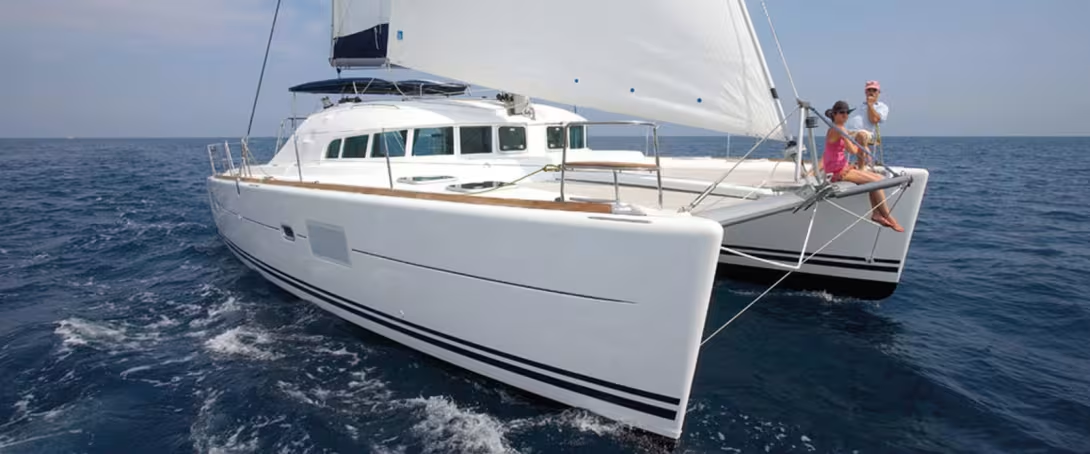
$ 140,000 - lagoon 410 - Modern before its time / Test in MW36 & 67
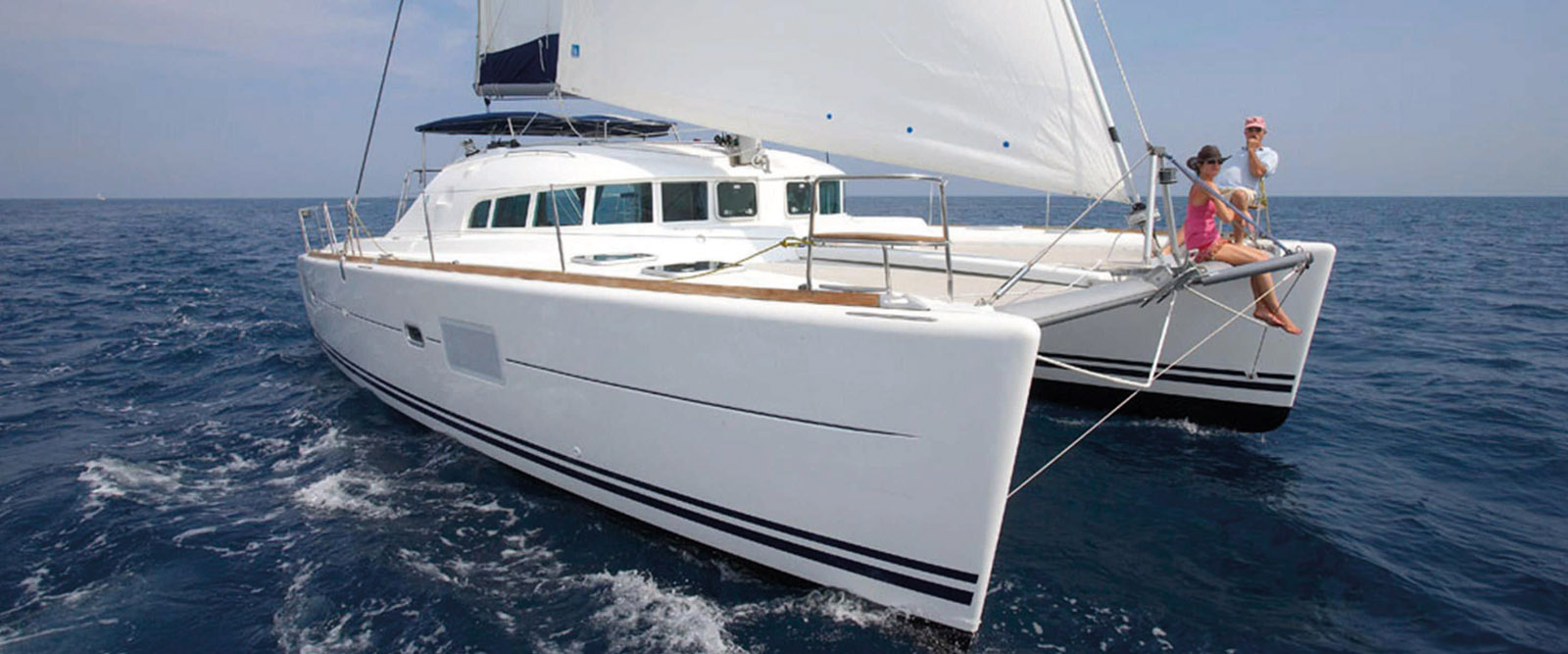
Launched in 1997, this was the first Lagoon launched after the purchase of Jeanneau by Bénéteau in 1995. Innovative with its imposing coachroof flanked by a battery of vertical windows in the shape of a rotunda, it remains a standard setter among blue water catamarans after having won over charter companies. In September 2002, the assembly line counter sat at 120 units when the shipyard decided to revise the deck plan. Under the name Lagoon 410 S2, the halyards and reefing lines were brought back to the helm station - itself redesigned for easier access - with an electric winch as a bonus. Note: the later catamarans benefited from larger windows in the hulls. The 410’s voluminous coachroof preserves the wide sidedecks, allowing you to take full advantage of the XXL-sized trampoline and pulpit seats. A helm station built for two, cockpit table well protected by a rigid bimini, everything is there, but the circulation could be better. There is no passage at the stern and there are too many different levels - at least compared to the way things are done today... Easy to sail singlehanded or short-handed, the 410 is fast as long as the wind exceeds 8 knots: a real mile-eater. Much lighter than current models, it is also more sensitive to overloading. The interiors are very successful and easy to maintain. The brightness of the saloon and its panoramic view, the careful ventilation and the comfortable cabins - with large beds aft - are appreciated.

Builder: Lagoon
Architects: Van Peteghem/Lauriot Prévost
Material: polyester sandwich
Hull length: 40’7” (12.37 m)
Waterline length: 38’3” (11.67 m)
Beam: 23’3” (7.09 m)
Draft: 4’ (1.2 m)
Displacement: 15,875 lbs (7,200 kg)
Mainsail: 570 sq ft (53 m²)
Genoa: 388 sq ft (36 m²)
Engines: 2 x 28 HP
Secondhand price: $ 140,000 to 180,000 ex-tax
Production: 283 units built from 1997 to 2006
Quality/price ratio: ***
Availability on the market: ****
The plus: good compromise between speed and comfort, suitable for sailing in tropical areas, robust structure
The minus: perfectible deck plan aft, narrow forward berths, engines under the rear berths
POINTS TO CHECK: Hardly anything to worry about on this particularly robust unit: structure and rig seem to be armor plated, even the hardest-exploited charter models remain safe and sound. As for the accommodation, this can even be a nice surprise as long as the boat has been well maintained - a leaking shower or deck hatch doesn’t give the woodwork a chance. Check the number of engine hours: at 10,000 hours, the motors are exceeding their normal life expectancy. In the short or medium term, a standard exchange should be planned - to be included in the price negotiation.
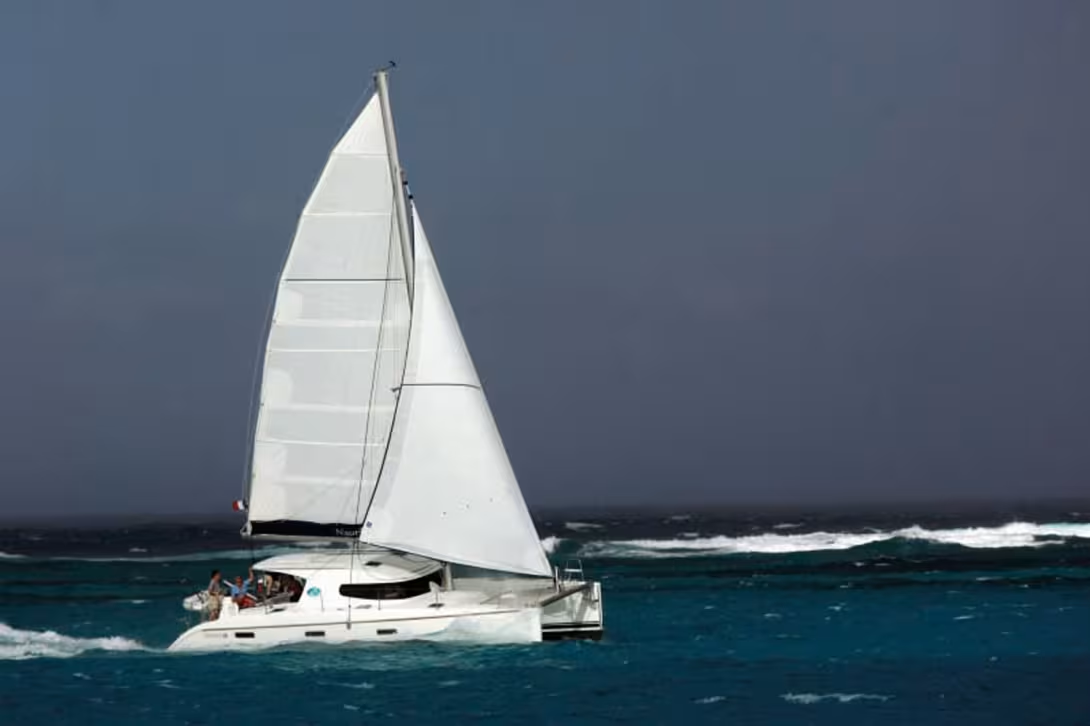
$ 150,000 - Nautitech 40 The pioneer of the rigid bimini / Test in MW76
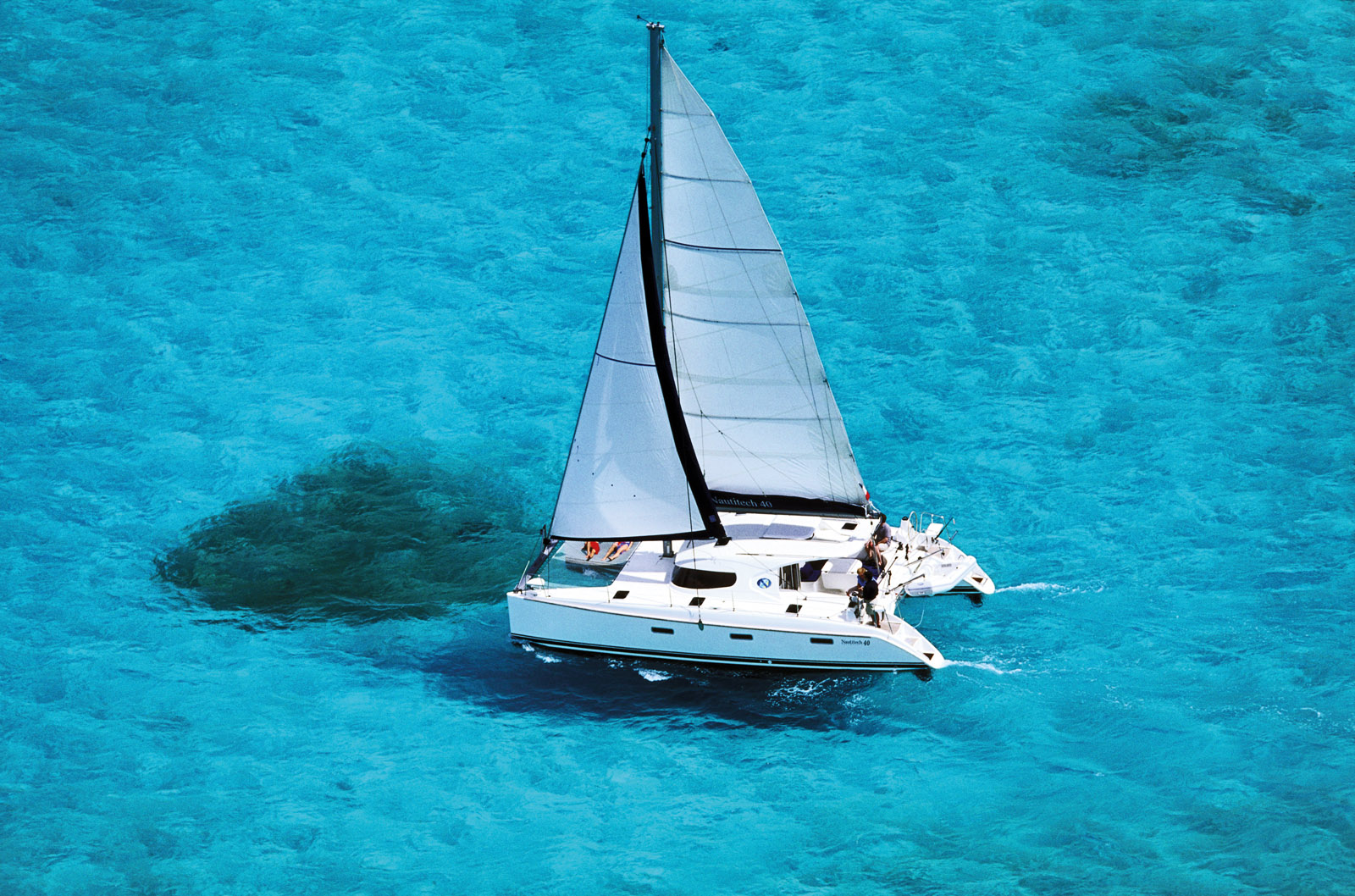
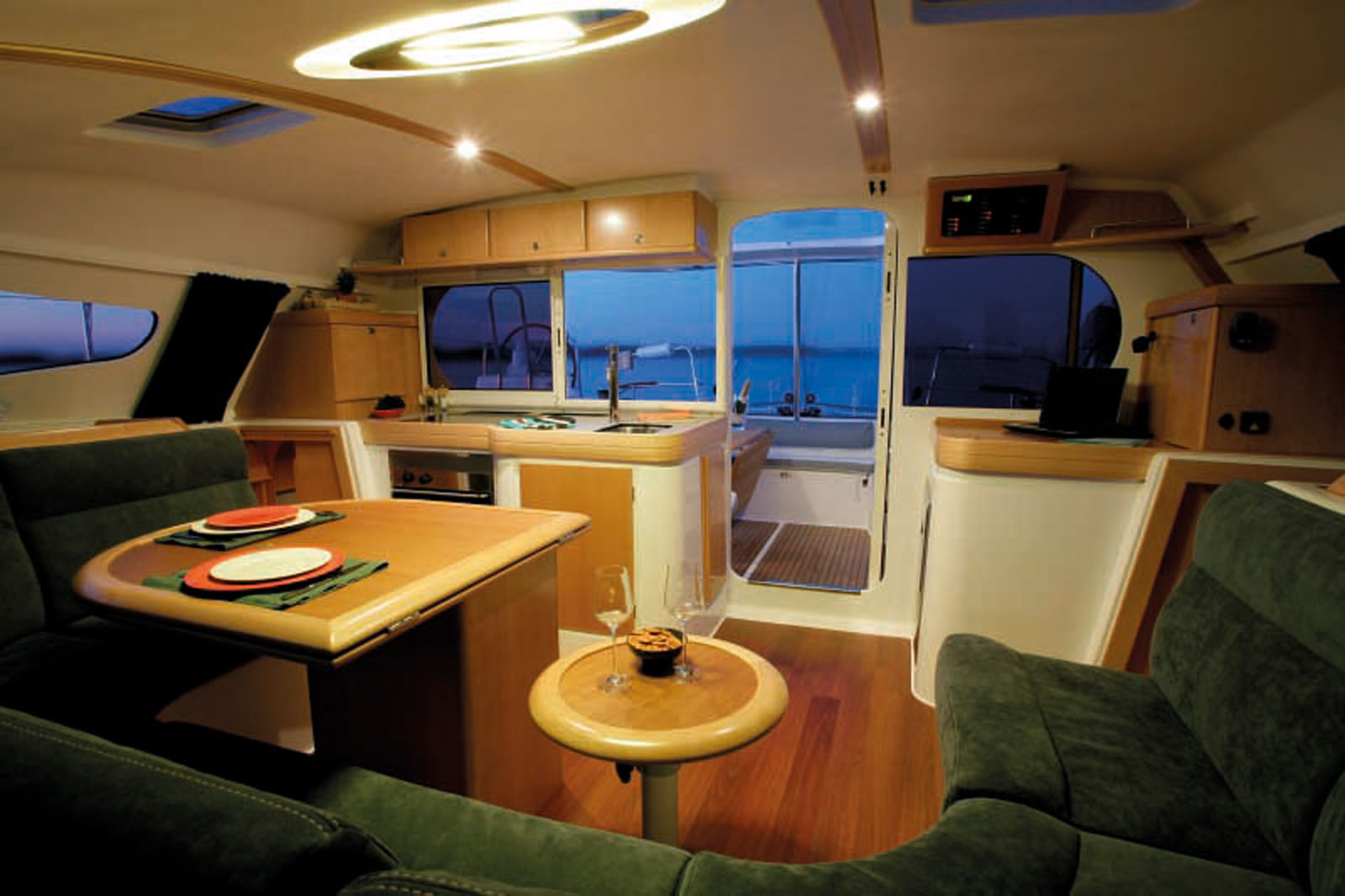
This catamaran is still modern and attractive despite its hulls being no longer... young. The career of the Nautitech 40 started under the name 395, back in 1996. The Dufour shipyard had entrusted the Mortain/Mavrikios firm with the design of the smallest catamaran in the range, which ceased production in 2001. Two years later, this model was relaunched with a new deck layout and above all a rigid polyester bimini. An innovation that has now become a standard on cruising catamarans. This roof wonderfully protects the cockpit... and it is even equipped with a sliding hood! But it’s difficult to create a perfect boat on the first try: the circulation from the cockpit to the side-decks is not easy for large boats. The side-decks are wide, and the fittings are simple but effective. Under sail, with a moderate displacement and fairly narrow hulls, the 40 proves to be efficient on all points of sail and capable of exceeding 10 knots in the right conditions. In spite of its shallow skeg keels and a perfectible centering of weight, it even manages an honest performance when close-hauled. The accommodation, neatly finished, comes in three or four cabins. The 40.2 version, launched in 2005, offers some useful steps to leave the cockpit while the bimini has been trimmed down to facilitate access. Nautitech took advantage of its refit to launch an Owner’s version - only 10 of these are available, so it is logically much sought after. Other noteworthy modifications on board the 40.2: a slightly larger galley integrates the trash can, and the tilting helm seats become fixed on the engine covers, and finally, clever structural modifications allow the berths to be lowered by 7”/18 cm. More comfort and more visual space are always good. In 2008, the shipyard modified its woodwork and opted for lighter-colored woods.
Builder: Nautitech Catamarans
Architects: Mortain/Mavrikios
Material: polyester sandwich
Hull length: 39’4” (11.98 m)
Waterline length: 37’9” (11.50 m)
Beam: 21’ (6.40 m) Draft: 4’ (1.2 m)
Displacement: 16,315 lbs (7.4 t)
Mainsail: 540 sq ft (50 m²)
Genoa: 398 sq ft (37 m²)
Engines: 2 x 29 HP
Secondhand price: $ 150,000 to 180,000 ex-tax
Production: 90 units built from 2003 to 2011
Quality/price ratio: ****
Availability on the market: ***
The plus: good resale value, strong and rather well finished catamaran, large sleeping capacity
The minus: a bit more expensive than its competitors of the same size weight centering could be perfected, bimini too low
POINTS TO CHECK: No structural problems to worry about. The only known defect is a watertightness problem between the deck and the coachroof. The coachroof sits on the platform - the corner joint proved to be insufficient on the very early models. The part was quickly reviewed and further emphasized on the more recent units. Many Nautitech 40’s were operated on a charter basis: many hours at sea, and these are engines and rigs under heavy strain. And sometimes skegs that have dabbled in coral a little too closely – all to be checked. The accommodation does rather well, some refrigerators were the only cause of problems for charterers.
$ 150,000 - Seawind 1160 Seamanlike and smart / Test in MW111
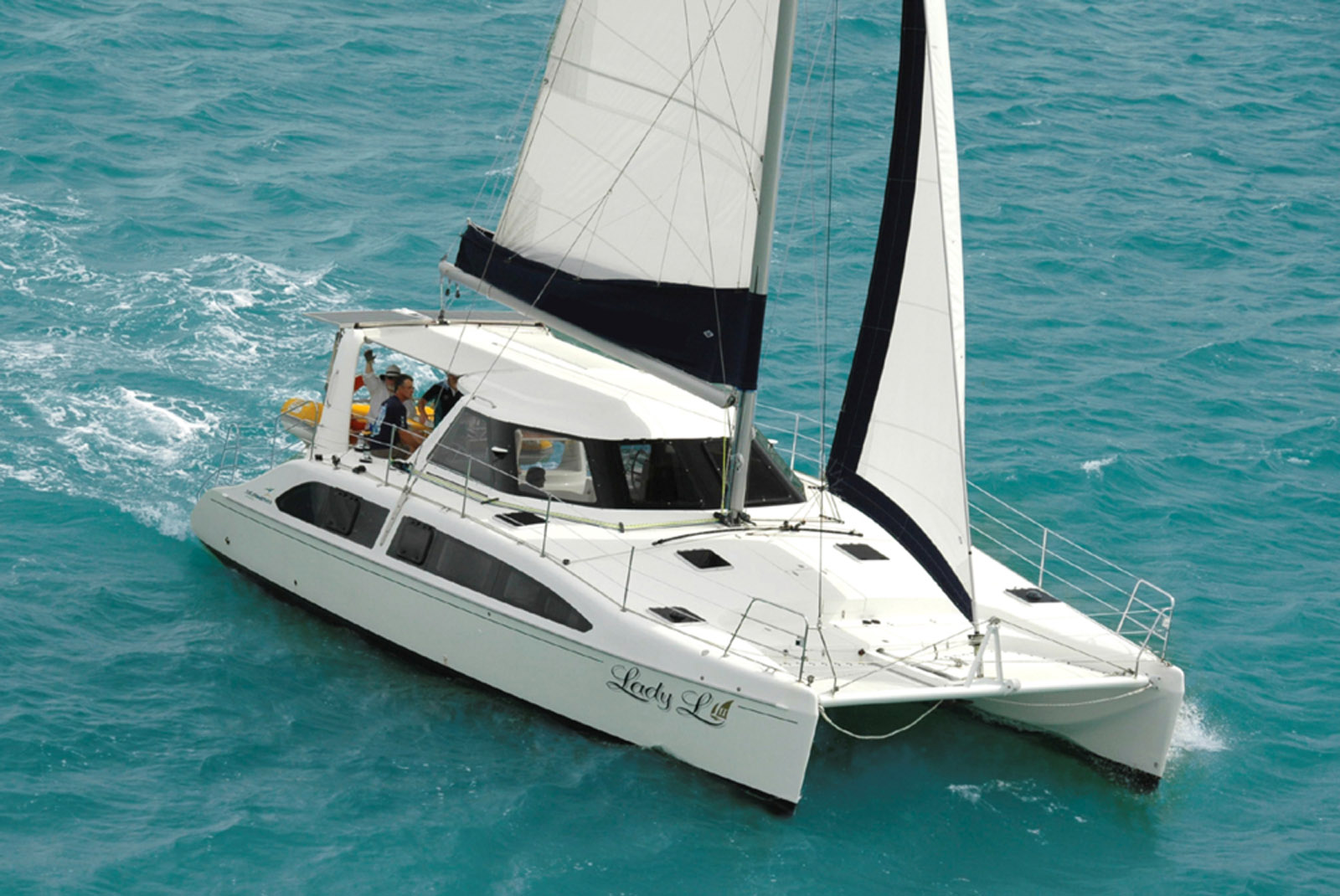
Very popular in Australia, but also in the United States, the Seawind heads off the beaten track in terms of design: rather narrow hulls, measured displacement, large openings above the rubbing strake and a narrow but high-perched coachroof... A design particular to the smaller models: the 1600 and now the 1370 adopt more modern and standard designs. The 1160 is partly derived from the 1000, from which it takes the hulls – though raised up. The bridgedeck clearance exceeds 27”/70 cm, which guarantees healthy behavior in heavy seas. Undoubtedly seaworthy, the 1160 is easy to sail with its twin helm stations and self-tacking jib. Moving around is made safe by numerous handrails; the builder has even thought of equipping the mast with folding steps. The comfort of the cockpit and foredeck is irreproachable and the access to the saloon is particularly userfriendly with a very wide entrance - the door is made up of three retractable sections - they fold up against the bimini. The bimini is cleverly designed with a central solid part and canvases on the sides. Depending on the weather conditions, it is therefore possible to enclose the entire cockpit or to expose yourself to the sun. In short, ideas that have been used for many years... On the water, this catamaran is fast: it is able to do without its engines in 5 knots of wind and willingly lengthens its stride to more than 10 knots under gennaker. The accommodation is much more traditional than the exterior look - some will regret that the galley is installed in the starboard hull, far from the cockpit. Nevertheless, the storage space is plentiful, and the finish is very neat. The Lite version is equipped with two outboard motors.
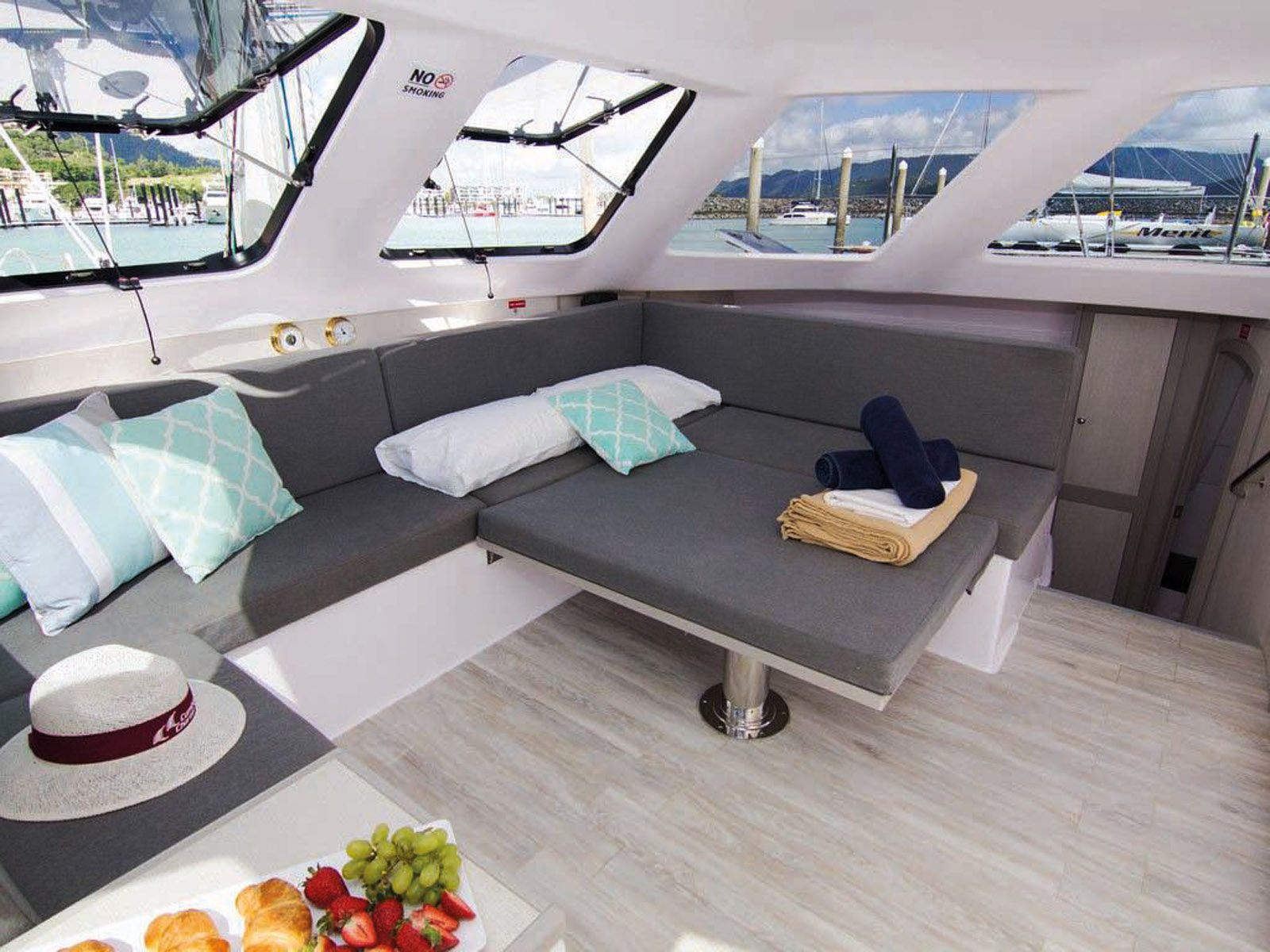
Builder: Seawind Catamarans
Material: foam/vinylester sandwich
Hull length: 38’ (11.60 m)
Waterline length: 37’ (11.30 m)
Beam: 21’4” (6.50 m)
Draft: 3’7” (1.10 m)
Light displacement: 15,430 lbs (7 t)
Upwind sail area: 860 sq ft (80 m²)
Mainsail area: 635 sq ft (59 m²)
Solent: 225 sq ft (21 m²)
Engines: 2 x 30 HP inboards or 2 x 20 HP outboards
Secondhand price: $ 150,000 to 350,000 ex-tax
Production: 150 units built since 2004
Quality/price ratio: ****
Availability on the market: ****
The plus: onboard features that make cruising life easier
The minus: poor visibility from the helm stations
POINTS TO CHECK: Well-built and still recent (even brand new), the 1160 does not suffer from any structural problems in normal use. Even rough handling in difficult seas and often long charter company use, this model performs perfectly in these demanding exercises. The use of vinylester resin protects the laminate from osmosis. Examining an 1160 will therefore boil down to checking its peripherals - motors, rigging, sails, plumbing, electrics, electronics.
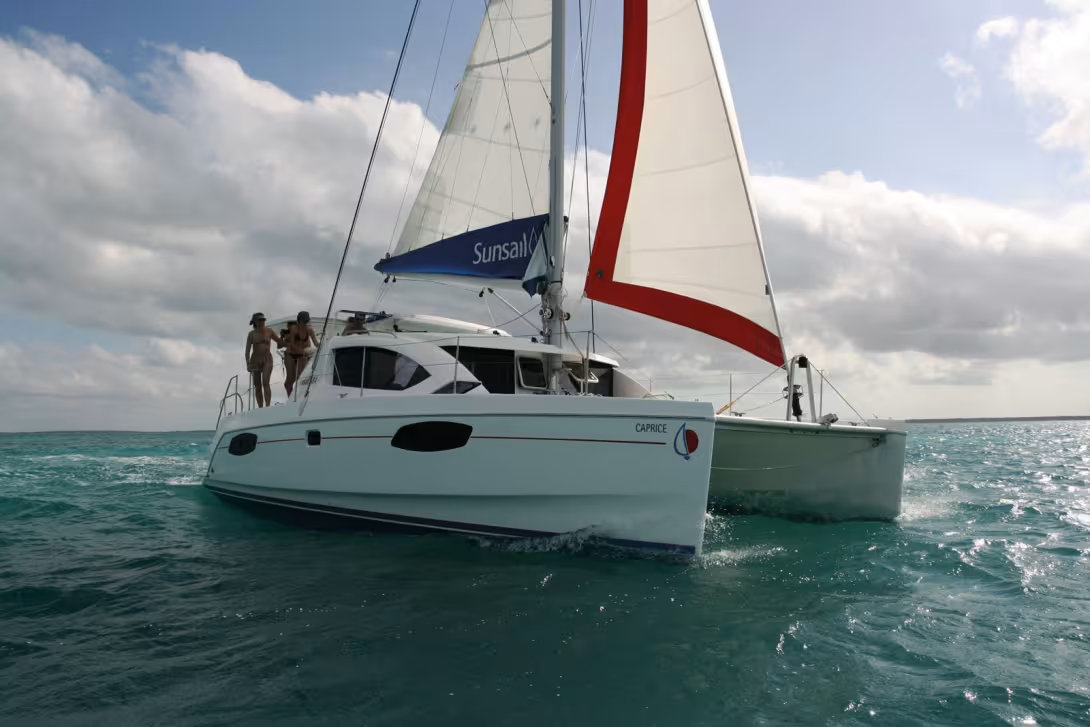
$ 160,000 - Leopard 38/39 100% cruiser, 100% comfort / Test in MW117
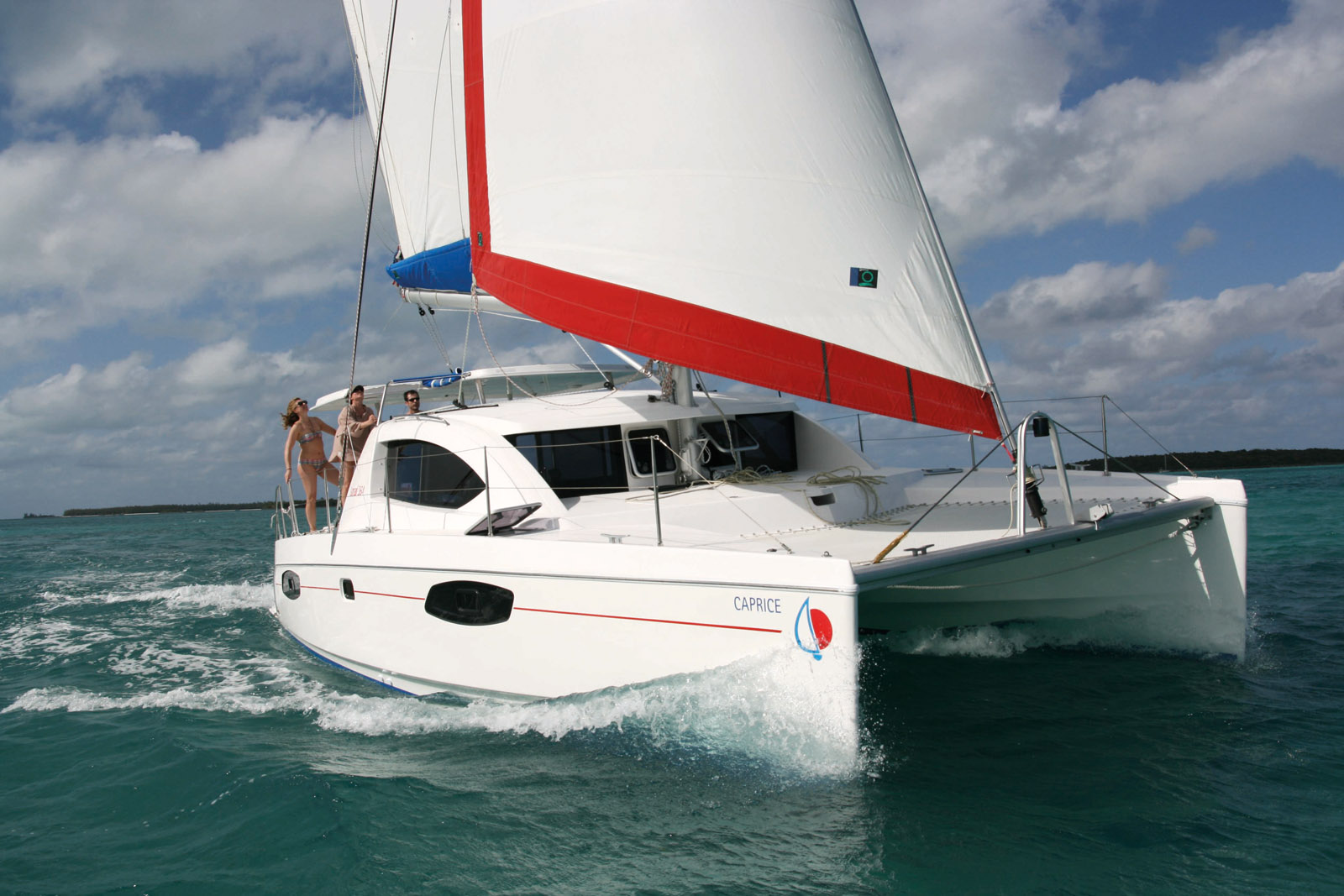
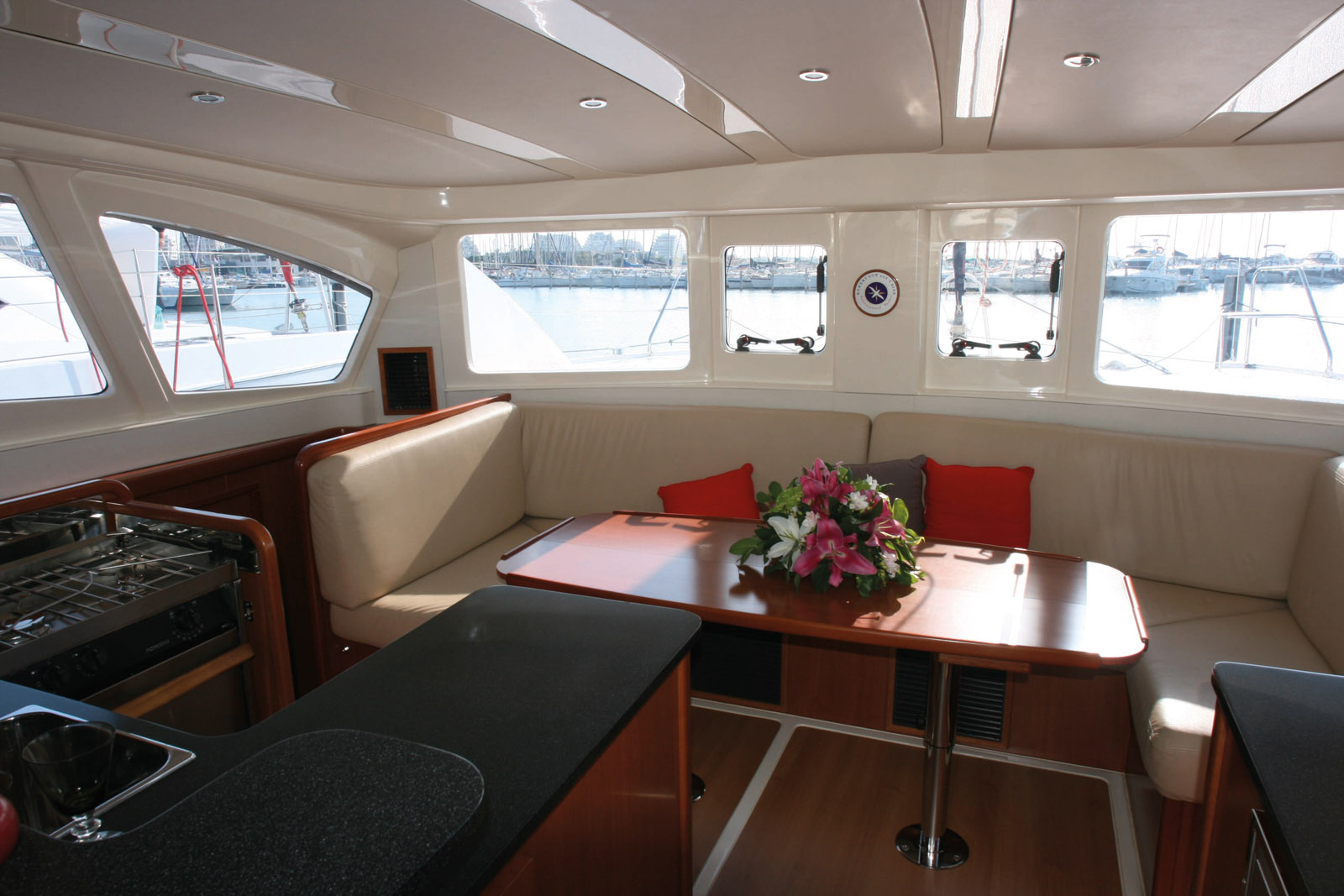
Leopard 38, Sunsail 384, Leopard 39, Moorings 3900... Four names for an almost identical catamaran: the last two - 126 examples built - are equipped with a polyester bimini as an extension of the coachroof, and a rigid cap over the helm station. On the 38 and 384 (produced in 2009 and 2010 in 69 examples), the bimini is slightly raised and the helmsman contends with a canvas protection. Another special feature: the Leopard, with its three cabins, is dedicated to owners, while the other two charter models are equipped with four cabins. Despite its (demanding) specifications imposed by Sunsail / The Moorings, the smallest of the Leopards manages to integrate a saloon, galley, (mini) chart table and three or four cabins - in less than 40 feet/12 meters of hull length. The only downside is the reduced floor space in the saloon. A pleasant surprise on the water: despite its 100% cruising orientation, the Leopard 39 performs honorably on all points of sail. Some figures? Our tester Philippe Echelle was tempted by a trip out in a good breeze: a 31-knot gust and a big wave propelled the catamaran to 17.6 knots! If the silhouette is heavy from the front and in profile, the rig is slender and the architects managed, thanks to the marked chines, to preserve a moderate waterline beam - a guarantee of good average speeds. From the helm station, which can accommodate two people, maneuvers are within easy reach. A solo sailor or a family crew will not feel overwhelmed by this machine. A good cruising catamaran, strong and well thought out.
Builder: Robertson & Caine
Architects: Morelli & Melvin
Material: balsa/glass sandwich
Hull length: 37’6” (11.43 m)
Waterline length: 36’1” (11 m)
Beam: 19’10” (6.04 m) - Draft: 3’5” (1.05 m)
Displacement: 20,075 lbs (9,105 kg)
Upwind sail area: 990 sq ft (92 m²)
Mainsail: 615 sq ft (57 m²)
Genoa: 375 sq ft (35 m²)
Gennaker: 1,010 sq ft (94 m²)
Engines 2 x 21 or 29 HP inboards
Secondhand price: $ 160,000 to 240,000 ex-tax
Production: 195 units built from 2009 to 2014
Quality/price ratio: ****
Availability on the market: ***
The plus: convincing performance in a breeze, very safe sailboat even in rough seas, well-finished to suit intensive use
The minus: reduced saloon floor space, a token chart table, not very elegant when viewed from the front
POINTS TO CHECK: Designed to withstand the harsh treatment of chartering - 150 to 200 days of sailing per year - the Leopard 39 has benefited from an “industrial process” from the outset in terms of plumbing, electrics, engines, etc. The peripherals are therefore resistant, just like the structure and rigging, which have been widely sampled. The isophthalic resin prevents any osmosis phenomena. The fact remains that a suit of sails that has endured four or five tropical seasons is cooked. As for the engines, very few boats have high numbers of operating hours: the first units have been sailing since 2009. A boat that has not been in charter will certainly be fresher, but also rarer on the second-hand market.
$ 200,000 - Dean 441 100% cruiser, 100% comfort Made for the toughest seas
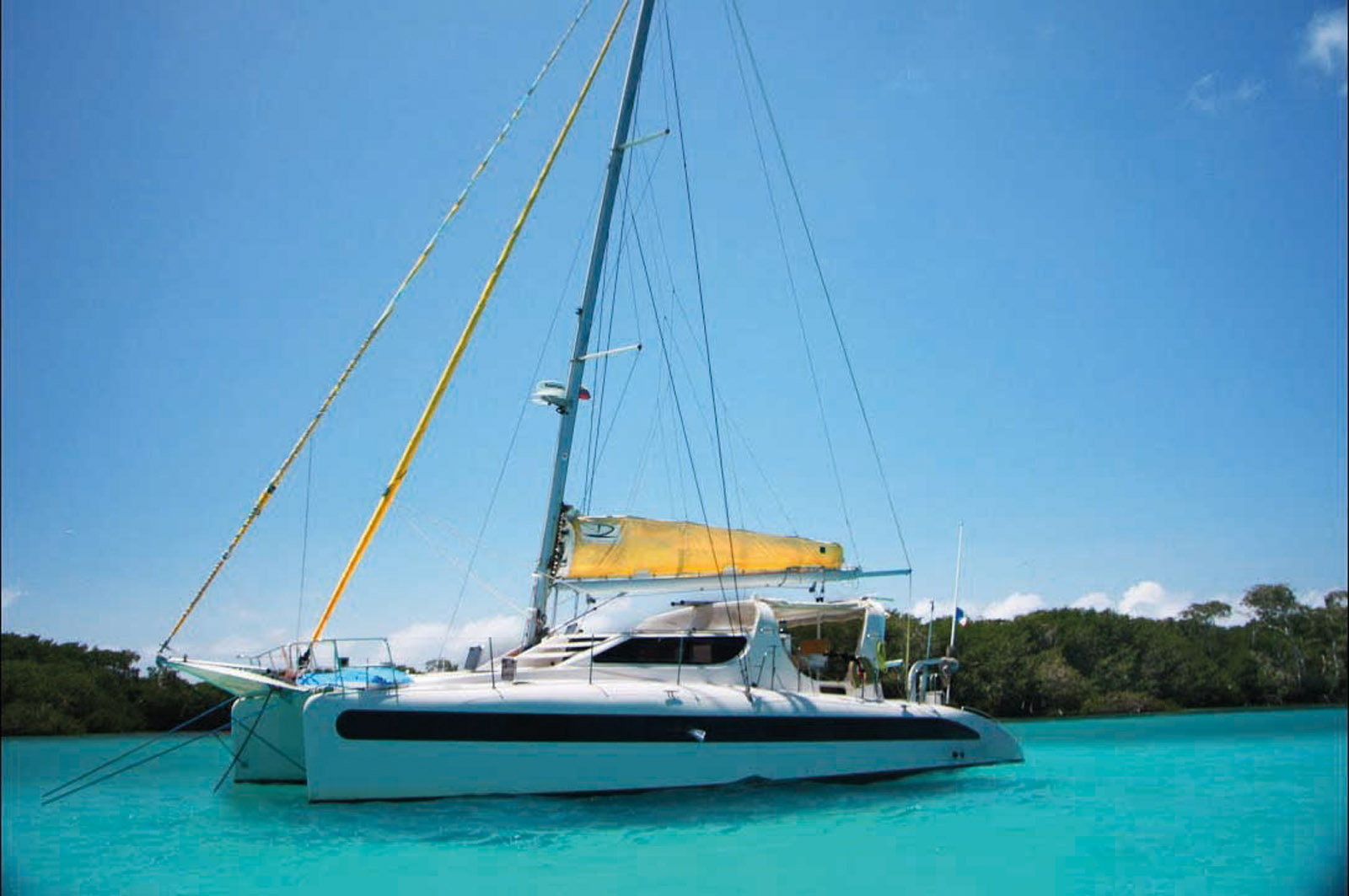
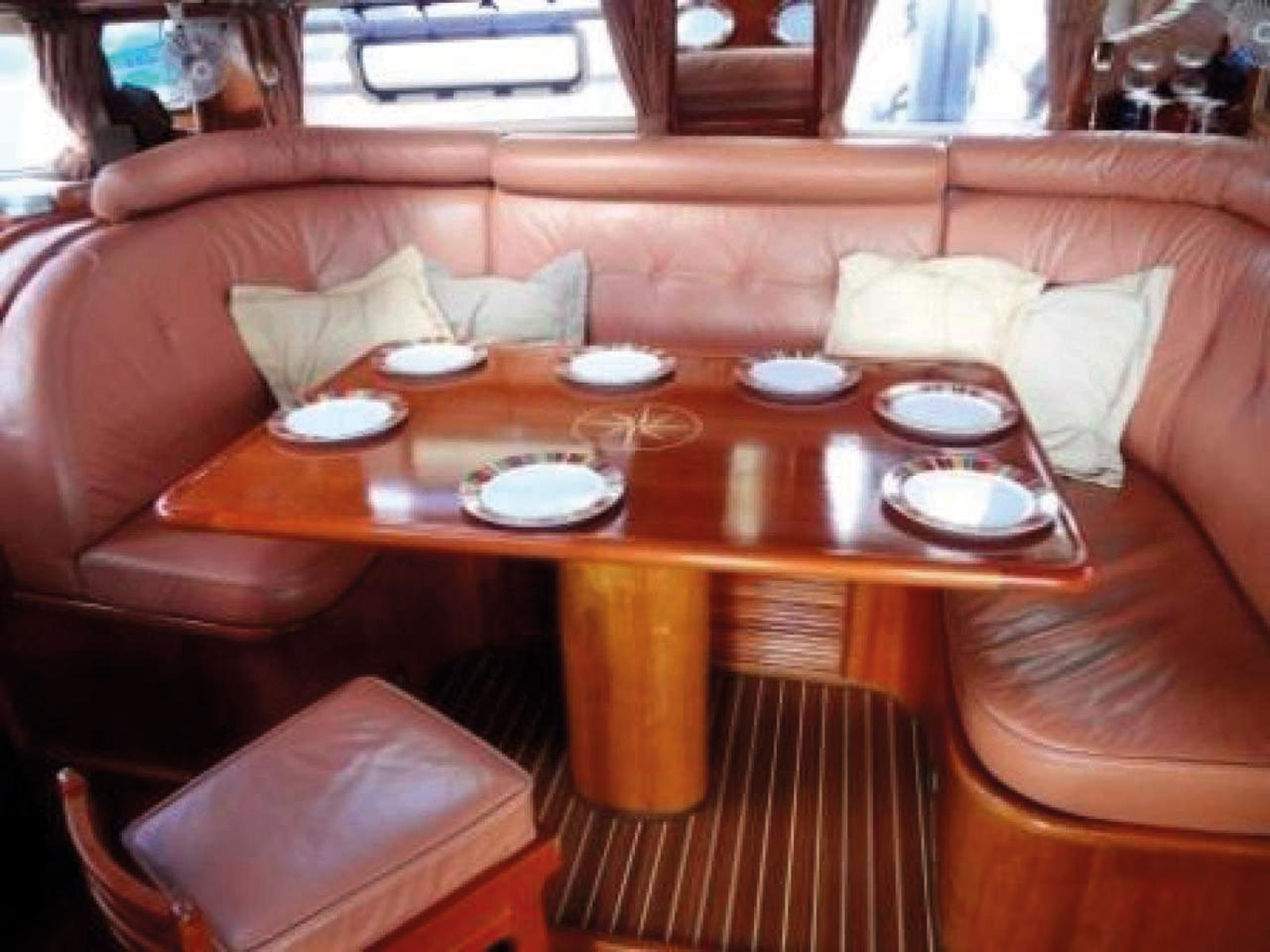
The Dean Catamarans shipyard, run by the Peter Dean father and son, no longer exists, which is a pity; their catamarans were indeed recognized for their exceptional seakeeping qualities. Not really surprising when you are based in South Africa, where sailing conditions can be very harsh. Like all the other models from the shipyard, the Dean 441 is therefore a tough nut to crack. With its nacelle bottom that extends far forward - reducing the trampoline to a small size - it has a large ski shape that delays any desire to plunge in the water. A concept that is still relevant today and even further developed by Bali Catamarans. In the same spirit, the bows become very wide at the top. The hulls are made of monolithic glass/epoxy for the underwater hull - 1/2” to 7/8” (12 to 22 mm) thick while the topsides are made of balsa sandwich – 1” (25 mm) thick. In short, this 441 is solidly built - even though the later models had a few issues. In terms of design, this Dean is recognizable from afar with the very pronounced inverted deck shear. On deck, the cockpit arch makes it easy to install a mixed bimini – rigid and fabric. Moving around is easy, even in bad weather. You’ll think the 441 is just a big breeze beast... and you won’t be completely wrong: the catamaran struggles to move below 10 knots of wind. Its laden displacement, in the order of 16 tons, associated with a modest sail plan explains this sluggishness. Inside, noble wood species and especially an astonishing range of accommodation were possible.
Builder: Dean Catamarans
Architect: Peter Dean
Material: Epoxy foam sandwich
Hull length: 43’8” (13.30 m)
Waterline length: 43’ (13.10 m)
Beam: 23’7” (7.20 m)
Draft: 3’7” (1.10 m)
Light displacement: 28,660 lbs (13 t)
Sail: 1,345 sq ft (125 m²)
Mainsail: 755 sq ft (70 m²)
Genoa: 590 sq ft (55 m²)
Engines: 2 x 42 HP diesel
Secondhand price: $ 200,000 to 260,000 ex-tax
Production: 61 units built from 2008 to 2010
Quality/price ratio: ***
Availability on the market: **
The plus: build quality, multiples layout versions available
The minus: rather under-canvased, not great in light airs; dark woodwork
POINTS TO CHECK: While the Deans are unanimously known for their robustness, structural defects have been noted on the later models built (n°41 and above). If you are interested in one of the models concerned, make sure that a thorough survey or even work has been undertaken - especially given that the shipyard closed in 2012.
$ 200,000 - Catana 401 A carbon mast on a production boat! / Test in MW52
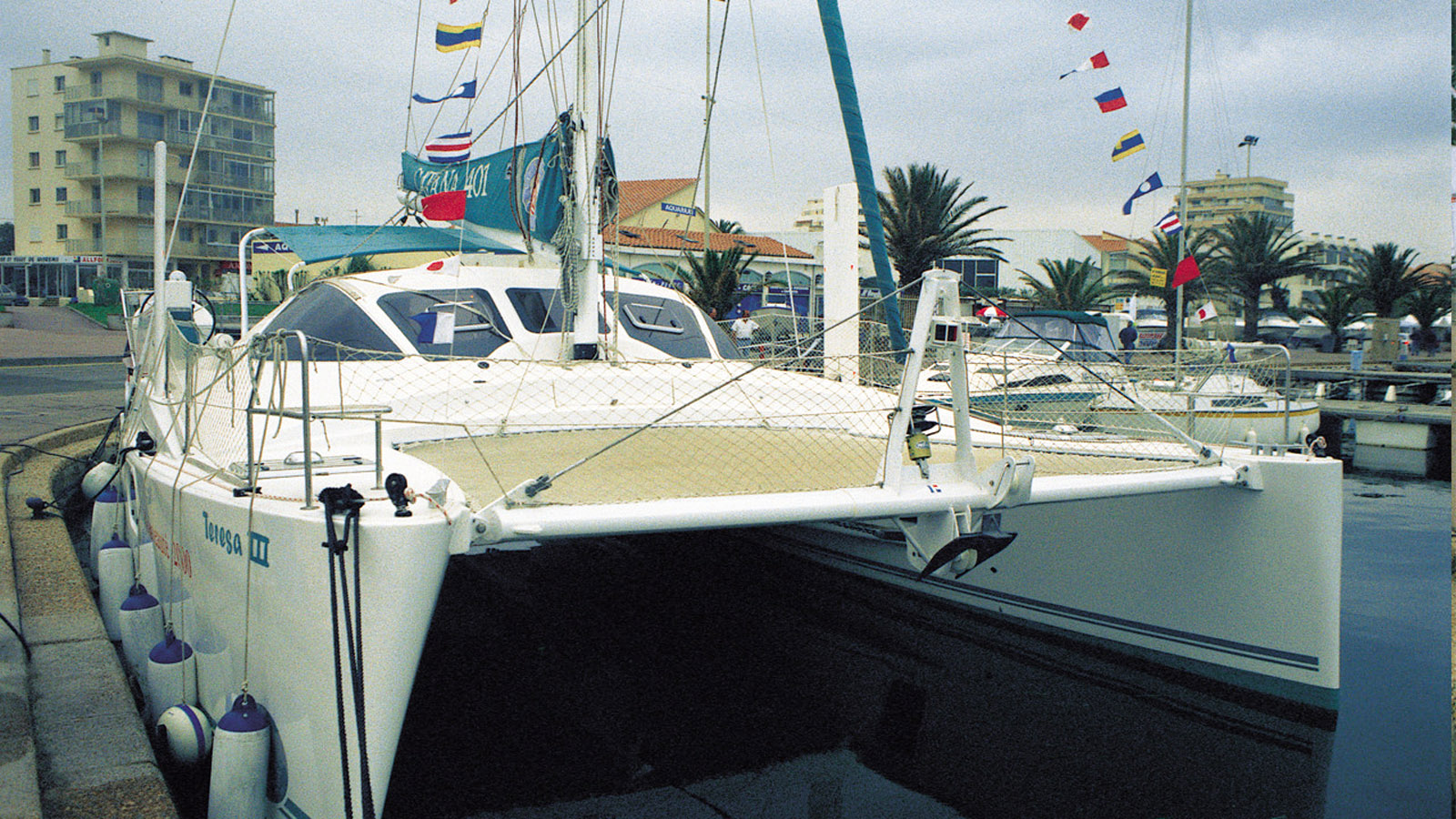
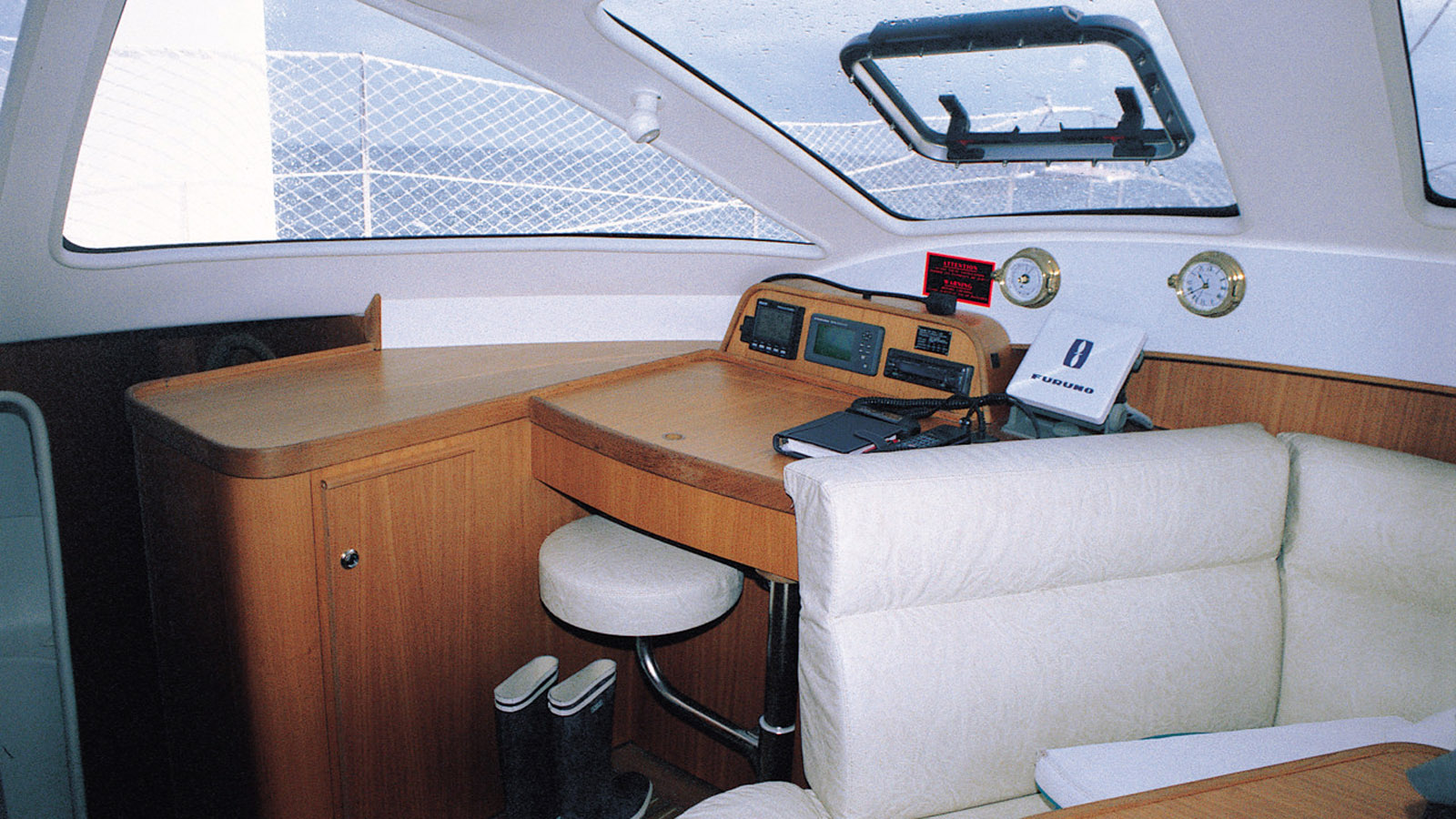
Launched in 1999, the Catana 401 replaced two models in the range, the 381 and the 411. But it borrowed the hulls of the former, lengthened by some 31” (80 cm). The brand’s reputation is well established in terms of performance, but compact models - and therefore more affordable - are rare. That’s why the 401 is so interesting. It is fast thanks to its narrow hulls, its daggerboards, its lightness and the power of its sail plan - bent on a carbon mast. During our test in strong winds, this Catana impressed us with its ease in rough seas and its average speed, close to 10 knots. The deck plan presents large, clear surfaces; the guardwires pinch in on the side-decks, so as to isolate the daggerboards. The deck fittings have been designed so that a solo sailor can handle the catamaran without difficulty. The only drawbacks are that the cockpit/deck passage could be improved above the watchkeeping seats and the access to the top of the coachroof is not that easy. In spite of its performance orientation, this Catana remains livable and comfortable - even if the volume offered by the nacelle is no match for that of a Lagoon of the same size and complicates access to the hulls. The hulls offer comfortable cabins. When new, the 401 was offered in 10 different layout versions at a rather high price compared to its direct competitors; now it is much more accessible!
Builder: Catana
Architect: Christophe Barreau
Material: foam/glass sandwich
Hull length: 41’ (12.5 m)
Waterline length: 39’4” (12 m)
Beam: 21’8” (6.60 m)
Draft: 2’4”/6’7” (0.70/2 m)
Light displacement: 20,450 lbs (9,275 kg)
Sail area: 1,0110 sq ft (94 m²)
Mainsail: 560 sq ft (52 m²)
Genoa: 450 sq ft (42 m²)
Engines: 2 x 30 or 40 HP diesel engines
Secondhand price: $ 200,000 to 260,000 ex-tax
Production: about 30 units built from 1999 to 2008
Quality/price ratio: ****
Availability on the market: **
The plus: robust and high-performance offshore catamaran
The minus: saloon glazing very exposed to the sun, access to the coachroof, cockpit/deck passage
POINTS TO CHECK: Sails, engines and peripherals deserve special attention, particularly if the catamaran has been operated for many years in charter. The carbon mast will also need to be carefully inspected. As for the structure, it was guaranteed for 10 years…
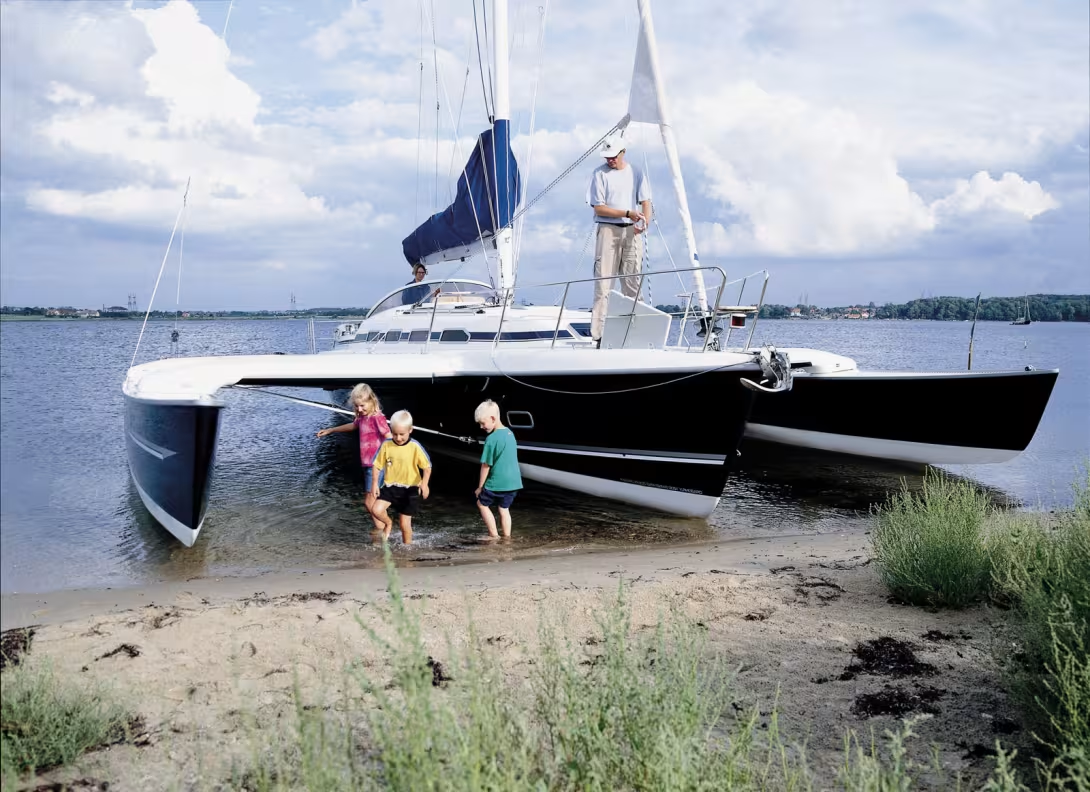
$ 200,000 - Dragonfly 1200 Ocean Cruiser A carbon mast on a production boat! A trimaran with an aft cabin / Test in MW54
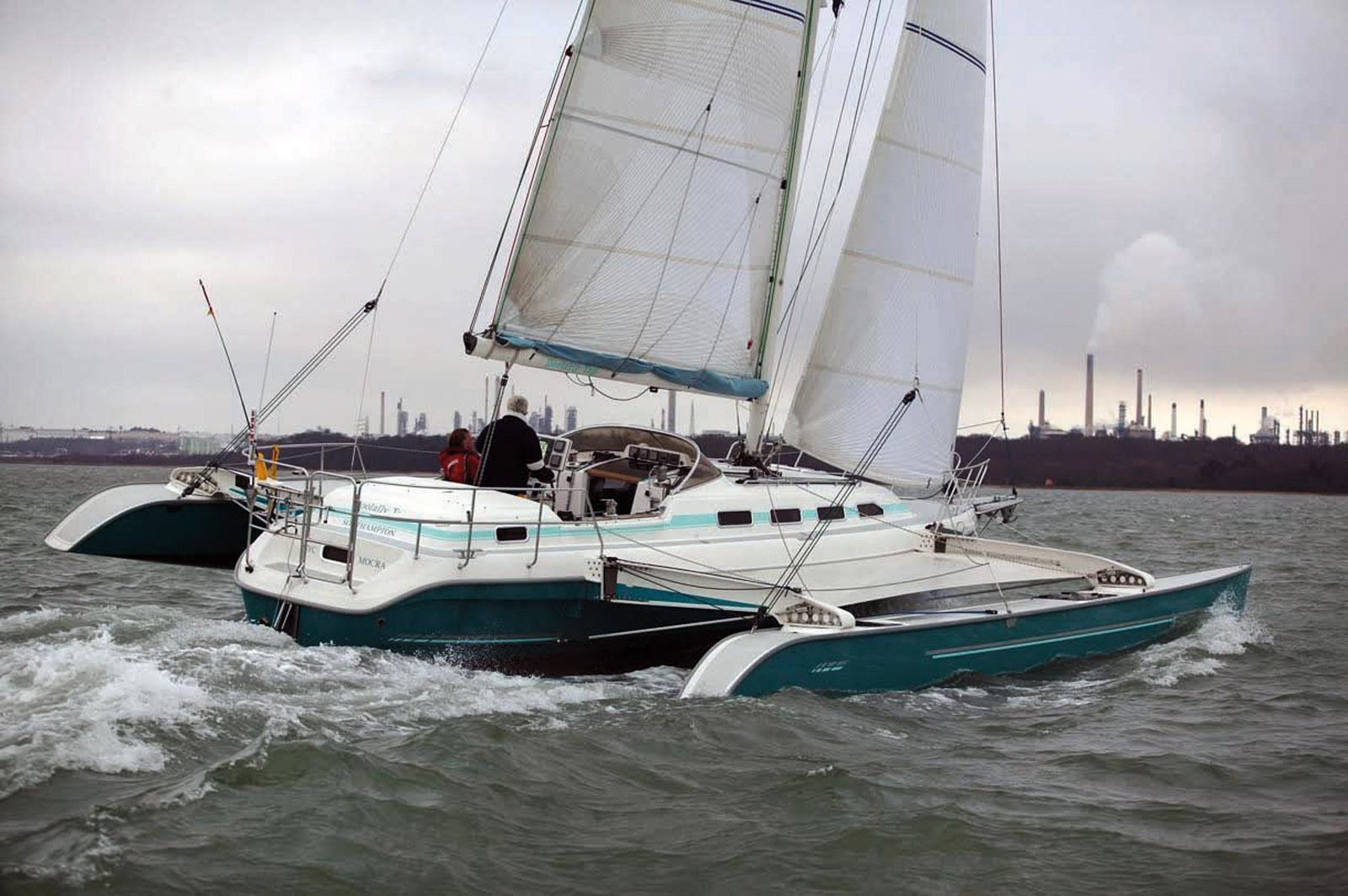
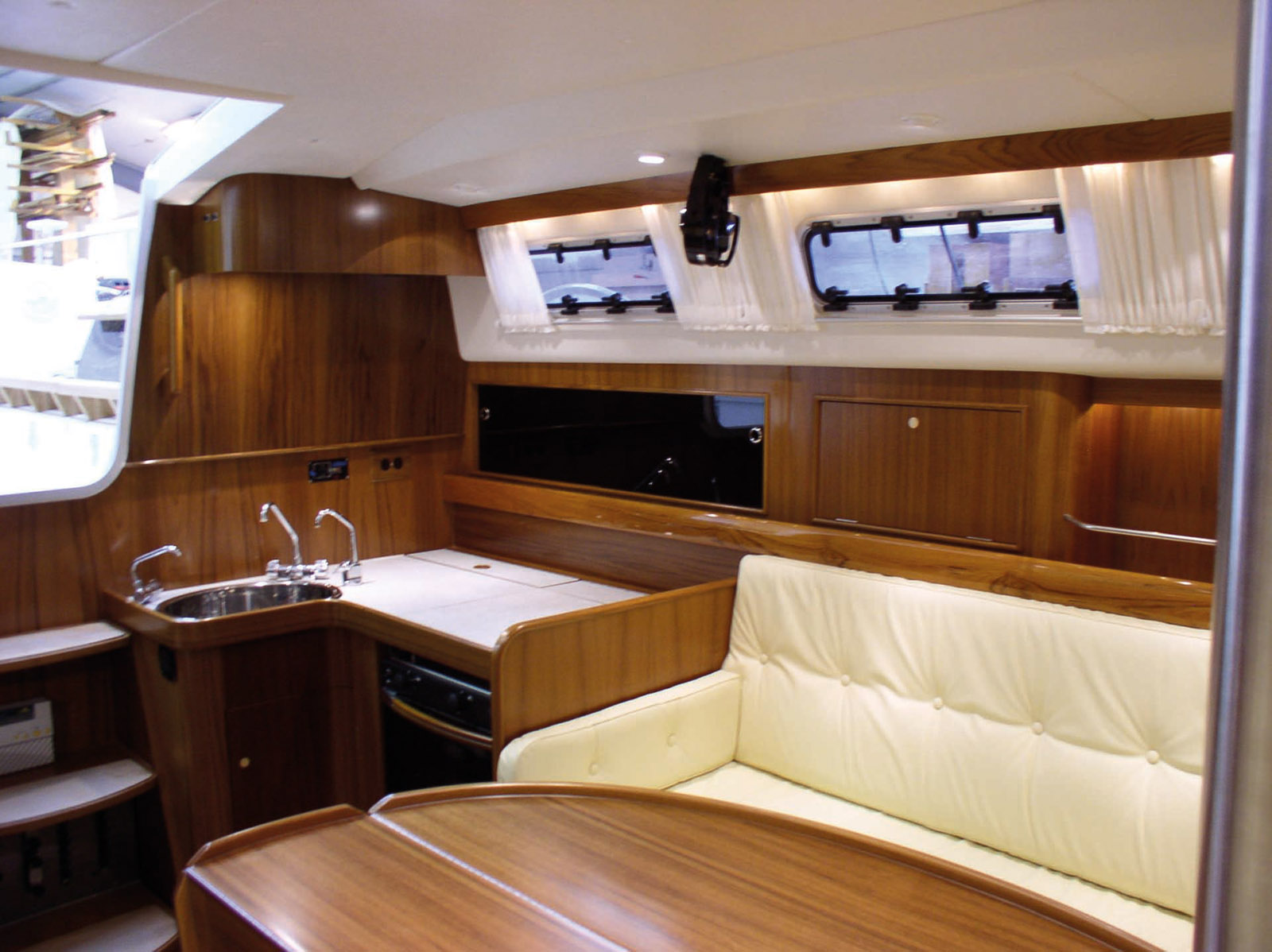
Launched in 2000, the 1200 is the flagship of the Dragonfly range of folding trimarans. Its name OC - Ocean Cruiser - underlines its long-distance capabilities. More comfortable than the Corsair 36/37, it is also almost twice the weight - but with significantly more canvas. Thanks to its electrically folding arms, its beam reduces from 28’2” (8.6 m) when sailing to 14’1” (4.3 m) when safely moored in port. A width comparable to that of a modern 46-foot (14-metre) monohull and therefore the means to reduce the mooring bill. Why 46 feet and not 40? When folded up, the trimaran lengthens by 6’4” (1.94 m) because the arms move backwards. The famous Swing Wing process is so well-proven that it takes only 30 seconds per float... And with a sail area/weight ratio of 16.67 m²)/t where most 40-foot catamarans barely reach 10, the 1200 is fast on the water. It will tack through an angle of only 85°. By pushing it under spinnaker with 28 knots of wind on flat seas, we managed to reach 20 knots during our test sail in Denmark. The deck plan offers a central cockpit and limited deck space. The deck fittings and maneuvers may seem sophisticated but are well suited to short-handed crews. Inside, the manufacturer offers two distinct volumes thanks to an independent aft cabin.
Builder: Quorning Boats
Architects: Børge and Jens Quorning
Material: foam/polyester sandwich
Hull length: 39’3”/45’7” (11.96/13.90 m)
Waterline length: 36’9” (11.20 m)
Beam: 14’1”/28’2” (4.3/8.6 m)
Draft: 2’6”/6’7” (0.75/2 m)
Light displacement: 12,570 lbs (5.7 t)
Sail area: 1,025 sq ft (95 m²)
Mainsail: 645 sq ft (60 m²)
Genoa: 375 sq ft (35 m²)
Engine: 50 or 78 HP diesel
Secondhand price: $ 200,000 to 240,000 ex-tax
Production: 18 units built from 2000 to 2007
Quality/price ratio: *****
Availability on the market: *
Le plus : Trimaran réellement conçu pour la navigation hauturière, performances flatteuses, qualité de construction et de finition – mât carbone
Le moins : Longueur augmentée de 2 m quand les flotteurs sont repliés, étroitesse des passavants, volume habitable limité
POINTS TO CHECK: The quality of construction from the Danish shipyard is not to be underestimated - little concern about the ageing of this model, especially as this three-hulled limousine is usually well maintained and generously equipped.
