

THE WIZARD OF MASSACHUSETTS
Richard Newick (1926-2013), better known as Dick, was one of the most talented multihull architects of the latter half of the twentieth century. Dick was paddling on European rivers from just after the end of the Second World War, gaining a perfect knowledge of kayaking, and therefore of gliding through the water. But he had other sources of inspiration: Polynesian maritime heritage, being one. Dick metabolized and fixed for eternity the DNA of a lucent feature of the marine landscape: the Newick trimaran! Dick sometimes confided that Walter Greene and Damian McLaughlin were the best interpreters of his creations – and he knew what he was talking about! The attitude of these two boatbuilders somewhat shook up the image perceived in Europe of an agitated, globalized, over-urbanized, industrial America, overrun by disturbance and engaged in a headlong rush. Their creative approach, like their philosophy, was that of artisan-artists who practiced that art in workshops on a human scale, between forest and sea - Massachusetts and Maine. The West (epoxy-saturated wood) System construction method developed by Meade and Jan Gougeon was an ingenious invention that made it possible to build stiff, light and durable multihulls. Dick Newick’s creative abundance was just waiting for this technique to fully express itself: wood/epoxy/glass is 80% vegetable matter and 20% glue and cloth: a true avant-garde material!
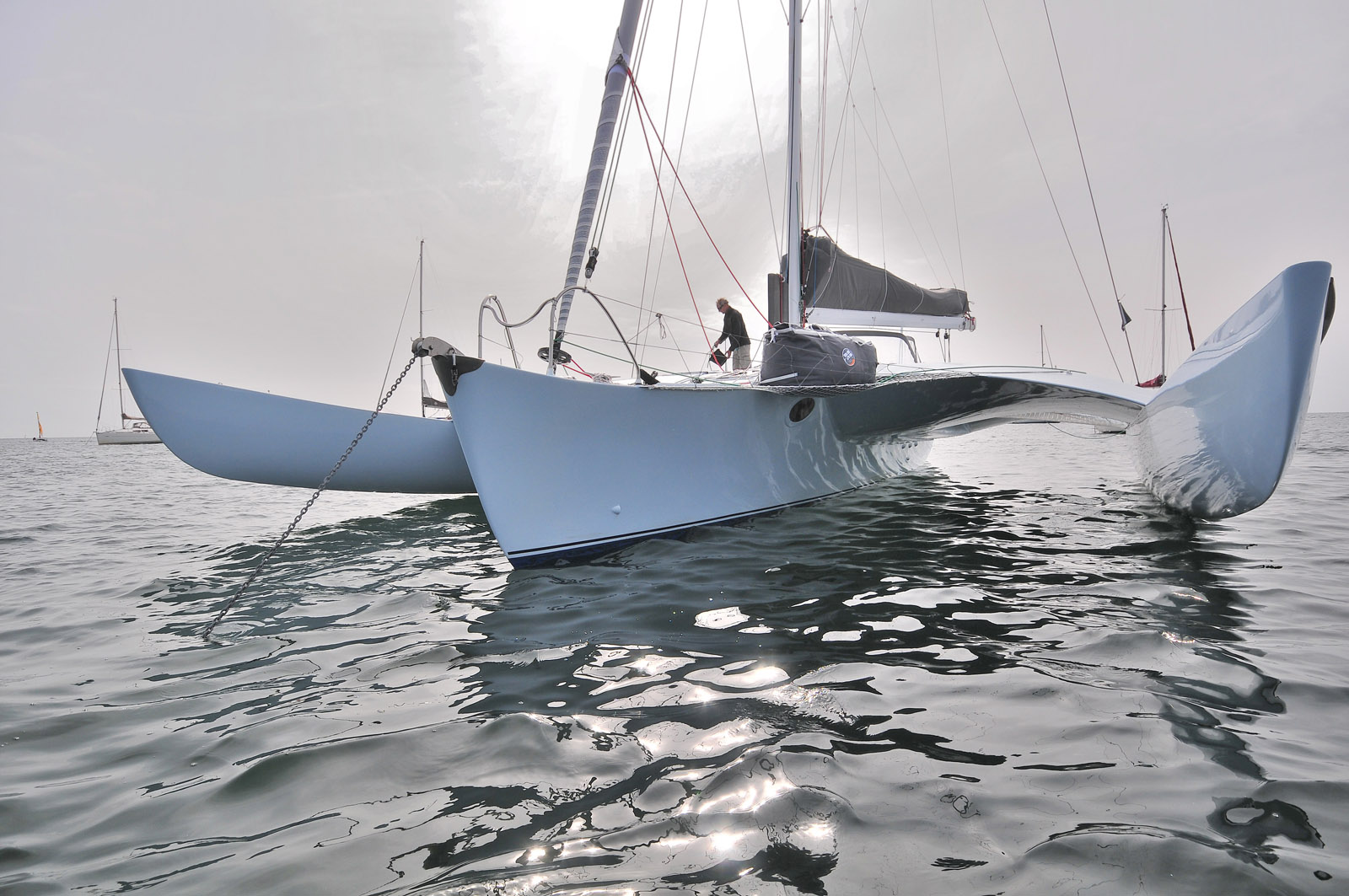
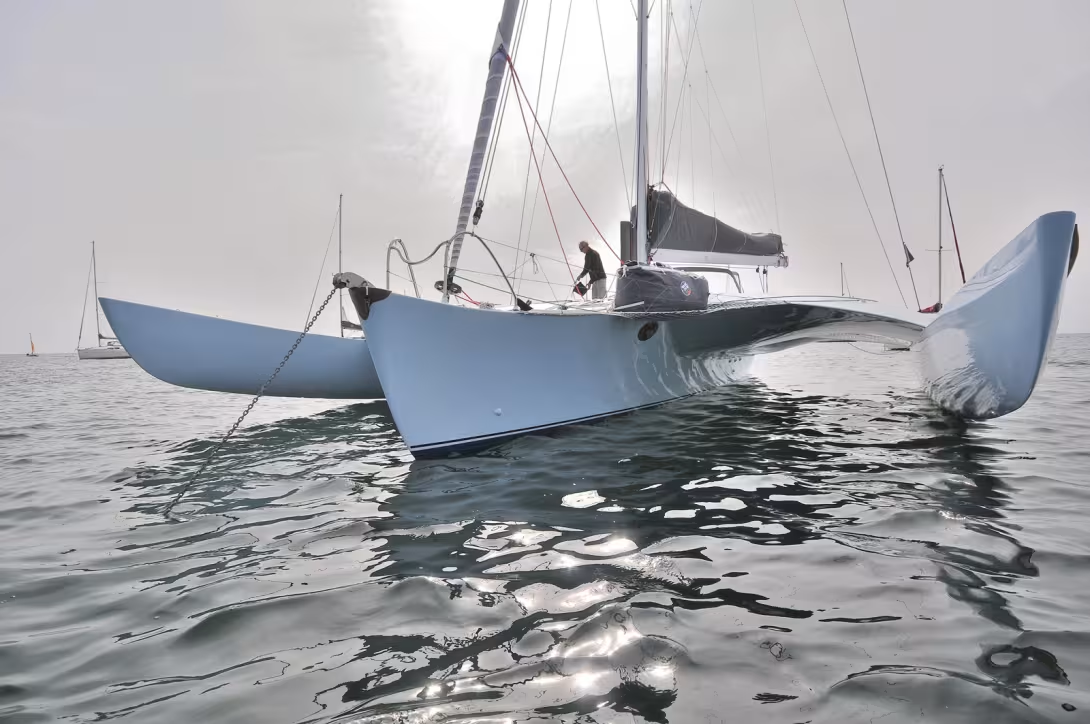
Rusty Pelican at anchor off the island of Houat, in southern Brittany.
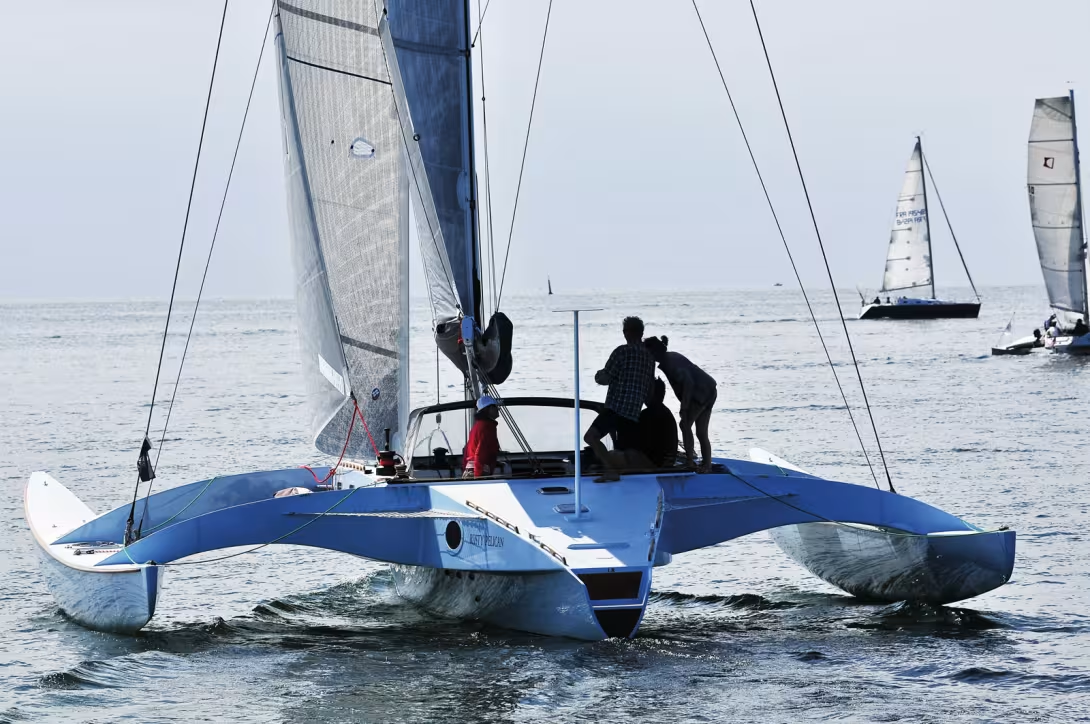
Is it really necessary to highlight the elegance of the lines imagined by the famous Dick Newick?
RUSTY PELICAN, THE HEIR TO THREE CHEERS!
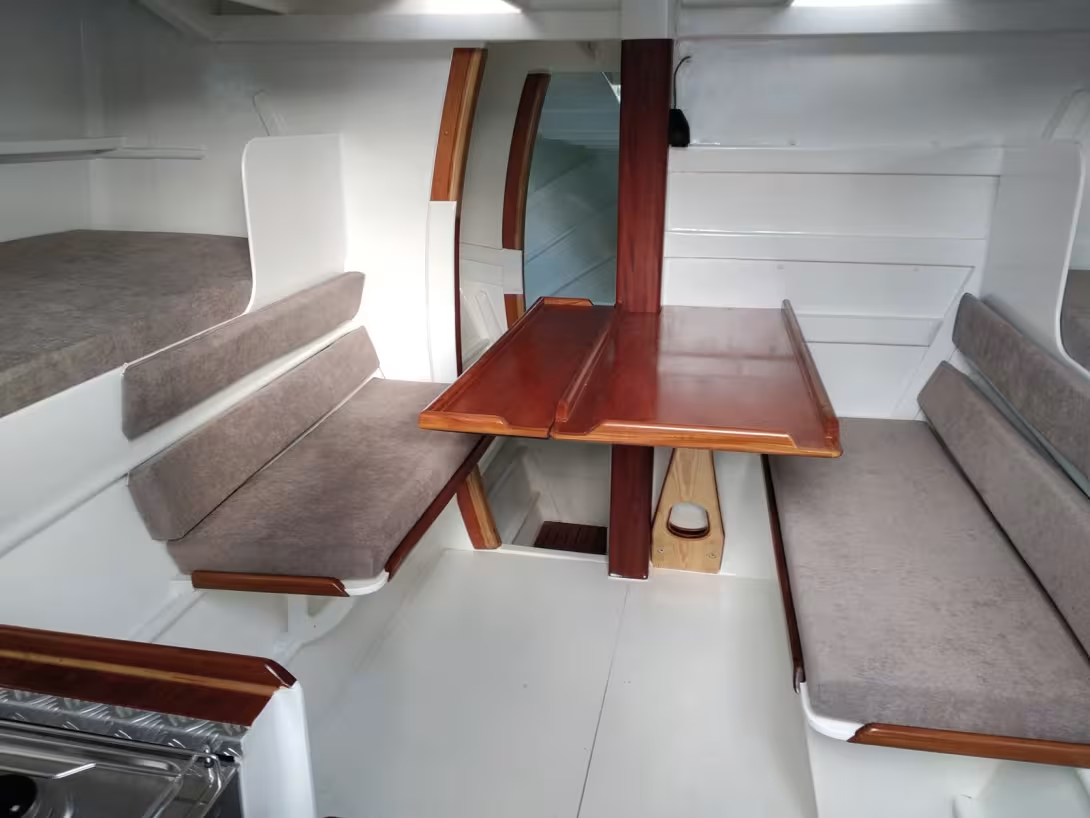
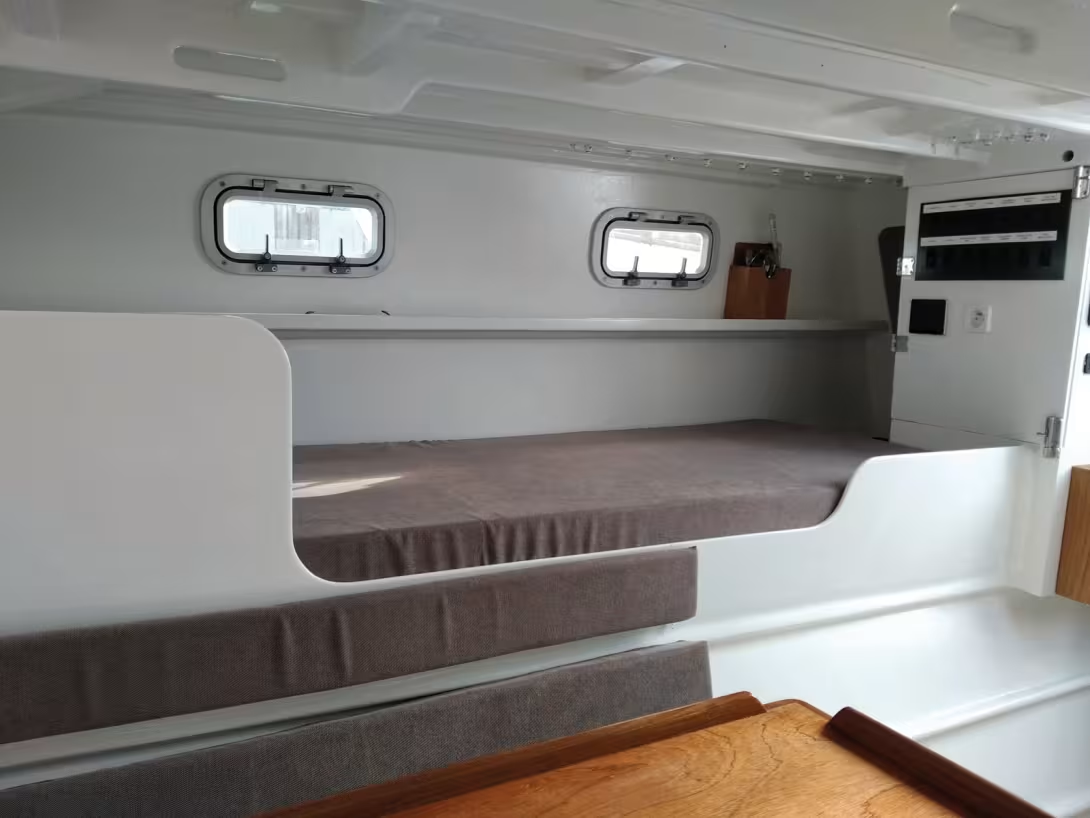
For the 1972 Transat, Tom Follet, the skipper who had miraculously finished 3rd in the previous edition in 1968 with his proa Cheers - a real ‘enfant terrible’ - had Dick Newick design a magnificent, comfortable and robust trimaran. He was to finish 5th in the race, in 27 days. The trimaran, rigged as a ketch, was bought by Mike McMullen for his disastrous 1976 Ostar: his wife Lizzie was tragically electrocuted during the preparation stages in the yard, and the skipper later disappeared in the North Atlantic. Dick revived the soul of this visionary design in different interpretations: the three Mk 3 Cheers (Fleury Michon 4, Bonifacio, and Lejaby Rasurel) and the modified Mk 4: and this is where we find Rusty Pelican. At 46 feet, this trimaran was able to dispense with some of the volume in the wings, while remaining welcoming and comfortable. The double arms allowed extra power for a more “racing” use than the famous Native and Creative wings. The rigorous respect of the weight specifications by the builder McLaughlin allowed Rusty to express her full potential while providing real comfort at sea, with a beautiful double, or four-single aft cabin as today, a generous cockpit, a real saloon, lateral berths and a forward cabin with a shower/WC. By Dick’s standards, this 46-foot boat is almost a palace. Nearly 40 years after her construction, she is even more so with her purring diesel - the architect showed the greatest mistrust for anything that came close to an engine. Count Luigi Cossato was the first owner of Rusty; he raced in the Mediterranean for several years. The trimaran was later to be found painted in yellow, at anchor off the Bakoua Hotel in Martinique. There, with Christian Birmens, the multihull allowed hundreds of tourists and fans to discover fast sailing. Thierry Normand bought her in 2005 under the name of Tyrus Campelli and kept her until she was sold on to Koen Joustra in 2015.
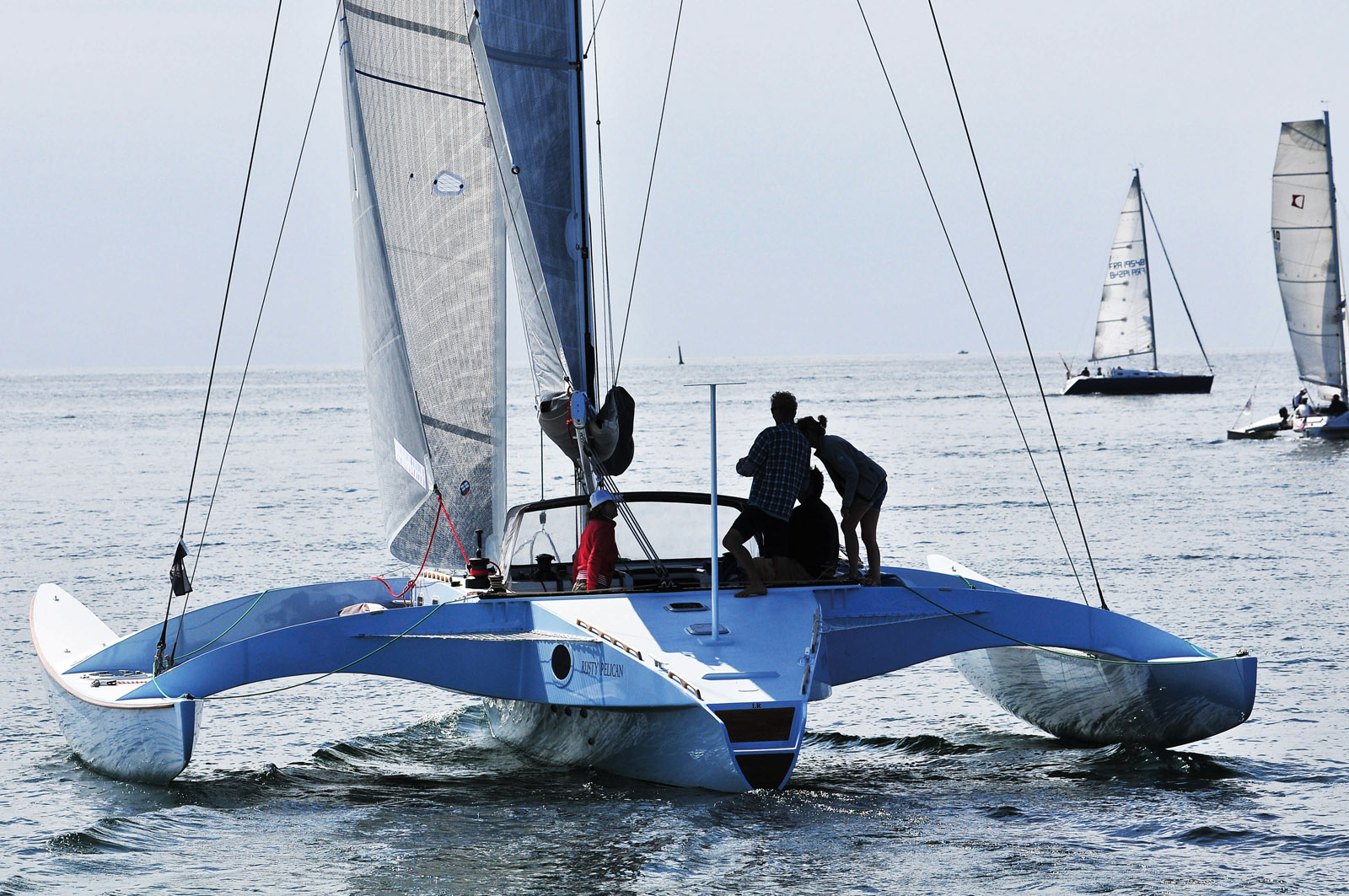
The stern of the trimaran was slightly lengthened during this complete reconstruction.
QUICK TRIPS IN THE MEDITERRANEAN
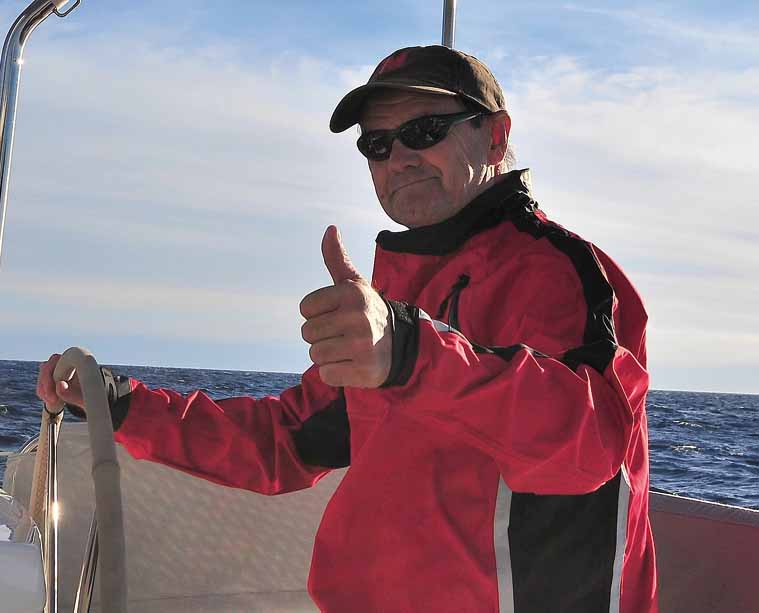
Born in Spain, the new owner studied naval architecture and did a lot of sailing, before becoming interested in business: “Sailing on my own Newick trimaran is a childhood dream,” explained Koen, “From the age of 14 or 15, I started becoming interested in these graceful and fast boats. I’ve sailed on various multihulls - including an Atlantic crossing, racing on Travacrest Seaways, crewing on Paca, etc. I’ve also sailed on a number of other multihulls. But the feeling of sailing on my own Newick trimaran is pure joy. I think we’ve optimized performance under sail as much as possible even with a fairly complete layout for a classic trimaran. The well-centered weights and the significantly lighter rig provide very smooth movement. With little wind, Rusty lengthens her stride and the helm remains very delicate, and course-keeping upwind is surprising for a multihull (age here is not a handicap). For me, this trimaran represents the ideal compromise between aesthetics, speed, pedigree and habitability. Her beam has been a handicap in finding a berth, but under sail and at anchor, she makes a magnificent platform on which to live. The idea is to make quick trips in the Mediterranean (the Iles d’Hyères, the ‘calanques’ of Cassis, Corsica, Sardinia, probably Greece, and of course the Golden Oldies gatherings). I don’t talk about budget: the restoration collection cost much more than initially planned - the amount corresponded in the end to the budget of a new Neel 45 before tax, and without options."
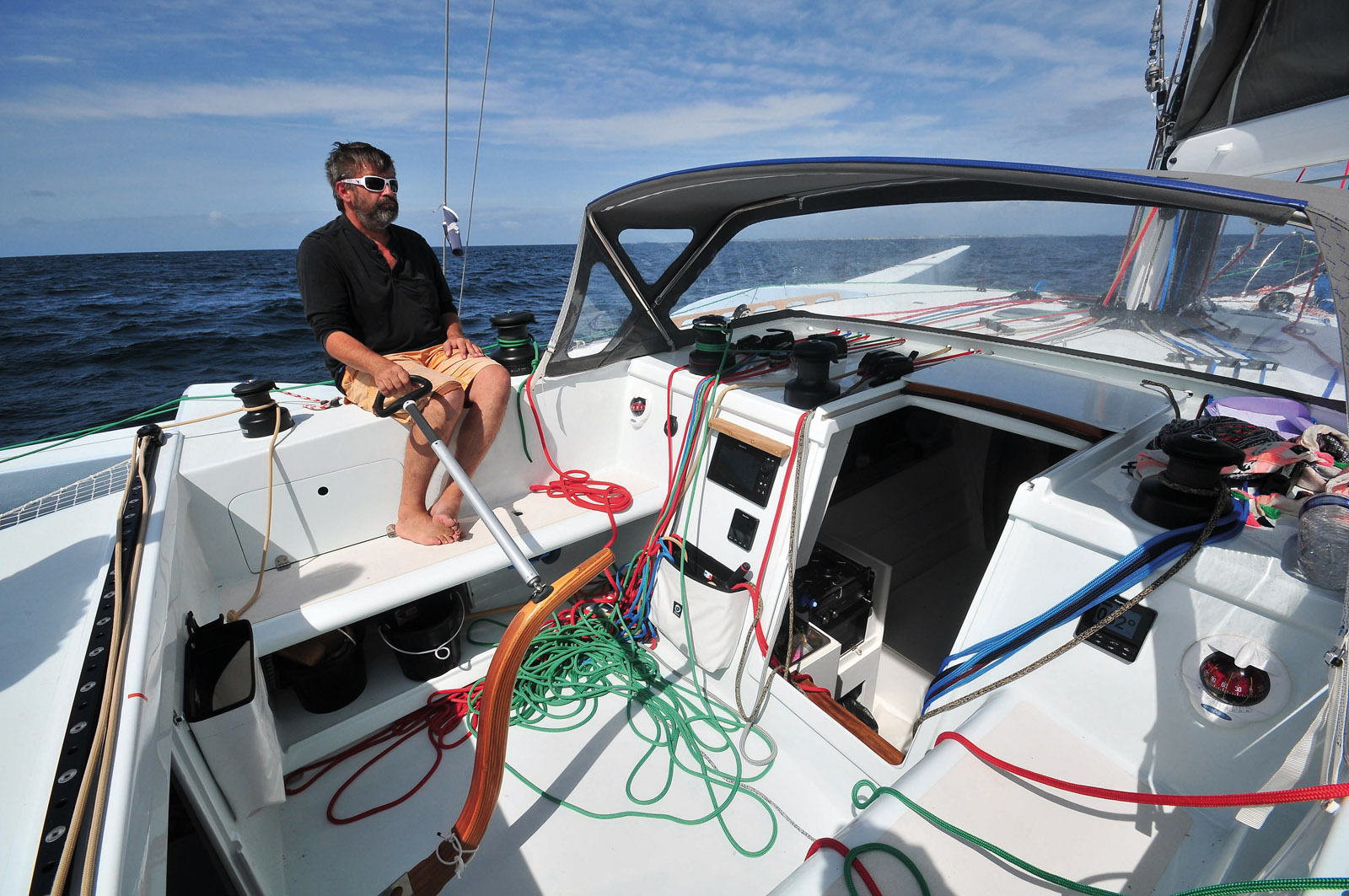
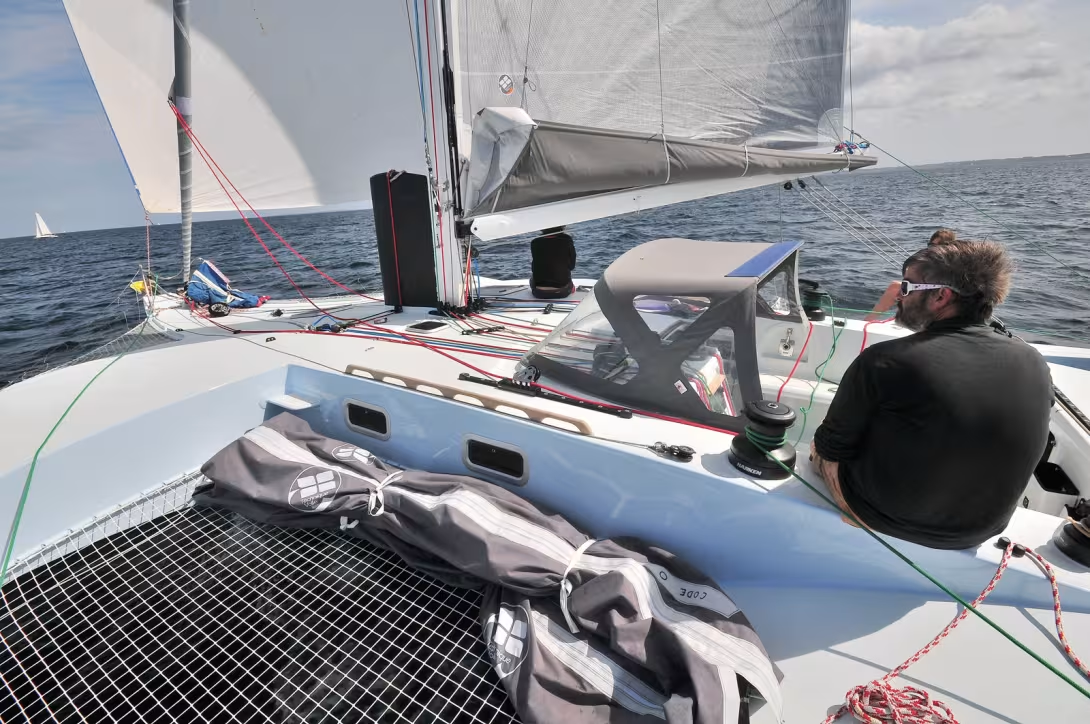
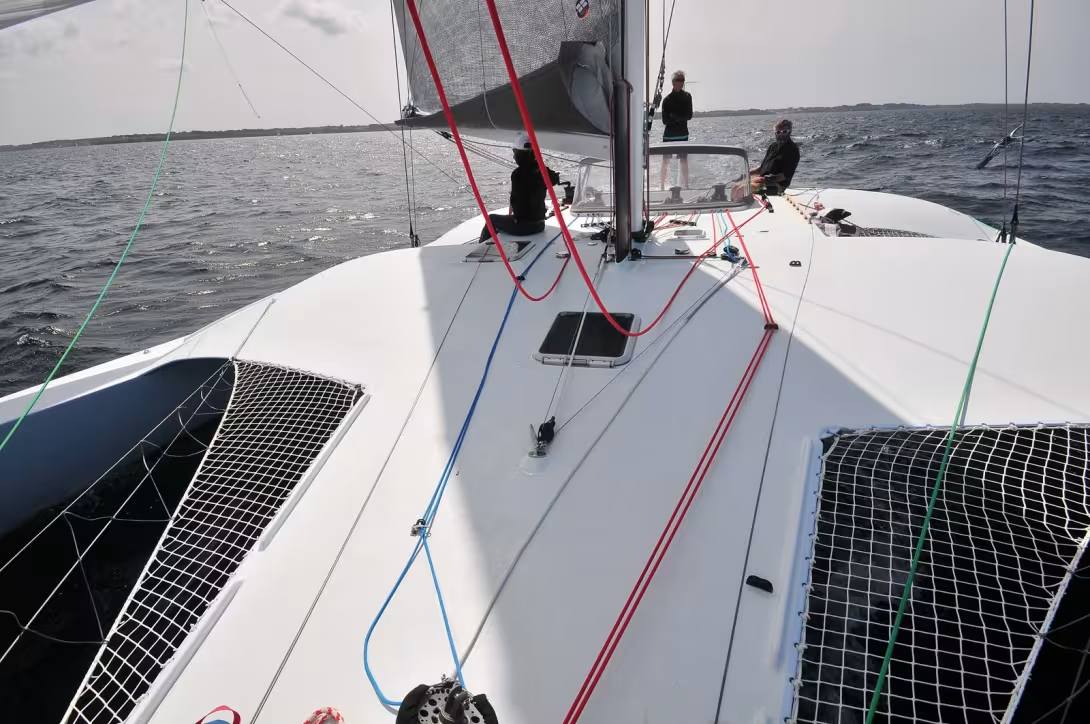
The optimized deck hardware allows you to get the most out of the boat in all wind conditions.
PHILIPPE, A PROFESSIONAL IN WOOD COMPOSITES
Reviving a classic trimaran is far from a trivial matter. Fortunately, there are some specialists capable of it, such as Philippe Godefroy. Based near Lorient, in Brittany, this wood composite pro knows how to put together a team for a demanding project and never give up. “In 2015, I was contacted by the Multiplast yard for a refit of Happy, Loïck Peyron’s A Capella. The refit only lasted five months, but I had a revelation: I fell in love with these pioneering multihulls! I was planning to rebuild an A Capella and I researched the two American gurus (Newick and Greene). I talked about it with Jack Michal, my naval architect friend who works at Multiplast. Jack is a mine of information on ocean racing. We met in England in Southampton in 1987, with other French, Italian, Belgian, Argentinean and Dutch students, including Koen Joustra, the current owner of Rusty Pelican. Jack had finished his studies in naval architecture, and we left for Bristol to build a 60-foot trimaran, Spirit of Apricot. The wooden preform, the polyester molds, then the vacuum laminated carbon hulls: that’s where I learned my trade! Until 1992, we stayed in England building boats, then Jack and Koen left to go their own ways. After the Happy rebuild, Jack told me that Koen was looking for a boat - I hadn’t seen him since 1991. Koen phoned me to tell me that he had chosen Drabenec, ex-Rusty Pelican. We exchanged views with the Golden Oldies association and visited Alain Borsotti at his shipyard in Sète, in the South of France - Alain is the restorer of the Newick 44, ex-Fleury Michon IV - to understand what was in store for us. The association brings together former racing multihulls; they are enthusiasts who sail and save these legends of the seas. Koen is also extremely knowledgeable about these boats; for example, in 1988 he delivered Gordano Goose, the first trimaran designed and built by Nigel Irens from Newport, back to Europe with Jack.”
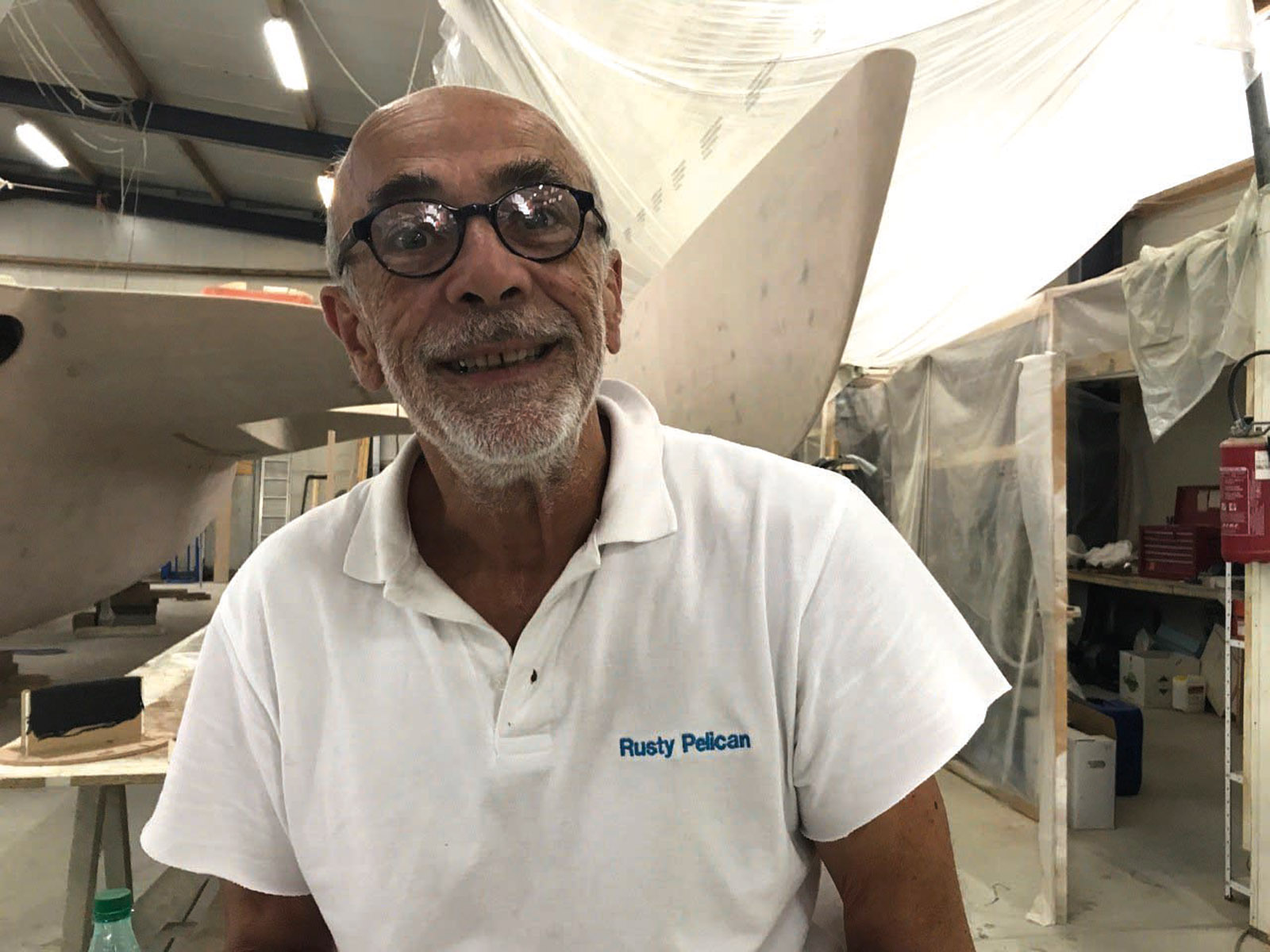
“FRAMES, DECKBEAMS AND KEEL THUS REMAINED VISIBLE. I’M PRETTY HAPPY WITH THE RESULT, BUT THERE WERE MANY HOURS SPENT IN UNCOMFORTABLE POSITIONS WITH THE NOISE OF POWERTOOLS AND VACUUM CLEANERS!”
Philippe Godefroy, shipyard manager.
AN IN-DEPTH RECONSTRUCTION
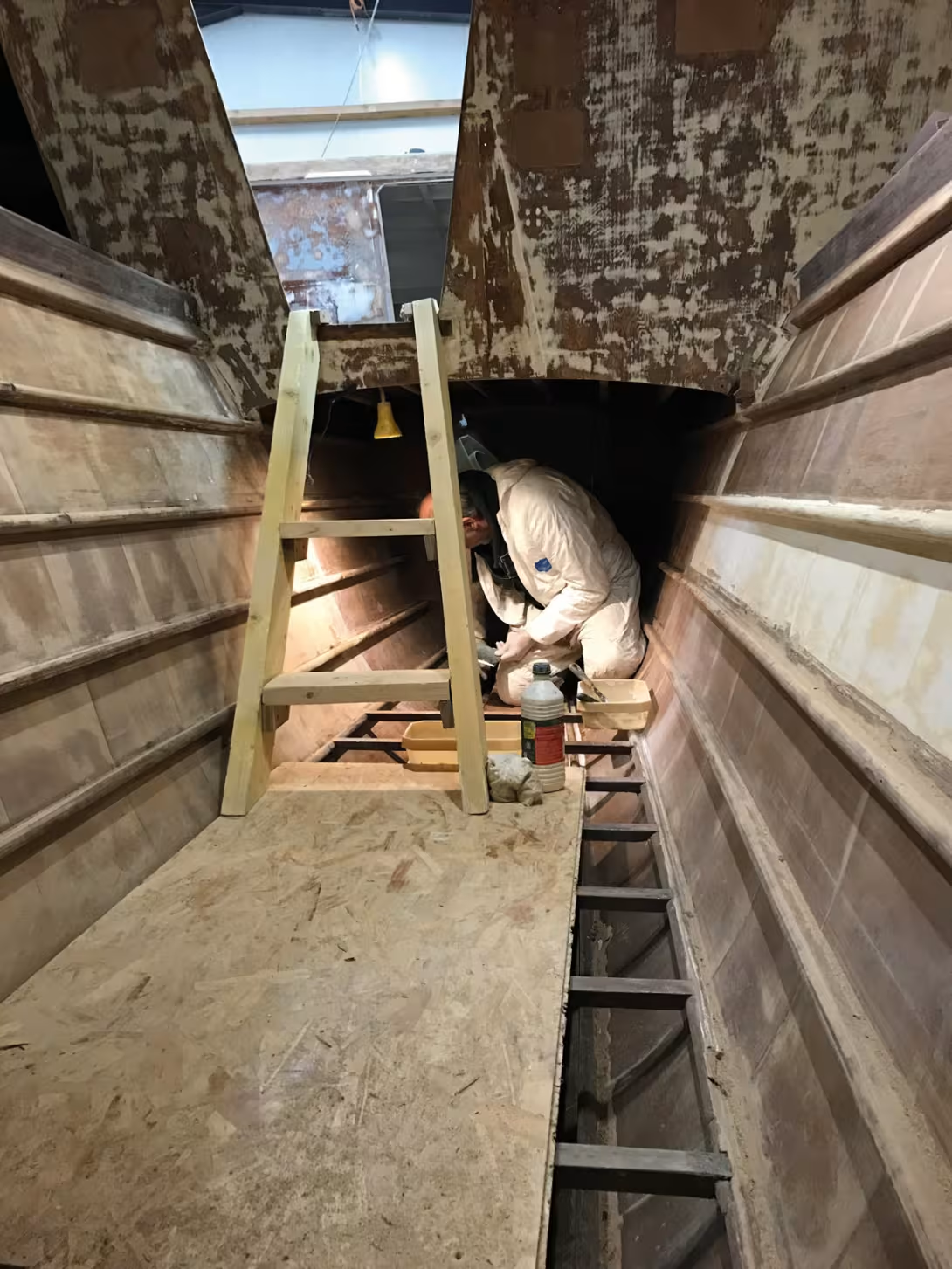
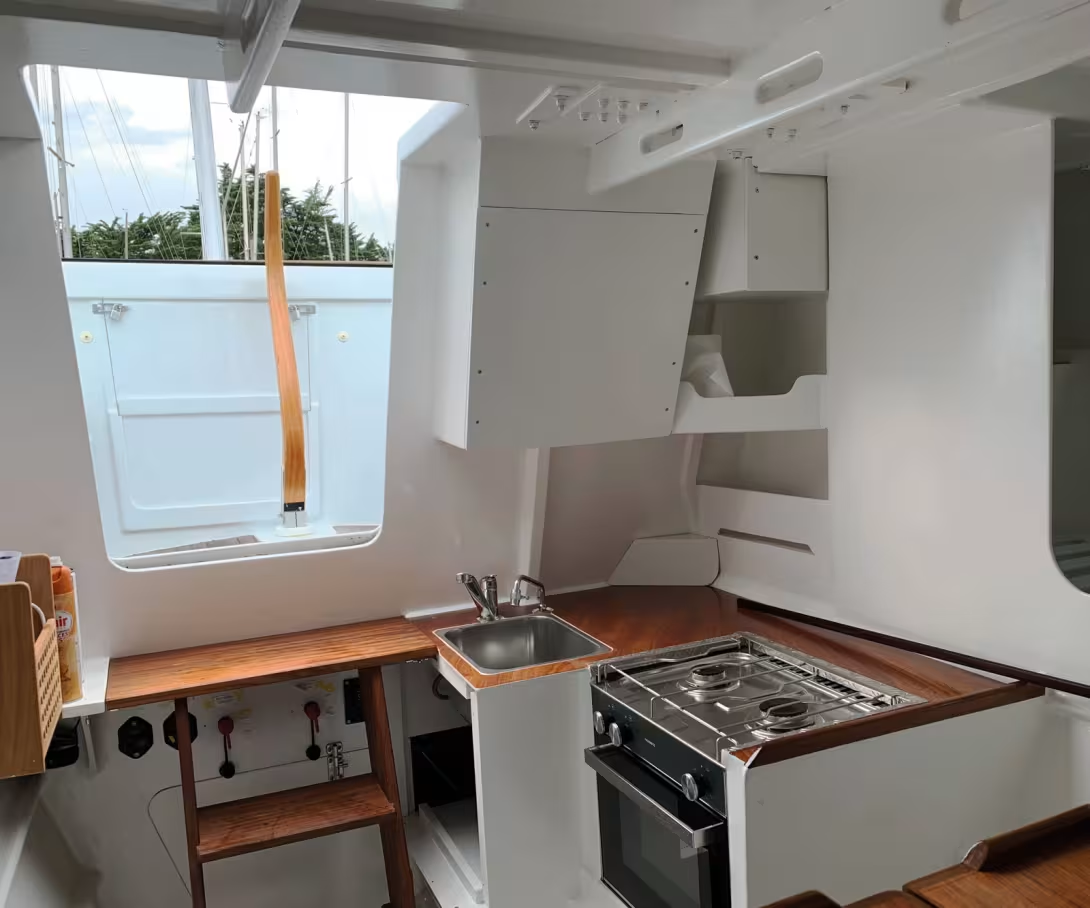
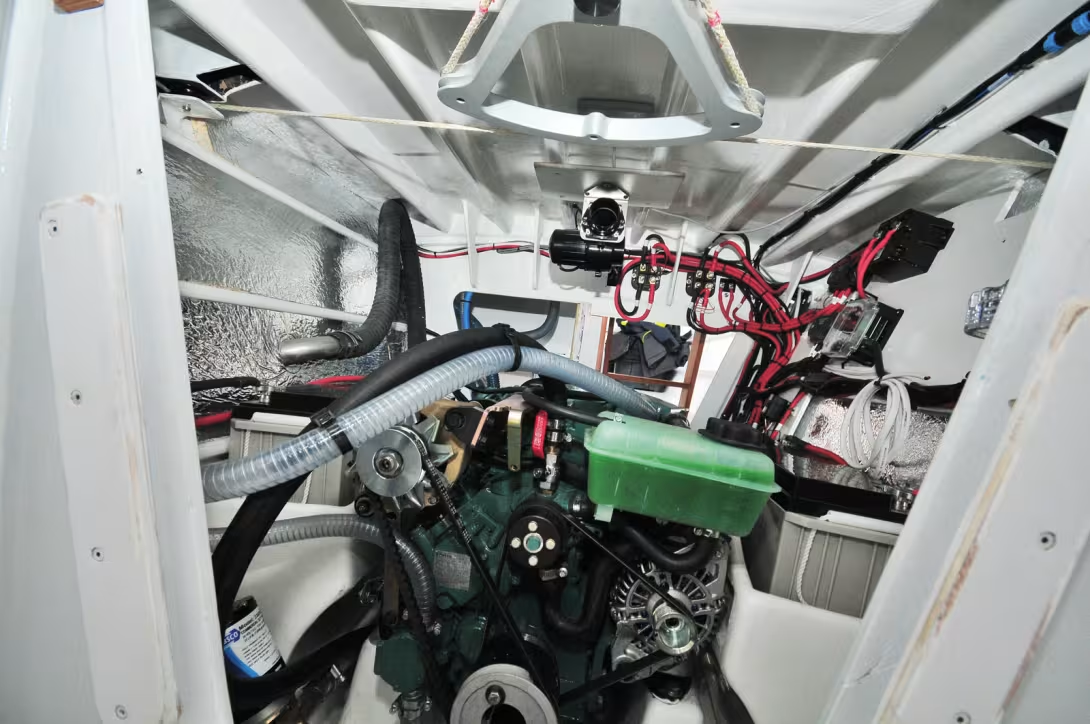
In January 2016, with the help of his small starting team, Philippe completely emptied, washed and rinsed out the inside of the trimaran, then dismantled the deck fittings. Koen wanted above all to simplify and lighten his trimaran. There was a crack in the starboard aft arm and the float decks had become flexible - the four years spent out of the water in Vannes, Brittany, had led to the multihull deteriorating. To inspect the structure in depth, Phillipe cut out the galley and the saloon - rainwater had seeped in everywhere - then the starboard daggerboard well, the starboard hull/ arm connection, the aft beams, the floats and finally the transom. “The backstay chainplate was bolted to rotten wood,” recalls Philippe. “I had offered Koen an initial estimate, but, given the scope of the work, Koen asked me to rebuild the boat as new, and he promised me that he would go all the way. We entered the hangar in March 2016. Jack Michal measured the boat and modeled it in 3D while we started the exterior sanding.” Koen decided to change the engine - he went for a 40 HP Volvo saildrive - and to completely redo the electrical installation. Forward and aft cabins, saloon, everything was removed, sanded, scraped, vacuumed, degreased, rinsed, sponged. The original mast weighed nearly 700 lbs (300 kg) with the rigging; Zspars made a new carbon tube – 220 lbs (100 kg) saved. The company Den Ran made the standing and running rigging. Gaël de Kerangat took care of the deck plan from Jack’s drawings. Technique Voiles designed the sail wardrobe. Then, all the equipment had to be installed - electric WC, shower, windlass, refrigerator, water tanks (2 x 26 US gal/100 liters) and diesel tanks (2 x 17 US gal/65 liters), batteries, a gas stove, a worktop for the galley and sink, water heater, plumbing, various seacocks. The work continued with the new appendages - daggerboard and rudder with a new steering system fixed on an extended and rebuilt transom -, trampoline fixings on laminated rods, the electrical network, the layout of the forward cabin, the new forward bulkhead, the new forestay chainplate, the layout of the aft cabin and the positioning of the autopilot.
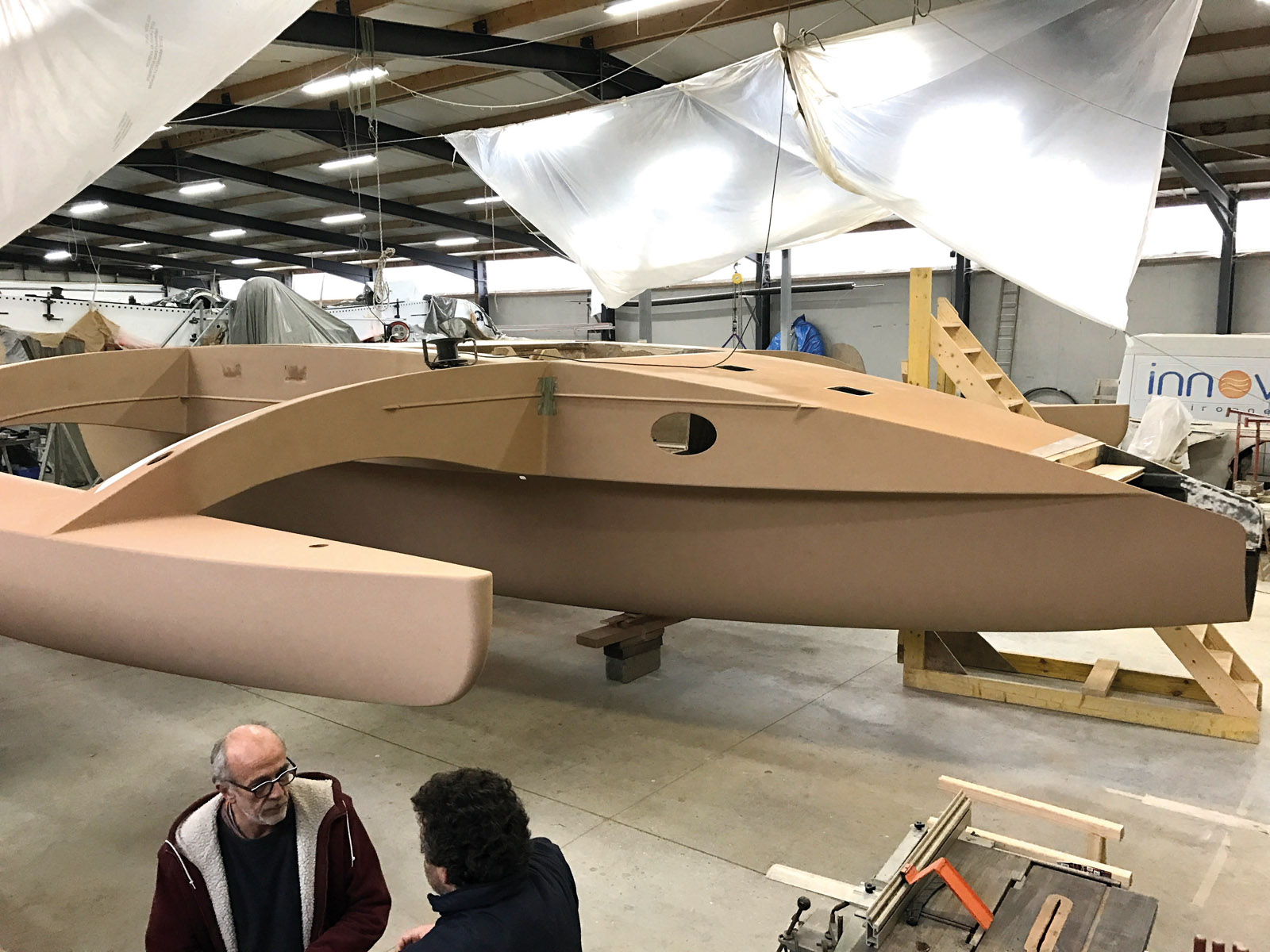
Mieux qu’un refit, Rusty Pelican a bénéficié d’une reconstruction totale. 19 mois de chantier et un budget équivalent à celui d’un trimaran de même taille… mais quelle réussite !
EXPOSED STRUCTURE
“Koen wanted to keep the interior structure visible,” continued Philippe, “So the frames, deckbeams and keel remained exposed. I’m pretty happy with the result, but there were many hours spent in uncomfortable positions with the noise of powertools and vacuum cleaners! The new shroud chainplates took us a long time - changing the mast also meant changing them too. The aft faces of the arms were doubled-up and the float decks dismantled to redo the chainplate bulkheads before changing all the hatches and adding an escape hatch in the central hull - and another one for each float. Jack calculated the new shroud support bulkheads (in a foam/carbon sandwich) and we reinforced the inside of the floats with glass cloth, where they would be glued and strategically placed. They were made on marble and vacuum laminated with epoxy. What you can see from the deck really gives no idea of the work that was done! The same goes for the solent bulkhead and the for estay fixing... Jacques Roudeau, Philippe Lageat, Maxime, Jean-Luc, my partner Claude, Samuel, Olivier, Floyd, Tanguy and Thomas for the electrics and electronics, Alain for the engine, Fred the welder, Davy Beaudard for the spray coatings (after all these surfaces were sanded for hours with 40 to 220-grit) - all were the passionate craftsmen in this renaissance. The final painting phase was at last approaching; we spent the week between Christmas and January 1, 2018 sanding, filling, and resanding, before the painting cycle was interrupted by the masking phases. It was then the final assembly of the fittings, nets, engine installation, plumbing installation, exterior finishes, interior painting, and finally the installation of the sprayhood.” Rusty Pelican was ready to sail in July 2018 but returned to Billie Marine for 19 months - the first lockdown in 2020 probably delayed the actual launch - to finish the interior. Rusty returned to sea on July 21, 2020. In the wake of this, the trimaran has offered herself a grand tour of Spain and Portugal, a 1,840-mile shakedown trip. During these 11 days at sea in very varied conditions, Rusty Pelican was able to show how easy she is upwind and her speed potential downwind.
A MAGICAL GLIDE THROUGH THE WATER
Have you ever experienced the feel of the water on a Newick trimaran? Experience the softness of its passage through the sea? Felt that slightly heeled support before perceiving the reassuring vertical thrust of the graceful floats? Rusty expresses her strength and balance on all points of sail; from 5 knots of wind, the trimaran “communicates” with the helmsman. As long as the crew just gets the windward float to lift, and care is taken to lower the daggerboard fully and trim the sails, she transforms this still light wind into speed and sensations. If a skillful helmsman comes up in the wind, this machine will have you believing that the wind is rising, but it’s not - these trimarans make their own wind! The new appendages work wonders, and the modern membrane sails combined with the fiber rigging make for an exceptional sailing experience. Directly connected to the wood-composite frame, the helmsman is in direct connection with the architect’s motto: “Fast is fun but keep it simply stupid” Rusty’s glide through the water is characteristic of Newick trimarans - even though each one retains its own personality. The characteristics of this sporty limousine are undoubtedly elegance and comfortable efficiency. This trimaran has no “holes” and its range of use is very wide. Whether upwind, in the breeze or on a wild reach, she can do everything gracefully and progresses smoothly in the sea. This virtuoso multihull has just come out of oblivion and will remain engraved in the memory of all those who are lucky enough to meet her.
Technical specifications
Designer : Richard Newick
Model: Three Cheers MKIV modified
Builder: Damian McLaughlin (Massachusetts)
Construction: West System (molded wood/epoxy/glass)
Length: 45’11’’ (14 m)
Beam: 29’10” (9.10 m)
Draft: 3’3”/7’6” (1/2.30 m)
Mainsail: 615 sq ft (57 m²)
Solent: 485 sq ft (45 m²)
Staysail: 215 sq ft (20 m²)
Code 0: 820 sq ft (76 m²)
Asymmetrical spinnaker: 1,505 sq ft (140 m²)
Launch date: 1983
Restoration: 2017-2019
Engine 2019: Volvo 40 HP saildrive
“FOR ME, THIS BOAT REPRESENTS THE IDEAL COMPROMISE BETWEEN AESTHETICS, SPEED, PEDIGREE AND HABITABILITY”
Koen Joustra, owner of Rusty Pelican.