

Another beautiful day in the tropics... The trade winds are blowing, the sun is coming up over the horizon, and the sea seems to have calmed down since the day before. It’s the perfect time to weigh anchor and head off to discover another paradise island a few miles further south. The mainsail cover opens and a few minutes later, the wind fills the sails. When the sun starts to get too hot, the bimini unfolds to offer the helmsman some protective shade, while any serious tanning afficionados can stretch out on the sunbathing area. Everyone waits for happy hour to get together on the comfortable cockpit cushions, matching those in the saloon. Practical, useful, aesthetic and comfortable. Fabric is everywhere on our multihulls, but in this often-aggressive maritime world, with UV rays, humidity and friction to contend with, it is important to make the right quality choice when considering what they will be used for.
Modern multihulls and their large and numerous lounging areas are offering more and more upholstery - here on the Lagoon SIXTY 5.
Dickson and Sunbrella, two world-famous brands!
At Sunbrella, there are several ranges available that can meet every need. This offer is based on know-how acquired since... 1836. That was the year Scotsman David Dickson set up his first linen loom in Dunkirk, France, and very quickly developed fabrics for sails and invented a treatment process to make his fabrics rot-proof when in contact with sea water. From the outset, the marine world has been part of the company’s DNA. At the end of the Second World War, synthetic fibers began to appear in fabrics to increase their resistance. The development then went through a merger with the Constant weaving company before joining the American group Glen Raven, world leader in technical outdoor fabrics and owner of the Sunbrella brand, which was born 50 years ago in the United States. Today, the group employs 3,500 people worldwide and has 8 production sites in America, China, and also in France, near Lille, and is present in 110 countries through 17 subsidiaries.
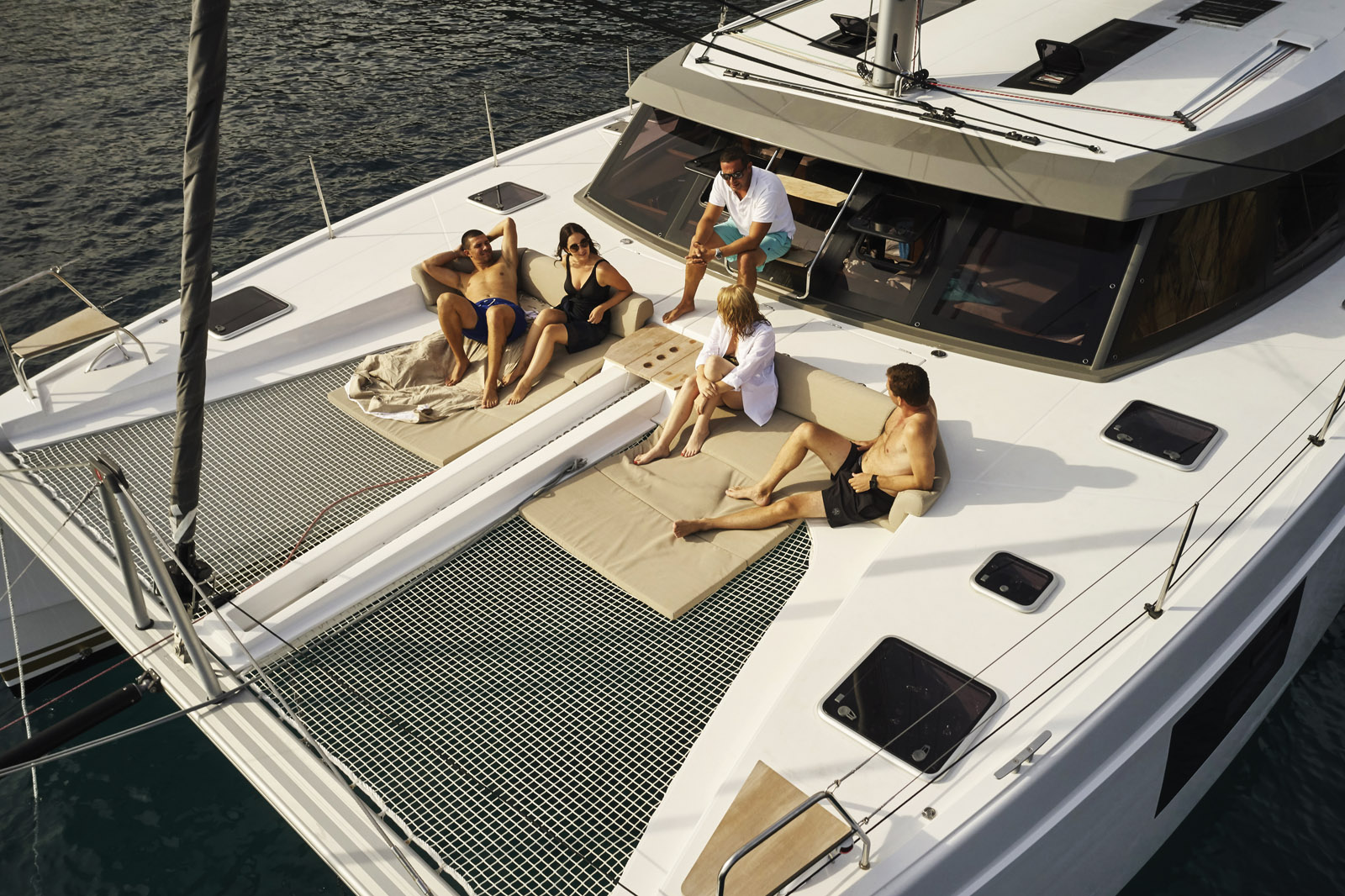
All the bench seats, cushions and sunbeds on the Nautitech 46 are made by Sunbrella.
Weaving: an ancestral craft
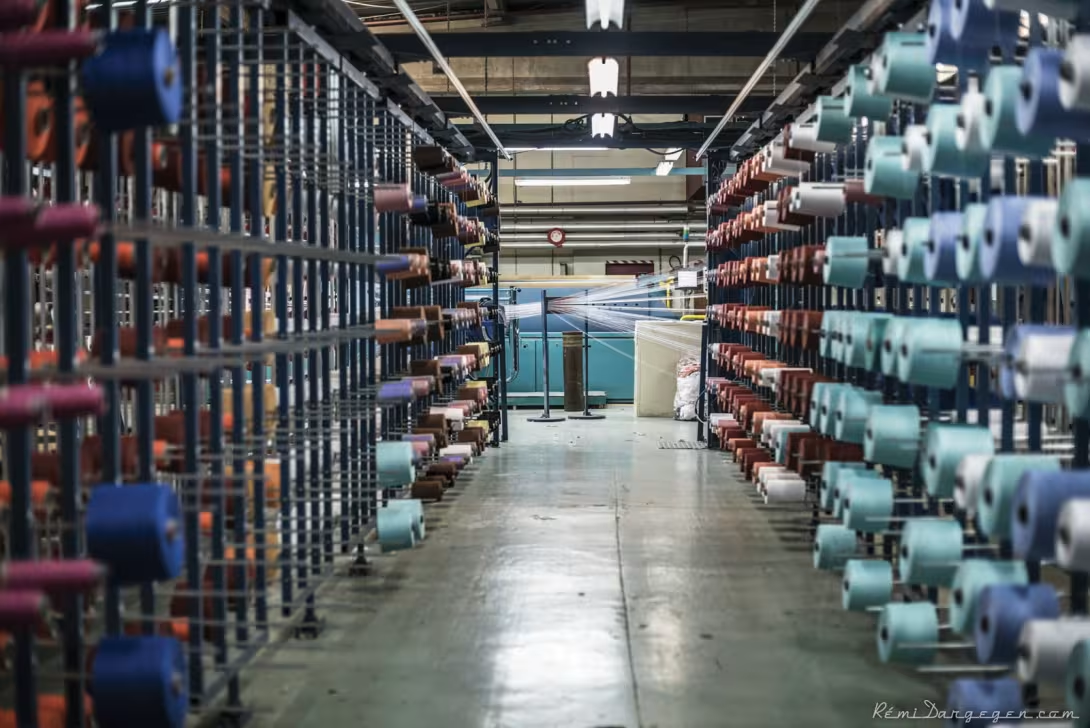
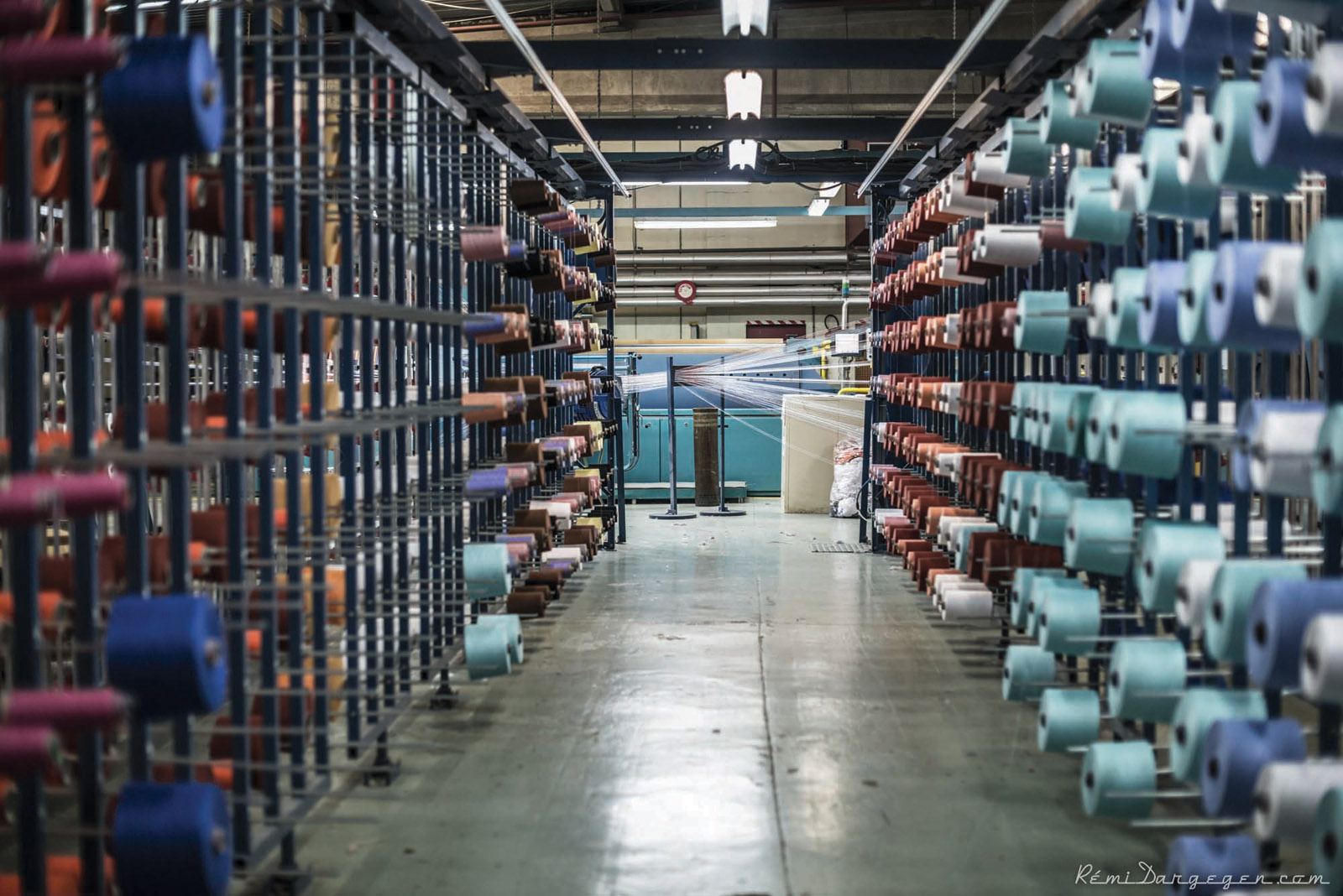
A visit to the factory at Wasquehal in the Nord region is an opportunity to discover a trade that has its roots in mankind’s earliest days, but that has not ceased to renew and modernize itself ever since. The complex of buildings, where about 350 people work, covers over 11 acres (45,000 m²), to which must be added 2.7 acres (11,000 m²) of storage for the finished products, which are located in Fretin, about 6 mi (10 km) away. Although weaving is part of the industrial heritage of many French regions, it is becoming more and more difficult to find qualified personnel due to the lack of training schools or specialized institutes. Most apprentices will therefore be trained in the factory. And watching the men and women working, right from the first stage of production, one can imagine that the training could be a lengthy process. Warping, as the complex process is called, is the process of aligning up to 4,500 threads side by side (30 threads per 3/8” / 1cm), to form the warp mounted on warp beams, which are large bobbins that are then used for the actual weaving process. This task requires skill, precision and concentration. To give you an idea, no less than 250,000 bobbins are used each month, with one bobbin representing 19 miles (30.6 km) of yarn, which produces over 270 million square feet (25 million m²) of fabric each year. Impressive!

The company also produces interior upholstery.
Chasing fluff
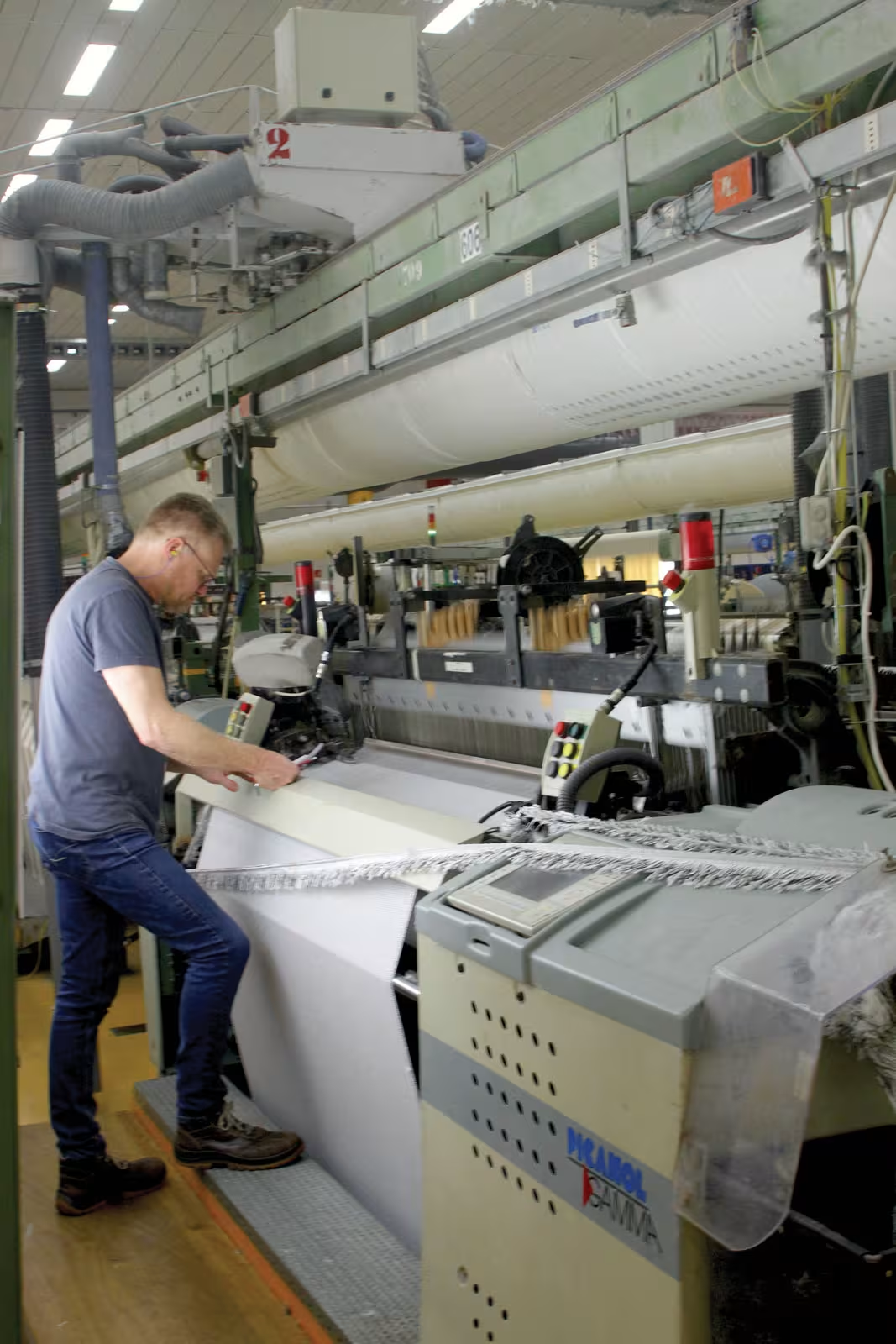
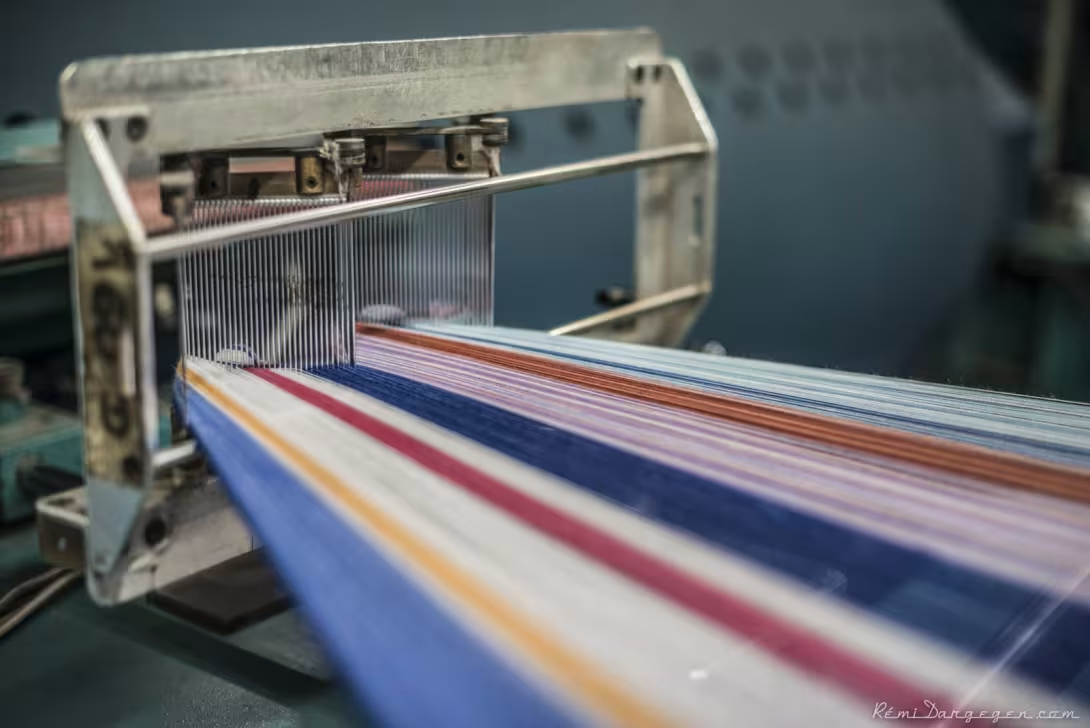
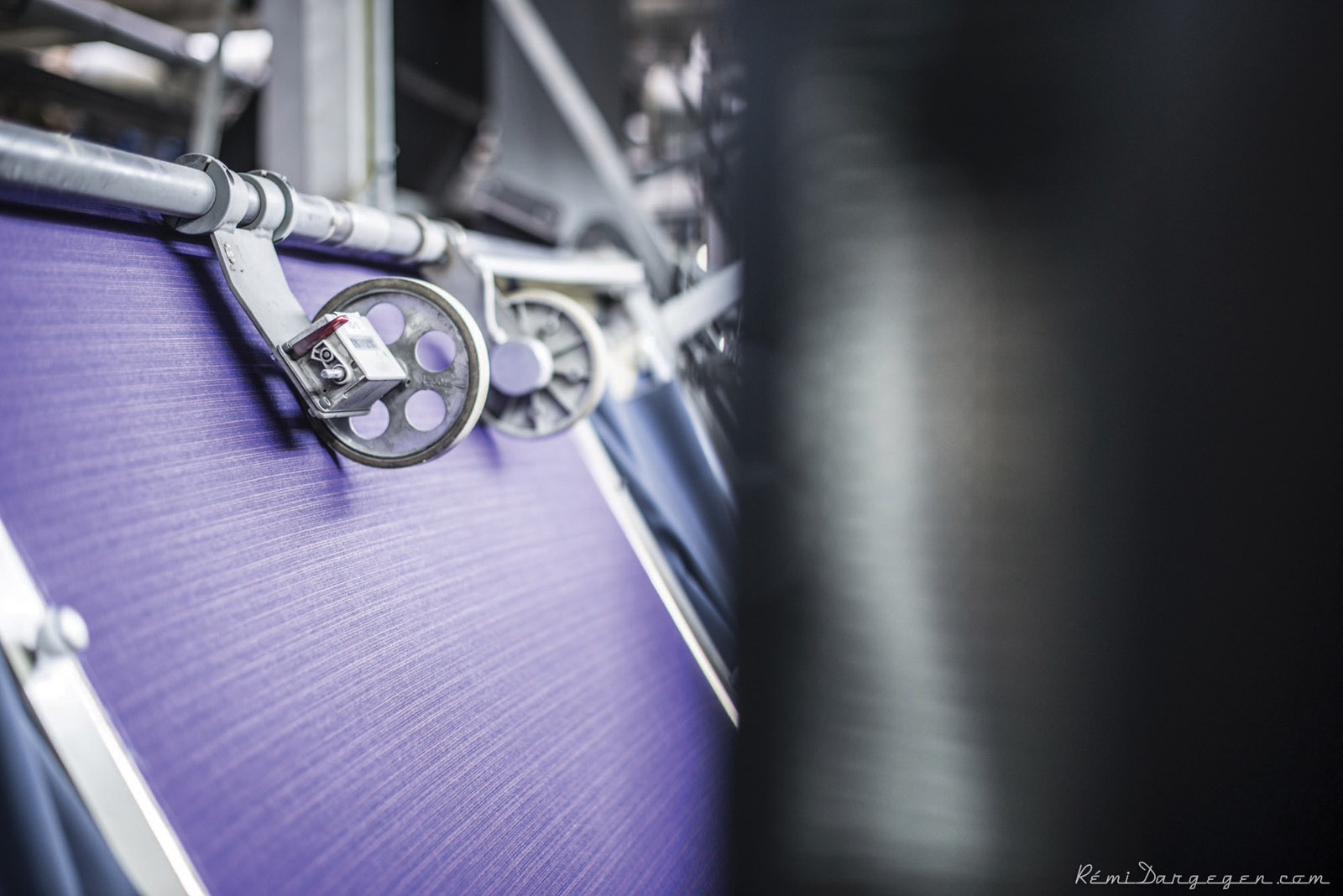
The next step is therefore the actual weaving. Most people imagine an oldfashioned loom with its small carriages criss-crossing across the weft that is obtained during the warping. This principle, which has been unchanged for centuries, has been modernized, first with mechanical shuttle-throwers and then with air-jet systems. On the latest generation of machines, it gets difficult to follow these ultra-fast movements with your eyes. This technique makes it possible to produce fabrics with simple patterns, such as stripes. For more elaborate designs (the so-called jacquard), each of the threads of the warp does not necessarily move at the same rate as its neighbors, which further complicates this well-oiled system, and it is computers that have brought a new lease of life to this operation. In this workshop, where the temperature and hygrometry are permanently controlled, a kind of mist seems to float around the machines. These are the fibrils, small bits of fluff that escape from the reels and which hang in the air. To avoid health risks, an incredible ballet of automated vacuum cleaners is constantly moving up and down the aisles between the looms, sucking up this cloud.
 |
 |
A resistant synthetic material
These suspended elements would suggest that the material used is natural: it looks like cotton or even wool and is light and airy. This is not the case though. To meet the constraints of a demanding and hostile environment, with UV rays, rain, spray, and friction ..., a resistant synthetic material is required: acrylic «dye-mass». To explain the longevity of their products, Sunbrella managers paint a simple, clear picture. A «yarn-dyed» natural fiber is like a radish: if you slice it, the surface is colored, but the heart is white. Acrylic fiber, on the other hand, is more like a carrot: when cut, it has a uniform orange appearance from its surface to its center. That’s why with mass-dyed acrylic, you can rub it, soak it in sea water or expose it to the sun, and its color will remain intact. As an added advantage, in these times when environmental protection is becoming a consumer demand, the carbon footprint of acrylic fiber is less than that of a natural fiber such as cotton when you take into account the amount of water needed to grow it, the impact of the dyes used, the cost of transporting it from production areas to processing sites and then onto the market. Finally, Sunbrella has implemented a zero-waste manufacturing policy, with recovery and reprocessing of any elements that are rejected.
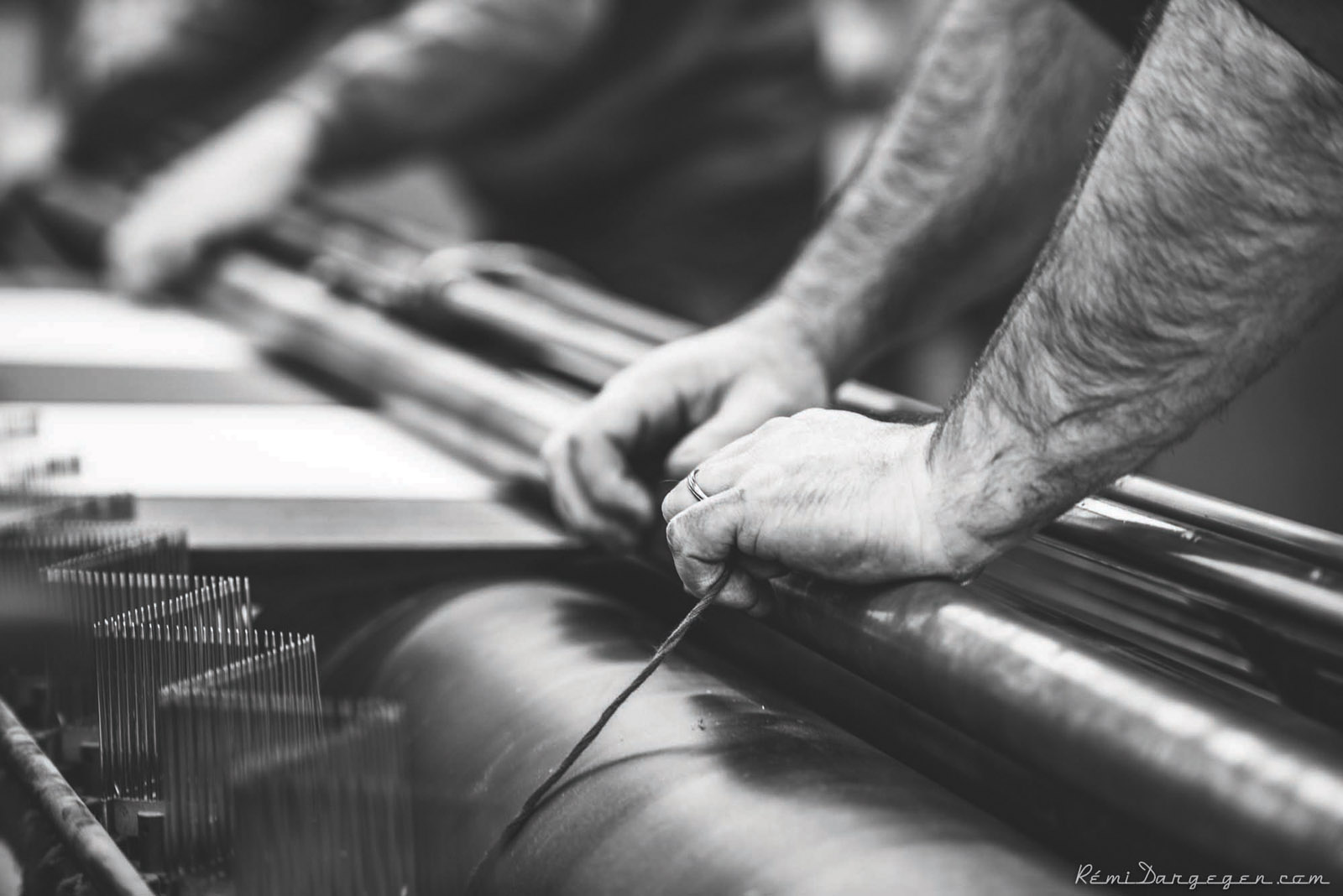
To meet the constraints of a demanding and hostile environment - UV rays, rain, sea spray, and friction - Sunbrella uses a resistant synthetic material: “mass-dyed” acrylic.
Certified production
Once the weaving stage is finished, the fabric reels pass through the surface treatment workshop and, even if this operation is less visible, it remains a spectacular moment. Imagine a huge, long machine in which the fabric has to circulate without ever stopping because, after passing through a washing bath and then through a treatment bath, it has to undergo infrared rays that polymerize the applied product. If the process stops, the light will burn the fabric and make much of the production unusable. The fabric therefore follows a complex circuit that allows it to be stored in certain places to ensure permanent continuity. This evokes the image of a long snake that picks its way through the cogs of the machine, curling up in the smallest nooks and crannies and then gushing out. Throughout these successive operations, various controls are carried out to guarantee the final quality of the product. Some of these checks are done with the naked eye and one can really appreciate the sharpness of the eyes of these men and women who scrutinize the strips of fabric passing by at high speed and do not let anything pass: a cut thread, a knot or any other defect. The latest generation of looms uses optical readers to perform this essential but repetitive and tiring task for the eyes. There is also a laboratory where a series of tests can be carried out at the end of the production line. Here, the weight of the fabric is checked, as well as its water and oil tightness, abrasion resistance, elongation, and tear resistance. A dozen tests are performed to ensure that the fabric meets the standards set by Sunbrella and to certify production.
Warping involves aligning up to 4,500 threads side by side.
Different ranges for as many uses
While Sunbrella fabrics meet high quality standards, the concept of aesthetics also plays an important role in the design of the brand’s products. Today’s yachtsmen are no longer satisfied with the basic yachting colors of navy blue, creamy white or burgundy. They expect a wide range of plain, striped and patterned colors... This is where the innovation department comes in, bringing together sales managers, marketing managers, designers and research and development engi-neers. Together, they will draw inspiration from future fashion trends as well as automobile devel-opment and propose new collections every four years. Shipyards and boatowners then have a vast choice of materials for boats, both for the exterior and interior. For each destination, Sunbrella has a line of products with very specific features. While the Sunbrella line is designed more for covers, Sunbrella +, with anti-mold treatment and highly waterproof, is perfect for sprayhoods and winter awnings. The Source and Heritage lines are environmentally friendly with more reused yarns and recycled fibers. For the genoa’s UV protection strips, go for the Furling range, and for 100% water-proof protection, the Optimum rating means that a PVC layer has been applied on the back. With the Horizon line, there is a range of synthetic leather options, often used on small units, while the Terry range with its terry cloth is suitable for making cushion covers or fenders. And this list is not exhaustive.
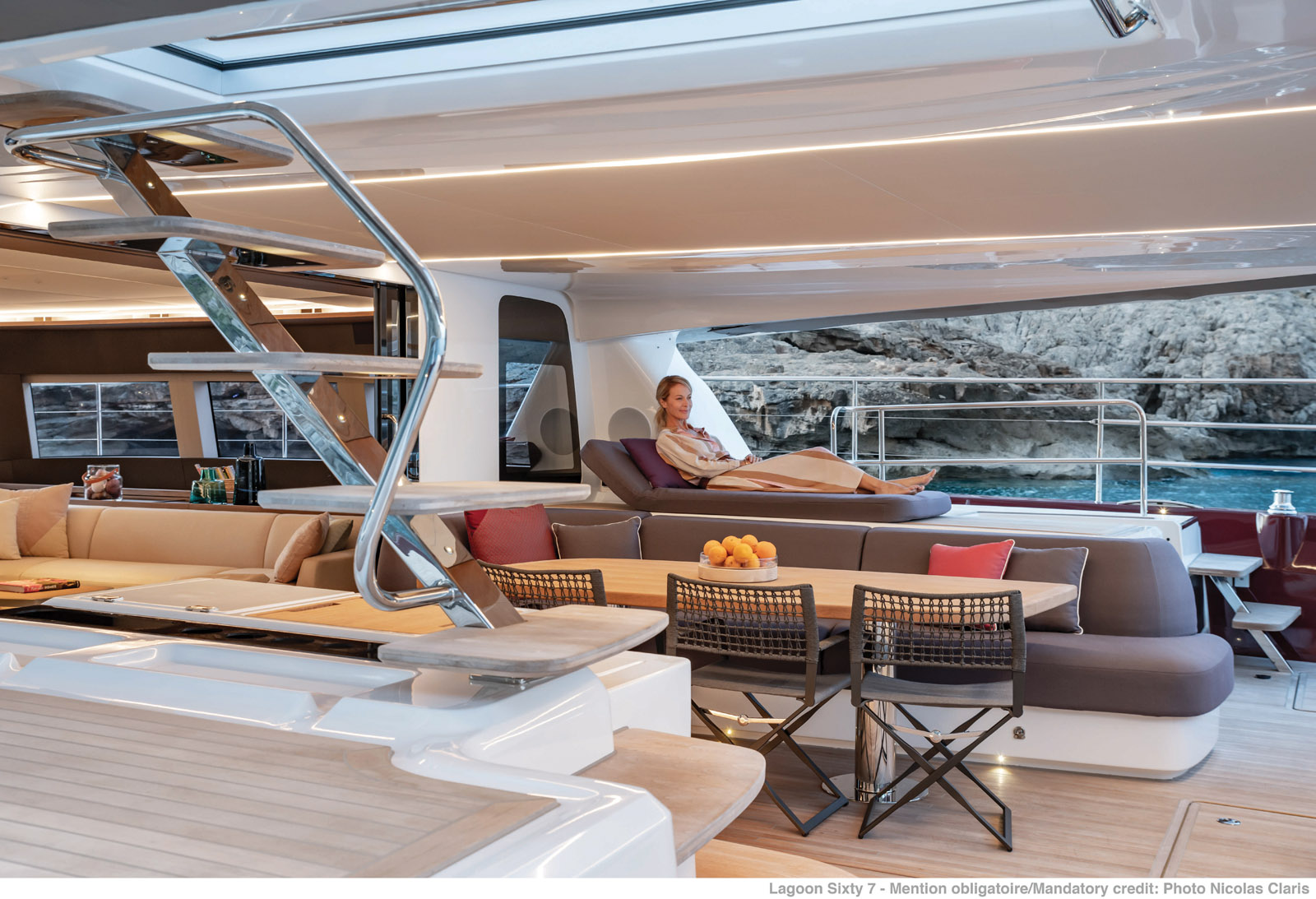
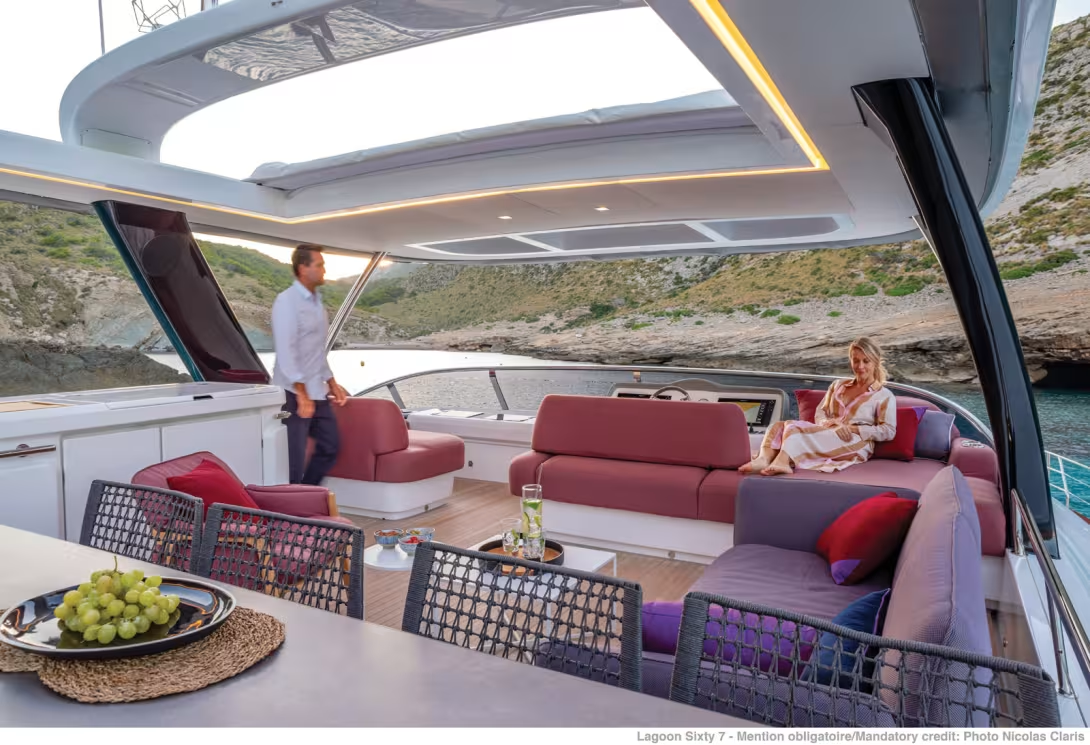
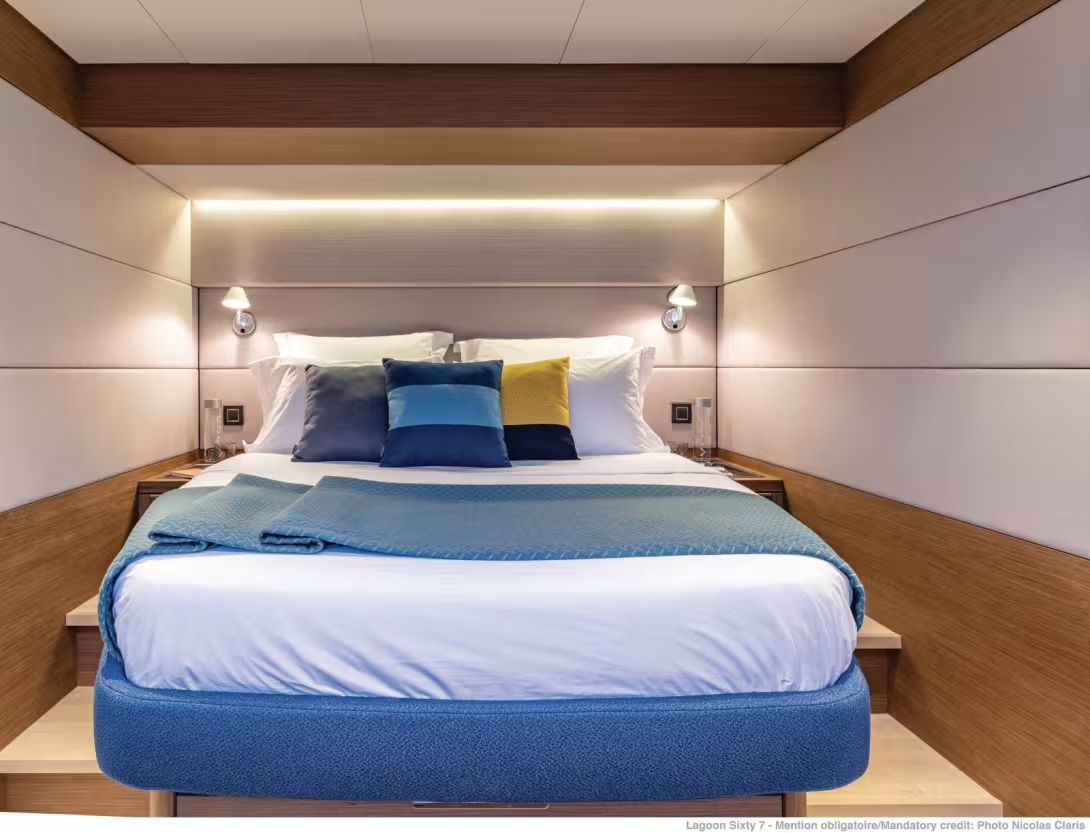
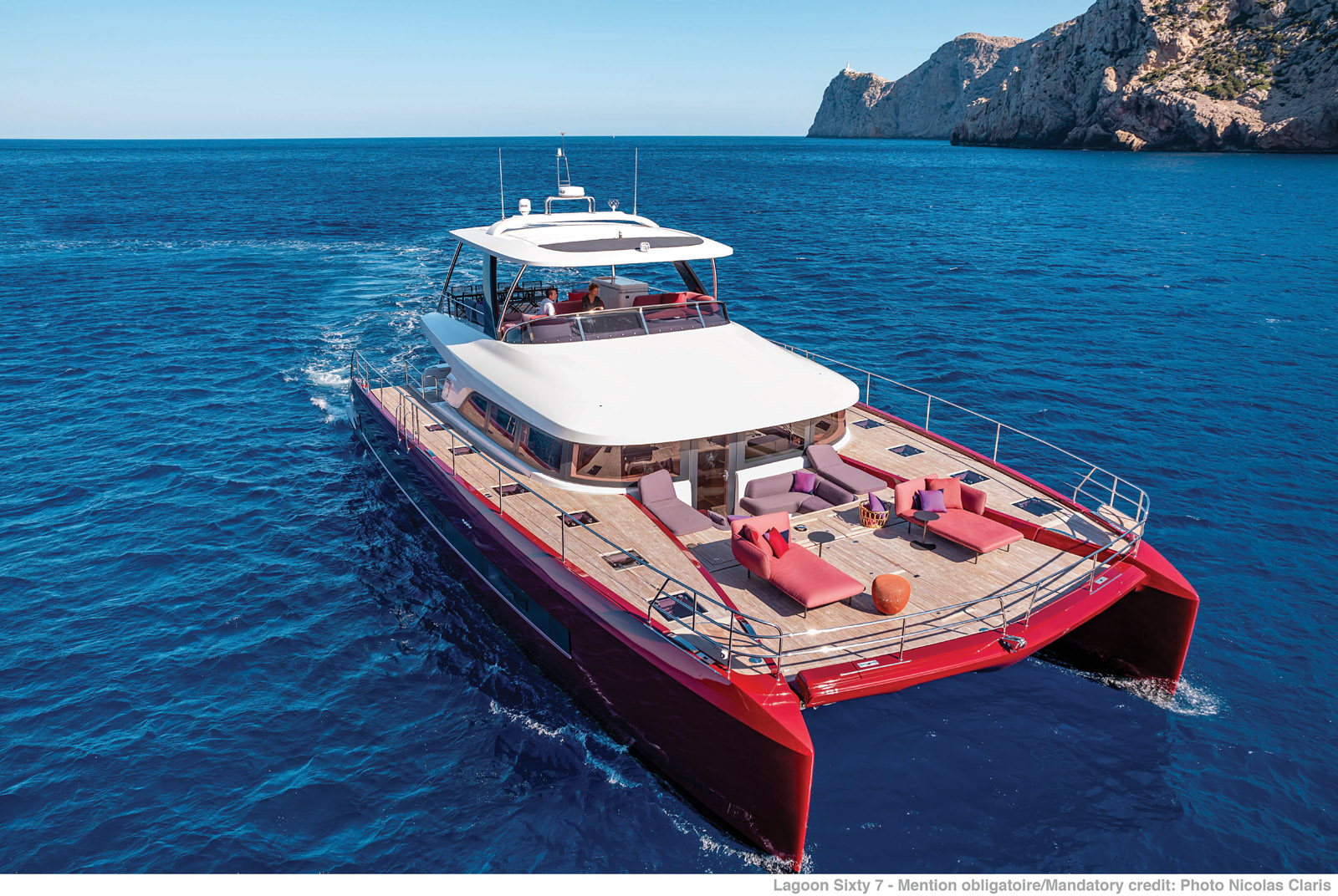
The upholstery on the Lagoon SIXTY 7 is the result of a strong partnership between Lagoon and Sunbrella.
For major brands and individuals
This almost infinite variety naturally seduces many shipyards that produce in series, semi-custom or at the request of owners. It allows them to offer a different atmosphere on their new models. Among the big names in the multihull world who have been working with Sunbrella for years are the Racoupeau firm, Nautitech with its new 46 Open and Lagoon, which has developed a real partnership for the launch of the SIXTY 5 and SIXTY 7. But Sunbrella also wants to maintain a certain complicity with the end user, whether it’s the occasional yachtsman or an experienced sailor. To do this, on the manufacturer’s website, everyone can find cleaning tips, by fabric or - even better - by type of stain, some of which are the subject of video tutorials. Sunbrella, despite its powerful reputation, is not neglecting the market for individuals who want to rejuvenate their own upholstery, or even treat themselves to an attractive, coordinated wardrobe, both inside and out. Let yourself be tempted... It might just feel as though you have a brand-new multihull.
