Ancestors of our proas
I would have liked to tell you that the first Australians arrived by sea in proas, but this isn’t the case. They arrived from South East Asia, on foot, at the end of the last ice age. In 50,000 BCE, the land had less than a million inhabitants. A drop of about 500 feet (150 m) in the level allowed the first humans from Africa, present on the edge of what is today the Gulf of Thailand, to continue their conquest eastward. They were able, on dry land, to populate Indonesia, New Guinea and then Australia. Indeed, at the time, the whole lot formed only one continent, named Sahul. And it was on this arc that is now part of Oceania that evidence has been found of the first canoes with outriggers, looking surprisingly modern in design - the ancestors of our proas. These boats are more than 3,000 years old! European explorers of the 17th century who (re)discovered these regions were all impressed by the speed of the pirogues they encountered in the Pacific islands. Englishman William Dampier (1651-1715), the first to map part of the coasts of Australia, measured the speed: “18 knots over several hundred miles.” So, while we know Australia has multihulls in its genes, that’s clearly not something new!
One boat for every 24 inhabitants
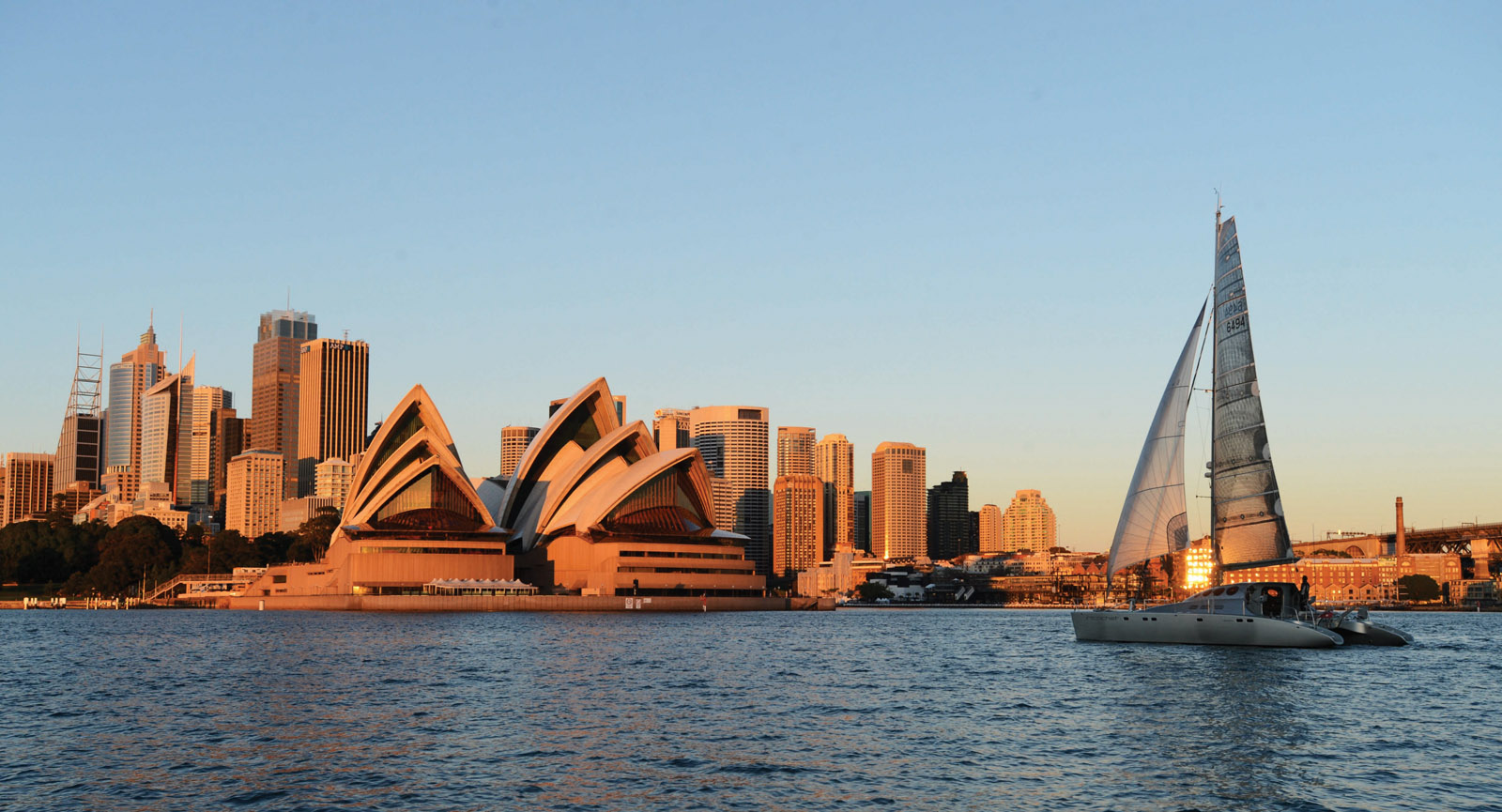
But let’s look at a more contemporary period. Charles Lindsay, a dinghy builder, was also fascinated by traditional multihulls. In 1952, he designed the first prototype catamaran. Two years later, the final model was 20 feet long and took the pretty name Yvonne. The first national championship took place in 1956, and the “Yvonne 20” class still exists today, proof of a pencil stroke as ingenious as it was avant-garde. Needless to say that the Hobie Cat 14, designed in 1968, then its descendants - as well as its competitors - would find fertile ground in Australia. It must be said that climatic conditions, sociology and geography were particularly favorable here for the development of this new concept, which was booming in the 1970s: leisure activities in the sun and on the water. Australia has plenty of sunshine to offer, about 300 days a year in Brisbane, for example. This doesn’t come without creating a few constraints, though. Protecting oneself from UV rays is a must as this country is located under a huge hole in the ozone layer - Australia has one of the highest rates of skin cancer in the world. A bottle of sunscreen, mayonnaise version needs to be available for everyone on board. There is also saltwater all around, all along its fifteen and a half thousand miles (25,000 km) of coastline. 85% of the population (25,464,116 inhabitants) live on the coast, and the per capita boat rate is among the highest in the world: one boat for every 24 inhabitants, no less! Only the Scandinavian countries and New Zealand do better. We are therefore more at the level of the United States, but without the inland waters. And that’s five times more than France. So yes, Australia is a country of sailors. There are even more than 350 yacht clubs. Just think, the first of them, the Royal Yacht Club of Victoria - RYCV - was founded in 1853! Evening and weekend racing is a real institution. And the barbecues after the race? They are a must in social life, whether in Sydney, Brisbane, Adelaide, Melbourne or Perth, to mention only the largest cities. Multihulls have their place there. When races are not exclusively dedicated to them, one or more classes are open to them. During the biggest events, in Pittwater or Hamilton Island for example, multihulls often represent 20% of the fleets. For example, during the last Airlie Beach Race Week in 2019 (the 2020 edition unfortunately had to be cancelled due to the health crisis), there were no less than 23 multihulls on the start line. “Every Thursday there are about ten multihulls that take part in the Thursday Afternoon Twilight Racing,” says Brent Vaughan, the organizer. Only the mythical and very conservative Sydney-Hobart is still resisting. But we must admit that the fleet of offshore multihulls capable of lining up on such a course is really small.
Olympic titles
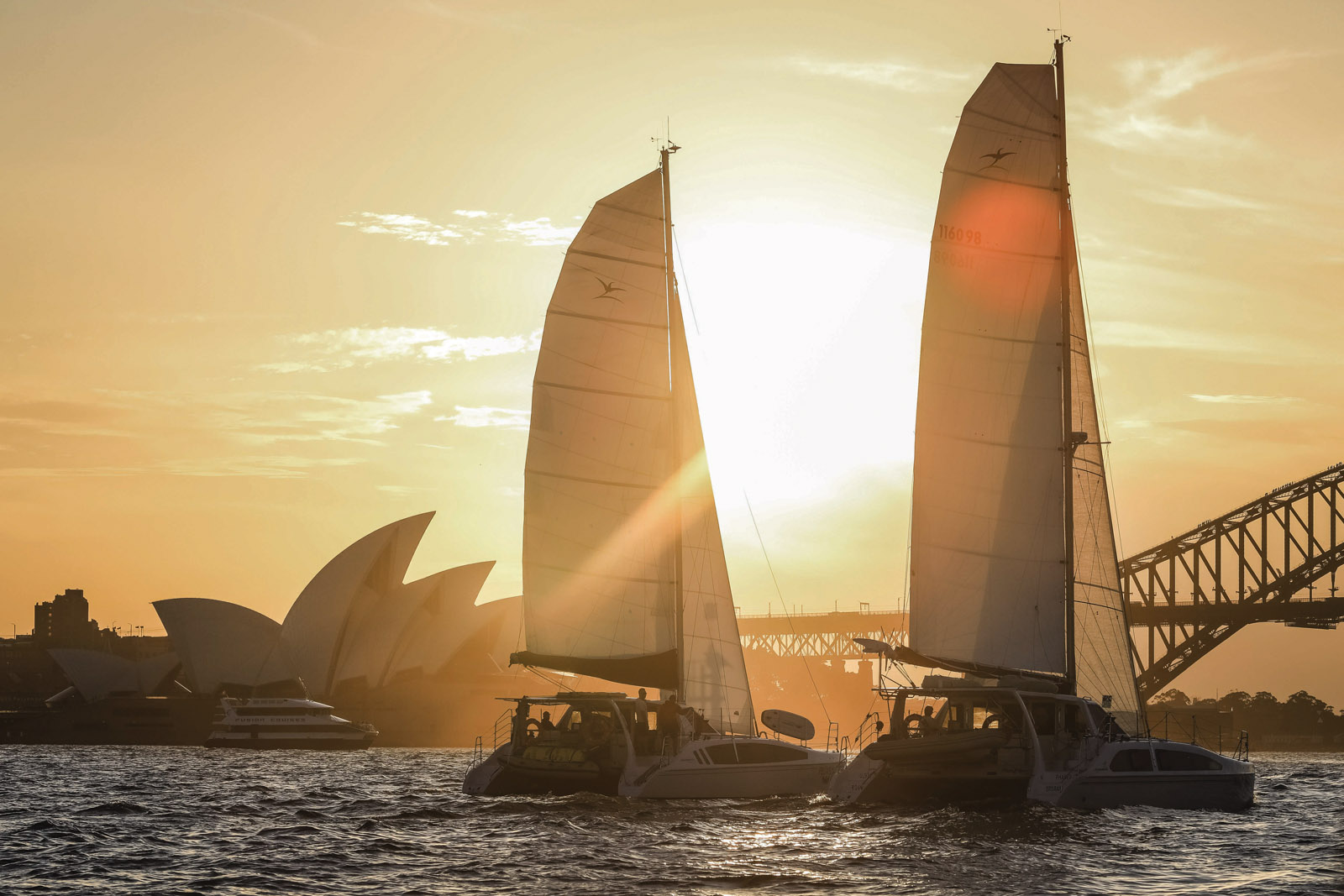
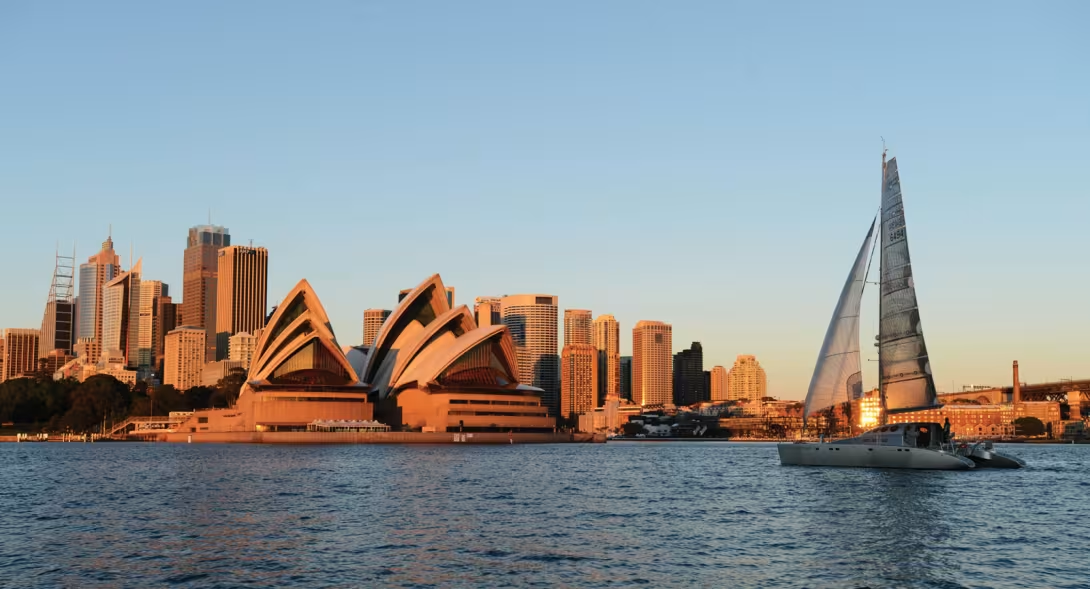
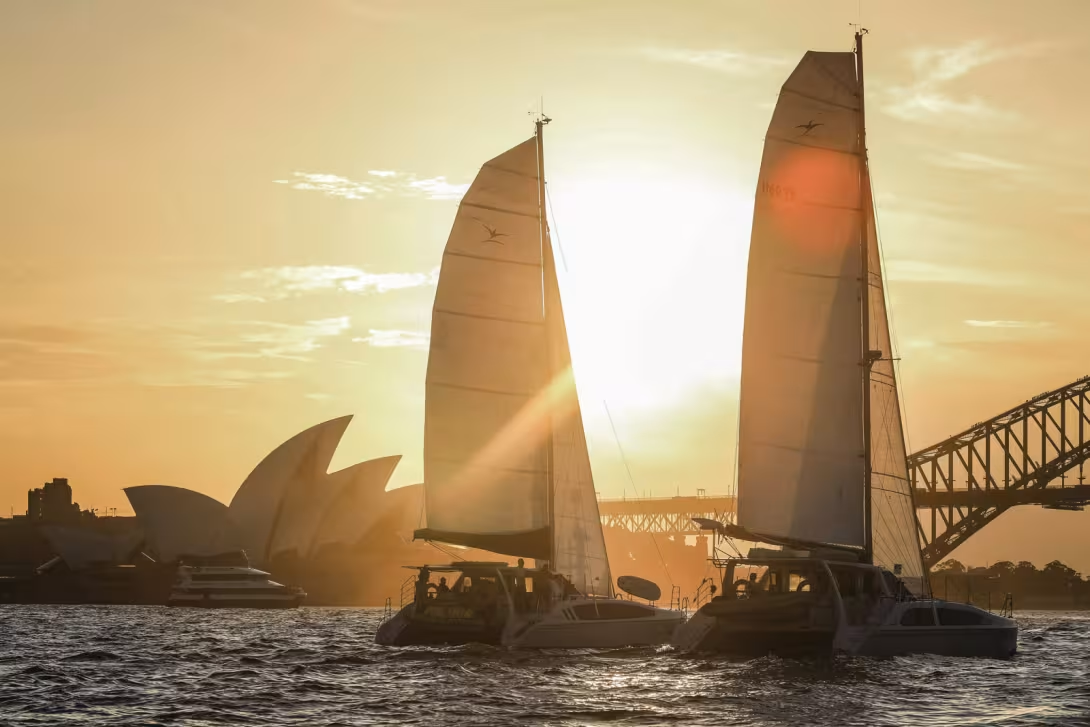
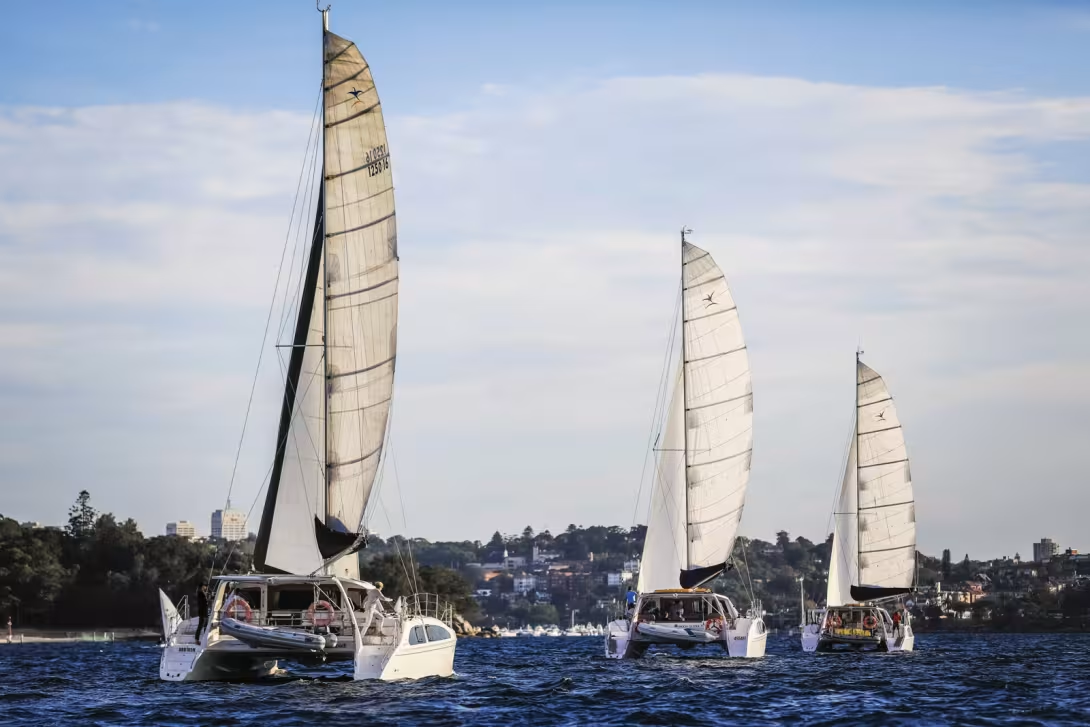
Sydney, Thursday night racing.
However, Australia has no shortage of experienced racers in the multihull world. Starting with renowned Olympic medallists: Darren Bundock, Mitch Booth the Pittwater kid, or even closer to home Glenn Ashby, have all won Tornado titles. The SailGP team insists on the 100% Australian composition of its F50 skippered by Tom Slingsby. Coming from the America Cup crews when it was raced in AC72s and then AC50s, they are perhaps no stranger to the large number of multihulls seen today on the start lines. “Multihull racing has been highlighted over the past years with growth in the fleet through new sailors and new boats to the Australian racing scene. I feel we will continue to see growth in the fleet for some time. Multihulls have also gained great strength in the performance cruising numbers with the owners of these boats enjoying racing in events. Hamilton Island Race Week multihull division, for example, has seen huge growth in what is a relatively new division to the event.” says Dale Mitchell of Ullman Sails at Airlie Beach.
Pioneering designers
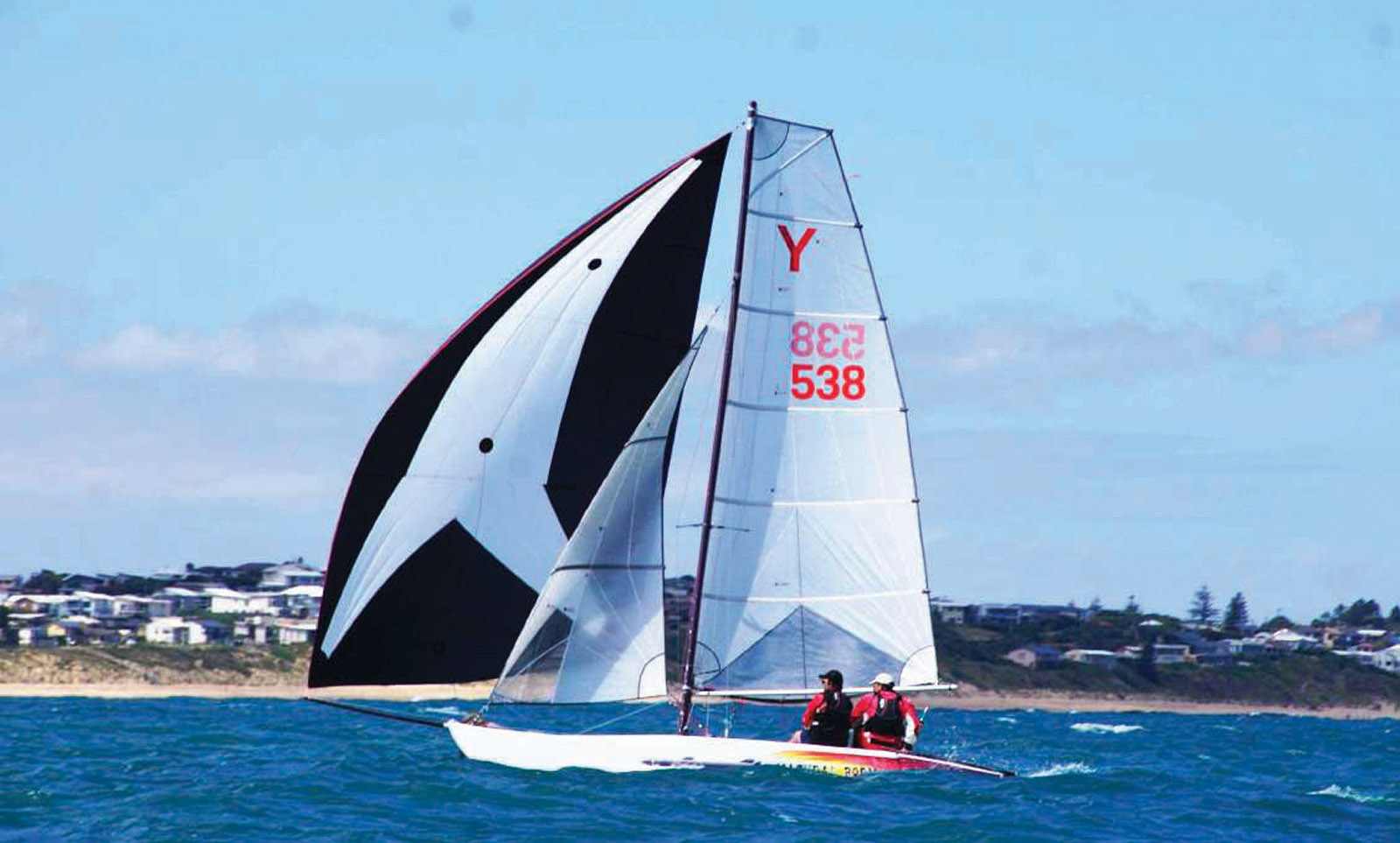
The Yvonne 20 one-design has been active in Australia since 1954.
But other Australians have a worldwide reputation in multihulls: they are the designers. Lock Crowther is a pioneer in this respect. He was still a teenager when he designed his first trimaran in 1959. But his racing success soon got him noticed. At the time, he was one of the few architects interested in multihulls; his second design, the Kraken 25, further increased his reputation. But this was nothing compared to his victory in the New York-Bermuda race, won aboard a Kraken 40. The Europeans discovered his pencil stroke at the start of the 1976 Ostar in which the trimaran Spirit of America took part. A participation which was perhaps not be lost on the founders of the Catana shipyard, given that they entrusted the design of their early models to the Australian genius. From the first model - the Catana 40 - Lock gave very clear lines, which were to remain for a long time the trademark of the French shipyard. The result was seaworthy catamarans that were light, strong and equipped with daggerboards. Their slightly asymmetrical hulls adopt voluminous bows under the waterline to reduce pitching. More than 2,500 multihull boats signed by Lock Crowther are now crisscrossing all the seas of the world. The architect’s influence continued long after his death in 1993. Although Kiwi by origin, naval architect Ian Farrier was able to surf the specifics of the immense nautical stadium that is Australia. His high-performance trimarans with folding arms seem tailor-made for the famous Lake Macquarie or the shallow waters of the Whitsundays. Ian’s transportable multihulls have so won over the public and the local press that they have been voted Australian Boat of the Year twice - in 1981 with one of his very first designs, the Tramp, and in 1992 with the F-31. That year, the F-31 Ostac Triumph won the famous Brisbane to Gladstone race in real time, ahead of Bobsled, a 67-foot monohull that cost more than a million dollars!
Amateur Kits and Home-builds
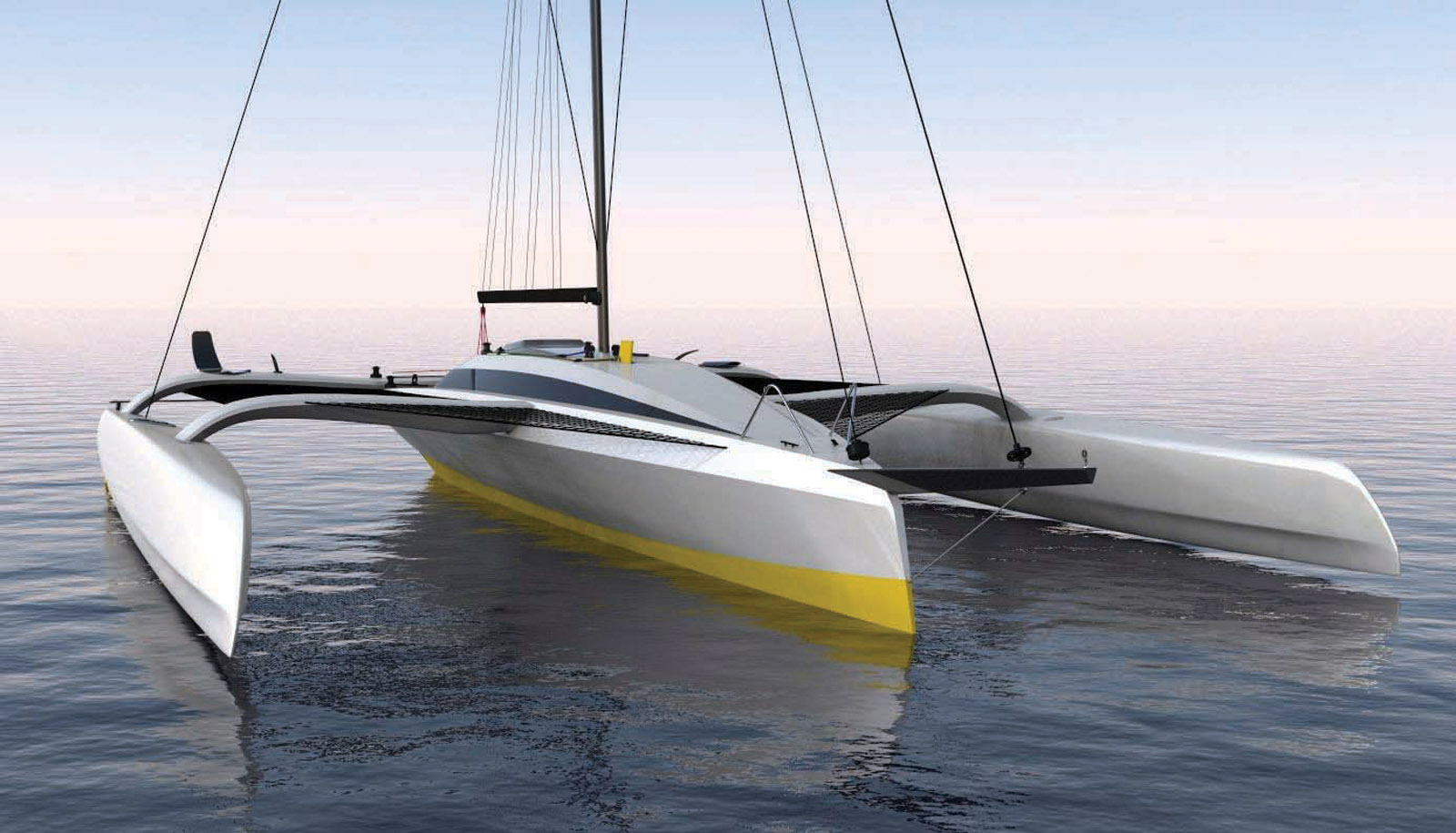
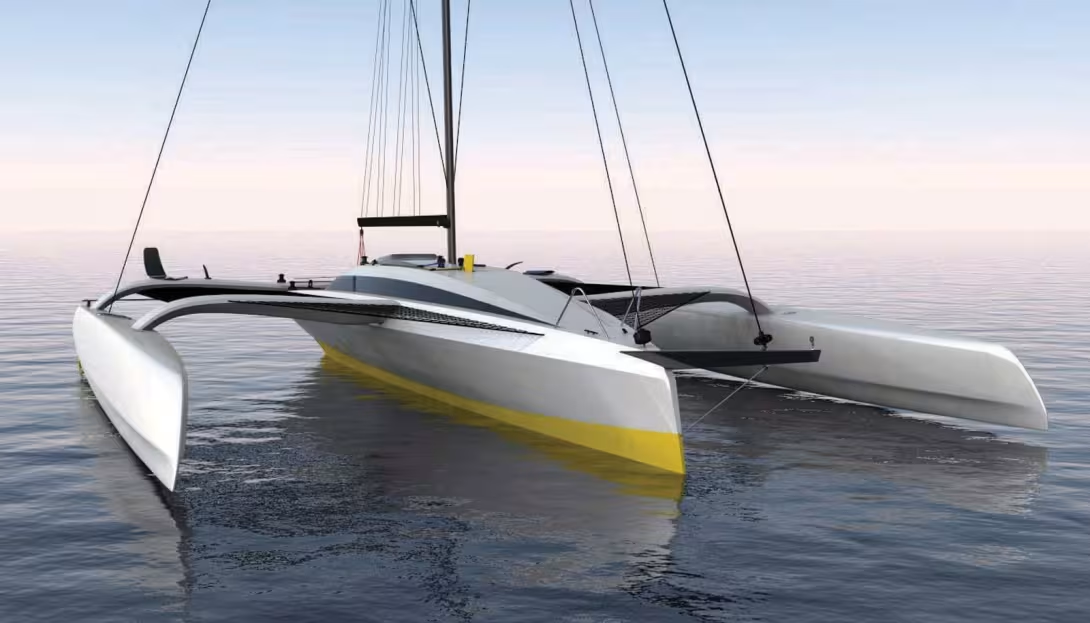
Australian designers like Tony Grainger design very fast, uncompromising multihulls.
Perhaps a little less well known on other continents, Tony Grainger is also in more than one way an icon of the Australian school of design. Tony presents himself as self-taught in the art of creating “water borne projectiles”. Like adopted Australian Jeff Schionning (see a portrait of him on page 114 in this issue), his designs rival each other in performance, hunting down unnecessary weight, favoring aerodynamic coachroofs, minimizing wetted surface - and aren’t even afraid to lift a hull when the conditions are right. Jeff and Tony also offer kits for home builders or for individual boats in small high-end yards such as Noosa Marine. This type of construction, very popular in Europe - a little less so in the United States - during the 1970s and 1980s, remains an Australian particularity. Many plans of multihulls of all sizes, sailing or motor, are on offer here. So many modern and exciting designs coming out of the computers of the talented Aussie designers. Throughout the country a number of multihulls are under construction. This applies to racing, but also to cruising. Faced with the high price of a turnkey cruising multihull, whether imported or built to order, some Australians don’t hesitate to start their own construction, with dreams of sailing on the northeast coast of the country.
Expensive labor
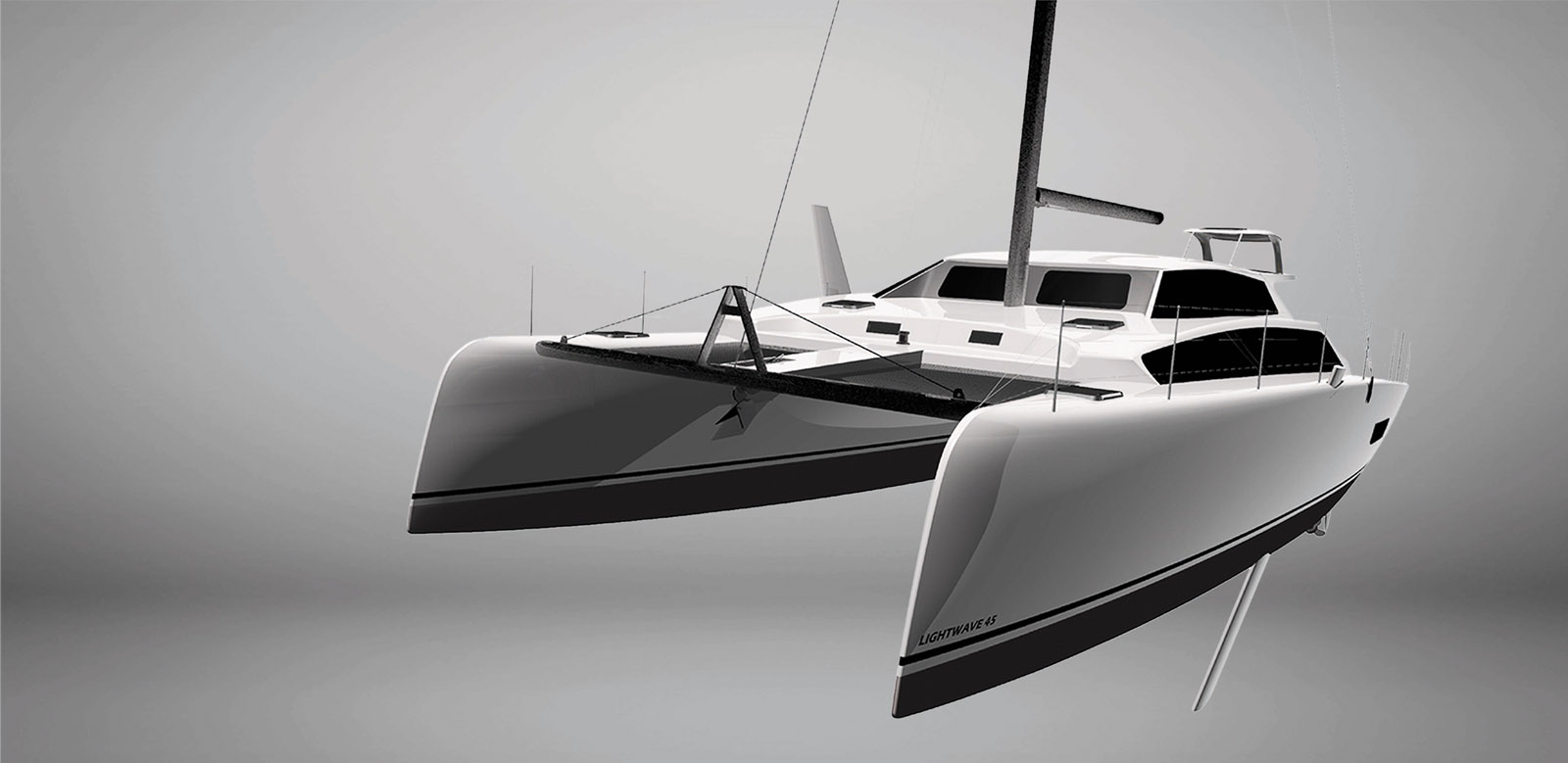
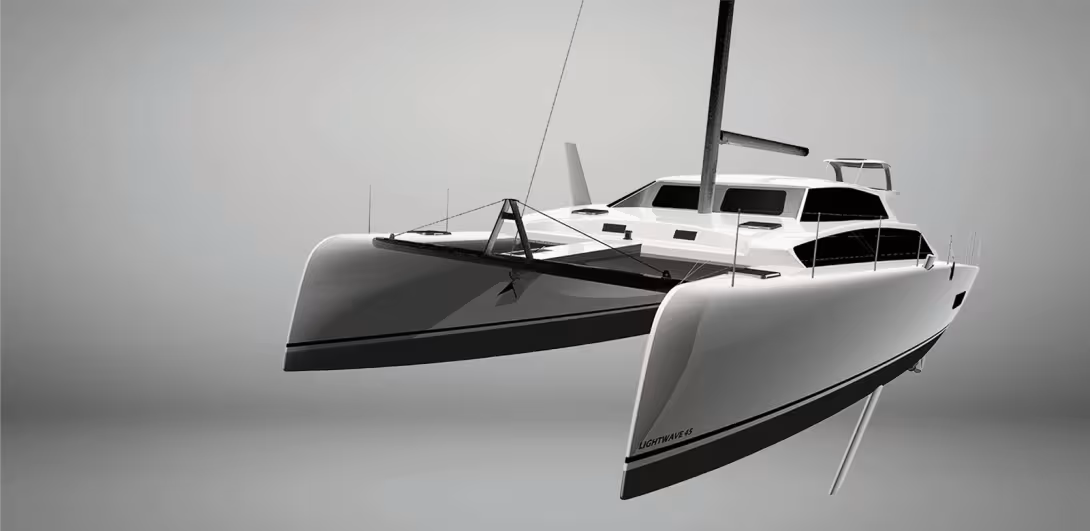
Lightwaves - here the brand-new 45G - are now the only series production multihulls being built in Australia.
In contrast to this effervescent production of one-offs, Australia has practically no multihull yards left. While in Europe, South Africa and more recently in Asia, the industrialization of multihull production is in full swing, in 2006 Australia lost the emblematic McConaghy - which chose to invest in China rather than expand its Sydney facilities. Since 2011, Seawind has been built in Vietnam - but the range remains very popular in its home country. Today, mass production of mass-produced consumer cruising multihulls seems to be limited to the Lightwave shipyard in Yatala, just south of Brisbane. Nothing seems to stop Roger Overell, who continues to produce, in small series, his very beautiful Lightwave 38, 45 and soon 52. However, the macroeconomic environment in Australia is not a happy one for boatbuilders... To begin with, the collapse of the Australian dollar in the 2000s – which saw its value against the US dollar halved - made all imported units even more expensive. In addition, the cost of labor is very high - even though OECD data also highlights the excellent productivity of Australians (€ 30 per hour, sixth out of 37 countries ranked). These data do not seem to discourage Multiyacht manufacturers who, like Echo Yachts, continue to produce, refurbish and maintain many superyachts locally. The modest size of the boatbuilding companies is reflected in the figures, since the 138 shipyards (with some 1,750 employees) listed only generate 838 million Euros per year, while at the same time 197 companies (with 7,750 employees) in France have a turnover of more than a billion euros. In the USA, the 830 shipyards count 32,485 employees and generate 1.8 billion euros. Cost remains a real problem for an activity in which labor hours represent a significant proportion of the total production cost. Against this backdrop, the major shipyards in other countries are doing business and all have powerful local representatives such as Multihull Solutions, Multihull Central or The Multihull Group - to name just three.
A sublime northern coast
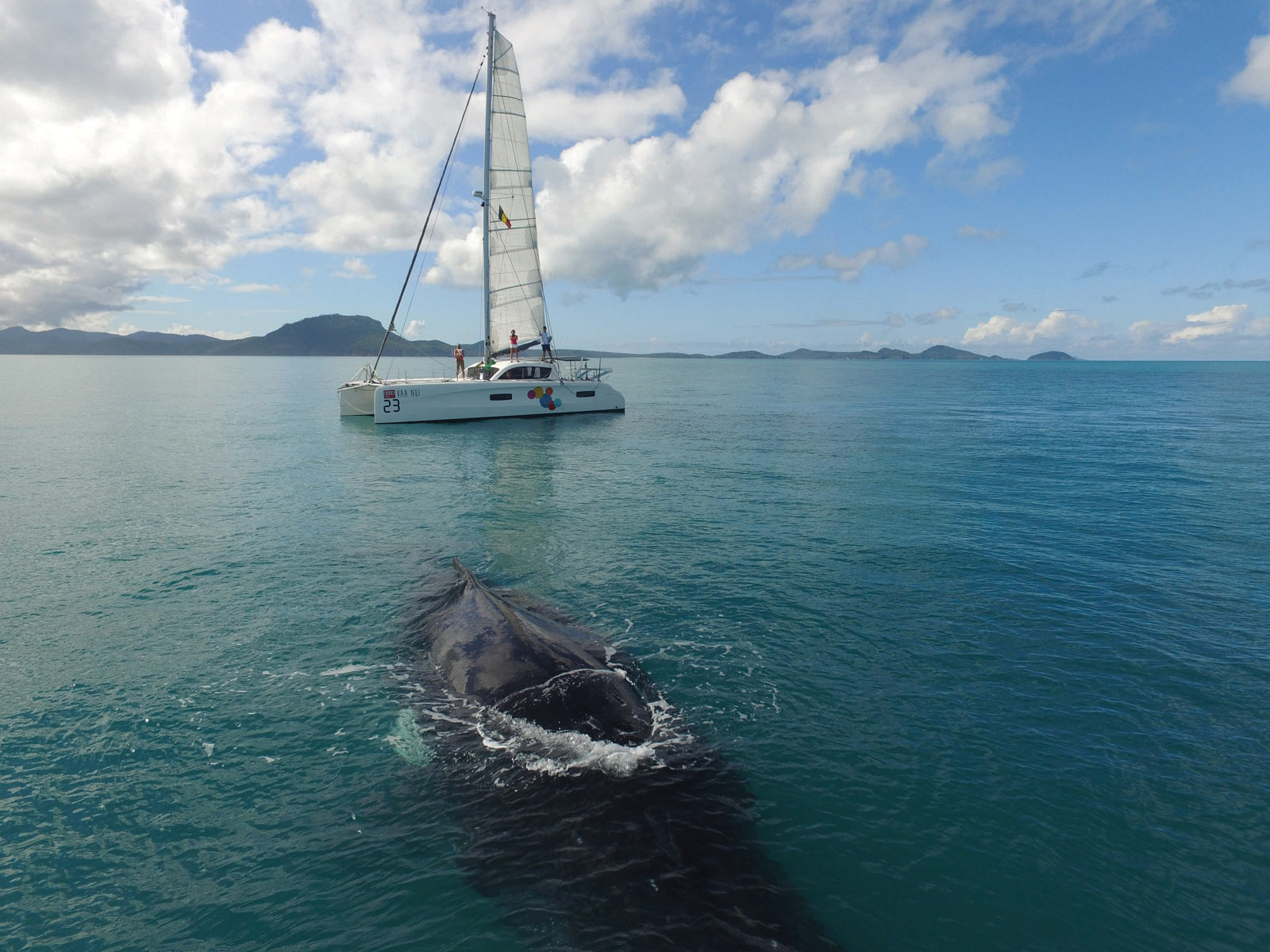
Australia’s coasts are certainly a paradise for multihull sailing.
Right around their country, Australians are avid sailors. And in this nautical Eldorado, the 1,350 miles of coastline from Brisbane to the Thursday Islands, at the northernmost tip of this country-continent, is bordering on the sublime. Past Fraser Island, you sail in the heart of the Great Barrier Reef, classified as a UNESCO World Heritage Site: 2,900 reefs, 600 islands, turquoise water at ideal temperatures... You can find a dream anchorage there by day without ever needing sail at night. It is a paradise for vacationers from all over the world: divers, whales (beware, protected species, never approach less than 200 m (660 feet), even when racing - it’s in the race instructions!) and... multihulls. With their shoal drafts, they do wonderfully in these often-shallow waters. Not to mention that their great beam offers an ideal living platform in this immense paradise on earth, especially in the renowned Whitsundays archipelago. This region is also the point of departure or arrival for those who arrive or want to go further afield: New Caledonia, Fiji or Vanuatu. Australia has incomparable natural assets for the enjoying cruising and for organizing racing and regattas accessible to everyone and everywhere. Nothing seems to be able to stop the multihull boom! We’re looking forward to the passionate and exciting discussions between incredibly qualified sailors on the pontoons of the two largest boat shows in the region, Sanctuary Cove (late May) or Sydney (late July). And it is certainly not a damn virus that’s going to prevent Australians from sailing. On the contrary, the situation is more than ever pushing the citizens of this immense country to take advantage of all its wealth, especially maritime, and to rediscover a nautical culture in general and multihulls in particular, which has never really left them for ... the past few thousand years!
Sources : Icomia – Australian Sailing – Wikipedia – François Chevalier et Jacques Taglang – Wichard Pacific – OECD – Thibaut Foucquart / Un monde en patrimoine – Wikhydro.