

For the internal combustion engine - By Steven Guedeu
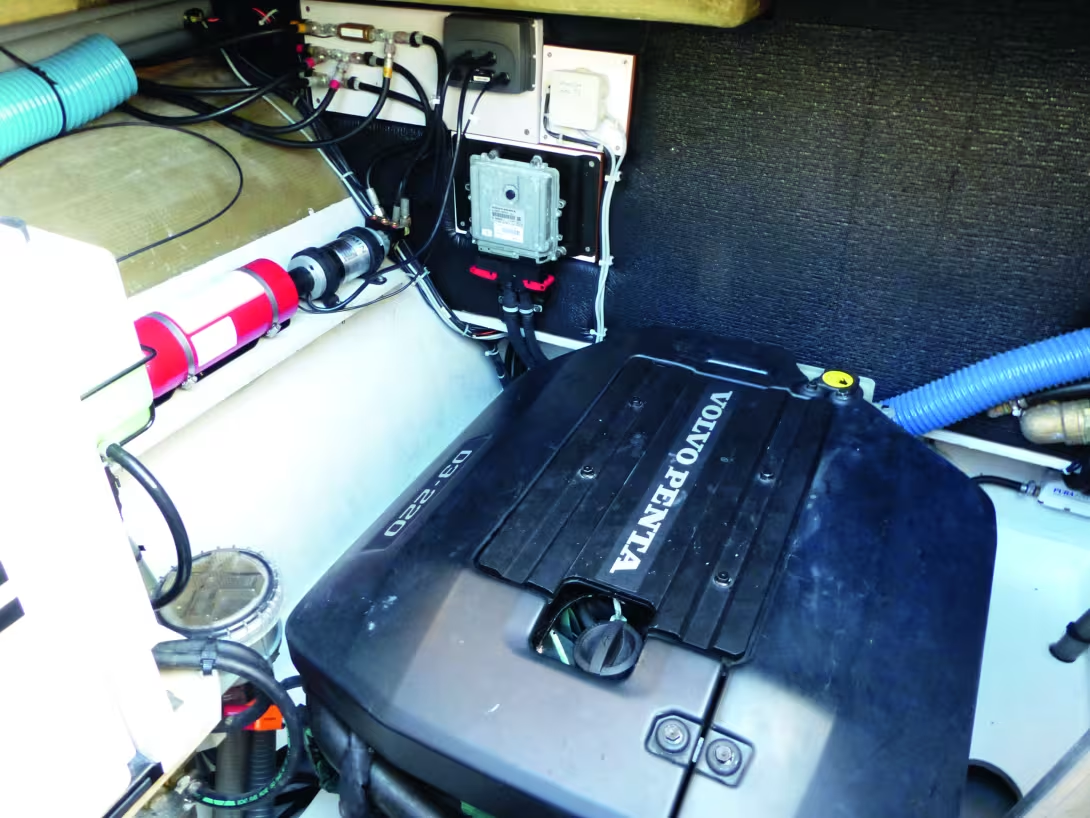
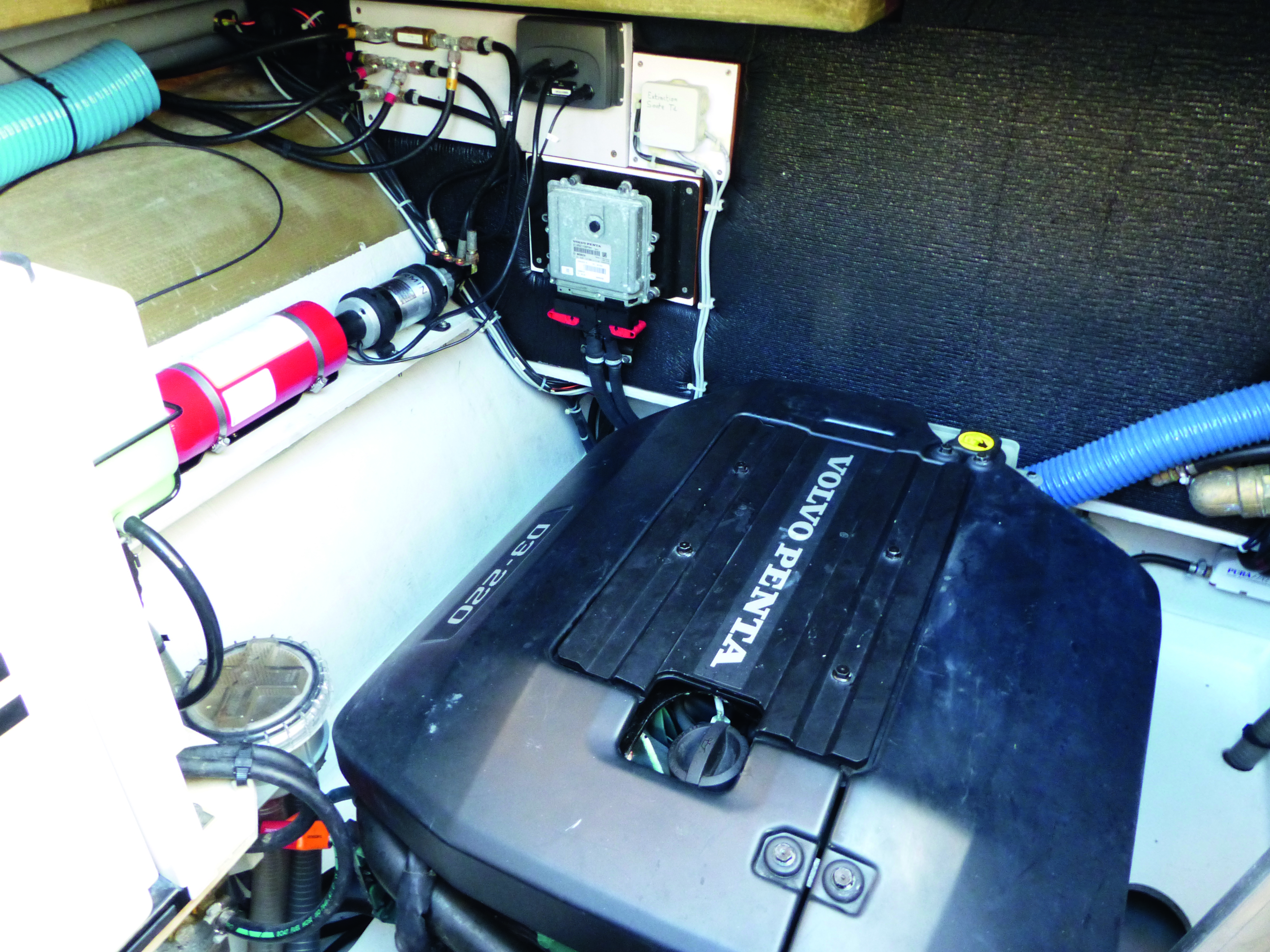
At the beginning of the 2000s, early models like the Maryland 37 or the Greenland 34 were considered more as trawler yachts. The Highland 35 changed that situation in 2005, followed by the Queensland 55 in 2009. These two powercats had increased power and were able to reach 20 knots. This meant that they started to become rivals to traditional powerboats. Based on his direct contact with customer demand, Steven justifies the choices made by the shipyard: “Sales of trawler yachts didn’t really take off: from 2013, our motoryacht range was created with several models from 37 to 44 feet capable of doing up to 25 knots. Our motoryacht customers, who are looking for speed and luxury, are not ready for electric power, because it won’t currently allow them to go fast over long distances. We have users in Florida who cover 300 miles a day to the Bahamas and don’t want to refuel there because of concerns over fuel quality. These range problems are common in many locations. Another significant factor is that an internal combustion engine is two to four times cheaper than an electric one, which makes a difference on the final bill. Given that it’s going to be the automobile industry that will drive down costs, we can only wait until progress is sufficiently convincing to follow suit with more affordable costs. The other problem is the after-sales service network. For us, delivering more than 80 motoryachts a year all over the world, the guarantee of an excellent after-sales service is crucial. We need agreements with major partners in this field such as Yanmar or Volvo. Moreover, it’s clear that customers, depending on where they are, prefer the engine brand that is best represented. In fact, in the motorboat sector, there are effective energy savings to be made by switching from a monohull to a multihull. If we take the example of the latest 67 MY, the two 435 HP engines mean that you can cruise at 20 knots, while this boat’s alter ego, an 80-foot monohull with an equivalent amount of habitable volume, will need twin 1,500 HP motors to go at the same speed - with an exponential increase in fuel consumption. That doesn’t mean that we’re not doing anything to be more environmentally friendly: we’ve been studying solutions for four years now, particularly in terms of solar panels, batteries and hydro-generators. These innovations will be seen on an upcoming 51-foot sailboat in preparation. This catamaran will have a total of nearly 2,000 W of photovoltaic power. For sailing multihulls, whose speed is more similar to that of a trawler yacht, the demand for an electric motorization is beginning to be felt, but it is still very anecdotal and there is the problem of the additional weight caused by the battery bank and a generator. A Lucia 40 has been equipped with Volvo electric engines, but these only allow for entering and leaving port, and 5 or 6 knots of speed. This isn’t an option for our Motoryacht customers who want to go fast in comfort.
For electric propulsion - By Michael Kölher
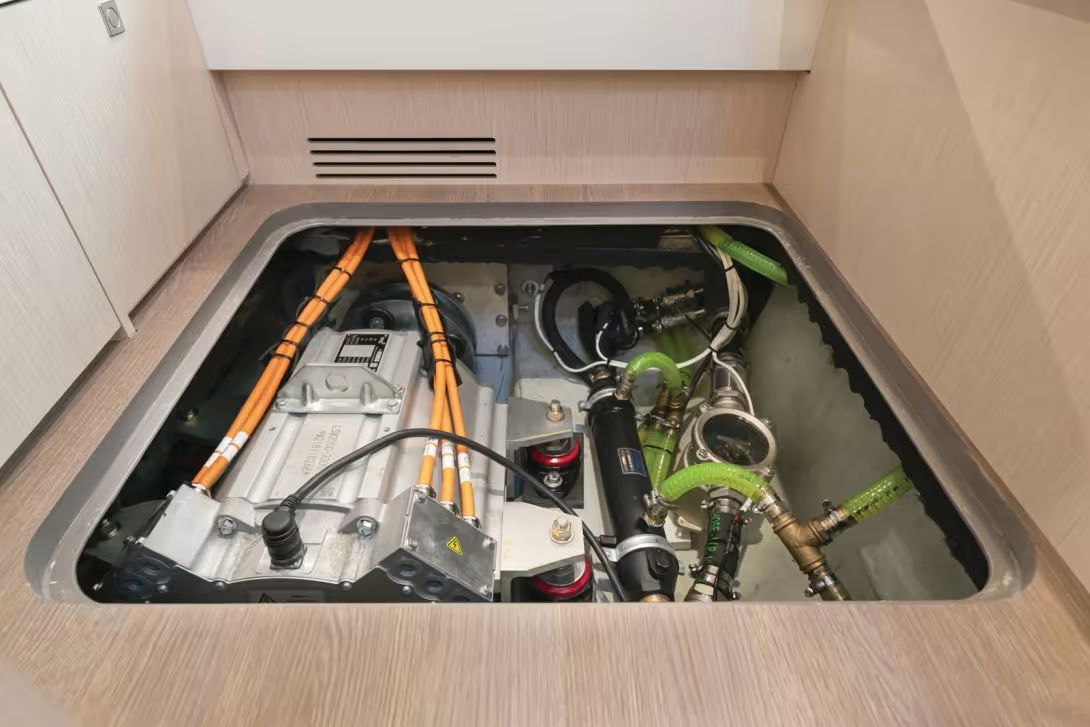
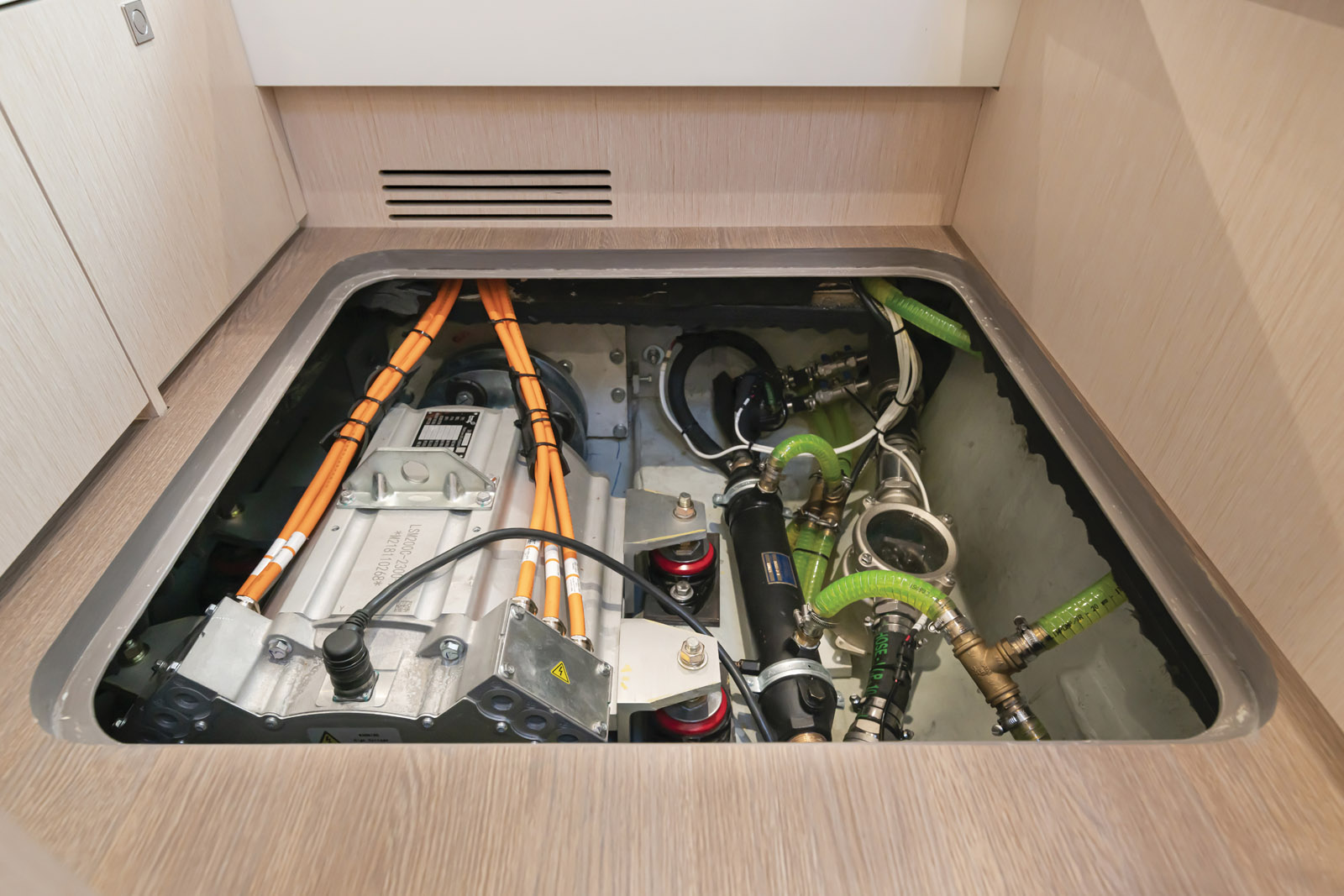
In order to turn the idea into reality, Michael went on a 5-year test cruise on a 46-foot catamaran he’d built himself. More than 2,500 hours of electric power during 140 weeks with guests and journalists allowed for full-scale testing. The complete autonomy without CO2 emissions, day and night, including in cloudy conditions and on board a catamaran providing a level of domestic performance identical to that of a motorboat with an internal combustion engine was patiently tested and meticulously made reliable. This scientific adventure has led Silent Yachts to see a real frenzy for its electric catamarans which range from 55 to 80 feet. Michael tells the genesis of the concept: “After spending more than half of our lives on a boat, my wife Heike and I knew that comfort is not something you can compromise with. But we were keen to free ourselves from noise, bad smells, vibrations and also to stop releasing CO2 into the environment. The electric motor is the only mode of propulsion capable of achieving these objectives. At the same time, the multihull is the best medium to achieve the goal of providing enough clean energy for life on board and for propulsion - and this in an unlimited way, and with all the modern comfort equipment people expect. Our technical experience has shown us that this kind ofboating is not only environmentally friendly, but also an integral part of luxury cruising. The advantages are numerous, starting with the weight saving and the size of the engines: they can be installed under the floor for better stability. With an energy efficiency of 98%, electric motors emit very little heat and you’ve got torque immediately available for docking maneuvers. As for maintenance, with the only moving parts being the rotor and two bearings that only need to be changed every 50,000 hours, you’ll never have to do any! They are also much more reliable than combustion engines, which is why we don’t hesitate to offer a lifetime warranty. Finally, this virtual absence of periodic overhaul is reflected in the operating price, just as fuel savings more than compensate for a higher investment than the purchase. We have pushed research to the point of offering - with solar panels that we guarantee for 25 years and a battery bank that is guaranteed for 8 years - real operating autonomy on very long passages. This can be achieved operating at trawler yacht speed, but if you need to go faster to get out of a bad situation, this is possible by using the generator. In the end, you’ll always manage to complete your cruise with full batteries, ready to provide all the comfort you want on board, instead of having to wait in line at the fuel dock.
