Our trial of the 80 Sunreef Power Otoctone 80, published in MW171 was somewhat frustrating. Our winter sailing in the Baltic Sea was indeed accompanied by heavy rain - we barely escaped the snow, it’s true - and almost zero visibility. As for the fittings, they were still having the finishing touches put to them. Nevertheless, we were able to judge the dynamic qualities of the hulls and to discuss the technical aspects with skipper Achille Lefrère, who came to follow the delivery... However, we couldn’t really enjoy the true qualities of the second boat of the Polish shipyard’s new range. This 3,200-square foot (300 m²) platform of luxury and comfort is of course designed for motor cruising in all of the world’s paradisiacal destinations. The opportunity to come back on board in real operating conditions had been proposed by the shipowner, who also ordered a 60 Power. You definitely can’t turn your nose up at spending a few days on board Otoctone 80. At Multihulls World, we are always ready to make all the necessary sacrifices to help you make the right choices when it comes to multiyachts!
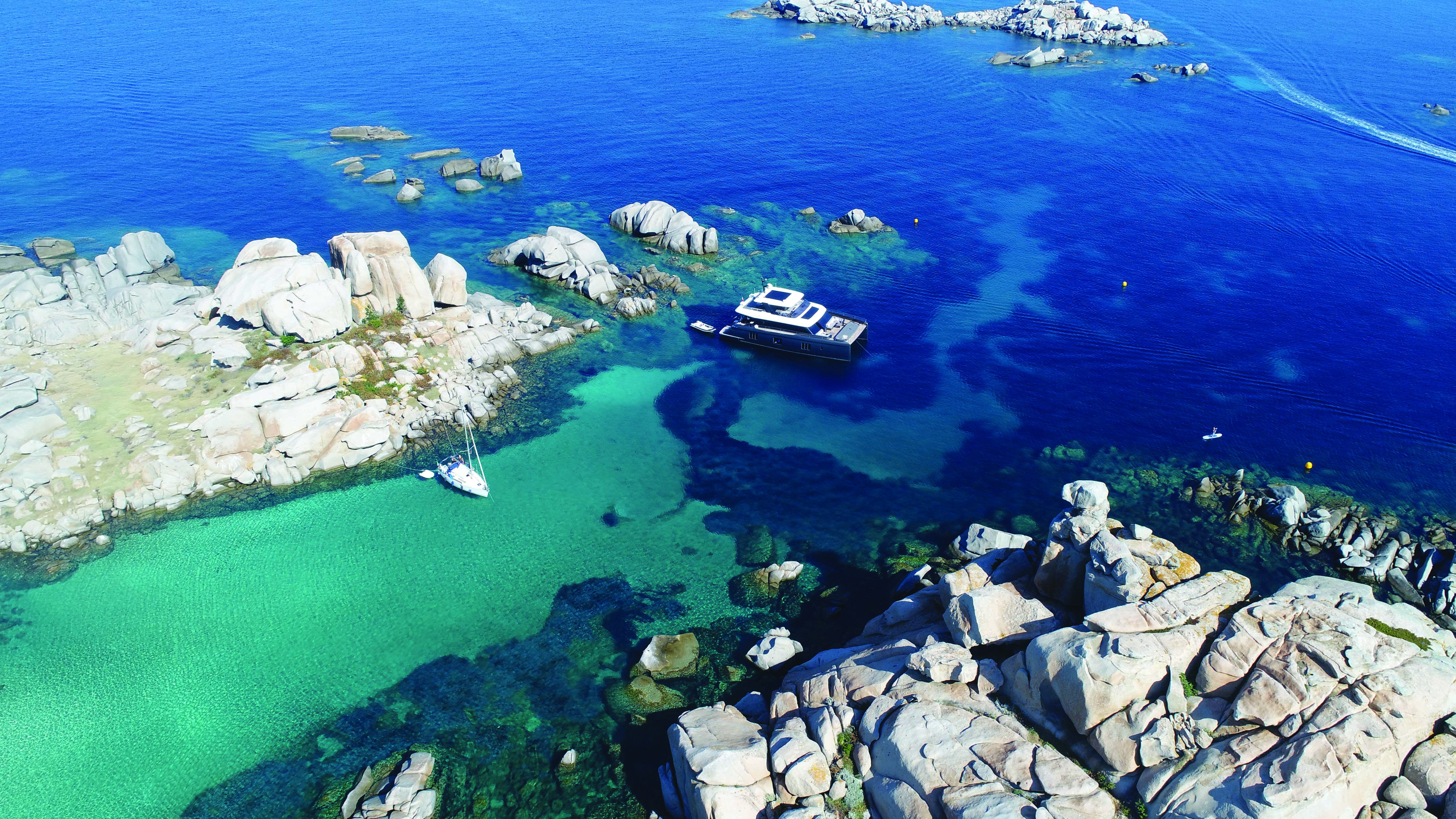
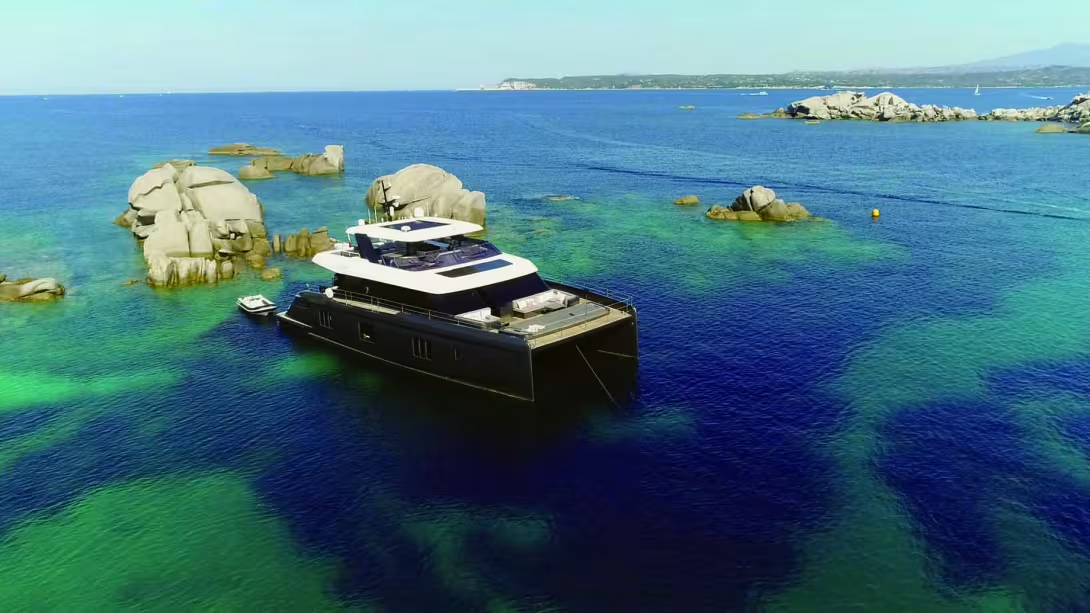
Thanks to its shallow draft, the Otoctone 80 can slip into dream anchorages inaccessible to a much larger monohull yacht.
A new type of offer
The advent of the powercat in the luxury charter segment is very recent. Responsibility for this probably lies at the feet of the two world leaders in the sector - Sunreef and Lagoon - who have introduced this new charter possibility. Since the early 2000s Sunreef Yachts has relied on sailing catamarans for its luxury charter offer. In 2010, the 70 Power was the first conclusive test boat, and since then, nearly 30 units have been built. The offer available for charter on board Sunreef models currently includes 50 multiyachts - 43 sailboats and 7 powercats. This imbalance will probably be rectified quite quickly, as the manufacturer’s current range includes as many sail models as motor. The same also holds true for Lagoon.
Motor over sail?
But why would you opt for an engine over sail on a larger vessel? It is precisely to judge the pros and cons of the powercat that we are here in Corsica. We met up in Piantarella, a small beach to the north of the island. Otoctone 80 was returning from Sardinia and crossed the Strait of Bonifacio with a strong headwind and a rough sea. Its sailing equivalent, would surely have sailed under motor in these conditions - maybe that’s a sign? But anyway, let’s dream first!
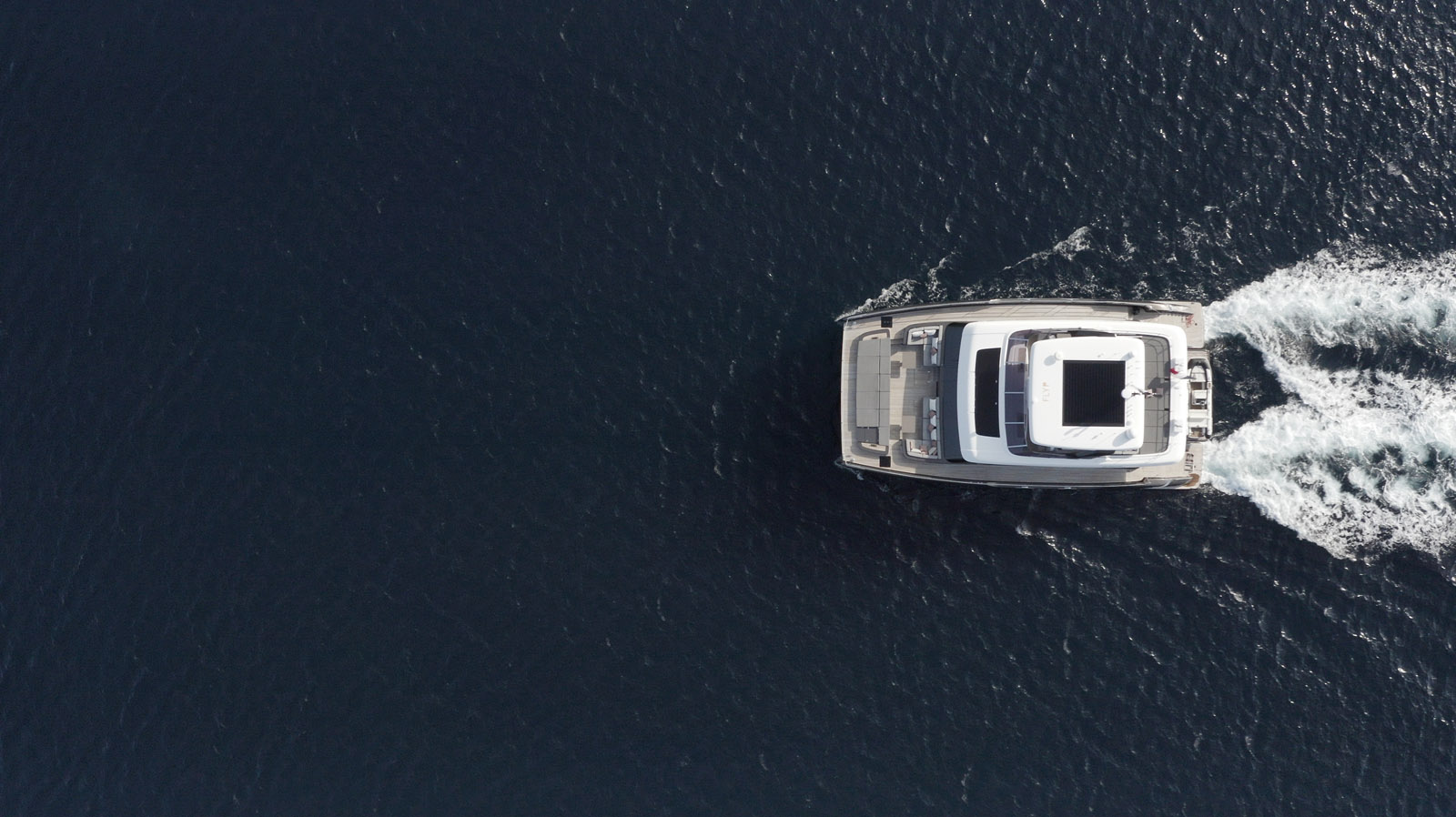
An imposing multiyacht
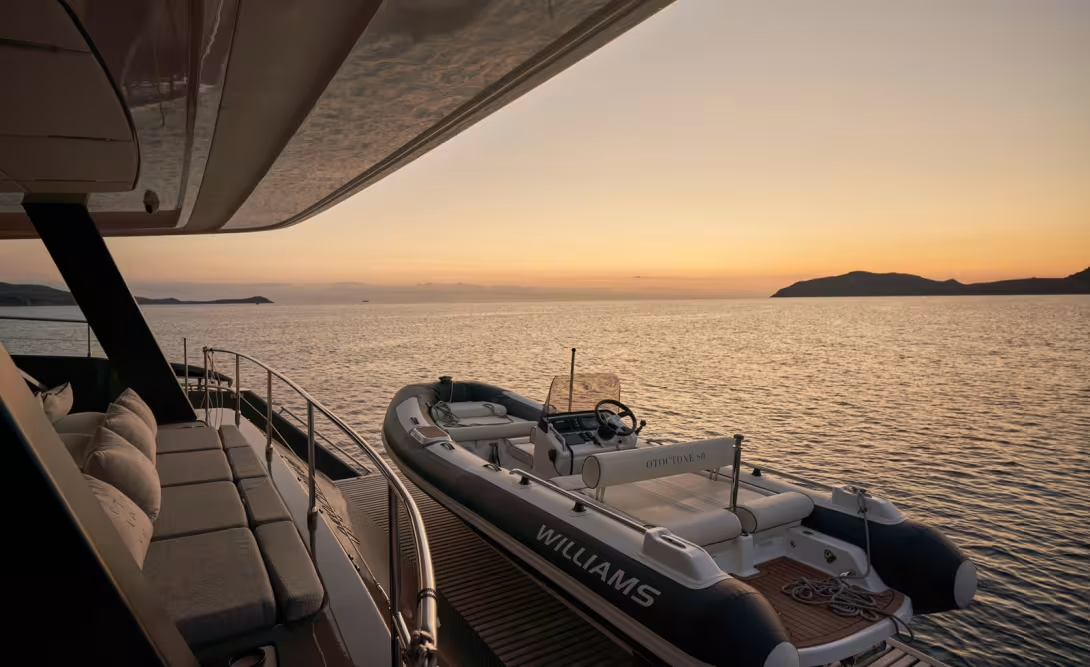
In this small anchorage, the 80 Sunreef Power imposes itself from the outset as an extraordinary yacht. Its striking silhouette and elaborate design are a dominant presence in its immediate environment. This is not a boat for lovers of discretion and simplicity... for my part, it is with undisguised pleasure that I embark on the Williams 520 jet tender with which Achille came to pick me up. As soon as I had climbed up the few steps of the sugarscoop, I met the crew. The dinghy was stowed in two minutes on the bathing platform and we set a course for the Lavezzi Islands. I started a welcome chat with the crew. They are the ones who will pamper me during this mini-cruise - their role is crucial, independently of the powercat itself, as they are the people who ensure that any stay on board goes perfectly
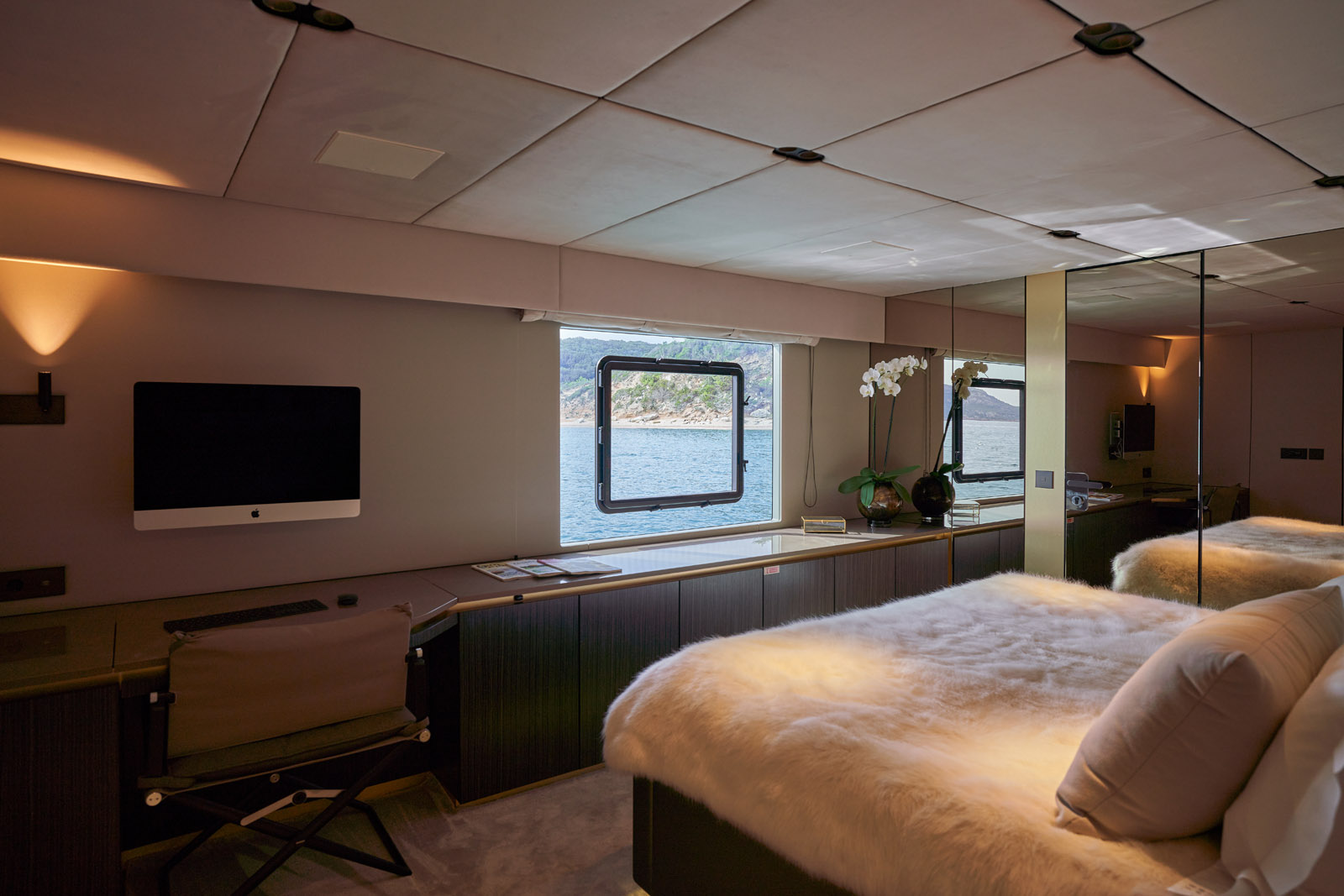
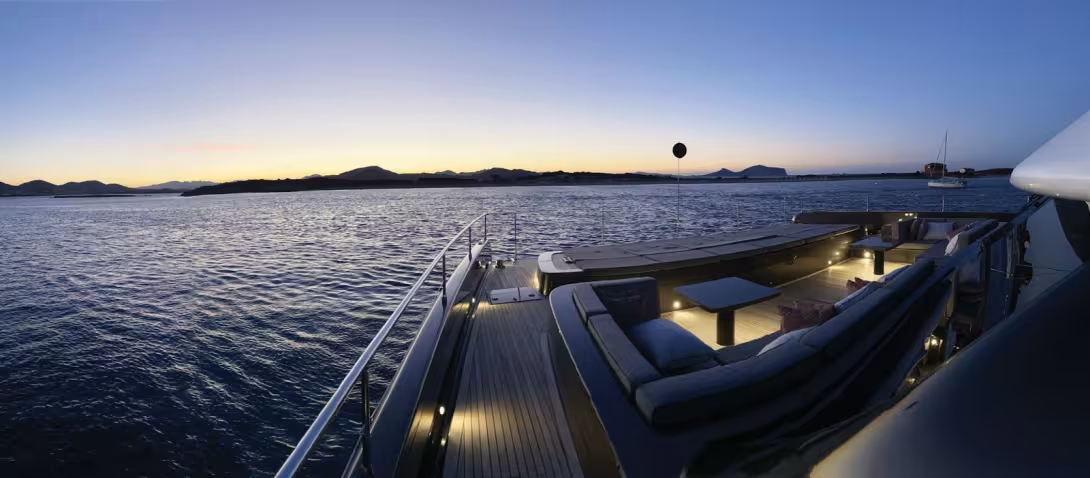
In the morning, waking up to the splendid scenery of the anchorage is a magical moment.
A versatile and dedicated crew
On board a yacht, a dedicated crew should be at your service, just like in a five-star hotel. The ratio is a minimum of one member for every two guests in order to ensure you the best possible service. Here, there are four double cabins for eight guests so there are four crew members. Achille, who holds a 200-ton Captain’s license has plenty of experience sailing large catamarans. He is responsible for the smooth running of Otoctone 80, but also for the commercial relationship with the clients and the accountant. He is also in charge of dealing with all of the program details: taxilimousine reservations, restaurants, shows or excursions. With the help of a travel agent, he finds, along the coast, all the exclusive services that his clients might need. Antoine is assisted by a sailor, Pierre-Charles, who worked on Bintadore, a 165-foot (50-meter) Tankoa Yacht, and is also a multitasker. He maneuvers the 80 Power with the skipper but he is also responsible for the safety of the guests. Pierre-Charles implements and maintains all the nautical toys, and there is no shortage of them on board! The hostess shows me around the Powercat and my cabin. Kelly comes from the world of superyachts. She is attentive to your daily domestic needs and acts as a Maître D’ - She takes care of the dining area as well as the cabins and sunbathing on deck. Jean-Baptiste is a sailor who has spent many years working aboard classic sailing yachts. He has become a passionate chef, preparing cocktails and dishes that you would find in a gourmet restaurant. Jean-Baptiste manages the supplies so that you can choose the dishes that you would like to eat - or he can make his own suggestions. It’s not by chance that this kind of expertise has been so sought after in the world of luxury superyachts: some of the ship owners also come from this world - and they consider catamarans more comfortable and economical than large monohulls.
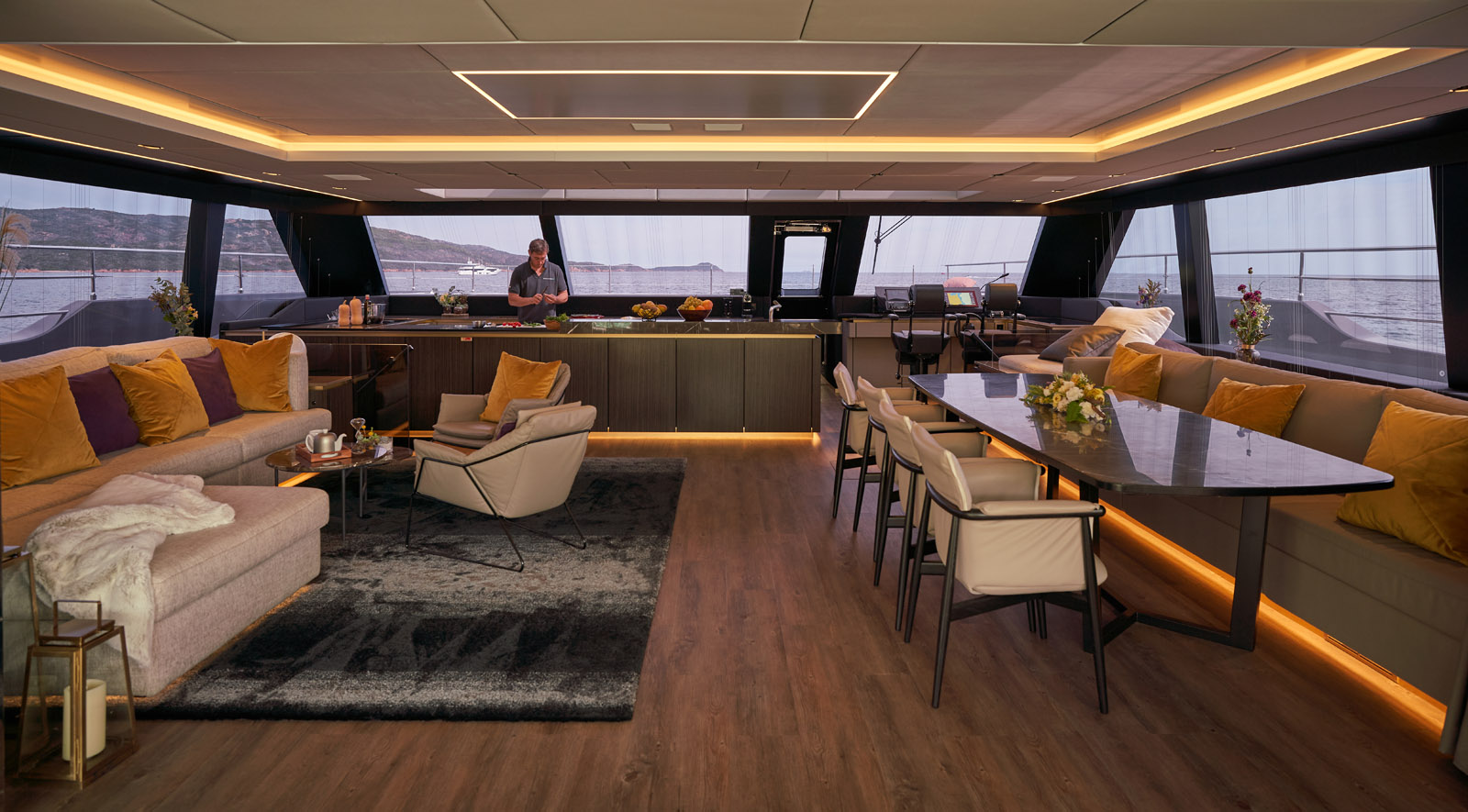
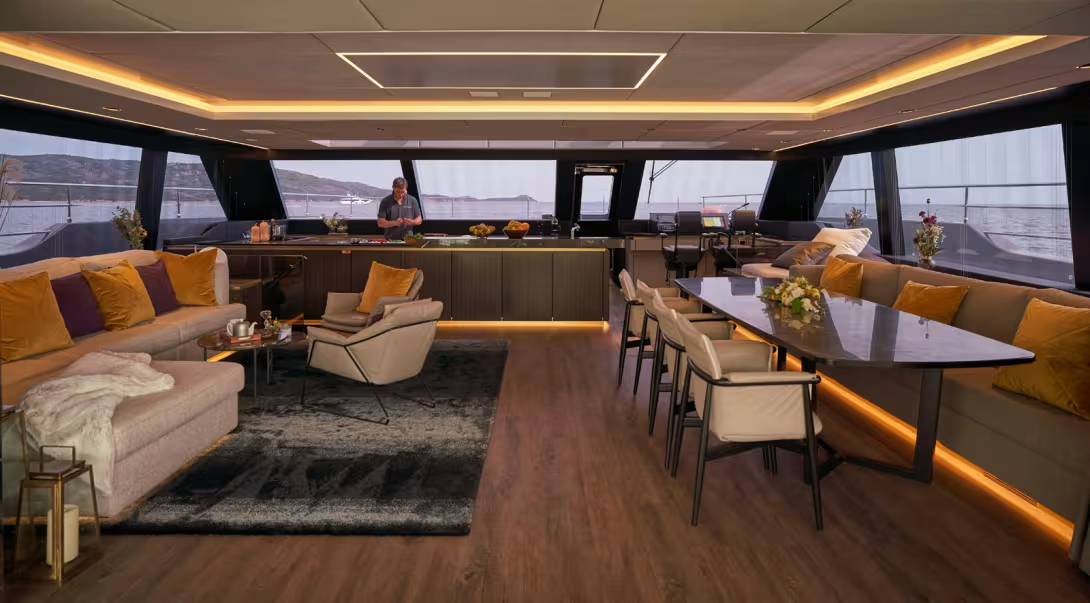
On board Otoctone 80, the galley is forward of the saloon. At aperitif time, this arrangement is very convivial because guests and crew can interact in a relaxed atmosphere.
A floating palace
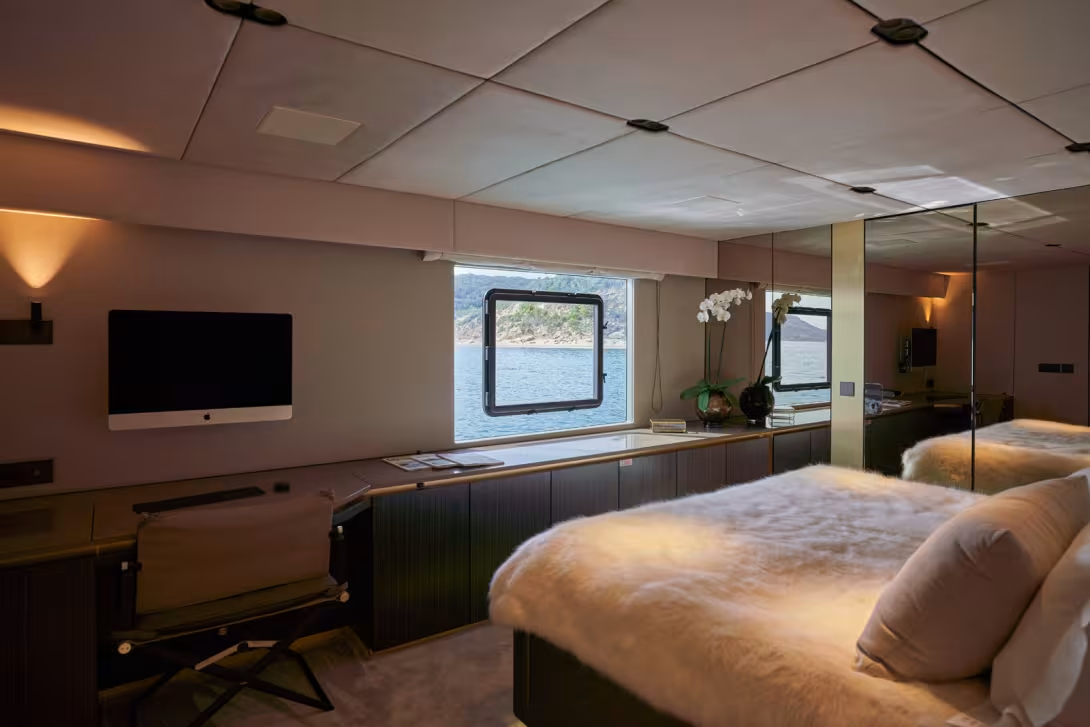
For the moment, I’m in heaven: I’m taking full advantage of the facilities. The decoration - fine-tuned by the designers according to the shipowner’s recommendations -, the volumes and the equipment are reminiscent of what you would find in a beautiful modern villa. The size of the cabins - or suites - with their private bathrooms, the king size beds facing the sea with dressing table and desk are all elements of comfort that guarantee rest and privacy between leisure and meals. The living-dining room with its panoramic view is simply immense. A professional kitchen is integrated in this space behind a bar. The ensemble is very convivial, especially at aperitif time. Some guests prefer more privacy: you can simply draw the cockpit curtains to separate them from the service when you sit down to eat. Outside, the relaxation areas are multiple and very spacious - forward, aft and fly. You can do yoga or read in the sun. Social distancing, if needed, is guaranteed...
In the meantime, the wind has dropped. Free from the long maneuvers of hoisting and lowering sails, we are almost immediately on our way. No sooner installed in the owner’s cabin with its XXL dressing room and bathroom, I spot Lavezzu through the large portholes, one of the main islands of the Lavezzi archipelago. After a photoshoot to collect a few views of Otoctone 80 at anchor and a nice little swim in the turquoise waters, it was time to plunge back into the hushed and air-conditioned atmosphere to see what the chef had concocted, while tasting a Burgundy Hautes-Côtes de Nuit. What an awful job! Appetizers, violet spring rolls, carpaccio of salmon and buffalo mozzarella... Needless to say, the evening was excellent. If you wish, the Chef can supply your favorite digestive. Back in my cabin, I note that the bedspread had been removed for the night - just like at the hotel.
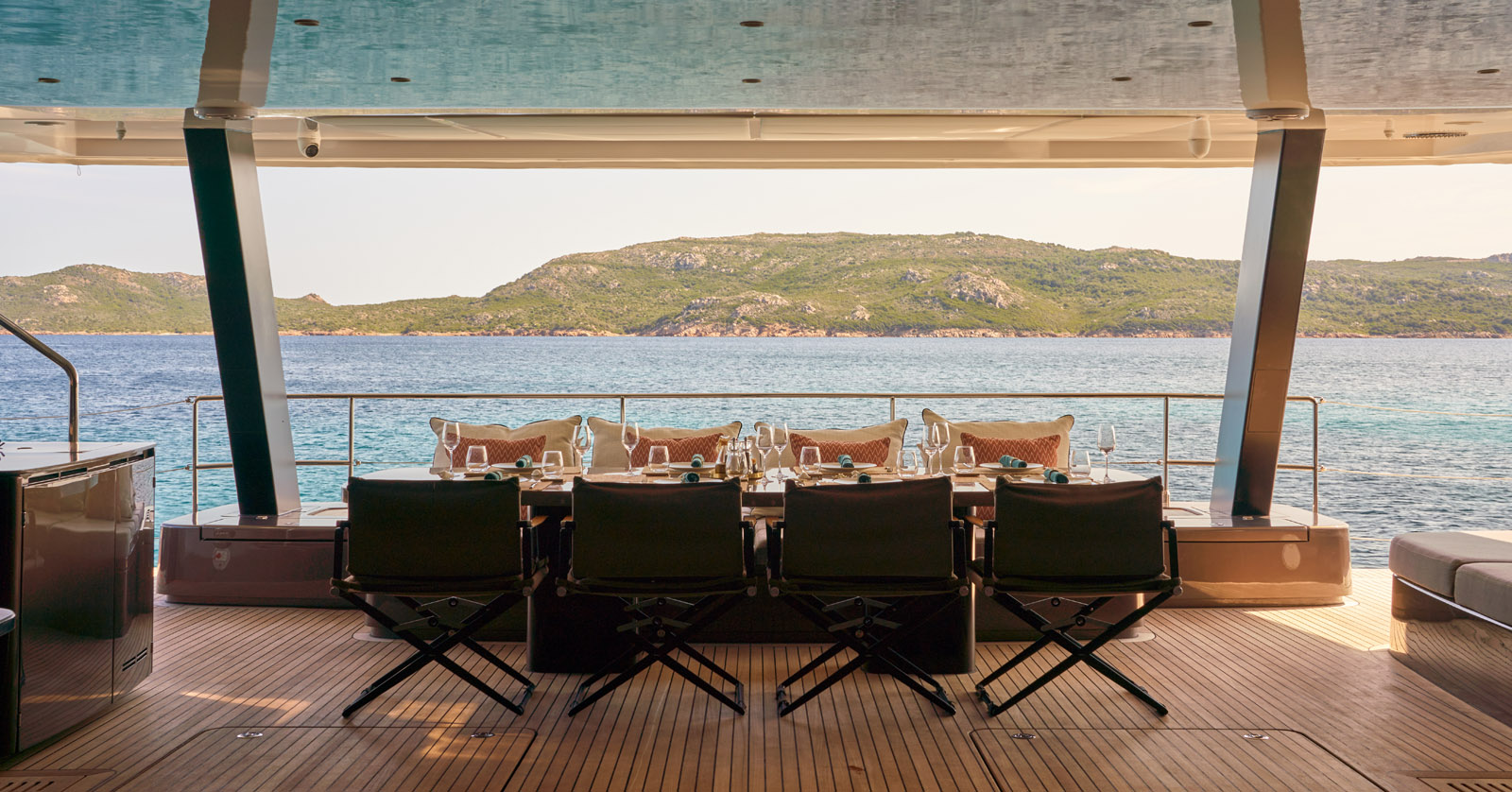
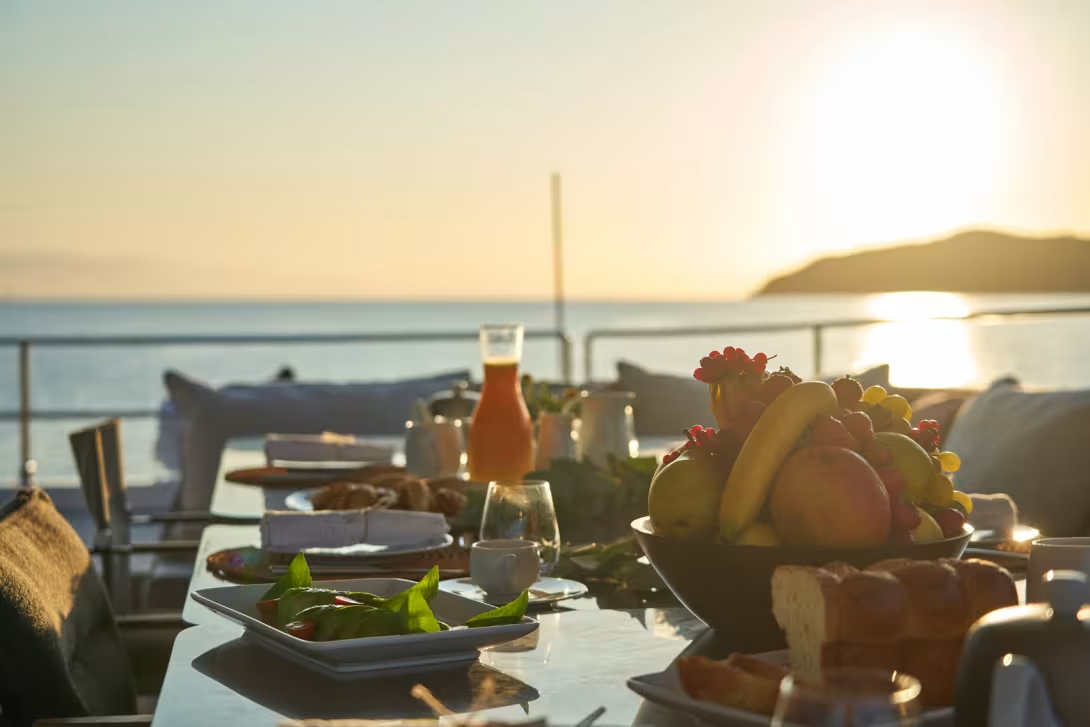
A luxury charter means, among other things, enjoying meals worthy of a gourmet restaurant, but with the backdrop of some the most beautiful locations to discover as a bonus.
A multitude of water toys
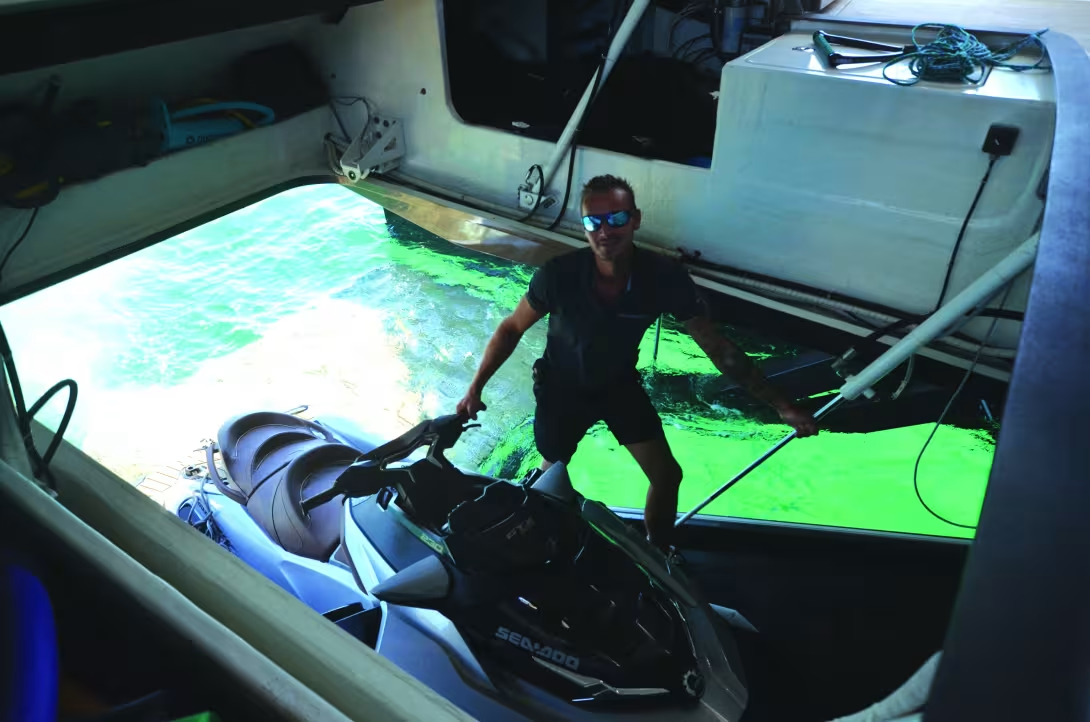
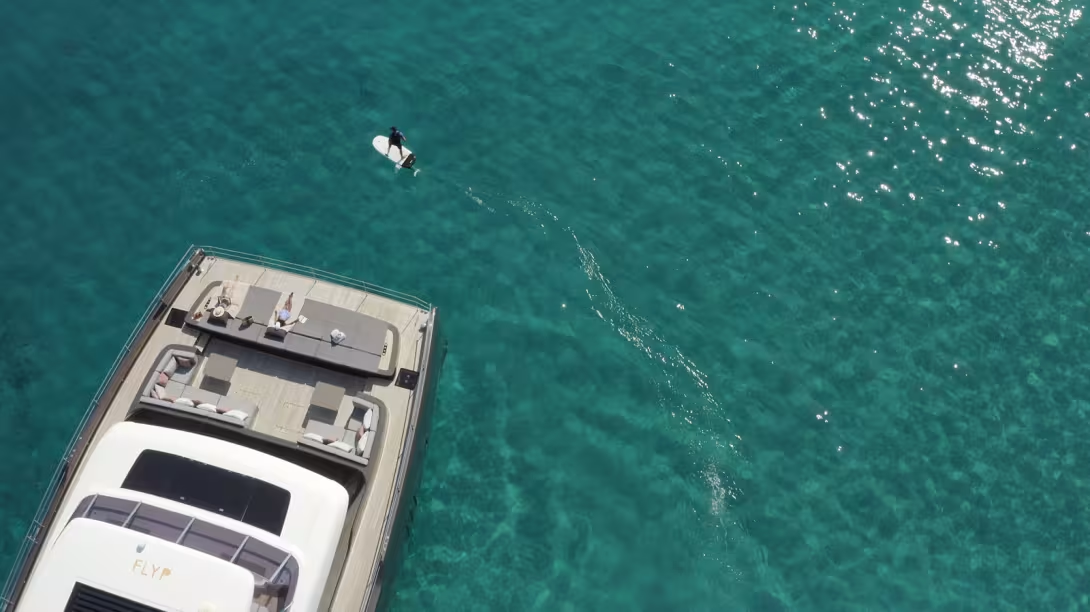
The bed is very comfortable. It’s just a pity that the generators make a little noise - perhaps the soundproofing needs to be improved. The next day, well-rested and after a good breakfast, I allow myself an introduction to the water toys on board. In addition to the magnificent Williams tender, which tows you on the wakeboard, Otoctone 80 is equipped with everything you could need to have fun. Jet-skis and paddleboards are among the classics, but there’s something even better: the electric foil! This motorized surfboard has a little mast and foil underneath that allows the board to rise above the water. Propulsion is provided by a motor powered by a lithium battery with an autonomy of more than 60 minutes. The floating pool is available so you can leave your children safely in the water. Thanks to the large locker whose bottom can be hydraulically lowered and the rear swim platform that folds out underwater, it is very easy to access (and store) all the toys so that they are readily at your disposal, including the jet-ski, which can be in the water in no time at all. Indeed, before we weigh anchor, we saw that everything had been stowed away in less than a quarter of an hour. On board some motoryachts, this operation can take much longer. I decided to take the jet-ski for a ride. Here again, it’s not just any equipment: I’m riding a Seadoo GTX230. With this thoroughbred, it’s possible to get up to 60 knots - which I didn’t do…
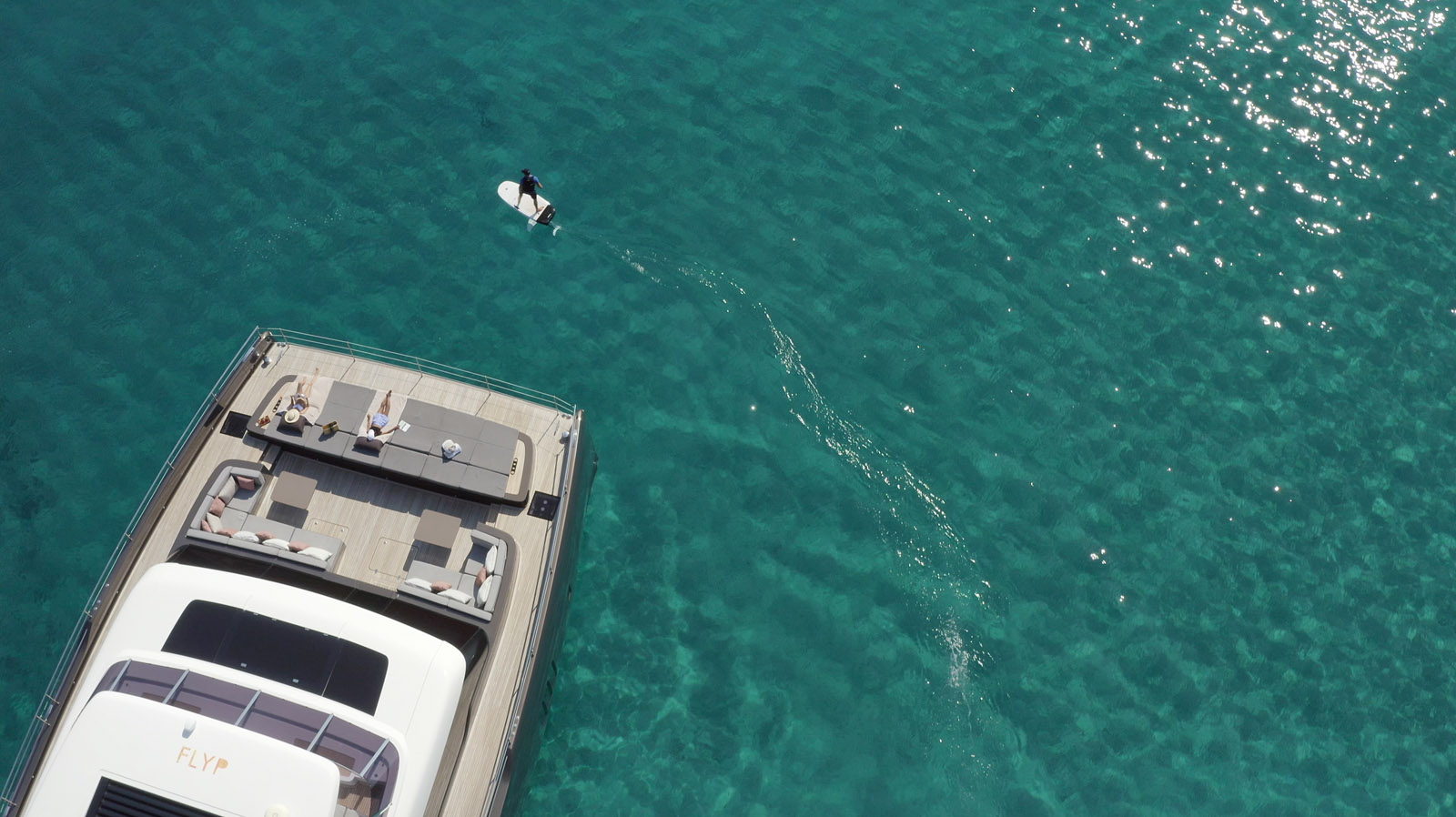
Toys are numerous aboard a catamaran of this category. Wakeboard, jet-ski, paddleboard, electric bikes. And all of this equipment is state of the art.
True dynamic comfort
It’s time to head off again to go along the south-east coast of Corsica towards PortoVecchio. There will be two hours of sailing until our next anchorage, and it is enough to realize how easy life is on board. Powered by two 500 HP engines, we had recorded, in Gdansk, a maximum speed of 13 knots and a cruising speed of 10 knots - which we found a little low. Raphaël Nadal chose the more powerful engine, 2 x 1,200 hp, and ordered a third one. Moreover, and as a sign of the 80 Sunreef Power’s presence, it so happened that when on Otoctone 80 the tennis player was questioned by some passersby who recognized the boat! All in all, at ten knots, the comfort on board is exceptional. One does not even feel that one is sailing. The stability is perfect: with its dedicated hull for the engine, the pitch remains rigorously horizontal and it does not make too much noise. You can rest, watch a movie, do your physical training or eat in complete peace of mind, just like at home. This speed is perfect for vacations and has the advantage of being fuel efficient since «only» 21 US gal (80 liters)/ hour are consumed. This is partly what attracts a clientele accustomed to much larger motoryachts - you would need about 130 feet (40 meters) to have the same available space. These units are more expensive to charter and much more energy-hungry. This inevitably affects the final bill.
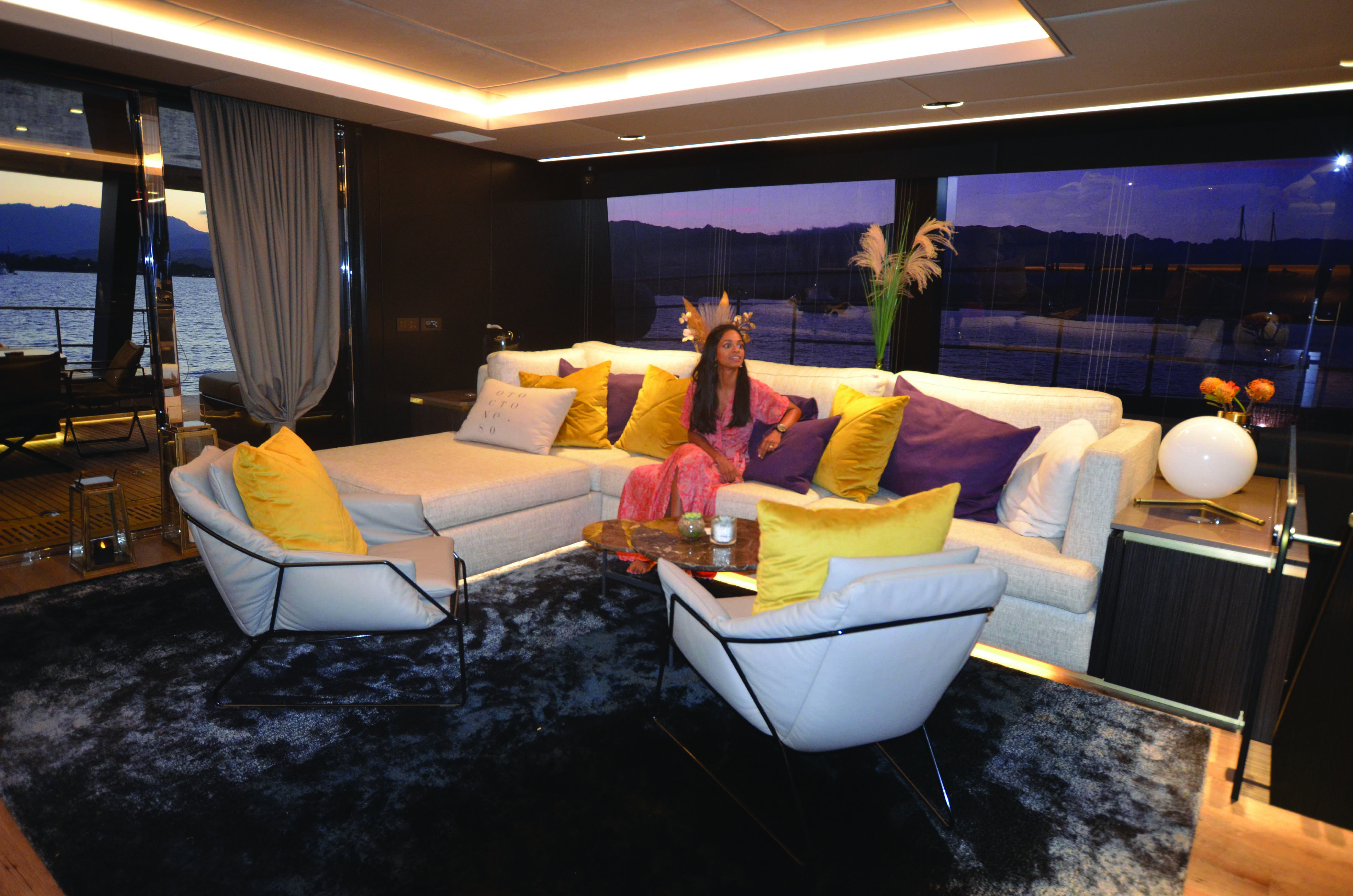
The very hushed - but panoramic - atmosphere of the lounge on the main deck gives you the impression of being in a very upscale hotel, but with a kaleidoscope of decors...
The price of luxury
Otoctone 80 is offered for charter at a rate ranging from € 60,000 to 70,000 ex-tax per week depending on the season. In addition, there is a charge of € 18,000 ex-tax of APA (Advanced Provisioning Allowance). This advance covers operating costs such as food and beverages, marina, port fees and other port taxes, communications and internet use, fuel for engines and generators, guest transfers and finally shore excursions. Special requests from charterers can impact this advance if this amount is not sufficient to cover them. Achille confides to me that this sum, which is more modest than those requested on board motoryachts - where the amount of the APA is rather close to 35% of the charter price - is rarely fully spent on cruises. For this habitability, comfort and service, the price (even if it is substantial) is more attractive than a larger monohull offering the same level of services. All good things must come to an end and I already have to leave the boat. Arriving in Porto-Vecchio, the crew gets busy stocking up for the next charter week which will take place off the Amalfi coast, south of Naples.
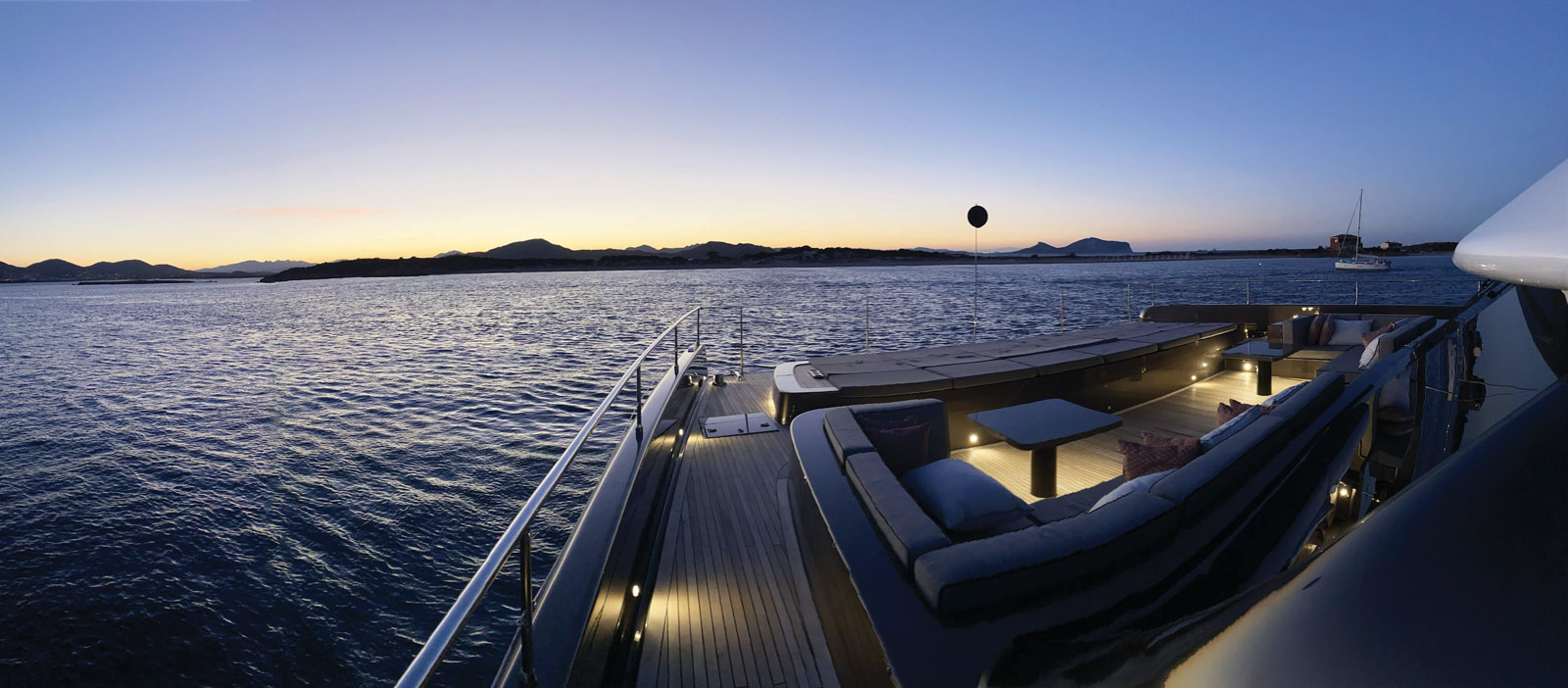
With the black anchor ball hoisted, there is a wonderful night on board the 80 Sunreef Power ahead of us...
The shipowner’s angle
Unless he uses his multiyacht full time, it is of course important for the owner to make the investment in this kind of project profitable by offering his powercat for charter. The average availability of luxury units, which sail in Europe in the summer and in the tropics in the winter, is around 80% of the time. This is not the case for Otoctone 80, which only sails in Europe from May to October. Under no circumstances could the charter income for an owner be enough to fully finance the purchase of his multiyacht. This income will be used to cover operating expenses and the investment necessary for refit repairs. If a luxury yacht is to be attractive to customers, it must offer all the latest, most fashionable equipment. Investments can often be substantial: the jet ski that I used, like the Seadoo 230, cost € 15,000. This is also true for household appliances, multimedia, communications and even decoration - which implies frequent replacements and repairs. In order to guarantee a good level of safety, servicing, technical visits and upgrading must be carried out very regularly. Electricity, plumbing, engines, generators, watermakers etc... the list of maintenance works is exhaustive in order to provide the flawless comfort that customers demand. The annual operating and maintenance costs of an 80-foot yacht including the crew (a permanent captain, a sailor, a hostess and a chef for the charter periods), the port, insurance and various maintenance works can represent a global budget of € 300,000 to 500,000. In addition to this, there are agency commissions for the management of the charter. It is therefore a genuine, floating small business. In principle, the coverage of all management/maintenance costs should be balanced with an average of 8 to 12 weeks of charter per year, with any supplementary weeks being used to partially finance the multiyacht.