
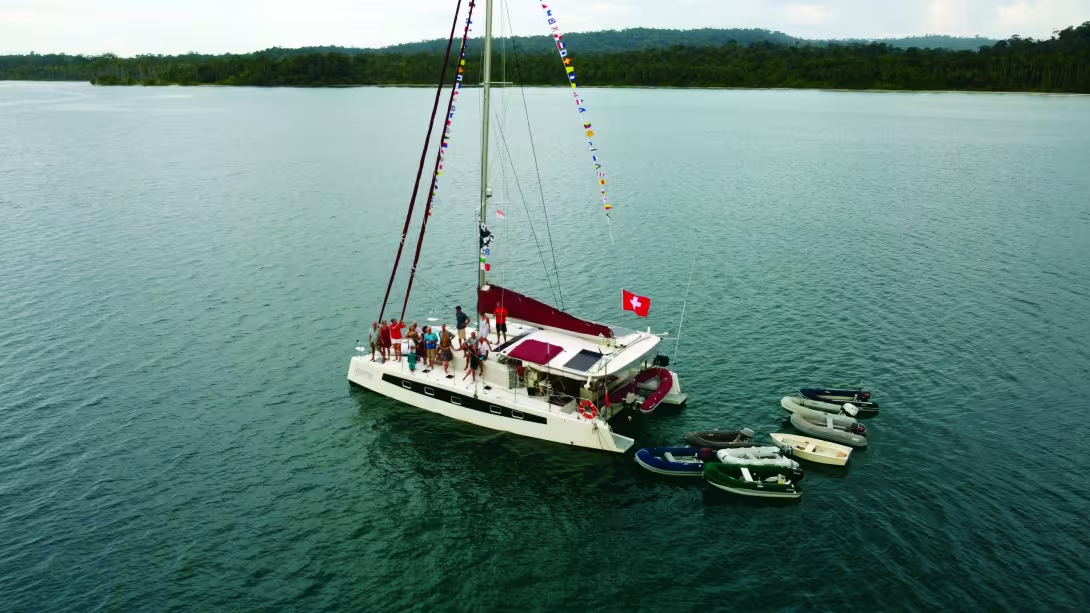
After more than two years spent in Southeast Asia, we decided to start our circumnavigation. First step: crossing the Indian Ocean. At the end of February, we had arrived in Phuket and were restocking all the supplies in anticipation of a long sail aboard our Catathai 44. We had about six months’ worth of all kinds of supplies on board. At the beginning of March, we left Thailand, heading for Langkawi in Malaysia, in order to top up our supplies with products not available in Phuket, as well as drinks. On March 11th, we set sail with the catamaran fully victualed, towards Sabang, our entry point into Indonesia, to participate in some of the stages of the Sail West Sumatra Rally. This event is organized by the Indonesian Tourist Office. Our goal was to join in as far as Padang, where we planned to do all the exit formalities and then sail along the Sumatran coast as far as the island of Pulau Enggano. We then planned to head for the Cocos Keeling, the first stage of our crossing.
NOT WELCOME ASHORE
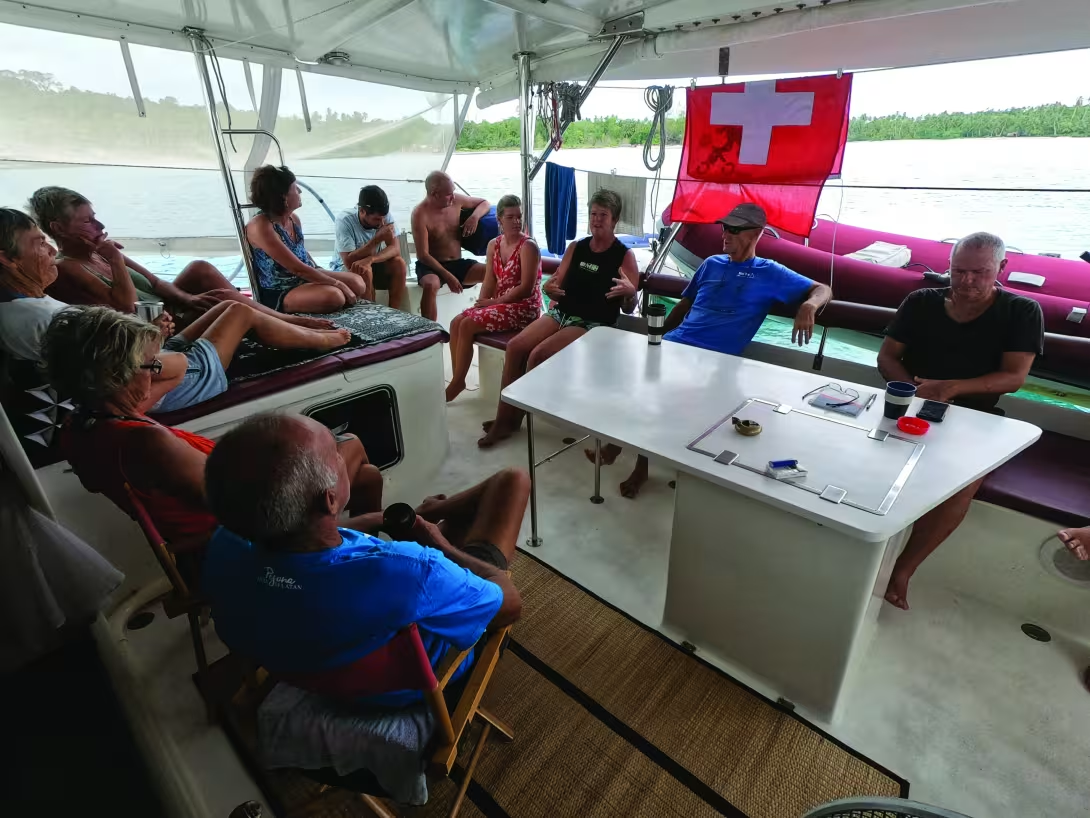
Our situation then became more complicated. There were about fifteen boats in our anchorage, but nobody had any idea what was going on. We had a meeting with the Rally’s organizer who explained that because of the pandemic, we were not welcome on land anymore and would have to stay on our boats. On March 17th, the port authorities kindly asked us to leave the area as soon as possible. We took advantage of this short delay to do some shopping for fresh produce. Back on board, we didn’t know where to go ...
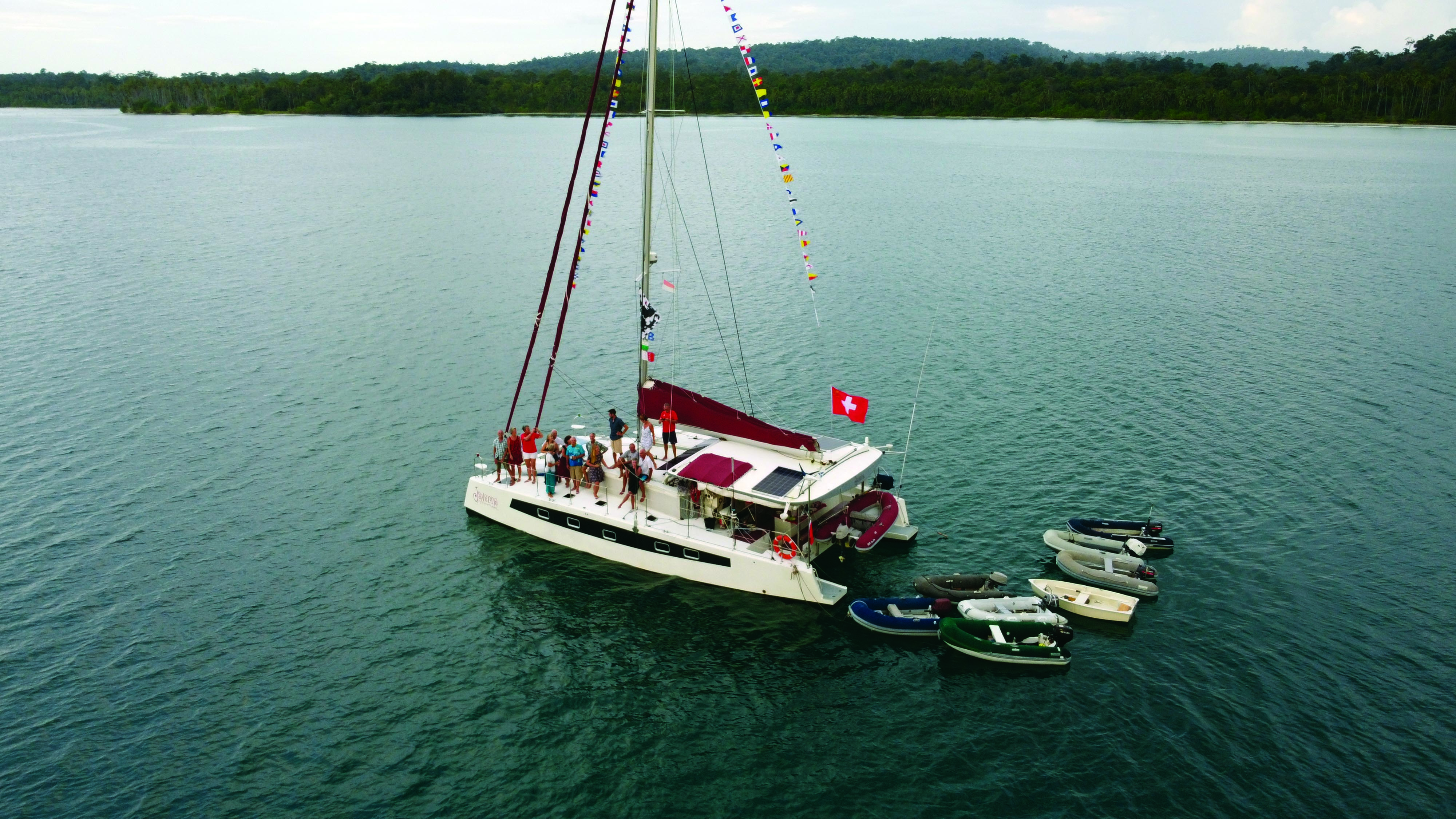
We were talking among ourselves; some boats were regrouping and planning to head to another island, further south, but there’s no anchoring allowed, so please continue on your way... We were luckier: Javerne spent the night in a small sheltered cove, far from any dwelling.
Our WhatsApp network kept crackling, telling us that this or that boat had been banned from this or that anchorage. The residents fear that we are sick, so we choose deserted anchorages. If we stay with two or three other boats it’s a little easier. The organizer of the rally was desperately looking for a solution. In the meantime, the instruction is not to go ashore.
Along the way we got the news: we could anchor in Teluk Dalam, to the south of the island of Nias, in the west of Sumatra. We arrived there on April 2nd. After a brief health check with temperatures taken, we received our health certificates and were allowed to go ashore. Phew! It felt good to walk around the city. Very few people were wearing masks and all the stores and restaurants were full, as in «normal» times.
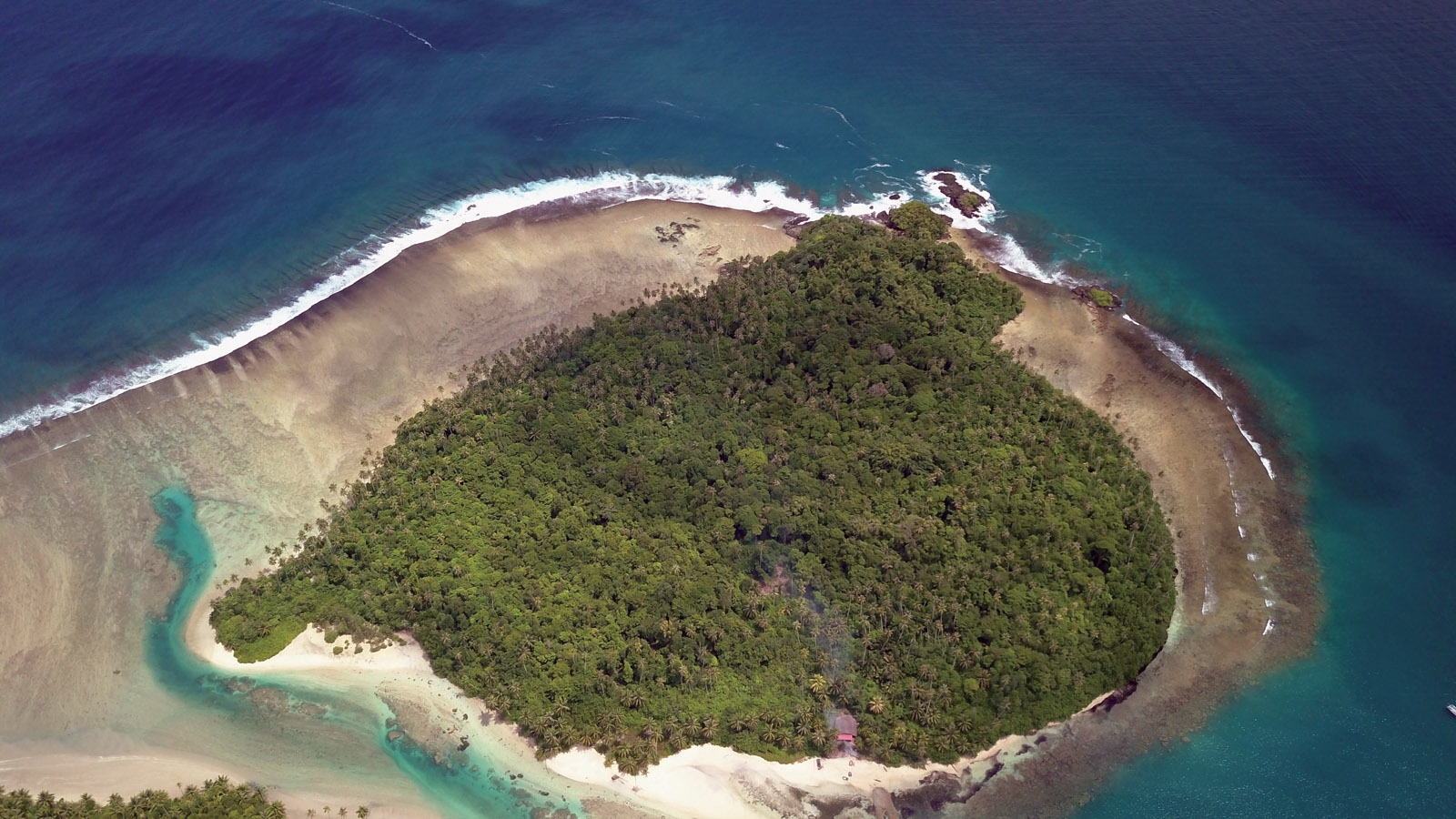
On April 5, after having stocked up again with fresh produce, we left Teluk Dalam, bound for Pulau Barogang. It was this island that was to become our «golden prison» for 5 months.
The organizer of the rally, the high officials of the Tourist Office of Malaysia and the Governor of the Province of Nias agreed to «offer» us an island during the lockdown. A weekly shuttle will bring us our shopping, fresh produce and anything else, but we have to stay there while awaiting a decision from the authorities.
AN ISLAND JUST FOR US
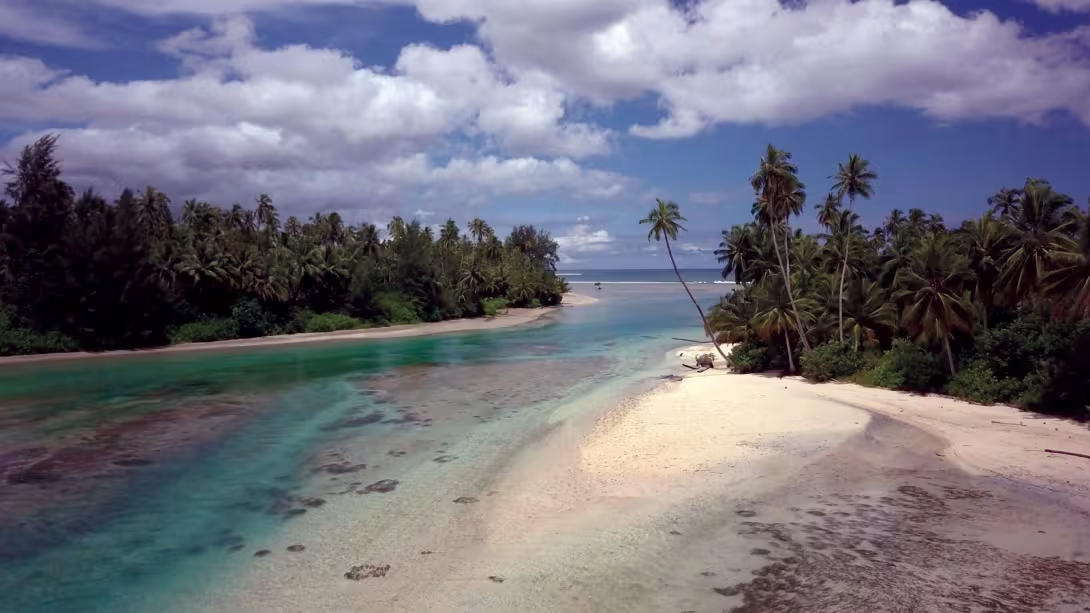
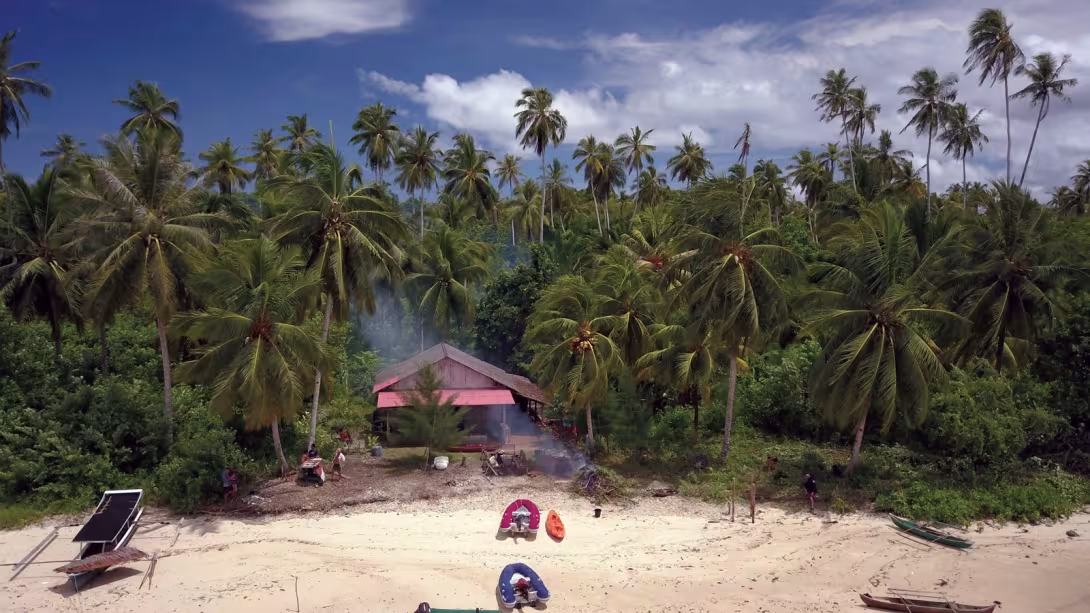
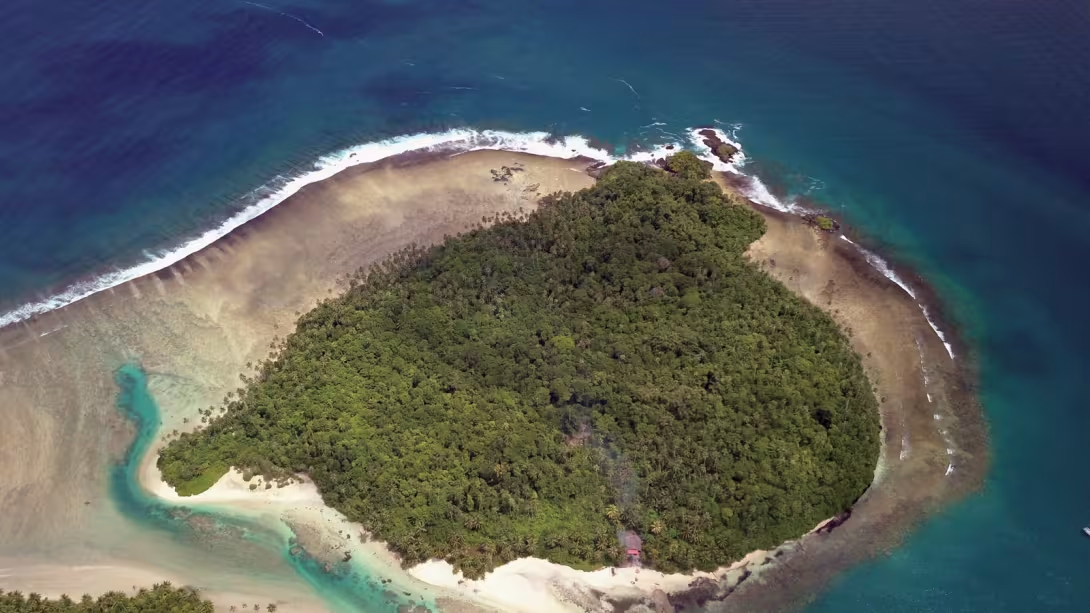
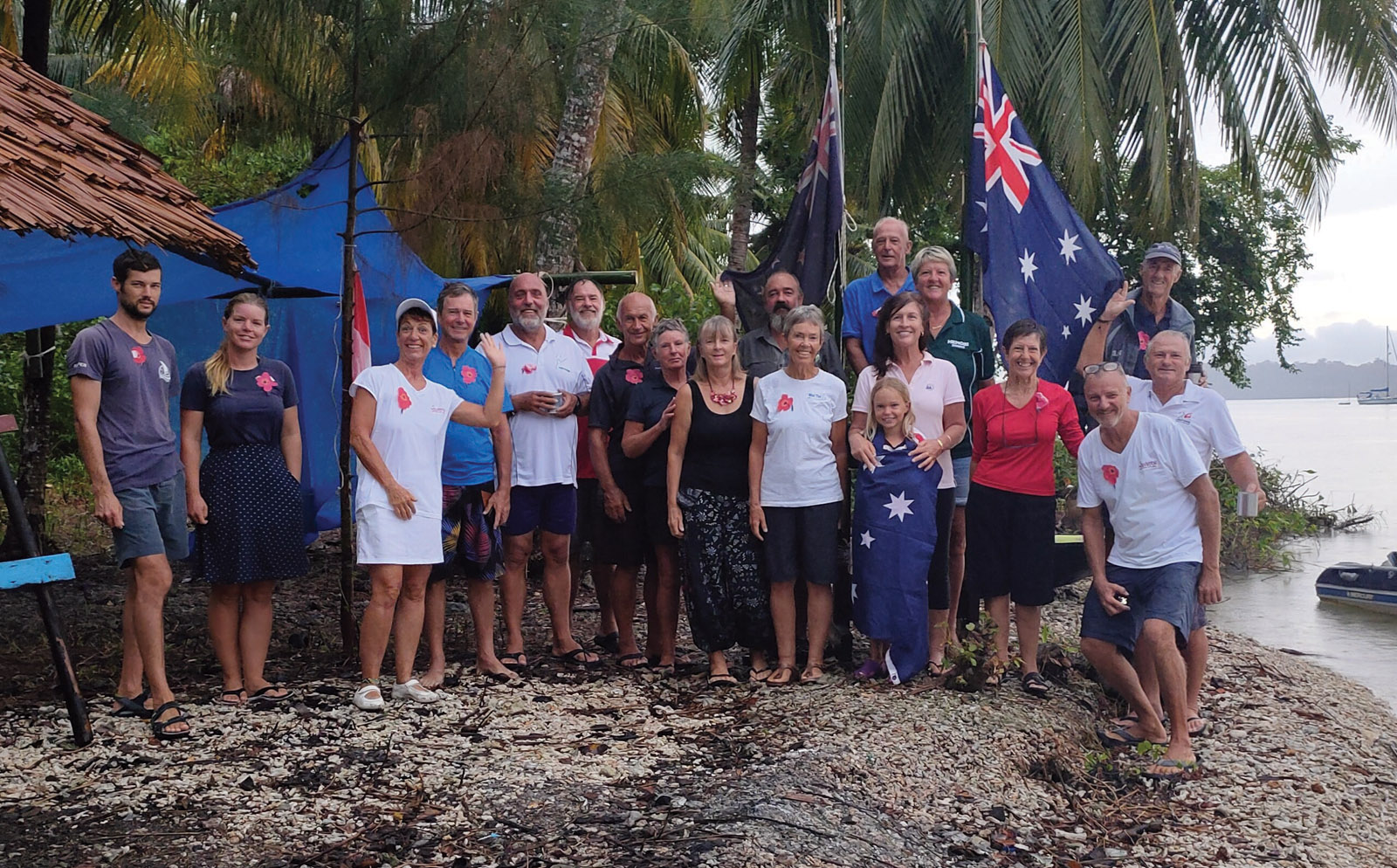
We were now down to 10 boats and had to accept this solution as best we could. We had an uninhabited island of our own, and could do whatever we wanted on it...
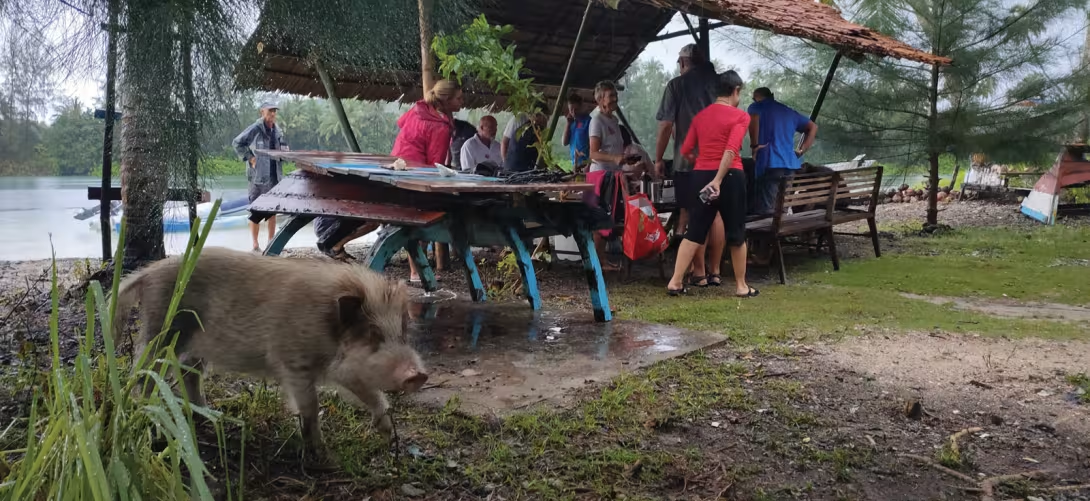
On the first day, the Governor of the Province invited us to a meal on the island and brought a grilled pig. It was an opportunity for the government officials and the sailors - for the majority Australian, two New Zealand crews, two British crews, and a Swiss crew (us!) to get acquainted. Everyone speaks English.
An Indonesian was designated as our contact to help us in case of need, but he doesn’t speak a word of English, and we don’t speak Indonesian yet!
On the island there were three wild pigs, chickens, two cats and a dog. We found names for them and they got used to us. Four months later, we were able to witness the birth of a wild pig, nine chicks, a kitten and the arrival of a new dog - not to mention a big Comodo lizard, two snakes, a few monkeys and various spiders.
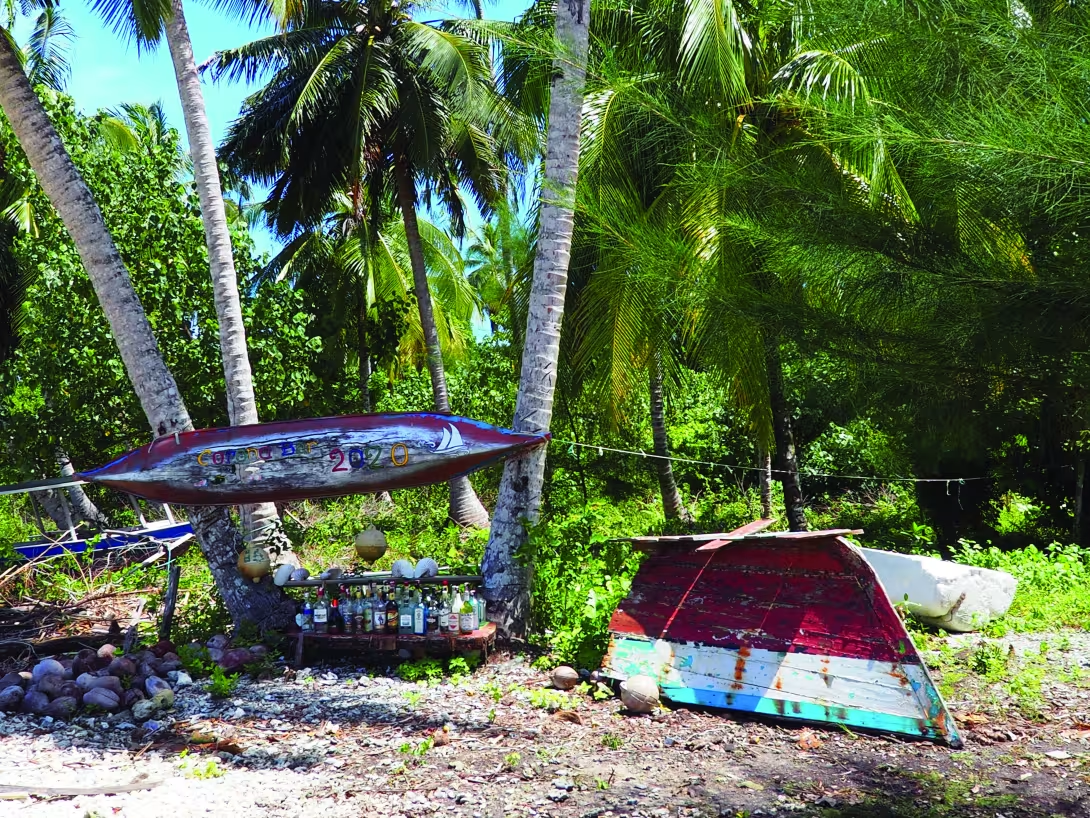
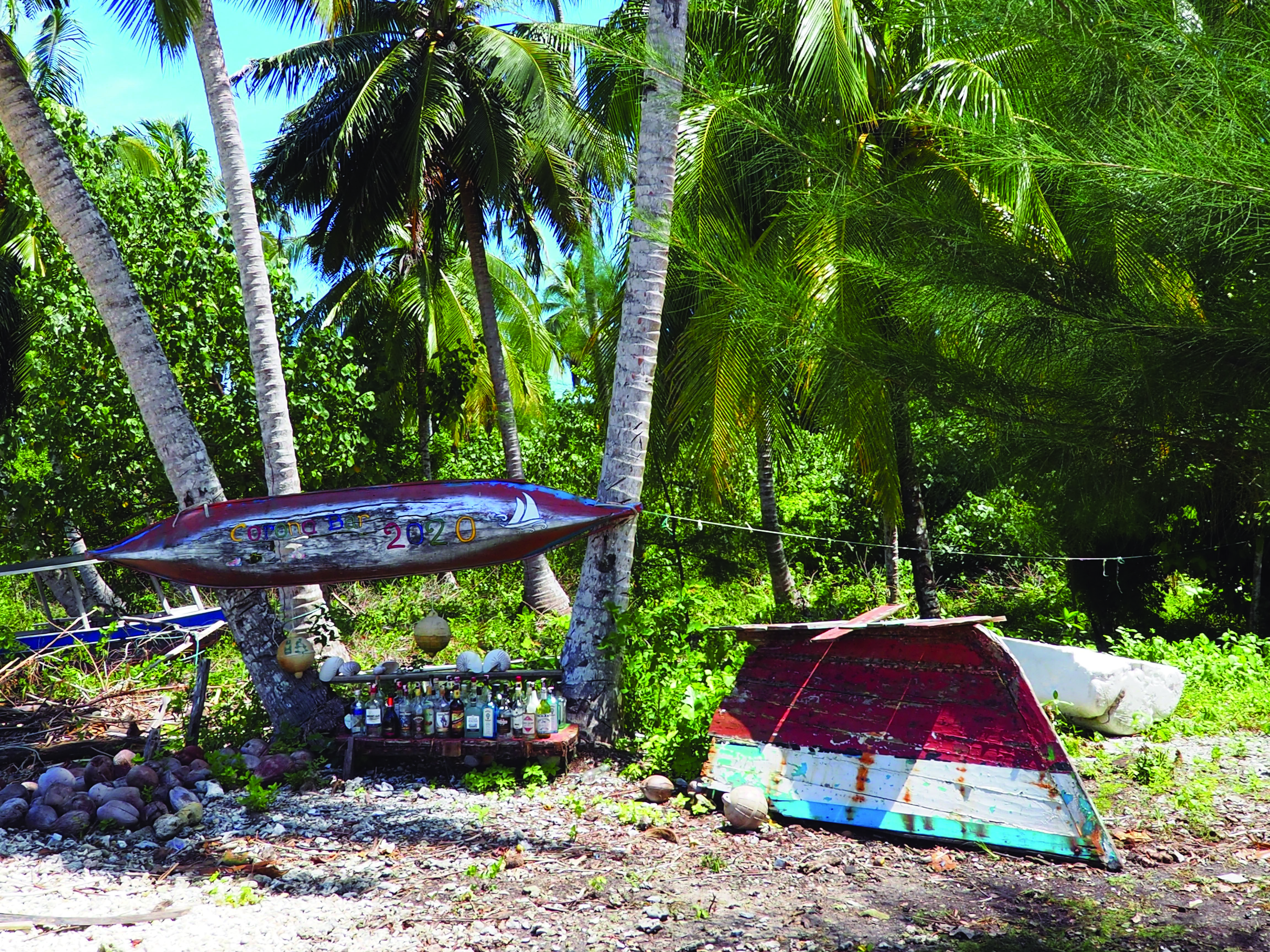
Our first task was to tidy up the island, or at least a part of it - the area where we spend the most time. On the menu: clearing the land, spreading out the shells on the beach and setting up an old boat that would serve as the decor for our bar. Add to that a lick of paint, a few knots, lots of bamboo-cutting and many sweaty hours. It was hard work but we took immense pleasure from doing it.
Days, weeks and months passed by. Friendships were forged. We made a hut on the island where we could spend our evenings and enjoy aperitifs. We spent time discovering the island: it takes 40 minutes by kayak to circumnavigate it. It’s not huge but we can still stretch our legs, swim, practice spearfishing and other nautical activities. The water is transparent.
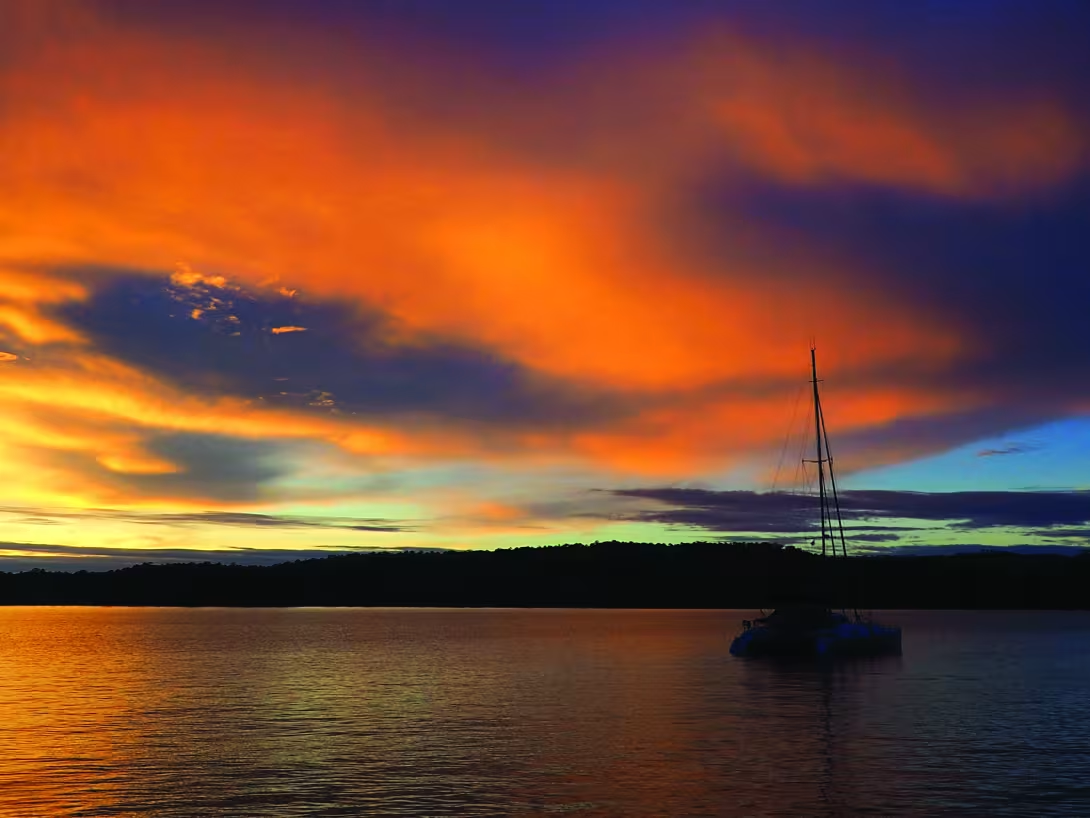
The interior of the island is relatively dense; we cleared a passage to reach the west side so that we can watch the sunsets. We are just a few minutes into the southern hemisphere - 0° 18.718 S - 98° 24.500E.
Our social life started to take shape: we meet for board games and a band has been formed with two guitars and two ukuleles. Cooking, do-ityourself, mechanical and electrical workshops are organized. We help each other to repair and maintain our boats: we’ve got plenty of time to get on top of any jobs that need doing on our vessels.
We have even been able to create a Yacht Club: the Barogang Yacht Club, with its own Facebook page!
The only drawback on the island is that there is no Internet access. We have to travel 15 miles to get to another island which is equipped with an antenna. We make weekly return trips, just to contact our families and to get our emails. It was only after two months that we found the solution: we hoisted a phone to the top of the mast and this became our very own hotspot! Now there was no need to move around anymore unless you needed a particularly good connection to send a video or do a Skype video call. Otherwise everything worked well.
In August, the Indonesian government decided to regularize our «nomadic» status: our visas could be extended. As it stands, we’re not sure when we will be able to leave the country. For the moment, the Malaysian and Indonesian offices remain closed.
The rainy season has already started, but we are relatively protected thanks to a current flowing direct from the Indian Ocean. On the other side of Sumatra however, the rain is torrential...
Nb. Javerne was finally able to put to sea at the beginning of September, having spent five months in the anchorage.
To watch all of Javerne’s videos:
Youtube channel: catamaranjaverne
Website: www.javerne.ch
Facebook: catajaverne
