
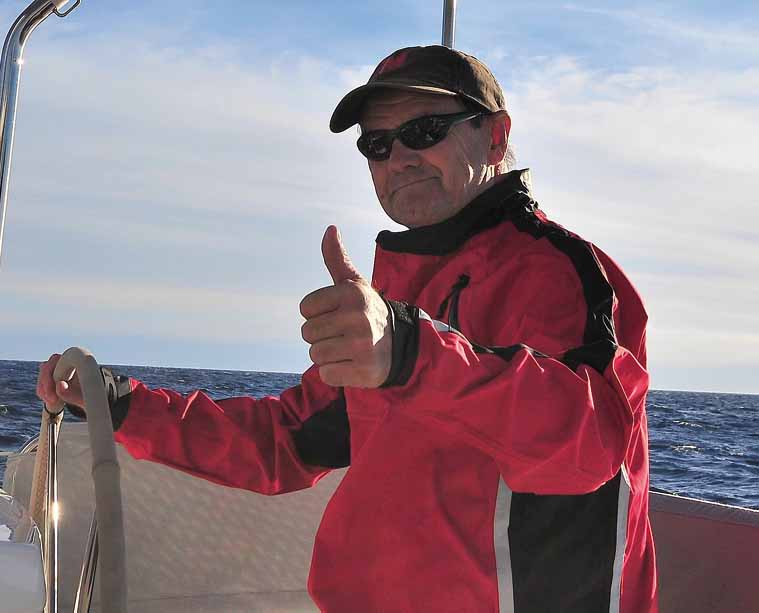

Brieuc Maisonneuve - Brieuc is a former owner of an industrial fabricators who has made the change to Class 40 ocean racing. He is the owner-skipper of a TS5 that he operates in sports charters. During the TS/Marsaudon meeting, we spent several days on board with him to try to understand his choice of batteries.
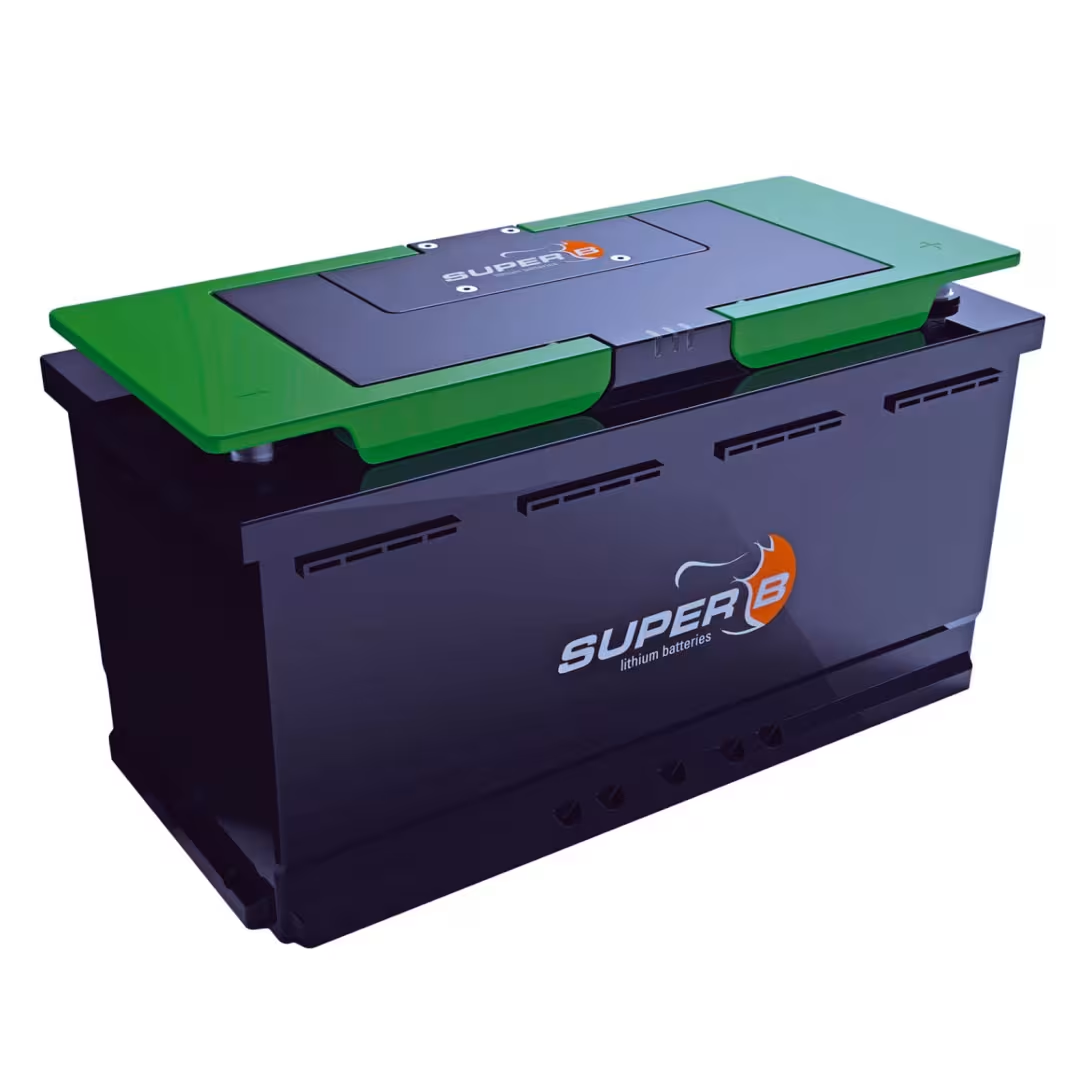
Addictive Sailing’s specifications are those of a comfortable charter catamaran for 10 clients that will also compete in races as prestigious as the Transat Quebec-Saint Malo or the Route du Rhum. The catamaran must be as light as possible to optimize the charter payload (heating, paddleboards, crockery, etc...) and ready to spring into action in racing conditions. Brieuc explained his choices: «I prefer to lose 14 kg (30 lbs) by installing a 105 l/h (28 US gal/h) watermaker instead of the standard 65 l/h (17 US gal/h) and replacing the hull floors with carbon panels, which would enable us to save 34 kg (75 lbs). As far as energy management is concerned, the switch to lithium batteries was an obvious choice, both in terms of weight saving and flexibility of use. The shipyard went with the Dutch manufacturer Super B, which is less well known than the traditional players; these batteries may be a little less efficient, but they have the advantage of not requiring complex electronic management and can be replaced by AGM batteries without modification. The weight saving is significant: we have replaced two 220 Ah AGM batteries weighing 67 kg (148 lbs) each with two 160 Ah LiFePO4 batteries weighing only 27 kg (60 lbs) each. The weight saving is 80 kg (176 lbs) on the whole installation and the physical size of the batteries is about 25% less, which allows the weights to be centered in the nacelle under the mast strut. The extra cost is high (about € 8,000), but the batteries are guaranteed for 2,000 cycles and can easily go through 5,000 cycles before there is any noticeable drop in performance. A digital controller at the chart table monitors the charge level and the 900 W of solar panels mean that the engines are not needed as soon as there is enough sunlight, even with an intensive use of the watermaker and autopilot. 100 €/kg (45 €/lb) saved is expensive, but not disproportionate when compared to other options, and it allows for a more flexible on-board energy management.”
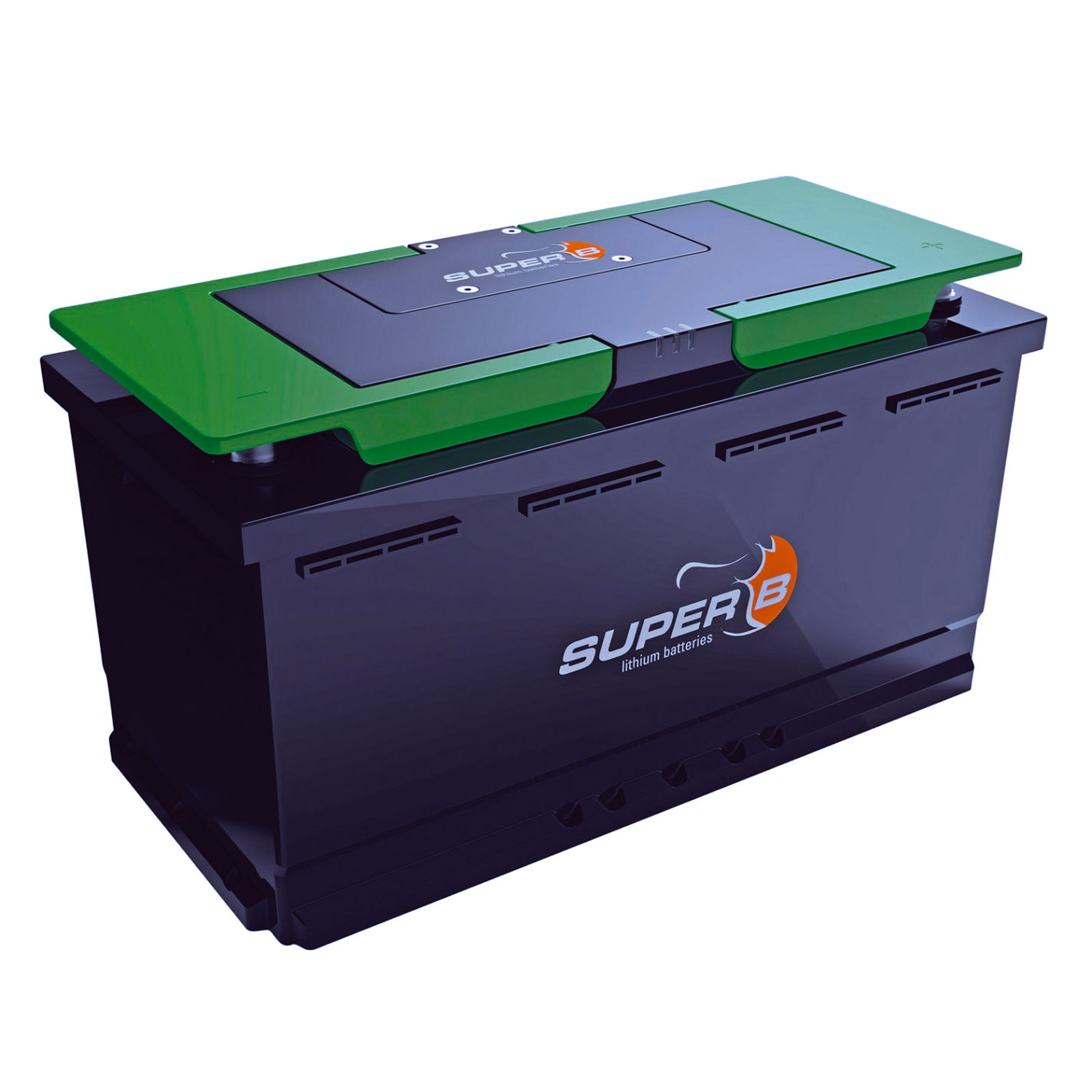
“Lithium-Ion batteries are guaranteed to last for 2,000 cycles and the weight advantage is very important”
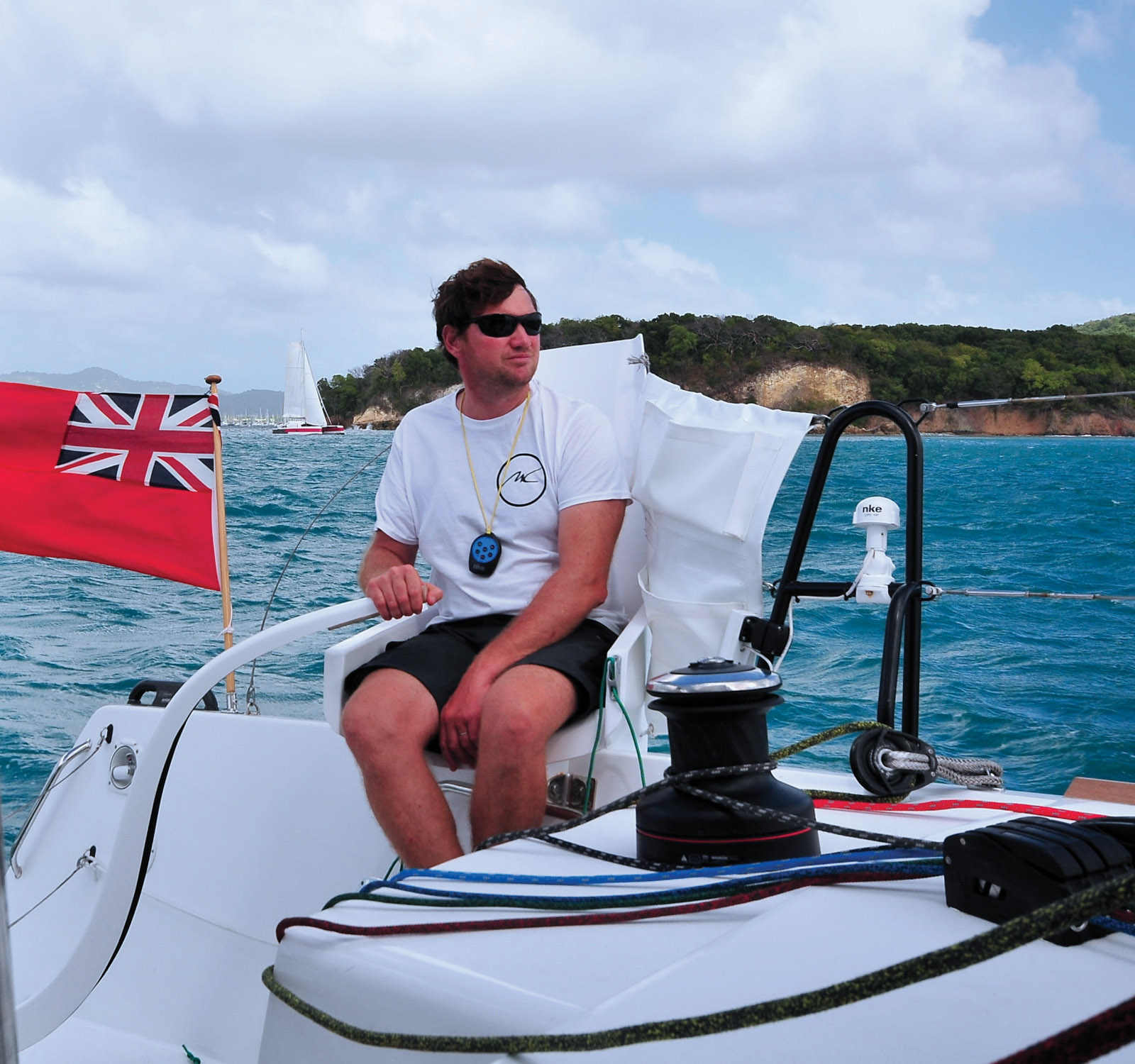
Emmanuel Pironneau - An all-round sailor and multihull specialist, Emmanuel has been skipper of three F40 VPLP trimarans. Today, he owns a catamaran, a Freydis 46, on which he is currently finishing a refit.
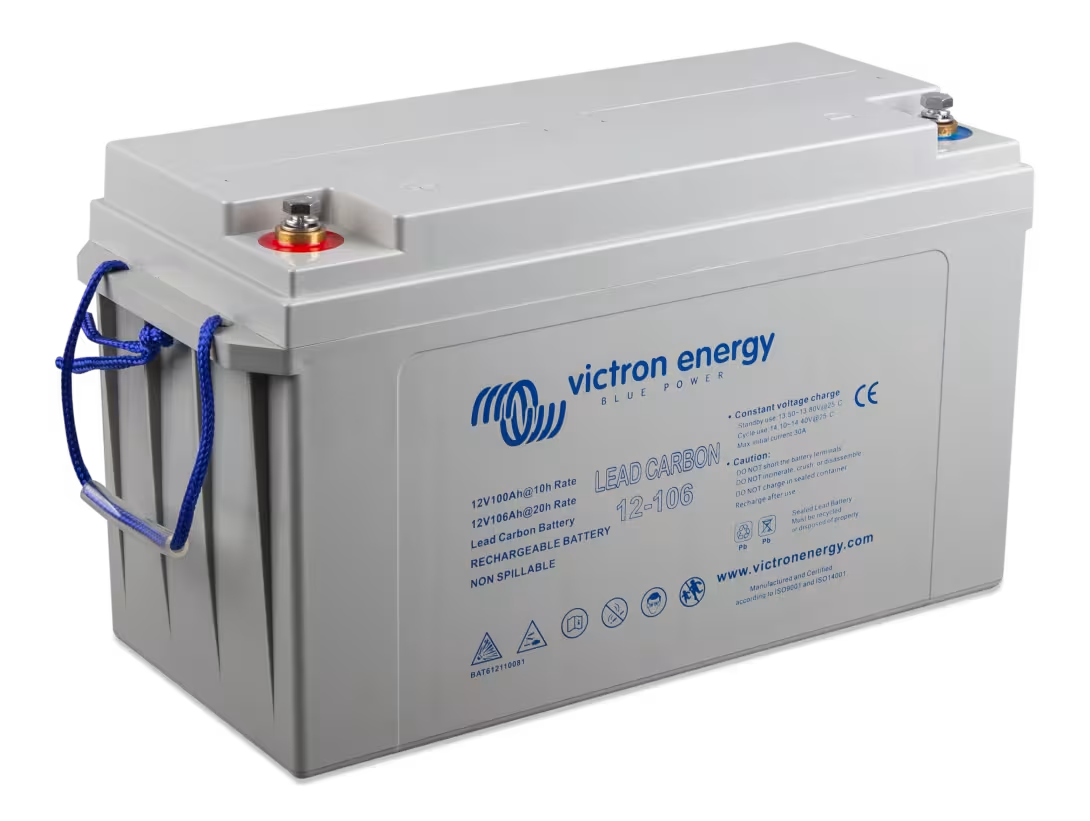
«I defend my decision to equip my Freydis 46 with lead batteries in 2020. The bottom line for all fast catamarans is all about trimming weight, which may seem surprising for a Formula 40 enthusiast, but there is a standard lead battery and also a lead... carbon battery. They are not the same and it’s the latter one that I have chosen. In order to avoid the technical speeches that anyone can find on the internet, I can summarize the situation as follows: lead-carbon batteries represent a real advance over basic lead batteries: they allow deeper discharges, have a longer lifespan/number of cycles and the price is still reasonable (€ 550 for a 250 Ah battery, which in my case means €1,100 for a 500 Ah bank). However, they still weigh 60 kg (132 lbs) each. A lithium solution means five times more cycles, five times more cost and 60% less weight, but these batteries are more technically complex, require specific charge regulation, are potentially more dangerous and are not recyclable. They burn much more easily than lead batteries and some of them also react to water... I must mention my friend Rémi Beauvais here. He was the victim of a fire aboard Fortil before the start of the last Transat Jacques Vabre. There is talk of a lithium battery which was charging at the time. This is the main reason for my reticence; I’m wary of these complex charging drives for lithium after several years of service in offshore conditions. My second observation concerns the weight/price ratio. The 100 kg (220 lbs) saving of two lithium batteries generates an additional cost of €6,000, which is the same as that for fiber rigging and an equivalent weight reduction! That means similarly-priced kilos or pounds, but not at the same altitude. Less weight aloft means more performance and more safety. In order to stick to my limited budget for the renovation of the beautiful Freydis, I have chosen fiber over lithium and I’m sticking with the lead down below. At the end of the day, do we really need a lithium battery pack on board that is capable of producing instant power when the most energy-hungry piece of equipment is the 1,500W or 2,000W windlass which is only needed for 10 minutes per day when the engine is running?»

"Two lead-carbon batteries rather than lithium-ion mean a saving of € 6,000 which can be put to good use lowering the multihull’s weight aloft”