


Buying second-hand: All you need to know!
Choosing to buy second-hand has many advantages: you can find a fully equipped and ready to sail example, or you could also buy a very reasonably-priced multihull... provided your DIY skills are up to it. We take a look at the things you need to know before you start.
New or second-hand? A debate which often crops up in cockpits, on pontoons and in forums. If you have the means, and you really want to have a state-of-the-art boat you can customize as you wish, don’t hesitate, order direct from a builder... But if your budget is more limited, a second-hand model will allow you to go cruising on a bigger boat, with more cabins and more volume. In short, you’ll be able to cruise further and for longer. Tempting, no? Not to mention that at the end of a long-term cruising program of from one to three years, you will almost break even when you re-sell the boat, as the major depreciation occurs in the first ten years. However, you mustn’t throw yourself at the first multihull you find, otherwise you’ll be in for a few disappointments. Buying a cat – unless it is a very small one – warrants a few precautions, before getting out your check book. Follow the ten key points with us before signing on the dotted line!
Choice of model
There’s a well-known quote, “opportunity makes the thief…” The fact remains that the most popular multihulls will be the easiest to re-sell afterwards.
Age
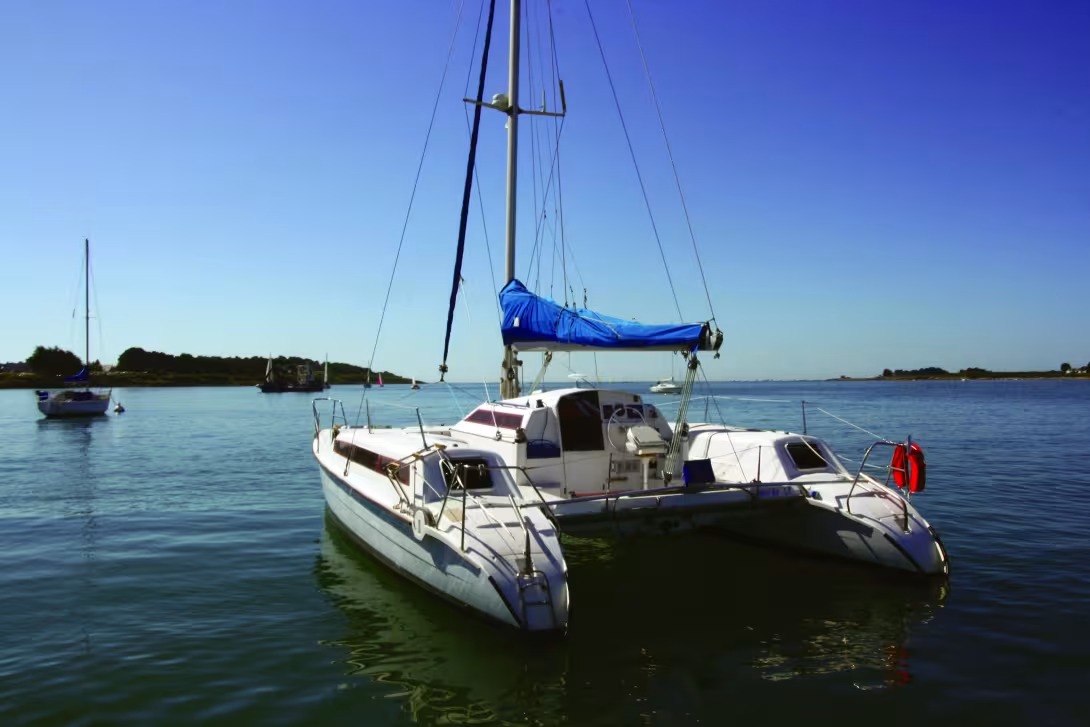
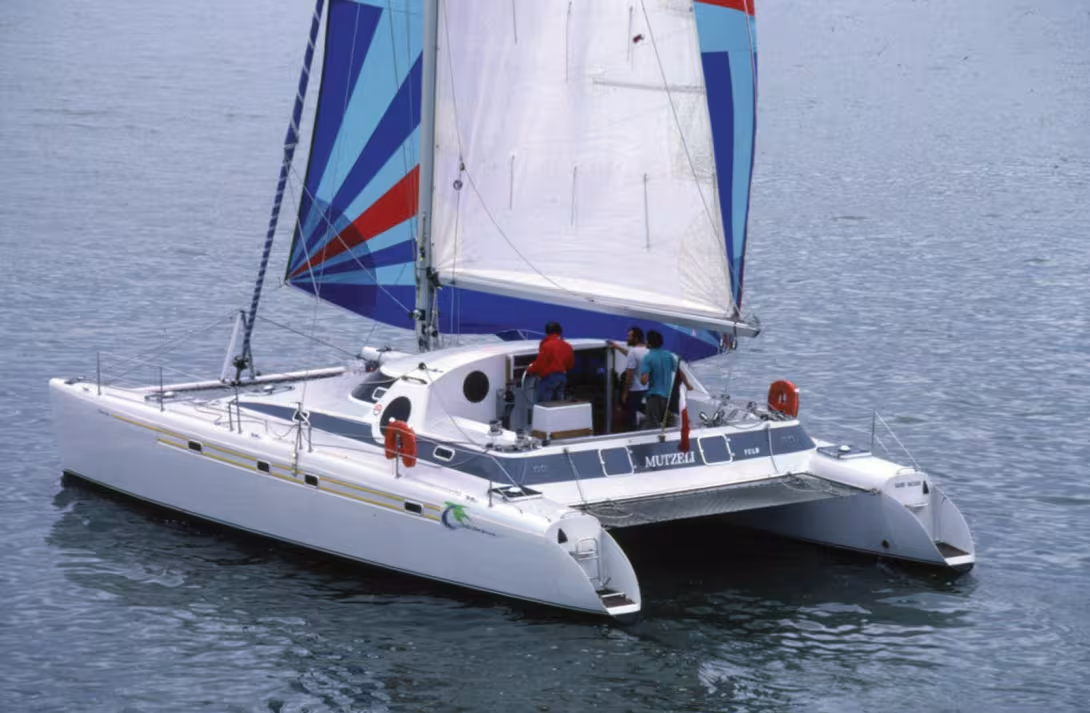
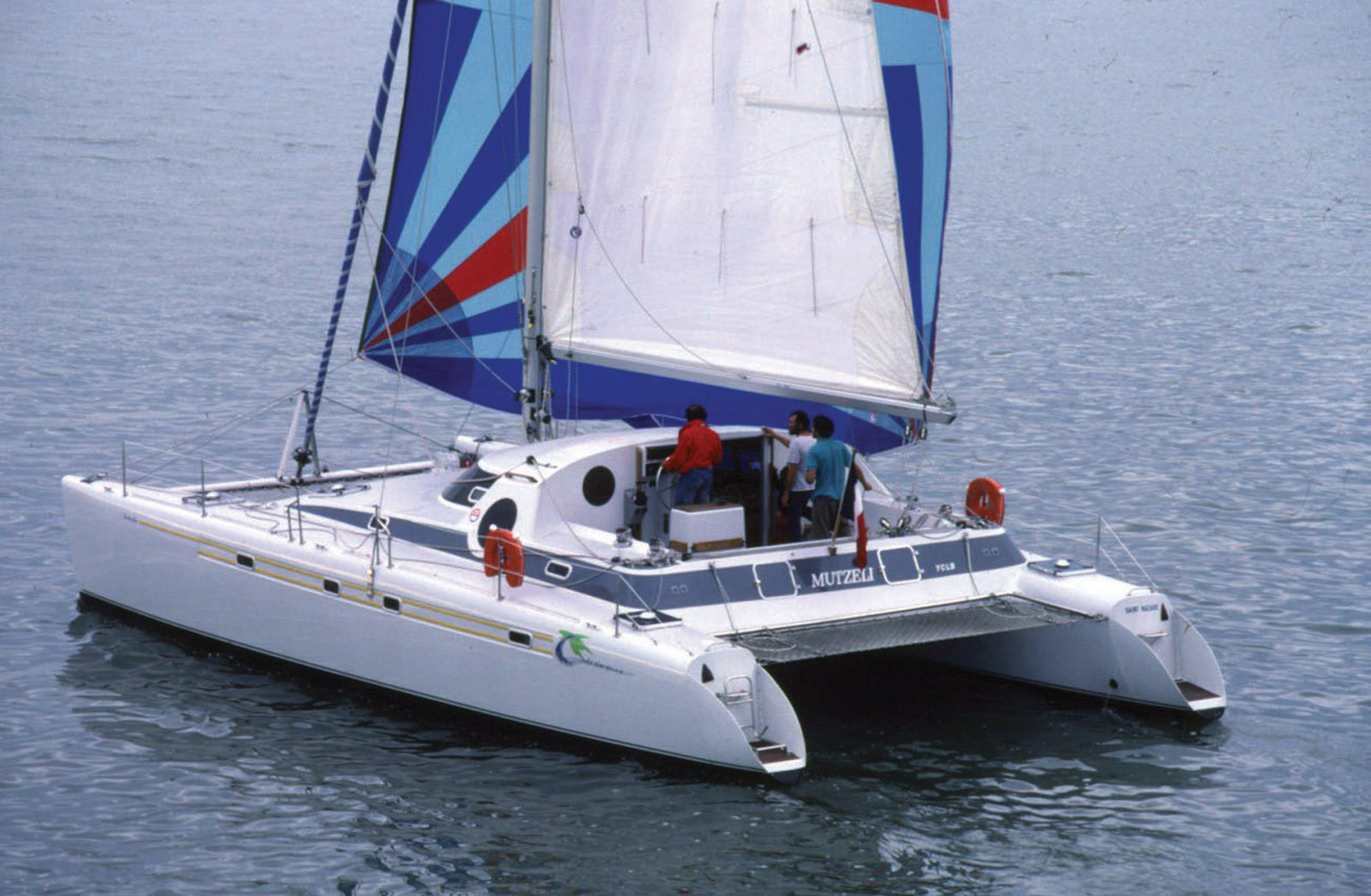
It’s not the age of the captain that interests us here, but the age of the boat... Less than 10 years old, not much to fear except for changing the sails, if it hasn’t already been done. A 35-year-old catamaran like this Casamance, however, may require more attention – so look a little deeper
Where to find your multihull?
Sure, you can find the multihull of your dreams by chance at a random stopover, on a pontoon and of course in the pages of your favorite magazine... but the medium of choice remains the
What does it cost?
It’s not easy to know the right price for a particular model! You can get computer-generated quotes based on depreciation and without equipment, but most of these would be well out off course from reality... The truth is once again hiding on the web, to be by looking at the asking price of all the models available on the market.
Inspection of the underwater hull
That’s it, you’ve chosen a multihull… just make sure you see it out of the water to check the appendages – look for possible impacts, and play in the steering or propeller. If this isn’t possible, make sure you dive... or engage the services of a professional, ideally a marine surveyor.
Go for a sail!
The best thing to do after examining the underwater hull is to go for a sail, to check that the engines, deck fittings and steering system are all in working order.
Check the paperwork for more information
Remember to ask for all available paperwork (in addition to “official” documents): invoices, insurance, etc. Sometimes these will tell you more about the history of the boat than a very recent registration document...
Check the sails
A sea trial is the best opportunity to check the condition of the sail wardrobe… all of it: Don’t hesitate to hoist the gennaker and/or the asymmetric spinnaker, even for just a few minutes.
Motors
An examination of the engines and the engine compartments often tells a lot about the care taken with maintenance. Check the number of hours: over 10,000 hours, and the motors will likely need replacing...
Interior
Most interiors hold up well for ten years. After that, headlinings and wood veneers start to show signs of age. This is nothing prohibitive, but there may be hours of work ahead.
Thru-hulls
After about ten years of service in a damp environment, plumbing and electrics have sometimes seen better days. Check all switches and especially seacocks, which should not be too corroded or too hard to move.
Negotiation
You are convinced? All that remains is to fix the final price... Most sellers will agree to a discount – it takes on average around six months to sell a boat, and purchasers are not necessarily queuing up on the docks. With a professional, it is possible to negotiate certain services. That’s it – you’ve got your multihull!
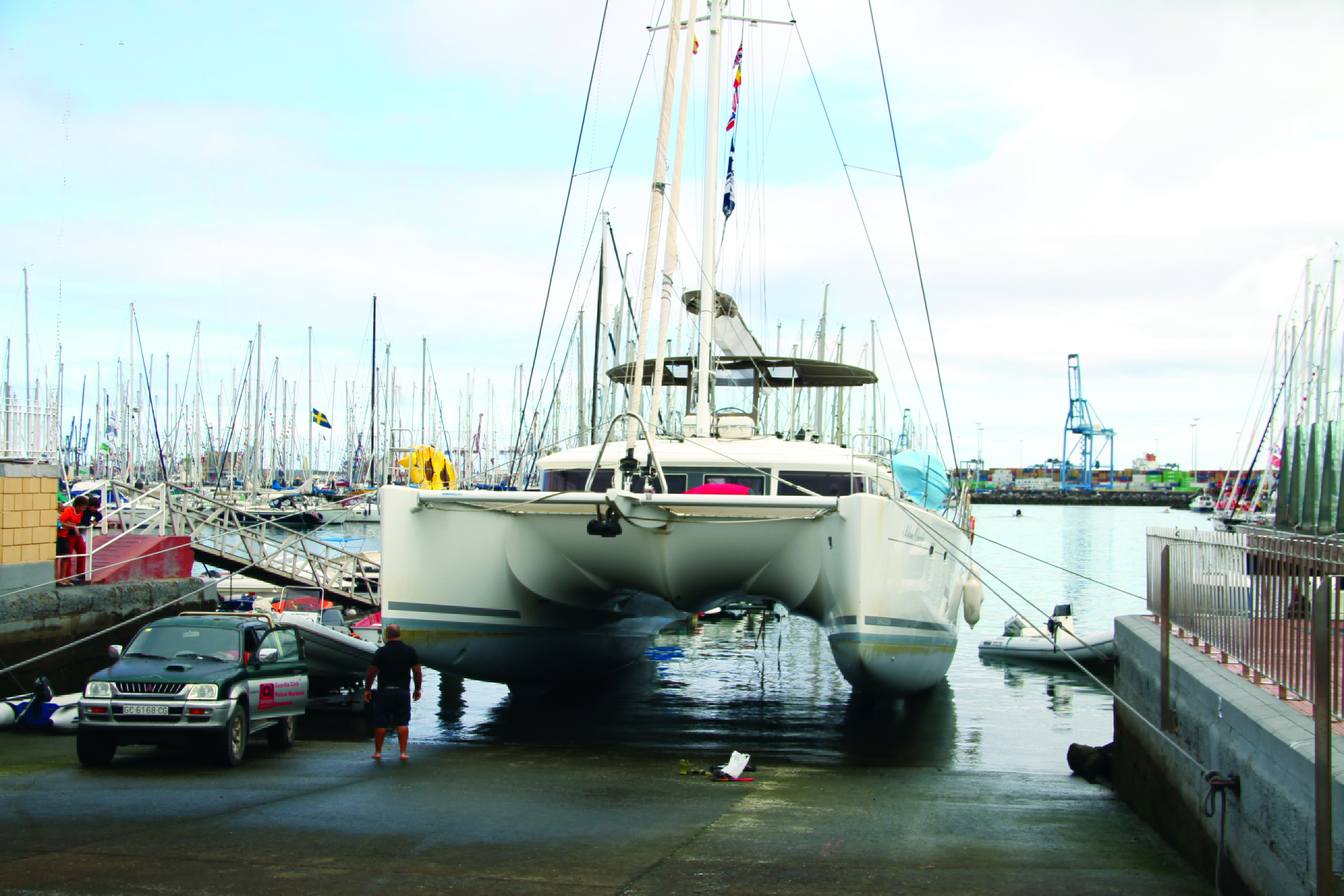
10 Multihulls for under $100,000
The current difficult economic context is complicating manufacturers’ business: in order to revive production, they aren’t hesitating to drop their margins. As a result, recent second-hand values may be overpriced. Asking prices end up falling, causing a domino effect on the price of older catamarans and trimarans... In short, right now may not be the ideal time to sell. But to buy, hell yes! Is this really crunch time for your budget? We take a look at 10 modest and accessible multihulls – from $ 5,000 to $ 100,000.
$5 000 – Tremolino : Minimalist fun
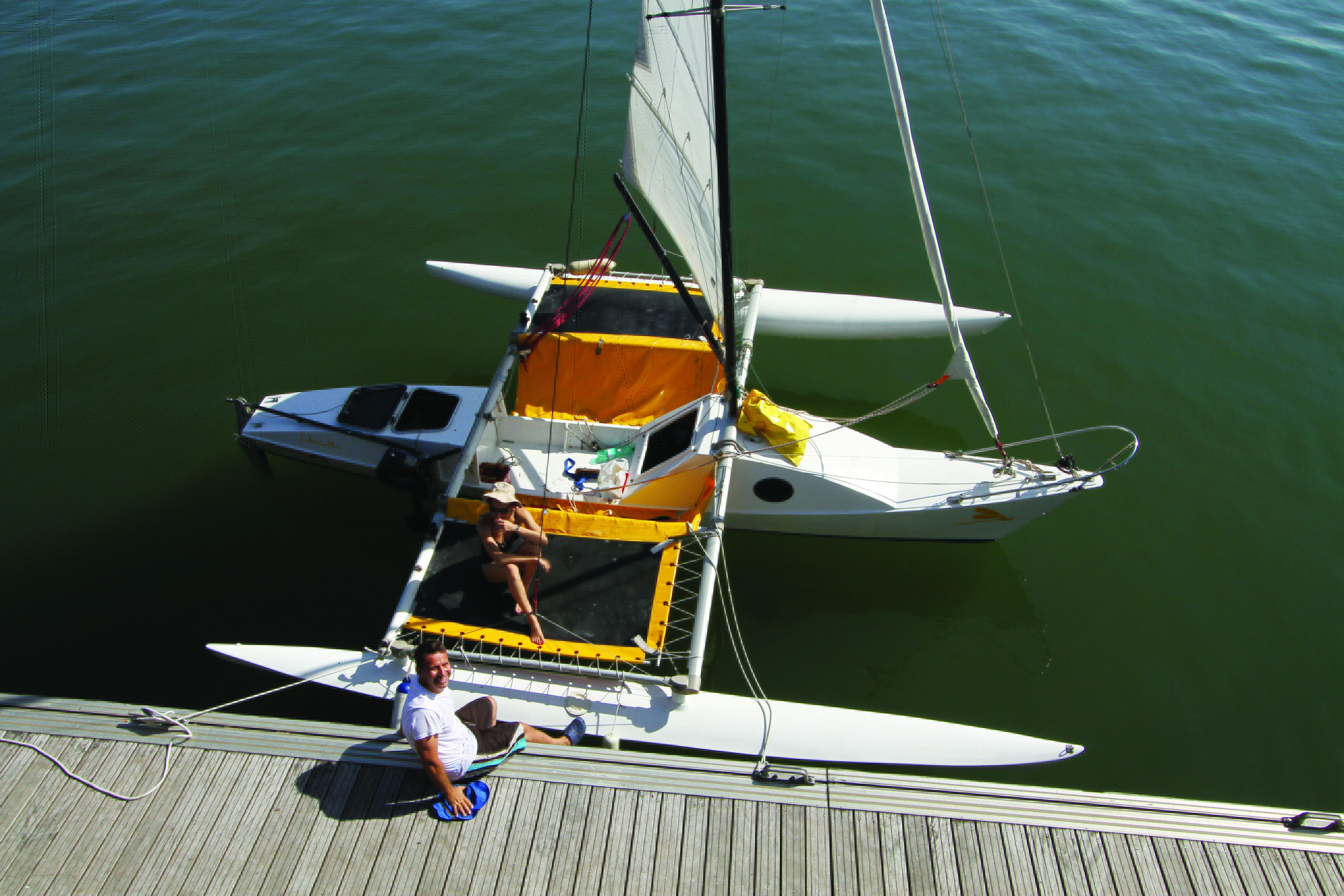
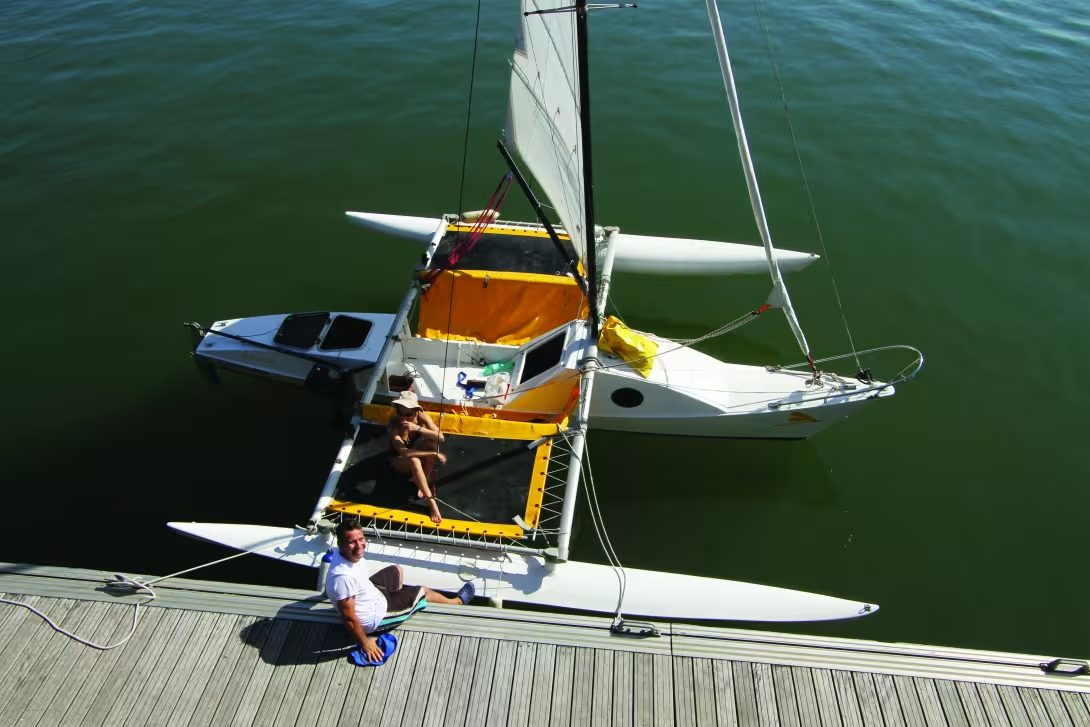
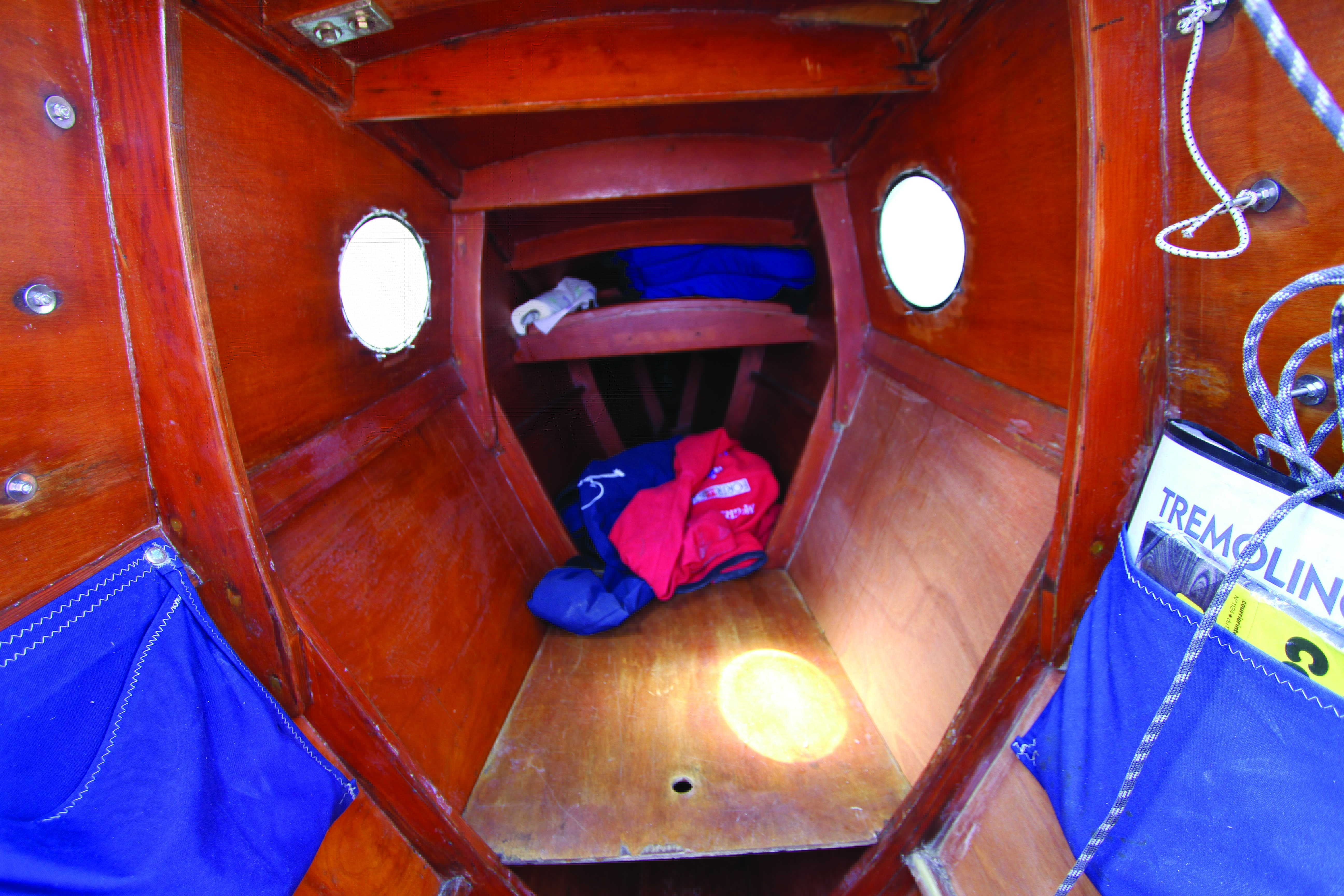
In the early 1970s, John Ollins, a lightweight multihull enthusiast, met Dick Newick - architect of the Prao Cheers and so many other legendary racing boats. The two men designed a kit to enable Hobie 16 owners to sail a fast but safe trimaran. The central hull, built in epoxy plywood is typical of Newick designs with its very banana-shaped bow, U-shaped hull and rounded coachroof. The boat met with great success in America, and the Tremolino was then offered in fiberglass. Later on, the boat took a step further by adapting to the floats and rig of the Hobie 18. Then Dick Newick designed the famous “Half Moon” floats, that were much more buoyant. This pocket trimaran has a central cockpit - ideal for weight distribution. The seats are made of waterproof fabric, which are then extended by traditional trampolines. At the front and at the back of the cockpit there are two companionways: each leading to a mini-cabin – which are watertight, but have good volume. There’s a little more forward, with headroom of 1.25 m (4’1”) and enough room for one person to sleep each side. Although the Tremolino can be towed behind even the most modest of cars, it still takes 4 to 5 hours to put together. But what a joy it is to sail at nearly 20 knots aboard a trimaran that is at the same time vintage, accessible and exciting!
Builder: SCIM, Tremolino Boat Company USA, and amateur construction
Architect: Dick Newick
Central hull material: polyester or epoxy plywood
Length: 6.95 m (22’10”)
Waterline length: 6.40 m (21’)
Beam: 5.00 m (16’5”)
Draft: 0.33/1.32 m (13”/4’4”)
Displacement: 363 kg (800 lbs)
Sail area: 20.26 m² (218 sq ft)
Mainsail: 15.14 m² (163 sq ft)
Jib: 5.12 m² (55 sq ft)
Engine: 2 to 4 HP outboard
Production: 300 units built from 1974
$18 000 – Edel Cat 33/35 : Rustic and affordable
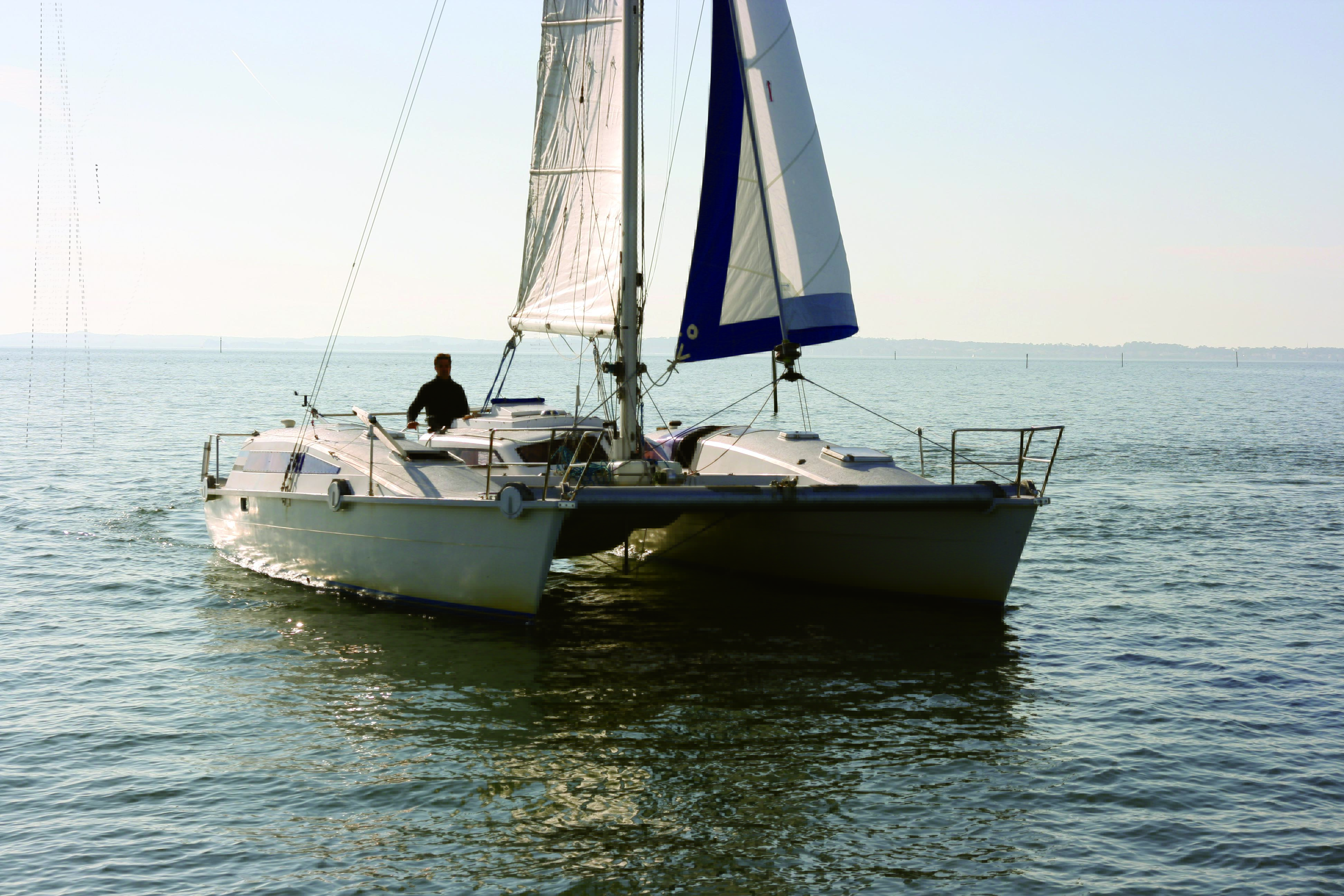
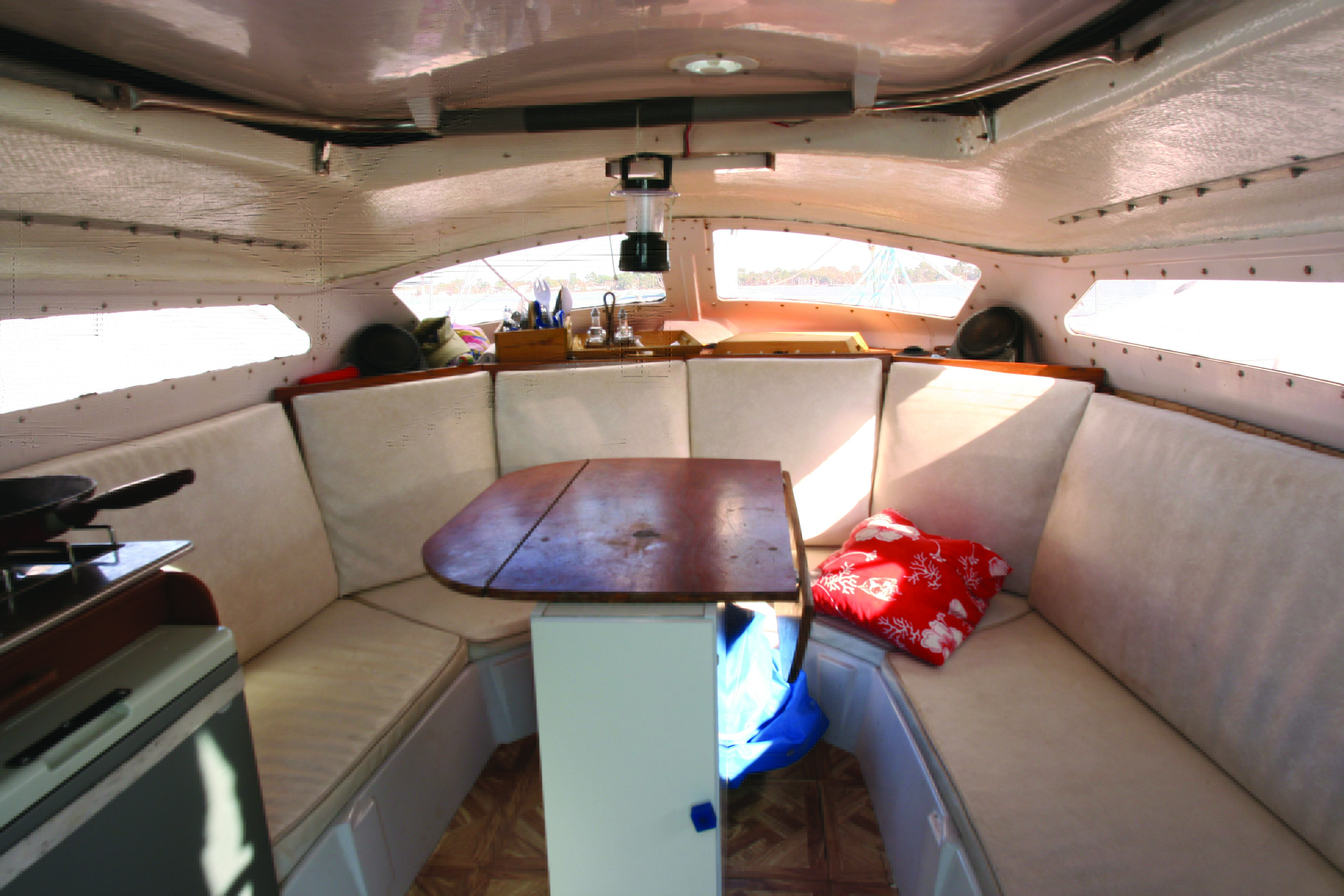
With its superstructure divided into three volumes and its stocky rig, the Edel Cat 33 doesn’t look much like our modern catamarans, topped by one large coachroof. The main difference with the 33 is therefore its deck plan: the hulls, each autonomous from the other, are served by their own companionway. The central nacelle is isolated by two wide gangways. The hulls and the cockpit/nacelle can be dismantled thanks to an assembly of aluminum beams. The engine is a simple central outboard, protected by a fairing. The central nacelle is mainly taken up by the saloon. Close to the cockpit, there’s an L-shaped galley on the port side and a small chart table opposite. There’s little in the way of storage space, but you’ve got the pleasure of “opening up” at anchor thanks to the hinged roof: the top of the coachroof can be raised thanks to an ingenious “Edel” system developed in the early 1970s on its monohulls. The hulls each have a double berth at the stern and a heads compartment. Under sail, the 33 enjoys the breeze and more particularly having the wind aft of the beam. Upwind, however, the very low central nacelle is a favorite stumbling block in a seaway - a defect that has been partially corrected on the Edel Cat 35. This improved version of the 33 - with the option of inboard engines, sugarscoops and increased sail area - appeared in 1987. It was more successful than its predecessor, with 130 examples built compared with 60, and commands a higher price.
Builder: Edel
Architect: Maurice Edel and Sylvestre Langevin
Construction: GRP
Length: 10.30 m (33’9”)
Beam: 6.03 m (19’9”)
Draft: 0.80 m (2’8”)
Light displacement: 3,500 kg (7,715 lbs)
Upwind sail area: 60/67 m² (645/720 sq ft)
Mainsail: 37/41.5 m² (400/447 sq ft)
Genoa: 23/25.5 m² (247/275 sq ft)
Production: 190 units from 1983 to 1996
$18 000 – Heavenly Twins 26/27 : A cat that doesn’t care for fashion!
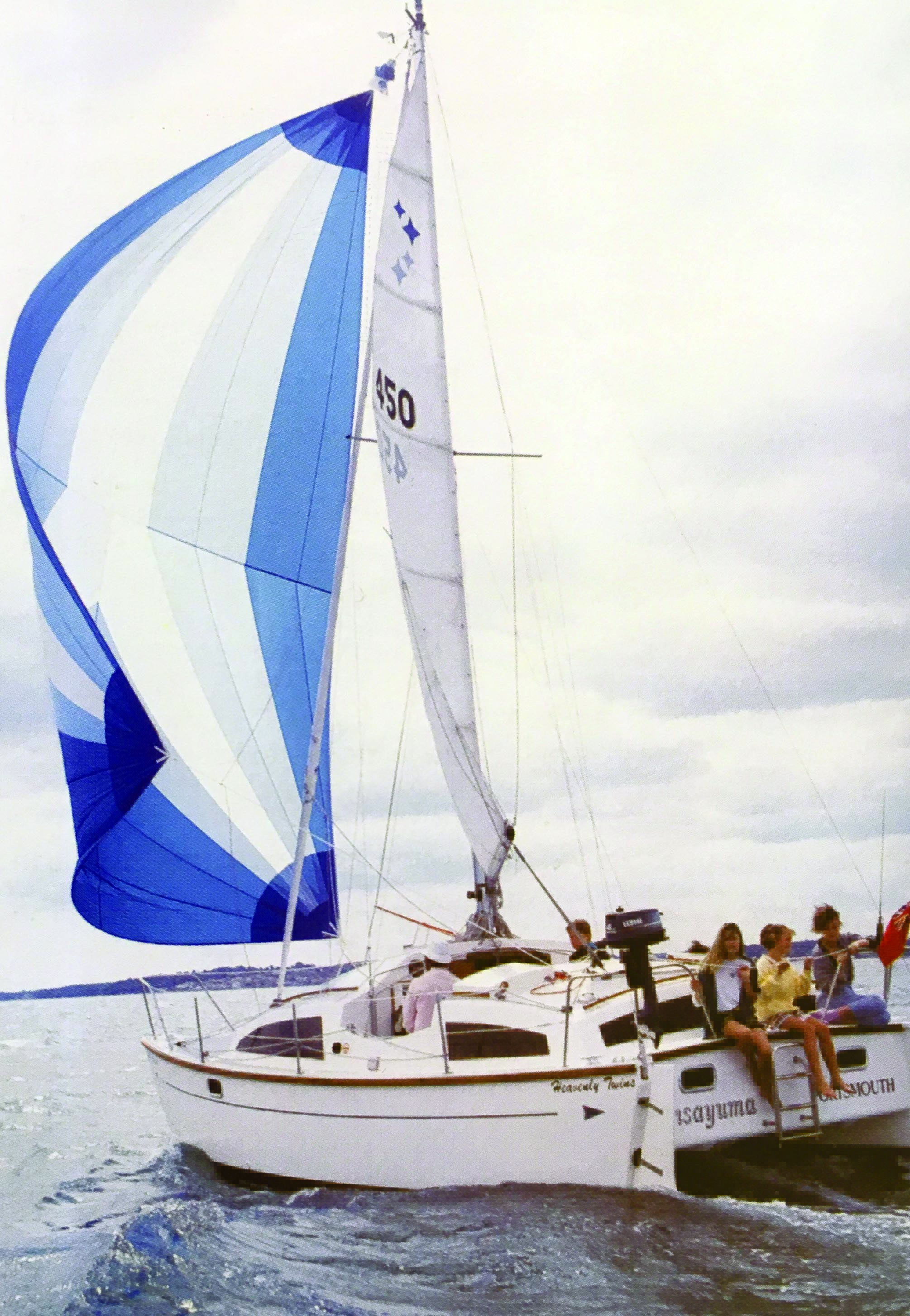
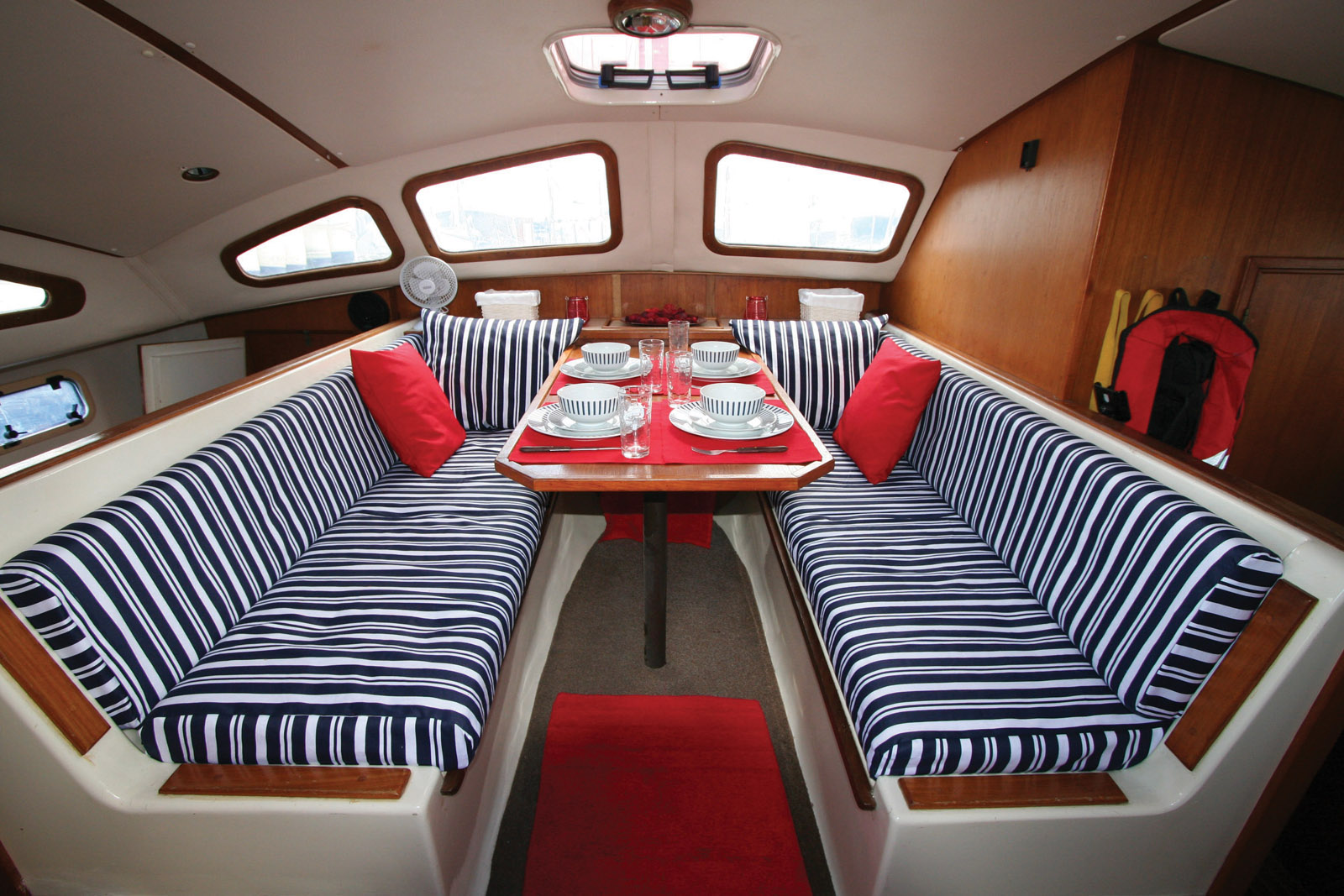
With its two coachroofs, central cockpit and canoe sterns, the Heavenly Twins 26 was unlike any of her competitors in 1971. The arguments for: robustness that is beyond reproach and a layout - given the short overall length - very convincing when cruising, having two independent aft cabins. These qualities led this model to remain in the manufacturer’s catalogue for 27 years! There are a few drawbacks, however: this catamaran is frankly not a lightning bolt - especially upwind - and there is little pleasure at the helm. The oldest models will understandably be the most attractive in terms of budget, but they vary in condition. Another fact to be taken into account is that the Heavenly Twins underwent many changes. Here is a brief review of the different vintages: 1971 - launch of the first Heavenly Twins 26 Mark I. The mast was quickly lengthened by 60 cm (2 feet). 1975 - Mark II version without any notable modifications. 1977 - Mark III with GRP rudder, the nacelle bottom extended aft and the skeg keels shifted forward. 1981 - Mark IV with balsa-cored deck, a stiffer and lighter structure and watertight bulkheads. From 1987, the last 26 boats benefitted from an increased freeboard and a raised nacelle. 1989 - Launch of the Heavenly Twins 27 with a new deck.
Builder: Heavenly Cruising Yachts
Architect: Pat Peterson
Construction: GRP
Length: 8.20 m (26’11”)
Beam: 4 m (13’2”)
Draft: 0.70 m (2’4”)
Displacement: 1.85 t (4,080 lbs)
Sail area: 35 m² (376 sq ft)
Mainsail: 13 m² (140 sq ft)
Genoa: 22 m² (236 sq ft)
Engines: outboard or diesel
Production: 430 units from 1971 to 1998
$20 000 – Dragonfly 800 : Fixed or folding arms
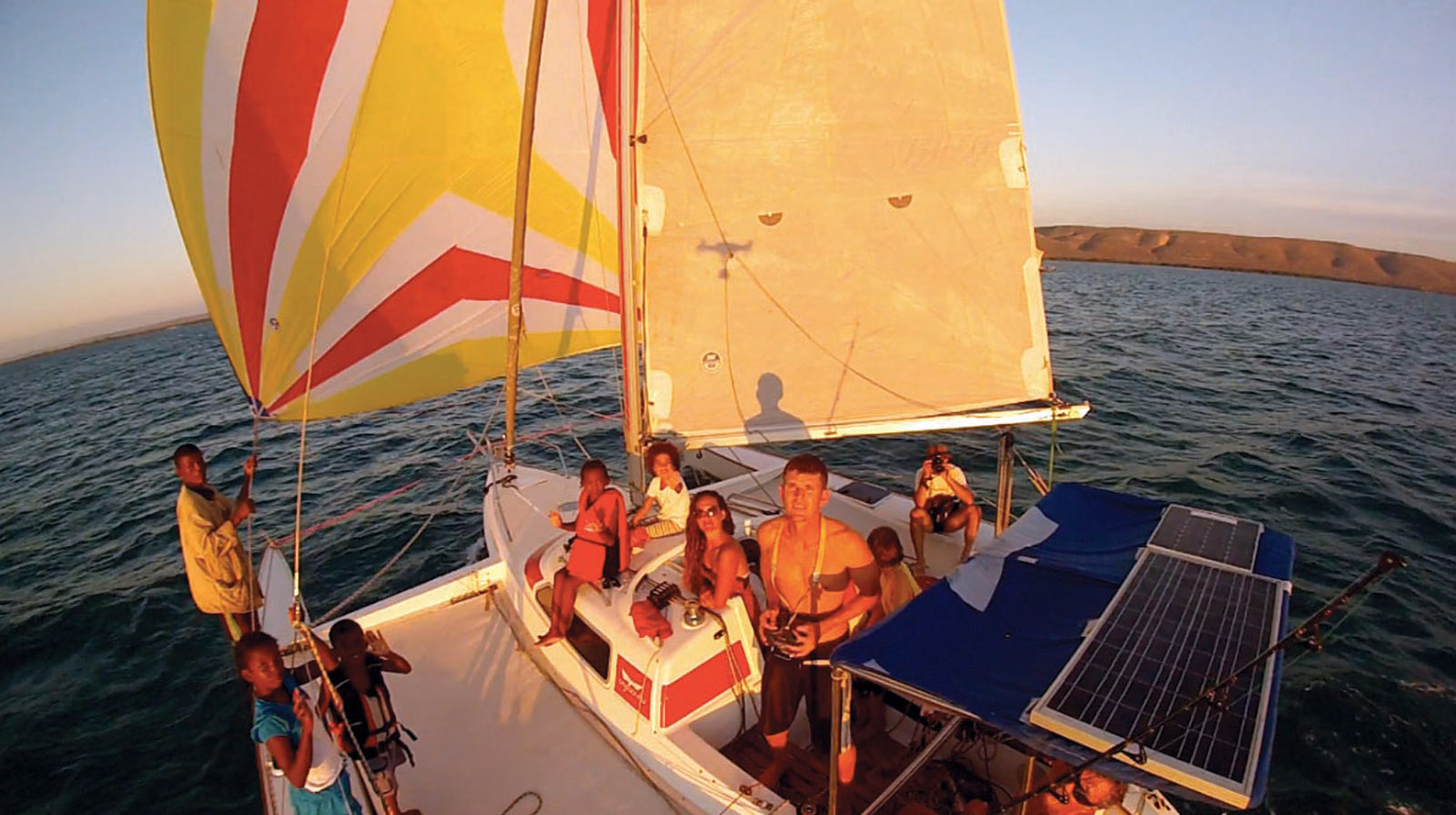
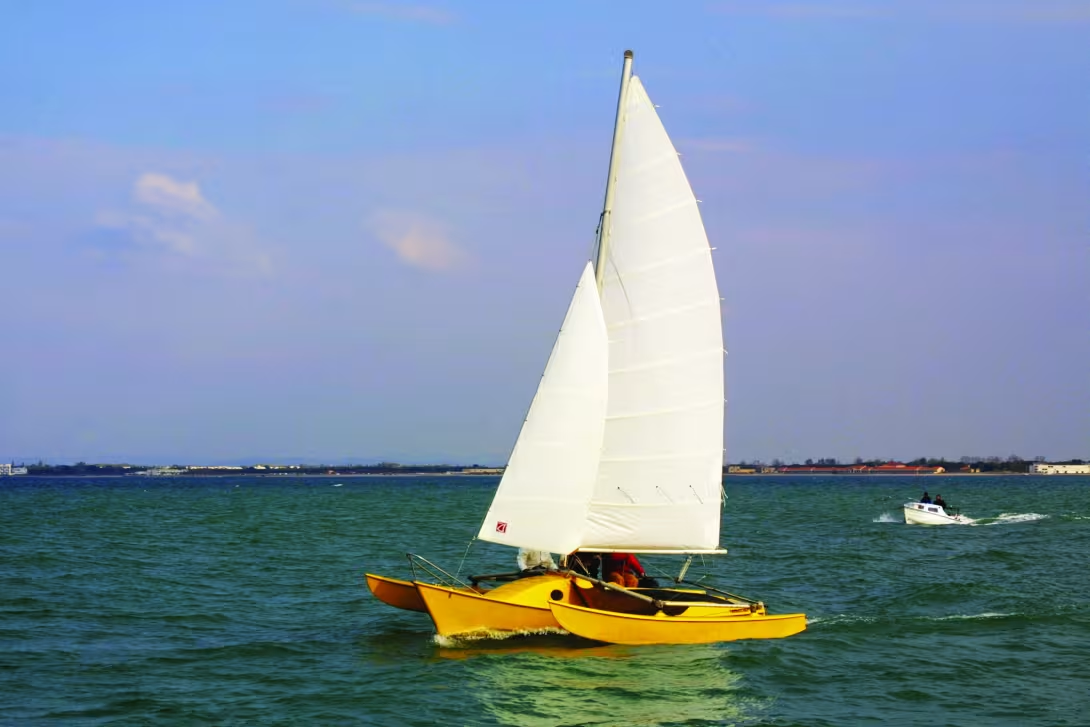
With a perfectly horizontal deck and a colored band around the coachroof, the Dragonfly 800 is very “eighties-style” – and nothing could be more normal since it was first launched in 1984. The Dragonfly 800 is a well-bred boat that benefited from Paul Elvstrøm’s advice during its development. A careful launch that earned this small trimaran exceptional racing results: in 1985, the 800 even managed to win - in her class - the Round Britain Race. In spite of a rather heavy displacement, this model reveals impressive speeds and a seaworthy enough character to venture offshore. The Racing rig, with 20% more sail area, is obviously much livelier than the more placid Cruising configuration. The only constraint: limit the payload at all costs. The central hull, widened at deck level, manages to accommodate a pleasant cockpit and spartan fittings, but sufficient for a couple, possibly accompanied by one or two young children. The Dragonfly 800 has had a long and successful career in various versions: the MK1 and then MK2 have fixed link arms - but they can be removed for transport and storage. In 1989, Quorning Boats launched the Swing Wing. This latter version, of which 143 units were sold, adopted the famous folding arms, which were very practical for limiting beam in the marina.
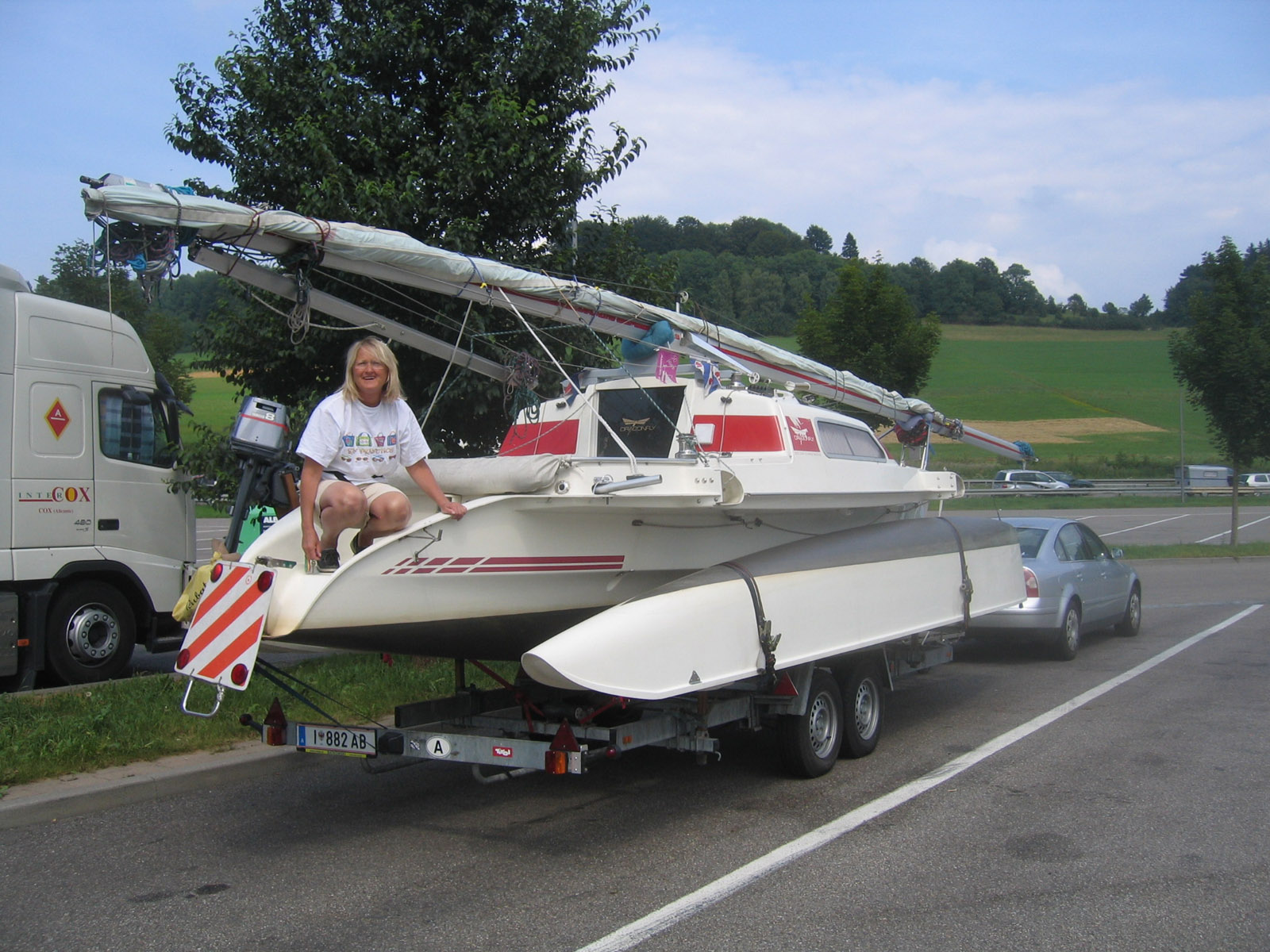
Builder: Quorning Boats
Architect: Børge Quorning
Construction: PVC/glass/polyester sandwich
Length: 8 m (26’3”)
Beam: 6.05 or 6.05/2.90 m (19’10” or 19’10”/9’6”)
Draft: 0.30/1.40 m (12”/4’7”)
Displacement: 1.05 t (2,315 lbs)
Sail area: 34 or 41 m² (365 or 440 sq ft)
Mainsail: 20 or 26 m² (215 or 280 sq ft)
Genoa: 14 or 15 m² (150 or 161 sq ft)
Engines: 4 to 8 HP outboard
Production: 400 units built from 1985 to 2005
$25 000 – Corsair F 27 : She goes like a rocket!
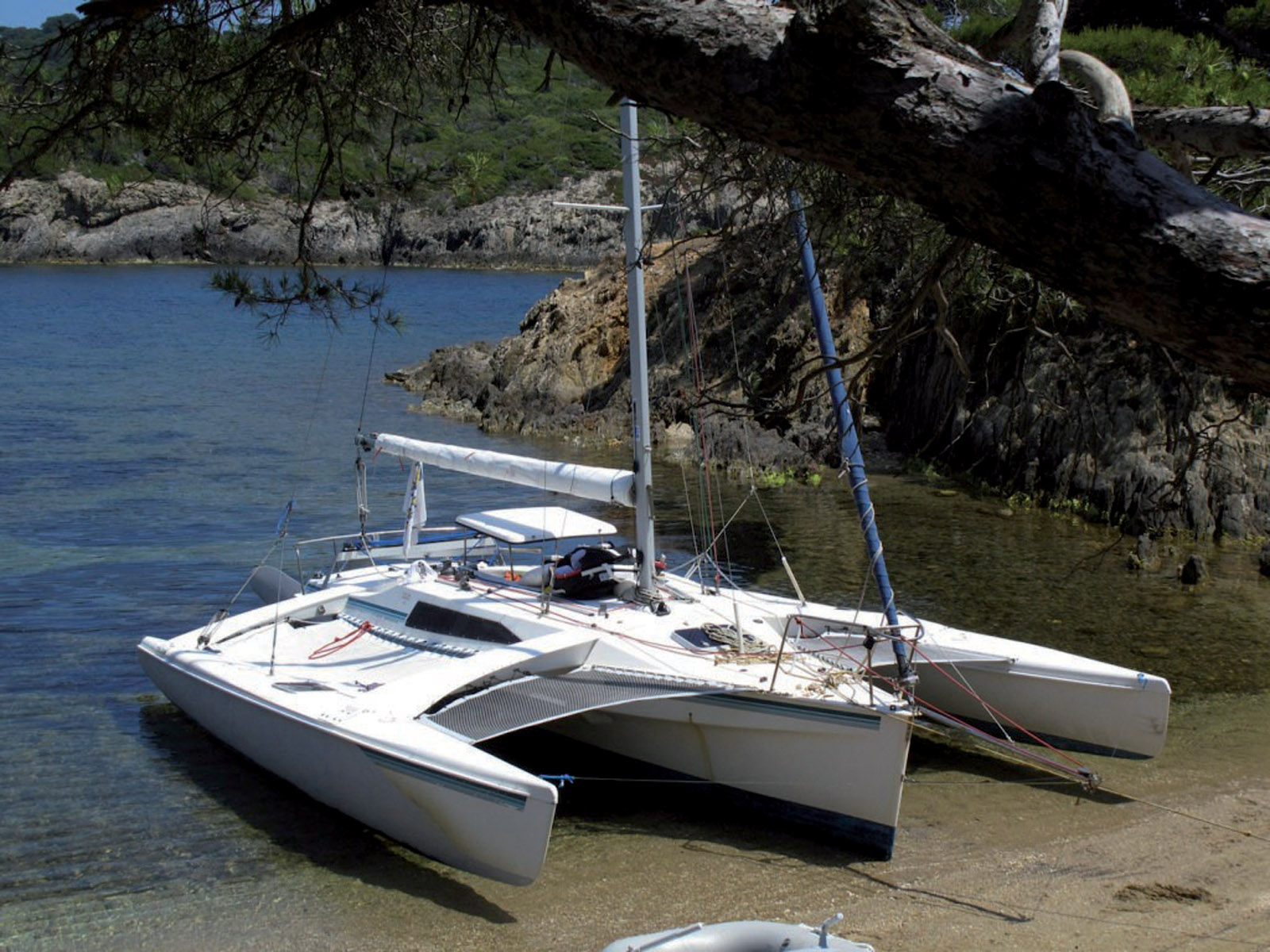
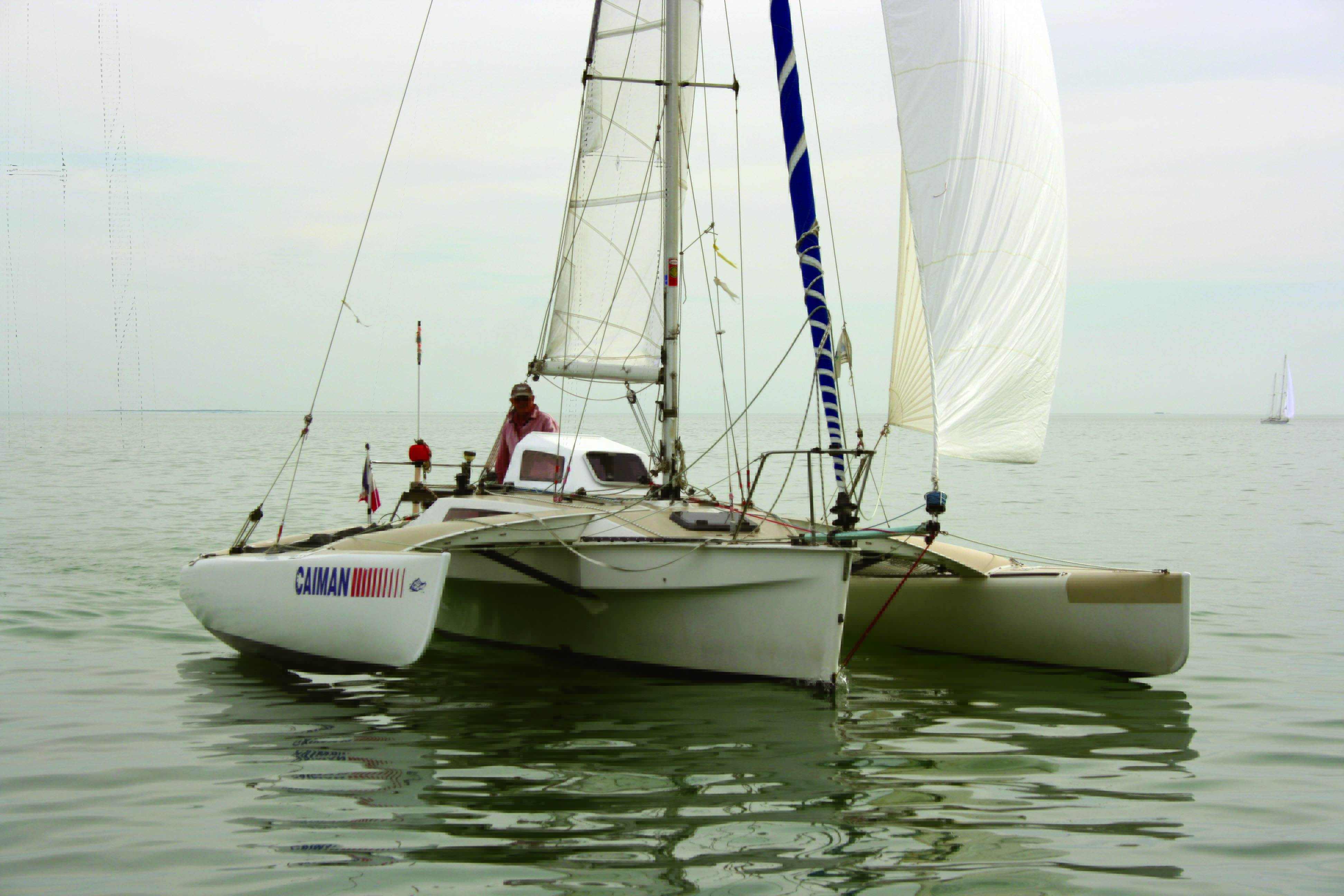
More than 35 years after she was first launched, this trimaran with her folding beams is still as attractive, comfortable and fast as ever... a rare find in Europe, but a plethora in the USA and Australia. The main attraction of this Farrier design is the performance, which is superior to almost anything that can be sailed. Another bonus: this little rocket is manageable by one person alone, and not necessarily an athletic one. Although the original rig has a mainsail with a moderate leech and a genoa with a low overlap, you can obviousl y increase the sail plan, yet still be able to do some fishing in light airs... And when the breeze kicks in, the Corsair comes into her own. She stays pretty dry, settles on the leeward hull and keeps the log up all the time. 20 knots is within reach of every crew, without pushing it or frightening each other! The deck plan adopts a central cockpit that is relatively wide and well equipped with non-slip sidedecks bordered by the trampolines. The companionway is topped by a hinged roof, a formula that considerably improves comfort on board. The saloon is narrow compared to that of an equivalent-sized catamaran, but still incorporates a galley with storage space. In the bow there is a berth that’s a little difficult to access, and a chemical toilet. Aft of the cockpit, the yard has provided a stern cabin. Don’t get carried away though: in reality, there isn’t really room for two here. But this berth, nicely isolated from the rest of the accommodation, remains very pleasant.
Builder: Corsair Marine, USA
Architect: Ian Farrier
Construction: foam/polyester sandwich, Kevlar® and carbon reinforcements
Length: 8.25 m (27’1”)
Waterline length: 8.00 m (26’3”)
Beam: 5.82/2.50 m (19’1”/8’2”)
Draft: 0.35/1.50 m (14”/4’11”)
Light displacement: 1,180 kg (2,600 lbs)
Sail area: 46.55 m² (501 sq ft)
Engines: 8 HP outboard
Production: 450 units built from 1984 to 1997
$40 000 – Catalac 12 M : Perfect as a live-aboard
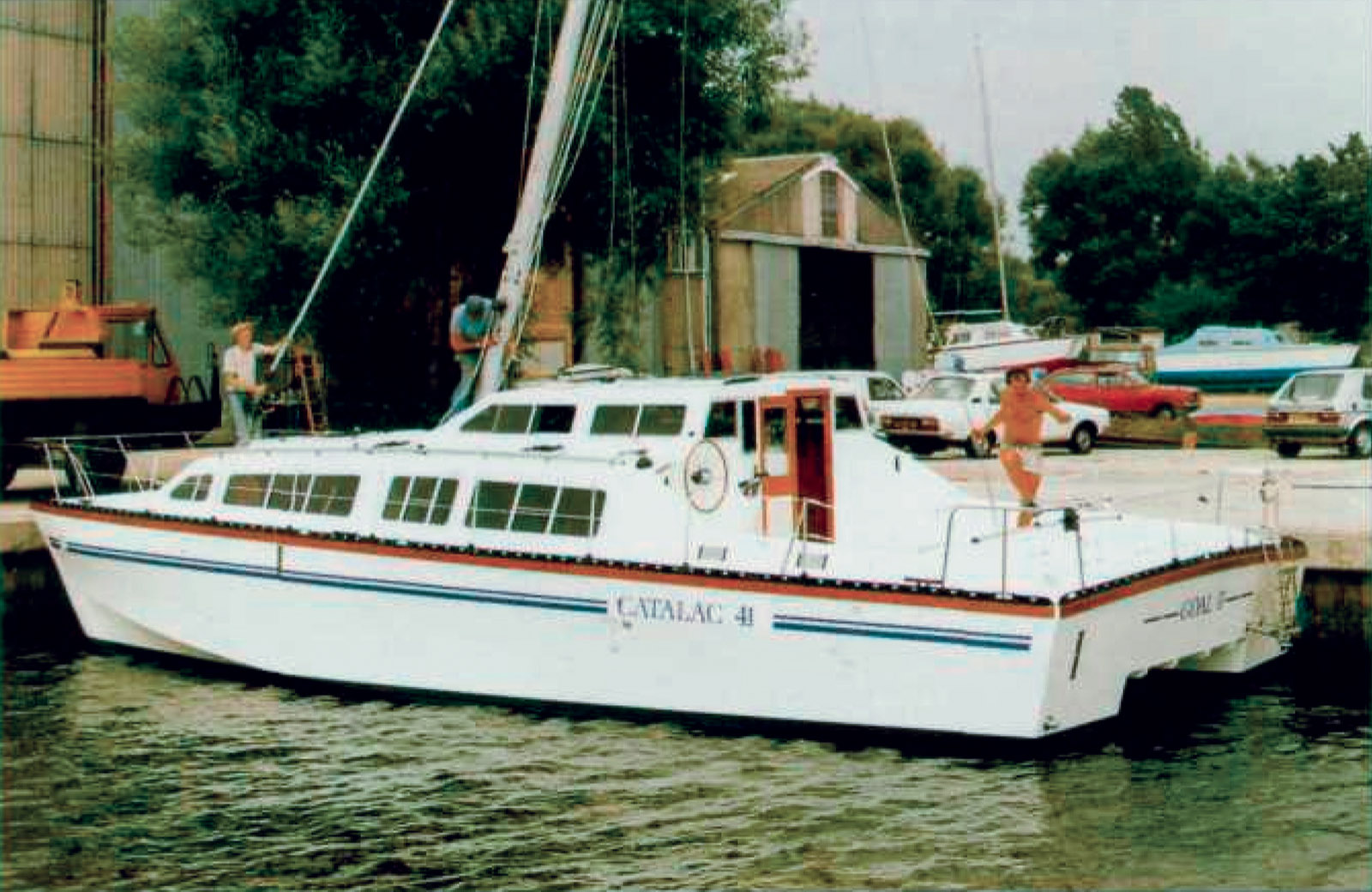
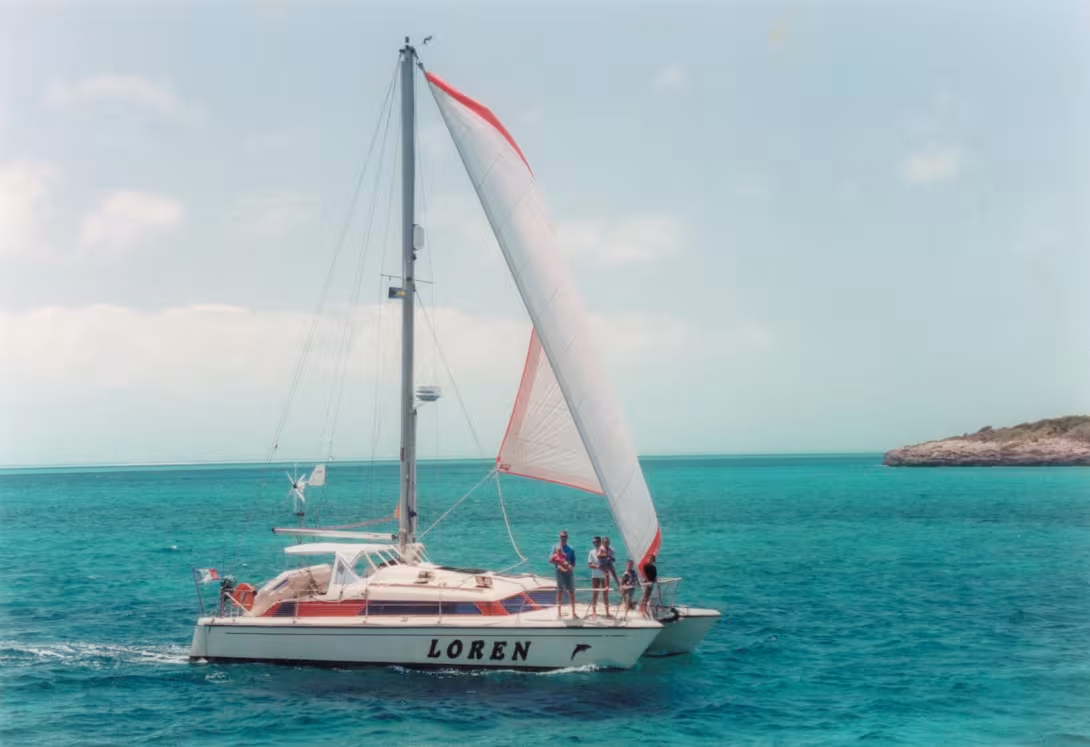
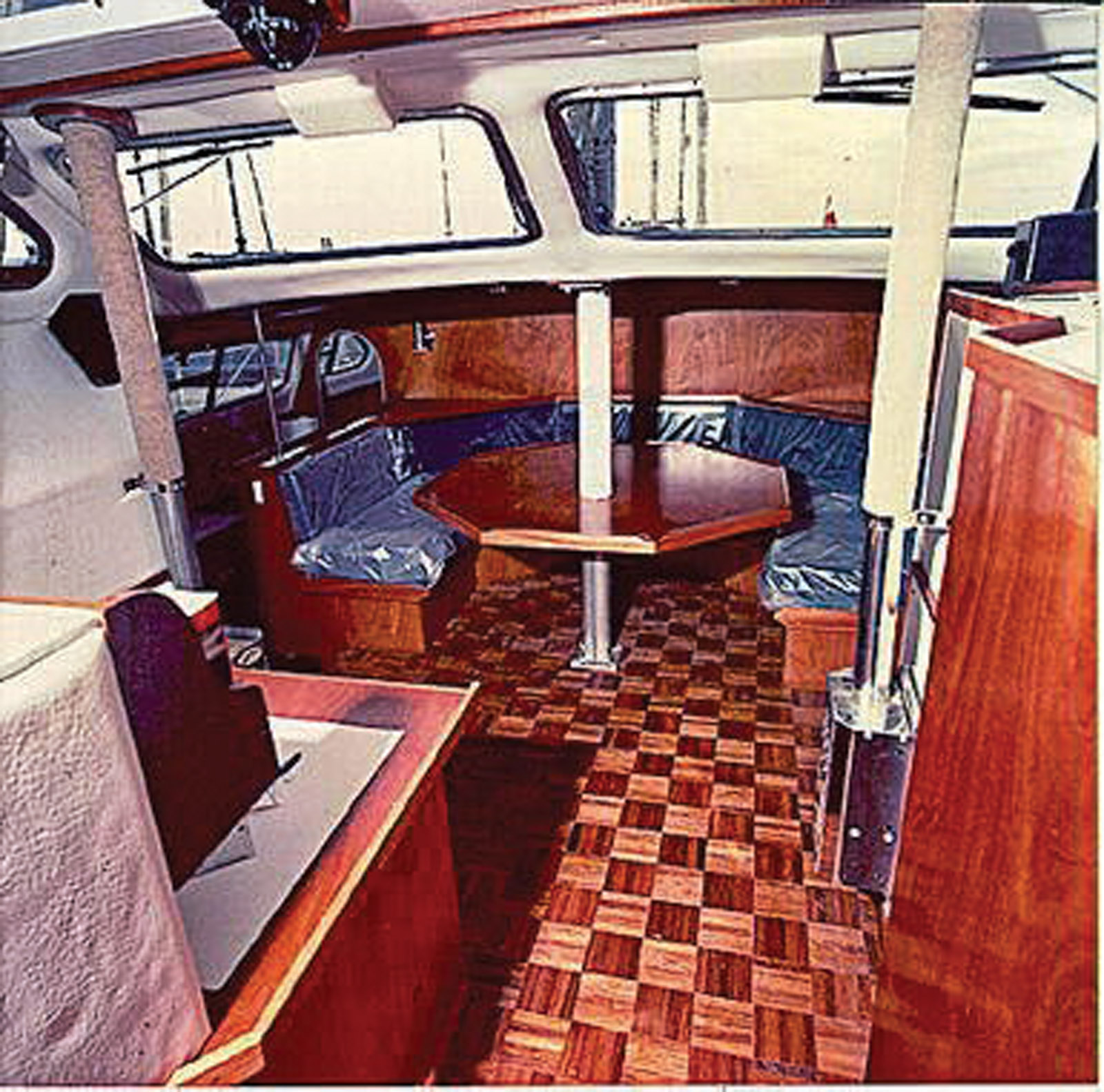
Launched in 1983, the Catalac 12 M - also known as the 41 - is a typical catamaran of British production of the 1980s. At the time, these were still narrow platforms (the 12 M was in fact a single piece, without any connecting arms) and the rig was very compact in order to limit the risk of capsize. The 12 M was very quickly acclaimed by long distance cruising fans, and this success is still going strong almost 40 years later: most of the examples to be found on the second-hand market are in an astonishingly fresh and over-equipped condition. To the credit of the Catalac 12 M, an exceptional quality of construction; on the other hand, this catamaran is certainly better suited to sailing in a good blow than in light airs, not to mention the somewhat approximate upwind heading... The central nacelle spills over onto the hulls, which provides an unexpected volume given the modest beam of the platform. The galley is understandably located “down”, in the port hull. Other peculiarities include “glass” portholes which can be opened halfway - perfect in rainy weather - or completely in case of extreme heat. There is also the famous interior wheelhouse with its complete helm station. In the same spirit, the well-enclosed cockpit provides remarkable protection. Capable of accommodating up to seven people in great comfort, the Catalac 12 M is a good opportunity, given her price, to set off and live aboard. But you’ll have to look quite hard to find one: production didn’t exceed 30 examples - half of which are based in the United States.
Builder: Lack
Architects: Tom Lack
Construction: GRP
Length: 12.19 m (40’)
Beam: 5.40 m (17’9”)
Draft: 0.91 m (3’)
Engines: 2 x 25 or 34 hp
Sail area: 63.70 m² (725 sq ft)
Mainsail: 31.20 m² (336 sq ft)
Genoa area: 32.40 m² (349 sq ft)
Production: 27 units built from 1981 to 1986
$40 000 – Maldives 32 : Comfort, simplicity and speed
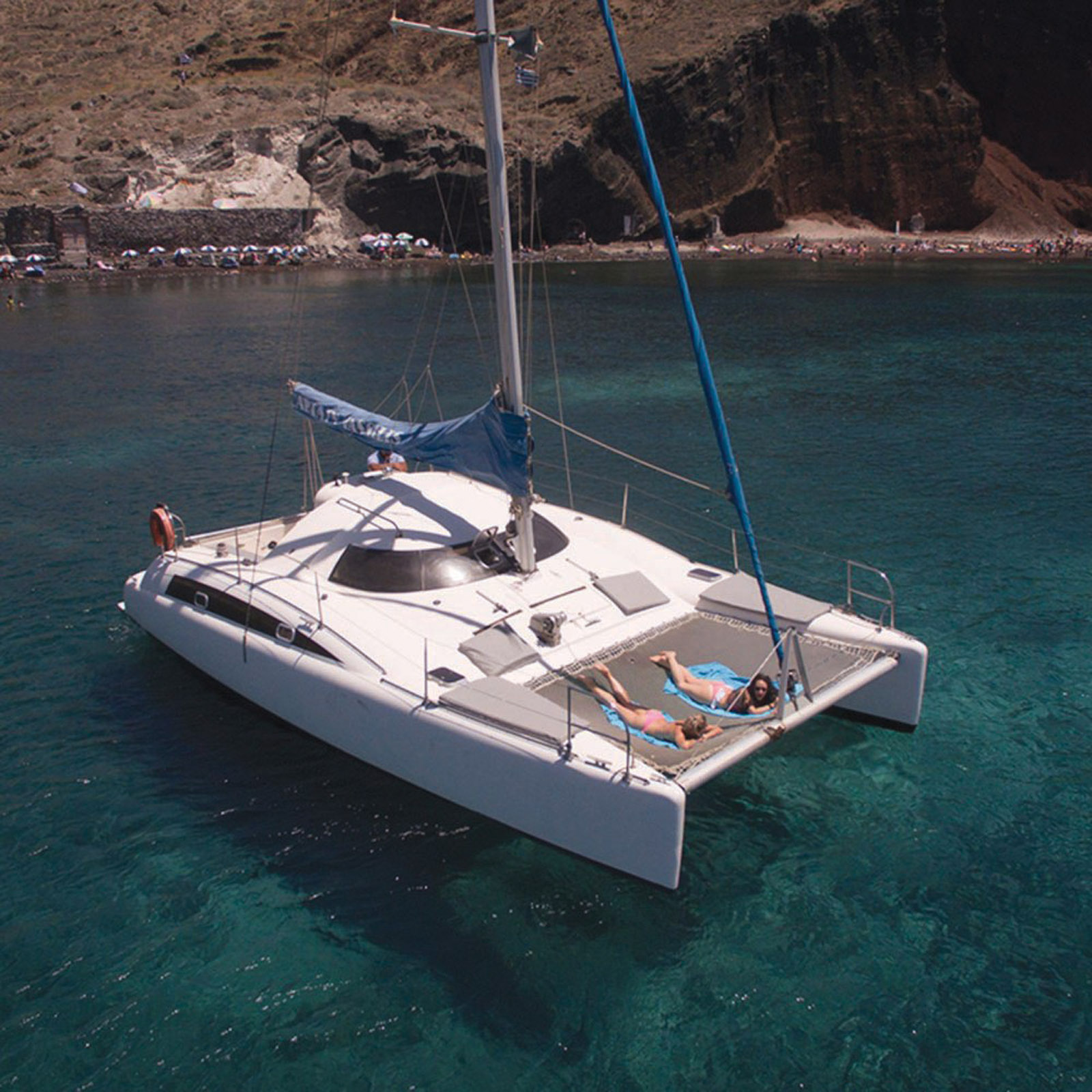
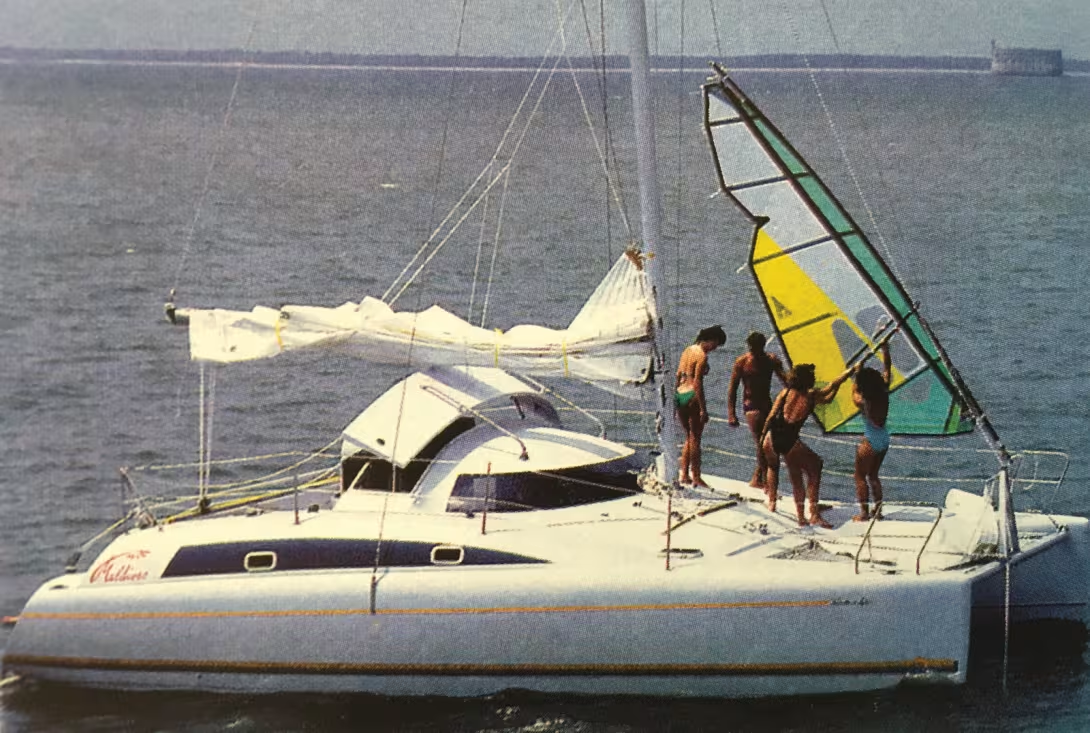
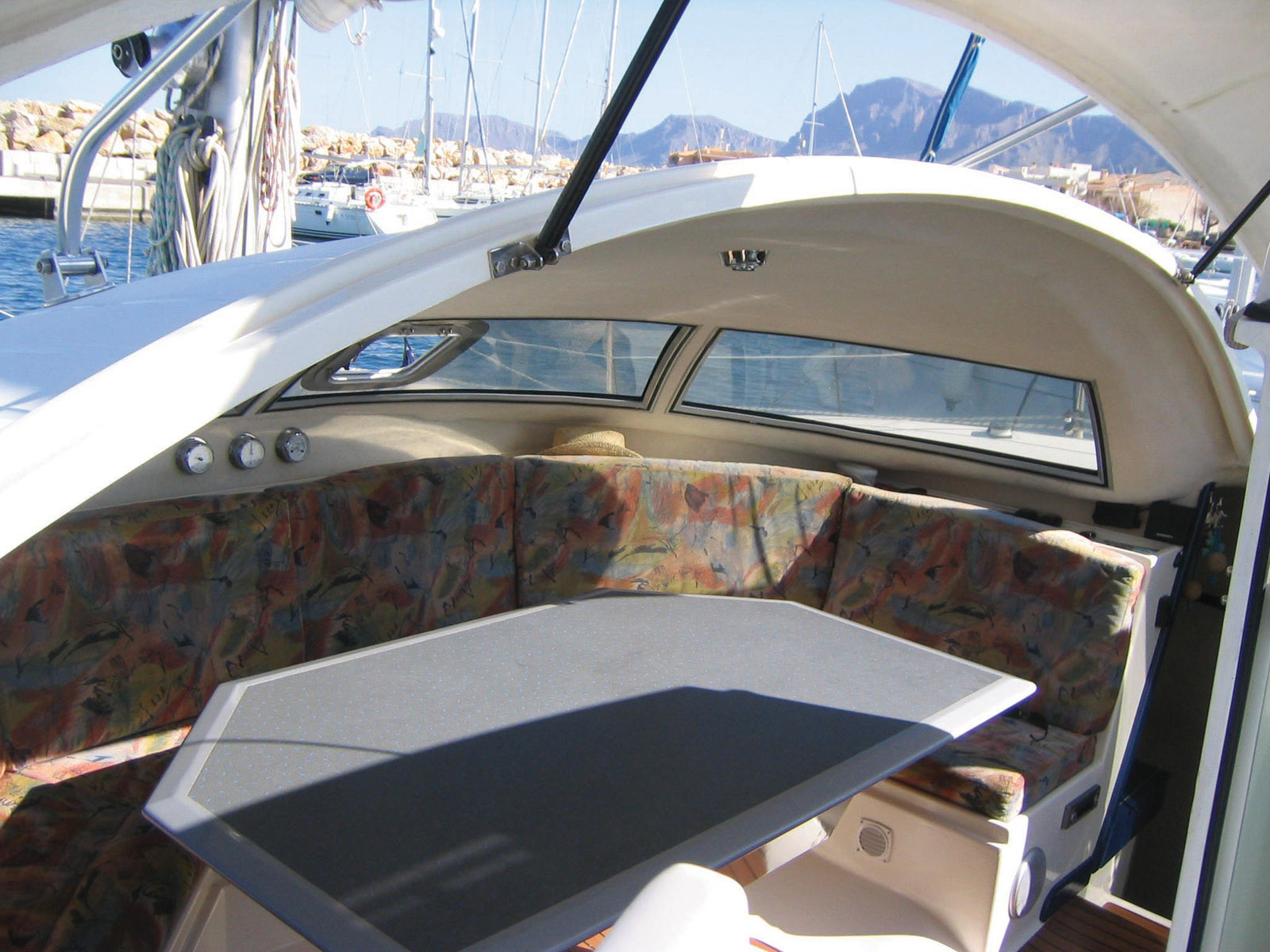
In 1988, this Joubert/Nivelt-designed cat became an ultra-modern UFO (unidentified floating object) with a totally new design. The atmosphere is fairly pared back: no diesel engines but a single outboard motor mounted on a bracket. Looking at the sail plan and the deck, the rig is rather slender, and clearly favors the mainsail. Upwind, in spite of the small surface area of the skegs, the course-keeping is rather good: she tacks through almost 90°. Like most catamarans, the 32 clearly prefers the sheets to be eased. Here, her light weight lends itself to good acceleration possibilities. As long as the wind is touching 16-18 knots true, you can expect to exceed 10 knots. The saloon has two novel features: firstly, a double entrance, which makes it wonderfully easy to move around, and secondly, a flip-up cap which transforms the saloon into a real convertible boat. The galley is located between the two doors, so it adjoins the cockpit. The rest of the available space is dedicated to the saloon, with a horseshoe-shaped bench seat and a large table. The hulls, in spite of their limited length of just ten meters (33’), manage to accommodate four cabins. Don’t get carried away, you’re not aboard a Lagoon... only those at the stern can accommodate two adults: at the bow, there’s only space for one. Cleverly, the chart table is located on the port side and the only heads compartment on board is in the other hull.
Builder: Fountaine Pajot
Architects: Joubert/Nivelt
Construction: GRP sandwich
Length: 9.90 m (32’6”)
Waterline length: 9.60 m (31’6”)
Beam: 5.30 m (17’5”)
Draft: 0.90 m (2’11”)
Light displacement: 3 t (6,615 lbs)
Upwind sail area: 55 m² (592 sq ft)
Mainsail: 38 m² (409 sq ft)
Genoa: 17 m² (183 sq ft)
Number of cabins: 4
Engine: Outboard from 15 to 25 HP
Production: 100 units built from 1988 to 1994
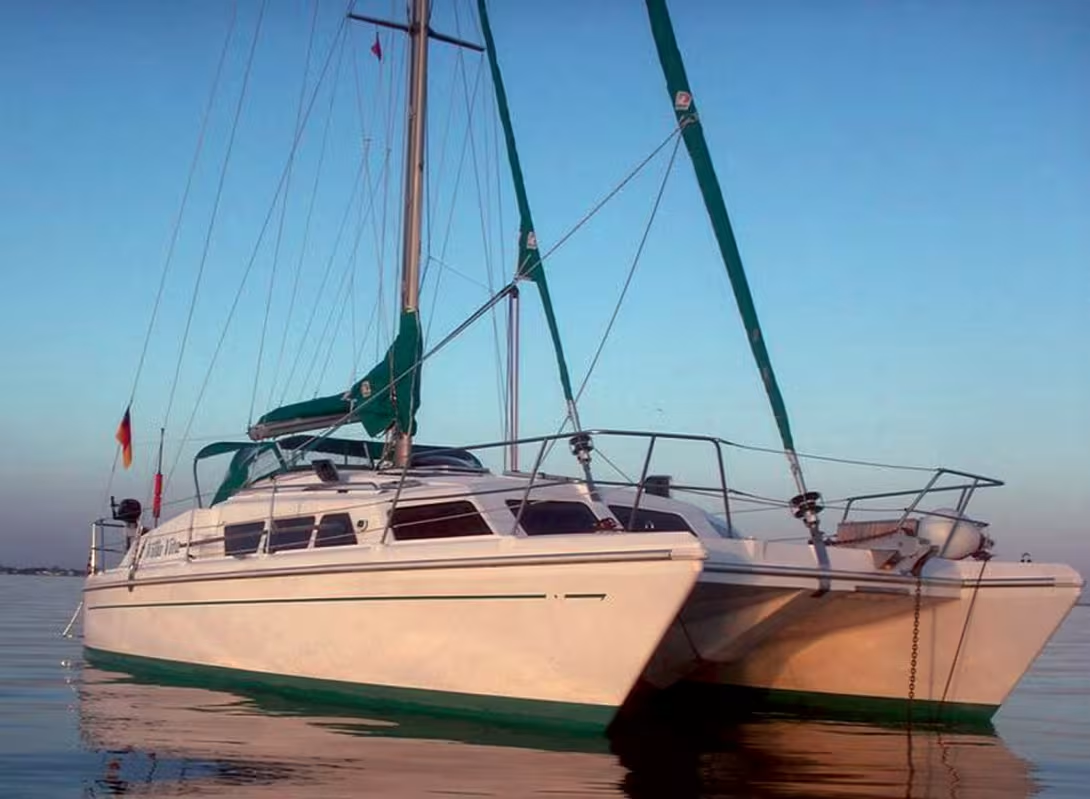
$40 000 – Snowgoose 35/37 : How very British!
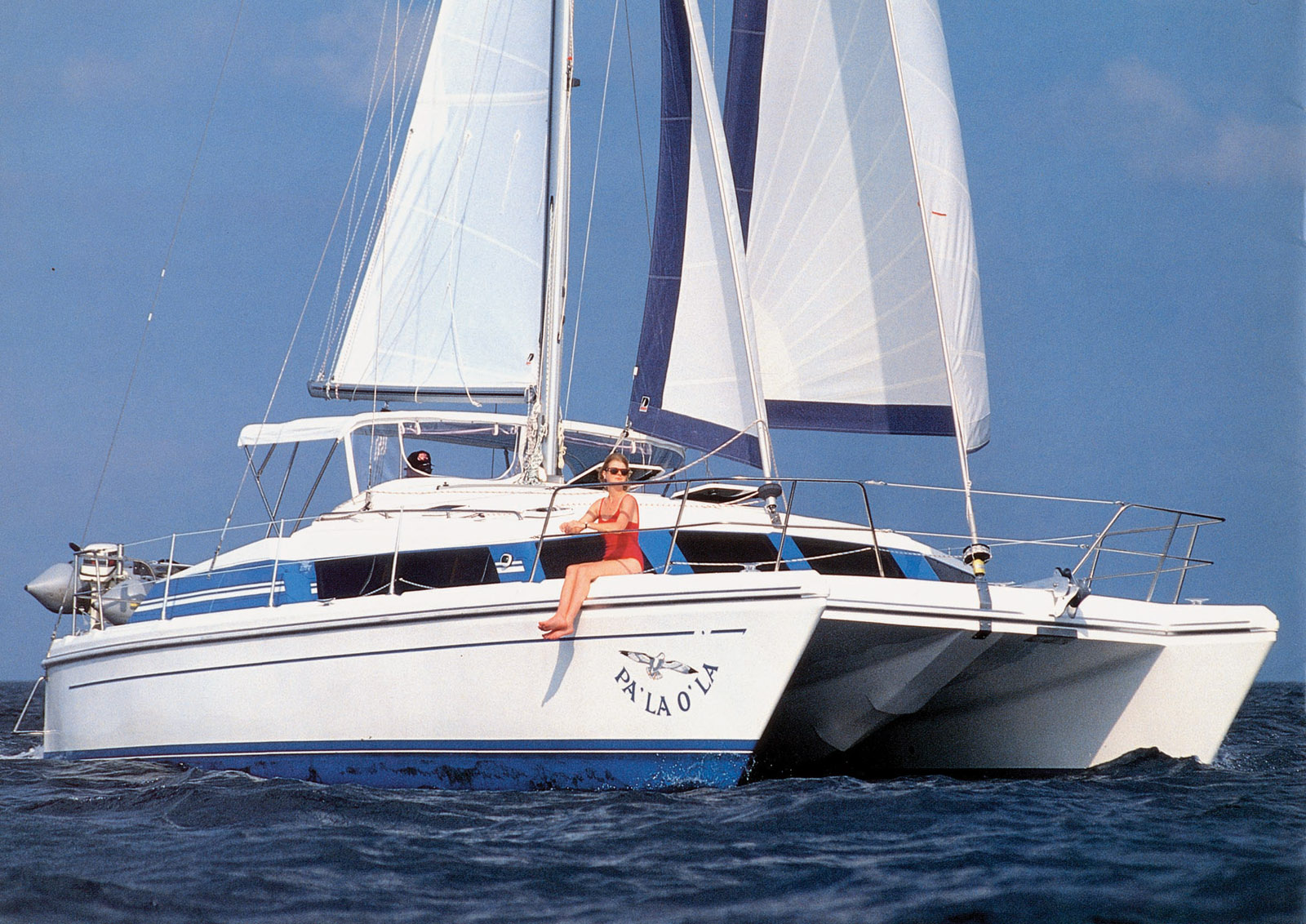
This model, which is particularly popular in the UK and in the United States, was launched in 1970. Her main feature? A rig set so far aft that the mast is stepped in the cockpit! The result was a huge genoa, twice the size of the mainsail. It’s amusing to note that Lagoon adopted a very similar configuration with their 39 - with a self-tacking jib and gennaker – some 42 years later... As for the rest of the boat, the Snowgoose 35 isn’t very revolutionary with her canoe sterns - and narrow berths aft - her rather low nacelle and her old-fashioned woodwork. To her credit, she has a very wide and bright saloon. At sea, the Snowgoose benefits from a rather low center of gravity, which makes her quite safe in bad weather. No hair-raising top speeds but an ultrarobust construction, and so a good base for a complete refit. This model was replaced by the 37 in 1978: new deck plan, increased beam, but also nearly two tons more on the scales. The Elite version, launched in 1986, offered twin diesels - the previous models are satisfied with a single central diesel engine with a lifting leg. The latter models are understandably more expensive, but remain affordable - $70,000 to $80,000.
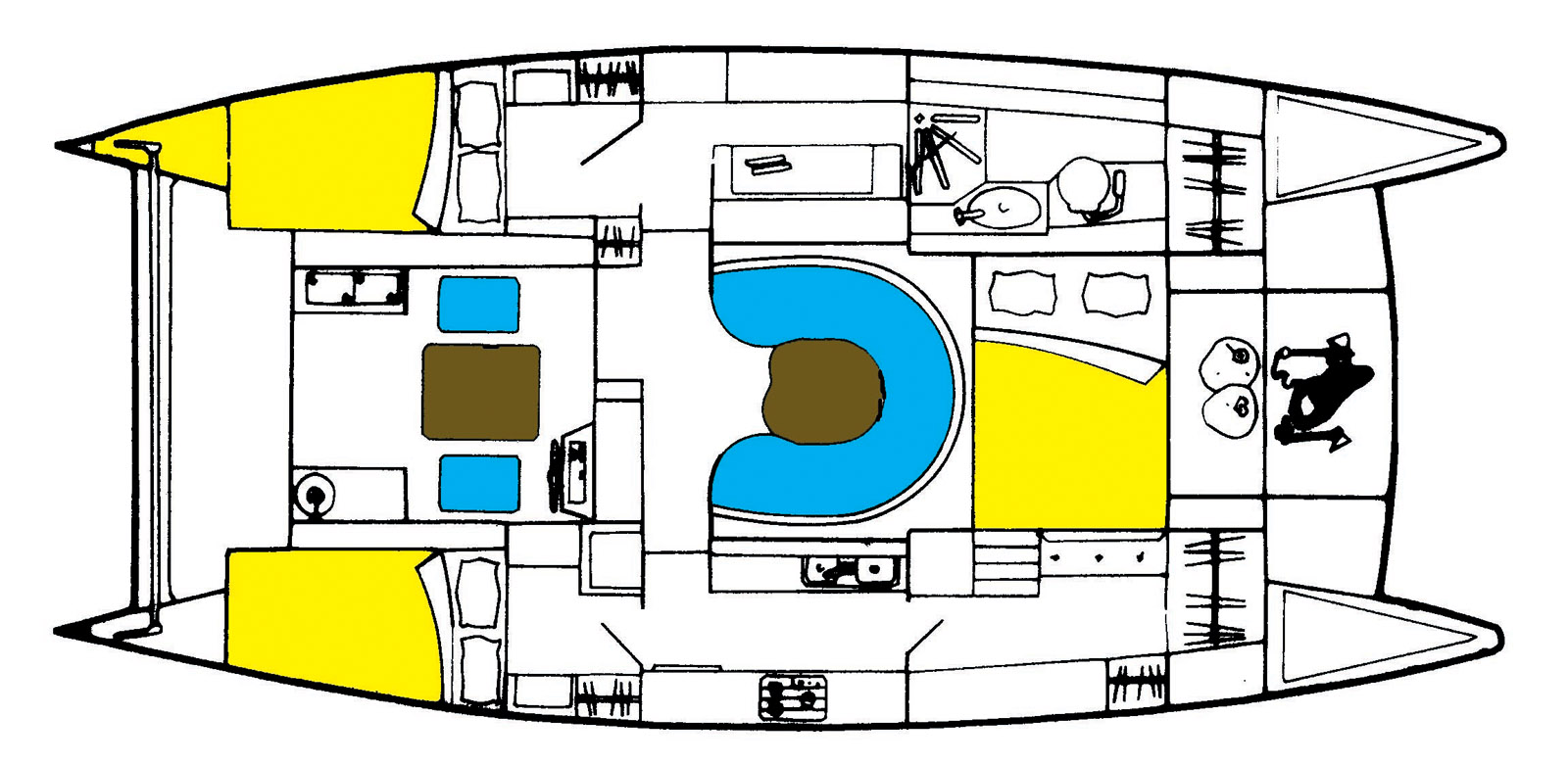
Builder: Prout Catamarans
Architects: Roland and Francis Prout
Construction: GRP
Length: 10.72 m (35’2”)
Beam: 4.58 m (15’)
Draft: 0.84 m (2’9”)
Light displacement: 3,630 kg (8,000 lbs)
Upwind sail area 64.5 m² (695 sq ft)
Mainsail: 22.3 m² (240 sq ft)
Genoa: 42.2 m² (455 sq ft)
Production: 500 units built from 1970 to 2003
$50 000 – Privilège 12 M : A former charter star
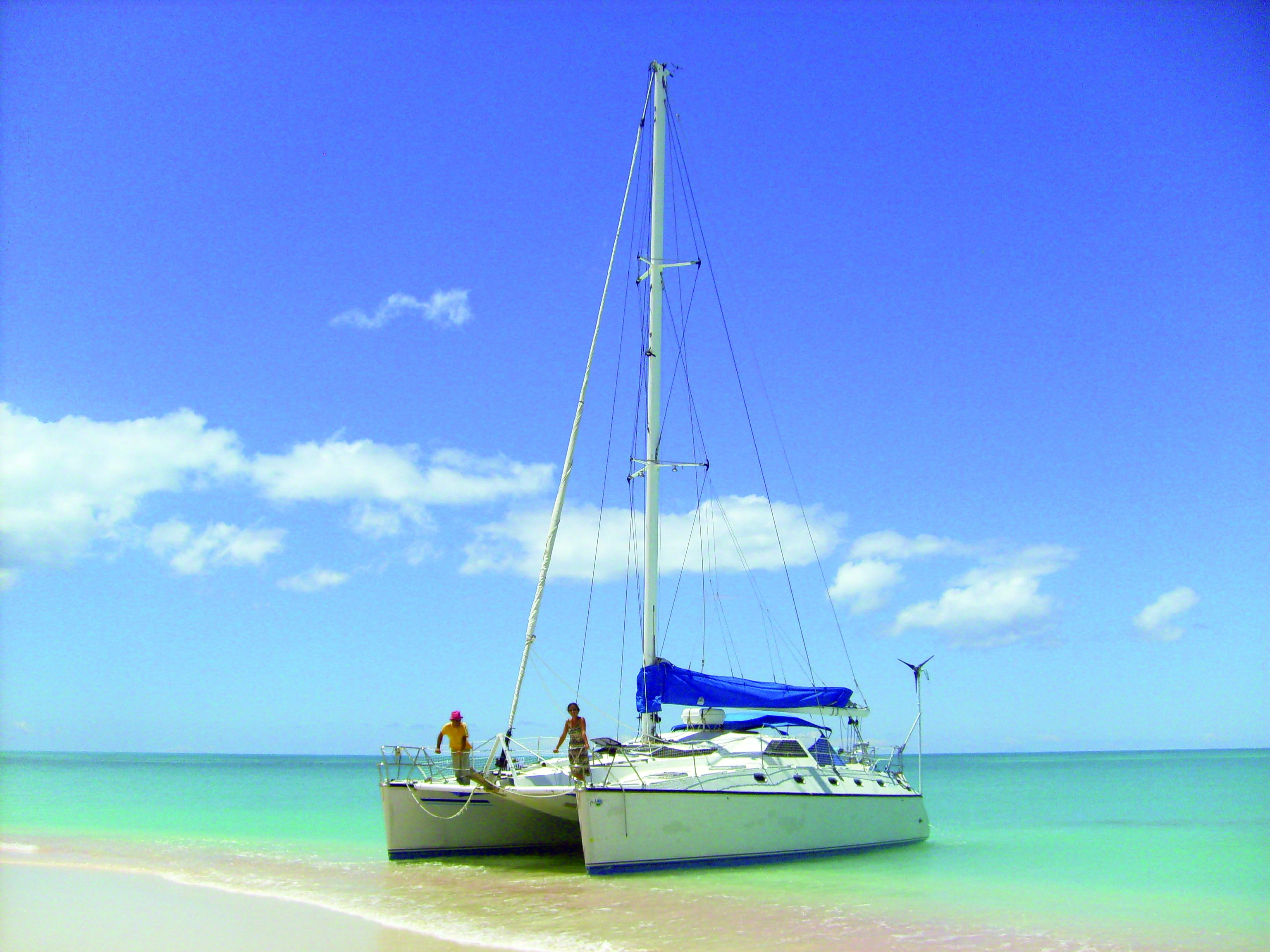
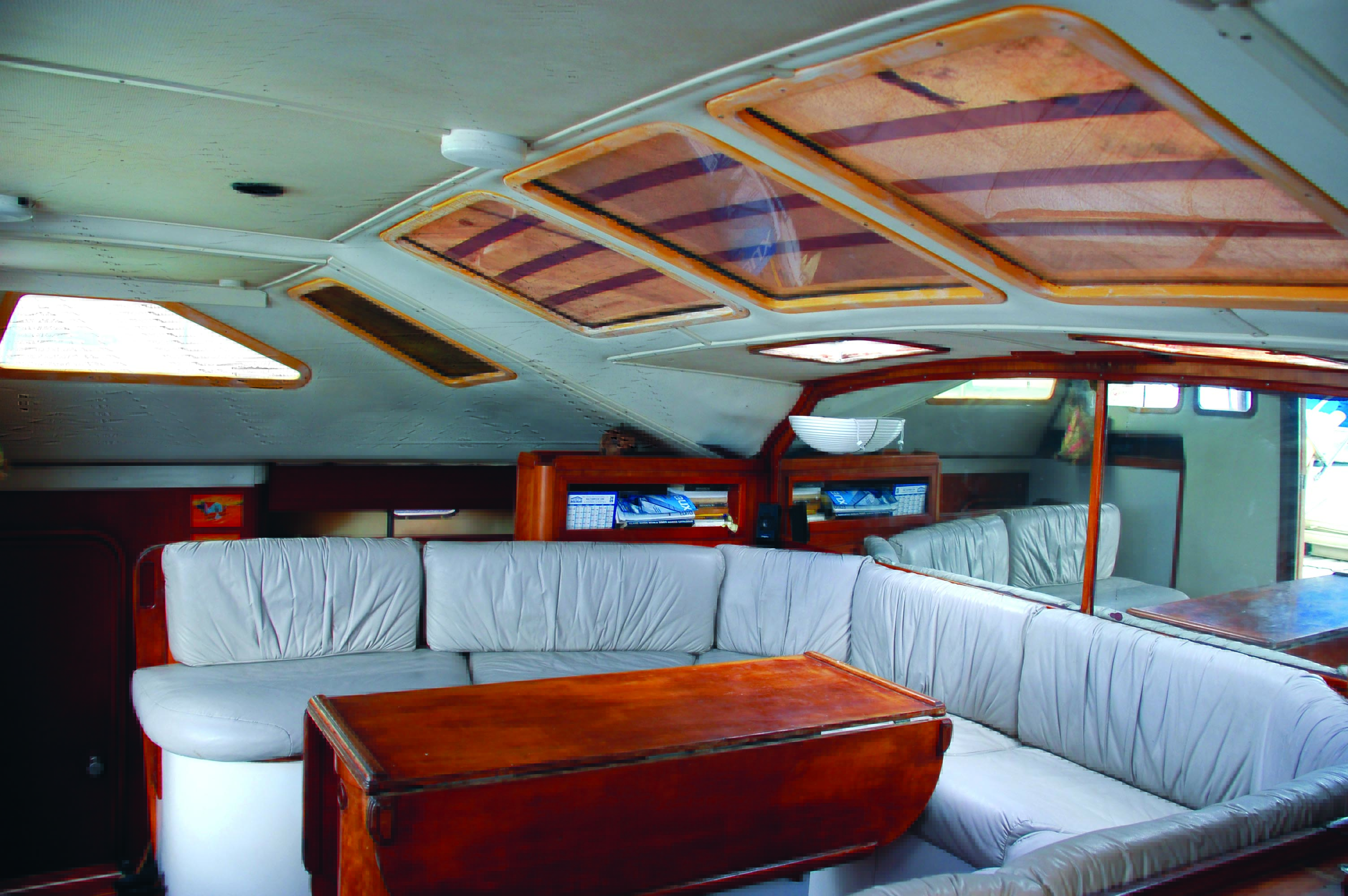
This model is the little sister of the Privilege 14.70. She did away with the main defects of her predecessor - structural rigidity that needed improving and insufficient bridgedeck clearance. But she retains the strong point of Jeantot Marine’s first catamaran, namely the famous front cabin nestling in the forward rostrum, which is still a current feature of the Privilège range. A very remarkable innovation aboard the 12 M is the double berths that are fitted athwartships, a configuration which is still setting a precedent today. The Privilège 12 M, particularly voluminous for her length, saw great success with charter companies. For this use - usually accompanied by a skipper and a hostess - the galley, set aft into the port hull, is convincing. The nacelle, whose volume is reduced, is occupied by the saloon. The panoramic view offered by the double coachroof with its somewhat tortured shapes is superb, but the windows, most of which are almost overhead, have quickly got to be covered over when sailing in the tropics. On deck, there are plenty of areas for relaxing, a clear cockpit with three bench seats, a table and a helm station on the port side. Under way, you get used to the large genoa - without the maneuvers being too demanding. Safe in rough seas, the Privilège is more at ease in a breeze than in light airs. And upwind, her skegs are too short to ensure great course-keeping. On the other hand, the 12 M lends herself well to taking the ground.
Builder: Jeantot Marine
Architects: BE Jeantot and Eric Lefeuvre
Construction: GRP sandwich
Length: 12.00 m (39’4”)
Waterline length: 11.00 m (36’1”)
Beam: 6.39 m (21’) Draft: 1.10 m (3’7”)
Displacement: 7 t (15,430 lbs)
Upwind sail area: 86.80 m² (935 sq ft)
Mainsail: 42.50 m² (457 sq ft)
Genoa: 44.30 m² (477 sq ft)
Engines: 2 x 18 to 29 HP inboards
Production: 85 units built from 1988 to 1994
$100 000 – Seawind 1000 : Open, with Targa roof
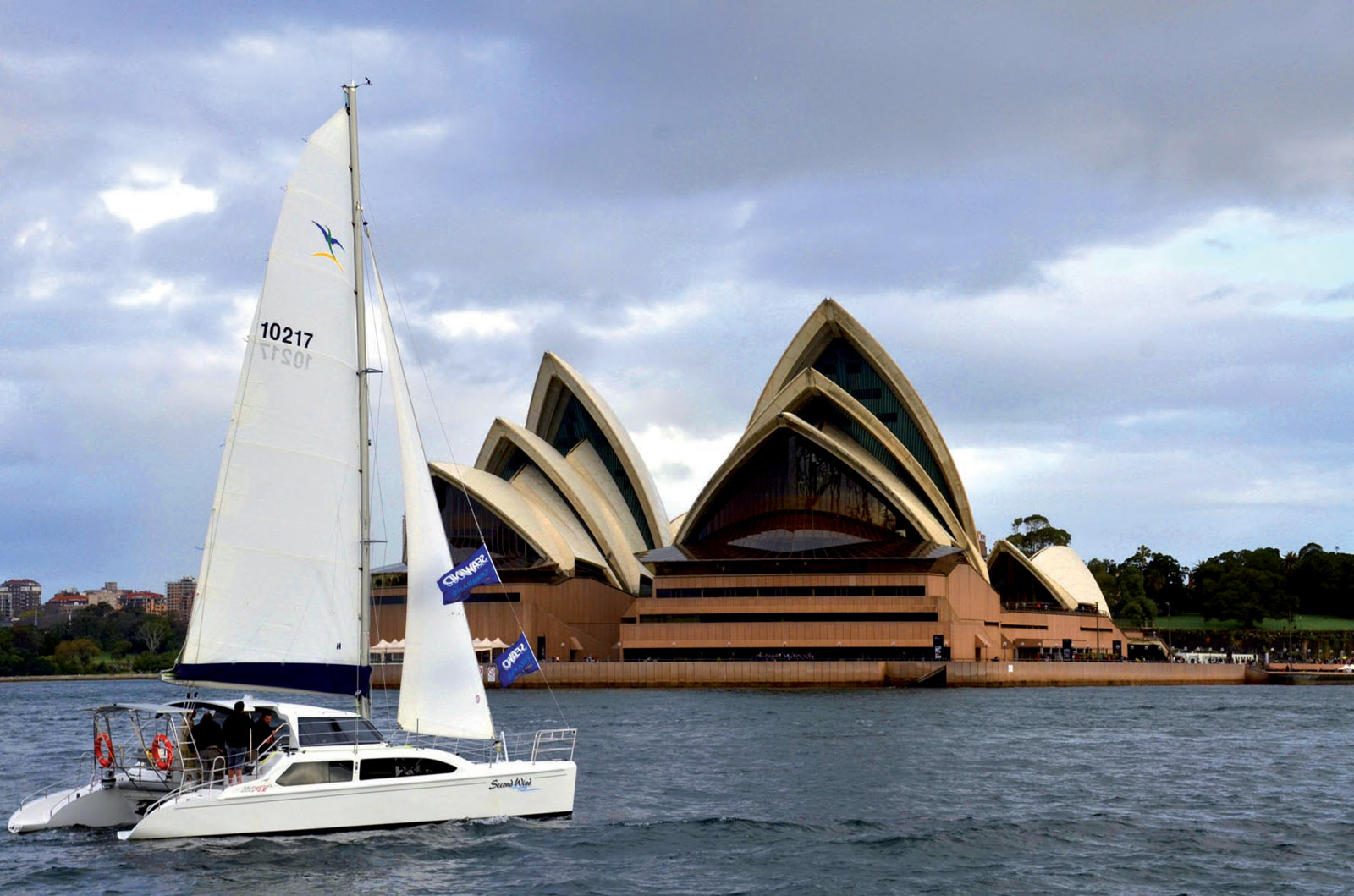
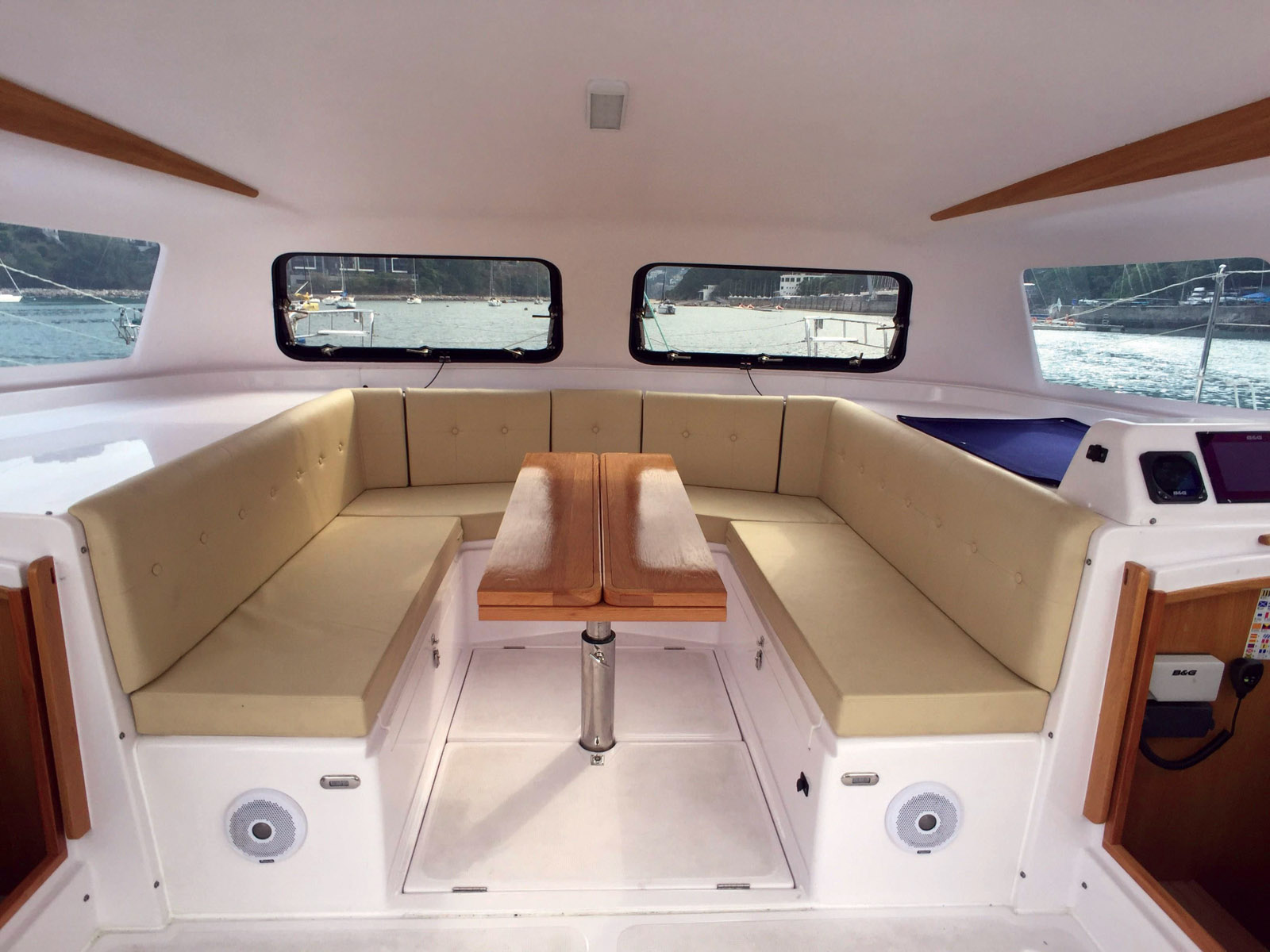
This catamaran, which is very popular in Australia, has had a long and successful career: a deserved success for this compact multihull, that is as seaworthy as she is practical. The 1000 is indeed the choice of many blue water cruisers - preferably tropical-bound ones. Solidly built and high off the water (80 cm/32” bridgedeck clearance), this model is capable of taking on some tricky sea states. Her sail area-to-weight ratio guarantees good liveliness on all points of sail. Only the short skegs slightly hinder good upwind course-keeping. The deck plan and sailing maneuvers are clearly oriented towards safety and ease of use when short-handed - just like the high three-level guardwires. The main originality of this model is the Open Targa concept: the companionways to the hulls are located in the cockpit, which is protected by a deckhouse that is completely open aft. Thanks to removable covers, this area can be protected. The manufacturer has chosen a twin outboard motor setup to limit weight - and maintenance. In 2008, the yard launched the 1000 XL with extended sugarscoops. In 2012, the XL2 adopted construction using the infusion process – leading to a weight saving of 500 kg (1,100 lbs). Like all the best-sellers that have made a lasting impression in the catalogues, the 1000 has undergone numerous changes. The latest models are certainly more attractive and better finished, but are also much more expensive on the second-hand market.
Builder: Seawind Catamarans
Construction: GRP sandwich
Length: 10 m (32’10”)
Beam: 5.90 m (19’4”)
Draft: 0.85 m (2’10”)
Light displacement: 5.5 t (12,125 lbs)
Upwind sail area: 61.5 m² (662 sq ft)
Mainsail: 45 m² (485 sq ft)
Genoa: 16.5 m² (177 sq ft)
Number of cabins: 3
Engines: 2 x 10 HP outboards
Production: 250 units built from 1998 to 2016