
Let’s face it, we could never qualify buying a multihull as a “reasonable” action. However, we can comfort ourselves in the knowledge that it is a kind of impulsiveness which is “at the extreme limit of intelligence” to quote Jean Cocteau. So, having been seduced by the breathlessly fine lines of the design, or the magnificent interior and exterior fittings, which would turn any workaholic into an unbridled hedonist, or by the promise of high performance and record-breaking Atlantic crossings, it’s soon time to look at what all this madness is going to cost. There is no doubt that the basic prices advertised by the shipyards do not relate to a multihull that is ready to launch, and definitely not one that is ready to sail around the world. To be fair, the nautical industry is not alone in this. Automobile manufacturers have long led the field. You might have concluded that a multihull on sale for a six-figure sum would have adopted the pricing code of the luxury goods industry… Far from it. If you decide to have a look (and for me it was out of sheer curiosity) at the list of options that come with a new Porsche, you will discover that nothing escapes market forces and the most ruthlessly efficient marketing strategies.
The famous “Prices from..."
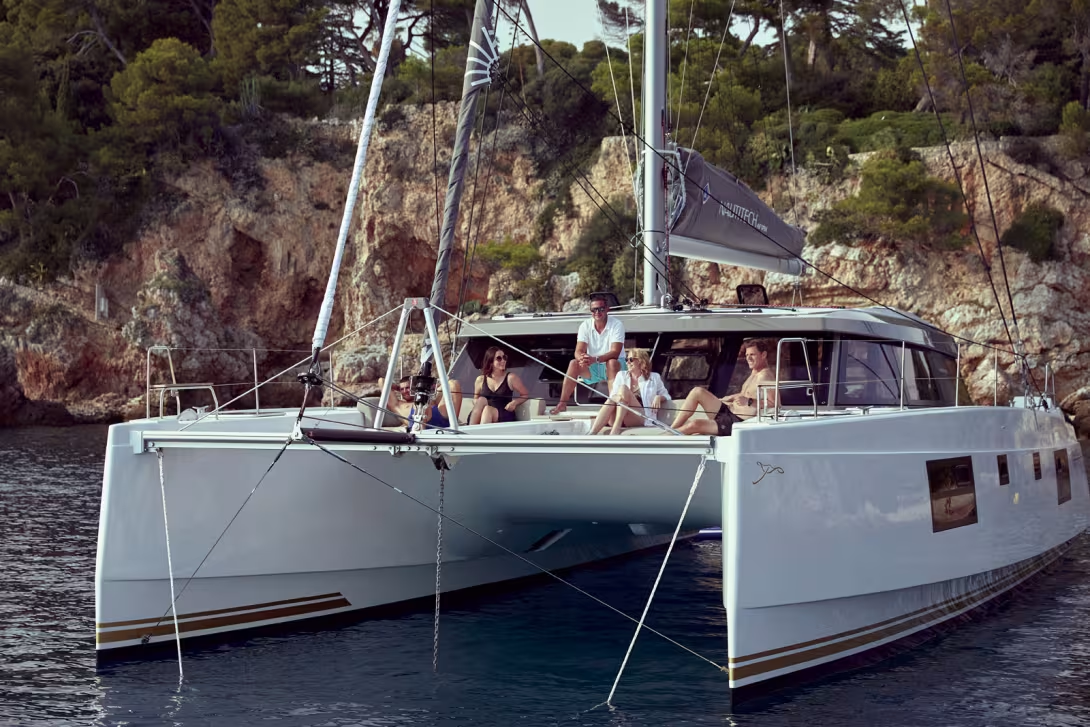
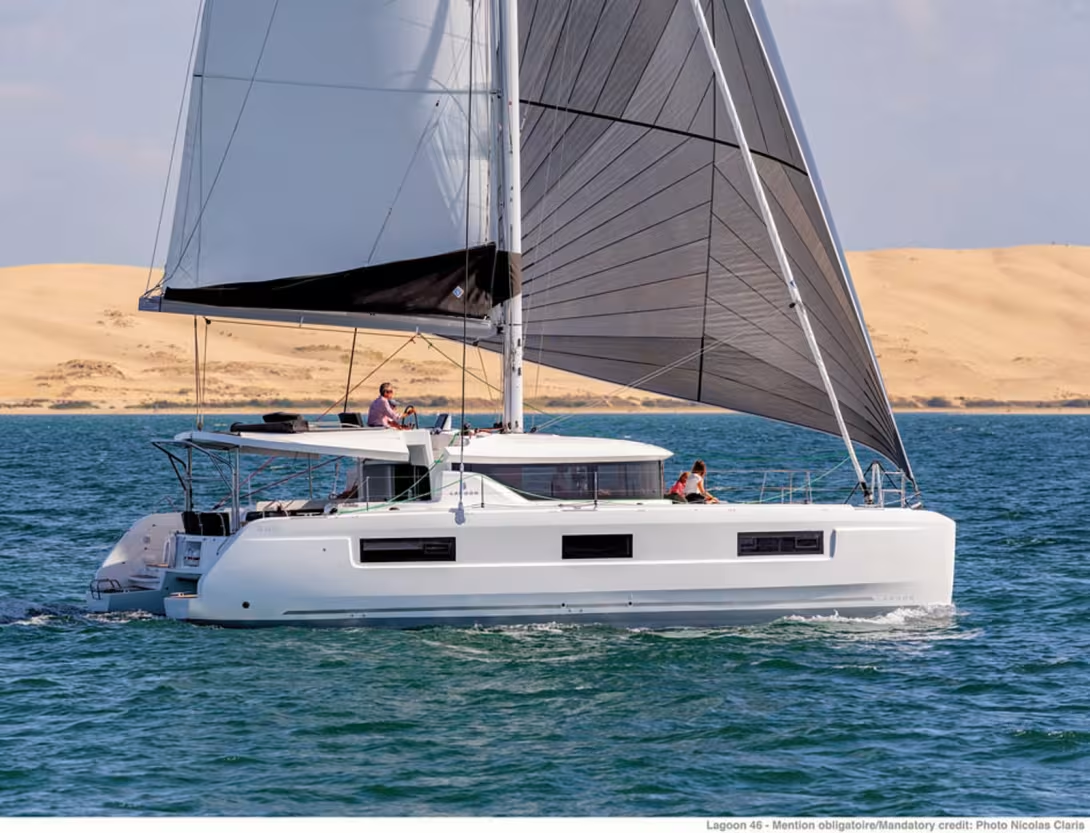
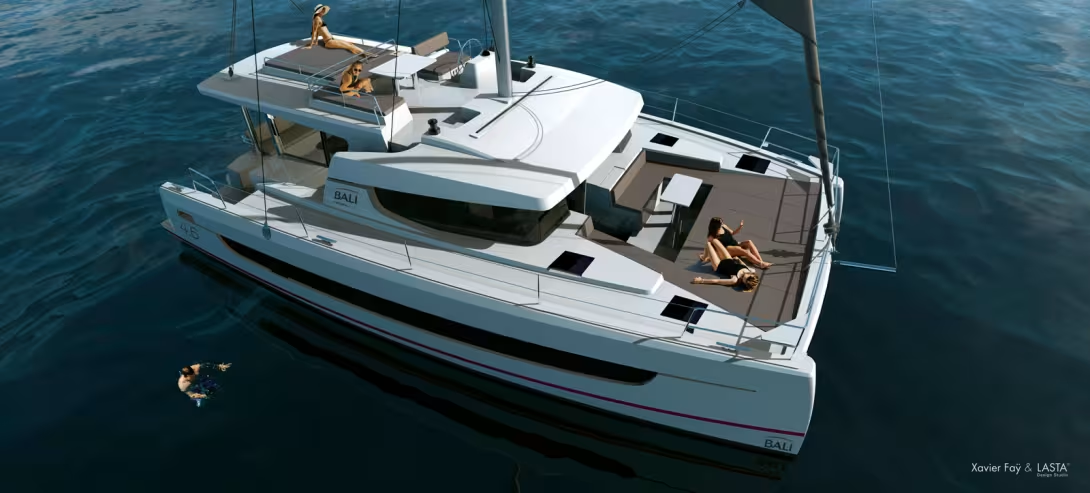
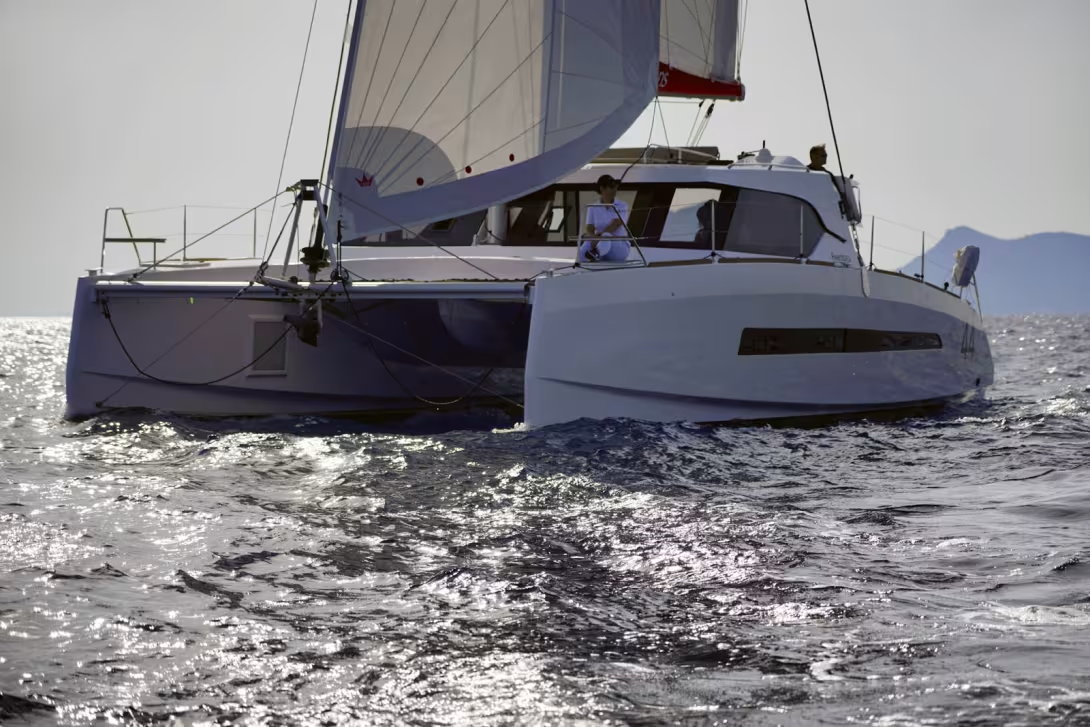
Why? Because we all seem to have the same mindset. We have a quasiPavlovian reflex: first we compare all the prices of the different models which have caught our eye and immediately exclude anything that is too expensive or too cheap (could mean poor quality). This has led all the shipyards to adopt a basic inventory which is spartan to say the least (an unlaunched multihull with no sails) in an effort to reduce the “Prices from…” to the lowest number possible. Unless we’re missing something here? Upon comparing all the prices, we realized that everyone has aligned themselves on a “minimum” standard. It doesn’t really matter whether it was the shipyard/dealership or the buyer/skipper that pushed for this movement towards minimum inventory standards, but that’s the way it is. We decided to look into it and took great pleasure in piecing together the real cost of a multihull that is ready to set sail. To illustrate just how aligned the shipyards are, we chose the 45-foot models produced by the biggest shipyards, as this really is right in the middle of the market. There is less than 4.5% price difference between the models of Lagoon, Fountaine Pajot, Bali, Leopard and Nautitech. The average price is €465,210 ex sales tax for boats with a median size of 13.71m (45’) with a variability of just +/- 2%. There is therefore very tough competition between the five big players in the sector in terms of volume, while other producers need to stand out from the crowd with the attractivity of their offer. Take the lovely Aventura 44, or the more exclusive Outremer 45. Outremer is the only one to offer three hulls on the Neel 47.
The ubiquitous Packs
With a few rare exceptions, the standard inventories of the big players are pretty spartan. Once the standard price has been set, it’s then time to tackle the very long list of choices offered by our chosen multihulls. To guide you in your first steps and to avoid getting lost immediately in the jungle of options, the marketing departments have invented a fabulous tool: the packs. Without exception, at least among the leaders, it’s very difficult to avoid them. The names resonate with the poetry of an airline membership card - Essential, Exclusive, Platinum or Oceanic for the most inventive - but their price is in euros, not Bonus Miles, ranging from €20,000 to €30,000 excluding tax for the most affordable, and up to more than €70,000 for the most luxurious. We have focused our attention on the most frequently encountered packs and have chosen, where a choice was possible, the one without which we do not think it would be possible to sail long distances these days. Depending on the shipyard, the contents may vary, but we couldn’t overlook an electric windlass, a lazy bag for the mainsail, a bit of electronics, an inverter, a mooring kit... As we were tearing our hair out in front of the mass of figures which invaded our Excel spreadsheet while attempting to come up with some comparable data (which seemed to take a malicious pleasure in not being comparable), we had a sudden brainwave. Let’s create our own pack! Why don’t we draw up a list of equipment that seems to us to be the minimum for a blue water cruising program. We’ll call it the Multihulls World Pack! Admittedly, this list is by no means exhaustive and will not necessarily apply to everyone, but it is the basis of a comparison and seemed to us to be the fairest.
The Multihulls World Pack
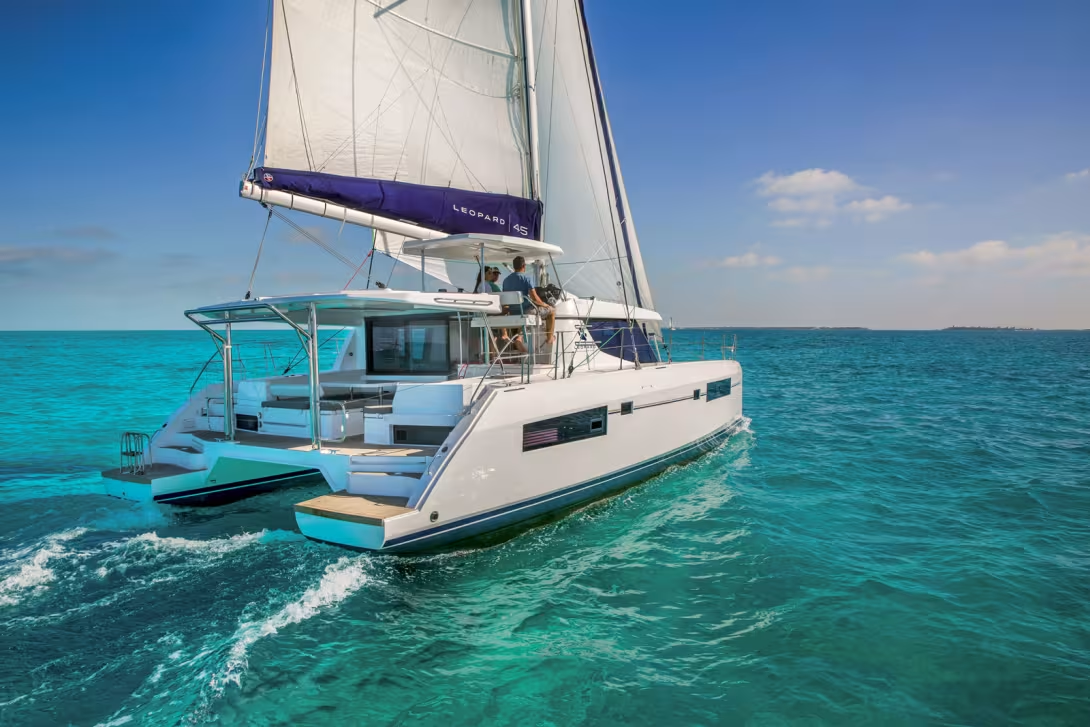
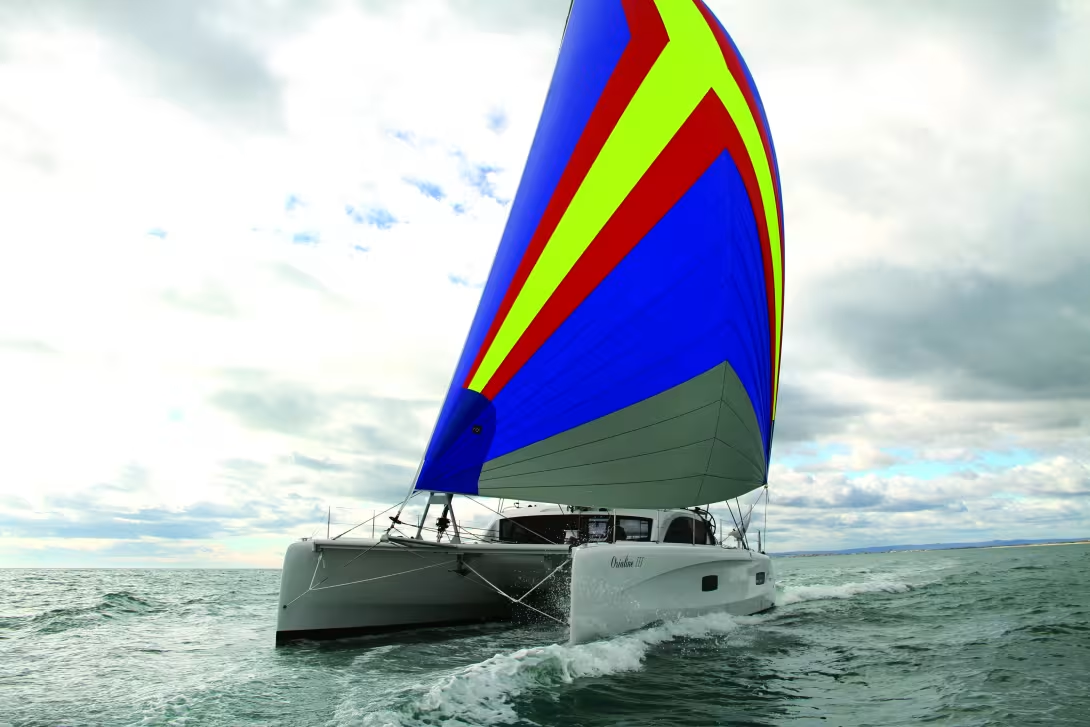
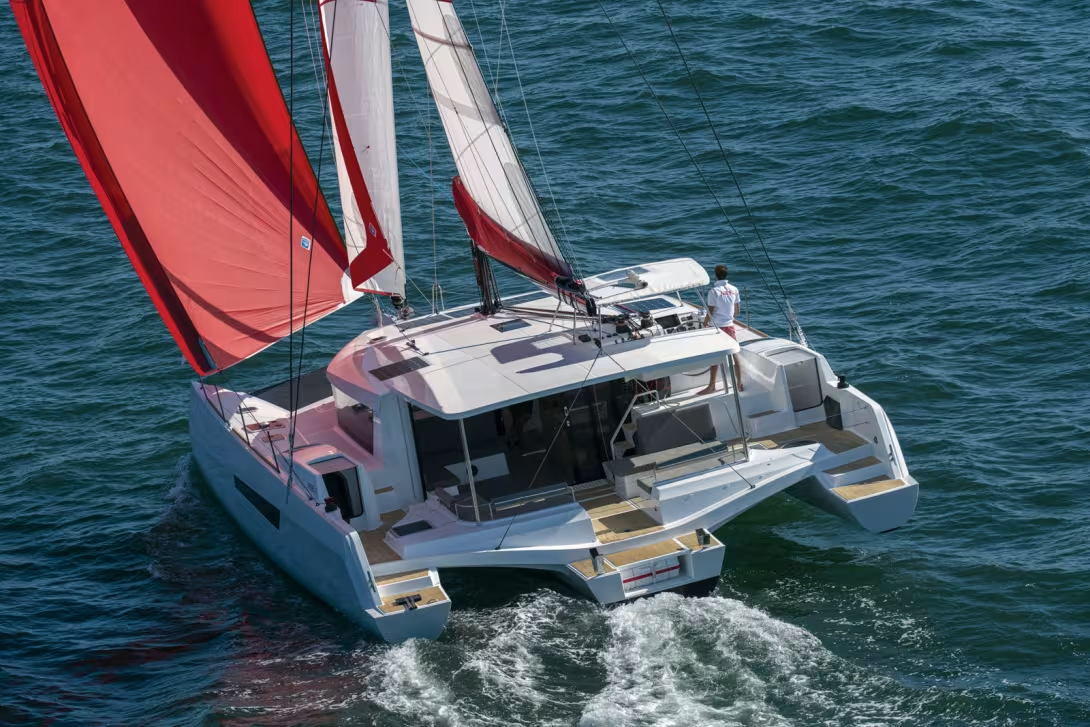
Among our eight 45-foot multihulls, five are catamarans in head-to-head competition - the Bali 4.6, Elba 45, Lagoon 46, Leopard 45, Nautitech 46 Open - with very similar prices. Our three outsiders? The Aventura 44 stands out with a much lower price - but also a more modest length and a more basic finish. The Outremer 45, on the other hand, justifies its higher price with its high-tech construction - it is by far the lightest model, and therefore the most efficient. This model is also distinguished by a less expensive MW Pack. As for the Neel 47, this is the only trimaran in our control group, but its price is similar to that displayed by our «club of five».
On our 45 footers, they all have three cabins and two or three bathrooms according to the standard proposed. We have therefore retained:
- Engine upgrade: Let’s assume that if it is proposed, it is highly recommended. Moreover, once this box is ticked, most of our multihulls will then be equipped with engines between 50 and 60 HP. Note that the Neel, Leopard and Outremer having already opted for an engine that could be considered to be generously sized, do not offer an option in this respect.
Price: from € 1,810 to € 5,690.
- Folding or feathering propellers - If we want to maneuver safely in harbors, even in strong winds, we need good propellers, with at least 3 blades. Without the folding or feathering option, the hydrodynamic brake they represent costs more than half a knot of speed under sail. We can’t imagine sailing with this handicap.
Price: from € 1,833 to € 5,519. This great disparity in price is explained by the significant differences in technology, ranging from the simple folding three-blade propeller to the four-blade variable pitch propeller.
- Cockpit upholstery - Most of us intend to sail to pleasant climates. Whether sailing or at anchor, the cockpit will quickly become the heart of life on a multihull, so we might as well be comfortable there!
Price: from € 1,770 to € 5,711. The areas covered vary greatly, sometimes including sunloungers for the more expensive ones. For the more affordable ones, only the seats are included but not the backrests.
- Hydranet sails - While the intrinsic resistance of standard production Dacron® sails is not in question at all, most yards offer mainsails and genoas in Hydranet or equivalent, guaranteeing more precise shapes thanks to their triradial cut. They will hold their profile longer thanks to their Spectra®-reinforced fibers.
Price: from € 10,530 to € 19,683.
- Gennaker/Code 0 on furling or asymmetric spinnaker with sock - Self tacking solents and genoas are great upwind, and even downwind in breezy conditions, but when the wind drops, a larger, lighter downwind sail is a great way to get the most out of sailing. It would be a real shame - and not environmentally friendly at all - to be forced to start the engines too often.
Price: from €4,533 to €8,280 depending on the type of sail and sailcloth, and whether or not the option includes the gennaker furler or spinnaker sock.
- Bowsprit, spinnaker and gennaker deck fittings - As the downwind sail is not part of the standard equipment, its dedicated deck fittings are also usually optional, either together or separately from the sail, depending on the shipyard.
Price: from € 2,320 to € 6,861 depending on the equipment provided (bowsprit, winches, blocks, sheets...).
- An electric winch - It’s certainly not essential, but once you’ve had a taste of it, it’s hard to do without one. Far be it from us to electrify them all: a little regular exercise won’t do any harm! The gennaker/spi sheet winches, which are pleasure sails by nature, can very well remain manual. But an electric winch on the main halyard is effectively a safety feature that will relieve the physical strain on small crews - we won’t have to hesitate anymore when deciding whether or not to take in or shake out a reef.
Price: from € 1,900 to € 3,652 depending on the size and whether you are electrifying an existing winch or adding a new one.
- Solar panels (about 400 W) - This is now essential equipment on any modern multihull. No maintenance, apart from a little rinse from time to time so as not to lose efficiency, and it is the guarantee of always having well-charged batteries, a quasi-autonomy at anchor, a good energy supply when sailing, and shade on the dinghy as a bonus.
Price: from € 3,068 to € 9,817 usually depending on the power, but not always, as the price per watt varies from €8 to €21! Explanation: Peripherals can be expensive when they include davits and a frame on which the solar panels will be fixed.
- Watermaker - Although expensive, sensitive to adjustments and requiring rigorous maintenance, it offers two undeniable advantages: an infinite water autonomy and therefore a weight saving equivalent to the hundreds of liters that you don’t have to carry in your tanks.
Price: from € 11,800 to € 18,428 with capacities ranging from 63 to 180 liters (16 to 47 US gal) per hour.
- Electric windlass and full anchoring pack - Hard to do without it, isn’t it?
Price: from € 1,065 to € 1,930 depending on whether the windlass is included as standard, in a pack or always as an option.
- Amarres et pare-battages – Même remarque que ci-dessus. Prix : de 626 à 2 250 €, mais à ce prix-là, les pare-battages sont gonflables.
- Mooring lines and fenders - Same remark as above.
Price: from €626 to €2,250, but at this price the fenders are inflatable.
- An electric toilet - It’s a bit like the electric winch, ten or fifteen years ago: we would have cried heresy. Since then, they have become more reliable, can be supplied with fresh water - so less odor, less clogging of the pipes - and now work at the touch of a button, saving all the laborious explanations of how marine toilets work, which end up causing more clutter and breakage problems. If you are still in doubt, as your multihull is equipped with at least two toilets, take one electric and the other manual. But it will be difficult to decide who will use the electric one. You or your guests? We bet that you’ll go for two electric ones very quickly. In the event of a total power failure, there will always be the traditional bucket as a last resort.
Price: from € 622 to € 980. For a carbon version, multiply the price by five!
- Complete electronics package including plotter, radar, AIS, log, depth sounder, speedo and VHF - You can always add more but these are a good start.
Price: from € 13,000 to € 47,650. As there are sometimes several choices for the same multihull we have fixed the range from €13,000 to €21,300. The contents are fairly similar but with three different brands: Garmin; Raymarine and B&G.
- Radar Antenna - Why it is not included with the rest of the electronics remains a great mystery to me, I must admit.
Price: from €1,987 to €3,244 depending on the technology, range and mount.
- Antifouling - An indispensable feature that again ought to be standard every time.
Price: from €1,987 to €3,990 - Note that there is a special tropical antifouling option at Nautitech.
- Tender and outboard motor - The presence of a RIB with a 10 to 15 HP outboard motor is a prerequisite for successful cruising.
Price: from € 5,874 to € 12,370 € (Length from 3.10 to 3.40m / 10’-11’ + 6 to 20 HP motor)
- Liferaft - Mandatory and indispensable with a fairly homogenous price range. Some small variations such as the format (valise or container), the category (Coastal or Offshore) and the maximum number of people that it can accommodate.
Price: from € 1,718 to € 1,960.
- Launched and delivered in Europe - Most multihull builders are based in continental Europe, so this was the most obvious basis for comparison. The cost of all other destinations was equivalent. All prices for multihulls are quoted ex shipyard and therefore ashore, except at Outremer where launching is included. One clarification: the Aventuras are located in Bizerte, Tunisia, and the Leopards are launched in Cape Town, South Africa. For the Leopard 45, transport from South Africa to Europe represents a significant extra cost (€ 38,551) compared to its competitors, without significantly increasing the final bill. For delivery to the Caribbean, the United States or Oceania, freight rates are close to those to Europe, and the price will vary only slightly. On the other hand, for transport from Europe, there will be a significant post-shipping cost to be added. In any case, once launched, the route can still be long depending on your home port. But it could also be a nice trip or the first step on an even longer tour.
Price: from €3,450 to €13,564. This very wide price range reflects the diversity of situations (distance from the launch site leading to expensive road transport) and what the so-called «delivery» entails, which can go as far as including several days of personalized handover

Aventura 44: Standard Price: € 355,530 - Multihulls World Pack: € 79,362 - Price with the MW Pack: € 434,892 - Boat test in MW170.
Bali 4.6: Standard Price: € 478,400 - Multihulls World Pack: € 112,420 - Price with the MW Pack: € 590,820 - Check it out in September
Elba 45: Standard Price: € 466,700 - Multihulls World Pack: € 108,336 - Price with the MW Pack: € 575,036 - Boat test in MW167.
Lagoon 46 : Standard Price: € 448,500 - Multihulls World Pack: € 103,293 - Price with the MW Pack: € 551,793 - Boat test in MW163.
Nautitech 46 Open: Standard Price: € 459,550 - Multihulls World Pack: € 96,638 - Price with the MW Pack: € 556,188 - Boat test in MW170.
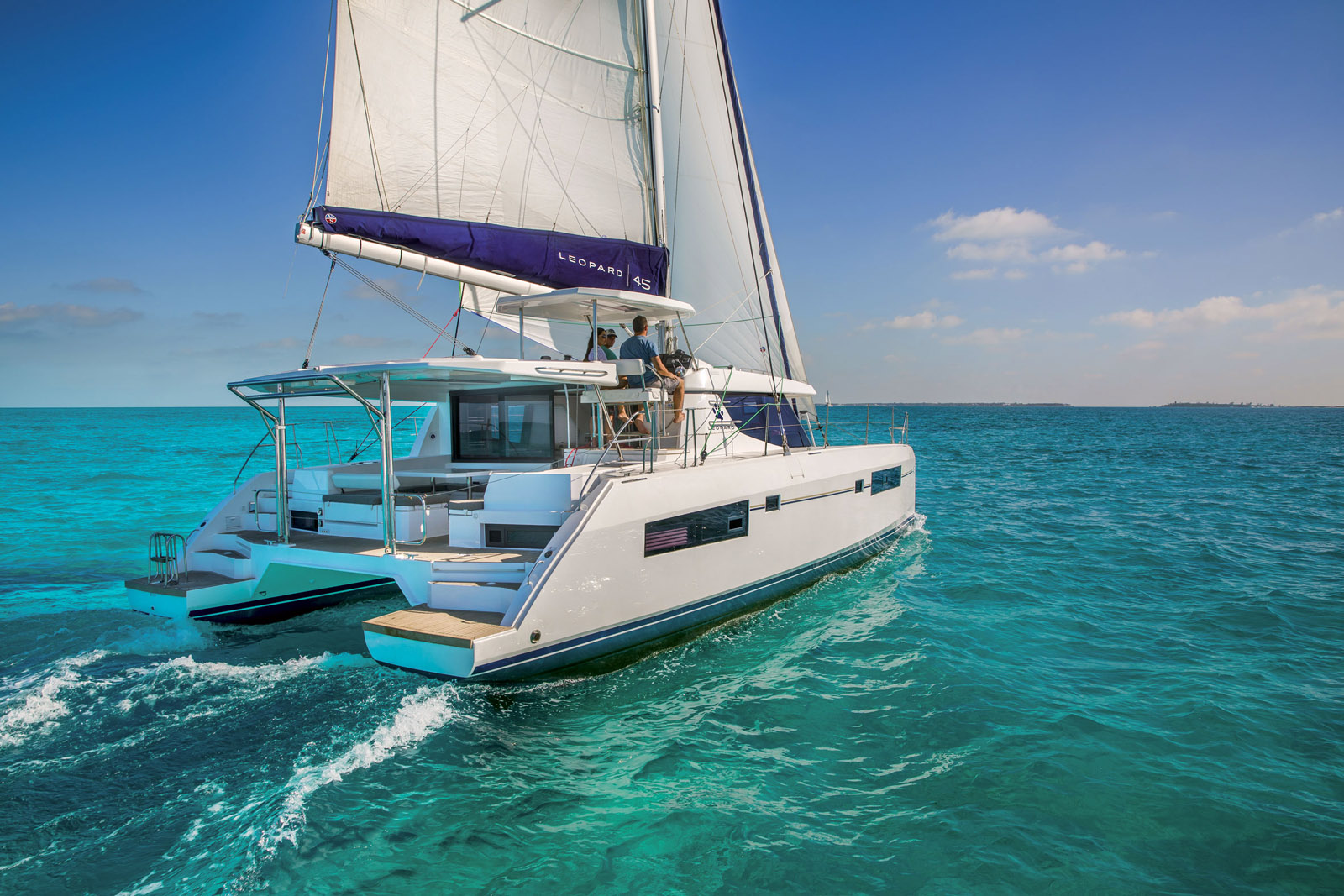
Leopard 45: Standard Price: € 489,000 - Multihulls World Pack: € 102,540 - Price with the MW Pack: € 591,540 - Boat test in MW156.
Neel 47: Standard Price: € 449,000 - Multihulls World Pack: € 104,684 - Price with the MW Pack: € 553,684 - Boat test in MW166.
Outremer 45: Standard Price: € 575,000 - Multihulls World Pack: € 74,420 - Price with the MW Pack: € 649,420 - Boat test in MW140.
From a complete Pack on the one hand to picking from the lists of options according to what we thought would be the most advantageous things to add on, we expected to find some rather large disparities... The reality? Not at all! The price increase of our «ready to go» multis is between 21 and 23.5% on seven of our eight reference units. There was one exception: the Outremer 45, whose price is only 13% higher than the standard. There are two reasons for this: its basic public price includes preparation and launching, and the absence of the Pack reduces the cost of non-essential options - or at least those not included in our comparison. Add to this the increasingly popular options such as air conditioning (€ 24,000 on average), more ecological choices such as a Watt&Sea type hydrogenerator (€ 7,980), your personal or cultural desires (count about € 550 for a microwave oven, € 1,710 for an electric barbecue and, the must-have wine cellar at € 2,927), your survival equipment, and it’s a good bet that the final bill will be close to 130% of the standard price. No big surprise in a way, but now we know exactly why and what it includes.
This graph shows that the prices - with or without the MW Pack - of six of our eight test multihulls are very similar. Only two models stand out clearly: the Aventura 44 is cheaper, the Outremer 45 more expensive.
Focus on the total for the options: here, the Outremer proves to be the least expensive, followed by the Leopard 45 and the Nautitech 46 Open.
The differences between the basic price and the average price only alter slightly (0 to 2.12%) by including options
Why ex-Sales Tax prices?
All prices for these items are expressed exclusive of tax. The first reason is that shipyards publish their prices in this way and, like them, we address an international readership of sailors. Although more than three-quarters of the multihulls produced in the world are produced in France, 80% are exported. As taxes (VAT in Europe) vary according to each destination country, the ‘excluding-tax’ figure is really the only basis of comparison shared by all. But if shipyards have also gradually adopted this form of presentation, it is also because they very often work with professionals such as charter companies, for whom tax-free is also the norm. However, we would like to draw the attention of our European readers to the fact that leasing, even if it is said to be at 0%, should not be confused with tax-free. Indeed, leasing is indeed done on the basis of an amount including tax (ex-VAT + 20% in most cases in Europe) and it is the leasing rents that benefit from a reduced VAT rate, either at a flat rate of 10% or at 0% when leaving European waters. A final clarification for our readers on the American continent: some manufacturers «fix» the €/$ exchange rates for one year while others adapt their rates in real time.
In order to present prices in a fair and precise manner, we’ve decided to mark them in €. Note that as of early June 2020, €1 = $1.12
