
A look at the market
Remember the 1990’s? Privilège launched their Euphorie 40, with 23 units built, followed by the 44 and the Transcat, at 45 and 48 feet. After a break of nearly ten years, the Sables d’Olonne shipyard on France’s west coast came back on the market with their Euphorie 5, directly originating from their Série 5. It was the same story, but a little later on, at Lagoon: in 2001, the Lagoon Power 43 set the ball rolling in this new market, and was built for six years. The Lagoon 40 MY also tested the market... which was to become perennial for the world’s leading boatbuilder, with powercats over 60 feet. But other shipyards have always believed in motor catamarans: Robertson & Caine have been producing powercats since the 1990s. With mixed success, let’s face it... Leopard Catamarans perhaps weren’t fully convinced yet back in 2002 with their Lion 46, which was followed by a 43. But consider a little the Leopard 47PC , similar to the sailing 46. It was from the 39 PC, a variation of the 39, that success really came - in total, Leopard have now delivered 370 powercats. FountainePajot is also one of those convinced by the motor boat niche: the yard has launched a complete range over the past twenty years, but without relying on the existing molds of its sailing catamarans. Two schools of thought, therefore: units redesigned around a sailing catamaran, or really new models, 100% motor boat. We’ll come back to this later.
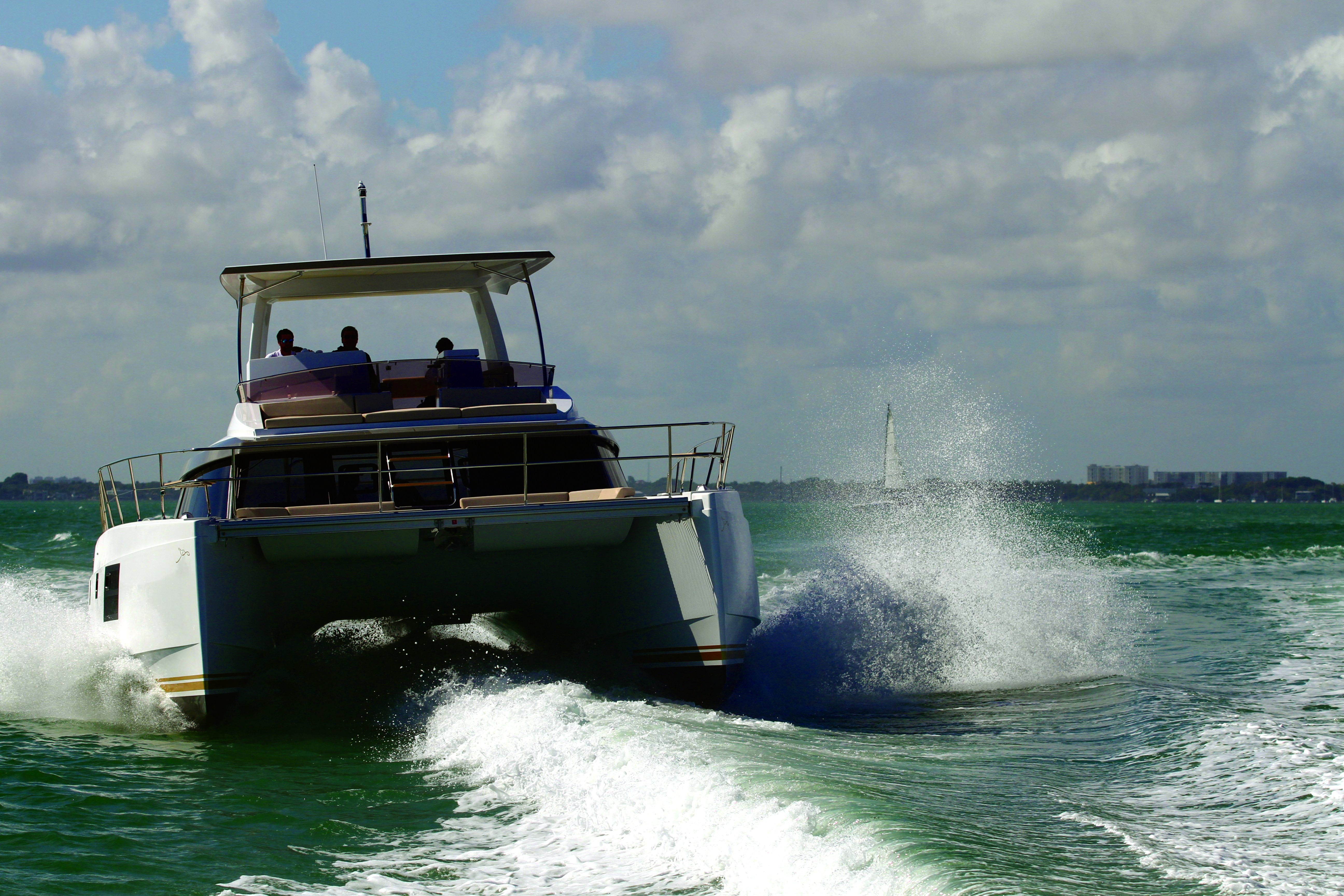
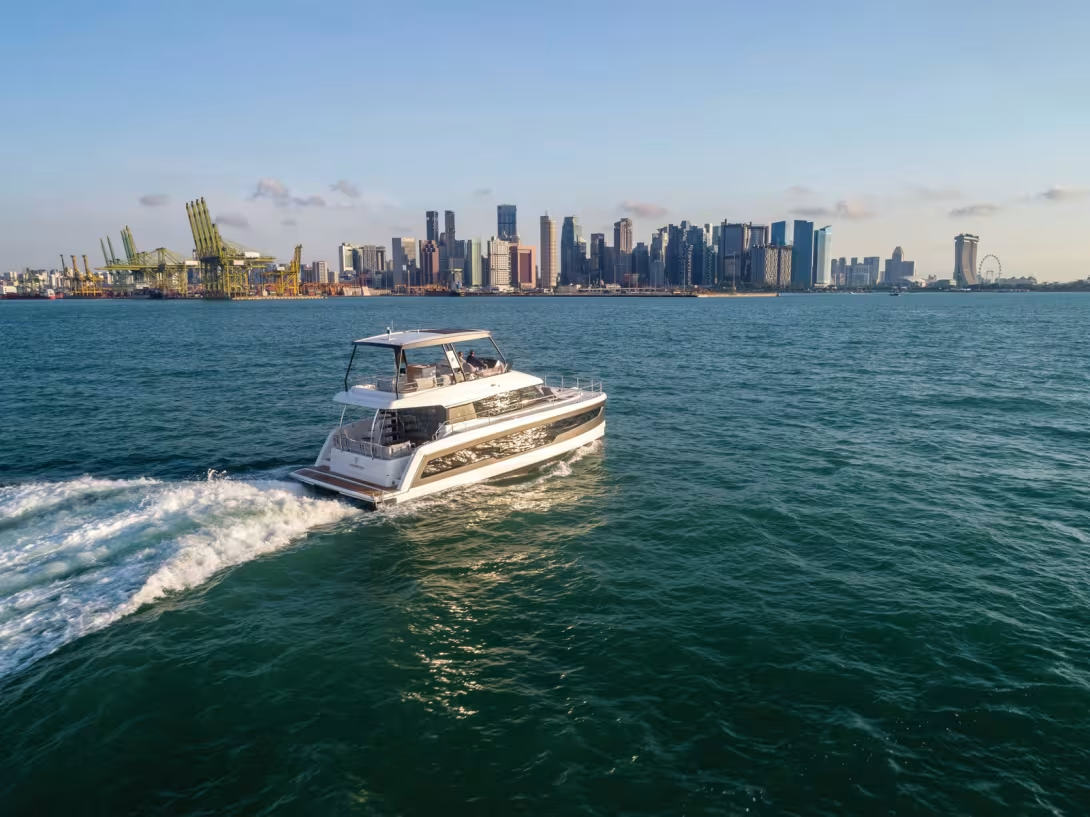
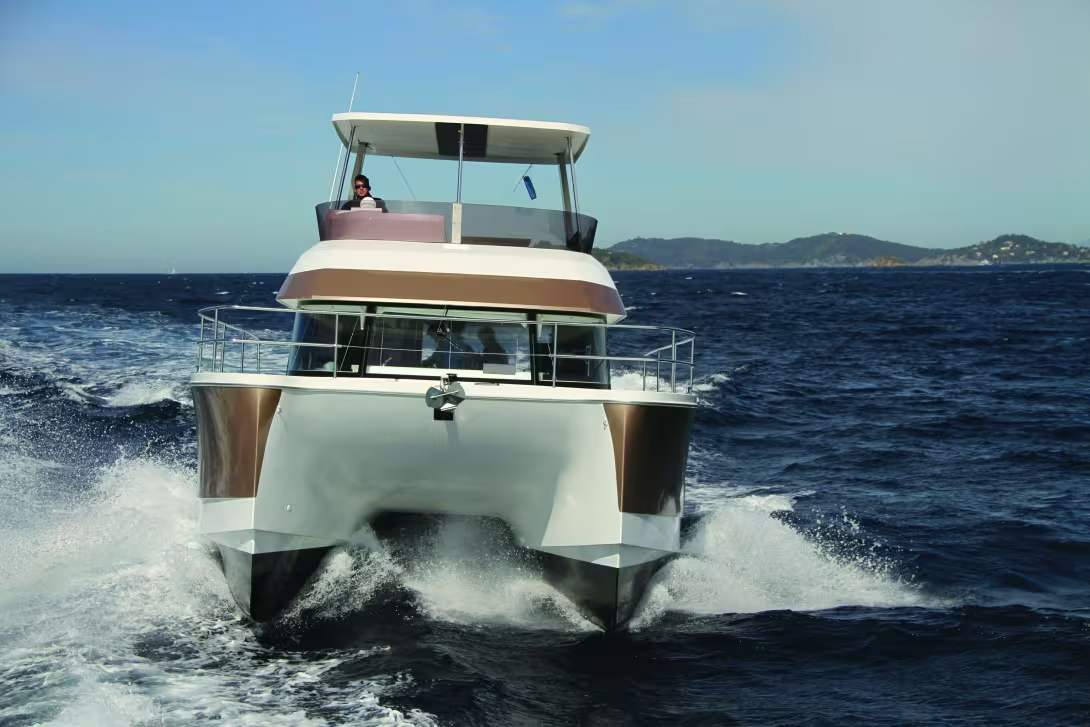
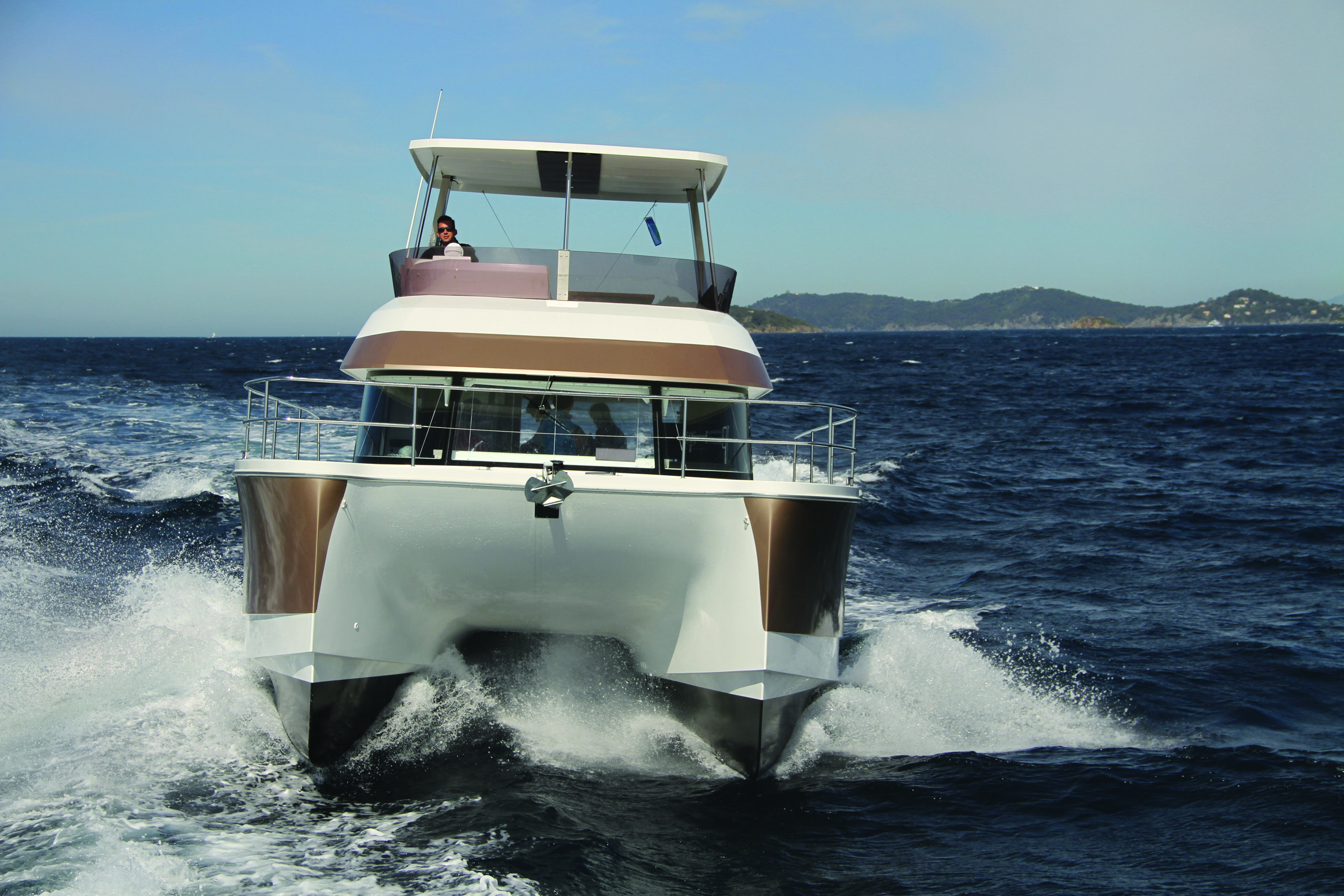
Above, the Nautitech 47 Power borrows the platform of the 46 Open while on the right, the MY 37 is an exclusively engine-driven design. In both cases, the stability is remarkable whatever the sea conditions.
As proof that the powercat market is nicely buoyant, most multihull builders today offer two ranges - sailing and motor - following the example of Aventura, Bali, HH, McConaghy, Nautitech, O Yachts etc. Even trimarans are getting into it, as Neel is launching two new motor models, the Leen 56 and 72. And a new player on the market, Aquila Boats, is becoming a big hit with very typical US boats: the Aquila 44 has just passed the 100-built mark and a 70-footer will soon see the light of day. Still in the United States, manufacturers such as Hammer Yachts are launching very seaworthy catamarans, heavily powered by outboard engines.
The advantages of all-motor multihulls
The shipyards have therefore understood the interest of offering boats that are comfortable but simple to use, operate and maintain. These units can indeed seduce newcomers to the boating world, but also pragmatic sailboat skippers who are tired or bored with managing a sailing boat. What about blue water cruising? Do they have the range to complete longer passages? Is there a risk that the fuel budget will explode? The experience of Laurent Bourgnon, who set out more than 10 years ago with his family aboard a Sunreef 70 Power, provides some interesting answers. The former ocean racer, who tragically disappeared in 2015 while scuba diving, opted for a very comfortable motor catamaran after a long study of the possibilities offered by this craft. First of all, one observation: only he knew about sailing. Focusing on routing, the weather and routine maintenance on board was his thing. Doing away with the management of sails and the constraints of trajectories determined by the wind direction? That sounded perfect. His Jambo, a luxurious boat designed to his own specifications, was equipped with two 420 hp marinized engines. The electronic charting was completely revised to optimize consumption. Because of course this is what we want to know about powered catamarans. If you’ve got to pour hundreds of dollars a day into the tanks, then no thank you!
 |
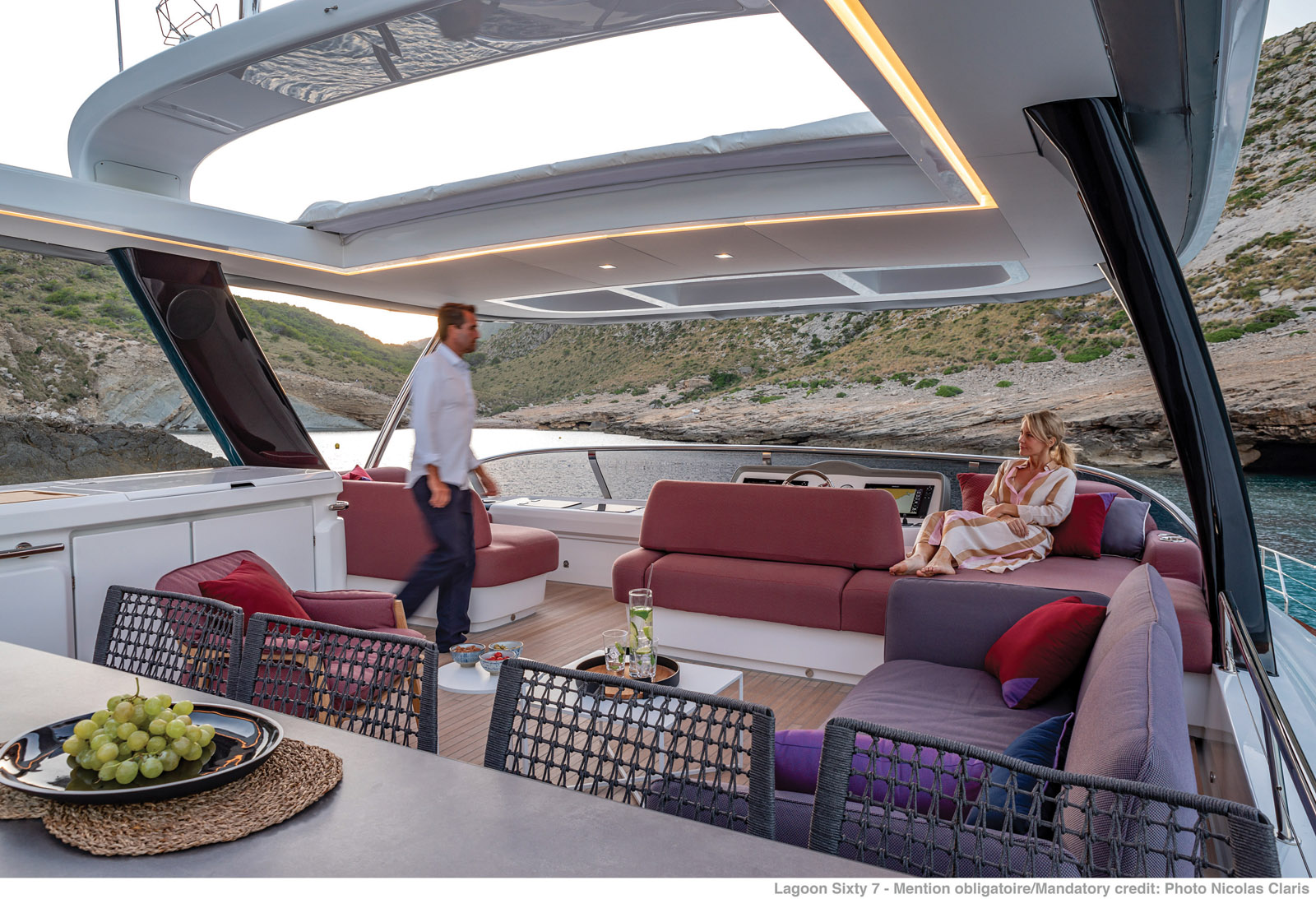 |
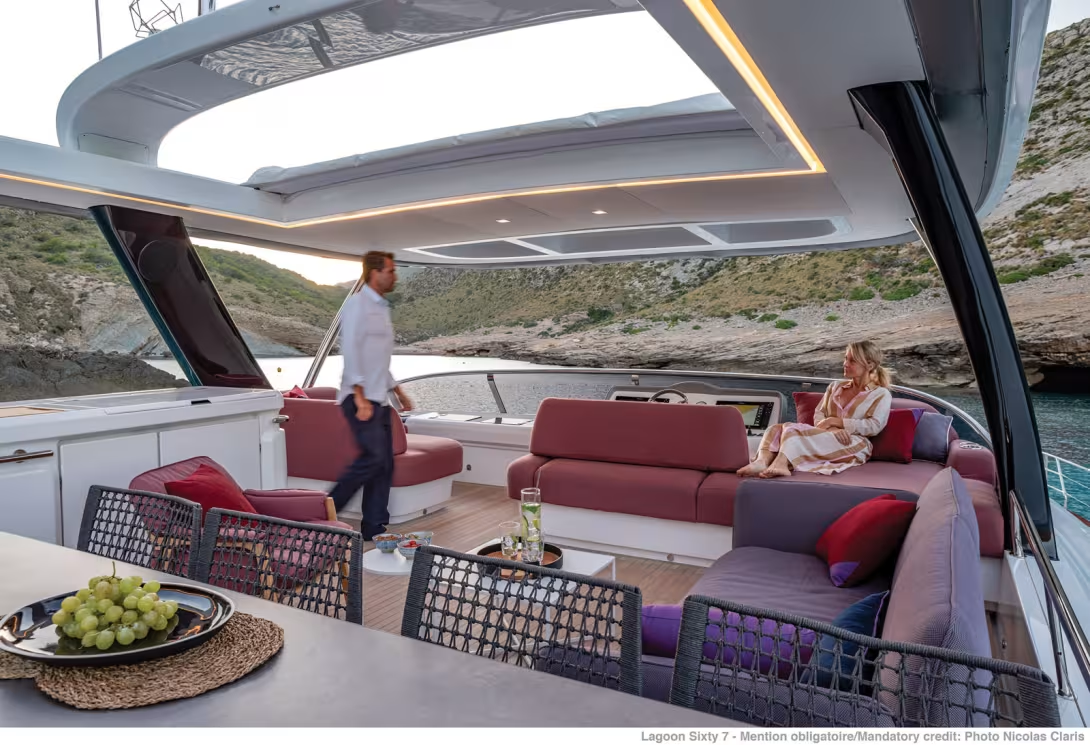
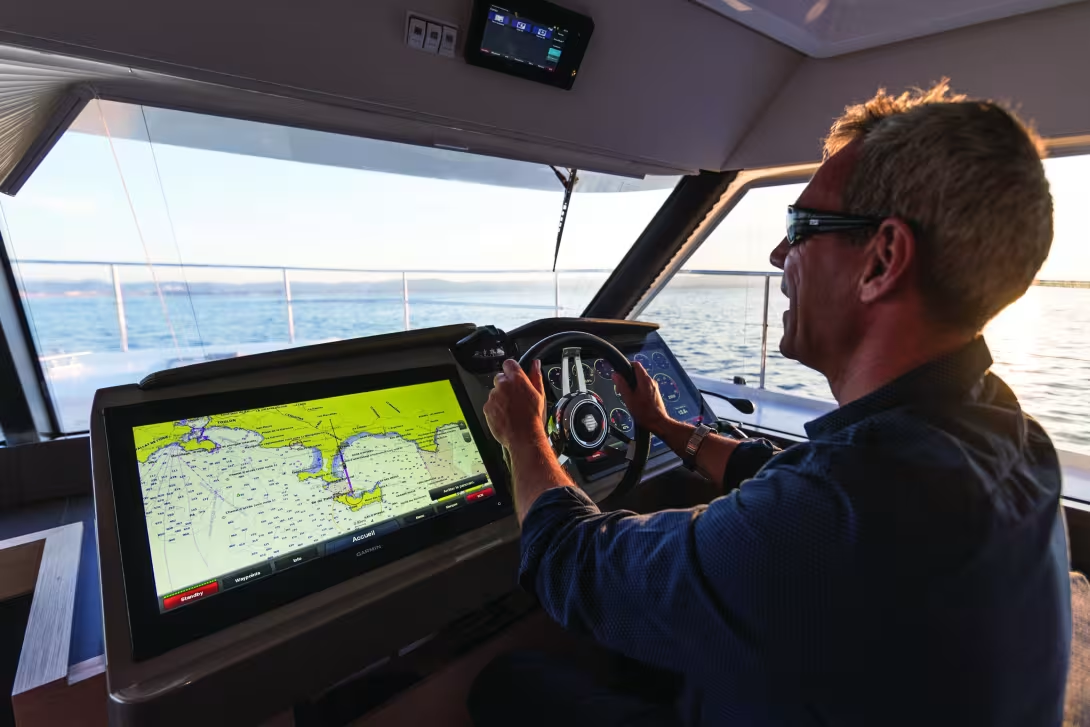
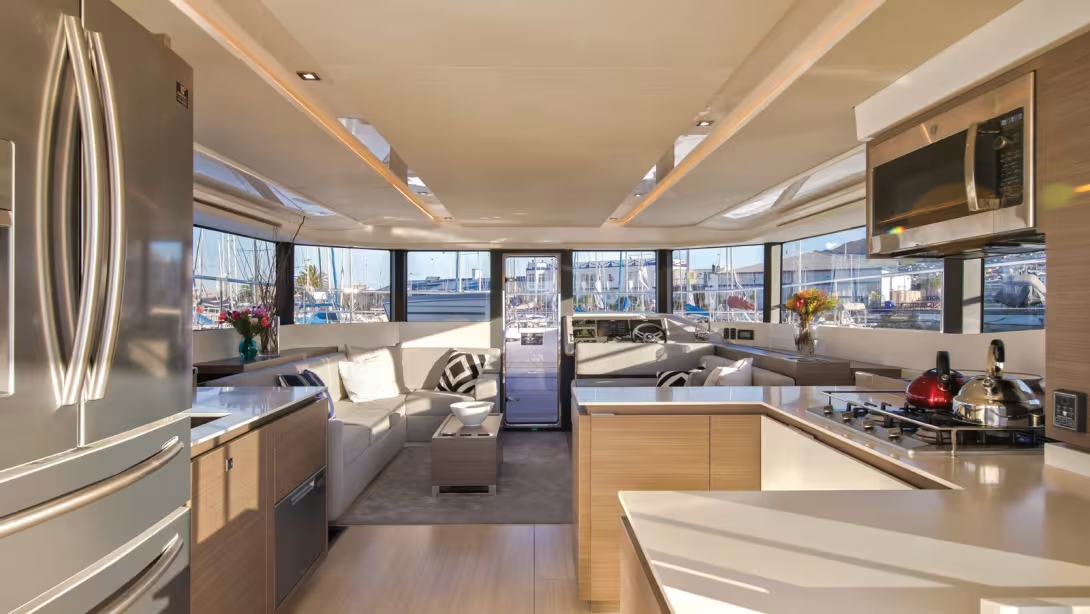
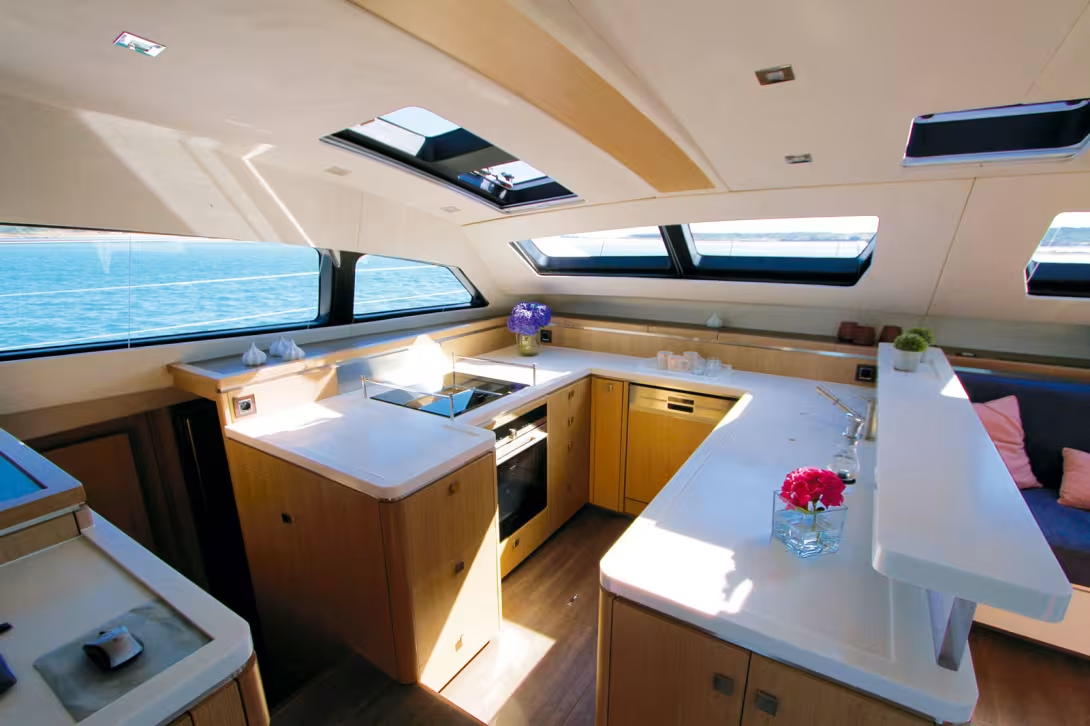
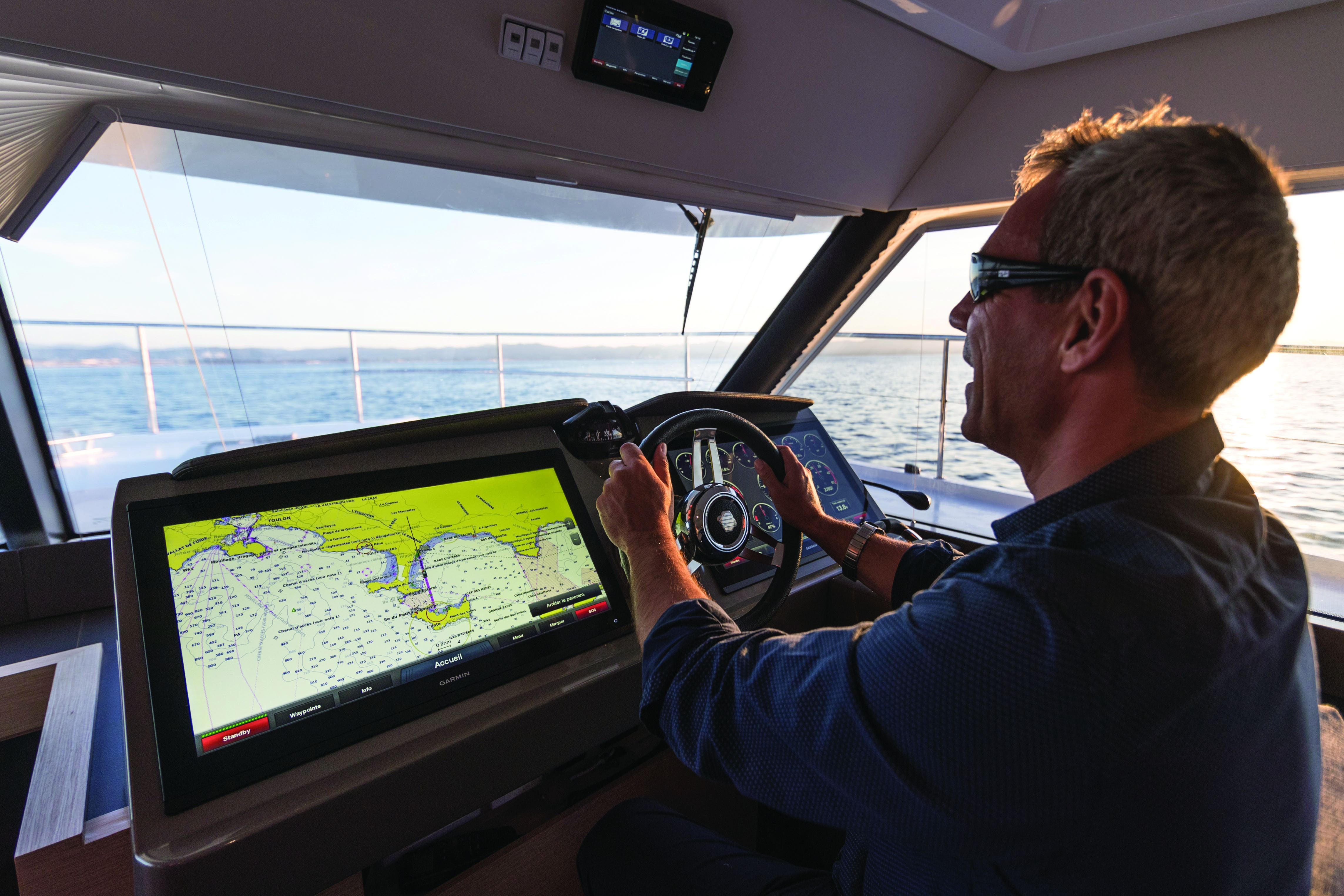
Left: The interior helm station is a real plus at night and in cooler weather. Right: The absence of the rig allows you to take full advantage of the flybridge – here, on the Lagoon SIXTY 7.
Figures... and contradicitons
Laurent Bourgnon was keen to point out that his fuel budget more than compensated for the cost of sails. An argument which is kind of debatable since most power catamarans, of equal size, come in at a higher price than their sailing equivalent. By a factor of around 15 to 20%. Admittedly, bigger engines are more expensive than smaller ones, ok, and the specs of these models would often include a generator, teak decks and more luxurious finishing materials as standard... but there is still a fully rigged mast, sails and all the deck hardware not being counted! In short, one might suspect that the choice is as much commercial as it is marketing - more standing, more margin... But not so fast: the structure of a powercat is much stiffer - and therefore more expensive to build. To the shipyards’ credit as well: sales volumes remain quite low to date, i.e. 15% of the cruising catamaran market - which corresponds roughly to 200 units over 12 m (40’) in the world in 2019. And that was before coronavirus... Though Leopard and Aquila seem to be a few steps ahead, Fountaine-Pajot manages to place around thirty of each of its models. And Lagoon has around sixty 630s, ten SIXTY 7s and the same number of SEVENTY 8s sold. From a purely marketing point of view, it’s interesting to note that the builders have banned the use of the term ‘trawler’, too cushy and old-fashioned according to them. Make way for words like Long Cruise, Motor Yacht, Power, Power Cat... And yet, the use of most power catamarans is cruising and passage-making more or less at reduced speed to optimize fuel consumption. With this logic, you’d have thought that the Lagoon 40 MY, with her twin 75 HP sail drives (the biggest available), would be hitting the bull’s eye. But no! Buyers want bigger engines – with shaft-driven propellers, therefore. This despite 90% of the use of power catamarans being at between 8 and 12 knots, owners like to have the option to be able to hit 20 knots...
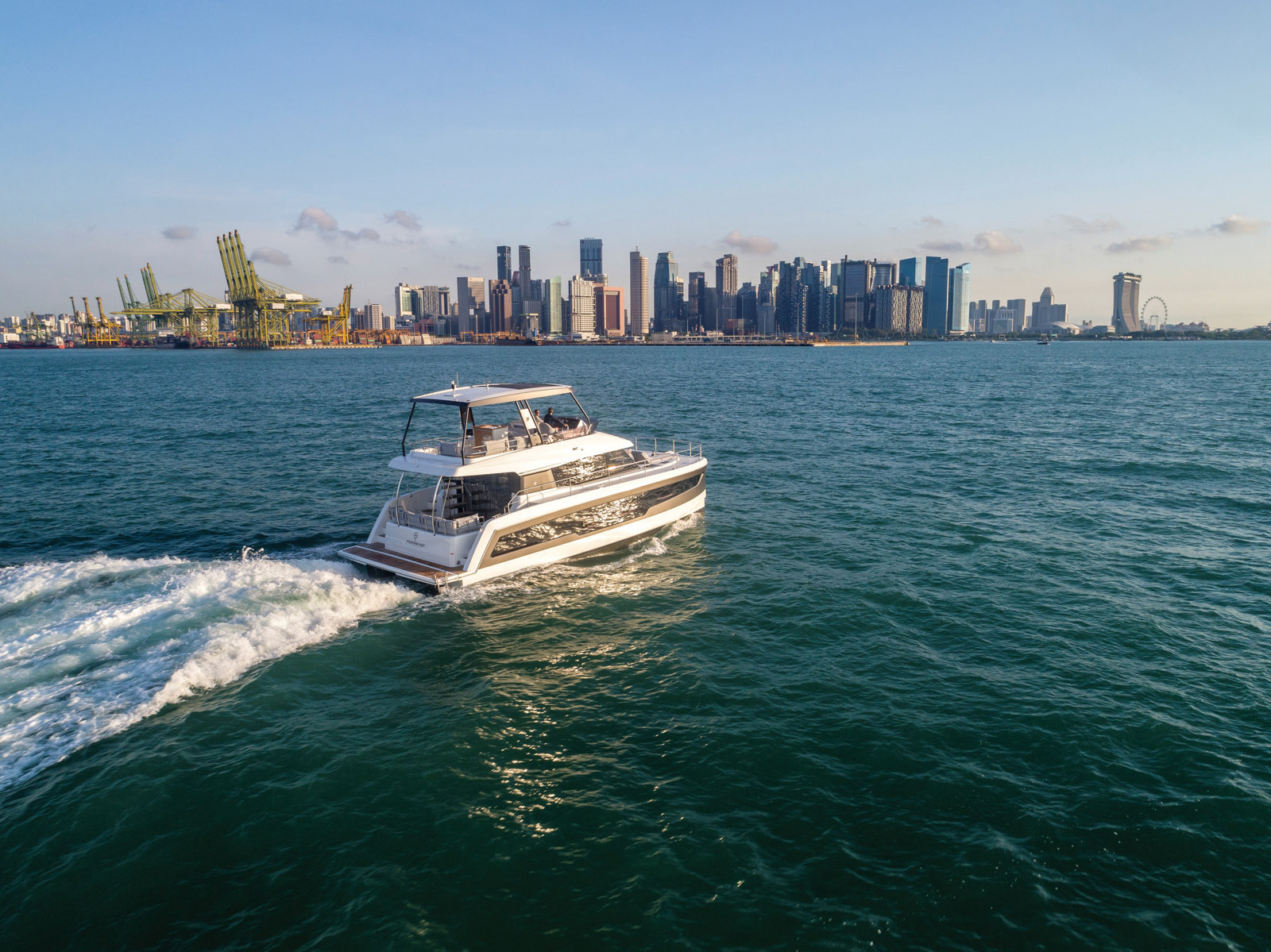
At 10 knots, the MY 40’s range is 800 nautical miles - enough for some great passage-making!
Speed and consumption
Laurent Bourgnon, with his Jambo, certainly cleared the way in terms of optimizing range: his engines each consumed 7.5 l/h (2 US gal/hour) while maintaining a speed of 10 knots. On her first major crossing – from Cannes in the South of France to Puerto Montt in Chile, she went through 10,000 liters (2,640 US gal), i.e. half of her tanks. It’s interesting here to compare these figures with a more modest unit such as the Lagoon 40 MY: the recommended engine speed is 2,150 rpm, in order to reach a cruising speed of 8 knots. There, the total consumption is 8 l/h (2.1 US gal/h) per mile, i.e. a range of 600 nautical miles. At 3,250 rpm, it’ll reach 11 knots, but no more. Yet consumption increases to 33 l/h (8.7 US gal/h). A 100% powerboat shows interesting results at low speed: the consumption of the Fountaine-Pajot MY 37 with its 2 x 150 HP engines is limited to 2 x 5 l/h (2 x 1.3 US gal/h) at 7 knots - which means 1,000 nautical miles of range - climbing to 2 x 22 l/h (2 x 5.8 US gal/h) at cruising speed and 2 x 40 l/h (2 x 10.6 US gal) at full speed (20 knots). So, we can see that highly powered units are not that thirsty at low revs... but they are much more so as you pick up the pace. Another example that needs confirming. Aboard the Euphorie 5, we see 9 l/h (2.4 US gal/h) at 7.5 knots, but nearly 100 l/h (26.4 US gal/h) at 20 knots with twin 320 HP engines. The famous Lagoon 630 undoubtedly gives credit to a powerful engine. With 2 x 180 HP, we noted 10 l/h (2.64 US gal/h) at 7 knots and about 50 l/h (13.2 US gal/h) at 10.4 knots. But with the big 300 HP we dropped down to 8.4 l/h (2.2 US gal/h) at 7 knots and 24 l/h (6.3 US gal/h) at 10.4 knots. That is to say a consumption divided by two at this ideal cruising speed. Obviously, at full throttle - 17 knots - it’s not the same story for your credit card since the engines are burning 115 l/h (30.4 US gal/h). To sum up, some larger models are capable of crossing the Atlantic without refueling, provided they limit their speed to between 8 and 10 knots - sometimes even less. As for traditional summer seasonal use, you can count on a month’s boating and 1,000 nautical miles. This means an average consumption - for 25 l/h (6.6 US gal) at a speed of 10 knots - of 2,500 liters/660 US gallons (around $1,575 in the United States or €2,600 in Europe). For the same summer cruise, a sailing catamaran might run her engines for 500 nautical miles, with a consumption of 10 l/h (2.6 US gal/h) at 8 k
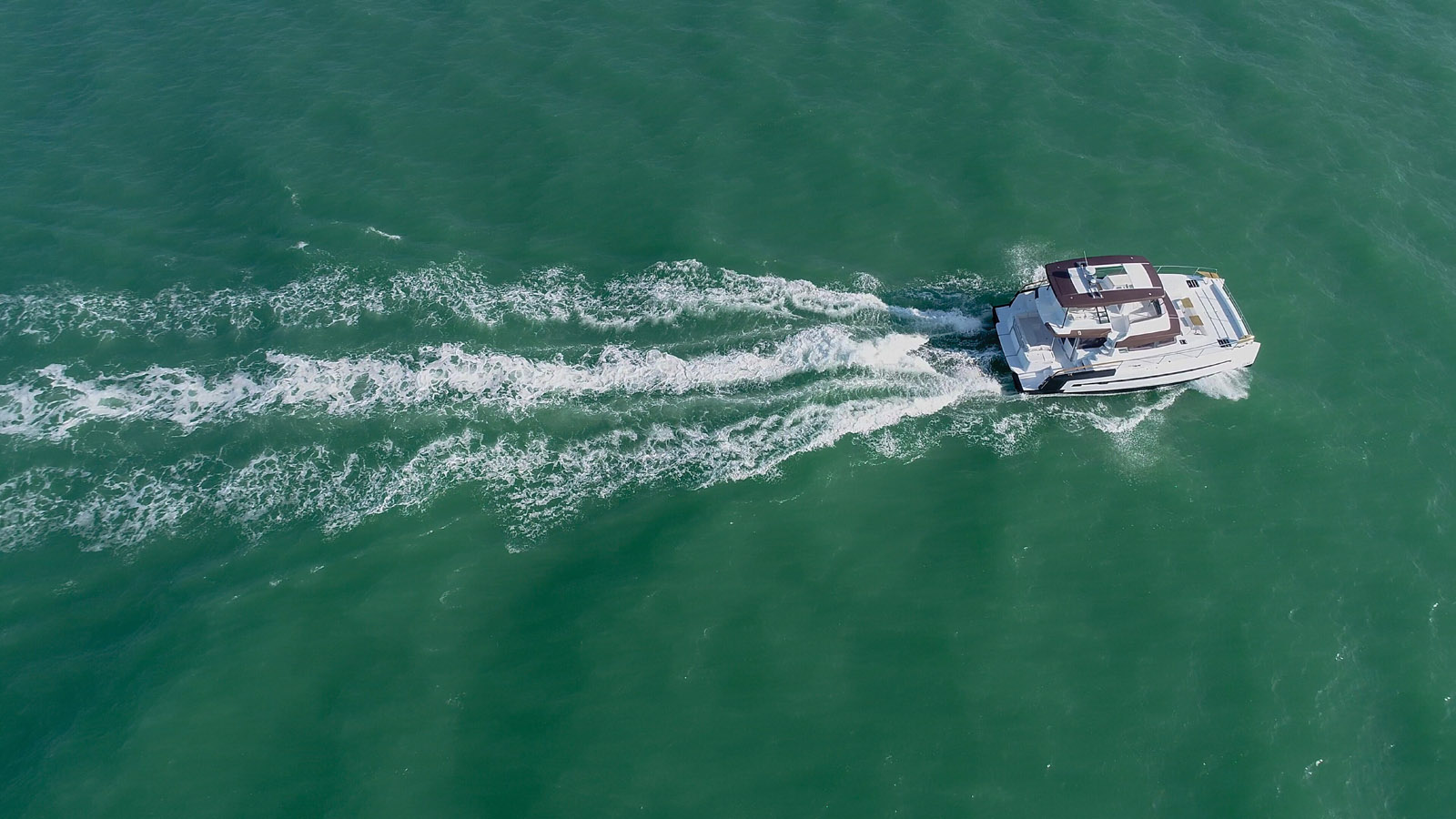
Like most powercats, the Bali 4.3 MY is capable of reaching 20 knots (23 to be precise, with her 2 x 250 HP motors).
Two schools of naval architecture
To design power catamarans, builders have two solutions: to start from using a sailing catamaran as a base, or to design a 100% motor model. The first formula is the most common - Aventura, Bali, Lagoon, Nautitech, Privilège, among others. Of course, all the rigging elements disappear, as well as the fittings and the possible mast support strut in the saloon. The hulls are reworked at the stern for more lift: firstly, to accommodate larger, heavier engines, but also to ensure a minimum pitch-up in terms of trim for higher speeds. Another modification: the skegs are shortened to become simple keels - in order to maintain a regular course and a provide a minimum of grip if you’ve got the wind on the beam. The draft then becomes significantly less than that of the original sailing catamaran. Most often, these models have a flybridge - at least for units over 43 feet. This option is sometimes already available on the sailing version. Inside, there are very few changes. You see exactly the same layout for the accommodation. The same goes for the cockpit and deck layout. Fountaine-Pajot promotes the other formula, having developed a specific engine range - with the exception of the brandnew Power 67, based on the Alegria. The decision was taken to offer a twohulled cruising yacht. The platform is significantly narrower: 6.61 m (21’8”) for the MY 44 compared to 7.12 m (23’4”) for the Bali 4.3 MY and 7.54 m (24’9”) for the Nautitech 47 Power. That’s still a gain in terms of marina berths, though it means the side-decks are somewhat narrower. The Fountaine’s engines are also impressive: we’re dealing with 2 x 370 or 2 x 435 HP Volvos. The Nautitech makes do with 2 x 225 and there’s 2 x 160 HP for the Bali. That’s technology clearly focused on performance above 15 knots. Owners like it, even if they will barely use the full potential of their boat. On board, new codes are being adopted, straddling the culture of sailing and powerboating. An innovative and necessarily interesting concept. Less bling than on a speedboat, but more surface area for lazing around. More open inside, but with rails to hold on to if the sea is rough... The most obvious difference is inside, where priority is given to the cabins. They are immense and don’t hesitate to encroach on the nacelle. To the detriment of the saloon - convivial life takes place rather more outside, under the rigid bimini. As for Leopard, they have changed sides twice: the first models were specifically engine powered, then the sailing versions... before once again validating the 100% engine powered Leopard 53 PC presented at Miami back in February. Sunreef is offering both formulas: models in sail or engine versions and the larger, 100% powercat units. Aquila Boats and Iliad, finally, are designed exclusively for motoring, neither having a sailboat range.
 |
 |
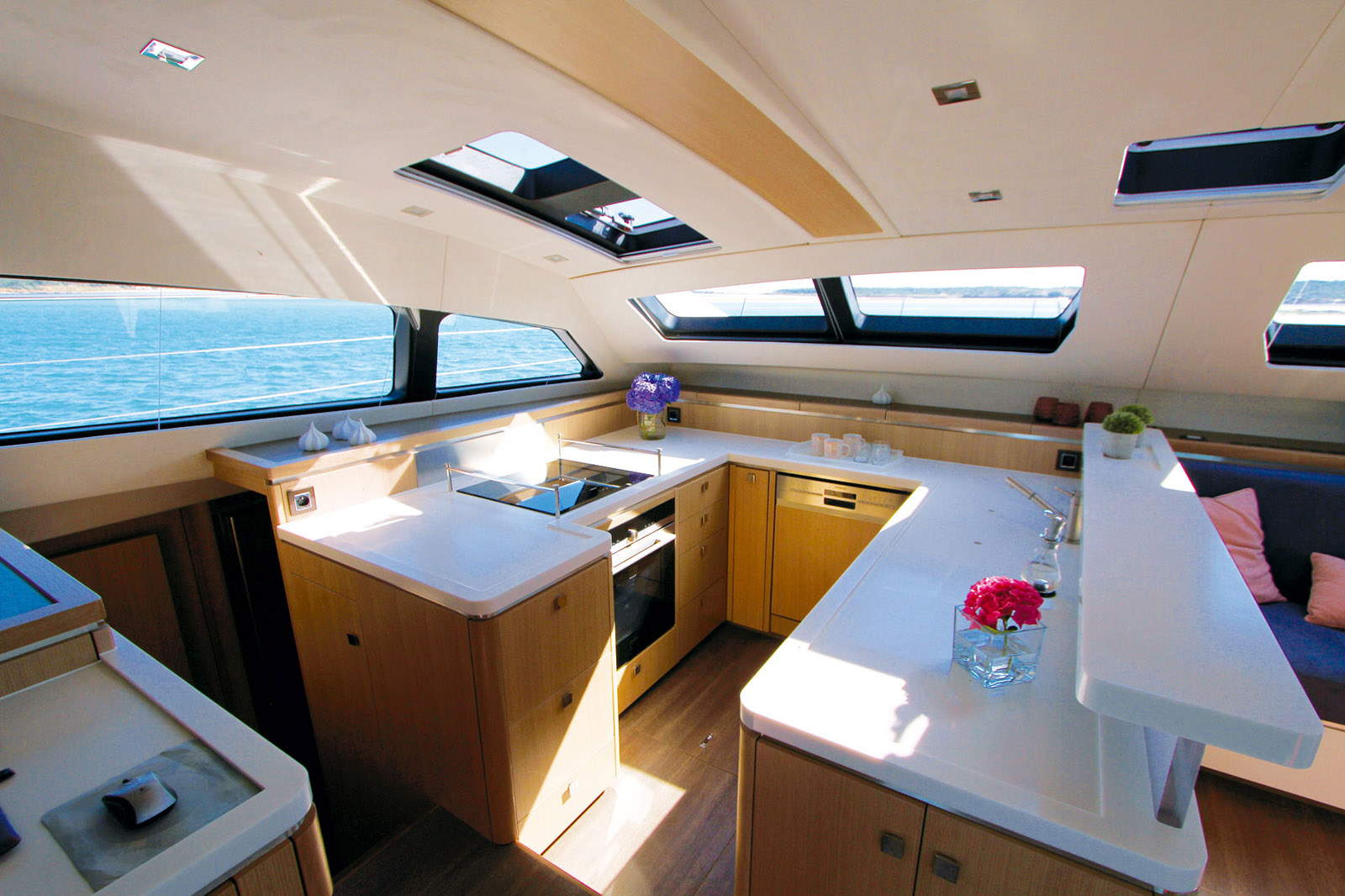
The layouts are identical or fairly close to models of the same size equipped with a rig - on the left is the Euphorie 5 and on the right the Leopard 53 PC.
The temptation of electric power
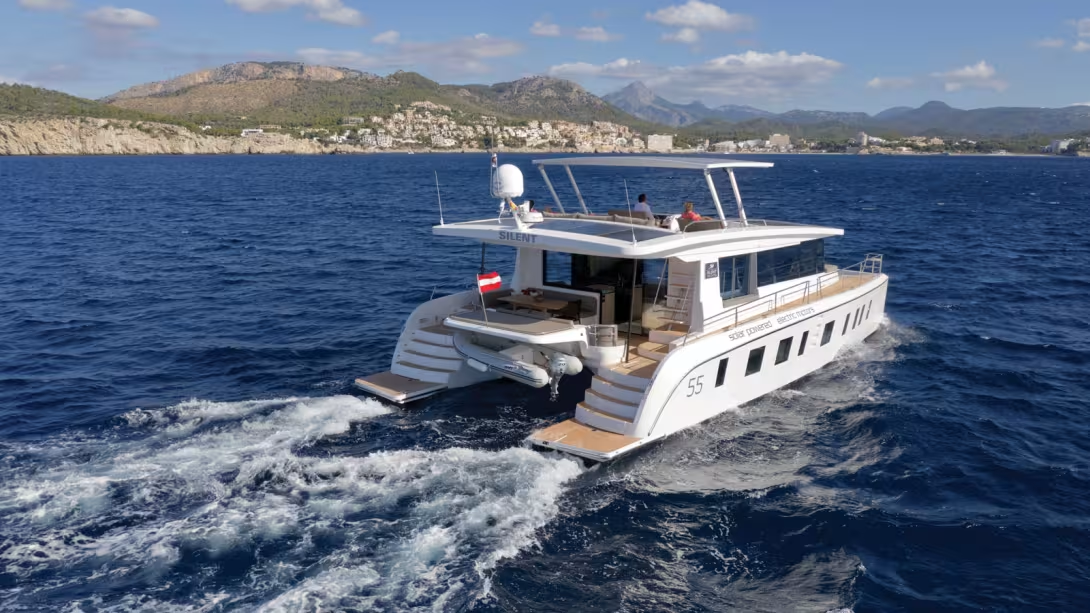
Getting rid of the rig on board a multihull has the advantage of freeing up a very large exploitable surface area on the bimini; this creates the possibility to install a large area of perfectlyexposed solar panels - and therefore to install an electric motor. For the time being, a generator is still essential to compensate for the high energy costs (speeds in excess of 10 knots, air-conditioning, etc.). However, rapid technological progress in both solar panels and batteries has already led to “infinite autonomy” - provided that a very moderate speed of 5 to 7 knots is maintained. Silent Yachts and Serenity Yachts already offer a complete “fully electric” range, and Sunreef, with their Eco-Electric, will combine multiyachts and electric power.
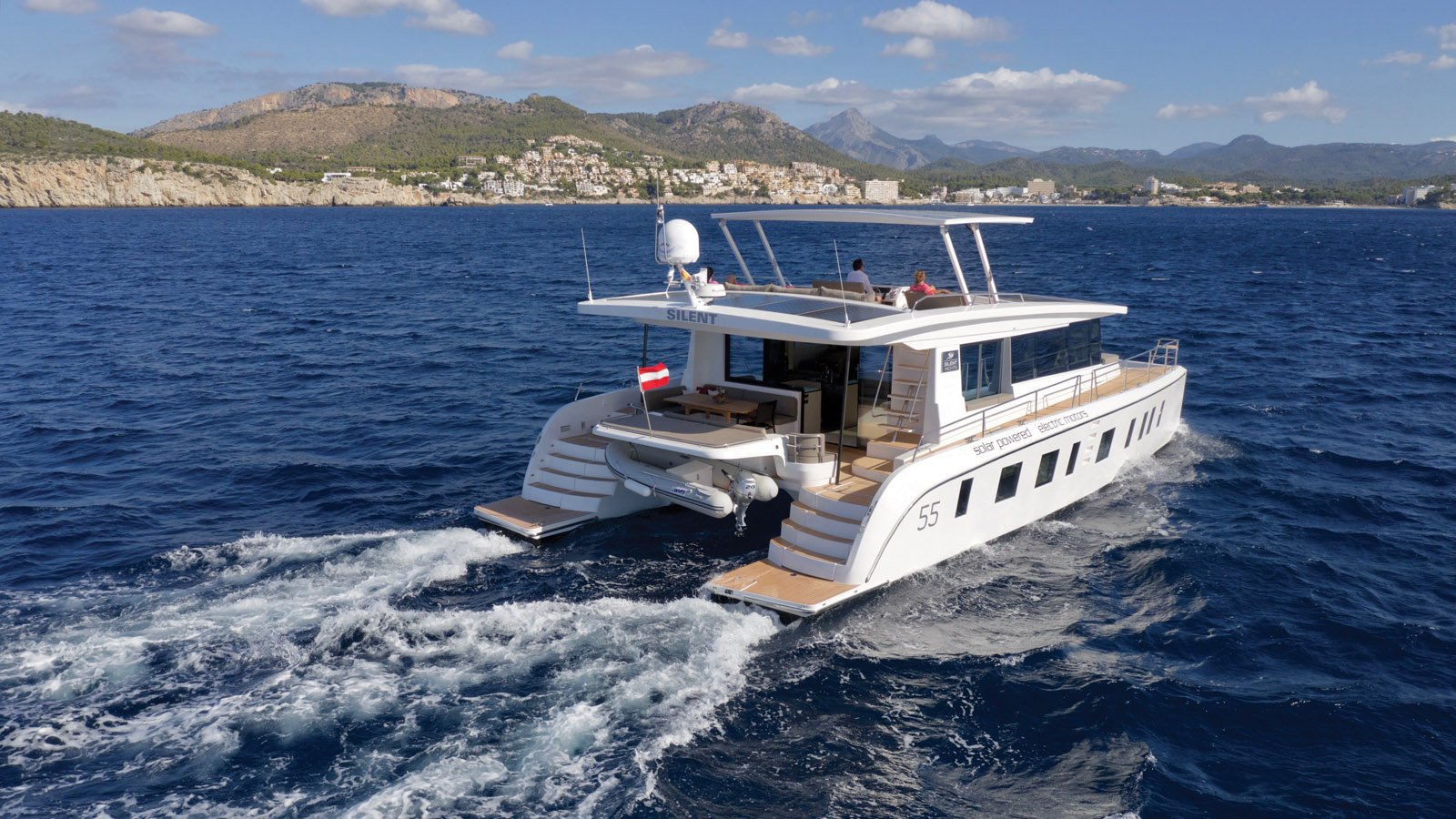
Soon, many electric powercats such as this Silent 55 will be offering unlimited range!
A market with the wind in its sails (even if there are nos sails...)
So, what’s the reason for the recent success of powercats? Pragmatism of former sailors who noticed their high number of engine hours and the constraints imposed by the sails, evolution of platforms offering ever-more comfort - on board which any effort becomes even more painful, inevitably! The last factor that we hardly dare tackle is the ageing of man - or rather the skipper... The use of powercats remains in the end close to that of sailing catamarans, except that you “sail” a little faster, that you almost don’t care about the weather and that you are able to keep up with a schedule. It’s always nice to arrive on time in Miami or Las Palmas to pick up a crew member or family member straight off the airplane! The buyers of motor multihulls are for the most part (60 to 70%) former sailing catamaran owners. Skippers who appreciate the relatively simple maintenance of their boat, the fact that they only need to refuel once a year, not forgetting the shallower draft. But we’re not just dealing with former sailors. Motorboat enthusiasts are also attracted to two- and three-hulled boats. More privacy in the cabins, larger saloons, better seakeeping, no rolling at anchor, lower fuel consumption, the possibility of making longer passages: there are many great advantages!
