
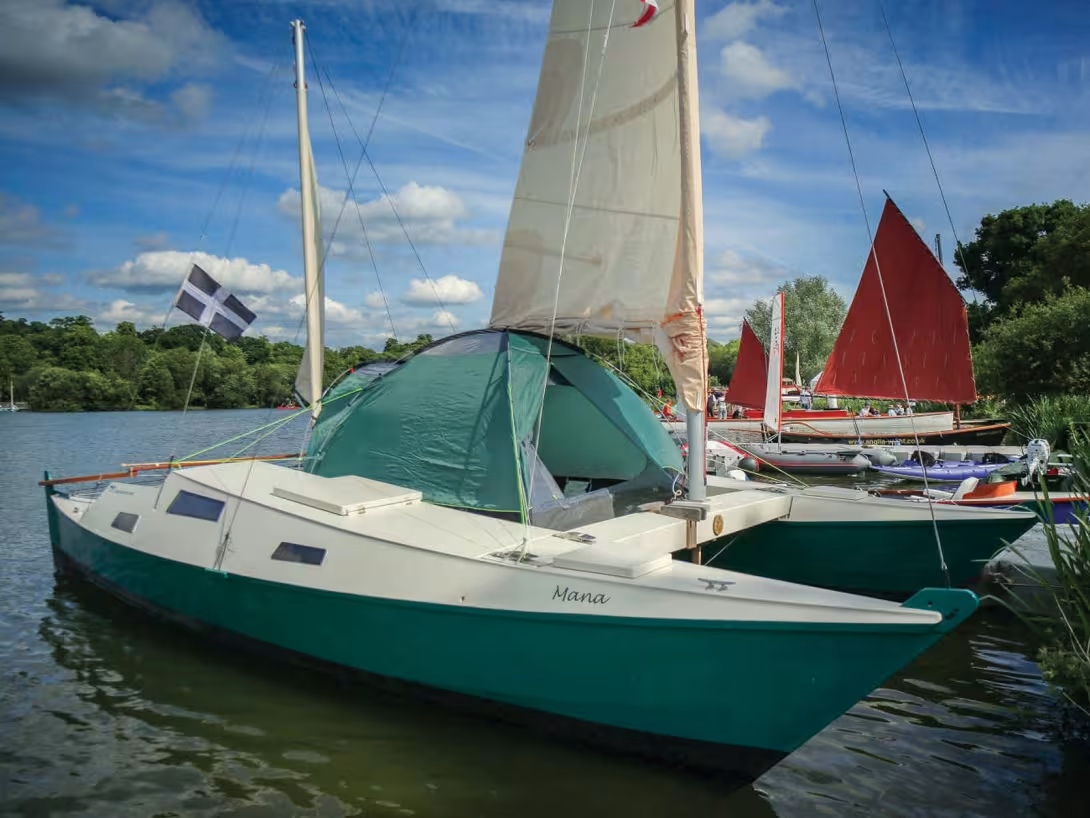

Though polyester has become a common name in the marine industry, it is in fact only the practical diminutive of a composite. If we find it so fantastic, it is because, beyond its interesting technical characteristics, it has above all the good taste of being economical. Indeed, its components - glass fibers and polyester resin from which it takes its name - are very good value for money. What is more, its use in female molds is perfectly suited to mass production: optimized build times, quality of the composite (especially when it is made under vacuum using the so-called infusion technology) and an excellent level of finish, all of which can be duplicated in large numbers. Of course, the initial investment in tooling is significant, but the more boats this tooling produces, the better it will be depreciated. Welcome to the world of industry.
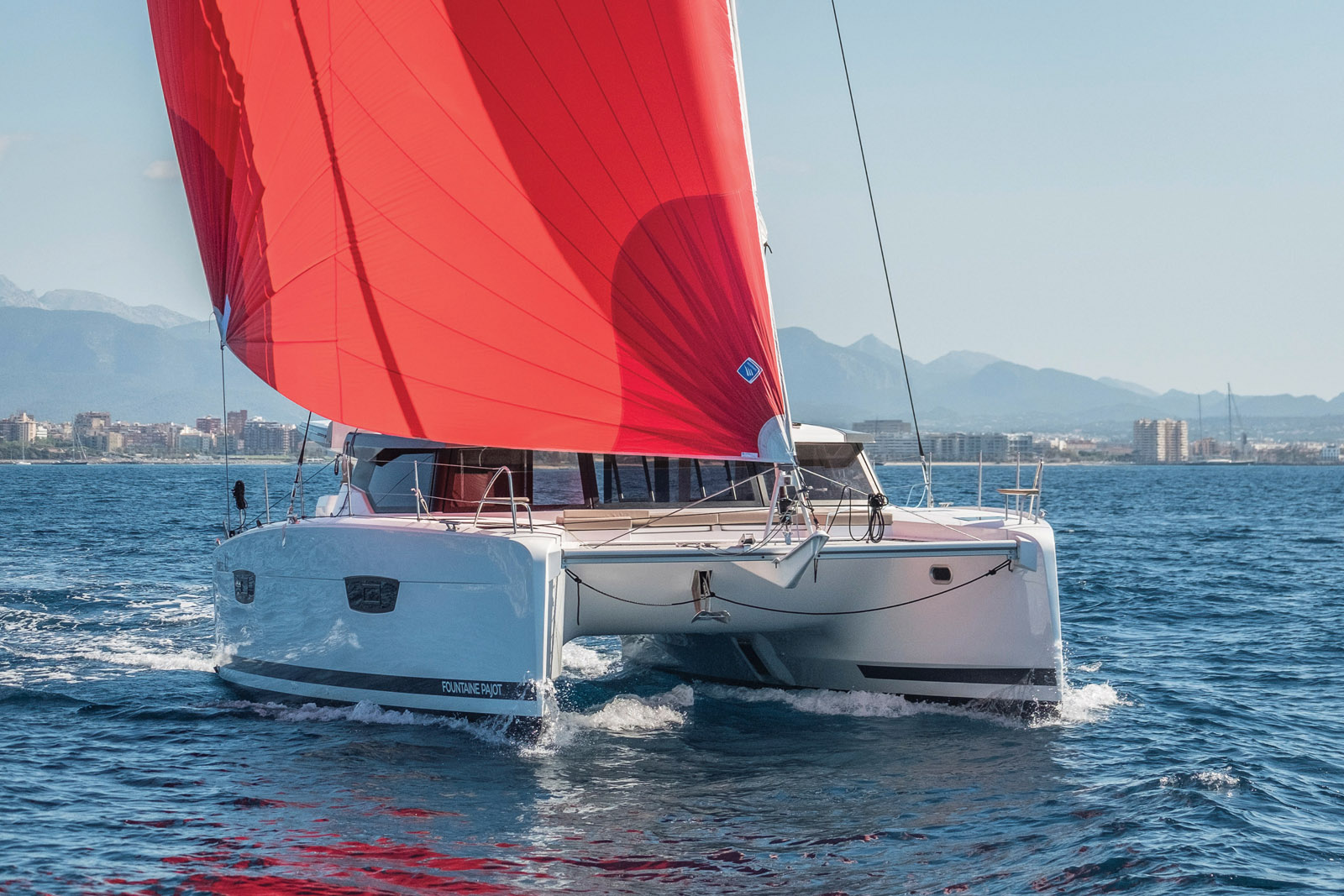
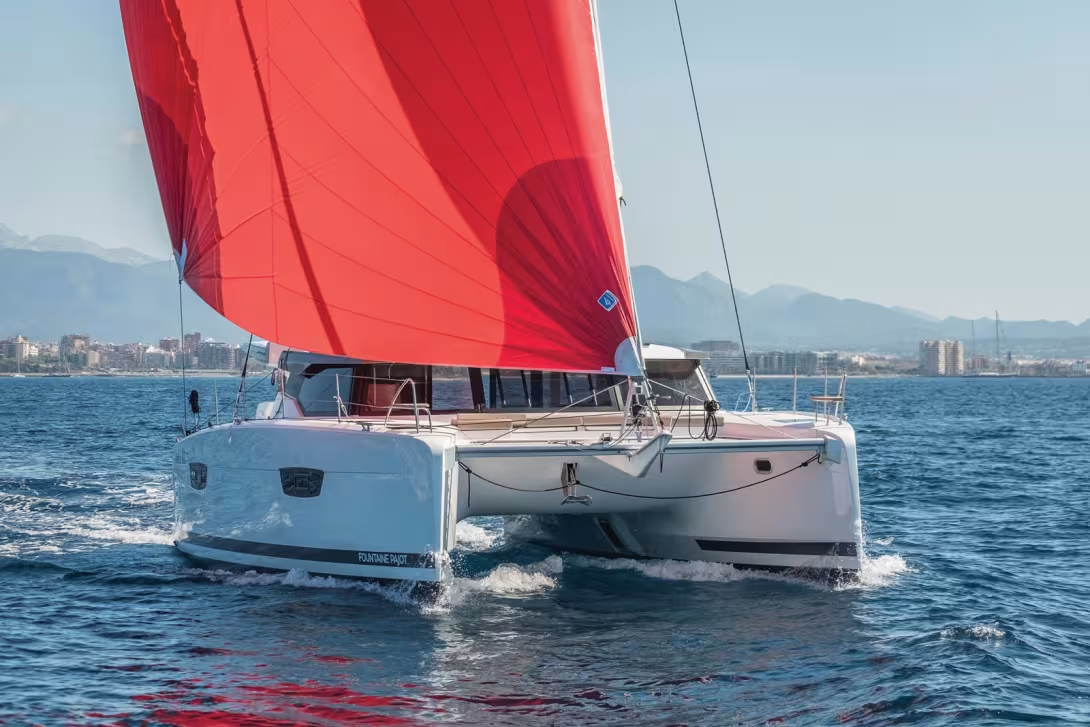
This Astrea 42, like the majority of modern multihulls in series production, is built in polyester sandwich construction.
This raw material - or more precisely monolithic material - has evolved under the influence of ocean racing, in particular to become a “sandwich”. Only the underwater hull is still sometimes made in this form. Its better resistance to puncture is indeed reassuring in the event of going aground or in case of collision with a UFO (unidentified floating object), which is an increasingly frequent occurrence, sadly. Above the waterline, however, sandwich construction has proved its worth, and not only for its insulating qualities, which reduce temperature variations, as well as condensation. In fact, by inserting a core, the strength/weight ratio of the composite is improved. Depending on the area of use, this core can be made of balsa, plywood, felt or foam. Although wood is becoming less and less common, its pressure and shear resistance qualities are still appreciated in highly stressed areas such as the mast foot, winch bases or around the steering wheel axis.
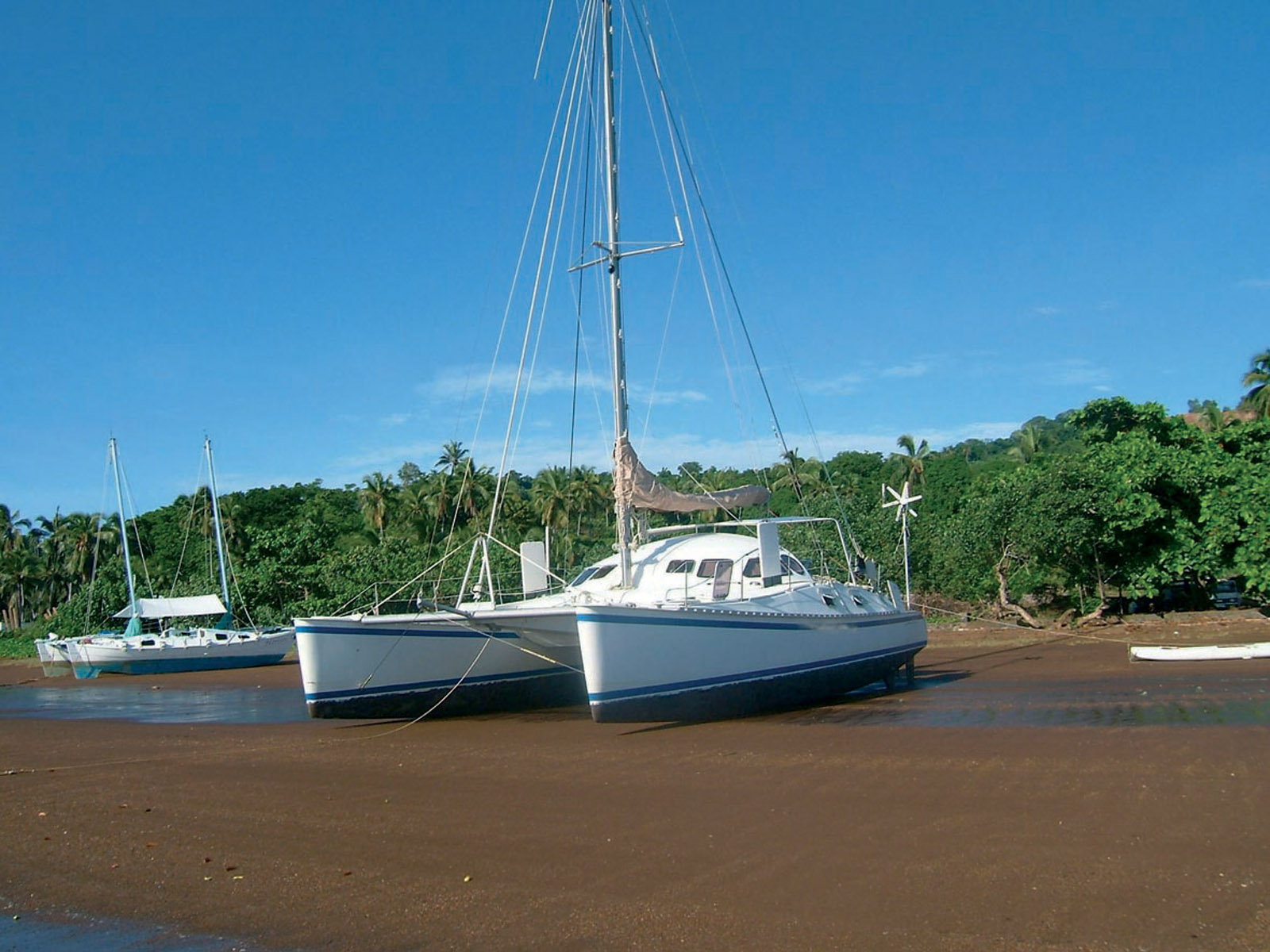
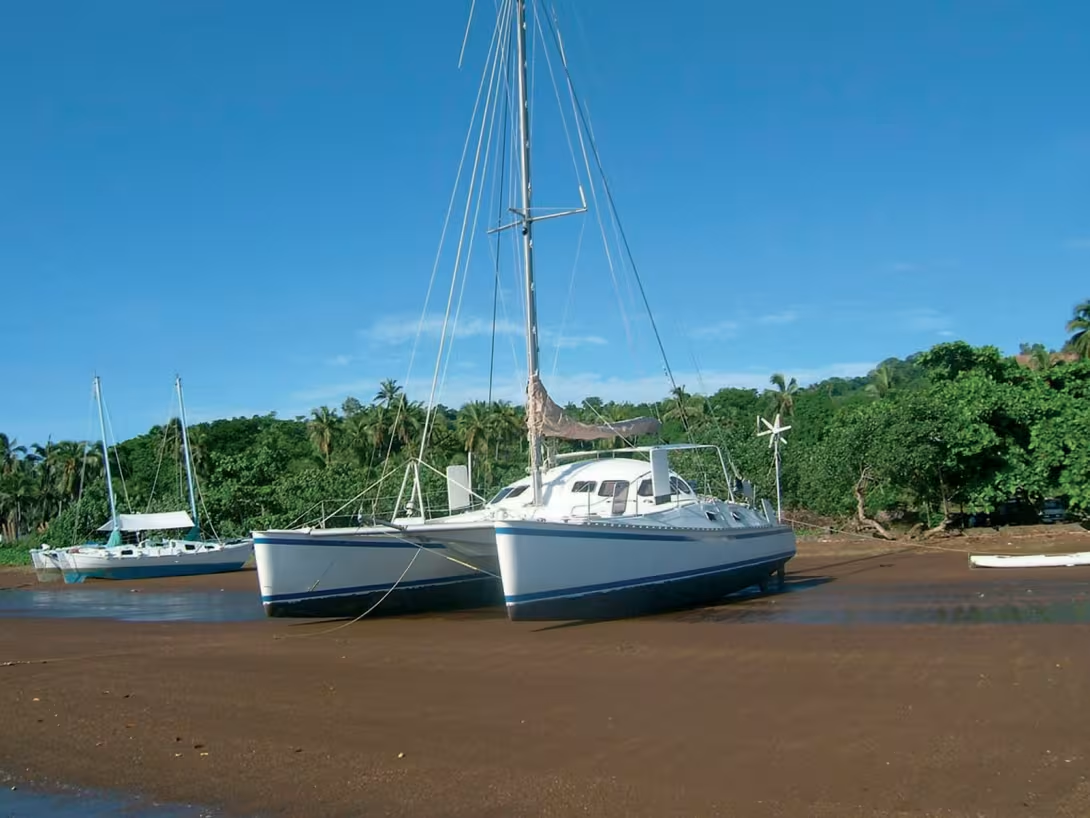
The Gérard Danson-generation Outremers, such as the 38, retained monolithic polyester lower hulls for better puncture resistance and ease of repair.
But the core would be nothing without a structure capable of withstanding the enormous stresses that our multihulls undergo. Let’s not forget that although we’re lucky enough to sail horizontally, the absence of heel deprives us of its damping effect. Fiberglass is gaining a large share of the market in this area, again for economic reasons. Here, depending on the area where it’s used, its presentation and weight per square meter vary to adapt as precisely as possible to the requirements: simple mat in the first layer to give thickness, which can be unidirectional, bidirectional or even tri-directional in areas of high stress such as hull/ nacelle connections, or in heavy weight cloth around the chain plates for the shrouds, for example. On the most high-performance multihulls, fiberglass is increasingly being replaced by carbon fiber, whose strength is 70% to 140% greater than that of fiberglass for the same weight. For the so-called high modulus carbon fiber, seen in particular in the manufacture of masts, the level of performance can be as much as 400 to 500% higher. When greater strength is not the important issue, and only has to remain at least equal to that of glass fiber, the weight gain is of the same order of magnitude. Much less flexible, it brings a stiffness that favors performance, as none of the power from the wind is dispersed due to deformation. But it also reduces comfort. You have to have tried to sleep on an all-carbon racing boat, without headlinings or insulation, to fully appreciate all the damping qualities of fiberglass. This is why several manufacturers only use carbon reinforcements where the effort is the greatest, which results in limiting the extra costs.
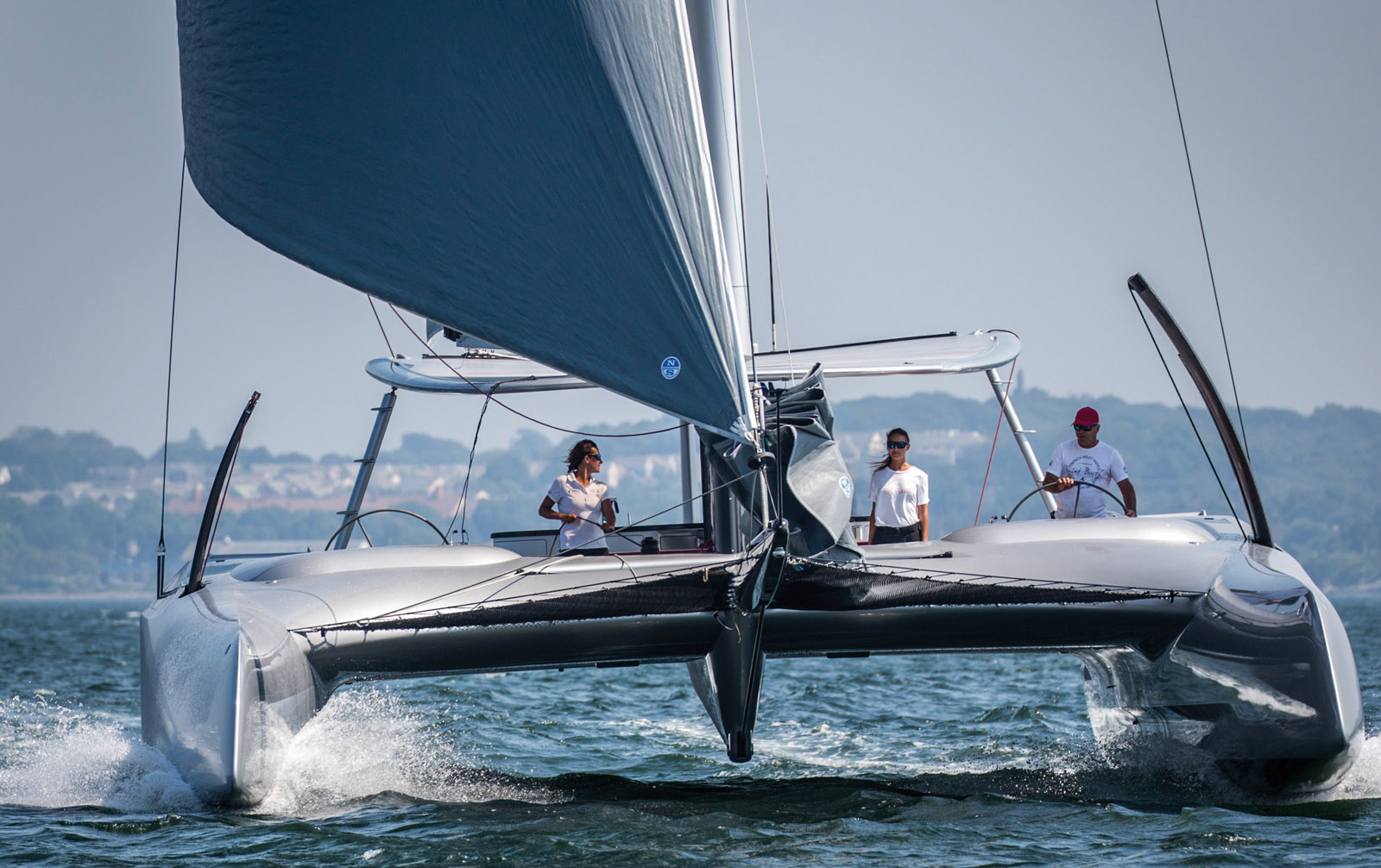
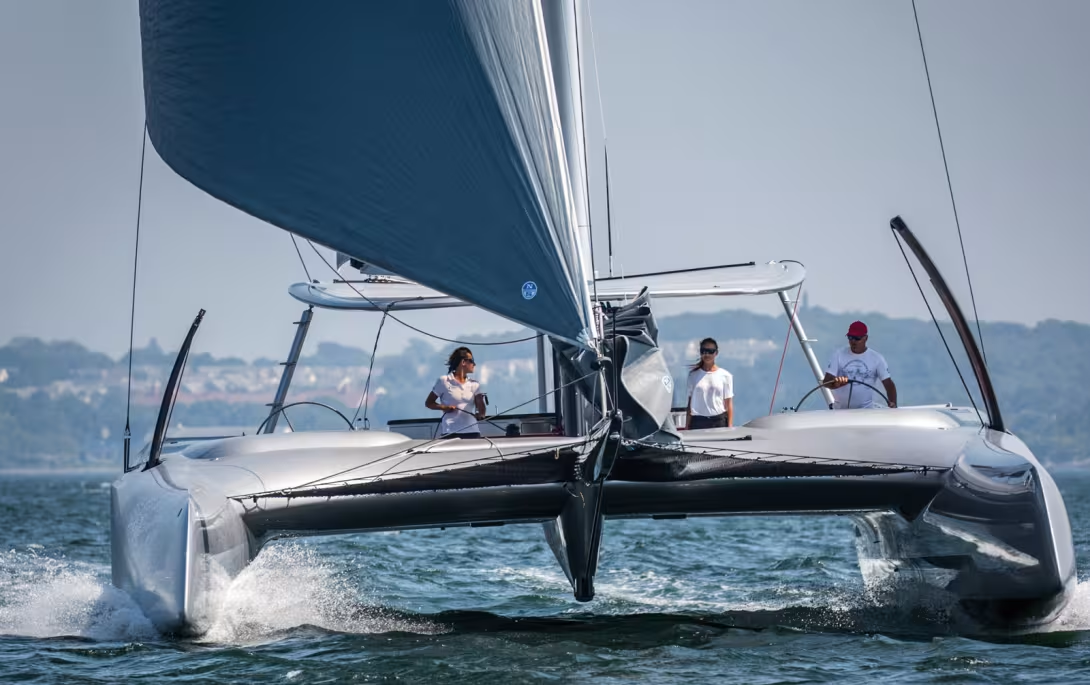
All-carbon is expensive... but it allows this EC 53 to weigh in at only 6 tons!
And then the last component of the material that makes up the heart of the vast majority of our multihulls, is the resin that acts as a binder between the fibers and the core. Historically almost monopolistic, polyester resin has given the material its name. However, sensitive to osmosis (a phenomenon characterized by blistering of the gelcoat and sometimes delamination of the outer layers of laminated material that made headlines in the nautical press toward the end of the last century), it is increasingly being replaced by vinylester, at least below the waterline, or epoxy, resins that are insensitive to this phenomenon. From its full and scientific name ‘epoxy polymer’, epoxy offers better physical performance but requires more careful implementation (temperature, hygrometry, and so forth). On the subject of secondhand polyester boats, osmosis still sometimes causes unreasonable panic and fear. Unless much mistaken, no boat has ever sunk as a result of osmosis. In the most serious cases, a curative treatment can sort out even the most impacted hulls, restoring the underwater hulls of catamarans and trimarans over a quarter of a century - if not more.
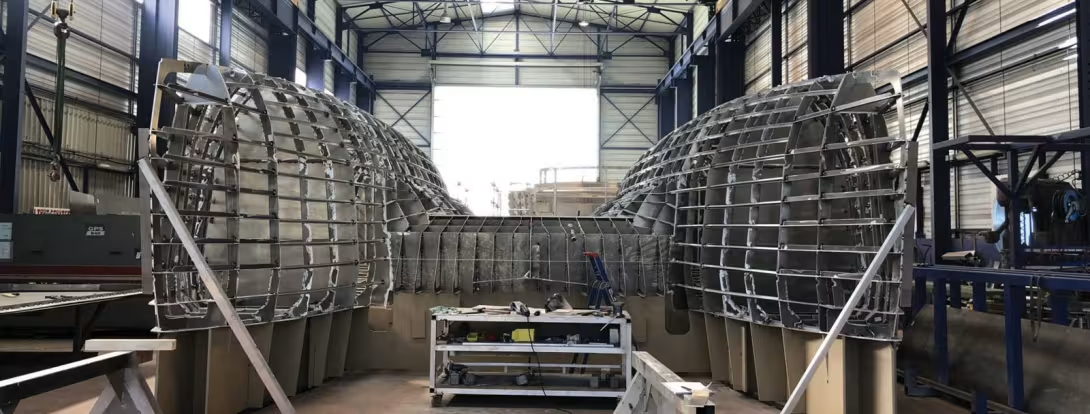
Behind the huge plastic industry, a few builders still continue down different paths that offer other advantages. Aluminum has many of them, with Banana Split by the famous French singer/sailor, Antoine, as a historical figurehead. A very resistant material, aluminum has a capacity for deformation under the effect of shocks. This is what appeals to long-distance sailors ready to venture into poorly charted lagoons and rias with great hidden sandbanks... And no one is safe from an unfortunate encounter with a UFO. The strength/weight ratio of aluminum is very appealing, especially as its thickness can be varied according to the zones where it is used. Oversized in the lower hull, it can go down to 6 mm (¼”) for the top of a cockpit bench, thus optimizing the overall weight of the boat. It’s no coincidence that, before the advent of carbon, many racing boats, from Éric Tabarly’s foiler Paul Ricard to Marc Pajot’s Elf Aquitaine, the winning catamaran of the first Route du Rhum, were made from this material. For in addition to its lightness, its use is perfectly suited to prototypes or limited production runs. And, as it doesn’t require molds, the initial investment is reduced, but the upshot of that being that it requires more hours of work and real know-how to obtain a perfect hull finish. As for the phenomenon of electrolysis, the amateur builds that may have fueled this fear are now only a distant and bad memory. The quality of the electrical systems from specialized shipyards and the alarms set up to alert any clumsy diy-er are able to reassure the most demanding of professionals. It’s the material of choice made for search and rescue craft, pilot boats, or even navies for their fast, all-weather boats.
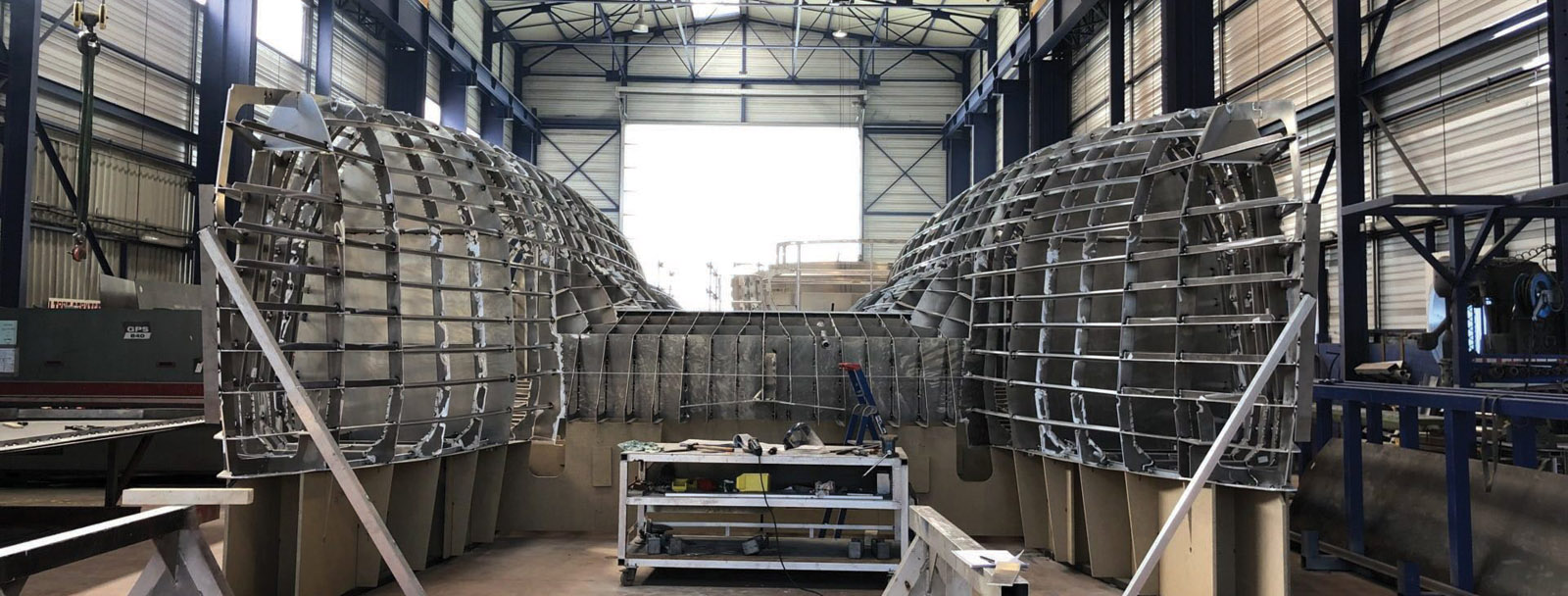
Garcia Yachting has sought to use aluminum for its Explocat 52 - a future great adventurer!
And finally, although we might have written about this first, there is wood. For our multihulls are the direct descendants of double or triple pirogues that, from South-East Asia, set out to discover the Indian and Pacific Oceans between 3,000 and 1,200 BCE. The word catamaran itself is said to come from the Tamil word “kattumaram” which literally means “logs of wood linked together”, a name imported into Europe by the British in the 17th century. Of course, in more modern times, there were the catamarans of the genius Nathanaël G. Herresoff, then the magnificent laminated/glued trimarans of the 1970s and 80s. Plans by Dick Newick, Walter Greene or Nigel Irens, whose mille-feuille of thin cross-beam wooden slats gave us the impression of being inside a Stradivarius. An expensive production technique, sometimes used in small production runs, such as the Grand Sud 42 which I remember so well. Simpler, were Punch catamarans. These cats built in Martinique sailed the Caribbean. Their taut lines, linked to their construction method in plywood/ epoxy were ahead of their time and contributed to their success, especially for charter boats. The ease of working with wood, the rigidity of epoxy glues, and the easy-to-maintain lacquered interior finishes, made up the winning trio of this construction method. Even more rustic are the famous Wharram designs, whose simplicity of plans and materials has the good taste to still allow the amateur builder to set off on a boat made by his own fair hands. Plywood/ epoxy is certainly the most suitable material for “home-build” construction. At a time when the problem of the deconstruction of the first polyester boats produced by the industrialization of sailing is becoming more and more important, the future of our multihulls will either be ecological or will not exist. Bamboo fiber, flax fiber, reusable infusion sheets... many developments are underway and must be seen more and more widely. Because alternatives such as wood or aluminum - which have among other advantages, that of being partly recyclable - are for the moment limited, economically speaking, to small production runs. A term that has nothing disparaging about it!
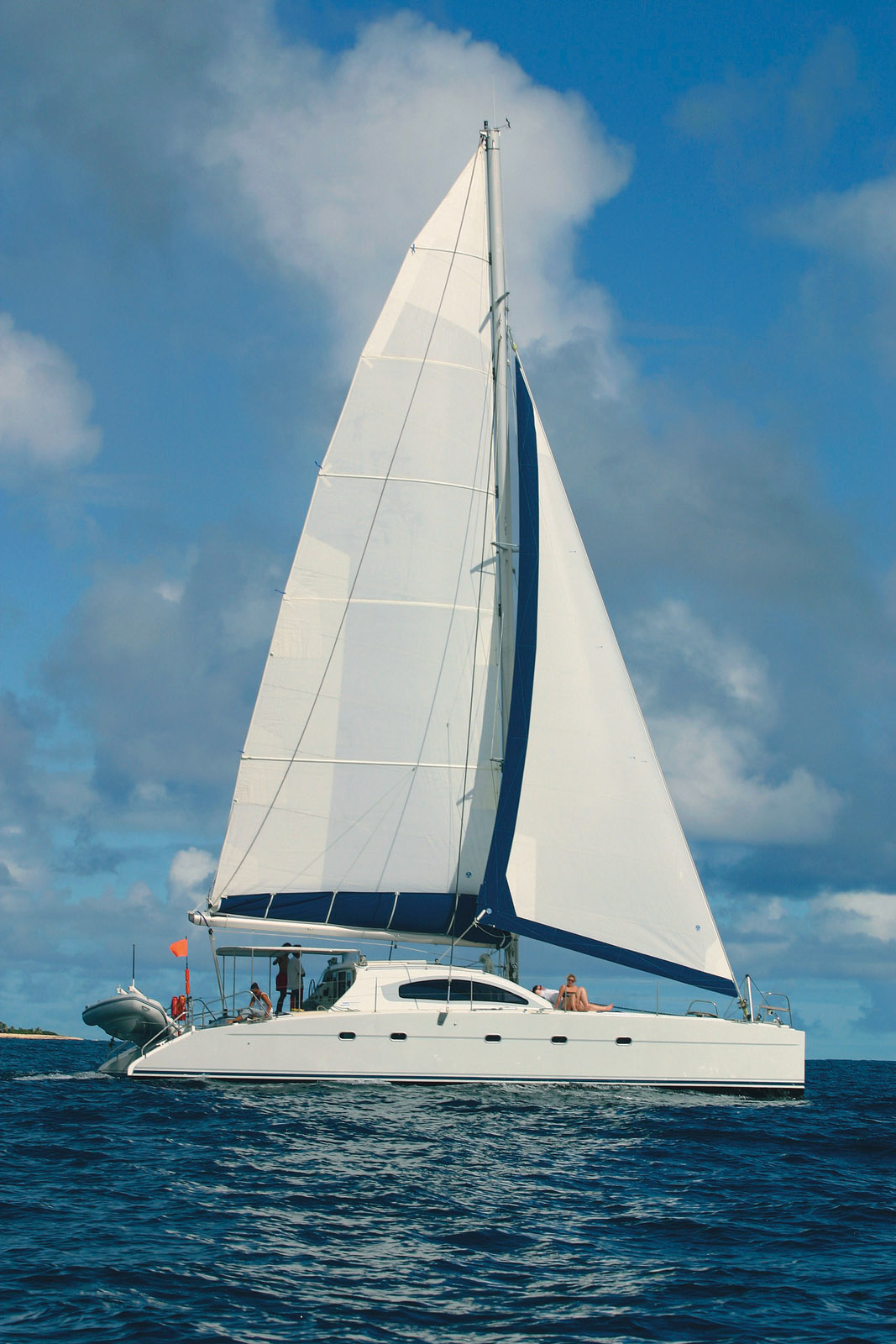
The Punch series - here the 1500 - demonstrates that plywood-epoxy construction makes it possible to build light, rigid and elegant multihulls.
WEIGHT OF DIFFERENT SECTIONS OF EQUAL STRENGTH
> Monolithic polyester: 13.5 kg/m² (2.75 lb/sq ft)
> Foam-glass sandwich: 9.1 kg/m² (1.85 lb/sq ft)
> Carbon foam sandwich: 3.6 kg/ m² (0.74 lb/sq ft)
> Red Cedar glulam: 10.9 kg (2.23 lb/sq ft)
> Plywood: 11.75 kg (2.4 lb/sq ft)
> Aluminum: 13.7 kg (2.8 lb/sq ft)
Source: ‘Matériaux Composites’ by Erik Lerouge, published by Editions Loisirs Nautiques