
Transatlantic: Guadeloupe - Azores 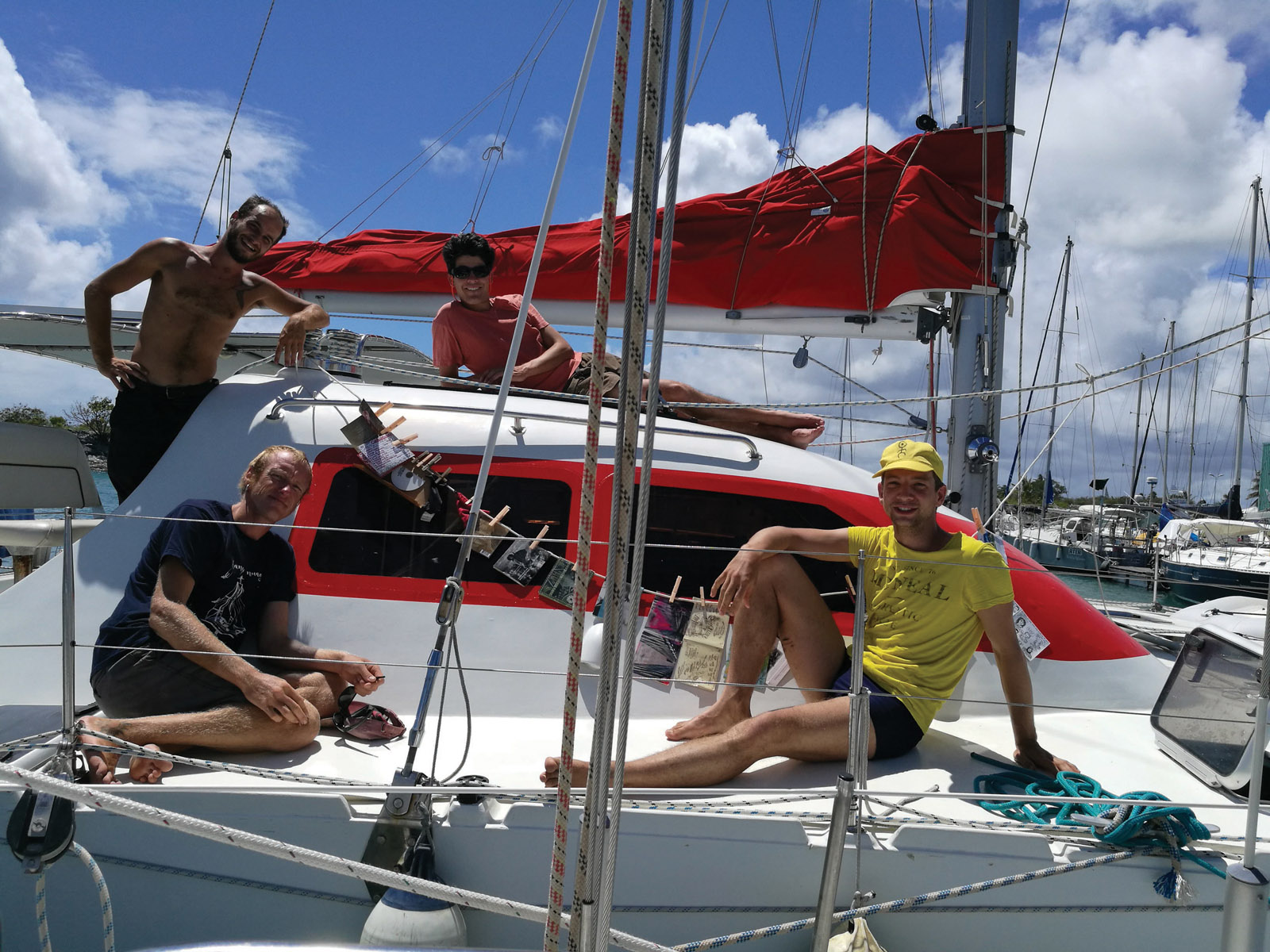
For seven months now, the catamaran Honky Tonk and her crew of jazz musicians have been sailing from island to island in the West Indies. The time has now come to set sail for Europe. The crew consists of Quentin Bardinet (banjo player and sailor, French), Leon Pfannenmüller (a comedian from Munich, German), Coleman Akin (violinist from New Orleans, American) and Bots (trumpet player, tuba player, skipper, Belgian). This trip is a first for the whole crew. Quentin Bardi has crossed from Europe to the West Indies, but never in the opposite direction. Bots sailed from the Azores to Ireland, which is part of the crossing, but is going into the unknown for the rest. On May 3rd, the catamaran weighed anchor and set sail from the beach of La Datcha in Guadeloupe, heading for the continent across the other side of the ocean. We had stocked up on supplies in Pointe à Pitre. A sailor friend who lives in Germany is routing the crossing and relaying the news on board via social networks. Patrick Faurot, also known as «Sextant Sully», receives at least one text message a day from Honky Tonk, having switched the satellite phone back on for the occasion. Exchanges are made in a coded language, developed upstream, which makes it possible to condense the information into a minimum number of characters. In fact, the crew is entitled to 75 messages and 75 minutes of calls over the entire crossing.
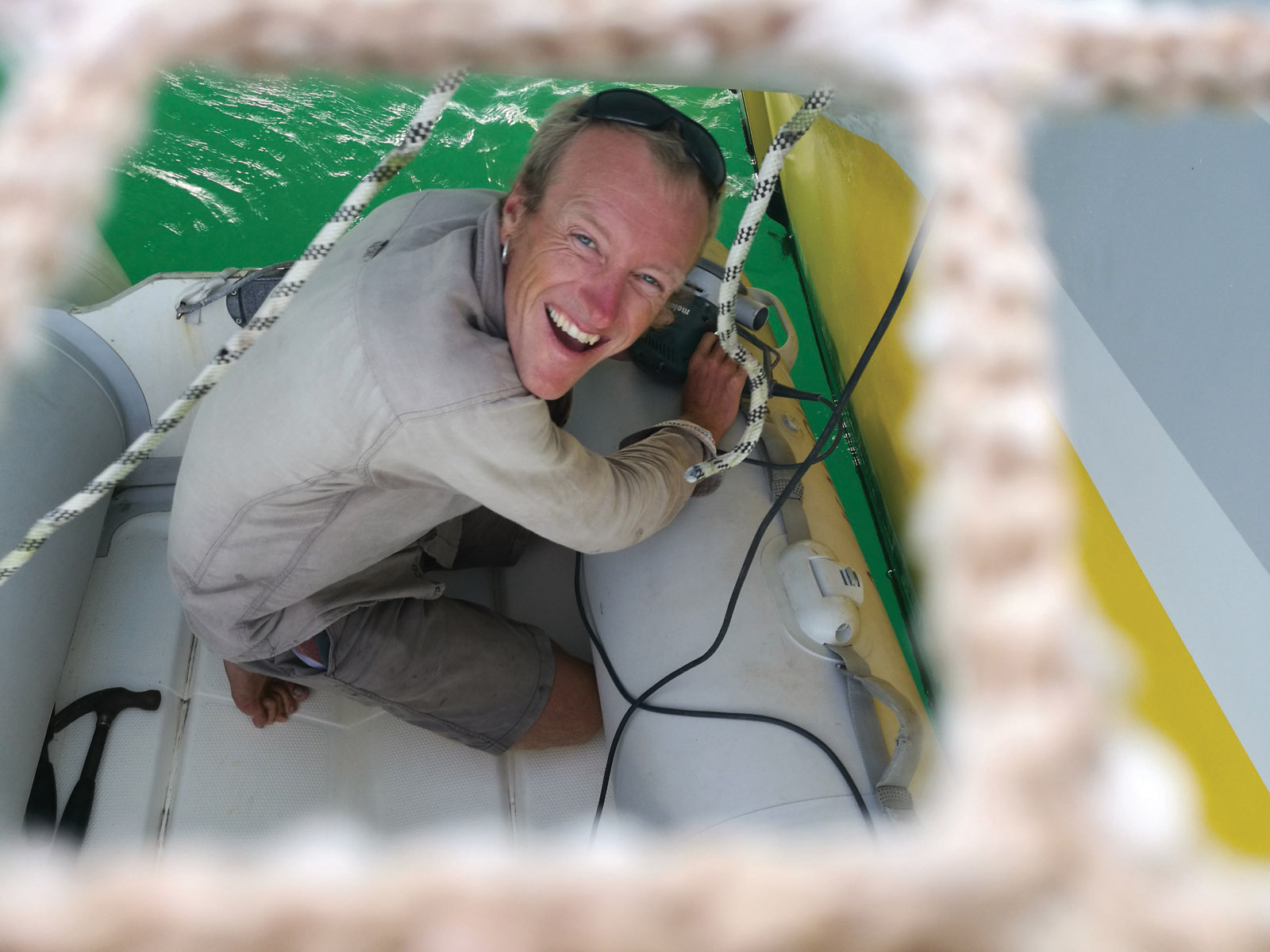
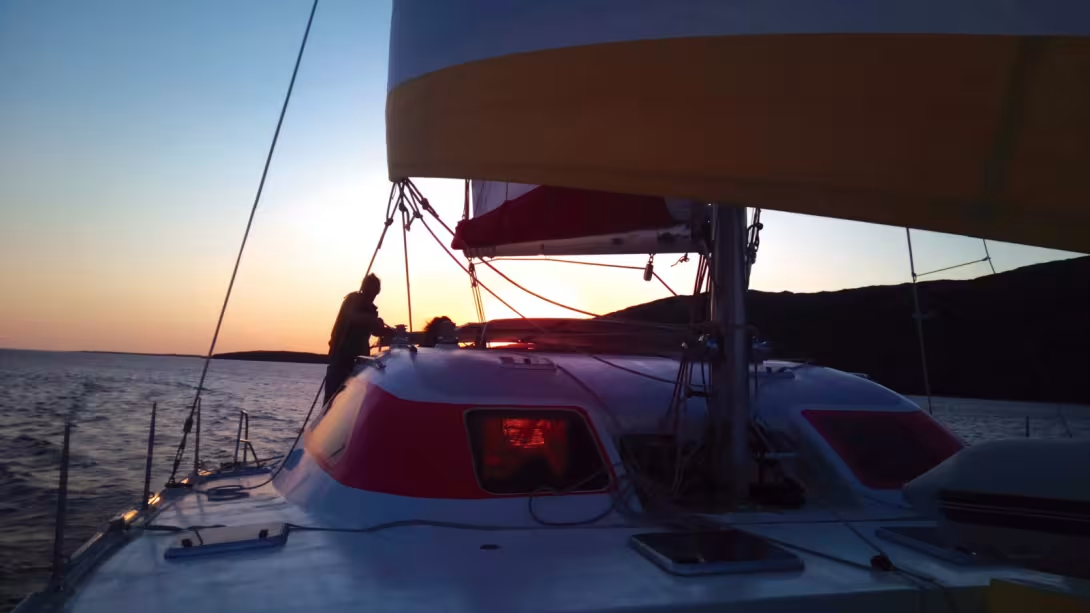
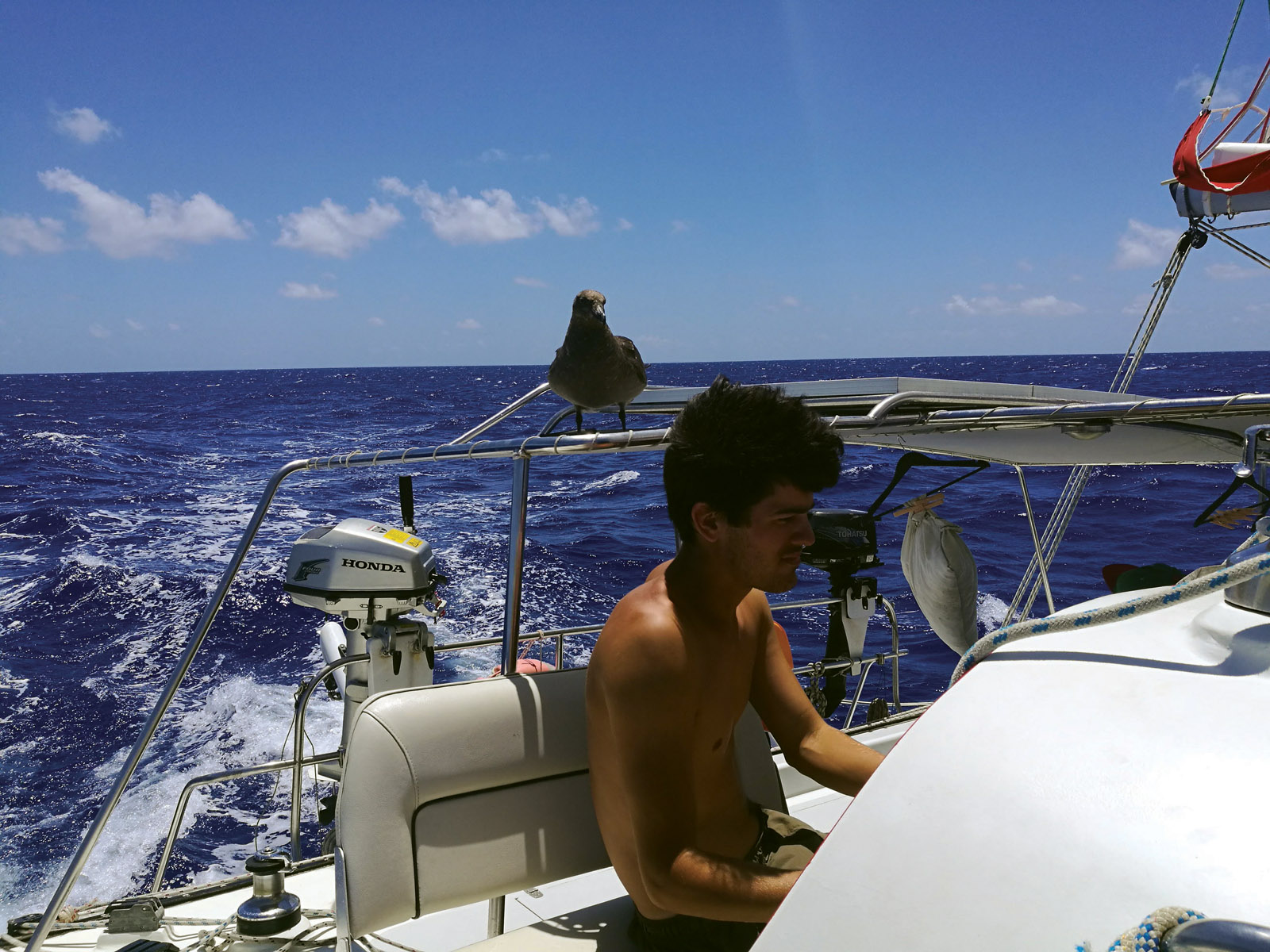
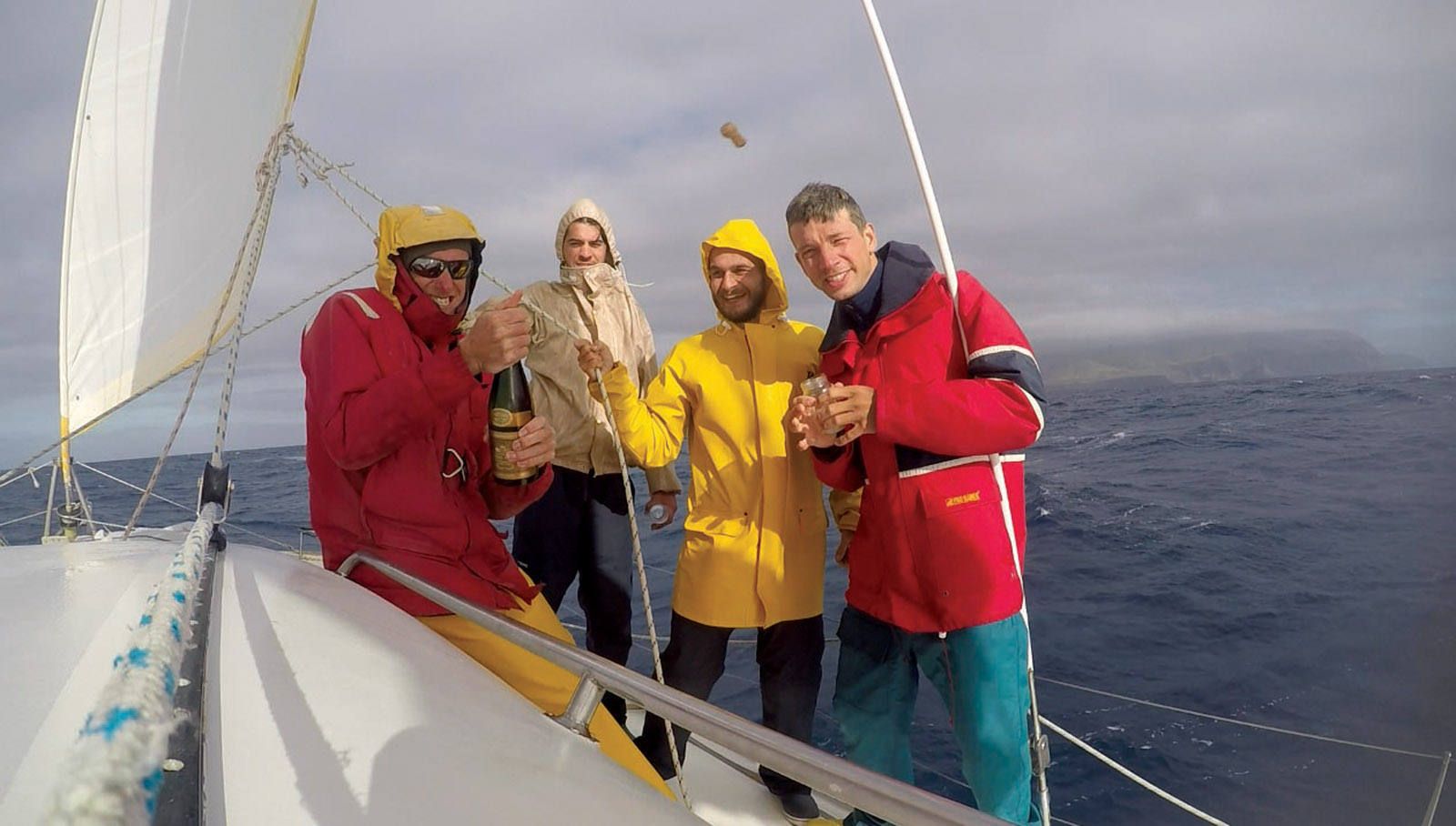
This means that communication with the outside world is very restricted. The first week, on Patrick’s advice, Honky Tonk headed north. The Sargasso Sea is aptly named. Fishing is impossible there, but we were still able to enjoy some culinary delights. Bots had prepared homemade preserves before leaving. Bardi had shared his preservation techniques, such as butter in water. Honky Tonk sailed past Bermuda before changing course. This crossing takes us through a whole range of weather: from dead calm to 40 knots of wind, and everything in between. The autopilot doesn’t get much use. The crew members spend a lot of time at the helm in an attempt to conserve the batteries, as the sky is cloudy most of the time. Coleman is the least experienced of the crew. This is his first long sailing trip. He has to air out his violin several times during the crossing to prevent mold from forming in the case. Throughout the voyage, the crew films life on the boat, and Bots spends some time at sea editing a small video clip. The VHF alarm bracelets do not work. They just go off whenever they feel like it. Bardi - who sleeps closest to the radio - had to get up from his bunk in a panic several times before they decided to stop wearing them. After 17 days at sea, Honky Tonk came across a sailboat that seemed to be plotting a course without taking into account anything around her. A mysterious encounter ... The character of a transatlantic crossing is mirrored in the calm moments. This is no different for Honky Tonk. At rest, with the sails hanging limply, adrift in the deep blue, the two days of calm are part of the overall adventure: swimming, fishing, sunbathing and drying out the bedding. After 20 days of sailing, on May 23rd, the westernmost island of the Azores archipelago appeared on the horizon. Flores is the perfect island for the sailor. What could be better after three weeks at sea than the green landscape, the humanity of the few inhabitants and their little cafés in the countryside where they sing in Portuguese ?
The Azores, a sailor’s paradise
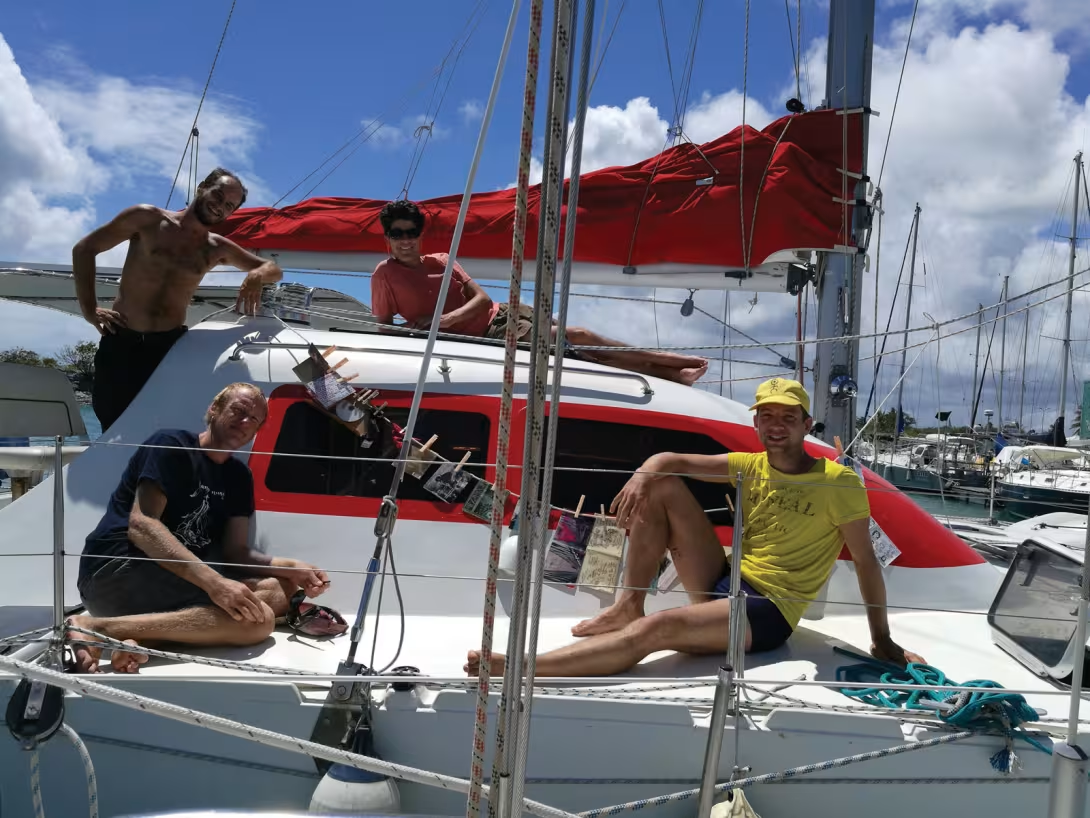
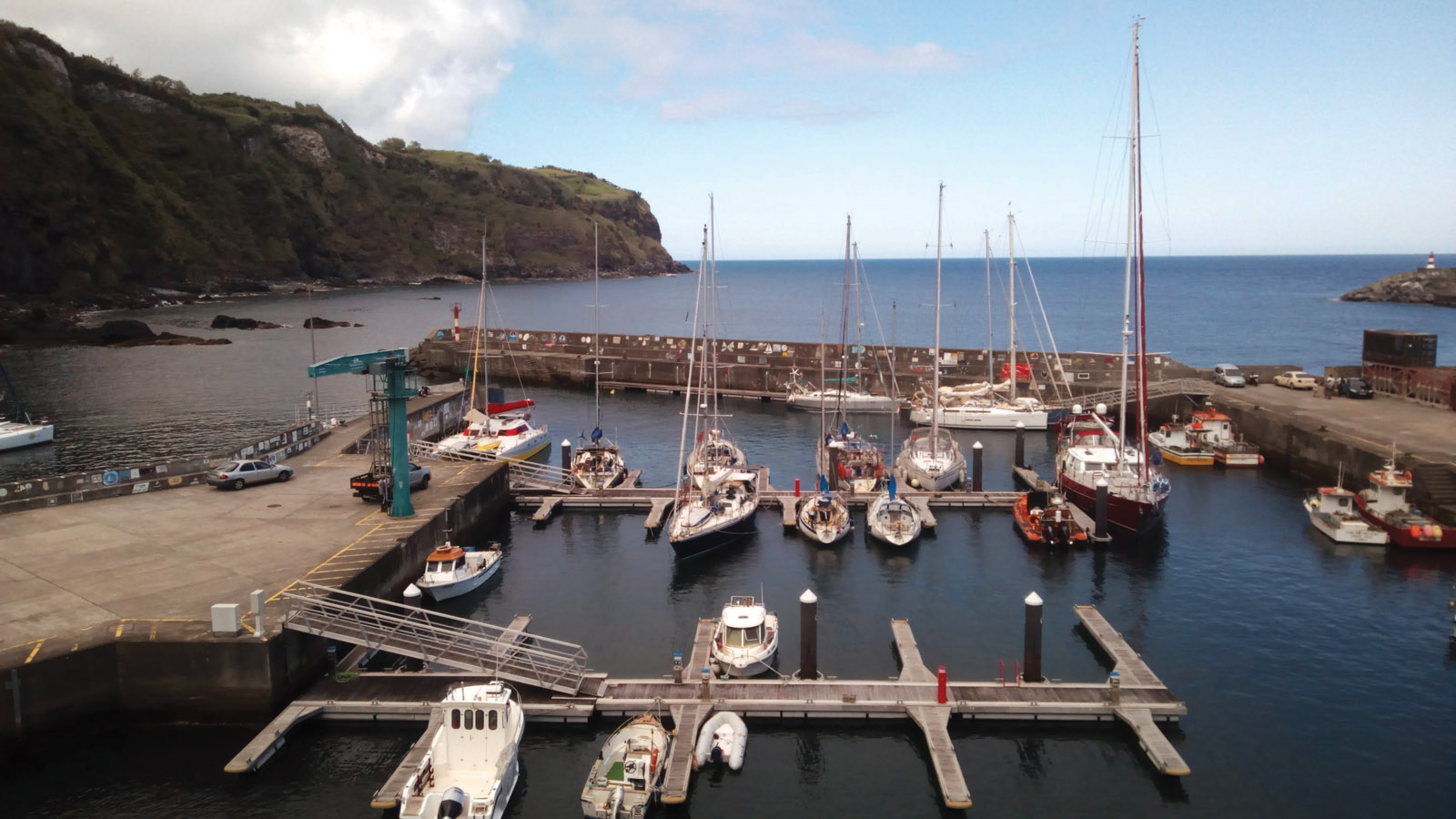
Any readers who have ever stopped over in the Azores will surely agree: the welcome here is exceptional. Sailing boats arrive every day after a long passage. The yellow flag announces our transatlantic crossing. We pass from one pontoon to another and stories are exchanged whilst we’re still wet with sea spray. The world of sailing is alive here. Apart from the boats seized by customs, there are very few ships at rest. The harbor walls speak of long voyages. If the fog is too thick, the trumpet, trombone or a tuba can stand in as a foghorn. Bardi, Leon, Coleman and Bots in Guadeloupe: Honky Tonk’s crew is ready for a transatlantic crossing! Everyone leaves their name and you can find the names of friends who have been here and moved on. It is here that I joined up with the catamaran because there is a small tour scheduled on the island of Faial. Since the West Indies, I was just itching to get back on board! I’m going to perform my show EOS in which I do live painting with Lise Dieumegard, friend, singer, sailor. She’s going to make the crossing to Ireland with us and then join us in Normandy again where we have another show. But before that, we will have a month of good times in the Azores: the Maravilha festival and its adorable organizers Tomas, Teresa and Aurora; the concert for the Encontro Mundo rural, the show in the magnificent theatre of Horta, the appearance on the radio Antenna Nove, the concerts and Bardi’s birthday at the unmissable Peter Café Sport... All in all, we are bathed in a benevolent, welcoming and warm atmosphere that I have rarely felt elsewhere. The people of Faial are available, open, friendly and generous. We have become attached to this island, its landscapes and our newfound friends.
The Azores archipelago has always been a welcoming land because of its location. It’s an essential stage for a crossing between Europe and America or vice versa. For a long time, it was the place where ships and then airplanes (whose fuel tanks did not yet allow such long distances) were resupplied. Numerous travelers have trodden the volcanic soil of these islands. Perhaps it is this history that we, as travelers ourselves, find so overpowering. Maybe the people here have always been used to welcoming others? Since tourism is not overdeveloped, the Azoreans are not - or not yet - tired or annoyed by the presence of foreign visitors. Always ready to share a few words, to help or show you their island, they are an example of hospitality. I have already noticed that insularity can create a special atmosphere, in a positive way. Having no way out, islanders protect the relational balance of their territory more than their continental cousins. They take care of the links that they have with others, since there is no other solution than to keep meeting each other, getting to know each other and hearing about each other. What’s the point of messing up your situation when it’s so difficult to put things right afterwards? Thus, certain values seem obvious on an island. Theft, for example, doesn’t seem to make sense. That’s why you will find a set of keys in the ignition of most cars in the Azores. What’s the point of taking your neighbor’s car if you can drive around the island in 2 hours and everyone will immediately know what happened? It is also not uncommon to see the key on the front doors of houses. Each person takes care of the other because, on the island as on the boat, there is no other way. It is the best way to feel good: there is no other alternative. As time goes by, the crew come and go. Bardi, Coleman and Leon leave for Europe for the touring season. Other concerts await them. Then comes Bastoune, a friend from Queyras, a mountain man who regularly spends time on Bot’s boat to get his dose of life at sea. Isabel, one of the organizers of the Maravilha festival, took up the challenge of becoming a member of the team. «I’ve always dreamed of sailing from the Azores to Europe» she told us. We took her at her word. She is not afraid of adventure and is therefore embarking on Honky Tonk.
Heading for Ireland
We’re off to Ireland, where the Honky Tonk team are programmed to perform at a maritime festival. The crossing is done to the rhythm of the girls’ Portuguese songs and games of Toc (an addictive board and card game). We cross an area known for its cetaceans. We encounter pilot whales, blue whales and sperm whales. The latter pass very close to the boat: a slightly unnerving morning, that one! Bastoune is incredible at spotting marine life. His eagle eye scans the surface of the water like a radar and he is always the first to spot any visitor. The crossing is quiet and joyful. A pigeon comes to tell us that we are coming to the end of our crossing. After 9 days at sea we are just 300 miles from land. He stays on board for a few days, then heads west again, towards the United States. The wind leaves us with him. The rhythm of our progress slows down for good. Ireland is within striking distance, yet so far away at the same time. A gentle breeze eases us into Clifden Bay, on the west coast of Ireland. A school of around forty dolphins accompanies us. They come very close to the sugarscoops with their offspring. This welcoming committee is top notch! The bay is calm, the water like a mirror reflecting the bright colors of the fishing boats that anchor there. Around it, everything is green. There are a few houses, cormorants, pastures and flowering broom. It had taken us 14 days. The captain is adamant: the dirty hulls have slowed down the catamaran.
Our new passion: Fishing
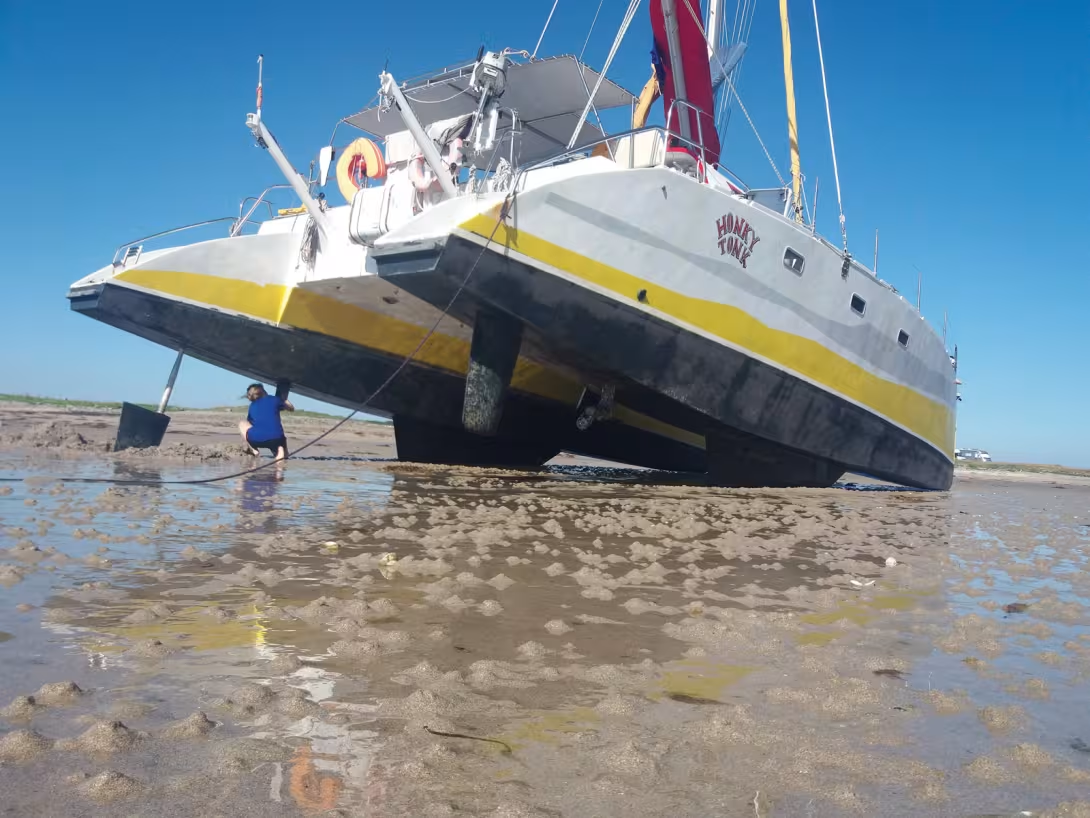
Under the Irish sun - yes! - we beach Honky Tonk for the first time, on a sandy stretch. We have a few hours to do a repair on the rudder and dig a hole and find some nice clams. Little by little, fishing takes an important place on board: between the line catches of Bastoune and Bots (mackerel and haddock), the gifts from the fishermen (scallops and crabs) and the general atmosphere in the ports, our motivation grows. We even buy ourselves a lobster pot... I hear that we’re in the middle of a heat wave. For us, it’s just a decent temperature for a month of July... but later on we understood better the euphoria of the locals about the heat that they were enjoying. On the way up to the north of Ireland, when we were anchored, a line got caught in the propeller. There were rocks behind the boat, and we had no control over one of the engines. All around us were people swimming in bathing suits or on the beach. Bots decided to dive down to cut the gennaker sheet. The operation lasted a good quarter of an hour because the propeller had to be removed and the captain came out blue and shivering. It took him hours to warm up, wrapped in blankets in the saloon. His weary eye landed upon the locals in their 60s who were quietly doing their breaststroke around the anchorage. The seals are still laughing about it!
At last: Some concerts on board!
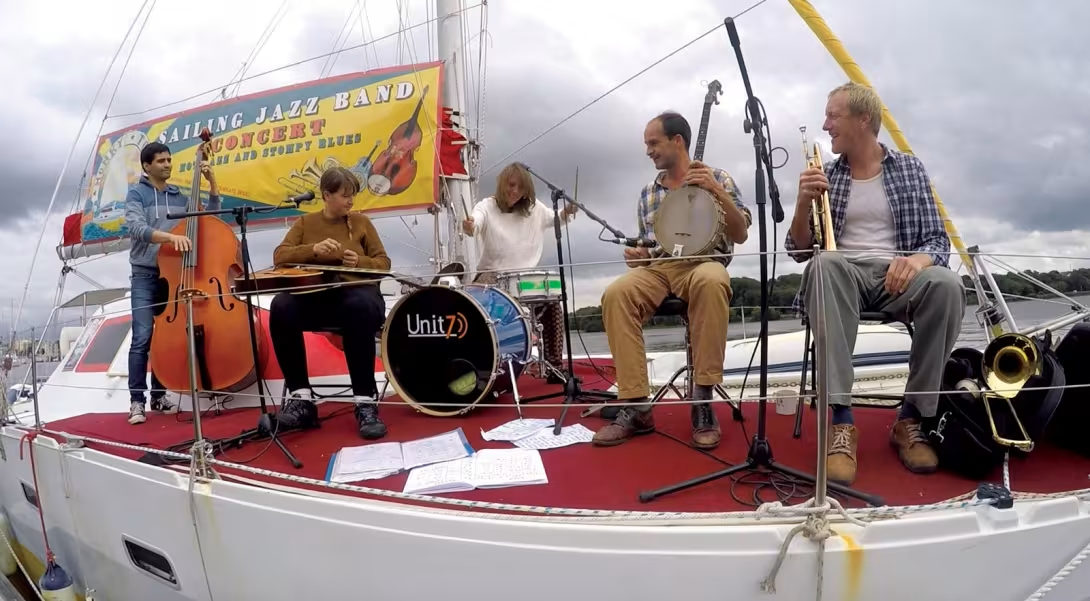
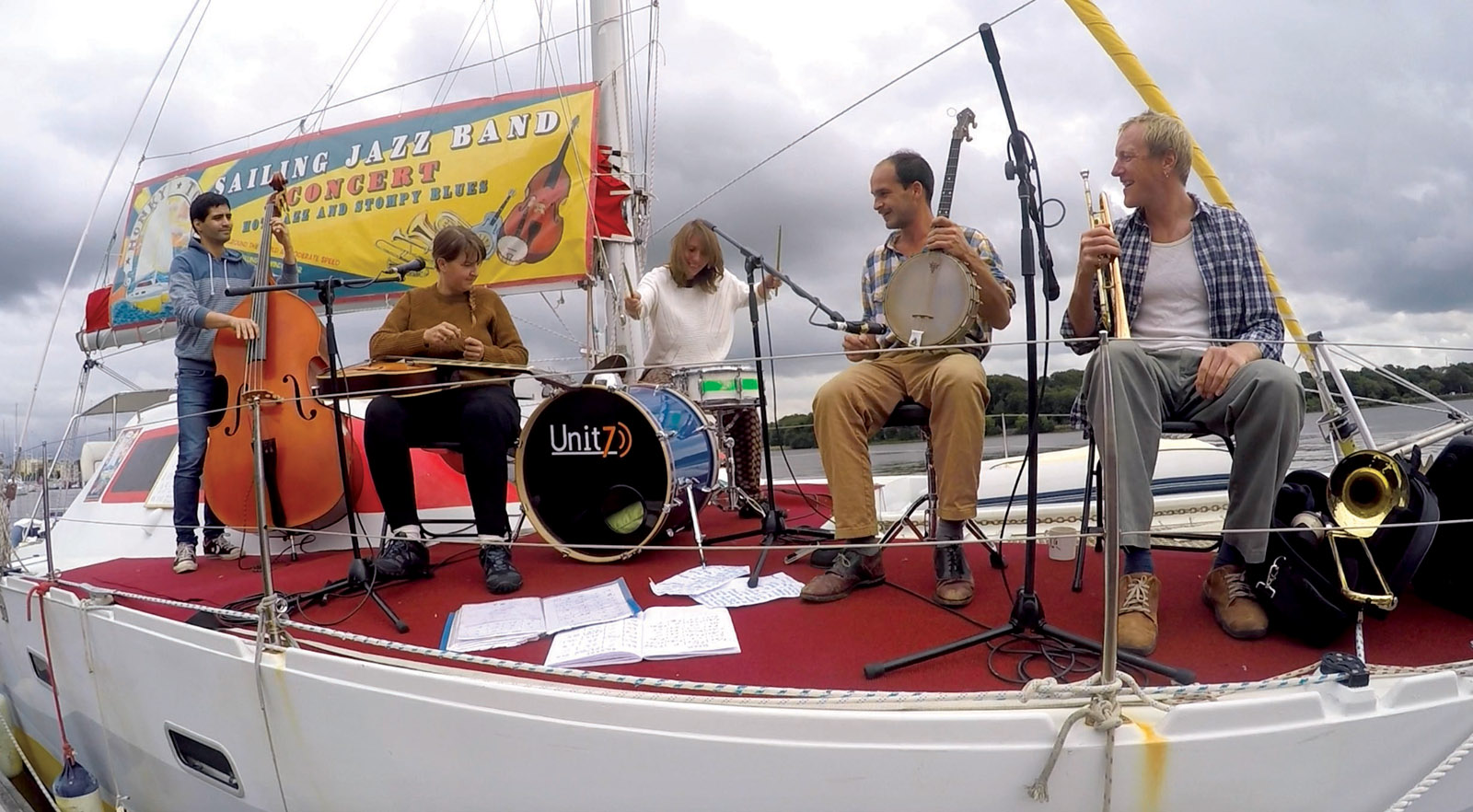
All the way up to Northern Ireland, the jagged coastline unfolds, sprinkled with empty second homes and lush grassy meadows. The Derry Maritime Festival takes place from July 14th to 22nd, and we arrive «just in time» in the river estuary. Once again, the crew is on the move. Bastoune, Isabel and Lise fly to Portugal and France. Musicians arrive to honor the 10 days of concerts planned for the festival. Anton Kerkhof on clarinet (Belgian), Pablo Boudard on double bass (French), Ophélie Luminati on drums (French), Leonie Evans (already on board in the West Indies) on guitar and voice and finally Quentin Bardinet is back on board (still on banjo). For the first time, the concerts take place on the catamaran. The project is built around the idea of a stage boat, but few port configurations really allow a concert at the quayside. This time it does work. The only problem is that the concert schedules are not coordinated with the tides! There is a good crowd, but it has to gather at the quay barrier to see the concert which is two or three meters (7 to 10 feet) below. Fortunately, the musicians also play in the street, on the big stage, and even in a church. We discovered little by little the culture and history of this country. Since 1921, Ireland has been divided into two separate countries. We began to understand that political and religious tension is still present when we talk about «Londonderry» (the official name of the city under British rule). With a reproving eye, the locals tell us «Here we say Derry, not Londonderry». We are just beginning to comprehend that we are in a country that is just emerging from decades of civil war.
It’s the tide that decides...
We leave, 10 days and as many concerts later, in the presence of the biggest dolphins that we have ever seen, in the mouth of the River Foyle They seem to live there, because we had seen them on the way in too. They are clear-colored with scratches on their sides and are huge. For the musicians, the sailing part of their trip is short: the time has come for the last changeover. Four new jazzmen arrive on board, and only Anton remains from the Derry team. The calendars are tricky to organize if we want to be able to ensure that we can fulfil all of the concerts. Honky Tonk is a platform for musical exchange, and most of the musicians don’t know each other before boarding and playing together. This time, three friends have heard about the Honky Tonk jazzband’s move to New Orleans (see MW169): Peryklis Dazy (trumpet player and Greco-French skipper), Adam Lessnau (American trombonist) and Anton who was introduced to you earlier. Patrick Faurot, the router friend from the transatlantic leg, also joins us with his washboard. Finally, Bren Ó Ruaidh, an Irish guitarist unknown to all of us, has the courage to be part of the trip despite suffering from severe seasickness. The new team must now face the local weather. It is not easy to play music in the rain. The ports of Belfast, Dublin, Milford Haven, Marloes, Mevagissey and Fishgard are all more beautiful than each other, but it’s a real challenge to find the opportunity to play in good conditions. This part of the trip is based on the theme of improvisation as the navigation between Ireland and Scotland or the rest of the United Kingdom is subject to currents. Every six hours, the sea pushes us south, but the next six hours are then spent in the shelter of a port or bay, which considerably reduces the possibilities of moving forward. It is therefore the tide and the wind that decide our next stopover. We have to move forward though because we have an appointment: in two weeks’ time, we are expected in Saint-Vaast-LaHougue, in Normandy, to play at the Les Traversées Tatihou festival. Once the group is complete and everyone introduced, each weather window will be optimized to get us around the south of England. During longer stopovers, the musicians set off to see what they can get up to in the towns. Adam’s chatter and the band’s talent leads to concerts in pubs, in the street, in a village square or along the quayside. There’s always a crowd, and each time, they’re usually a little surprised. Every crowd is different depending upon the location and the time of the show, but they always enjoy watching and listening to the sailing jazzband. While sailing in the dull greyness, the musicians train their ears with games that only they can understand. The brass section plays Donna Lee as fast as they can for the fishing boats and gulls, we learn how to tie knots and I paint. If the fog is too thick, the trumpet, trombone and tuba can stand in as a foghorn. We arrived in France 24 hours before the concert. My family had been waiting for us for a few days because we thought we would arrive earlier. Lise is also there, because our show is scheduled as part of the festival. It’s the end of August and the festivalgoers are coming to get their fill of music at the water’s edge. I doubt that anyone could imagine the marathon we’ve just gone through to be there, in front of them, on time. The musicians can be proud. They play their hearts out. I find it quite moving to see Honky Tonk in France.