EUROPE
Having been hit hard by the pandemic, especially the countries of the Mediterranean basin (Italy, Spain, France), most European countries have simply banned the practice of pleasure boating around their coasts. While a gradual deconfinement is underway in many countries, this does not necessarily lift all restrictions on boating. The situation is potentially a little more flexible if you are a passport holder or permanent resident of a Schengen area country - especially if you can prove that you are on your way to your country of residence and have a compelling reason to call at a port. Typical examples: shelter due to bad weather, filling up with fuel, stocking up on supplies before continuing your journey. In this case, some countries will let you anchor. Others will let you enter the ports but will not let you leave as long as the containment measures remain in force there. A quarantine period of 14 days is systematically imposed, often taking into account the time spent at sea. This is a good reminder of the importance of filling in your logbook religiously and even having it stamped by your departure and arrival ports. In the Atlantic, boats generally head eastwards in this season - it is therefore interesting to learn that at the time of writing Portugal has reopened four ports for yachtsmen in transit: Nazaré, Cascais, Lisbon and Lagos. More problematic was the position of Madeira, Porto Santo and the Azores, where calls by pleasure craft were simply banned - at least until May - making the traditional return route to Europe that so many boats take in May more difficult, until the official lifting of the restrictions.
THE CARIBBEAN ARC
The Caribbean arc, which is very popular in the springtime in the northern hemisphere, could have been a particularly complex area in the current situation, if every island had different regulations. But the situation is rather simple. They have all banned pleasure craft from entering, and some, like Saint Lucia, have been confined apart from essential activities since March 23rd. The state of emergency on the island has been extended until at least May 31st. For the French departments of Martinique and Guadeloupe, vessels flying a flag from outside the European Union are prohibited from stopping over. For those boats which arrived before March 23rd or for those registered in the EU, stopovers and stays are possible, with the same containment rules as for shore-dwellers. A very didactic diagram, in French, of what it is allowed and what isn’t has been published on this subject by the Direction Maritime of Martinique. Even swimming around your multihull can be regulated, as in Les Saintes in Guadeloupe. It is now forbidden to move more than 15 meters (50’) away from the boat and for not more than one hour within those 15 meters. If the situation weren’t so serious, that anecdote would raise a smile. But thank goodness for our dear multihulls, which in these circumstances offer a much larger authorized swimming area than a monohull! The trend is nevertheless towards more flexible measures - bars and restaurants have been open since May 11th on Saint Martin and Saint Barths. While the hurricane season begins for certain insurers from June 1st, sailors are also worrying about the confinement, supply difficulties and the possibility of destination or stopover ports potentially being closed (Bahamas, Madeira, Azores...). Of course, there is always, and perhaps more than ever before, the solution of a return trip by cargo ship, but the budget is substantial. Calling in a professional crew may be a solution as professional sailing is not forbidden, unlike yachting. But the concern in the latter case is the pre or post journey transport of the sailors. This is currently problematic with the airlines almost all at a standstill. So, sailors are just having to be patient and get organized, as in Sainte-Anne in Martinique, where 360 boats are confined to their moorings. Mutual help is running at full speed. A Facebook group has been set up to share information, and in the evening on VHF Channel 10, stories are even broadcast for the confined children!
USA / CANADA
Since March 19th, Canada has closed its borders to foreign vessels. Only Canadians can enter the country, and then Americans since April 23rd. However, Americans will have to observe a 14-day quarantine. In the United States the situation is much more complex, as it depends both on federal and state laws and on local police regulations. While all its marinas closed around March 18th, Florida reopened its ports to ships in transit on April 22nd. Further north, the Chesapeake Bay remains closed to pleasure boating, as do San Diego and New York, the «Big Apple» having been the epicenter of the pandemic in the United States. Unless you are an American citizen or permanent resident, it will take a few weeks or even months before you can enter the US again by boat, although tourist visas, it is worth recalling, are not affected by the suspension of work visas that was decreed by the presidential administration.
PANAMA
It’s THE place to be in this season for those who don’t necessarily want to tackle Cape Horn or take the grand tour via South Africa, which is 99.9% of us. However, on March 23rd, the Canal Authority forbade access to any vessel under 65 feet therefore excluding almost all boaters. Traffic resumed on April 9th, but any vessel arriving from international waters must first comply with a quarantine period of fourteen days. The curfew in effect allows only two hours out per day for food and/or medication. Michel, Marie and Timothée (6 years old) on Caretta were lucky enough to be there the week before! They then experienced confinement on a desert island in the Las Perlas archipelago, where they had a few barbecues on the beach. Despite being a little apprehensive leaving the anchorage, they set off again at the beginning of May for the 4,000 nautical mile journey towards the Gambiers or the Marquesas Islands... if the wind allows it!
THE PACIFIC
As Covid-19 has spread around the world in just a few weeks, the Pacific zone has not been spared. This has caught some sailors by surprise in the middle of their crossings, such as the competitors in the World ARC between the Galapagos Islands and the Marquesas. The rules have changed along the way and nothing is simple. The authorities in French Polynesia seem to be accepting that the time spent at sea can be deducted from the 14-day quarantine, which in the context of a Transpacific is really good news. It seems an obvious statement, but it’s well worth mentioning it! There have even been cases where non-residents have been flown back to their home country, having to leave their boat behind. Even though a progressive deconfinement has been underway since April 18th, inter-island navigation has remained forbidden throughout French Polynesia, and the best advice given by both the authorities and the sailors on the spot is this: as long as the situation is unchanged, if you have another option, don’t go to French Polynesia! This is exactly what Franck and Mary did aboard the HH55 Ticket to Ride who took these exceptional circumstances in their stride. Having stocked up on supplies, they were ready to leave Mexico and head for French Polynesia. However, when uncertainty arose, they decided to change course and head for Hawaii until the situation eased. They will then decide whether to head for Tahiti or to head north and discover Alaska. There are definitely worse decisions to make when coming out of confinement… In the meantime, and there is no choice in the matter, you will have to respect the local containment regulations which extend as far as Tasmania as reported by the Marine and Safety Tasmania (MAST). After adopting such measures, Australia more radically closed its ports to foreign pleasure craft on March 18th. This has been the case in New Zealand too since March 25th - exceptions to entry are rare. This is a pity: winter is approaching and sailing opportunities will become rarer. Knut and Anita Skauan had come to launch their Outremer 45 Mais Uma, but unfortunately, they arrived on... March 25th! Since then they’ve been stuck with their catamaran, ashore. So they’re doing everything they never take the time to do in «normal» times: the dinghy has gained a pair of wheels - it will be easier to bring it up on the beaches -, the kite surf boards have a custom support in the forward sail locker, the spare dinghy engine is now firmly fixed, the trampolines have been changed and their cooking skills have increased tenfold thanks to the international confinement cultural exchanges between Norwegians, Kiwis, Irish, English and Germans!
THE INDIAN OCEAN
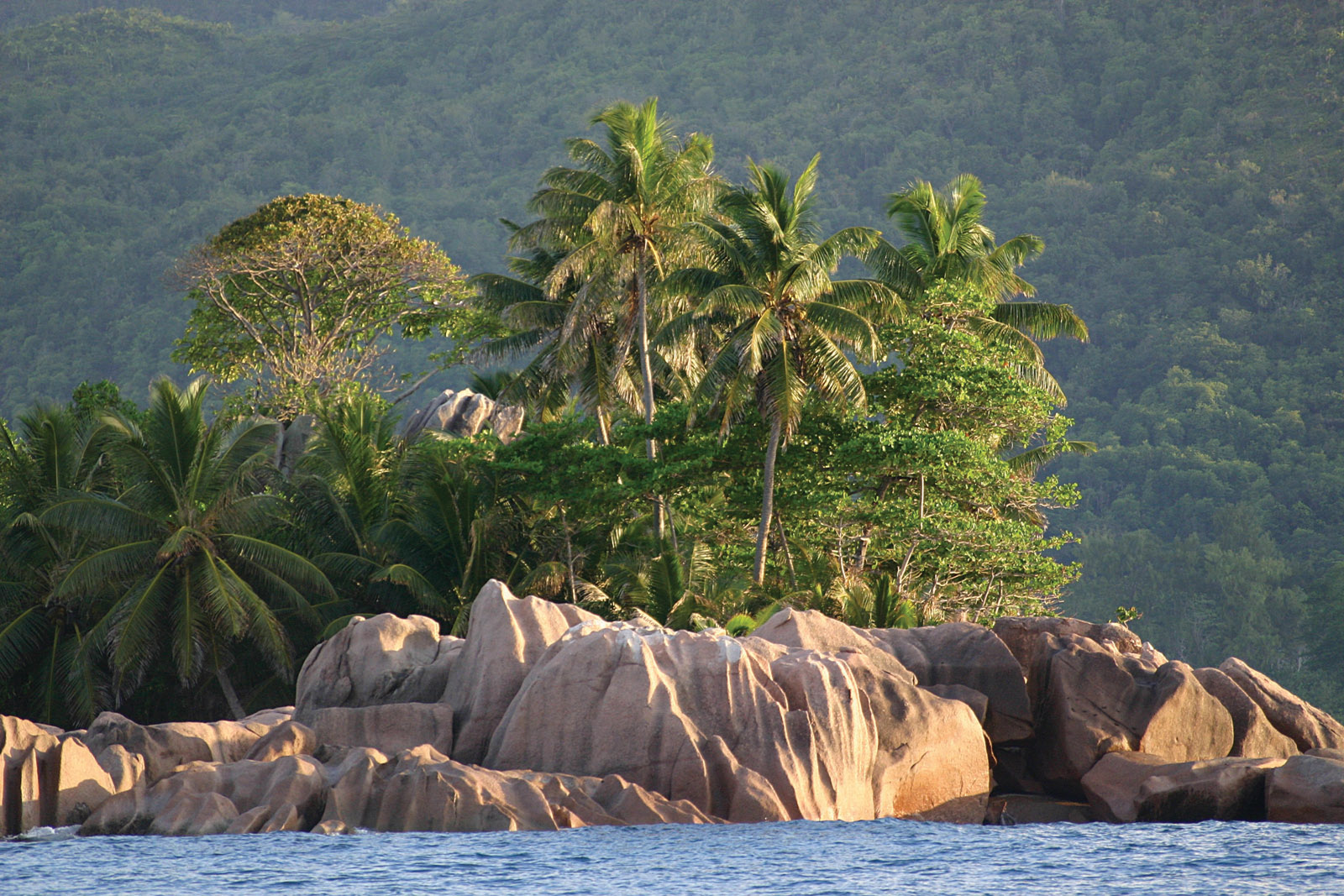
Further west, for those who were lucky enough to be sailing around Asia, nothing is simple either. Countries as magnificent for sailing as Thailand, the Philippines or Malaysia have closed their borders. The Cata Plume left Bali in the direction of Christmas Island, deciding to put a good 500 miles between them and the noise and fury of the world in this great natural park. Cyril and Magali Jagot, aboard Black Lion, for their part decided to live their confinement at sea, managing to leave Sri Lanka and head towards the Seychelles, having filled up on everything. In the meantime, the archipelago was closed to sailors, so after 26 days at sea battling against winds and currents, the couple finally dropped anchor in Mayotte, arriving on April 16th. Unfortunately, the archipelago, affected by the virus, could be deconfined later than initially planned.
SOUTH AFRICA
Whether you’re heading east or coming from the Indian Ocean, South Africa is a must-see port of call with a long maritime tradition. But the country is also trying to protect its population. Since March 24th, stopovers for yachtsmen are officially forbidden. Those in need of shelter – something which is not uncommon in these regions - will still be welcomed. Crews will nevertheless be required to respect a period of quarantine and will not be able to leave before the end of the country’s confinement. The lowering of the health alert level from 5 to 4 on May 1st does not yet mean that the rainbow nation’s borders and ports will once again be open to yachtsmen.
Let’s share the news!
To find out the precise situation in each country, we can only recommend the excellent Noonsite website which is dedicated to blue water cruising. It does a magnificent job of collecting and updating information. During our survey, we also had the pleasant surprise of seeing Facebook groups exchanging very useful, relevant information, without any nasty comments... it makes a very nice change! In fact, it was on one of these pages, Panama Cruisers, that we found the link to a map of the world’s ports with their entry restrictions linked to the Covid-19. Although it comes from a commercial shipping company, in this case the Norwegian Wilhelmsen, it’s still very interesting. During this difficult time, don’t hesitate to get in touch and tell us about your experiences. You can also send us links to useful official websites in the country or area where you find yourselves by writing to: redaction@multihulls-world.com. Take care and we hope to meet up on the water as soon as possible!