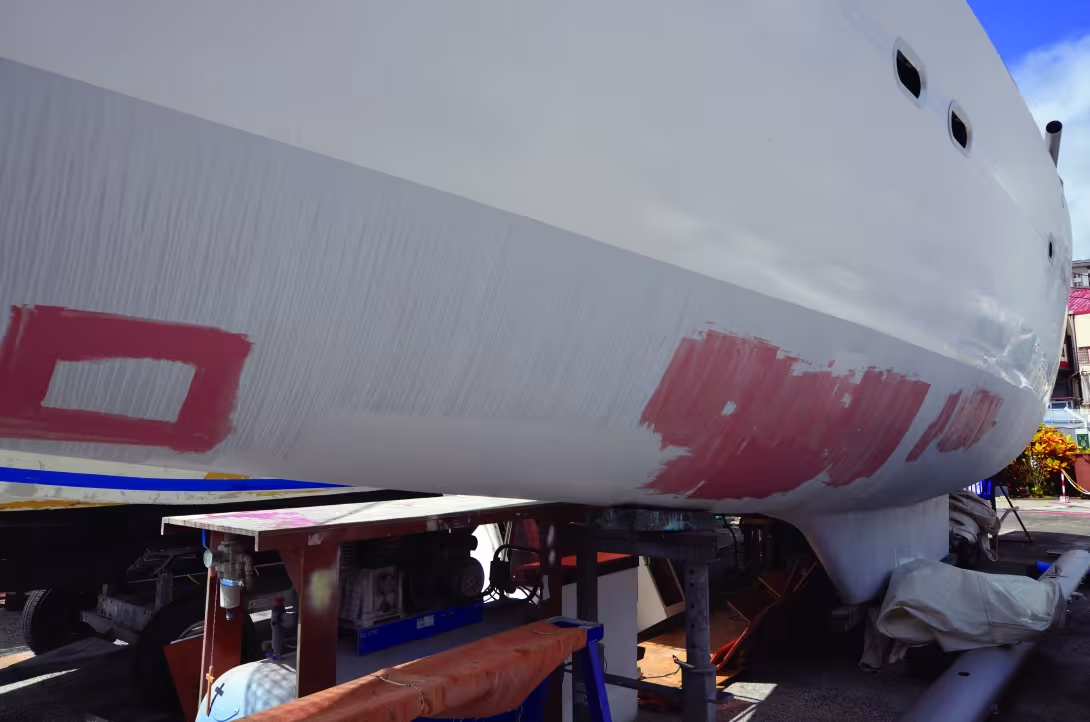


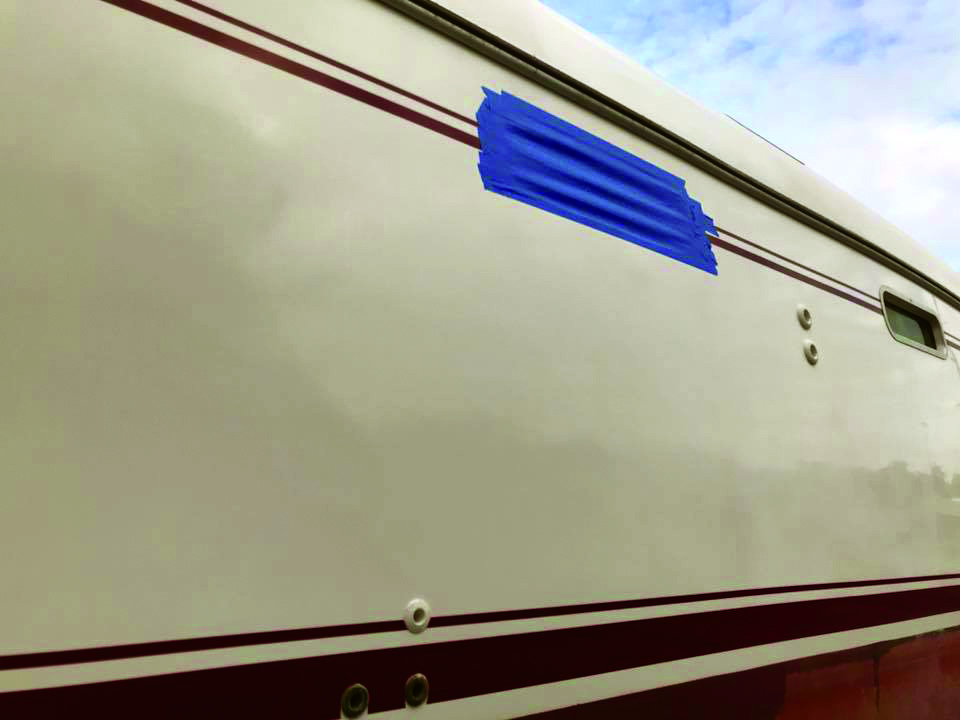
Things always happen when you least expect them. It’s winter and you’re on the slopes: after a good day’s skiing or snowboarding, you’re listening distractedly to the news. What's the top story of the day? A major storm has hit the home port of your multihull. Impossible to intervene; you’re hundreds of miles away - or even more. Back home, your multihull is ranging up and down on the dock: fiberglass will surely be ripped to shreds. Major repairs are required, painting of the entire side one hull needs to be redone. Estimates can easily reach 8 or 10,000 dollars. In short, the year hasn’t started well. I know what I'm talking about here, this happened to me! Are you insured for this loss? A little late to ask the question, you might say. However, this kind of event happens more often than we think and even more so when we sail a lot. Who has never experienced a collision due to a dragging anchor or simply by maneuvering in port? The consequences are often benign, but sometimes more unfortunate.
Why get insurance?
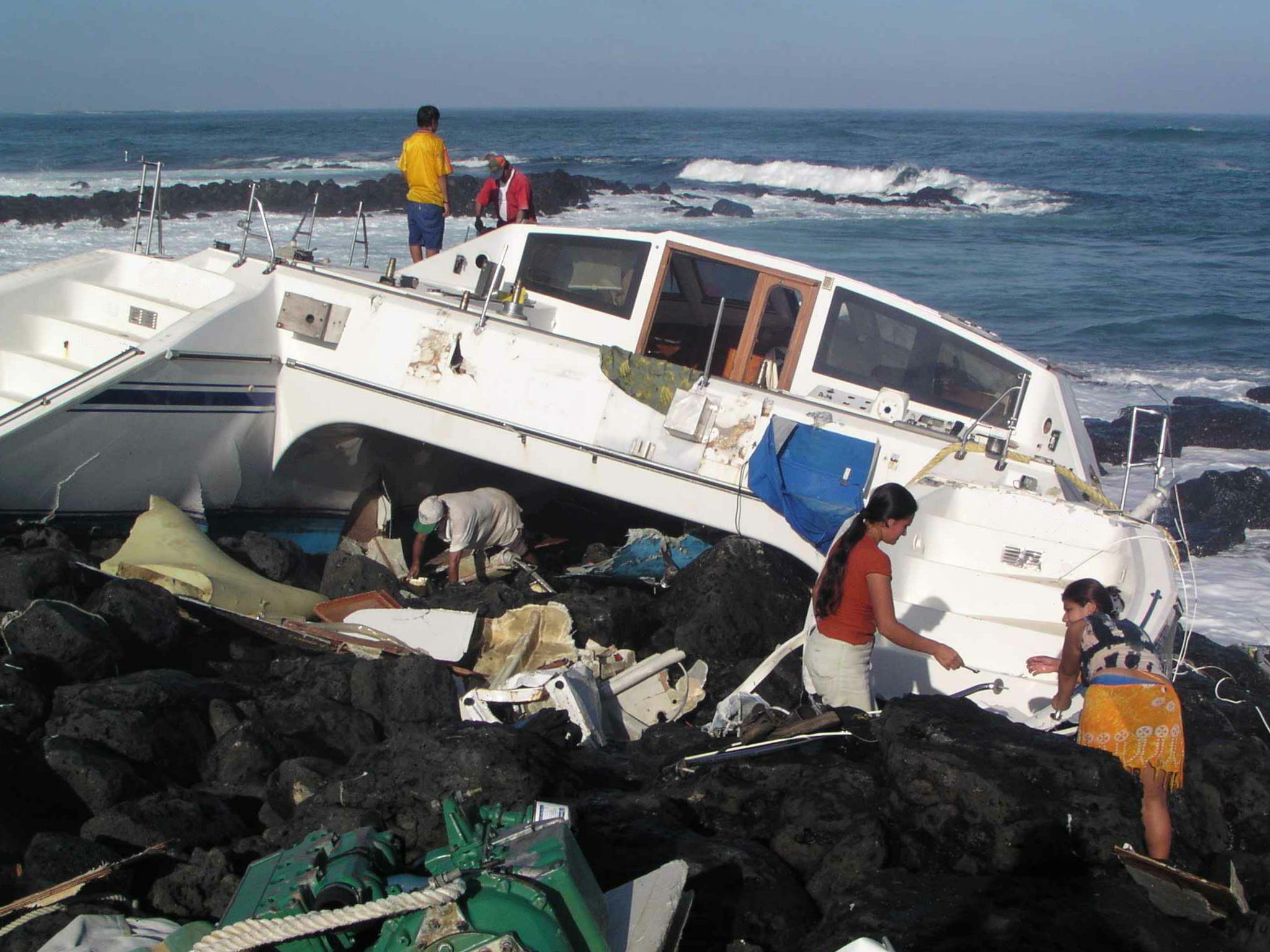
In many countries, boat insurance isn’t required by law. However, just like with your car, your home liability insurance doesn’t cover you for your favorite activity, except maybe on a very small boat. On the other hand, in practice, in view of the risks that you may incur for other boaters, you will systematically be asked for a certificate of marine insurance if you wish to use a marina or a yacht harbor. Effectively insurance therefore does become mandatory. While a special boating liability policy can cover certain damage caused to third parties such as port infrastructure or another vessel, the risks don’t stop there. An accident can happen even in good weather on calm seas: a navigational error can lead to a boat taking on water, one of your passengers might slip and injure themselves falling. A boat insurance policy covers the passengers you carry. Coverage is far from being useless because the costs generated by an accident - injuries, hospitalization and medical costs - can rapidly become unaffordable. Not to mention the costs associated with the search and rescue of your crew or the skipper, or any repatriation costs, or towing charges in the event of going aground. And don’t forget the consequential intangible damage, such as financial damage. But that's not all: in view of the investment involved - a multihull is generally an item of high value - the insurance also covers the boat. Cases of perils of the sea (shipwreck, pillage or being boarded) are rare, but unfortunately can occur at any time, including during wintering and during transport. Also to be considered are the risks of theft and fire. In the case of a boat which is leased or credit-financed, insurance to cover these material damages, but also against total loss, will be required by the bank or lender. So, it’s impossible to do without it, and it’s better to study carefully what you will need to avoid unpleasant disappointments and choose the coverage that will best suit your program. But before that, let's take a look at the types of coverage generally offered by insurance companies.
A very wide range of cover
Two main types of cover are available. The basic civil liability covers compensation for damage caused to a third party, whether physical (injuries), material (damaged property) or non-material (financial damage and the cost of removing or destroying the wreck for which you could be held liable by the State, region or port following a shipwreck or grounding). To this, it is possible to add partial cover for theft of your equipment or personal effects: dinghy, liferaft or sailing clothing, or for total theft and fire. The second level concerns loss and damage insurance. In addition to what is provided for with the liability cover, this can compensate for material damage and loss following an accident, shipwreck, theft, fire, lightning or a natural disaster. It is commonly referred to as all-risk insurance, but there is a variant called multi-risk insurance. The first one covers any event except what is excluded. In this second case, everything is excluded except what is named in the contract. Careful... The difference here is important, because with the first case, it is up to the insurer to prove the exclusions while in the second case, it is up to the insured to demonstrate what is to be taken into account. According to one insurer, “When the incident occurs, for example a torn sail, it is always an open discussion, and the all-risk policy is better for the insured who will not have the burden of proving the exclusion”. “In some cases, it can be complicated to provide evidence, when that evidence is now hundreds of fathoms below, or if you have hit a whale,” says another industry professional, ironically. In addition to these two main packages, several additional benefits are available. Personal risk insurance can cover you against your injuries and the consequences resulting from them. This may extend to the payment of a lump sum in the event of disability or death. Various ‘assistance’ formulas are also available, making it possible, for example, to be towed in the event of engine failure and even to obtain replacement of faulty mechanical parts. You can also be insured against attacks, acts of terrorism and piracy (see our article in this issue) or war, which are rarely provided for in standard insurance contracts.

Stricter access conditions
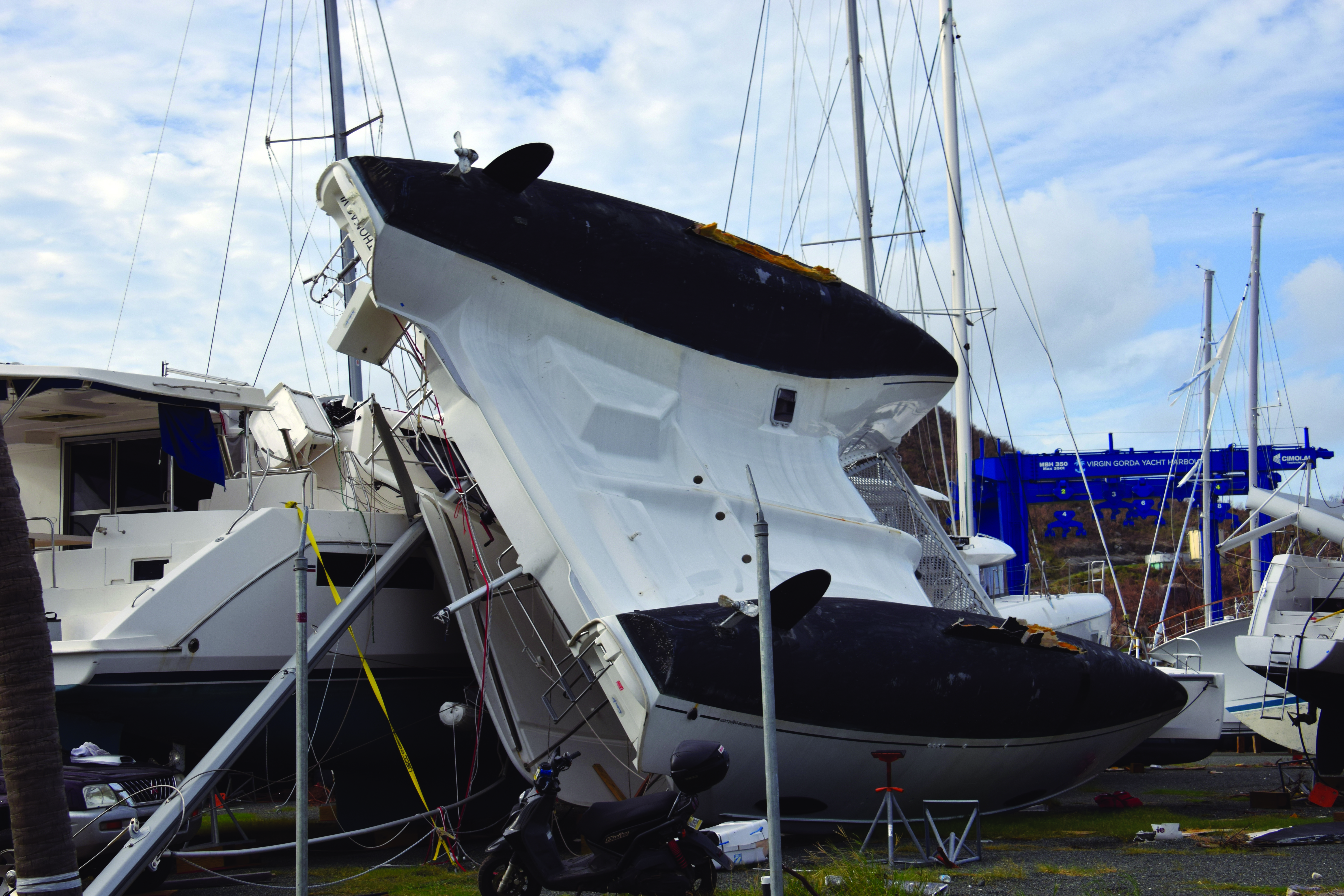
It is possible to insure against everything, but topping the claims charts are incidents involving dragging anchors. Close behind are groundings and collisions in port. Next come collisions at sea, storms and lightning, and vandalism. Theft, dismasting and even less, piracy, the sinking multihull or hurricanes are finally very rare. These are cases that are included in standard contracts, except for piracy and acts of war, but they are far from common. However, it’s impossible to ignore the climatic events of the last two years. As for insurance, there is a before and an after Irma (see inset). The extent of the damage, resulting in the withdrawal of many insurance companies from the yachting market, has led to a dramatic increase in underwriting and coverage conditions. The remaining specialized companies and brokers, which are necessarily fewer in number, have redesigned their offers in order to limit the risks to a reasonable level. In some countries, the law requires cover for cyclone risks. In the West Indies, for example, there’s the possibility of being covered outside the hurricane season, which runs from June to November, provided you are on board. At other times, your multihull will need to be placed ashore, with special arrangements (see inset). The questionnaires to be completed to obtain an estimate are more precise and take into account many parameters. Insuring an older boat or all-carbon model, a solo transatlantic crossing boat, or for a new convert to multihulls, is no longer necessarily a question of cost – these kind of requests may result in a pure and simple refusal by the company.
Determine precisely your program
The skipper's experience has become an essential factor for insurers, as well as the nautical resume of the crew, the history of the multihull and the skipper’s history as an insured individual. Buyers coming from the monohull world, though they are welcomed with open arms by the manufacturers, don’t necessarily make the insurers smile. In this case, taking a skipper for a crossing and learning the basics on two or three hulls will be a decisive criterion. The same goes for an experienced couple who take their children to sea at a very young age - which makes it is similar to single-handing when the other half is on a bottle-feeding watch. The presence of one or two experienced crew members may see your file re-opened. The condition of the multihull and its equipment will be examined. For a boat over twenty years old or an amateur-built construction, the intervention of a marine surveyor will be a requirement. Particular attention is needed for ground tackle, bilge pump systems, engines and sails. Your navigation instruments and safety equipment will be inspected to determine your chances of getting out of a bad situation - or not getting into one in the first place. Far from being subjected to this interrogation as a constraint, the yachtsman should ultimately see it as an opportunity for a good preparation. The coherence of the project in relation to your abilities, and those of your multihull, will be decisive.
Have a good understanding of different sailing areas
Your nautical resume is just as important as the way you sail, or your program. For those who sail around the world, there will be particular attention paid to your sailing areas in relation to the time of year. Hanging out in the Indian Ocean from November through April, in the middle of the monsoon season, or wandering off the coast of West Africa is not likely to get you a discount on your premium. Similarly, if you sail very far from safe havens and boatyards for any possible repairs, your quote will be affected. The seriousness of your program and your follow-up will be an asset to discuss with your insurer. And that's all the better, because it's up to the skipper to understand the risks of each stage of his journey. There are of course higher risk areas: they are well documented according to the season, current events or simply their location on the globe. Some areas may therefore be excluded from coverage. Many companies set northern (beginning of the Arctic Circle) and southern (tip of South America) boundaries, including in “worldwide” cover. There may also be an impact of jurisdiction: insurance contracts that differ widely from one country to another may result in the exclusion of certain countries while the risk of claims is low.
Who should I contact?
Insurance is a global market: you can go anywhere you want from the moment the company has an affiliation number corresponding to the flag of your multihull. In practice, the flag, place of residence and sailing area are what’s taken into account. There are of course many online comparison sites; but for a rather complex boat insurance, we can only recommend that you contact a professional. Whatever you do, the simulations will automatically send you back to a professional anyway. Whether it’s an insurance agent representing a company or a broker who has the option of dealing with several service providers, the most important thing is to deal with a real yachting specialist. He or she can advise you effectively on what you need to do to minimize the risk. With regard to the preparation of the boat and crew, he or she can advise you on the installation of equipment you’ll need in more dangerous regions. If you want to take part in lots of many races and regattas, Pantaenius and Lloyds are very specialized in this field; these companies aren’t deterred by your carbon rig or Kevlar® sails. While some companies have withdrawn from the Caribbean following recent hurricanes, some brokers have an office on site to facilitate customer follow-up. For non-US owners, in the case of navigating or making an extended stay in waters under US jurisdiction, it’s advisable to seek a well-represented local company or agency. The uses, especially in the event of disputes, are different there. For this reason, there may be a limit to the coverage ceiling in these areas. Finally, when it comes to making any major repairs, the knowledge of competent boatyards and a network of professionals capable of identifying them is also to be taken into consideration. The experience of marine surveyors is also important - in some countries, unlike automotive experts, they are not sworn officials.
Indemnity, a question of value
While in the case of a civil liability, the terms of compensation for repairs to third parties are most often calculated on the value of the damage caused without the consideration of condition, this is not the case for all-risks insurance. There are several possibilities to define, at the start of the contract, the basic value on which your reimbursements are calculated in the event of a total loss. 1) Replacement value: the purchase value of your boat up to its maximum 6 years of age. 2) The increased value: the value of your boat on the day of the loss, according to the surveyor, increased by an amount to be determined with a maximum ceiling. 3) The agreed value: the value of your boat determined by a surveyor at the time of subscription to the contract, with a time limit. 4) Economic or market value: the value of your boat on the day of the loss according to the surveyor’s report. Wreck removal costs are covered on the basis of a percentage of the market value. As far as partial losses are concerned, reimbursements are made either on the basis of replacement value or with a condition clause applied, and this now represents 90% of cases.
So, what does it cost?
What sort of premium should we expect after the major climatic events of the past two years? We asked the question for an all-risks insurance cover on the basis of a new catamaran worth €700,000 and another over ten years old worth €420,000. To properly measure the consequences of the area covered, we obtained an estimate for Europe and another for worldwide, with the few restrictions we have discussed above. The first thing to note is, despite its almost lower half value, the second-hand catamaran will have to pay an annual premium 10% higher than the new one - it stands at €3,650 for the European zone. This is due to increased risk of breakage on older boats - while repairs cost much the same as they would on new ones. When you move to the worldwide zone, the prices are much more substantial. A premium of €9,290 is to be expected for a new boat, while that of the older one will reach €11,400. These rates take into account a high level of experience, without any unfortunate history, a deductible of €3,000, decreasing each year, and the application of an obsolescence rate for consumable parts such as propellers, sails, tender and batteries. For the new value example, variations can be found, depending on the company. For example, the value of a new boat is maintained for the first two years and then there follows a sliding scale of up to 50% after 6 years. It’s also possible to use the amount of the deductible to lower the rate (a little). Ultimately, the owner's experience, the reputation for the quality of the multihull itself and the accuracy of the contract with a view to the risks involved can result in a difference of 10 to 20% in the amount of the annual premium.
Irma: a hurricane in the Caribbean, but a tsunami in the insurance business
With windspeeds of almost a hundred and eighty miles an hour, Irma was the second most powerful hurricane to hit the North Atlantic. But as far as the amount of damage is concerned - around $67.8 billions - it tops the list... When such climatic phenomena hit densely populated areas, the consequences are disastrous for the inhabitants, but also for the companies because they are understandably already highly-insured places. For pleasure boating, in St Martin alone, more than a thousand boats were affected - a good half of them declared as wrecks. The victims have all been compensated, but the corporate losses are very high. 350 vessels in the Moorings-Sunsail fleet (including 175 which were a total loss) were withdrawn from operation; but the monthly payments had to continue to be paid. Irma's impact has therefore resulted in freefall results for insurance companies. AXA's statement is symbolic but sums up the current new situation well: “A world 4°C warmer is no longer insurable”. As a direct consequence, more than half of the companies withdrew from the yachting market because they were not specialized enough. Fewer offers, more risks: rates have increased by 30 to 50% and exclusions have increased. Among the insurers who have held their course, some have outright excluded multihulls whose home port is located in the West Indies. That particular company still provides for Atlantic and Round the World cover, with a temporary passage through the West Indies, but excludes staying too long. Those with offices locally are more vigilant with their members. On the positive side of this rather gloomy picture, brokers and agents have focused on prevention: guides to good behavior have been published. Hiding in a safe place with three anchors set and three lines run ashore are required at the slightest announcement of a tropical wave. Having someone on board is mandatory throughout the sailing period. Storage ashore becomes the rule during high-risk periods, but not under any conditions. Special cradles and land anchors are required. At the charter companies, the fleets must be strapped down ashore. In order to avoid any overturning of the catamarans - more susceptible than monohulls – The Moorings has built reinforced concrete platforms equipped with rings for securing lashings to for this very purpose. In the end, boaters who care about their multihulls can only be delighted.