

We saw in MW167 how to avoid injuries by wearing the right gear. Today we are talking about preventing the risk of falling overboard. It's not a subject that should be taken lightly: statistics show that falling overboard is a dangerous phenomenon since a good third of those who fall overboard don’t make it out alive. It should be pointed out that skippers supervising inexperienced crews are undoubtedly the most exposed to a fatal outcome. A more powerful wave, a delicate maneuver at the foot of the mast or on the headsails, an uncontrolled gybe, a slip on a wet deck... there are so many potential causes of falling overboard. It doesn't just happen to others. I know what I'm talking about because I've been over the side twice. Although I was able to get back to shore quickly and without much difficulty, that's far from always being the case. What are the techniques and behavior to adopt to avoid going overboard? What is the necessary equipment that you will need to avoid drowning or hypothermia? What sort of equipment will allow the person in the water to be spotted by the crew who are still on board?
We will not be talking here about man-overboard procedures, but rather the equipment that you will need to prevent or manage this type of emergency so that it ends well.
Above all, avoid falling overboard...
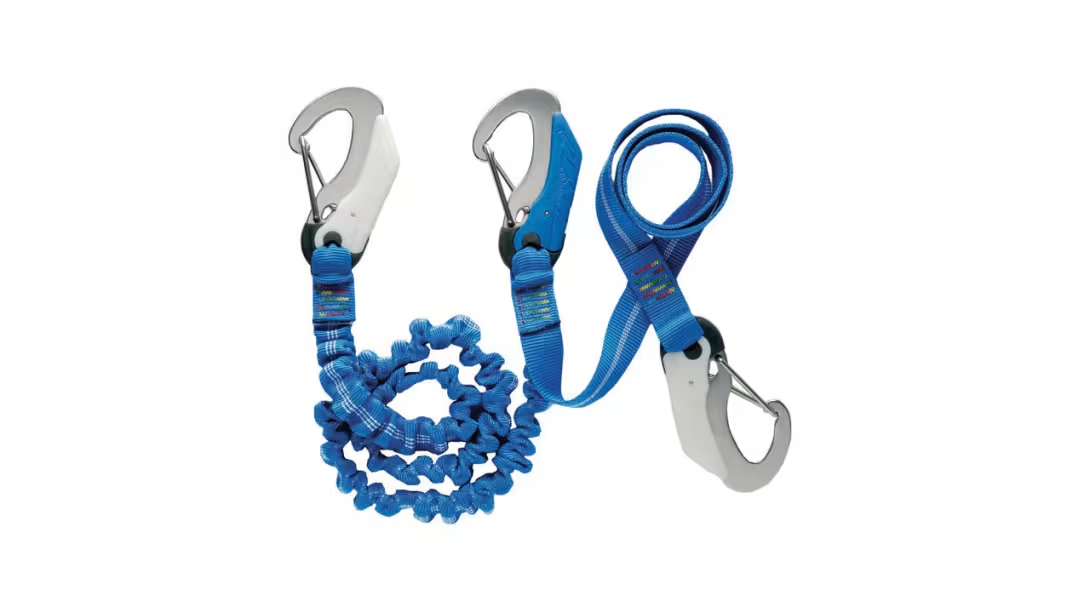
The first course of action is to wear non-slip footwear and to hold on to a handrail, a line or the rail when moving around the deck. If the sea is flat and the wind is light during the day, it is not essential to attach yourself. But at night, or if the wind is picking up and the sea is rough, as soon as you want to maneuver outside of the cockpit, it will be necessary to secure your movements as well as the workstation, where you will need both hands to maneuver. Pad-eyes and webbing are ideal for installing a lifeline that will allow you to reach the mast foot or the forward beam. Once you are there, hook onto a fixed pad-eye. The lanyard that you are going to fix between your harness and the boat should ideally consist of two strands, each ending with a double safety carabiner. One of two meters (6 feet) in length for travelling and one of one meter (3 feet) or less so you’re tied short. Ideally, this short lanyard should prevent you from falling over and keep you on board if a wave carries you away. Some sailing jackets are equipped with a harness; most often the lanyard is attached to the harness of your inflatable lifejacket. It can be useful to secure it with a quick release carabiner that can be opened under load, because if you fall or if you are tossed along the hull at the end of your lanyard, it can be useful to be able to release yourself so that you are not knocked unconscious.
Float and survive in the water
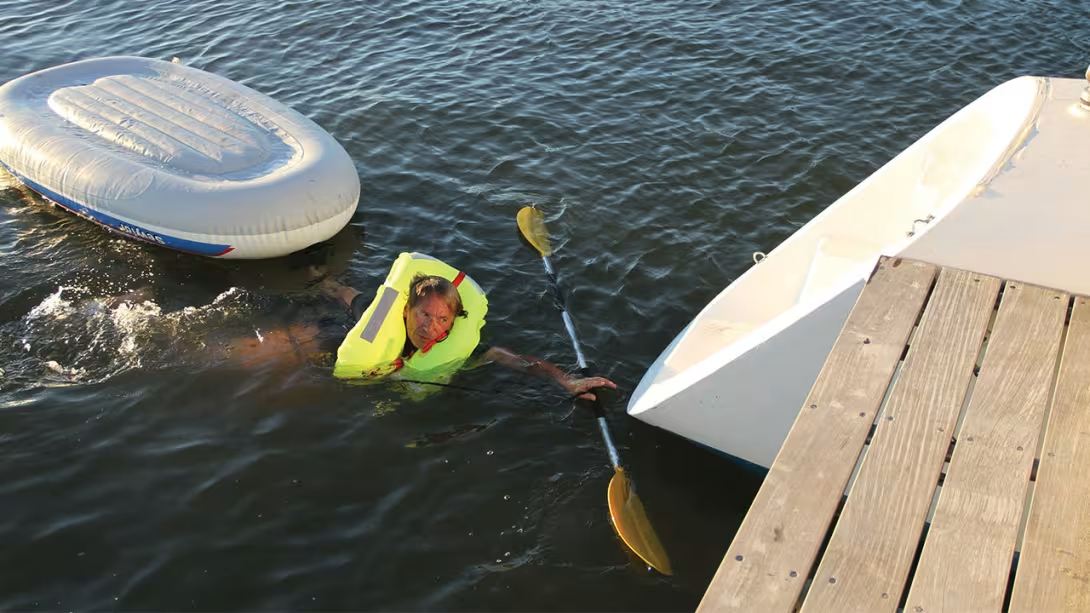
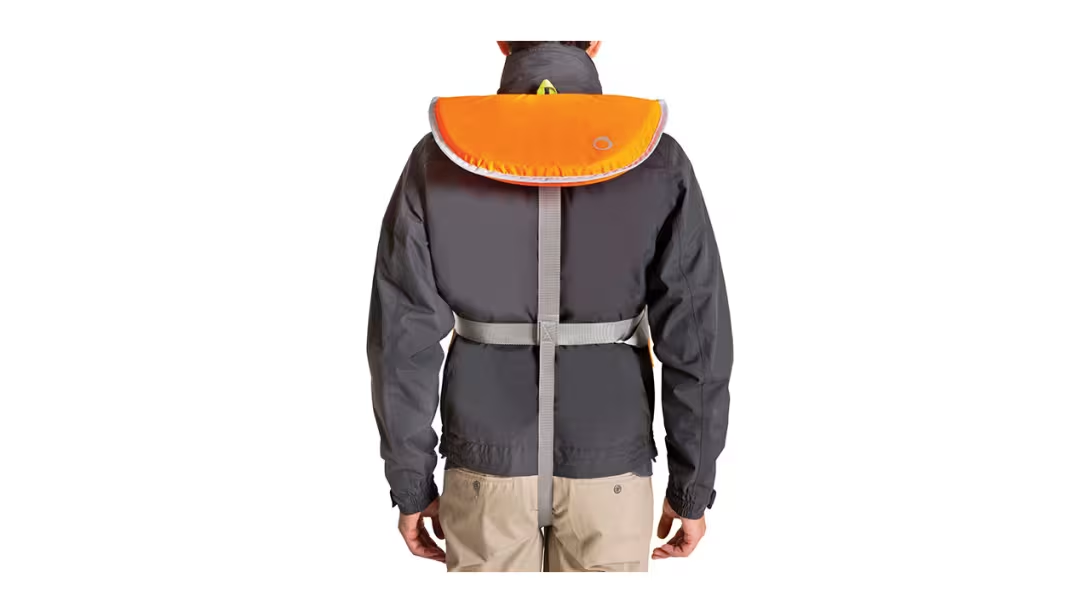
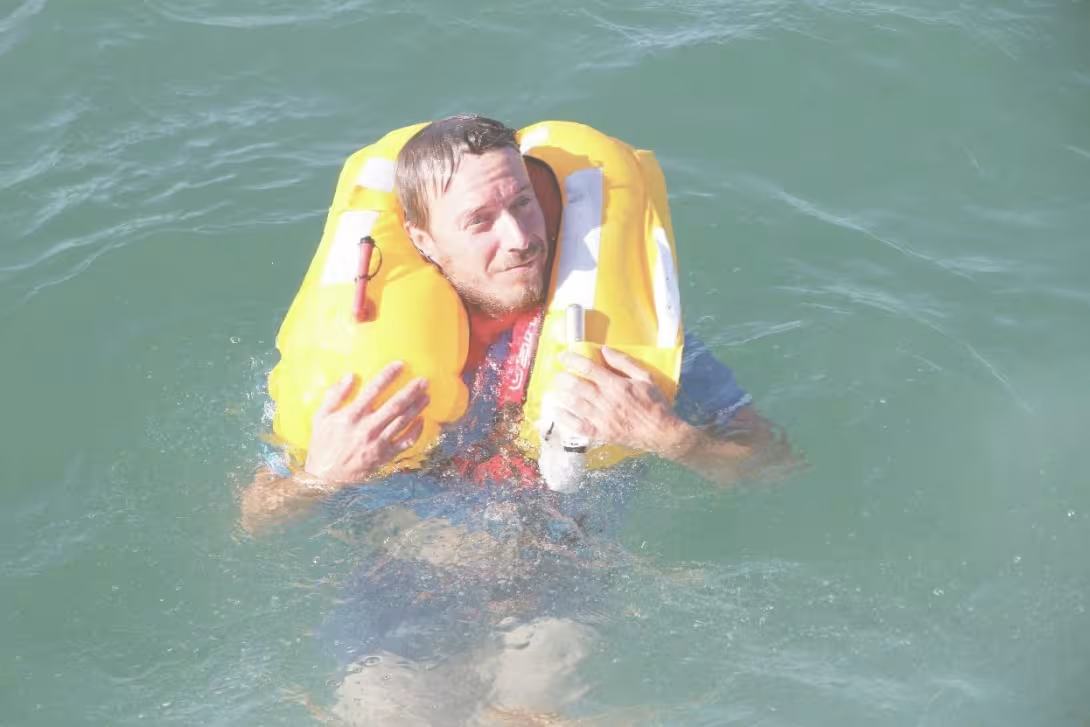
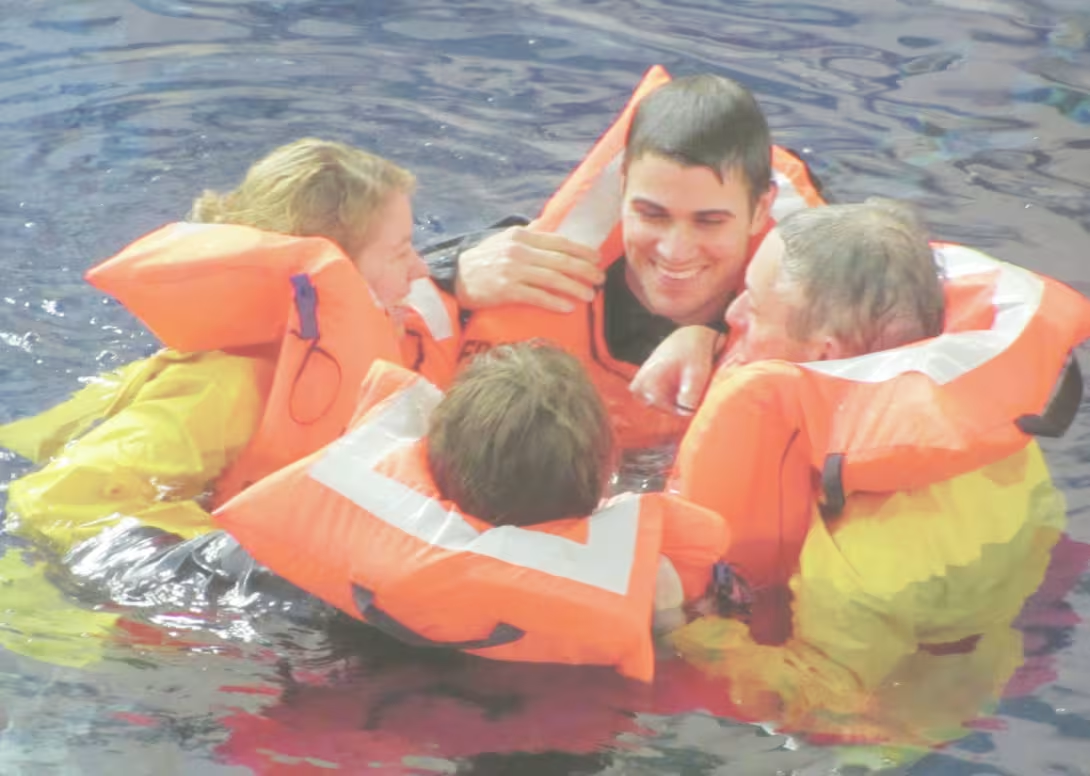
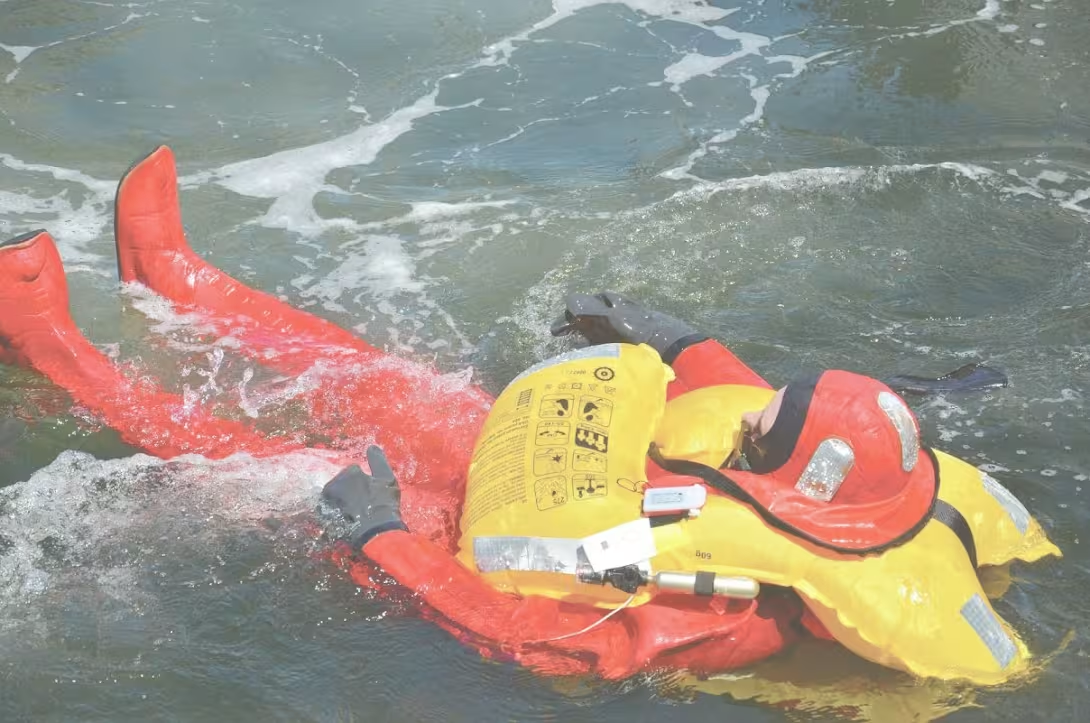
From the moment you are in the water, you are in great danger. That's why dressing not just for the weather but for the water temperature can save your life. Hypothermia happens two to four times faster depending on whether you are in a swimsuit or properly dressed. If your life expectancy is almost unlimited in water above 28°C (82°F), your survival time in 20°C (68°F) water drops to 8 hours if you are wearing clothes and only 2 hours if your skin is exposed. At 10°C (50°F), this drops to only a few minutes, whereas you can last an hour fully clothed. A 150 Newton lifejacket is mandatory on board and I would give preference to the 275 Newton automatic inflatable models. They do not hinder your movements on board and, if you are heavily clothed, keep your head above water in case you are unconscious after a shock or a reaction to the cold.
Staying visible and getting back on board
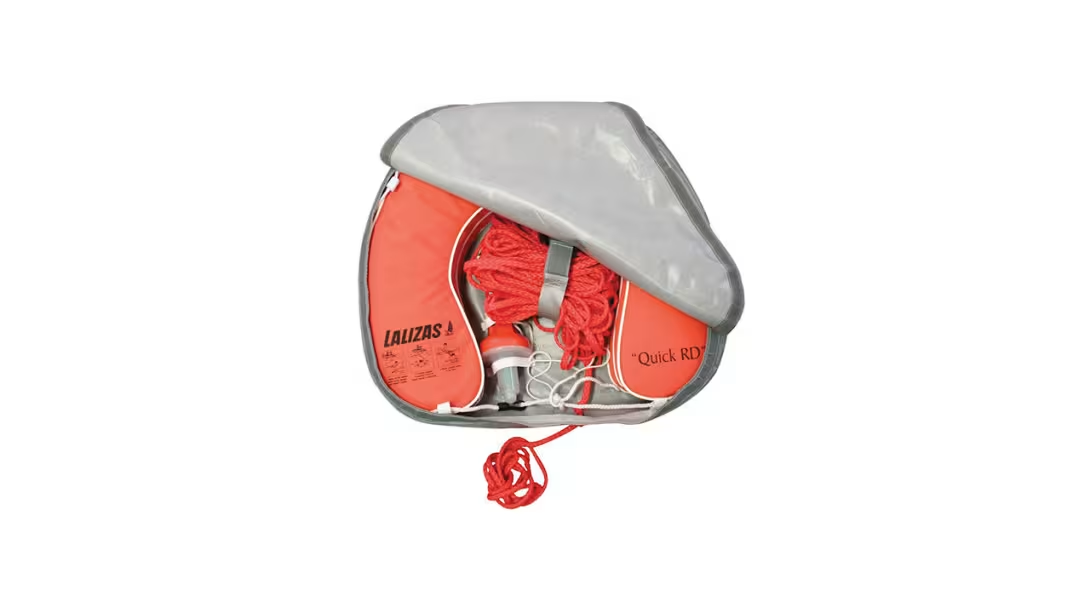
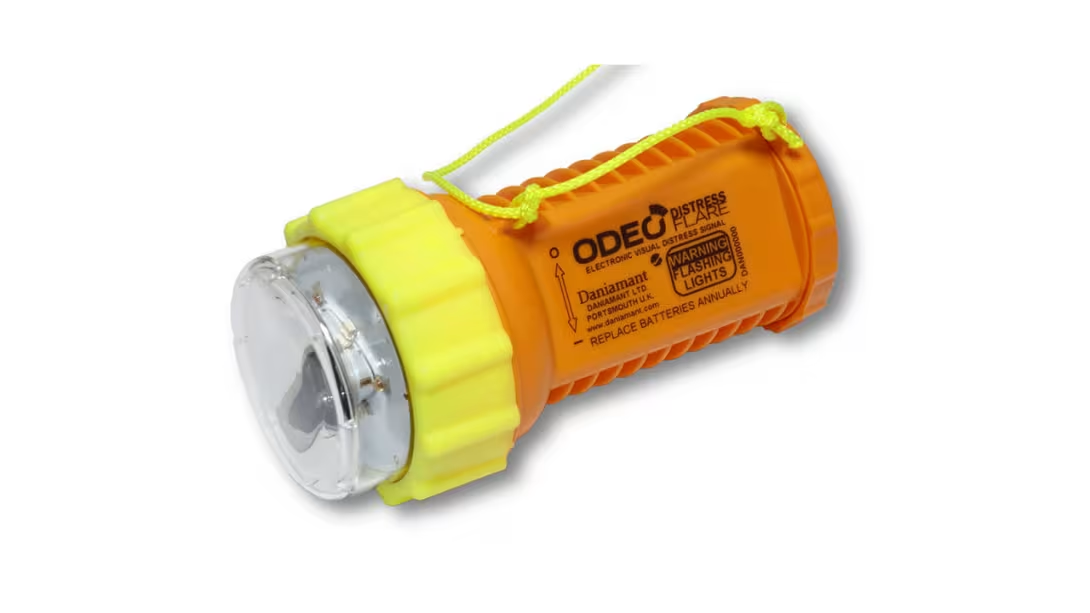
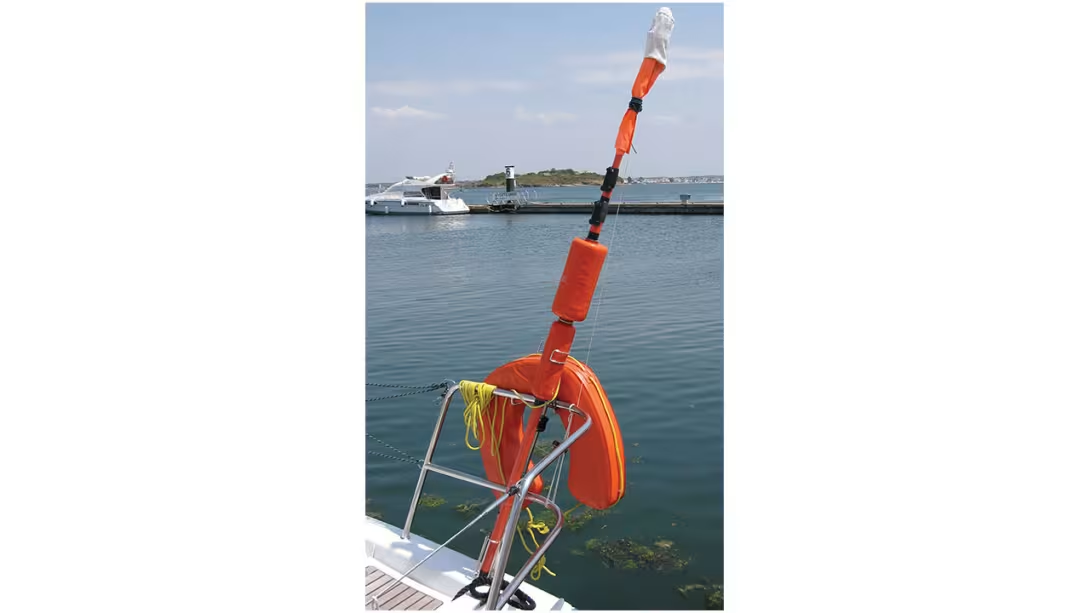
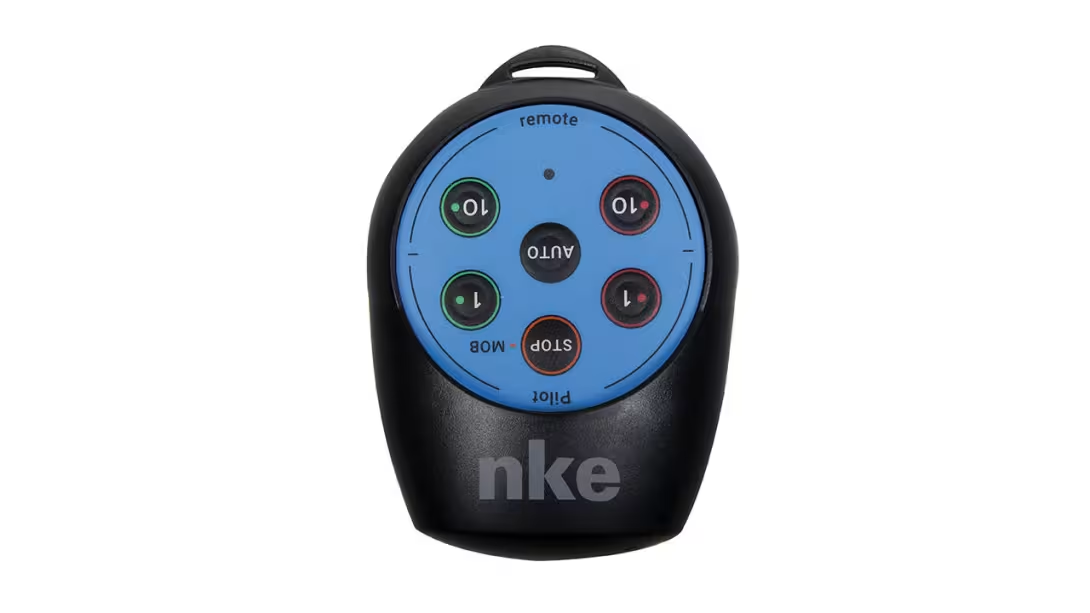
Having taken part in man-overboard exercises in the French Navy, I can say that it is extremely difficult to keep a head in the water within your line of vision. At a height of 15 meters (50’) in broad daylight on the bridge of a ship, we would sometimes lose sight of an 80 cm (32”) flag at a height of one meter (3’) above the water. This means that from the deck of a catamaran, two meters (6’) from the surface, the chances are almost non-existent. The advantages of a having a light fitted to your sailing jacket or, better still, on the lifevest itself is paramount - and not only at night. Flashlights and glow sticks are useful as long as the person in the water manages to activate them. A light on the vest that lights up automatically seems to be the safest option. On board, a lifebelt with a self-righting lifebuoy light is the minimum for low-risk coastal cruising. A dan-buoy is essential for offshore cruising or when the weather is bad. Most electronic and VHF navigational instruments have a MOB (Man Over Board) button that will record the position instantly, help you to return to the scene and/or initiate rescue. The other possibility is to equip yourself with a personal locator beacon. There are several types depending on your navigation program. For single-handed sailing, the standard protocol is to let the boat drag you along, but if the multihull is still underway, you won't be able to reach it. Some waterproof autopilot remote controls allow you to take action from the helm, but you have to be quick because they are only active over a distance of up to 100 meters (300’). If the multihull has drifted away, a Cospas Sarsat PLB (Personal Locator Beacon) will trigger the rescue from the global distress system. Once the person in the water has been found, the aim is to bring them back on board. For a solo sailor, a swim ladder on the sugarscoop is very useful. It is however, particularly difficult for a small crew to bring an unconscious person back on board. A block and tackle attached to the end of the boom will allow them to be hoisted with minimal effort.
