
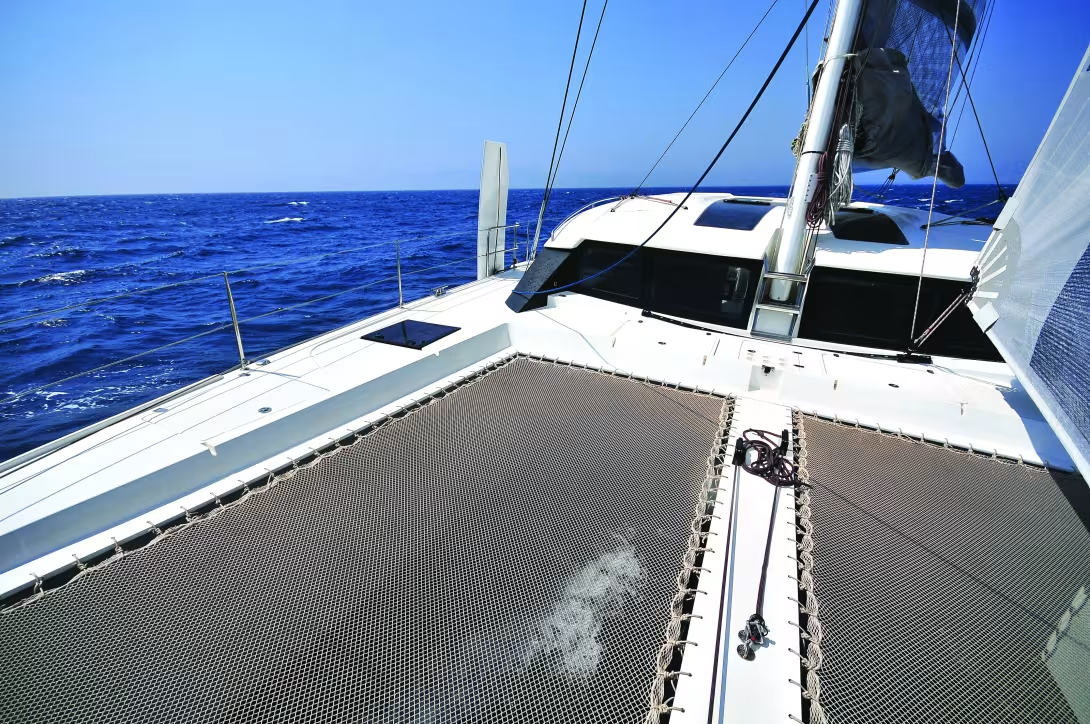
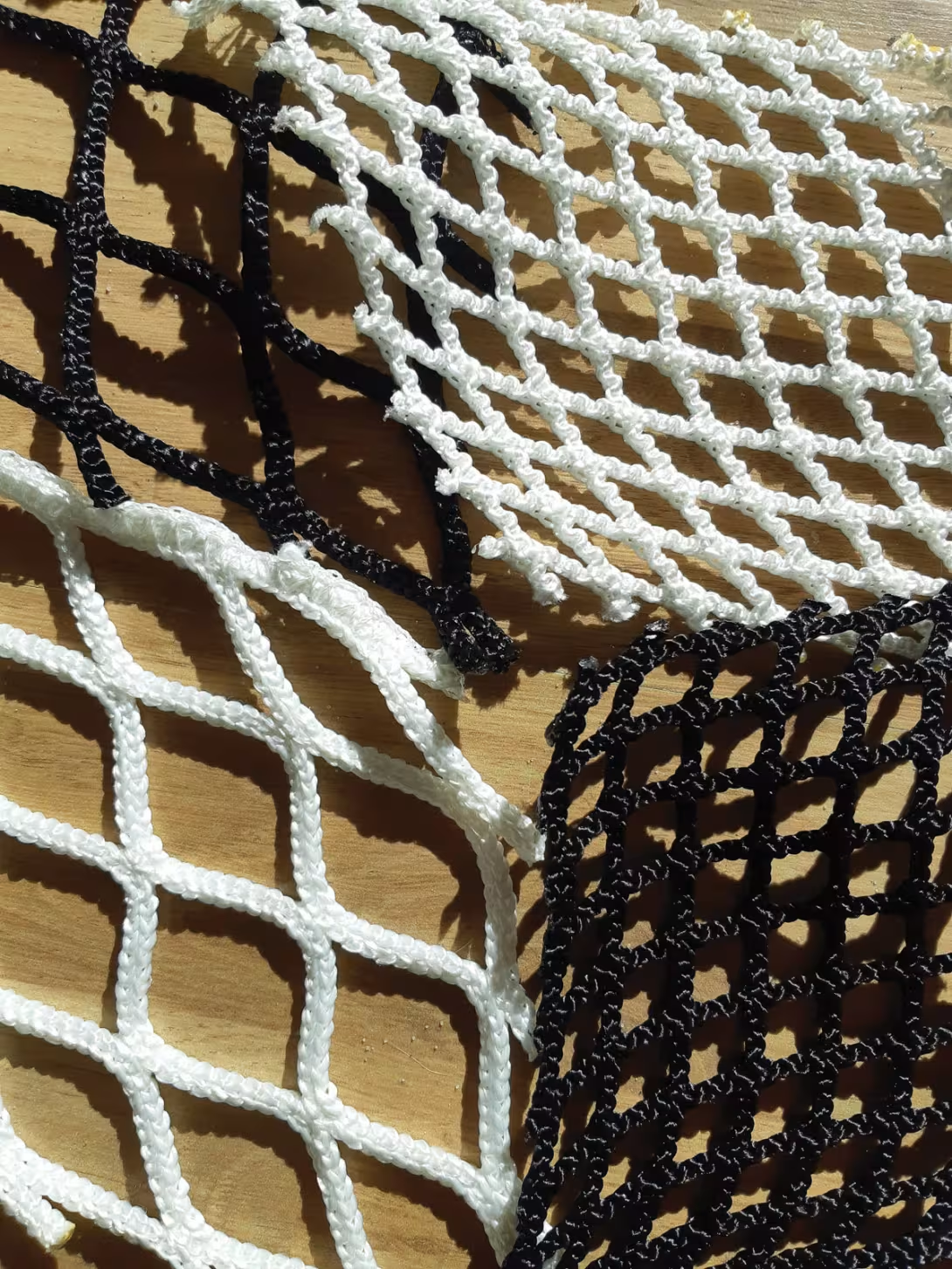

Almost all existing multihulls are equipped with trampolines. Either one or two, for catamarans depending on whether you’ve got a central beam, and two to six for trimarans. As far as the latest models are concerned, the rise of powercats and of the Bali range - which adopts a rigid deck right up to the bows - is changing things somewhat. But this doesn’t call into question the omnipresence of trampolines.
The average area of a trampoline
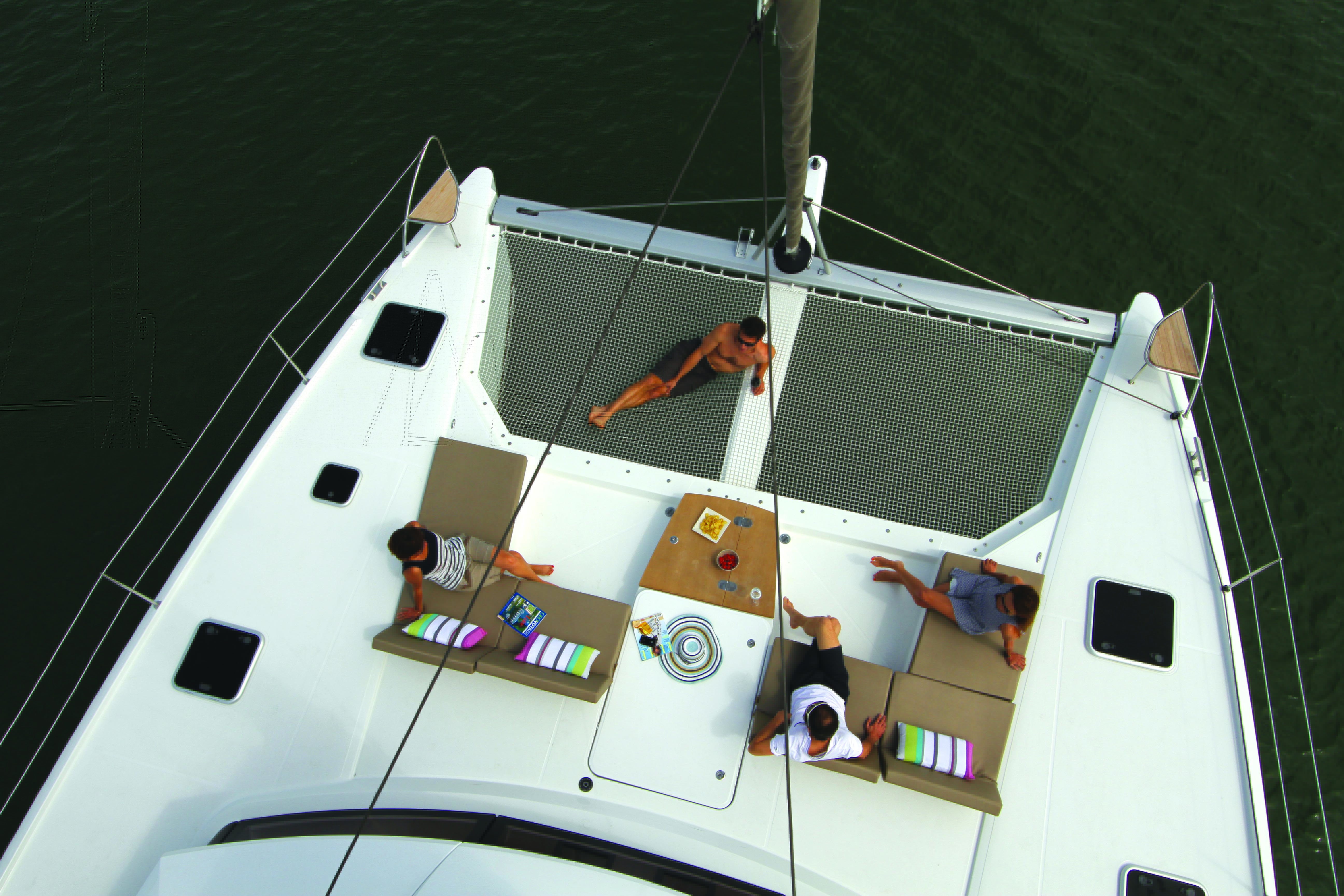
For a 40-foot catamaran, the trampoline area is 8 to 12 m² (85 to 130 sq ft). For a 45-footer, it’s more like 12 to 18 m² (130 to 190 sq ft), while a 50-footer, on the other hand, exploits 12 to 25 m² (130 to 270 sq ft). The difference in surface area is directly related to the footprint of the nacelle: the fastest - and lightest - multihulls generally have a maximum trampoline area. Conversely, trampolines on the most ‘comfortable’ multihulls have a smaller surface area.
On the various materials...
Polyester
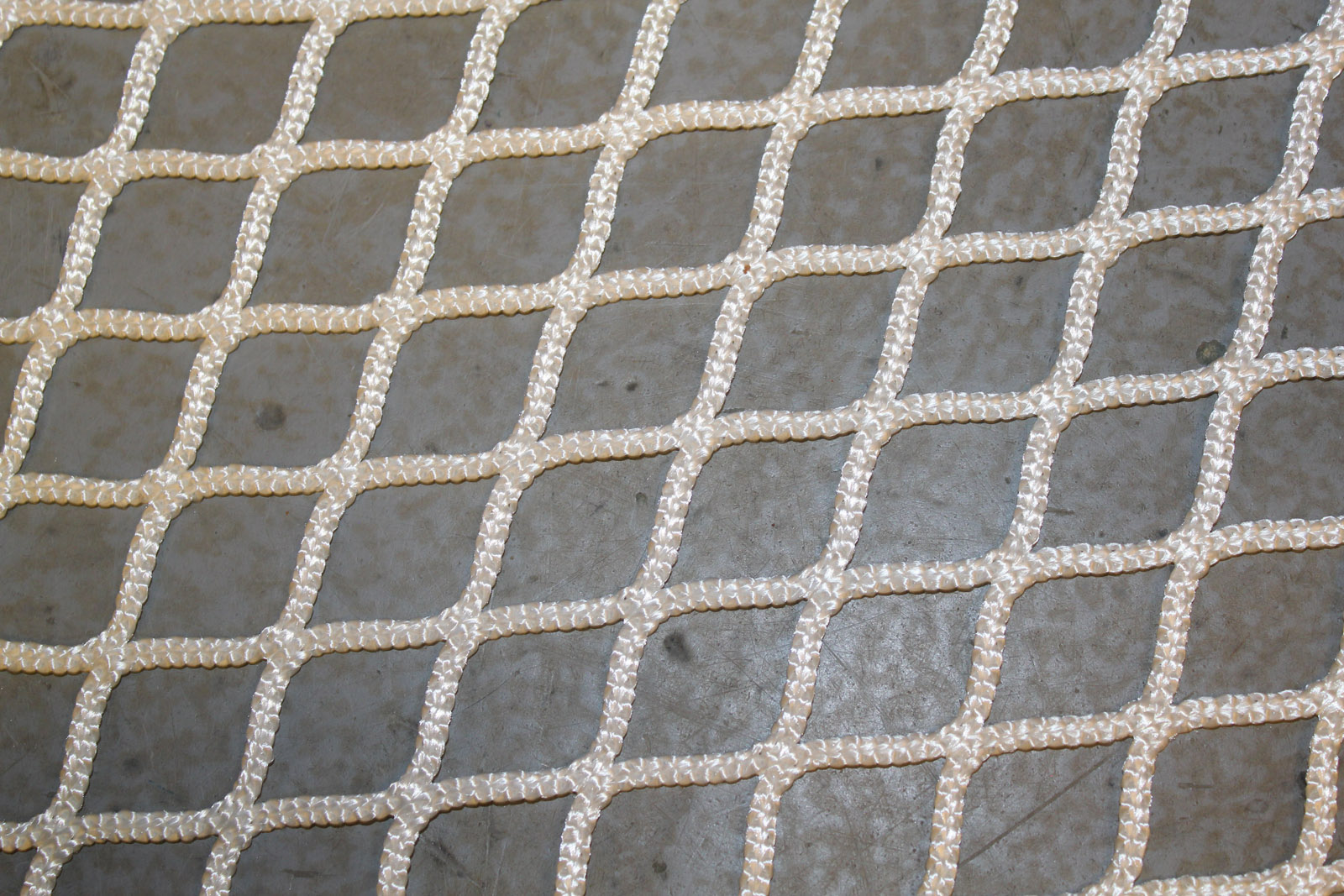
This is the material most commonly employed by the major manufacturers, but also as a replacement. The trampolines offered by Feelnets are available in 30 x 30 mm or 13 x 13 mm mesh (13/16” or ½”). The former is pleasant for relaxing on; it also offers a good passage for a wave to pass through, in case of heavy weather. This is what you’ll see with most charter companies around the world. The tighter mesh offers a little more comfort.
Technical specifications:
4 mm (3/16”) diameter cord for the 30 x 30 mm mesh;
2.5 mm (⅛”) diameter for the 13 x 13 mm mesh.
Strength: 200 kg/m² (4,750 lb/sq ft).
Material weight in 30 x 30 mm = 450 g/m² (13oz / sq yd).
Material weight in 13 x 13mm = 700 g/m² (21oz / sq yd).
Polyester is available in black or white and is protected by a high-strength UV treatment. The border is a 10 mm (⅜”) white whipped rope.
PVC Mesh
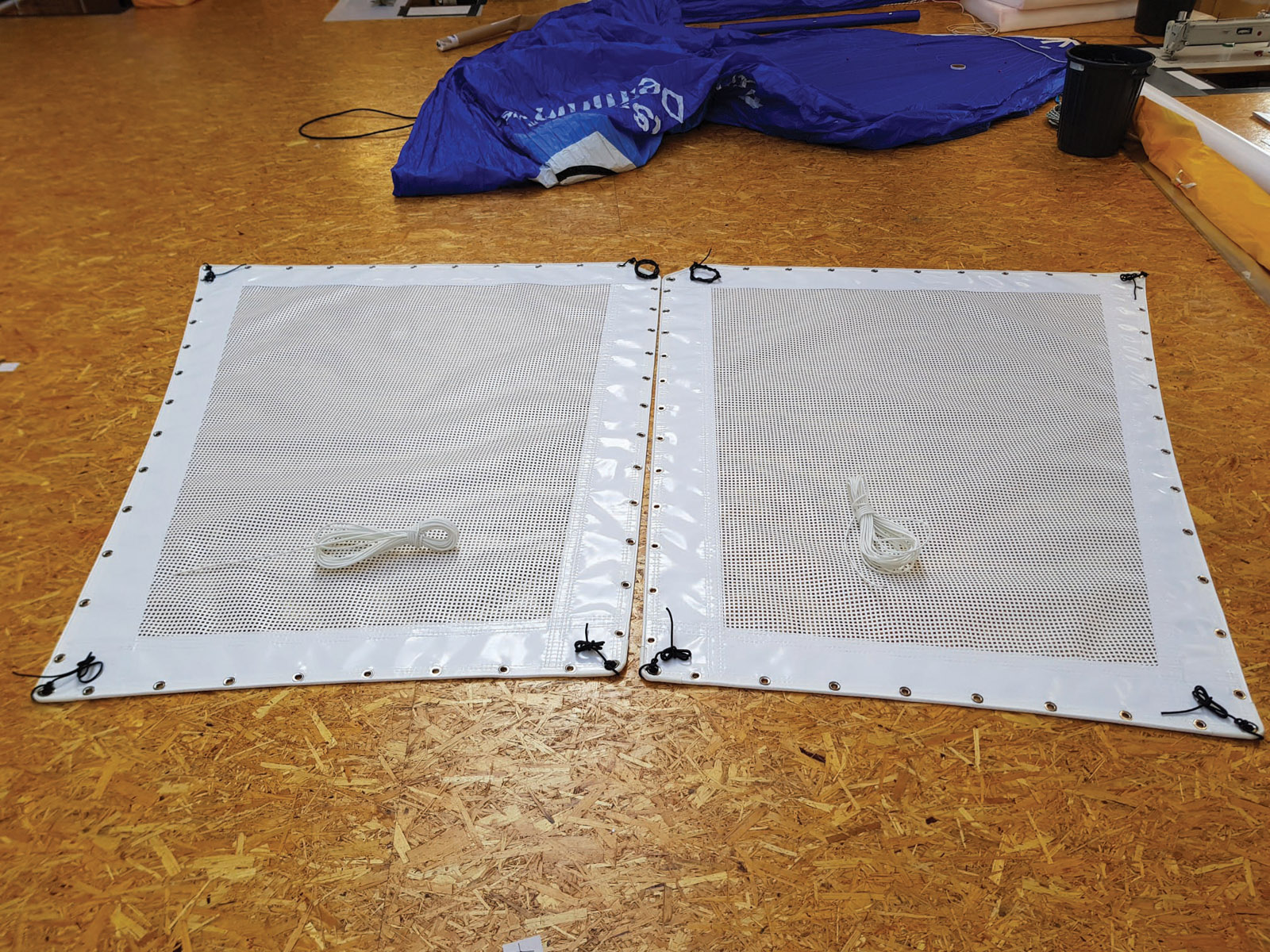
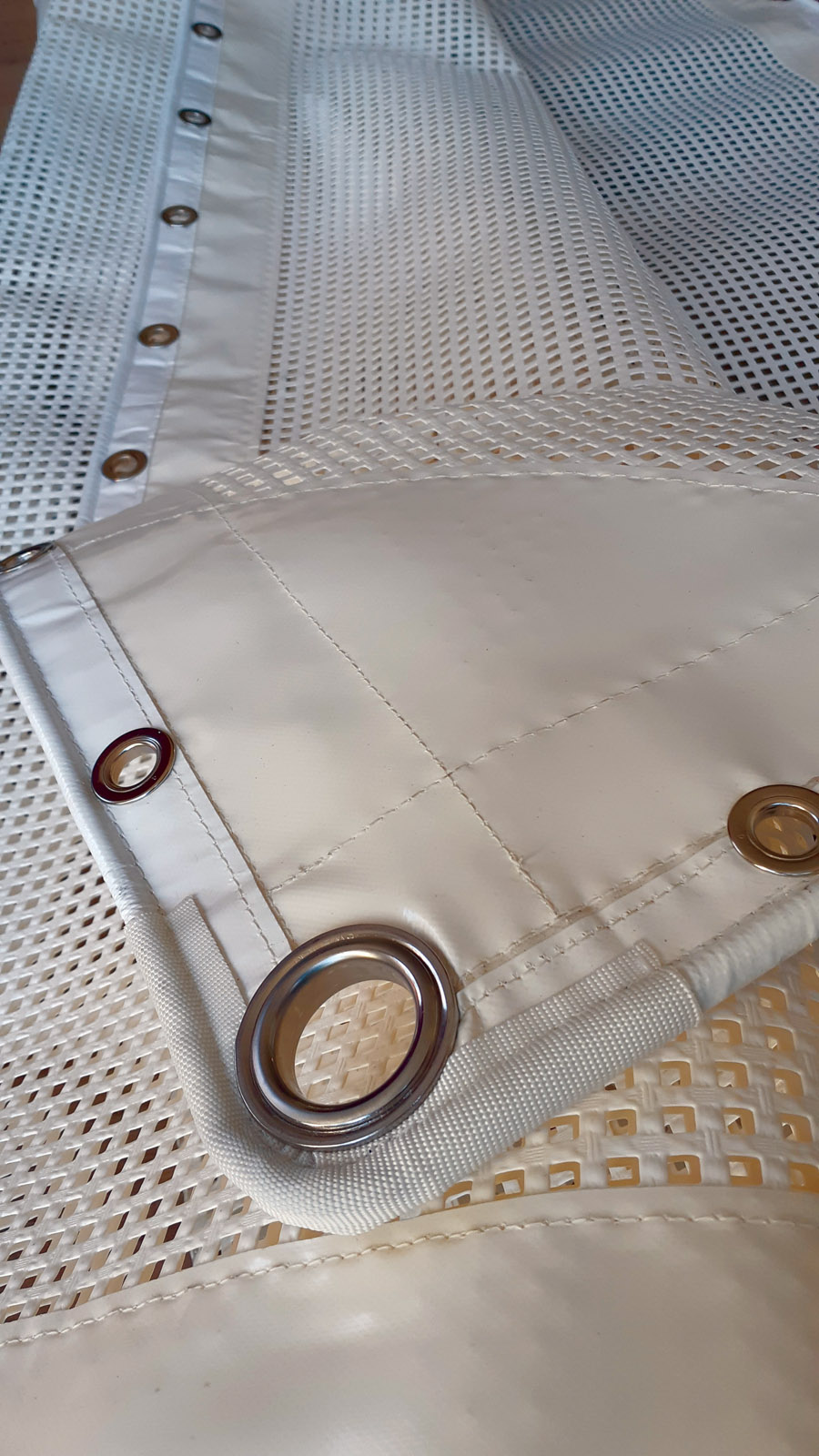
Extremely resistant, PVC is ideal for the marine environment. The edges are welded and sewn: the trampoline does not slacken. One element to take into account: the higher weight compared to polyester. It is possible to order grommets all around every 150 mm (6”). As an option, a sleeve can be made to take eyelets - recommended for larger trampolines.
Technical specifications:
(PVC Mesh Serge Ferrari 492 and 392)
Mesh size of the 492: 7 x 6.5 mm (9/32” x 1/4"), available in white.
Mesh size of the 392: 3 x 3 mm (⅛”x⅛”), available in black or white.
Resistance: 450 kg/m² (10,685 lb/sq ft).
Material weight: 1000 g/m² (29.5oz / sq yd) for the 492 and 820 g/m² (24.2oz / sq yd) for the 392
Dyneema
Extremely resistant, PVC is ideal for the marine environment. The edges are welded and sewn: the trampoline does not slacken. One element to take into account: the higher weight compared to polyester. It is possible to order grommets all around every 150 mm (6”). As an option, a sleeve can be made to take eyelets - recommended for larger trampolines.
Technical specifications:
(PVC Mesh Serge Ferrari 492 and 392)
Mesh size of the 492: 7 x 6.5 mm (9/32” x 1/4"), available in white.
Mesh size of the 392: 3 x 3 mm (⅛”x⅛”), available in black or white.
Resistance: 450 kg/m² (10,685 lb/sq ft).
Material weight: 1000 g/m² (29.5oz / sq yd) for the 492 and 820 g/m² (24.2oz / sq yd) for the 392
Life expectancy of a trampoline
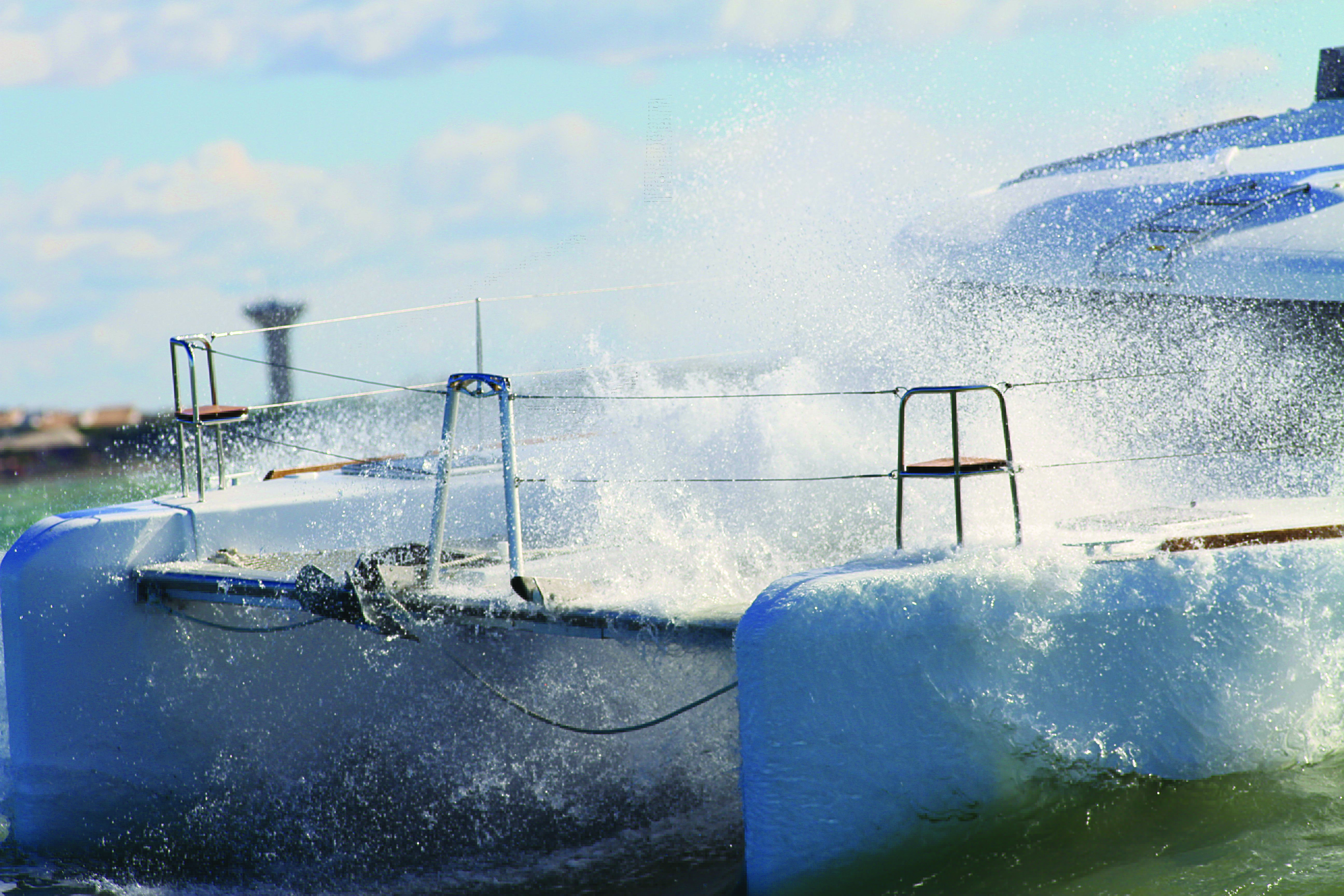
Polyester nets have an average lifespan of 5 to 6 years in the West Indies, Polynesia, Seychelles and other tropical waters. In more temperate latitudes, these trampolines can last an extra year. PVC mesh is more resistant: it remains in good condition for 10 to 12 years, even in the sunniest regions. The first signs of trampoline fatigue can be seen on the periphery of the net and more particularly on the headrope - the junction between the net and the rail. This is where the tension is at its greatest. For PVC trampolines, check the welds and make sure there are no tears in the material.
How is a trampoline made?
To facilitate taking dimensions, the manufacturers send you a standard drawing with the dimensions to be filled in. The measurements are taken from the hulls. For the manufacture of polyester or Dyneema nets, the manufacturer uses whipping machines. These allow the rope to be fixed to the periphery of the net. A marine yarn with anti-UV treatment is used. The process begins with the material being cut to the shape of the trampolines being made. The nets are pulled and stretched on the ground and then cut before being whipped. For PVC trampolines, PVC 900 g/m² (26oz / sq yd) is used for the borders and here, too, UV-resistant marine yarn is used. The trampolines are made using an HF welding machine with different electrode sizes depending on the size of the trampolines. The welds are solid in order to give a nice finish to the trampolines. The width of the borders varies according to the size of the trampoline being made.
The professional opinion:
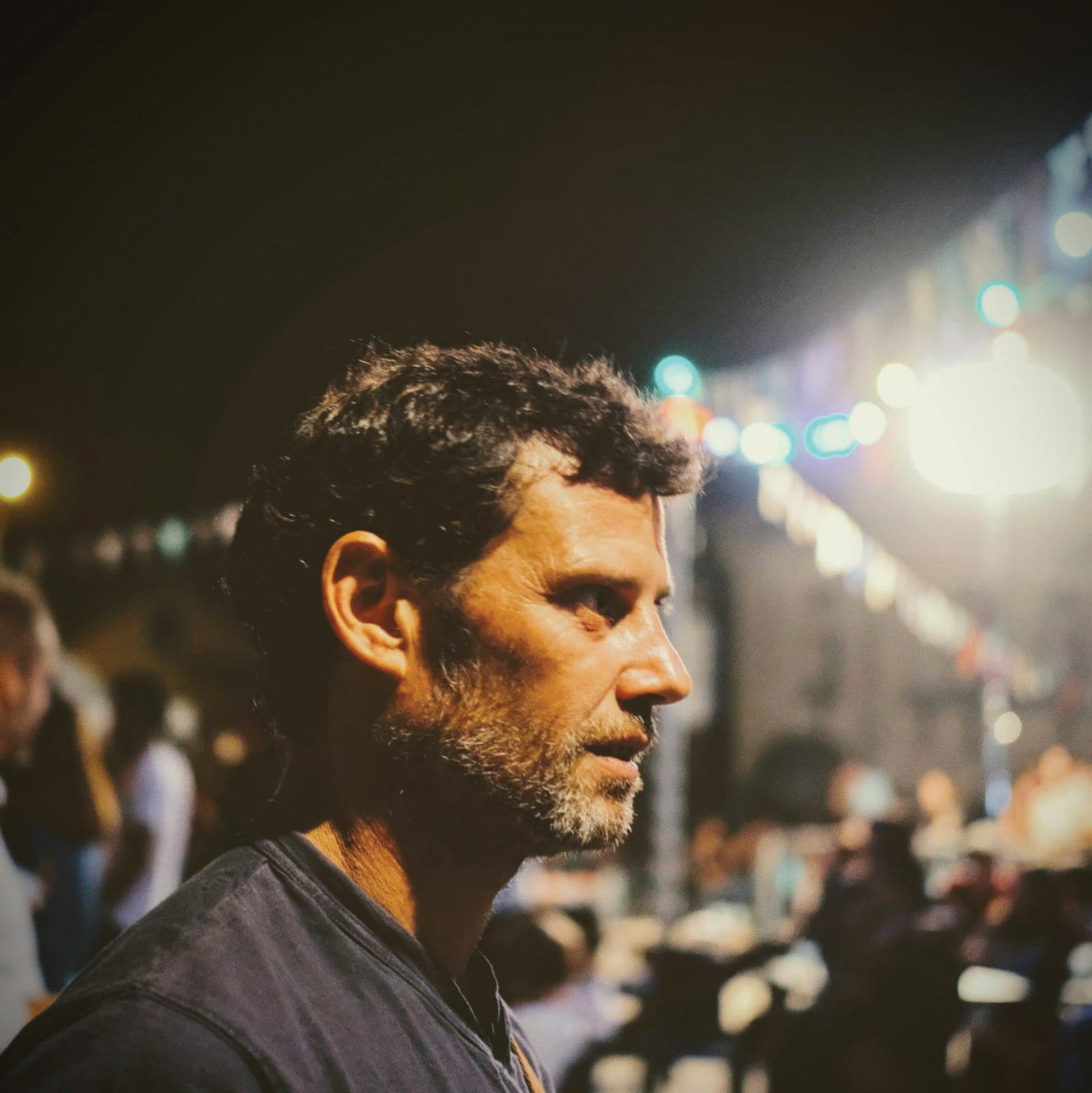
Frédéric du Rivau spent 15 years working with some of the largest yacht charter companies. He then joined France Trampoline before setting up his own company, Feelnets, in 2018.
“To set up a polyester trampoline, let the net soak in water for 24 hours and set it up wet. As it dries, the net will properly take its place. I advise to first fix the net by the four corners, then the middle of each side with small stuff to center it in the space, before starting the lacing and tensioning of the net. This is done naturally like a shoelace, ideally on the opposite side. You can also fix the net point by point - cut small 1.20 m (48”) lengths per fixing - or proceed with simple lacing - pass the line through the edge of the net and then through the fixing on the hull and so on, all around. The tension ropes are cut away as you go along. If your multihull is at anchor, the trick is to have two people, one in the dinghy and one above. It's much simpler to do it like this! The recommended rope for setting up the trampoline is 4 or 6 mm (5/32” x 1/4”).”
