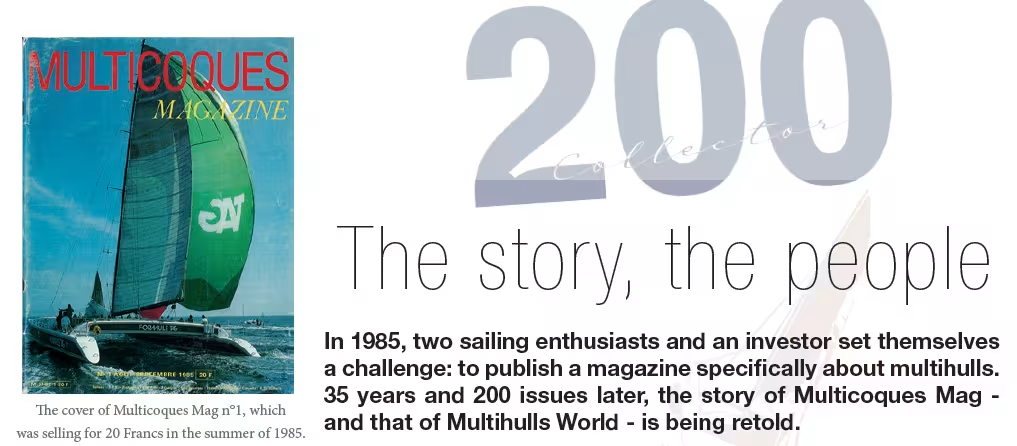
The summer of 1984. Two members of France’s Union Nationale des Multicoques (National Multihulls association) are writing the association’s latest newsletter. André Manchon is the owner of a Tornado, and Gilles Abeloos of a Victress 40 - Piver design. They’re almost done, when Gilles suggests to André that they ought to set up a more professional publication, along the lines of the British magazine Multihulls International, or the American Multihulls. The project starts to take shape: an agreement is reached with UNM to take on the title Multicoques Magazine, and the pair are supported by an investor, Jean Gravel. The adventure can begin:
“In May-June 1985, number 0 was produced in André’s kitchen, in his bungalow in Deuilla- Barre, near Paris”, recalls Gilles. “It was sent to the members of the UNM, to my clients in foreign magazines, to sports catamaran associations, to potential advertisers, to boat-builders... We received a few subscription orders and a few advertising contracts. Next thing was to get down to business and get started on issue number one. The problem: none of us has the slightest experience in producing a magazine, its publishing, its distribution, and so on. Faced with our total incompetence to produce a professional magazine worthy of the name, to get out of it, we call on a nautical photojournalist from the SIPA agency, Gilles Klein. He showed us how to set up the layout and content. Number 1, with one of his photos of Formule TAG on the cover, was also created in André’s kitchen, using scissors and glue sticks. Following an agreement with the Chamber of Commerce and Industry as a business start-up, André found an office to rent in Cergy-Pontoise, benefiting from a secretary, photocopier... all the essentials. Several issues were to be published from this new address. Gilles Klein, of course, but also Christian Février, Erik Lerouge, François Salle, Jean-Luc de Moras, Philippe de Gorostarzu, Charles Chiodi (Multihulls), Jack Heming (Multihull International), Dick Newick, Derek Kelsall, and I’m sure I’m forgetting some others, all took part in the launch of those early editions.”
These first issues of Multicoques Mag featured racing, beach-cat sailing and cruising. We discovered the presentation of the Bénéteau Blue 2 and the Catana 40. Boat tests – the Bourbon and Catana 40 - started in n°2 with the journalists making their first tacks and gybes as boat testers. Ever since, the magazine has closely followed the development of today’s biggest boat-builders, practically all of which were born in the 1980s. For the next edition, at the beginning of 1986, the editorial staff proposed a “Boat Show Special” edition to coincide with the Paris Boat Show, nowadays called Le Nautic. This special issue was to become our famous Buyer’s Guide, now published every December.
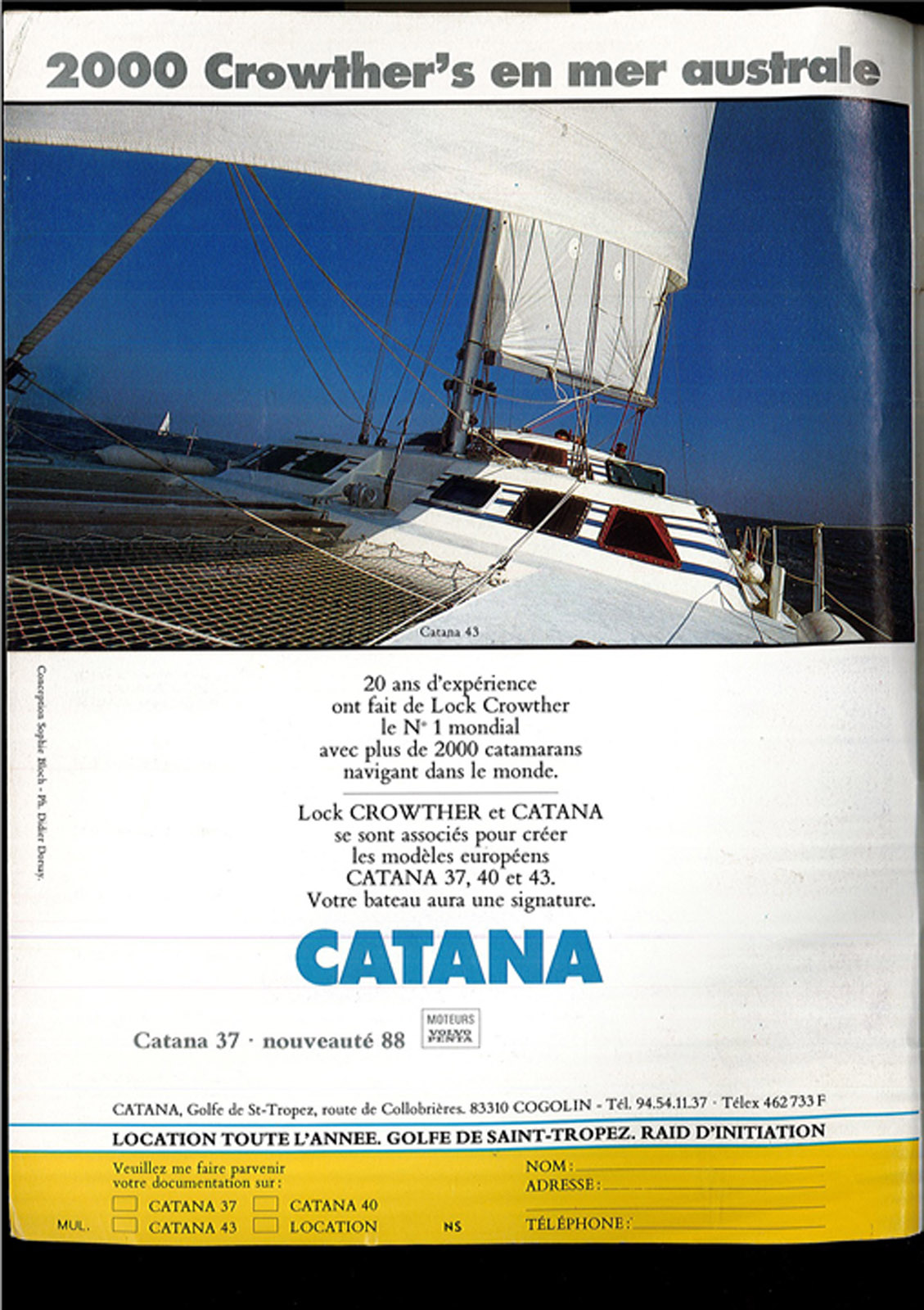 First Catana advert MM n°15, 1988. |
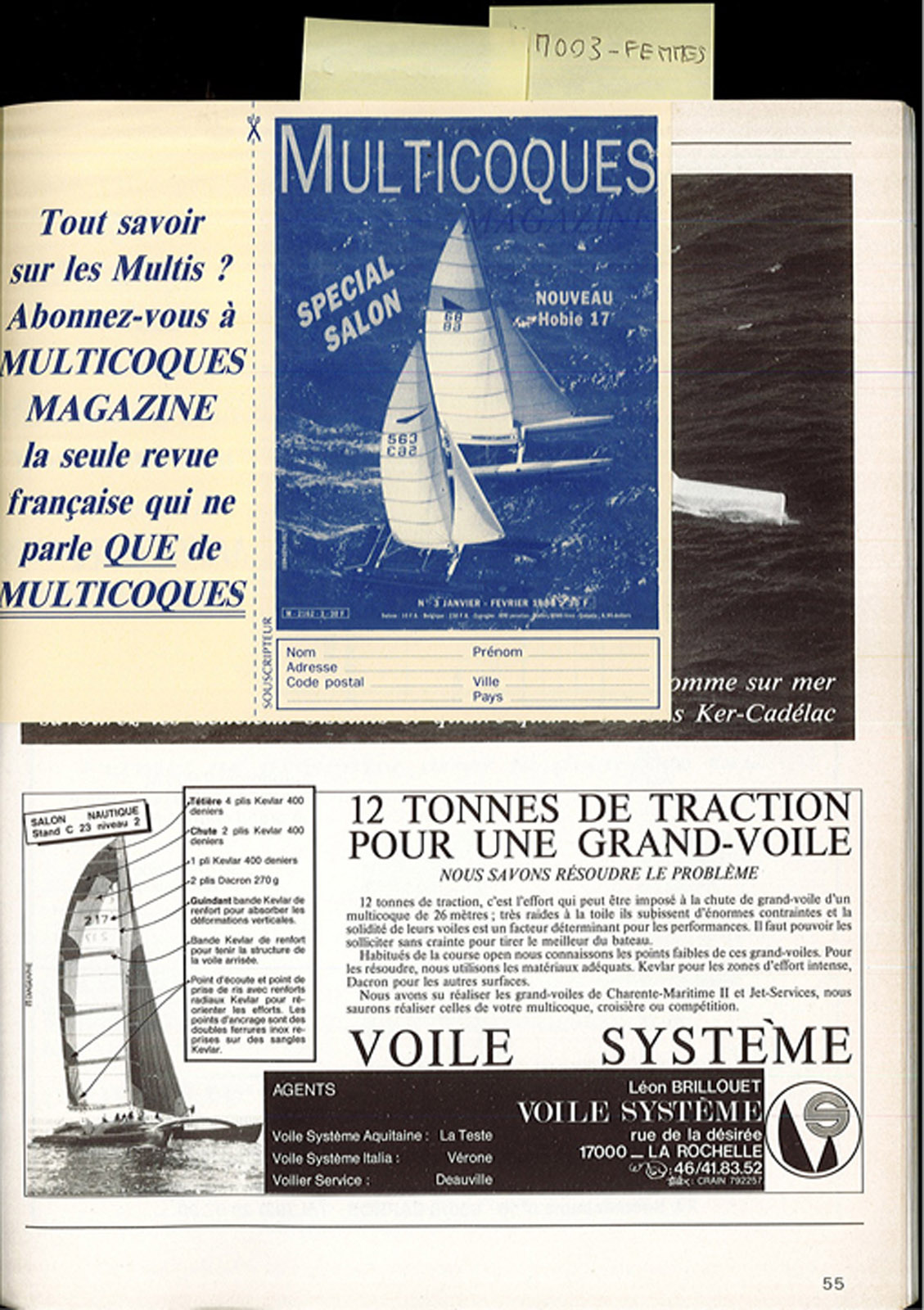 Subscription form in MM n°3, from 1986. |
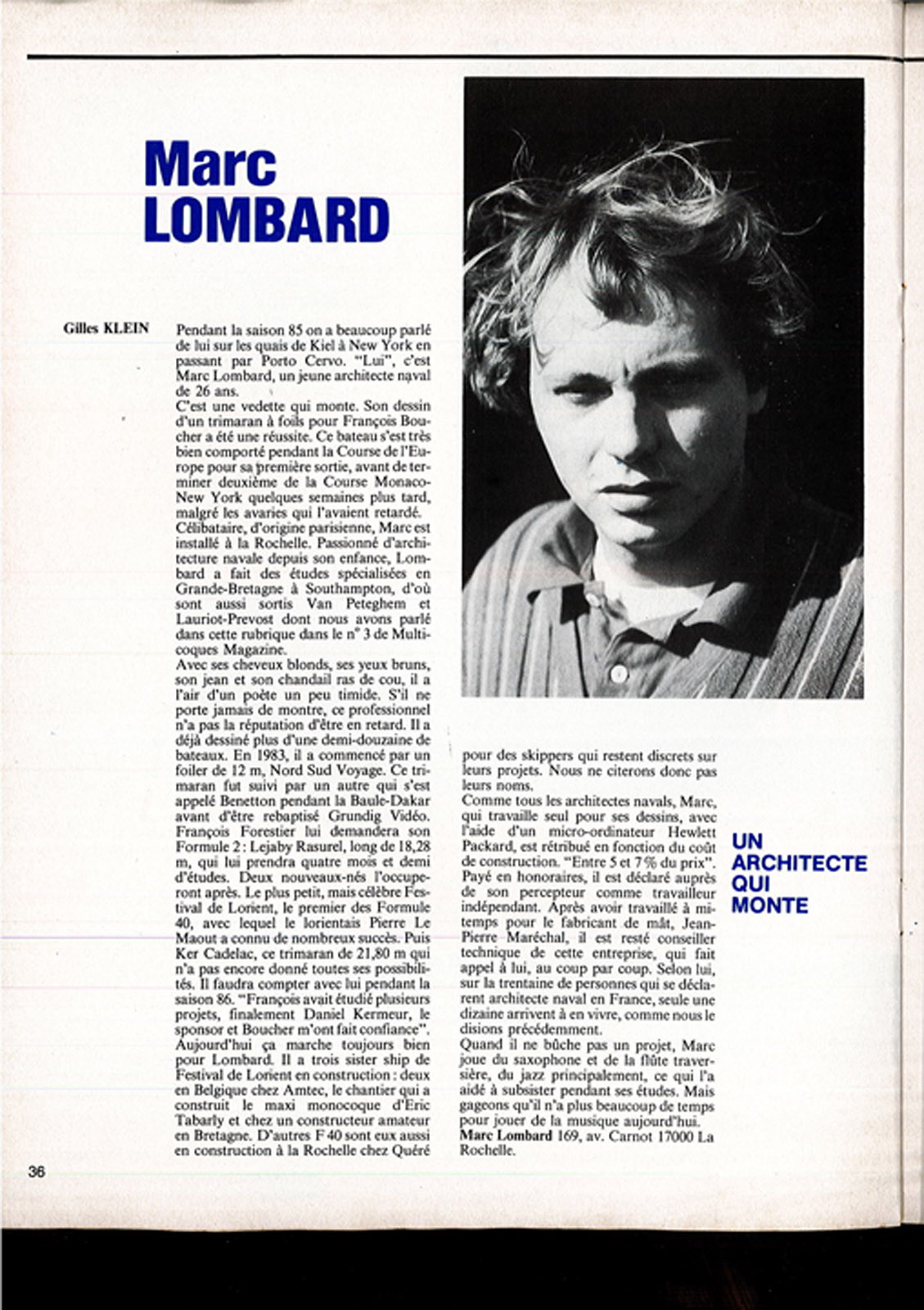 “Marc Lombard, an up-andcoming naval architect” - MM n°4, 1986. |
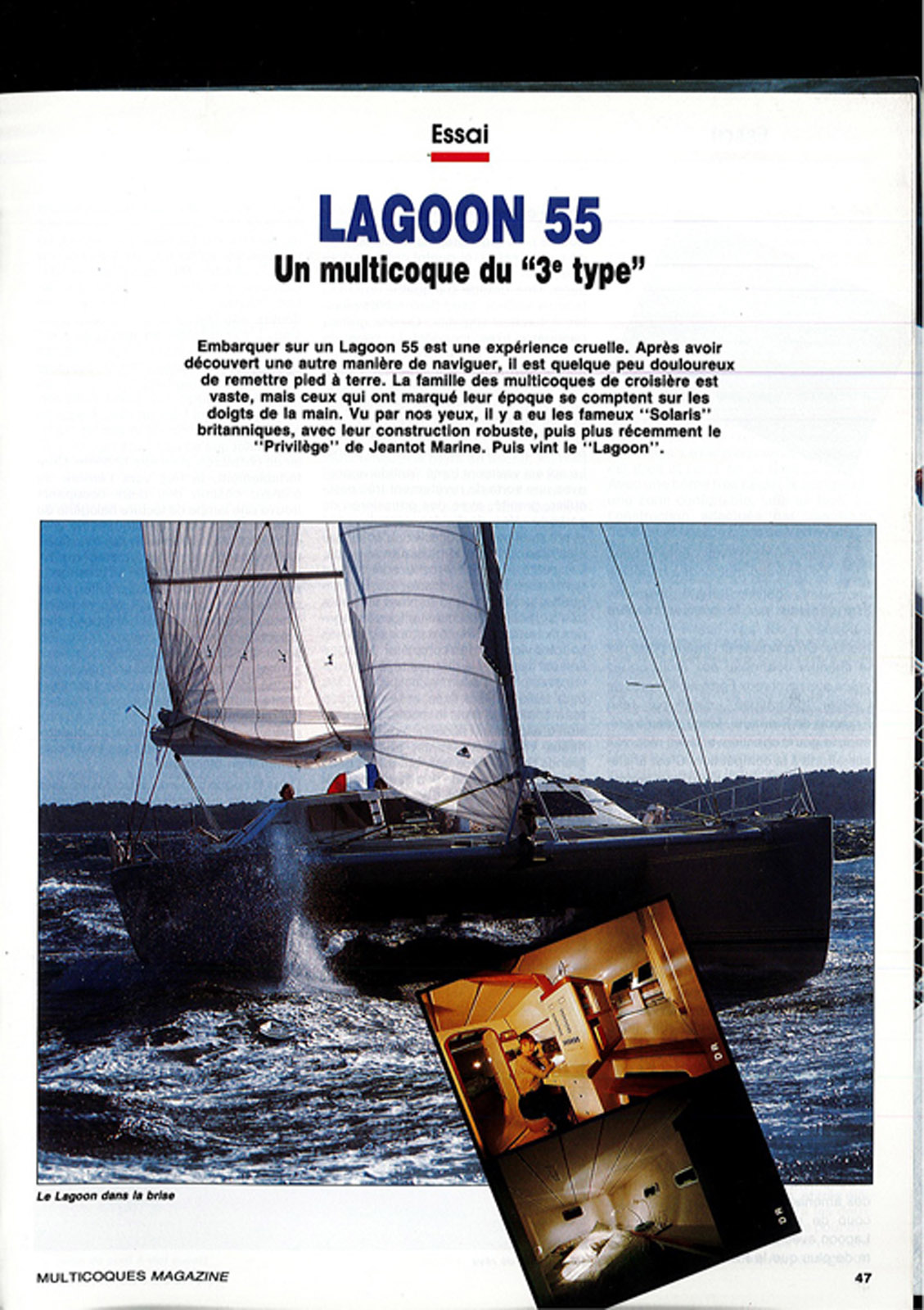 First test of a Lagoon MM n°20 - 1988. |
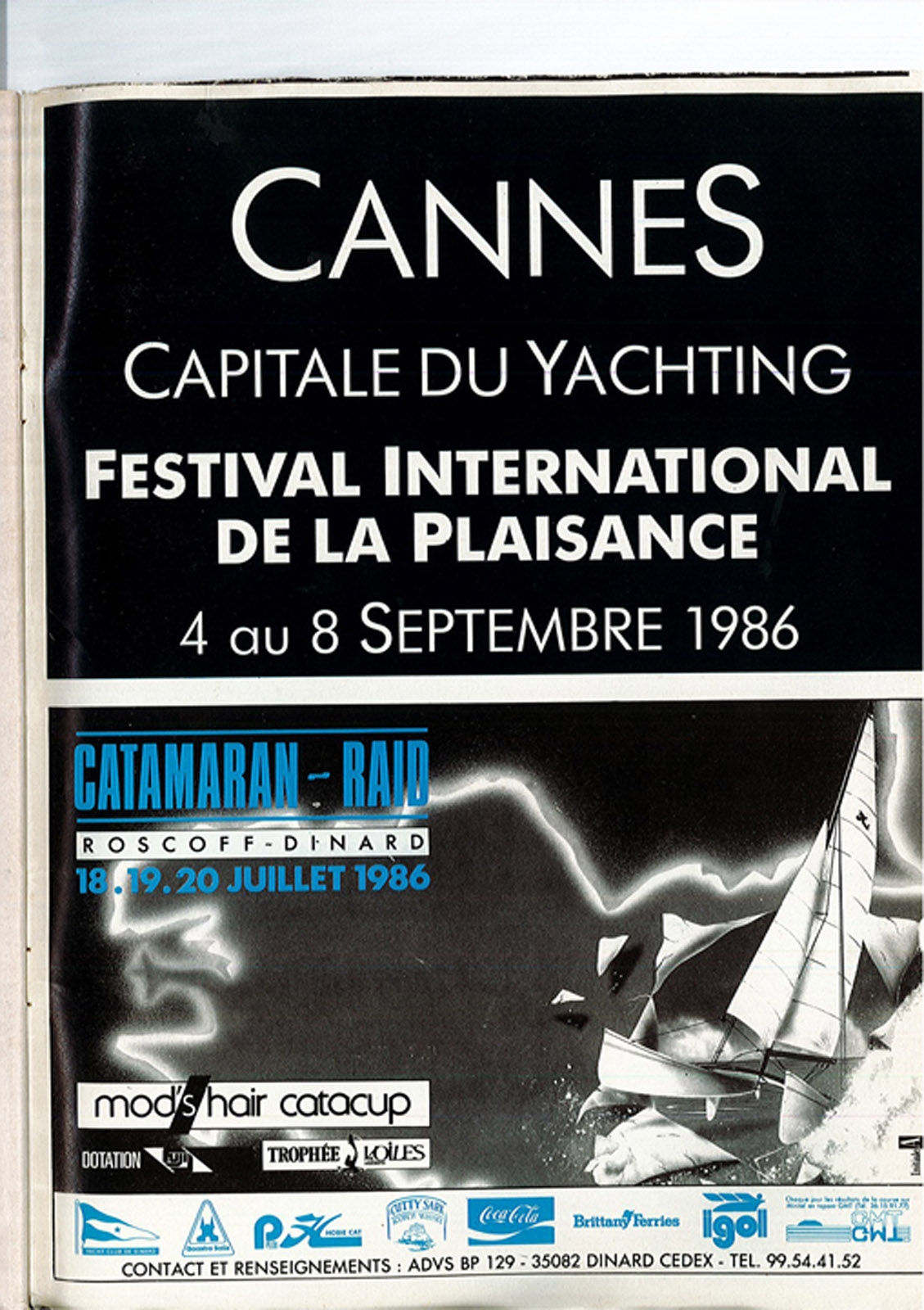 First ever advert for the Cannes Yachting Festival MM n°6, 1986. |
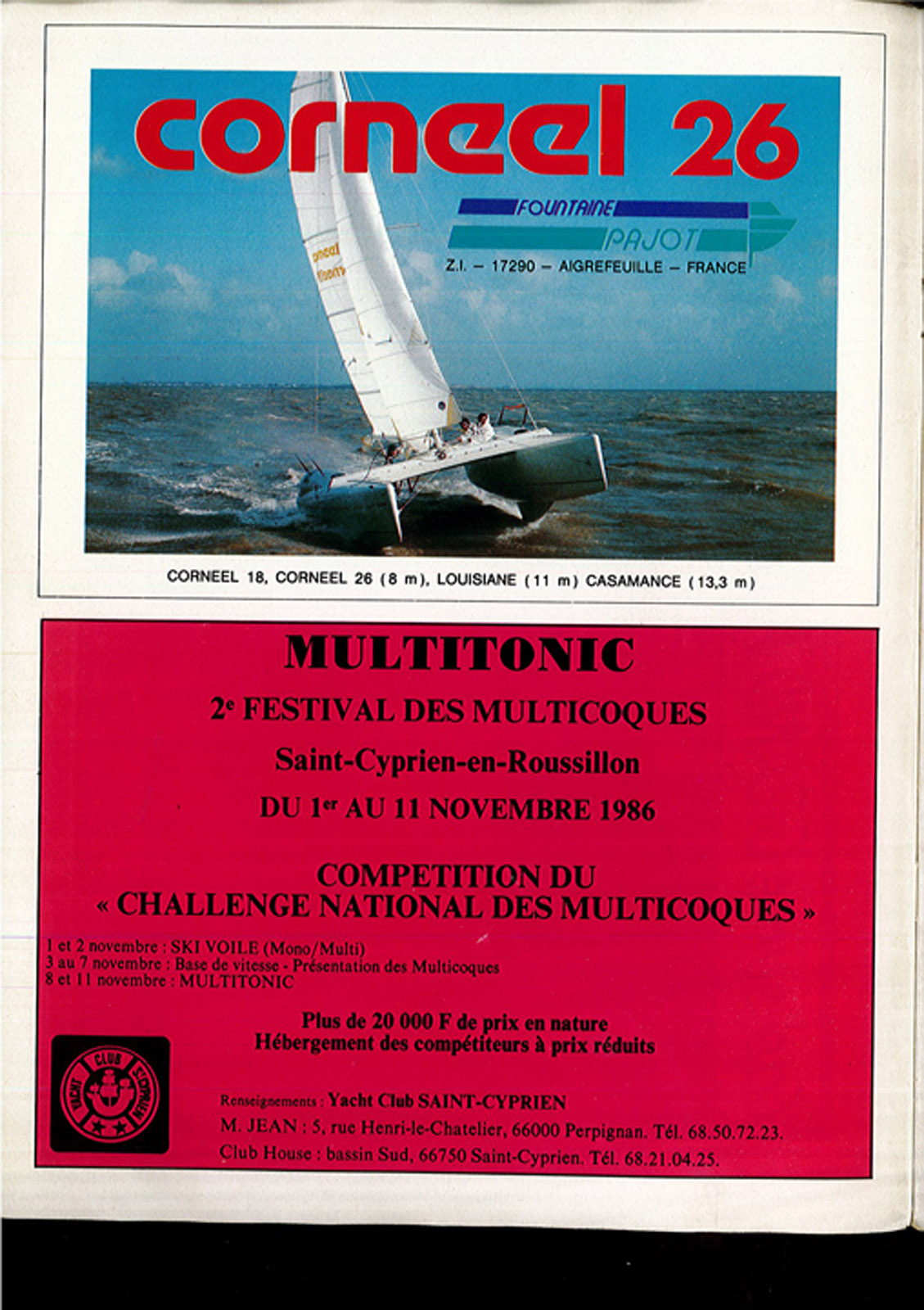 Fountaine Pajot’s first advert MM n°6, 1986. |
 |
 |
 |
 |
1986-1994: those were the days...
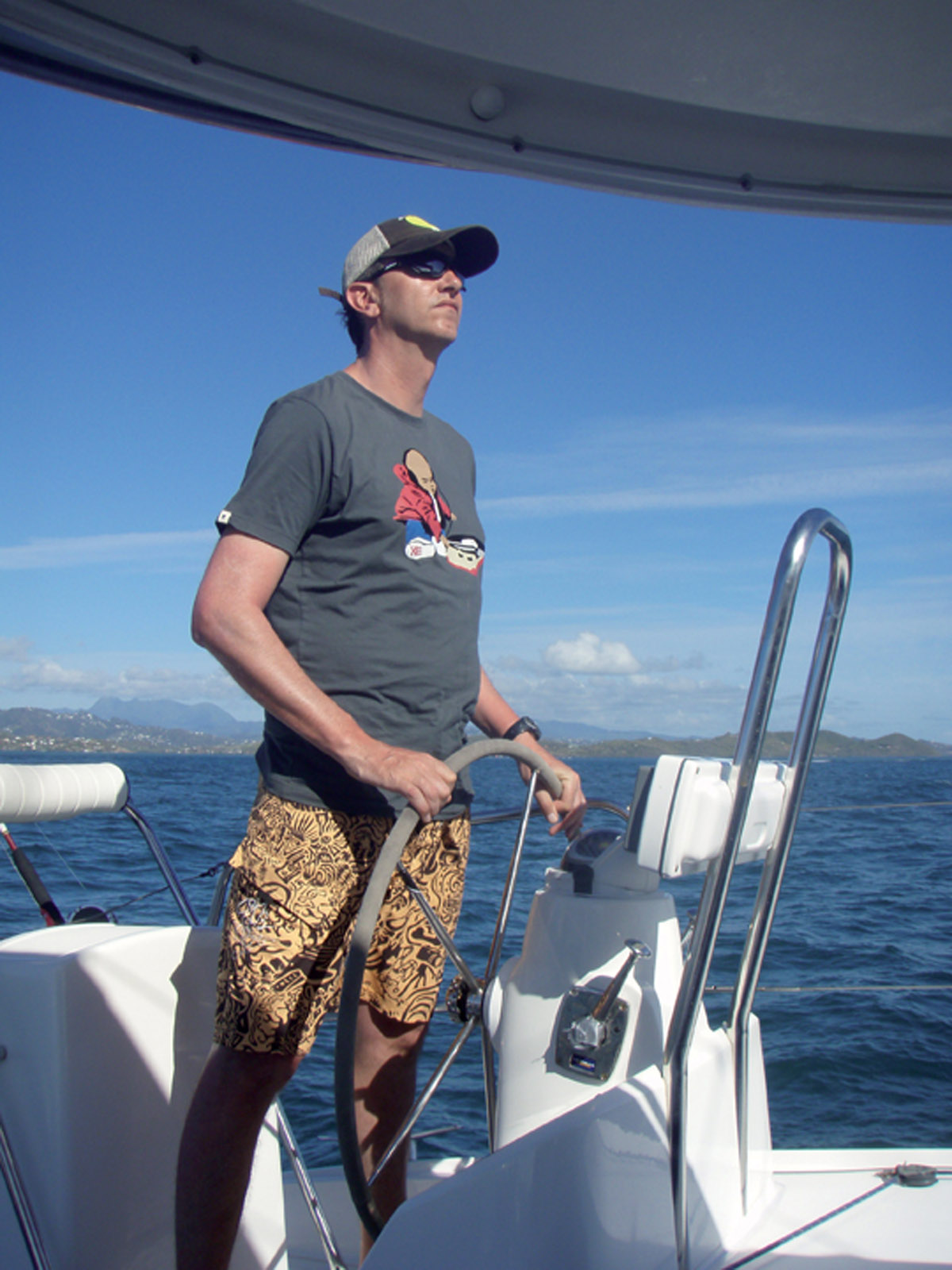 |
Jean-Christophe Guillaumin |
22 years at the helm of Multihulls World!
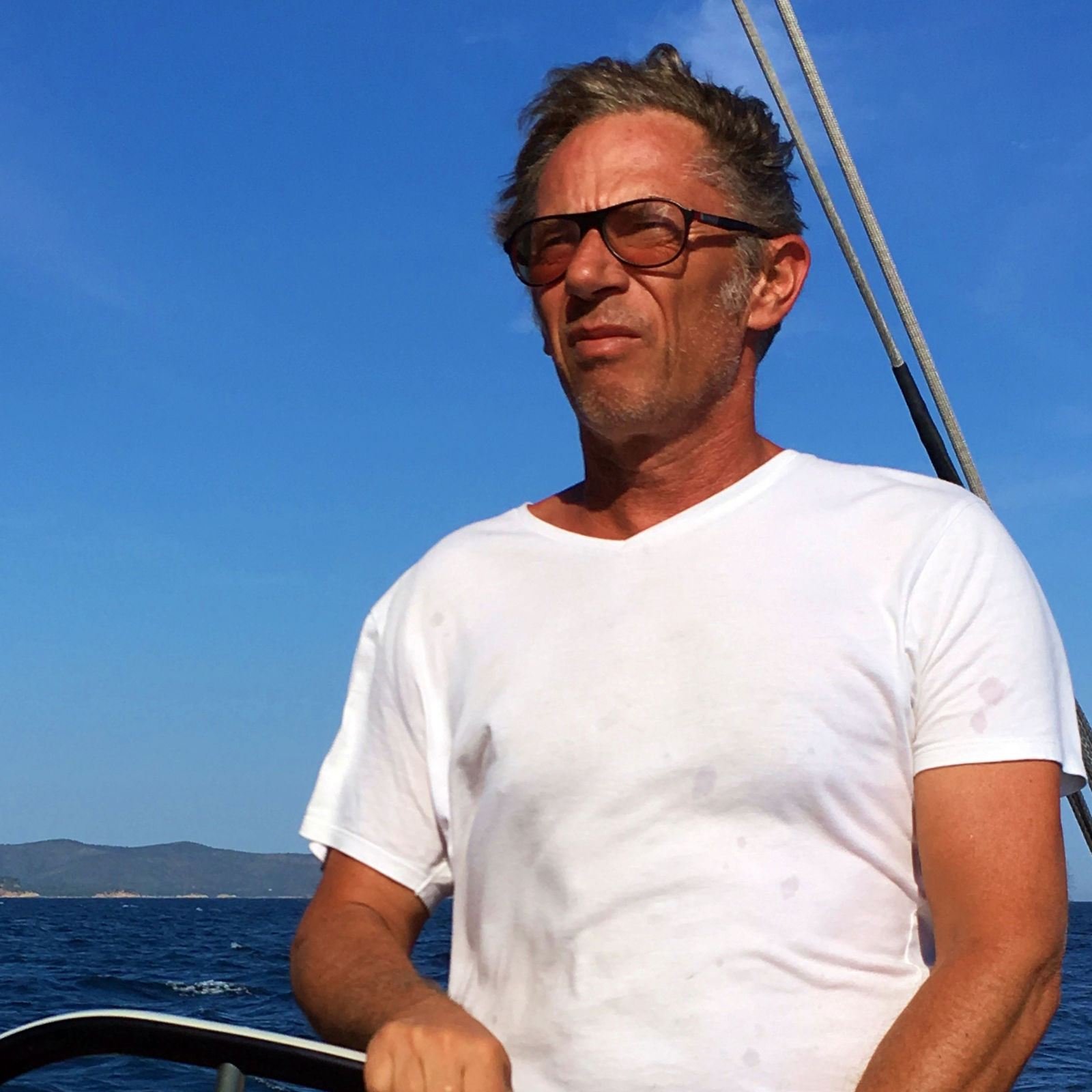
Jean-Christophe Guillaumin, a media professional, took over the helm of Multihulls World and Multicoques Mag in 1997. A salt-water adventure, with a watch that was to last more than 20 years.
« Back In 1996, Corinne Consani and I were in the West Indies, running the magazine Créola. My own project was to set off with my family aboard a multihull. On monohulls, I get as sick as a dog! The plan was to go for two or three years. I was a subscriber to the magazine, but suddenly I wasn’t receiving it any more... In 1997, I bought the two titles, Multicoques Mag and Multihulls World. My idea was to produce the magazine that I wanted to read. How to set off with your family, the choice of multihulls, their equipment... most of the articles I ordered and published were the answers to my own questions. At the start, the editorial line was ocean racing, sport catamarans and cruising. At the time, the market for cruising multihulls was still pretty small – there were 5 at the Cannes Boat Show, compared to 60 today, and you’d see the same ratio in any anchorage. My aim was to find an economic model with these three themes, to widen the readership and build bridges. Bit by bit, the world of sport catamarans was becoming more specialized, more professional, and so we concentrated on cruising – Multihulls World and Multicoques Mag became the medium for multihull cruising. We arrived at the right time - it all exploded at the beginning of the 2000s. Builders became more professional, as did we, with the advent of digital media. Up until 2008, we were experiencing year-on year increases of 20%. More readers, more reports, more photos; everything that dealt with multihulls advanced. The high point was the creation of the International Multihull Show, with which we have had a very strong link since the first edition. But the real stroke of genius in the history of the magazine was the English-language version, and we owe that to André Manchon ».
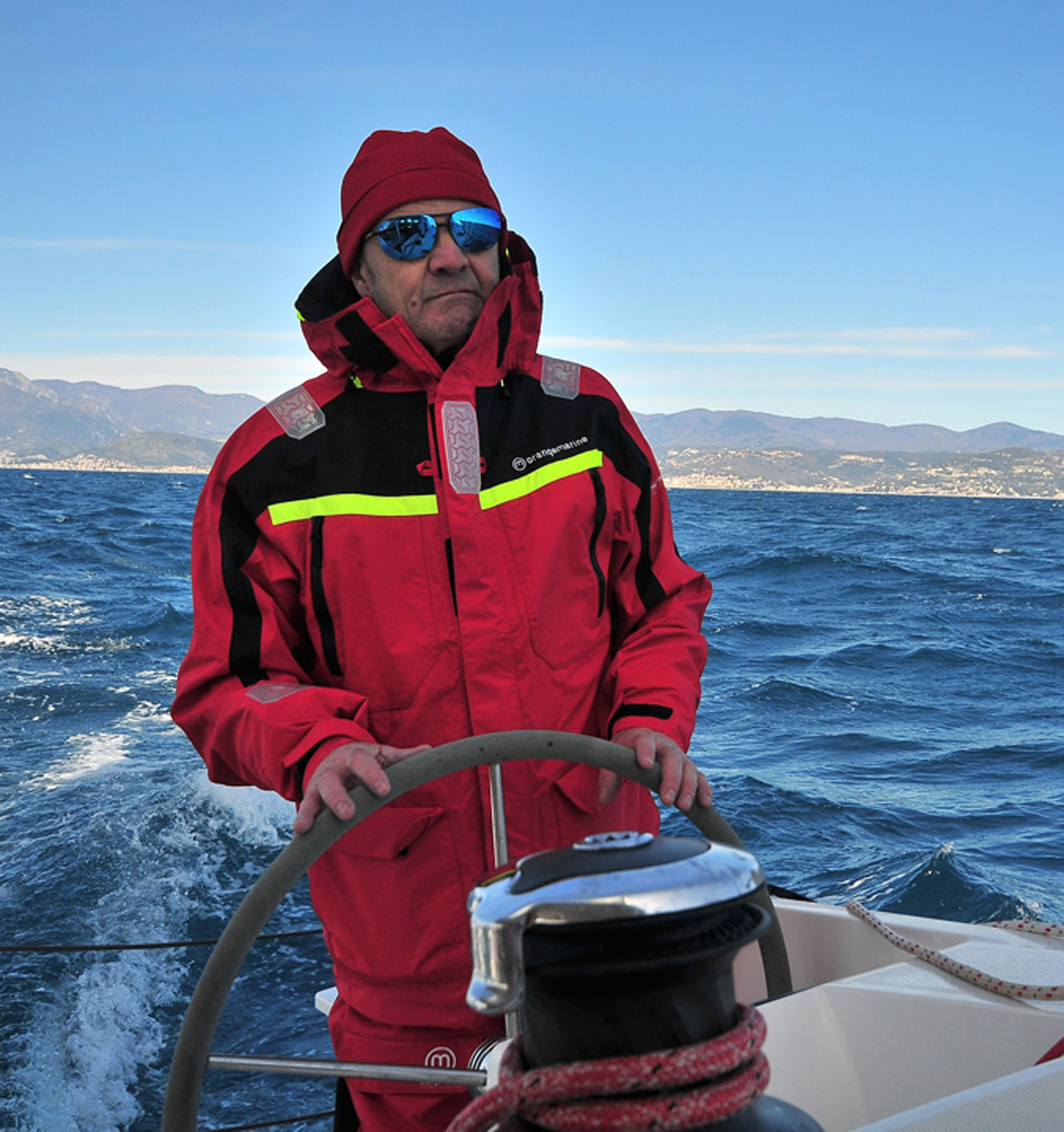 |
Philippe Echelle |
Chief boat tester since 1998
Passionate about everything that goes fast: skiing, cars, and of course multihulls, Philippe has tested almost 200 new boats for Multihulls World.
«My first boat test for Multihulls World was in 1998. Jean-Christophe called me to suggest as a journalist that I should check out a small 9-meter (28’) Wharram catamaran: a featherweight at 680 kg (1,500 lbs) on the water, which we pushed up to 22 knots. In the end, he offered me to write the story and take the pictures - I packed them up and sent them off to him in a shoebox... I did a second test in 1999, for the Switch 55. And then one thing has led to another: to date, I’ve done nearly 200 multihull tests and 400 articles in all. I’ve had the chance to follow the evolution of multihull dynamics - even though this was already underway, with the historical players already present. It was the golden age in the development of multihulls, especially for French boat builders. For a long time, I questioned the concept of the nautical industry, but today we are there. We can also note progress in design: before, there were just two options... Between racing boats and the marginal multihulls, I mixed very varied worlds. For me, life starts at 20 knots. Following a delivery trip on Lejaby Rasurel which included an hour spent at 20 knots, I stopped racing on monohulls! After that, it was wonderful to discover the world of cruising. Rather than spending 100 days sailing, I preferred to sail 100 days on 100 different multihulls. I never ask around before doing a test, I never read anything. I appreciate more than anything the discovery, and I’ve never gotten tired of it. I learned a lot in the shipyards, from the architects, I learned to work on multihulls. A wealth of experience. During all these years, I’ve been able to see the conquest of reliability. Today, multihulls hold their own, even when the going gets tough. Part of the reason is the increase in size. Previously, discomfort was the norm: you’d end a week’s cruise with bruises and band-aids everywhere. Today, you can serve up 10 meals in less than an hour, shower, warm up, and sail at the speed of a racing multihull from 20 years ago. Not on every model, of course, but 400 nautical miles a day under autopilot, it’s a revolution! I’m not a fan of electronics - for me it cuts off contact with the sea, and I’m all for letting go - except for the watermaker and the autopilot!»