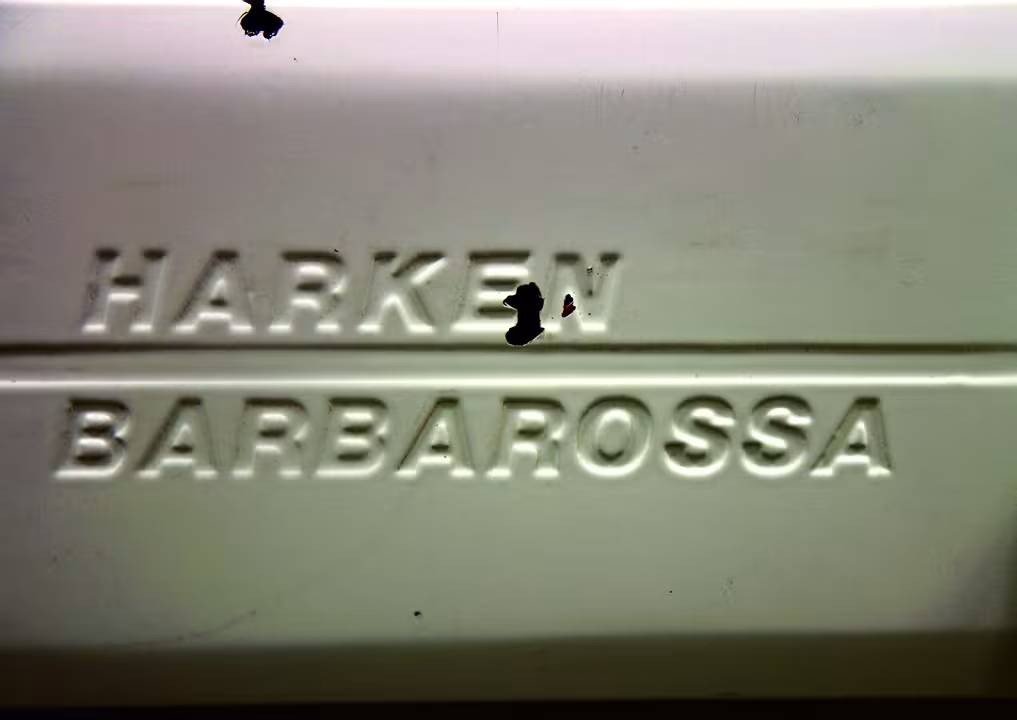

Out in the Italian countryside between Milan and Lake Como, there is a grey building with the word Harken, written on it, in red letters. To get inside the factory perimeter, there is a gate with a winch acting as a handle. But this is not a Harken winch - it says Barbarossa on it. Around here, symbols are important, and so is history.
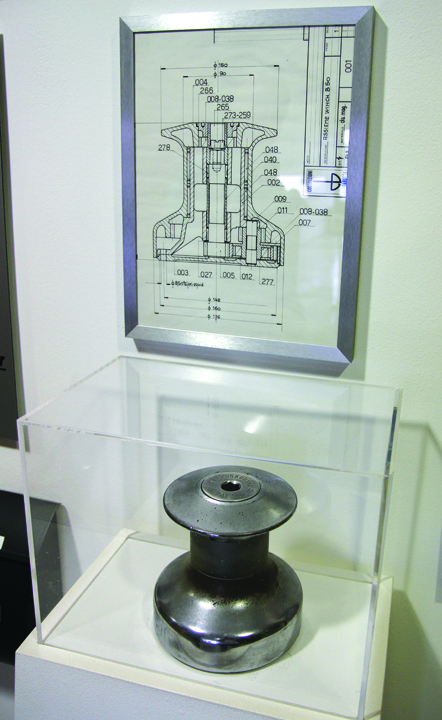
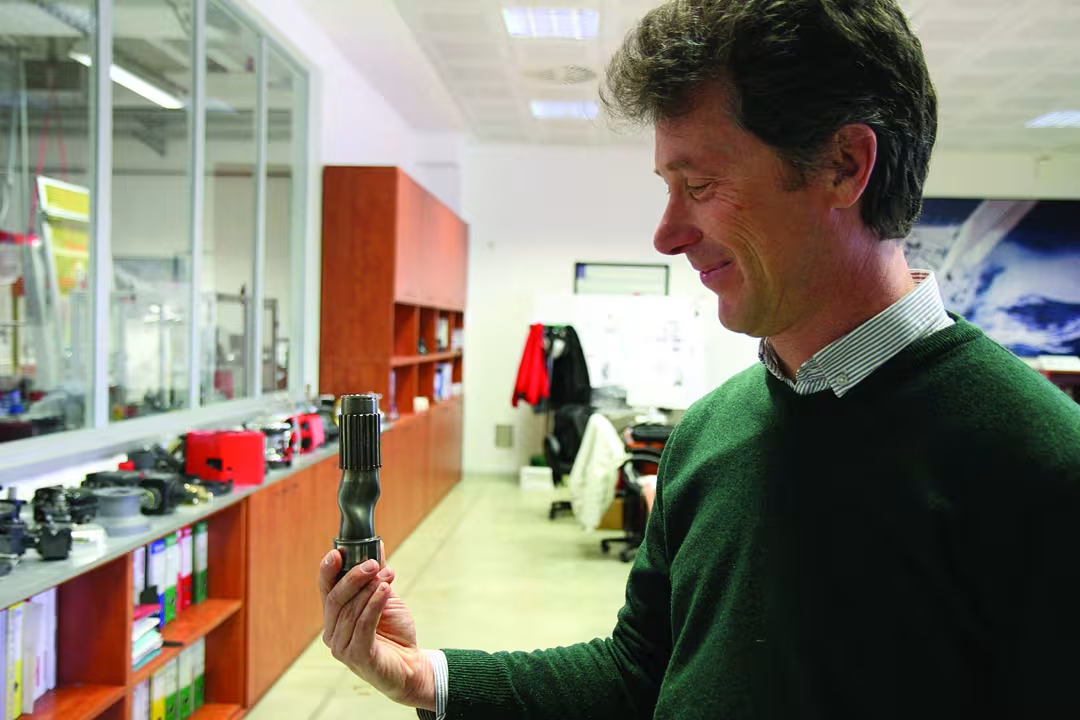
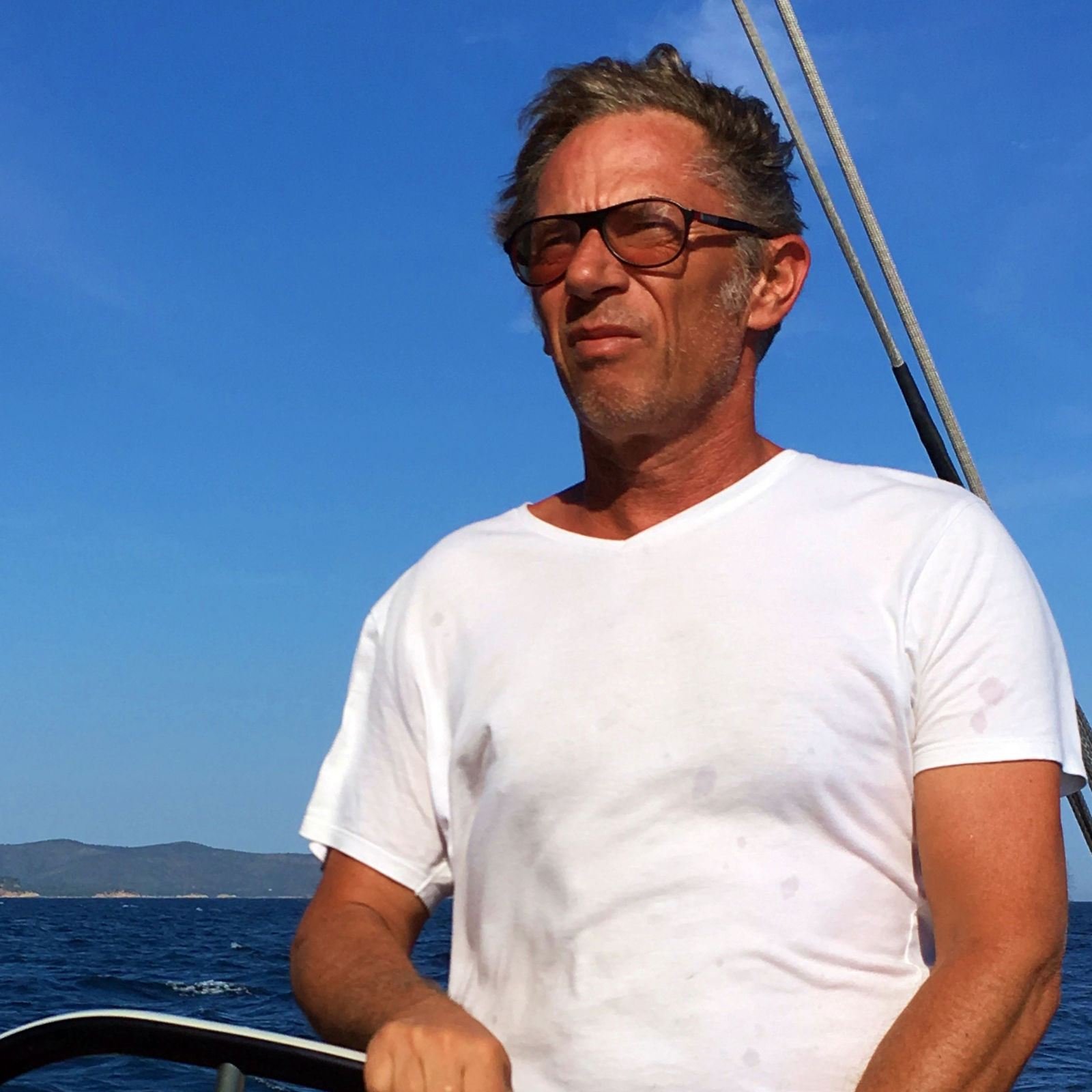
In the past, the employees of Harken in the US used to dress up in costume to welcome guests, and funny messages would be attached to any orders. Today, the two sites have 362 employees, including a quarter in Italy. That means that they have to behave like a responsible and serious company… Davide Burrini, Global OEM Leader, is the international face of Harken for the shipyards. He is the one who’s organized this visit. We get the traditional welcome, with the visitor’s flag fluttering in the blue sky beneath the Stars and Stripes, and with the snow-capped peaks as a backdrop. In the entrance hall, there is an enormous steel winch – an 1150 – and a personalized welcome message on the screen. We need to go a little further into the heart of the factory and meet the big boss of Harken Italy, Andrea Merello, before we get to learn all his secrets.
A history that stretches back over 50 years
Let’s go back to the early 1950s in the US. Peter Harken, a temperamental student, was mad about E-Scows and ice yachting. One evening at home, Peter accidentally dropped some ball bearings on the floor. He was impressed by the height of their rebound. It gave him the idea of replacing the steel needle bearings in his blocks with nylon ball bearings. His Scow became a floating laboratory, and it validated the efficiency of his first black blocks with white bearings… In 1967, with the help of his brother Olaf, Peter decided to start building yachts. Vanguard Boats started out in an abandoned Wisconsin garage, with the blocks being made by friendly sub-contractors, Leroy and Al Stippich, who owned the equipment maker Accurate Products. Already in 1968, the Harken brothers were touting their blocks to Olympic medal winners. Harken/Vanguard grew, moving into new premises, and began producing sailing dinghies, which of course dominated the market. In 1976, Peter and Olaf started to take an interest in large sailing boats. The Delrin bearings were not resistant enough, and they were replaced with Torlon. Their prototype block performed brilliantly on the mainsheet of the Sverige, the Swedish 12m JI that took part in the 1977 America’s Cup. The two sectors of activity – boat builders and equipment manufacturers – became difficult to manage by the end of the 1980s, and the brothers decided to sell Vanguard Boats to focus on Harken deck gear, and in 1987 they bought the Italian winch maker Barbarossa. And that’s why there is evidence of the former brand at the entrance of the factory.
A winch factory in the heart of Europe
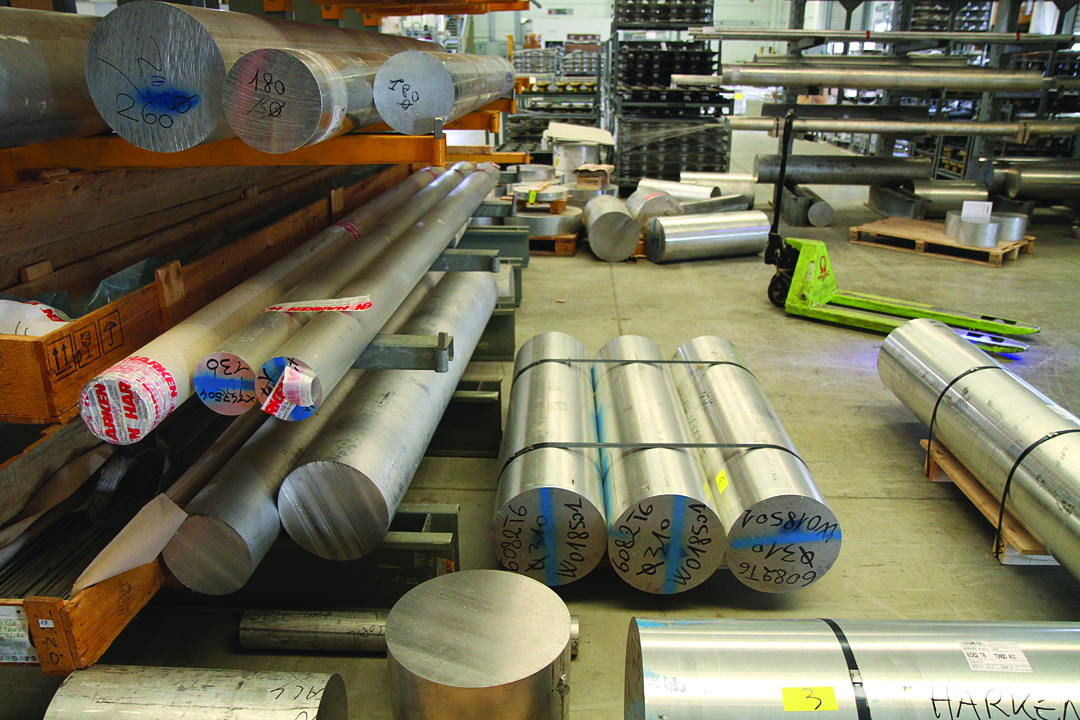
Harken was happy with the location of the Italian factory: Milan is a large, easily accessible city - train, airplane, roads - and is right in the heart of Europe, which is a major market for the company. The water is fairly close for any sea trials needed, as Genoa is only 150km (93 mi) from the factory. Harken often uses test boats for its new products. The factory has moved once, before finally settling in its new 8,000 m² (86,000 sq ft) home in 2008. It is close to the old Barbarossa site. Harken has a very humanist outlook on management. Here, you work hard but you enjoy coming to work. There’s no question of forcing anyone to move or to quit their job.
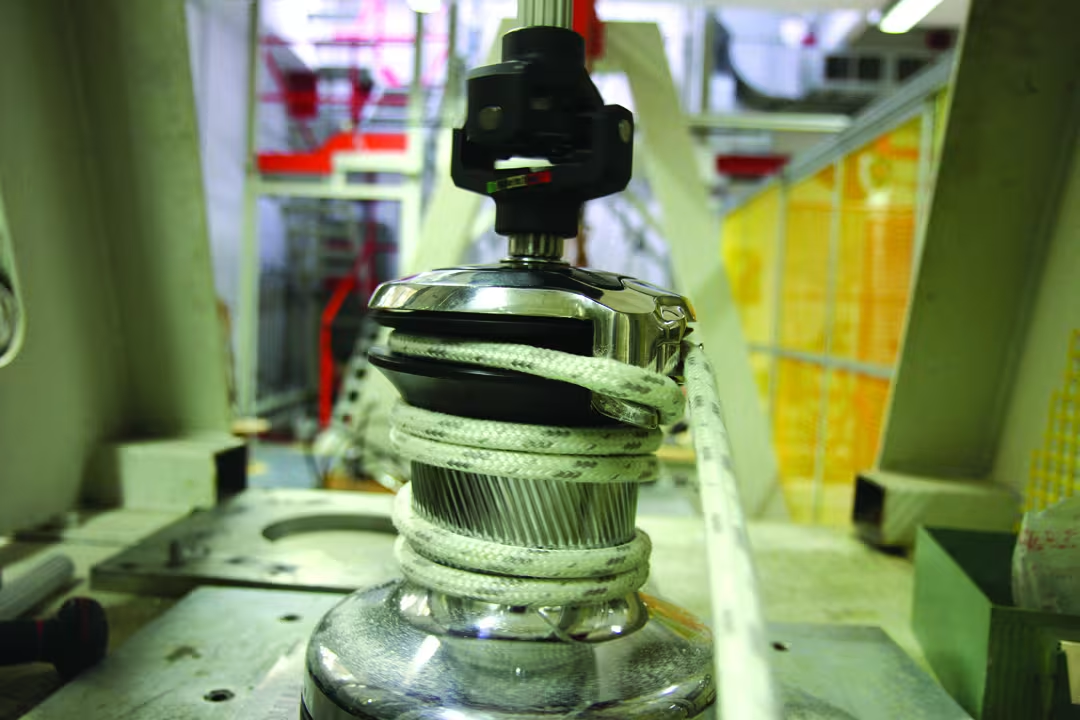
The manufacturer initially started with a simple adaption of its standard range as well as the creation of Grand Prix products. Then it set itself a much more ambitious goal and started again from scratch. For racing, the weight, the power and the ease of assembly were prioritized. Of course, the Holy Grail of the racing world was soon in their sights. For the 1995 edition of the America’s Cup, Harken worked with Sir Peter Blake, the boss of the New Zealand syndicate. The objective was obviously to provide ultra-efficient winches, but they also had to be lighter. Thanks to their carbon drums – an industry first – the Harken winches did the job. Team New Zealand won the Cup! It was the first time that the same company had supplied all the winches and deck gear to both finalists. There were loads of innovations which they carried over into their Radial range, and which were produced in Aluminum, Chrome, White, All Chrome and Performa. On almost all of the models, the anti-slip grip was redesigned: the new helical grooving was less wearing on the lines and moreover helped to avoid riding turns. The grip is less abrasive on the Radial range, with a view to preserving the sheets and halyards on production yachts, which are usually made of polyester. The Performa range has a more aggressive grip – like sandpaper – for more rapid movements and is adapted for more resistant lines.
All of these innovations developed by the Harken engineers, have allowed them to come up with winches that are more powerful, lighter, tougher, easier to maintain and… cheaper.
Relentless testing
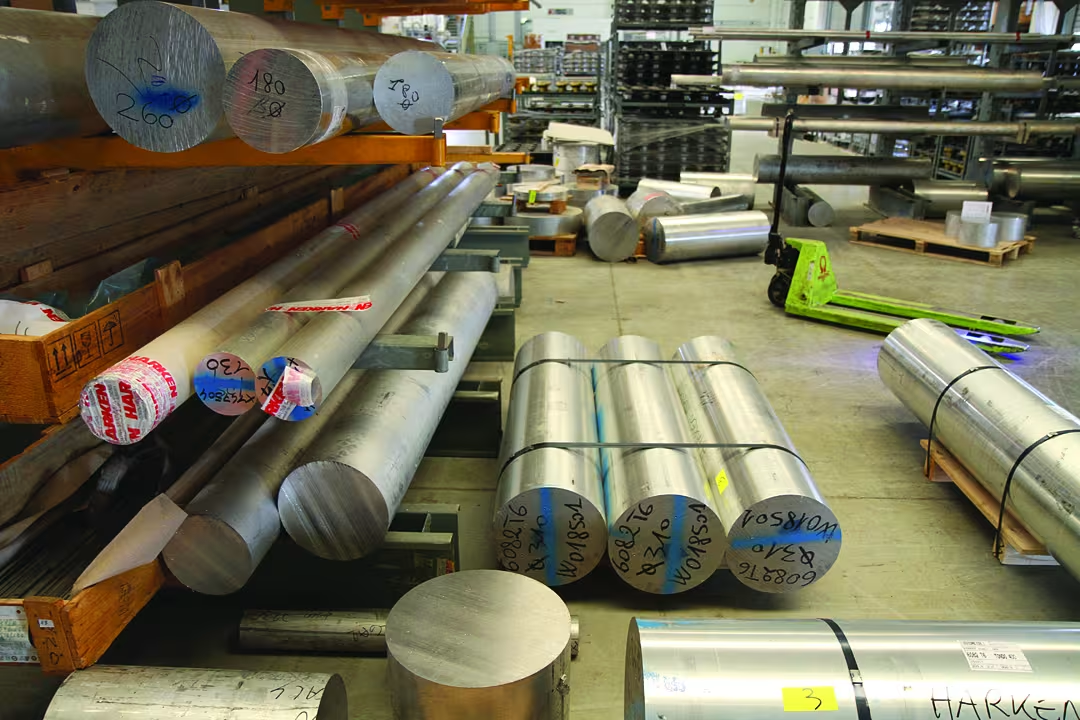
The base materials – aluminum, stainless steel, bronze, titanium and carbon - are all checked carefully before being used. The other components - in particular the bearings - are chosen according to their quality and reliability. Any materials which are sensitive to UV rays are protected using a specific treatment. Any new winch will be carefully designed based upon the needs of one or more boat builders or a custom order which is usually for coastal or ocean racing. Today, a virtual office regularly brings together all of Harken’s collaborators so they can discuss any new products which could be developed.
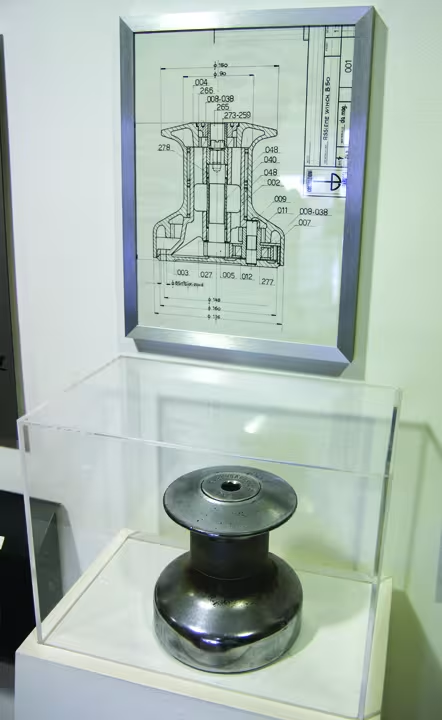
The R&D department puts together a model that fits the design brief (power, resistance, weight, ease of assembly and other specific characteristics). The first model, 001, is built using a particular robot whose actions are piloted by an operator. This first winch will then go through a battery of unforgiving tests, overseen by Michele Cazzaro, Engineering Manager. “Each series of winches goes through at least 13 tests, from the grip in relation to a wet or dry rope, the tensile force in relation to the number of turns of the sheet, not forgetting the elastic distortion, the ease of maintenance and the safety aspects”, explains Andrea. They start with the “salty fog”. This machine simulates years of work on board a deck that is particularly prone to spray. Next come the traction tests. There are two different types of test. The first uses counterweights and very long lines to simulate a progressive load. The second houses a hydraulic ram which is capable of exerting 100 tons of traction! In this case, the lines which are used are fixed to cargo-ship hawsers. “The endurance test is by far the most demanding, as we are looking for practically zero deterioration after several thousand uninterrupted tractions with the maximum load” continued Andrea. These tests are carried out under strict safety measures and behind protective grills, and sometimes involve finished products taken at random from the production line. In a glass case, you can find some of the broken and bent articles that didn’t make it, and which remind one of the importance of testing. It also helps to explain the reliability of Harken products: their after-sales-service division doesn’t have much to do…
Standard winches, customized winches…
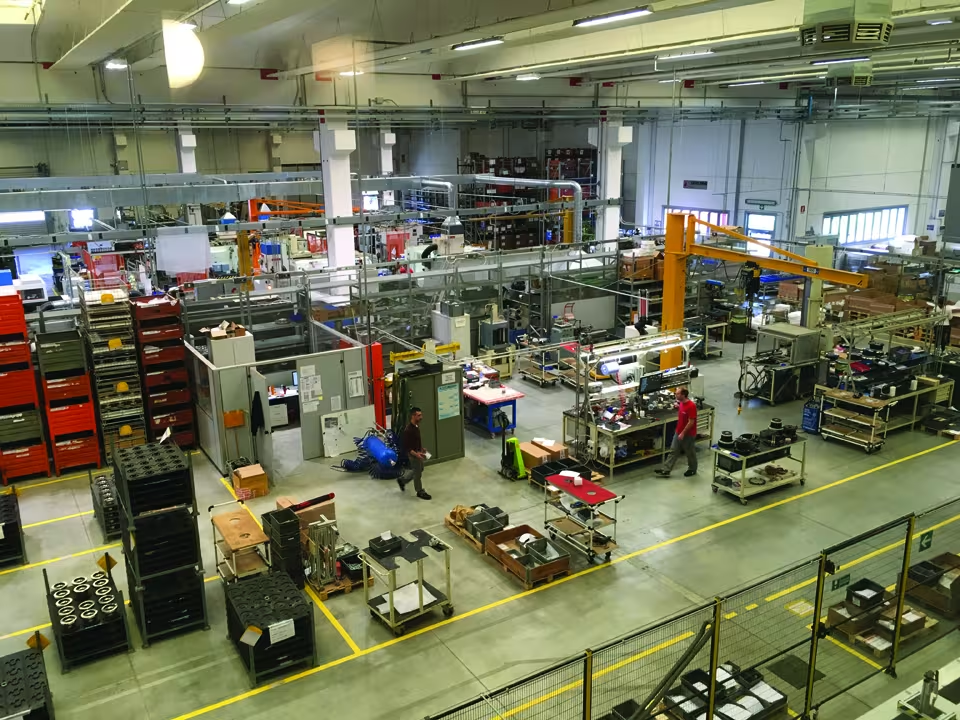
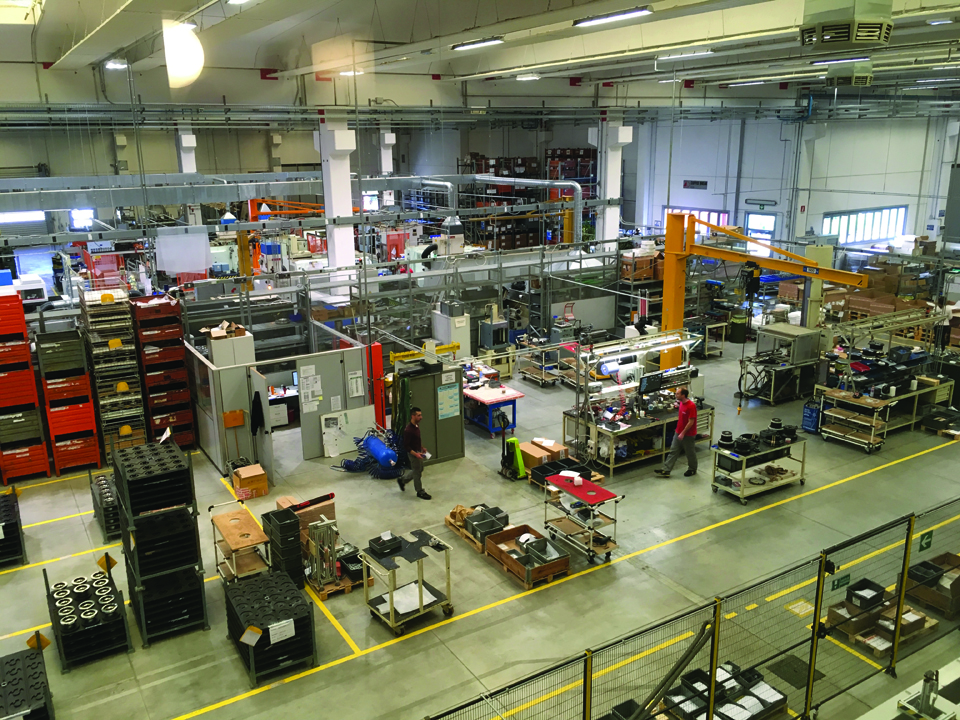
The site is divided into two distinct areas: production models and custom orders. The production models, (in other words the products which feature in the Harken catalogue and on numerous production boats), are partly sub-contracted: the main pieces - drum, body, base - are made at a foundry according to Harken guidelines. The same goes for certain types of bearings and gearings. All of these elements undergo thermal treatment to optimize their mechanical characteristics.
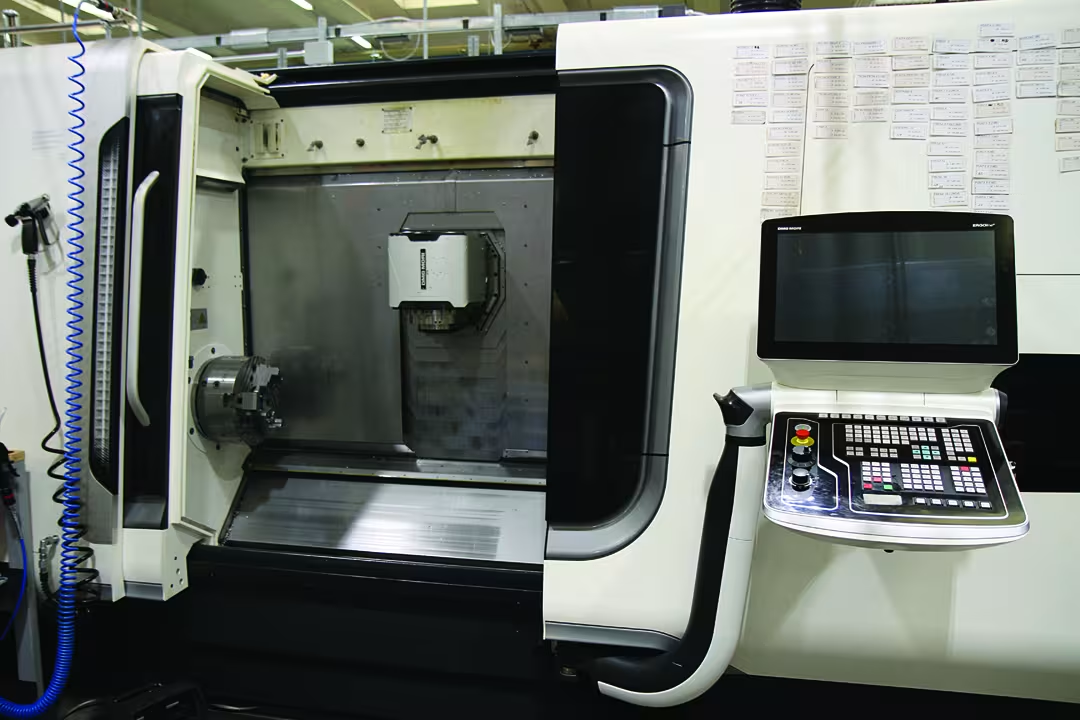
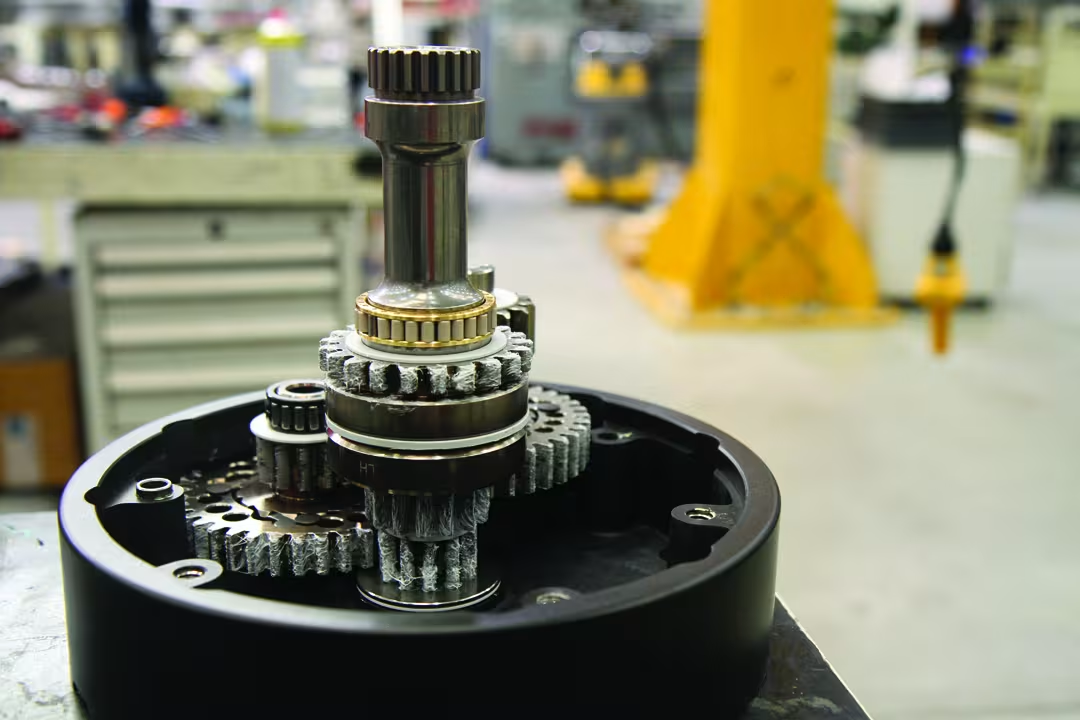
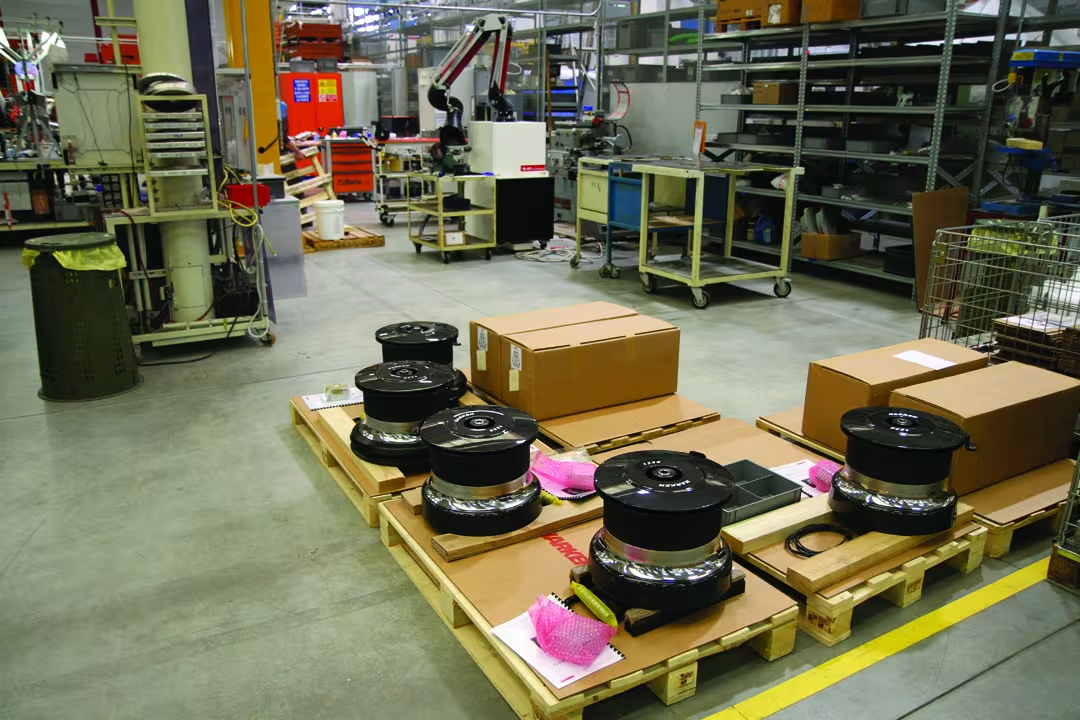
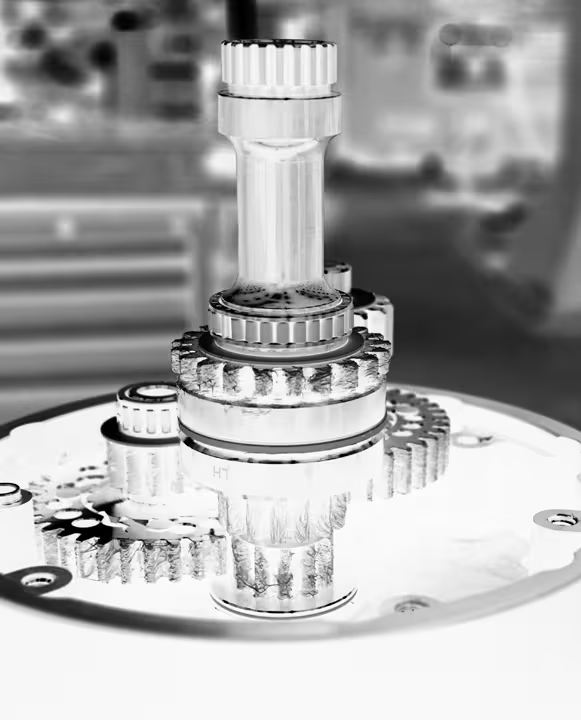
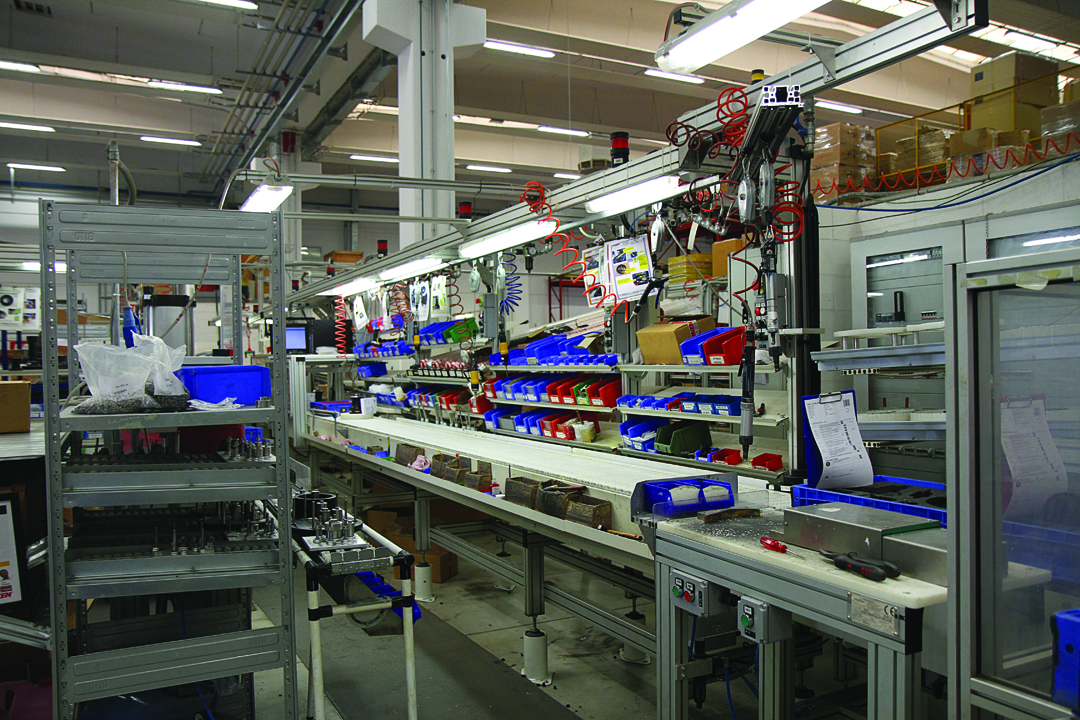
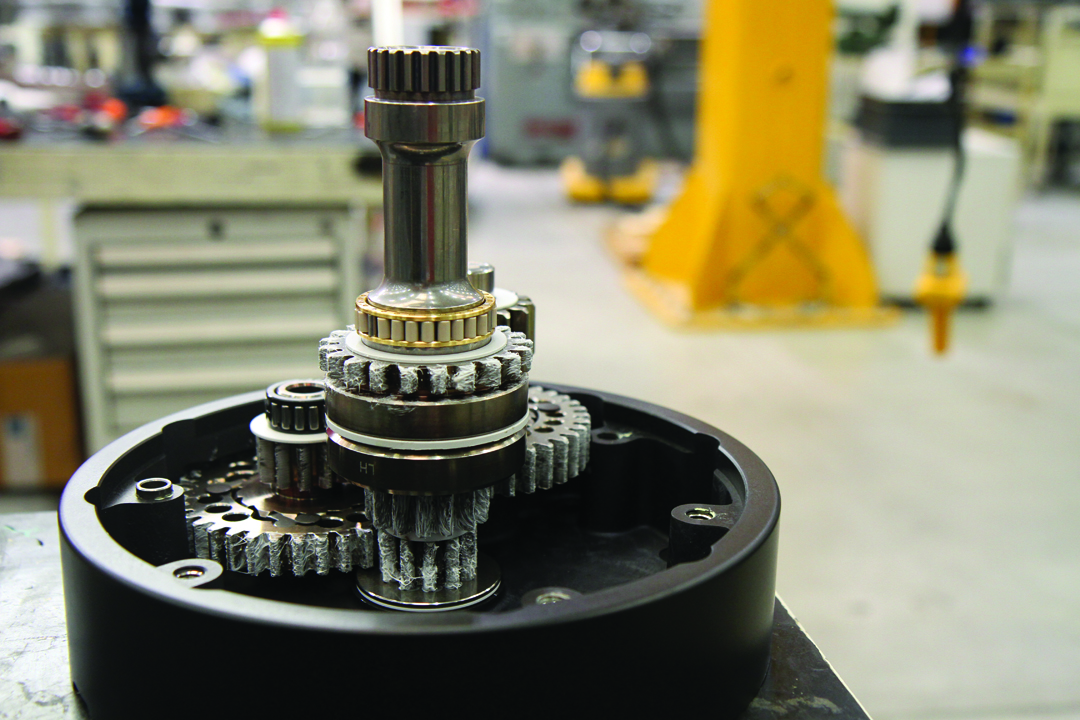
In the factory, three production lines share the machining of the parts. One of them is dedicated just to the gears. Robots carry out the drilling and finishing of the parts with remarkable speed and dexterity. The aluminum parts are then anodized before assembly and lubrication. For a 2-speed winch from the Radial range, there are 25 individual components whereas a top of the range 3 speed racing winch like the 1130 model will have 80.
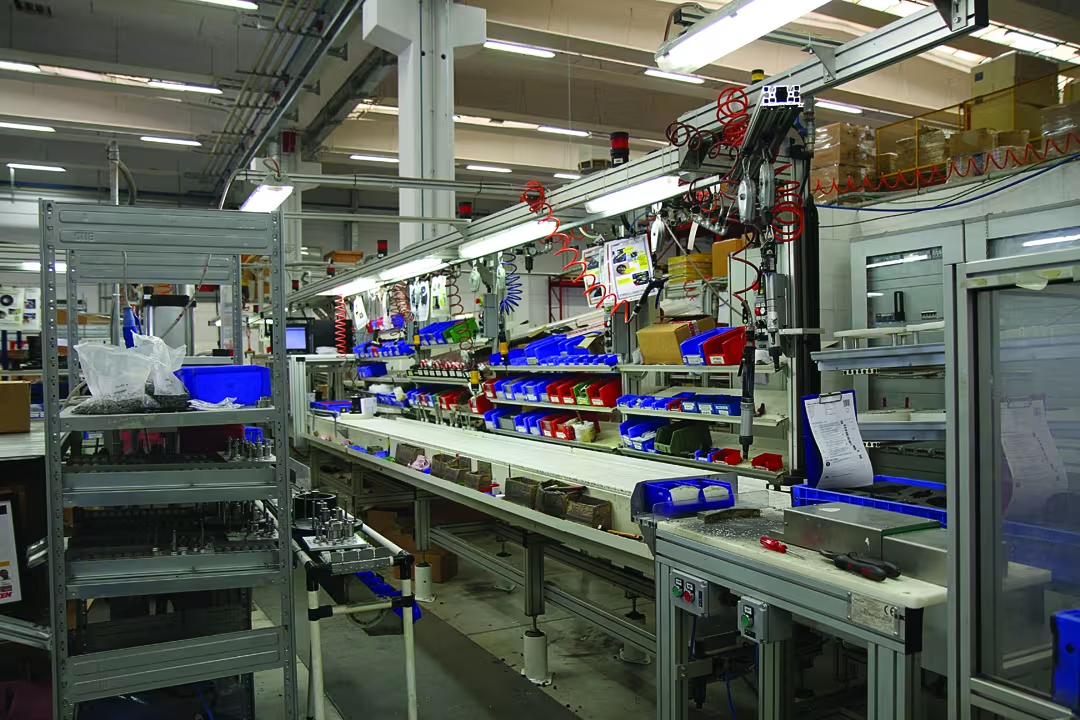
Each winch then has to go through visual and operational tests at all speeds. The winches are then packed for shipping. The production itself takes only a few minutes, but the lead time for a production winch is 3 weeks. The logistics are highly complex as the company produces an amazing 640 different winches… along with 3,640 other products, which for the most part are spare parts.
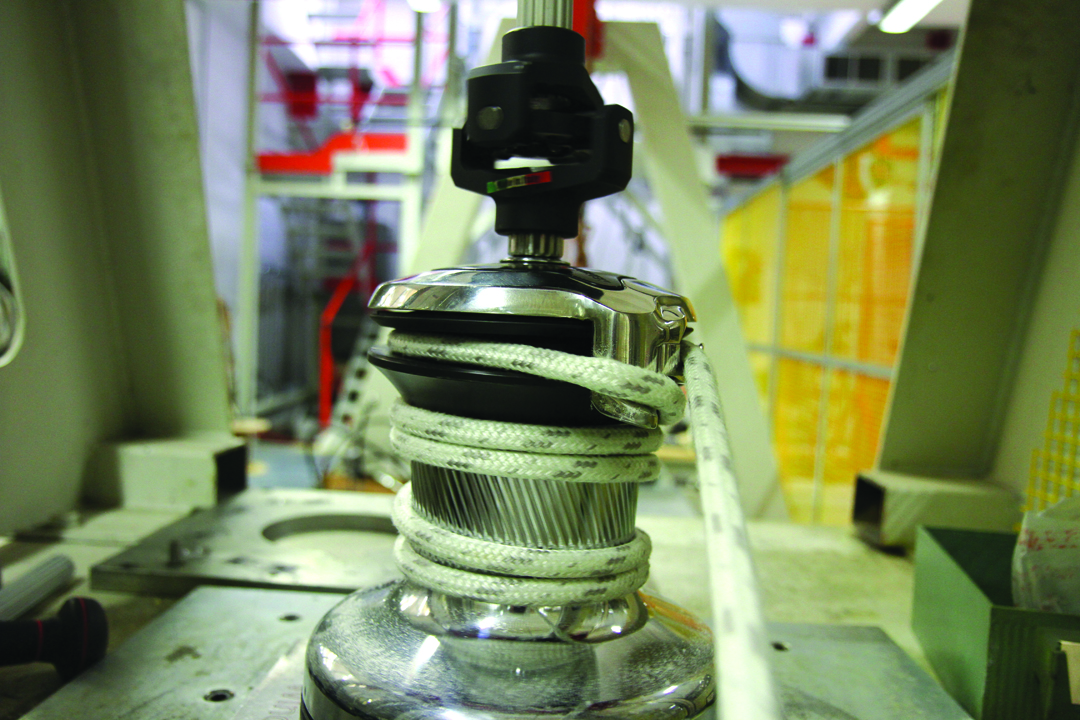
The star product from their range? The 40.2STA winch, of which they sold 1,853 units last year.
“This production line, which was designed just before the 2008 crisis, has been completely rethought”, says Pierre Massé, Industrial Manager France. “Before, we used to carry lots of stock. It took two days to reprogram the machines to make just one product. Today we can do it in an hour. We are now more reactive and therefore, carry less stock!” In production terms, Harken is now a lean machine. This implies a good and constant relationship with the foundry, but with all the other suppliers too.
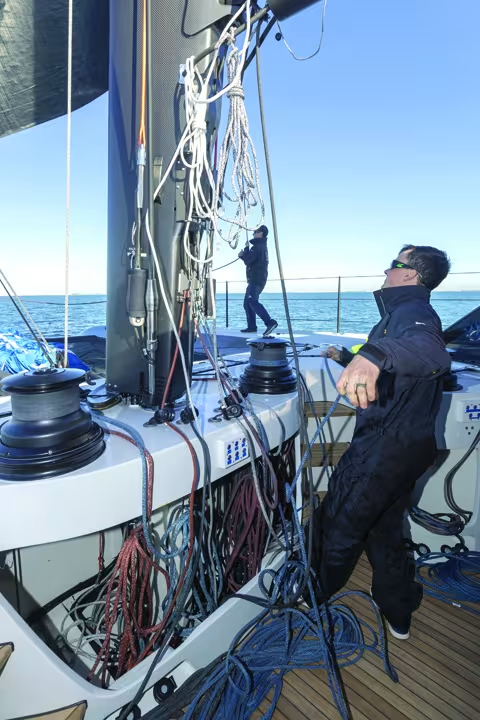
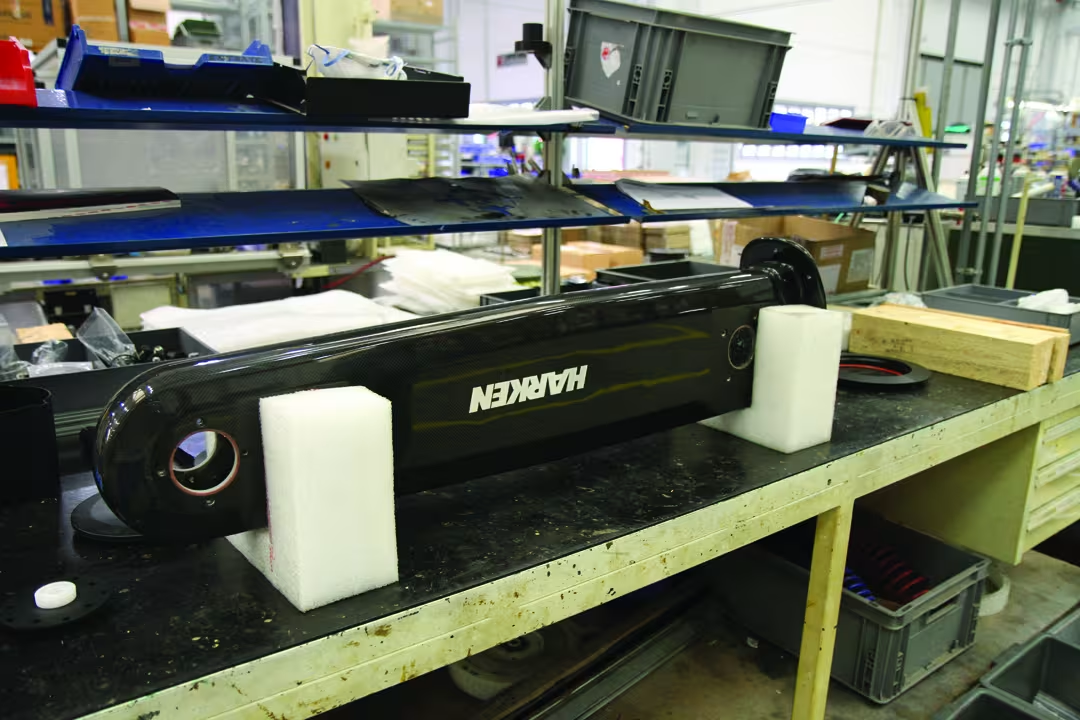
As for custom products, Harken is ready to take on any challenge. They have produced 2,150 different products, and have just as many projects on the go. Nothing is sub-contracted and everything is made in-house. The manufacturer is able to respond to any request, including those for which a basic standard doesn’t yet exist. “More often than not,” says Pierre, “naval architects give us the load on the sheets and the righting moment. But with the first catamarans equipped with rigid wingsails in the America’s Cup, no one was able to give us these numbers - or they were top secret. So, what do we do? We calculate, we test and we innovate. That’s how the Air Winch came about.” Winches on which the pinions can be modified to change the speed, with an adaptable grip - better grip at the top and at the bottom. The Air Winch is currently Harken’s most prestigious item: it’s a custom product which became a production model. 100 of them are made each year.
When these products are being used to equip prestigious boats like the trimaran Sodebo, everyone wants one, which means that that product can go into the catalogue. Their range now includes full carbon pedestals, hydraulic systems and electric captive reel winches. All high-tech products, which originated from their custom research. Another area where Harken can apply its know-how, is the industry. Over the last 10 years, the company has got involved in various domains: the rescue industry, operations involving wind turbines and buildings, as well as rigging for stage shows. There are of course some secret projects hiding in the factory: those future racing machines will require specially adapted equipment for their deck layouts and their rigs. In the meantime, Harken is kitting out our Lagoons, Outremers, Catanas, and even Gunboats, which is quite an achievement in itself!