
Setting out without leaving it all behind
Throw everything out for an old multihull and just leave everything to chance? No thanks. We won’t always be (in fact it’s long gone) twenty years old. These days, it’s all about trying to turn your dream into reality, not just giving it all up and taking a chance. There will be plenty of voices berating us for leaving the company that we set up, or the well-paid job or the house that you’ve just finished paying off. So, we adapt the old saying to our program: “one hand for me, and one hand for the boat”. Whether it is out of necessity, a feeling of security or it’s something that you just love doing, there are more and more of us who want to keep working while we are on the water. It’s symptomatic perhaps of a world where the private and professional are intertwined, and where technology, for better or worse, now means that we can set off without leaving everything behind.

Low-Cost airlines: the temptation of nipping back home
The new hero of active blue water cruising could be the person who gets labelled as a “FIFO Sailor”, meaning Fly In – Fly Out. The growth in the number of air routes and the often ridiculously low cost of the tickets, has been a boon for these modern-day explorers. They alternate periods of sailing and living on board with a professional activity for weeks or months at a time. Whether it’s down to the weather, seasonal work patterns, a lack of autonomy for those left ashore, or annual reporting periods, there are always reasons that mean that the year will need to be split into sailing and working periods of various durations. With your boat safely moored in a reputable marina, you can spend time on land without worrying, and then take the next flight for… the office! Even though satellite communications (see inset) mean that we can never really be isolated anymore, there’s nothing that can ever replace regular face to face contact. Especially as these sailors who are clocking up air miles with their favorite airline as well as nautical miles will also use their return home to catch up with family and friends. If you’re lucky enough to have children or grandchildren it’s surely very difficult to imagine spending a whole year without seeing them? So, it’s all about finding a balance. Unfortunately, any sailor who is at the mercy of the elements will also have a strong ecological conscience. However, given the dramatic carbon footprint that this kind of lifestyle would have, and especially with “flygskam”, the Swedish flight shaming movement that is building momentum, it is probable, and no doubt preferable, that what could have become THE preferred lifestyle of blue water cruisers in the third millennium will most likely just be a passing phase in the early 21st century.
Installing your office onboard
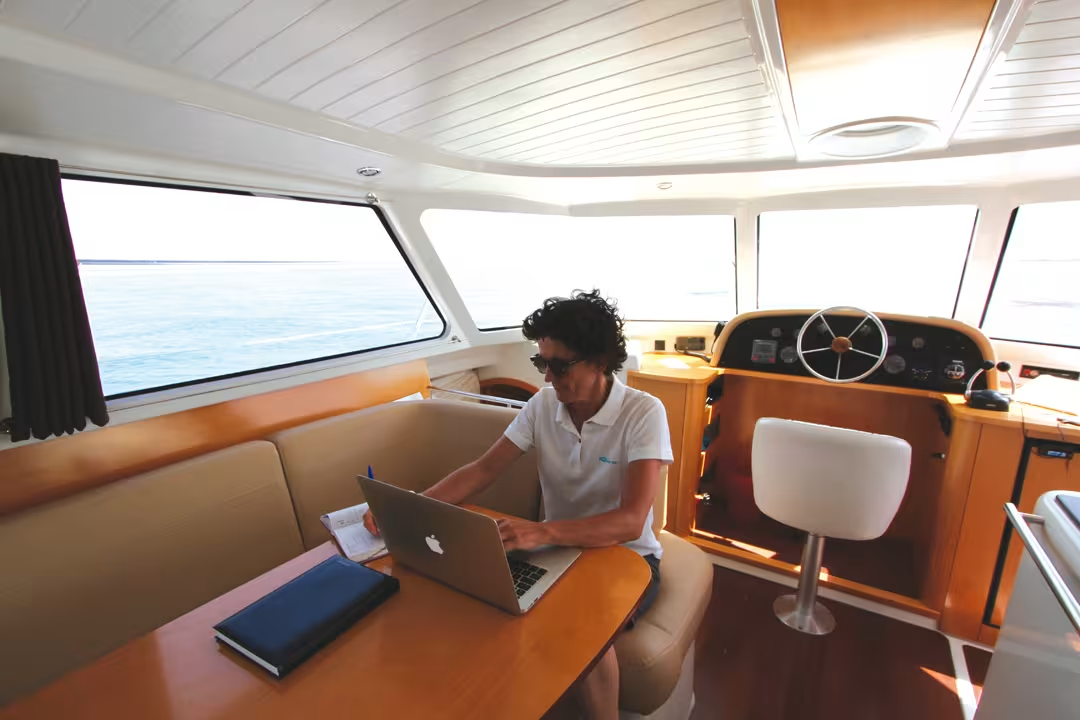
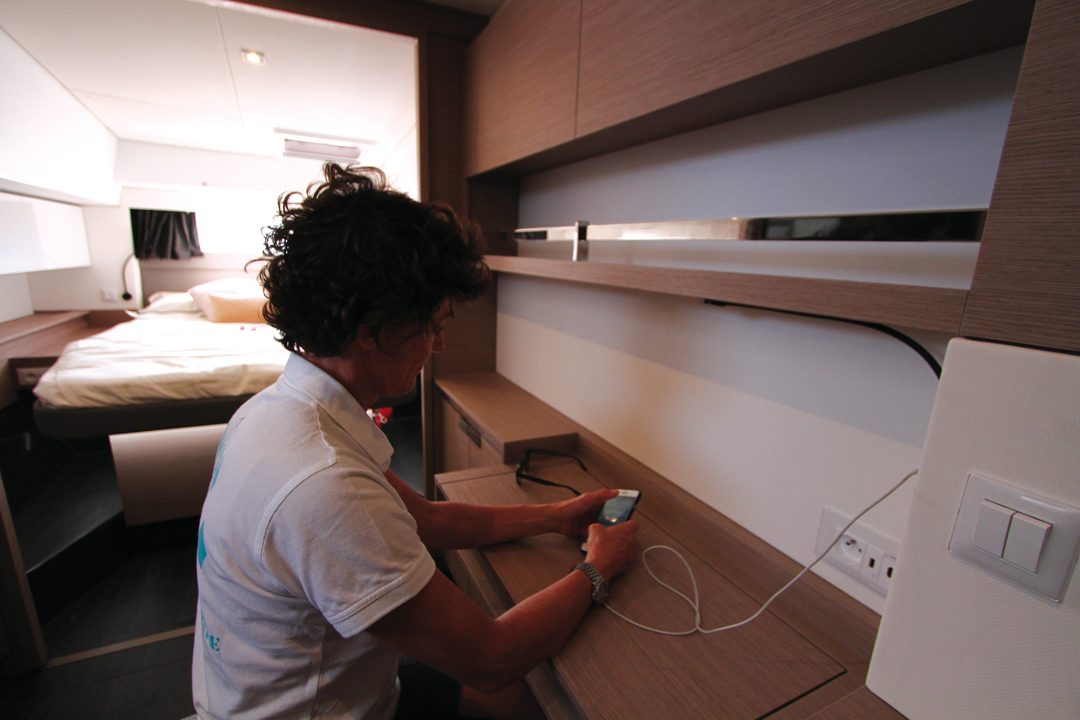
The alternative to all these constant and tiring comings and goings in airplanes is what we call the “nomad traveler”. As a snail takes its home on its back, so you can take your office. They are lucky enough or have made the choice to have a profession that they can carry out remotely: they might be writers, translators, accountants… In business for several years, their clientele is loyal and trusts them. 99% of their communication takes place by email, and they probably can’t remember their last face to face meeting. Quotes, order forms and billing, is now all digital, banking is done online and even the Christmas card arrives by email. So why carry on renting that office that needs heating in winter and cooling down in summer. Wouldn’t the dining table in the saloon even on a smallish catamaran be a better open-space option? If you can concentrate on your work when you’re surrounded by a magnificent panorama. If you can keep your head in your books when the water is 24°C (75°F). If you can resist a session of stand-up paddleboard when there’s a window in your schedule. If you can use your keyboard easily with two reefs in the main and the staysail up, and the height of the waves which go with all that. If you can handle all of this, then it’s the life for you. Not only does any of this concern your clients, they may actually appreciate your reactivity when they receive a job first thing in the morning which they had sent you the previous evening… Sometimes the time lag can be a good thing!
Communication: what do you need?
If you want to work on the water, your means of communication are absolutely vital. The prices of some of the equipment that is now available is one of the reasons that these new lifestyles have developed. A year or more away from home can now be termed a “sabbactive”. If you are looking at making the move in the immediate future, you can enjoy all of the comprehensive technical articles that you will find in your favorite magazine. However, what you should keep in mind is that there are three distinct levels of service depending on your professional requirements and imperatives. The three criteria which determine this market are: geographic coverage, the required service and the price. We should state here that we will not in this article consider the SSB. Even when associated with a Pactor modem, it is really only for enlightened amateurs. In fact, this solution is expensive, the installation is complex (as the utilization can be too) and the end result in terms of data throughput is rather modest. It also doesn’t seem to be particularly well suited to professional use.
4G and local SIM cards: practical and reasonably priced
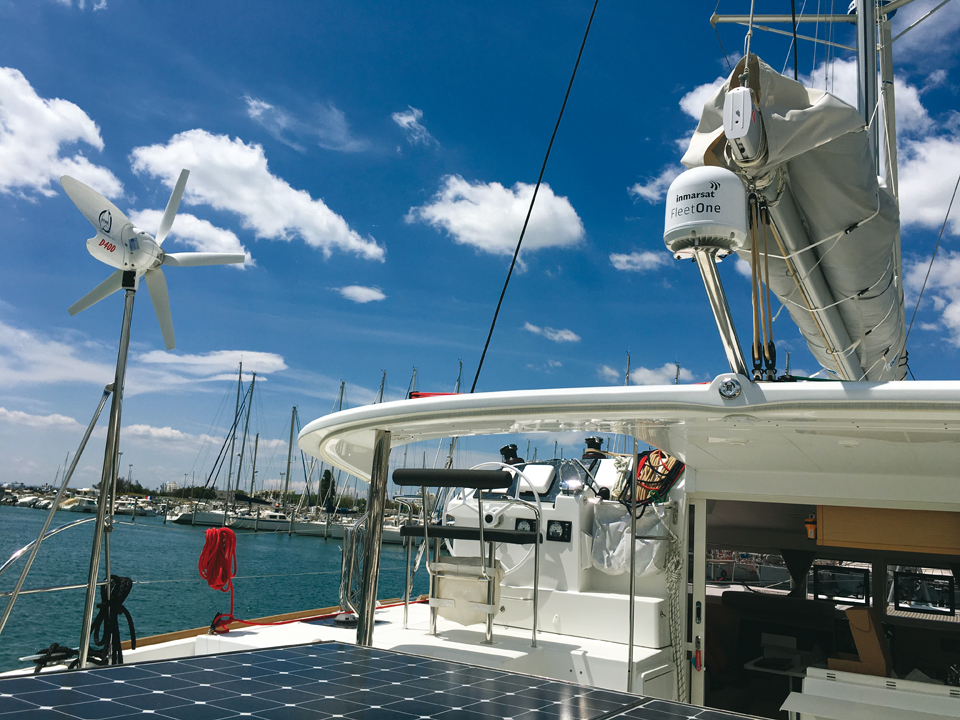
If you can manage without a connection for a few days (having warned your regular clients of course), the simplest and cheapest solution is the local 4G mobile network (soon to be 5G!). This can be either through your smartphone or to gain a bit of distance from the coast with an amplifying antenna which uses the network to create an onboard Wi-Fi (Glomex Webboat 4G/4G+, Neptulink…). Not only do they allow you to capture terrestrial networks up to 20 miles from the coast, but they also offer better access to more Wi-Fi networks in an anchorage or a port. The throughput is perfectly acceptable, allowing you to download the largest files, take part in a board meeting through Skype or watch the news from your home country from anywhere across five continents. The Antarctic isn’t currently covered! You just need to keep an eye on the roaming charges. Although they do generally seem to be dropping or disappearing all together (as in Europe), in some countries it is still expensive. However, this can soon be remedied by buying a SIM card for the country that you are visiting, as long as you stay long enough to make it worthwhile.
And what about the satellite network?
If you want to stay connected on longer crossings, then using a satellite network is vital. In its light version, which can be described as just about portable, the Iridium Go or 9555/75 offers an almost worldwide coverage at an acceptable price. Although the basic cost of the unit is reasonable, at between €1,000 and €1,500, communication and data transfer can be expensive. So, keep in mind that the purchase of the equipment is simply the visible part of the iceberg. The other, variable part of the bill comprising the communications and data volumes can be difficult to swallow! What usually happens is that you get stung the first month and after paying the 2 to 3,000 euros/dollars, you stop surfing the net the way you do at home! The best way to avoid yo-yoing bills is to use pre-paid cards. Their validity depends on the volume of data that you choose. On a transatlantic crossing, sending emails every day without attachments, and downloading GRIB files every 12 hours cost us $1 per day.
A radome antenna for broadband
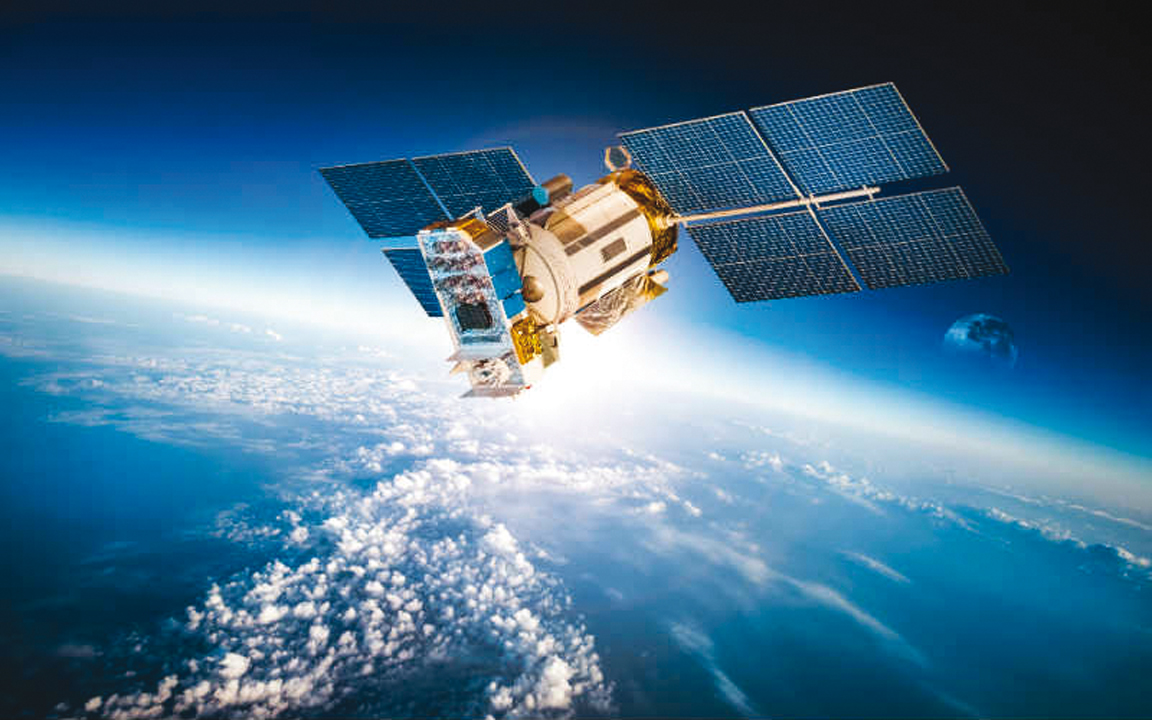
The ultimate kit is the satellite radome antenna, such as the Sailor 500, VSat or KVH. However, the standard models take up a lot of space (over 60cm/24” high and wide) and are heavy (25kg/55 lbs either up high or at the back, which will upset speed freaks!). Finally, there is the price of the purchase. The antenna plus a terminal will cost you between €20,000 and €25,000, which is a significant amount. The geographical coverage is very similar to that of the mobile phones that we mentioned before. The big difference is the much quicker speed of data transfer (up to 10Mbps download and 3 Mbps upload) and the cost of the communications. For example, the cost of a Mega Octet is around 20 times less than the mobile solution. If you require constant and intensive communication usage, then this is undoubtedly the option to choose. The antennas that have an integrated gyro-stabilization and SatNav systems can guarantee a regularity of data transfer in all conditions, wherever you are. You can take part in your work meetings with Skype from Los Roques or Patagonia for $0.74 per minute for audio and less than 4 dollars per minute for video. It’s worth noting that the technology in this domain is evolving very quickly, with antennas of less than 30cm/12” and weighing around 3kg (7 lbs) now in service, with prices starting at around $7,000. You will need to look at the communication price in satellite mode.
Working during stopovers
That’s enough of the technical stuff for the moment. Let’s get back to our worker-travelers. The third and last profile is certainly the most romantic, and perhaps with just a hint of nostalgia. And yet, although it was what our adolescent dreams were made of, the possibility is still there, reinventing itself with each societal and environmental upheaval: working in the country where you stop over for a few weeks before heading off for another adventure somewhere else. Obviously, you need the right sort of profession, but there are plenty of them. And if your current job isn’t one of them, perhaps you could change? Perhaps there’s one that you’ve always dreamed about? Medical and paramedical, teaching and hotel and catering seem to be the ideal passports for finding a position. This was the case for two young physiotherapists, only just thirty years old and who never work more than 6 months at a time and never twice in the same country! Also, jobs in the nautical industry and transport and logistics can offer some interesting surprises. And perhaps your imagination or your artistic, culinary, manual or literary talents could come in handy in some countries. Once you have got over the language barrier, which is usually the first thing that we think of, then it tends to be the local legislation which is the main constraint or limit on our plans in a particular destination. Whether you just want to make a bit of cash, stay active, keep practicing a skill or just help out, it’s better to be informed before you start working. It’s worth remembering one or two things: a tourist visa is not a work visa. To take paid work in a country where you are not resident is more often than not forbidden. To take paid work without being declared is not just illegal but can be extremely dangerous if you have an accident. You might not go to prison for it (although in some countries that may be debatable), but the fines can be hefty, and your boat can be easily seized. There are certainly more pleasant ways of travelling than being expelled from a country, and any territorial restrictions placed upon you could have serious consequences for the rest of your journey. Without getting too paranoid about what could go wrong, it’s just better to understand the local rules and regulations that are in force. Also, avoid any unfair rivalry with local traders, especially in zones with precarious economic conditions.