
Every year, more and more blue water cruisers are opting for a multihull. Many of them let us into some of their little secrets which help sailing remain a pleasure, not a pain!
1 Fenders
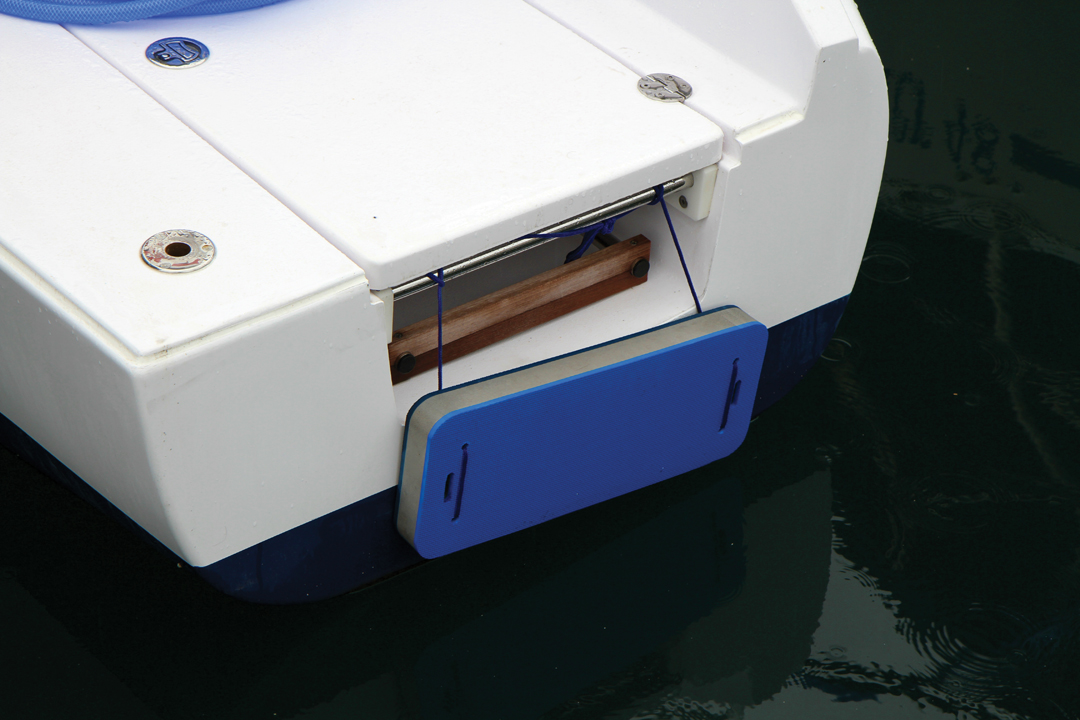
Cylindrical, square, angular, round? All four of them, Captain! The former have the advantage of taking up less volume and remain in place for a long time, even in strong winds. The second are bulky but perfect to better distribute the pressure on the hull - and sometimes the windows. But if the contact is not good, they sometimes fly away and find themselves unnecessarily trapped on the deck. The third are perfect for the sugarscoops. As for the latter, there is nothing better than a roving fender when maneuvering... Not to mention swimming pool floats!
2 Access ashore
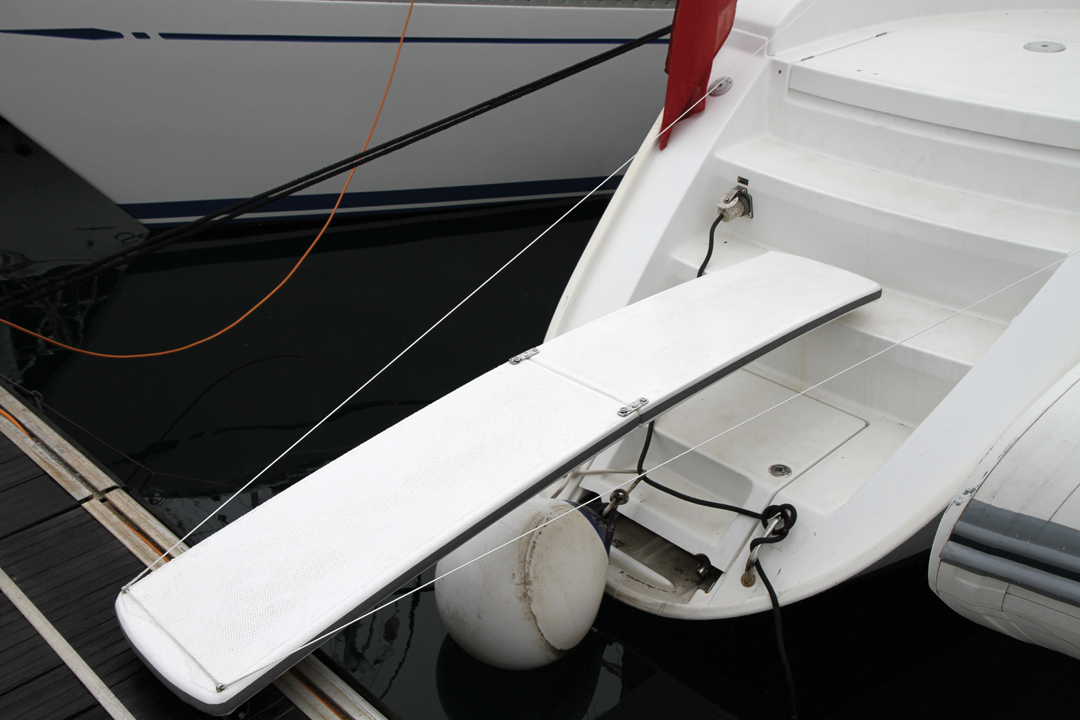
Getting onto the dock is easy with the latest models of boat which are equipped with a pivoting platform. But what if yours isn’t? You'll need a passerelle if you’re stern-to. Folding (or otherwise) in carbon or a simple plank - if possible grooved to make it non-slip - there is something for every budget! If your bow is to the pontoon, install a ladder on the pulpit or chop down a stepladder to suit.
3 Coming and going
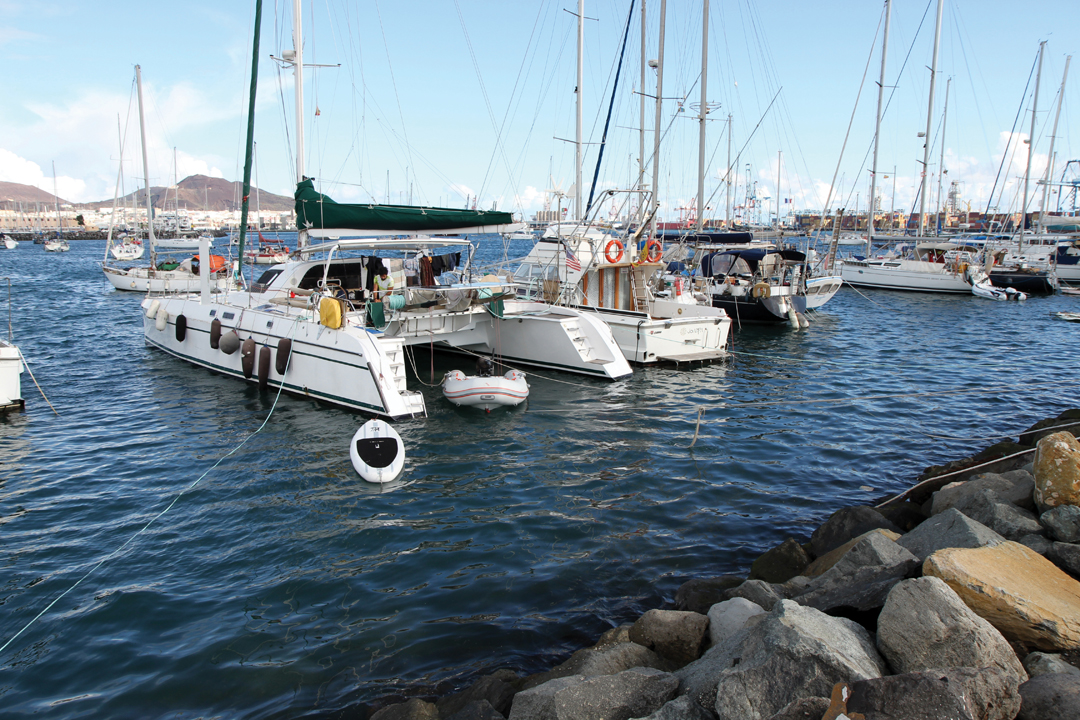
If you are moored some distance off the dock, set up an outhaul system by one of your stern lines: everyone can then be autonomous for getting ashore or returning on board, by paddleboard or dinghy.
4 Antenna
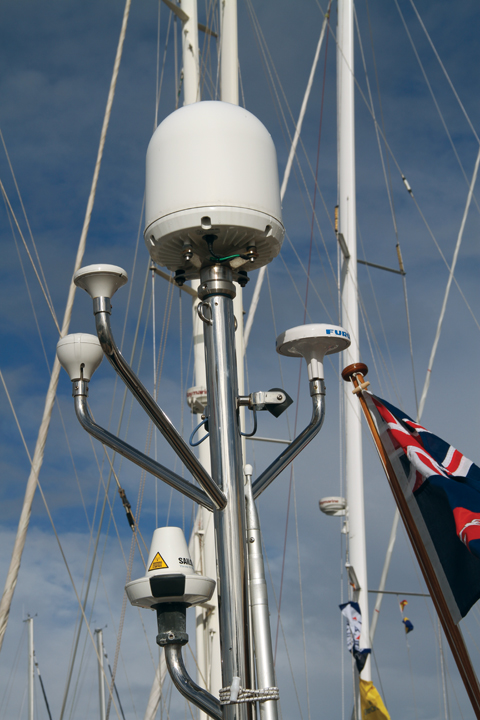
GPS, Iridium, Wi-Fi, radar transponders, antennas and radomes… they are everywhere! So why not attach them all to a single mast, like a Christmas tree? In the end, a lot less weight and less windage!
5 Wi-Fi Booster
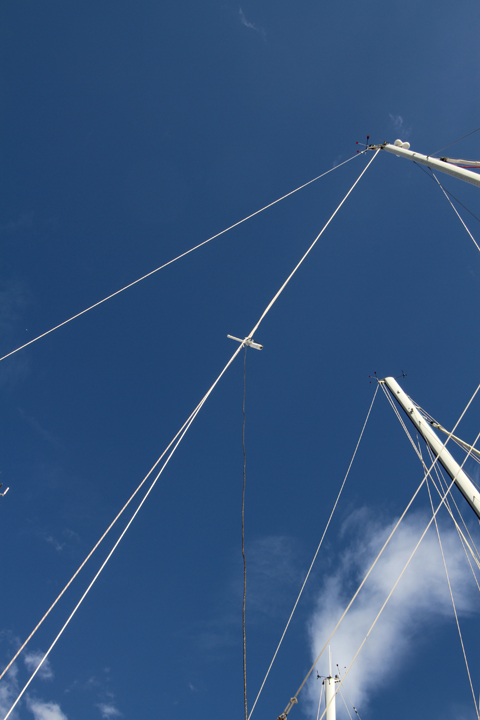
There’s nothing worse than struggling with a Wi-Fi signal that flits about from three bars to zero. Some smart cruisers have jury-rigged signal amplifiers from a beer can... but a proper Wi-Fi booster hoisted up the rig works every time!
6 Leds

One of the simplest and most effective ways to limit on-board power consumption is to replace all your standard bulbs with LEDs - for the same amount of light, they draw 5 to 10 times less energy!
7 Provisioning
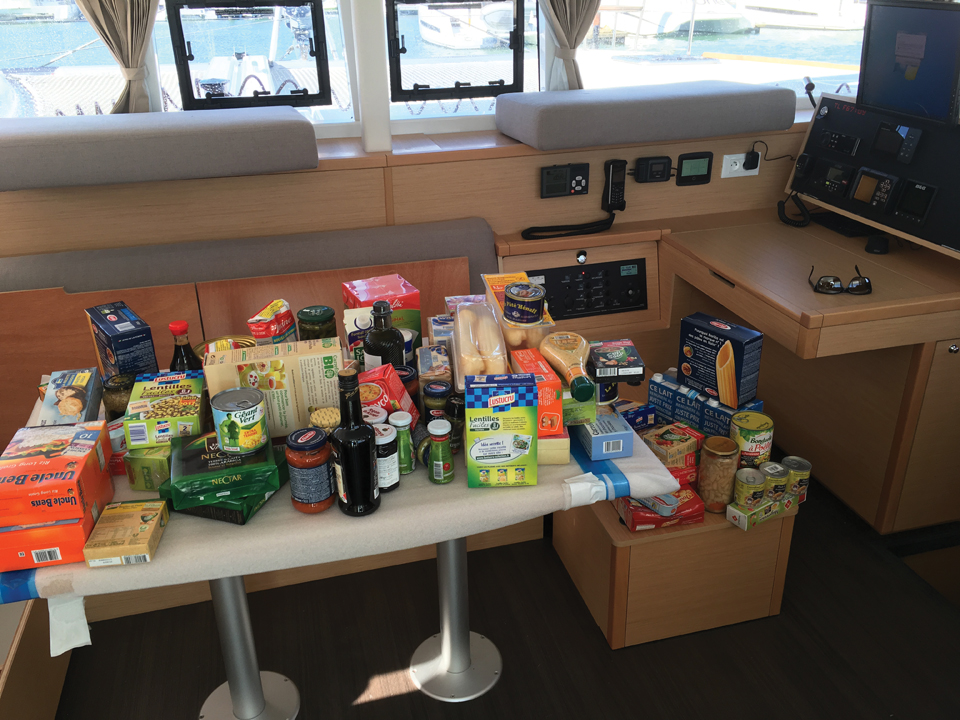
An Atlantic crossing with 5 crew on board represents about 225 meals... The most convenient way is to have your supplies delivered directly to the pontoon! A word of warning though: don’t take cardboard packaging on board: in hot climates, they can be full of cockroach larvae... On board, stow the heaviest items centrally and low down!
8 Freeze-drying
Freeze-dried meals are ready-prepared and save space and weight on board. Other advantages: they are now quite varied, tasty and can keep for a long time.
9 Water
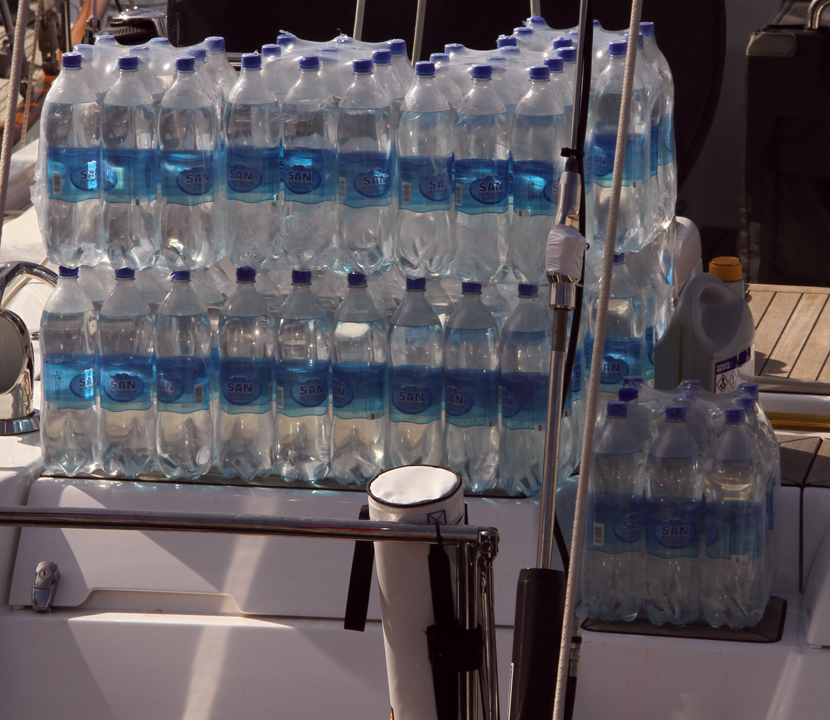
It’s already hot enough during the summer months in temperate latitudes, but it will be even hotter in the tropics! Remember to carry two liters (over 2 pints) of water per person per day. Choose standard bottles, which are easier to handle, and stow where they can’t be contaminated.
10 Watermaker
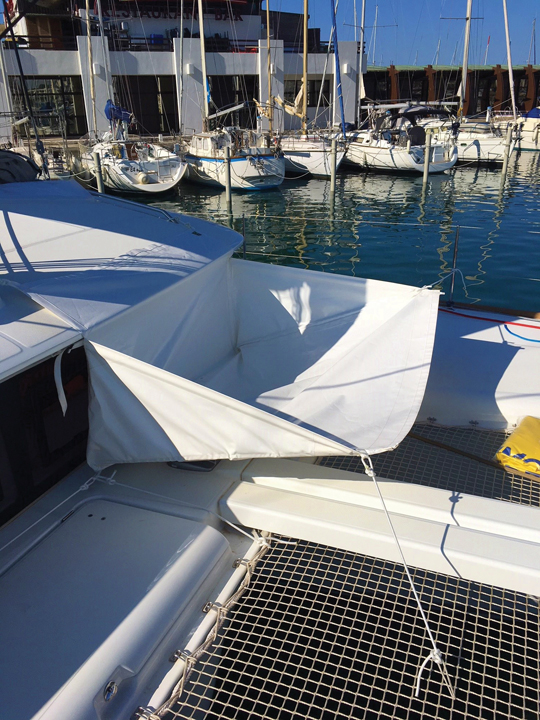
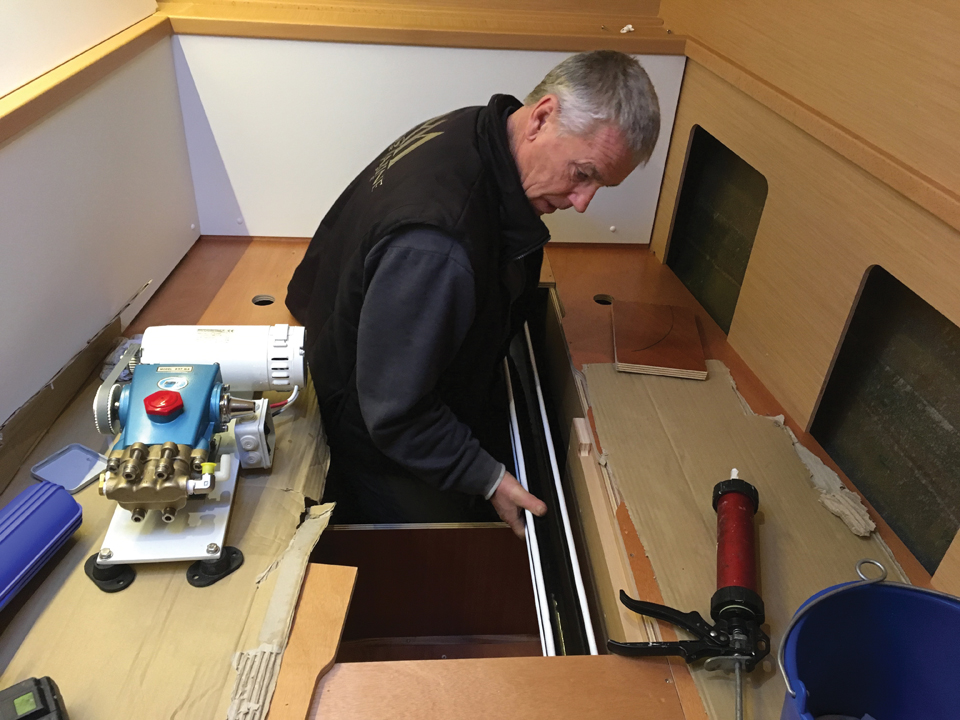
This is the one piece of equipment that guarantees autonomy! No need to refill with water, less weight on board and (almost) unlimited showers. Most multihull manufacturers offer a watermaker as an option, and it is obviously still possible to install one later. Another clever feature is a water catcher!
11 Fruit
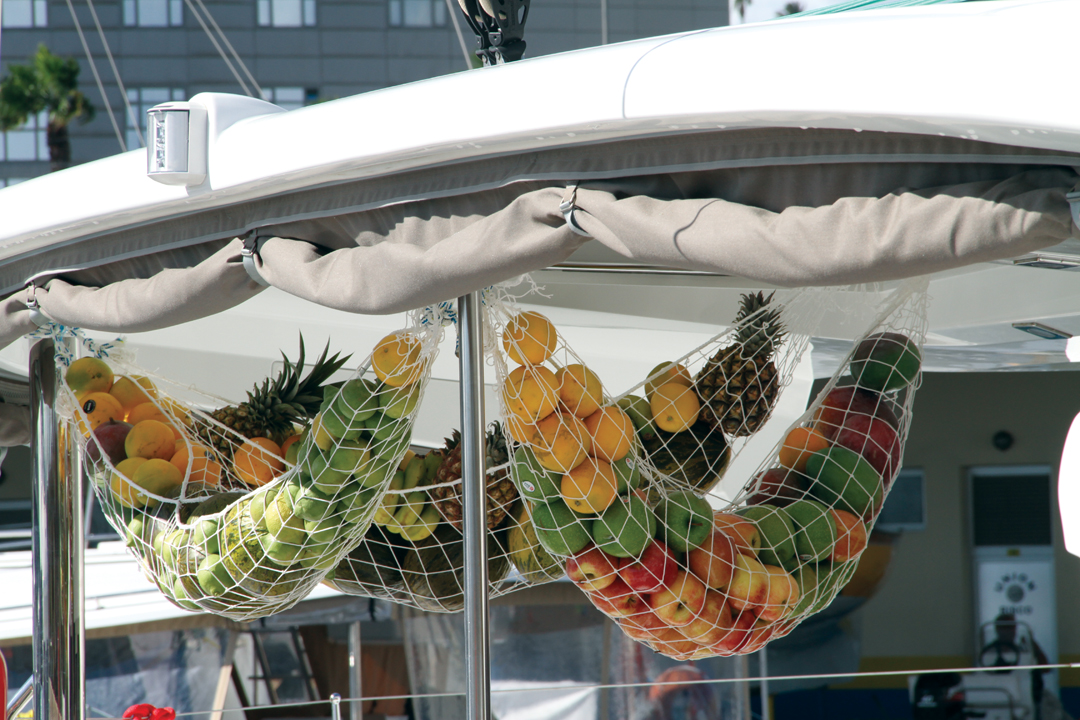
Take fresh fruit on board: The Canary Islands are full of the stuff... for optimum storage, wash fruit carefully and then hang under the bimini or sprayhood in a net. In the open air and most often in the shade, they’ll finish ripening slowly and will be delicious for about ten days.
12 Coffee
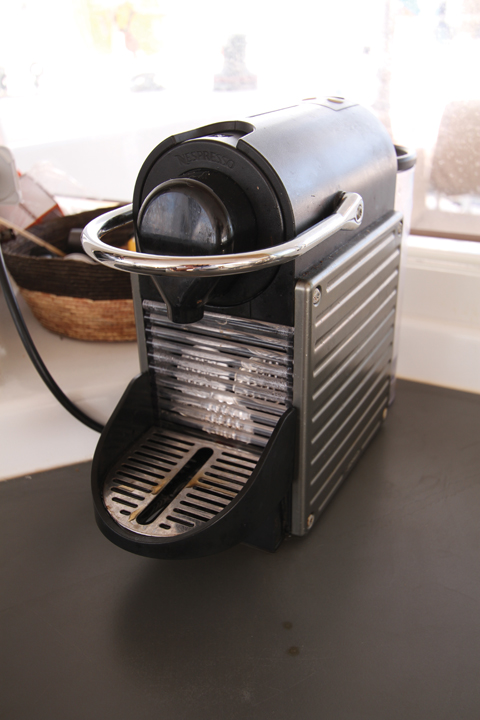
Are you bored of instant coffee? Then use your AC circuit to enjoy the same comfort as at home: get your coffee machine on board! Be careful with the capsules though: it's hard to get them delivered in the middle of the Atlantic.
13 Cycling
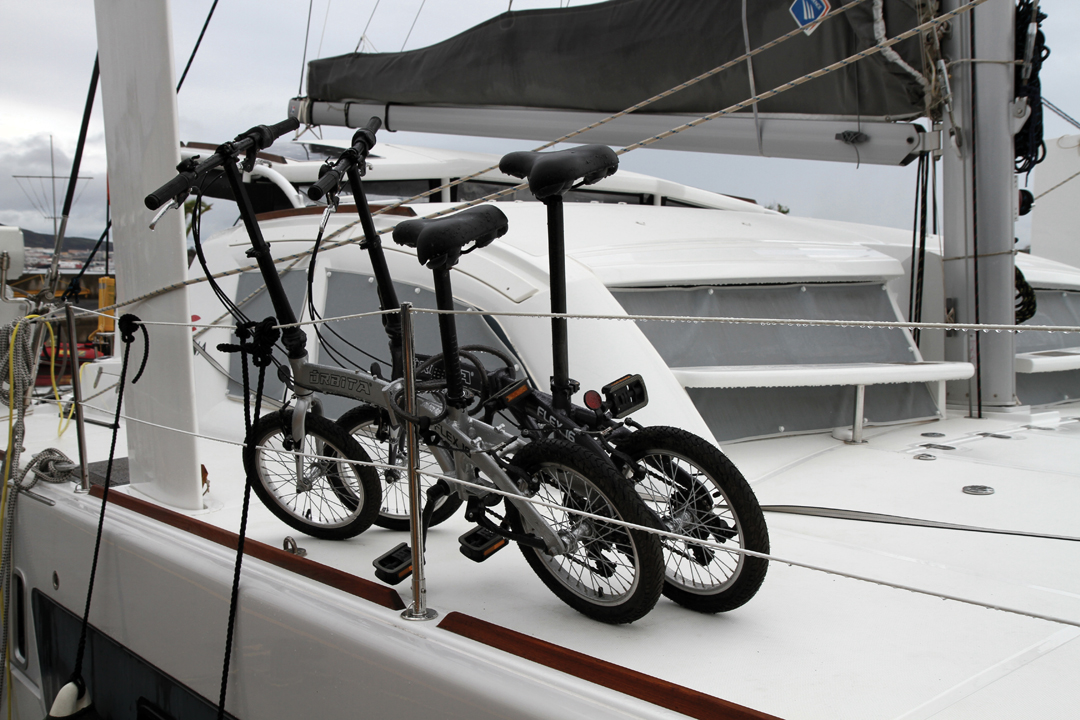
Leaving a bike on deck during an ocean crossing is certainly likely to make it unusable or almost useless when you arrive... so choose folding models, which will easily find a space in a locker or cabin.
14 Fuel
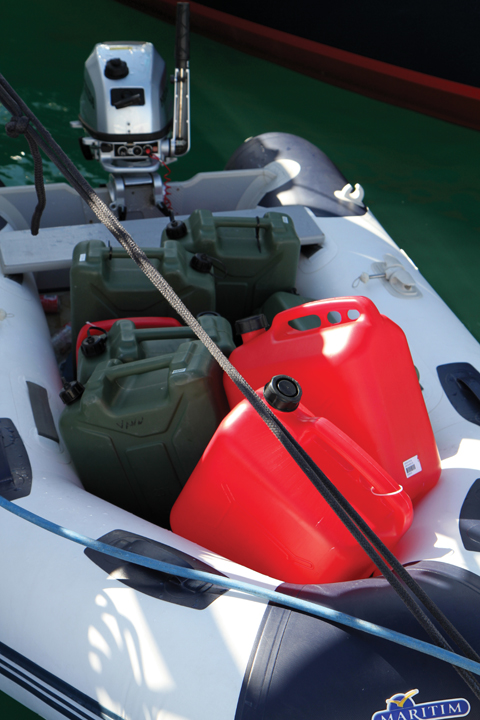
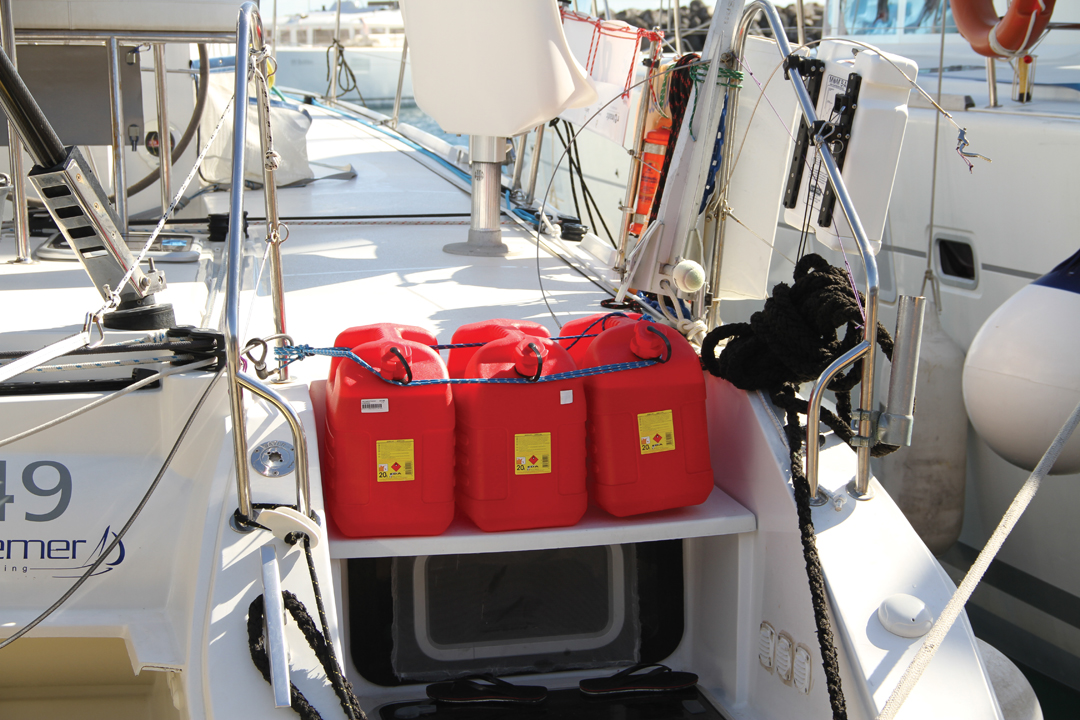
Fuel tanks on modern cruising boats are large - 300, 400, 600 liters (80, 100, 150 gallons). However, during a three-week crossing, if the battery bank requires 5 hours of engine charging per day, you’ll use up more than 100 liters (25 gallons). And with a consumption of 3 or 4 liters (1 US gal)/hour, well.... some jerricans will come in handy. If your lockers are full, secure them well, aft, which is where they'll bother you the least. And in port, if you don’t need too much, go get it with the dinghy!
15 Masthead inspection
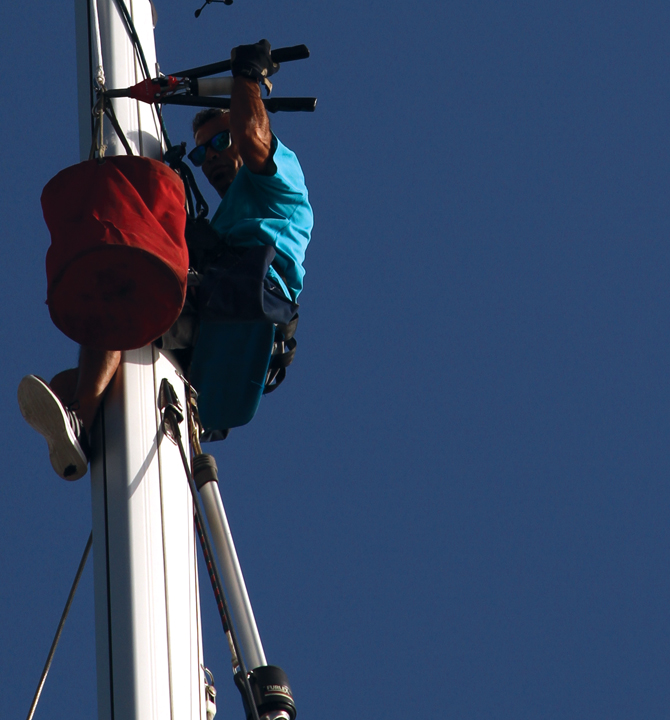
Better than the traditional bucket – hoisted on its own halyard - for holding tools and parts: this deep canvas bag limits almost any risk of spilling the contents.
16 Marking the chain
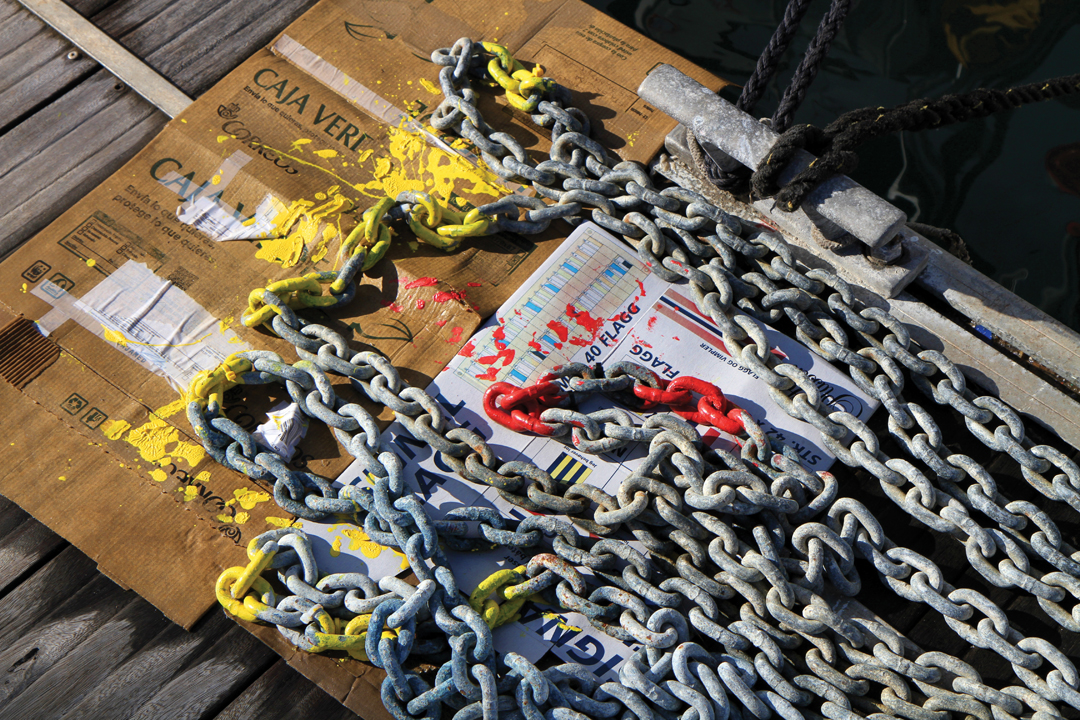
Mark a few links on your anchor chain every 10 meters (30 feet) - preferably in different colors - so you will know exactly how much the windlass has let out. Very practical for managing your scope and swinging room, and of course for gauging the depth.
17 Center your ground tackle
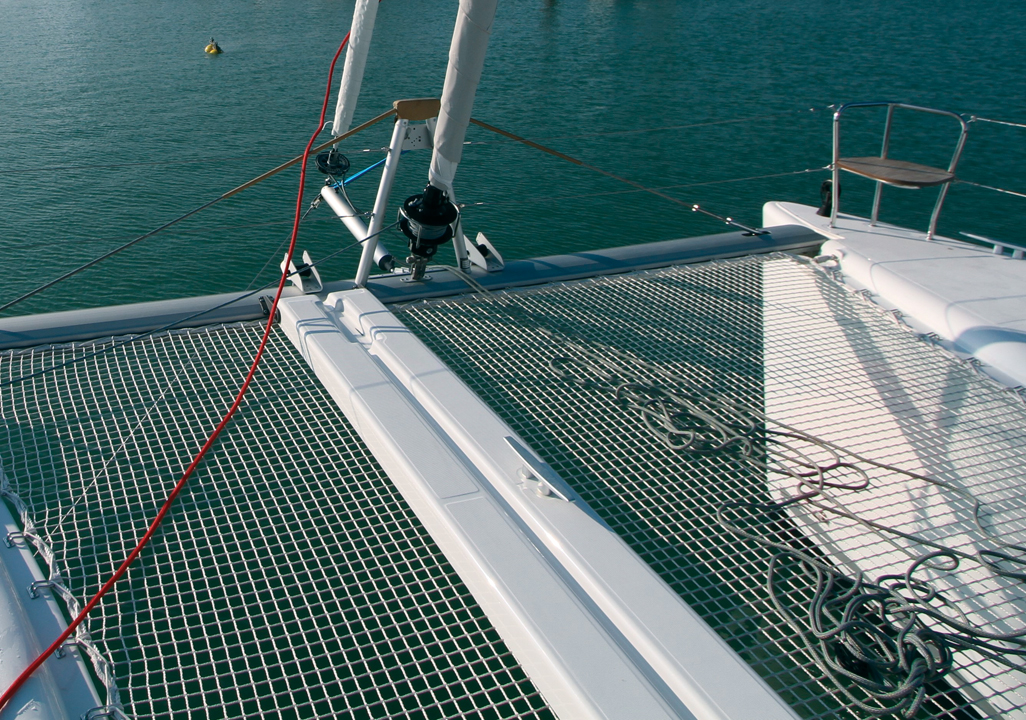
Take advantage of the fact that the chain is no longer in its locker to store it under the floor: a good move to reduce pitching. Also, take the anchor off the bow roller and center more weight by stowing it in the chain locker. You’re not going to miss your ground tackle for two weeks while you’re at sea!
18 Crew members
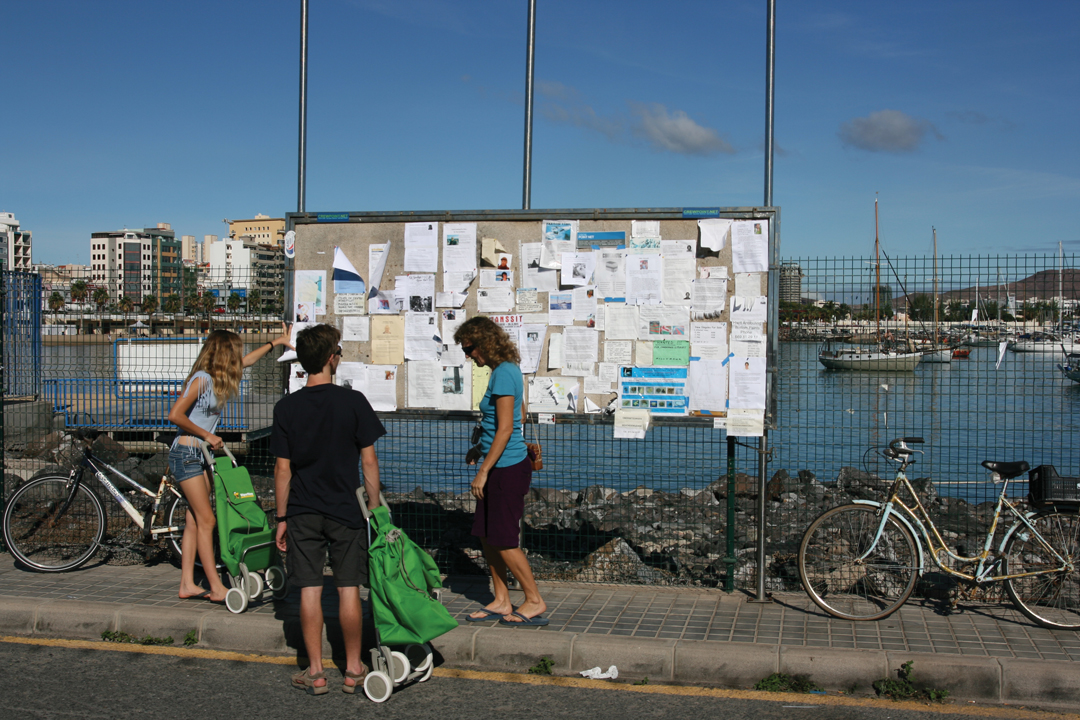
Need extra crew for night watches? Specialist crew-finding websites are effective... or there’s always the good old marina notice board. In any case, there’s no shortage of sailors looking for a ride at major ports of call such as Las Palmas in the Canary Islands!
19 Folding propellers
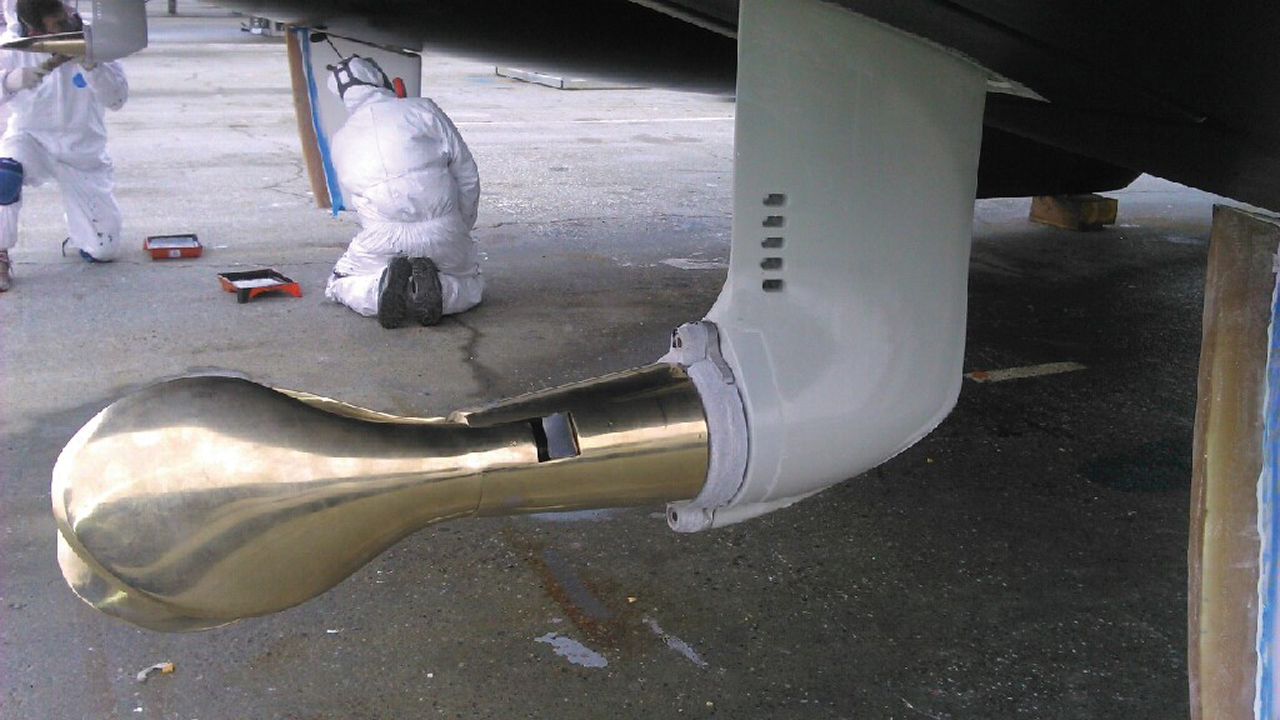
Don’t underestimate the amount of drag from a pair of fixed propellers. Folding propellers mean more speed, more sailing pleasure and less fuel consumption, making them a good investment!
20 Flybridge
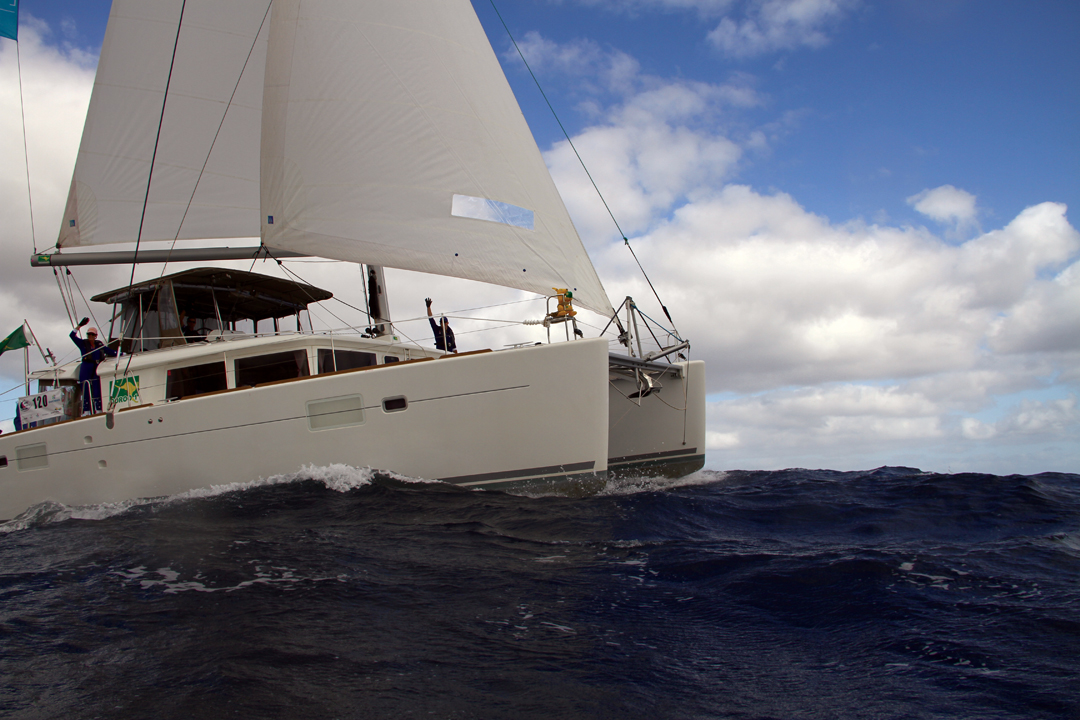
Above 45 feet, many catamarans are equipped with a raised cockpit... which can be very exposed to the wind. It’s tempting to protect the flybridge, but beware of windage and visibility. The ideal is to have a set of canvases that are easy to dismantle - at least for when it comes to long crossings.
21 Liferaft
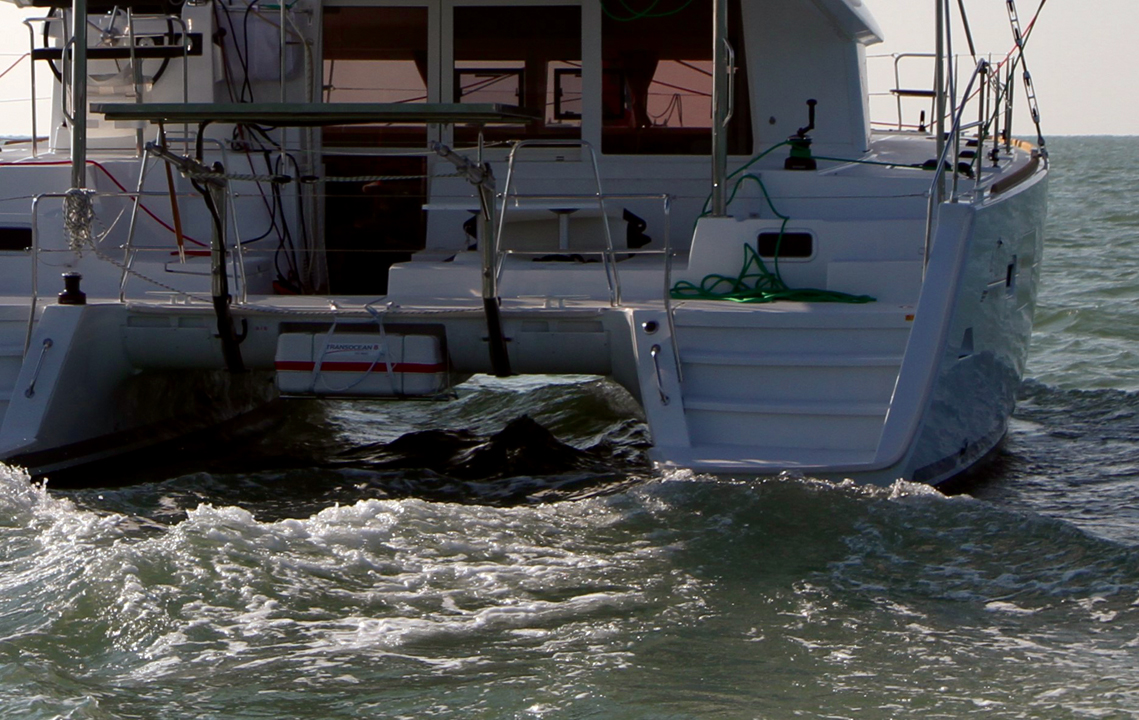
Look after your raft! It will obviously fare better stowed outside than at the bottom of a locker for ease of handling in an emergency. However, the raft should not be exposed to knocks, and walking on it is not recommended. But what’s the solution if your multihull doesn’t have a specific location for it? A tailor-made housing, integrated into the lifelines or the pushpit.
22 Jackstays
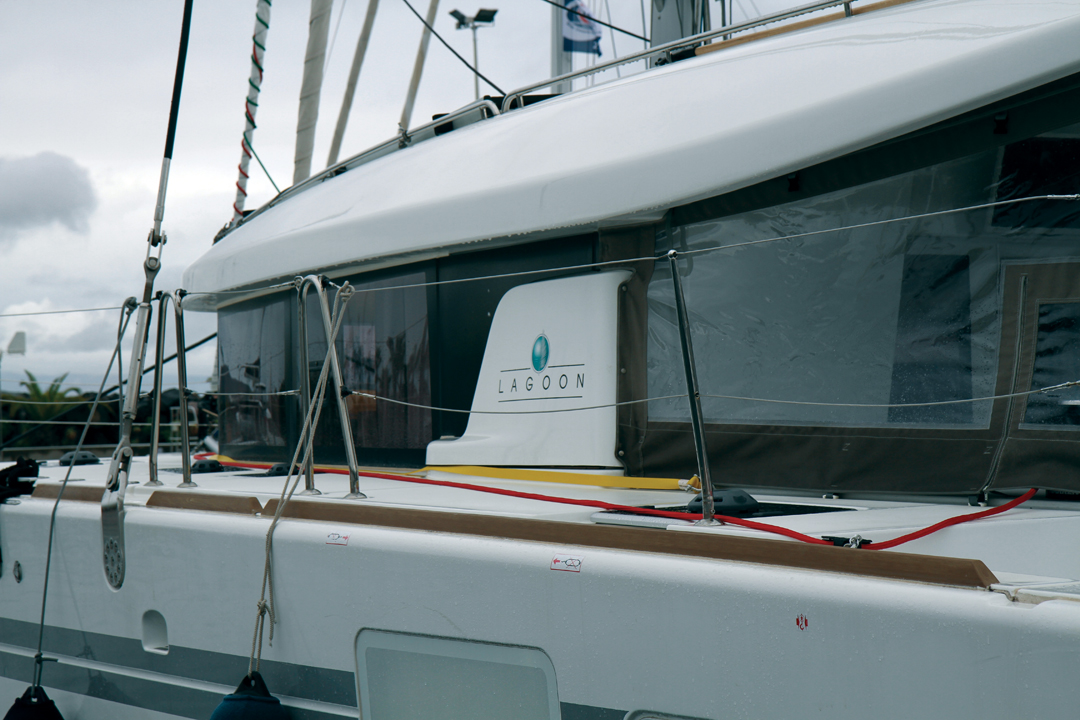
Admittedly, a multihull remains flat whatever the sailing conditions and moving around on deck is much easier than on a monohull. However, jackstays on the decks, easy to clip on to when leaving the cockpit, add another level of safety.
23 Survival suit
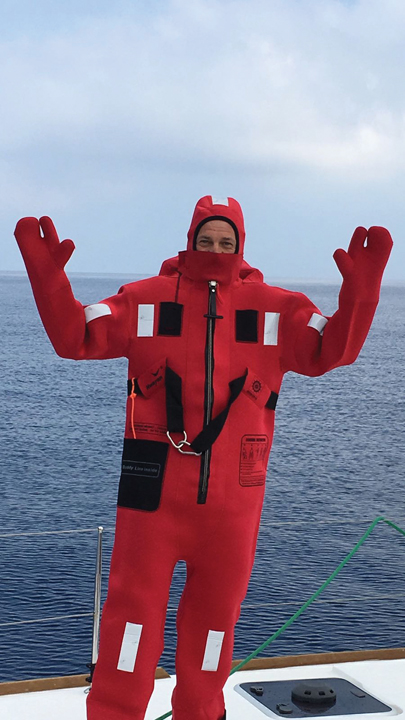
Having survival suits on board is a useful investment... as long as you wear them at least once! Also worth having: a small waterproof survival container (VHF, energy bars) ready to be used in case of emergency.
24 Dinghy
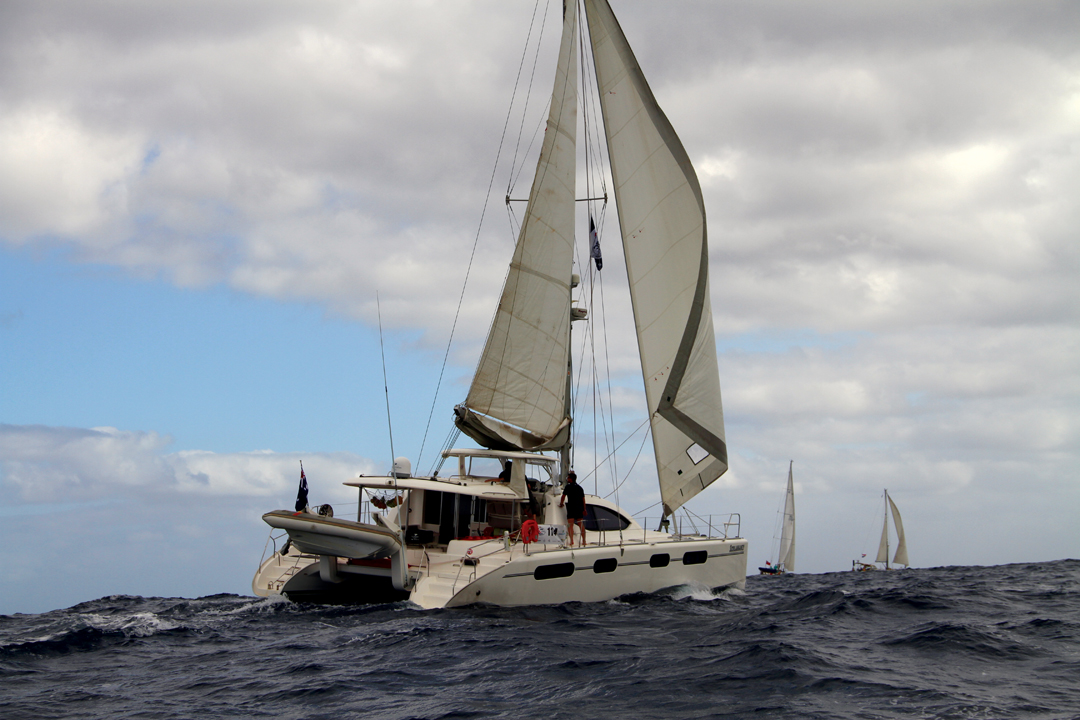
The ability to raise the tender and its heavy engine on the davits is one of the advantages of a catamaran and is an appreciable safety factor in case of a big problem. Storing it high frees up the view aft but doesn’t help with centering the weight. Those performance addicts out there will stow it in the bottom of a locker and secure the outboard inside.
25 Protection
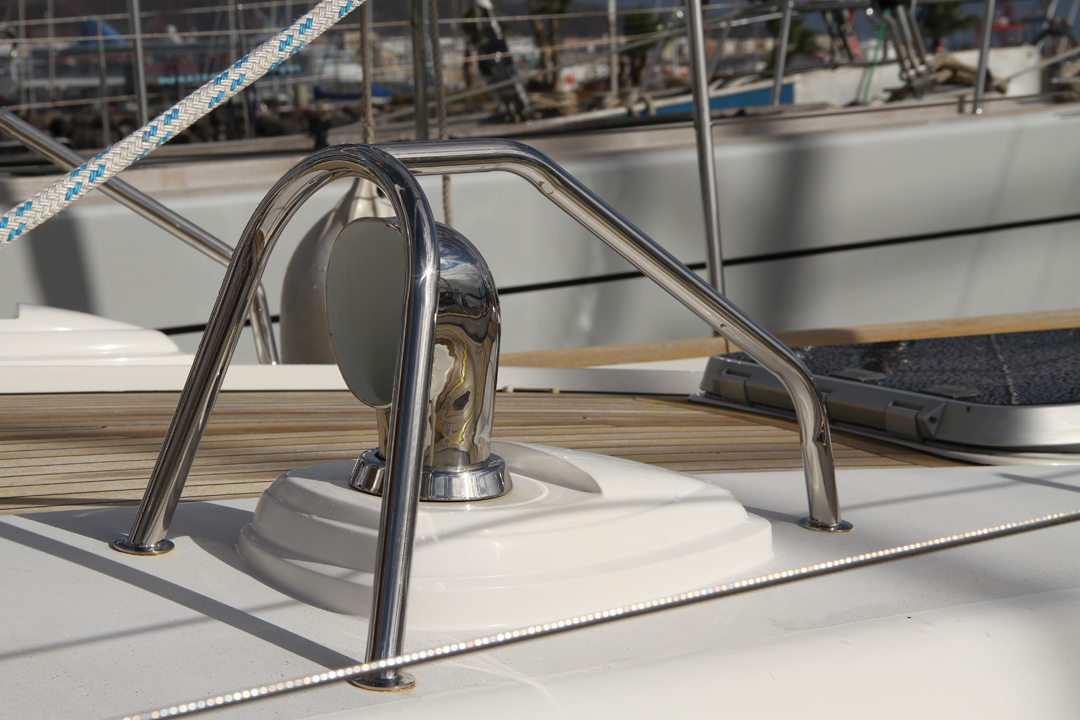
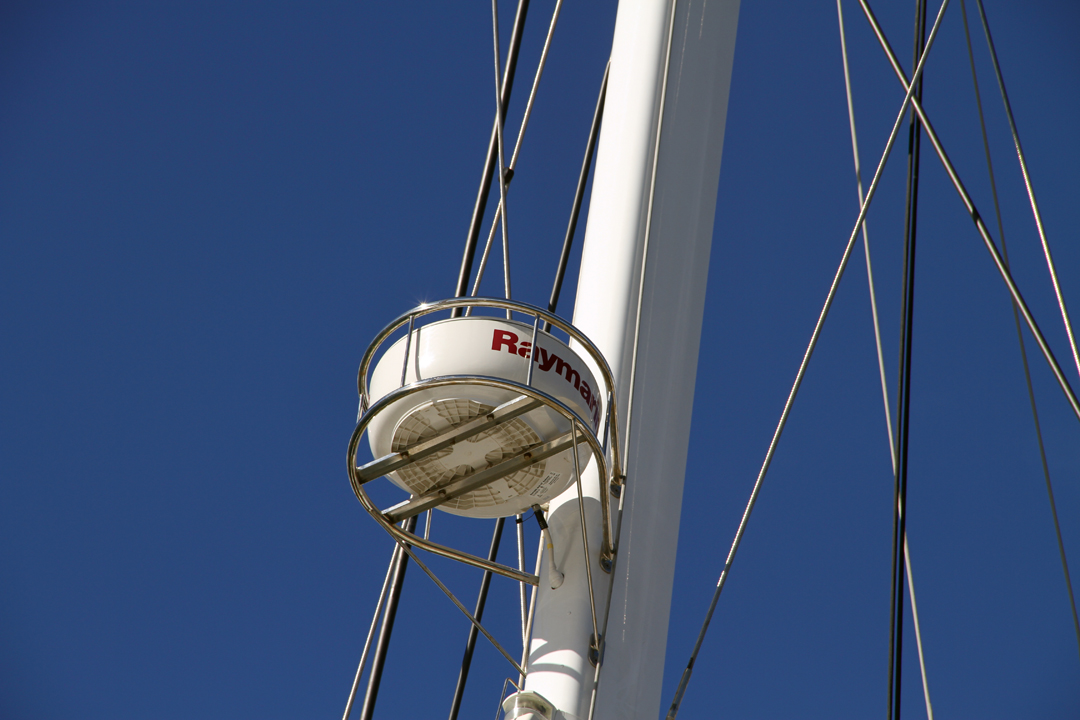
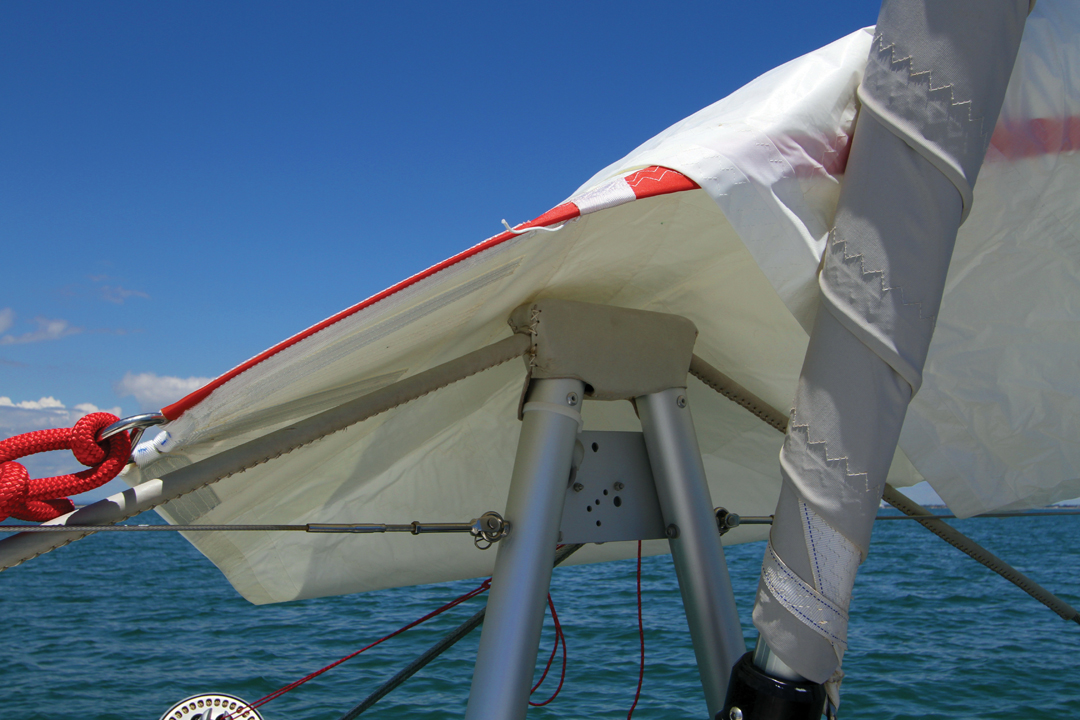
Wind instruments and radomes can be very exposed when the headsail is flogging. This is the case downwind, when it is no longer filled, blanketed by the main. And also for when the swell knocks the wind out of the sails. A stainless-steel protector prevents any breakage and limits chafe. Leather, on the other hand, is perfect for protecting sails.
26 Mascot
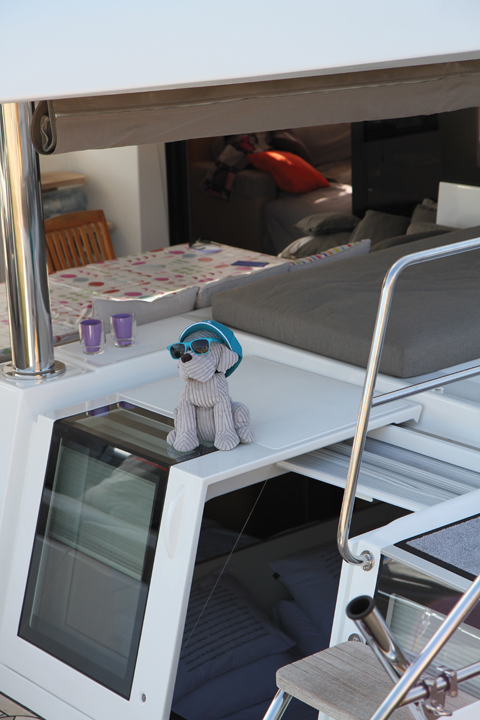
Are you feeling a little anxious and/or superstitious about your first ocean crossing? Take a mascot with you! It will liven up your photos taken on board and your children will adopt it right away!
27 Staysail
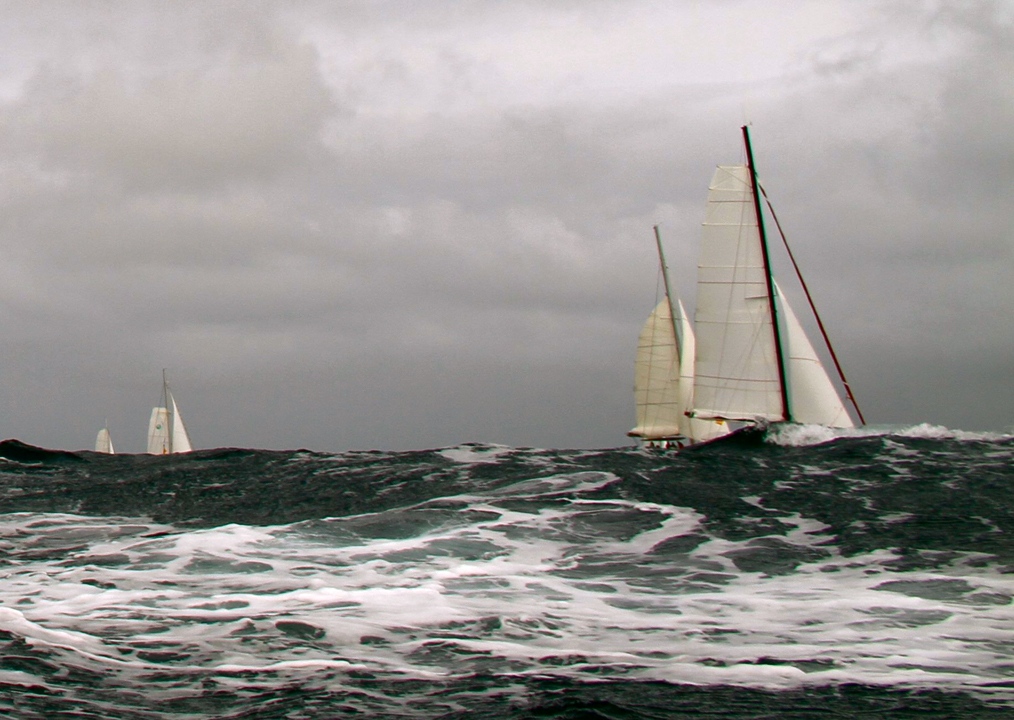
Having a good sail for a breeze, with the right cut and weight ensures an undeniable gain in performance and preserves the genoa, which usually operates in "all or nothing" mode. The ideal way to avoid windage, weight aloft, and not hinder the genoa's path when changing tack is to use a removable inner forestay and have a hanked-on sail... but then again, a second furling system is also tempting!
28 Solent
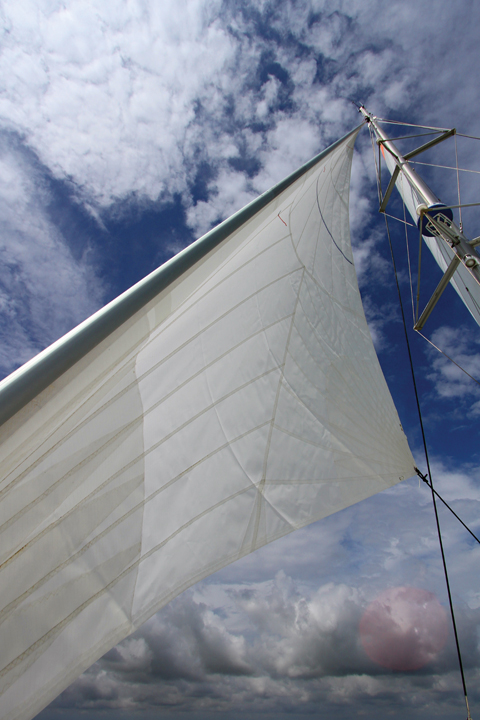
Rather than sailing in a strong breeze with a half-furled genoa or using a staysail, which is not always ideal on a boat of less than 45 feet, rigging a solent, which is smaller and stronger than the original jib is a good option for windy routes (North Atlantic, Southern Ocean).
29 Mainsail furling system
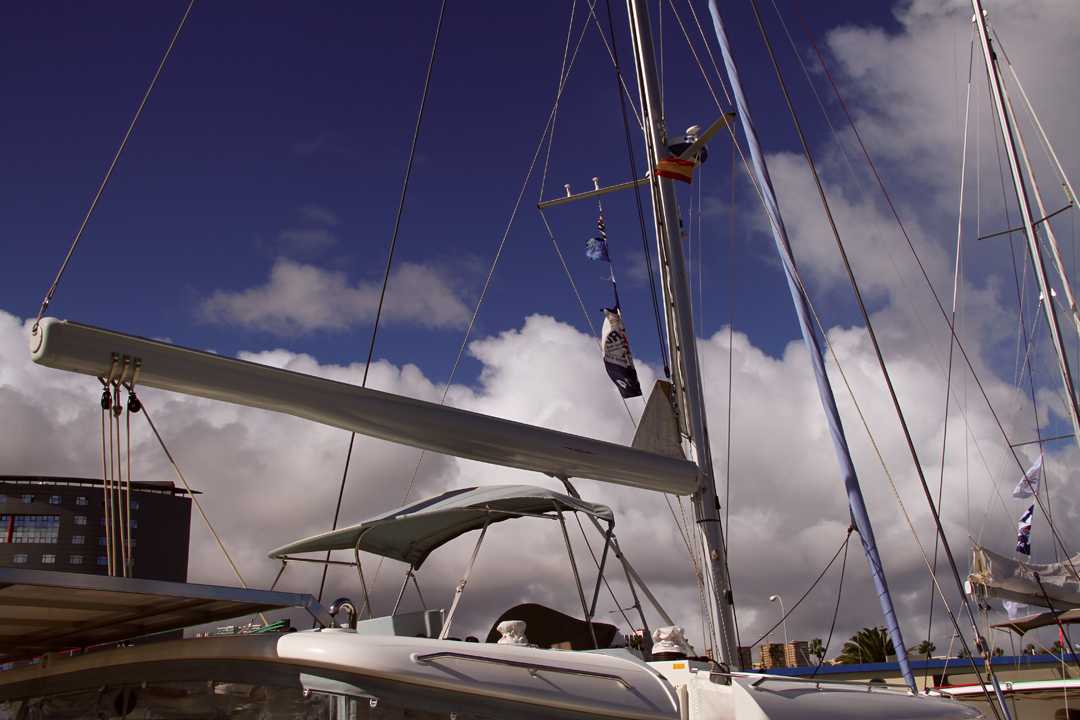
Slab reefing for the mainsail has proved its worth, but the possibility of furling the main remains attractive, despite potential mechanical issues – try furling a torn sail, and you’ll see! The furling boom is very heavy (beware of this when gybing), but it does maintain the roach.
30 Sock
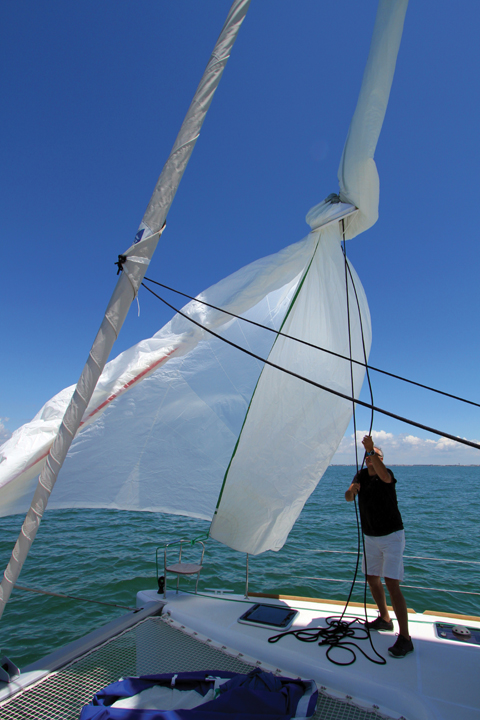
For long downwind sailing, nothing beats a spinnaker sock for dropping the kite, whether for the duration of a squall or to spend a quiet night. We have Eric Tabarly to thank for its invention!
31 Symmetrical spinnaker
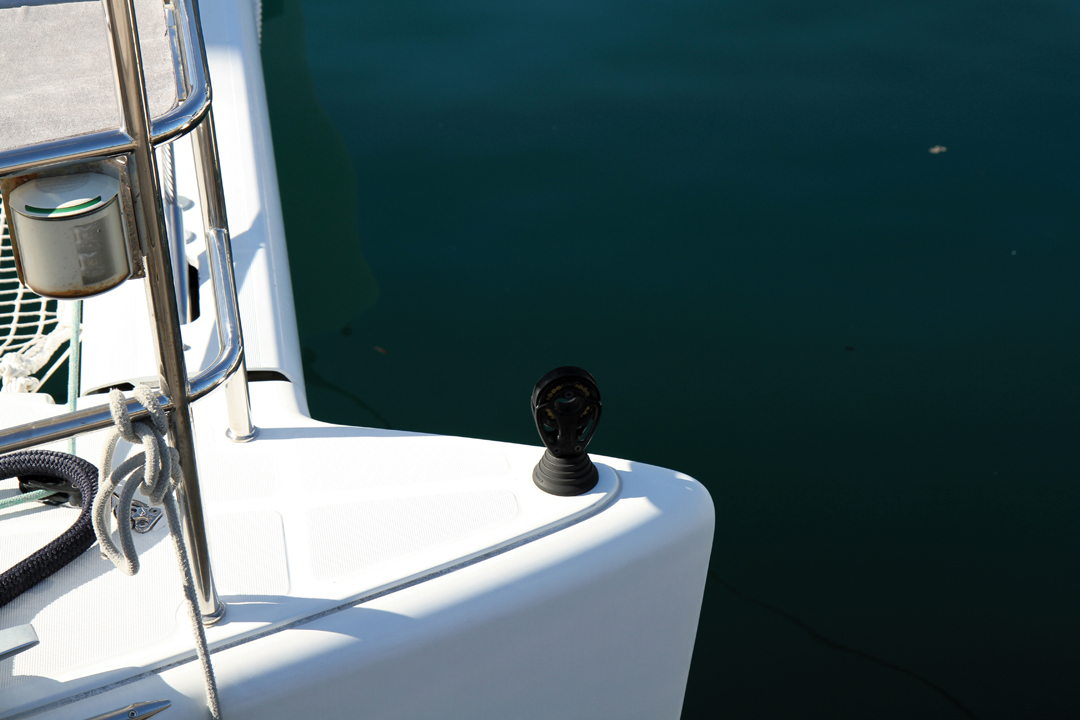
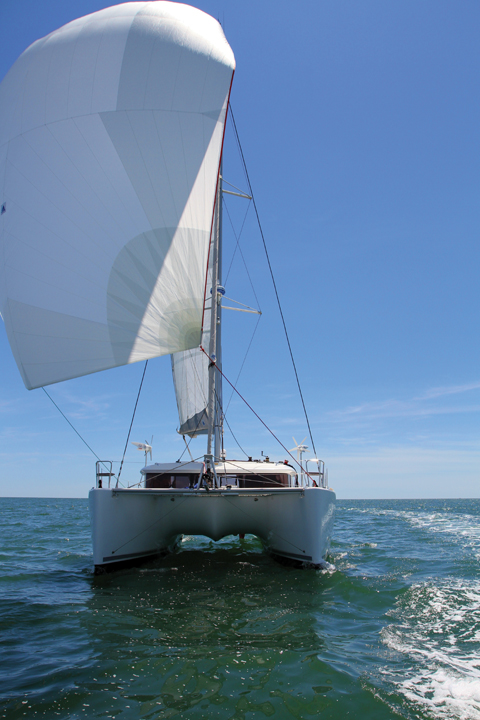
The good old symmetrical spinnaker is very efficient at the lowest speeds and a block on each bow eliminates the cumbersome spinnaker pole found on monohulls.
32 Fluorescent strip
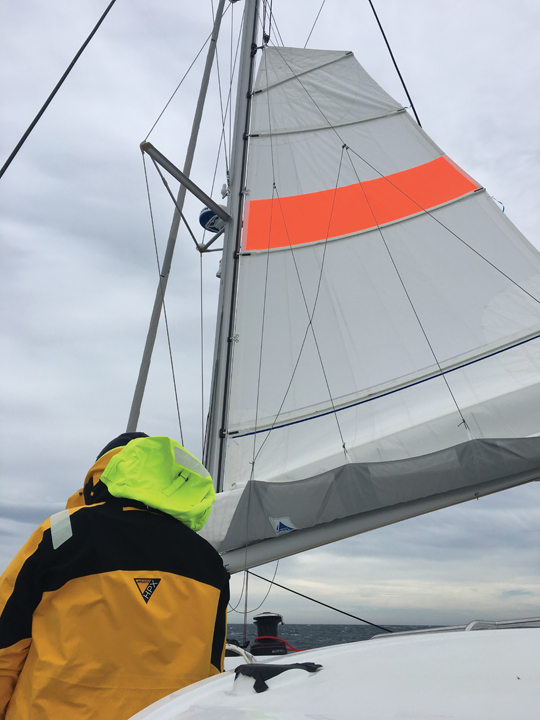
A fluorescent band at the top of the mainsail makes it easier to locate the boat should it be necessary. A useful idea for your multihull if you’re planning extreme programs such as a circumnavigation via the Great Capes.
33 3rd Reef
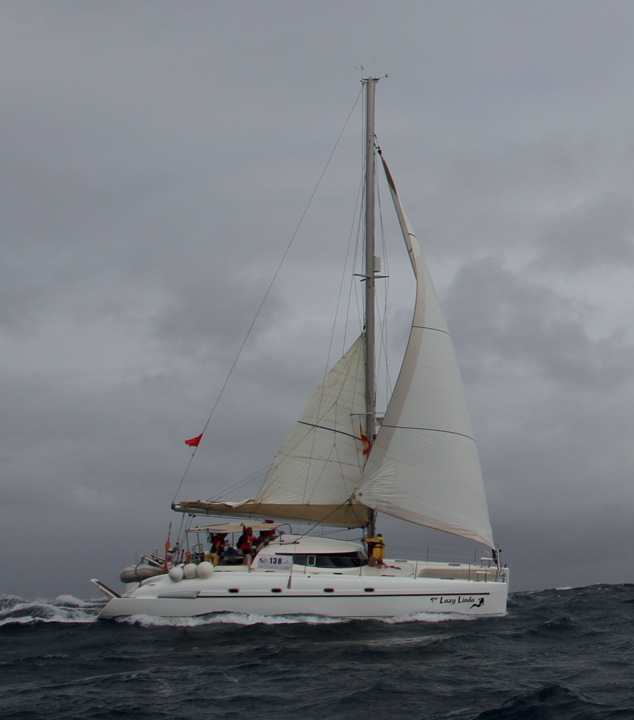
If your mainsail is not equipped with one, ask your sailmaker to install a third reef. Remember: in bad weather, downwind, with no headsail, it’s the best configuration for a multihull.
34 Boom brake
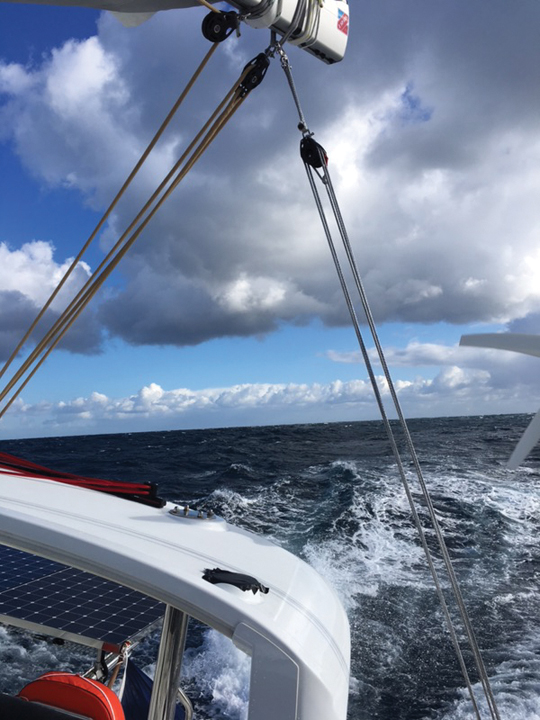
Crossing the Atlantic (toward the West Indies at any rate) means sailing downwind and gybing often. To avoid the risk of breakage (gooseneck and battens), the boom brake has its followers. The use of a padeye on the deck means you can set the mainsheet with a good angle of pull, favorable for good control of the leech. This relieves the load on the vang....
35 Sewing
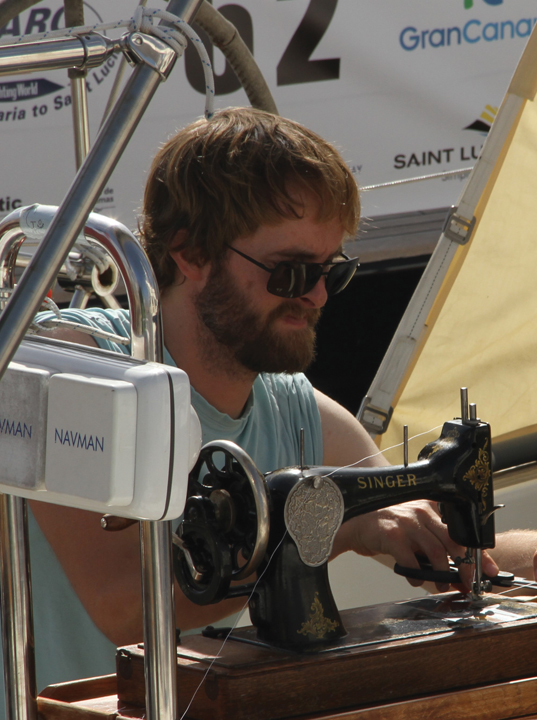
Unless you have an AC inverter, it’s difficult to run a sewing machine once away from the dock... make sure you have needles, thread and Insignia-type adhesive cloth.
36 Aft mooring lines
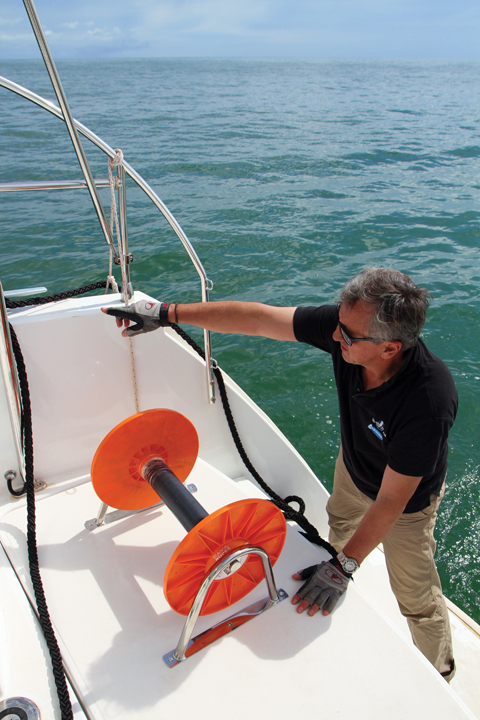
A reel, reinforced webbing, stainless steel eye and shackles: this is enough for mooring, putting out trailing lines, towing the dinghy and ensuring safety when swimming – intentional or otherwise.
37 Fishing
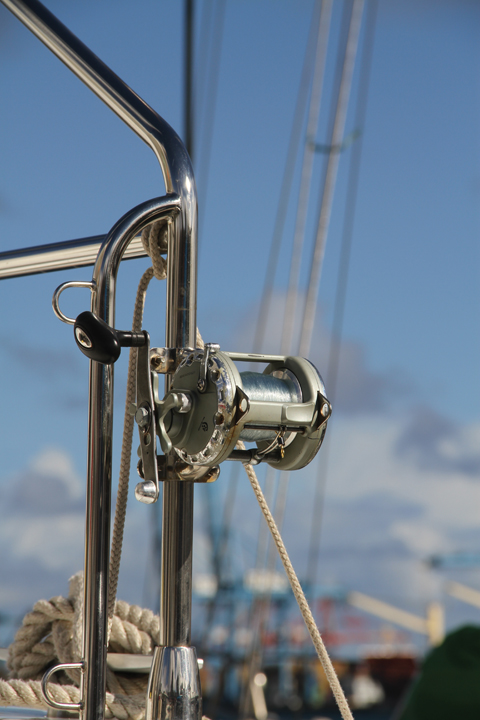
Offshore, there is no shortage of fish: dorado or fresh tuna are a delight for gourmets. So you might as well have your trolling gear already in place: rod holders and line reels are welcome finds on the pushpit.
38 Bait
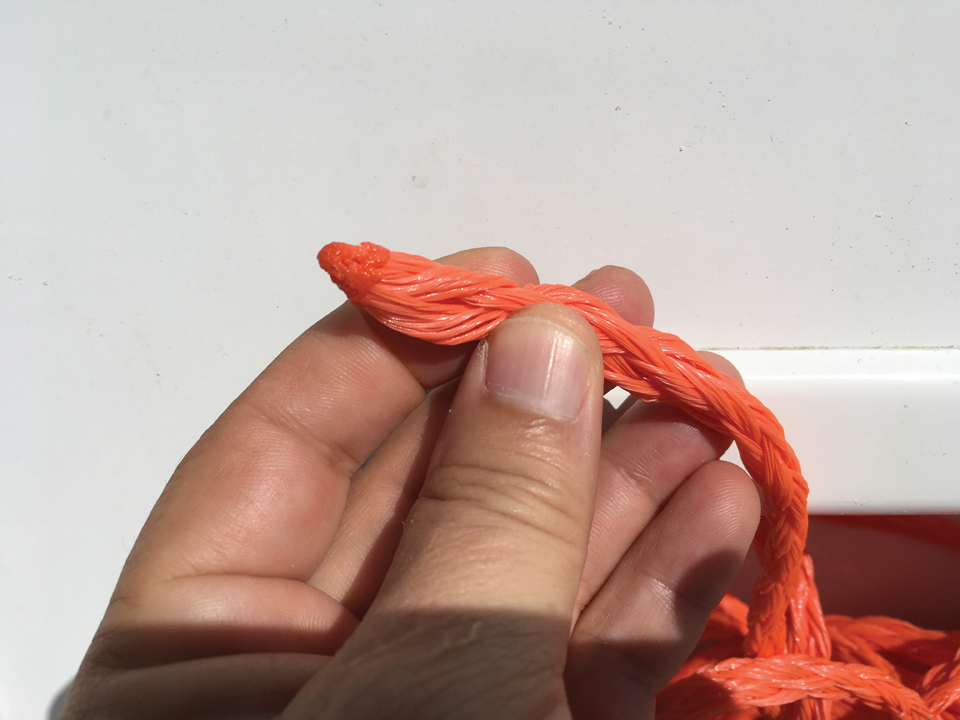
Have you lost all your lures but still want to fish? Make new ones with offcuts of colored line tips: they work very well!
39 Music
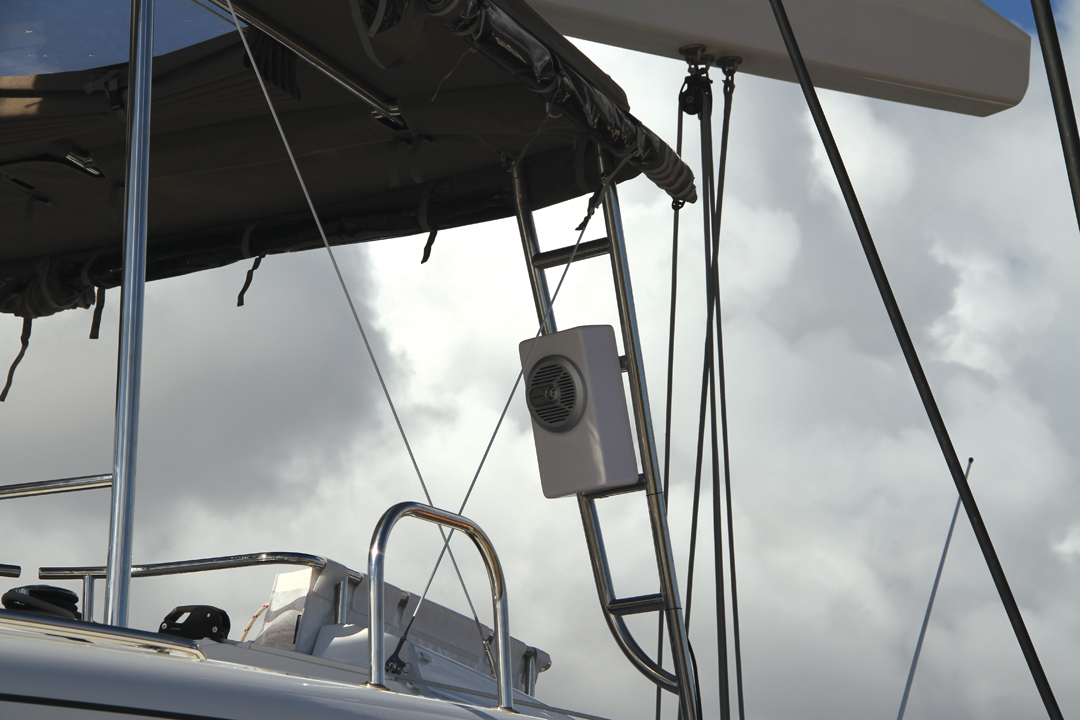
How about a little jazz concert, some wild rock, a big bass line or a symphony? Offshore, you won't disturb the neighbors! Boat builders offer waterproof speakers, so let yourself go!
40 Watch-keeping
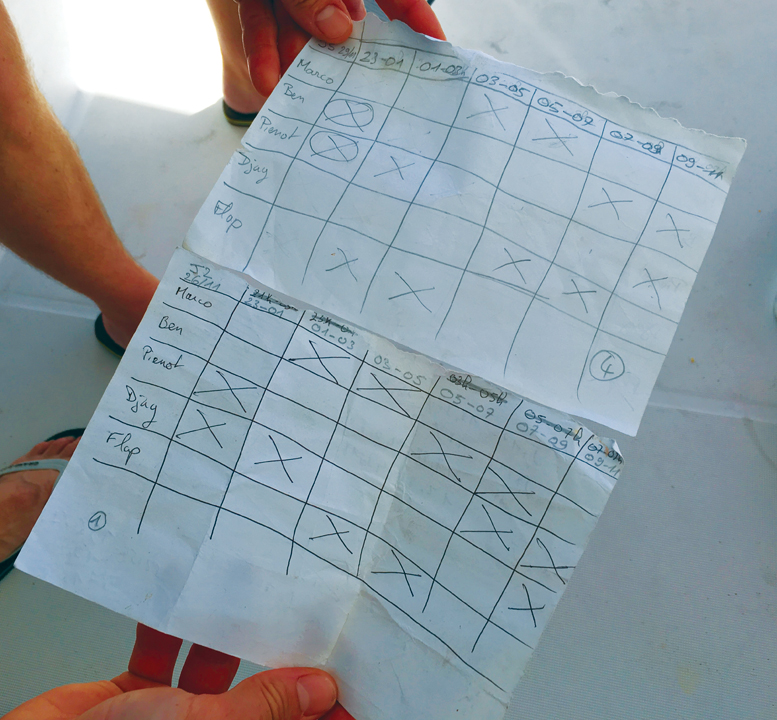
To make your crossing more varied and to encourage the whole crew to bond more strongly, make sure that the watches don’t always run with the same people: a small board, displayed in the saloon or on the chart table, can be useful.
41 Games
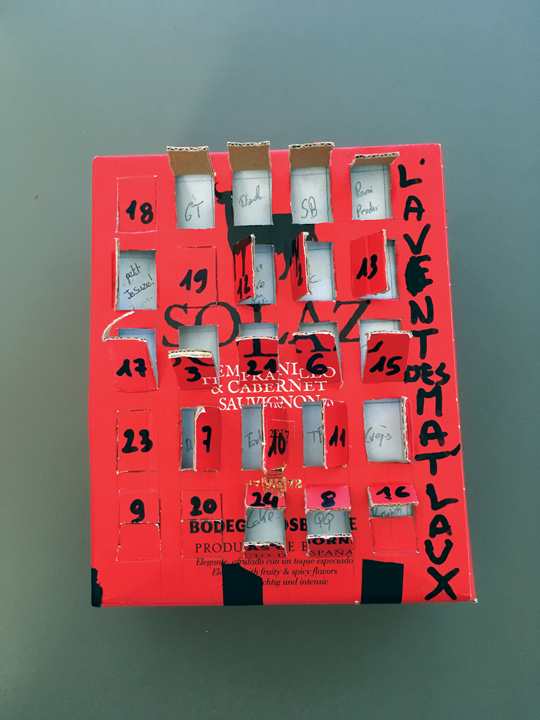
How to transform the "chores" of cleaning, washing dishes and meals into games? Set up a surprise calendar with a joker box, a dice for a little suspense and with luck... you'll be sure everyone will keep smiling!
42 Solar panels
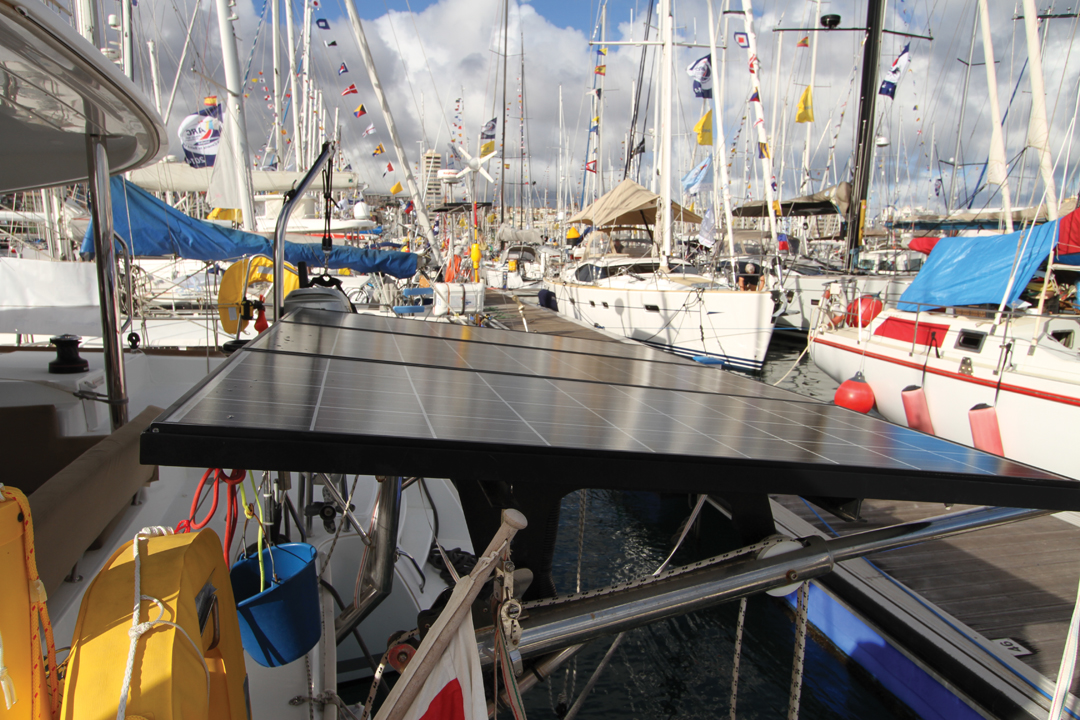
Used on almost all ocean racing yachts, solar panels really do work! Be careful to avoid letting them get in the shade of the mast and boom. The ideal solution is also for the bracket to be moveable in order to orient the panel perpendicular to the sun.
43 Hydro-generator
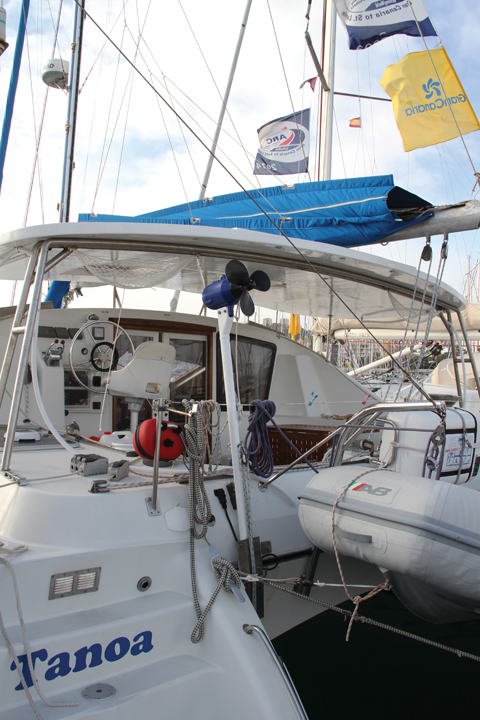
This is the equipment that everyone is buying and installing on their boat! Easy to assemble, space-saving, robust, it offers excellent performance for negligible drag. Watch this space: the next generation models will be integrated into one of the hulls. The only downside? The hydro-generator can't do anything for you at anchor…!
44 Anchoring?
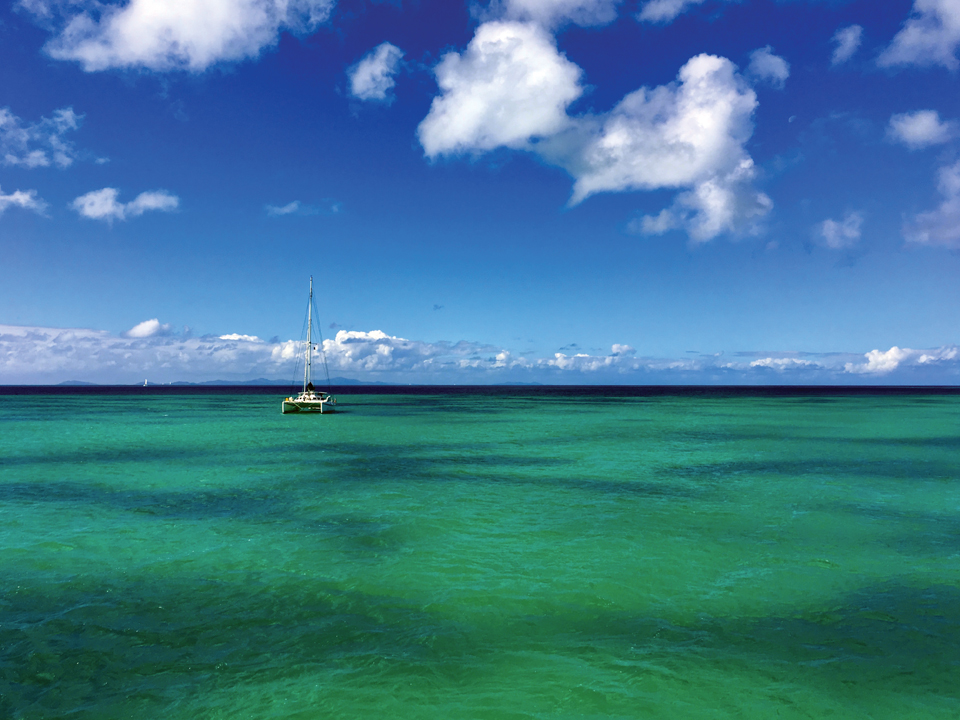
We can never repeat it enough: there's nothing better than a multihull at anchor! More space than on board a monohull, unspoiled privacy, limited rolling... Not to mention that it is cooler than in port, and you can swim.
45 Wind generator
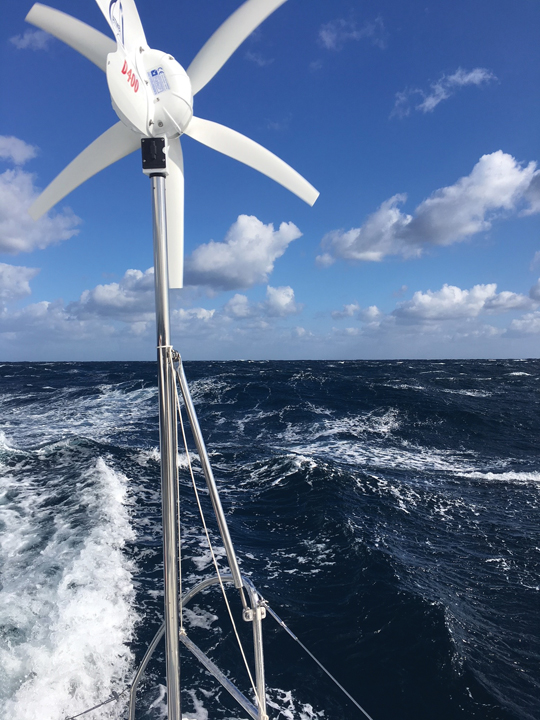
Perfect for anchorages ventilated by the trade winds, but obviously less efficient during a downwind transatlantic race, where the apparent wind is reduced. Remember to place it out of reach of the crew and choose the quietest model you can find!
46 Barbecue
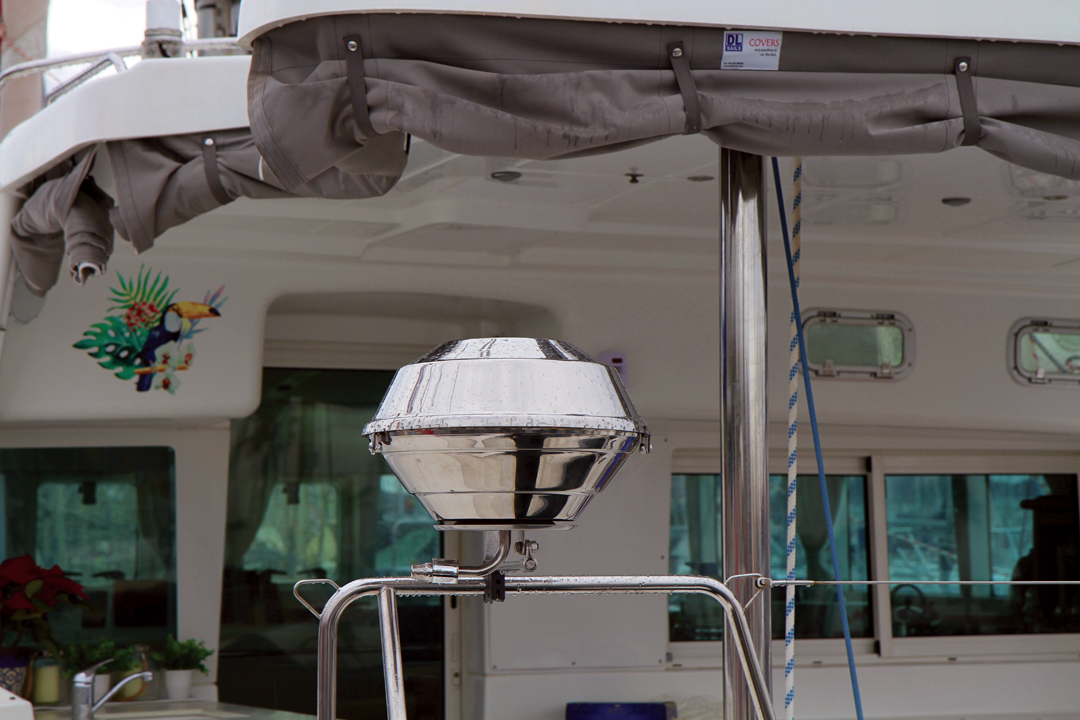
Fishing for supper is good, and grilling it is even better! Instead of stinking out the saloon, cook outside! A stainless-steel barbecue, fixed to the pushpit, will guarantee you the best meals...
47 Kayaks and paddleboards
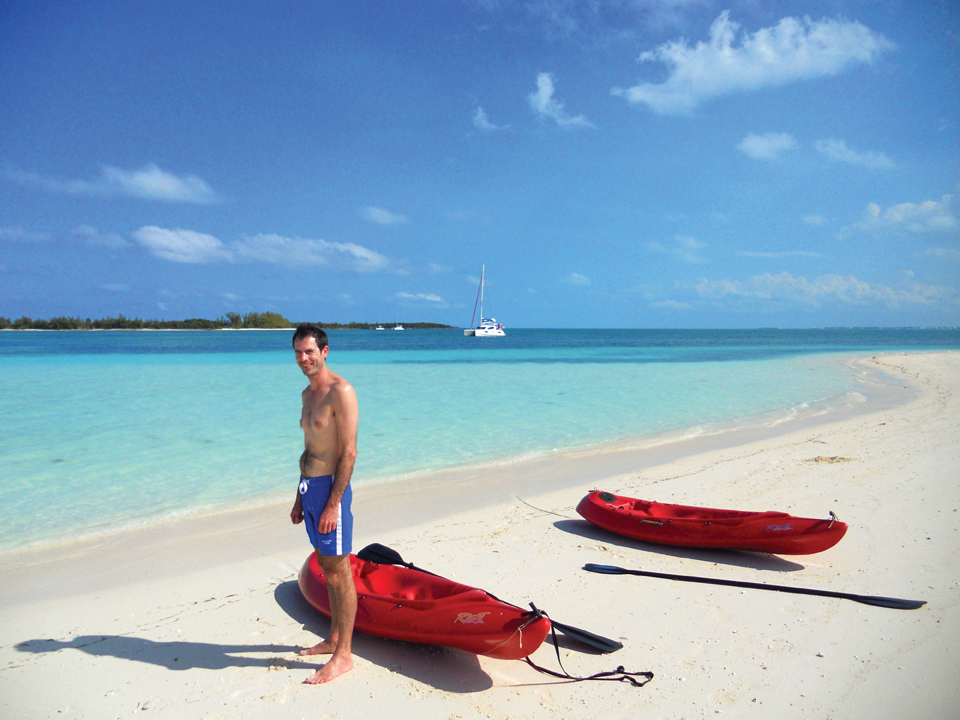
At anchor, there is nothing better than exploring the mangroves and finding the most remote small beaches with a kayak or paddleboard. The first is cumbersome on board monohulls; they only have the lifelines as a stowage option. But again, the advantage on a multihull is that you can use the davits - if the tender is deflated. A paddleboard takes up less space, and inflatable models are perfect for blue water cruising.
48 Small sailboats
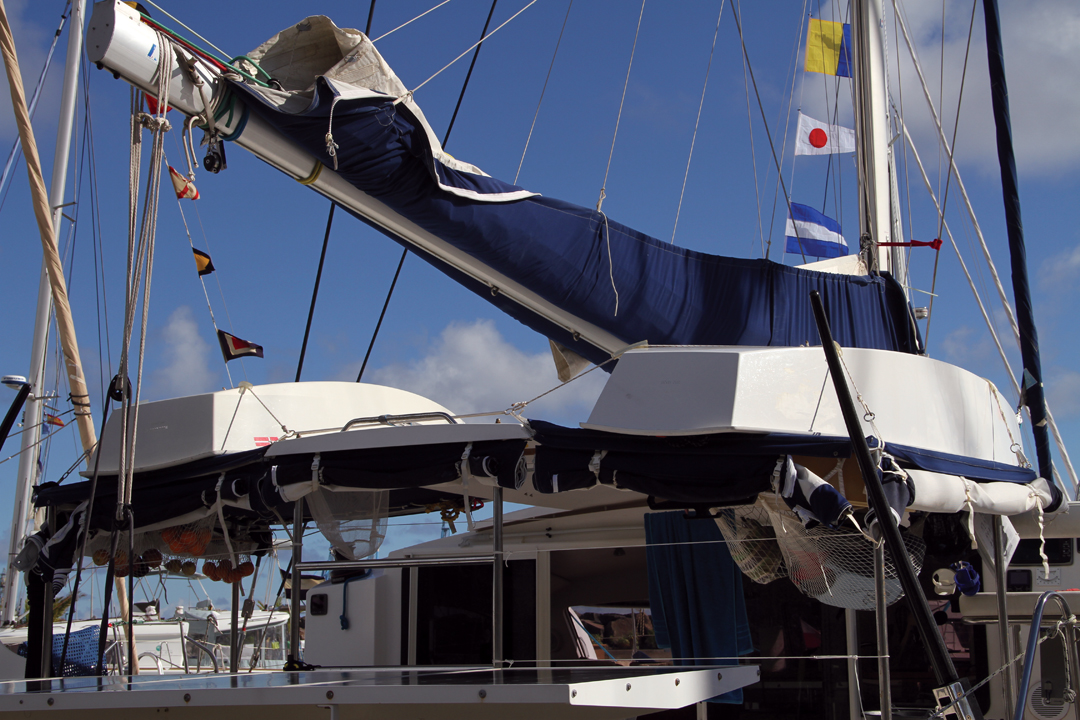
Carrying a sailing dinghy or two is not within the reach of all sailboats - although the Tiwal inflatable, or miniature catamarans have a solid case. However, aboard a catamaran like this Outremer 49, children will be able to continue to perfect their Optimist skills... are you really making the most of your sabbatical year?
49 Comfort
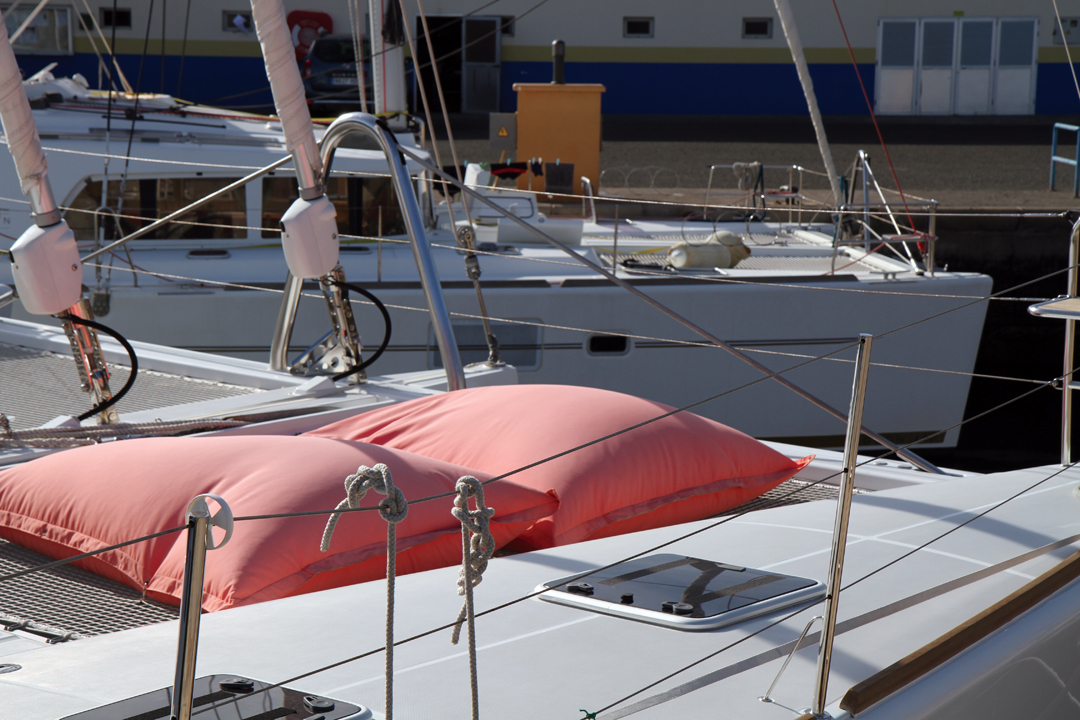
There's nothing wrong with treating yourself sometimes! So choose comfortable seating, and what about footstools? Custom-made loungers offered by the manufacturers (seen here on the Saga 50) are particularly convincing. But remember to ensure strong attachment points to prevent them from flying off in strong winds.
50 Electric motor
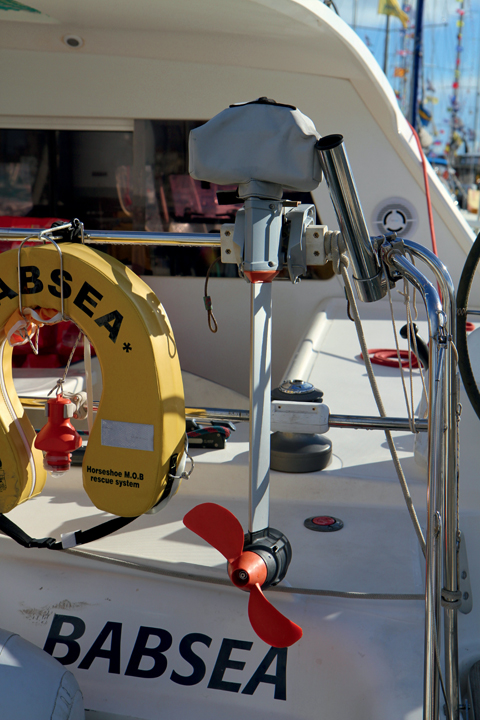
One to two hours of autonomy, no noise and zero pollution: an electric motor is brilliant in a lagoon! Provided that the battery can be recharged... you will therefore need to have AC power on board or an appropriate charging device available.