


To begin with, let’s differentiate damage from perils of the sea. Unfortunately, you can’t do much about the latter. It can be a container floating just below the surface and therefore invisible, which rips off your rudder or a keel, creating a major leak. Or a new part which breaks due to a manufacturing defect, and causes dismasting. You will then have to use all your ingenuity and nautical common sense to cope with the situation. But be reassured right away, these perils of the sea are very rare. Statistically speaking, they are even negligible, even though certain writers have a field day with them. On the other hand, the former is much more frequent. As a multihull is a collection of mechanical parts, it is normal that sooner or later, just as in a car, you will have some damage here and there. But don’t panic; here again most of these incidents are mostly small problems. Two causes are most often at their origin: human failure, with our inappropriate actions, and the lack of anticipation, the consequence of neglected or incomplete maintenance.
Beginner’s mistakes
Above all, and even though multihulls are particularly safe nowadays, don’t forget that you are on the water. Watertightness is crucial, and there are too many deck hatches or toilet seacocks left open. There is no better way to fill up your bilges with water. Something to check each time you set off, especially as this stagnant water could very well damage the electrical circuit. When climbing on board, be mindful of the stanchions, which could eventually let water seep in. When starting the engine, giving it time to warm up, as well as checking that it is being cooled properly (seacocks open this time) will limit risks of unexpected overheating. Having a quick look at the watertightness of the stern gland is not a luxury either. Once under way, taking into account the frequent unidentified floating objects in the water, there is no excuse for not detecting those which can be identified, meaning those which are visible. In all circumstances, watchkeeping is essential, to avoid an impact at the waterline – in addition to the monitoring of other vessels, to avoid any collisions. This attention must be increased in coastal areas; by monitoring your instruments and constant observation, you can prevent running aground. Don’t smile, this is the most frequent cause of damage – and it doesn’t just happen to other people.

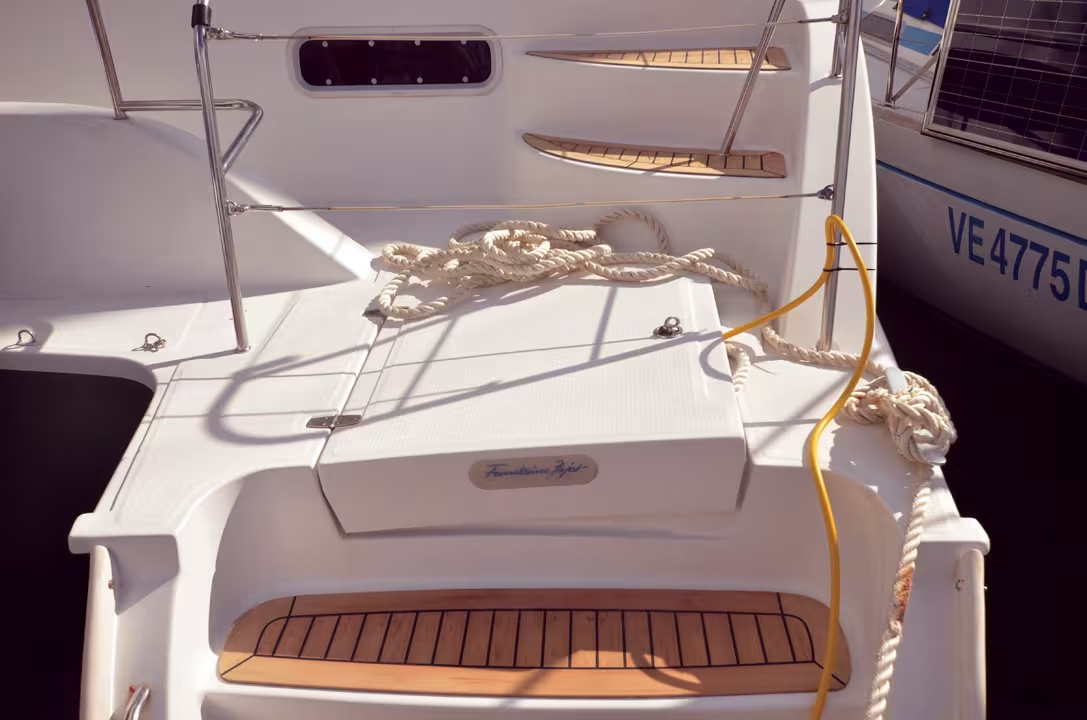
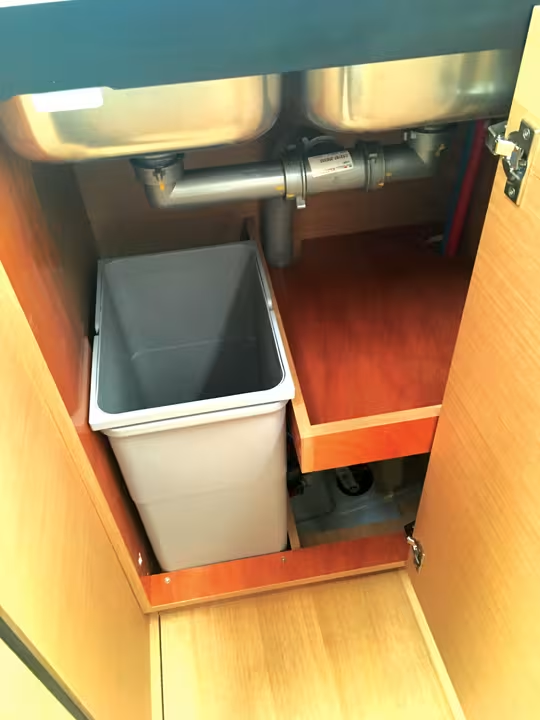
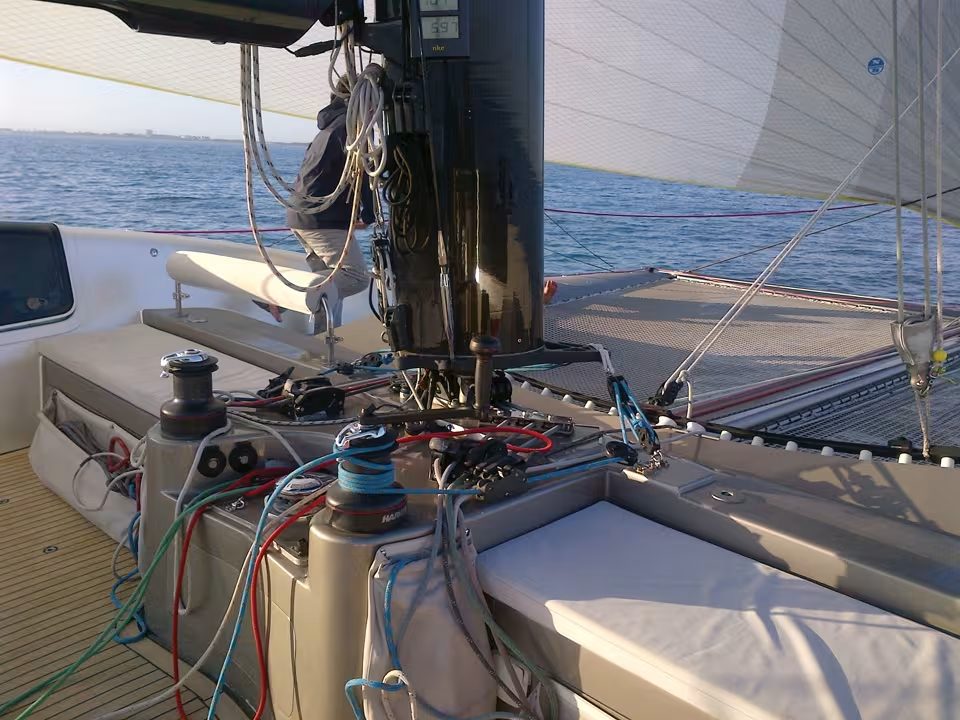
Well-organized stowage can also avoid a lot of problems. Lines lying around everywhere like spaghettis end up causing trouble, by getting stuck under a locker lid, under the helm or in the anchor locker. An anchor and chain that don’t run out quickly at the worst moment can have serious consequences as well. A tangled line may disturb a maneuver, such as a tack or a gybe; a missed tack and limited sea room don’t go well together. Nowaday, we have so much electrical or hydraulic assistance for the winches, the anchor, the platforms or the dinghy davits; the essential rule is not to focus on the button you are pressing, but of course on what that control entails. Otherwise the seams of your sails won’t resist… But although when all is said and done, torn sails, jammed anchors and ripped-out stanchions are common, everyday damage, it's the succession of small problems which is liable to create dangerous situations, especially in strong winds or very close to an obstacle. The interior of your multihull also has its share of potential issues. The toilet takes first place. Remember that it will only take degradable toilet paper, and nothing else. Locker hinges are mechanisms subject to rough treatment. As for the batteries, they won’t cause damage, but with poorly controlled energy consumption, you may empty them completely. Even if they haven’t taken on water, the bill will be steep…
Minimum maintenance
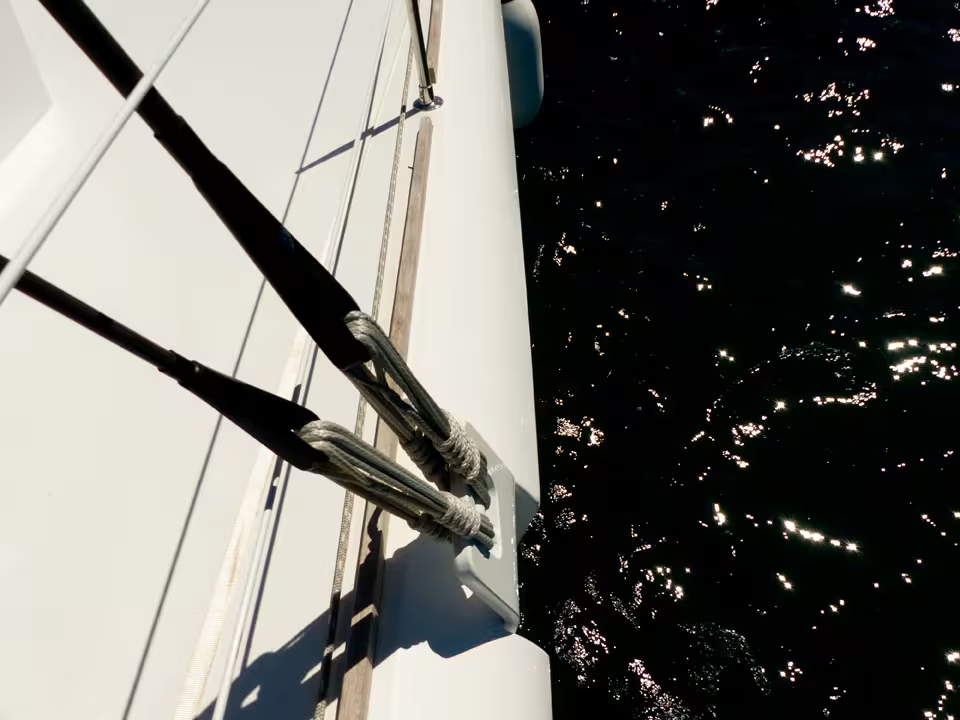
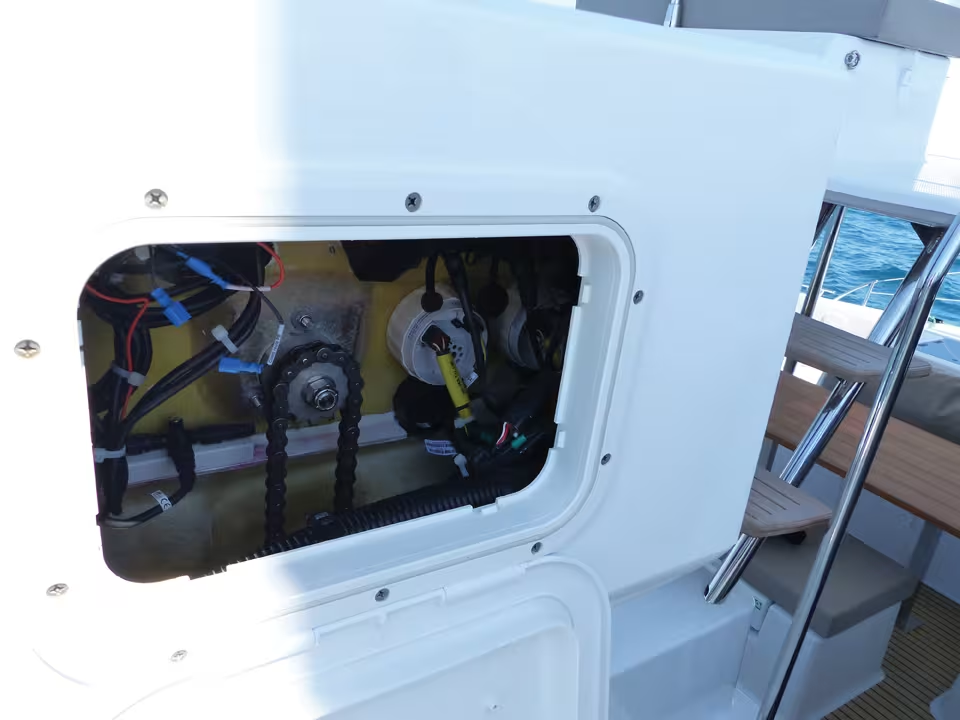
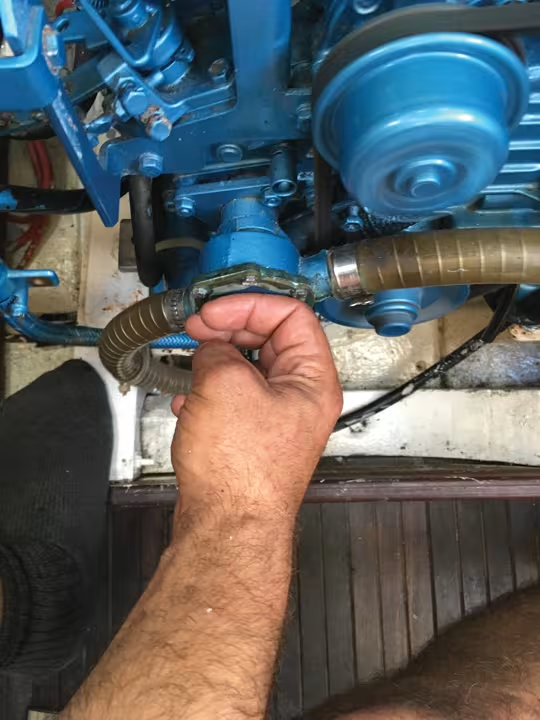
Whether you like it or not, sailing is a mechanical sport, which requires good preparation of the equipment. You wouldn’t dream of driving 20,000 miles in a car without looking at the level of the oil or the coolant and brake fluid. Well, when sailing, it’s the same thing! Certain precautions are essential to minimize the list of possible problems. Yes, I did write minimize, as zero risk doesn’t exist at sea – this is without a doubt also why we go sailing. Certain parts which break, such as a common split pin, can have disproportionate consequences: your mast stays upright thanks to some stainless-steel elements which sometimes cost less than a dollar… All the parts have a more or less long lifespan, which it is advisable to list, so you can sail safely with elements whose wear is acceptable – and therefore under control. Maintenance then appears essential to anyone who wants to look after their vessel. Off-season maintenance will include an engine service (filters and impellers), a check of the halyards, sheaves, shrouds, split pins, jammers and roller furlers. Greasing the mechanical parts, such as the winches, the windlass, steering wheel lines, and the rudder stock is to be carried out when necessary, to avoid rust and warn of wear through abrasion. The tension of the shrouds is very important, to avoid the mast ‘pumping’ in the chop – the spar can also finish on the deck after a violent pitching movement. The sails deserve special attention. Headboard, leech, foot and the batten pockets are to be checked annually. Reinforcements at chafe points, anti-UV strips and use of protective covers are essential to extend their life. The electrical circuit will benefit from a check-up. Spraying the connections and fitting a battery level meter would appear to be judicious. The electronics fitted outside are also subject to water leaks. Redoing the joints may prove useful, so as not to have a blank screen as you enter a rather winding pass. These instruments fitted as an interface may sometimes become contaminated. The gas, fuel and water circuits are also critical points which mustn’t be neglected. Re-tightening the clamps and changing worn pipes proves to be very important. And now you’re ready for a nice, trouble-free cruise!
