
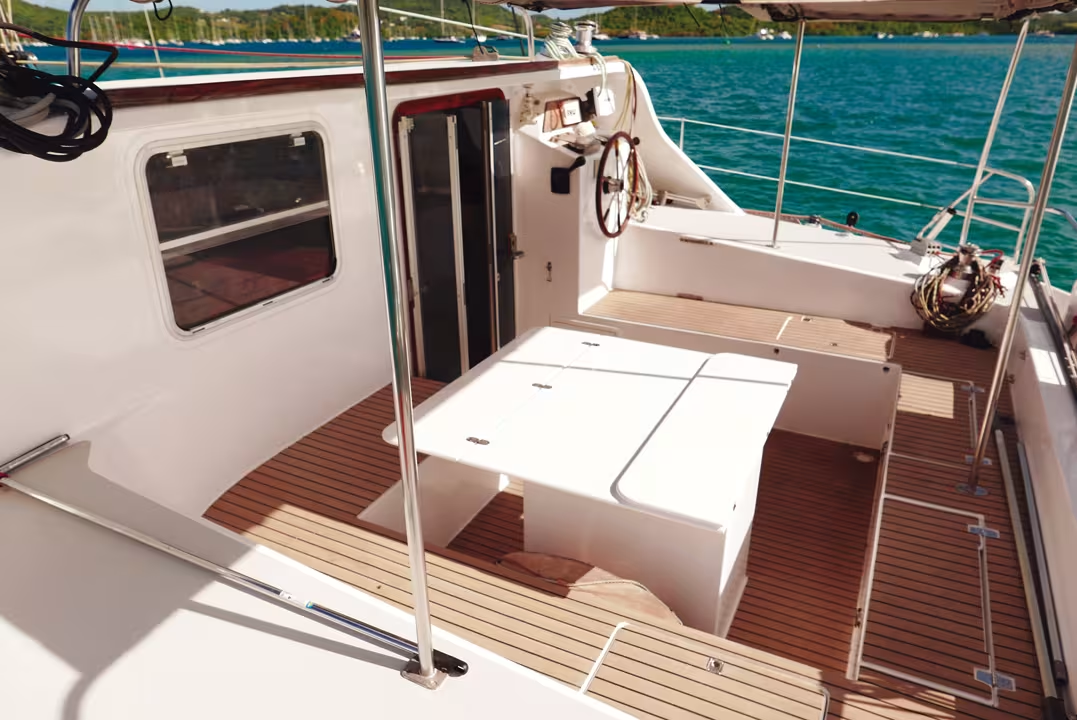
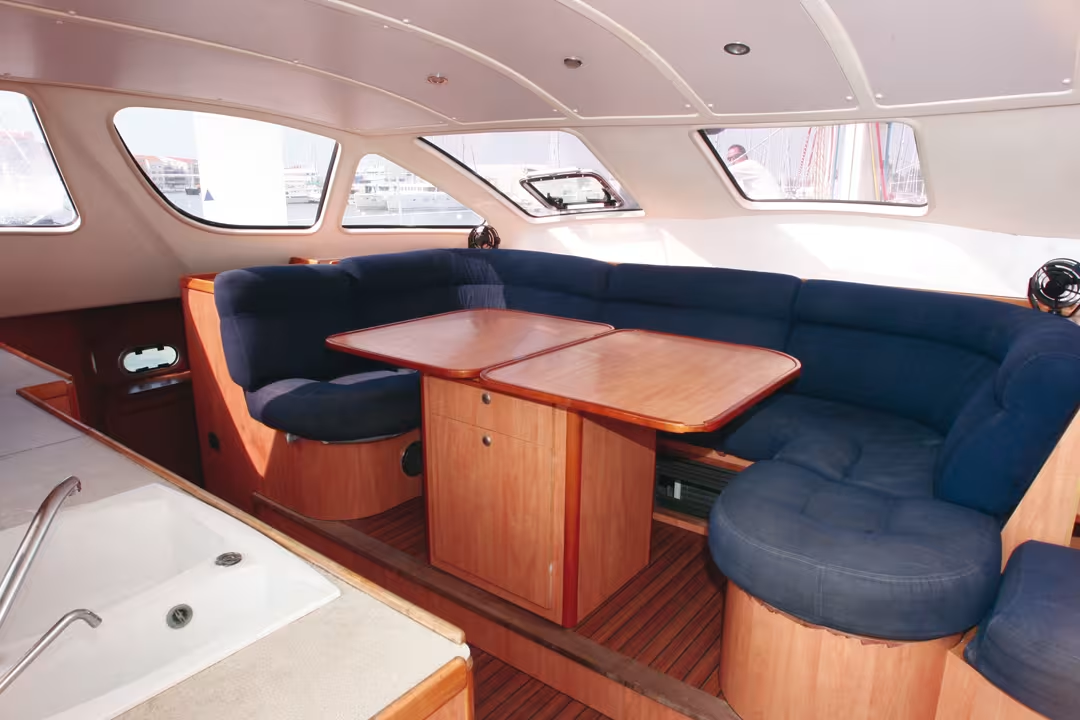

There are lots of reasons why you might set about doing a refit, and you may well recognize yourself in one of the following situations. Are you the owner of a multihull which has been out of the water for a while and you have neglected its maintenance to some extent, but you would like to enjoy it again? If so, a safety upgrade is required to restore the boat to seaworthy condition. Second scenario: you are planning a long trip, and a technical overhaul is crucial to meet the requirements of an Atlantic crossing, or maybe further. Another possibility is that your multihull has suffered damage: repairs are necessary. This may give you the opportunity when repairs are underway, to make improvements while parts of the boat are being dismantled and the boat immobilized. Perhaps less frequently: you want to sell your multihull, and a cosmetic preparation is necessary to present your boat in a better light. This case is the rarest because "it is rather the buyer, eager to appropriate, who will most often embark on renovation work", says Sidonie Humberlant from Grand Large Yachting. Here again, several scenarios are possible. In fact, whether before or after a purchase, it is the age and condition of the boat in relation to your abilities and financial means as well as your sailing objectives that will prescribe the refit. The relative cost of the refit will always be linked to your sailing program and your performance/comfort cursor.
What exactly is a refit?
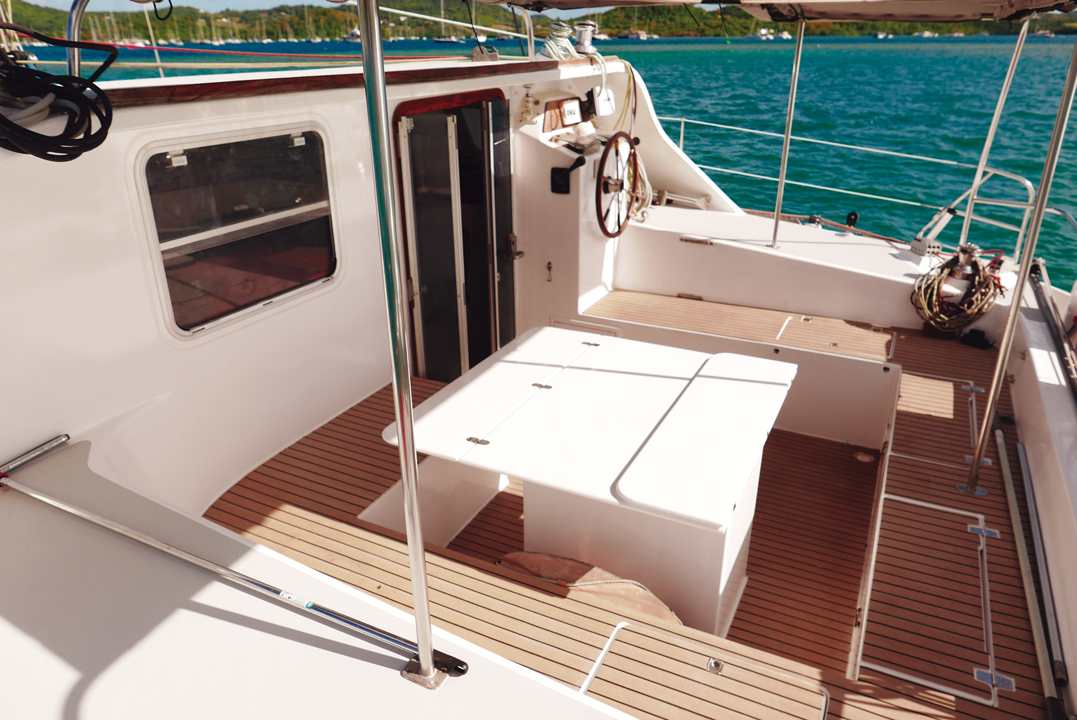
In fact, the word refit is two short syllables that encompass many processes - from a simple seaworthiness restoration to an almost total reconstruction, including technical and/or aesthetic upgrades. As an example, we’ll take a typical model, a standard 40-45 foot catamaran. It's our housewives’ favorite, our five-door family hatchback, floating and able to take you to the other side of the world. Let's start with the simplest case. For a unit less than five years old, the main thing will be to maintain the engines, rigging, sails, deck hardware, battery bank and electrical circuit. A serious refit would also include the refurbishment of the gel coat. You can then keep some money to enhance your comfort and navigation equipment if you wish, such as a gennaker, a watermaker or state-of-the-art electronics. These are fairly commonplace operations that do not require a large budget. You’ll need to count approximately € 1,000* per engine, €1,000 for servicing the sails, € 500 for the various blocks. The battery budget can be higher if you want to increase the capacity of the bank or add solar panels. 720 Ah of lithium-ion will cost you around € 9,000. For boats that have cruised and/or are in the tropics, replacement of running rigging, upholstery, biminis and covers is systematic as they are quickly burned by the sun - even after just three years. The same applies to sails, where it is advisable to monitor UV protection strips whose exposed seams may already be burnt. These remarks also apply to those preparing to set off cruising. For the running rigging, the price range increases from €1,000 to €3,000 depending on the materials you choose. Brand new exterior upholstery will cost between €3,000 and €6,000, but you will have the pleasure of updating the appearance of your boat. Don't forget to involve your favorite crewmember in the choice of colors! For this kind of operation, the use of professionals is inevitable for technical services (unless you are a very competent DIYer), but when you haul out, major cleaning can be undertaken if you get the elbow grease out of the drawer and you can give your multihull a nice refresh with specially dedicated detergents and beauty products. Of course, you should plan ahead for storage ashore - it represents a significant budget due to the surface area occupied. The total refurbishment budget for recent units of this type can be between €10,000 and €25,000.
Do you need the help of a boatyard?
Beyond five years, other problems will appear, and the work required may become more significant. Even more so after 10 years - especially if the boat has just come out of charter in the tropics. We can never emphasize it enough, on both sides of the Equator, the sun burns! The omnipresent humidity and salt get to all boats without exception - and therefore to all their components. The gel coat tarnishes and turns yellow, the paint flakes, the canvas and sails are burned, the varnish cracks, the wood can even rot, equipment in the bilge and through-hull valves will rust, the electrical connections oxidize, even stainless steel eventually corrodes. And that's not to mention the bumps and scratches associated with use. Admittedly, this intensive use specific to certain boats delays the phenomenon of wear and tear thanks to the associated maintenance, designed to keep it in good sailing order, with some parts being changed along the way. But the facts are there, the climatological horrors are doing their work slowly, but insidiously, and in the end, always surely. In other words, the operations planned in the first case are the strict minimum. Even if you do a lot on your own, plan a much larger budget.
Engines generally totaling a certain number of hours will require a major overhaul, with replacement parts needed. This often involves injectors, seawater and diesel pumps, alternators, etc. Sometimes you’ll need to change cylinder heads, valves, exhaust and replace all wearing parts in order to start afresh. The minimum budget is € 3,000 per engine. The rig also deserves a thorough inspection with the replacement of shrouds and diagonals, sheaves, furling foil and forestay. Budget € 10 to 15,000 (see Catamaran Basics MW No 162). The sails may need to be changed or will require a session on the floor at the sailmaker’s. Budget: from €2,000 for a repair and refit, to €15,000 if you want a new sail wardrobe.
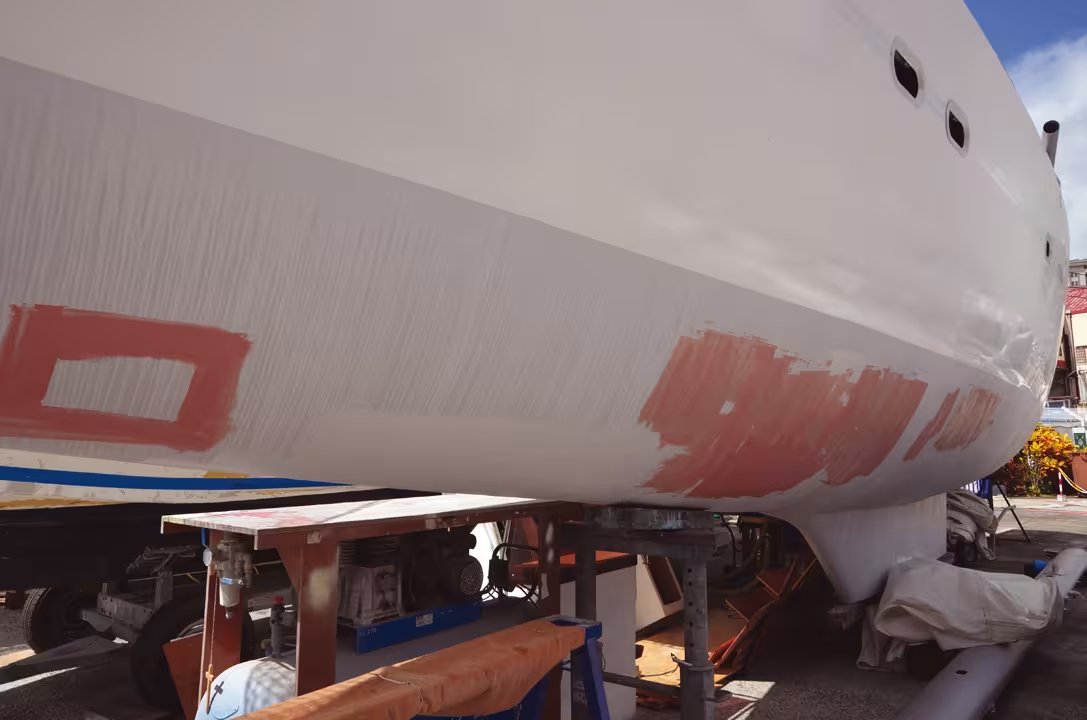
For the hull and superstructure, the least expensive operation will be, after retouching and surface filling, a serious clean followed by a rejuvenation process to remove any yellowing and then polishing to restore a brilliant shine to your gelcoat. And there is the possibility of affixing decorative stickers. These are operations that can still be done yourself, but in some cases, make-up does not deceive, and painting may be essential to restore an irreproachable appearance, especially on wood. The deck may also require re-coating (see MW diagnostics No. 160). With the preparation including sanding, filling and masking, a beautiful lacquer will set you back around € 400 per m² (€ 37/sq ft). The intervention of a specialized workforce is essential - your multihull will need to be put under cover. For the interior, the invoice is likely going to be less than € 200 per m² (€19/sq ft), because the finish is often more rustic.
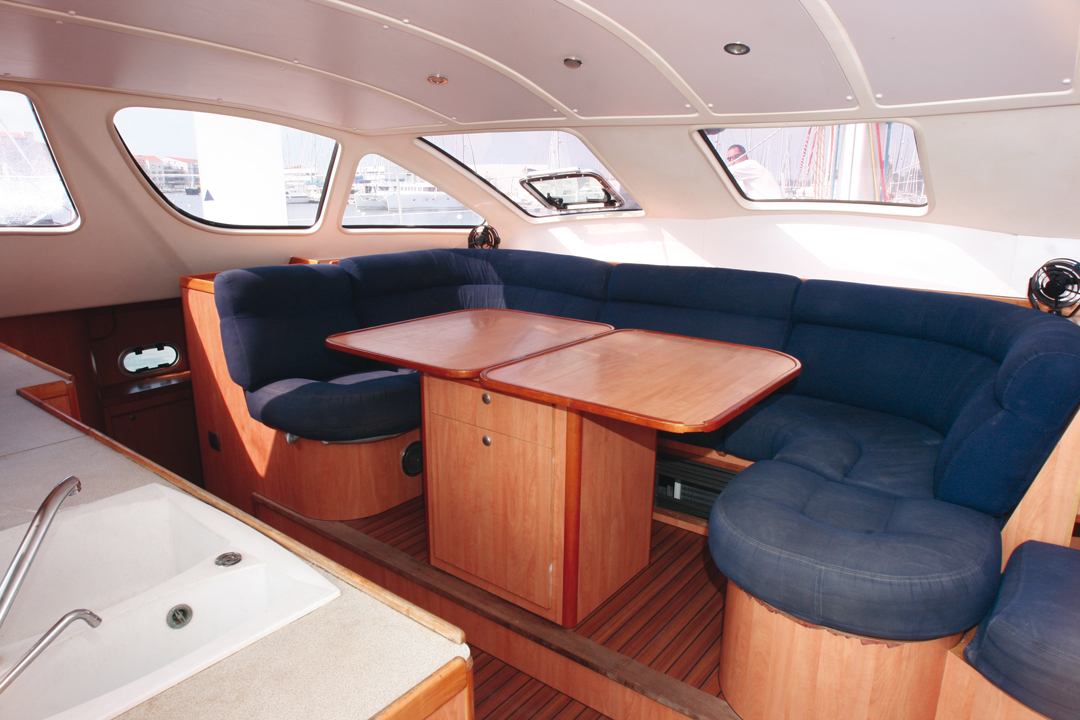
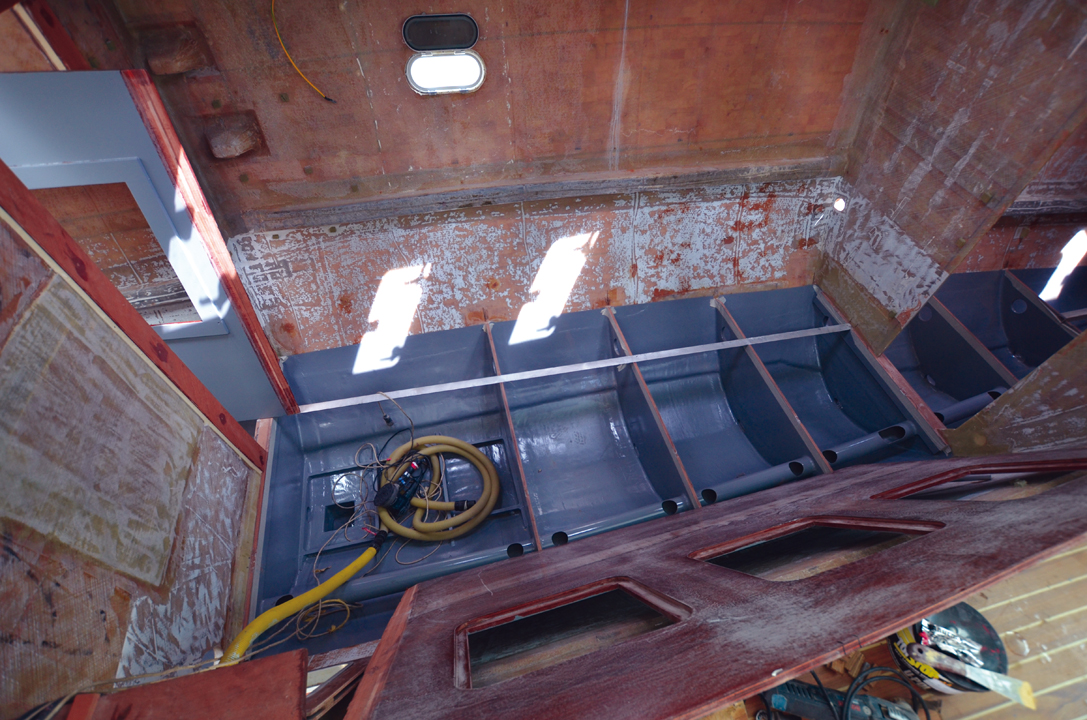
Two coats, brushed on, are sufficient. The same goes for the bilges, which only require a good layer of Danboline with an estimate of €1,700 from one yard. For woodwork, most of the time, sanding / varnishing will suffice to restore the lost shine. 20 linear meters (65 feet) of toerail to be varnished will be charged at € 1,500. Some very tired interiors require more serious repairs. However, if this is the case be careful, as the cost can skyrocket very quickly. Some parts get damaged faster than others. It’s easier to rebuild an entire cabin, because the rehabilitation of one part is a job for very specialized cabinetmakers, and it is they alone who will be able to match it to its surroundings. If wood is charged at around € 50 per m² (€ 4.50/sq ft), the work will be much more expensive, but is still a job for specialists. Many exterior accessories will have also seen damage. Sugarscoop belting, daggerboards and rudders are particularly exposed, and may require reconditioning. On the superstructure side, hatches and Plexiglas are also very sensitive to UV rays. Some will be cracked and, if they are protected, the covers will be cooked. The deck fittings do of course need to be reviewed. You can take advantage of this opportunity to update them and add electric assistance on some winches or furlers. The windlass must be tested with the greatest care. As for the chain, it should definitely be changed. As far as the domestic circuit is concerned, on the electricity and plumbing side, some appliances such as the charger or freshwater pumps will probably have to be replaced, and a cleaning of the circuit is prudent to get it back on track. Opening the electrical panel to check for moisture damage to the connections can be beneficial. Rusty seacocks or valves can also be replaced by plastic models. Upgrading to new standards such as a black water tank and safety equipment or improving comfort with electric toilets or a storage compartment can also be part of the refit program.
For these sorts of boats in good working order but which have seen wear over time, the overall renovation budget can be estimated at between €20,000 and €80,000 depending on the operations that need carrying out. There are several examples which can be taken to illustrate this. On a Punch 12.50, the owner had work done by a boatyard prior to putting it up for sale. In order: repair of the forward beam and some areas of the hull and deck in marine ply; painting of the hull, deck and non-slip; installation of Flexiteek in the cockpit and aft steps; reassembly of the fittings and finally installation of replacement hatch glass. All for about €30,000. The exterior appearance is impeccable and close to new. On the other hand, the owner didn't touch the accessories such as upholstery, the covers and the whole interior. That’s a job that ultimately falls logically to the buyer, because it is above all a matter of fashion and taste. The next owner will most certainly have another € 15,000 to add for a complete refresh.
At Catana, the refit division is an integral part of the shipyard, and even part of the strategy of selling second-hand boats. This is the case of a 471 taken in exchange by the yard against the sale of a new one, which is coming out of seven years’ charter in the Caribbean. The condition of the woodwork, galley worktop, veneer on the saloon seat structures, freezer, port forward cabin shower, all require real reworking. The yard makes no secret of it: they have launched a proper refit program here (engines, generator, watermaker, upholstery, woodwork, etc.) which has proved to be effective. All the important elements have been reviewed or replaced: hardware dismantled and updated, sugarscoops redone, new non-slip paint, exterior decorative strips after the gelcoat has already been painted, new electronics, new rudder bearings, rudders and daggerboards removed. The total budget was €90k, but this ended up being covered by the resale.
Is your multihull worth it and is it worth the cost?
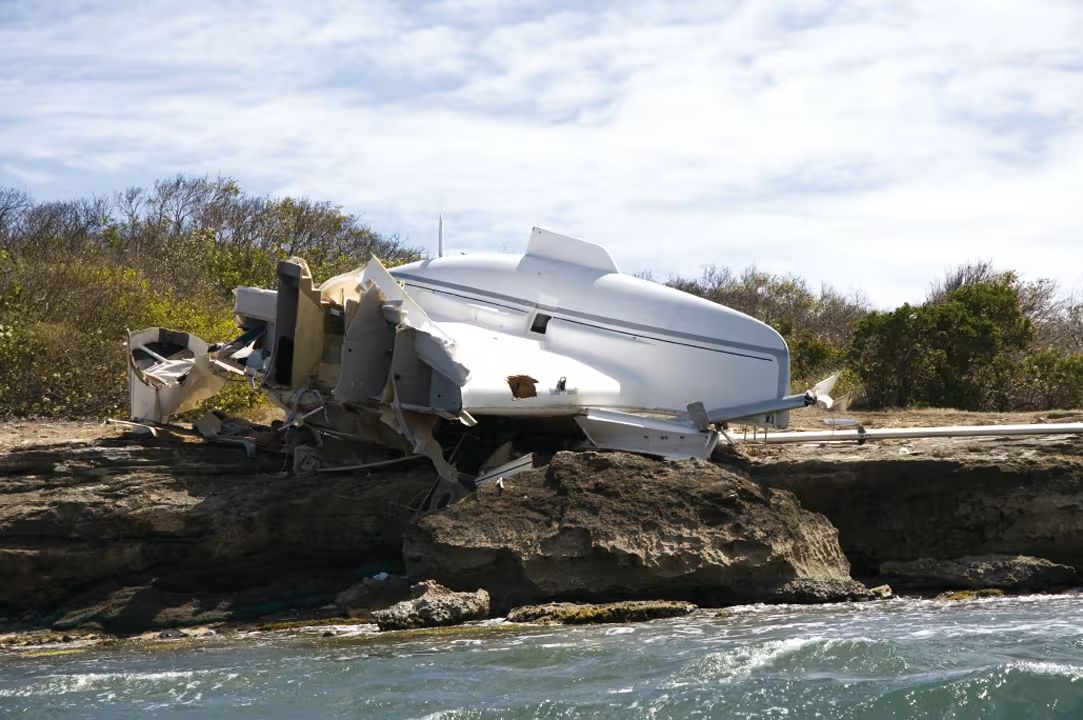
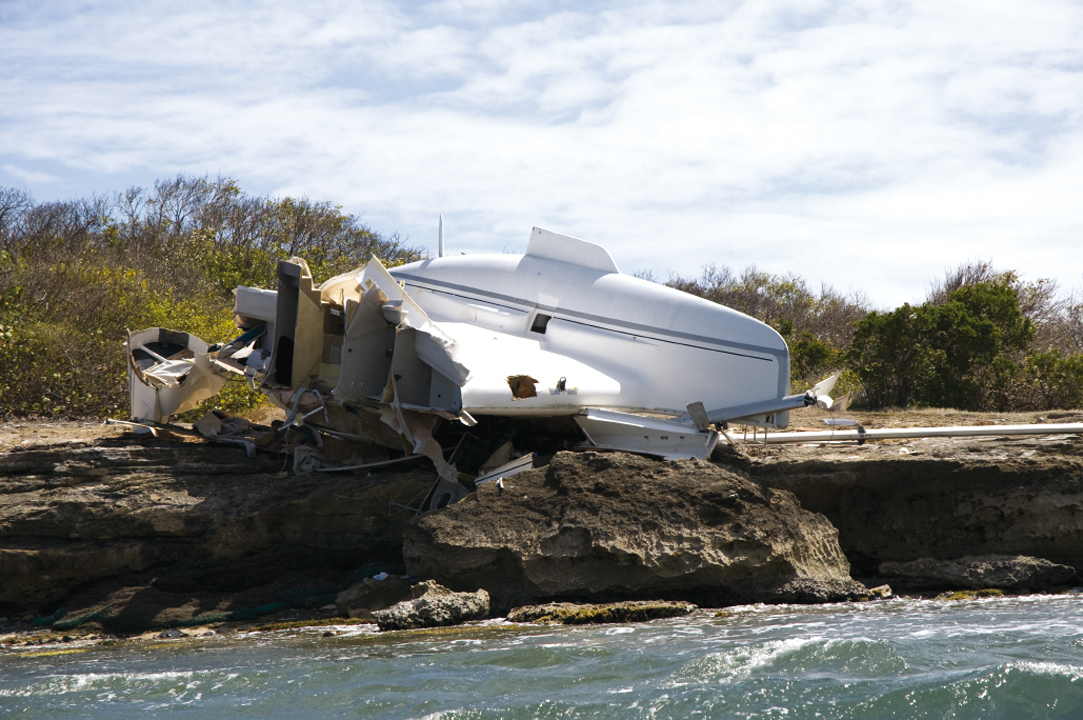
Let's move on to the final stage. You want to make important alterations, such as changing the function of a cabin. The boat has been abandoned for many years or it has suffered quite a lot of damage, if not very significant, as a result of a collision or a hurricane. Only a specialized yard will be up to the job. However, the budget and difficulty are no longer comparable. It's a bit like the windward leg of a restoration. You know the saying: twice the distance, three times the punishment. Well, it will take one and a half times longer and be twice as expensive as building a new boat, we are told. Unlike a boat on a production line, it is already decked and any interventions on the hull or technical sections require the prior dismantling of the fittings. For example, the complete reconstruction of a bow of an Outremer 45 that had gone aground was invoiced at €40,000. As Sidonie tells us: "Everything is reparable, but it is a question of cost, and it’s the insurance that decides." However, some partially destroyed boats are irretrievable because the work required would exceed the market value, or they have suffered so much that structural problems would be unsolvable. Parts would need to be remade in a female mold, which makes the task very complex, if not impossible.
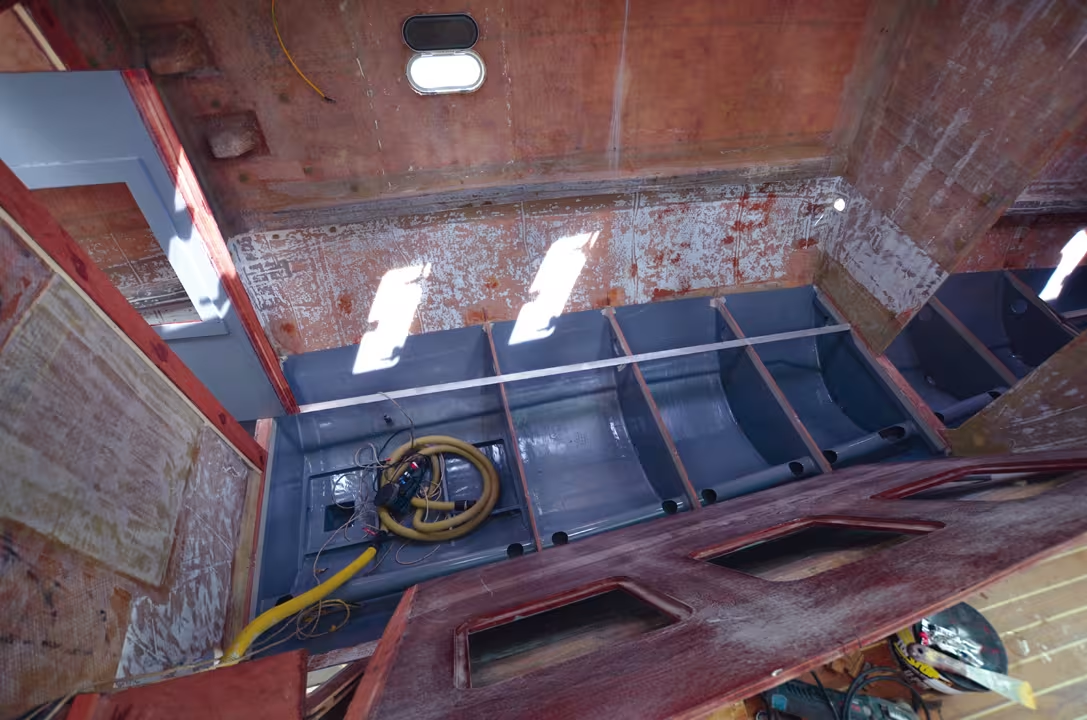
Sometimes an expert yard that knows how to assess feasibility can embark on a complete reconstruction. This is the case with Alizé Composite in Martinique, who bought a Lagoon 570 that had ended up on the rocks from an insurance company. One of the hulls, having been well-submerged, was completely rebuilt in monolithic laminate. As the interior was in a very poor state, it was completely dismantled, and all the technical components were updated starting from a bare hull! In other words, this former flagship of the brand will be rebuilt as new. "Yes, but not like the original model," says Nicolas Gillet, one of the two partners. "The design of the interior was in line with more modern ideas of comfort, aesthetics and ergonomics. We are redesigning the plans to better match current demand." The interior will be finished in white lacquer, with the master cabin occupying almost the entire starboard hull, with a high level of comfort for this size of boat. This is precision work that only highly specialized yards are able to carry out. Without entering into such an "extreme" case, some functional improvements are always possible. Some brand-name shipyards also do not hesitate to restore traded-in models in order to give them a good chance on the second-hand market or do so at the request of customers wishing to improve their boats.
But the price can quickly mount up... At Outremer Yachting, the transformation of a bathroom into a single berth cabin resulted in a hundred hours of labor, even though the finish was quite basic. It is possible to make beautiful aesthetic improvements by making more luxurious finishes than those that have sometimes even been produced by the yard as original equipment because the plans and tools are still available. Sometimes, you can even change the rig for a taller one to give more power, or even go for a carbon mast, but the bill rises as fast as the air draft! It is unlikely that such upgrades would end up being financially beneficial on resale, but this is a story where passion ignores reason. Without going too far, these improvements will change your life on board. Isn't that the most important thing?
*Prices are given as a guideline only and exclude taxes.