
Putting together the on-board first aid kit is an important phase of the preparation for long-term cruising. It will allow you to deal with the most frequent medical or traumatic problems. We are of course talking about the kit which is essential for crossing oceans, where the risks are greater due to the length and remoteness of the passage. It is necessary from day to day, to deal with minor but nevertheless handicapping problems, such as seasickness, sunburn, burns, cuts, minor injuries or managing pain. It must also have an answer for more major injuries, and more serious infections or pathologies such as cardio-vascular risks.

Before your departure, all the people on the voyage are strongly advised to consult their general practitioner with the list of official equipment. He or she will check the state of your vaccinations (notably tetanus), write out a prescription, essential for certain medicines, and can draw up a record of your medical and surgical antecedents, intended for the medical profession. They can possibly help you fill in an individual medical file, which will be your medical passport in the case of a remote consultation. As the pharmaceutical equipment doesn't include the regular treatment of crew members in relation to possible chronic pathologies, everyone must bring their own personal treatment. Similarly, a visit to the dentist is recommended, to prevent a possible abscess occurring, which would be problematic once you have set off.
MEDICAL AND PRACTICAL EQUIPMENT
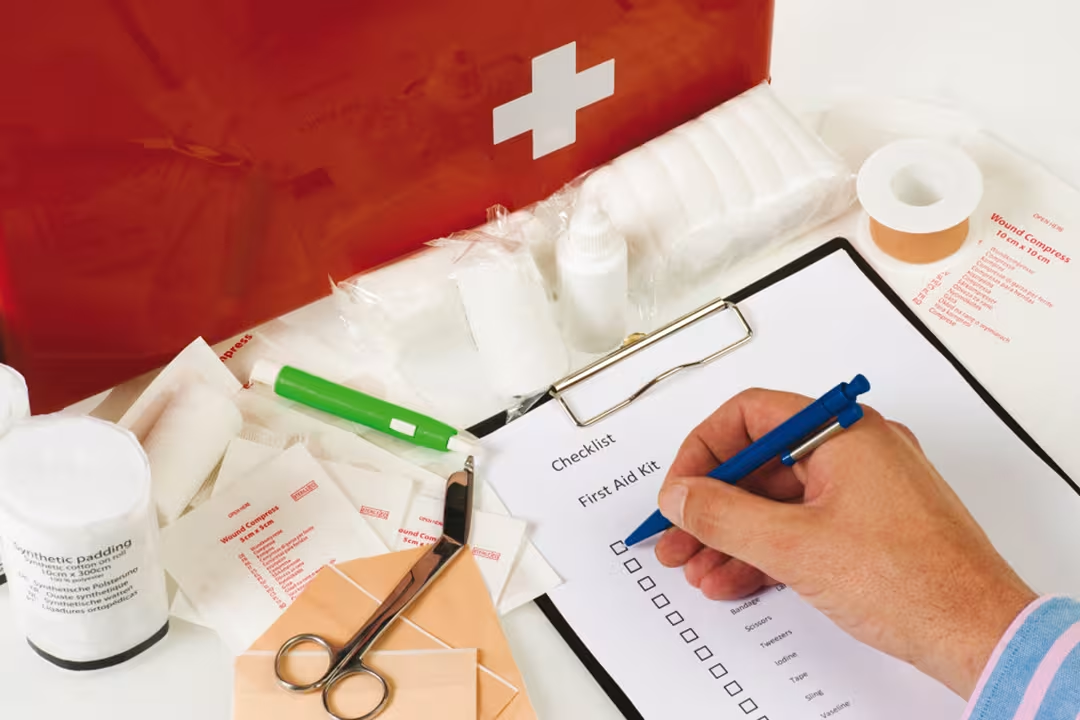
In France, the on-board first aid kit has to meet criteria and composition laid down by the regulations. The International Maritime Organization’s rules require vessels to have international equipment aboard. In France, you can download this list of equipment from the Centre de Consultation Médical Maritime’s web site: http//www.chu-toulouse.fr/la pharmacie-de-bord. If you modify your on-board first aid kit, you can also send them your boat’s list as well as the individual medical files filled in by the crew members. These documents will be kept in a dossier in the name of the vessel, which will then be accessible to the CCMM’s doctor at all times. Numerous guides to medicine at sea have been published, such as the ’Medical Guide for Ships’, published by the World Health Organization, or on line, Wilderness-medicine.com or www.sailing.org, for example. Awareness training can prove to be beneficial to prepare you for the case of an emergency, and to avoid errors.
However, avoid self-medication aboard for serious pathologies; some very effective medicines can sometimes prove to be dangerous. The possible undesirable side-effects can range from simple minor nausea, to the appearance of a very serious symptom or pathological condition. It’s pointless to allow persistent symptoms to drag on (pain, fever, cough, digestive problems). All medical problems for which you would consult a doctor ashore will lead to a tele-consultation. The CCMM provides and presides over a tele-medical consultation and assistance service for vessels at sea. 24-hour medical response is guaranteed by the dedicated doctors during working hours, or by the SAMU’s doctor at other times. This service can be contacted directly by all the means of radio communication, GSM and satellite, or via the French coastguard, CROSS. It is therefore useful to have filled in and transmitted in advance an individual medical file, which can be consulted by the participating doctor.
STOWING YOUR FIRST AID KIT
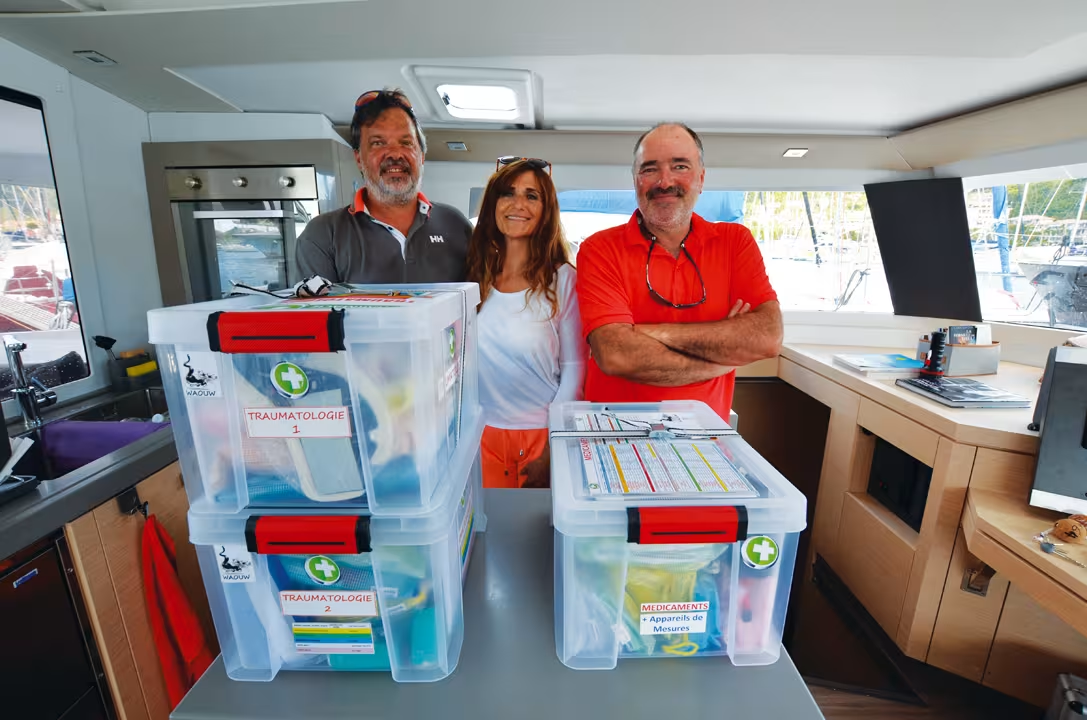
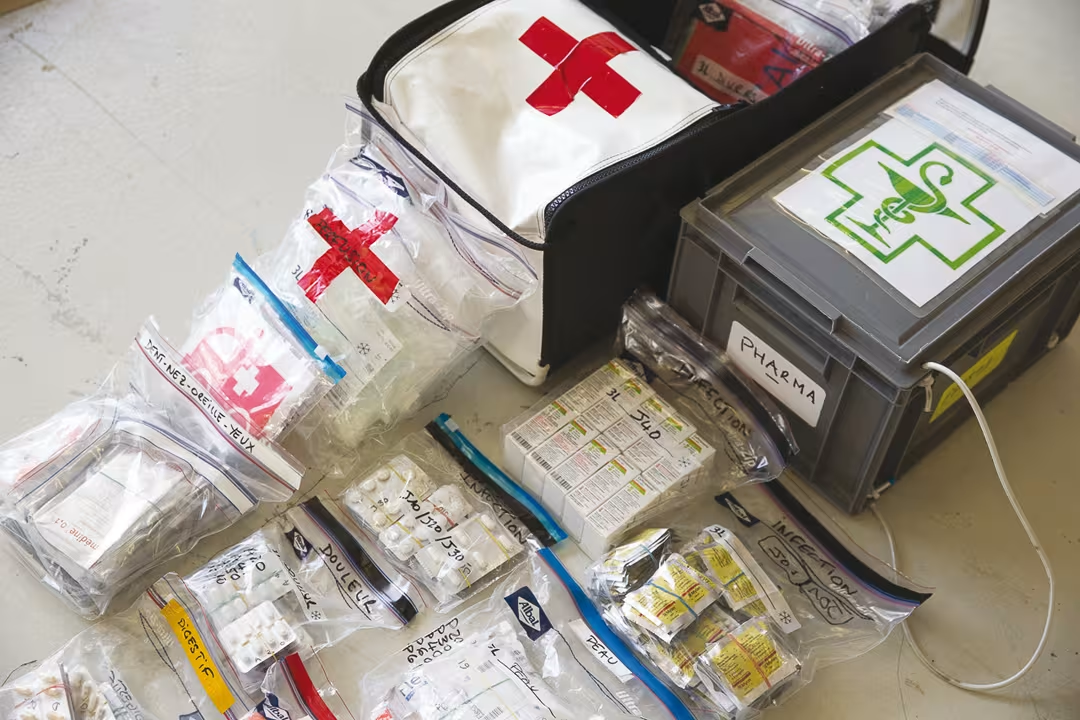
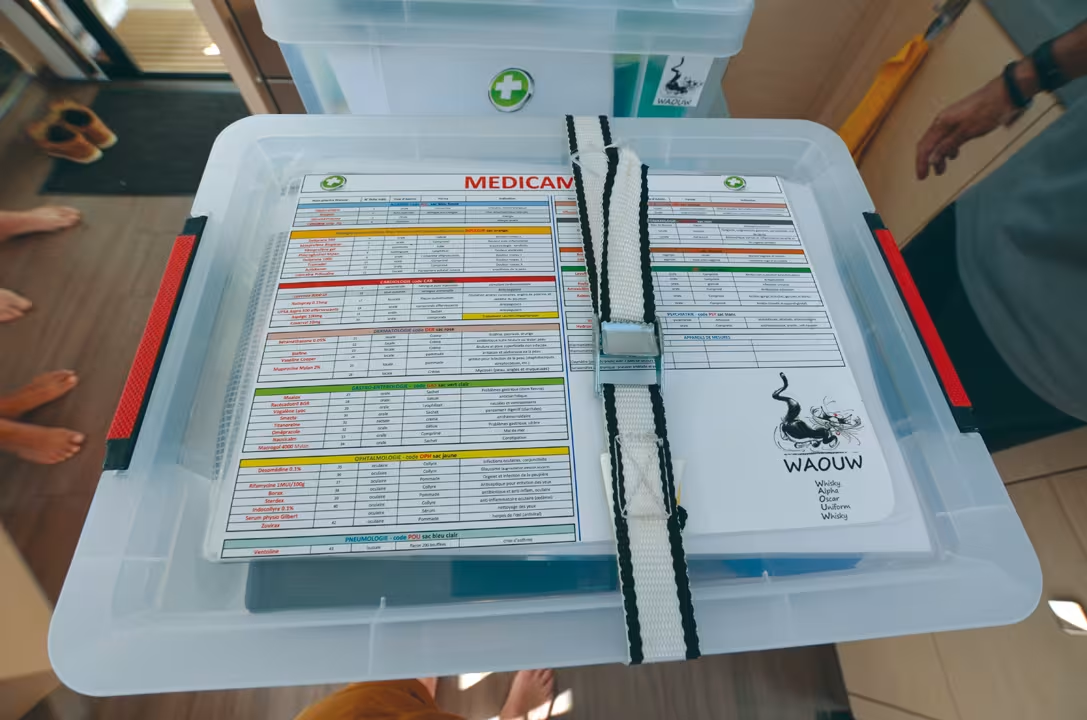
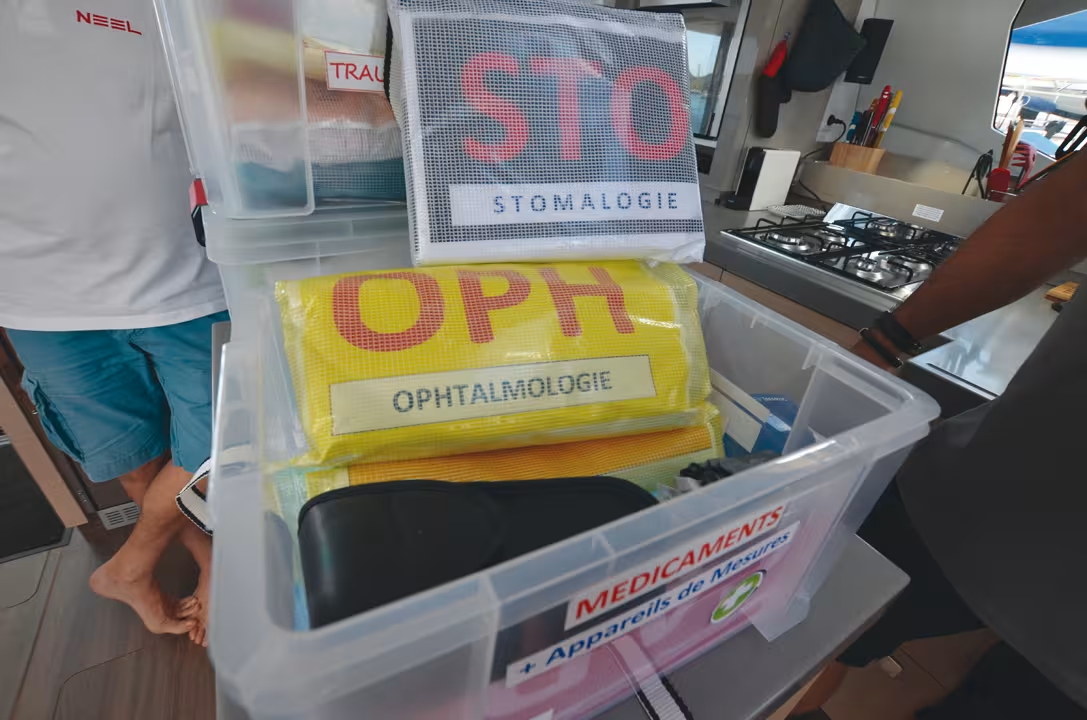
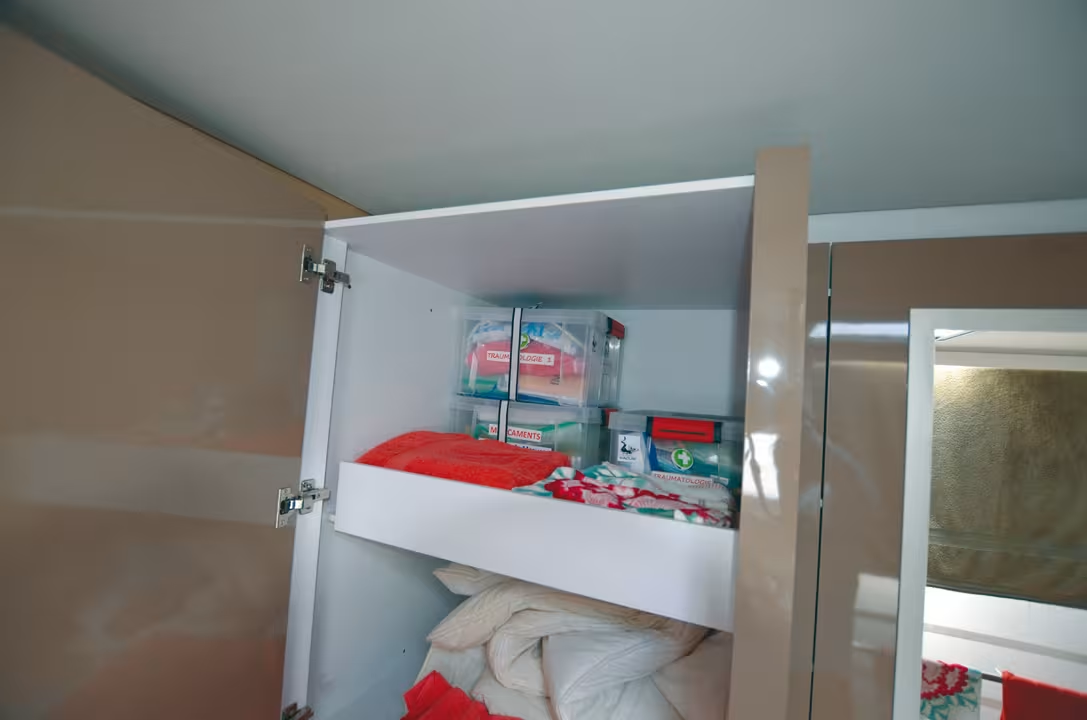
The marine environment is often damp and tends to have variations in temperature. This must be taken into account when stowing pharmaceutical equipment, whilst allowing rapid access. The container must allow the medicines to be protected from shocks, damp, light and temperature changes, which can sometimes damage the active constituents. The medicines can be taken out of their original boxes, and placed in transparent waterproof bags, noting the expiry dates and retaining their directions for use. A watertight box with different compartments is very practical in unstable conditions and can avoid confusion. It allows storage, and replacement of expired products, for others which are rarely used. The products should be organized according to the illnesses they treat, or by the type of molecule, respecting the classification of the official list. This will make the search for the required medicine easier. A register of medicines, controlling the entries, removals and expiries will be useful for keeping your first aid kit up to date. Another watertight box can contain the diagnostic aid accessories, and equipment for serious traumas and injuries: supports, straps, bandages, scissors, syringes and large dressings.
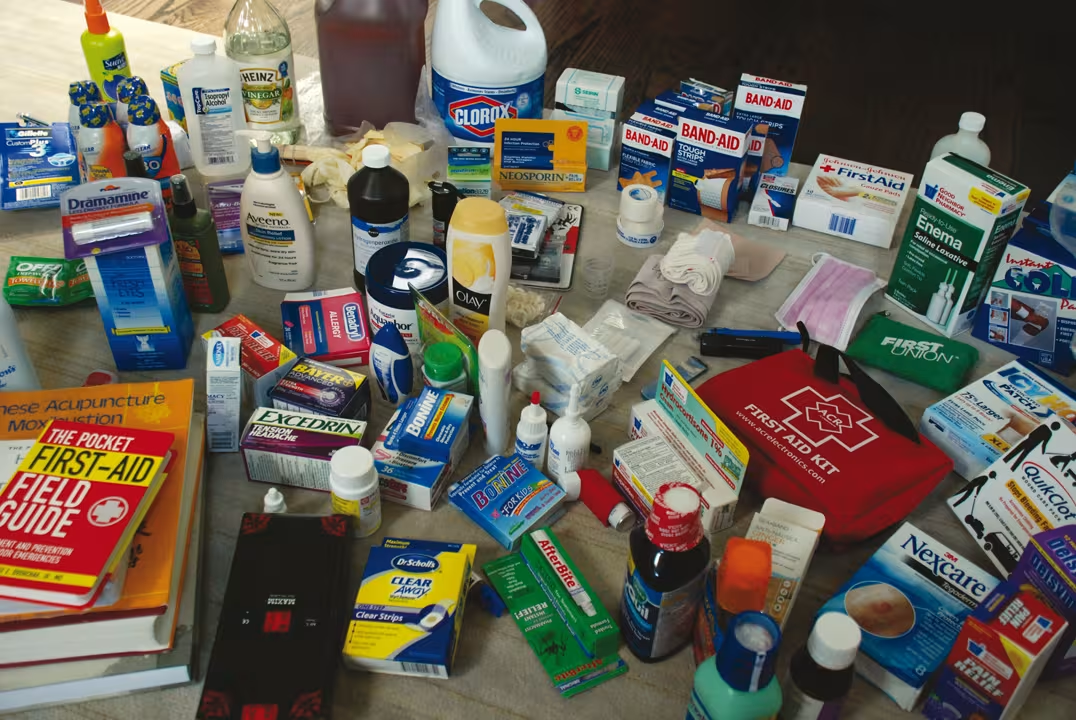
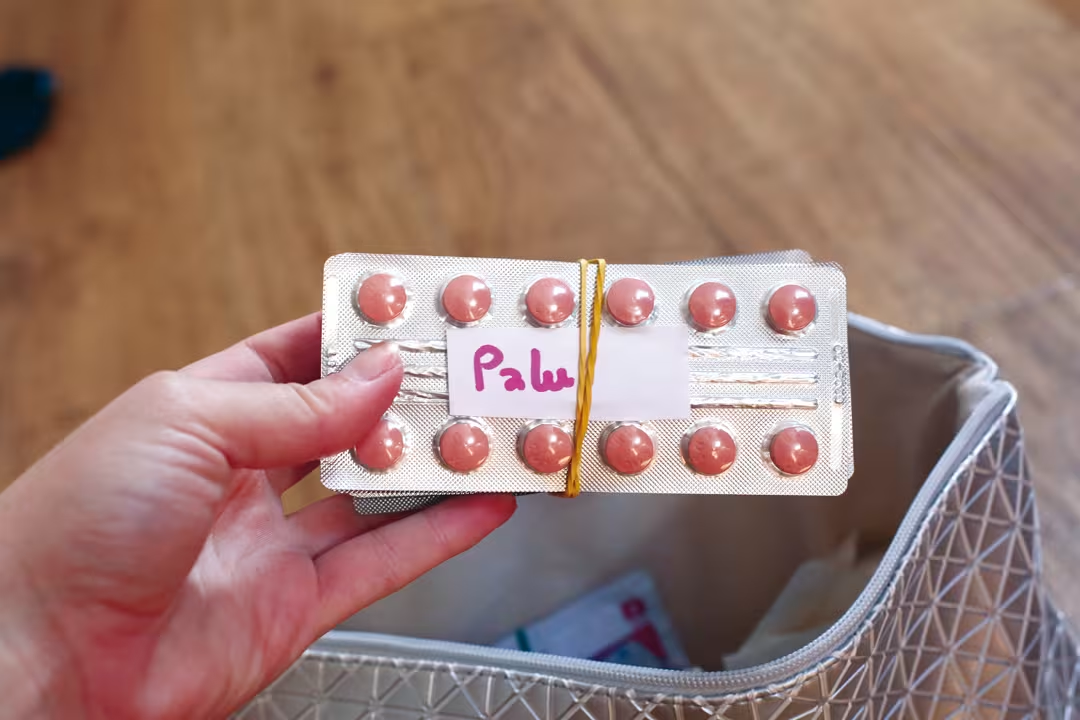
For day to day needs, including both emergency necessities for minor injuries: Band-Aids, compresses, disinfectant, anti-burn or post-trauma ointment and a few everyday medicines, such as analgesics, stomach powders and anti-inflammatories, it is best to use a locker-type first aid kit, with even easier access, and in which you can also store your personal daily treatment. Finally, a last bag, stored with the evacuation equipment, will be very useful if you have to leave the boat in an emergency. The kit in most liferafts is reduced to a few Band-Aids and some anti-seasickness pills… Nevertheless, if the total volume of the boat’s on-board first aid kit is not too great, and it is easily accessible, it could be embarked in its entirety.
