
Not so long ago…
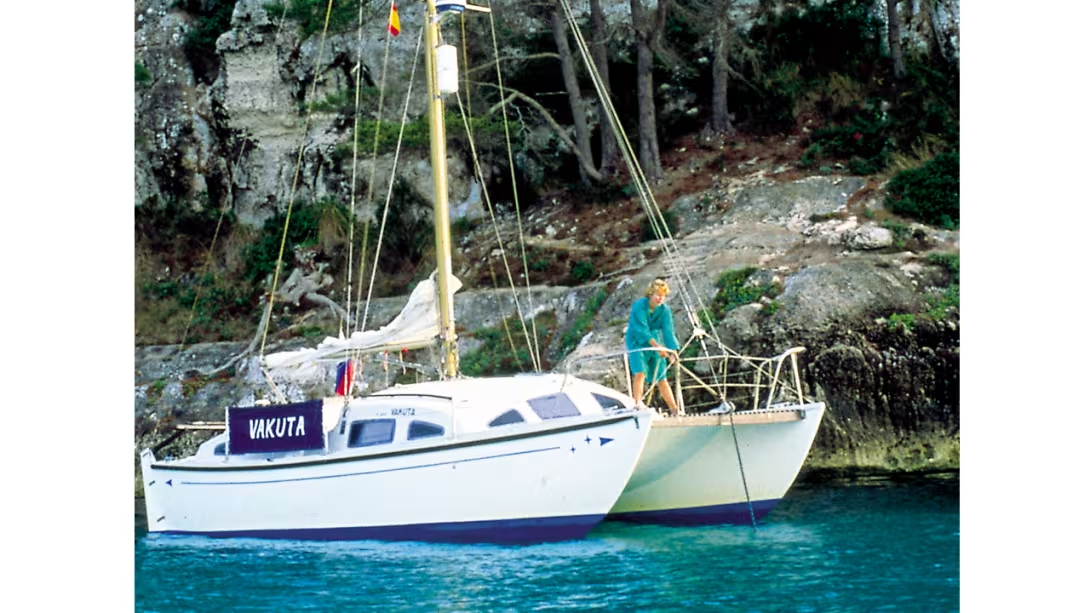
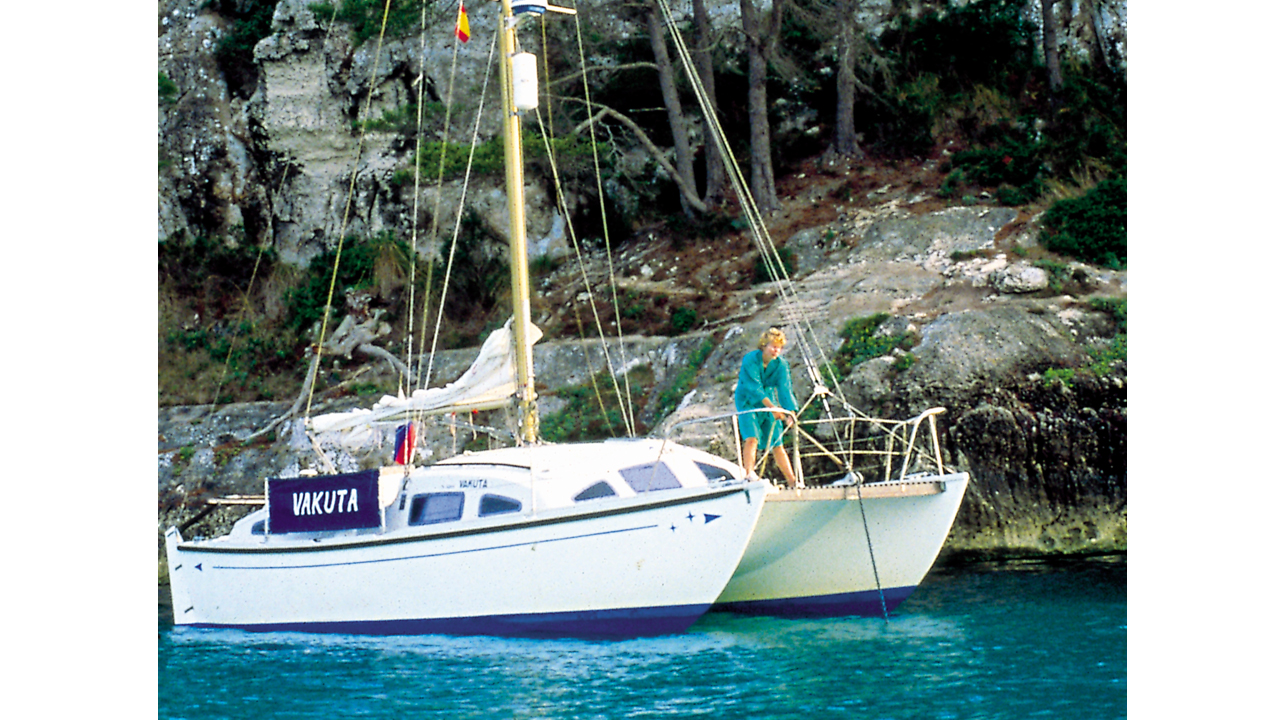
The modern history of multihulls is recent, as the first really mass-produced catamarans date from the end of the 1970s. At that time, not so long ago, most multihulls were no longer than 12 meters (already sizeable). This was the size of the trimaran Olympus Photo, winner of the first Route du Rhum (1978), whilst the Prout Snowgoose or the famous Louisiane – first of the Fountaine Pajot catamarans – were no longer than 11 meters at the beginning of the 1980s. The first round the world trip as a family in a catamaran was undertaken by David Lewis, accompanied by his wife and his two young girls, aboard the famous ‘Rehu Moana’, built by Prout. A catamaran whose length was…12 meters!
The multihull-oriented voyagers then set off around the Atlantic, but also around the world, on boats such as the Heavenly Twins or Summer Twins (27/28 feet), Prout 34, and of course the famous Wharrams or again the Gancel or Piver trimarans. James Wharram sailed across the Atlantic for the first time in 1956 aboard Tangaroa (23’), then a second time aboard Rongo, again a catamaran, but this time a 40-footer, in 1959.
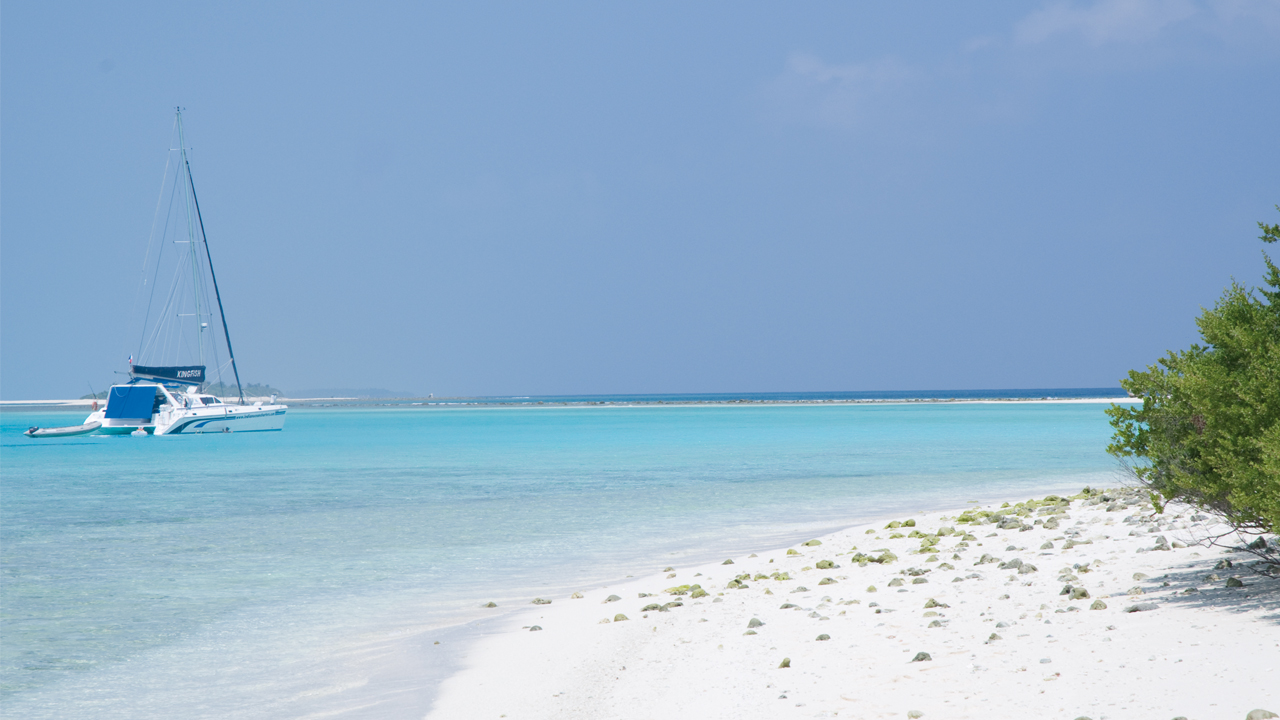
We had to wait until the beginning of the 1990s for construction techniques and the architects’ expertise to allow mass-production of bigger boats. The Casamance (43 feet), then the Marquises 53 from Fountaine Pajot, the Lagoon 55, 47, 57, then 67, the Privilège 14.70, etc.
The 90s saw the multihull industry develop, and in anchorages the world over we started to see more and more boats with two or three hulls, sailed by happy family crews... The keen interest in ocean cruising catamarans then really started, spurred on by the charter boom. The builders and architects were then able to compete to design boats which were even safer, more seaworthy, more comfortable and…bigger!
The right size…
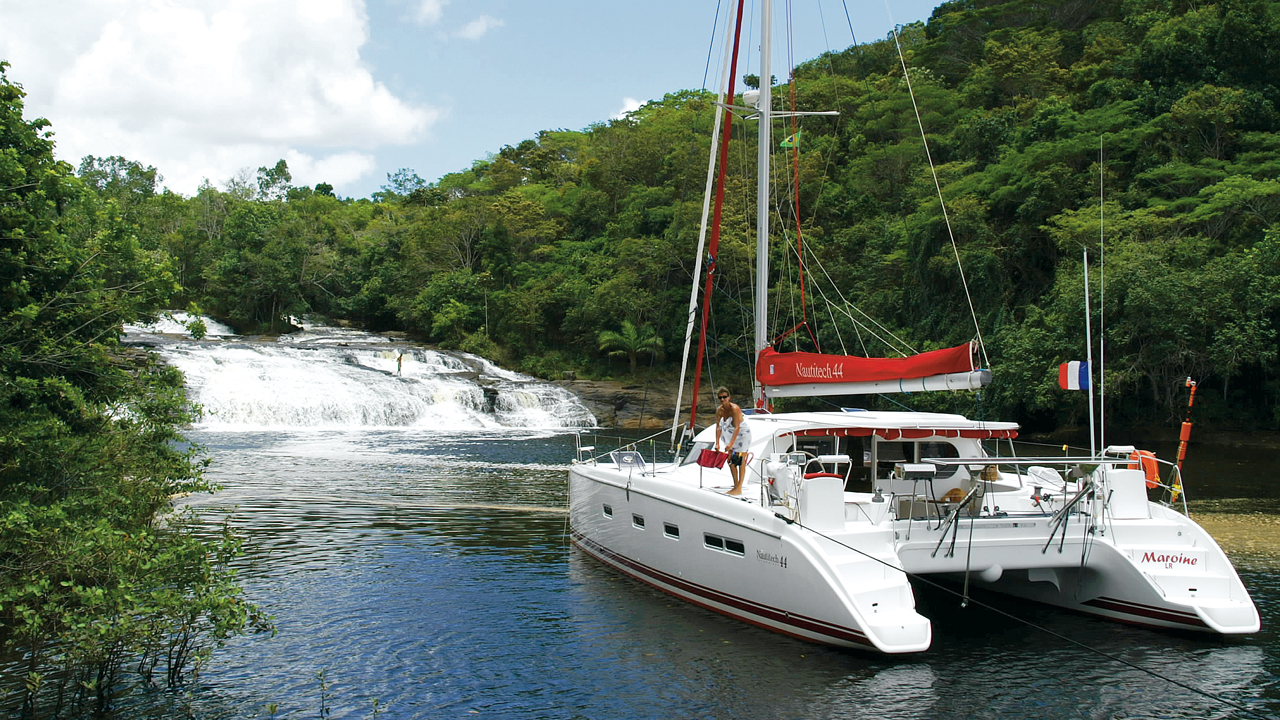
Does an ideal size of boat exist? As we have just seen, in the 1980s, 12 meters for a voyage in a multihull seemed to be a maximum. But the main reason was that to handle a bigger catamaran or trimaran with the fittings of that period, you had to be both an exceptional sailor, capable of anticipating his or her maneuvers, as well as having almost Herculean strength, as winches and blocks, not to mention ropes, did not have the comfort in use and the performance that we are familiar with nowadays.
Although the size of ocean cruising boats has increased considerably in the last thirty years, this is above all thanks to the progress in fittings. Hoisting a mainsail of over 100 square meters is today child’s play with modern winches, not to mention that all the boats, or almost all, offer electric winches. Self-tacking headsails, roller reefing which reefs with no problems, and furlers which furl, not to mention hydraulic steering, have greatly simplified the cruising sailor’s life. You can therefore now set off as a couple of over 60-year-olds, aboard a 55-foot catamaran without asking yourself how you will succeed in managing the boat’s power in the case of bad weather.
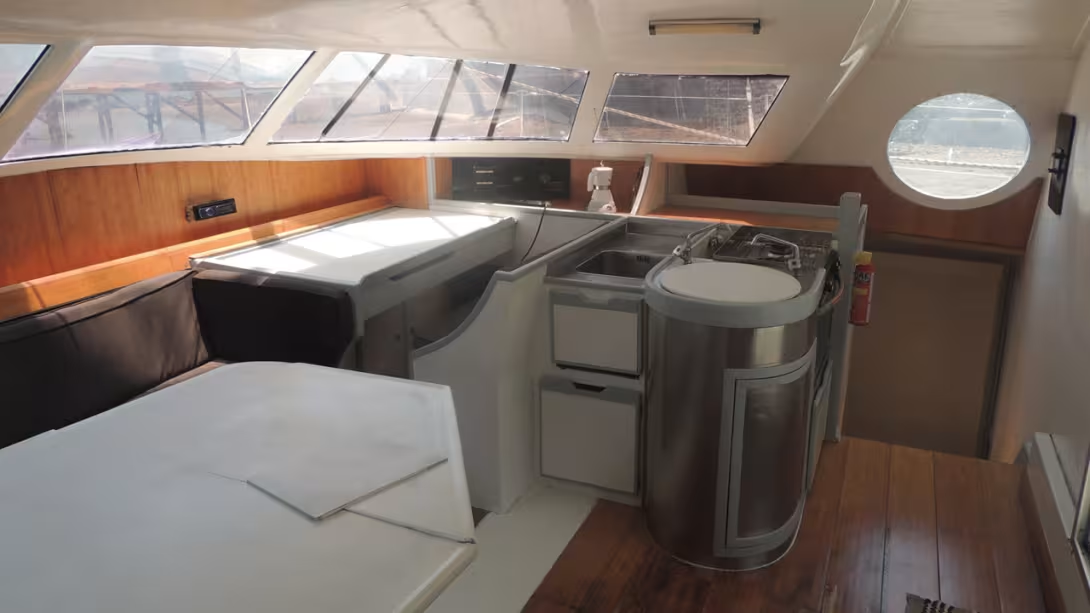
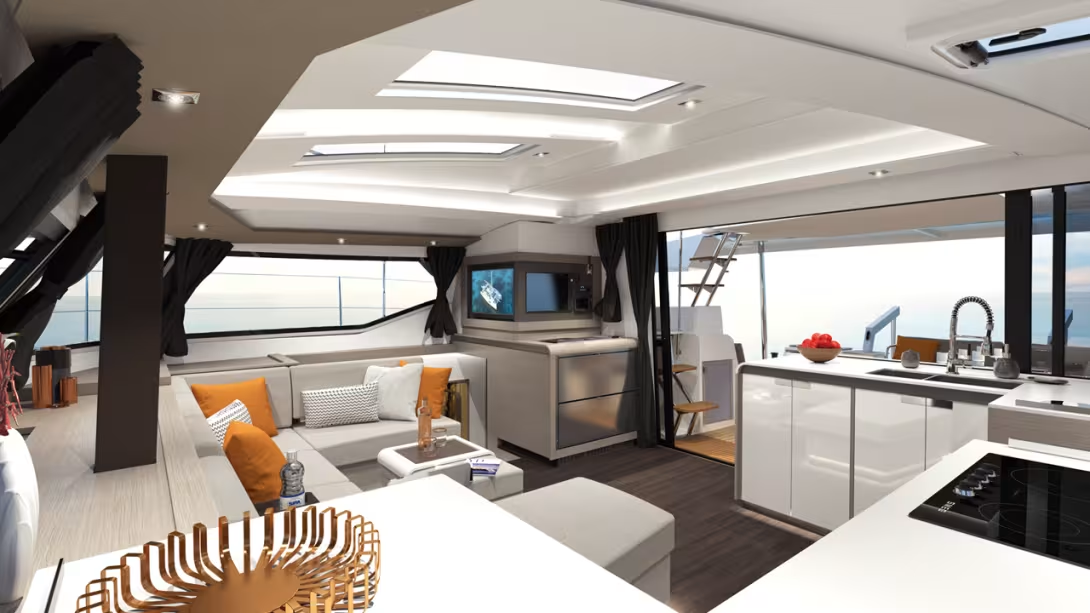
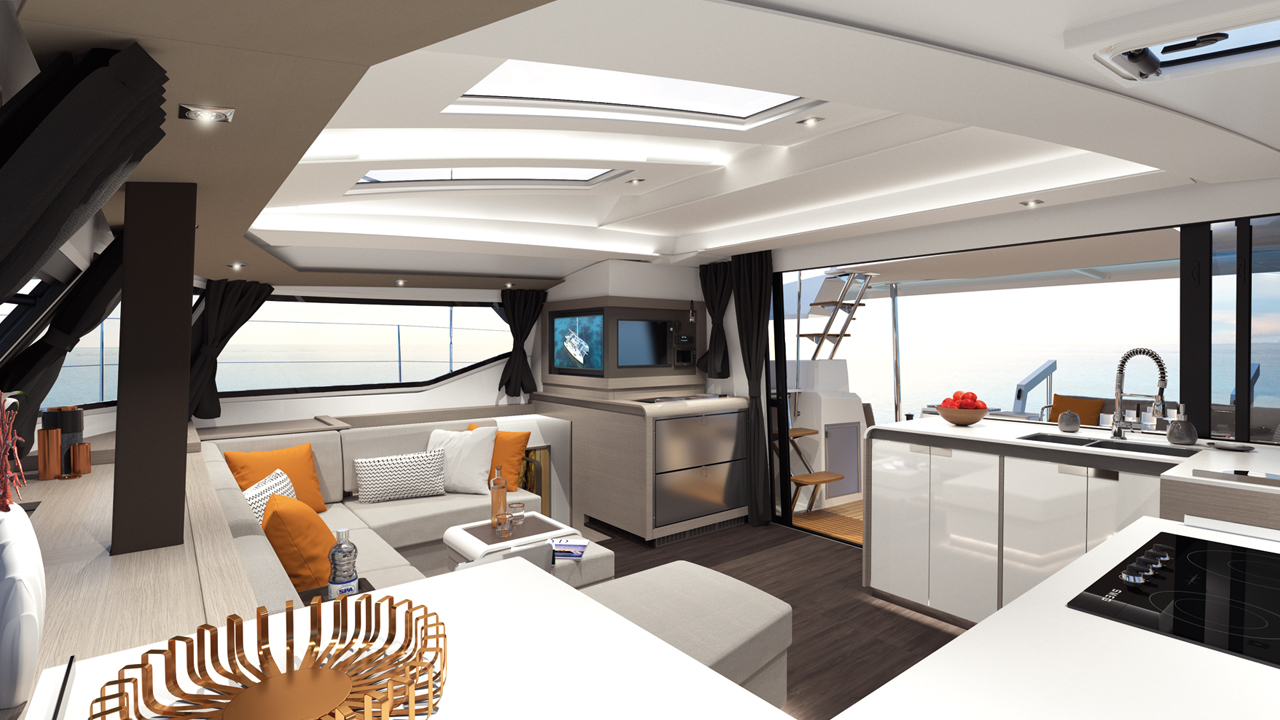
The big multihulls are easier to handle, and offer increased comfort both at sea – what a pleasure it is to surf the Atlantic swell, pushed along by powerful trade winds aboard a 55-foot catamaran – and in the anchorage. The living area aboard has also increased significantly in thirty years. You just have to look at the accommodation aboard the New 45, which Fountaine Pajot is going to present in 2019, and a Casamance 43, to see the development or rather the revolution that we have seen in the way of envisaging life aboard a boat. And what can we say about the load capacity? The first generation Outremer 45 accepts a load of 2 tonnes, whilst the new generation allows you to carry more than 3… Enough to envisage life aboard in a much more comfortable way, whilst retaining really good performance under sail…
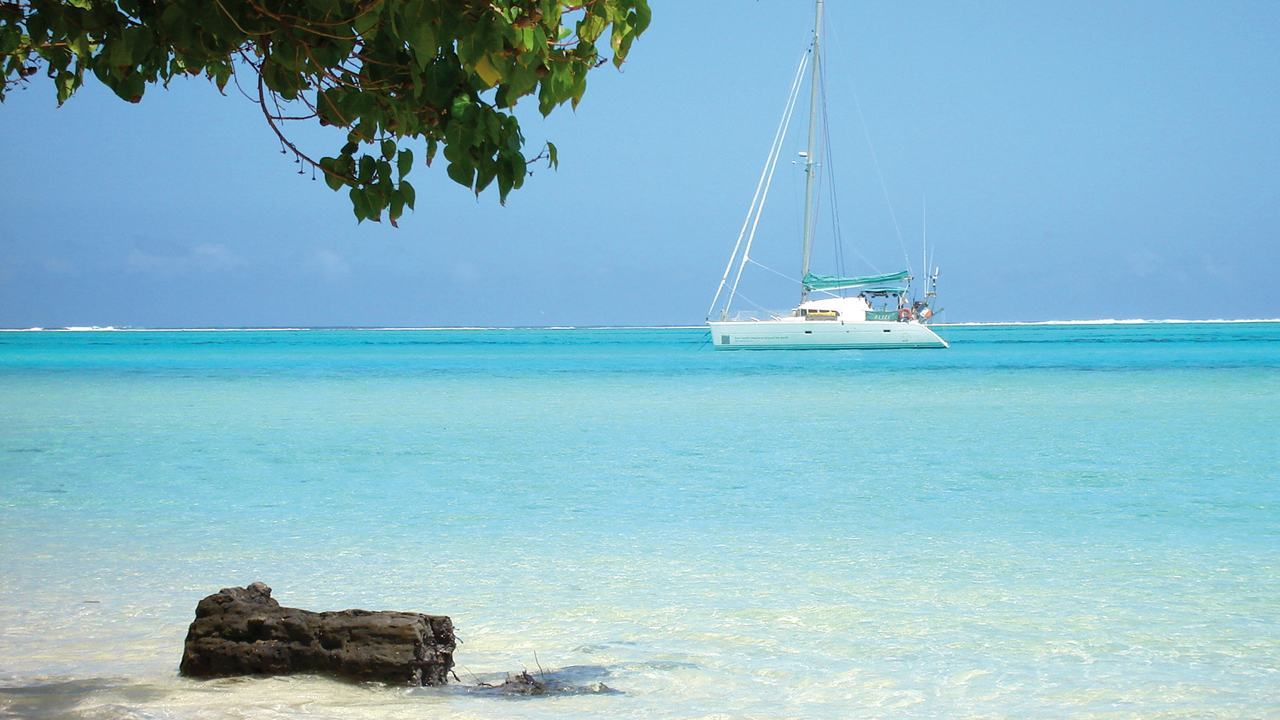
But let’s get back to the size. Is it so important in the choice of a boat?
Each boat corresponds to a crew and a program. Size is just one of the elements which mean that the chemistry will work. But although it’s not the most important factor in your choice of boat, it is nevertheless important, if only because in all the world’s boatyards, the bigger the boat, the more expensive it will be.
For a voyage, the minimum size is around 38/40 feet, to sail safely and comfortably when crossing the oceans, and to be able to carry sufficient load for a pleasant life aboard. Even though many of the magazine’s readers have sailed round the world in catamarans under 30 feet and have been delighted, the average ‘round the world’ multihull nowadays is closer to 50 feet.
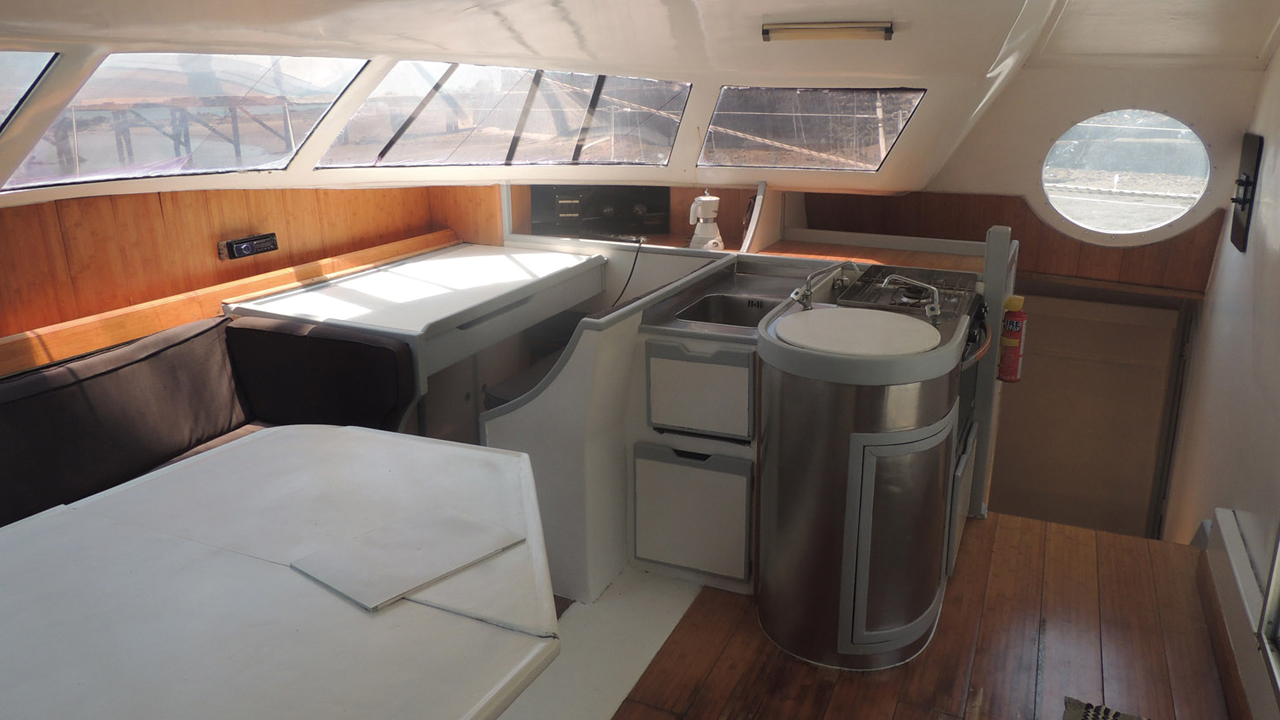
There are several objective reasons for this considerable increase in the average size of long-term cruising boats. The first is that the age of potential voyagers has also increased significantly. At the beginning of the 2000s, the great majority of readers of Multihulls World and its French-language version, Multicoques Mag, were families envisaging a break of a maximum of one to three years, to spend time with their children and enjoy life to the full. Rather young, these families were looking for boats which were comfortable and not too expensive, to realize their dreams of escape. The Lagoon 380 was thus the choice of numerous families, and a large number of the 800 examples built were the ideal travelling companion for these young people…who have now grown older and would like to set off again – without the children, who have grown up – for a longer voyage. As life has passed, they are now better off and can therefore afford a bigger boat.
The time and the voyage have also to be taken into account in the choice of the boat’s size. Our families’ project at the beginning of the 2000s was often an Atlantic circuit or a tour of the West Indies for a period varying from a few months to a maximum of one year - the famous sabbatical year. Nowadays, although there are still families with the same project, we also find particularly fit young retired people who want finally to accomplish their dream of sailing round the world. For them, the aim is to leave for several years, to welcome friends and family aboard (while returning home regularly and leaving their boat). The boat must therefore be comfortable, capable of welcoming children and grandchildren, as well as casual friends. Life aboard the boat is just like ‘at home’, with the relevant comfort, as well as the space for everyone to feel comfortable. And for this, they need bigger boats. And this is also probably one of the explanations for the increasing interest in ocean cruising catamarans. And this also explains the average increase in the size of boats sold with the aim of a long voyage.
Finally, let’s not forget that a bigger boat is more reassuring for many skippers. Don’t we say that ‘bad weather arrives much quicker in a small boat’? And it’s true that it is easier to face winds of over 35 knots and the seas that go with them aboard a 15-meter cat…as long as the fittings of the said vessel are of the required standard and the crew is able to handle the maneuvers.
So, is the extra meter worth it?
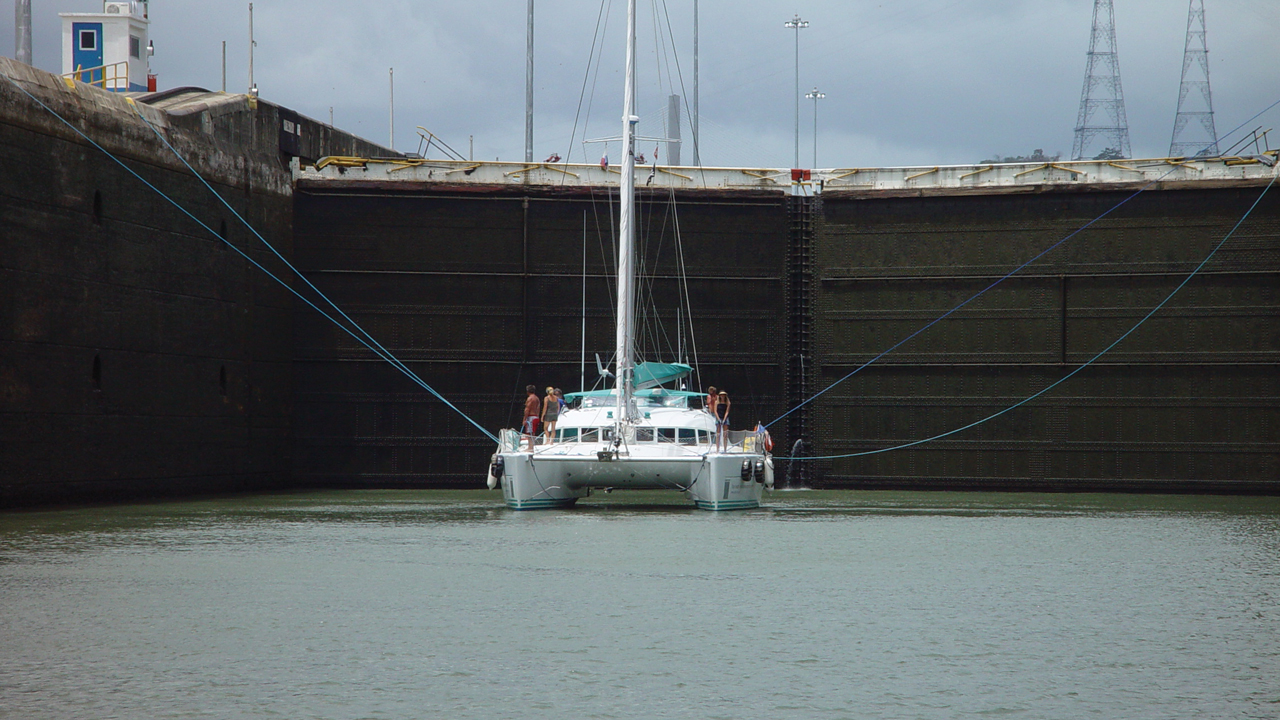
Is a bigger boat essential for setting off to the other side of the world? Our venerable chief editor has the habit of saying ‘the right boat to set off in, is the one you set off in’! A real truism which has the advantage of explaining that it’s best to set off now in a 40-foot boat than to wait and work for 10 years to be able to afford a 50-footer… But it is certain that the comfort and safety offered by a bigger boat is an undeniable ‘plus’ when blue-water cruising.
Setting out to live aboard a boat is a genuine life project, which is put together over the long term and is the fruit of long reflection. For the chemistry to work, and the voyage to be on a par with what you have dreamt, some compromises will inevitably have to be made. And the decisions concerning the choice and size of boat will without any doubt be amongst the most difficult to make.
Hence the importance of being well advised and devouring our 2019 buyer’s guide!
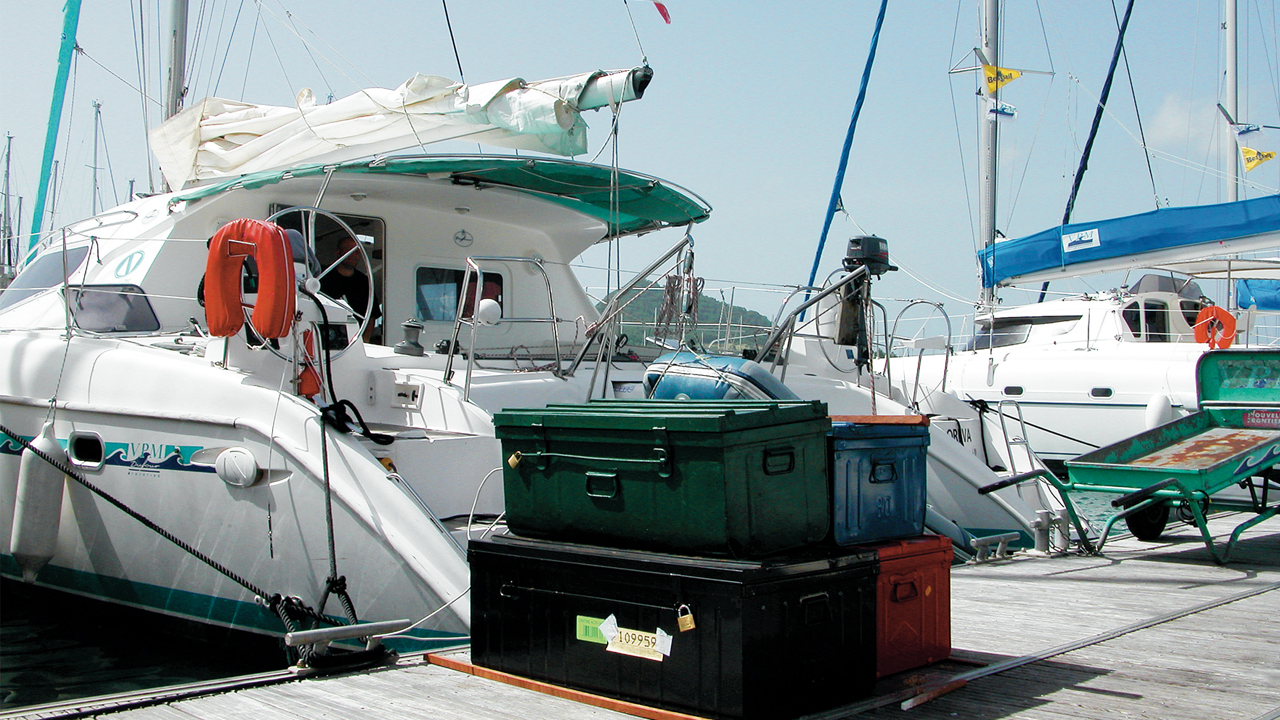
New or second-hand?
The question of size cannot be envisaged without talking about money. And if we are talking about money, the choice between new and second-hand inevitably crops up. So is a smaller, new boat better than a slightly bigger second-hand one, for the same price?
THE ADVANTAGES OF A NEW BOAT
- You benefit from a guarantee from a major builder.
- You can choose your equipment.
- The boat and the equipment are new.
- You can opt for the boat of your choice… All you have to do is order it.
- Tax-free purchase, numerous financing possibilities, subject to your profile.
THE DISADVANTAGES OF A NEW BOAT
- Waiting time to have your boat.
- A new boat is not at all ready to set off. It must be equipped, and this can be expensive…
- Significant depreciation in the first year.
THE ADVANTAGES OF A SECOND-HAND BOAT
- A boat which is immediately available.
- The equipment has been proven.
- The purchase cost is lower.
- The depreciation is greatest in the first year. You can therefore re-sell it without losing too much money…
THE DISADVANTAGES OF A SECOND-HAND BOAT
- You don’t always know the boat's past history.
- The search for the desired model can be risky.
- Obligation to call on a surveyor to be certain of your purchase.
- No builder’s guarantee.
- Financing can be more complicated (leasing, tax-free purchase…).
