

Have you noticed that the engine always breaks down at the wrong moment? It’s as you arrive in the harbour, to stem the current, or when the wind has dropped completely that the engine stops or refuses to start again. So unless you are close to the rocks, in which case you will have to find an emergency way out (under sail or with the dinghy), there is no point in rushing for the VHF to send a ‘Pan Pan’. In fact the most frequent breakdowns are often due to a few recurrent phenomena which can be solved with the tools and spare parts you should have aboard. But beware, here we are starting by assuming that the engine is in good condition and not at the end of its life, which would make what follows in this article fairly unreadable… We also overlook running out of fuel, weed or line in the propeller or obstructing the seawater inlet, closed inlet or fuel seacocks, a disconnected or discharged battery – the list of ‘breakdowns’ that however happen to even the most experienced sailors. In every case, don’t push the starter for more than 10 seconds, and don’t try to start more than 4 – 5 times (at 30 second intervals), as you risk emptying the battery and drowning the engine. If we forget the benign breakdowns listed above, whose origin you will quickly find, two causes represent over 90% of breakdowns: poor diesel supply and priming, or inadequate cooling, leading to excessive overheating of the engine. You therefore have below the remedies to be applied to get you out of this situation quickly and by yourself. If after all these checks, your boat’s engine still doesn’t want to start, the help of a professional will be essential. But remember, with a well-maintained and serviced engine, these inconveniences should be ruled out.
The diesel circuit
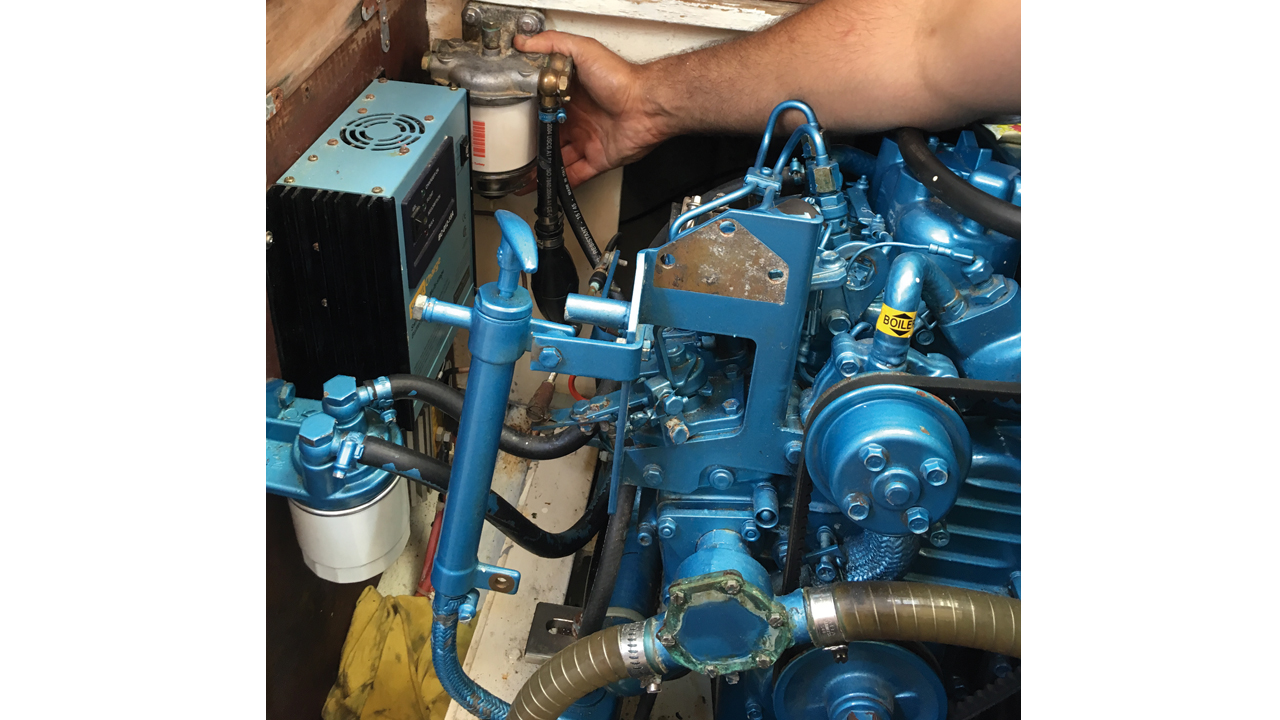
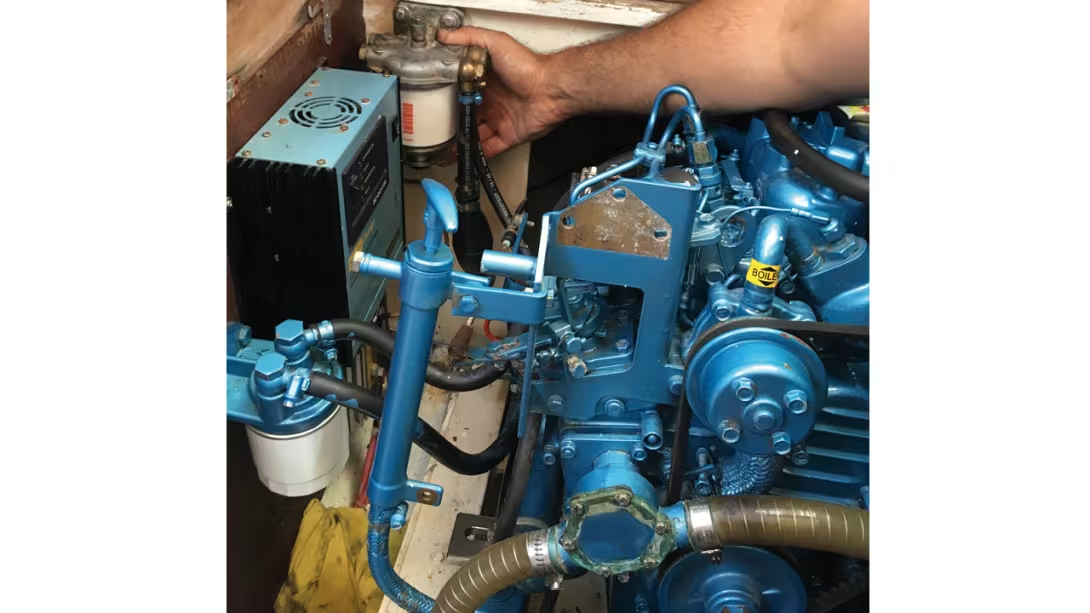
1 – We start by checking for the presence of water in the bowl under the diesel pre-filter. If there is any doubt, it’s best to drain it using the screw situated at the bottom. Then check that the diesel is flowing correctly by squeezing the manual primer bulb. If it remains hard, the diesel is not flowing. You must then check that the dip tube isn't blocked by dirt in the tank.
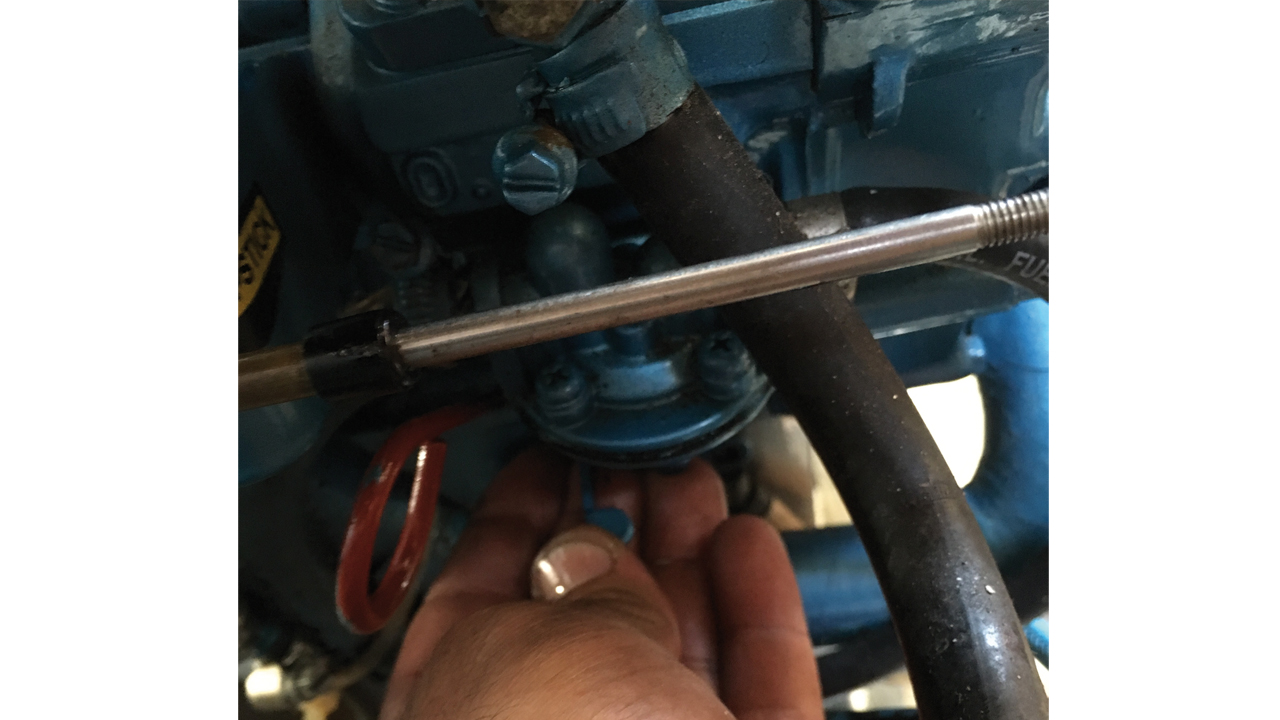
2 - Next check manually (if possible, on your engine) the operation of the diesel pump. It must be firm and flexible.
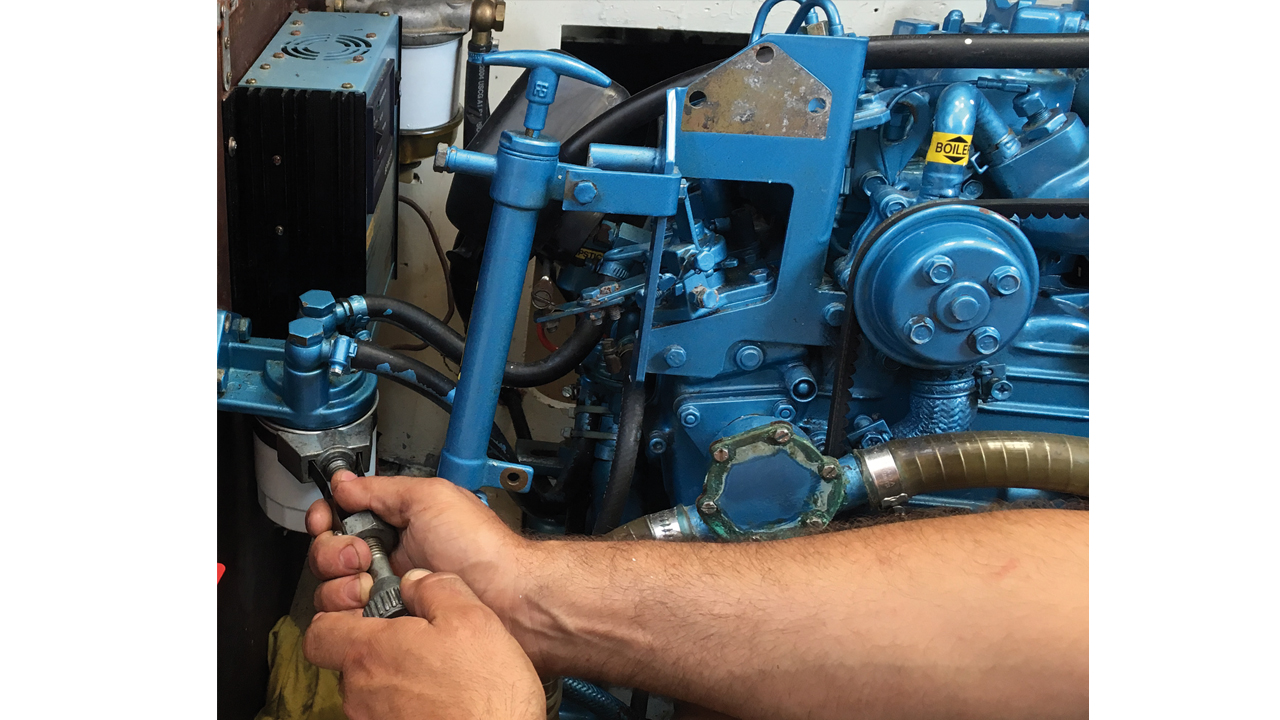
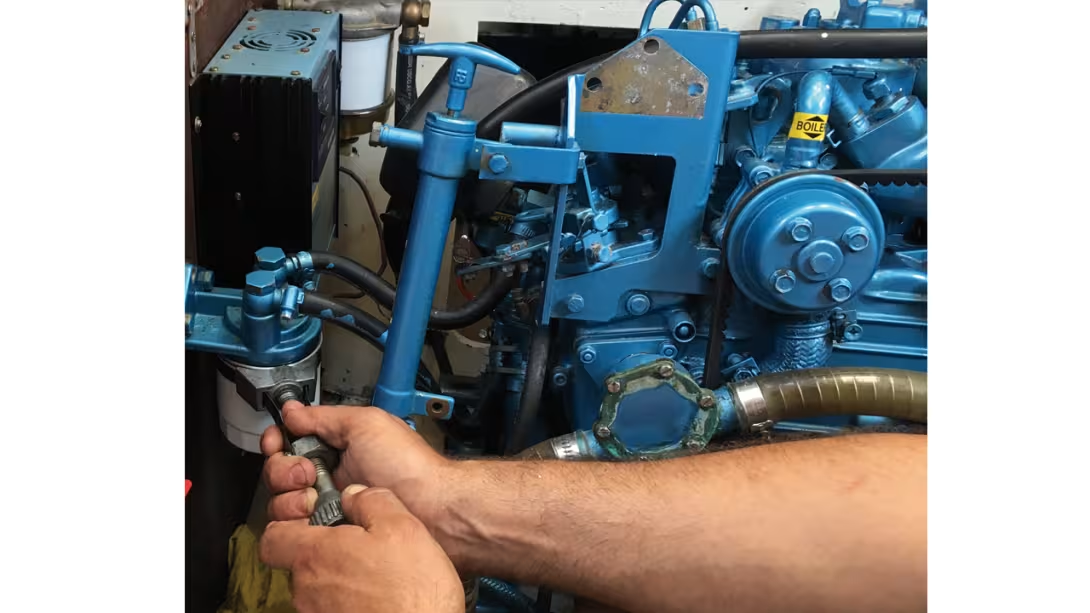
3 – With fuel which has been in the tank for a long time, deposits form and the filter is so dirty that the diesel can no longer flow. It is then essential that you change the filter and pre-filter.
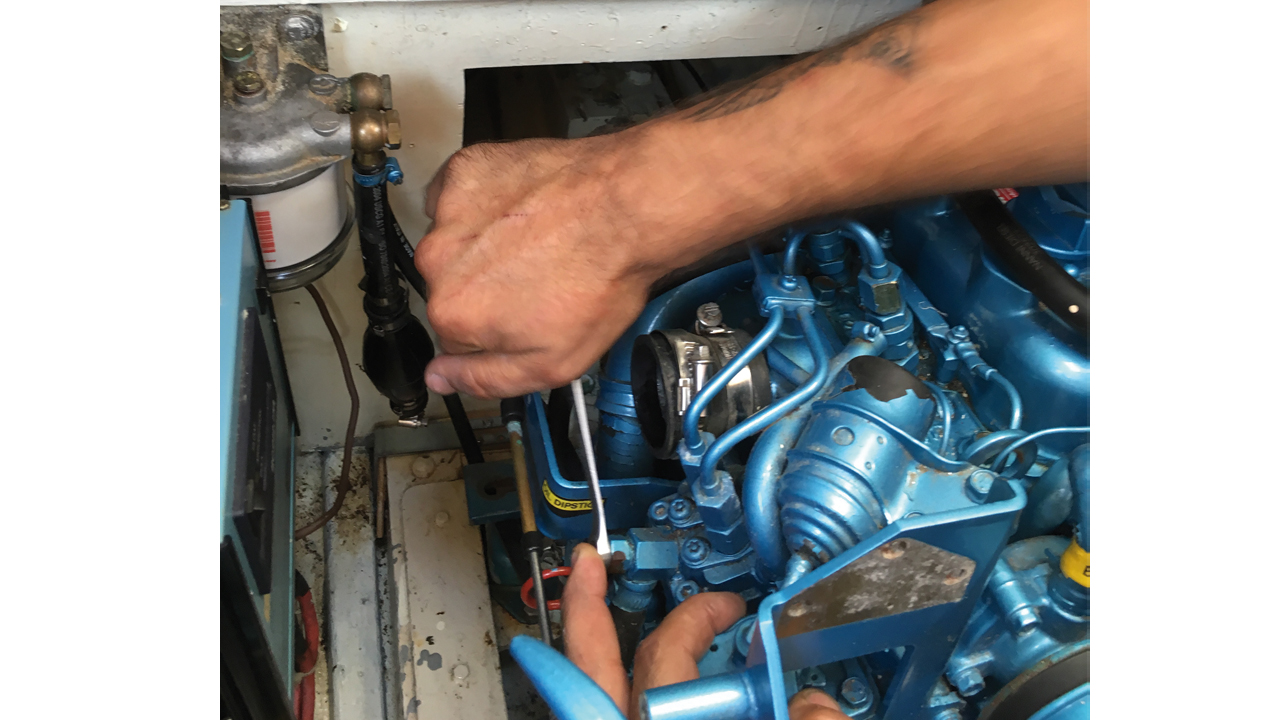
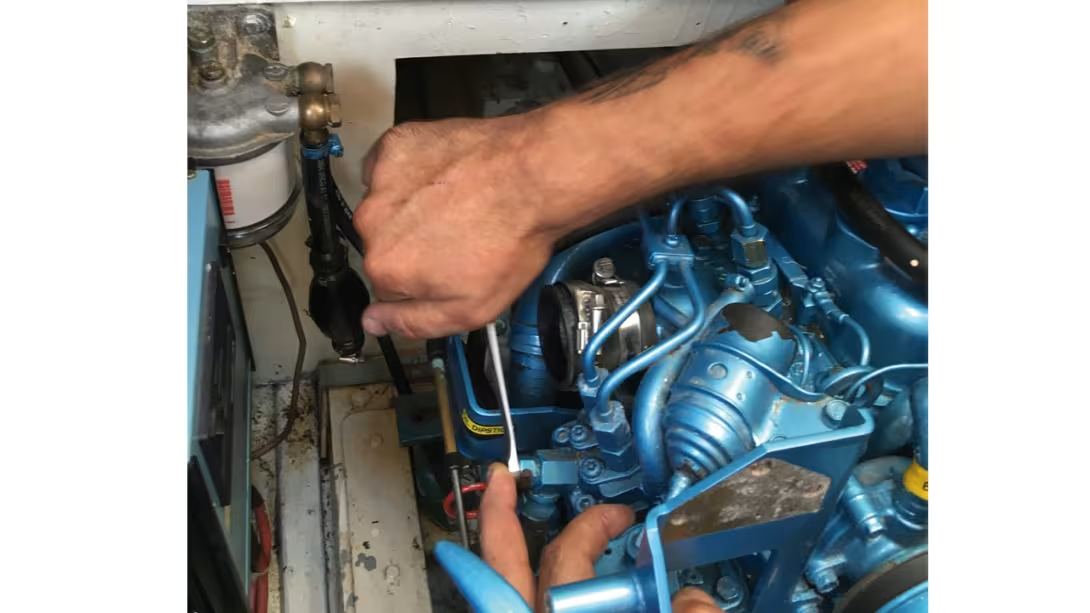
4 – Does everything you have just checked work correctly? Well the breakdown doesn’t come from the diesel supply. You have certainly an air leak in the circuit, at the level of the injectors. You must then bleed the fuel circuit between the tank and the fuel pump. As the rest of the circuit is under pressure, air cannot penetrate.
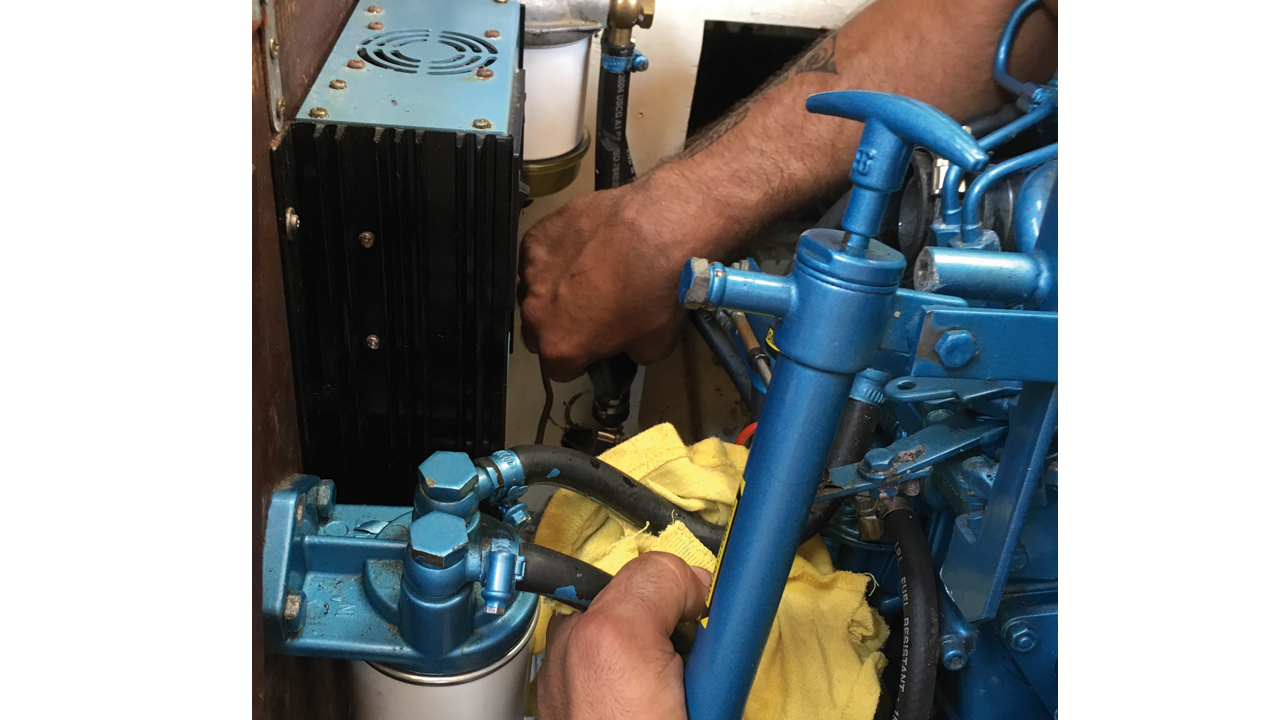
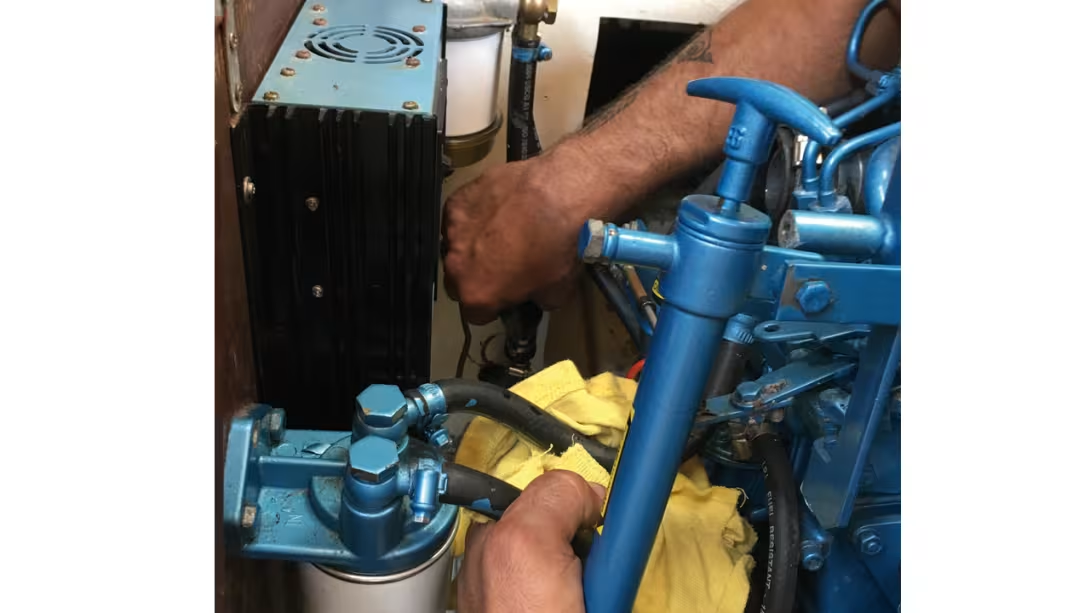
5 – To do this, you undo the screws at different points specified by the manufacturer (see the engine handbook), then take a rag, and pump the diesel by hand until it starts to flow with no bubbles at the different bleed points…
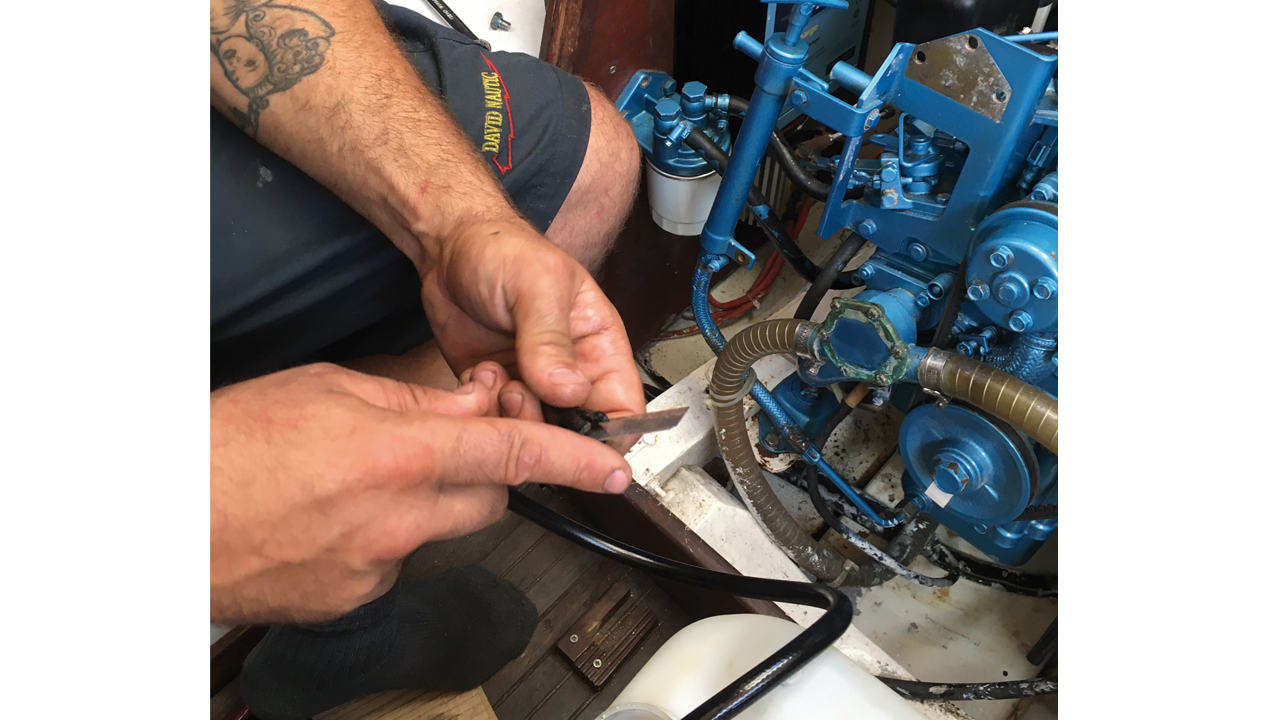
6 – At sea, you can fix this easily, provided you have planned this situation. You disconnect the fuel pump, the defective fuel line coming from the tank. In its place, connect a line from a spare jerrycan filled with diesel.
Does your engine still refuse to start? It’s therefore a safe bet that you have water in the injection pump… Here again, the spare jerrycan will be invaluable to bleed it with clean diesel, free of water.
Overheating
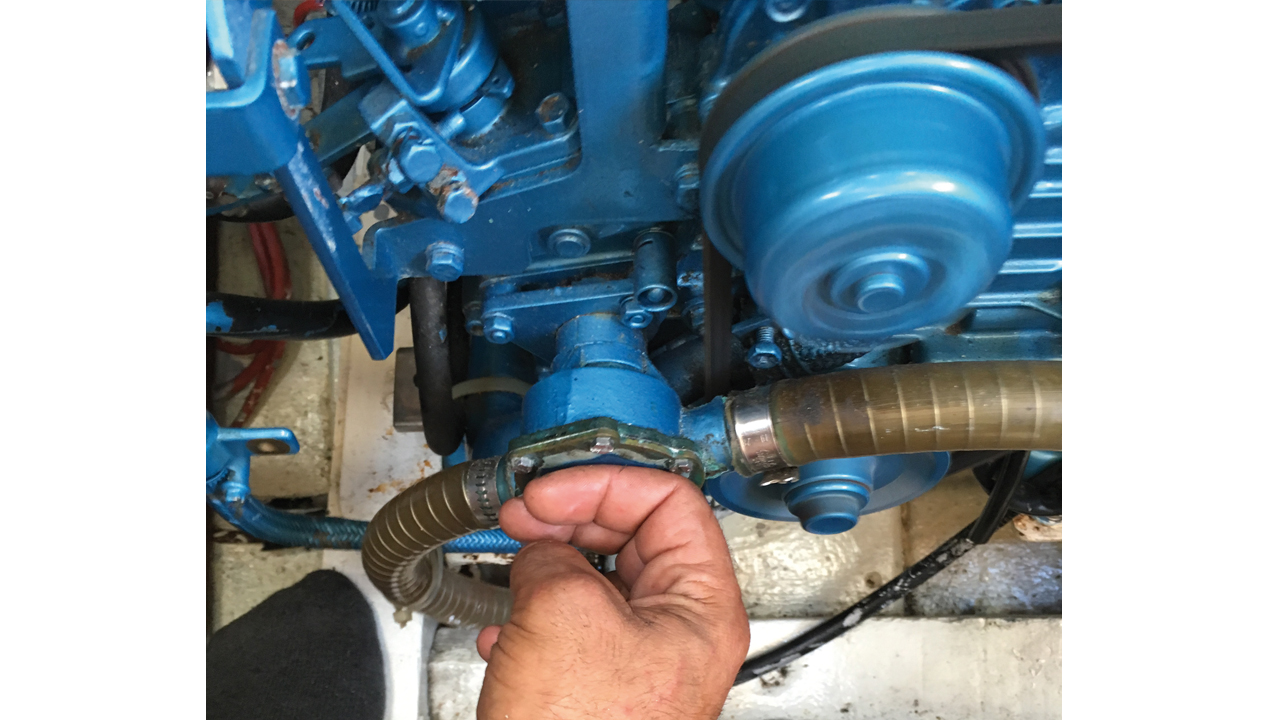
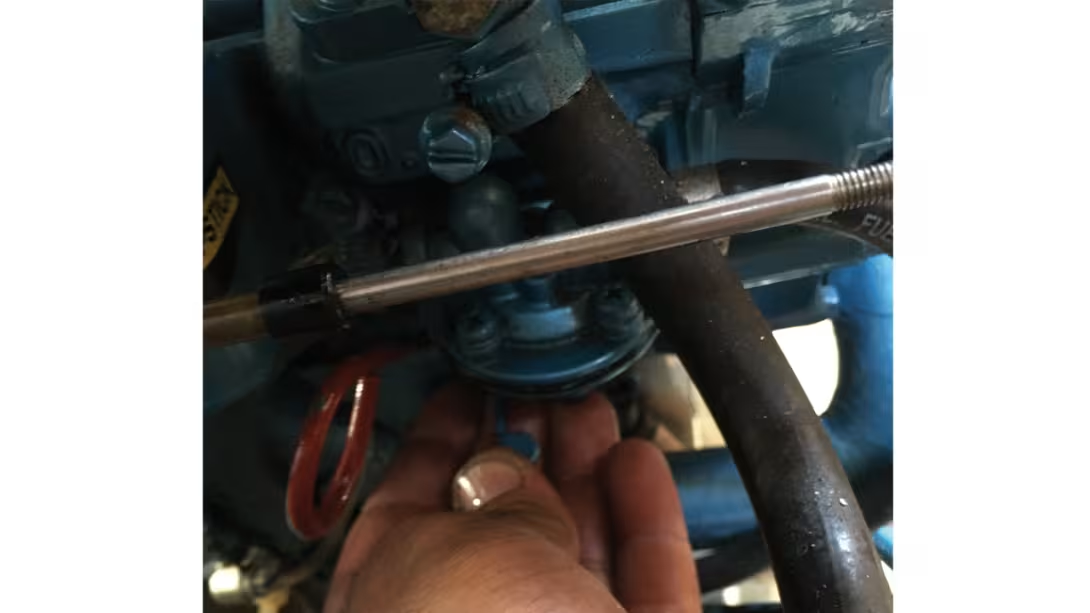
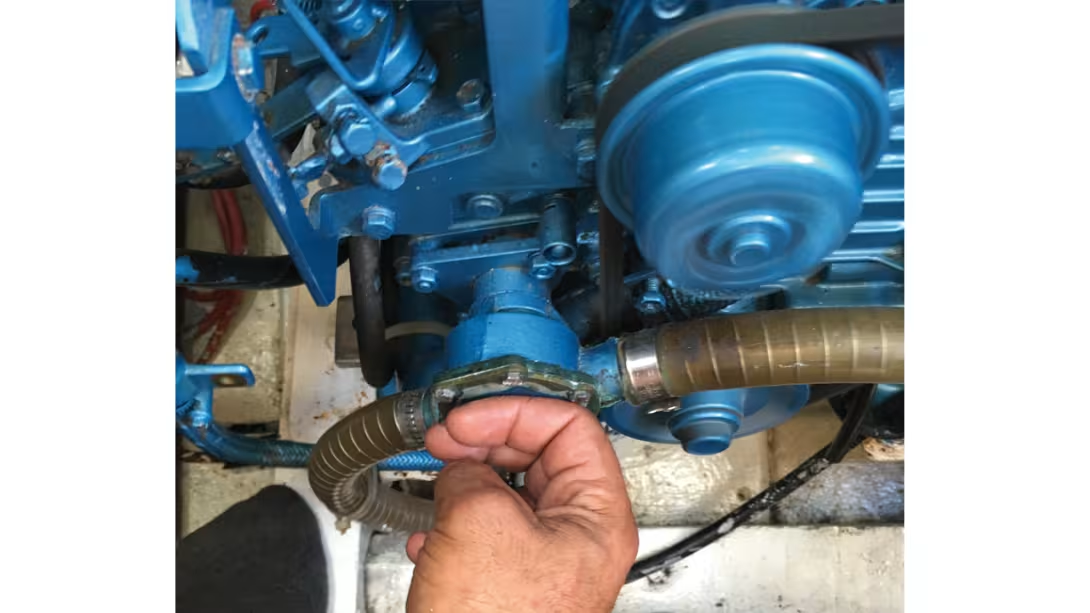
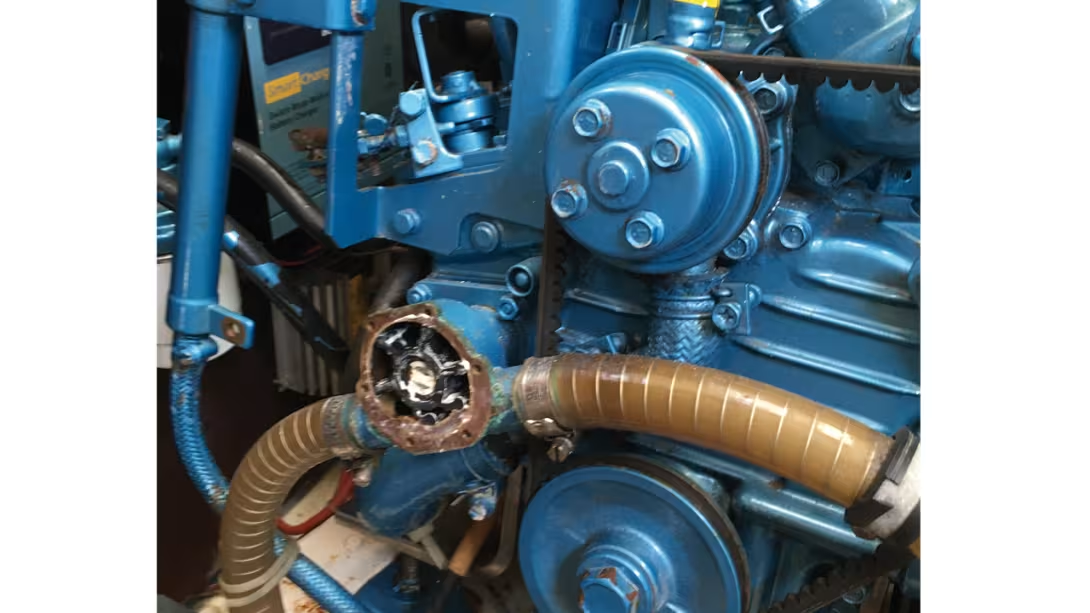
7 – To begin with, place your hand on the impeller cover. It should be cold. If it is hot, it means that the seawater which is supposed to cool the engine is no longer flowing…
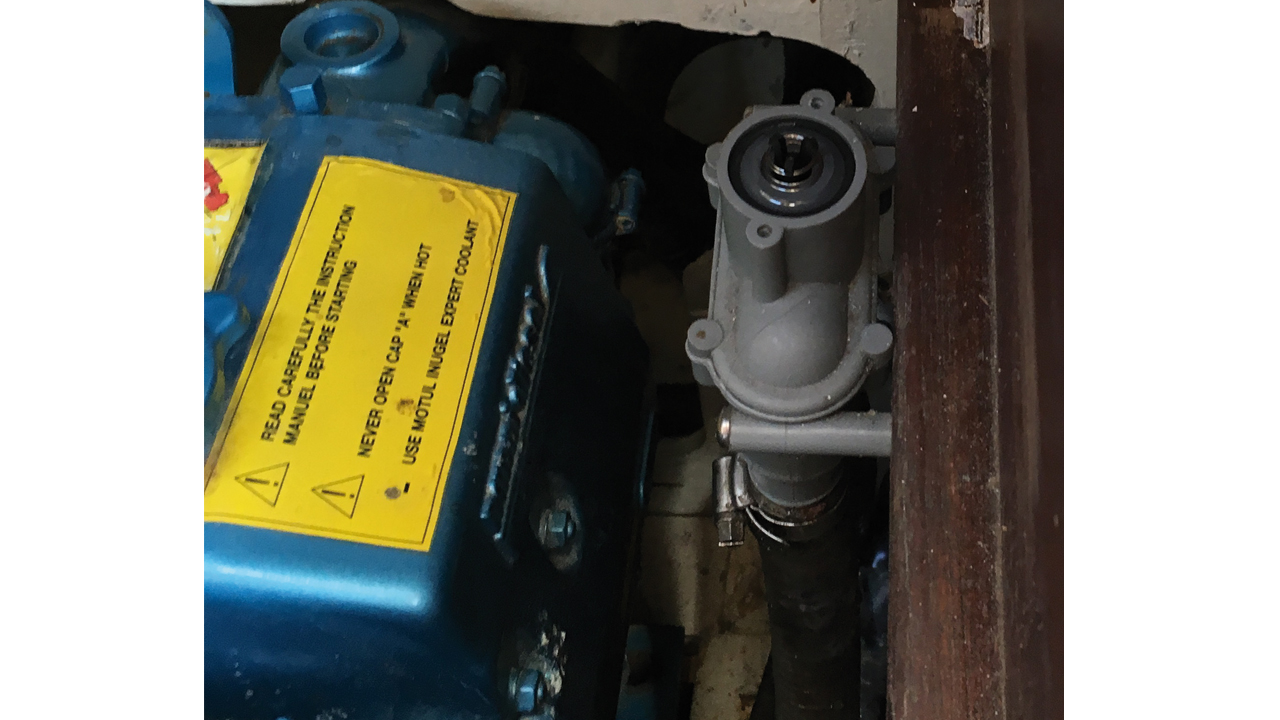
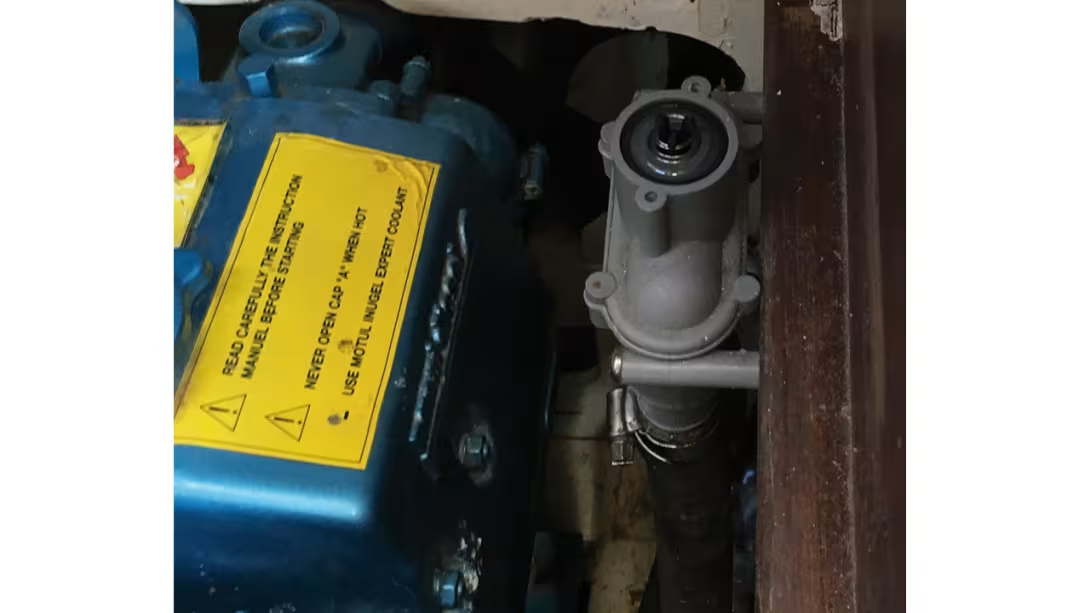
8 – After having checked that the vented loop in the seawater supply is not blocked, check the cooling liquid or fresh water level and the thermostat.
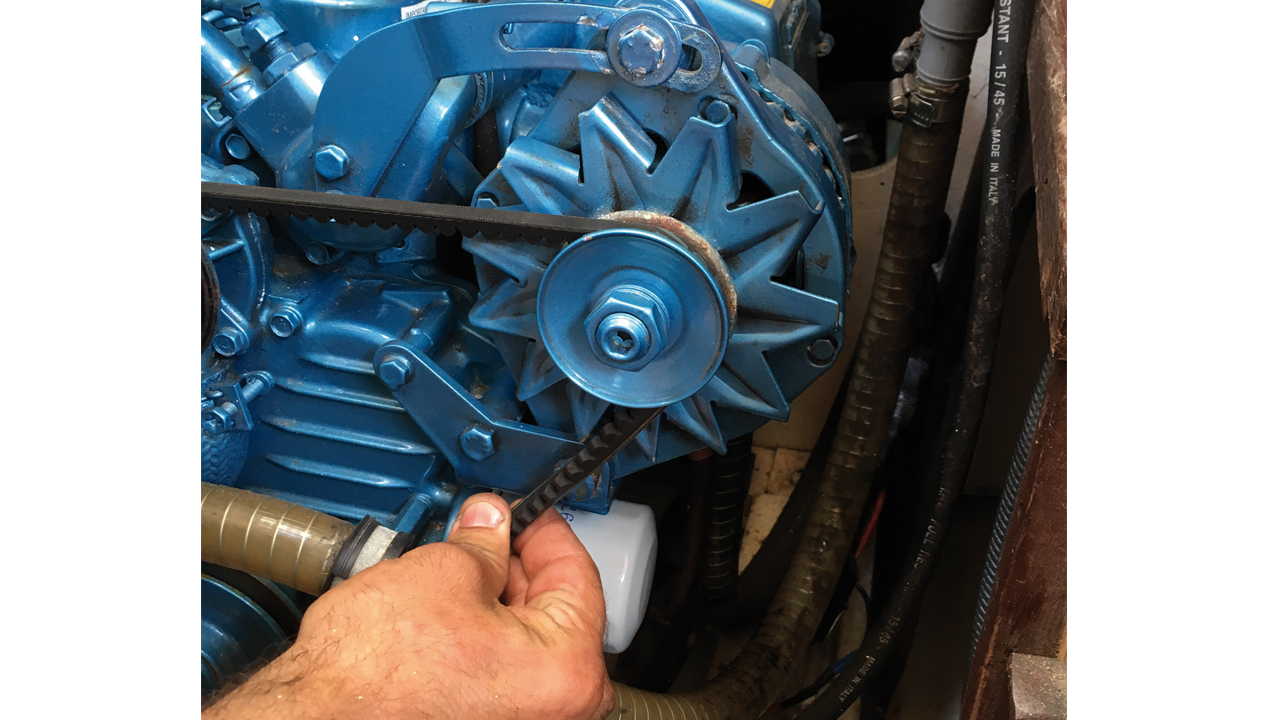
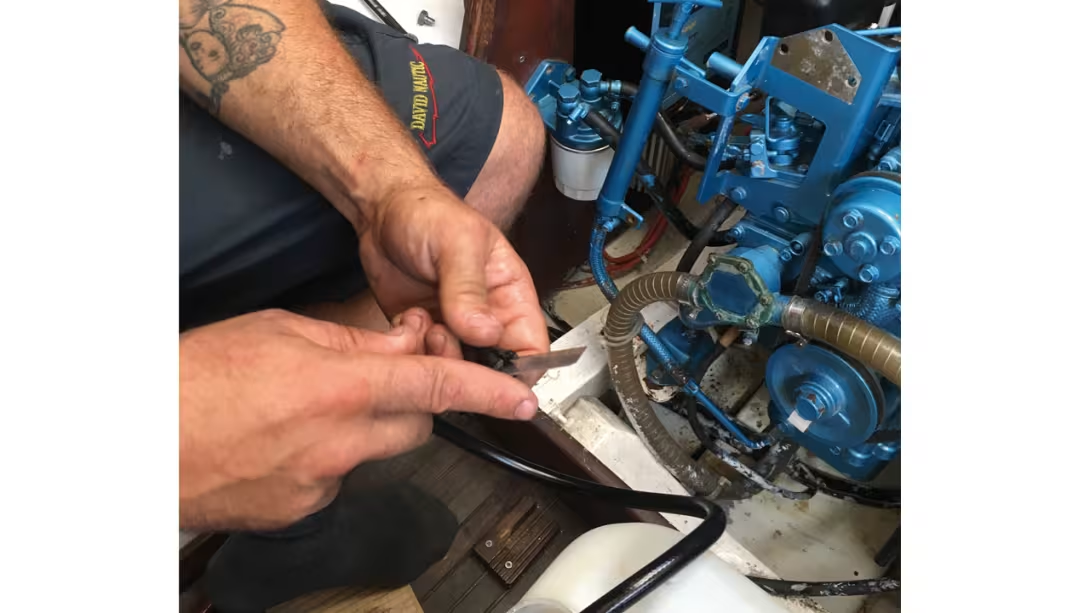
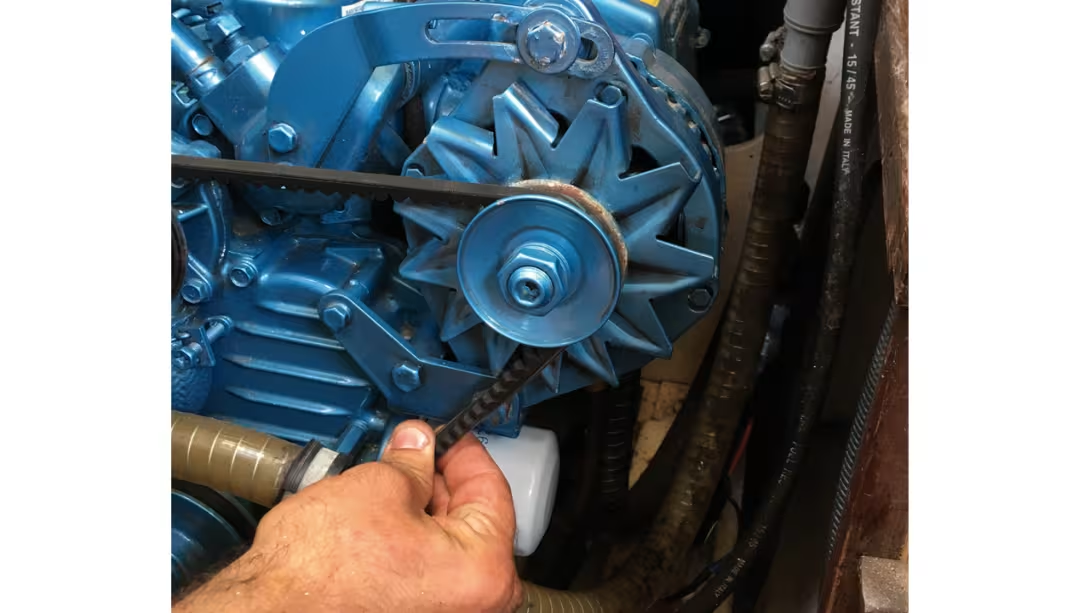
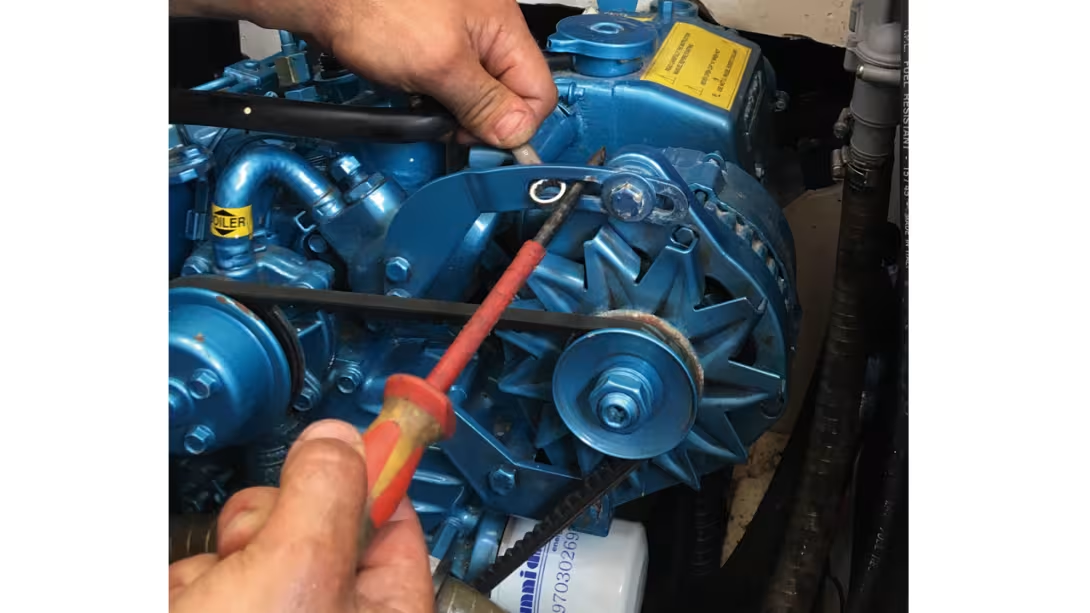
9 – Also check the drive belt which serves for the alternator, as well as turning the water pump. You must see if it is worn, smooth or grooved, and above all tight enough to drive the pump. You must be able to turn it by hand, and at the right tension it must not allow more than a ‘finger’ of movement.
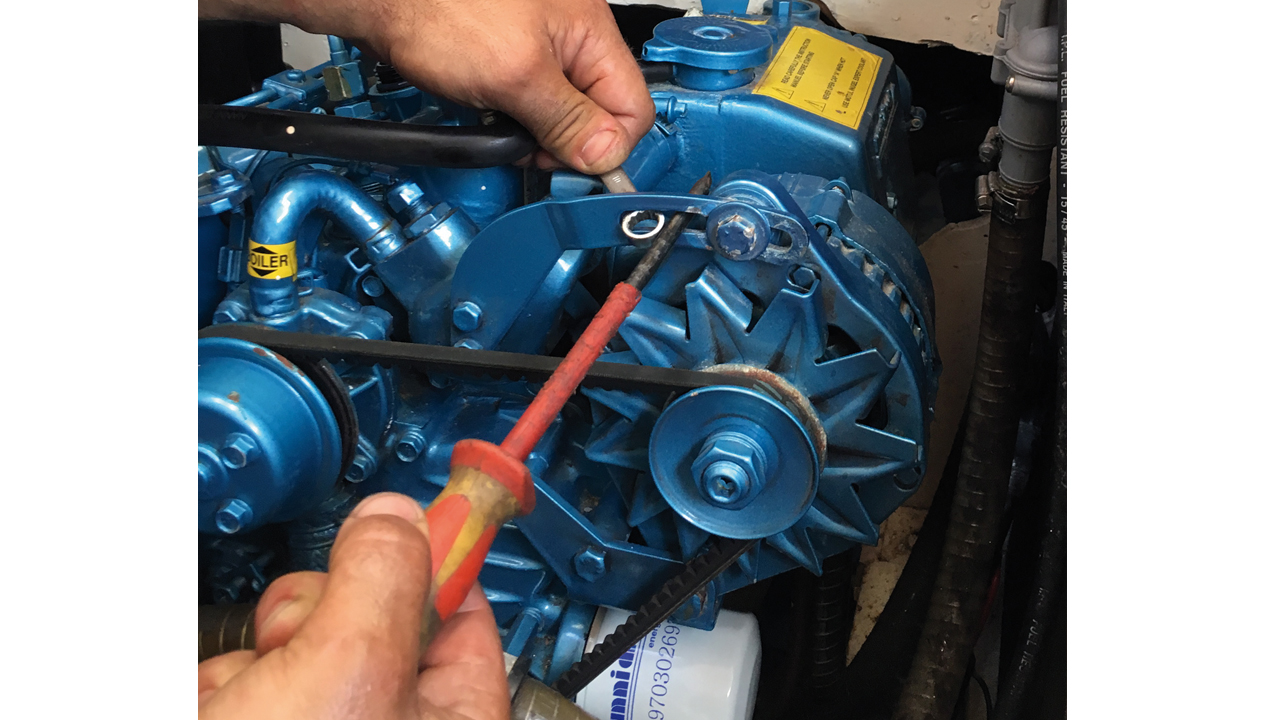
10 – The adjustment screw, allowing the belt to be re-tightened (or removed) is generally situated on the shaft which holds the alternator.
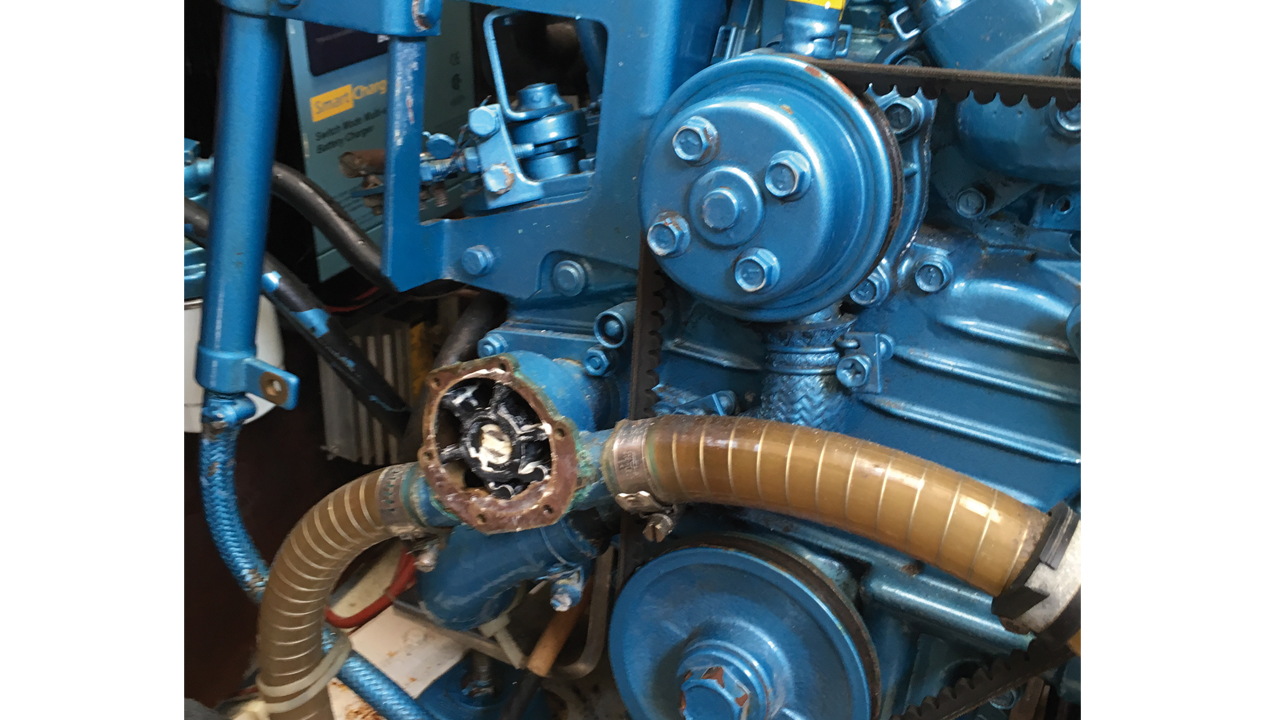
11 – It’s also possible that the impeller is defective. It must then be changed for a new one. Greasing when refitting is essential, as is a new cover gasket.
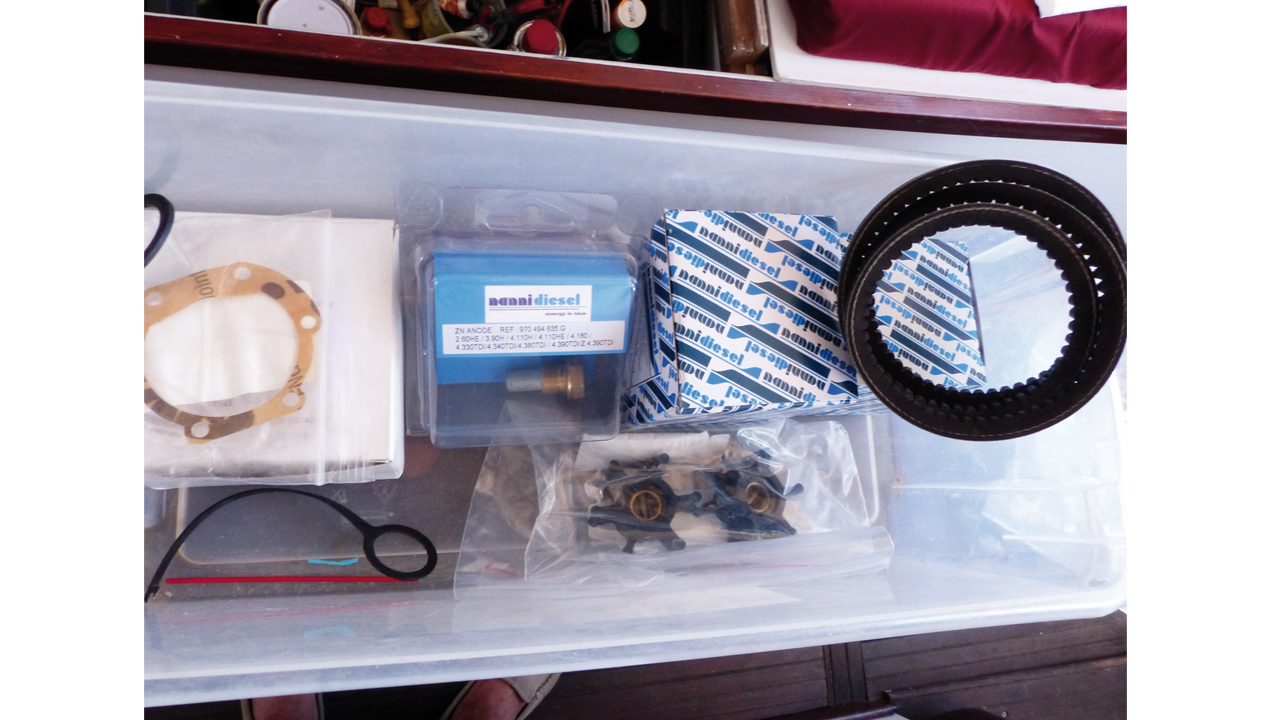
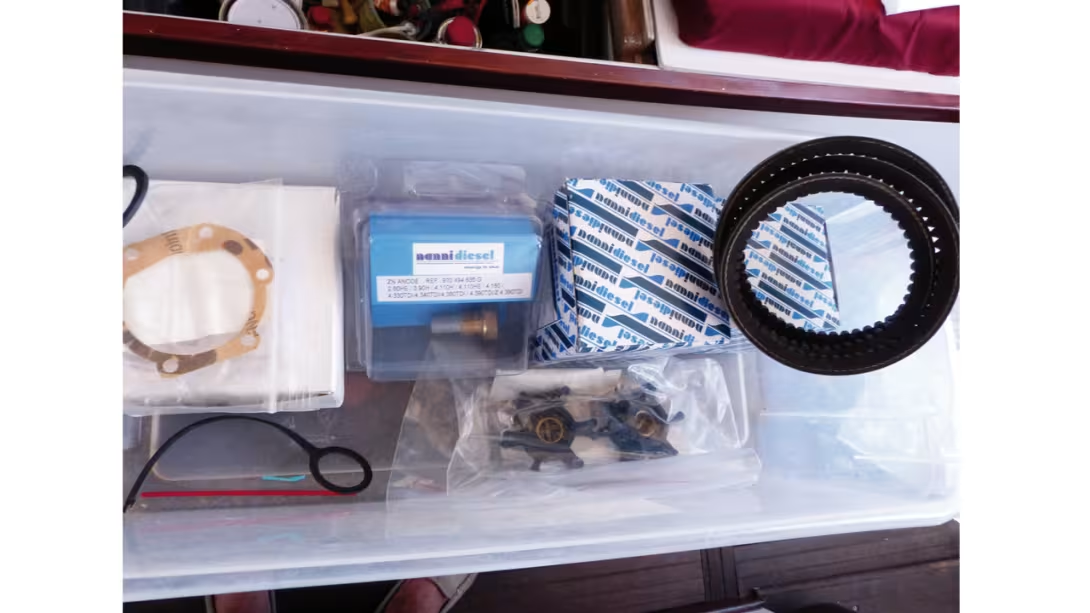
12 – Depending on your programme, you should have aboard a list of more or fewer replacement and breakdown parts. You will need, as a minimum for coastal sailing and for easy repairs at sea: a complete, adjusted injector, injector washers, oil and diesel filters, alternator and water pump belts, a thermostat, water pump impeller and gasket…
