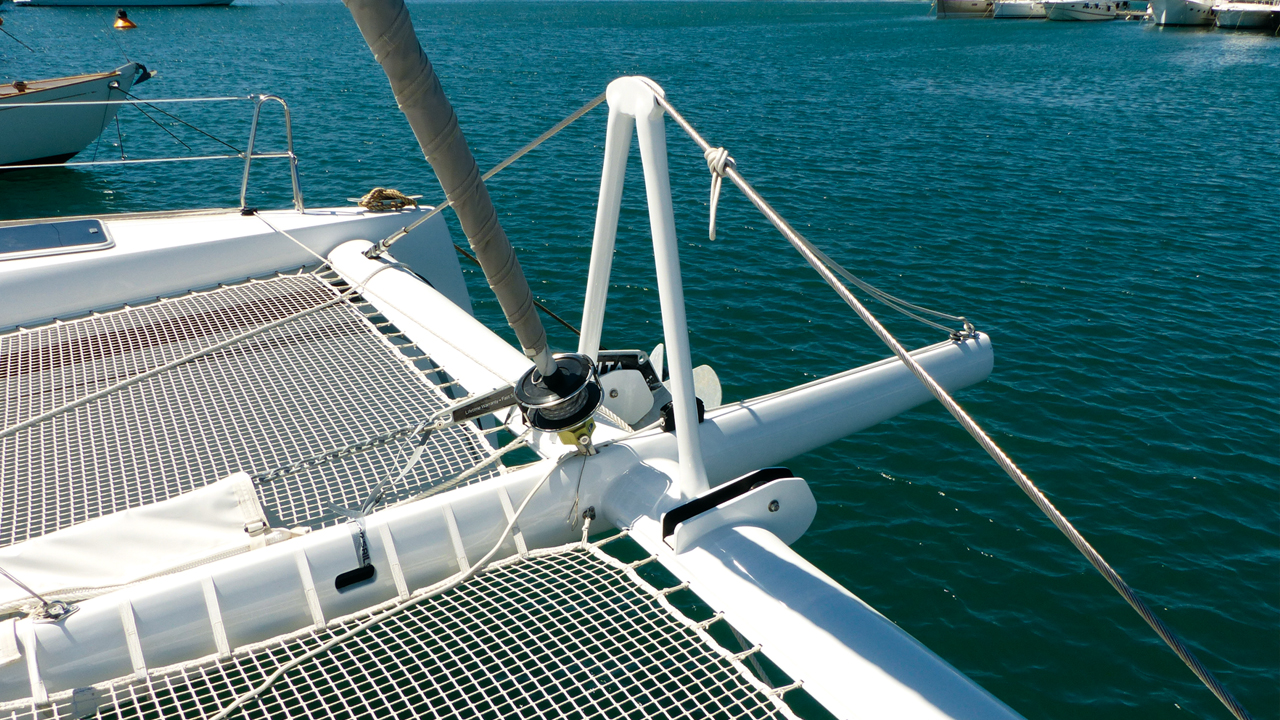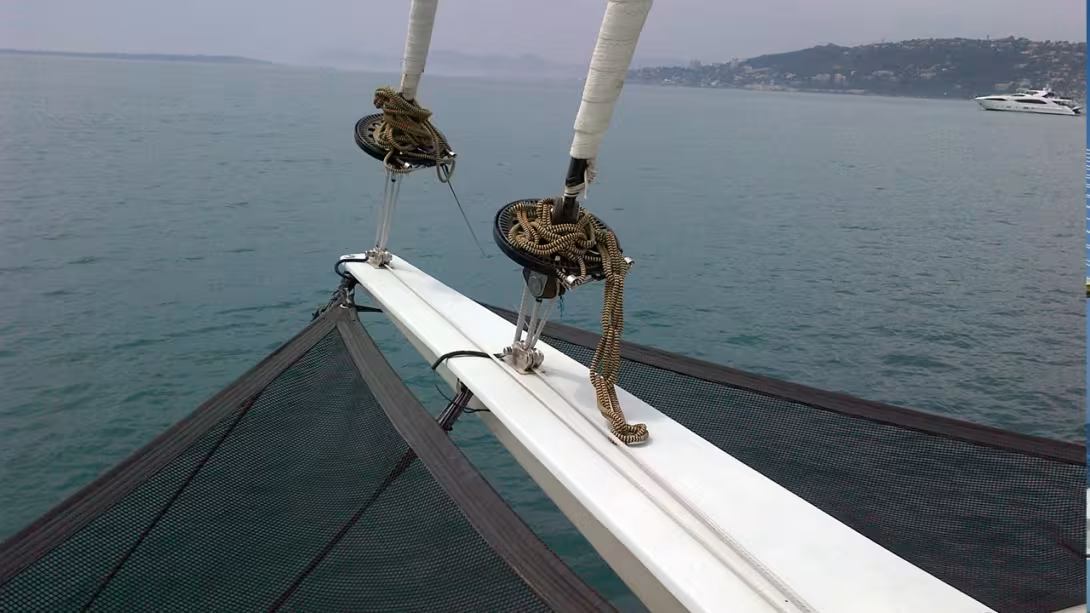
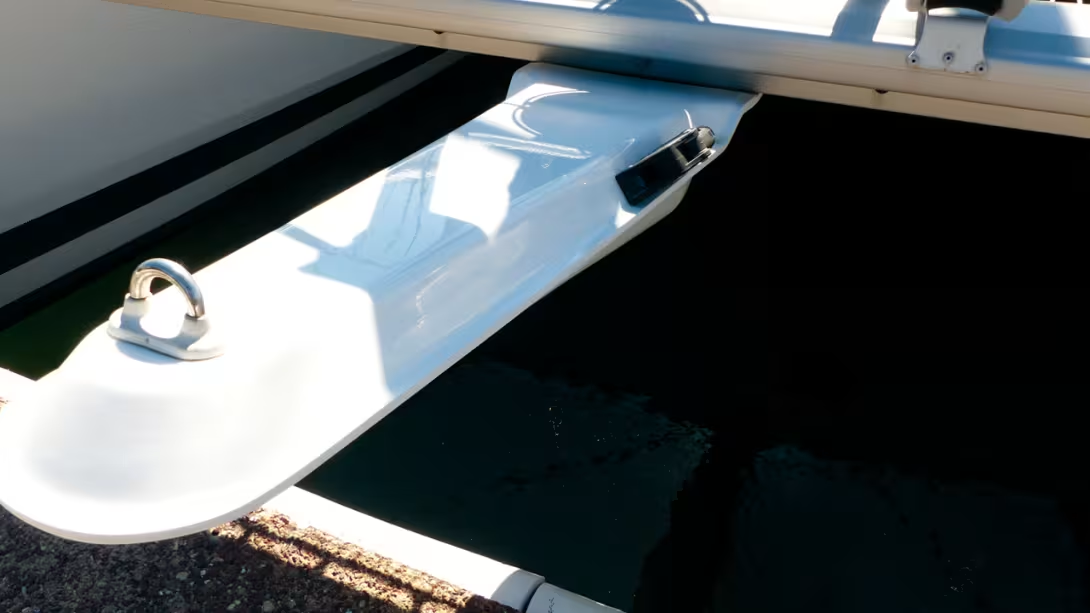

While they monopolized the bows of every ship at the end of the 19th and the beginning of the 20th century, this spar disappeared little by little as time went by, before returning in large numbers in the last twenty years. On our cruising multihulls, it reappeared at first aboard fast boats, where it allowed the center of effort of the headsails to be moved forward. But the geometry of recent sail plans justifies its use again on the most placid production cruisers. In general, genoas have lost much of their overlap, so as to make tacking easier. They have even sometimes become self-tacking. But even when the mast has been moved aft – as on certain very recent models – when sailing off the wind, on a broad or beam reach, they are no longer powerful enough. A gennaker or code D becomes essential, to keep up a good average speed. But if this powerful sail is rolled up just in front of the leading edge of the genoa (which is most often the case, remember we are on a cruising boat!) it greatly disrupts the air flow at the luff, drastically reducing the sail’s efficiency. And equally when the genoa is rolled up, it disrupts the gennaker. Finally, rolling these sails can be hampered if they are too close, not to mention during gybes when the chafing on the genoa can quite simply cause the maneuver to fail.
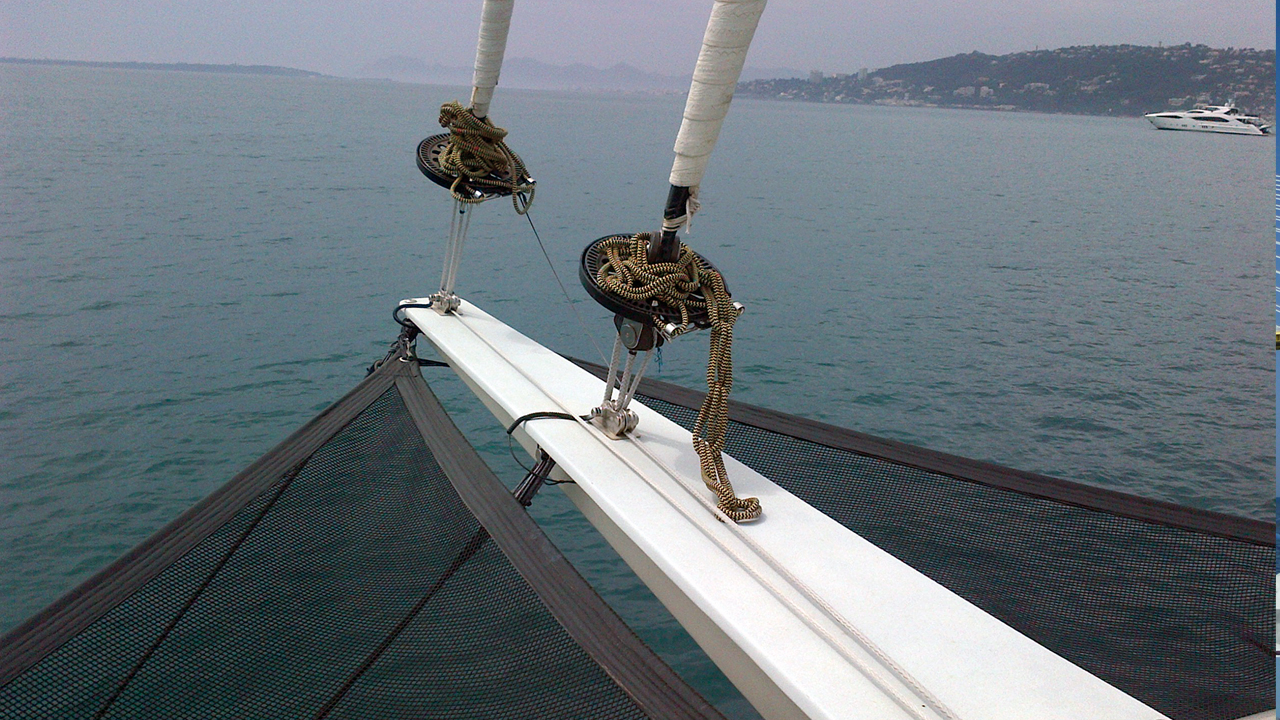
An advantageous solution
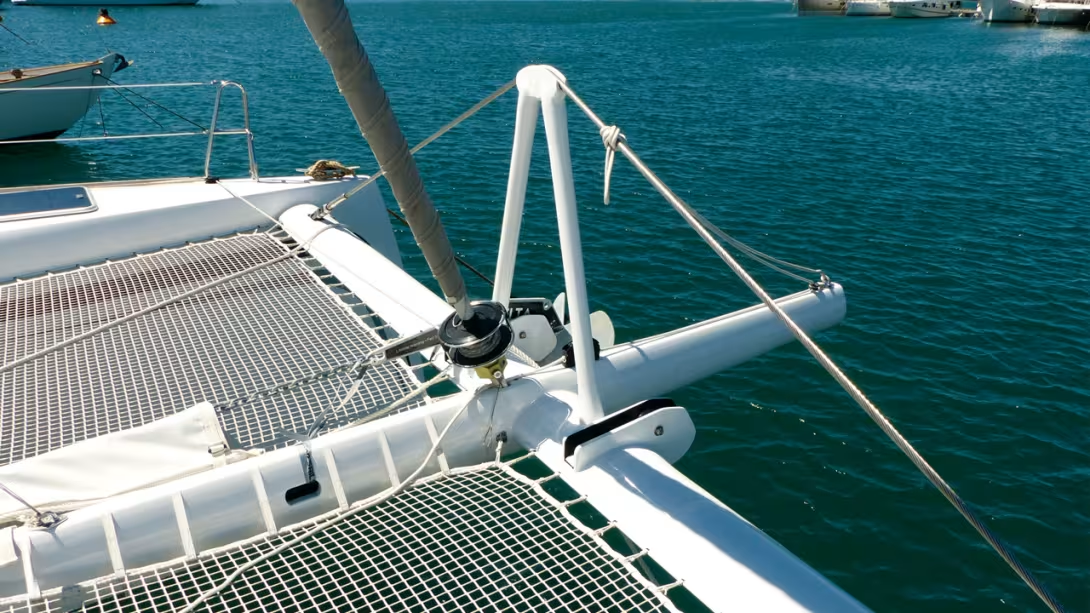
The simplest solution therefore consists of moving the tacks of these sails further apart, thanks to… a bowsprit. And the advantages are then numerous. Firstly, the area of the downwind sails can be increased especially as the foot is going to be longer. Then, the sails no longer get in each other’s way and the air flow is completely laminar. But we can also have them working together, which is very effective on a reach as it creates a venturi effect between the two. Finally, for points of sailing further off the wind, the bowsprit has the effect of distancing the leading edge of the asymmetric spinnaker and allows you to easily sail ten degrees further downwind, compared to a spinnaker attached to the forward crossbeam. You can thus easily sail at up to 150-155 degrees to the apparent wind. As for the maneuvers, the fluidity is much greater and the clearance between the sails avoids wrapping the spinnaker round the genoa. Thanks to the bowsprit and bigger, better-performing headsails, sailing downwind and/or in light breezes becomes fun and resorting to the engines is delayed.
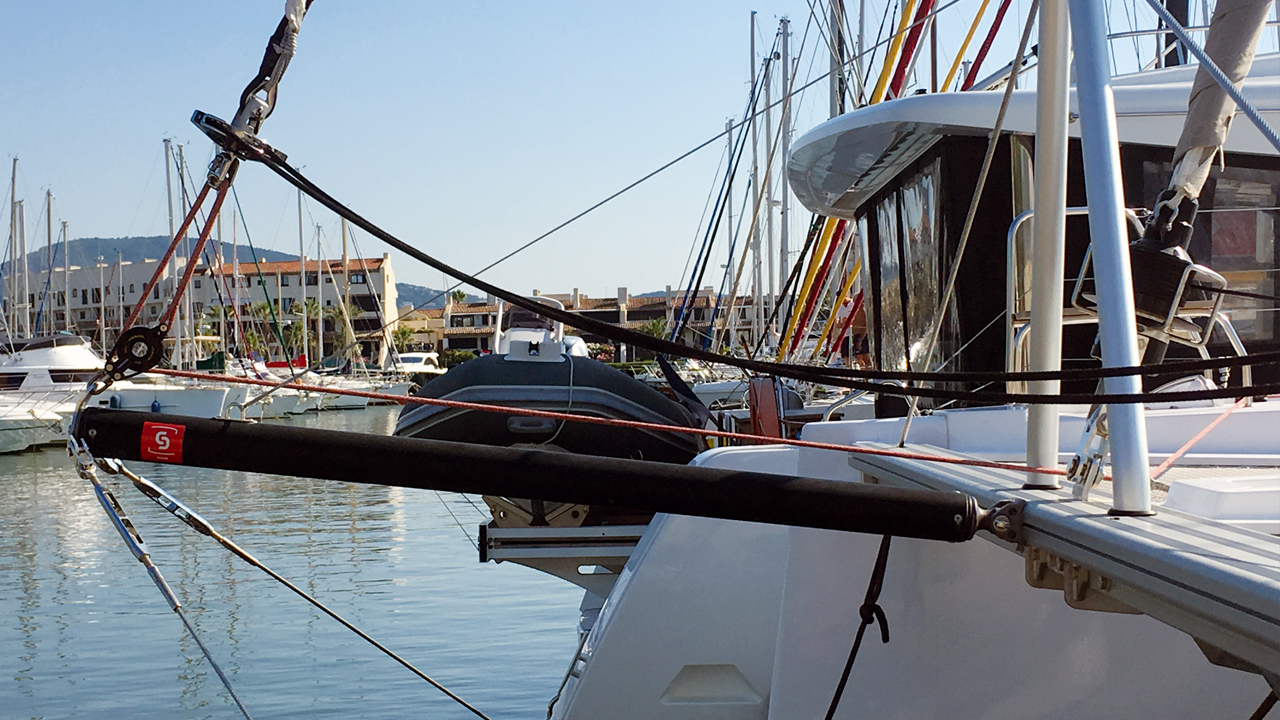
Installation on the forward crossbeam
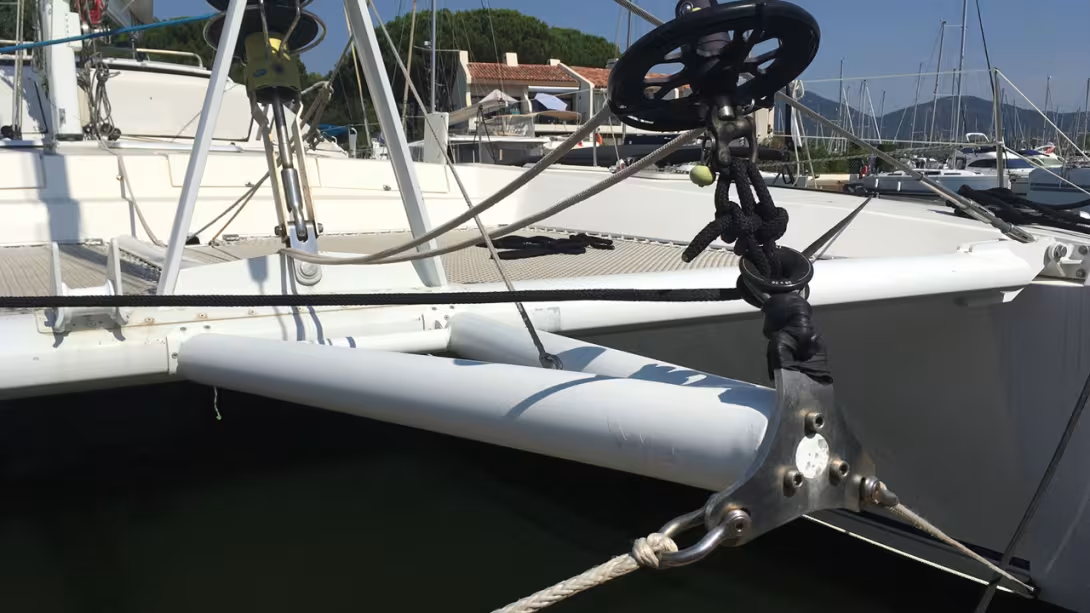
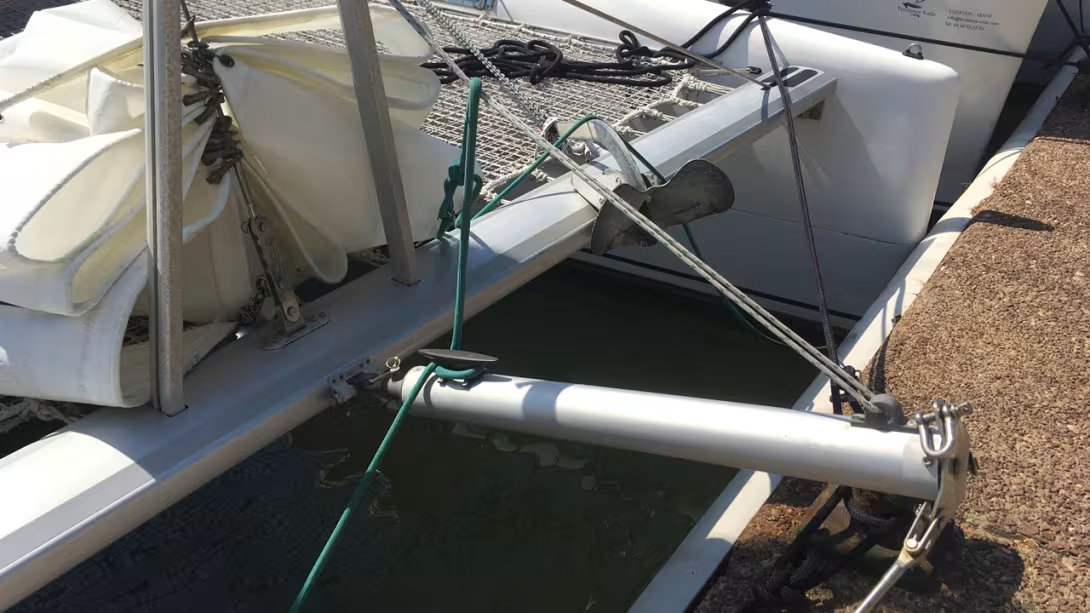
Forward crossbeams in aluminum are reinforced with an internal module for the compression. You can therefore fit a bowsprit with no problems, as long as it remains of a reasonable size. For a 45-foot boat, an 80 to 100 cm bowsprit is the right ratio. The major manufacturers, such as Sparcraft, Selden, Soromap, offer bowsprits in kit form, with various sections in aluminum or carbon. For an 80 to 100 cm length, the section will be around 80 to 90 mm. Fitting it to the bow of a trimaran requires the services of a professional, as there may be some welding to do or reinforcements to be fitted depending on the configuration of your deck. But as most of these kits are intended to be fitted to monohulls, the operation nevertheless remains easy for a professional or an experienced amateur…
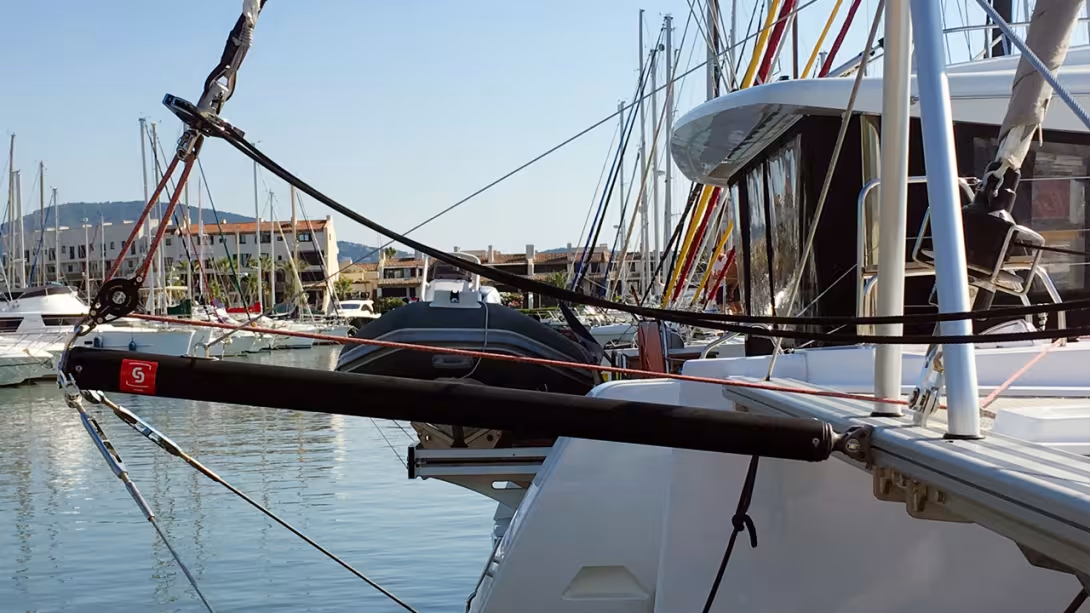
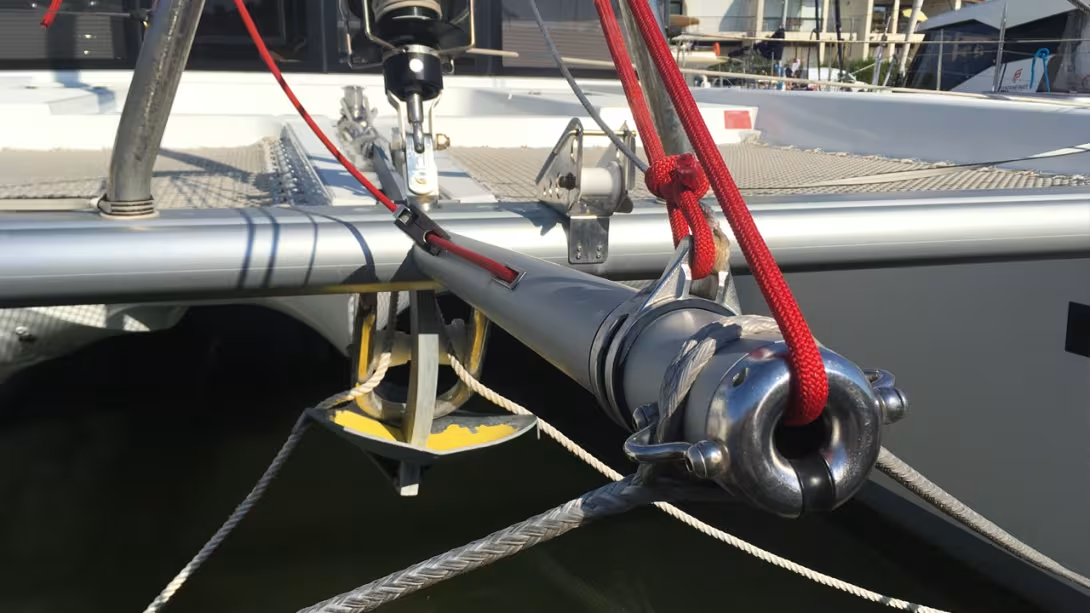
Fitting on the forward crossbeam of a catamaran will require the intervention of a specialist. There are in fact some essential adaptations to be carried out to customize the tube, its accessories and its end to your boat. In any case, you will have to fit one or two bobstays to take the forces downwards. Which will inevitably require reinforcements to be fitted, or that they be fixed at the level of a structural bulkhead.
Don’t forget that this spar is counted in the boat’s length by harbourmasters’ offices, increasing the tariff for the berth, and also that its protuberance can be a nuisance when picking up your mooring. On trimarans, it can therefore be retractable, while on catamarans, the solution will be to fit a bowsprit which can be dismantled (which is tedious), or one which pivots upwards. In this case, you must provide a system to adjust the bobstay tension, so it can be raised easily.
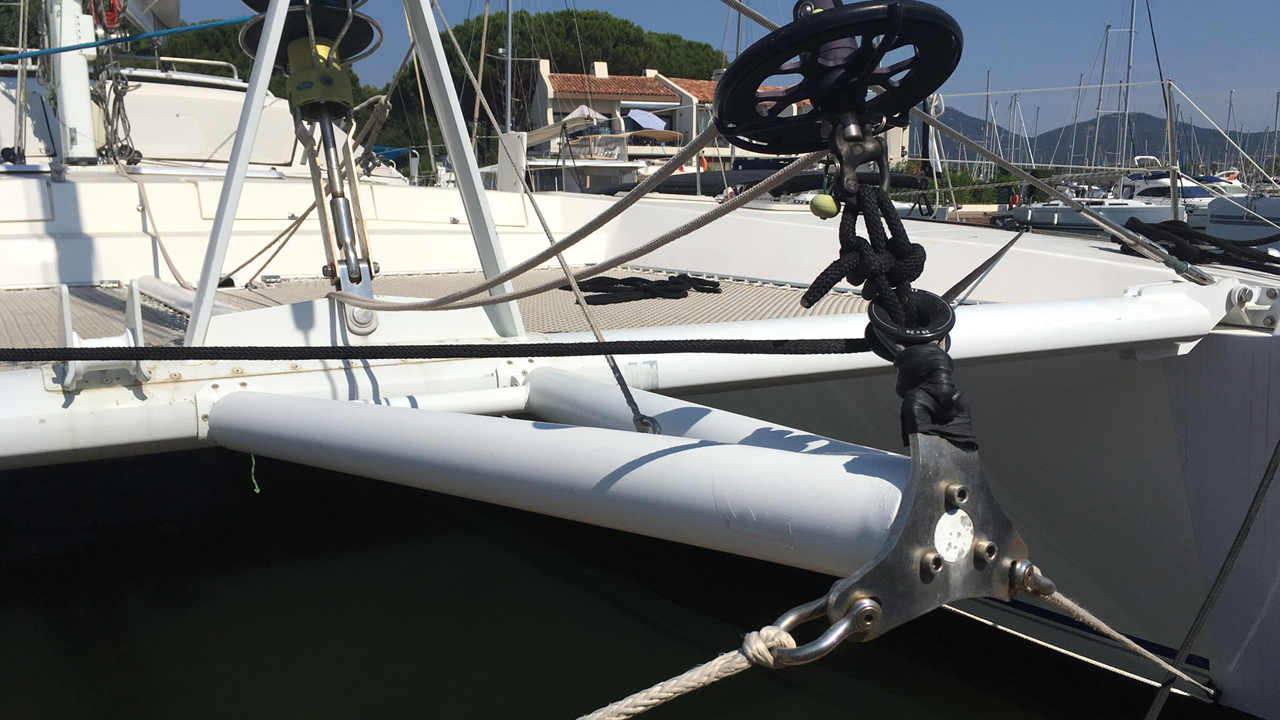
Full-custom systems
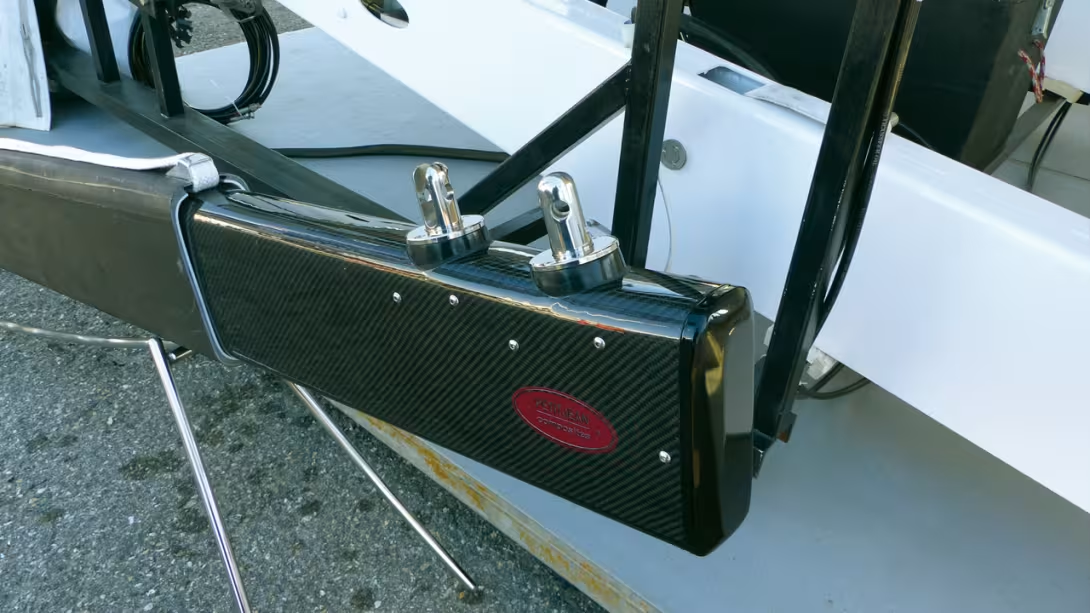
Certain manufacturers, such as Petitjean Composites or Pro-fil Composites, specialize in fitting up-market made-to-measure systems in carbon or Kevlar. You can then envisage a longer bowsprit, to further increase the power of your sails. This requires quite specialized calculations and an exchange with the boat’s architect will be necessary – dealing with the compression forces or the fitting of the beam attached to the nacelle – leading to sizeable modifications to the boat’s structure. In certain cases, the whole forward crossbeam has to be changed, so the bowsprit can be incorporated directly into it.
On these very sophisticated arrangements, everything, or almost, can be envisaged, including fitting electric roller reefing gear, or concealing little hydraulic furlers in it. Certain of them can even serve as a support for the anchor…