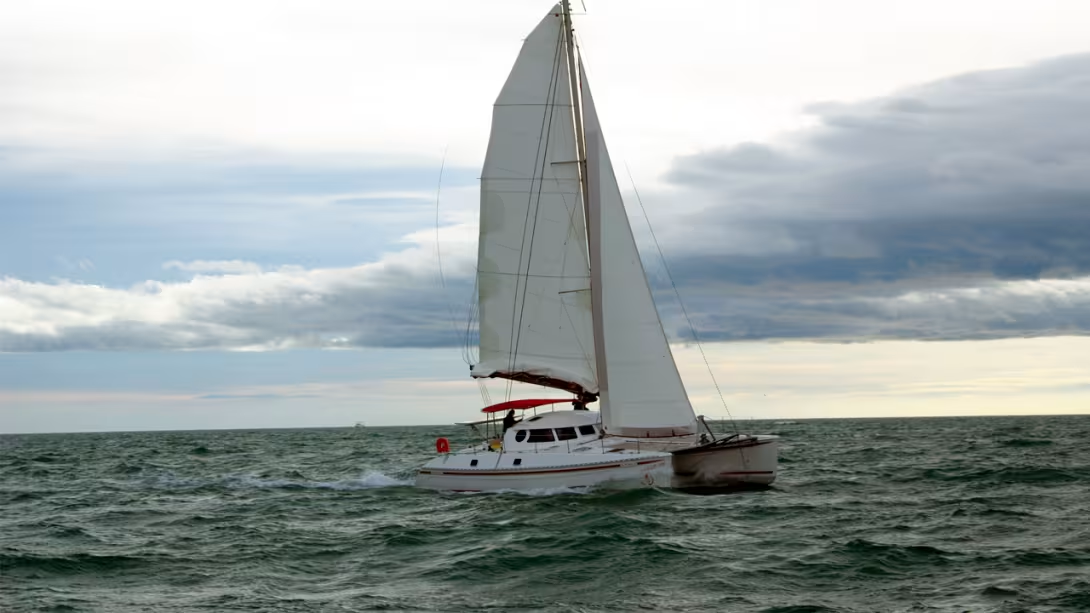
The standing rigging on a multihull differs significantly from that of a monohull. Firstly, taking into account the absence of heel, it is subject to much greater forces. But finally it’s not that complicated to keep the mast upright, as the width of the platform offers well-spaced anchor points. A forestay at the front and two aft-swept lateral cap shrouds. To resist compression the profile is more often than not self-supporting and held by its own tripod rigging consisting of one or more levels of spreaders and jumpers. Other solutions with intermediate rigging exist – they can be useful for supporting a lower forestay. On cruising boats,, the mast manufacturers nowadays see to it that the profile is calculated to break when the load reaches 70 to 80% of the righting moment. In concrete terms, if you fly the windward hull 3 meters above the surface (and you’ve got to go some…) the mast is planned to give way and avoid a capsize. Most cruising multihull builders offer profiles in aluminum. But certain builders, who offer performance-oriented boats present carbon masts in their catalogues…
The most high-performance boats are even equipped with a pivoting rig. We won’t mention wing masts here, but they do exist! The fact remains that the standing rigging, as static (or not) as it is, ages: remember to check it regularly!
1 – Spreaders: better twice than once!
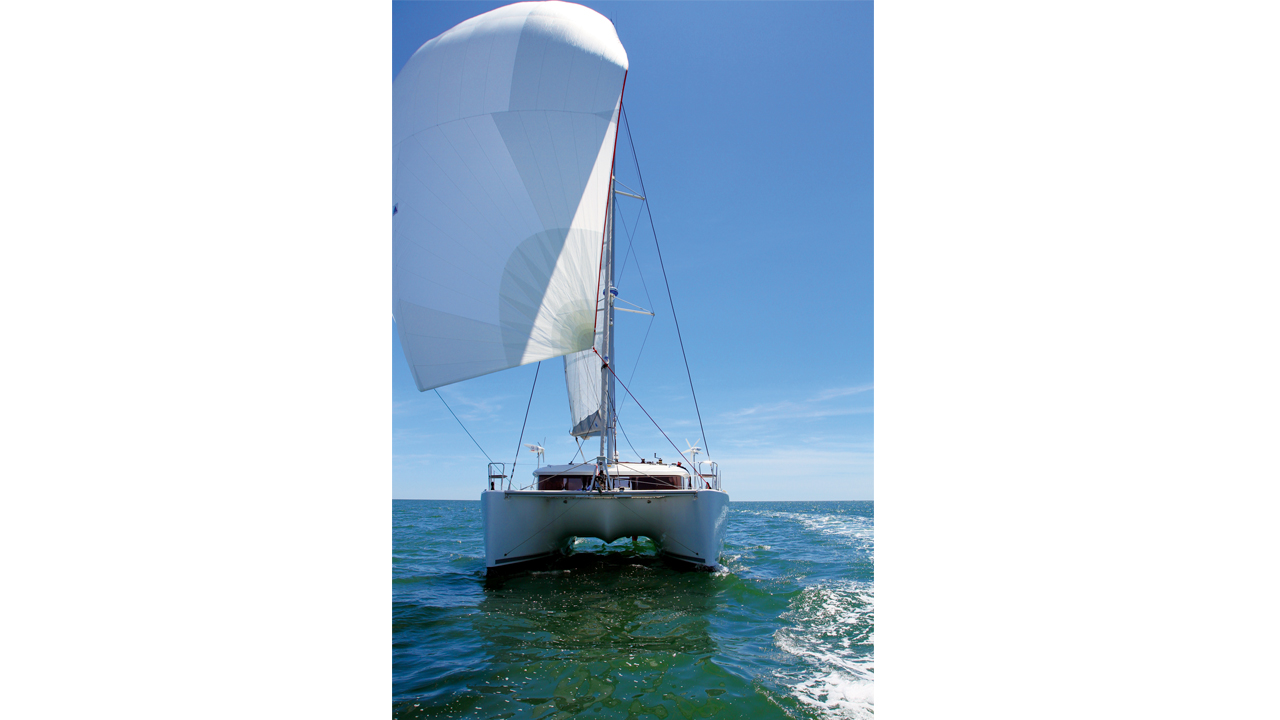
The immobilization of the profile is in principle better guaranteed with two (or even three) levels of spreaders and jumpers than just one. Note the two cap shrouds, well-spaced thanks to the platform’s beam.
2 – Just one level, but with lower shrouds
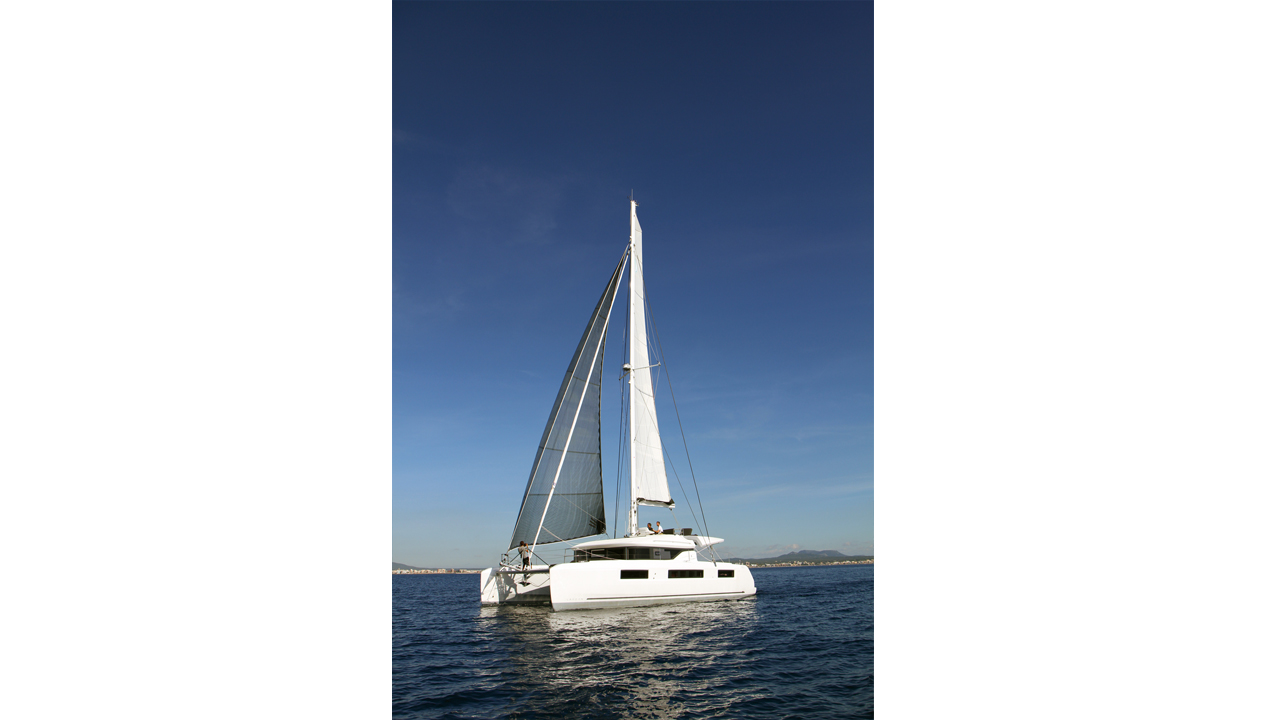
On the new models with rigs positioned further aft, Lagoon has offered a hybrid rig with just one level of spreaders and no jumper, but an extra pair of lowers and two cables dedicated to immobilizing the mast attached at different heights on the profile. A simpler and less expensive arrangement, validated on the smallest models, but not used on the 50.
3 – Adjustable cap shrouds for folding arms
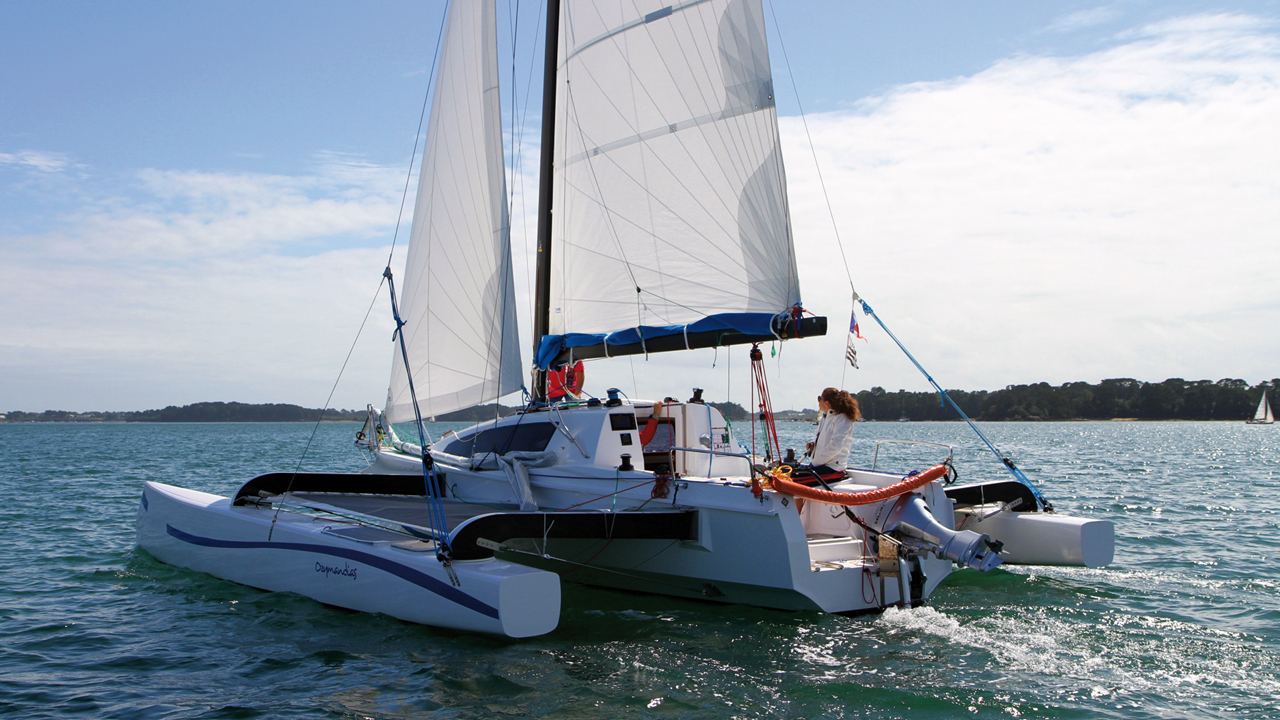
On a trimaran with folding arms, classic rigging with chainplates on the central hull is doubled by two adjustable lower shrouds.
4 – Half a profile bend
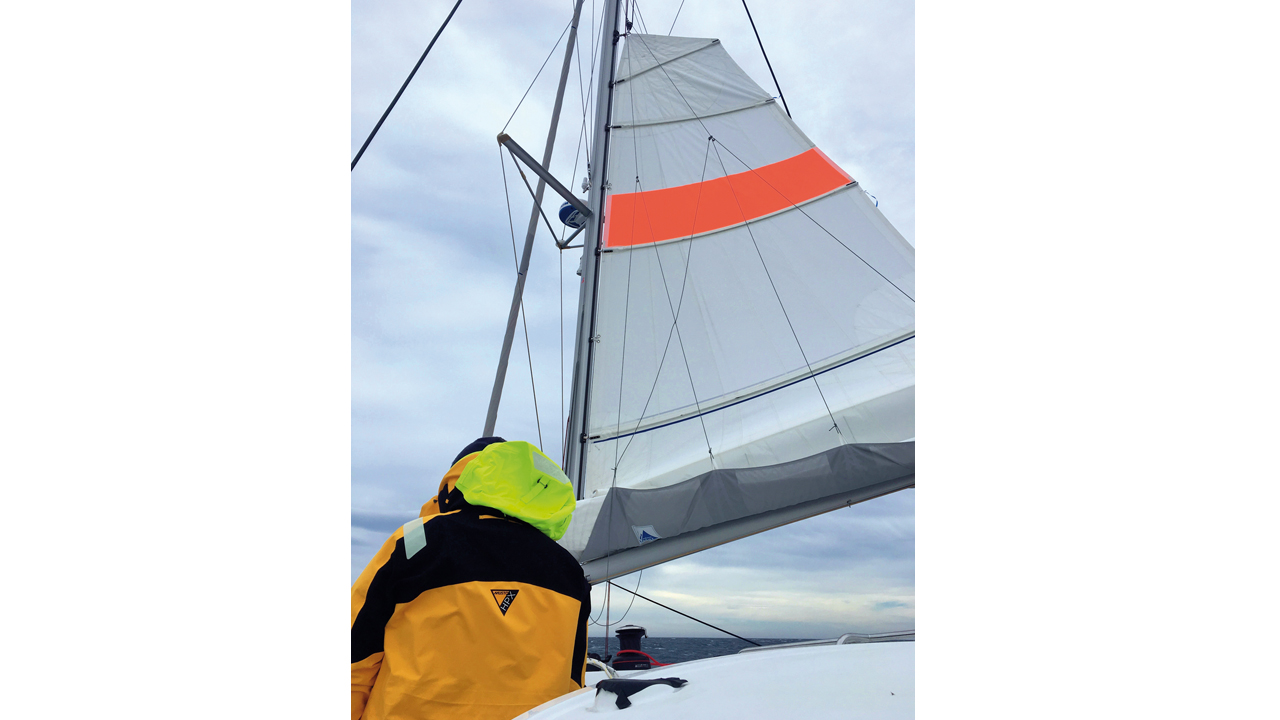
Most mast manufacturers recommend, on immobilized profiles, that you bend the mast by a half profile – 15 cm for a mast whose fore and aft section measures 30 cm. This bend restrains the mast and stops any tendency to move forward.
5 – The best profile with a rotating mast
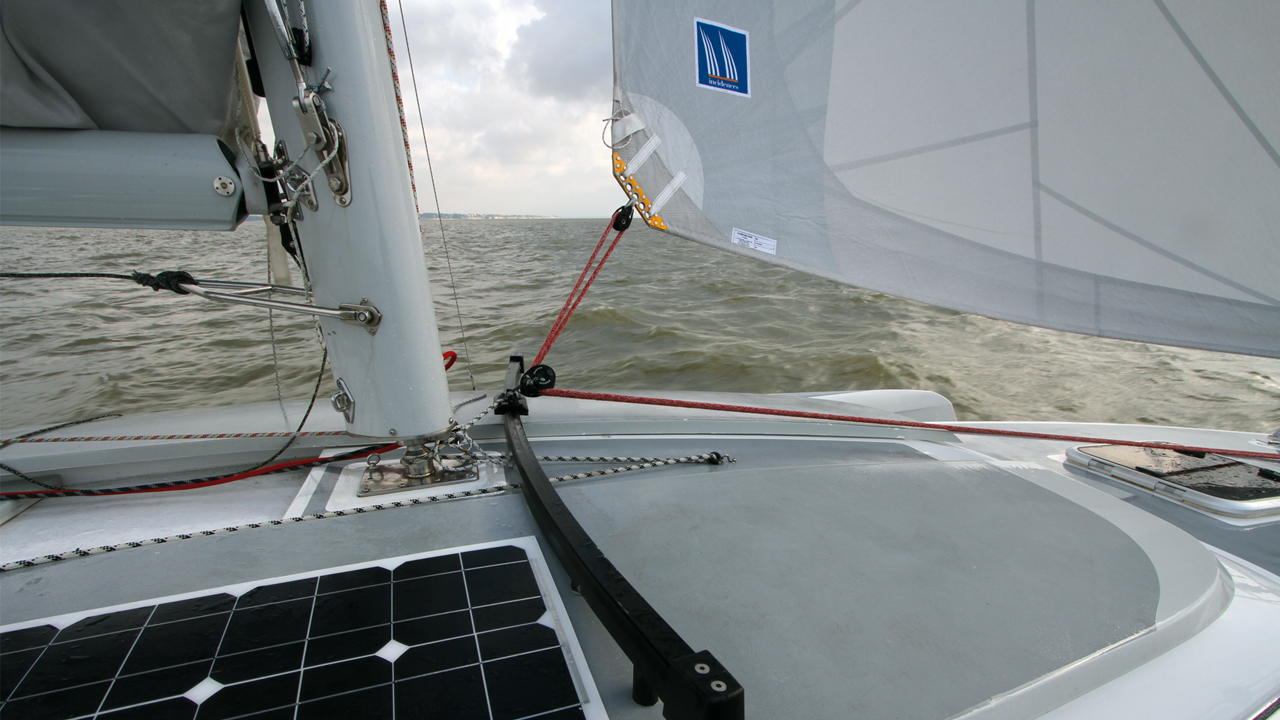
Competition-oriented boats are sometimes equipped with a rotating mast. The self-supporting tube is positioned on a ball-and-socket joint. It follows the angle of the mainsail, for better aerodynamic efficiency. Certain profiles can be controlled by a system of lines via a mast spanner, fixed to the base of the mast.
6 – Carbon on all levels!
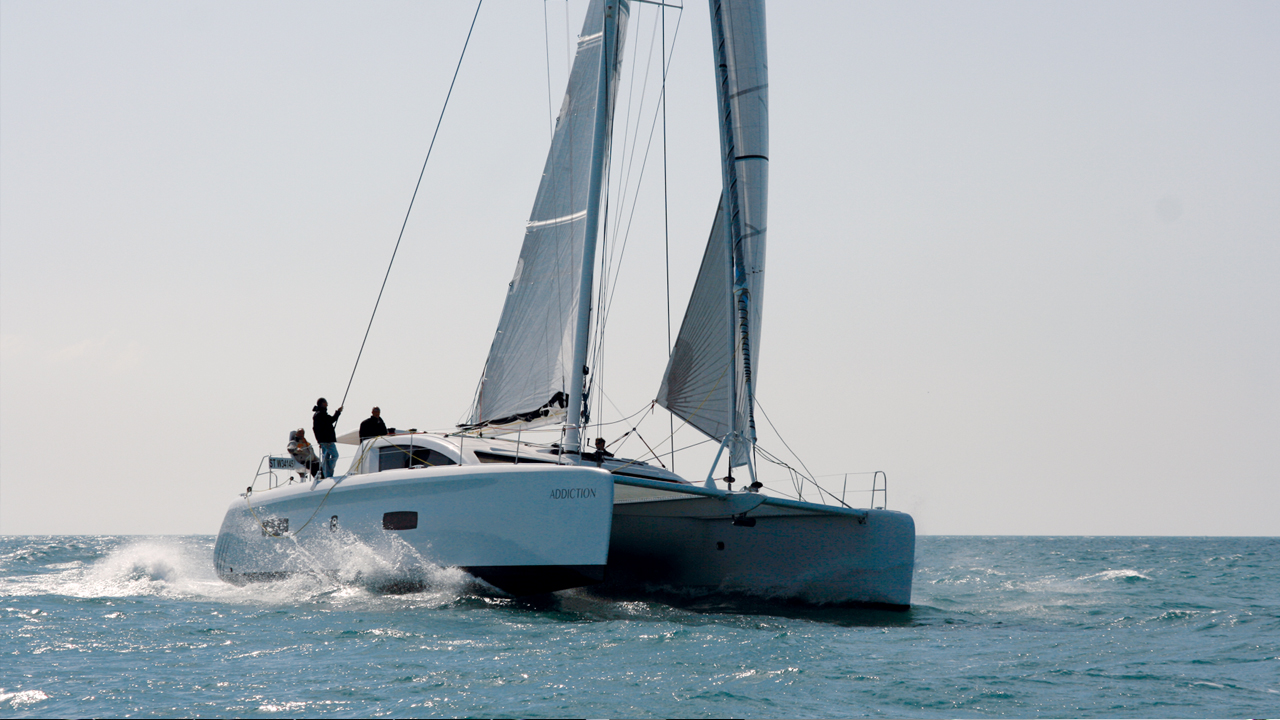
A carbon mast weighs 40% less than an aluminum profile. Giving a saving of 70 kg for a 40-foot catamaran. As a bonus, less pitching and therefore more speed. But they are expensive…the carbon mast option costs 60,000 euros exc. tax for an Astrea 42. It’s worth it if you take this approach to the limit: carbon roller reefing gear, fiber rigging and above all, no weight in the ends of the boat.
7 – Beware of chafe!
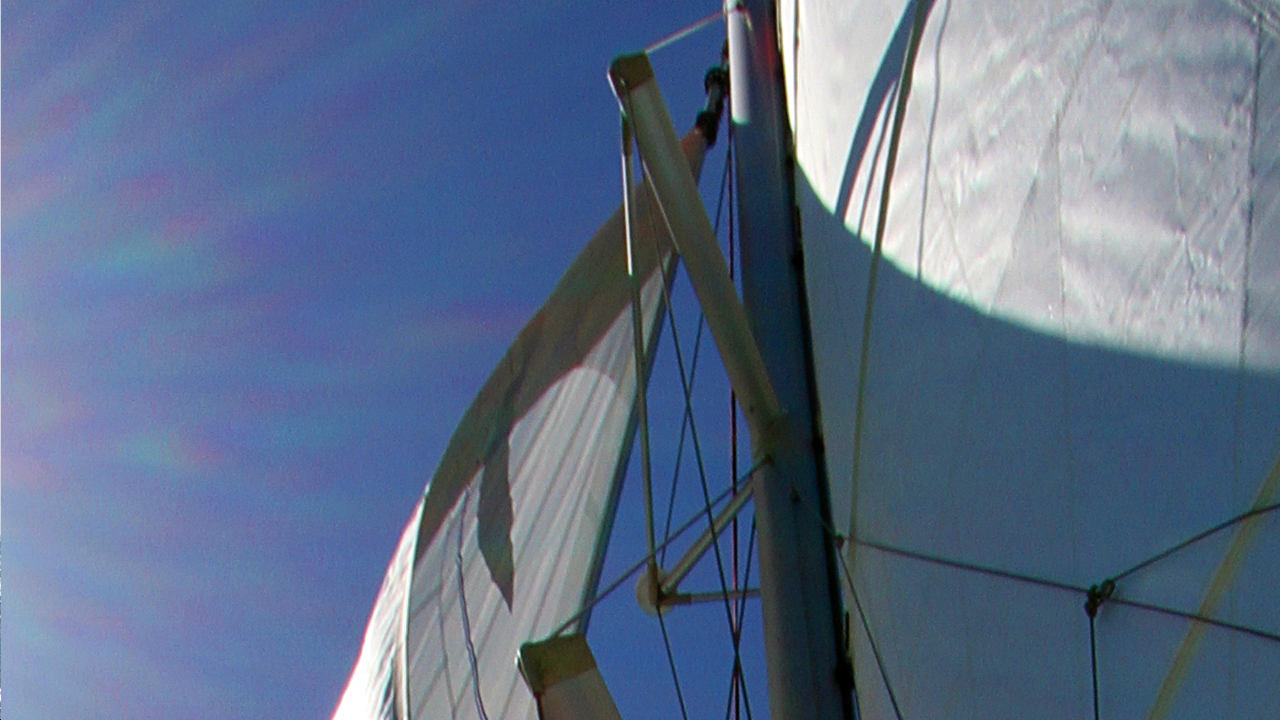
Numerous parts represent wear points for the sails, such as the ends of the spreaders. Suitable protection will prolong your sails’ life, remember!
8 – Canoe boom
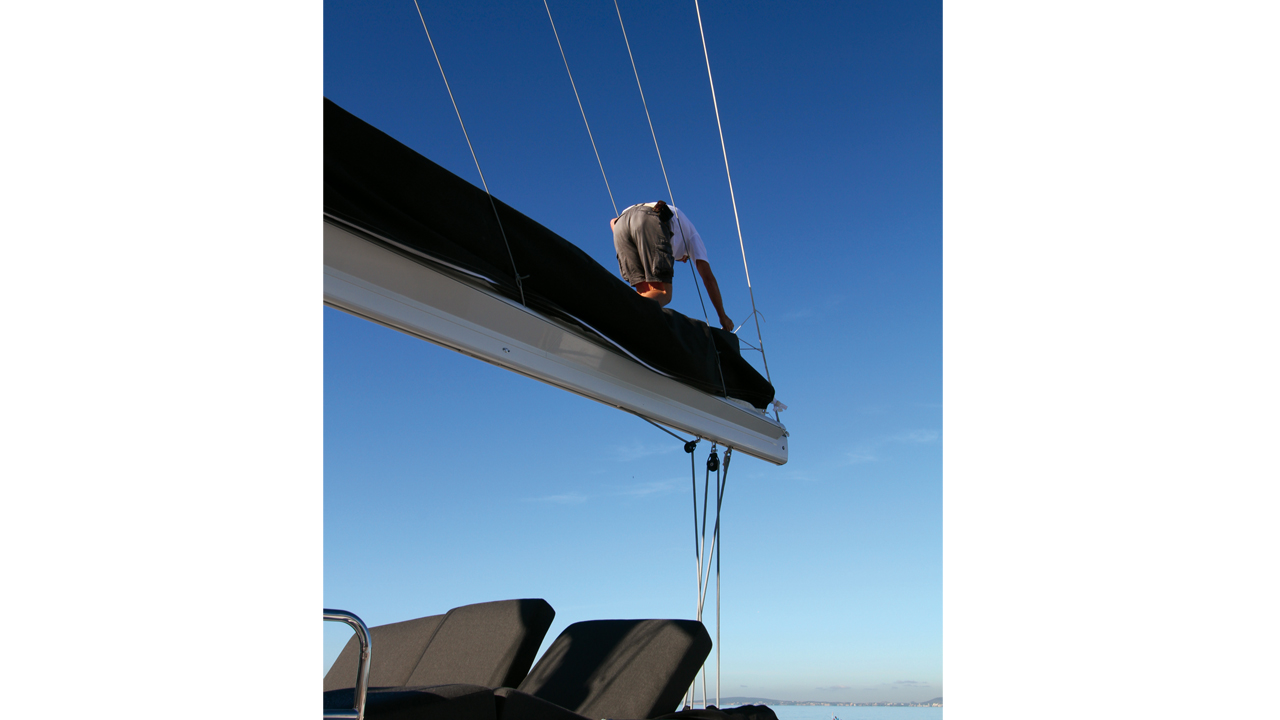
Aboard boats of over 50 feet, a canoe boom can be very useful when you have to rethread a reef pennant or quite simply furl the mainsail correctly in its lazy bag. A must which has a price: reckon on nearly 15,000 euros exc. tax for this Lagoon 50’s boom – with lighting, cover and lacquer for all the spars.
9 – Danger sometimes comes from the inside
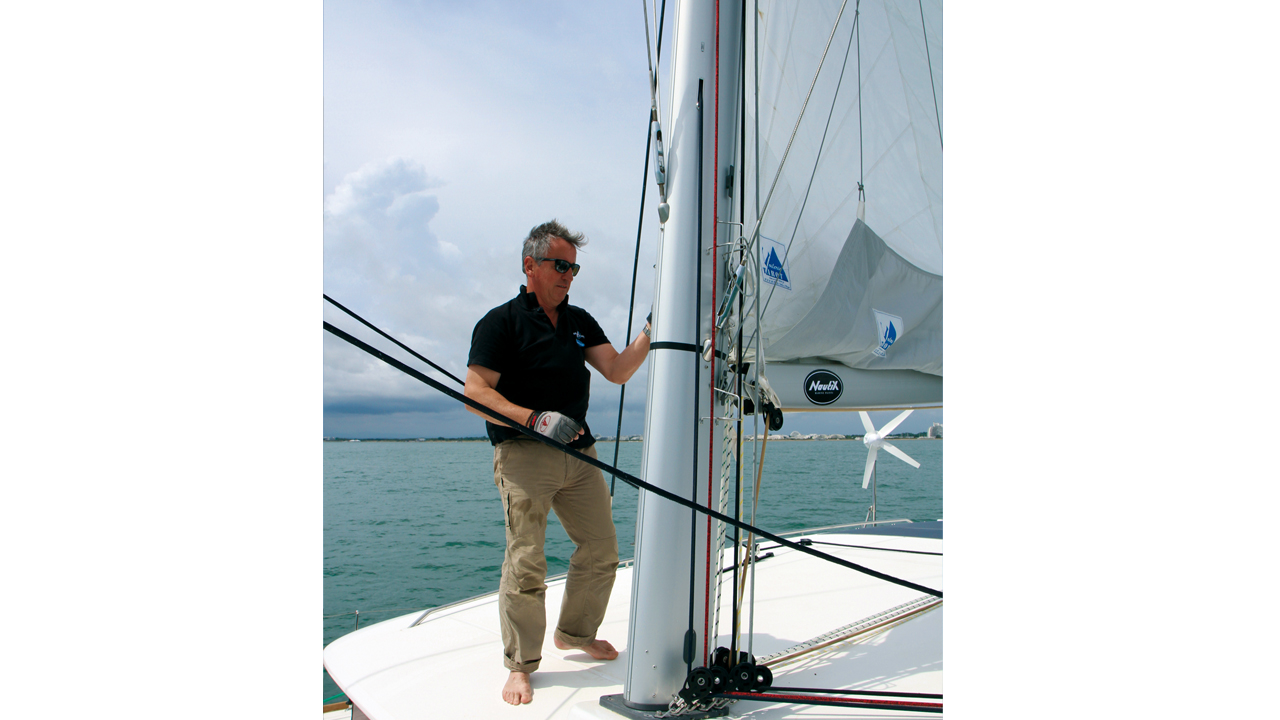
On new multihulls, look out for the finishing of the parts inside the mast. A badly de-burred rivet or cut-out in the aluminum can chafe your halyard, sometimes even to breaking point. Hence monitoring of all the running rigging must be increased during the first outings.
10 – A check before each passage
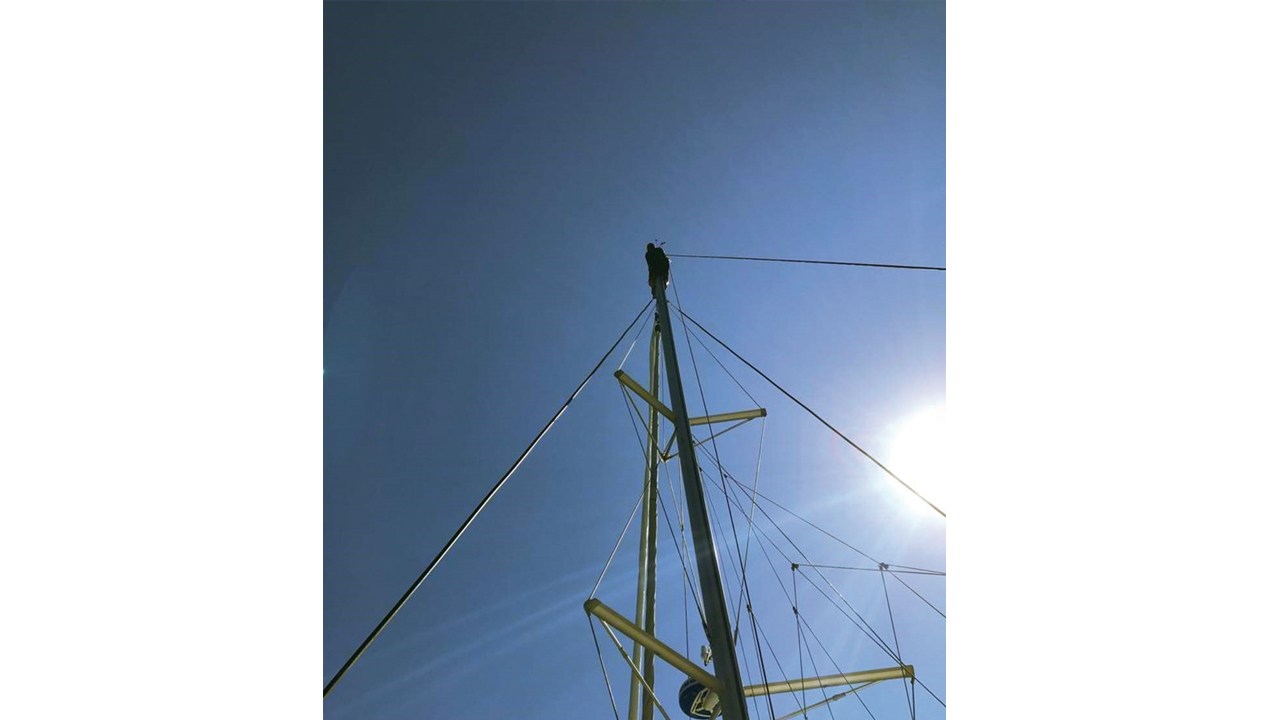
Before each passage, or once a year, climb up the mast with a good bosun’s chair and inspect all the elements visually – swages, shroud anchors, spreader mounting, etc. For an aluminum rig, a real overhaul (changing at least the forestay) every 10 years is essential. For carbon, every 5 years
11 – Under the roller reefing gear, the weak spot…of the forestay!
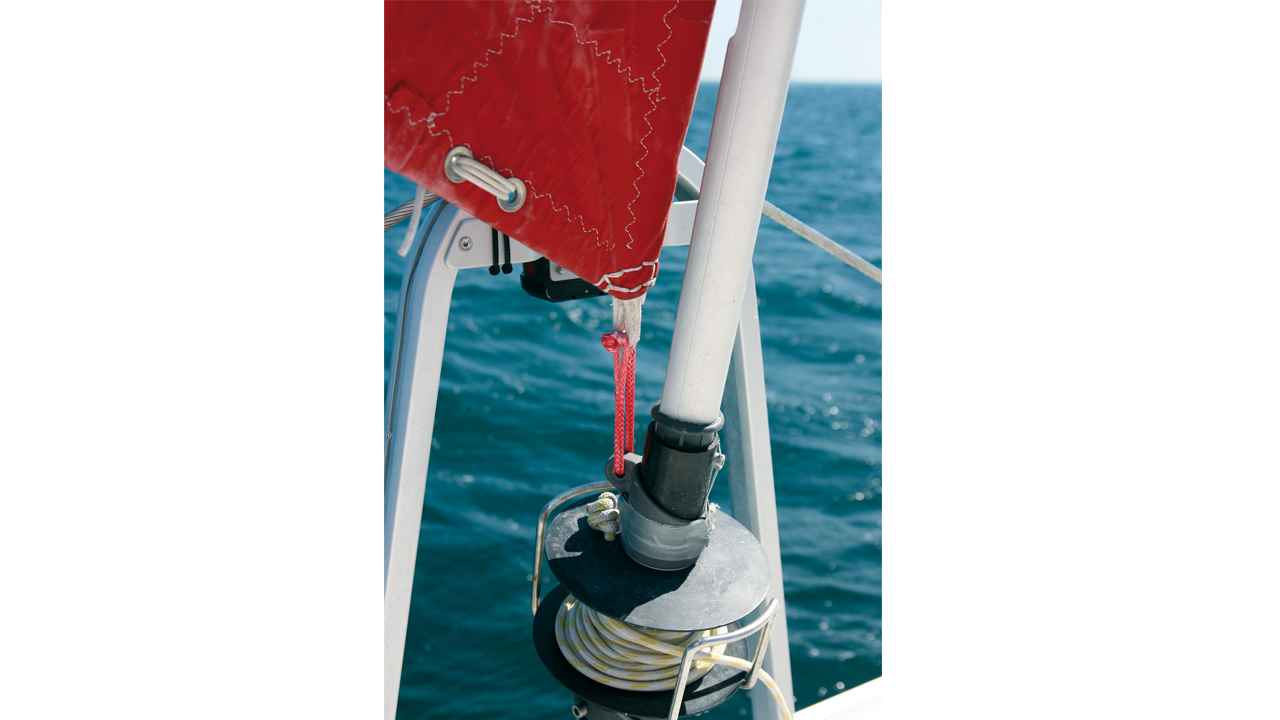
The forestay is without doubt the cable which does the most work…and its problem is that it suffers well hidden under the profiles of the roller gear, and more particularly under the drum – it often breaks here. Before crossing the Atlantic, this is a point to be checked! And remember to roll your genoa downwind, without letting the sail flog…
12 – Do you know your air draft?
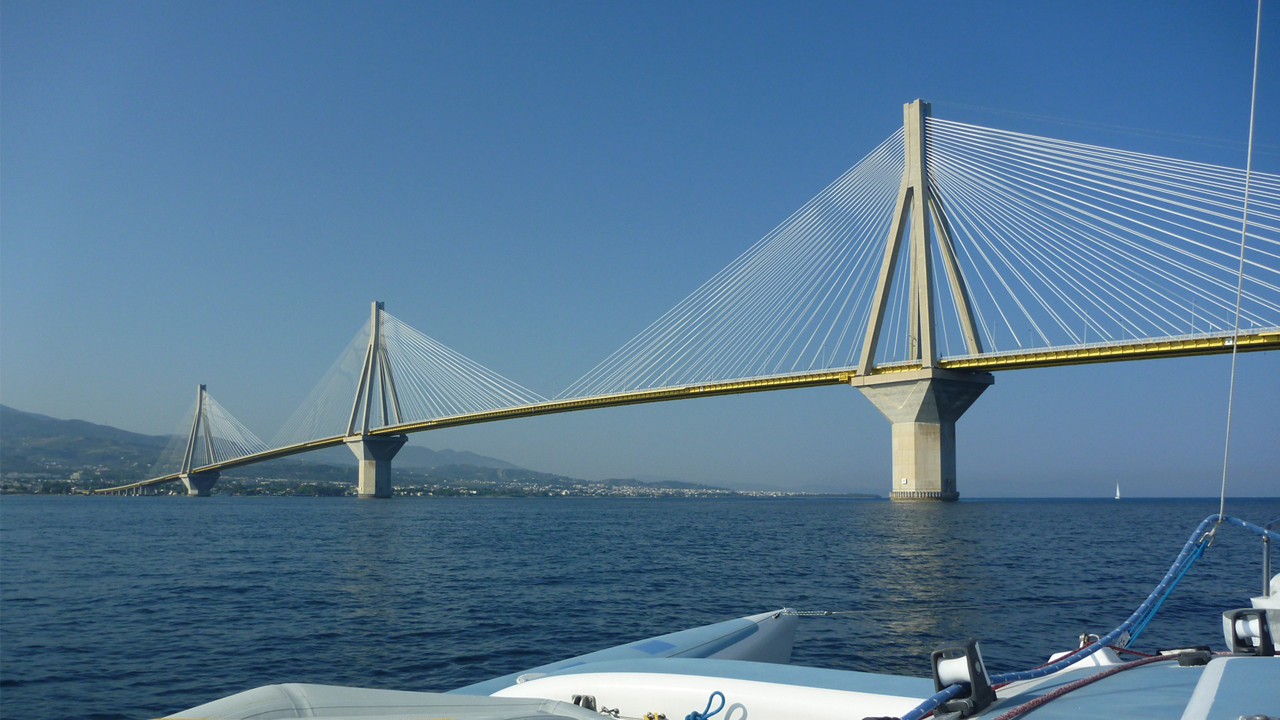
This is often a difficult question to answer…few skippers know exactly the air draft of their multihull. Yet to pass under certain bridges, it’s sometimes essential. Especially as it’s not possible to heel the boat.