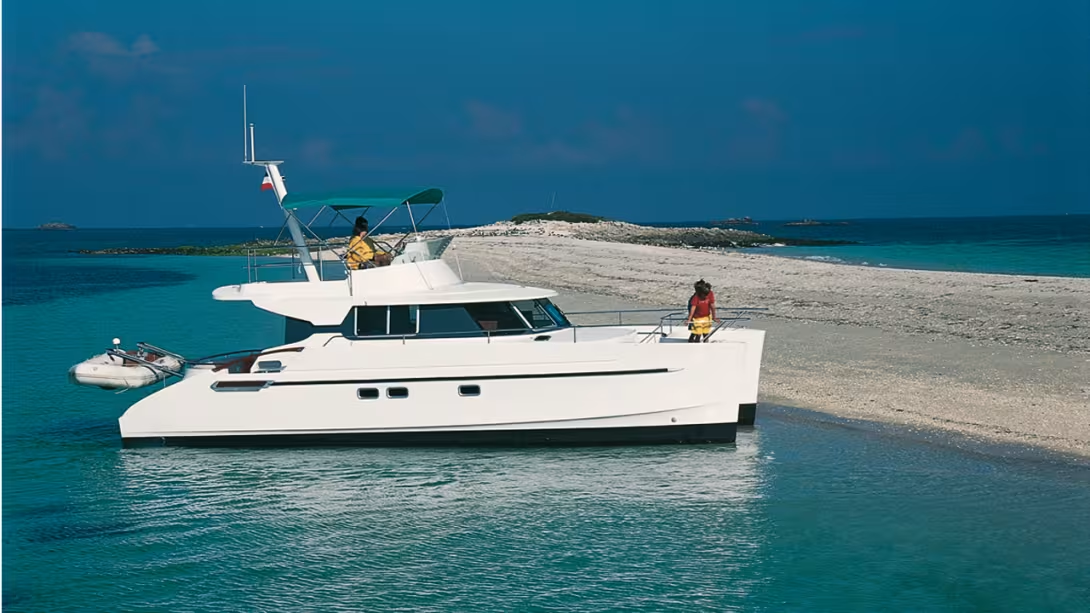
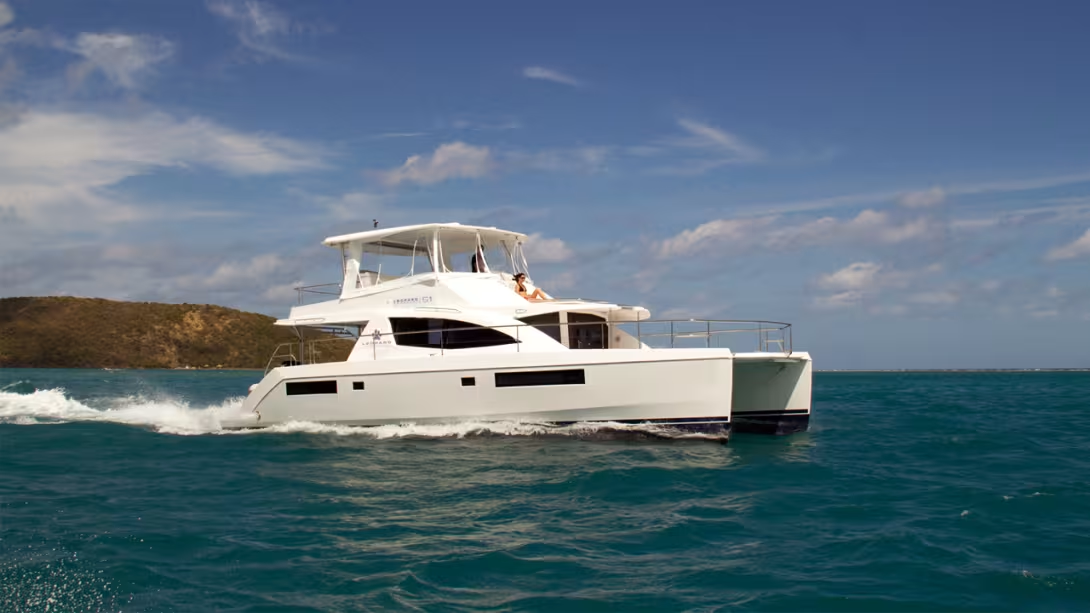
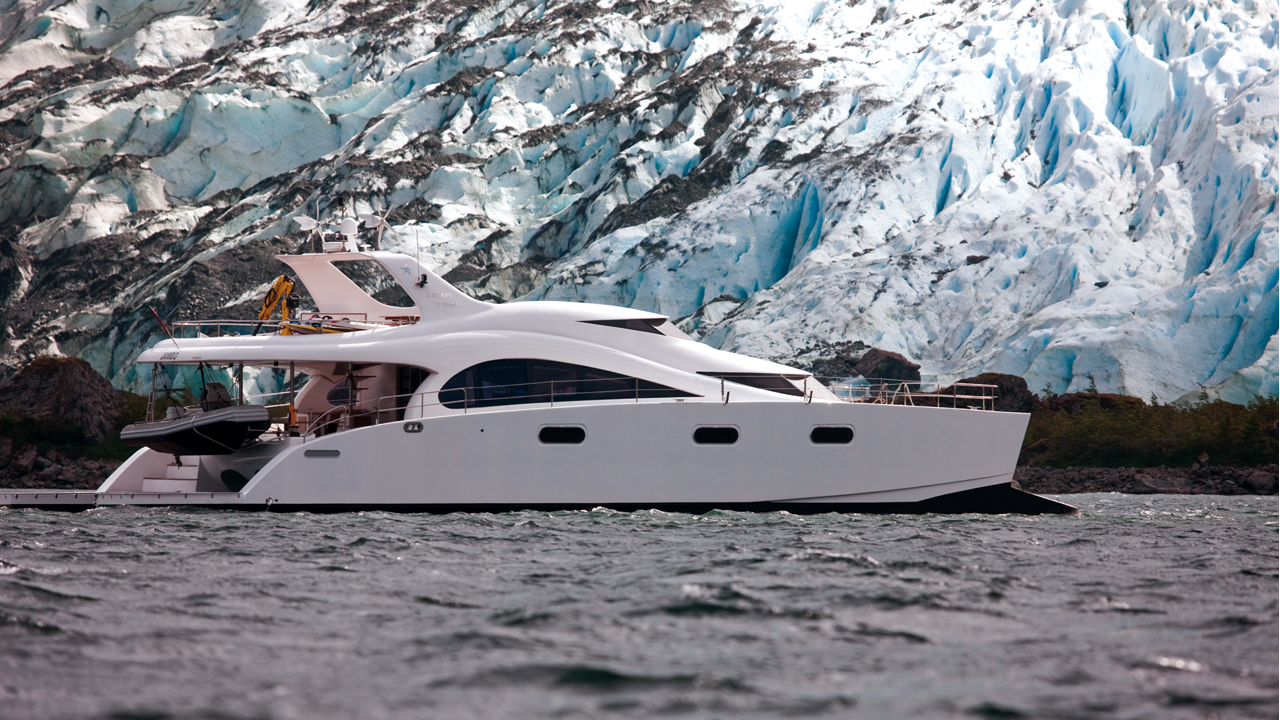
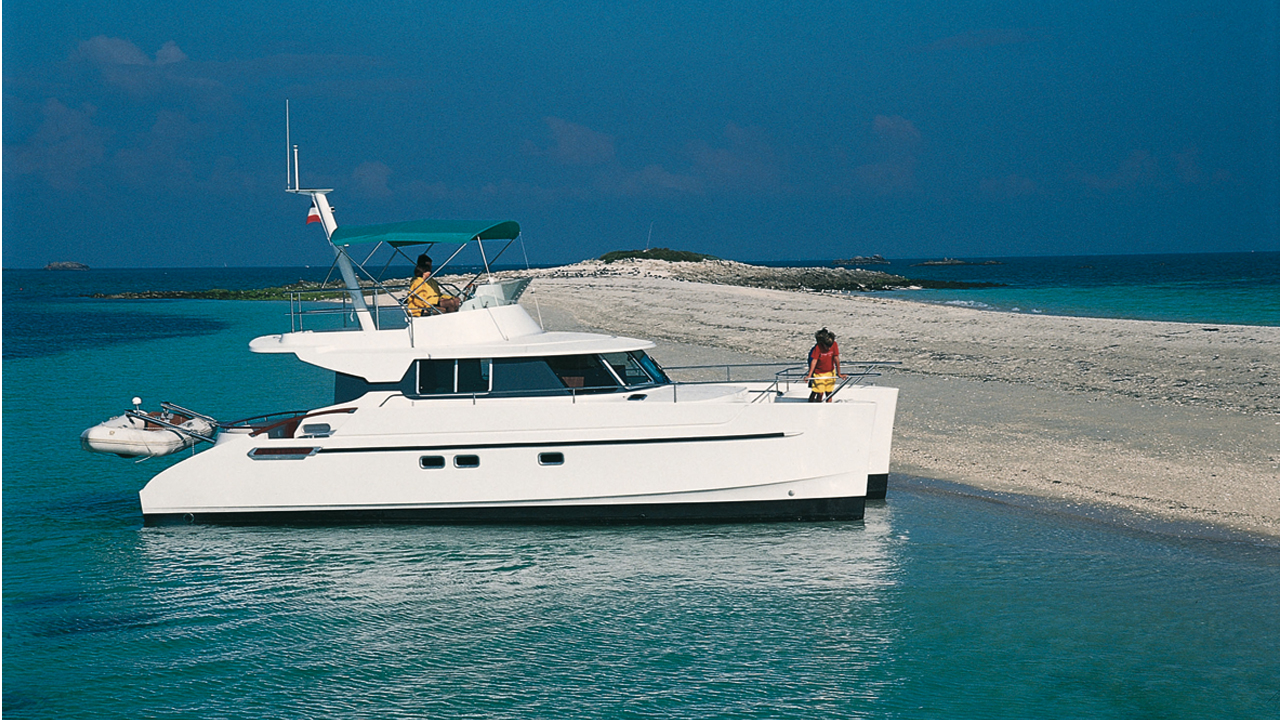
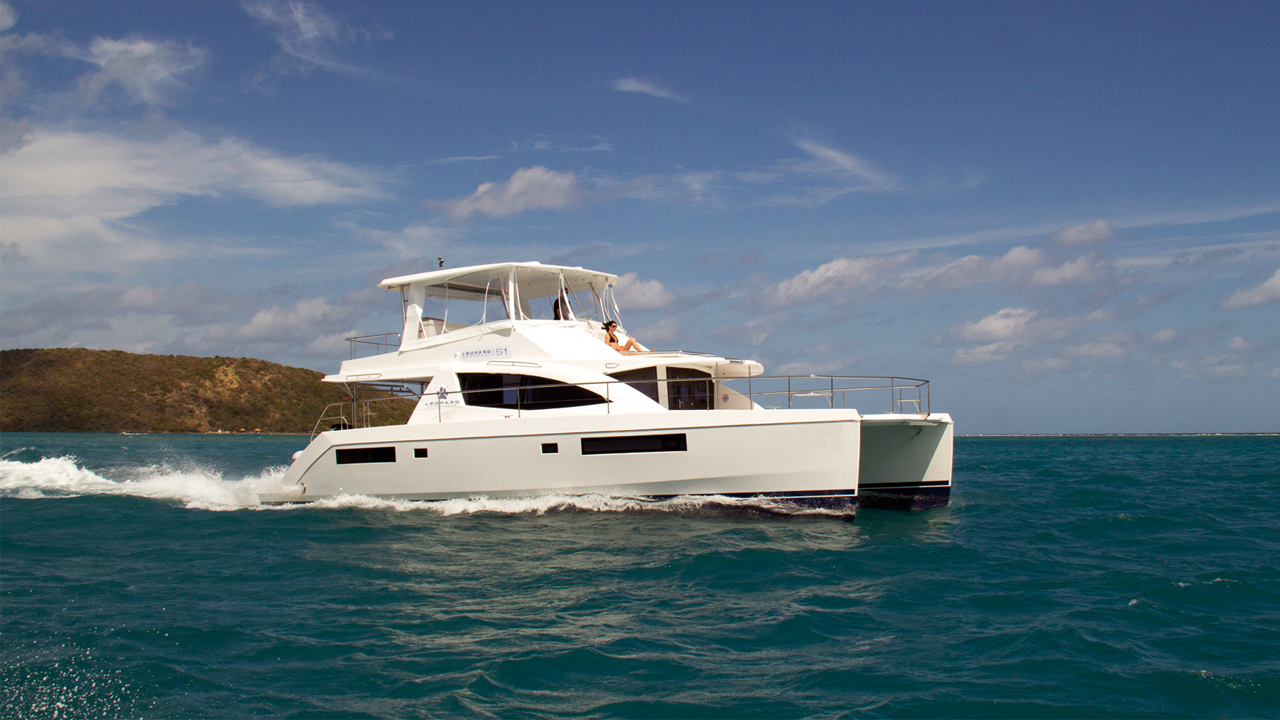
Remember what happened in the 1990s: Privilège launched its Euphoria 40, and built 23 examples, followed by the 44 and the Transcat, at 45 and 48 feet. After a break of a dozen years, the Sables d'Olonne shipyard is back in the market with its Euphorie 5, a direct descendant of its Série 5. It was the same story a little later on at Lagoon: in 2001, the Lagoon Power 43 paved the way for this new market but was put on hold six years later. However, other shipyards strongly believe in the motor catamaran: Robertson & Caine have been selling a number of models for the past decade - the Leopard Powercats. And for about twenty years, Fountaine-Pajot has been offering a whole range of motor catamarans, but without relying on the existing molds of its sailboats. Two schools of thought, therefore: units redesigned around a sailing catamaran and units which are completely new, 100% engine versions. We will come back to this later.
The benefits of engine only
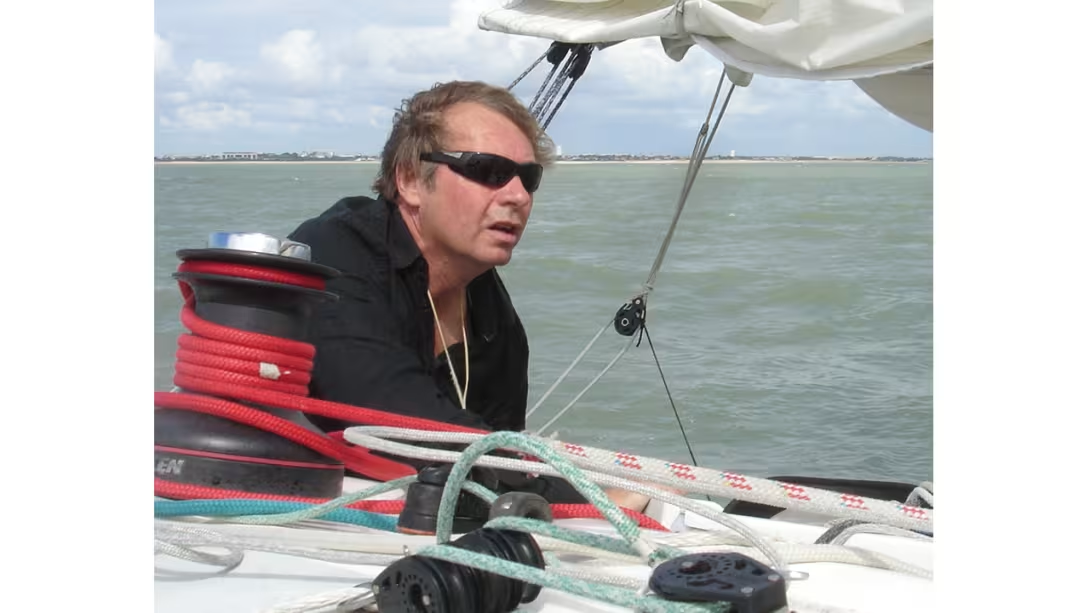
The shipyards have understood the benefits of offering comfortable boats, but which are easy to use, maneuver and maintain. These units can indeed seduce newcomers to the nautical world, but also pragmatic skippers who are tired of managing a sailboat. And blue water cruising? Can we have enough autonomy to complete long passages? Will the fuel budget explode? Laurent Bourgnon, who started exactly 10 years ago with his family aboard a Sunreef 70 Power, came up with some interesting answers. The former ocean racer, lost in 2015 in a diving incident, had opted for a very comfortable power catamaran after a long study of the possibilities offered by this type of craft. First of all, he knew how to sail. Focusing on the route, the weather and the regular maintenance on board suited him very well. Dealing with the management of the sails and the constraints of trajectories related to the direction of the wind? Perfect. His Jambo, a luxurious unit designed to his own specifications, was equipped with two marinized engines of 420 hp each. Electronic charts had been fully reviewed to optimize consumption. Because with power cats, this is what we want to know. If it is going to suck up hundreds of euros per day in fuel, they have little future in our world today.
Figures ... and contradictions
Laurent Bourgnon pointed out that his fuel budget largely offset the price of the sails. A questionable argument since most motor catamarans of equal size, are sold at a higher price than their sailing equivalent. Usually around 15 to 20% more. While large engines are obviously more expensive than small, the specs of these models often include a generator as standard, teak deck and finishing materials which are more luxurious... but there is still a mast, sails and all the deck hardware missing! Coming out of the shipyards, sales volumes are still rather low, ie. 10% of the cruising catamaran market - or roughly 130 of the 1,300 units of more than 12 m produced each year worldwide. If Leopard seem to be a step ahead thanks to their partnership with The Moorings charter company, Fountaine-Pajot also manage to place twenty of each of their models. And Lagoon counts 40 L630s sold. From a purely marketing point of view, it’s interesting to note that manufacturers have banned the term "trawler", which is considered both too old fashioned and nerdy according to them. Rather, Motor Yacht, Power, Power Cat, etc... And yet, most boaters use motor catamarans to cruise and complete crossings comfortably and therefore more or less at reduced speed to optimize consumption. With this logic, one would have thought that the Lagoon 40 MY, with its two 75 hp motors with saildrives (the biggest on the market), would hit the mark. But no! Buyers want bigger engines - with propshafts. Even if 90% of the use of motor catamarans is for cruising at between 8 and 12 knots, the owners appreciate the option of being able to hit 20 knots...
Speed and consumption
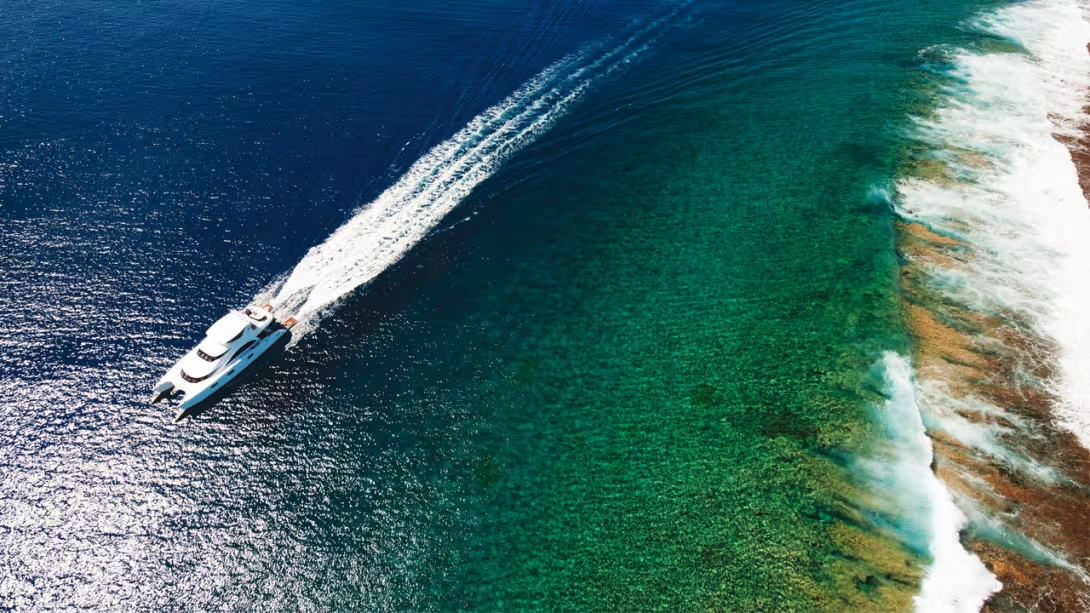
Laurent Bourgnon, with his Jambo, was definitely ahead of the field as to the optimization of autonomy: his engines consumed 7.5 l / hour each while maintaining a speed of 10 knots. During his first big crossing - Cannes, in France to Puerto Montt in Chile, he consumed 10,000 liters, half of his tanks. It is interesting here to compare these figures with a more modest unit like the Lagoon 40 MY: the recommended engine speed is 2,150 revs, giving a cruising speed of 8 knots. There, the total consumption comes out at 8 l / h - a liter per mile; a range of 600 miles. At 3,250rpm, it reaches 11 knots, no more. But the consumption goes up to 33 l / h. A 100% engine type cat displays interesting results at low speeds: the consumption of the MY 37 Fountaine Pajot is limited to 2 x 5 l / hour at 7 knots - which means 1,000 miles of autonomy – climbing to 2 x 22 l / hour at cruising speed and 2 x 40l / hour at full speed (20 knots). So we can see that heavily motorized units are not very greedy at low revs ... but they are much more when you increase the revs. Here’s another example which confirms this: Aboard the Euphorie 5 - read the full test in this issue - it is 9 l / hour at 7.5 knots, but close to 100 l / hour at 20 knots. The famous Lagoon 630 undoubtedly gives credit to a powerful engine. With 2 x 180 hp, 10 l / hour at 7 knots and about 50 l / hour at 10.4 knots. But with the big 300 hp engine it goes down to 8.4 l / hour at 7 knots and 24 l / hour at 10.4 knots. So consumption is divided by two at this ideal cruising speed. Obviously, flat out - 17 knots - it's not the same scenario for your credit card, since the engines burn 115 l / hour. To summarize, most large units are able to cross the Atlantic without refueling, as long as they limit their speed to between 8 and 10 knots. As for the classic summer use, we can count on one month of boating and 1,000 miles. That is an average consumption - for 25 l / hour at a speed of 10 knots - of 2,500 liters (approximately €3,500 at European prices). For the same summer cruise, a sailing catamaran will run its engines for 500 miles. With a consumption of 10 l / hour at 8 knots, it will burn 625 liters of diesel - less than €900 at the pump.
Two architectural schools
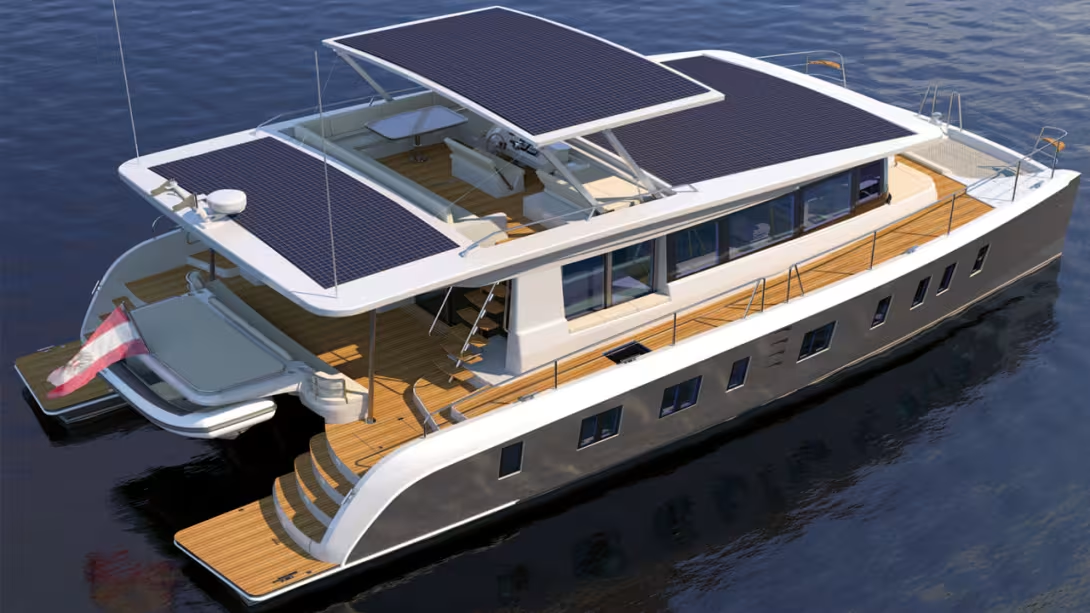
To design motor catamarans, the builders have two solutions: base the boat on a sailing catamaran or design a model which is 100% engine. The first formula is the most common - Leopard, Lagoon, Privilege, Aventura, Nautitech, Bali...
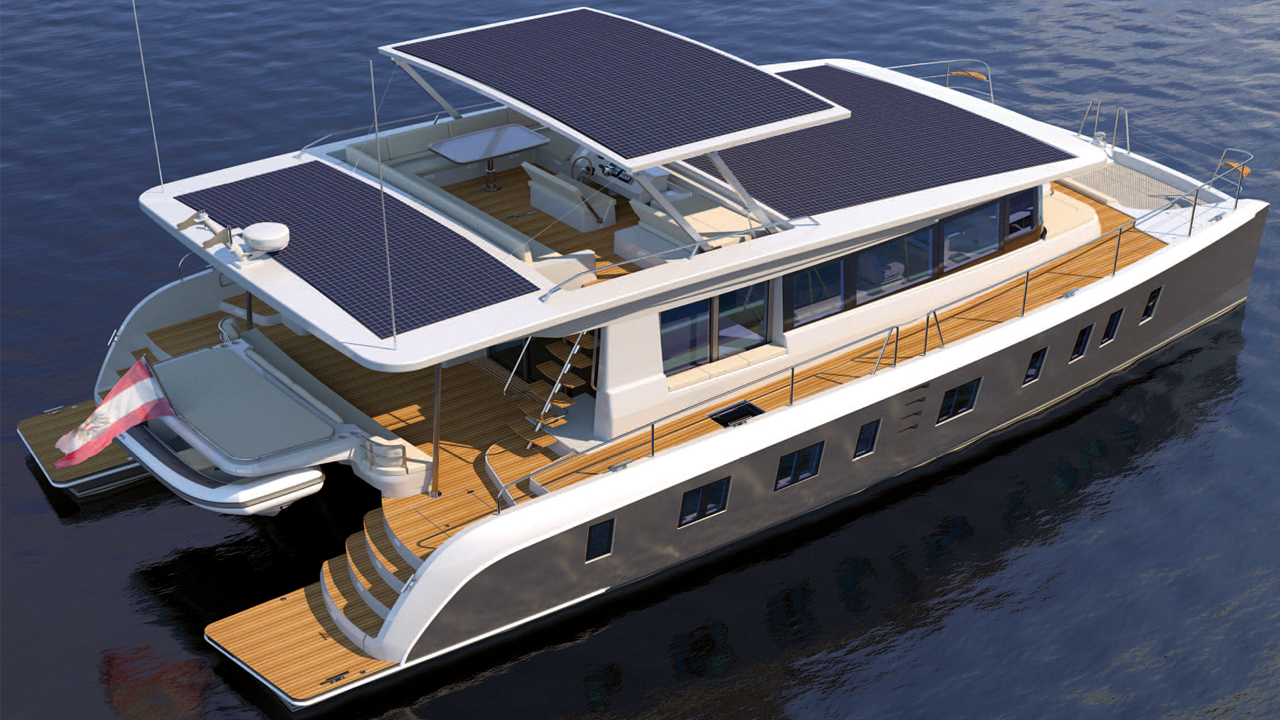
Of course, all the elements of the rig disappear as well as deck hardware and mast support strut. The hulls are reworked at the after end for more lift: this is first of all to fit bigger engines, to support their higher weight but also to ensure a longitudinal trim is pitched up at a minimum at high speed. Another modification: the skegs shorten to become simple mini-keels - in order to maintain a track and a minimum of grip during crosswind maneuvers. The draft becomes significantly lower than that of the sailing catamaran. Most often, these models sport a flybridge - at least for units over 43 feet. An option sometimes already proposed in the sailing version. Inside there are very few changes. We see exactly the same accommodation layout. Ditto for the cockpit and the deck plan.
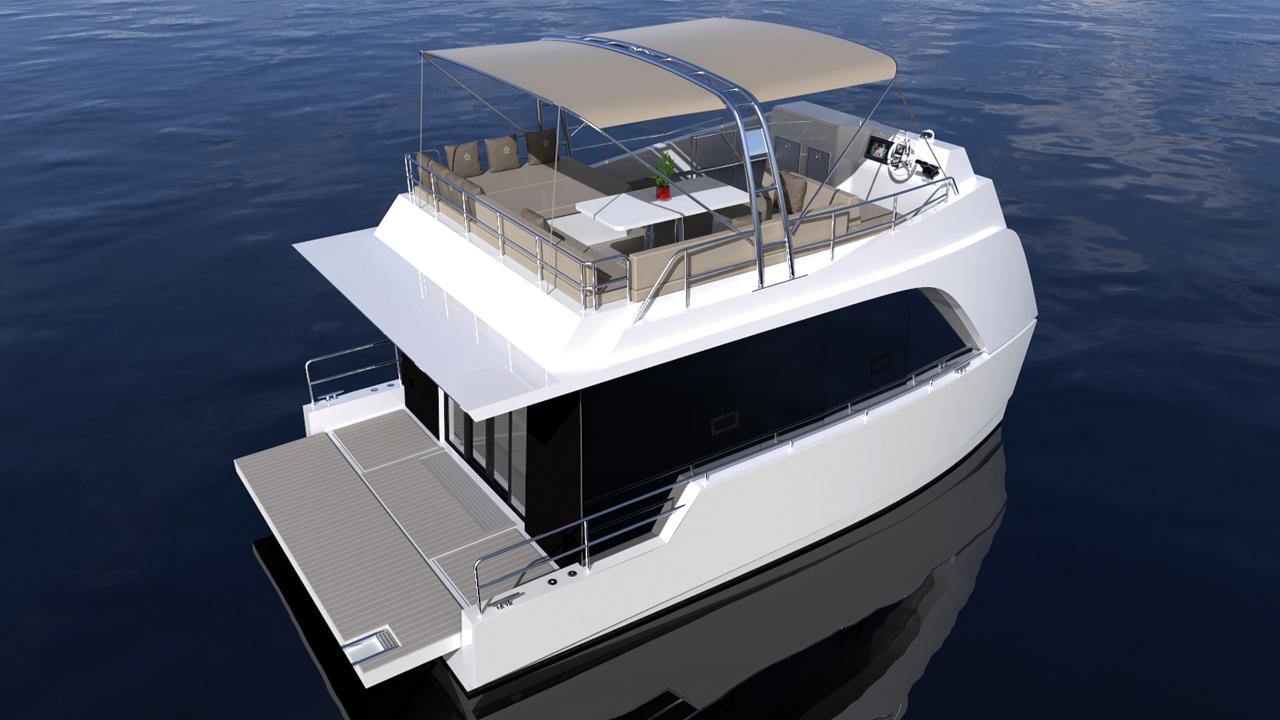
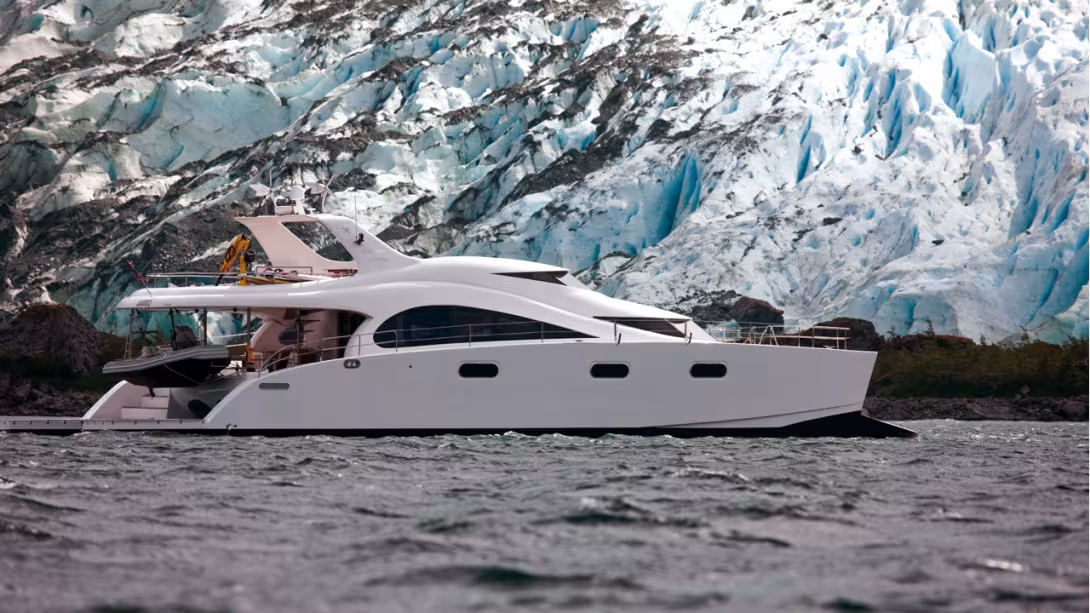
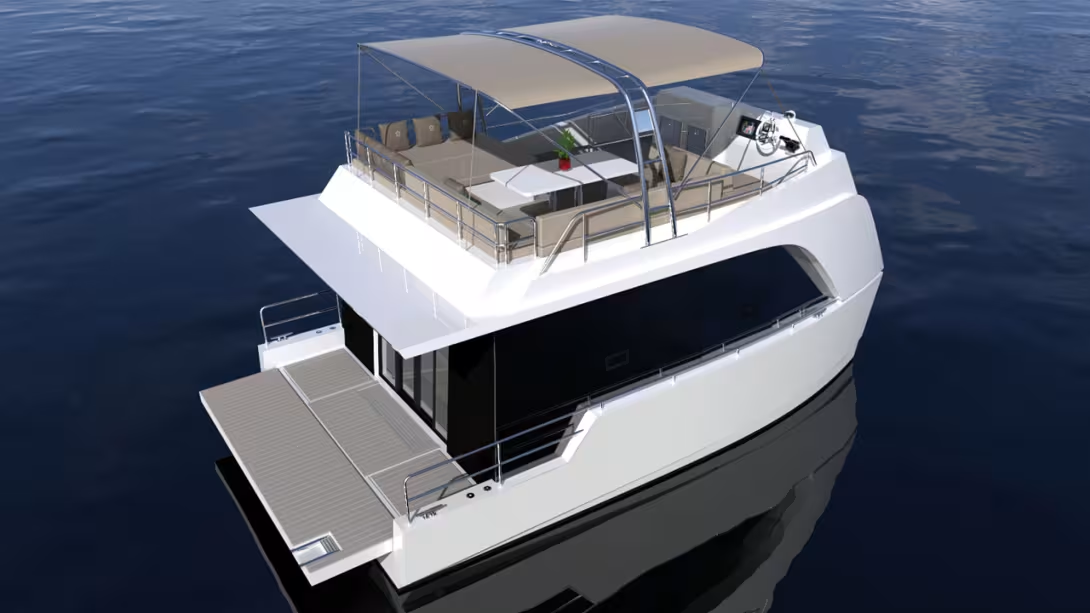
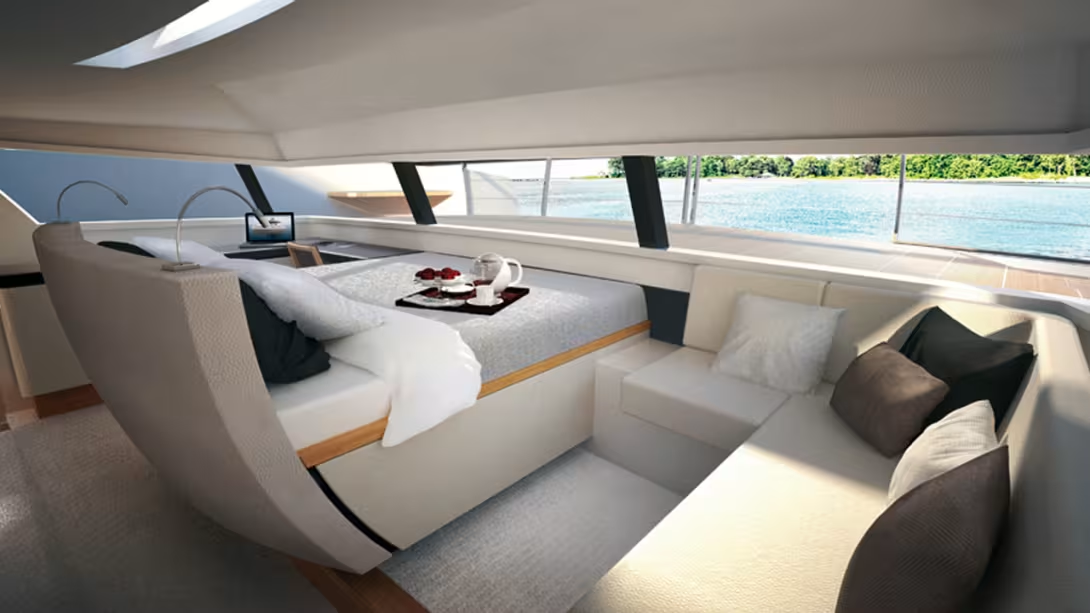
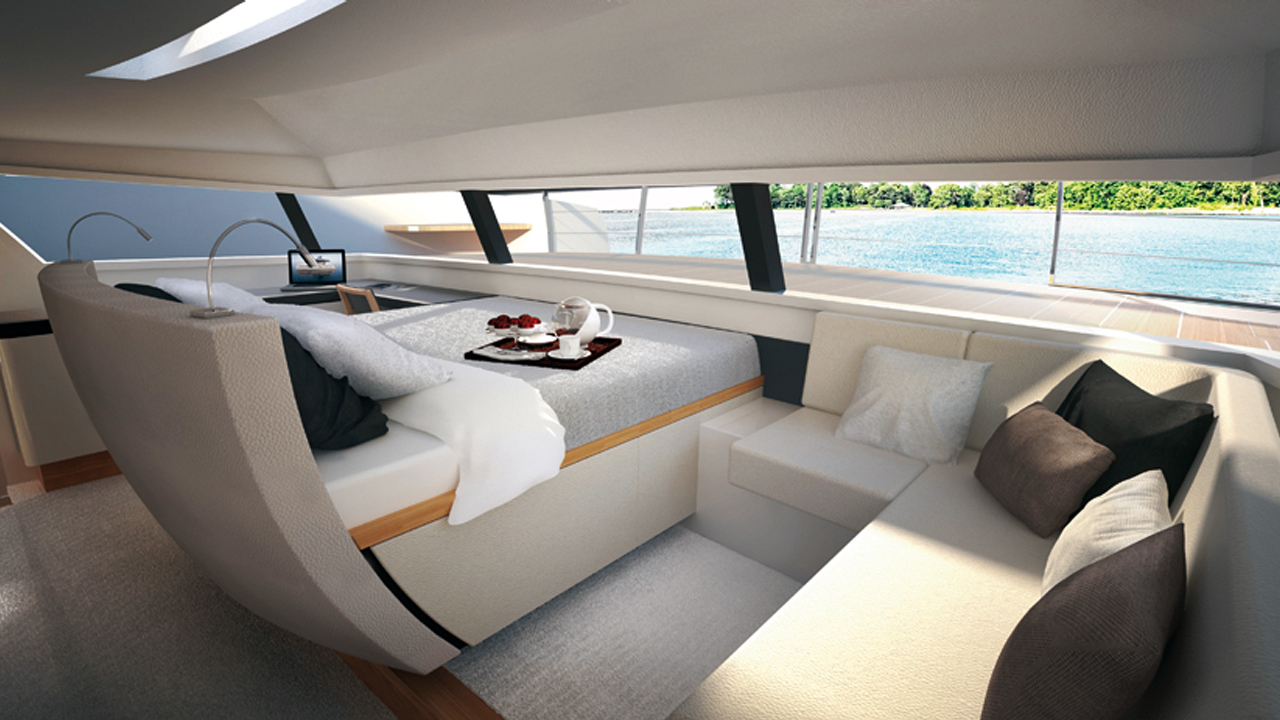
The second formula is one defended by Fountaine-Pajot, which has developed a specific range of engine catamarans. The bias is rather to propose a two-hulled cruiser. The platform is noticeably smaller in the beam: 6.61 m for the MY 44 against 7.12 for the Bali 4.3 MY and 7.54 for the Nautitech 47 Power. It’s always better for places in port, even if the sidedecks are not as wide. The Fountaine engine is also impressive: we are dealing with 2 x 370 or 2 x 435 hp Volvos. The Nautitech is happy with 2 x 225; 2 x 160 hp for Bali. The technology is clearly focused on performance above 15 knots. It pleases the owners, even if they will use very little of the potential of their boat. On board, new codes are adopted, straddling sailing culture and power boating. An innovative concept and inevitably interesting. Less bling than on a speedboat, but more surface area for relaxation. More openings inside, but handholds for standing if the sea is rough... The most glaring difference is inside, where priority is given to the cabins. They are huge and do not hesitate to encroach on the nacelle. At the expense of the saloon - socializing is more of an outside thing, under the rigid bimini. We find this logic in shipyards that only make motor catamarans, such as Aquila Yachts and its complete range from 36 to 48 feet, while waiting for new products to come on stream soon...
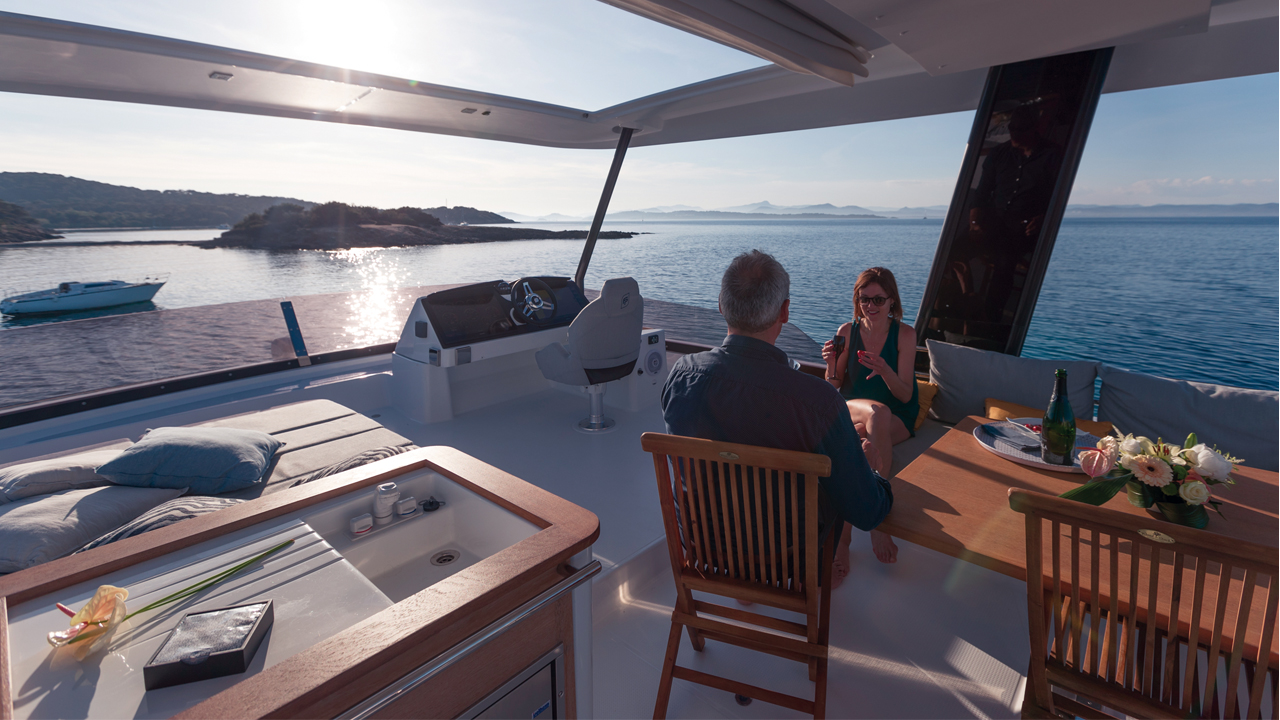
We should also mention the Sunreef shipyard that offers a whole range of motor catamarans as well for blue water cruising (Power 60/80) and for fun (40 Open). There remain other projects or achievements in progress, such as Blazejak and Furio 6 (Privilège Marine). As for the United States, the Mares 47 Fly doesn’t hesitate to be propelled by four Suzuki outboards at 350 hp: it’s all about exceeding 50 knots...
A market with the wind in its sails (even though they don’t have sails...)
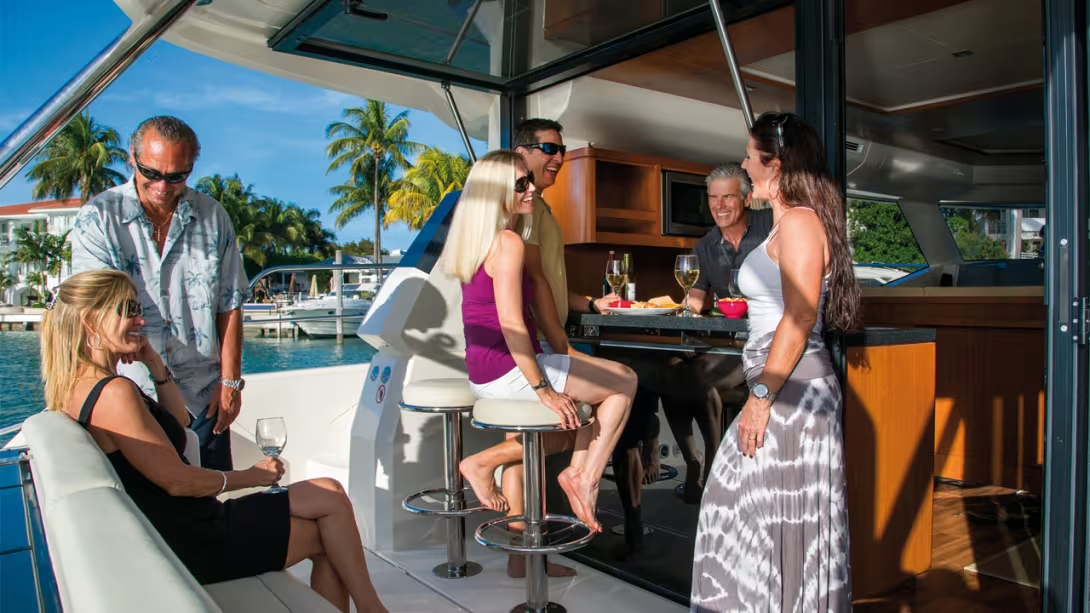
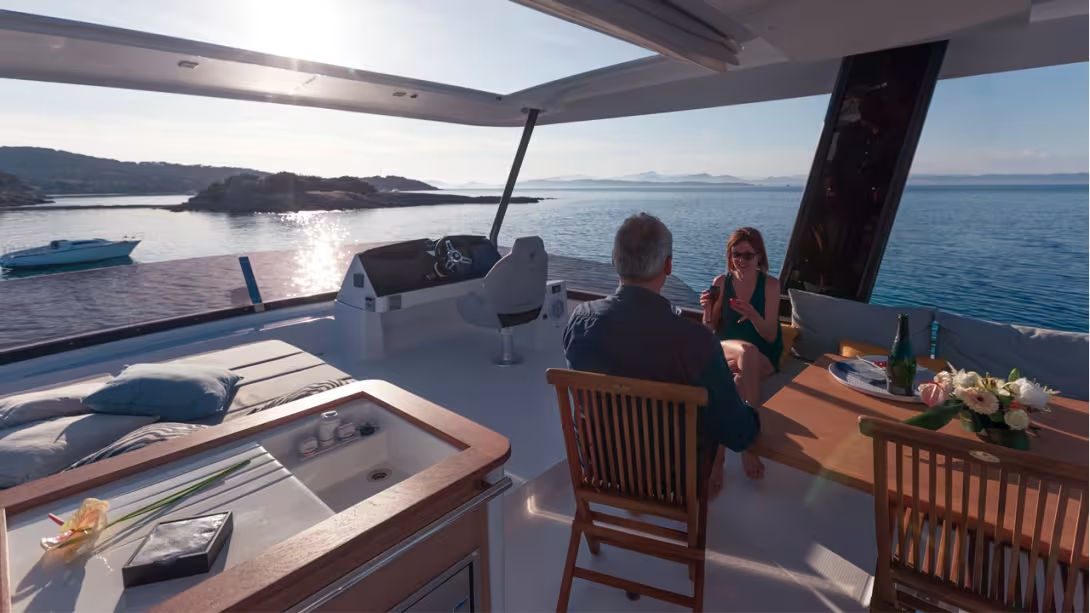
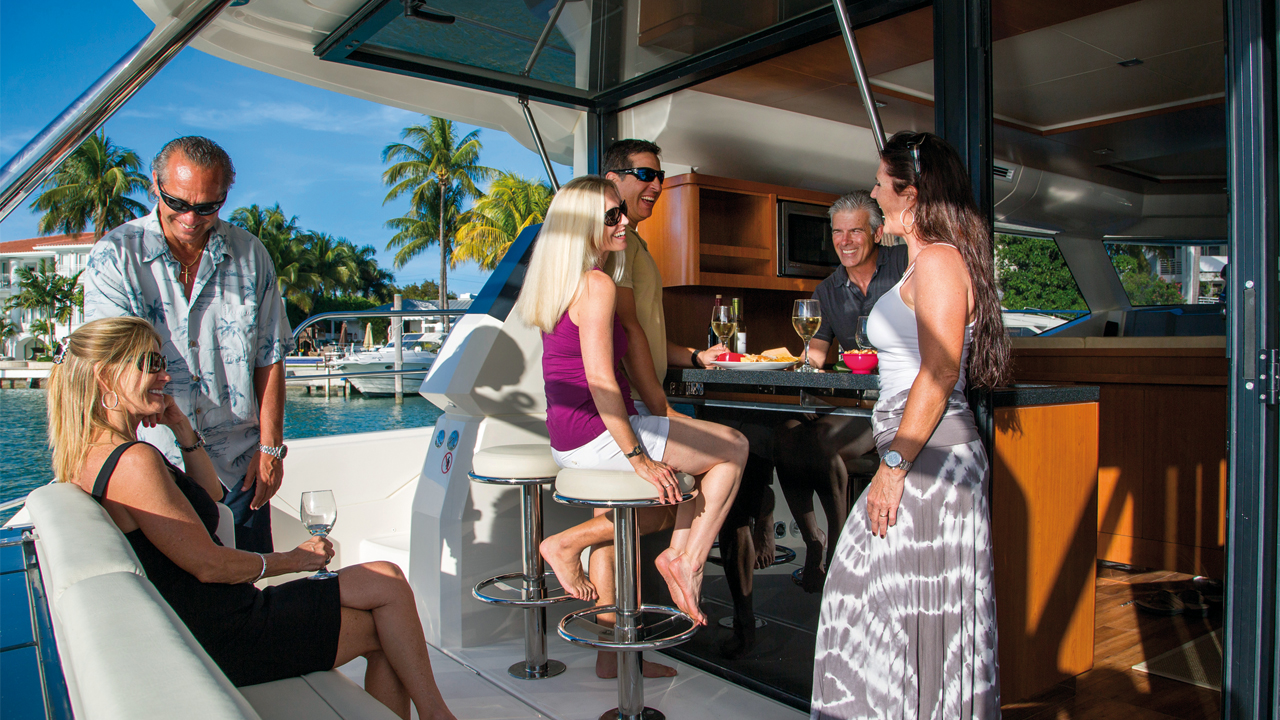
According to the manufacturers, the growth forecasts of the catamaran market are good. The pragmatism of former sailors who note their great number of engine hours and the constraints imposed by the sails, the evolution of the platforms offering ever more comfort - on board which any constraint becomes even more painful, inevitably. We dare not mention the aging of the man... The use of these units is close to that of sailing catamarans, except that we sail a little faster, that we almost laugh at the weather and we are able to keep to a schedule. Always more fun to arrive in time at Santa Cruz or Palma to retrieve a crew member or a family member who is getting off an airplane! Motor catamaran buyers are mostly (60 to 70%) former catamaran sailors. These Skippers appreciate the relatively simple maintenance of their unit, using only one full tank of fuel in the year, not to mention the lower draft of their boat. But we're not just dealing with old sailors. Regular motor boaters are also attracted to two-hulls. More privacy in the cabins, larger nacelle, better seakeeping behavior, no rolling at anchor, lower consumption, possibility of long crossings: the benefits are numerous.
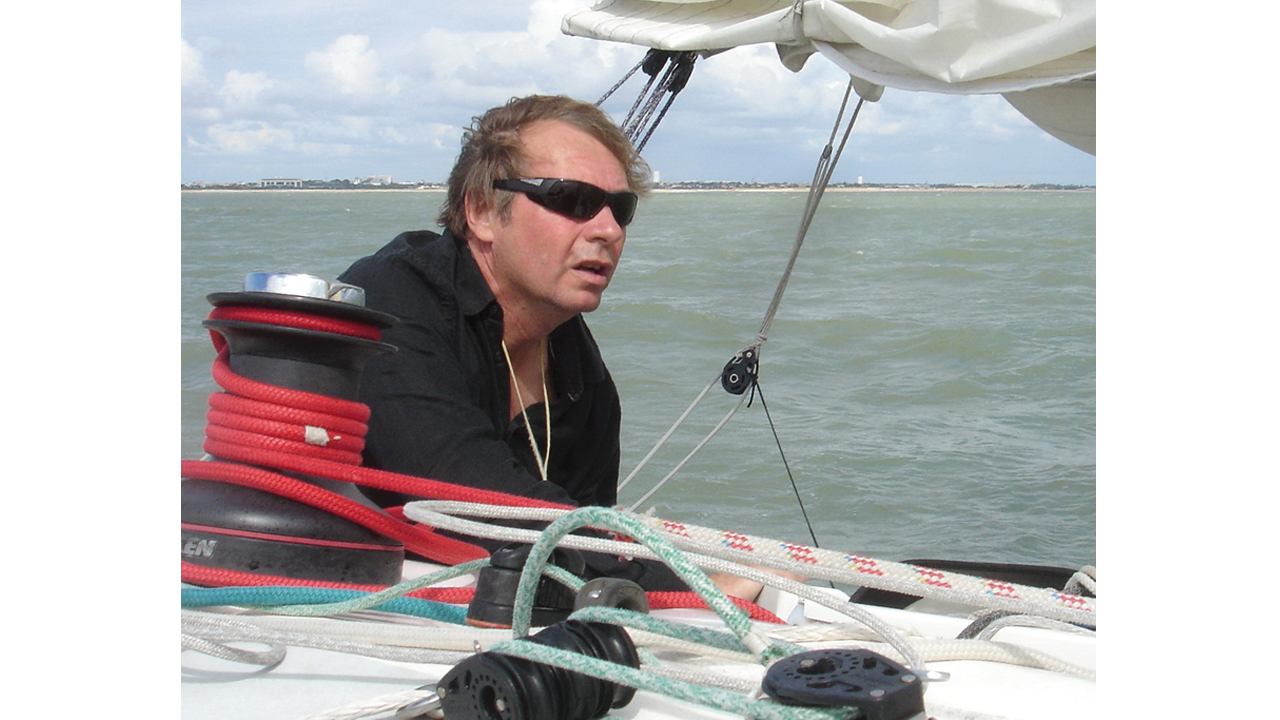
A word from naval architect Marc Lombard, architect of Privilege and Nautitech
"The interest with a motor catamaran is that we never have to put the sails up!"
On board most catamarans equipped with a flybridge, the mainsail is no longer hoisted. This is a fact. And we have a villa on the water... the logical evolution is a motor cat. But for me, either we make a boat to sail, or a floating house. For blue water cruising and for an Atlantic crossing, a motor catamaran similar to a sailboat makes sense. Most models are rather designed for small engines and great autonomy, but are usually finally delivered with bigger engines ... As for the owners, some make fun of the consumption. They cannot help but go fast, even if it's 10 or 15% of the time. For us, it's almost an educational problem! There are good compromises: the Nautitech 47 Power rises to 24 knots from a cruising speed of 10 to 12 knots.
The Euphorie 5 is closer to the trawler. Its hulls have benefited from a digital simulation with reversal of rear curvature. This form serves as flaps and we have more volume for the engines. The yard has opted for an even more powerful engine. Note that the forefoot is barely above the water, with a very precise angle of rotation at 2°, maximum 2.2. From 15 knots, the boat encounters a certain resistance, then the angle drops to 1.8.
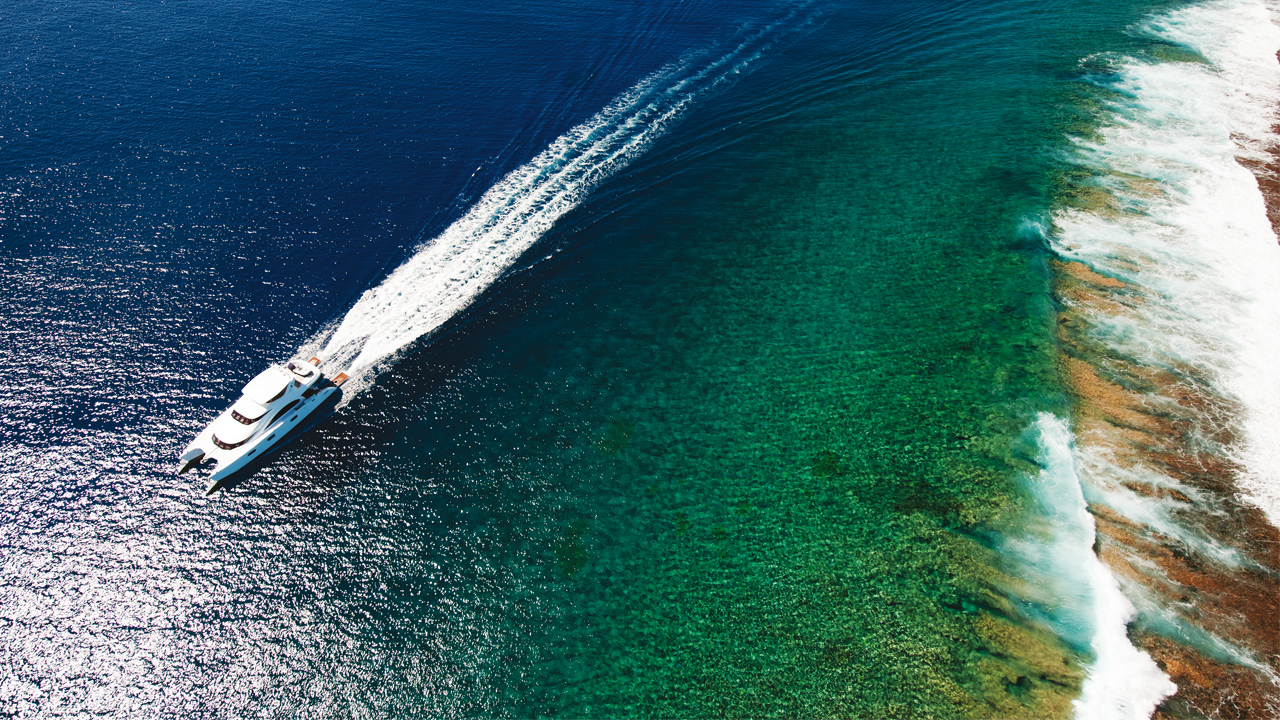
There is a demand for very fast motor catamaran projects - we are working on this with the Furio. But for me, below 30 knots, the IPS is useless. Its performance is not optimum and these engines are very expensive.
Text: Vince Valstar - photos: DR