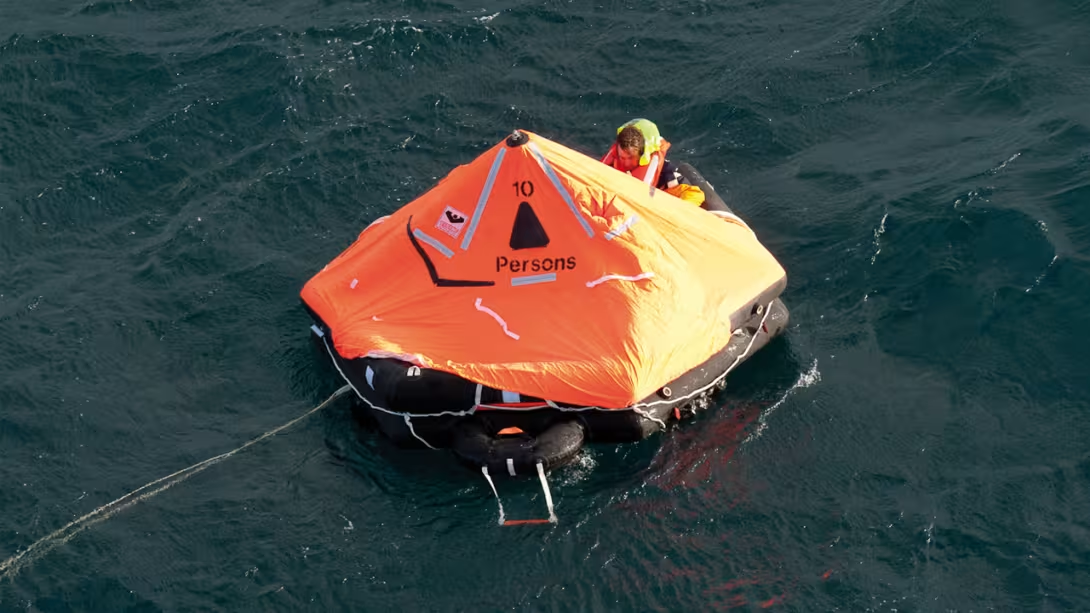
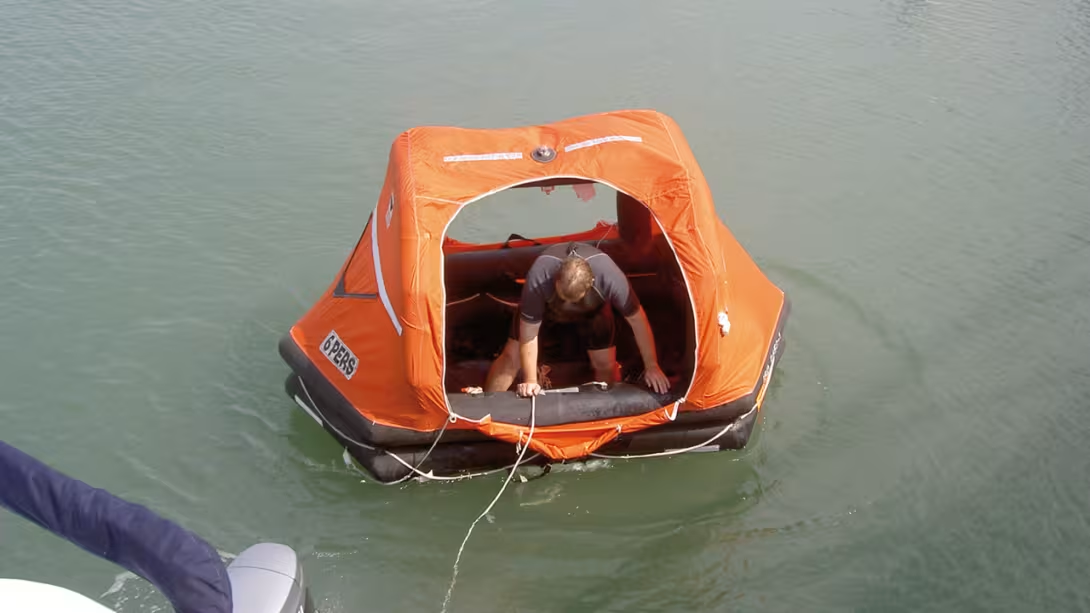
We don’t wish it on anyone to have to get into one, one day. But if it happens, the choice of model and the way the liferaft is fitted aboard are of prime importance, so you can successfully launch and activate it. It always happens in a case of extreme emergency. Water is coming aboard and the boat – if it isn’t unsinkable – is threatening to sink. You generally have a few minutes, rarely more, to carry out the operation. Or perhaps fire is raging aboard, and here things happen even faster. The toxic fumes will urge you to leave the boat in less than two minutes. And of course this most often happens in bad weather. The boat’s deck moves and can be slippery. The stress mixed in with this is not the best of allies. And what if in addition there are injured people aboard… Needless to say, numerous obstacles can seriously impede the success of your embarkation into your liferaft. And once sheltered aboard the liferaft, the time you have to wait to be rescued can be more or less long, depending on the accident zone. In certain cases, on the open sea, you can wait for several days…
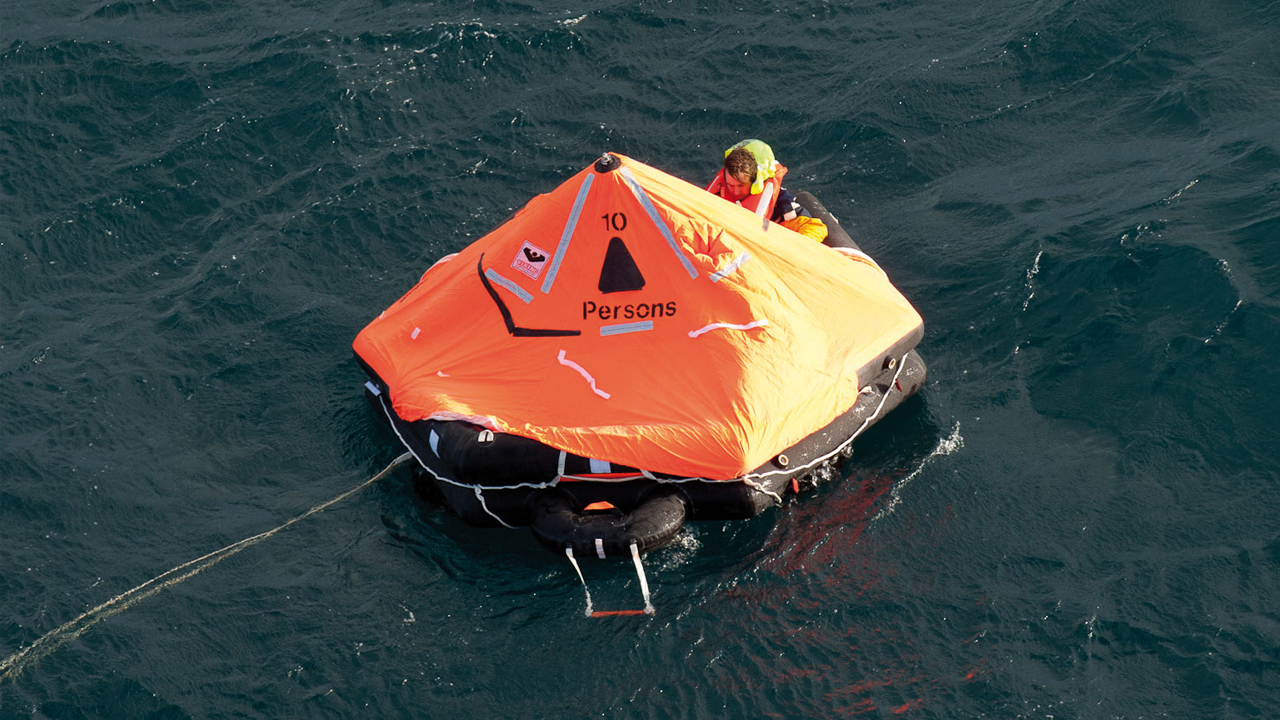
Specific models, according to your program
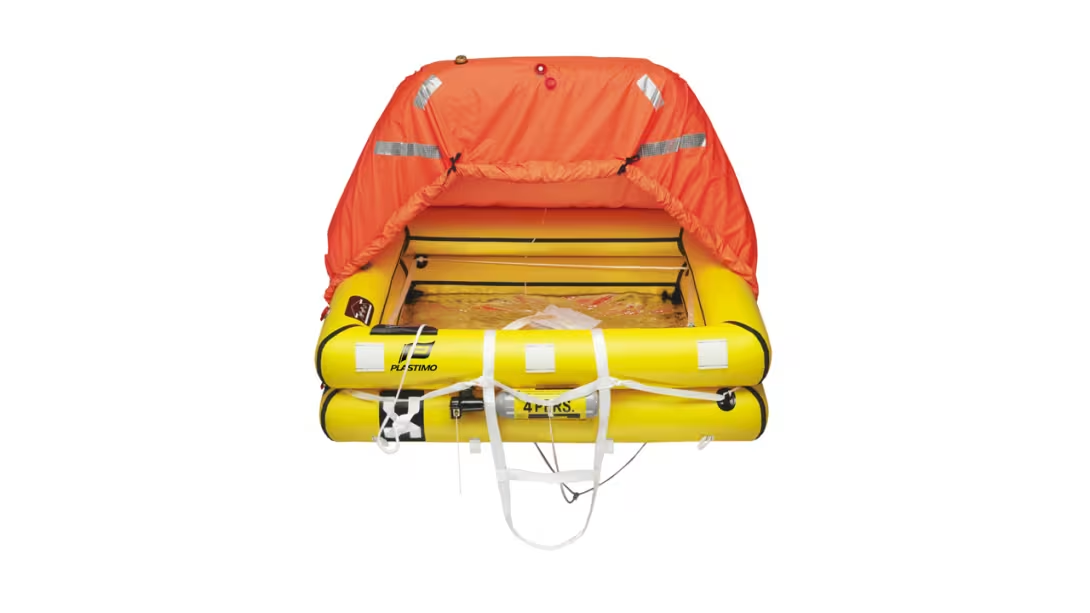
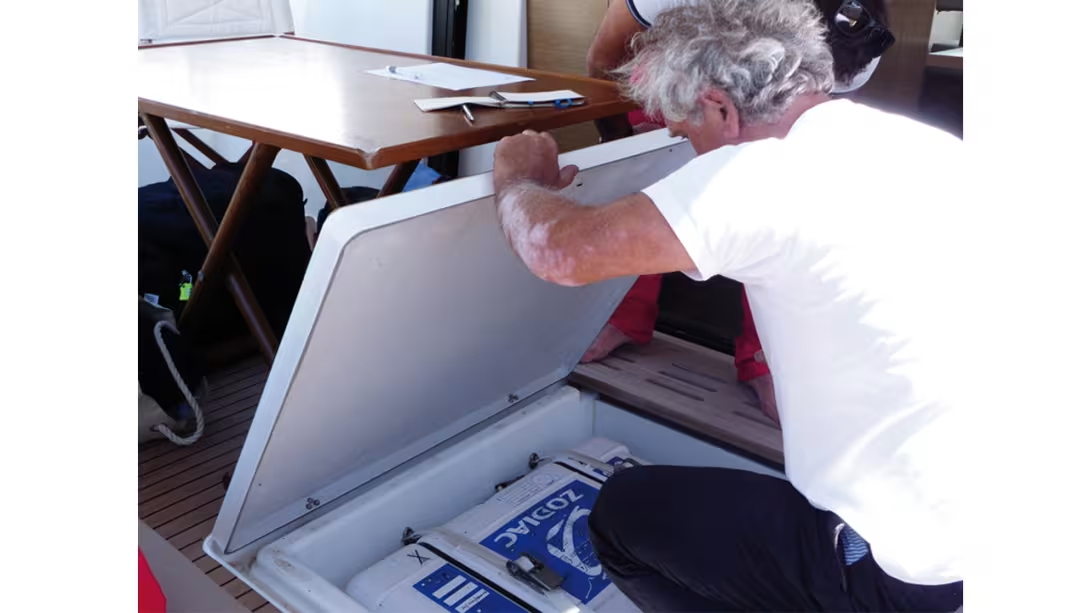
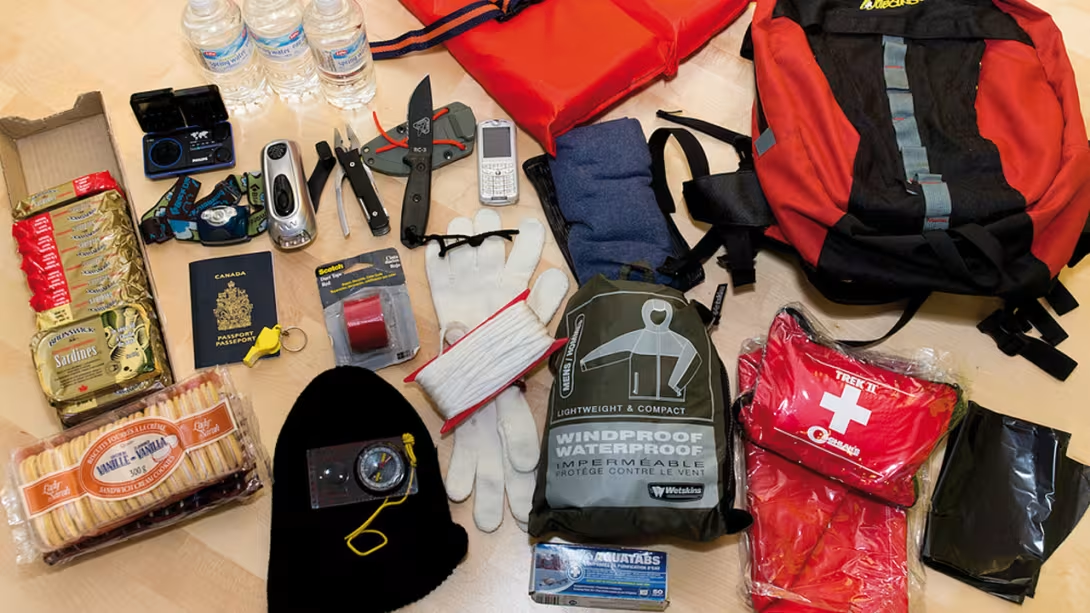
We find two major categories of liferaft: type II called 'coastal', compulsory in France over 6 miles from shelter, but strongly recommended if you go further than 2 miles from the coast. The type I liferaft, called ‘offshore’ is for sailing more than 60 miles from the coast. This second category is sub-divided into two classes, A and B. The difference concerns the resistance and the usable temperature range, which is from -15° to + 65°C for the A and from 0° to + 65° for the B. Finally, still in class I, there are liferafts equipped for 'less than 24h' or 'over 24h' (see what is compulsory in France in the box). We can’t advise you strongly enough to complete the contents of the liferaft with equipment placed in a waterproof bag, called the ‘Grab Bag’… In France, since 2008, the regulation size of the liferaft depends on the number of people embarked, and not the number of passengers for which the boat is approved. If you never sail with more than 6 crew members aboard, there is no point in having a 10-man which will be more limiting and hard to handle. Finally, you will have to choose between a liferaft in a valise and one in a protective canister. The first type fit easily in a locker, as they are more flexible. The second kind are better protected from the elements and are fitted outside. They are also easier to use…
Installation aboard
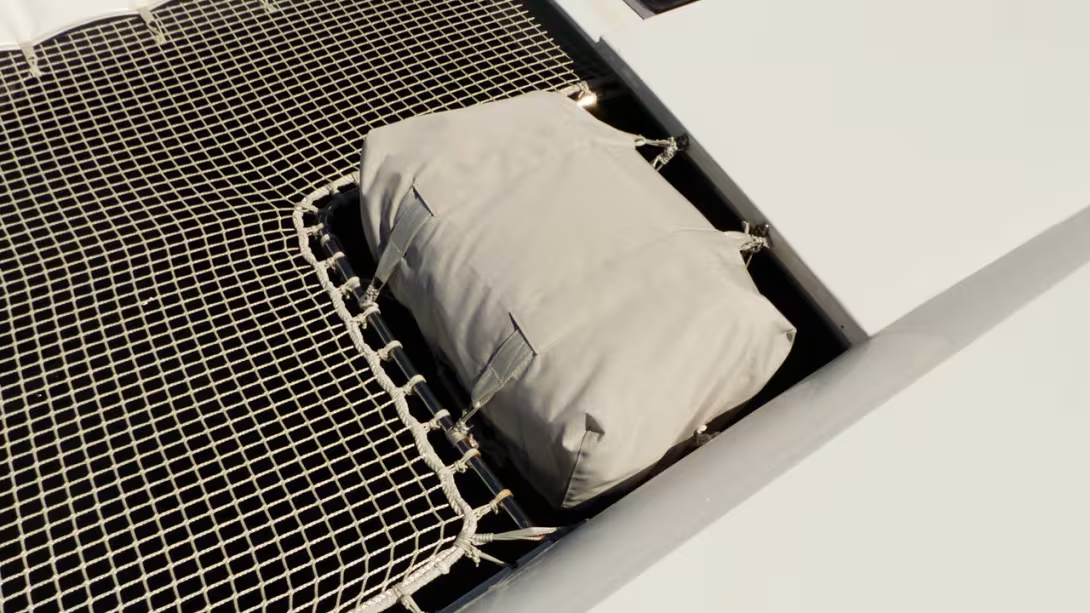
We all know it: the conditions in which we risk having to launch the liferaft, activate it and climb aboard are more often than not, tricky. Where on the boat you choose to install it is therefore very important for succeeding in your rescue operation, in the very short time we are often granted. In all cases, the raft must be easily accessible. At the bottom of a locker with lots of kit on top of it is the last place to put it, and let’s not even mention it being buried deep in the interior of the boat. Nowadays, certain catamarans have dedicated compartments on the sugar scoop or the aft crossbeam. All you have to do is push the raft into the water, to use it. Other systems are fixed on the pushpits, or even directly built in to the guardrails. All you have to do is free the fastener and inflation can take place automatically. Some owners make up a specific installation, such as for example on the forward trampoline, which allows easy access, even in the case of a capsize.
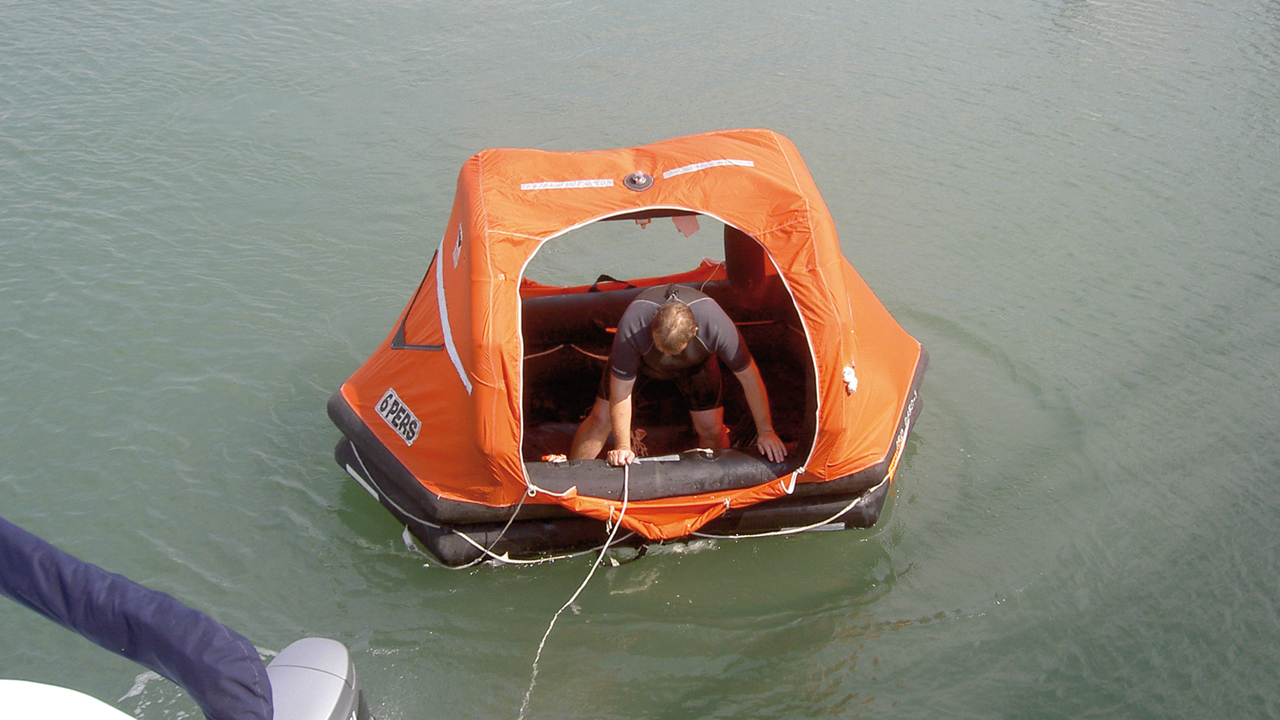
A question of program and logic
The first rule is to carefully adapt your equipment, according to your cruising area and your crew. If you are leaving to sail in tough areas, a self-righting model is advisable. If you are crossing the Pacific, your ‘Grab Bag’ must be very comprehensive. Don’t hesitate to prepare two or three, as well as some jerry cans of fresh water, which, half full, will float on the surface of the sea and be easy to recover. It is essential to have prepared the bag before your departure, as when the incident happens, you won’t have time to gather together your emergency equipment. An Epirb, a handheld VHF and some batteries can save you, by allowing communication with ships which can’t see you. As with the jerry cans, by leaving the bag half full of air, you will be able to leave it floating, by tying it to a leash while you embark.
Sailing as a couple is wonderful, but if one of you is injured, make sure that one person alone is able to handle the liferaft and launch it, if it isn't equipped with an automatic launching system. Finally, don’t forget that aboard a catamaran, the dinghy on its davits is also very practical, and can serve as a secondary or makeshift raft if necessary.
For those of you who sail on the coast, even at less than 6 miles, but in winter, don’t forget that the water can be very cold and your lifejacket alone will not be enough to protect you. In this case, and even though they are no longer compulsory in France, life floats, especially the latest generation ones which can take two people, could save your life in water at 8°C, where you can expect to survive for 30 minutes at the most…
The contents of a Class I liferaft
1 x pair of paddles, Instructions (pictograms)
3 x red hand-held flares
2 x parachute flares
1 x floating knife
1 x sea anchor
1 x repair kit
1 x pump
1 x signaling mirror
1 x lifebuoy with 30 meters of cord
1 x flashing light
6 x seasickness tablets per person
1 x whistle
1 x bailer
2 x sponges
1 fresh water cup
So don’t hesitate to complete it!