
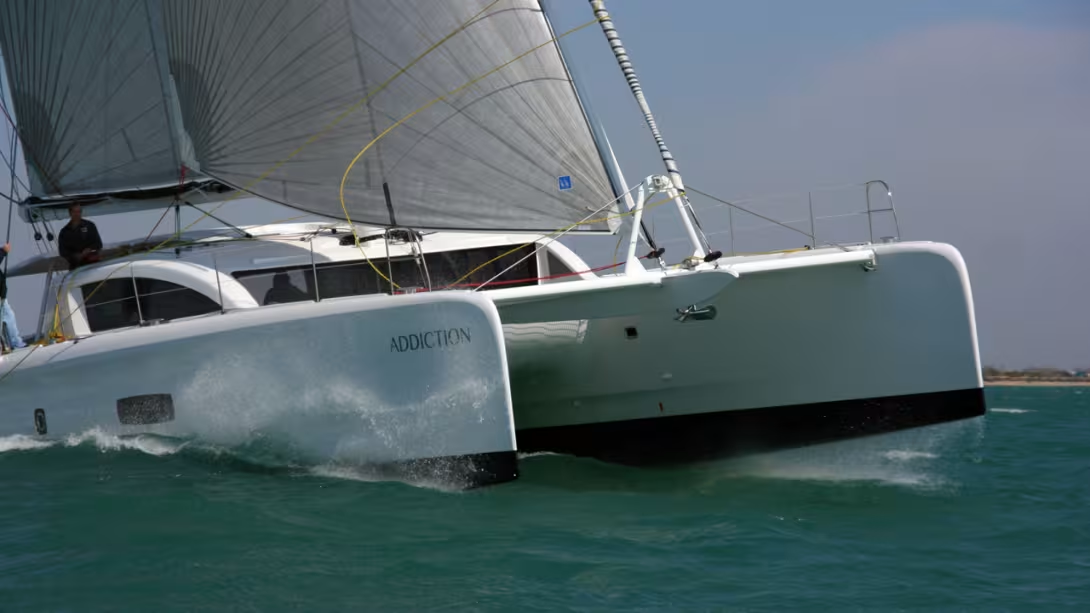
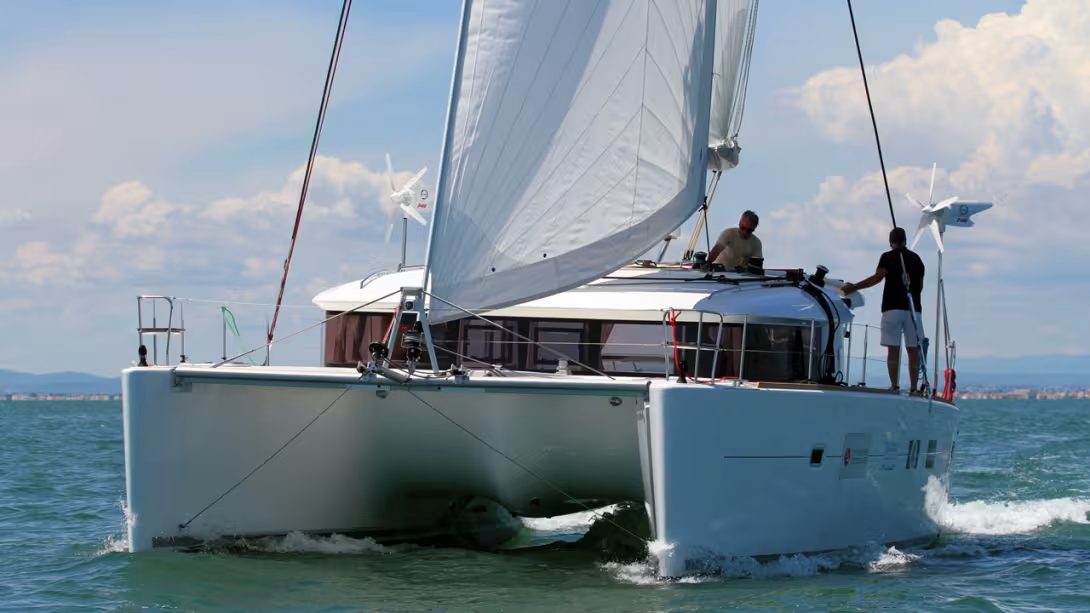

"Multihulls, and cats especially, are not made for sailing upwind." This complaint is often heard from regulars on monohulls by those of us who choose to sail on two or three hulls. Ultimately, they are not entirely wrong: a catamaran is much faster downwind than up. The difference in speed is often even more than double. And multihull fans, no doubt more Epicurean in their approach to sailing, prefer a route which doesn’t involve tacking... And when there’s no choice, the option to motor, into a head sea, is very tempting though not comfortable. However, multihulls are not incapable of going upwind. Far from it. And they have the advantage of sailing flat: this can never be overstated! It’s quite feasible to tack upwind, even aboard a production cruising catamaran. Admittedly, the route and the time taken are longer (two to three times) than the all-engine option into the wind. But if you're in no hurry, here are some tips to get you on the right track.
1- Clean hulls

The very basis of the gliding through the water is clean hulls. Before applying antifouling, check with regulars in your sailing area or long-term cruisers to select the most effective anti-fouling paint. And do not hesitate, before each big trip, to clean your bottom!
2- Propellers, yes, but not brakes
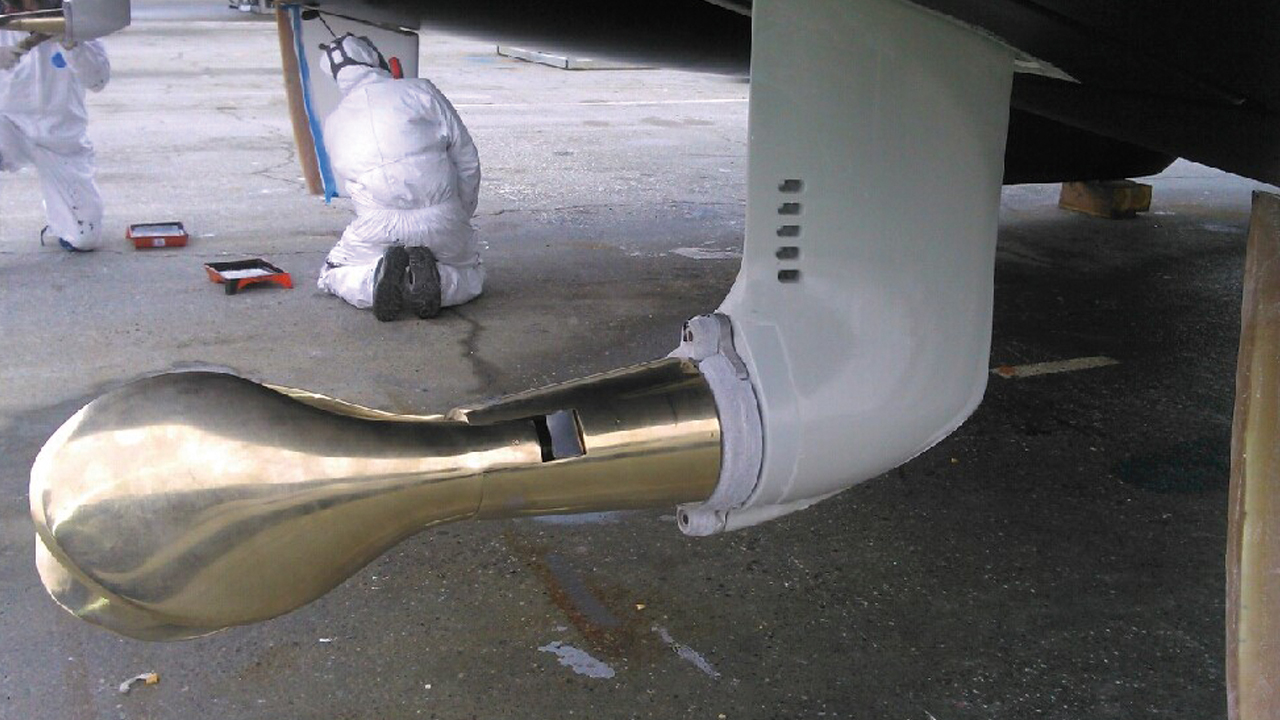
On a catamaran, there are two propellers that slow down the boat, not one... Even more reason - despite the expense - to replace your fixed three-bladers with folding propellers. A benefit at any speed. And sailing upwind!
3- Daggerboards
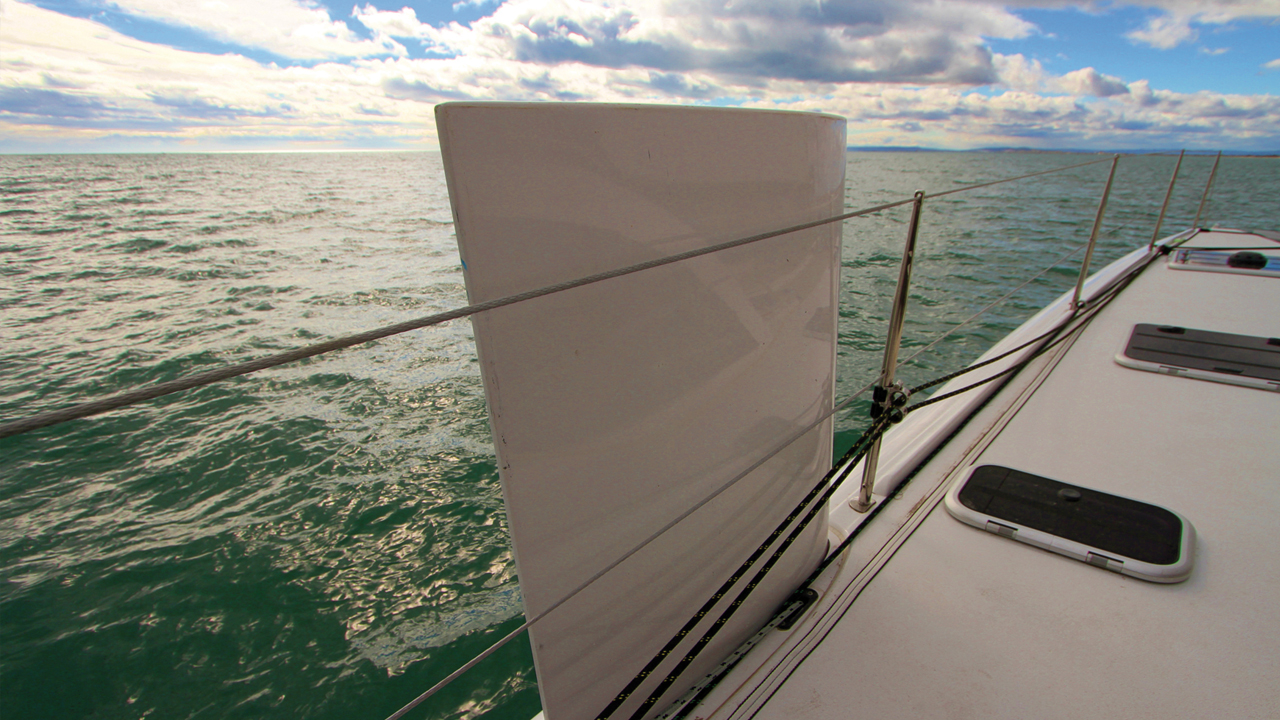
There’s just no doubt about it. Daggerboards give much better performance than fixed skegs, especially in light airs and big breezes. You just need to adjust them according to the speed and conditions - the leeward board should be lowered in light weather, but raised little by little as your speed increases.
4- Sails
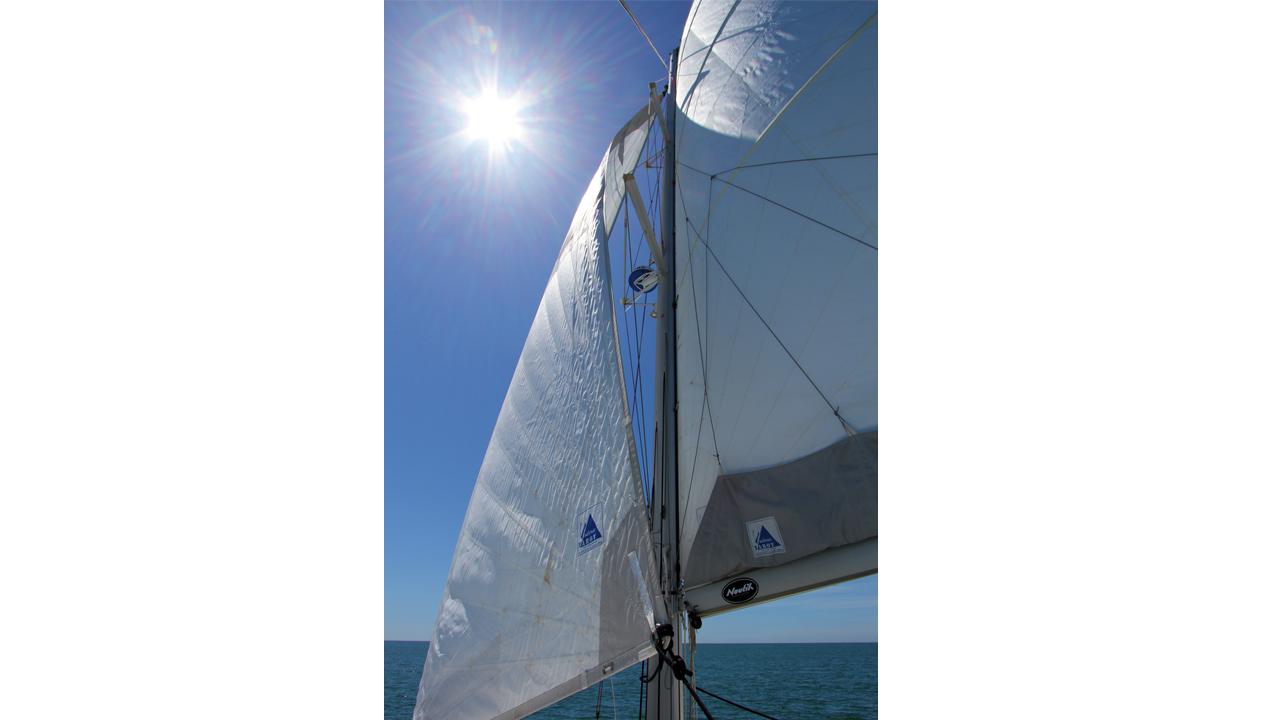
On a multihull, there’s no heeling, and therefore great loads on the rigging... or the sails. Hence the interest of opting for perfectly adapted materials. Polyester sails delivered standard with a production boat deform very quickly and create a handicap, with a too pronounced hollow for the boat’s upwind performance. Hydranet sails, for blue water cruising, are a good performance / resistance compromise.
5- Mainsail adjustment
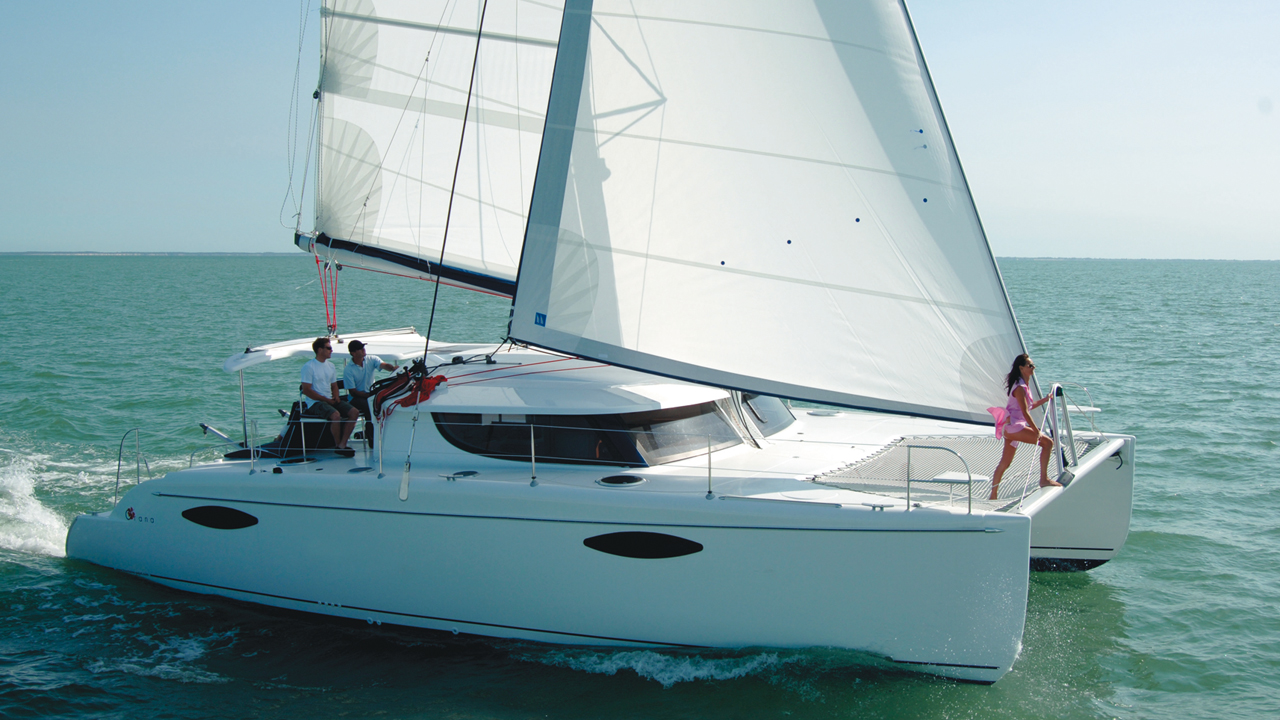
For optimum upwind performance, it is essential to trim the sails. The mainsail is trimmed by the sheet, and the traveler makes it possible to control the twist in the leech. Telltales indicate the optimum setting: if they’re in, the leech is too tight, if they come out the leech is too open.
6- Genoa adjustment
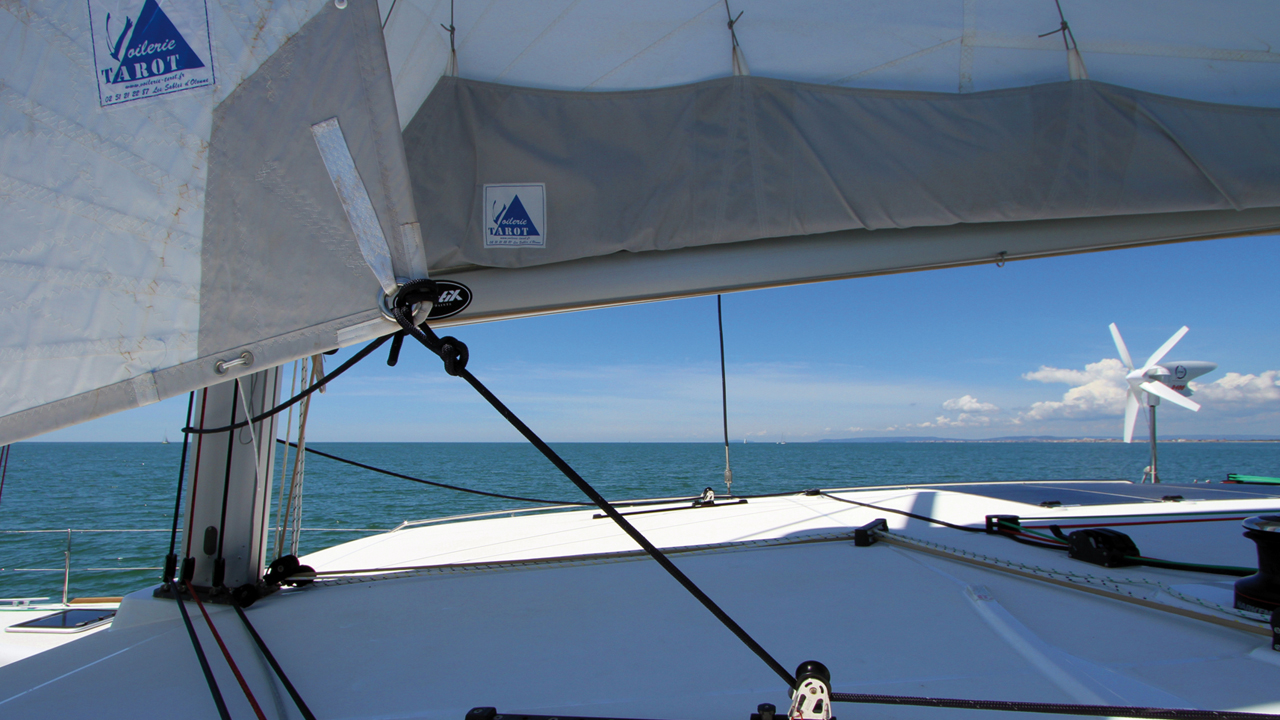
The genoa is adjusted via the sheet tension and the position of the car on the rail. The standard angle is the bisector of the angle formed at the clew. Telltales indicate a good flow of air. Do not hesitate, with the help of a flying sheet, to adjust the sheeting angle. After some trial and error, you will find the right settings!
7- The boat’s windage
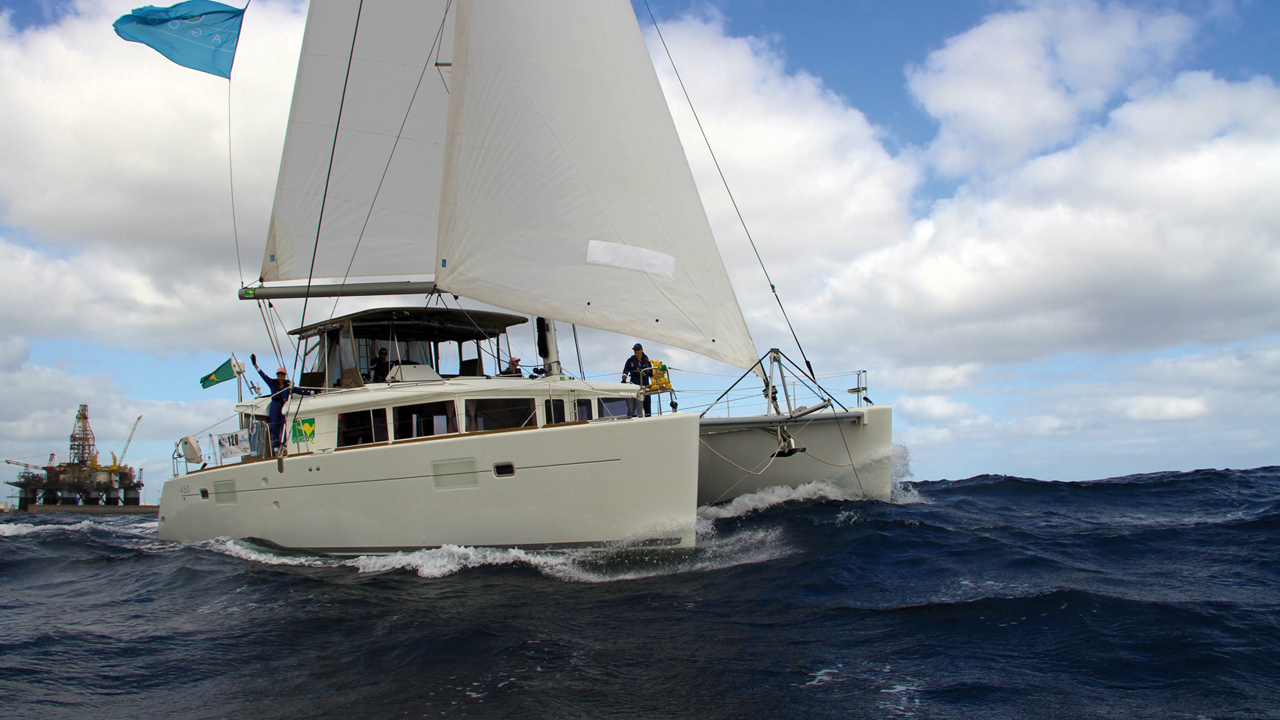
Downwind, a flybridge and its bimini are not penalizing, nor are flags, jerrycans, kayaks and other deck cargo... But upwind, it is quite another thing - a little bit like driving on the highway with a sofa on the roof of your car... Make sure you limit windage to gain speed.
8- Get the gennaker down!
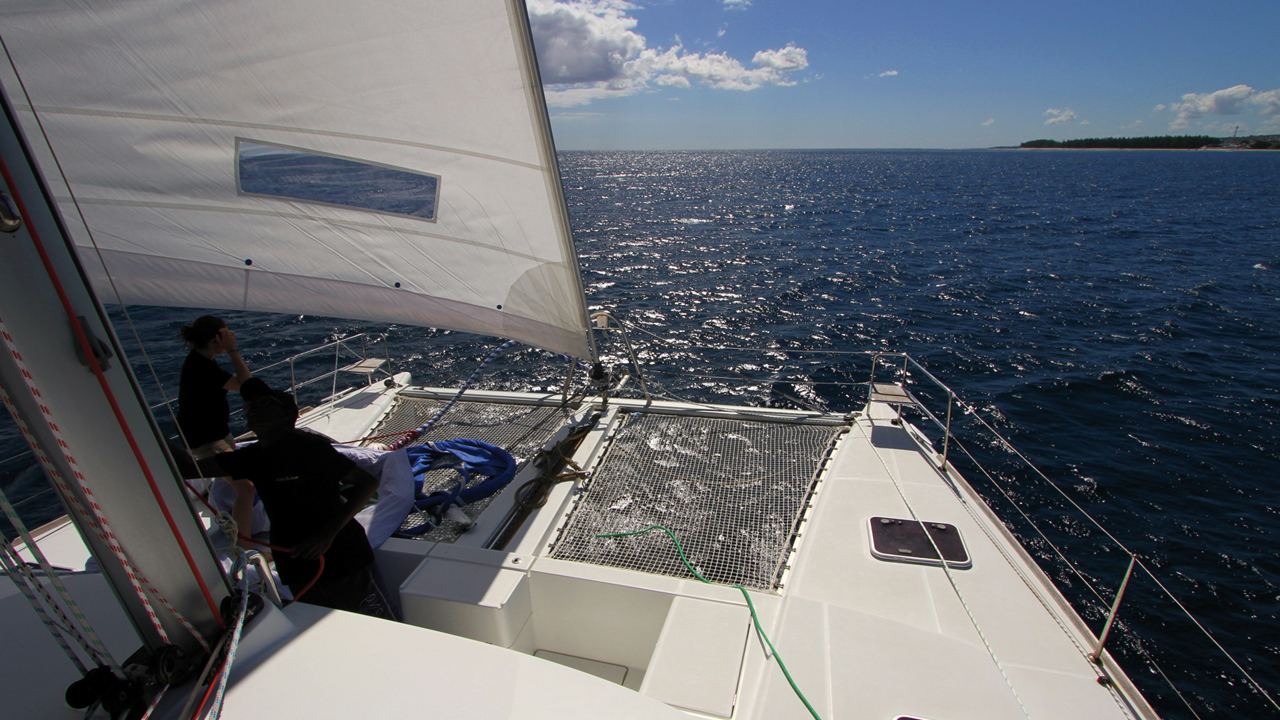
The gennaker, furled but left in place, creates significant windage and a disruption to the airflow at the leading edge of the genoa. The most efficient answer? Get the sail down and stowed away. Only get it out again when you’re ready to unfurl it!
9- An attentive helmsman
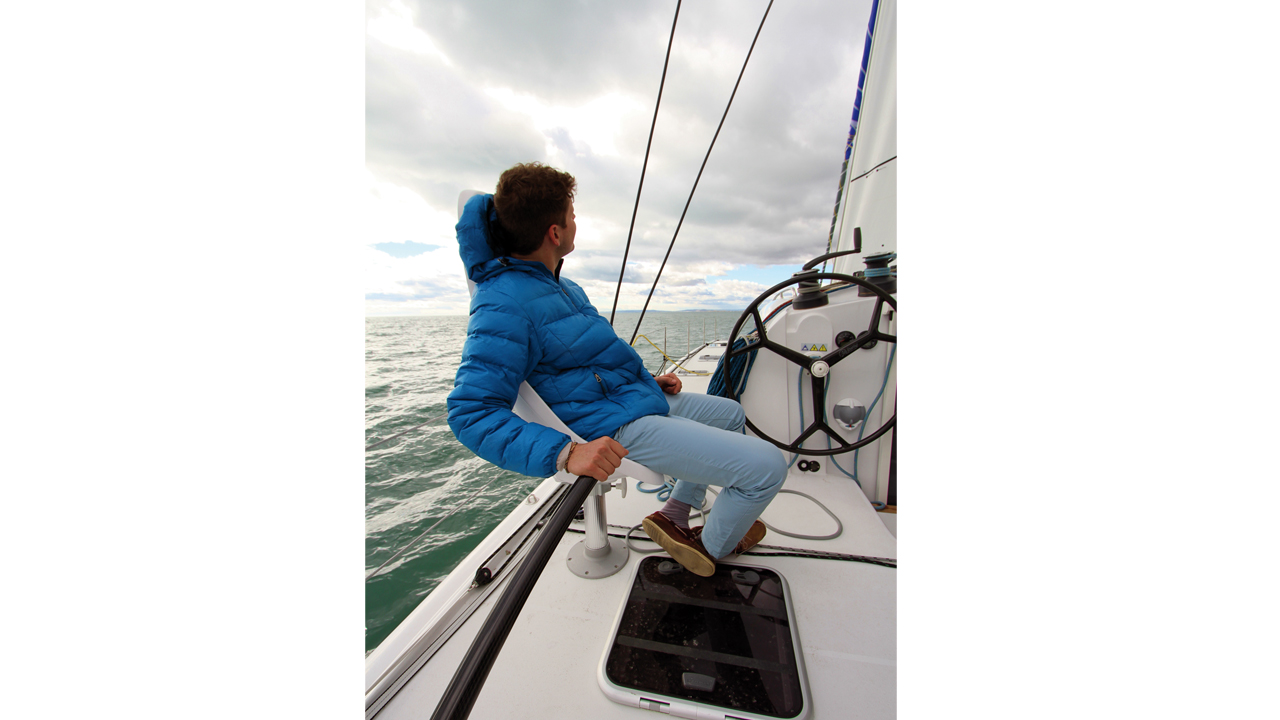
Helming upwind requires constant attention: acceleration created by apparent wind can quickly be lost. A good helmsman is in tune with the waves, his wind vane, his telltales and the instruments. And under autopilot, stay tuned as well!
10- Boat trim
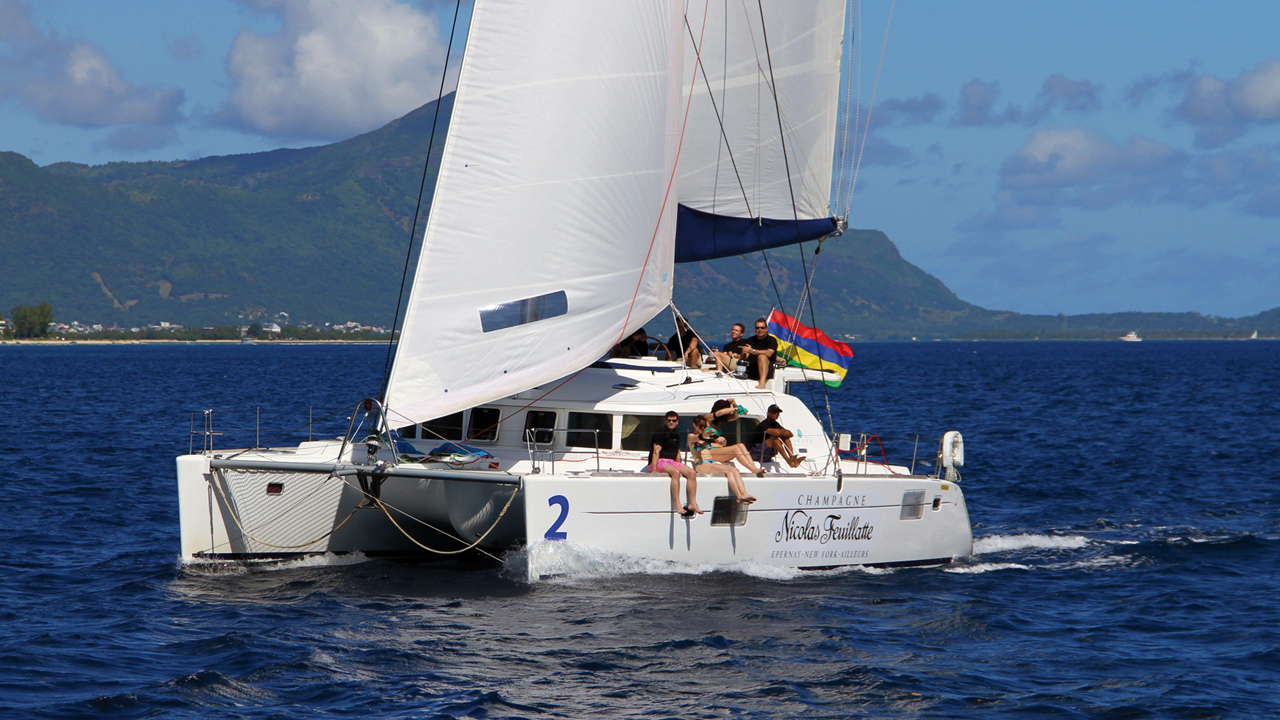
Upwind, it is essential to center weight as much as possible to reduce pitch. And when the conditions are manageable, the crew can participate in optimizing the trim of the boat: go to leeward in light airs and to windward in a breeze.
11- Sea state
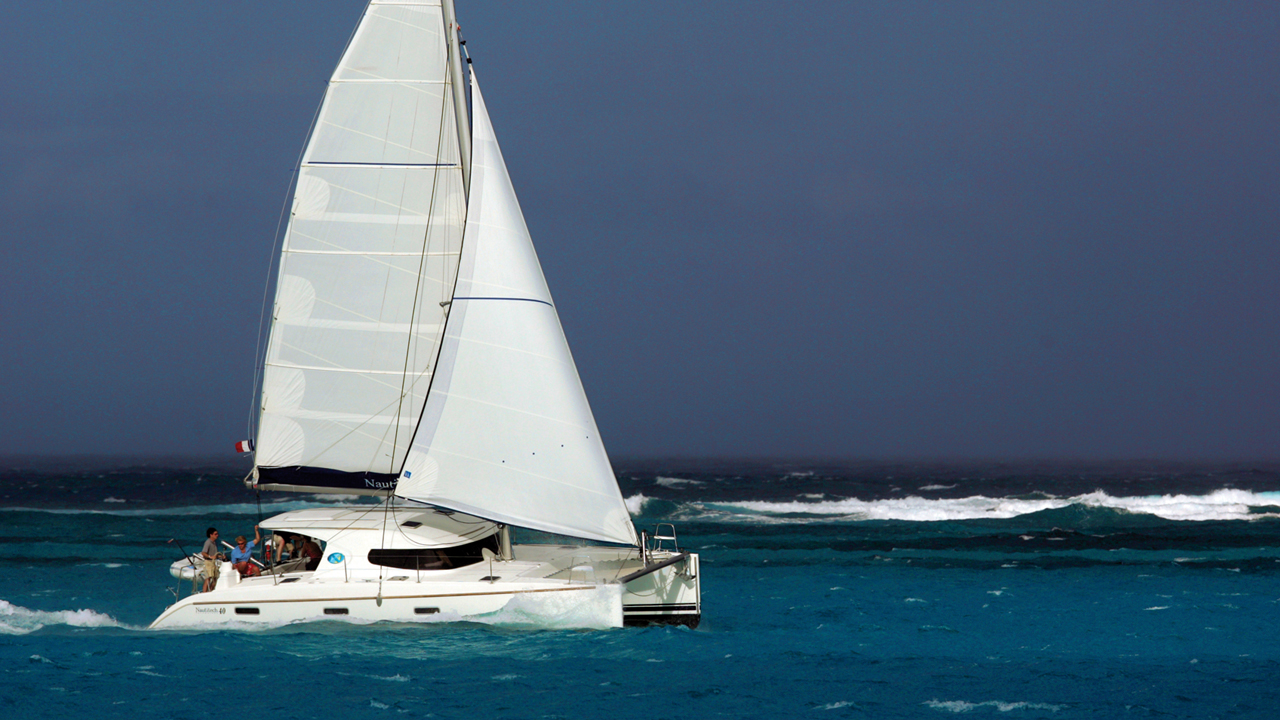
A careful examination of the water can often allow you to limit the effect of any chop. A headland, a bay, an island, a coral reef - they are all natural protection: enjoy a quieter sea for more comfort and better performance!
12- Getting the tacks right
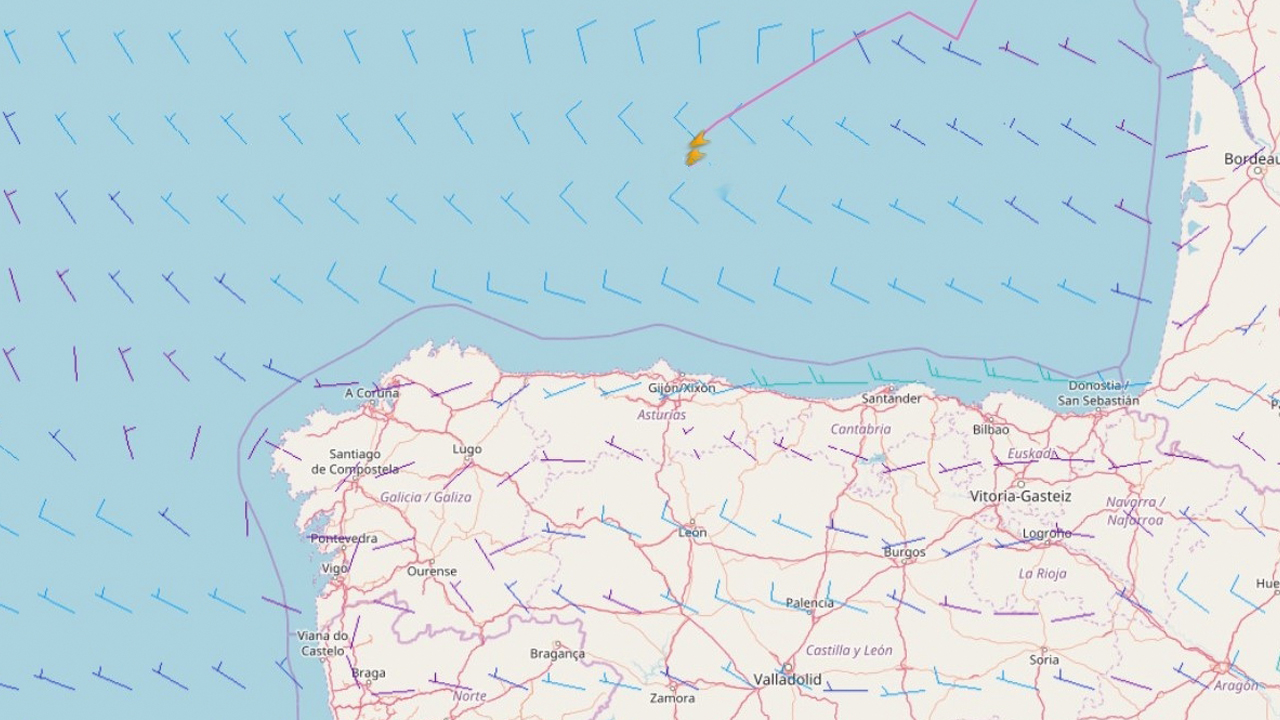
Offshore, a regular review of the weather forecast can limit the need for beating. If the forecast wind is turning to the right, start by sailing on port tack, ready to turn at the moment the wind shifts. And starboard tack if it is giving left.
13- The engine as a backup
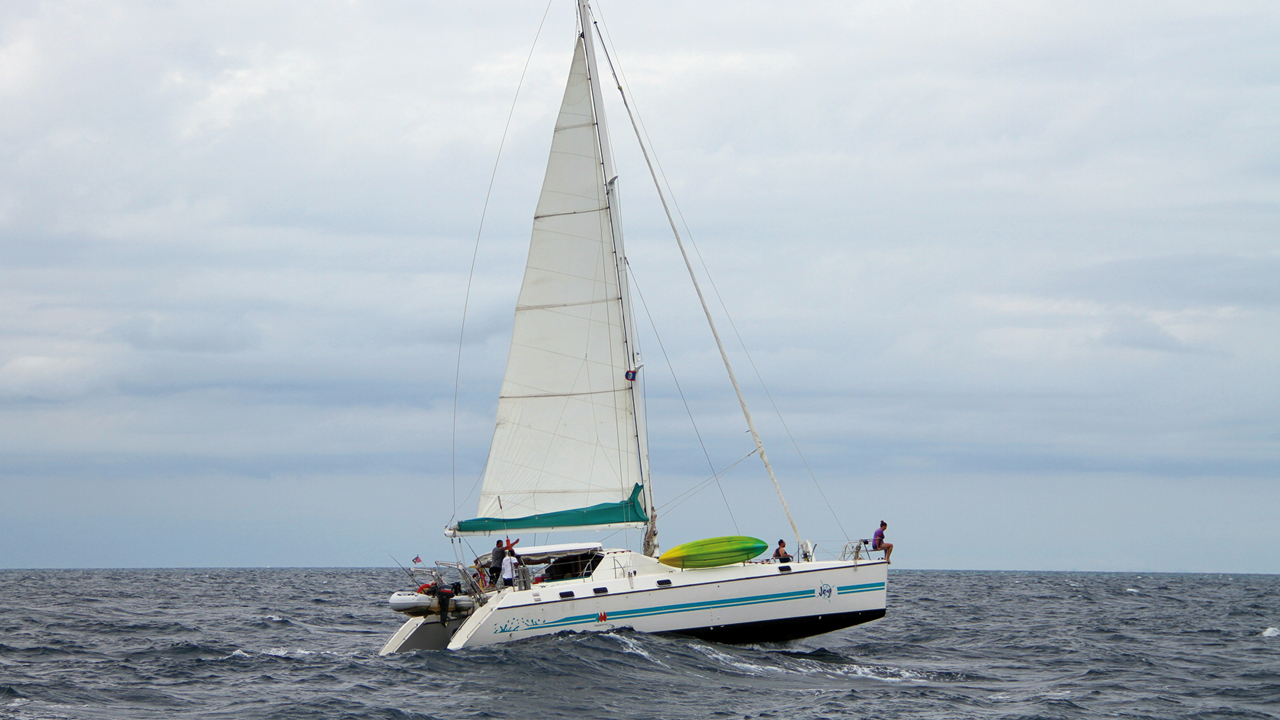
There’s no shame in relying on the engine if you’re cruising! When the wind is poorly established and there’s a well-formed sea, windward work is facilitated by starting the engine downwind at low speed. Combined with a flat mainsail, you can obtain a good helm balance, the correct speed, minimum fuel consumption and... recharge the batteries!