15 years around the world, 3 boats, 3 children and several thousand miles
Having left as a couple in 2003 for a 3-year trip - just the two of them and in a monohull – Matthieu and Soizic have had 3 boats, 3 children and today are still sailing around the world. The story of a happy, adventurous life!
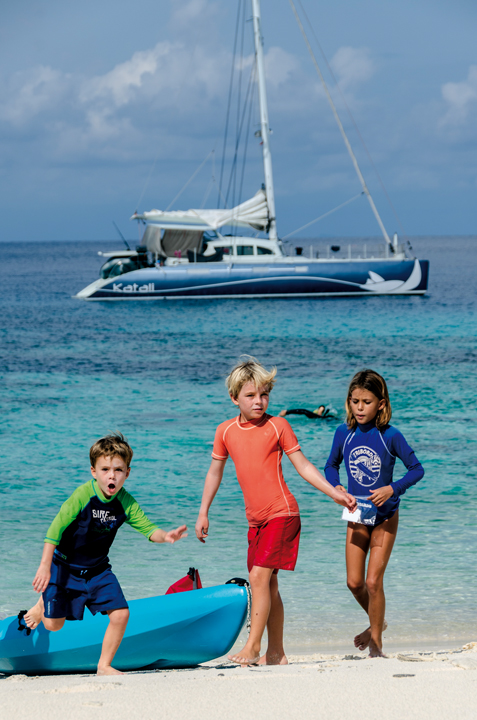
Ah, how beautiful we were, on that warm September 1st 2003 (17°C, a heat wave in Quimper), on the deck of our lovely ketch. The boat, 38 feet of solid mahogany, 38 years old, and us, young, in love and under 30, still finding it hard to believe that we had succeeded in realizing our dream of setting off so early in our life, which had hardly started.
From that to believing that 15 years later we would still be on the deck of a boat, a few thousand miles further on, would not even have seemed conceivable. Yet we are there.
We started two fairly successful careers before we realized several things: that life slips by very quickly, that we have quickly done the rounds of it if we are satisfied with toeing the line, and that it’s best to empty your bank account before Alzheimer’s means you can’t remember your bank card codes. After 5 years of a quick bit of professional life, we let our employers go, emptied our accounts, and bought Hildi, a little gem from 1965, with varnished wood and a teak deck, which was sleeping in the Mediterranean, just waiting for some intrepid Bretons to set off for an adventure.
The itinerary was quite classical: round the world in 3 years and after, we had promised our families we would go back to our safe, well-ordered jobs, with pension contributions, health insurance, the works.
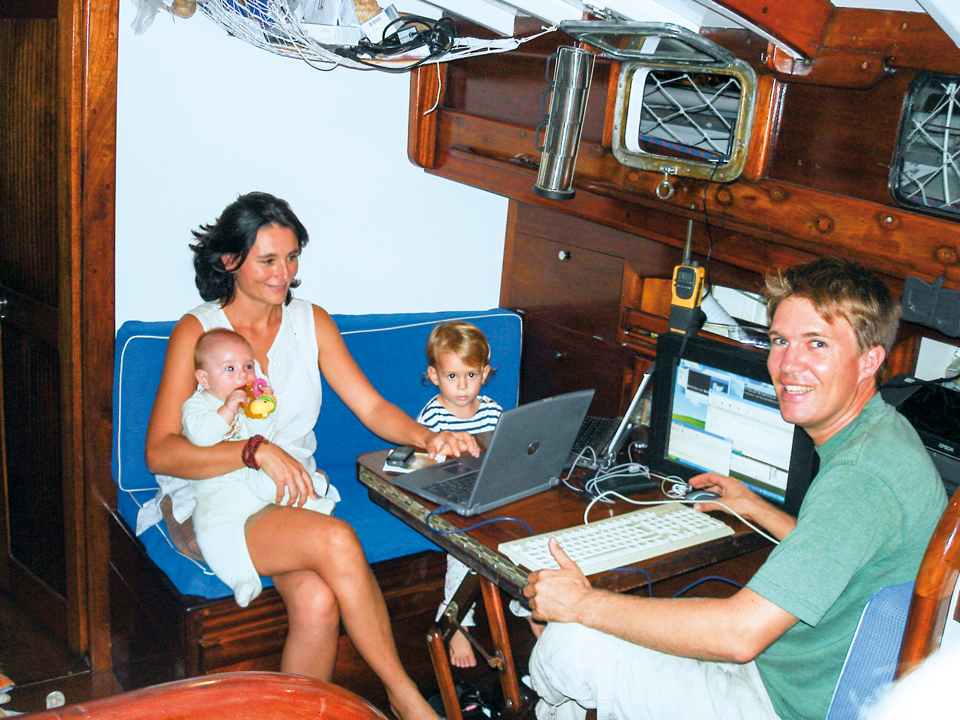
But a program only exists to be modified, revised, corrected... and we quickly realized that we were going too fast. Too many stages hardly skimmed over, encounters cut short, anchorages hardly glimpsed, countries hardly visited… It took our good old original Mercedes engine dying with a horrible rattle between Panama and the Galapagos, for us to decide finally to slow down, drop anchor, take our time, and start a family.
A few months’ break in Panama, in 2006, to give Hildi a new engine, and on the island of Fatu Hiva, in the Marquesas, we went beyond the point of no return, with the conception of our first child, Lola, who was born in Papeete 9 months later, joined then by Timeo, in 2008.
The situation was becoming critical: aboard Hildi there was just one cabin. Put into it tired parents, 2 bawling cherubs, the headquarters of a company – we have to keep the money coming in – stir it all on the waves of a Polynesian lagoon, and out comes an incredible wish to set off again aboard a boat which measures up to this wish for repopulation of the blue planet.
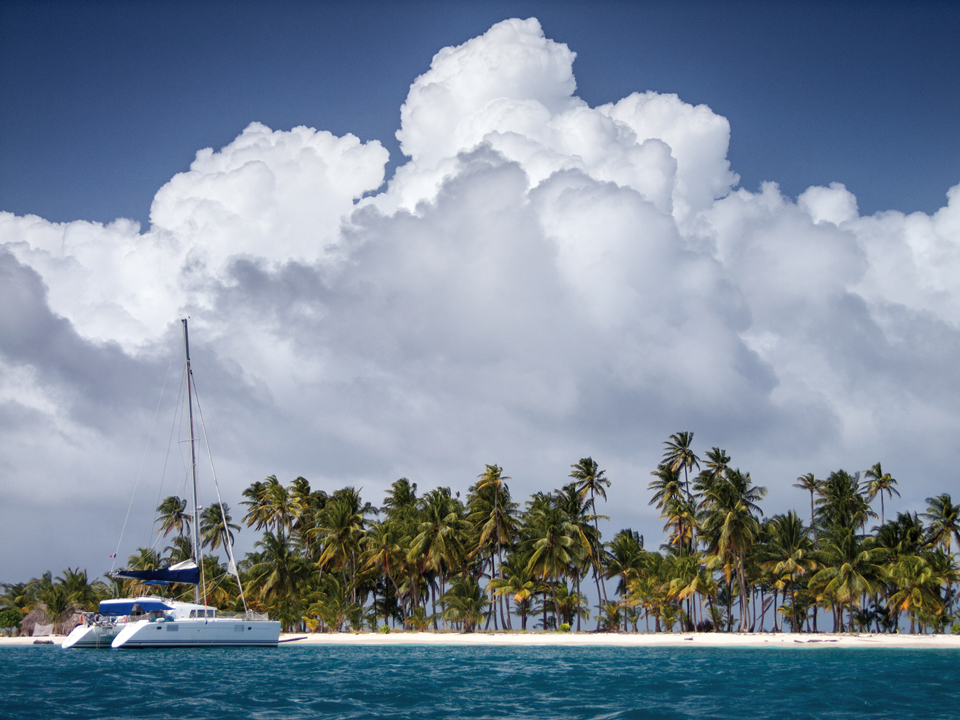
But which boat? At the start of the project, we dreamt of a 50-foot monohull, with a wide stern, numerous cabins and elegant lines. But during our voyage half-way round the world, we had met the lucky owners of multihulls, whether on their production family ‘caravan’, a fast Lerouge design in carbon, or a Wharram fixed up with bamboo crossbeams. And despite their differences, one thing was certain, that they would never again sail aboard a monohull. Because they all said to us 'if you try a cat, you'll like it'.
Our next boat will be Looping 50, built in a boatyard in India. While awaiting its construction – a much bigger adventure than we had imagined; the launch was planned for 2012, it will be carried out in 2014 – we have set off again in a Lagoon 440, to continue living our dream…
3 boats, 3 children, thousands of miles and the choice of taking advantage of life, quite simply!
Geoff Holt's Impossible Dream
Geoff is severely disabled, since an accident. But he dreamed of crossing the Atlantic with no assistance. Impossible? Don’t be so sure!
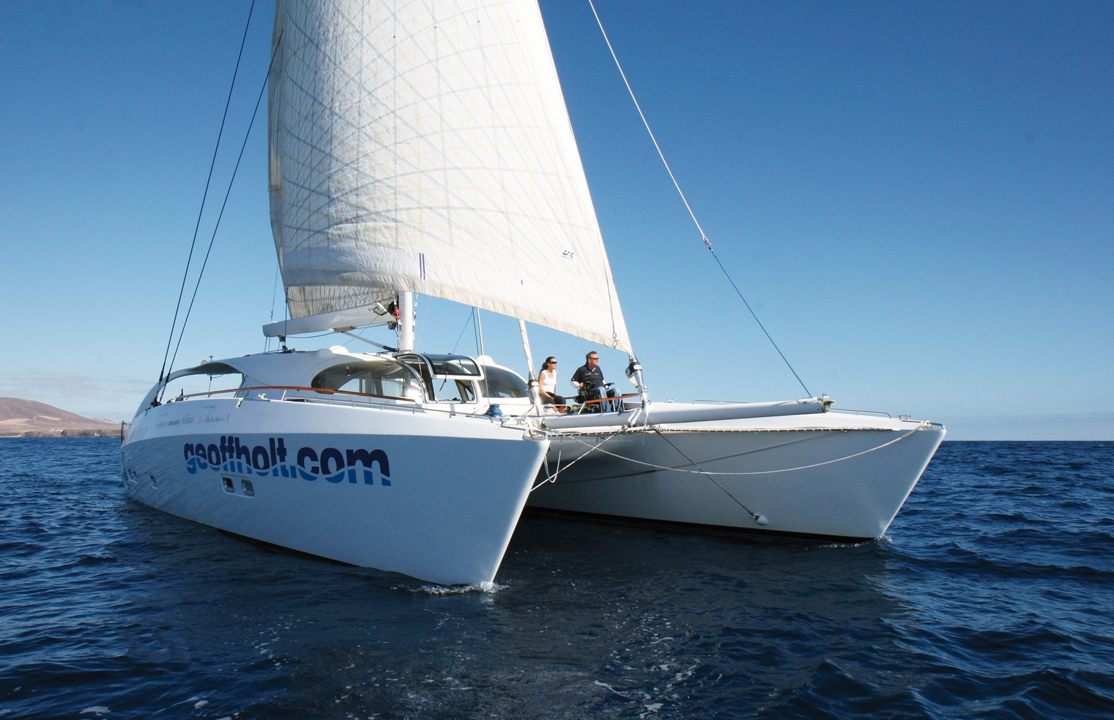
Aged 18, in his prime, a fateful dive into the surf on a Caribbean beach axed any future plans he may have had as a yachtsman by breaking the sixth vertebra down his spine, below the neck. The result was quadriplegia: paralysis of all four limbs, both arms and both legs.
In his teens, Geoff, now 43, made three Atlantic crossings, crewing boat deliveries back and forth. He spent a chunk of childhood in Hamble and salt water was beginning to pump around his system. His accident put paid to that career, so he worked for Deloittes and later in antiques to make ends meet.
Eventually, the salt in his blood saw him sail around Britain in 2007 aboard a tiny 15ft Challenger trimaran, an impressive feat for Geoff and his entourage, including wife Elaine and son Tim. Then the subtle muse that we all know as sailors whispered in his ear – hmmm, wouldn’t it be great to sail across the Atlantic...
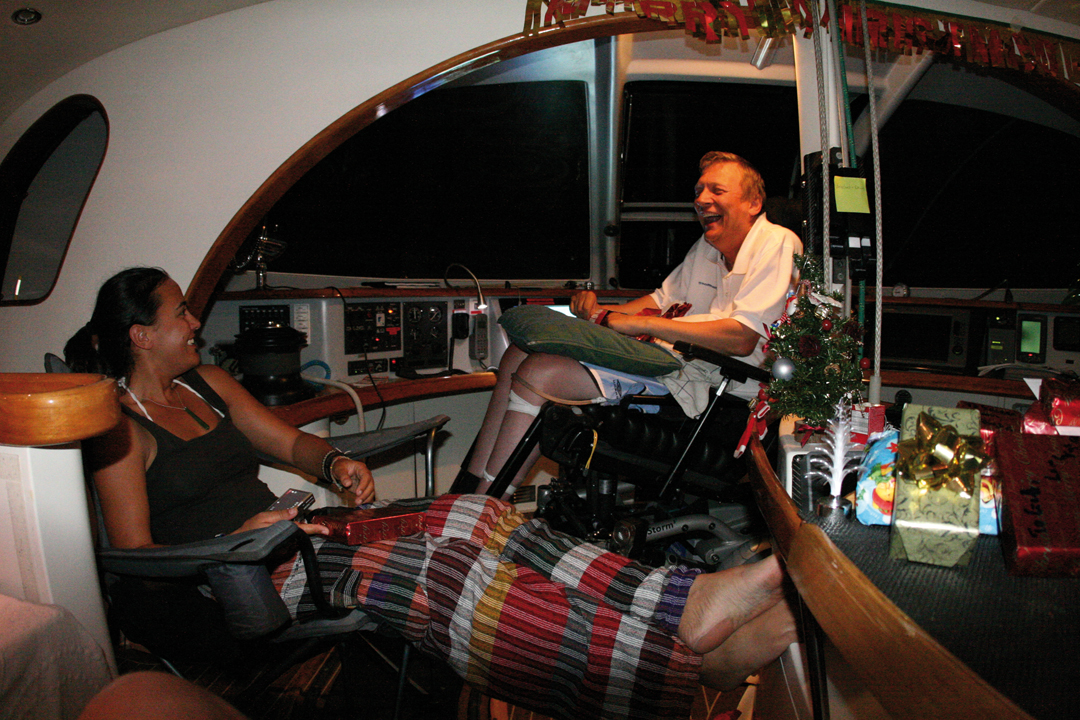
We set off from the Canary Islands on December 10, 2009 – the quadriplegic, his carer and the cameraman. Our eta was 17 days and the theory was that we would be whistled along on this beautiful 60ft cat by the swift and steady Trade Winds, but in reality the wind beat us on the nose, the engines clogged up with filthy fuel, our wind indicator wouldn’t work and we took a month, spending Christmas and New Year at sea.
Geoff was determined to do the sailing himself, and he specifically recruited Susana for her complete lack of sailing experience. Ah Geoff. What a genius plan... Susana’s role, which is normally carried out by Geoff’s wife Elaine, was to lift Geoff in and out of his chair, wash, cook, look after his personal needs, and so on.
This was a challenging job for anyone, but in all my oceans I’ve never come across a crewmate who suffered so long from sea sickness. The fact that Susana had to become chief engineer, upside down in both port and starboard engines, sucking fuel through pipes and bleeding the bleeding engines for the first week may not have helped.
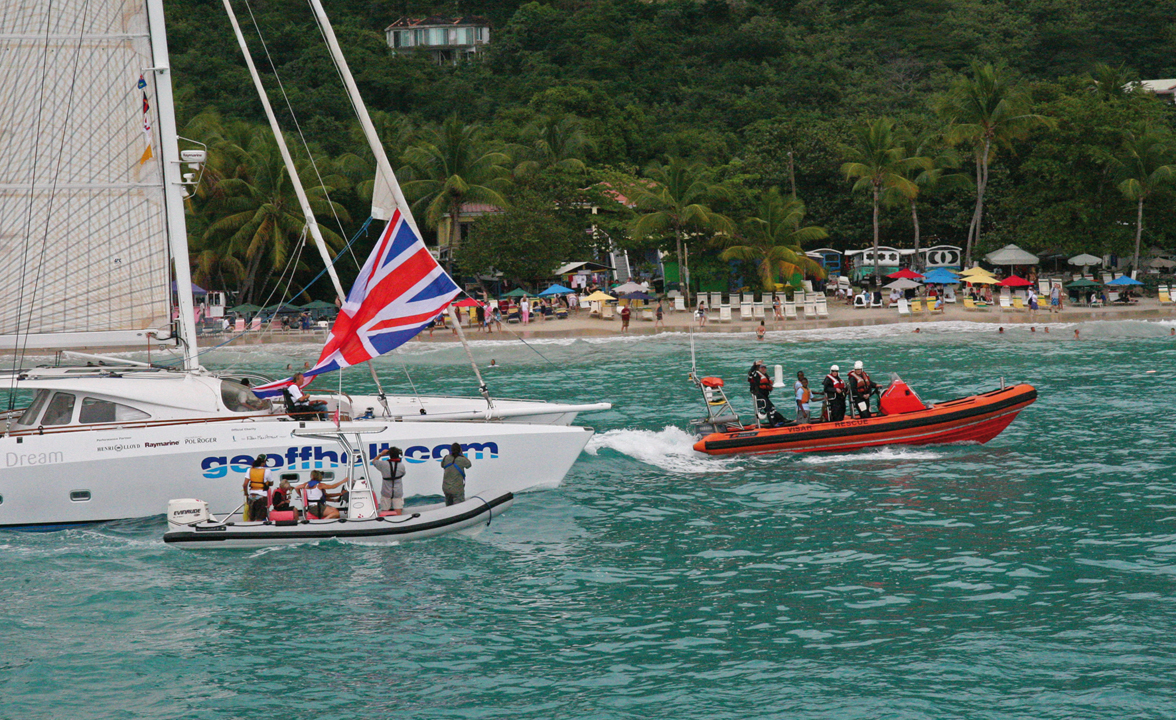
Eventually, after the diversions, delays, overall lack of wind and a month of slog, we made the destination of Cane Garden Bay in Tortola. This was Geoff’s moment. He was a bag of adrenaline, emotion, relief and delight at seeing his family. Boats tooted and crowds cheered as Geoff circled just off the beach – that most significant landmark in his life.
“Incredible,” said Geoff. “25 years in the making, a year in the planning, and what a marvellous reception. What an emotional return to Cane Garden Bay. It feels like a celebration of life. What a great finish to a great project.”
A three-hulled family trip in the Mediterranean
Big trips are not just the preserve of big boats… The proof being this family adventure where, for six months in the Mediterranean, Manue, Lucas, Charlotte and Nico lived aboard a 7.5 meter trailable trimaran.
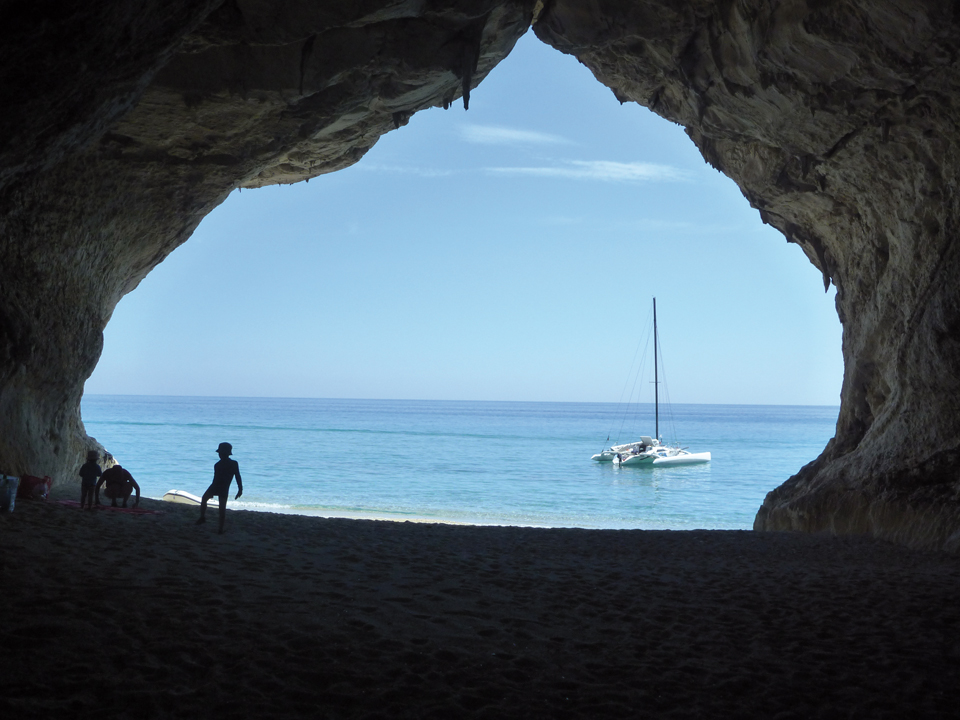
In 2008 when Lucas was three months old, we spent a month in Corsica on an Astus 20, which we had towed behind our car all the way from Brittany. When Charlotte was born in 2010 we traded the little 20 foot tri for the next model up, the Astus 22.
With this little cruiser, we were able to achieve our first big passage, a round-trip from Cannes to Corsica and back. Bit by bit our range increased, but we have to say that those three summer weeks would be too short for going any further.
In 2012 I went to collect Larus from Port Saint Louis du Rhône. Larus is an F25A, a 7.5 meter folding trailable trimaran, 6 meters in the beam, weighing 1150kg, and built by an English yard to Farrier plans.
We set off for Greece on April 9th 2013. Another challenge awaited the crew of Larus during the next six months: to live and keep ourselves in a space smaller than an attic room. This shelter would have to double up as a bedroom, dining room, kitchen, bathroom, restroom… It goes without saying that we didn’t have a fridge, and for the toilet, just a bucket. As for a shower? A garden sprayer which pumped the minimum amount of water, just enough to get the salt off. For being more economical with water, you can’t get better than with a wash-cloth…
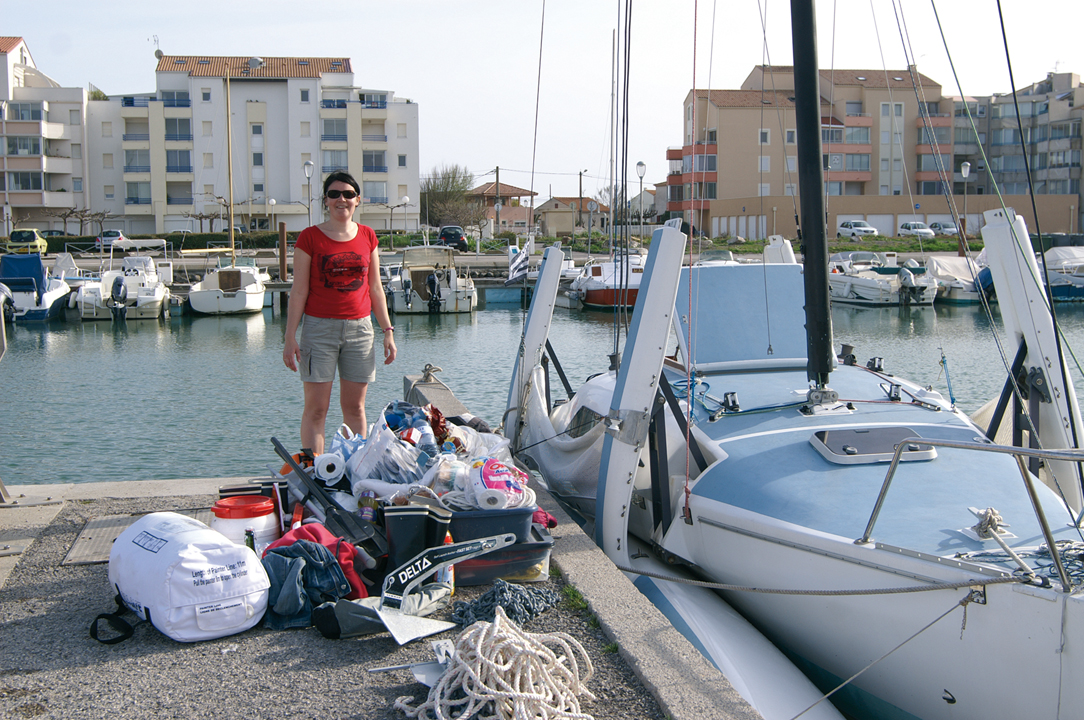
And what of the voyage in all this? Only enjoyment, but watch out, that doesn’t mean it’s always plain sailing! The Mediterranean showed itself to be all that I had worried about before we set off: cunning, unpredictable, spell-binding yet frustrating… The first few miles along the French and Sardinian coasts were swallowed up under spinnaker, but in the dampness of early spring. During May in Sicily and the aptly named Aeolian Islands (in French, Eoliennes, which means a wind generator), there was a Force 9 gale every three days… a careful eye need to be kept on the weather, and finding sheltered anchorages was always a priority.
After going quickly through southern Italy, which we really didn’t enjoy, we arrived in western Greece at the beginning of June. But the main goal was the Cyclades, so our route took us to the Gulf of Corinth and its famous canal. Once again we had to contend with rather ferocious weather inside the gulf, at 3pm, 40 knots became the daily routine, and the sea resembled a series of closely- spaced concrete block walls. Fortunately we were downwind during all this chaos, as beating into it would not have been an option. While we stopped we met some great crews who were also waiting for a calm period to resume their travels.
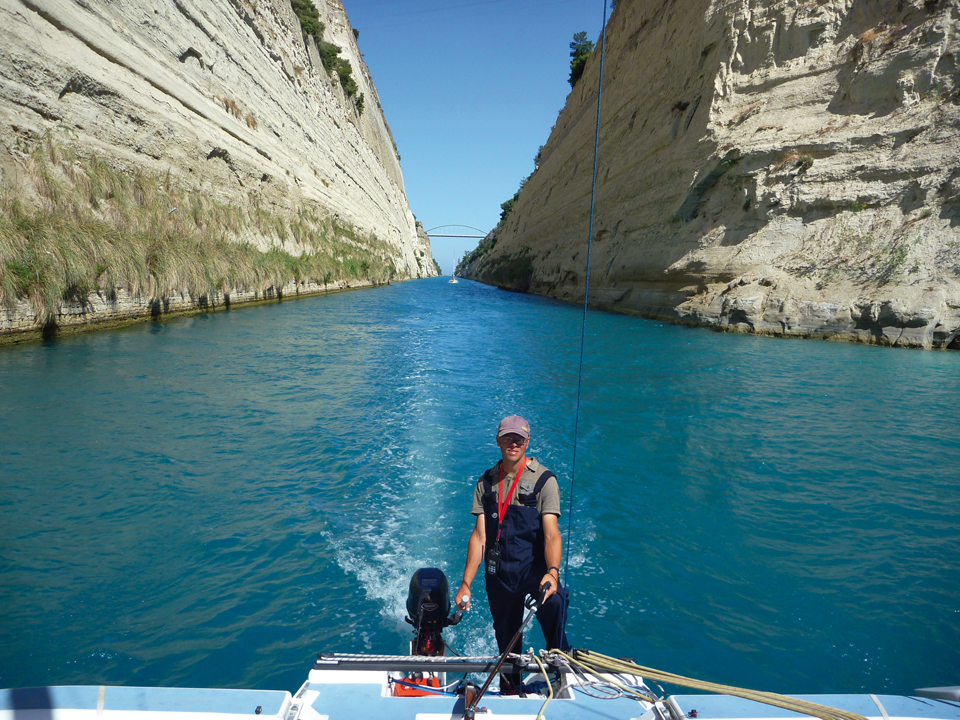
Once, not without a certain amount of emotion, we were through the four miles of the Corinth Canal, we were finally in the Aegean, the sea we had been dreaming about for months in far-off Brittany. The Cyclades were ours!
We kept up the pace on the way back, but we also had some great stops. Sailing was sometimes from 5am to 10pm.
On September 7th Larus was out of the water and on the trailer. A gentle trip back across France, between camping and stopping with friends or family, was just the thing for us to get used to being on land again. Early October and everyone was back in their routines as if nothing had happened… but in our heads remains the joy of having shared and done it…
Tsunami: aboard a catamaran in the storm
The Tsunami which devastated the coasts of the Indian Ocean on 26th December 2004, was one of the most incredible and deadly disasters of the last 20 years. A tragedy which Gerard experienced aboard his Outremer, at Koh Lanta...
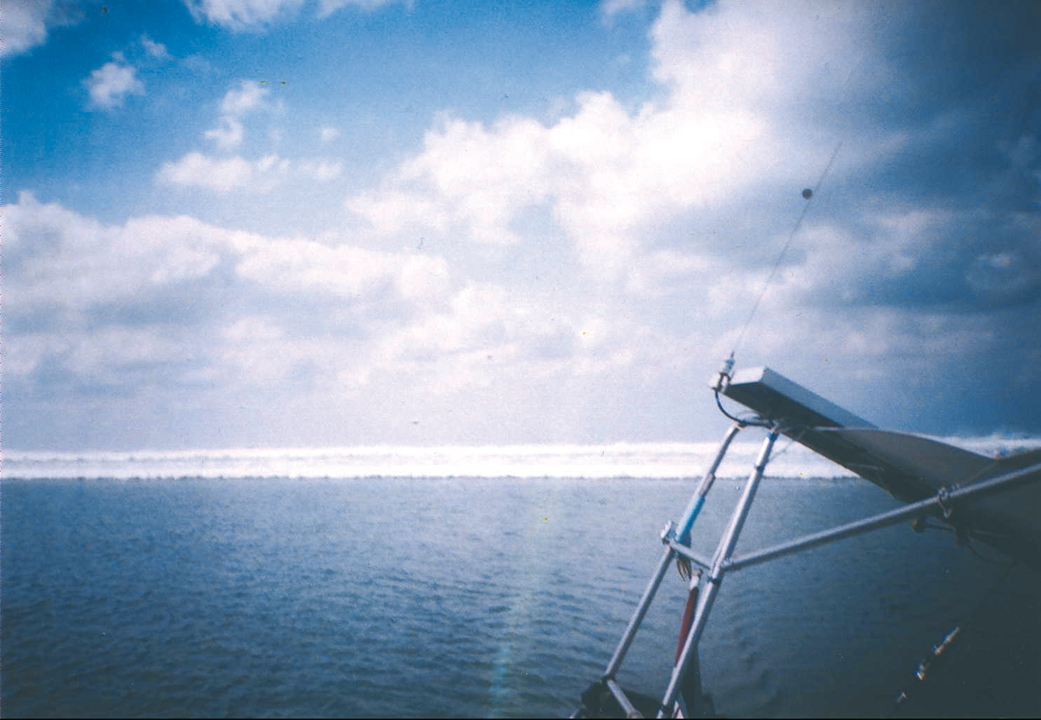
The island of Koh Lanta is situated about three hours’ sail from Phuket (Thailand), close to the two islands of Koh Phi Phi. Gérard decided to stop there to complete his provisions at the local market, which is held on Sundays.
There were five of them aboard the catamaran: Gérard, the owner, one of his friends, and three 15‑year‑old teenagers, members of the family... The weather was fine that day, and the Outremer was anchored about 200m from the beach, in 3.6m of water. The tidal range here is 2.1m. On the morning of 26th December, Gérard went to the market quite early: he had arranged to meet a Frenchman he had met the day before in a hotel, to take him out to visit the boat at 9.30am. As he returned, he admired the only other boat anchored in the bay, a superb Swan.
It was now 10.30am and it was at this moment that someone called the skipper: “Come and have a look, Gérard, it’s strange!”
In the distance, a series of breakers could be seen clearly. Gérard, who had already experienced tsunamis, understood the situation immediately. He looked back towards the beach and realised that it was now 200m wide, rather than its usual 100m (which meant that the sea had already dropped by 1 to 2.5m). In less than two minutes, the first breaker would reach them. Weighing the anchor would have taken a bit more than 5 minutes. Too long... Immediately, Gérard ordered the dinghy to be moved to the side of the boat, so it would not hinder the manoeuvres, and so its line would not get caught in one of the propellers. But an exceptional 6-knot ebb current made the manoeuvre very difficult. It took four of them to tie the dinghy to the side of the boat. Gérard then started the engines. The wave arrived from astern... Before the impact, Gérard moved the boat forward about ten metres. Then he put the engines astern at 2,000 rpm and everyone shut themselves in the catamaran! This first wave hit the aft crossbeam, which is nevertheless 2 metres above the water level. In a few minutes, the catamaran suffered the assault of six successive waves: three of between 1 and 2.5 metres, and three of at least 3.5m. After each wave, the boat hit the bottom violently (it was nevertheless anchored in 3.6m of water...). The cat hit flat, but there were no worrying cracks. On the other hand, the Swan was not so lucky: after one wave, it hit the bottom violently, and was laid flat on its keel. The next wave took the mast...
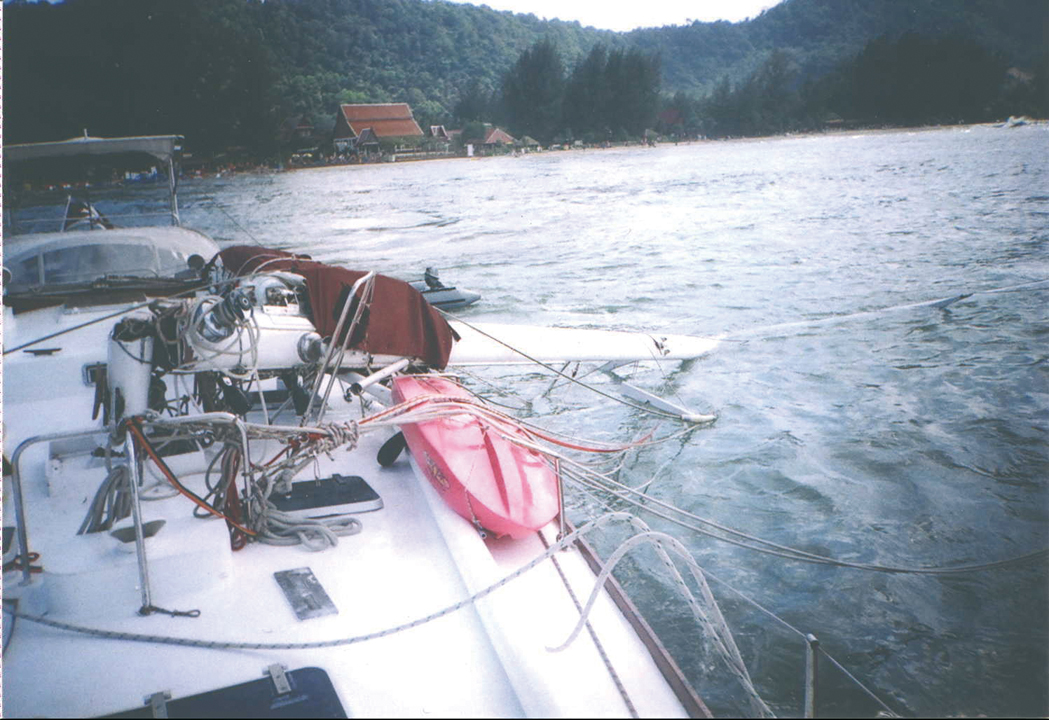
After this impressive series of waves, the skipper decided to go and anchor offshore, in case of a repetition. The dinghy had disappeared. The anchor was weighed in a few minutes, then...another wave appeared: this one was coming from the north-west (whilst the first six had come from the south-west). This time the skipper was able to turn the boat to take the waves head on; he connected the automatic pilot, put the engines full ahead and ran to shut himself inside the boat. This wave was the most impressive: at least 4.5m high. The Outremer 64 went through this wave with no problems, then went off to anchor in about 15 metres of water, enough to ensure that it would no longer suffer the assaults of possible new waves...
Sailing4handicaps project Saint Lucia: work successfully concluded!
Elena and Wojtek are sailing round the world on their Lagoon 410. A great trip for sure, but also a great mission: to help amputees, by making, on board, prosthetic limbs…
It all started some years ago on a small lake in Cologne. I, Elena, an Italian professional high jumper who moved to Germany searching for a new training accommodation, was looking in the eyes of my, at that time, new boyfriend Wojtek Czyz, four times Paralympic Champion in track and field who was close to end his career after competing in the Paralympic Games in London. On the way to become a professional soccer player, during a match, he suffered a serious injury which leaded to the amputation of his leg. Thanks to his strength and to the support of many people around him, he made his way back to life and to sport, becoming the most successful Paralympic athlete in Germany, and still holding this record.
While sitting and watching the lake, Wojtek told me that his dream in life was to make a circumnavigation once he finished his sporting career and I immediately offered to go with him and share this dream. He couldn’t do anything else but laugh, since, till that moment, I had never been on a boat... but that was not all: Wojtek belived in me and we started to talk about not only sailing around the world, but also trying to help amputees who had been less fortunate than he had. After long talks we decided to set up a non-profit association called Sailing4handicaps, whose aim was to perform a circumnavigation on a sailing boat and build prosthetics on board, to donate to people in need all over the world.
The first big appointment was in Morocco, where, at the end of October, we built up 15 prosthetics and reported a big success for sailing4handicaps.
Then we crossed the Atlantic and arrived in Saint Lucia.
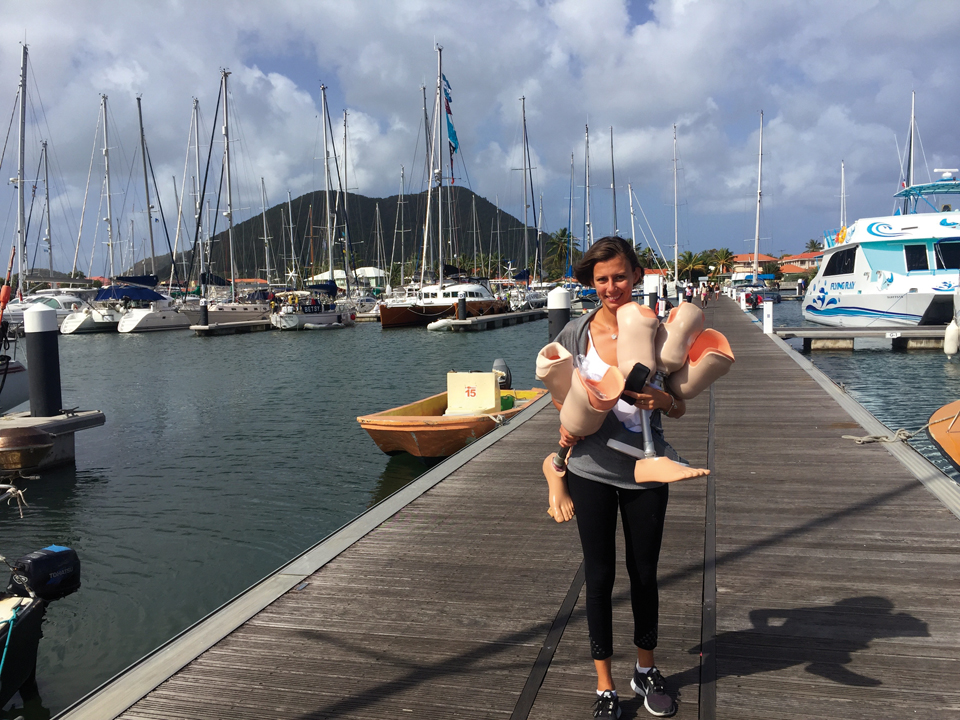
Despite Saint Lucia being famous for tourists, and sailors and divers from all over the world finding an enchanting place to spend their best times, poverty and diabetes are affecting the much of the population resulting in a great number of amputees.
After one month meeting amputees, collecting every kind of information possible, taking pictures and preparing, we finally could order all the materials needed and wait for our orthopedic technician to join us.
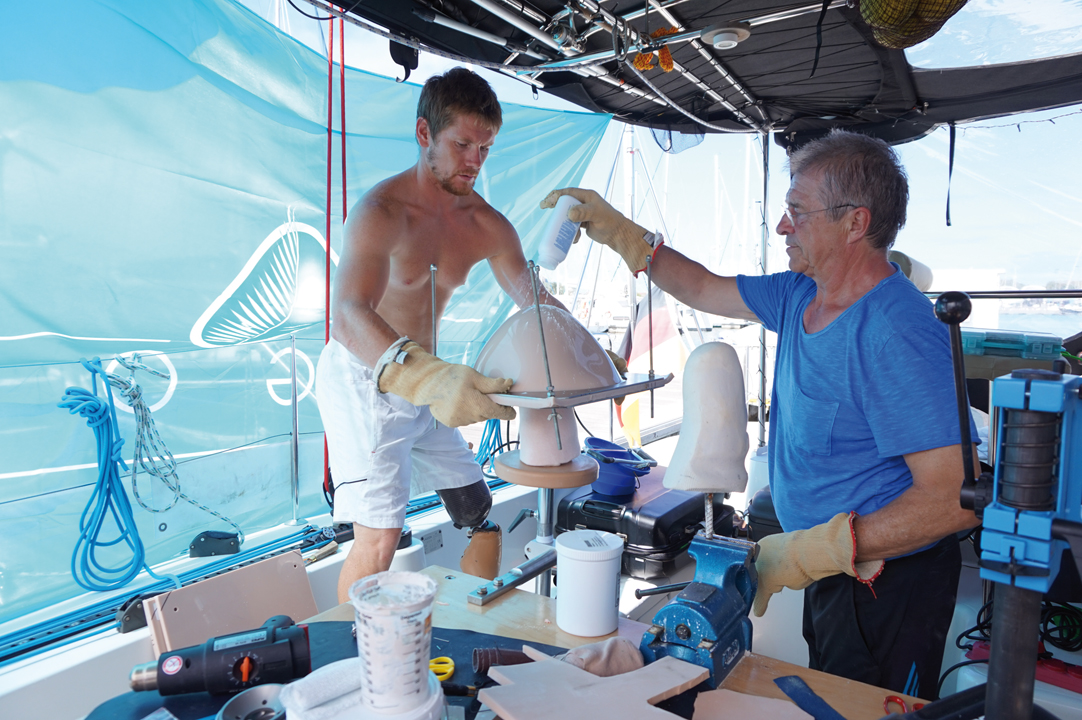
The subsequent work had been performed completely on board "Imagine". In Morocco we had the big fortune to do all the "dirty jobs" with Plaster of Paris (which we use to fill the mold to get a copy of the stamps) in a workshop ashore, but this time we really had to do everything in our cockpit, transforming "Imagine" from a great sailing catamaran to a messy workshop covered with white, sticky powder. But once again we had a proof of how much our catamaran can be strong and multi-purpose and we could work without any problem. Building, hammering, sanding, day after day the prosthetics took shape and the cockpit started to be full of legs.
After two weeks we managed to build up all of the ten prosthetics, make every patient independent again and able to walk and, overall, to sensitize the government to the problem of amputees on the island, pushing them to move forward in the building of a new workshop and training of new orthopedic technicians.
If you want to follow the association:
Banana: a magical stopover in the Chagos Archipelago!
In early 2010, Sophie and her family set out from South Africa on a voyage around the world. Having almost completed the circuit, Banana is now in the Chagos Archipelago: a little corner of paradise which is a must-see!
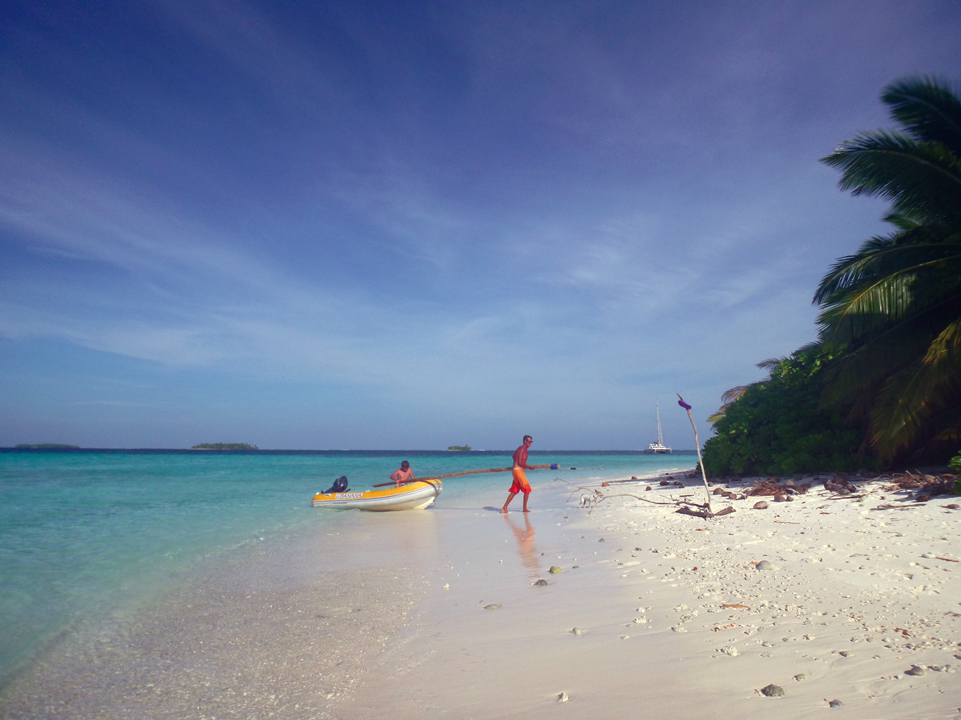
Let’s start by setting the scene: the mythical Chagos are worth a look.
And to better understand why, we need to look at a bit of the history. It’s a story of a picture-postcard archipelago, a dot on the world map somewhere in the Indian Ocean, south of the Maldives: tropical islands, lagoons brimming with fish, white sandy beaches scattered with palm trees.
It’s a story of the descendants of slaves from Mozambique and Madagascar, brought to these islands by French ships to harvest copra, used for making coconut oil. The history of these islanders could have stopped at that as the British Empire (which had annexed the Chagos following the Napoleonic Wars) decided in the 1960s to construct a military base at Diego Garcia and to rent it to the United States. Aircraft from the US Air Force used the base for the bombing raids on Afghanistan and Iraq. Seemingly a military installation this strategic needs to be deemed a total secret. And this is why between 1966 and 1973, the inhabitants of the Chagos were deported to Mauritius, put ashore on the dock at Port Louis, without explanation and without hope of returning.
With the problem of the locals resolved, a solution still need to be found to dissuade sailors from stopping there too long. Sailors who were attracted by this dream stopover, perfectly located on the route between South-East Asia and Africa. The BIOT (British Indian Ocean Territory) therefore set up a particularly cumbersome set of regulations, and penalties for not adhering to them, in order to discourage even the keenest mariners who had the urge to stop there.
But here we are. Banana is eventually anchored off Boddam Island, and all the administrative hassles have evaporated, now we see the magic of this place. Everything here conjures up images of Robinson Crusoe: beaches, coconut trees (and their famous coconut crabs!), palm trees and a lagoon full of fish.
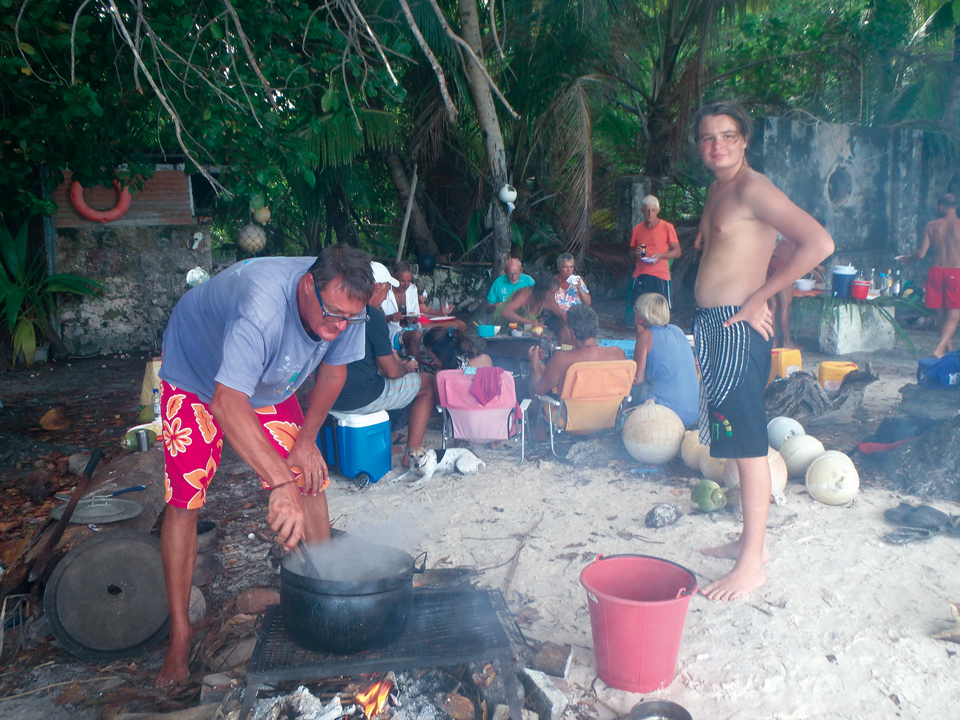
From April 10th through 25th, the dates we stopped there, the number of sailboats increased from 3 to 13. So a little micro-society set itself up, with all its rituals: fishing, harvesting, aperitifs, barbecues, and a little bit of DIY work around not only the remains left by three generations of Chagossians, such as the fresh-water well, so useful for showering and laundry, but also those left by visiting yachties: cooking pots of all shapes and sizes, volleyball net, chairs, hammocks… A strange feeling of having an island all to yourself, and total freedom.
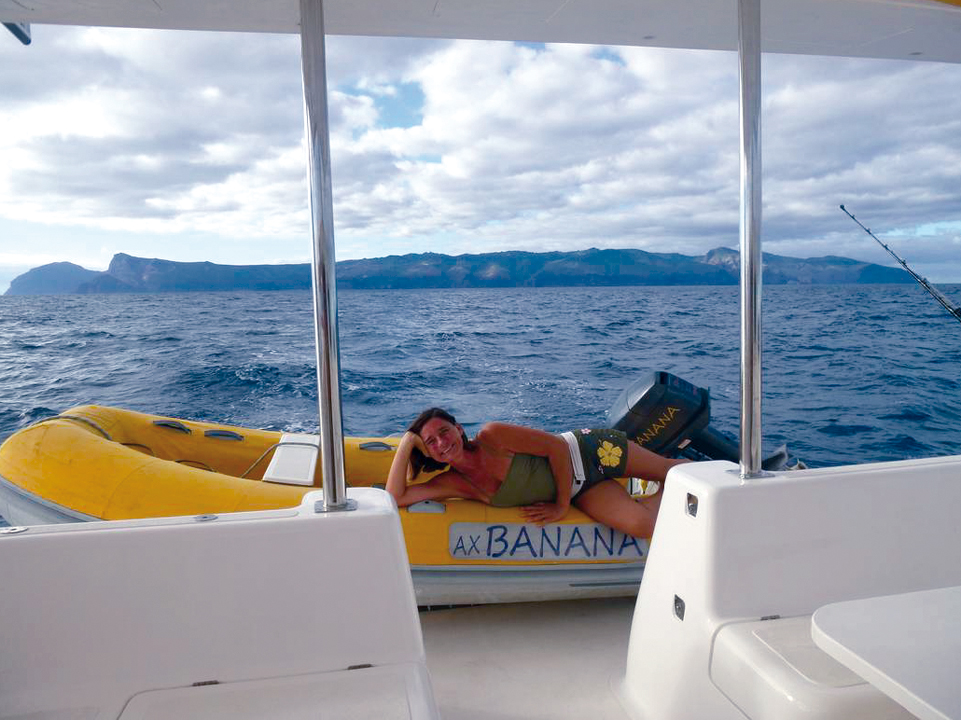
I say in total freedom, when in fact it’s total liberty which is more than a bit controlled. Many things are strictly prohibited. So, no feasting on crabs, nor landing in the coconut groves (for our 4 legged crew), but it’s really worth it. And even if it can seem a bit frustrating - life in the Chagos is not so easy!!! All good things must come to an end, indigestion from crabs, coconut, and coconut milk in every sauce being the most annoying, not to mention the stock of beers reaching a critical level, we are closing the chapter on the Chagos, and setting a course for Rodrigues Island…
Cape Horn in a cruising cat
Imagine: leaving from New Zealand to go to Ushuaia, via Cape Horn, singlehanded and aboard a placid cruising catamaran... Madness? No, a dream realised by Philippe aboard Mowgli, before an incredible Patagonian odyssey as a family!
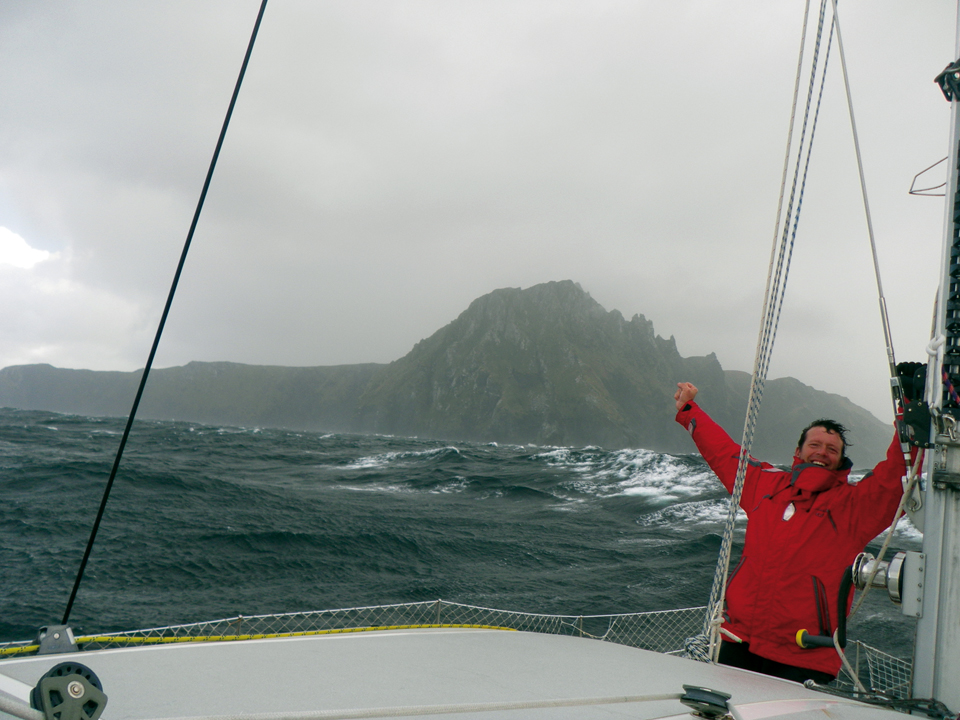
The scene must have been a bit like this: Mowgli - a Banana 43 -, was riding peacefully at anchor in the Whangarei anchorage, on the north coast of New Zealand, after sailing halfway round the world with the family. Emma, (Virginie and Philippe’s little girl), was resting in the cabin. The couple were enjoying the moment, in the presence of the beautiful, wild scenery. Suddenly Phillipe said: “It’s wonderful...it’s just like Patagonia! What if we went there?” Adding action to words, Phillipe got out a chart and explained: “It’s really simple; we sail due south as far as 45°S, to find the prevailing winds, then a course of 90° for 5,500 miles. Then all we have to do is round the Horn, and we’re in Ushuaia. We can’t go wrong; it’s straight on and turn left at the first penguin... What do you think?”
I can imagine the scene and the answer which must have followed! Finally, Philippe left singlehanded to live a dream he had had since he was 7 years old, leaving his wife and his daughter to join him by air...
The aim of the departure was to cross the Pacific peacefully singlehanded, but with a strong ally: Claude, a devoted router, who called twice a day to help the sailor deal with the elements. On the itinerary: a good month and a half’s sailing, to reach Ushuaia from New Zealand. But ‘the captain proposes, the sea disposes...’
After ten days at sea, Philippe sent an urgent e-mail to Virginia and his router, saying that he was suffering from violent back pains, accompanied by vomiting and fever. The diagnosis was final: renal colic in the middle of the Pacific!
After various contacts with the Centre de Consultation Médicale Maritime at Toulouse hospital and the Maritime Rescue Coordination Centre, the decision was taken to head for Tubuai in the Australes Islands, so he could be evacuated to Tahiti...
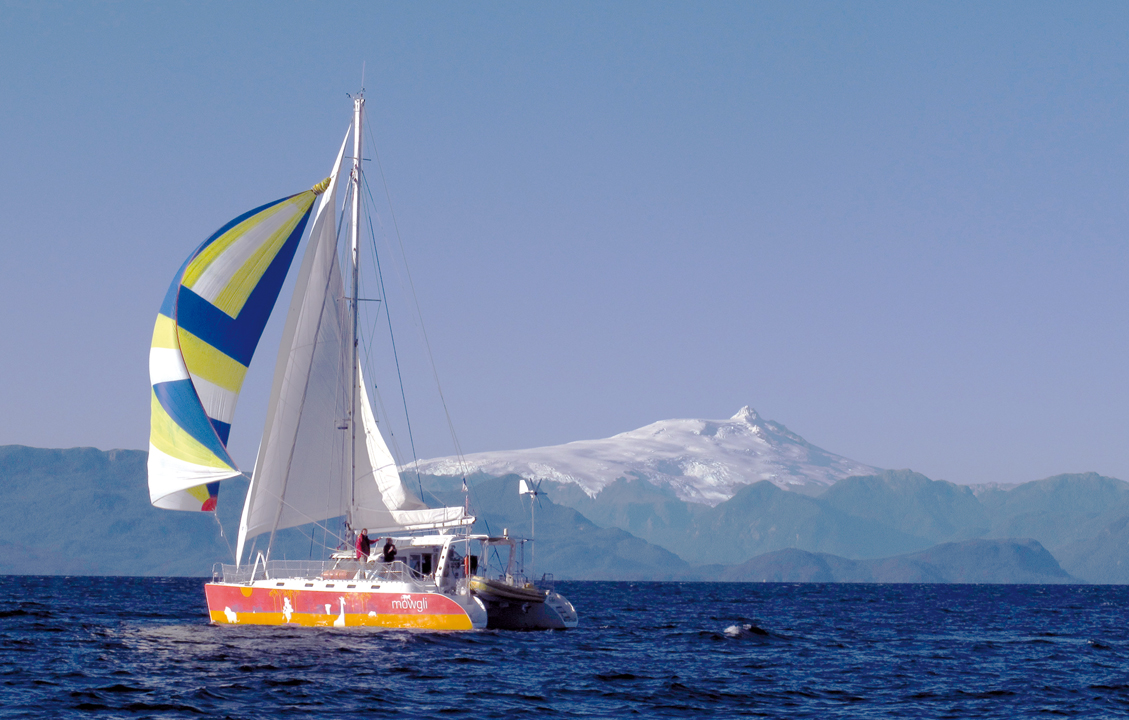
Saturday 4th December: Philippe finally touched land after 21 days sailing and ten worrying days. An ambulance was waiting for him, and the quay had been emptied to allow him to tie up his catamaran easily. From there, an aeroplane to Papeete to confirm the kidney stones had been evacuated and that the sailor was in good health, ready to set off again... No sooner said than done, it only took him a few days to tidy up, carry out 1 or 2 minor repairs, adapt 1 or 2 things, fill up with fuel and head off to sea, aiming for Cape Horn... Tireless!
In any case, the situation was a masterpiece of organisation, and both Philippe and Virginie are full of praise for everyone, the teams at the CCMM de Toulouse, the CROSS Cap Gris-Nez and MRCC Papeete.
The second part of this Pacific crossing was not free of adventures or damage. But finally, Philippe was able to realise his dream of rounding Cape Horn in his cruising catamaran, after crossing the Pacific singlehanded. A real sailor’s achievement, which can’t leave you indifferent...
After his singlehanded adventure, Phillip was joined by his crew for a family cruise, again aboard Mowgli, in an exceptional environment. “At the extreme borders of the world, there is a lost strip of land, which evokes the wildest dreams: Tierra del Fuego. Steppes, lakes, forests and glaciers make up the landscapes of this territory at the end of the Andes mountain range."
But this is another adventure...