


There’s nearly 400 ads on the website of your favorite magazine. And over 1,000 on the professional broker’s page. Which, at first glance, could make it complicated to choose. Length, weight, equipment, year, performance, number of cabins, heads, galley up or down, flybridge or not ... forget everything! Simplify the subject. In truth there are only two variables: program and budget. If you are clear on these two points, a first sort-through will very quickly take place and help you clear the horizon.
The first step is to take the time to define your specifications by answering ten questions:
What crew will be on board?
What experience?
What personalities?
What are your motivations?
Do you take your whole house with you or do you travel light?
Are you more contemplative or sporty?
Are you a fan of comfort or would you settle for the bare minimum?
Are you a talented handyman, or allergic to screwdrivers?
How long will you sail each season?
In which areas?
In what climate?
And a difficult and surprising question maybe at this point, but how long do you plan to keep your future boat before reselling it?
Are you starting to see the picture a little more clearly? A second sweep will further clarify your horizon. And then you need to determine the budget. If it was unlimited, probably you would be more tempted by the purchase of a new boat, to the precise specifications of what you want. Whatever your budget, it's important to define your limits. The temptation is to always spend a little more. But according to the editor’s mantra, "The best boat is first and foremost the one you can afford". Which means afford to buy AND enjoy. So don’t get yourself into debt for life... and not be able to go sailing. Not to mention that a cash reserve will be required to deal with daily expenses, the maintenance, and the inevitable small technical additions that you will discover to be essential or that you will treat yourself to.
So, with these criteria being defined, the time has come to make an initial selection and to check out the first models on the list. Multihulls World, classified ads websites between private individuals, websites for professional brokers, builders, and word of mouth... all these means are good! An email or a phone call will give a first impression: degree of responsiveness, accuracy of responses, knowledge of the boat and, very importantly, friendliness. In any case, you need to be coming away from this first contact with an idea of the history of the boat, a detailed inventory and a very complete photo report. So far, so good? But, by the way, where is this beautiful ship moored? And where are you ready to go for the boat of your dreams? Indeed, airplanes make it possible to go see boats anywhere in the world which are at an affordable price, and those prices can be very attractive in certain remote areas. But, unless it’s exceptional, is it reasonable to buy a boat 5,000 miles from home? Nevertheless, the bigger the boat, the higher the budget, so the further you will be prepared to go to find that rare pearl. From the Mediterranean to the North Sea there are only 15 days under way. Sailing a catamaran from the West Indies to New York in the springtime is a pleasure. Connecting New Caledonia or Tahiti to Australia is quite do-able.
So that's it, you have your nominees, a first "trio" (at least) of boats you absolutely must visit. Have you prepared your checklist and all the questions you’ve got to ask? OK, so let's go! A little trick from an old salt: arrive a good hour before the appointment. This will allow you to observe from a distance (it would be rude to arrive so early), on-board activity, or even the actual ability of the engines to start from really cold! Now the time has come: welcome aboard. Make sure you take your time. Move around, on deck, in the cockpit, inside, enter, go out, sit, find your place, under way, on watch, at anchor. If the boat is cluttered with personal belongings, try to disregard these and envisage how it’ll be once you put everything to your liking. Beyond this subjective, but oh so important, feeling, it is also appropriate to conduct a more rational review of the vessel in which you will likely be investing tens or hundreds of thousands of Euros / Pounds / Dollars. Start with a small, non-exhaustive list?
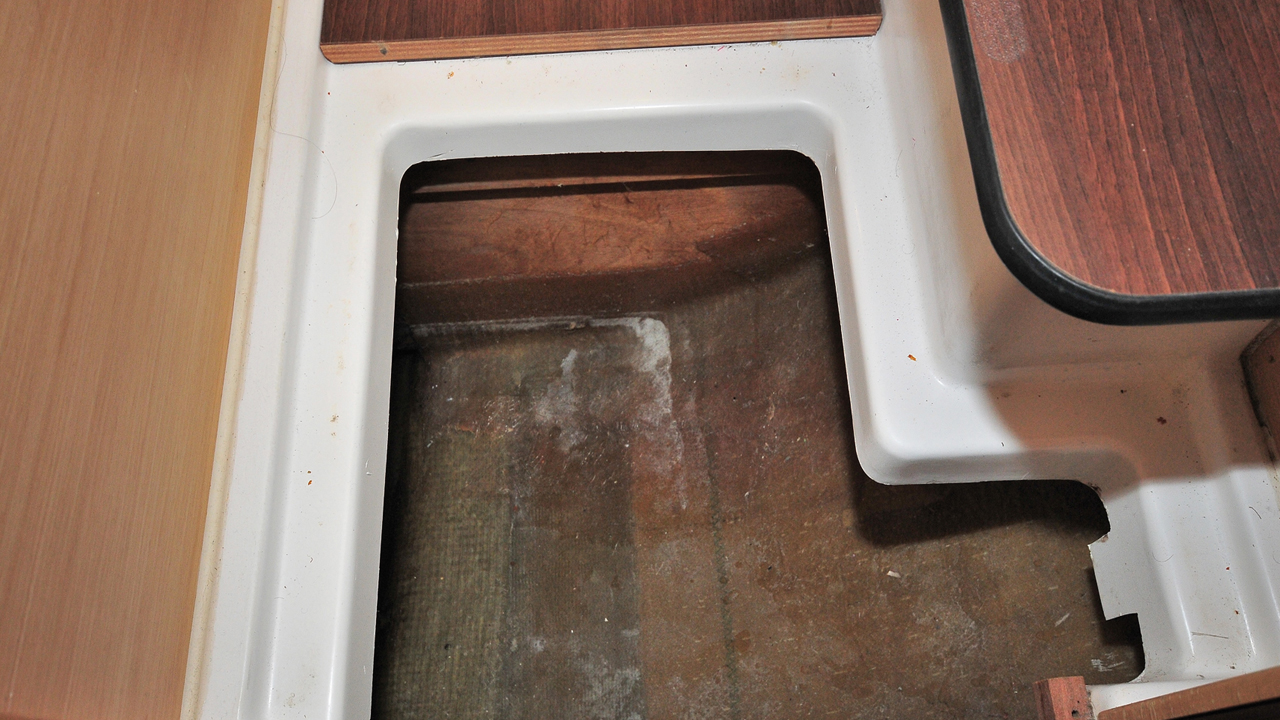
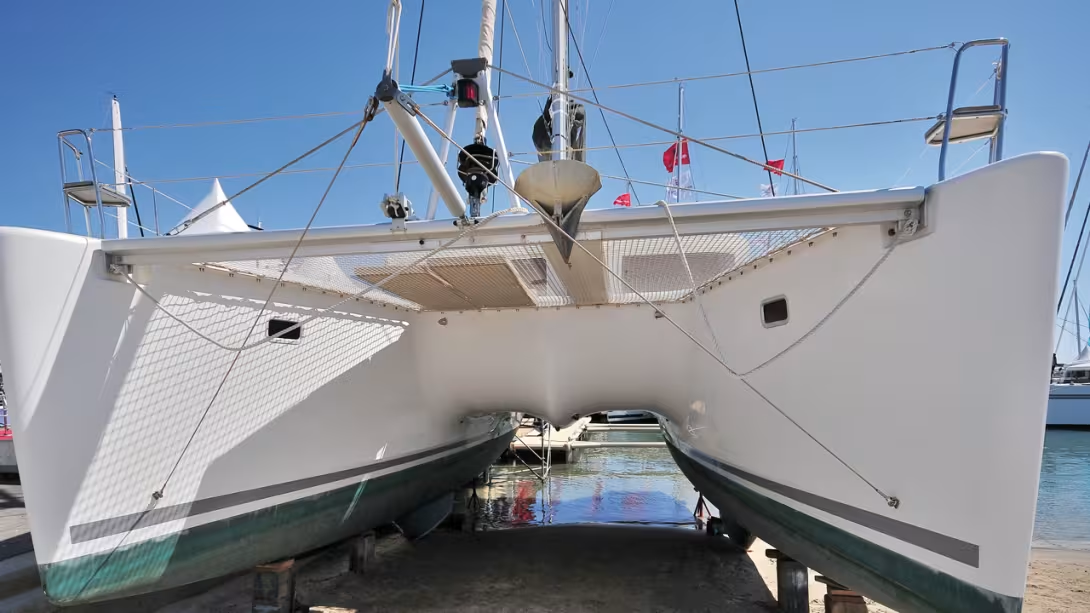
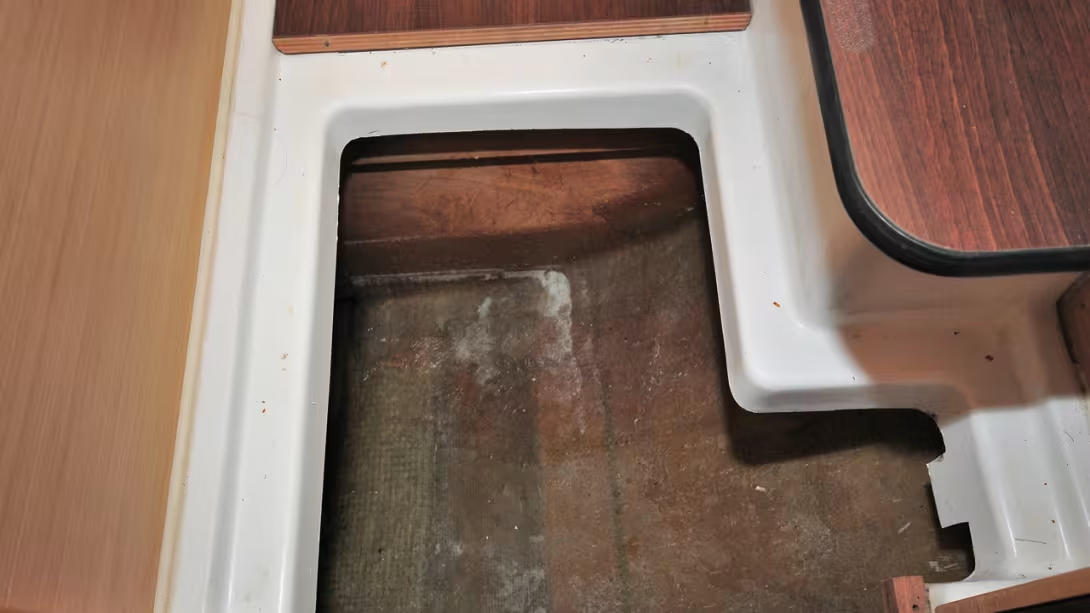
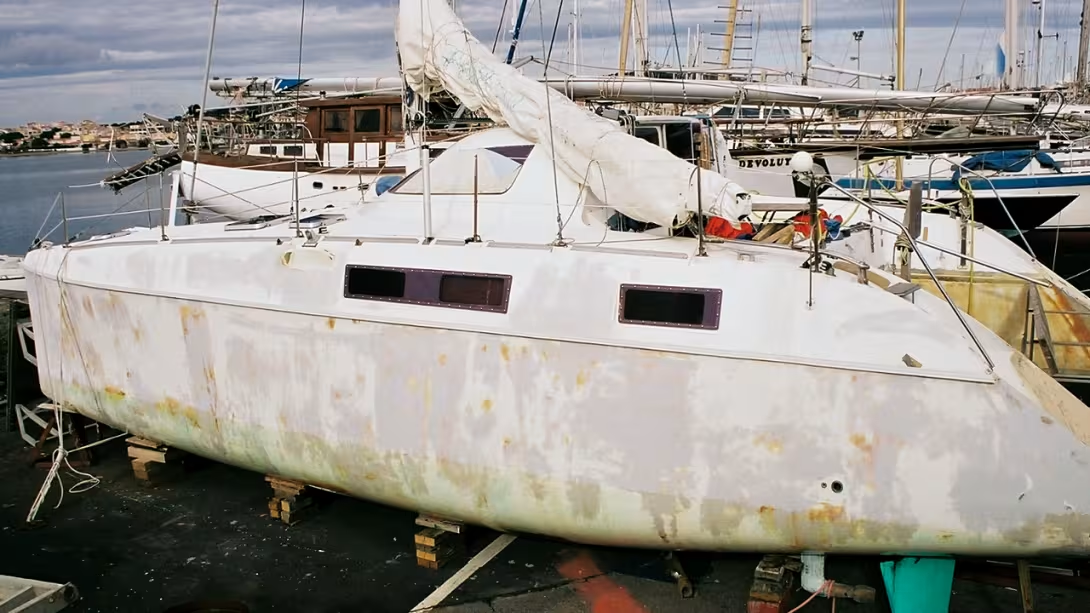
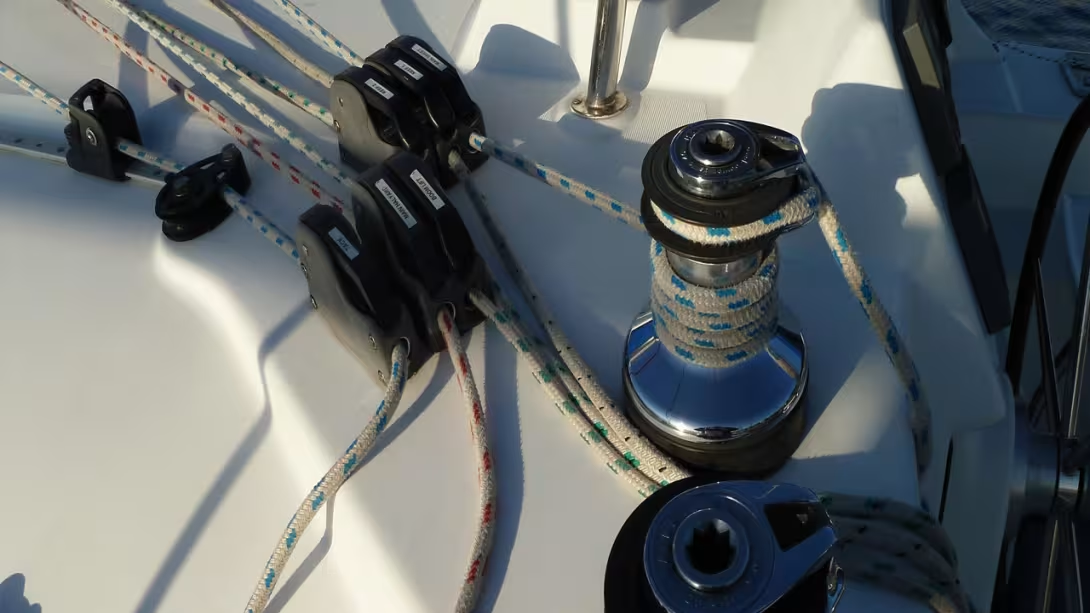
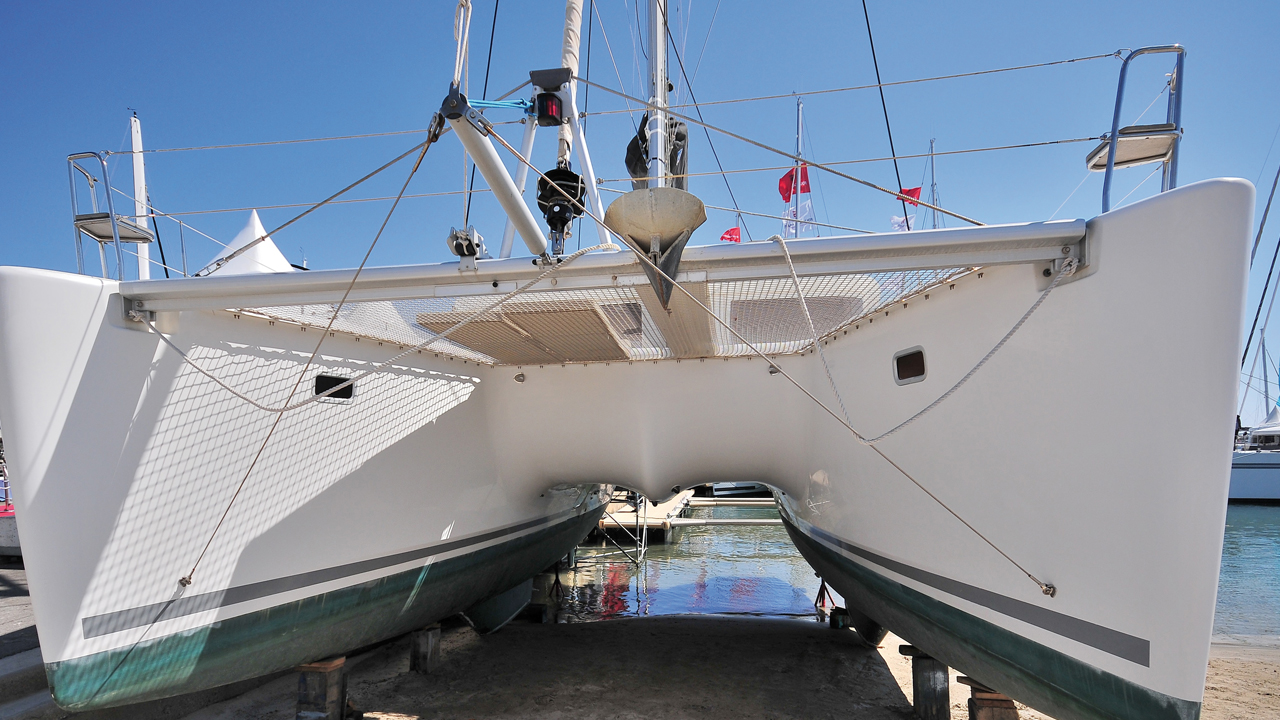
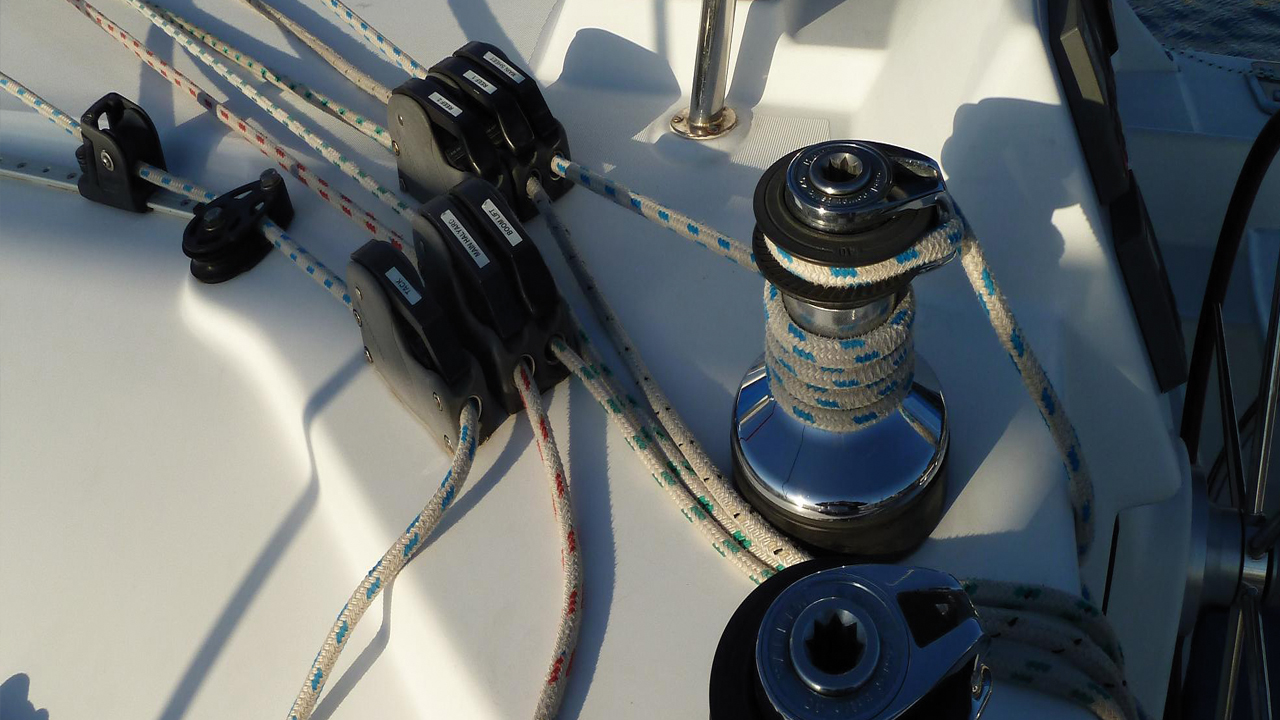
Firstly, have a look round, taking your time, at the bows and the topsides, looking for any evidence of shocks, or sections which have been repaired. Slowly, insistently step along the deck, the coachroof and the cockpit, to reveal any possible delamination. Get down into the forward lockers, the aft lockers, put your head in the beams, lift the floorboards, and inspect all the bulkheads so that no apparent structural defect will escape you. By the way, do the doors all open and close properly? Rotate the wheel to its stops: not too much friction or slack? Check the functioning of the winches, the state of the running rigging. How old are the sails? Are they well protected from the sun? If there’s no wind and you can unfurl the genoa, take advantage of this, to check the condition of the joins on the furling tube. Have a close look at the chainplates for the shrouds and the forestay attachment, the mastfoot, the hull/beam joints: cracks in these strategic places should alert you. Not necessarily a disaster, but they should instead trigger further investigation.
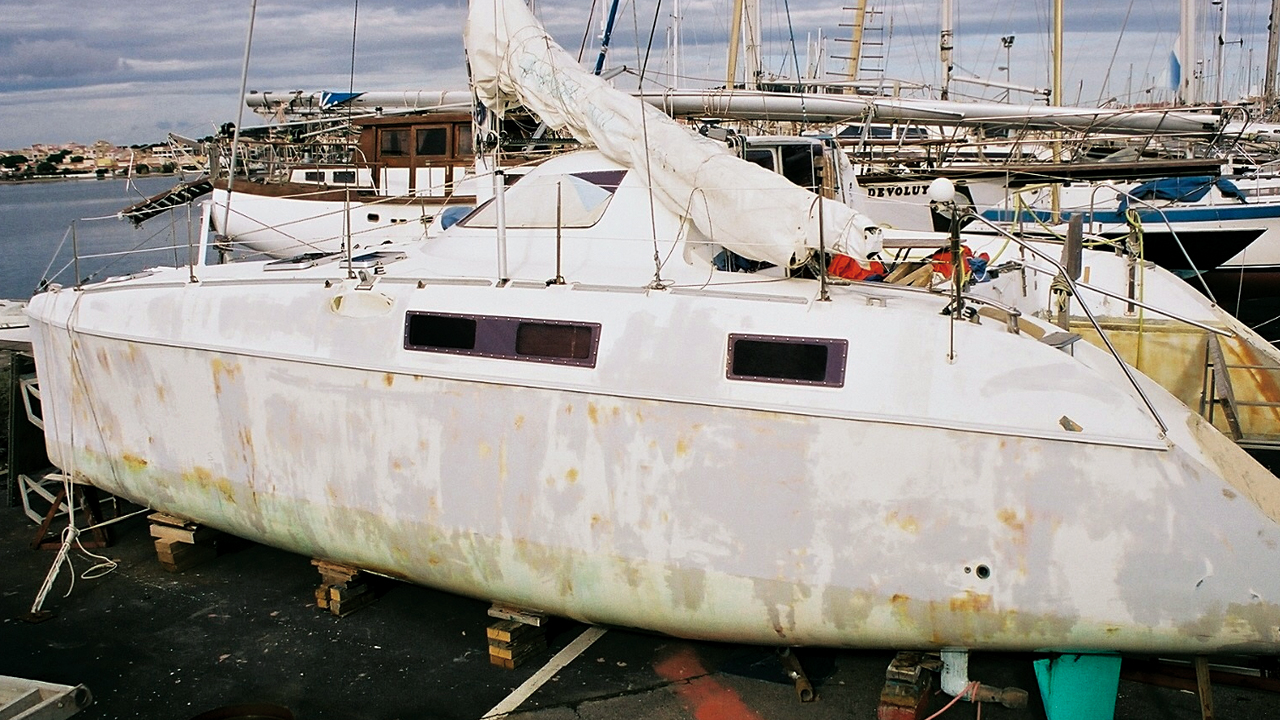
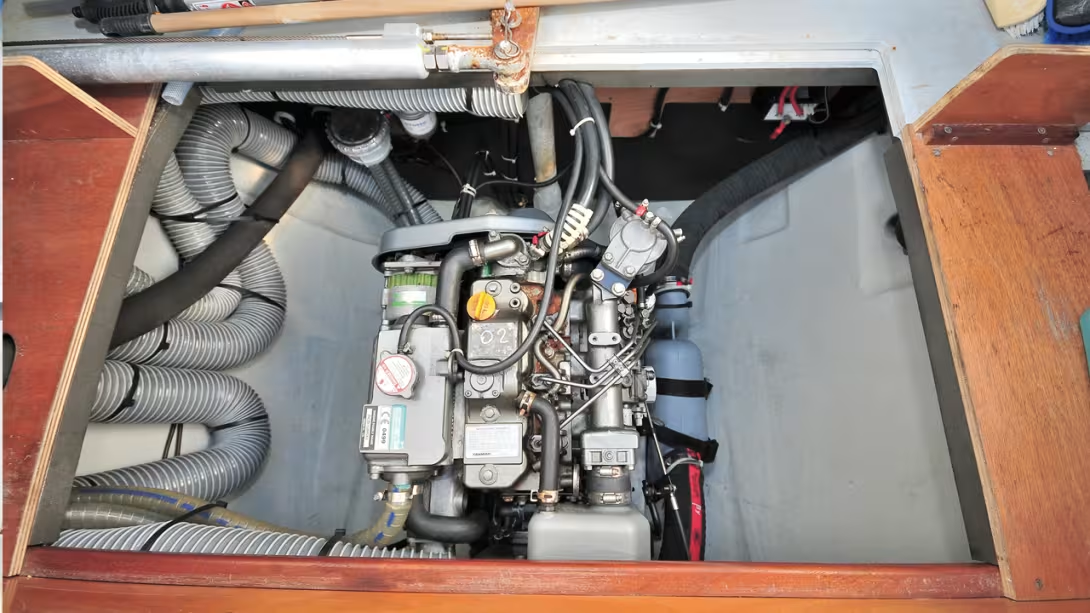
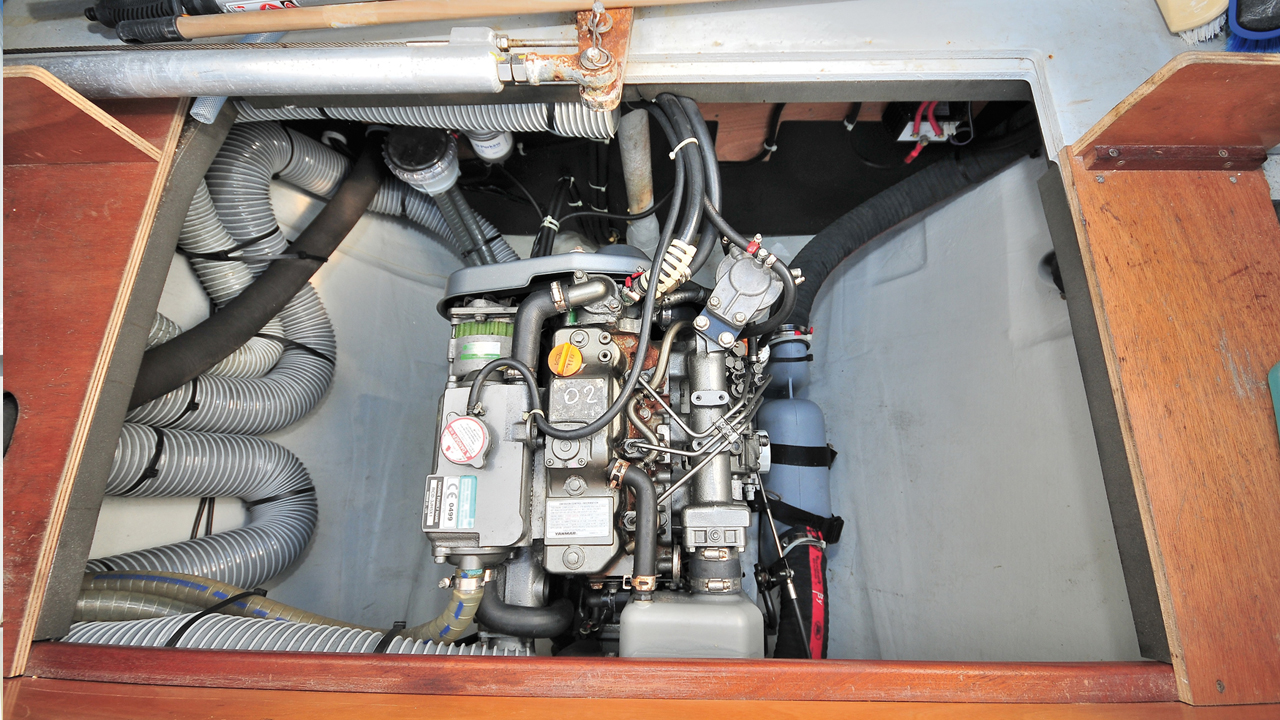
Start the engines, engage forward and reverse to check that engaging the clutch does not require herculean effort, check the exhaust and evacuation of raw water. The general condition of the engine compartments, and the service history, will very quickly give you a good idea of the level of care taken by the current owners with these expensive bits of kit. Inside, beyond the general appearance and the good working condition of the equipment, you should endeavor to detect any trace of leakage from windows, moisture present at the bottom of bulkheads, under the cushions, the mattresses, the cupboards. If the object of all your desires has seen many years, miles and owners, it’s a safe bet that the electrical installation will be an absolute shambles. Cables in good condition, well located, and well secured are much appreciated, but don’t expect the impossible! Do the batteries recharge well? Do they hold the charge without being connected to shore-power? What state are the fresh water tanks in? The diesel tank?
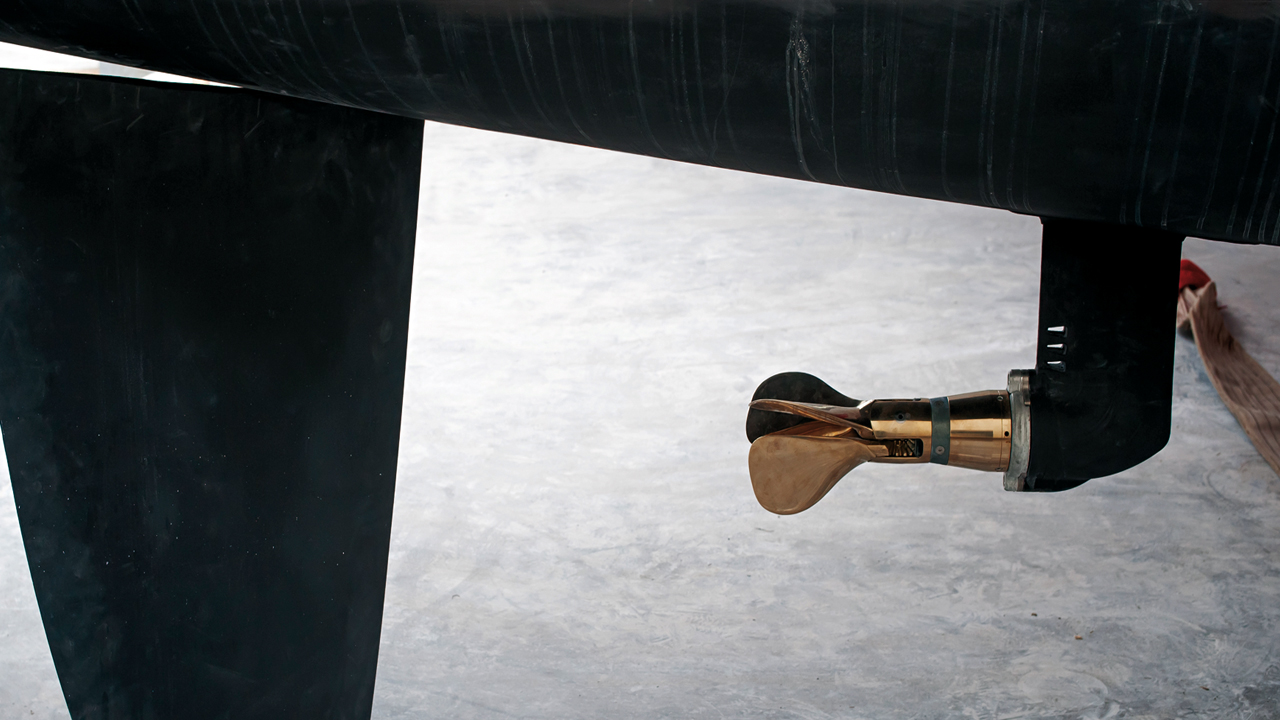
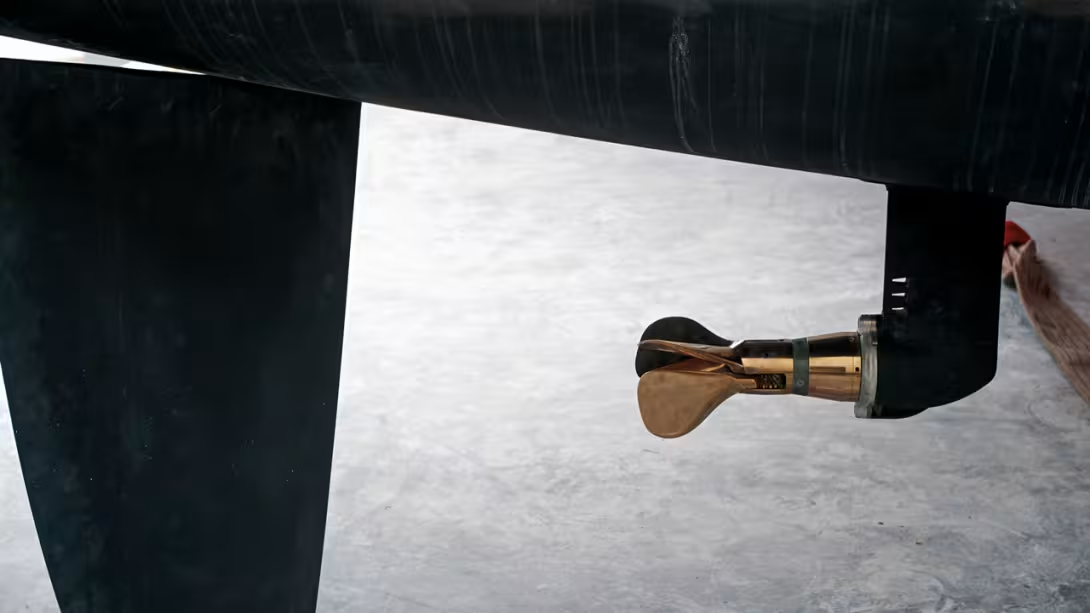
Finally, if the water in the marina is neither too cold nor too polluted, how about doing a little tour underneath? As you took care to bring mask and snorkel, you can go check the condition of rudders, anodes, propellers, shafts or sail drives, daggerboards or skegs, check the underwater hull. Don’t panic about osmosis: Every polyester boat has osmosis to a varying degree. It can be treated. Or not. Because no boat has ever sunk, to the best of our knowledge, from the consequences of this phenomenon. Speaking of safety, take a look at the expiry date of the gas hoses; at the life raft service record; at the box of flares? Next, check the dinghy hasn’t been "burned" with UV, and that its outboard starts by the second pull, and then you’ll have a good idea of the bigger picture! Do all the warning lights look green? Be careful, even if you have been in "standby mode" for years and have a great idea of what is being sold and at what price on the market, a golden rule: NEVER buy the first boat you visit. You need to have seen at least two others. This avoids getting carried away, beginner's mistakes and eternal regrets!
But now that's it. You’ve seen enough and you decided it was this one and not another? Congratulations! But there are still some steps to take before casting off with peace of mind. As the purpose of this modest article is not a commercial negotiation course, let’s say that you have agreed on a price that satisfies both buyer and seller, which remains the basis of a good future relationship. The ideal is to sign a sales agreement, valid, with exceptions, from one to two months: the time to get a survey done and to organize your finance. This sales agreement is usually accompanied by the payment of a deposit, often 10% of the amount of the transaction. If the deal is being handled by a professional, they will keep the deposit in escrow until the finalization of the sale. A professional broker is financially reliable, acting as an intermediary who will reassure both the seller and the buyer. Having a survey is an essential step. This is carried out at the expense and choice of the purchaser. Ask your insurer if they can provide you with a list of approved surveyors. Otherwise, word of mouth and reputation are the best business cards in a low or unregulated profession. The survey will include in all cases a dry inspection and a sea trial. Otherwise, how can you validate the condition of the sails, the operation of the electronics, the watermaker, the engines under load, etc?

If they detect a defect rendering the boat unfit for sailing, the sale can be canceled and the deposit refunded in full to the buyer. If there is nothing major, then the broker will cash the funds on behalf of the seller and pay them once the process is complete. In the case of a transaction between individuals, things can be slightly more tense. Either the seller gives up his property without being 100% sure of receiving the amount of the sale, or the buyer transfers the agreed funds without an absolute guarantee of becoming the owner in case the boat is seized or mortgaged. This is inconceivable when the amounts in question become significant. About money, if the boat is being leased, do you know that it is transferable? Similarly, if it is sold duty-free (belonging to a company or having an overseas flag), perhaps it is still eligible to be financed in this very economical way for tax residents of the European Union.
OK, so all’s well. With the bill of sale and de-registration from the previous flag completed, you are ready to become the rightful owner in the eyes of the administration of your country. In the euphoria of this unique moment, don’t forget to insure your boat from the day of the signing of the deed of sale, even the day before. Better a day too early than a day without insurance: that's when accidents happen. You mustn’t forget to register the change of ownership with the competent authorities for the VHF, the AIS, the EPIRB beacon, the liferaft, the satellite phone, the MMSI number... All that remains is to choose a name for the most beautiful boat in the world, yours. But hang on, can we change the name of a second-hand boat? And if so, what rituals have to be performed to avoid the risks? You can be the judge of that. No, we aren’t superstitious... that brings bad luck. But we wish you fair winds and some wonderful trips aboard your beautiful boat. And don’t forget to send us a postcard!
